Learning how to flatten a rug is easier than most people think: start with a reverse roll. Most curls, bumps, and ripples come from the rug being rolled, folded, or stored, and the fibers simply need coaxing back into shape.
Work through these 12 methods from gentlest to strongest, and stop as soon as the rug lies flat. The first three cost nothing and solve the problem most of the time.
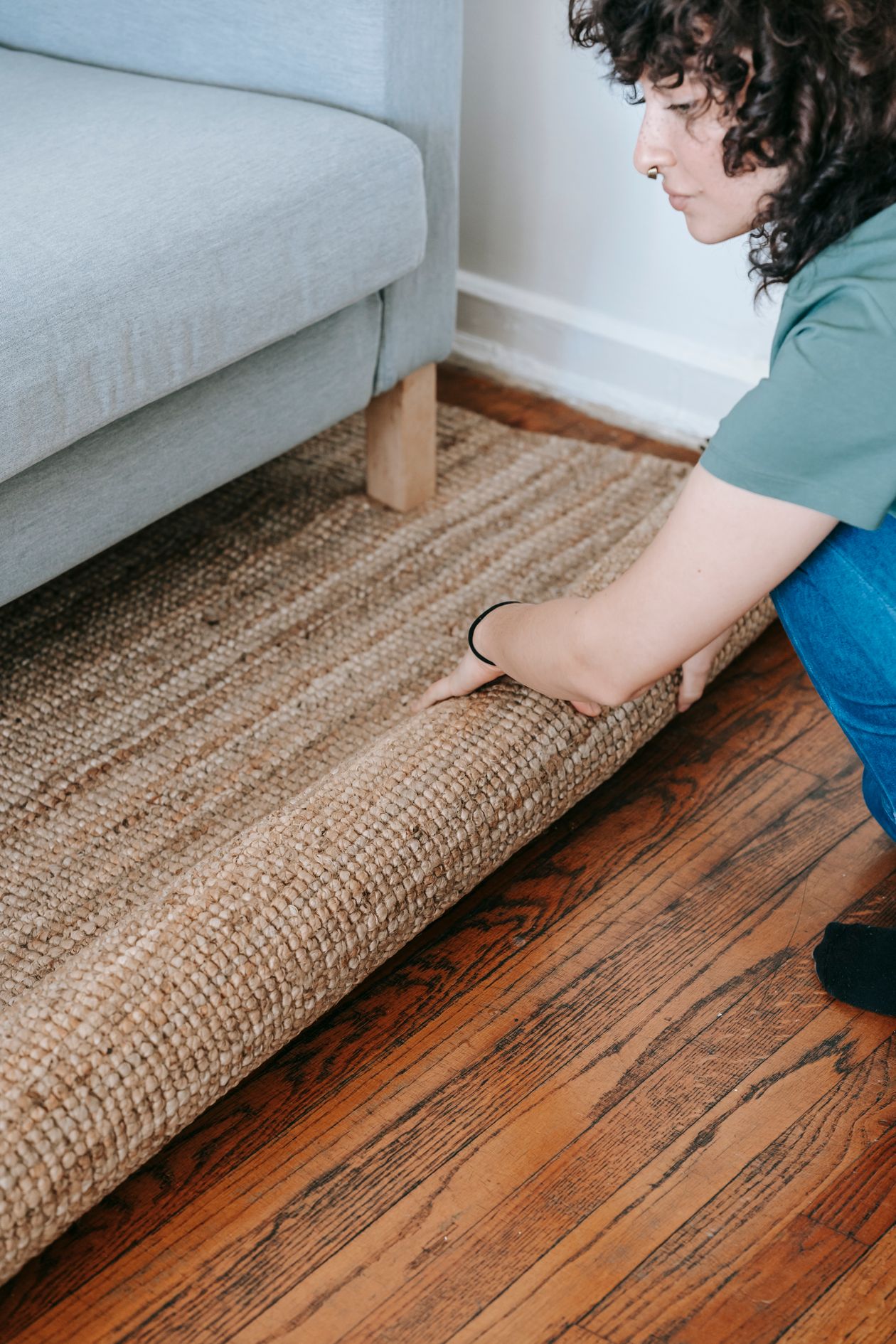
Photo via Pexels
Table of Contents
- 1. Reverse-Roll Against the Curl
- 2. Let It Relax in a Warm Room
- 3. Weigh the Corners Down
- 4. Flip It Upside Down
- 5. Add a Rug Pad Underneath
- 6. Try the Ice Cube Trick
- 7. Gentle Steam or a Hair Dryer
- 8. Warm It in the Sun
- 9. Fold Stubborn Corners Under
- 10. Use Corner Grips or Rug Tape
- 11. Always Dry It Flat After Washing
- 12. Know When the Backing Is Done
1. Reverse-Roll Against the Curl
Roll the rug up tightly in the opposite direction of the curl, with the face side out, and leave it for 24 to 48 hours. This directly reverses the "memory" the fibers picked up from shipping or storage, and it is the single most effective fix.
Roll, never fold: folding creates sharp creases that are harder to remove than the original curl. If you hear cracking sounds while rolling, stop and try a gentler method instead.

Photo via Wikimedia Commons
2. Let It Relax in a Warm Room
Rug backing stiffens in the cold, so unroll the rug onto a clean floor at normal indoor temperature, around 70 to 80 degrees, and give it a full day to relax. Many new rugs flatten themselves with nothing more than warmth and time.
Keep foot traffic light while it settles so the fibers can ease down evenly. If you are styling the whole space anyway, our living room wall decorating ideas pair nicely with a freshly flattened rug.

Photo via Pexels
3. Weigh the Corners Down
For corners that lift, place something heavy on each one for a day or two: a stack of books, a potted plant, or the leg of a sofa. Constant, even pressure retrains the edge to stay put.
Choose weights that will not transfer color or moisture, and avoid anything with sharp feet that could dent the pile. Rearranging furniture so heavier pieces sit on the corners works just as well, and a round leather pouf ottoman makes a stylish, movable weight.
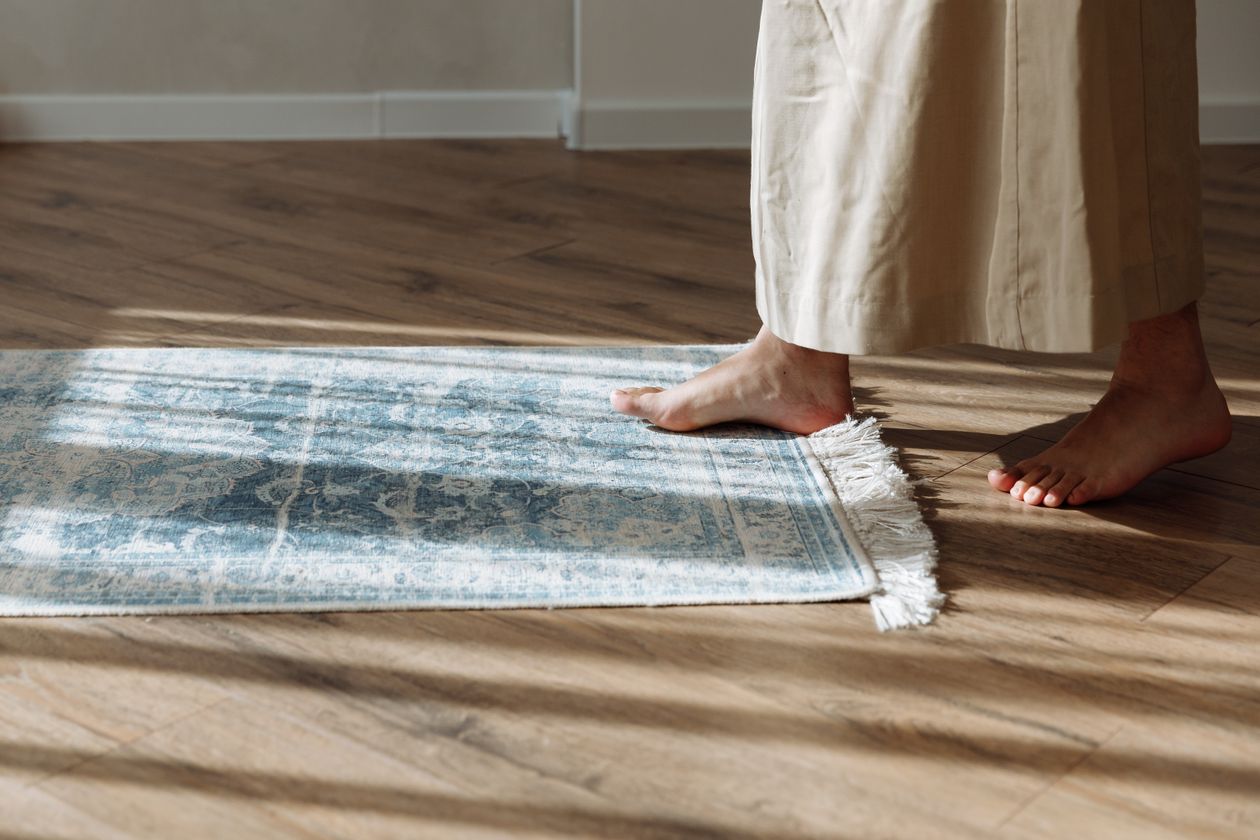
Photo via Pexels
4. Flip It Upside Down
Turn the rug face-down and let gravity do the work. This is especially effective for bumps and waves in the middle of the rug, since the pile's own weight pulls the fibers back into line.
Leave it flipped for several hours or overnight, then turn it back and check. You can combine this with the warm-room method for stubborn cases.
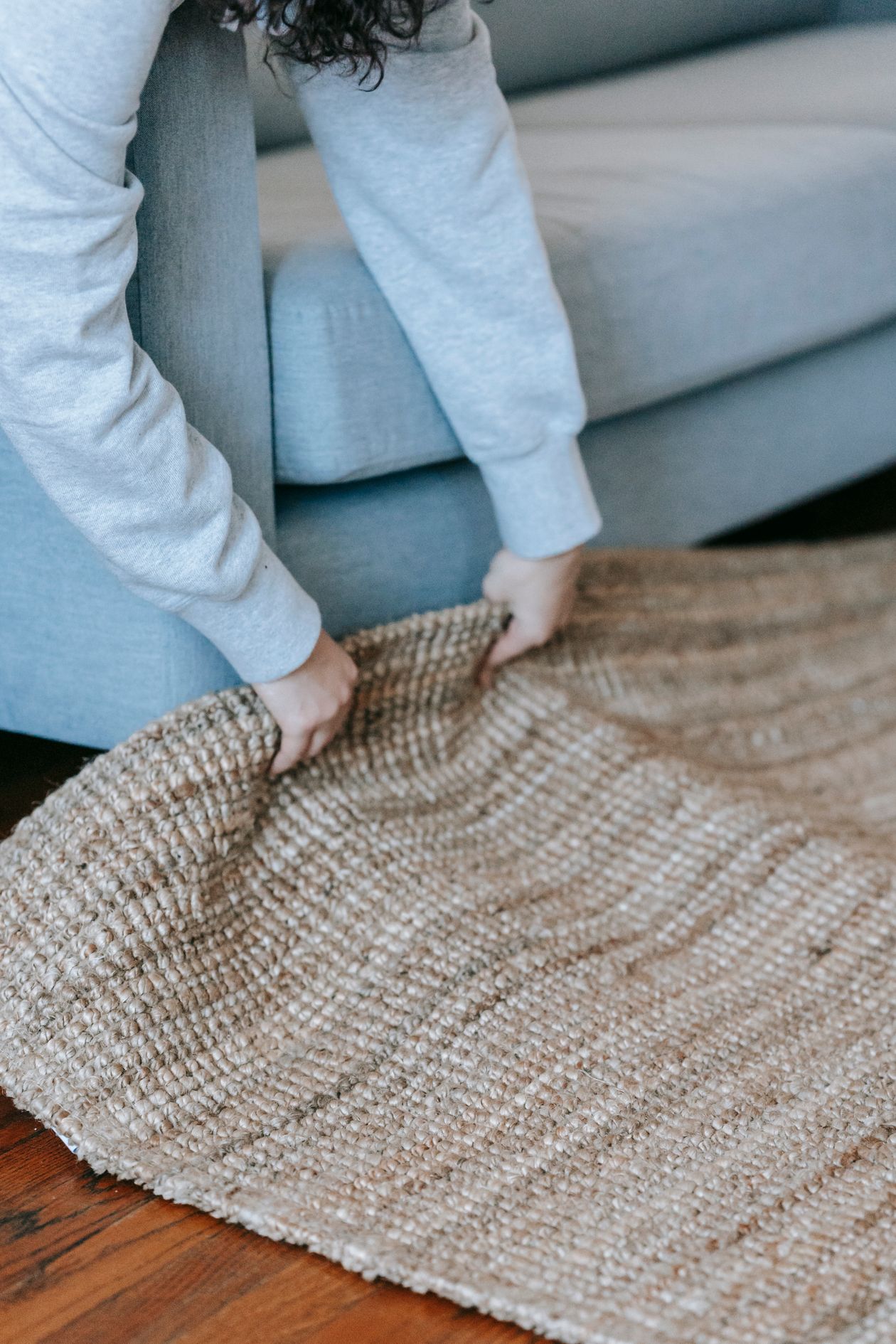
Photo via Pexels
5. Add a Rug Pad Underneath
A rug pad cut slightly smaller than the rug holds the edges at the same height as the center, which stops both curling and sliding. On hard floors choose a non-slip pad; the grip keeps everything planted.
A pad also adds cushioning and extends the rug's life by absorbing foot-traffic wear. If you are working with a tight space, see how to furnish a small apartment for rug layouts that make compact rooms feel bigger.
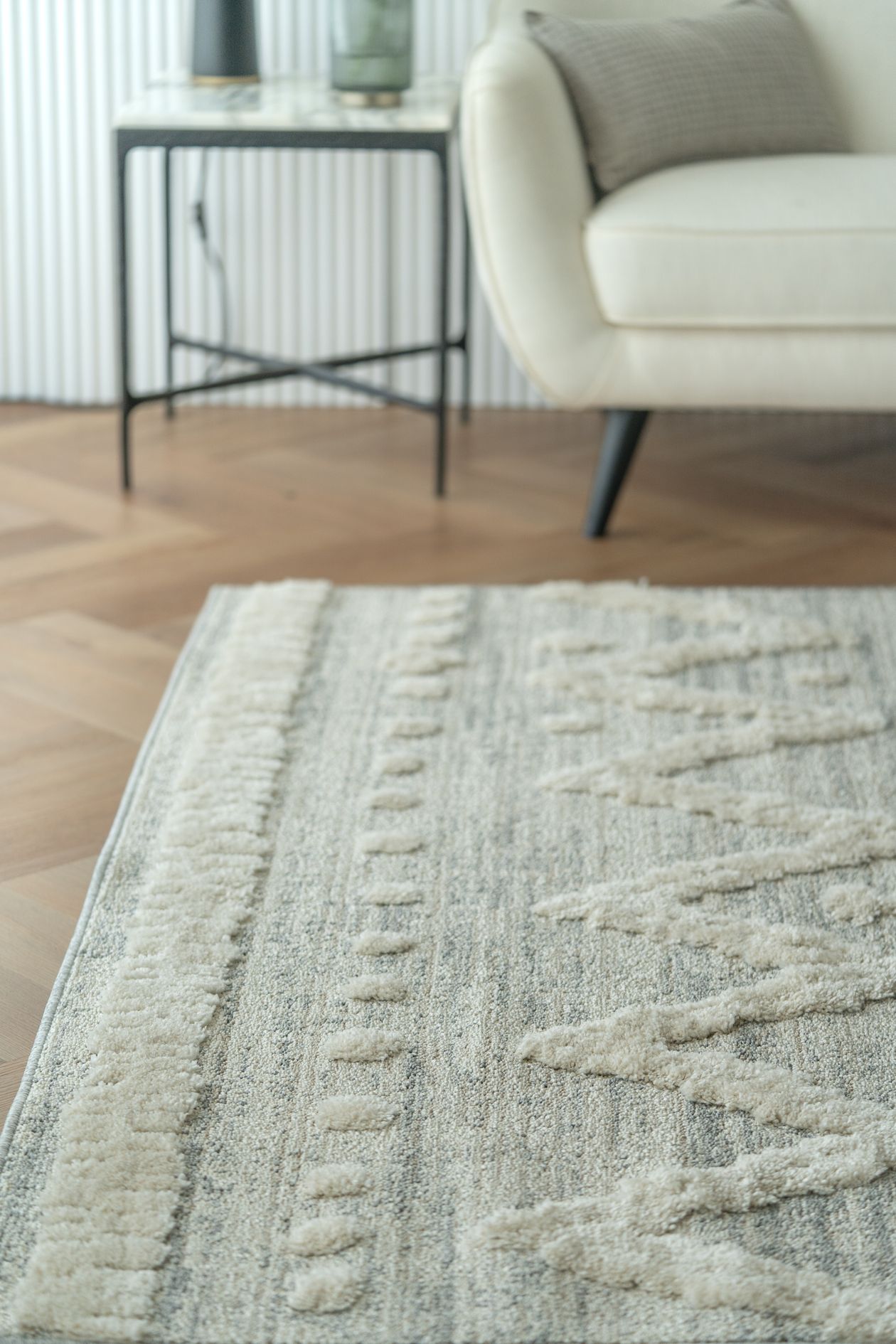
Photo via Pexels
6. Try the Ice Cube Trick
This reader favorite sounds strange but works: place one or two ice cubes on a curled corner and let them melt. As the fibers slowly absorb the moisture and then dry, they relax and settle flat.
Protect the floor underneath with plastic, and use something damp-safe as a weight nearby if needed. Skip this trick on antique, silk, or viscose rugs, where water can leave marks.
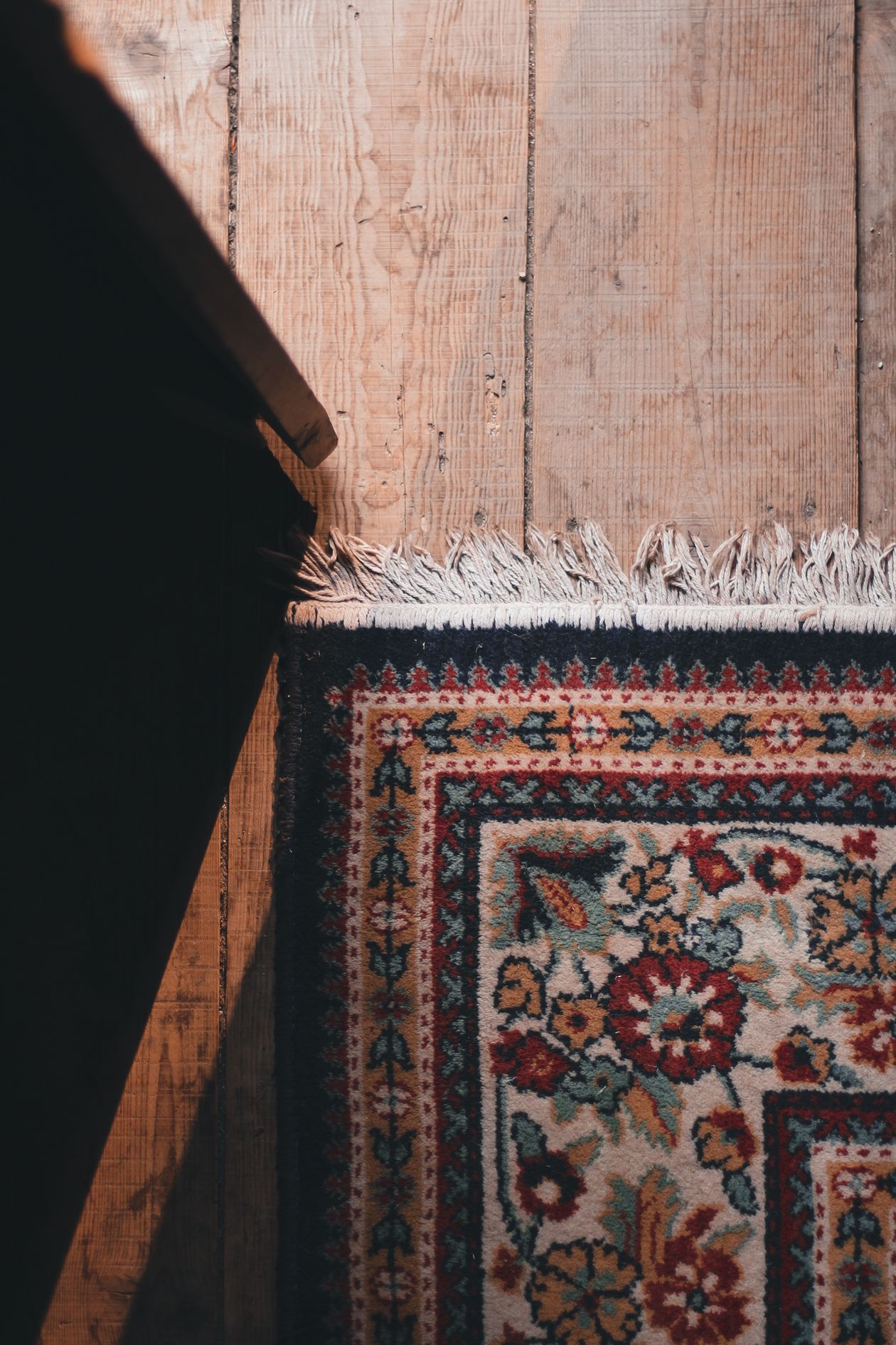
Photo via Pexels
7. Gentle Steam or a Hair Dryer
Heat relaxes stiff fibers the same way cold stiffens them. Hold a garment steamer or hair dryer a few inches above the back of the curled corner, moving it back and forth, then press the corner flat with a heavy book while it cools.
Keep the heat low and keep it moving. High heat can melt synthetic backings and leave the rug permanently wavy, which is worse than the original curl.
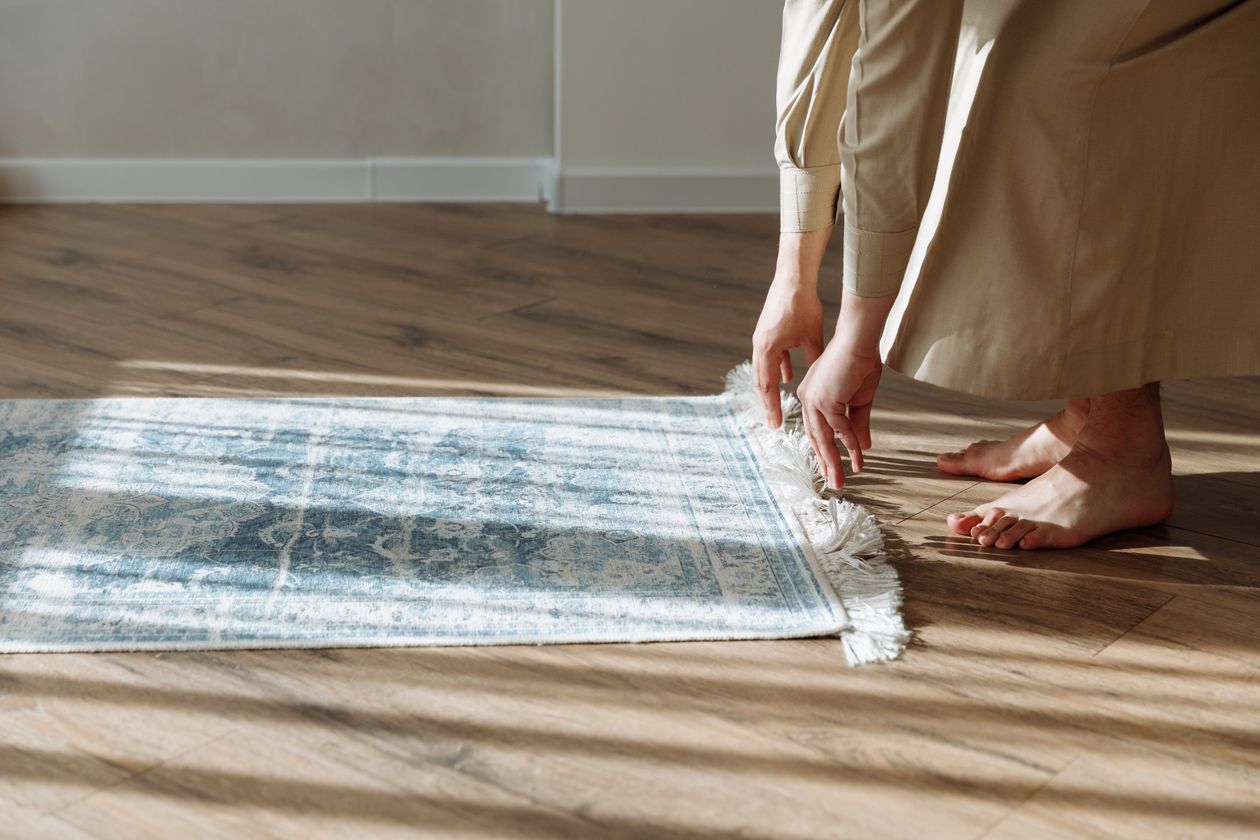
Photo via Pexels
8. Warm It in the Sun
Lay the rug flat outdoors in direct sun for an hour or two. The warmth softens both fibers and backing, and many rugs settle noticeably flatter after a single sunny session.
Do not overdo it: prolonged sun fades colors, especially reds and blues. An hour or two is plenty, and bring the rug in as soon as the backing feels supple.

Photo via Wikimedia Commons
9. Fold Stubborn Corners Under
For a corner that keeps popping up, fold it back under the rug toward the center and leave it for a day or two. This reverse-bend retrains the fibers in the opposite direction without any tools at all.
Check your progress after 24 hours. You can repeat the fold once more, then follow up with a weight to lock in the improvement.

Photo via Wikimedia Commons
10. Use Corner Grips or Rug Tape
When a corner simply will not stay down, adhesive corner grips or double-sided rug tape on the underside will hold it. These are cheap, invisible, and removable, making them ideal for renters.
Check that the product is rated for your floor type first, since the wrong adhesive can pull finish off hardwood. Replace the tape if you lift the rug to wash it, as it loses grip after one use.

Photo via Wikimedia Commons
11. Always Dry It Flat After Washing
Many curls are born in the laundry process. After washing a rug, lay it completely flat or drape it evenly over a rail until the backing is fully dry. Never hang it by one edge or leave a damp corner bunched up.
A corner that dries while folded will hold that fold as a permanent curl. Flat drying takes a little floor space, but it prevents the problem from ever starting.

Photo via Wikimedia Commons
12. Know When the Backing Is Done
If a corner still lifts after you have tried everything, the backing itself may be permanently deformed, often by heat damage. At that point the rug is a trip hazard, especially on hard floors.
There is no shame in retiring it. A rug that will not lie flat is telling you its structure has failed, and no amount of steam will rebuild a melted backing.

Photo via Wikimedia Commons
How to flatten a rug that arrived folded?
Unfold it immediately, lay it flat, and gently pull the edges to ease out creases. Most fold marks disappear within a few days; reverse-rolling speeds it up.
Does the ice cube trick really work on rug corners?
Yes, for many synthetic and cotton rugs. The slow melt-and-dry cycle relaxes the fibers so the corner settles flat. Test on a hidden spot first with delicate rugs.
Can I iron a curled rug corner?
Only with caution: place a damp cloth over the corner and use a low steam setting for 15 seconds at a time. Never iron the backing directly with high heat.
Will a rug pad stop curling?
A good pad helps a lot by holding edges at the same height as the center and preventing sliding. It will not fix a permanently deformed backing, though.
How long does reverse-rolling take?
Usually 24 to 48 hours. Tightly rolled or long-stored rugs may need the full two days plus a warm room to fully relax.
Final Thoughts
Almost every rug curl is fixable with patience and the gentlest method that works. Start with a reverse roll and a warm room, add weight or a pad if needed, and save heat and adhesives for truly stubborn cases.
The best fix of all is prevention: unroll new rugs promptly, dry washed rugs flat, and rotate heavy furniture now and then. A little care keeps your rugs lying flat for years.
Sources
- Arconiz: How to Stop Rug Corners Curling, 7 Fixes That Work
- Thistlewood Farms: Fixing a Curled Rug Corner
- House of Mark: How to Flatten Curling Rug Corners
Gallery

Photo via Wikimedia Commons

Photo via Wikimedia Commons

Photo via Wikimedia Commons

No comments:
Post a Comment