Cabinet knob placement is one of those small details that changes everything. Get it right and the whole kitchen looks professionally designed; get it wrong and every door feels slightly off.
These 12 simple rules give you the exact measurements for doors, drawers, and wide fronts, so you can drill once with total confidence.
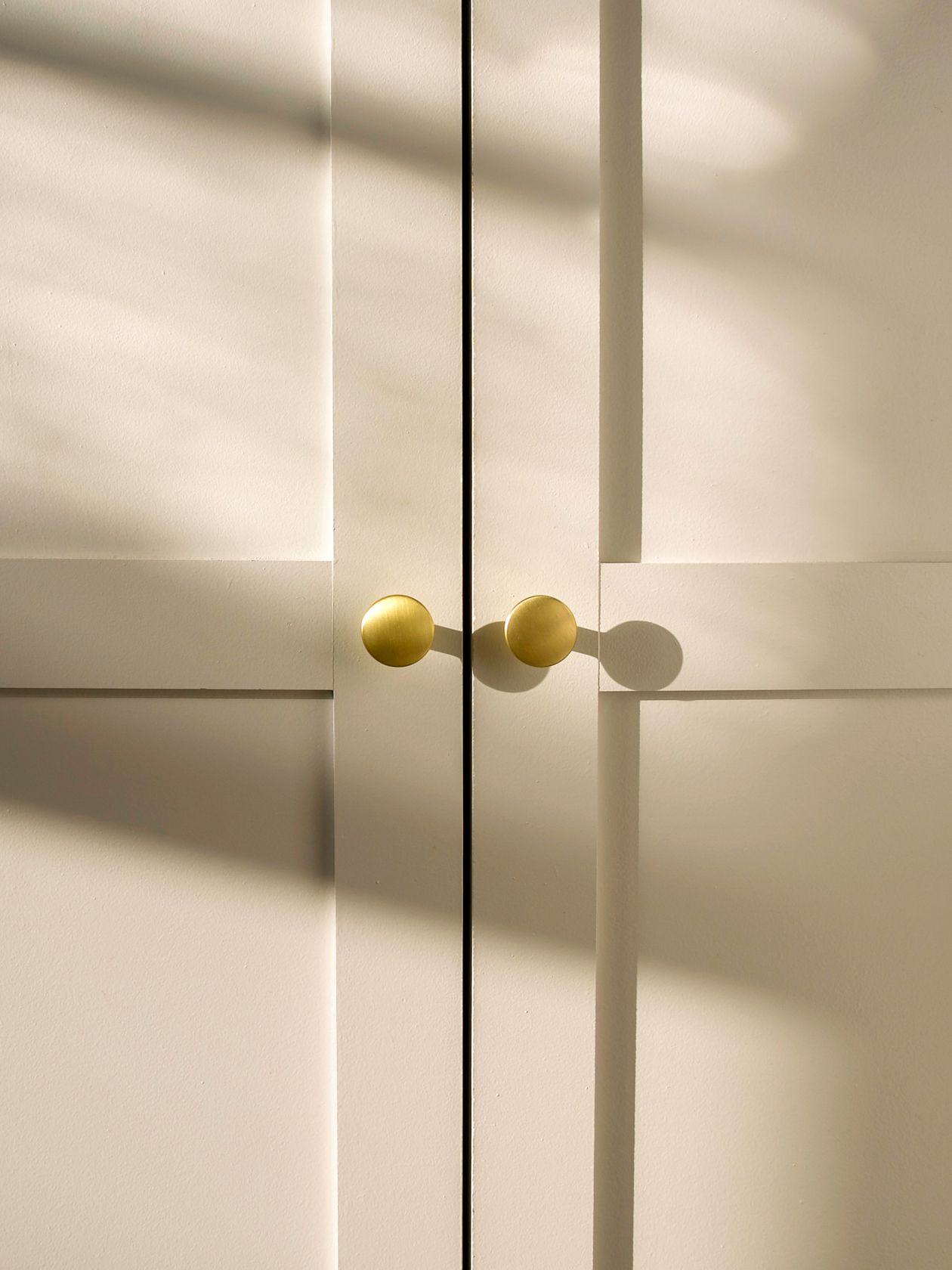
Photo via Pexels
Table of Contents
- 1. Start With the 2.5-to-3-Inch Rule
- 2. Center Knobs on Small Drawer Fronts
- 3. Run Pulls Vertical on Doors
- 4. Let Statement Knobs Shine
- 5. Place Pulls 2 to 3 Inches From the Corner
- 6. Match Pull Style to Cabinet Color
- 7. Keep Upper and Lower Lines Consistent
- 8. Try Vintage Pulls on Slab Fronts
- 9. Use Two Pulls on Wide Drawers
- 10. Center Pulls on Deep Drawers
- 11. Try Edge Pulls for a Modern Look
- 12. Mount Edge Pulls on the Top Edge
1. Start With the 2.5-to-3-Inch Rule
The industry standard puts knobs 2.5 to 3 inches from the corner of the door, on the side opposite the hinges. On uppers, that means the bottom corner; on lowers, the top corner.
This distance keeps your knuckles clear of the door edge while keeping the knob visually anchored to the corner. Measure from the edge of the door, not the edge of any decorative molding.
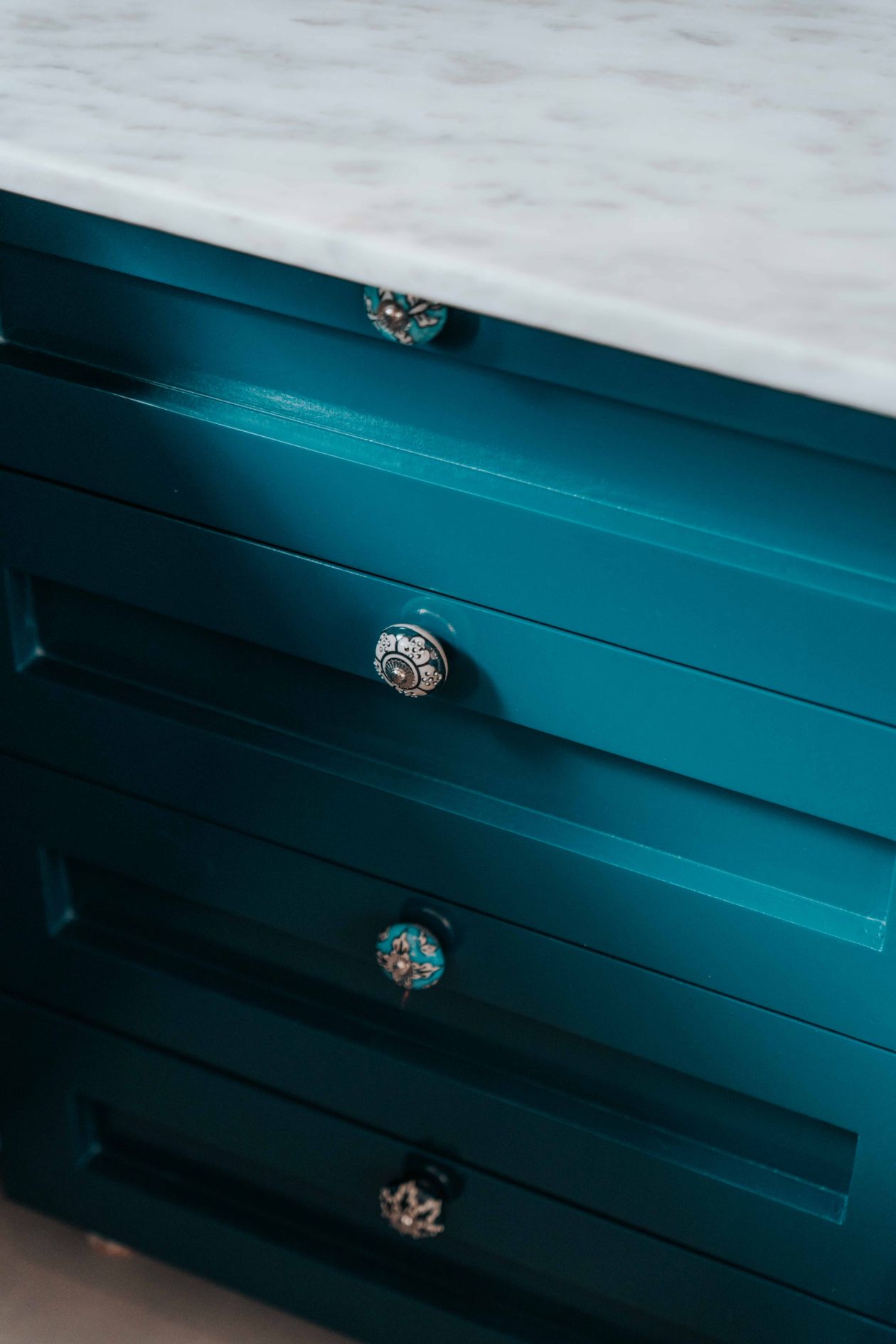
Photo via Pexels
2. Center Knobs on Small Drawer Fronts
For drawers under about 6 inches tall, center the knob both horizontally and vertically. The centered position looks balanced and puts the pull point right where your hand expects it.
Mark the center with a tape measure and a light pencil line, then double-check before drilling. A small hardware jig makes every drawer in the run match perfectly.
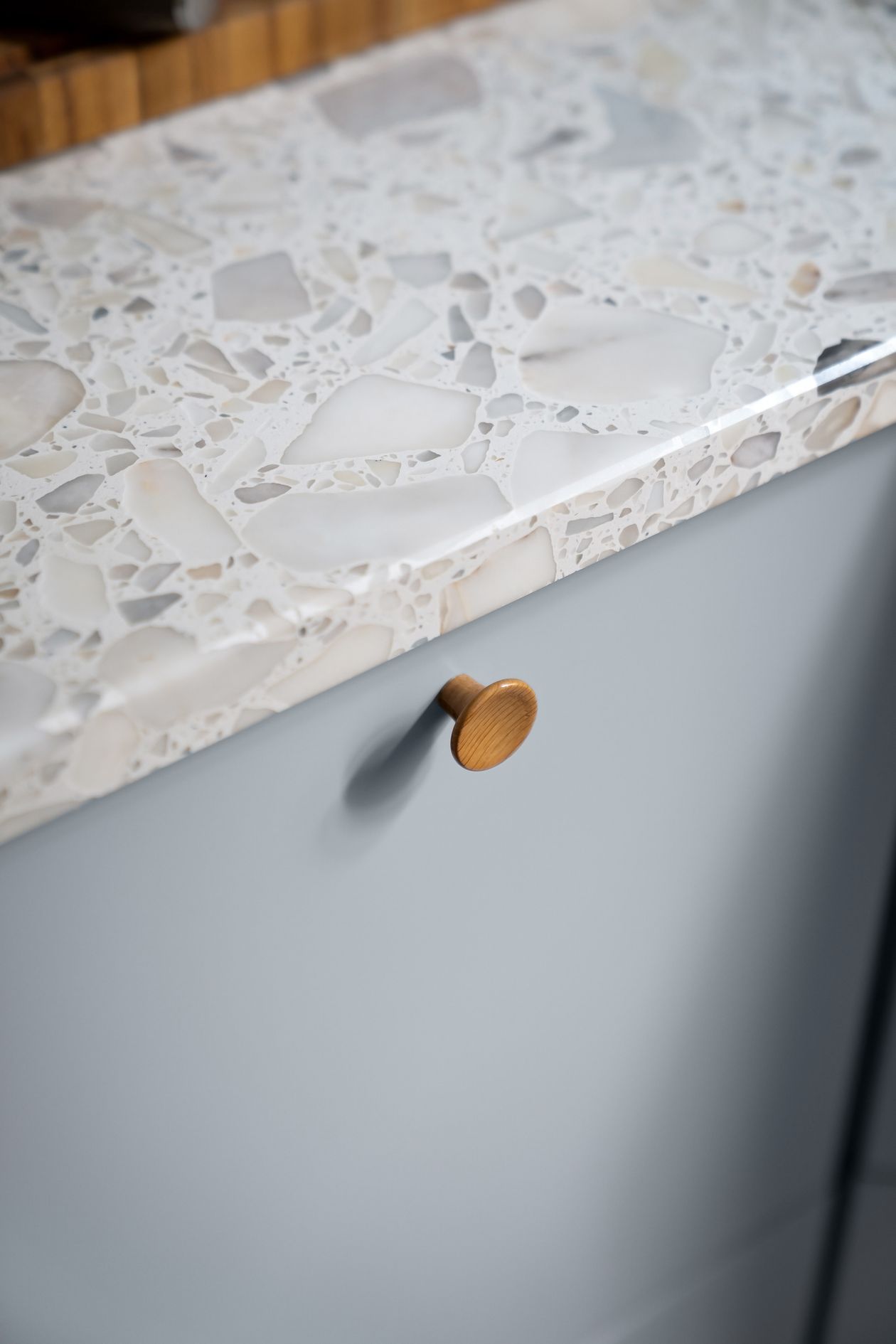
Photo via Pexels
3. Run Pulls Vertical on Doors
Bar pulls on doors almost always run vertically, centered on the stile near the opening corner. This orientation follows the natural motion of your hand pulling the door open.
On Shaker-style doors, align the bottom of the pull with the top of the horizontal rail for a crisp, architectural line. For more cabinet ideas, see our European style kitchen cabinets guide.
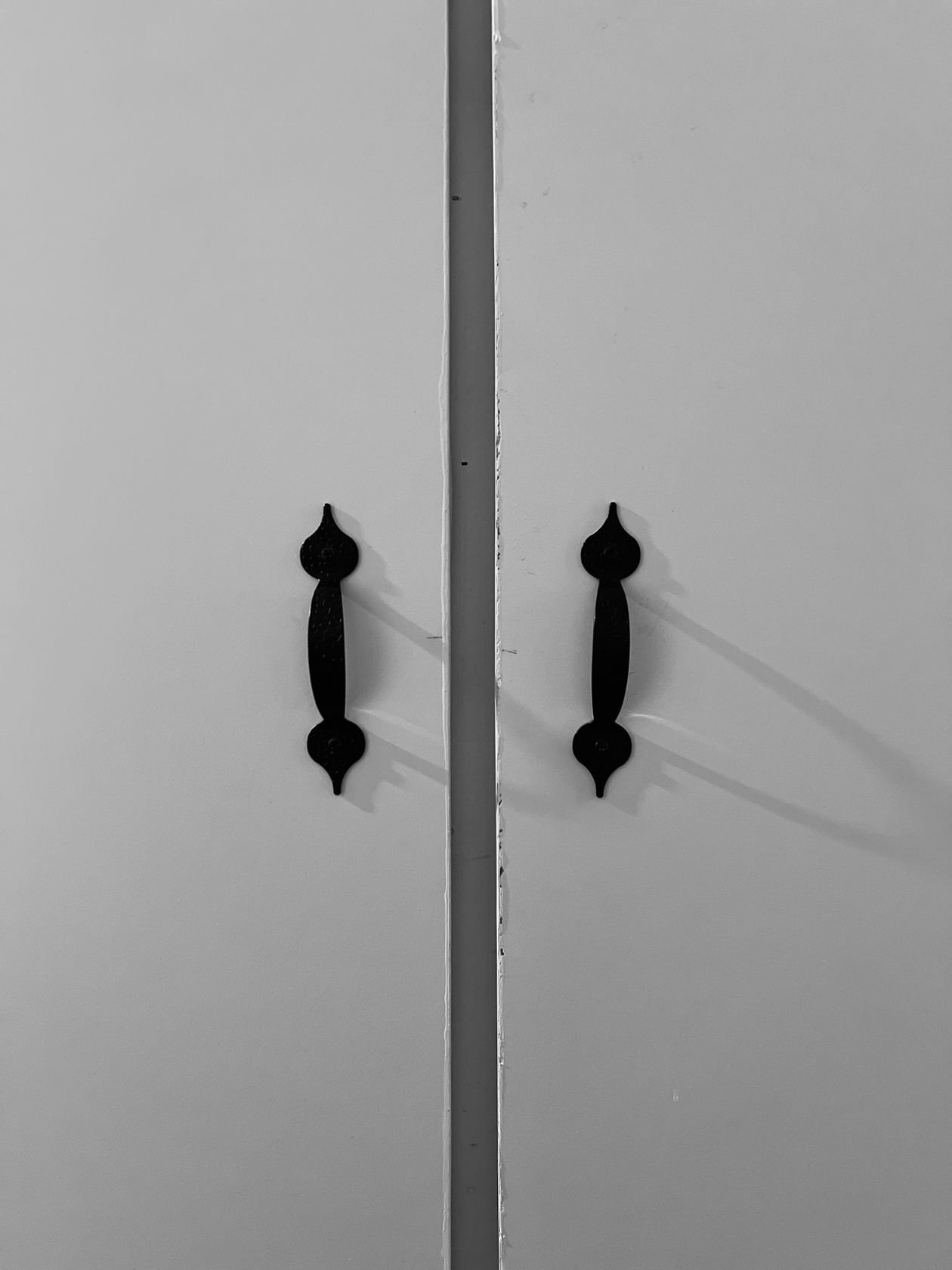
Photo via Pexels
4. Let Statement Knobs Shine
Oversized or decorative knobs, like ribbed brass beehives, deserve center stage. Give them room by keeping the surrounding fronts simple and the placement dead-center.
Statement knobs work best in small doses: a bank of drawers or a single hutch. Too many and the effect turns busy instead of bold.
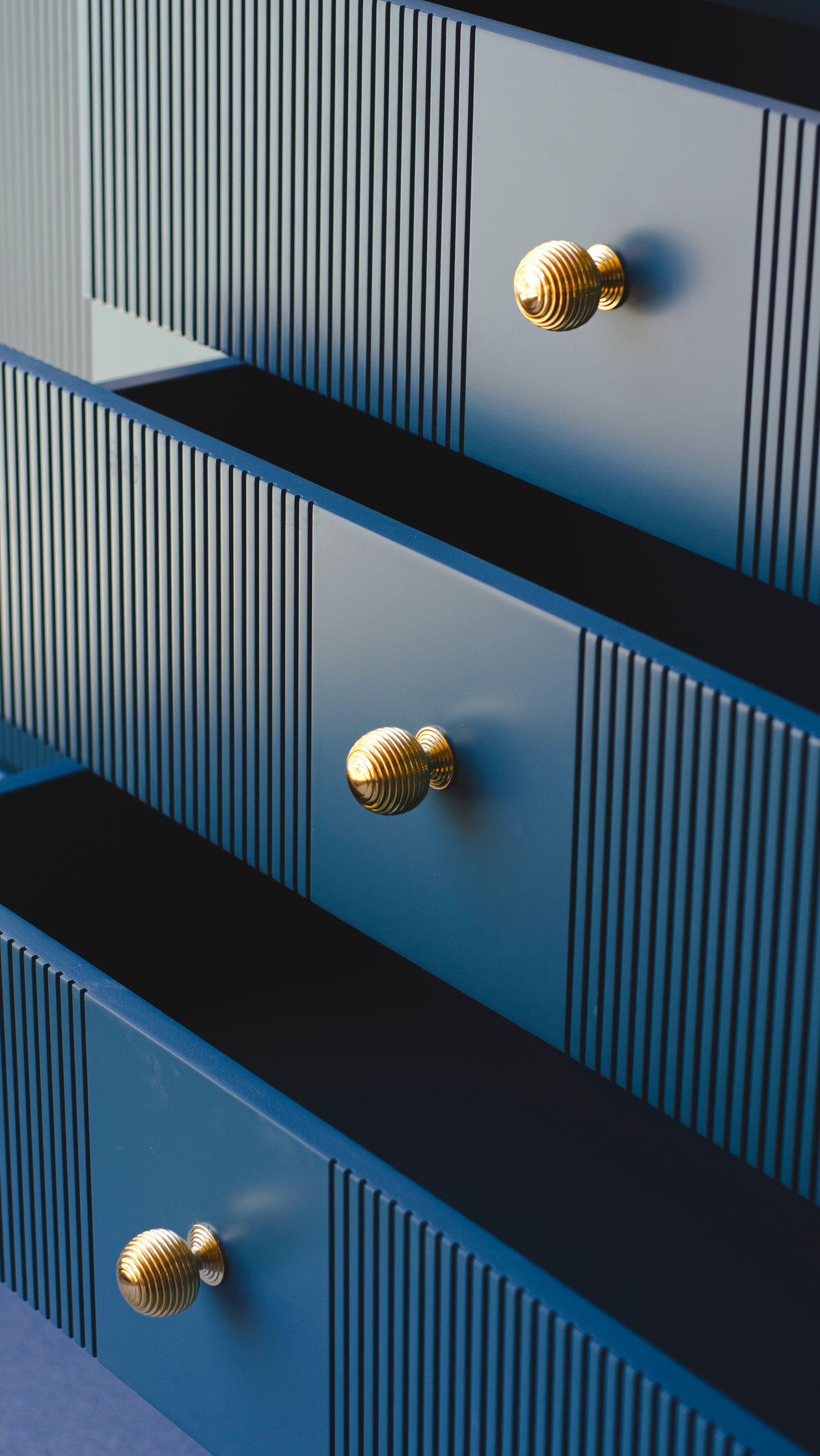
Photo via Pexels
5. Place Pulls 2 to 3 Inches From the Corner
Just like knobs, pulls sit 2 to 3 inches in from the door's edge and the same distance from the top or bottom. This keeps the mounting screws on solid wood, not dangling near the edge.
Test the position with painter's tape before drilling. What looks right on paper can feel wrong at full scale, and tape is free to move.
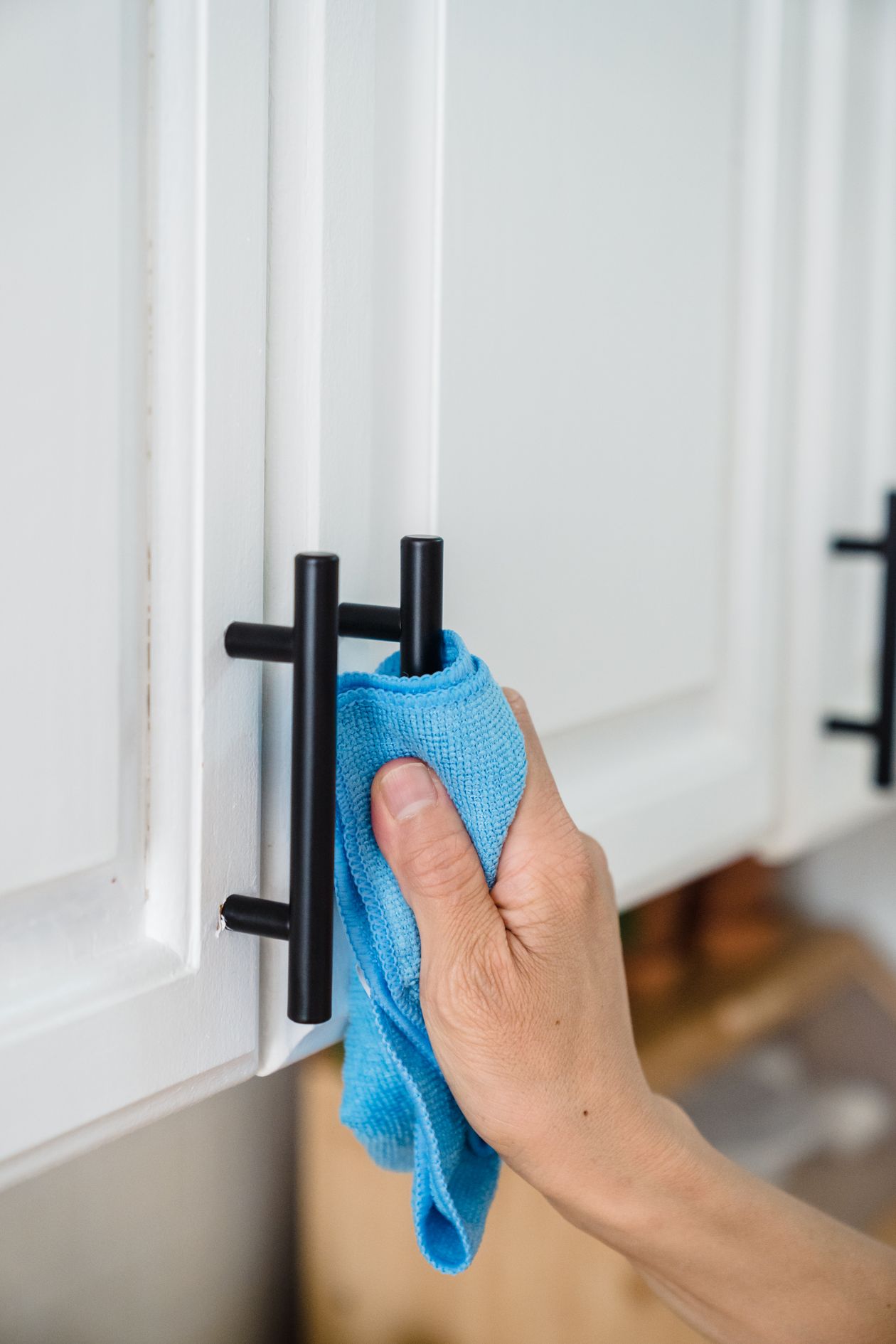
Photo via Pexels
6. Match Pull Style to Cabinet Color
Dark or colorful cabinets can handle bolder, more decorative pulls, while white and light cabinets suit simpler shapes. The contrast between hardware and door is what makes the placement readable.
On green or navy cabinetry, aged brass and porcelain-detailed pulls add warmth without shouting. Keep the finish consistent across the whole kitchen for a calm result.
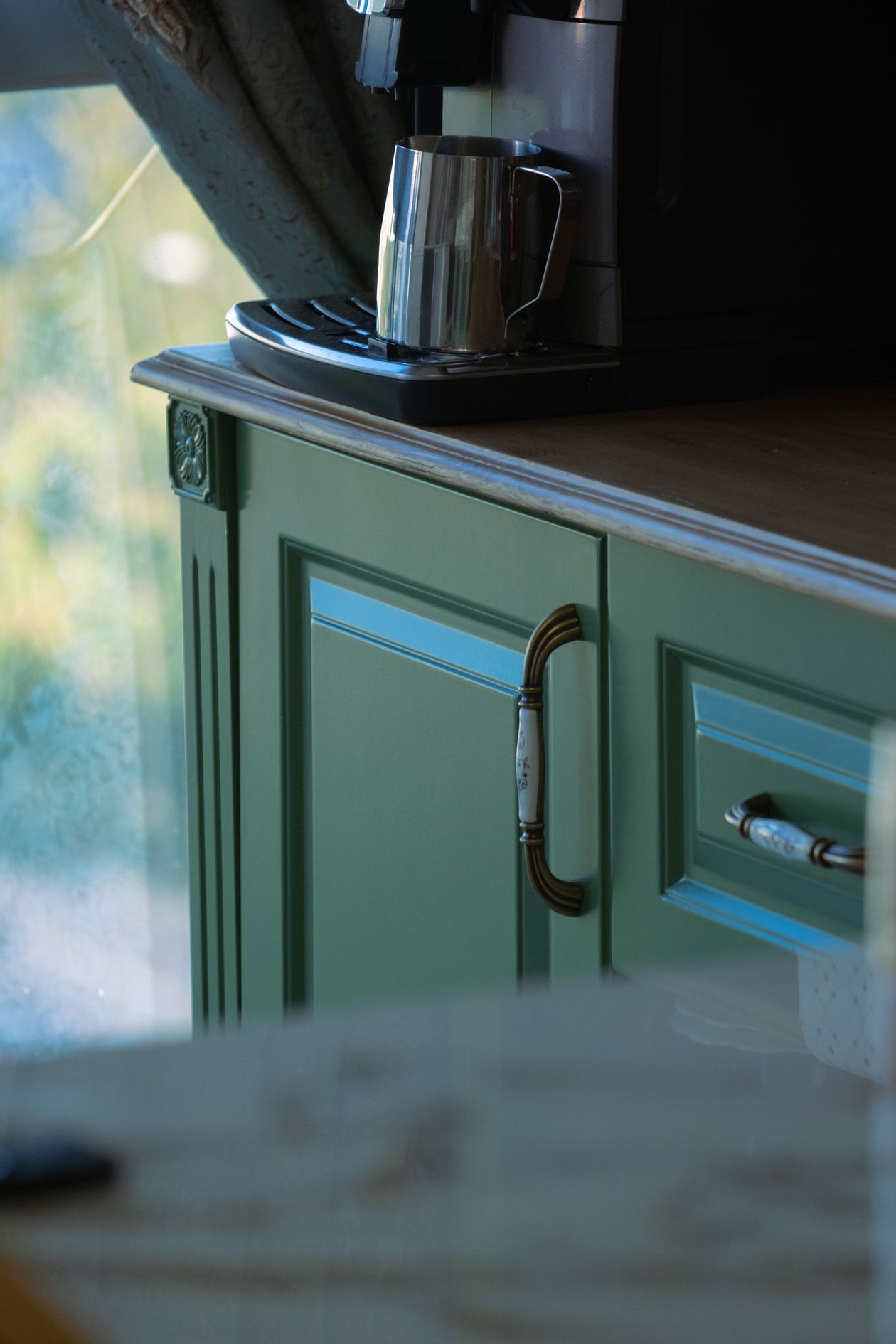
Photo via Pexels
7. Keep Upper and Lower Lines Consistent
When you stand back, the hardware should form clean horizontal lines across the kitchen. That means the same distance from the corner on every door, uppers and lowers alike.
Pick one measurement and stick to it for the whole room. Consistency reads as quality even more than the hardware style itself. Our Italian kitchen cabinets post shows this discipline in action.
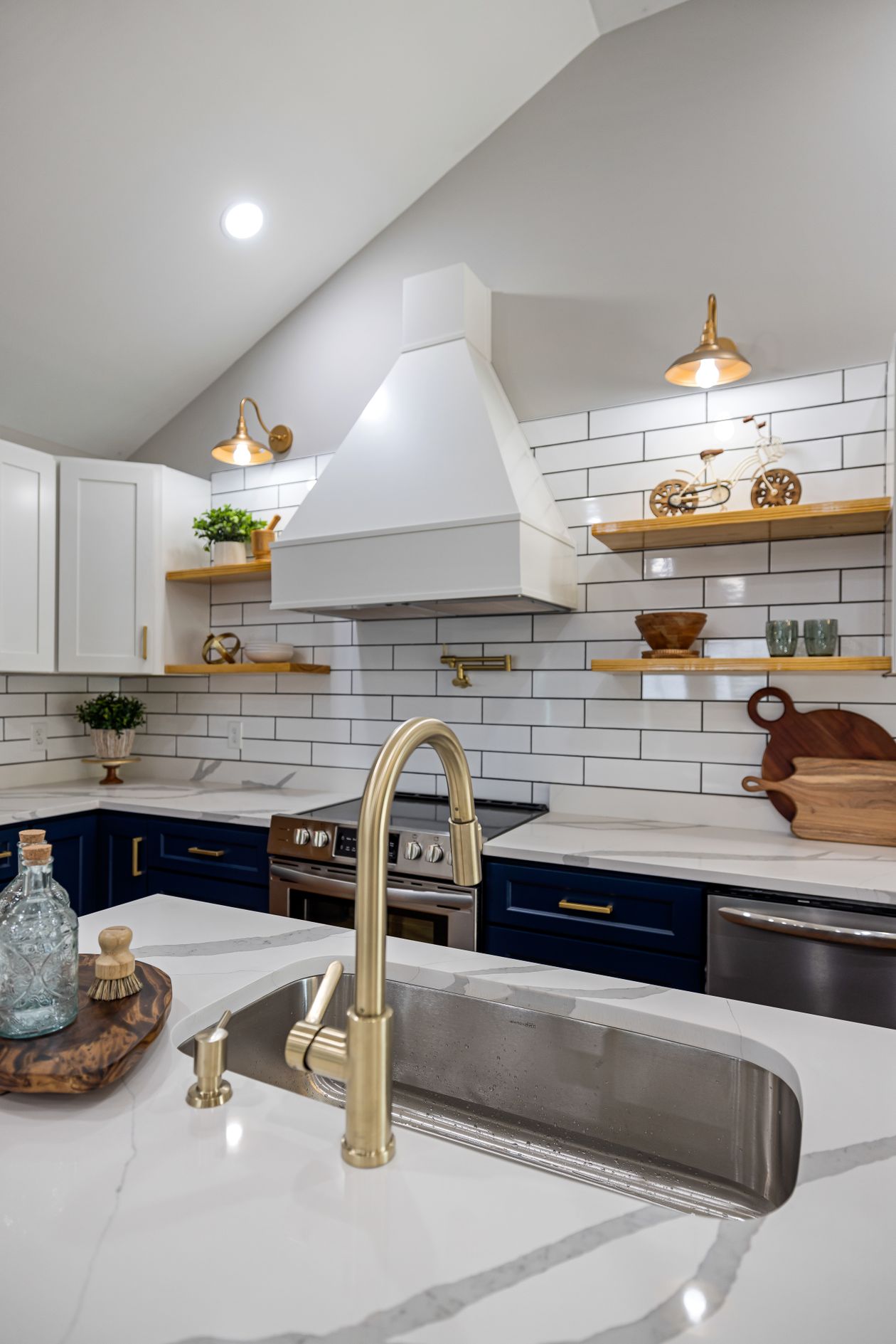
Photo via Pexels
8. Try Vintage Pulls on Slab Fronts
Flat slab fronts are a blank canvas, which makes them perfect for vintage-style pulls with character. The ornate hardware becomes the jewelry of an otherwise minimal kitchen.
Center the pull on the door's width and keep it 2 to 3 inches from the top or bottom corner. The simplicity of the door makes any crooked placement obvious, so measure carefully.
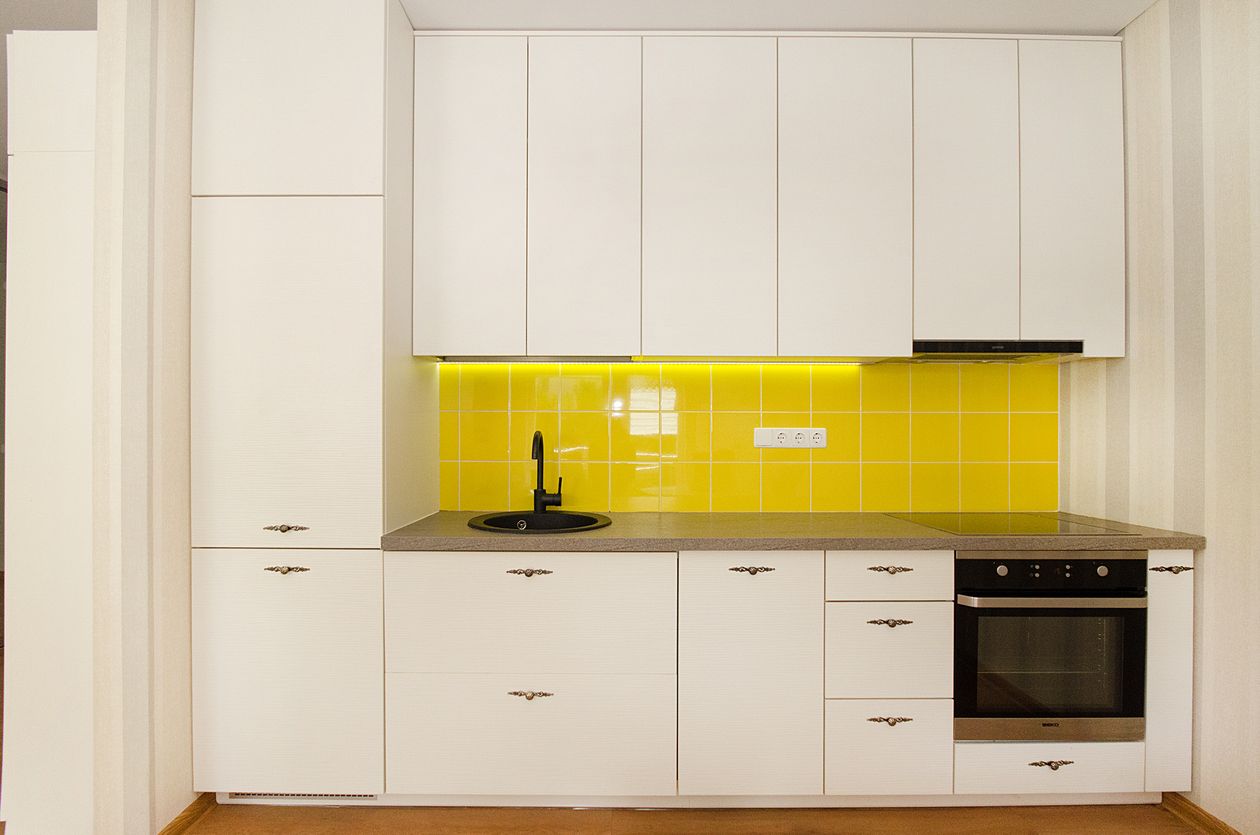
Photo via Pexels
9. Use Two Pulls on Wide Drawers
Any drawer wider than about 30 inches opens more smoothly with two pulls. Place each one a third of the way in from the sides so the force stays balanced.
Two pulls also keep wide, heavy drawers from racking in their slides. For pot-and-pan drawers, this is as much about function as looks.
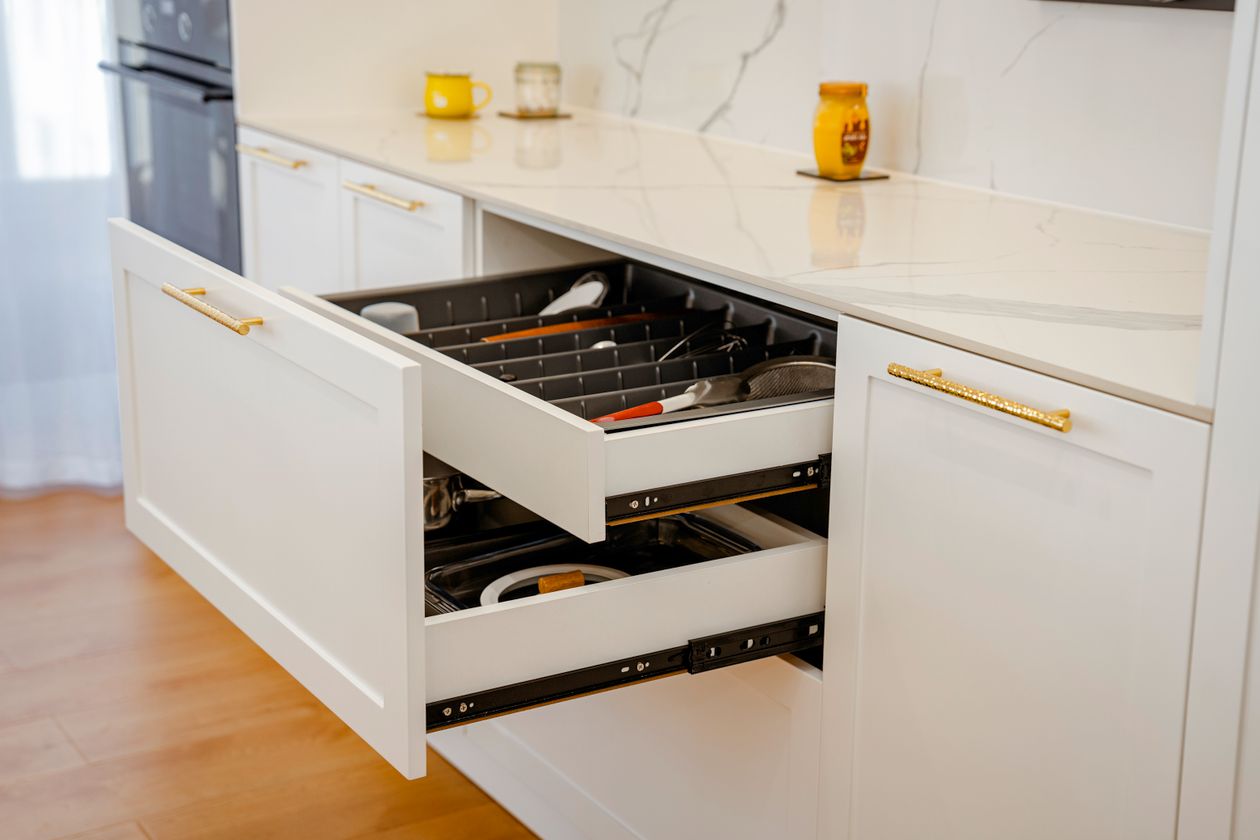
Photo via Pexels
10. Center Pulls on Deep Drawers
On deep drawer fronts, center the pull horizontally and place it on the upper third vertically. This puts the grip where your hand naturally lands and looks intentional.
For very deep pot drawers, a longer pull, 8 to 12 inches, gives better leverage than a standard 5-inch size. Scale the hardware to the drawer, not the other way around.
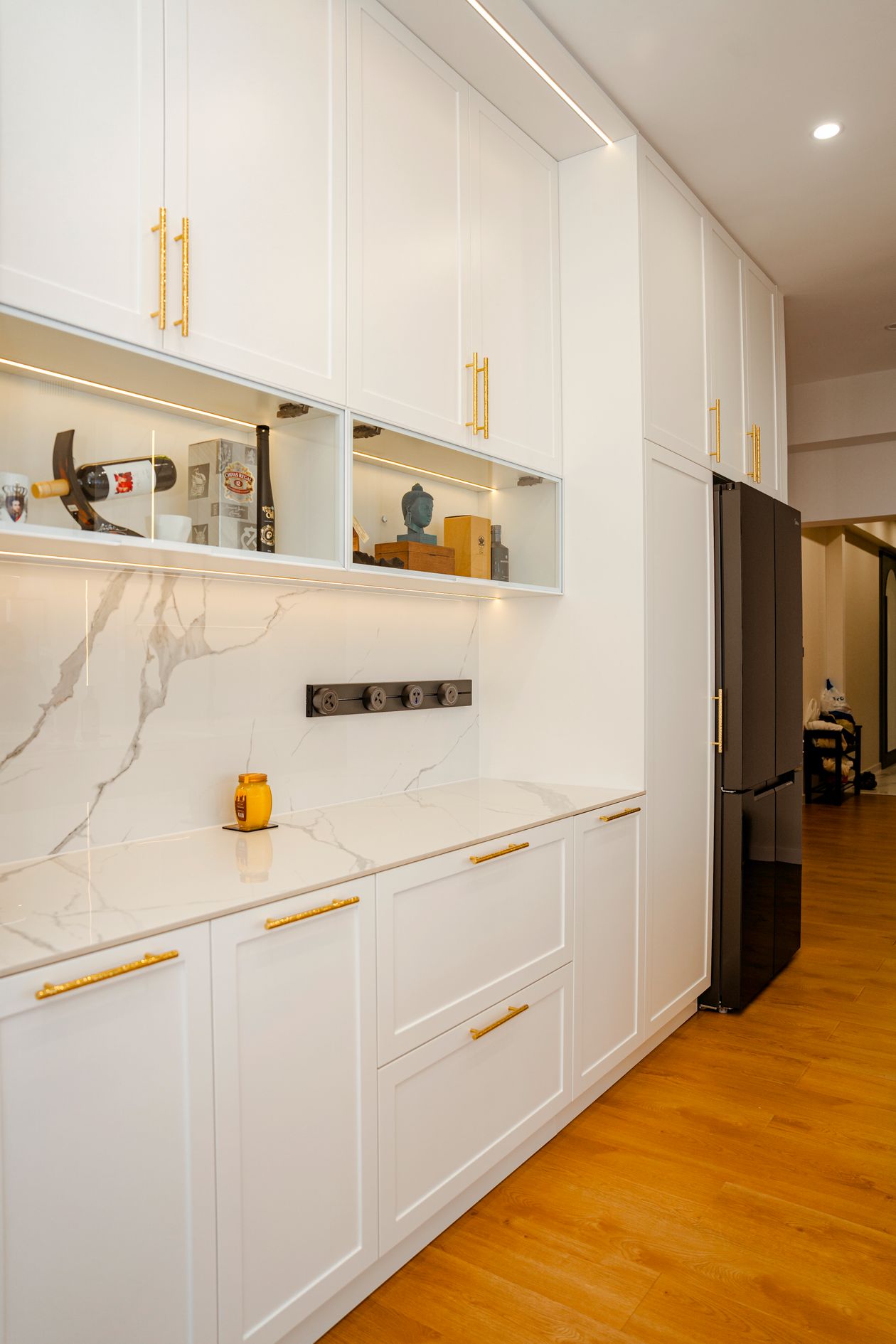
Photo via Pexels
11. Try Edge Pulls for a Modern Look
Edge or tab pulls mount to the top edge of the drawer front, nearly disappearing from view. They are the go-to for flat-front, handleless-look kitchens.
Because they sit on the edge, they work best on drawers rather than doors. Keep the reveal consistent so the thin line of metal reads as one continuous detail. See more modern storage in our mud room cabinet guide.
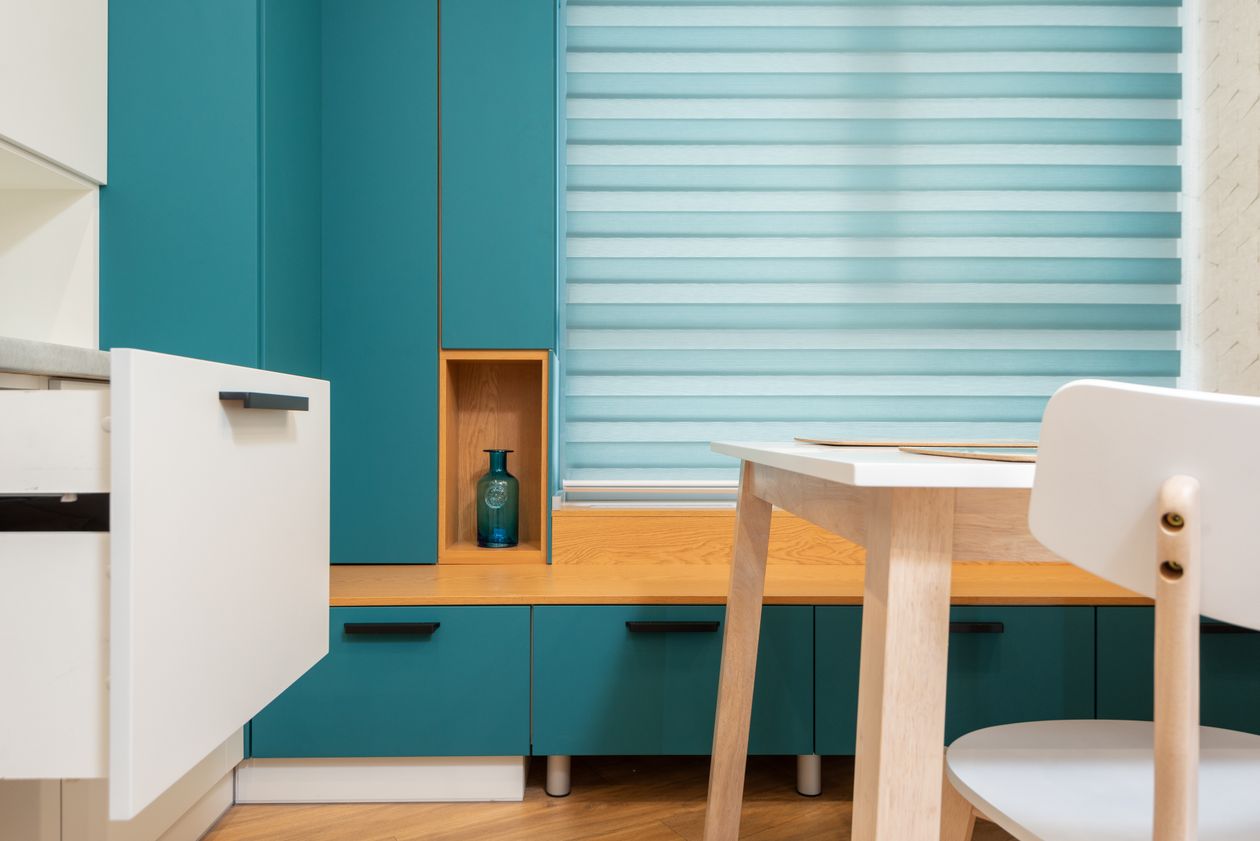
Photo via Pexels
12. Mount Edge Pulls on the Top Edge
Edge pulls belong on the top edge of each drawer front, centered on the width. The lip should overhang just enough for a fingertip grip, usually about half an inch.
Check that the pull clears the countertop above when the drawer opens, especially under thick stone tops. A quick test-fit with one pull saves a whole drawer bank of mistakes.
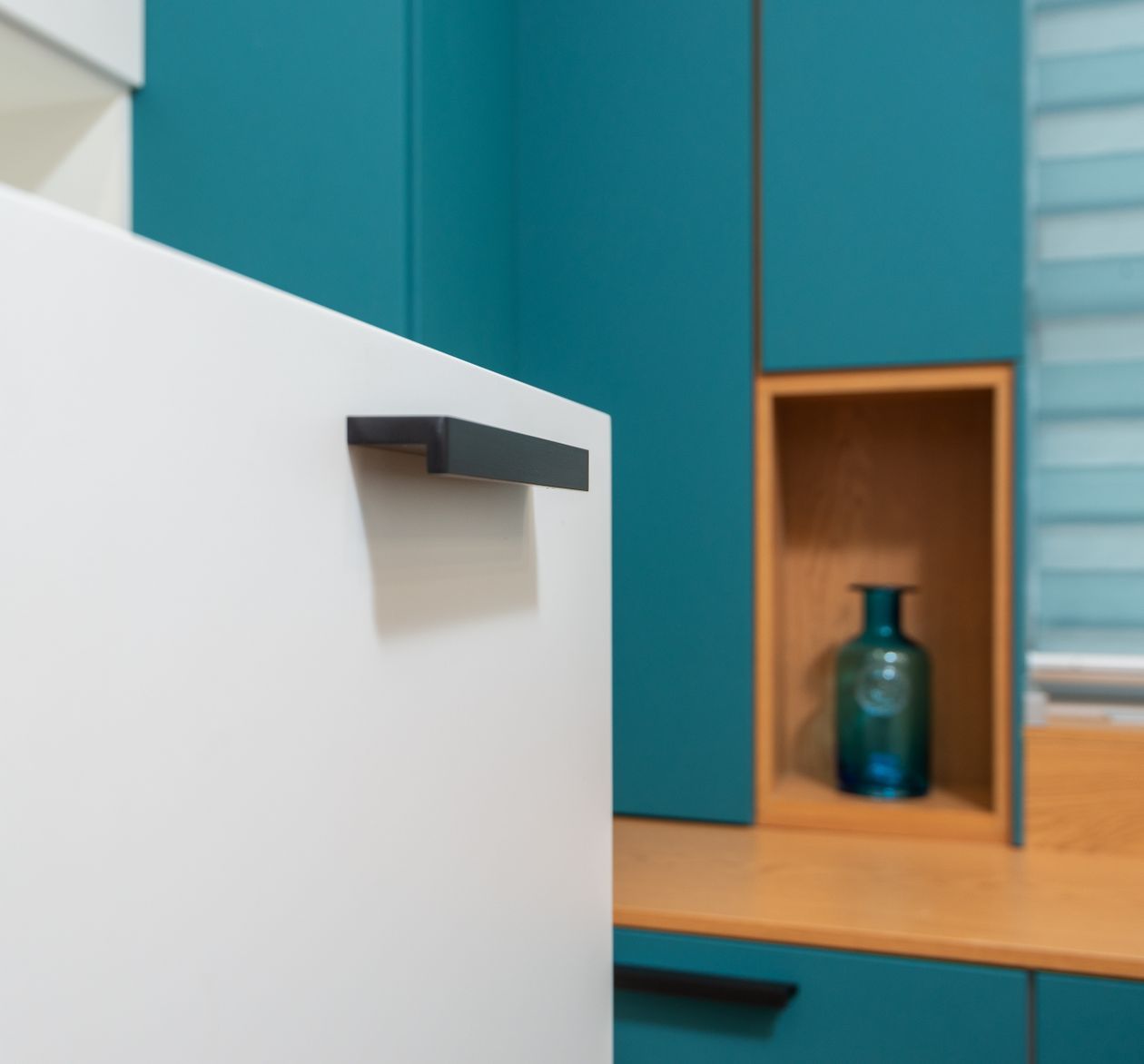
Photo via Pexels
FAQs
Where do knobs go on upper cabinet doors?
In the bottom corner opposite the hinges, 2.5 to 3 inches from each edge.
Where do knobs go on lower cabinet doors?
In the top corner opposite the hinges, the same 2.5 to 3 inches from each edge.
Should drawer knobs be centered?
Yes for small drawers. On deep drawers, center horizontally but place the knob on the upper third.
One or two pulls on a wide drawer?
Use two pulls on drawers wider than about 30 inches, spaced a third of the way in from each side.
Does all the hardware have to match?
Not the finish, but the placement must be consistent. Matching positions matter more than matching metals.
Final Thoughts
Good cabinet knob placement comes down to two habits: measure from the corner, and keep it identical everywhere. Do that, and even budget hardware looks custom. For more on dressing up storage, see our what is a sideboard guide.
Sources
- EngineerFix: How to Add Knobs to Kitchen Cabinets
- Dowsing & Reynolds: Where to Put Knobs and Handles
- Better Kitchens: Where to Put Handles, Knobs and Pulls
Gallery
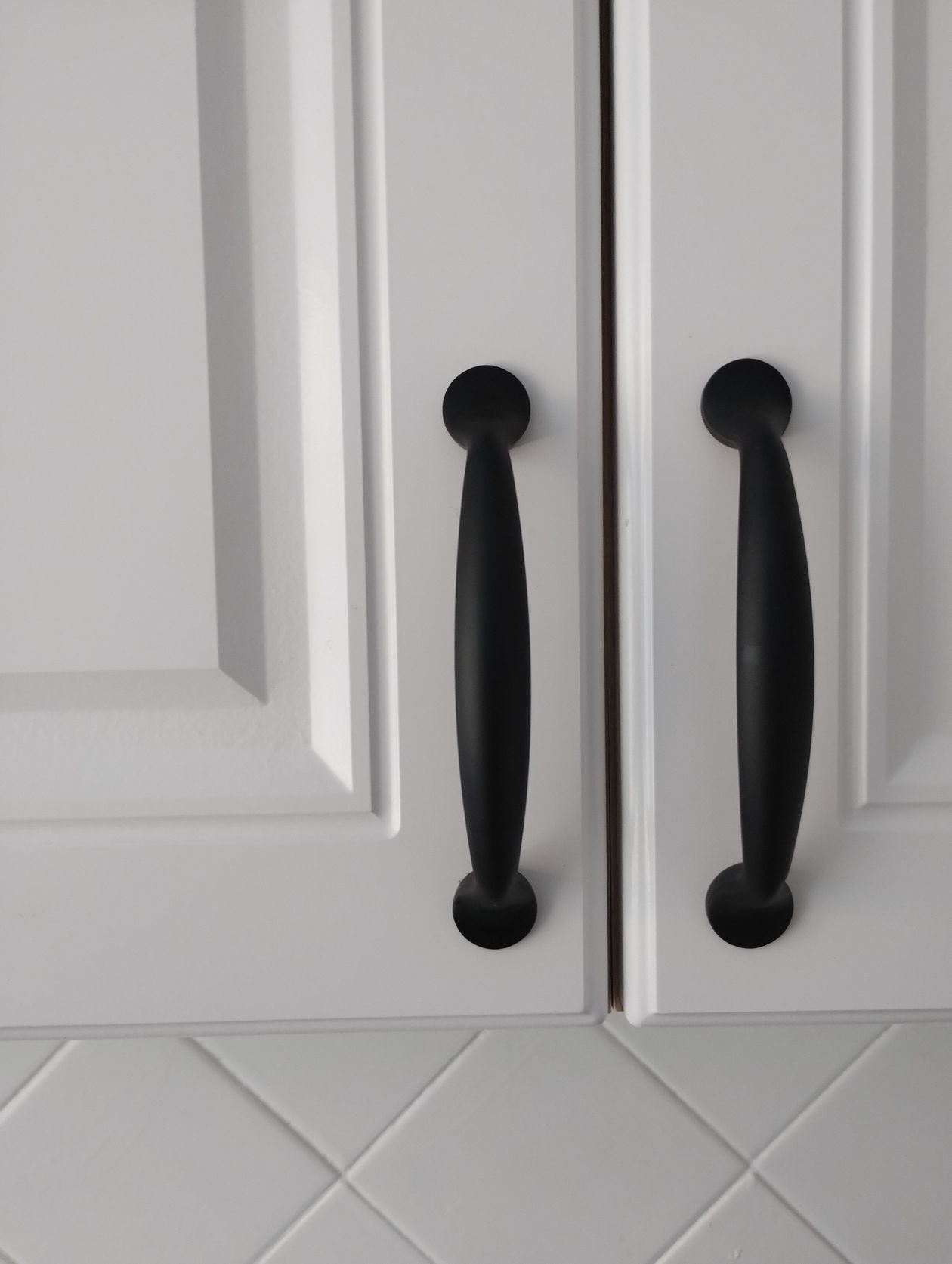
Photo via Pexels
Photo via Pexels
Photo via Pexels

No comments:
Post a Comment