A well-chosen mud room cabinet can turn a chaotic entryway into the calmest corner of your home. Instead of coats on the floor and shoes scattered everywhere, every family member gets a dedicated spot for their gear, and the mess stays by the door instead of traveling through the house.
Below are ten practical ideas for mudroom storage cabinets, each with real measurements, honest costs, and organizing tips you can actually use. Whether you want a full built-in locker wall or one freestanding piece that fits a tiny entryway, there is a setup here that will work for your space.
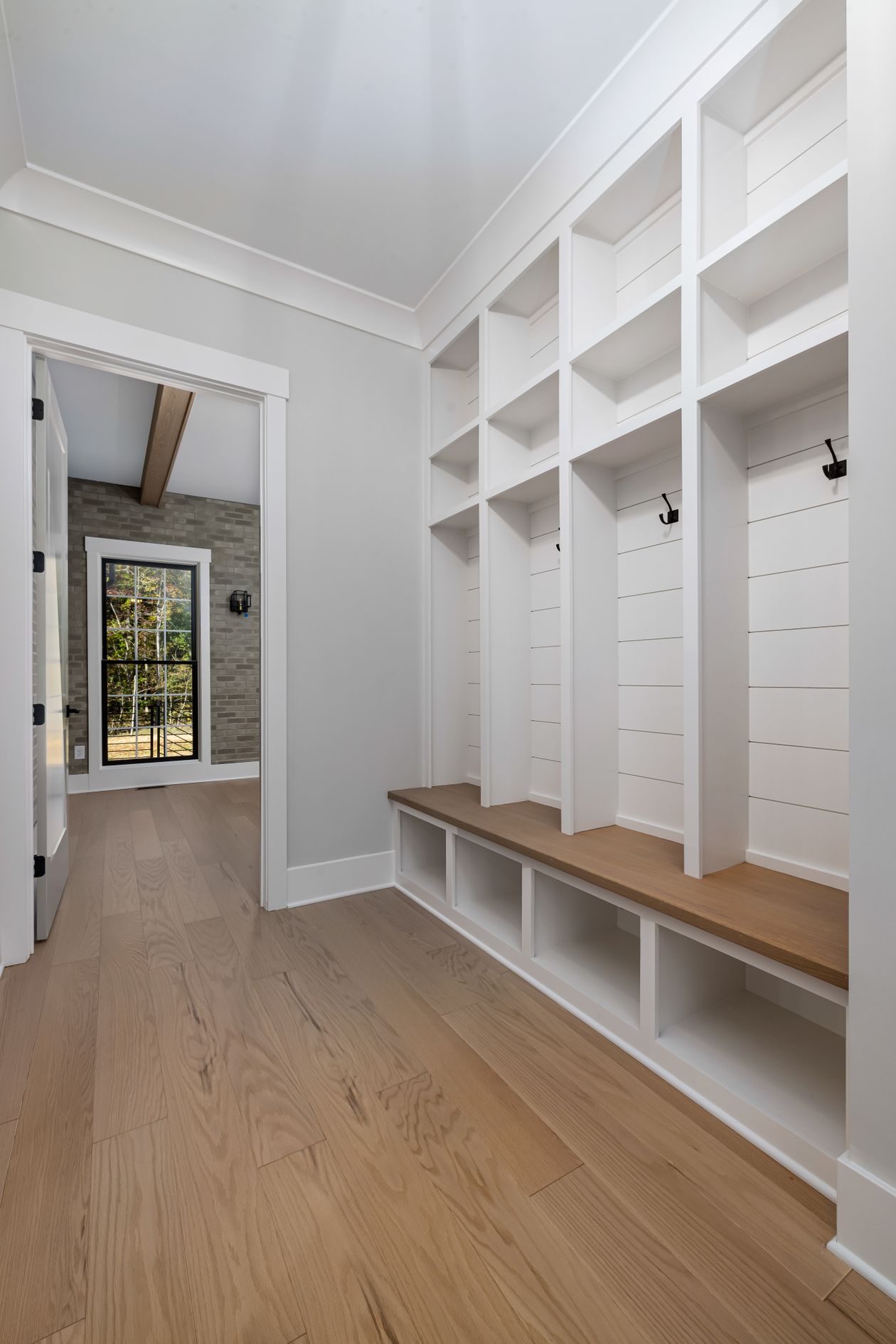
Photo via Pexels
Table of Contents
- 1. Built-In Locker Wall With Bench
- 2. Bench and Cabinet Combo Unit
- 3. Freestanding Cabinets for Tight Entryways
- 4. Hidden Shoe Cabinets
- 5. Open Cubbies With Baskets
- 6. Open Hooks for Grab-and-Go Gear
- 7. Tall Floor-to-Ceiling Cabinets
- 8. Cabinets Flanking a Window
- 9. Sleek Modern Closed Cabinets
- 10. Rustic Bench and Hook Wall
1. Built-In Locker Wall With Bench
A full wall of built-in lockers is the gold standard for a busy family entryway. Give each person a 24-inch-wide locker with a hook, a shelf, and a cubby below the bench; the bench itself should sit 17 to 19 inches high so it is comfortable to sit on while pulling on boots. Keep the locker depth at 18 inches so coats hang without bunching against the back panel.
Custom built-ins like this run about $4,000 to $8,000 for a 6-foot wall, but you can fake the look with two 36-inch prefab pantry cabinets flanking a ready-made bench for under $1,200. Add a nameplate or painted number to each locker so kids know exactly which spot is theirs.
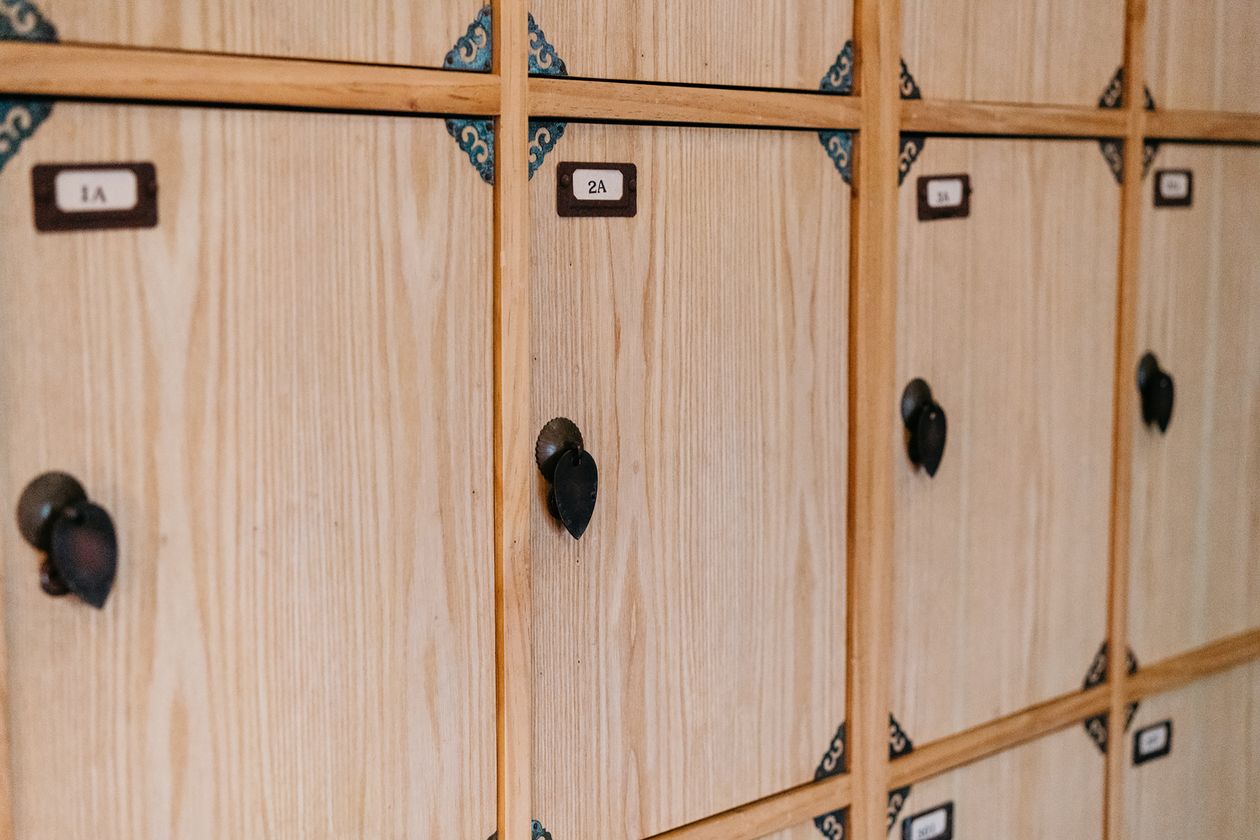
Photo via Pexels
2. Bench and Cabinet Combo Unit
A single unit that combines a bench seat with enclosed storage below solves two problems at once. Look for a piece about 48 inches wide, 18 inches deep, and 20 inches tall, with doors or drawers under the seat to hide shoes, umbrellas, and sports gear. A removable cushion on top makes it far more comfortable, and hooks above at 60 inches high hold coats and bags.
Ready-made hall-tree combos cost $150 to $500 at big-box stores and usually assemble in under two hours. Anchor any freestanding unit to the wall with the included anti-tip strap, especially if kids will climb on it, and leave a 36-inch clear path in front so the door can still swing open.
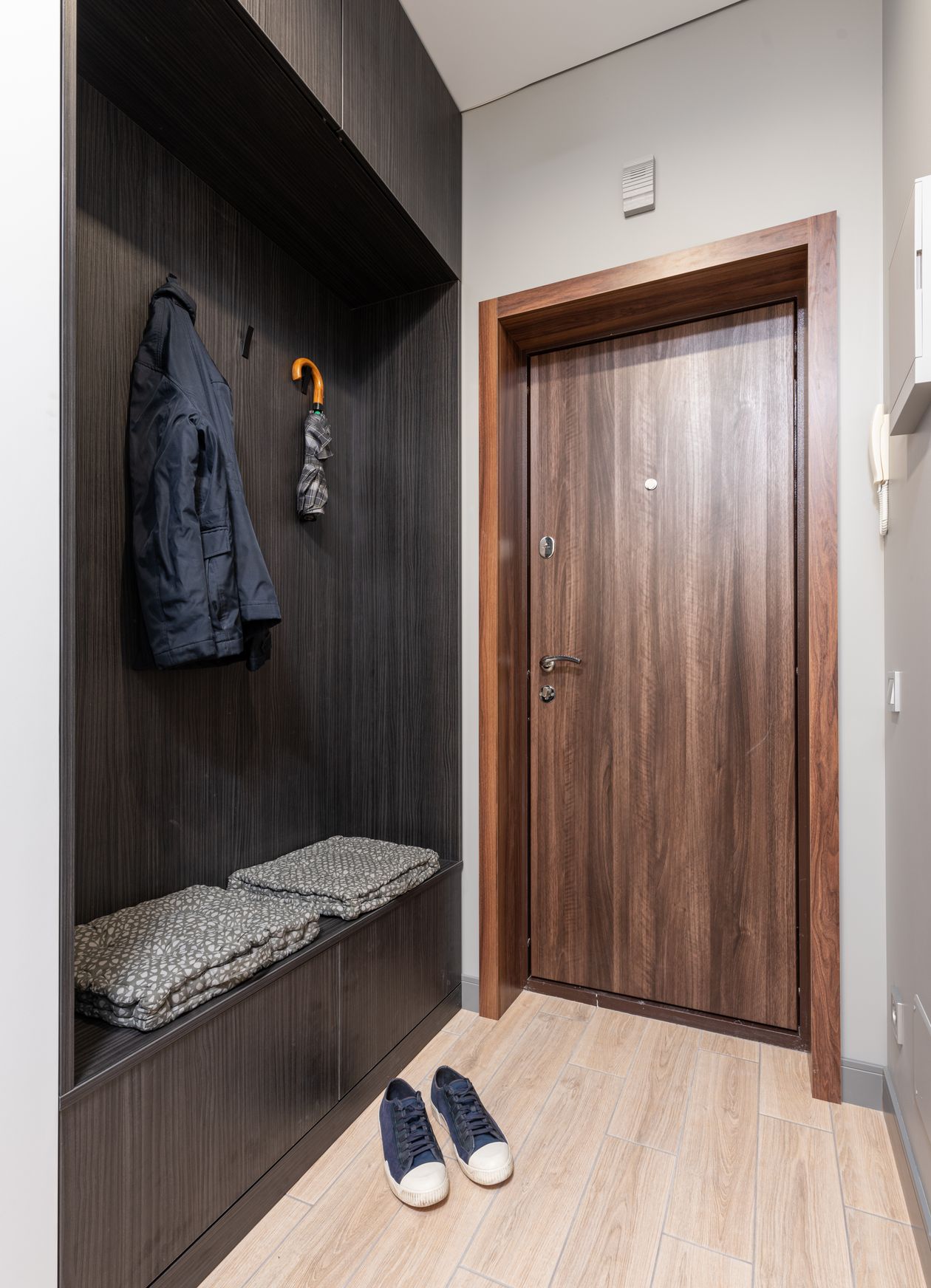
Photo via Pexels
3. Freestanding Cabinets for Tight Entryways
No mudroom at all? A narrow freestanding cabinet can create a drop zone in a hallway corner. A 24-inch-wide, 12-inch-deep cabinet with bins or doors fits against almost any wall and holds shoes, hats, and dog leashes without blocking traffic. Pair it with a small rug to catch dirt and define the zone.
This is the most renter-friendly option, and it is kind to the budget too: cube-style storage units cost $40 to $120, plus $10 to $15 per fabric bin. Before you commit to a bigger project, try decluttering your entryway so you only buy storage for things you actually keep.
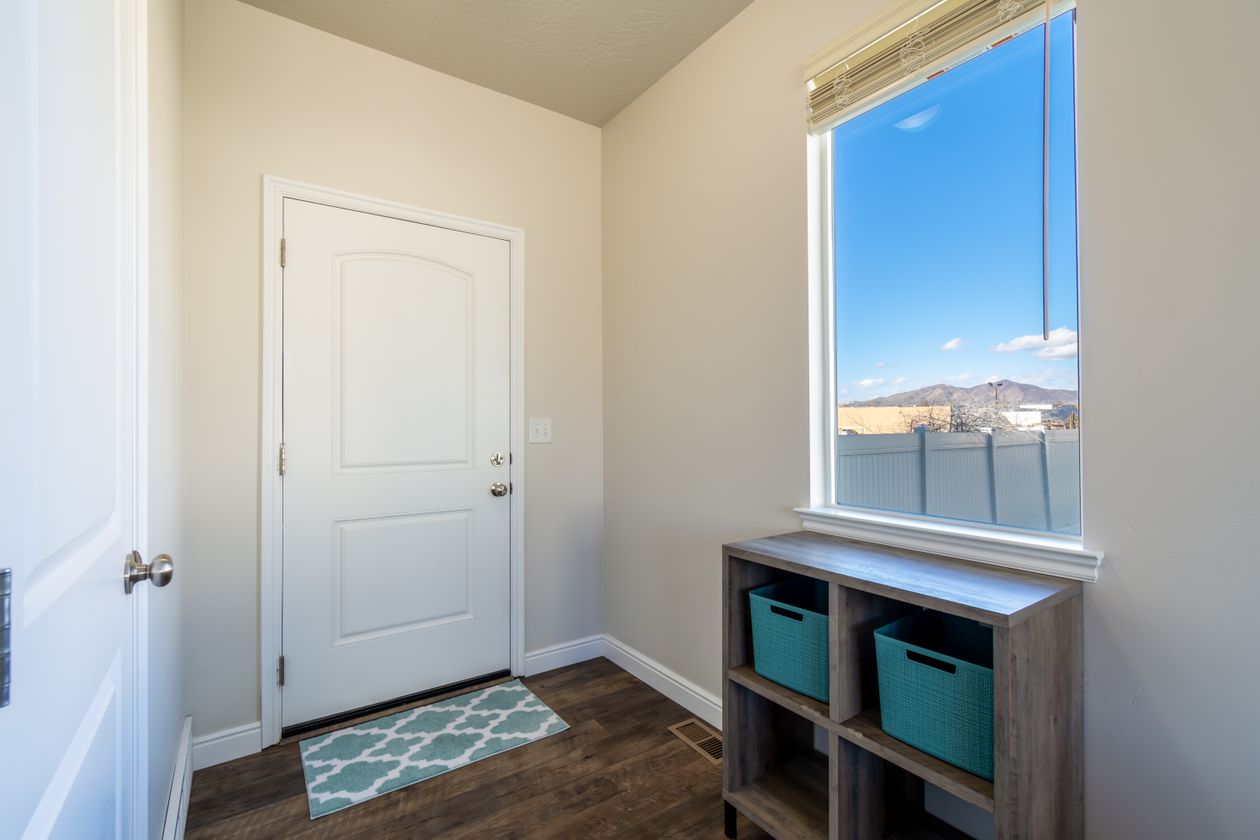
Photo via Pexels
4. Hidden Shoe Cabinets
Shoes cause most entryway mess, and a closed shoe cabinet fixes it fast. Tilt-out or louvered-door cabinets about 14 inches deep hold three to four pairs of adult shoes per compartment while letting air circulate, so damp shoes dry out instead of smelling up the room. Keep one shelf per person and the pile never returns.
Give each shelf a simple rule, like in our bathroom drawer organization approach: one pair of daily shoes, one pair of backups, nothing more. Slim two-tier shoe cabinets start around $60, and a 36-inch-wide cabinet with three tilt-out sections costs roughly $180.
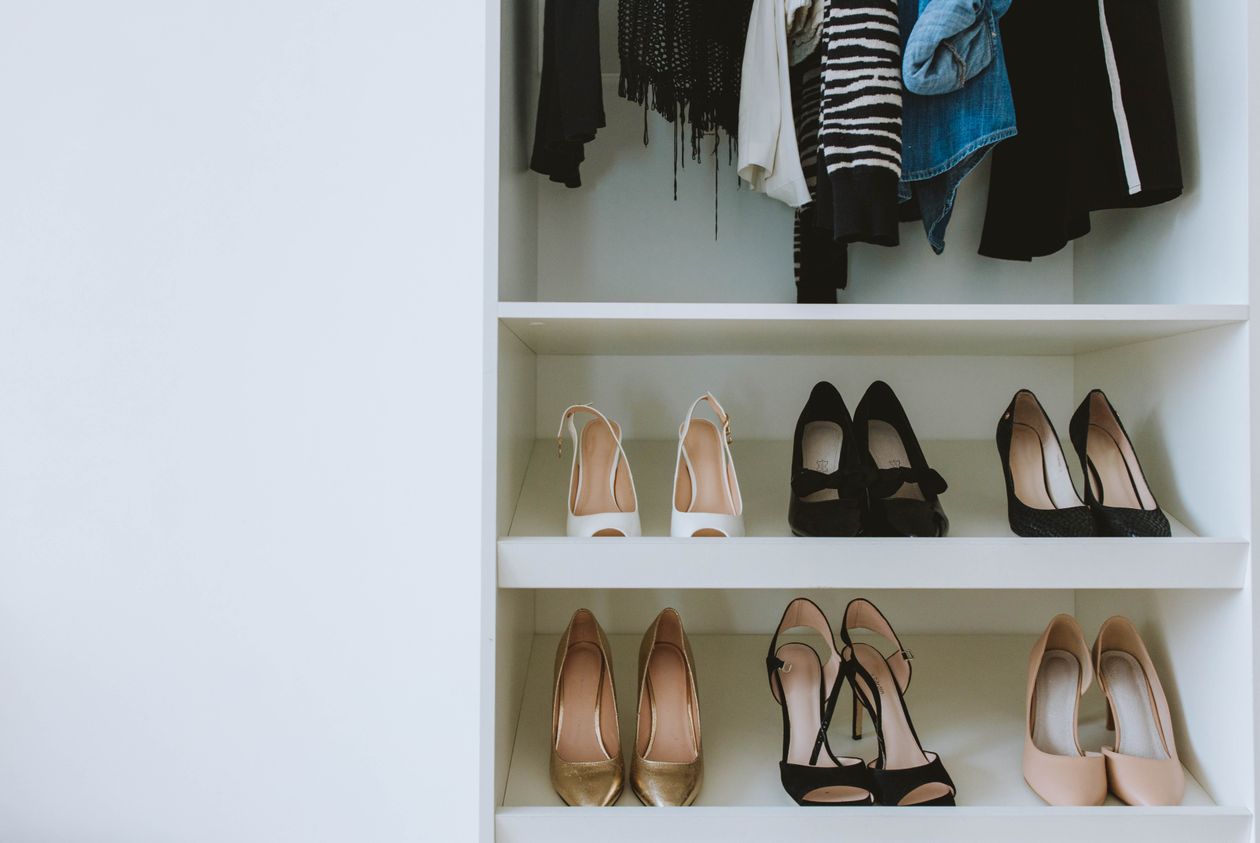
Photo via Pexels
5. Open Cubbies With Baskets
Open cubbies with labeled baskets are the fastest system for families with small kids, because nothing has a door to fight with. Use 14-inch-square cubbies and one sturdy basket per person for gloves, hats, and sunglasses; boots and sneakers go on the bench below. Wicker or seagrass baskets hide clutter while still breathing.
Mount the cubby unit so the bottom shelf starts 4 inches off the floor for easy sweeping, and keep basket labels at kid eye level, about 36 inches high. A 6-cube unit runs $50 to $150, and replacing cardboard boxes with washable fabric bins, about $12 each, keeps the whole setup looking tidy for years.
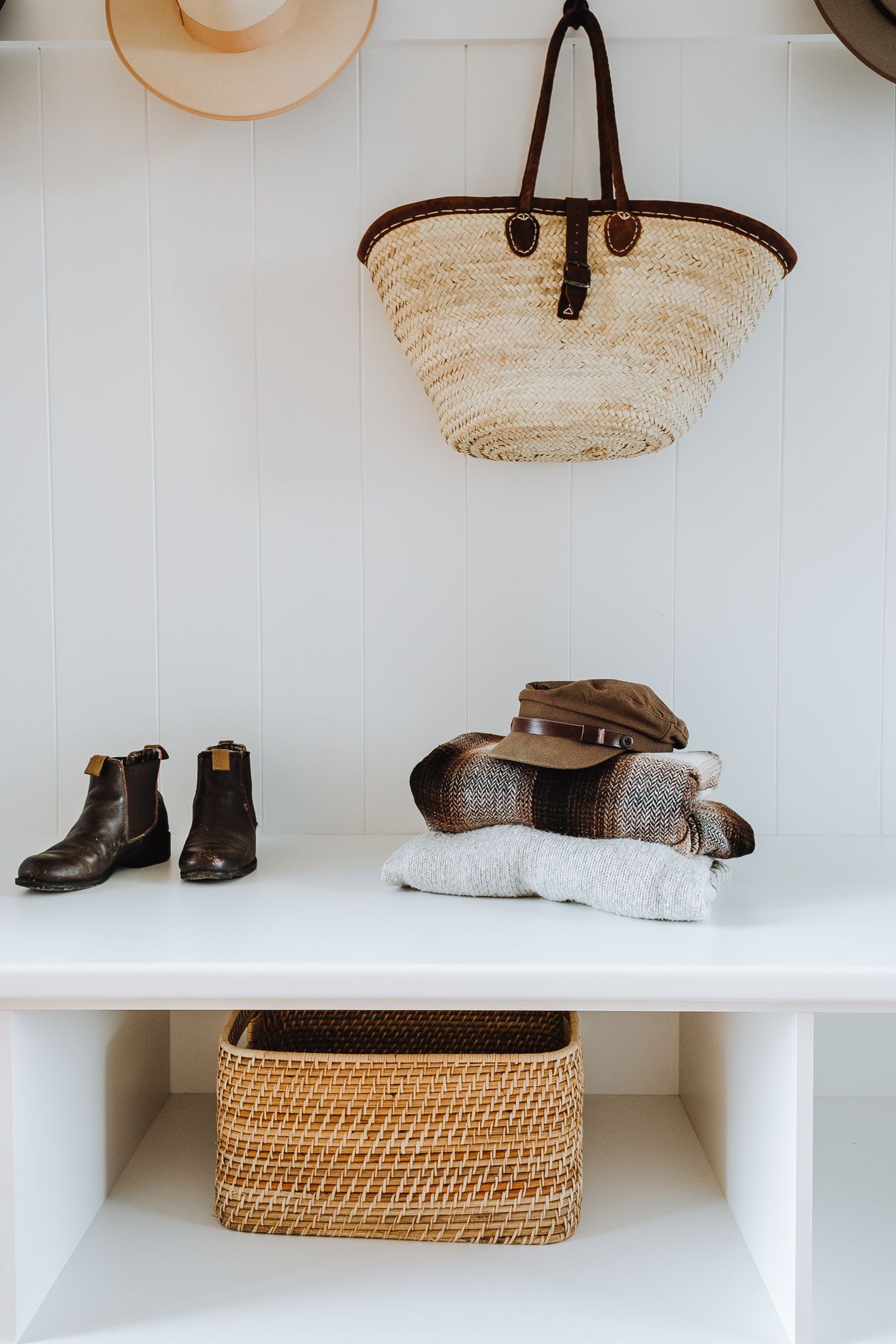
Photo via Pexels
6. Open Hooks for Grab-and-Go Gear
Sometimes the simplest mudroom storage is a strong row of hooks, no doors at all. Mount a wooden peg rail or a row of cast-iron hooks at 60 inches high for adults and a second row at 40 inches for kids; each hook easily holds a coat plus a backpack. This keeps wet jackets where they can air-dry instead of mildewing inside a closed cabinet.
Choose hooks rated for at least 25 pounds each, since a winter coat plus a school bag adds up fast. Space them 8 to 10 inches apart so bulky items do not overlap, and add one small shelf above at 72 inches for hats and sunscreen you grab on the way out.
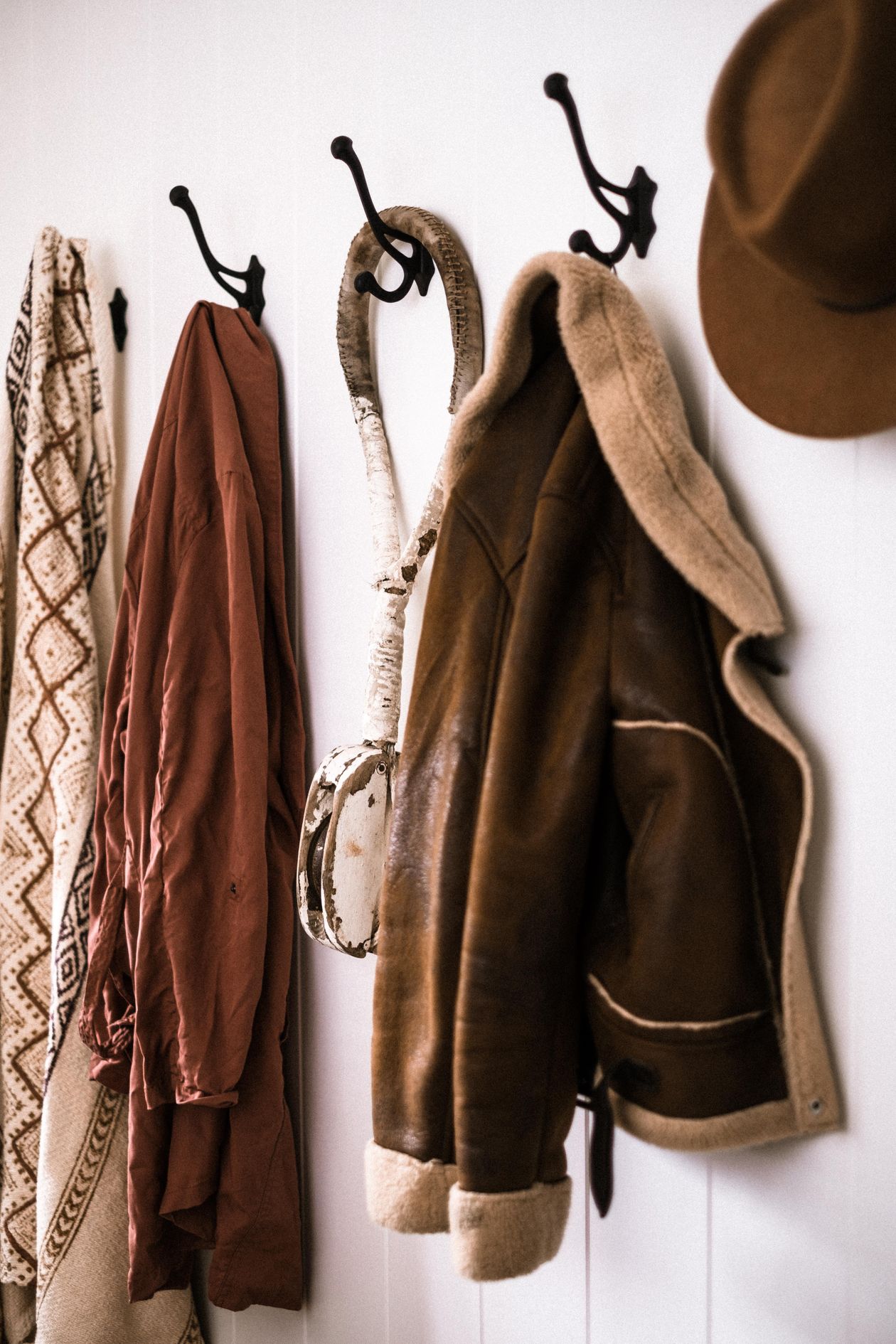
Photo via Pexels
7. Tall Floor-to-Ceiling Cabinets
Tall cabinets use the vertical space most entryways waste. A 24-inch-deep, 84-inch-tall cabinet gives you three zones: daily gear at arm's reach, boots and cleaning supplies down low, and out-of-season coats and holiday decor up top behind closed doors. Adjustable shelves let you reconfigure the inside as your family's needs change.
One wide cabinet, 36 to 48 inches, usually works better than two narrow ones because you lose less space to side panels. If your mudroom doubles as a laundry drop zone, these tall units pair beautifully with floating shelves in the laundry room for detergent and baskets. Expect $300 to $800 for a quality tall cabinet.
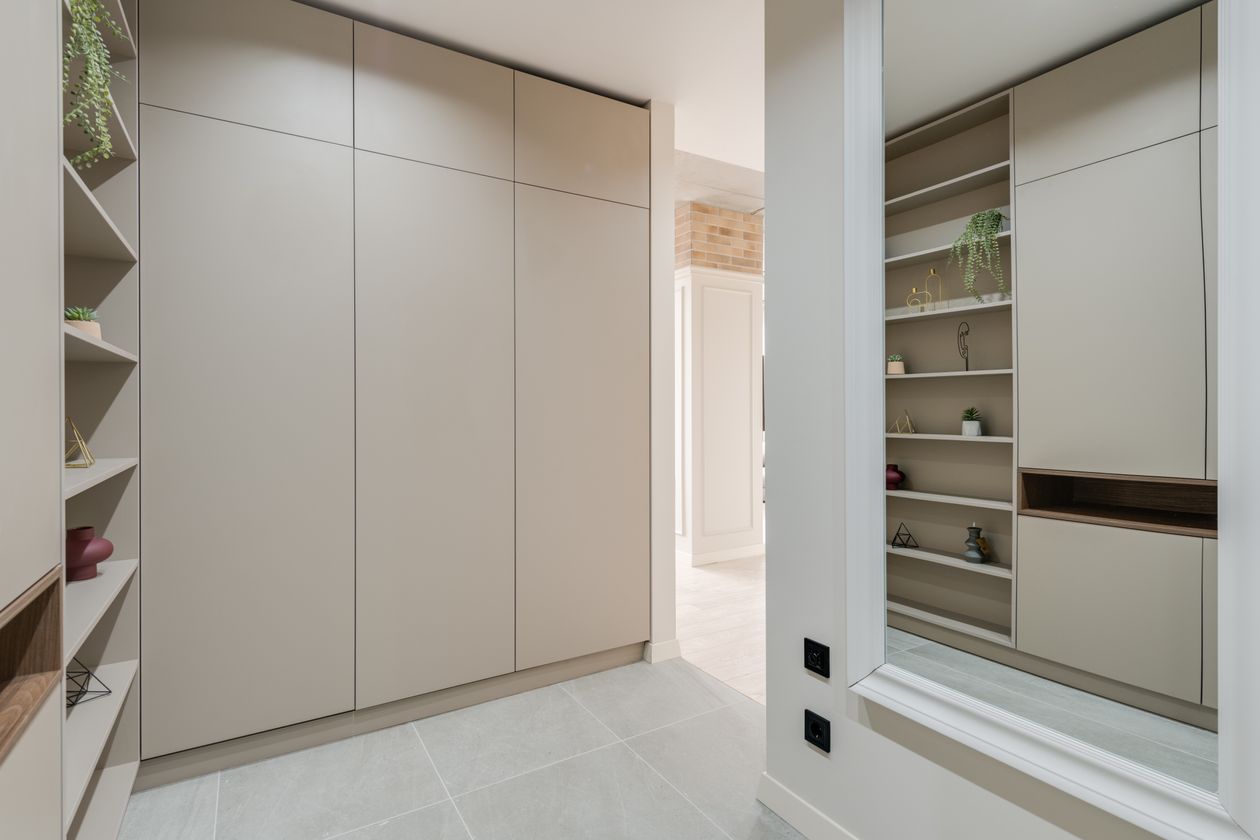
Photo via Pexels
8. Cabinets Flanking a Window
If your entryway has a window, build storage around it instead of blocking it. Two 24-inch-wide cabinets on either side of the window with a bench or window seat between them create a bright, custom-looking mudroom nook. The natural light makes the small space feel twice as big, and the seat becomes everyone's favorite spot to lace up shoes.
Keep cabinet depth to 16 inches here so they do not crowd the window or block light. Shaker-style doors painted the same white as the trim blend in seamlessly, and a pair of stock 24-inch pantry cabinets costs roughly $400 to $700, far less than a fully custom build.
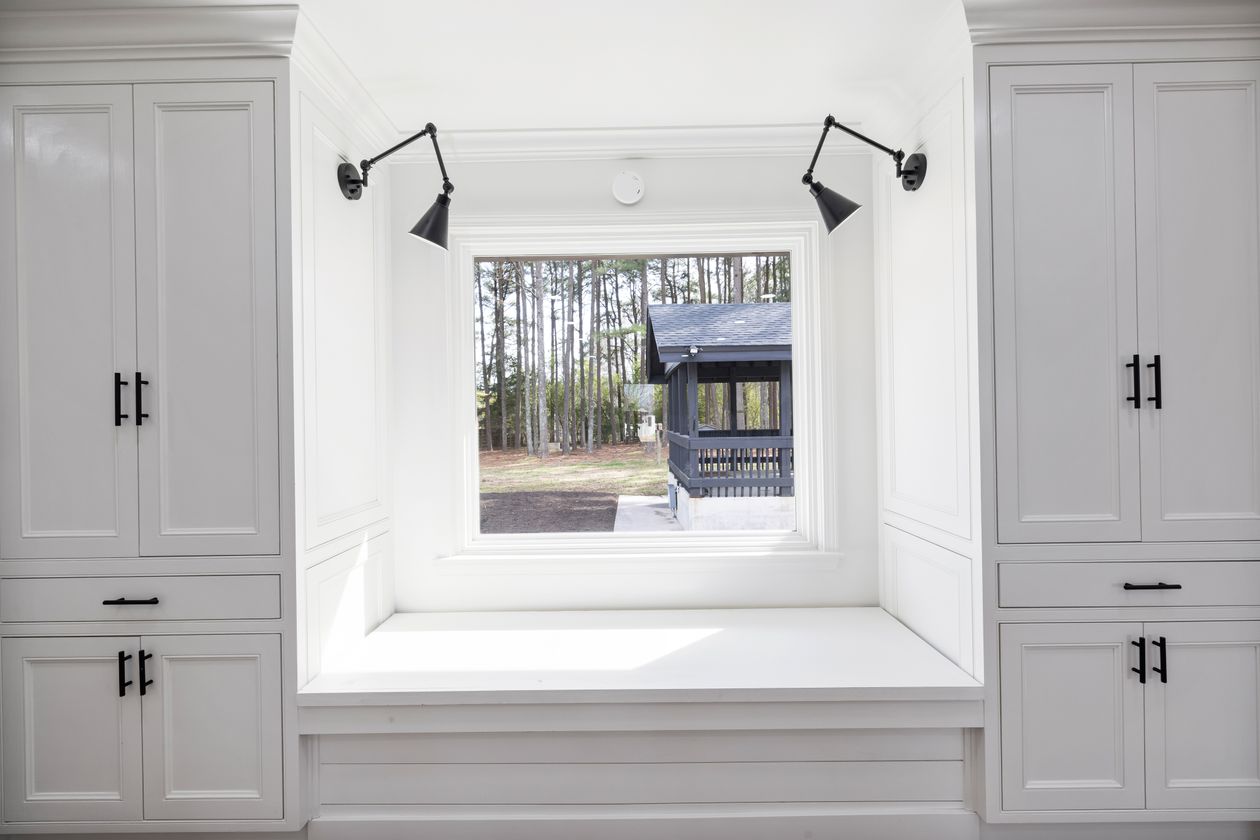
Photo via Pexels
9. Sleek Modern Closed Cabinets
For a minimalist look, choose handleless closed cabinets that hide everything. Flat-panel doors in white, gray, or warm taupe make a small hallway feel calm and uncluttered, while a single open shelf or nook at counter height keeps keys, sunglasses, and the mail within easy reach. Push-to-open hardware means no knobs to catch on bags.
Leave a 2-inch gap between the bottom of wall-hung cabinets and the floor so you can slide shoes underneath, and add LED strip lighting under an open nook for about $25. A run of three 30-inch-wide flat-panel cabinets typically costs $900 to $2,000 depending on the finish.
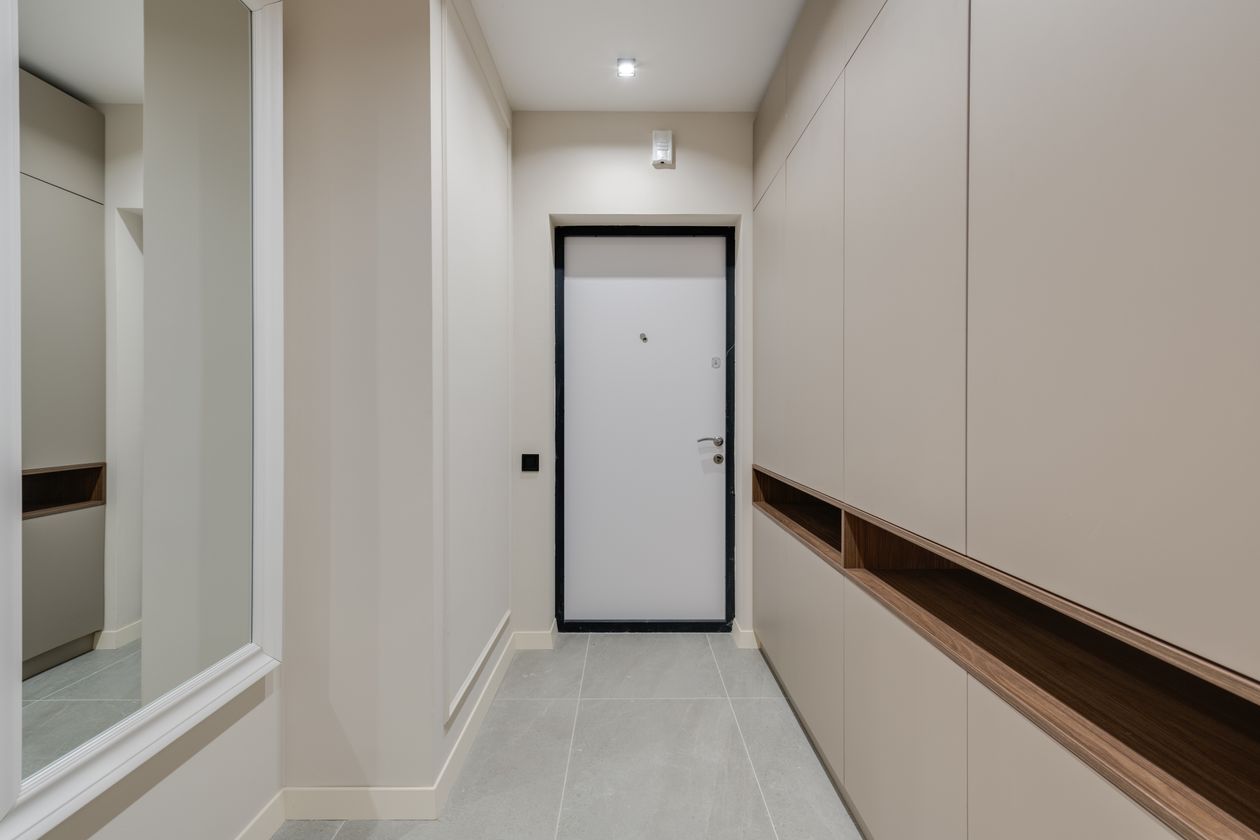
Photo via Pexels
10. Rustic Bench and Hook Wall
A rustic setup with a simple wooden bench and a row of iron hooks brings warmth to the entryway without any cabinetry at all. A 48-inch reclaimed-wood or rattan bench with baskets tucked underneath handles seating and shoe storage, while five or six hooks above hold the daily coats and hats. It is the easiest style to change with the seasons.
Seal any raw wood with two coats of matte polyurethane so wet boots do not stain it, and swap in cozy textiles in fall for an instant refresh, like the ideas in our fall farmhouse decor ideas. A solid wood bench costs $120 to $300, and a set of six cast-iron hooks runs about $20.
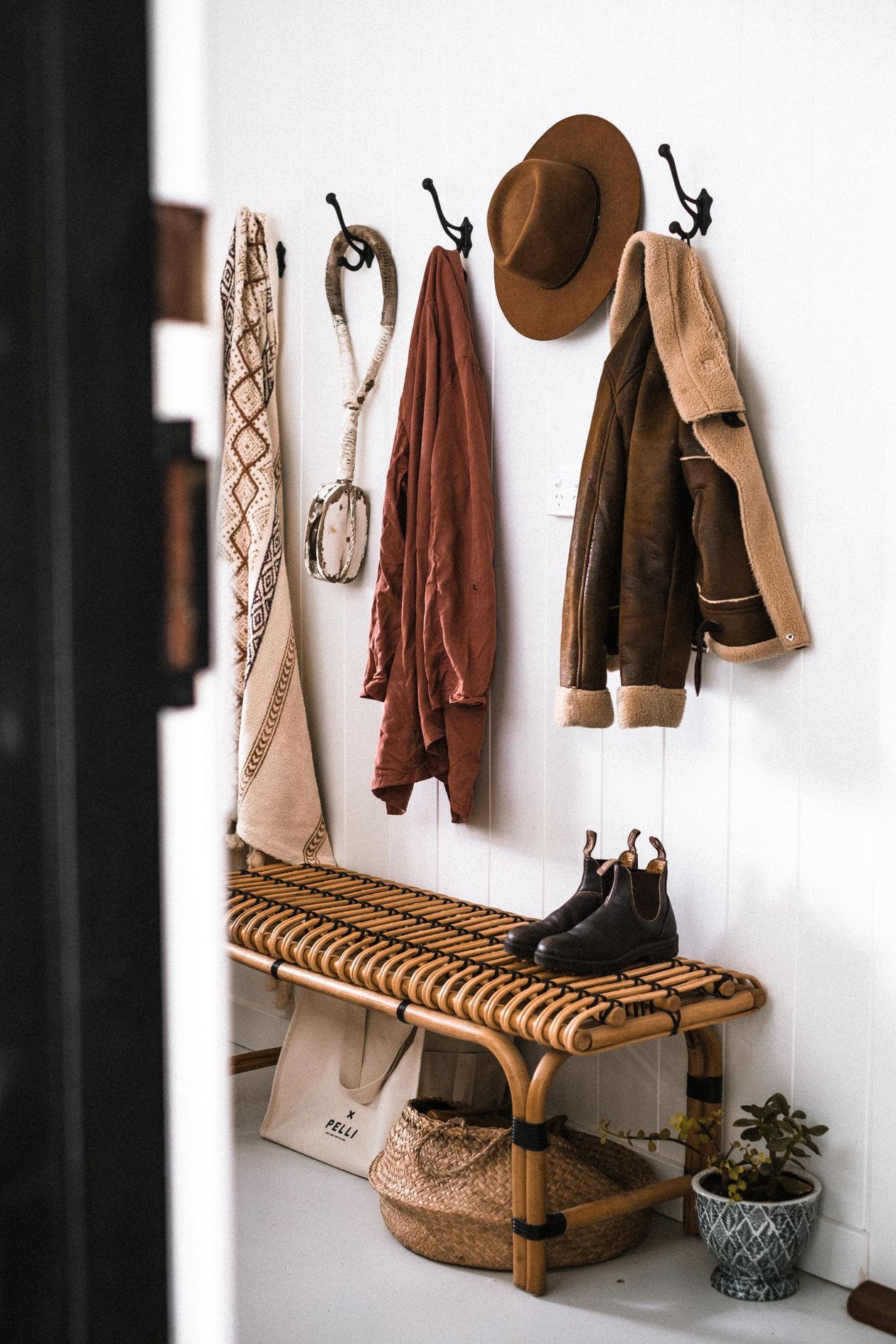
Photo via Pexels
FAQs
How deep should a mudroom cabinet be?
Plan for 18 inches of depth if you want coats to hang on hangers inside; 12 to 15 inches is enough for shoe cubbies and folded items. Anything deeper than 24 inches makes it hard to reach the back.
How tall should a mudroom bench be?
A seat height of 17 to 19 inches works best for adults putting on shoes. For a bench kids use, aim for 12 to 14 inches so their feet can touch the floor.
What should I store in a mudroom cabinet?
Coats, shoes, bags, keys, umbrellas, sports gear, and pet supplies are the main things. Move anything you use less than once a month to a closet so the entryway only holds daily essentials.
Should I choose built-in or freestanding cabinets?
Built-ins use every inch and look custom, but they cost more and cannot move with you. Freestanding cabinets cost far less, install in an afternoon, and work great for renters or anyone who might rearrange.
How much does a mud room cabinet cost?
A ready-made mudroom cabinet costs $150 to $600, a semi-custom setup runs $1,500 to $4,000, and a fully custom built-in locker wall can pass $5,000. Painting stock cabinets yourself is the cheapest way to get a custom look.
Final Thoughts
The best mud room cabinet is the one your family will actually use, so match the storage to your real habits. If doors get left open, go with open cubbies; if visual clutter stresses you out, closed cabinets are worth the extra cost. Measure your wall, pick one idea from this list, and start with the single change that will make your mornings easier.
Sources
- The Spruce: 22 Best Mudroom Bench Ideas for Stylish Storage
- The Spruce: 43 Mudroom Ideas With Creative Storage Solutions
- Architecture Lab: Mudroom Size, Functionality, Uses and Furniture
Gallery
Photo via Pexels
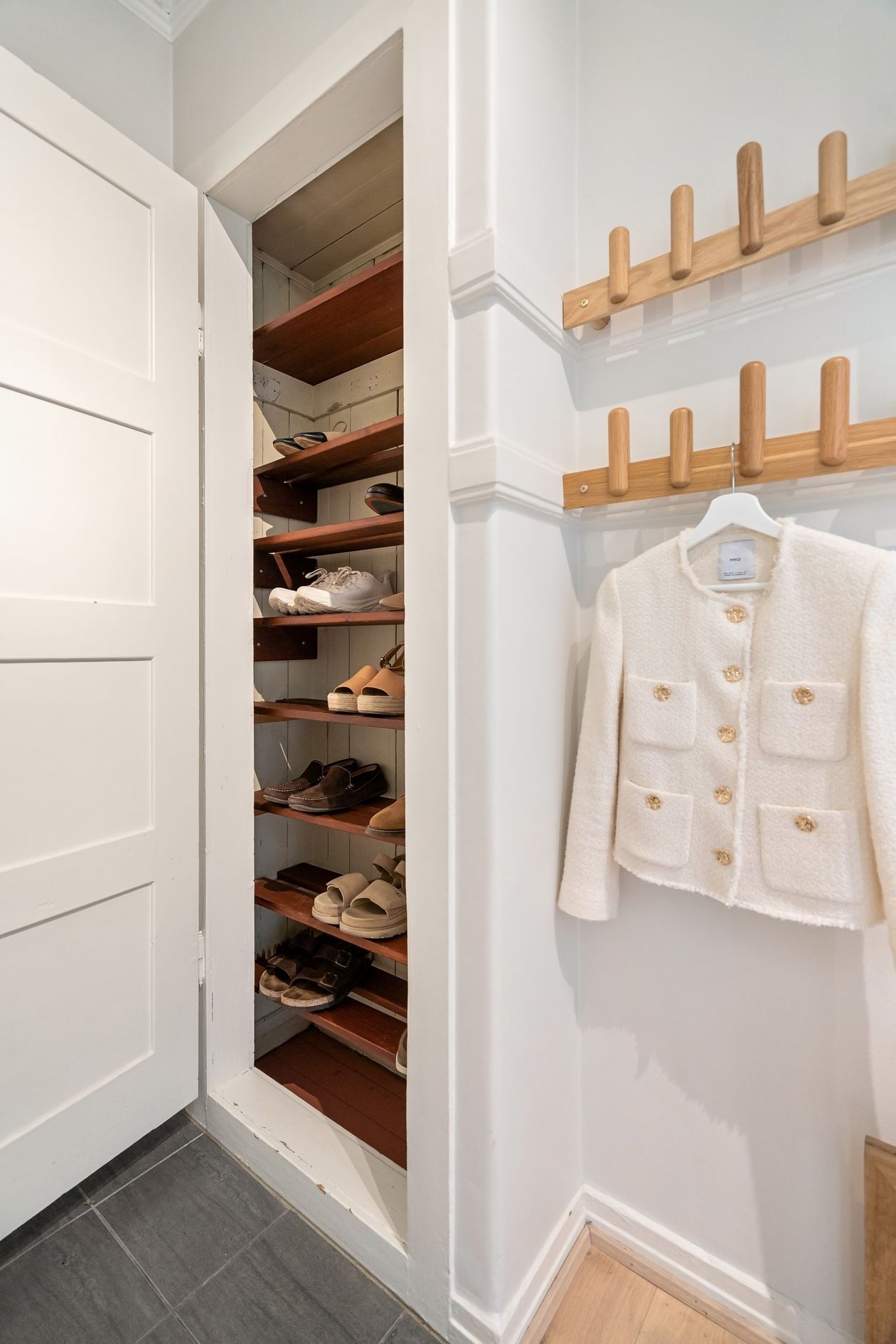
Photo via Pexels
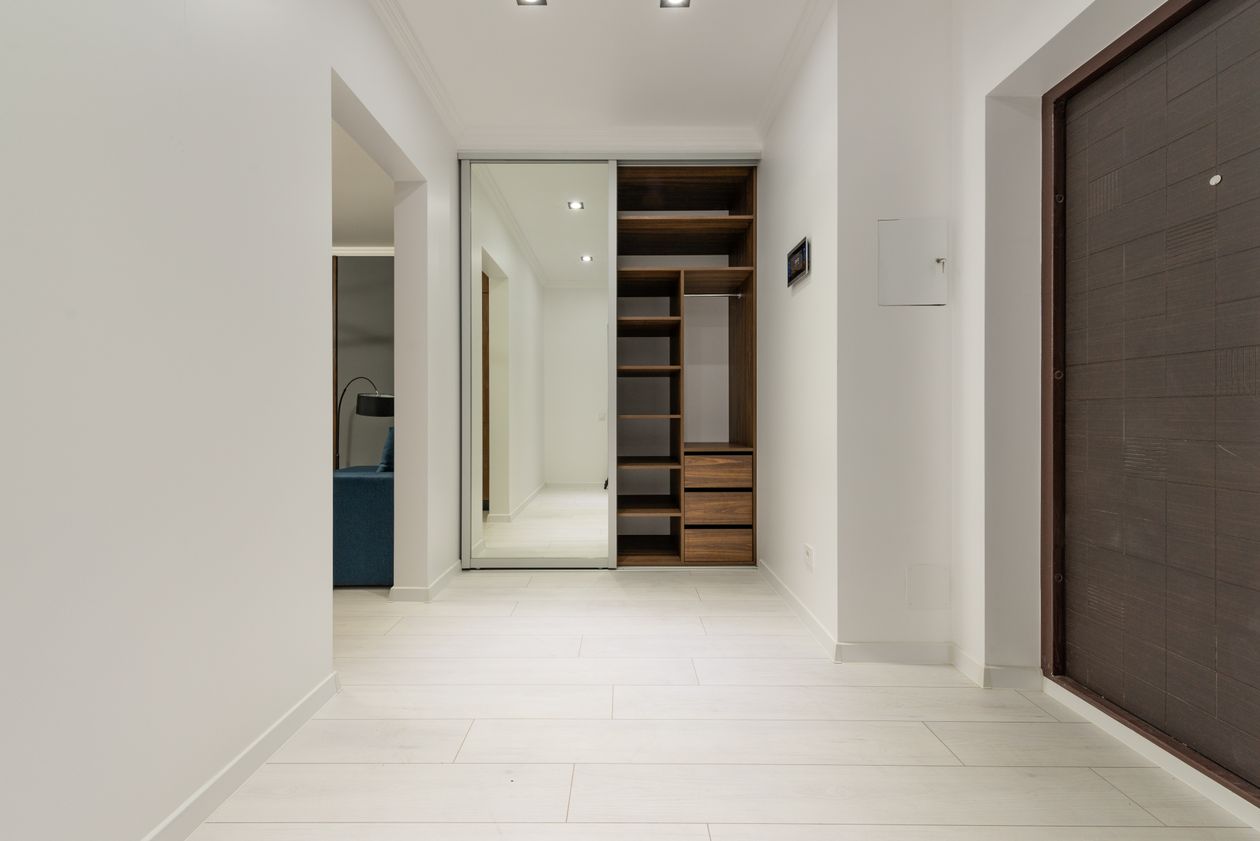
Photo via Pexels

No comments:
Post a Comment