A dark living room can feel like the calmest room in the house, or it can feel like a cave, and the difference is almost never the wall color. Moody neutral living room decor works when the furniture, the textiles, and the light do the heavy lifting: a deep sofa you can sink into, throws you actually reach for, lamps that glow low and warm, and enough texture that the dark tones feel rich instead of flat. This guide gives you ten decor ideas that fit real American homes, with real sizes in inches and feet, honest prices in dollars, and the small choices that keep a dark neutral room cozy, not gloomy.
Before you buy anything, know what this guide is not. The blog already has a moody bedroom, a moody dining room, and a full paint guide, and this post is not another list of paint colors. The living room was the missing room in that series, and here the focus stays on decor you can move, sit on, and switch on. If your walls still feel wrong after the furniture and lighting are right, that is the time to think about paint, not before, because a beautiful dark sofa and three warm lamps will fix a room that a new paint color alone never could.

A dark modern living room with a charcoal sectional, lit shelves, and a patterned rug by sheer curtains.
Table of Contents
- 1. Anchor the Room With a Dark Leather or Velvet Sofa
- 2. Layer Neutral Textiles Until It Feels Soft
- 3. Swap One Bright Ceiling Light for Warm Low Lamps
- 4. Warm the Room With Dark Wood
- 5. Make the Fireplace or Stone the Focal Point
- 6. Hang One Big Piece of Moody Art, and Add a Mirror
- 7. Add Plants That Can Live in Low Light
- 8. Mix Textures: Boucle, Wool, Linen, and Leather
- 9. Layer Rugs Instead of Buying One Big One
- 10. Keep a Dark Room From Feeling Small
1. Anchor the Room With a Dark Leather or Velvet Sofa

A dark leather sofa with green cushions, seen past a warm table lamp, a book, and glasses on a side table.
Every moody living room needs one piece that sets the tone, and a dark sofa is the easiest one to get right, because it does the work all day without you thinking about it. A dark brown or black leather sofa, like the one in this photo, brings a smooth shine and a warm, lived-in feel that only gets better as the leather ages, while a charcoal or deep green velvet sofa catches the light differently from every angle and feels soft the moment you sit down. Leather usually costs $900 to $3,000 for a good three-seat sofa in the US, and velvet runs about $700 to $2,500, so measure first and buy the best frame you can afford, because a sofa with a solid wood frame and eight-way hand-tied springs will outlast a cheap one by ten years. Aim for a seat depth of 21 to 23 inches and a seat height of 17 to 19 inches, keep at least 30 inches of walkway around it, and then let everything else in the room play off it: cream or oatmeal pillows so the dark sofa does not swallow the light, a wood coffee table so the room does not feel all soft fabric, and one warm lamp nearby, because a dark sofa in a dark corner with no light beside it is the fastest way to make a room feel like a cave.
2. Layer Neutral Textiles Until It Feels Soft

A beige fringed throw draped over the arm of a dark brown leather chair.
Dark rooms feel hard when everything in them is smooth, so the fix is textiles, and lots of them, in soft neutral shades that lighten the room without breaking the mood. Start with the sofa itself, as in this photo, where a loose beige throw with a fringed edge sits over the arm of a dark brown leather chair and instantly makes the hard leather look inviting. Then add two or three pillows in different neutrals, such as cream, oatmeal, and warm gray, in different fabrics, and a second throw folded over the back of the sofa, because one throw looks like decoration and two throws look like someone actually lives there. A good wool or cotton throw costs $30 to $120, linen pillow covers run $15 to $40 each, and a chunky knit throw adds the most warmth for the money at $40 to $100. Keep the colors close together, within one warm family or one cool family, so the layers feel calm instead of busy, and wash or air the throws often, because a moody room shows dust and pet hair faster than a bright one, and a clean cream throw against a dark sofa is one of the prettiest contrasts in any living room.
3. Swap One Bright Ceiling Light for Warm Low Lamps

A warm mushroom lamp glowing on a metal side table beside a monstera plant, with a framed poster above.
The single biggest mistake in a dark living room is one bright ceiling light, because it flattens everything, washes out the deep colors, and makes the corners look even darker by comparison, while three small warm lights at different heights make the same room feel deep and welcoming. This photo shows the idea in one small corner: a single mushroom-shaped lamp glowing warm on a metal side table, with a plant beside it and a framed poster above, and that one pool of light does more for the mood than a whole ceiling full of bulbs. Aim for at least three light sources, such as a floor lamp behind the sofa, a table lamp at one end, and a small accent lamp or a few candles on the far side, all with warm bulbs rated 2700K to 3000K, and put them on dimmers if you can, because a dimmer that costs $15 to $30 lets you turn the room down in the evening and up when you need to find something. A good floor lamp costs $60 to $200, a table lamp $40 to $120, and the shade matters as much as the bulb, since a fabric shade softens the light while a bare bulb glares, and for a corner built around reading, a cozy reading nook shows the same low-lamp setup with the chair and the light placed so the glow falls over your shoulder, not into your eyes.
4. Warm the Room With Dark Wood
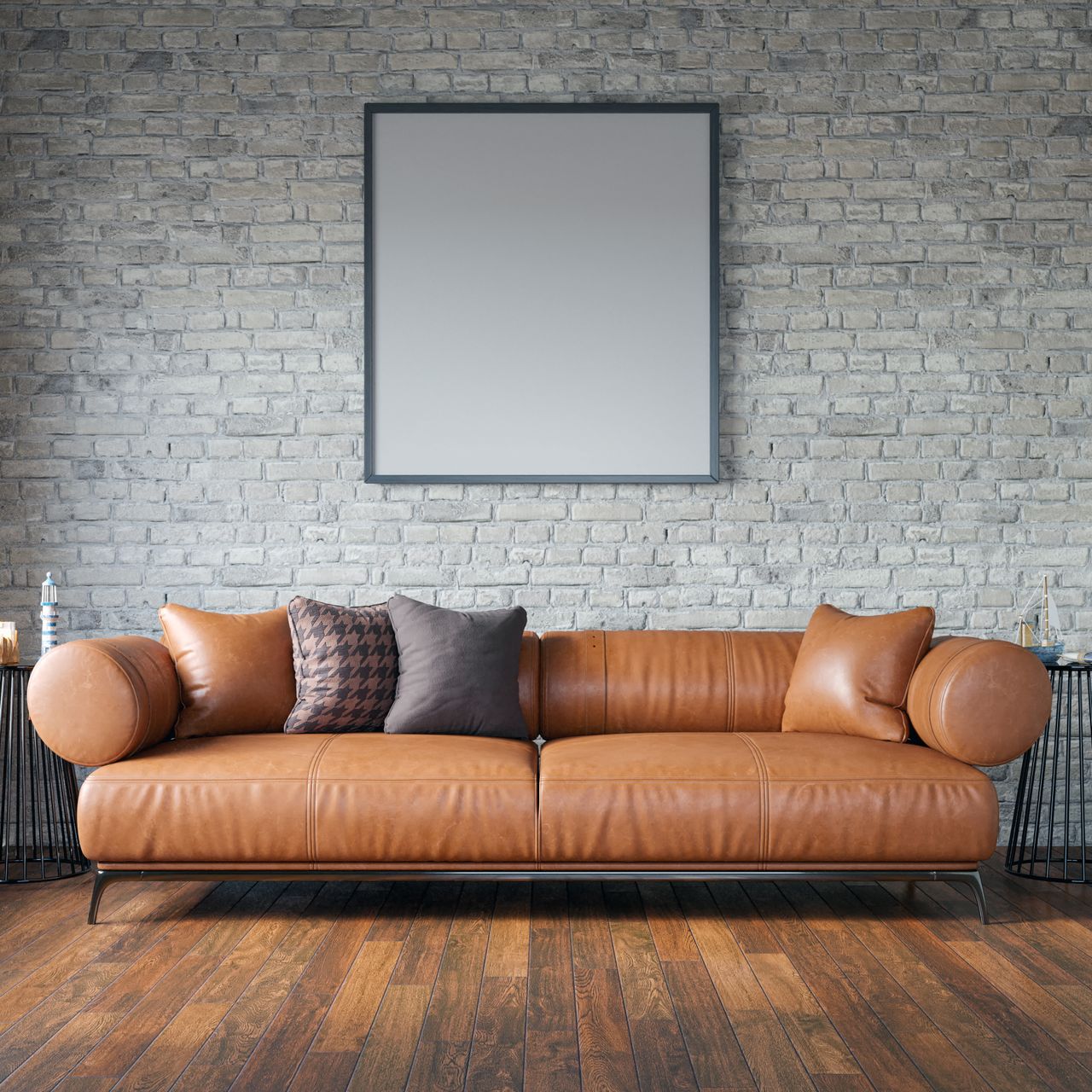
A tan leather sofa against a gray brick wall, with a dark wood plank floor and a blank framed poster above the sofa.
Dark wood is the warmth insurance of a moody room, because it adds a natural brown glow that stops charcoal, black, and deep gray from feeling cold, and it works whether it comes from the floor, the furniture, or both. In this photo the dark wood plank floor does most of the warming, with a tan leather sofa and a gray brick wall above it, and the lesson is the same if your wood comes from a coffee table or a media console instead: let the grain show, because wood with a visible grain reads as warm and alive, while wood painted flat black just adds another dark flat surface. A solid wood coffee table costs $150 to $600, a dark walnut side table $80 to $250, and refinishing an old wood floor runs $3 to $5 per square foot in most US cities, so a secondhand wood table is often the cheapest way to warm a room. Mix the wood tones a little rather than matching them exactly, since a walnut table, an oak floor, and a teak sideboard look collected and real, while three pieces in the exact same stain look like a furniture set from a showroom, and keep at least one wood piece within arm's reach of the sofa, because wood you can touch, a table edge or an armrest, warms a room in a way that wood on a far wall never does.
5. Make the Fireplace or Stone the Focal Point

A lit stone fireplace with a rough wood mantel beside white shelves holding books and pale vases.
A moody room needs one place for the eye to land, and a fireplace or a stone wall is the best focal point there is, because it gives you texture, warmth, and light all in one spot. This photo shows a stone fireplace with a real fire burning, a rough wood mantel above it, and white built-in shelves beside it holding books and pale vases, and the mix is what makes it work: the rough stone and wood carry the moody side, while the pale shelves and vases keep it from feeling heavy. If you have a working fireplace, keep seating 3 to 4 feet from the firebox, use a fire screen, and never store throws or books on the hearth, since sparks and heat dry out fabric and paper fast, while an electric fireplace insert, $200 to $800, gives you the same glow in a home with no chimney and no ash to clean. If you have no fireplace at all, a stone or brick accent wall, a large stone coffee table, or even a stack of stone-look tiles behind the sofa gives you the same rough texture for far less money, and whatever you choose, keep the mantel styling simple, with three to five objects at different heights, because a crowded mantel fights the fireplace for attention and a calm one lets the fire do the talking.
6. Hang One Big Piece of Moody Art, and Add a Mirror

A large black-and-white vintage building photograph on a dark wall, lit by a warm table lamp above a dark sofa.
Small pictures disappear on dark walls, so go big with one piece of art and let it carry the whole wall, because one large print with real depth looks intentional while ten small frames look like clutter. This photo shows exactly that: a huge black-and-white photograph of an old city building on a dark wall, with a warm table lamp beside it and a dark sofa in front, and the art works because it has contrast, old brick and iron details, and a story to it, not because it matches the sofa. A large framed print costs $80 to $300, a stretched canvas $100 to $400, and a thrifted frame with a print you love can cost under $50, so buy the art for the feeling it gives you, not for the color, and hang it so the center sits about 57 to 60 inches from the floor, which is eye level for most adults. Then add one mirror, hung across from a window or a lamp so it catches light and throws it back into the room, because a mirror is the cheapest way to brighten a dark room without adding another lamp, and a round mirror 24 to 36 inches across, $60 to $200, softens all the straight lines of a dark room while a rectangular one keeps things formal, so pick the shape that matches your sofa: round for a curved sofa, rectangular for a square one.
7. Add Plants That Can Live in Low Light

A tall monstera and palm behind a tan leather sofa — the room in this photo is bright white, but the plants are the point.
Green is the one color that never fights a moody neutral room, because a living plant adds life and a soft shape that no pillow or picture can copy, and it is also the cheapest way to make a dark corner feel cared for. The trick is to pick plants that honestly survive low light, instead of buying a sun-loving plant and watching it fade, so start with a snake plant, a pothos, or a ZZ plant, which all tolerate a dim corner and only need water every two to three weeks, and keep them in pots that fit the room, such as matte black, dark ceramic, or woven baskets, because a bright plastic pot breaks the mood faster than anything else. A snake plant costs $20 to $60, a pothos $15 to $40, and a large monstera like the one in this photo $40 to $100, and one tall plant in a corner does more than five small ones scattered around, so group them in odd numbers, one tall, one medium, and one trailing, and let the trailing one spill over a shelf edge. Give them a little help by placing them as close to the window as the layout allows, wiping the leaves once a month so they can catch what light there is, and moving them outside to a shaded porch for a day in summer, because a plant that is alive and glossy makes a dark room feel fresh, while a dying plant in a dark room is the saddest thing in the house.
8. Mix Textures: Boucle, Wool, Linen, and Leather

A deep green velvet sofa with a pale blue pillow; the pale pink wall and the odd bare-legs print above it are not the moody part — the velvet is.
Texture is what stops a dark neutral room from looking flat, because when most of the colors are close together, the eye needs something else to notice, and that something is the feel of the surfaces. This photo shows it in one piece of furniture: a deep green velvet sofa whose pile catches the light differently on every cushion, with a smooth pale blue linen pillow on top for contrast, and that mix of soft velvet and crisp linen is the whole idea in miniature. Build the same mix across the room by pairing four textures that feel different to the hand, such as nubby boucle on an accent chair or ottoman, $150 to $500, warm wool in a throw or rug, smooth linen on pillow covers and curtains, and leather on the sofa or a chair, because each one reflects light differently and together they give a dark room depth without adding color. Keep the palette tight, with three or four neutrals at most, so the textures do the talking instead of the colors, and test fabrics before you buy when you can, since boucle sheds a little and shows pet hair, velvet marks where you sit and needs a quick brush, and linen wrinkles, which is part of its charm, and a room that mixes all four honestly will always feel richer than a room that buys everything in the same smooth fabric.
9. Layer Rugs Instead of Buying One Big One
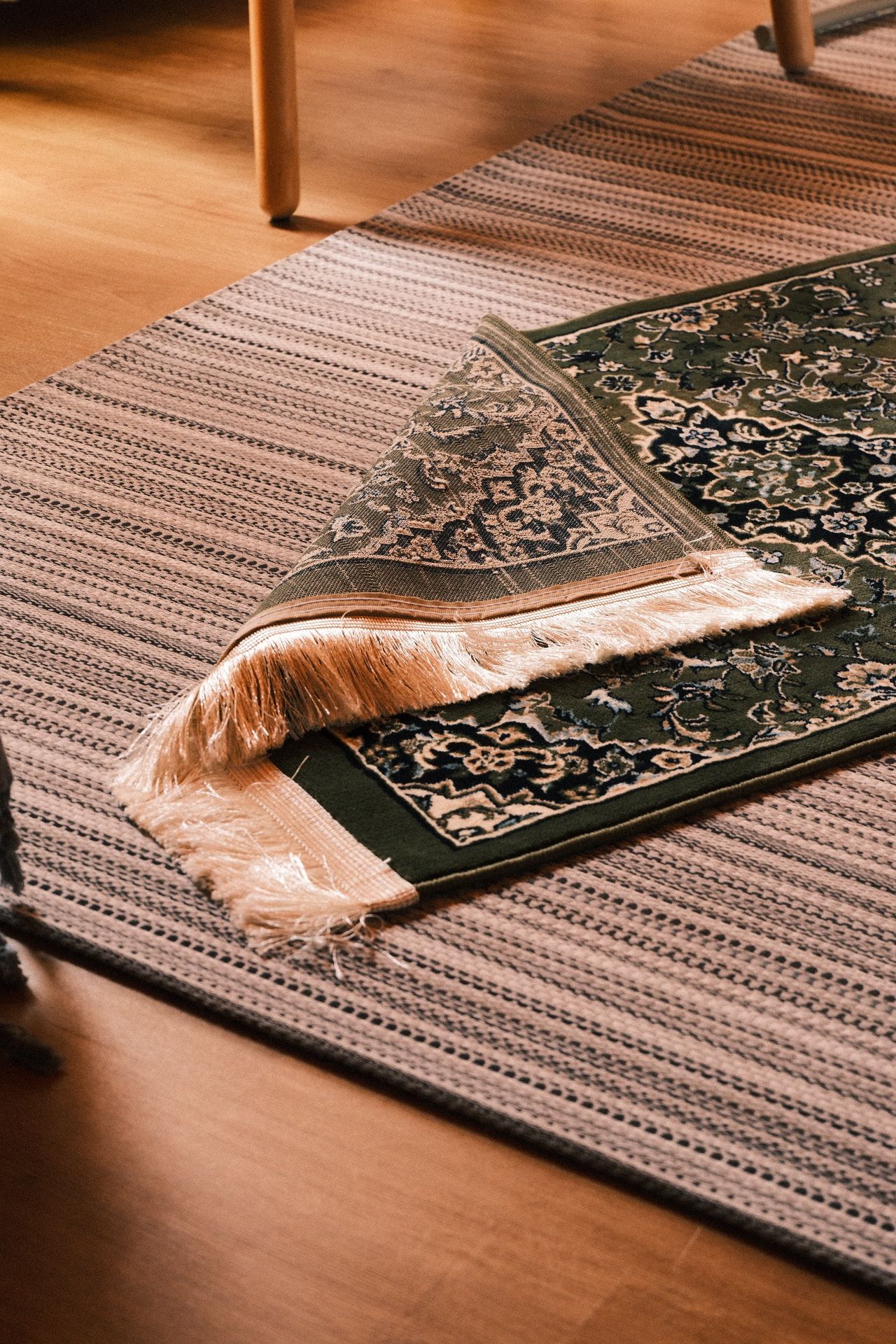
A dark green patterned rug with fringe layered over a striped woven rug on a wood floor.
A single dark rug on a dark floor can make a room feel like a hole in the ground, but two rugs layered together give you pattern, warmth, and a clear zone for the seating, all for less than one huge rug costs. This photo shows the trick up close: a dark green patterned rug with a fringed edge laid at an angle over a larger striped woven rug, and the two patterns work because one is busy and one is plain, and the colors stay in the same warm family. Start with a large flat base rug, such as jute or a low wool weave, in a light or mid-tone neutral, sized so it runs at least 6 inches past the sofa on each side, usually 8 by 10 feet for a standard living room, $150 to $400, and then layer a smaller patterned rug on top, 5 by 7 feet, $80 to $250, angled slightly or straight, with the front legs of the sofa sitting on it. Use a rug pad under both layers, about $30 to $60, so nothing slides and the top rug does not bunch, and keep the top rug's pattern bold and the base rug quiet, because two busy patterns fight each other while one busy pattern on a calm base looks layered on purpose, and a layered floor also feels warmer underfoot in winter, which matters in a dark room where you want every reason to stay in it.
10. Keep a Dark Room From Feeling Small

A black-and-white shot of a dark room with one bright window — this is the risk: everything but the window falls into shadow, so add light at several heights.
The fear that stops most people from going moody is that the room will feel small, and it is a fair fear, because a dark room with one bright window and nothing else lit, like this black-and-white photo, really does feel smaller, with the corners disappearing into shadow and the sofa turning into a dark lump. The fix is not to give up on the dark colors but to spread light and contrast around the room, so no corner is left fully dark: add a lamp or a candle in the darkest corner, keep the ceiling and the trim a little lighter than the walls, and leave the windows as clear as you can, with sheer curtains instead of heavy drapes, because daylight is the best free light there is. Choose furniture with visible legs and slim arms, so you can see floor under and around it, and keep at least 30 inches of clear walkway, since a dark room with a blocked path feels cramped while the same room with open paths feels calm, and if your room is small, furniture for a small living room shows the same slim-legged, right-sized approach that keeps a small space open. Finally, add one light-colored piece at eye level, such as cream pillows, a pale throw, or a light rug, because the eye needs a place to rest, and a dark room with a few light resting points feels deep and cozy, while a dark room with no light points at all just feels dark.
Frequently Asked Questions
What colors go with a dark neutral living room?
Warm neutrals work best: cream, oatmeal, warm gray, tan, and soft taupe, with dark wood and brass or black metal for contrast. Keep the palette to three or four neutrals so the room feels calm, and add green from plants for life.
Does a dark sofa make a living room look smaller?
Not on its own. A dark sofa makes a room feel smaller only when the room has no contrast and no light at different heights. Add cream pillows, a light rug, a lamp in the darkest corner, and slim-legged furniture, and the sofa will anchor the room instead of shrinking it.
What is the best lighting for a moody living room?
Three or more warm light sources at different heights, with bulbs rated 2700K to 3000K, and dimmers when you can add them. A floor lamp, a table lamp, and a small accent light beat one bright ceiling light every time.
Can I have a moody living room in a rental?
Yes. Use furniture, textiles, and lighting instead of paint: a dark sofa, dark wood tables, layered rugs, and warm lamps need no landlord approval, and removable wallpaper or dark curtains can add a dark accent wall without touching the paint.
How do I keep a dark living room from looking dirty or dusty?
Vacuum and dust more often than in a bright room, because dark surfaces show dust, pet hair, and crumbs faster. Washable throw covers, a quick weekly wipe of dark wood and leather, and a lint roller kept by the sofa will keep the room looking rich instead of dusty.
Final Thoughts
A moody neutral living room is not about being brave with dark paint, but about being honest with furniture, fabric, and light: a sofa deep enough to sink into, throws soft enough to reach for, lamps low and warm enough to make the evening feel slow, and rugs and wood that warm the floor under your feet. Get those four things right and the room will feel calm and rich, even on a gray winter afternoon, and you will actually want to sit in it, which is the only test that matters.
Start with the sofa and the lamps, because those two choices set the whole mood, then add the textiles and the rug, and let the art and the plants come last, one piece at a time. If your walls still feel wrong after the decor is in place, see our moody paint colors guide before you buy a can, since it covers the wall side of this look in full. Tonight, turn off the ceiling light, switch on two warm lamps, and see how different the same room feels.
Sources
- LX Home Decor: 21 Moody Living Room Ideas
- Easy Living Vibes: Moody Living Room Decor Ideas That Feel Elegant, Not Gloomy
- The Coolist: Dark Brown Sofa Living Room Ideas for 2026
- Snappy Charm: Low-Light Houseplant Styling Ideas for Dim Rooms
- Rise Apartments: How to Make a Dark Living Room Feel Bigger
Gallery

A very dark lounge with a curved sofa, a large round mirror, and hanging plants — more hotel lobby than home living room, but the mix of dark walls and warm light is the idea.
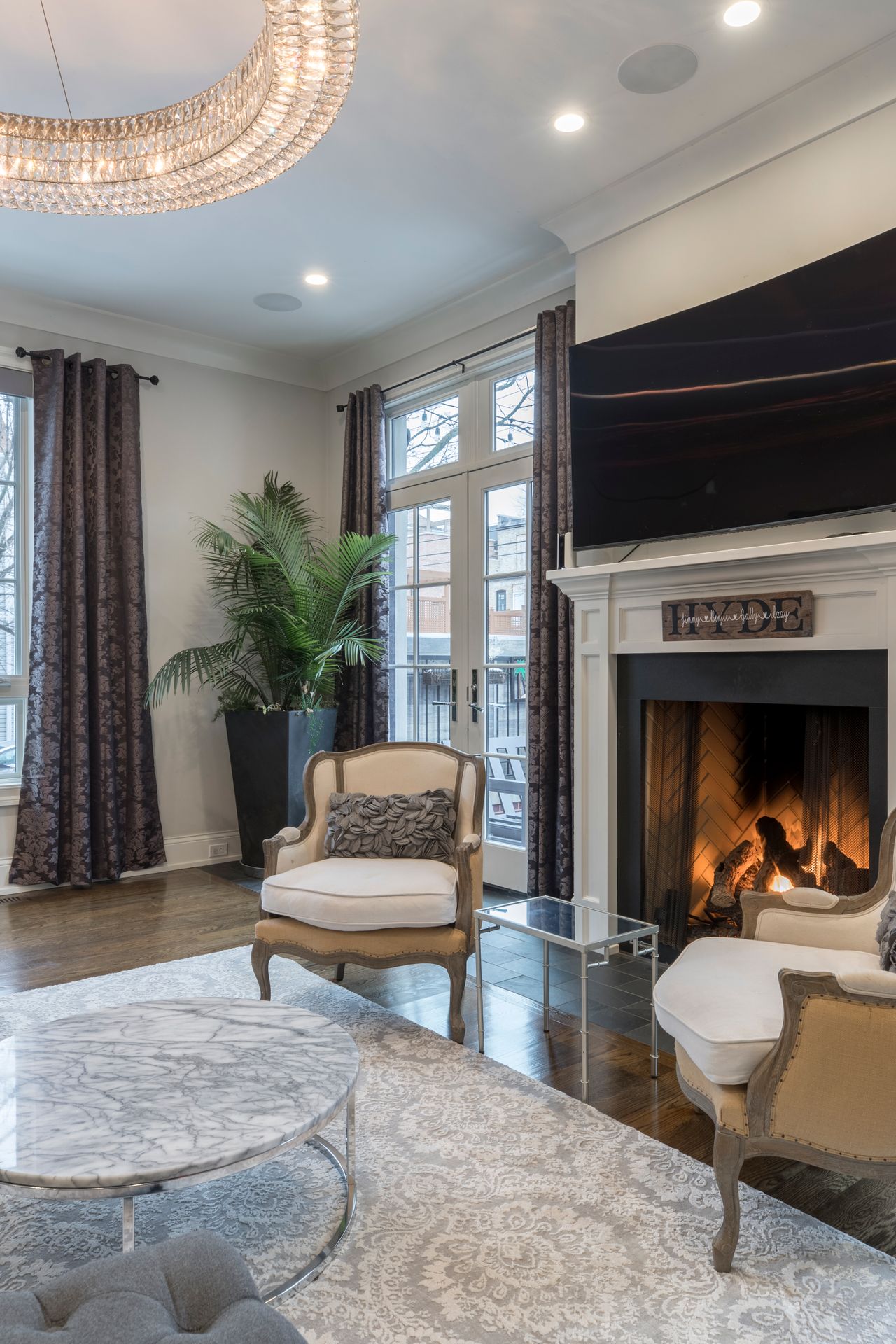
A bright living room with a lit fireplace, dark curtains, and a palm — the fireplace and dark curtains carry the mood here.

A dark chair with a patterned throw and a small glowing lamp beside a potted tree on a gray rug.

No comments:
Post a Comment