A good reading corner does not need a library, a big house, or a big budget, because cozy reading nook ideas work best when they start with what you already have: one comfortable seat, good light, a small surface for a drink and a book, and a few soft layers that make you want to sit down and stay. This guide gives you ten warm corners that fit real American homes, from a bay window bench to a blanket fort for kids, with real sizes in inches and feet, honest prices in dollars, and the lighting and comfort details that turn a chair in a corner into a place you actually use every day.
Before you shop, pick your spot with light in mind, because daylight from a window is the best reading light there is, and a corner that gets soft morning or afternoon sun will beat a dark corner with an expensive lamp every time. Aim for a seat you can curl up in for at least an hour, a lamp that puts light over your shoulder rather than in your eyes, and a rug or throw that keeps your feet warm, and then stop: a nook with too many pillows, too many books, and too many decorations is harder to sit in, not cozier, so leave room for the reader, not just the styling.
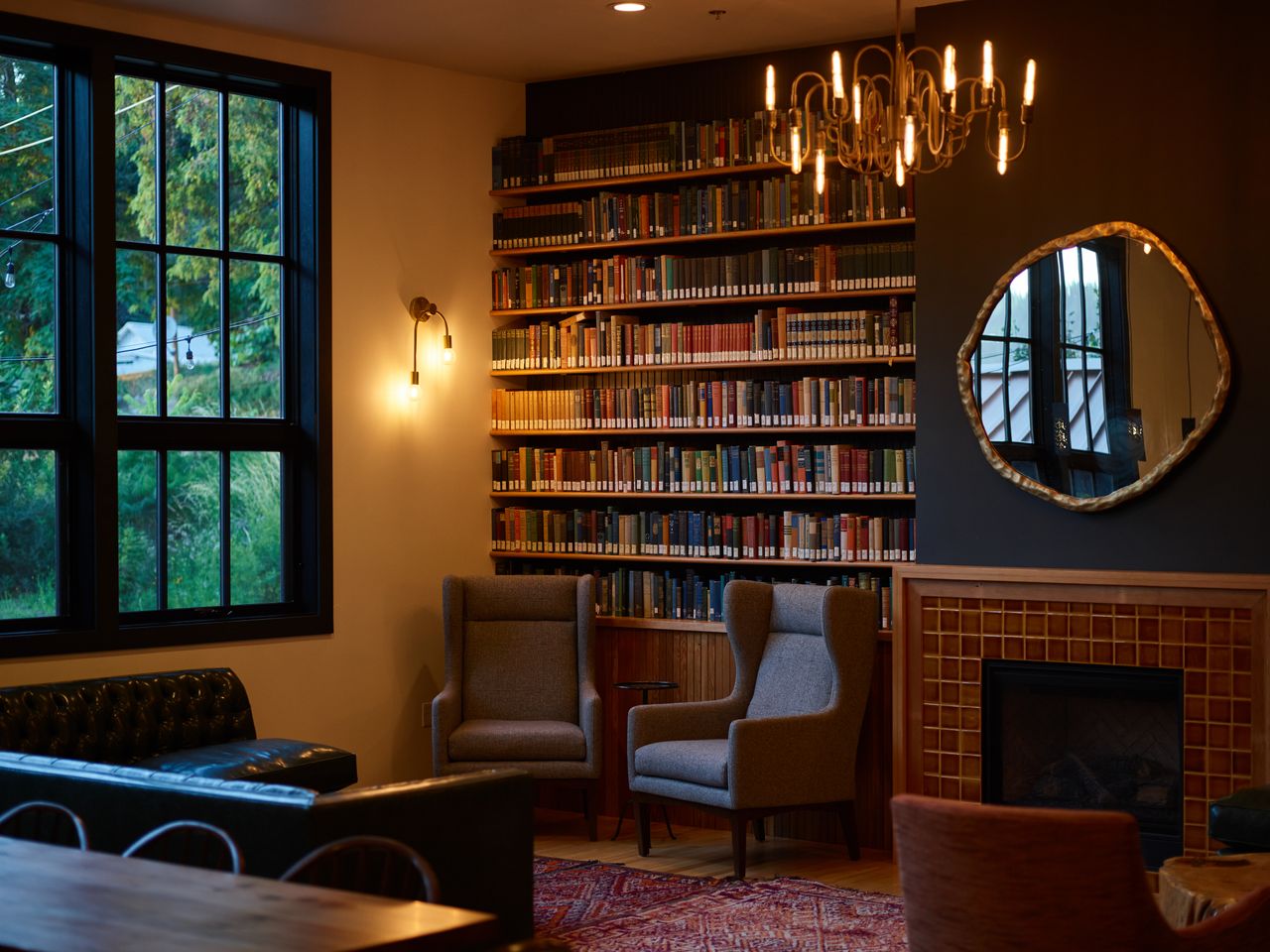
A warm library living room with tall bookshelves, a tiled fireplace, and gray armchairs by a large window.
Table of Contents
- 1. Make a Window Daybed From a Couch
- 2. Build a Bay Window Bench
- 3. Try a Round Window Seat
- 4. Claim a Wicker Armchair Corner
- 5. Sit in a Lounge Chair by Sheer Curtains
- 6. Put Books and a Lamp Beside the Window
- 7. Frame the Nook With a Built-In Library Wall
- 8. Warm a Stone Corner With a Stove and Books
- 9. Build a Family Blanket Fort
- 10. Squeeze a Nook Into a Small Apartment Corner
1. Make a Window Daybed From a Couch
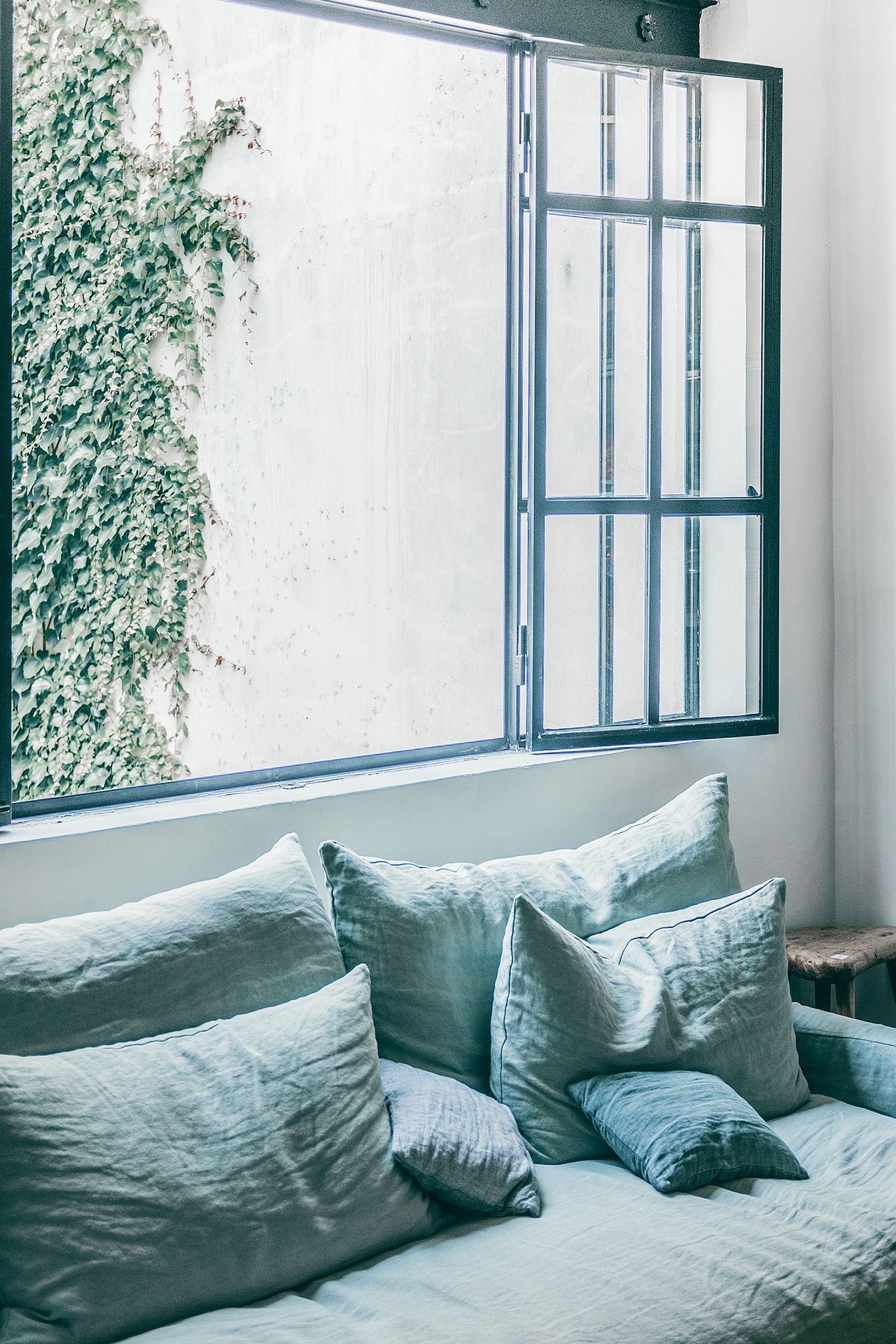
A mint couch piled with pillows under a large open window with ivy outside.
A low couch or daybed pushed under a wide window is the easiest reading nook of all, because it needs no building work at all, just a seat deep enough to sit sideways with your legs up, a pile of pillows for back support, and a window that gives you daylight without harsh glare. Aim for a seat at least 24 inches deep, so you can sit cross-legged or stretch out, and use a firm base cushion topped with two large back pillows and one smaller lumbar pillow, since a soft, saggy couch feels cozy for ten minutes and then leaves your back aching for the rest of the chapter. A custom foam cushion for a window bench costs about $80 to $200, while a ready-made daybed or a secondhand couch can run $150 to $600, and washable covers are worth every penny, because a reading seat collects tea, snacks, and pet hair faster than any other seat in the house. Keep the window treatment simple: a sheer curtain softens bright sun and gives privacy without blocking light, while a heavier curtain on the same rod gives evening privacy, and place a small stool or side table within arm's reach for your drink, so you never have to balance a mug on a pillow, which is how most reading-nook spills happen.
2. Build a Bay Window Bench
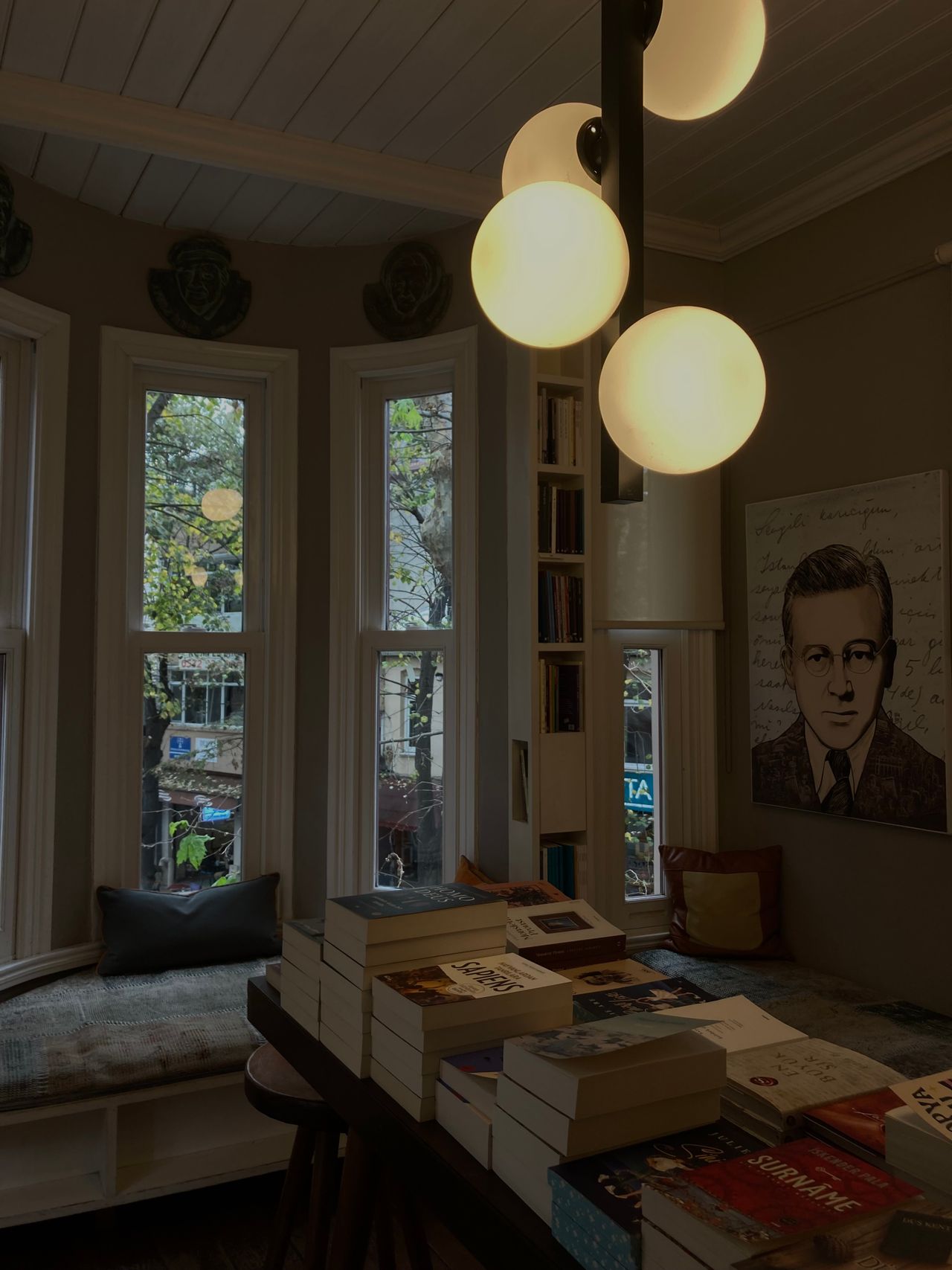
A bay-window bench with cushions beside stacks of books in a book-filled room.
A bay window is already halfway to a reading nook, because its angled glass wraps around you on three sides and gives you side light, which is the kindest light for reading, since it falls across the page without shining straight into your eyes or casting your own shadow over the book. The bench itself can be simple: a plywood box or a pair of low cube shelves topped with a 4-inch foam cushion cut to the bay shape, usually $200 to $500 in materials for a do-it-yourself version, or $800 to $2,000 for a custom built-in with drawers, and a template made from cardboard before you order foam will save you a costly second cut, because bay angles are rarely the neat 45 degrees they look like. Add lift-up lids or drawers under the seat for blankets and books, so the nook stores its own supplies and the rest of the room stays tidy, and use a washable linen or outdoor fabric for the cushion, since sun fades ordinary cotton faster than most people expect, especially on a south-facing window. Finish with pillows in different sizes against each angled pane, a throw folded where you will actually grab it, and a small basket at one end for reading glasses and your current book, and keep tall furniture away from the bay, so the light and the view stay the stars of the corner.
3. Try a Round Window Seat
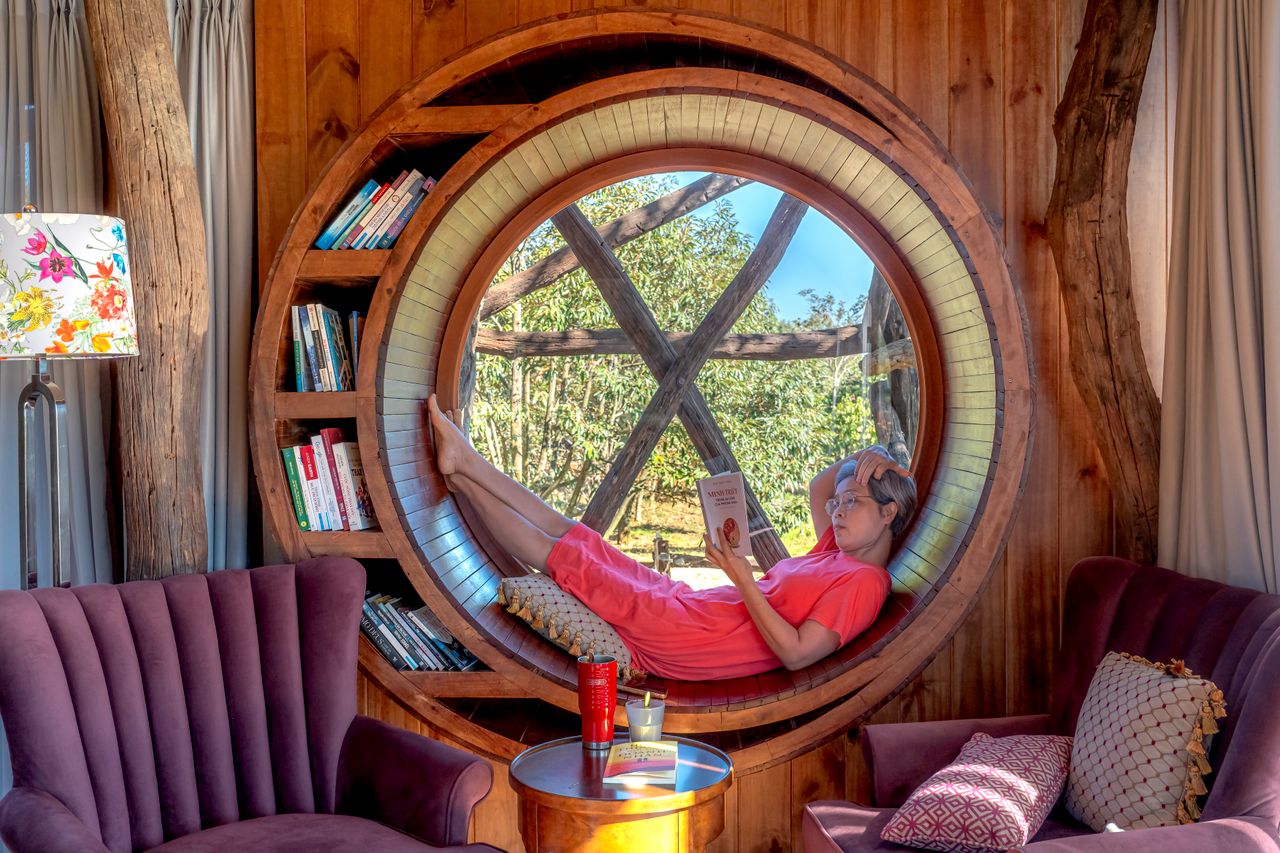
A woman reading in a round window seat with bookshelves built into the wooden frame, between two purple armchairs.
A round window seat is the most storybook version of a reading nook, and it works because the circle frames both the reader and the view, turning an ordinary window into a destination that kids and adults both fight over, though it is also the hardest version to build, so treat it as a dream project, not a weekend job, unless you already have a round or arched window to work with. If you are building from scratch, a carpenter will usually charge $1,500 to $4,000 for a custom round seat with built-in shelves, while a simpler trick gives you most of the feeling for far less: a round rug, a curved cushion on a wide windowsill, and a pair of low bookshelves flanking a regular window, which frames the seat without any curved carpentry. The photo shows why the idea is so appealing: books live right in the frame, a small table holds a drink within reach, and the reader can stretch out with feet up, which is the test every good nook must pass, because a seat that only works sitting upright will not hold you for a long novel. Keep the cushion at least 20 inches deep and 4 inches thick, add a washable cover, and check the window for drafts before you commit, since a beautiful round seat next to a leaky window is cold in winter, while a simple draft strip, about $10 to $25, can make the same seat usable all year.
4. Claim a Wicker Armchair Corner
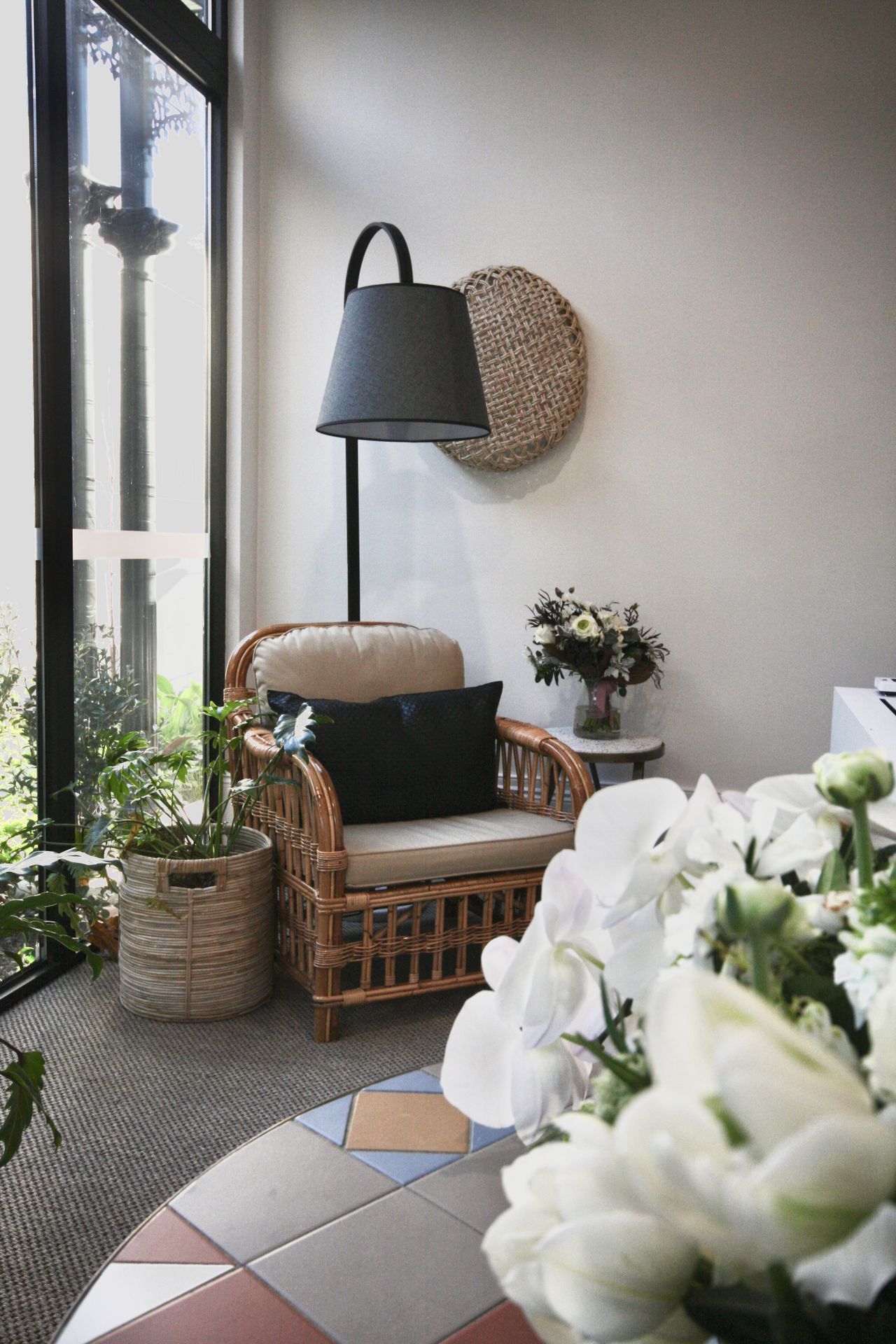
A wicker armchair with cushions beside a tall window, with a floor lamp, plants, and flowers in the foreground.
If you have no window seat and no building budget, a single good armchair in a quiet corner is still a complete reading nook, and a wicker or rattan chair, like the one in this photo, is a smart pick because it looks light, lets air move through it, and does not make a small corner feel heavy or blocked. Angle the chair slightly into the room, about 15 to 30 degrees off the wall, rather than pushing it flat against the wall, because that small angle makes the corner feel intentional and gives you a better view of both the window and the room, and add a floor lamp behind and slightly to one side, so light falls over your shoulder onto the page, not into your eyes. A comfortable reading chair usually costs $150 to $500 secondhand or $400 to $1,200 new, a floor lamp with a warm 2700K bulb runs $40 to $120, and a small side table for tea and a book costs $30 to $100, so the whole corner can come together for under $300 if you already own the chair. Finish with a small rug under the chair, about 3 by 5 feet, to define the zone and warm bare floors, a basket beside the chair for a throw and your book stack, and one plant, because a single green plant softens the corner far better than a shelf of small decorations, and for more ways to make one room feel new without a remodel, refresh a living room with the same move-first, shop-second order used here.
5. Sit in a Lounge Chair by Sheer Curtains

A woman reading in a lounge chair by sheer white curtains, holding a mug, with a small side table and plant nearby.
A lounge chair with a reclined back is the best seat for readers who like to stretch out, because it supports your head, your back, and your legs at once, while a stiff upright chair forces you to shift position every few pages, which breaks the story and leaves you restless. Look for a chair with a seat height of 17 to 19 inches, a seat depth of 21 to 23 inches, and a back high enough to rest your head when you lean back, and test it with a book in the store if you can, since a chair that feels fine for five minutes can feel wrong after an hour, especially if the armrests are too high to rest a book on comfortably. Sheer white curtains, as in this photo, are the right partner for a lounge chair by a window, because they soften harsh sun, blur a dull view, and give daytime privacy without turning the corner dark, while a heavier curtain layered behind them gives evening privacy in one pull. Keep a small side table within 18 inches of the chair for your mug and glasses, use a striped or textured rug to mark the nook's edge, and keep the chair away from the television if you can, because a reading nook that faces a screen will lose to the screen most nights, while a chair angled toward the window wins the quiet hours.
6. Put Books and a Lamp Beside the Window
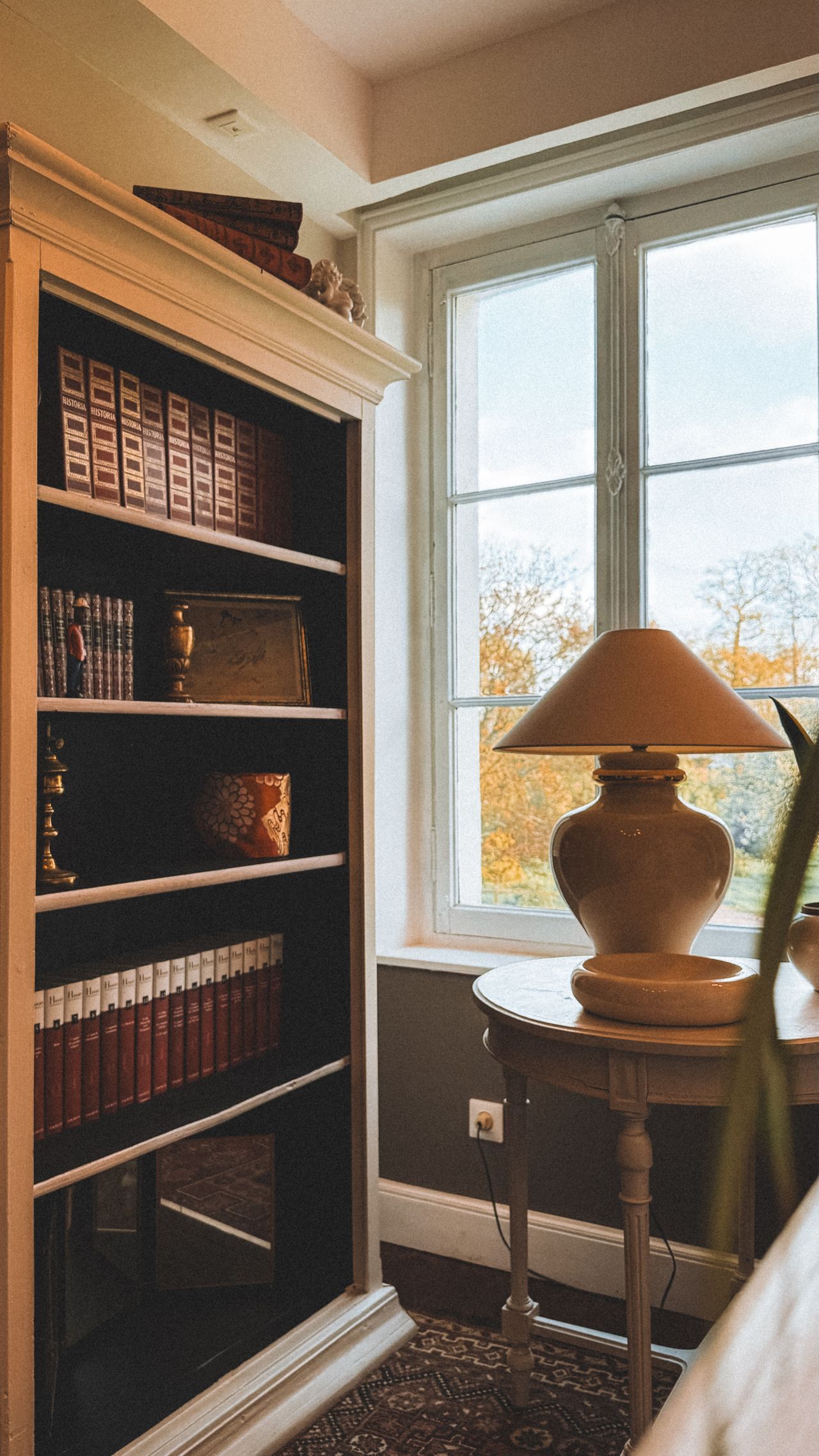
A bookcase full of books and a lamp table beside a bright window, with no chair shown in this detail shot.
Some of the best reading corners are not built around a seat at all, but around the books and the light, because a tall bookcase beside a window tells you at once that this corner is for reading, and a lamp on a small table gives you the warm evening light that daylight cannot provide after sunset. This detail shot shows the formula clearly: a bookcase with books grouped by size and color, a large table lamp with a warm shade, and a window that brings in soft daylight, and all you need to add is a chair you already own, pulled up to the table, to complete the nook. Keep the heaviest books on the lowest shelves so the bookcase stays steady, anchor any bookcase taller than 5 feet to the wall with a $10 to $20 anti-tip kit, especially in a home with kids or pets, and leave one shelf near your chair for current reads, glasses, and a notebook, so you never have to hunt through the whole case for the book you are halfway through. For evening light, choose a lamp with a warm 2700K bulb and a shade that hides the bulb from your eyes, place it slightly behind and to the side of your shoulder, and add a dimmer or a three-way bulb, about $10 to $25, so you can turn the light down for a cozy evening and up for fine print, which is the single cheapest upgrade that makes a reading corner feel finished.
7. Frame the Nook With a Built-In Library Wall
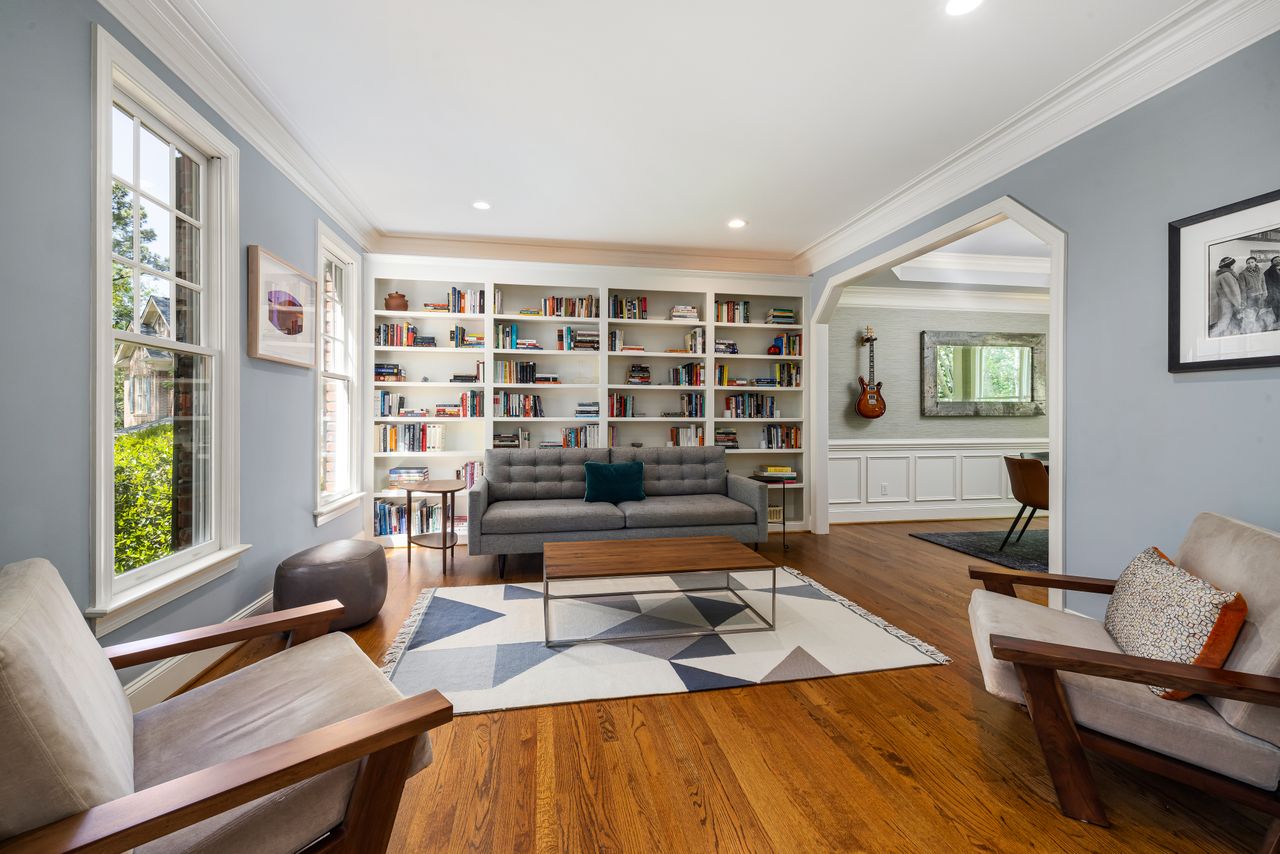
A bright living room with built-in white bookshelves, a gray sofa, and two armchairs on a wood floor.
A wall of built-in bookshelves turns a whole living room into a reading room, and it works even when there is no single nook chair, because the shelves make every seat in the room feel like part of a library, while also giving you storage that a freestanding bookcase never quite matches. You do not need custom carpentry to get the look: two or three tall ready-made bookcases, about $120 to $300 each, pushed together, painted the same color as the wall, and topped with a simple crown molding strip, read as built-in for a few hundred dollars, while a true custom wall runs $2,000 to $6,000 depending on size and finish. Keep the shelves about 11 to 12 inches deep for most books, leave some shelves partly empty, and mix horizontal stacks with vertical rows, since a shelf packed edge to edge looks like storage, while a shelf with breathing room looks like a collection you actually read. Place your reading chair at one end of the library wall, near a window if possible, with a floor lamp behind it and a small table beside it, and keep the room itself calm, because a library wall already gives you plenty of color and texture, so a plain rug, plain curtains, and calm, simple rooms as a guide will keep the space restful rather than busy.
8. Warm a Stone Corner With a Stove and Books
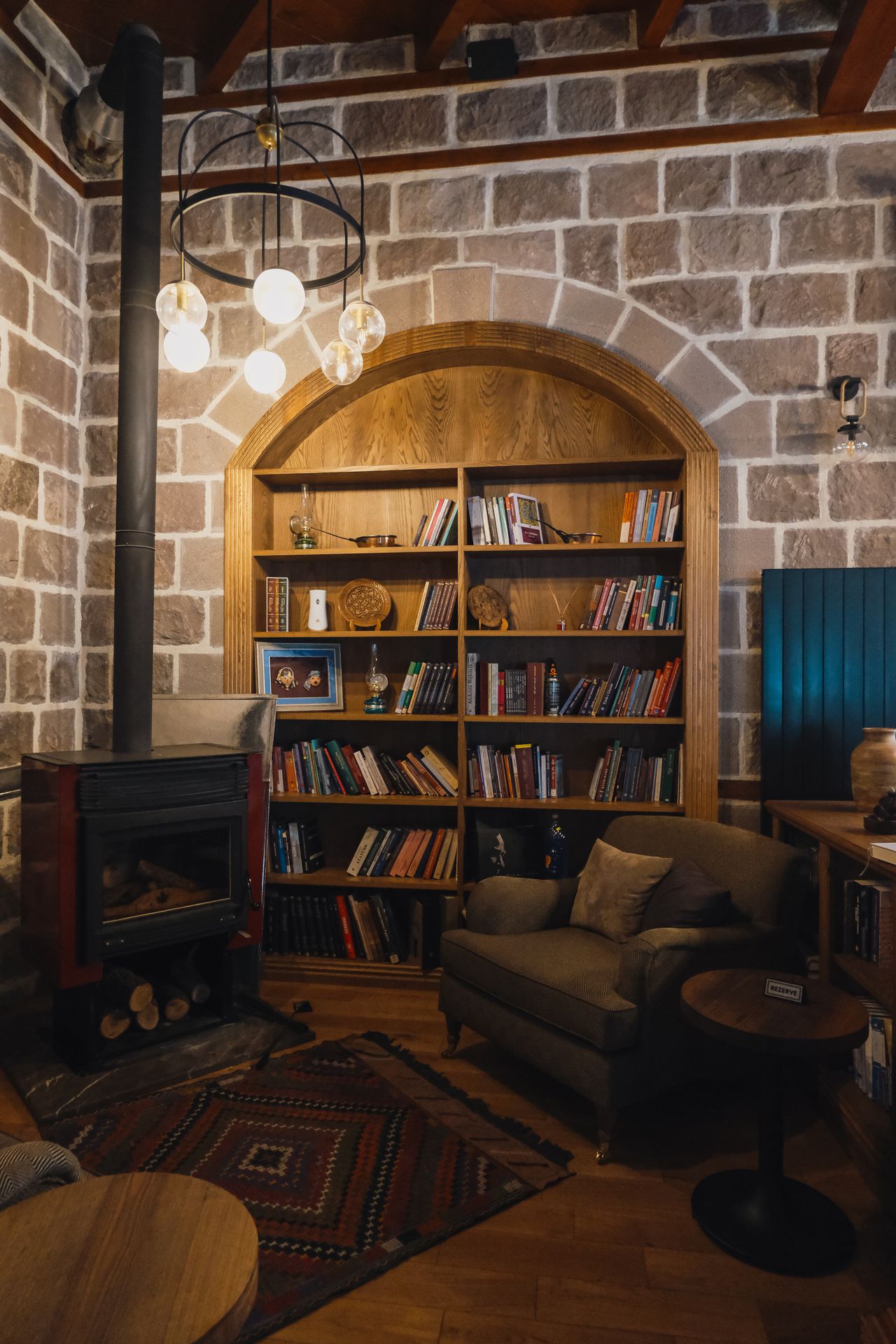
An armchair beside a tall wood bookcase and a stove in a stone-walled room, with a small round table nearby.
A fireplace, a wood stove, or even a good electric fire gives a reading nook something no lamp can copy: a warm glow that makes the corner feel alive on a cold evening, and a stone or brick wall behind it adds texture that softens even a plain armchair, as this stone-walled room shows, with its tall wood bookcase, low armchair, and small round table for a drink. If you have a working fireplace, keep the reading chair 3 to 4 feet from the firebox, use a fire screen, and never store books or throws on the hearth, since sparks and heat dry out paper and fabric faster than most people expect, while an electric fire or a stove insert, $200 to $800, gives you the same glow in a rental or a room with no chimney, with no smoke and no ash to clean. For a woodland warmth that pairs well with stone and wood, forest-themed rooms show how deep green, warm wood, and soft light work together without turning a living room into a cabin theme park. Add a thick rug under the chair, about 5 by 7 feet, so your feet never meet a cold stone or wood floor, keep a basket of firewood or a stack of books on the side away from the heat, and choose a chair with a high back if you like to read near a fire, since the high back blocks drafts from behind and holds in a little of the fire's warmth.
9. Build a Family Blanket Fort

A family reading together inside a blanket fort with string lights, blankets, and a bowl of snacks.
A blanket fort is the most loved reading nook in any house with kids, because it turns reading into a hiding place, and the best part is that it costs almost nothing: two chairs or a table, a few blankets, some pillows, and a string of battery lights, about $10 to $20, are enough to make a den that children will beg to use, while adults get the rare gift of a child asking for one more chapter. Build it on a rug or a thick blanket, so the floor stays soft, use lightweight sheets for the roof so the fort does not sag or overheat, and keep one side open for air, since a fully closed fort gets warm and stuffy within twenty minutes, especially with several readers inside. For safety, use battery lights only, never real candles, keep the fort away from heaters and stoves, and check that chairs used as posts cannot tip, because a fort that collapses mid-story is funny once and annoying every time after that. Keep a small basket of picture books and short chapter books inside the fort, so children can choose without leaving the den, and let them help build it, since a fort a child helped make will be used far more than a perfect fort an adult built alone, and the habit of reading in a cozy den is one of the few childhood joys that carries happily into adult reading corners.
10. Squeeze a Nook Into a Small Apartment Corner
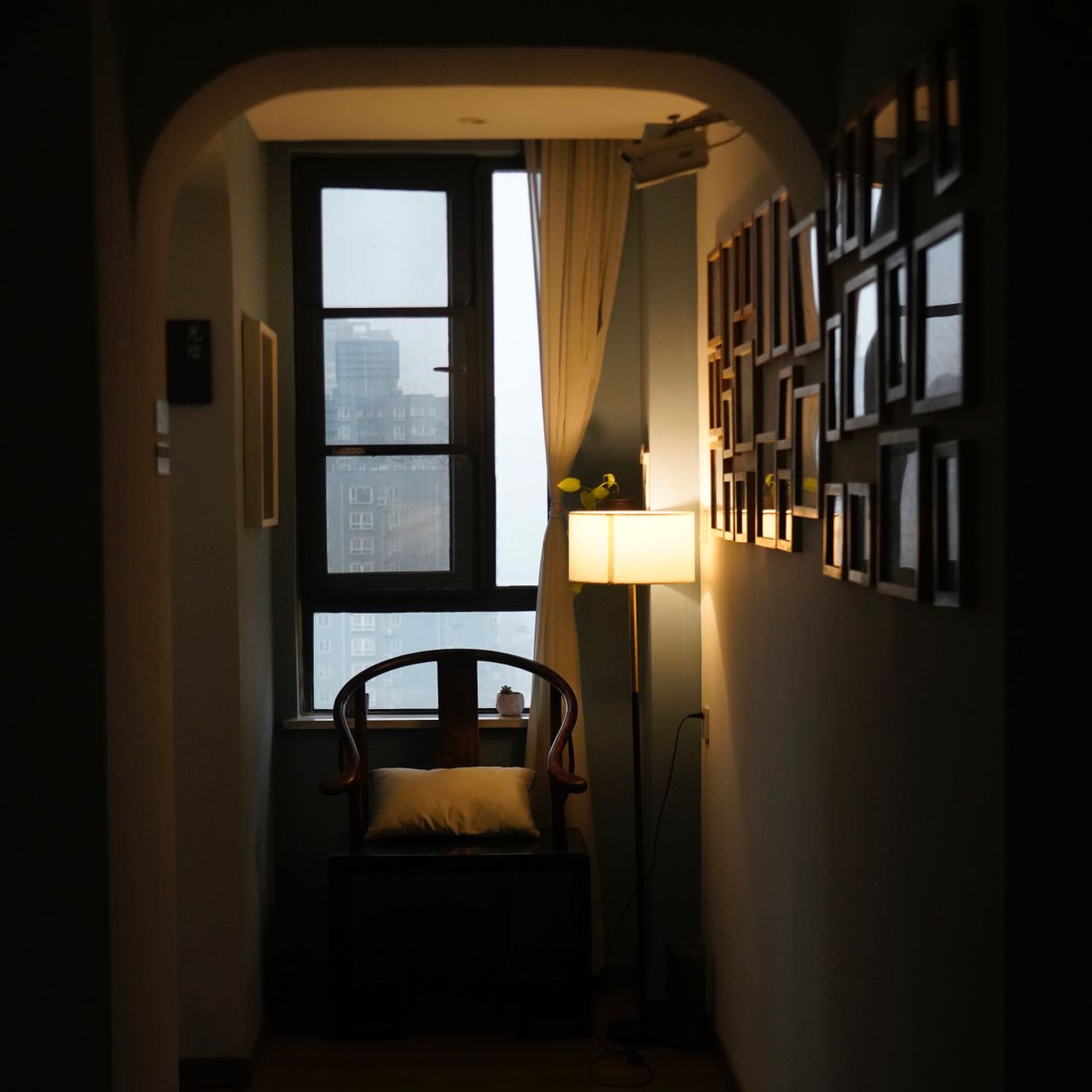
A dim apartment corner with a wooden chair, a glowing floor lamp, and a tall window looking out over city buildings.
Even a tiny apartment has a reading nook hiding in it, usually in a corner by a window, at the end of a hallway, or beside a bed, and the trick is to claim just 3 feet by 3 feet and give it four things: one comfortable seat, one warm light, one small surface, and one soft layer, because a nook that tries to do more in that size will feel crowded instead of cozy. This dim city corner shows the evening version perfectly: a wooden chair with a cushion, a floor lamp with a warm shade that glows against the wall, and a tall window that gives daylight by day and city lights by night, with no bulky furniture stealing floor space. Choose a slim chair with narrow arms, about 24 to 28 inches wide, rather than a wide lounge chair, use a wall-mounted or clip-on light if floor space is tight, about $15 to $40, and hang a small floating shelf at arm height, about $30 to $80, instead of a side table, so your book and drink have a home without a table leg in the walkway. Keep the palette light, use a mirror opposite the window if you can to bounce daylight deeper into the room, and protect your walkway: leave at least 30 inches clear from the door to the rest of the apartment, because a reading corner that blocks traffic will annoy you every day, while a corner that fits its 3-foot square will quietly become the best seat in the home.
Frequently Asked Questions
How much space do I need for a reading nook?
As little as 3 feet by 3 feet for one chair, a lamp, and a small shelf. A window seat needs the window width plus about 24 inches of depth, while a full library corner works best with at least 5 feet by 5 feet.
What is the best light for reading at night?
A warm 2700K lamp placed over your shoulder or to your side, so light falls on the page without glare. Avoid a single cold overhead light, which flattens the corner and strains your eyes in the evening.
Can I make a reading nook in a rental?
Yes. Use furniture, not construction: a chair, a floor lamp, a basket, and a rug need no drilling, and a tension rod, a clip-on light, and a floating shelf with removable hooks keep the walls safe.
What seat is best for long reading sessions?
A chair with a seat height of 17 to 19 inches, a seat depth of 21 to 23 inches, good lumbar support, and a headrest or high back. Test it for at least twenty minutes with a book before you buy, if you can.
How do I keep a reading nook from getting cluttered?
Keep only your current book, your next book, glasses, and a drink in the nook. Store the rest of your books on a shelf nearby, and do a quick reset each evening: throw folded, books stacked, mug in the kitchen.
Final Thoughts
The best reading nook is not the prettiest one in a photograph, but the one you sit in without thinking about it, on an ordinary Tuesday, with a mug going cold beside you and a chapter left to finish. That kind of corner is built from small, honest choices: a seat that fits your body, light that falls on the page, books within reach, and a blanket close enough to grab without getting up.
Pick the idea that fits the corner you already have, start with the chair and the lamp, and let the textiles and books gather slowly, because a reading corner that grows with your reading habit will always feel more personal, and more used, than a corner styled all at once. Tonight, pull a chair toward the window, turn on one warm lamp, and open the book you have been meaning to finish.
Sources
- Simple Spaces: Tiny Reading Nook Ideas
- ModernVibeHome: Reading Nook Ideas
- Addicted to Organization: Window Reading Nook Ideas
Gallery
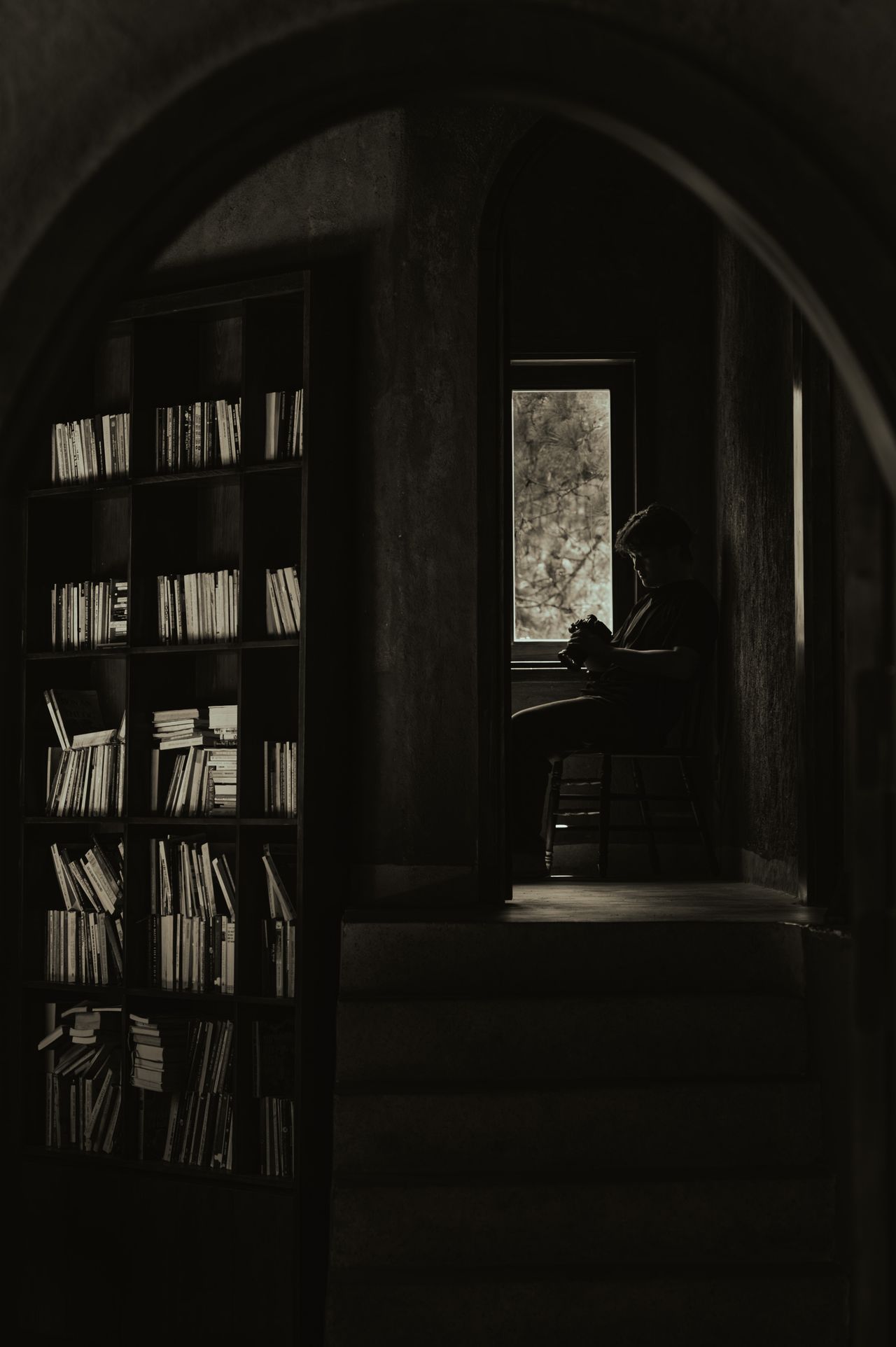
A silhouette of a reader in a dim library beside tall bookshelves, seen through an arched doorway.
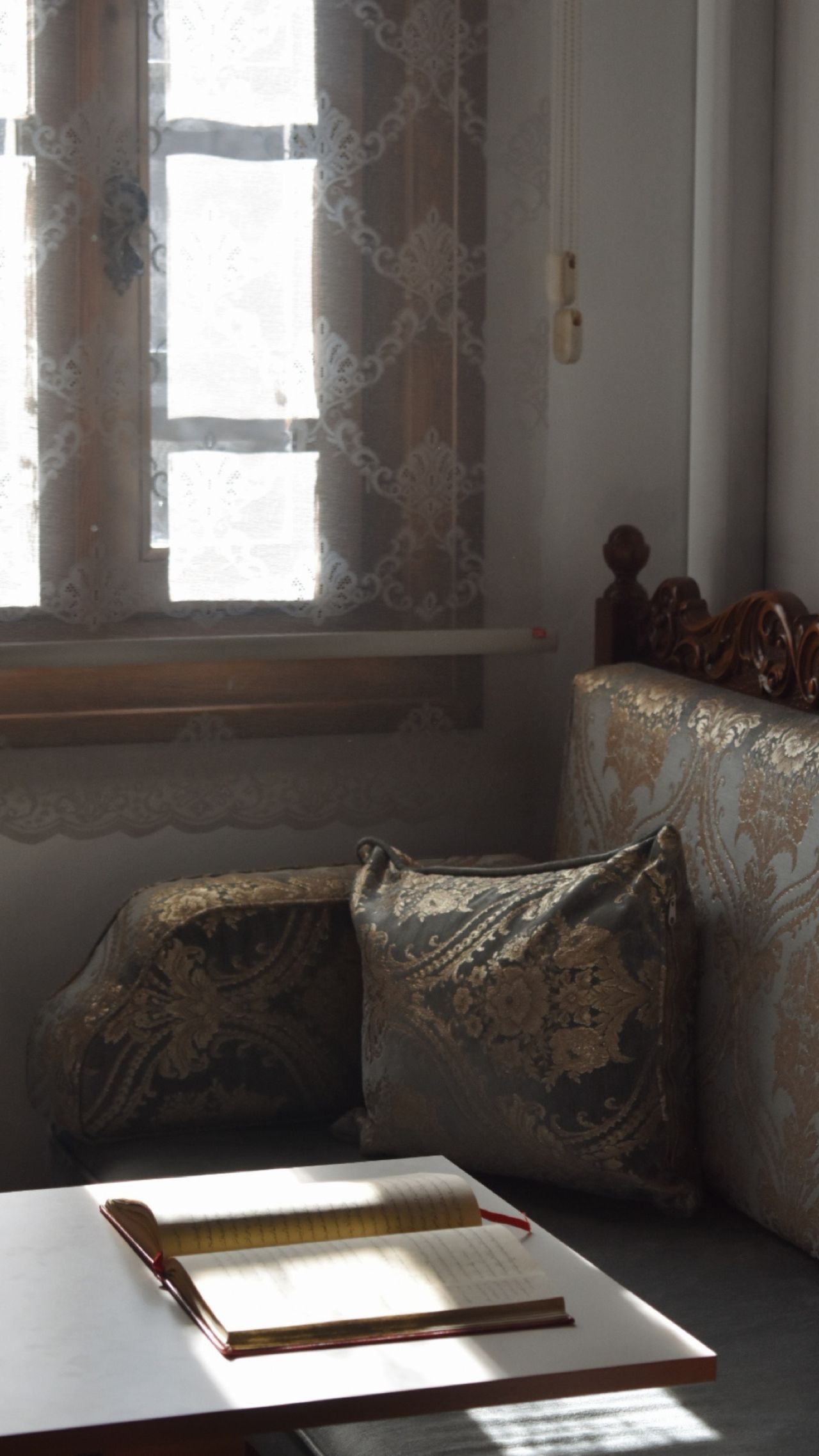
An open book on a table beside a patterned sofa by a lace-curtained window in soft sunlight.

A woman in a mustard sweater reading in an armchair by a window, with a stack of books and small plants nearby.

No comments:
Post a Comment