There is something special about a drinks cart that has already lived a little. The brass is a bit soft at the edges, the glass shelves have tiny marks from years of use, and the wheels still roll like they know where the party is. If you have been scrolling Pinterest and falling in love with old carts, these antique bar cart ideas will help you pick the right one, fill it with the right things, and style it so it looks collected, not cluttered. This is a guide for grown-up drinkers, so everything here is for adults of legal drinking age, and the best carts always come with a plan for getting home safe or staying in.
A good bar cart does two jobs at once. It holds your bottles, glasses, and tools where you can reach them, and it makes a corner of your dining room or living room look finished. The carts people love most are usually from the 1940s through the 1970s, when makers built them from real brass, wood, and glass instead of plastic and thin metal. You do not need a big budget or a big room. A small cart with a few good bottles and three glass shapes can look better than a huge cart piled high with things you never use. The ten ideas below walk through picking the cart, choosing one metal finish, keeping the glassware simple, stocking it for real drinks, and placing it where it belongs.

Photo: Pexels. A two-tier bar cart with bottles, glasses, a steel ice bucket, candles, and dried flowers, lit by warm evening light. Brand labels are visible on some bottles.
Table of Contents
- 1. Start With a Brass and Glass Cart
- 2. Pick One Metal Finish and Stick to It
- 3. Keep the Glassware to Three Shapes
- 4. Show Off the Old Bar Tools
- 5. Style the Cart for the Room It Lives In
- 6. Choose a Cart That Can Travel
- 7. Give It an Old-World Backdrop
- 8. Keep a Shaker, Jigger, and Spoon Close
- 9. Serve One Signature Drink
- 10. Mix and Pour Right at the Cart
- Frequently Asked Questions
- Final Thoughts
- Sources
- Gallery
1. Start With a Brass and Glass Cart

Photo: Pexels. A gold-frame cart with two tiers of bottles, wine glasses hung upside down under the top shelf, and a steel ice bucket. Brand labels are visible on the bottles.
The classic antique cart is brass and glass, and there is a good reason it never goes out of style. Brass warms up a room the way chrome never does, and glass shelves keep the cart looking light even when it holds twenty bottles. When you shop, look for a frame that feels heavy when you lift one end, glass shelves at least a quarter inch thick, and wheels that turn without wobbling. A cart about 30 inches wide and 32 inches tall fits most dining rooms, and two tiers give you a work top and a storage shelf without making the cart hard to move. Check the joints where the frame meets the shelves, because loose joints are the first thing to fail on a cheap cart. If the brass has a soft, even glow with a little darkening in the corners, that is patina, and it is worth keeping. If it is flaking or green in patches, the finish is damaged and you will spend more fixing it than the cart is worth. Prices in the United States run about $80 to $250 for a good thrift or estate-sale find, $300 to $800 for a named mid-century piece in nice shape, and over $1,000 for rare French or Italian carts from the 1950s and 1960s. Before you buy, measure your spot and leave at least 6 inches of clear space on the rolling side so you can pull the cart out without scraping the wall.
2. Pick One Metal Finish and Stick to It

Photo: Pexels. A chrome trolley with whiskey bottles, crystal decanters, cut glasses, and a silver tray beside a leather armchair. Brand labels are visible on the bottles.
The fastest way to make a bar cart look messy is to mix too many metals. Brass next to chrome next to copper next to black iron makes the eye jump around, and nothing looks like it belongs together. Pick one dominant finish and let it lead everything on the cart: the frame, the shaker, the jigger, the ice bucket, and the tray. If your cart is brass, choose a brass-toned shaker and warm-toned tools, and let the glass and the bottles bring the contrast. If your cart is chrome or nickel, like the trolley in the photo, go with silver tools and clear crystal, and let dark bottles and a leather chair nearby add warmth. A second metal is fine only if it is close in tone and age, such as aged brass beside old copper, and it should show up in one small thing, not half the cart. This rule also saves you money, because you can buy one good set of tools in your chosen finish instead of five mismatched pieces. When you clean metal, use a soft cloth and a gentle polish made for that metal, and never use a rough sponge on brass or silver plate, because scratches show up fast under lamplight. If a piece is already scratched, put it on the lower shelf where the light is softer, and keep the shiny pieces on top.
3. Keep the Glassware to Three Shapes

Photo: Pexels. Open shelves with wine glasses, champagne flutes, and martini glasses, with a gin bottle, lemons, and small glasses below. A brand label is visible on the gin bottle.
You only need three glass shapes to serve almost every classic drink, and three shapes keep the cart calm. A coupe covers martinis, Manhattans, and anything served up without ice. A rocks glass, also called an old fashioned glass, covers whiskey, Negronis, and any drink poured over one big cube. A highball covers gin and tonics, whiskey sodas, and anything tall and fizzy. Buy four to six of each shape and stop there, because twelve to eighteen glasses fill a cart nicely without crowding it. Look for glasses that feel a little heavy in the hand, because thin, light glasses chip fast and feel cheap when you hand them to a guest. Cut crystal and etched vintage glasses catch the light beautifully, and they do not need to match perfectly. A set of four matching coupes plus two found singles in the same style looks collected, not careless. Store the glasses you use most on the top shelf where you can reach them, and hang stemware upside down from a rail or set it on the lower shelf if your cart has no rail. Wash vintage glasses by hand in warm, soapy water and dry them right away, because a dishwasher can cloud old crystal and loosen gold rims. If a glass has a chip on the rim, retire it to a vase or a candle holder instead of serving drinks in it.
4. Show Off the Old Bar Tools

Photo: Wikimedia Commons. A museum display of a 1930s ocean-liner cocktail service in silver, with shakers, an ice bucket, a tray, tongs, and small glasses. This is a museum piece, not a working cart.
Old bar tools are some of the prettiest objects you can put on a cart, and they earn their place because you actually use them. A good set has a shaker, a jigger for measuring, a long bar spoon, a strainer, and a pair of ice tongs. Silver-plated tools from the 1930s through the 1960s turn up at estate sales and flea markets for $10 to $40 a piece, and they look far better than new plastic tools. The photo above shows a silver cocktail service made for an ocean liner in the 1930s, and it is a good model for how to group tools: the tall pieces at the back, the small pieces in front, and a tray underneath to hold the set together. When you buy old tools, check that shaker lids still fit tight, that strainer springs are not rusted, and that tongs still close evenly. A little tarnish is fine and even pretty, but green spots or pitting mean the plating is worn through. Keep the tools you reach for every time on the top shelf, and keep spares on the lower shelf. A small tray, about 12 by 18 inches, keeps the tools from sliding when you roll the cart, and it makes the whole top look finished instead of scattered. If you find a tool you love but never use, such as a fancy ice pick, let it live on the cart as decoration and keep your everyday tools close by.
5. Style the Cart for the Room It Lives In
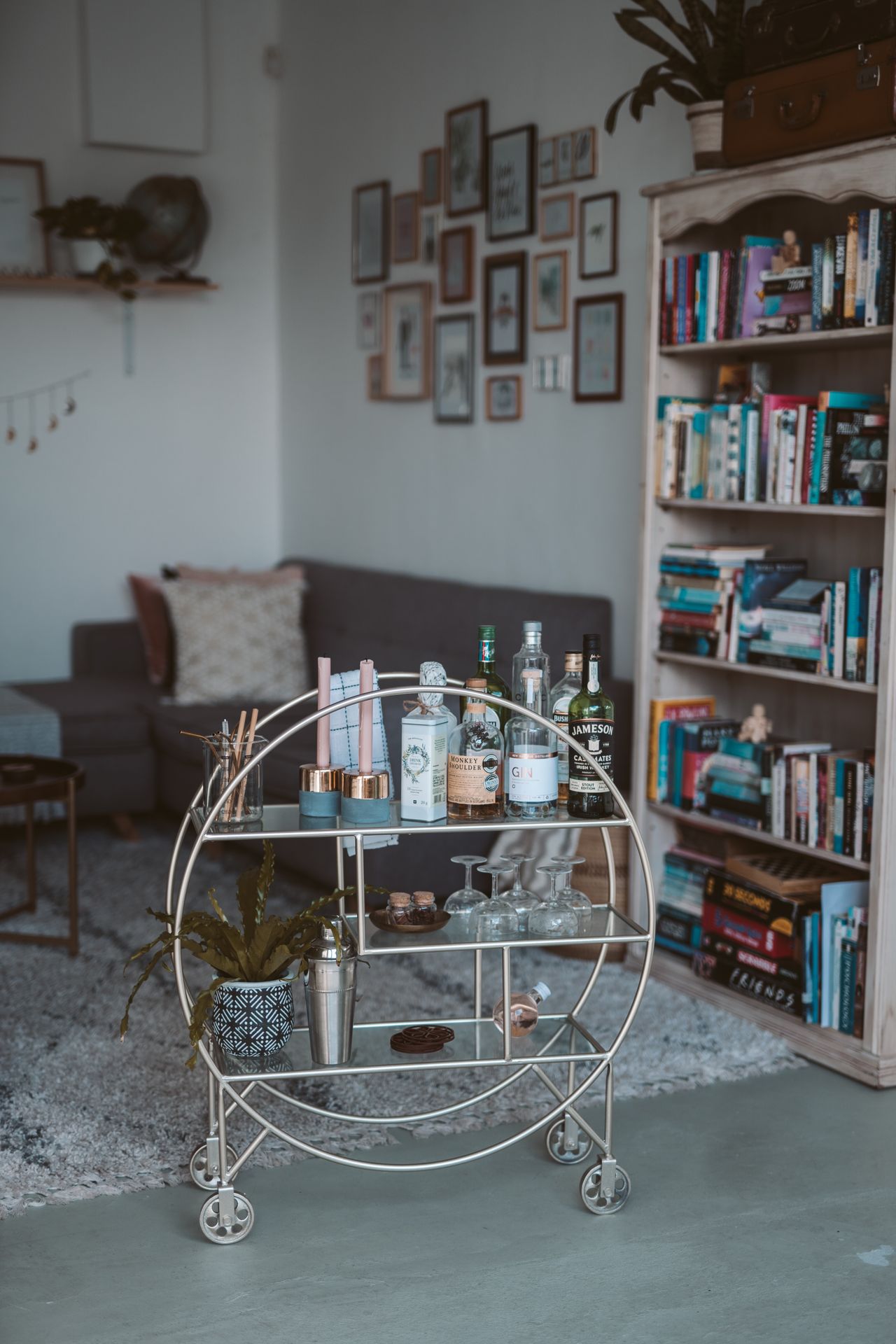
Photo: Pexels. A round silver cart with gin and whiskey bottles, candles, a small plant, and a shaker in a living room with a sofa and bookshelves. Brand labels are visible on the bottles.
A bar cart should look like it belongs in its room, not like it was dropped there by accident. In a living room, treat the cart like a small piece of furniture: set it near the sofa, keep the top tidy, and add one soft thing such as a small plant or a stack of cocktail books so it does not look like a liquor store shelf. The round cart in the photo works in a living room because its silver frame matches the cool tones of the sofa and rug, and the plant and candles soften the hard lines. In a dining room, the cart can be dressier, with crystal, a silver tray, and the good bottles on display, because it sits beside the table where people eat and drink. In a small apartment, push the cart against a wall between two rooms so it works as a divider and a serving station at the same time. Match the cart to the room's wood and metal tones: warm brass and dark wood suit a traditional dining room, while chrome and glass suit a bright, modern living room. Leave one open spot on the wall above or beside the cart for a small framed print, because a bare wall makes the cart look lonely. If your room is small, choose a cart under 28 inches wide and keep only eight to ten bottles on it, so the cart adds charm without eating the whole corner.
6. Choose a Cart That Can Travel

Photo: Pexels. A cream serving cart with a wood handle, holding a shaker, champagne flutes, a bowl of ice, rosemary, and a bottle of sparkling wine. A brand label is visible on the bottle.
The whole point of a cart is that it moves, so buy one that rolls well and has a handle you can actually grip. Big back wheels and small front casters are the classic setup, and they let you steer the cart through a doorway without lifting it. Before you buy a used cart, roll it across the shop floor and listen: a smooth, quiet roll means the wheels are true, while a wobble or a squeak means you will need new casters, which cost about $15 to $40 for a set of four. A handle on one end, like the wood bar on the cream cart in the photo, makes a big difference when the cart is loaded, because you can push it with one hand while you hold a door with the other. Look for a raised edge or rail around each shelf, at least an inch high, so bottles do not slide off when the cart moves. When you roll the cart to guests, move slowly and keep the heavy bottles on the lower shelf so the cart stays steady. At the end of the night, roll it back to its spot and lock the casters if it has brakes, or wedge a small door stop under one wheel. If your home has thick rugs, choose larger wheels, at least 3 inches across, because small wheels sink into carpet and make the cart hard to push.
7. Give It an Old-World Backdrop

Photo: Pexels. A brass cart with a shaker, lemons, and glasses set before a carved wood screen with green glass panels, beside a side table with a gin bottle. A brand label is visible on the bottle.
An antique cart looks its best against something old, because the backdrop tells the same story as the cart. A carved wood screen, a gilt mirror, a dark oil painting, or a wall of old books all make brass and glass look richer. The cart in the photo sits before a carved screen with green glass panels, and the deep green makes the brass glow in a way a plain white wall never would. You do not need to buy antiques to get this effect. Hang one framed vintage print behind the cart, lean an old tray against the wall, or set a brass lamp nearby, and the cart will feel like part of a collected room instead of a single new purchase. Dark walls work well too: deep green, navy, or charcoal paint makes glass and brass stand out, while pale walls suit lighter carts in chrome or painted wood. If you rent and cannot paint, a large framed poster or a fabric wall hanging behind the cart gives you the same depth. Keep the backdrop simple, with one or two old pieces, because a busy wall fights with the cart for attention. The goal is a quiet, old-world corner where the cart looks like it has always been there.
8. Keep a Shaker, Jigger, and Spoon Close

Photo: Wikimedia Commons. A steel cocktail shaker with a jigger and a long twisted bar spoon, the three tools every home cart needs.
Three tools do almost all the work on a bar cart, so keep them on top where your hand lands first. The shaker mixes drinks that have juice, cream, or egg white, and a standard Boston shaker, which is two tins that fit together, costs about $15 to $25 and lasts for years. The jigger measures your pours, and the classic double jigger holds 1 ounce on one side and 2 ounces on the other, which covers most recipes without any guessing. The long bar spoon stirs drinks that should stay clear, like a Martini or a Manhattan, and its twisted stem also lets you pour a slow layer of liqueur over the back of the spoon. Keep these three tools together in a small cup or on a tray at the front of the cart, so you never have to dig behind bottles to find them. Wash the shaker and jigger after each use and dry them right away, because dried juice makes the next drink taste sour. If you buy vintage tools, test the shaker seal with water before you use it with a real drink, because an old tin can leak at the seam. A small notebook or a set of recipe cards tucked under the tray is a nice touch, and it keeps your favorite recipes where you mix instead of on your phone with wet hands.
9. Serve One Signature Drink

Photo: Wikimedia Commons. A Sazerac, a classic New Orleans cocktail, served in a rocks glass with a lemon twist.
A cart with twenty bottles and no plan is just storage, but a cart built around one signature drink feels like a real bar. Pick one drink you love and can make well, then stock the cart for it first. A Sazerac, shown in the photo, needs only rye whiskey, sugar, bitters, absinthe for the rinse, and a lemon twist, and it is a good choice because it tastes old-fashioned and looks beautiful in a rocks glass. An Old Fashioned needs bourbon, sugar, bitters, and an orange twist. A Negroni needs gin, Campari, and sweet vermouth in equal parts. Once your signature drink is covered, add one bottle each of vodka, gin, bourbon, and a light rum, plus a bottle of sweet vermouth and a bottle of dry vermouth, and you can make most classic cocktails. Keep mixers simple: tonic water, club soda, a few lemons and limes, and a small jar of cherries. Buy small bottles of anything you use rarely, because an open bottle of vermouth goes stale in about a month in the fridge, and a stale bottle ruins a good drink. Write the recipe on a small card and lean it against the cart, so guests can see what you are pouring and try it themselves. If you want a morning station instead of an evening one, our guide to a home coffee bar uses the same cart idea with mugs, beans, and a kettle.
10. Mix and Pour Right at the Cart

Photo: Pexels. A hand pouring a shaken cocktail from a steel shaker into a crystal coupe, with a wood tray, glasses, and a decanter nearby.
The best bar carts are not just for show, and the moment that proves it is when you mix a drink right there in front of your guests. Set up a small work zone on the top shelf: the shaker, the jigger, a cutting board the size of a paperback book, a small knife, and a bowl for peels. Keep a hand towel folded on the lower shelf for spills, and keep a small trash bowl for peels and caps so the top stays clean. Pour over fresh ice, because old ice from the freezer picks up smells and melts fast, and fill the glass only three-quarters full so the drink has room to breathe. Talk while you mix, because people love to watch a drink come together, and a cart makes you the host instead of the person who disappears into the kitchen. When the night is over, wash the tools, dry the glasses, and put the bottles back in their spots, because a cart that is reset in five minutes is a cart you will actually use again. If you serve food with drinks, small bites such as deviled eggs are easy to eat standing up, and a hot cocoa bar beside the cart gives younger guests and non-drinkers something warm to hold. Place the cart near your dining table if you can, and our guide on how to pair dining chairs with benches can help you set the seating around it.
Frequently Asked Questions
What is an antique bar cart?
An antique bar cart is a small rolling cart, usually made before 1980, built to hold bottles, glasses, and bar tools. Most have two or three tiers, a handle, and wheels, and the best-known styles are brass and glass carts from the 1950s through the 1970s, wood tea trolleys turned into drink carts, and French rolling tables with big spoked wheels.
How much does a vintage bar cart cost?
A good thrift or estate-sale cart usually costs $80 to $250 in the United States. Named mid-century pieces in nice shape run $300 to $800, and rare French or Italian carts from the 1950s and 1960s can cost over $1,000. Always check the wheels, the joints, and the glass shelves before you pay, because repairs can cost more than the cart.
What should I put on a bar cart first?
Start with the bottles for one signature drink, three glass shapes, a shaker, a jigger, a bar spoon, and an ice bucket. Add a tray and a hand towel, then stop and live with the cart for a week before you buy anything else. It is much easier to add one good piece at a time than to clear a crowded cart.
How do I keep a bar cart from looking cluttered?
Pick one metal finish, keep the glassware to three shapes, and leave at least 3 inches of empty space between groups of items. Take one thing off the cart before you add a new one, and keep spare bottles and extra tools in a cabinet instead of on the cart.
Can I use a bar cart for things other than alcohol?
Yes, and many people do. A cart works well as a tea station, a coffee station, a dessert cart, or a plant stand. Just keep the styling the same: a few good pieces, one metal finish, and plenty of empty space so it looks calm instead of crowded.
Final Thoughts
An antique bar cart is one of the easiest ways to make a dining room or living room feel finished. It does not need to be rare or costly. It needs to roll well, hold the things you actually use, and leave enough empty space for each piece to be seen. Start with a brass and glass cart, pick one metal finish, keep the glassware to three shapes, and build the cart around one drink you love. The rest, the old tools, the tray, the backdrop, will come together over time as you find pieces at estate sales, thrift shops, and flea markets.
Take your time and enjoy the hunt. The best carts are the ones with a story, a cart your grandmother used, a trolley found at a flea market on a Saturday morning, a brass frame that took an afternoon of gentle polishing to shine again. Style it simply, stock it for real drinks, and roll it out when friends come over. A good cart does not just hold bottles. It starts conversations, and that is the whole point.
Sources
- Vintage Bar Cart Ideas That Go Beyond Cocktails
- How to Style an Antique Bar Cart on a Budget
- Timeless Elegance: Styling Tips for Your Vintage Bar Cart
- How to Style a Home Bar Cart With Vintage Barware
Gallery

Photo: Wikimedia Commons. A bartender double-straining a cocktail through a fine mesh strainer into a coupe glass, a skill worth learning for smooth drinks.

Photo: Wikimedia Commons. Red syrup poured over a bar spoon into a shaker, with lemons and a jigger nearby. A brand label is visible on the bottle.

Photo: Wikimedia Commons. An open shaker with a jigger, lemon halves, and a copper mug on a bar mat, the tools of a working home bar.

No comments:
Post a Comment