There is a reason deviled eggs disappear first at almost every American gathering: they are cheap, they take about 30 minutes, and one batch of 12 eggs makes 24 bites, which is enough for a dozen guests at 2 bites each. The base is almost embarrassingly simple, mashed yolks mixed with mayonnaise, mustard, salt, and pepper, spooned or piped back into the whites and dusted with paprika. A dozen large eggs costs about $3 to $4, the filling adds roughly $1 more, and the whole tray looks far fancier than the effort suggests. The trick is not a secret ingredient but good basics: eggs boiled gently so the yolks stay bright yellow with no gray ring, filling mashed until smooth, and seasoning tasted before the tray is filled.
This guide gives you 10 easy fillings, each one a small change to the same base, with real amounts for a batch of 12 eggs. You will learn how to boil and peel eggs without tearing the whites, how to pipe a neat swirl with a zip-top bag, which fillings travel well to a potluck, and how long a filled tray can safely sit out. Start with the classic version, then try one new filling each time you make a batch, and you will soon have a house version that guests ask for by name.

Seven filled egg halves topped with bacon bits, parsley, and paprika on a white platter. Photo: Wikimedia Commons.
Table of Contents
- 1. The Classic Mustard-Mayo Filling
- 2. The Make-Ahead Potluck Tray
- 3. The Piped Swirl Platter
- 4. One Tray, Many Toppings
- 5. The Scallion and Herb Filling
- 6. The Smoky Paprika and Chive Filling
- 7. The Party Pick Platter
- 8. Boiling the Eggs Right
- 9. The Smooth Filling Method
- 10. Picking the Eggs and the Plate
1. The Classic Mustard-Mayo Filling

Filled egg halves with a tan mustard filling dusted with paprika on a floral plate. Photo: Wikimedia Commons.
Learn this version first, because every other filling in this guide is a change to it: for 12 large eggs, mash the yolks with 1/3 to 2/3 cup of mayonnaise, 1 to 2 tablespoons of Dijon or yellow mustard, 1 to 2 teaspoons of apple cider vinegar, 1/4 teaspoon of salt, and 1/8 teaspoon of white or black pepper, then taste and adjust before filling. Start with the smaller amount of mayonnaise and add more a spoonful at a time, since brands vary in thickness and a filling that is too loose will not hold a piped shape, while a filling that is too stiff tastes dry. A food processor gives the smoothest result in under a minute, but a fork and a little patience work just as well if you mash the yolks to a fine crumble first. Spoon the filling in for a rustic look, or pipe it for a party, dust with paprika, and chill the tray for at least 30 minutes so the flavors settle. The whole batch costs about $4 to $5, takes roughly 30 minutes plus chilling, and keeps 2 days in the fridge in an airtight container.
2. The Make-Ahead Potluck Tray

A clear container of plain filled egg halves ready for a gathering, with a couple of empty halves visible at the edges. Photo: Wikimedia Commons.
This is the version for anyone carrying food to someone else's house: boil and peel the eggs up to 2 days ahead, keep the whites and the filling in separate airtight containers in the fridge, and fill the halves only when you arrive, which takes about 10 minutes and keeps the filling from drying out or sliding around in transit. Pack the whites in a single layer in a sturdy container with a lid, put the filling in a zip-top bag so it doubles as a piping bag, and carry garnishes in a small separate bag. If you must fill them at home, use a container with a tight lid, keep the tray cold in a cooler with an ice pack, and never leave the finished tray at room temperature for more than 2 hours, or 1 hour when it is above 90°F outside. The filling itself is the classic mustard-mayo mix, since fancy garnishes wilt or fall off on the road, and a plain tray with paprika travels better than any decorated one. For a full party table, pair this tray with the small bites in our tater tot appetizers guide, which travel just as well and give guests a hot option next to the cold tray.
3. The Piped Swirl Platter

Twelve piped egg halves with swirled pale filling and paprika on a black tray. Photo: Wikimedia Commons.
Piping is the fastest way to make a simple tray look professional, and it needs no special tools: spoon the classic filling into a zip-top bag, press out the air, snip 1/2 inch off one corner, and squeeze in a slow spiral starting at the edge of each white and working inward and upward. A large star tip in a real piping bag gives taller, prettier swirls, and it costs about $5 for a starter set, but the zip-top method gives nearly the same look for free. The filling must be smooth and fairly firm to hold its shape, so push the yolks through a fine sieve if you see lumps, and add 1/2 teaspoon of dry mustard powder if the mix feels too soft, since it thickens the filling without changing the flavor much. Fill the bag only three-quarters full, twist the top closed, and keep a damp cloth nearby to wipe the tip between eggs, because a messy tip makes messy swirls. One batch of 12 eggs fills one bag, takes about 5 extra minutes over spooning, and is worth it whenever the tray is the centerpiece.
4. One Tray, Many Toppings

A plate of filled egg halves with many different toppings, including carrot slices, red pepper, cucumber, dill, scallions, and paprika. Photo: Wikimedia Commons.
When you cannot decide on one flavor, make one classic filling and finish the halves eight different ways: top 3 halves with crumbled bacon, 3 with sliced pickled jalapeño, 3 with a small piece of smoked salmon or a cooked bay shrimp, 3 with capers, 3 with a cherry tomato half, 3 with a thin radish slice, 3 with chopped olives, and the rest with plain paprika. The toppings cost about $5 to $8 total if you buy small amounts from a salad bar or deli, and the tray becomes a talking point, since guests compare favorites and go back for the ones they liked. Keep wet toppings off until the last 30 minutes so the filling does not get soggy, and label anything spicy or fishy with a small card, since guests with allergies or kids need to know. This is also the smartest way to test new flavors, because one tray tells you which topping is worth a full batch next time, and the classic filling underneath keeps even a bold topping from tasting strange. Set the tray out with the other small bites from our fall appetizer ideas list, and you have a full grazing table with almost no extra cooking.
5. The Scallion and Herb Filling

A glass tray of filled egg halves generously topped with chopped scallions. Photo: Wikimedia Commons.
Fresh herbs are the cheapest way to make the classic filling taste new: stir 2 tablespoons of finely chopped scallions and 1 tablespoon of chopped fresh dill or parsley into the classic yolk mix, then top each half with a little extra scallion just before serving so the green stays bright. The herbs cost under $1 if you buy one bunch, and they add a fresh, oniony bite that cuts through the richness of the mayonnaise in a way paprika alone cannot. Use the green parts of the scallions only, since the white parts are harsher raw, and chop them fine so they blend into the filling instead of sitting in chunks. This version is best eaten the same day, because cut herbs darken after a night in the fridge, so if you must make it ahead, keep the herbs separate and stir them in just before filling. It pairs well with lighter party food, and the green topping makes the tray look fresh even next to heavier dishes.
6. The Smoky Paprika and Chive Filling

Filled egg halves in a white egg plate, some topped with chives and some dusted with paprika. Photo: Wikimedia Commons.
Smoked paprika is the one spice that changes this dish the most for the least money: add 1/2 teaspoon of smoked paprika to the classic yolk mix along with 1 tablespoon of snipped chives, then dust the finished halves with a little more paprika for color. A jar of smoked paprika costs about $3 and lasts for dozens of batches, and the smoky note makes the filling taste almost bacony without any meat, which is handy when some guests do not eat pork. Do not confuse smoked paprika with hot paprika, since hot paprika adds real heat and will surprise guests who expect a mild bite, and add the spice a little at a time and taste, because smoked paprika varies in strength by brand. The chives go on at the very end, since they wilt if they sit in the filling overnight, and a white egg plate with wells, like the one in the photo, keeps the halves from sliding and shows off the red dusting beautifully. This is the version to make when you want the classic look with a deeper, warmer flavor.
7. The Party Pick Platter

Four filled egg halves served on green leaves in a glass dish, each with a toothpick, a party-serving idea rather than a plain tray. Photo: Wikimedia Commons.
Presentation matters when guests eat standing up, and this serving trick solves the sliding problem: line a platter with soft lettuce leaves or finely shredded green cabbage, nestle the filled halves into the leaves so they sit steady, and add a toothpick to each half if the tray will be carried around the room. The leaves cost under $1, add fresh color, and keep the halves from rolling, which is the main reason trays look messy halfway through a party. For a spicier party version, stir 1 teaspoon of hot sauce and 1/2 teaspoon of cayenne into the classic filling, or fold in 2 tablespoons of finely diced pickled jalapeño, and warn guests with a small card, since the heat hides behind the creamy filling. Keep the tray over a tray of crushed ice at outdoor parties, or use a chilled platter, since filled halves should not sit out more than 2 hours, and a cold base buys you a little extra time on a warm day. This is the version for game nights and backyard gatherings, where food gets eaten in passing rather than at a table.
8. Boiling the Eggs Right

A pot of whole white eggs sitting in water on a stove, before boiling and peeling. Photo: Wikimedia Commons.
Every good tray starts with eggs that peel cleanly, and the method matters more than the age of the eggs: place 12 large eggs in a single layer in a pot, cover with cold water by about 2 inches, add 2 tablespoons of white vinegar and 1/2 teaspoon of salt, bring to a boil, then turn the heat down to a gentle simmer and cook for 15 minutes. Move the eggs straight into a bowl of ice water and chill until very cold, about 30 minutes, then peel under cold running water, letting the water slip under the shell, which is the step that prevents torn whites. Older eggs do peel a little easier, but fresh eggs peel just fine with this method, so do not wait a week to buy them. Cook 2 extra eggs beyond what you need, since one or two whites always tear, and the extra yolks give you more filling for generous, piled-high halves. If you see a gray-green ring around a yolk, the eggs cooked too long or cooled too slowly, so shorten the simmer to 12 minutes next time and chill faster.
9. The Smooth Filling Method

A glass plate of empty cooked egg white halves with traces of yolk, ready to be filled. Photo: Wikimedia Commons.
A lumpy filling is the most common complaint about homemade trays, and it is easy to fix: after halving the eggs with a thin, sharp knife and wiping the blade clean between cuts, push the yolks through a fine-mesh sieve with the back of a spoon before adding anything else, which takes about 3 minutes and gives a filling as smooth as a bakery version. Then add the mayonnaise a little at a time, since a thinner brand can turn the mix runny fast, and stop when the filling is creamy but firm enough to hold its shape on a spoon. If the mix does go too thin, stir in 1/2 teaspoon of dry mustard powder and chill the filling for 20 minutes, which firms it up without changing the flavor. Taste for salt at the end, not the start, because mayonnaise and mustard are already salty, and cold filling needs a little more seasoning than warm food does. Keep the empty whites covered in the fridge while you work, so they do not dry out, and fill them as close to serving time as you can. A smooth base also makes the spicy and bacon versions in our ranch potato recipes guide work as sides, since both trays share the same creamy, crowd-friendly style.
10. Picking the Eggs and the Plate

Whole brown eggs sitting in the wells of a decorative egg plate, before filling, showing the plate style that keeps halves steady. Photo: Wikimedia Commons.
The last decision is the least glamorous and the most practical: buy large eggs, not medium or jumbo, since large eggs give halves that are easy to fill and easy to eat in two bites, and check every egg for cracks before boiling, because a cracked egg leaks white into the water and peels badly. Brown or white shells make no difference to taste, so buy whichever is cheaper, usually white eggs at about $3 to $4 a dozen, and store them in the fridge in their carton, not loose in the door, where temperature swings shorten their life. A plate with wells, like the one in the photo, costs about $10 to $15 and is worth it if you make these often, since it stops the halves from sliding and makes the tray look finished with no extra work. If you do not own one, a flat platter lined with lettuce leaves works just as well, and a muffin tin lined with paper cups can carry a filled tray to a party in a pinch. Plan on 2 halves per guest for a party with other food, or 4 per guest if the tray is the main snack, and always make a few extra, since the first tray always empties faster than expected.
Frequently Asked Questions
How long can a filled tray sit out?
No more than 2 hours at room temperature, or 1 hour when it is above 90°F. For outdoor parties, set the platter over a tray of crushed ice or use a chilled serving platter.
Can I make the filling ahead of time?
Yes. Boil and peel the eggs and make the filling 1 to 2 days ahead, store the whites and filling separately in the fridge, and fill the halves close to serving time.
Why is my filling runny?
Mayonnaise brands vary in thickness, and too much liquid is the usual cause. Start with less mayonnaise than you think you need, add more slowly, and stir in 1/2 teaspoon of dry mustard powder if the mix needs firming up.
How do I peel eggs without tearing the whites?
Chill the boiled eggs in ice water until very cold, then peel under cold running water, letting the water slip under the shell. Cook 2 extra eggs so torn whites never ruin your count.
What is the cheapest way to fill a big tray?
Use the classic mustard-mayo filling with paprika and no fancy toppings. A batch of 12 eggs costs about $4 to $5 and makes 24 bites, which is the best value of any party snack.
Final Thoughts
The classic filling is popular for a reason: it is cheap, fast, and loved by nearly everyone, and every variation in this guide is just one small change away from it. Master the boil, mash the yolks until smooth, taste the filling before you fill, and chill the tray before serving, and you will have a tray that looks and tastes like it took far more effort than it did. Keep a few garnishes on hand, make a couple of extra eggs, and let guests build their own favorites from a mixed topping tray.
Once you have your house version, these halves become the easiest win in your party cooking: 30 minutes of work, about $5 of ingredients, and a plate that empties before anything else on the table. Try one new filling each time, note which one disappears first, and that one becomes your signature. Few dishes reward a little practice this quickly, and none disappear this fast.
Sources
- A Foodcentric Life: Best Recipe and Make-Ahead Tips
- Fine Dining Lovers: Classic Recipe
- Aura Decor Living: Tater Tot Appetizers Guide
Gallery

Cooked egg yolks in a metal mixing bowl, ready to be mashed into filling. Photo: Wikimedia Commons.

Mashed yolk filling mixed in a metal bowl, partway to a smooth, pipeable texture. Photo: Wikimedia Commons.
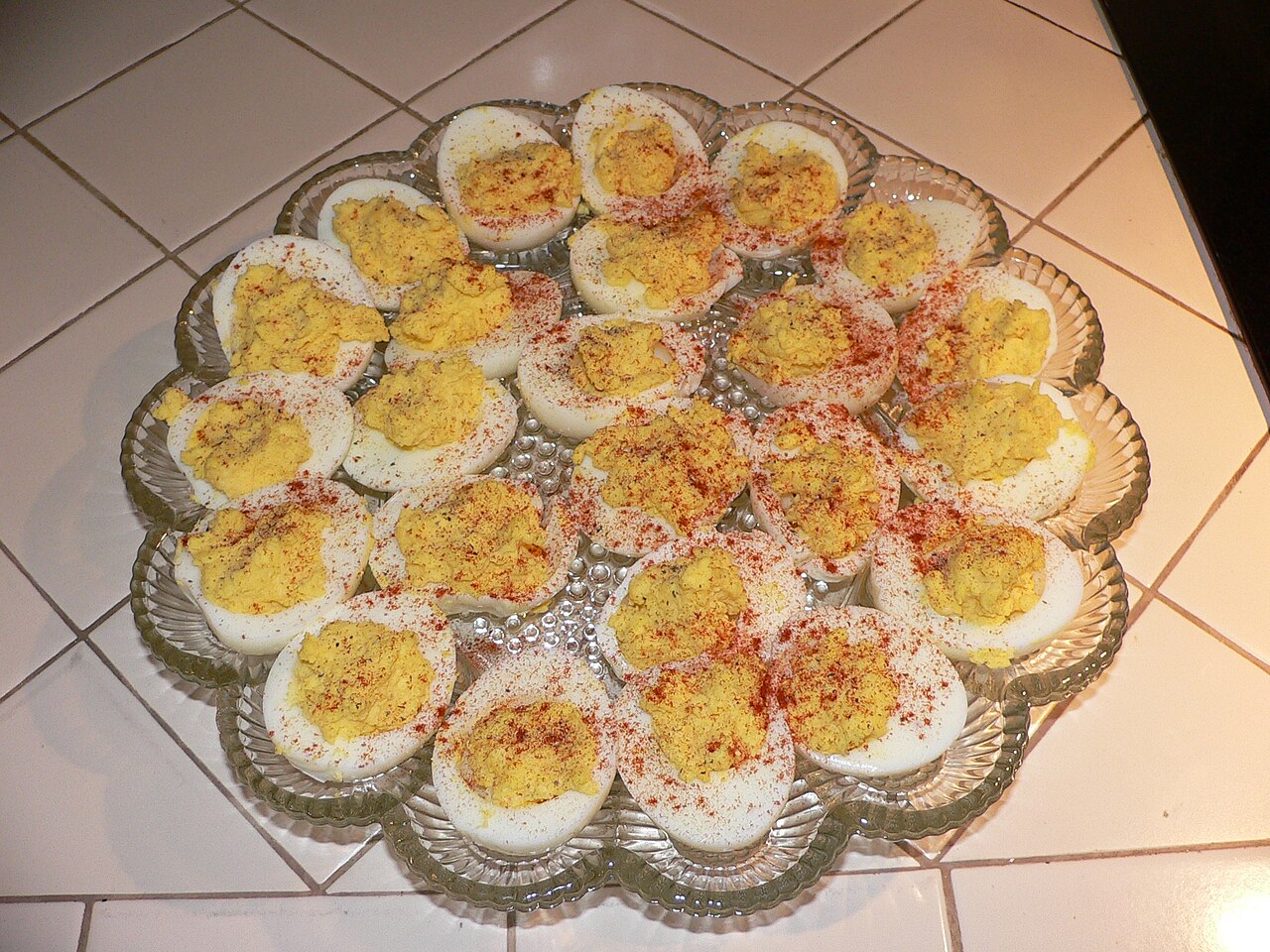
A large glass tray of finished filled egg halves dusted with paprika. Photo: Wikimedia Commons.

No comments:
Post a Comment