Riding a snowmobile is one of the great Canadian winter experiences, but it is brutal on your feet. The wind chill at 80 km/h, the spray kicked up by the track, and long stops on frozen lakes all demand more from your boots than a walk to the shops ever will.
Good snowmobile boots are warm, waterproof, supportive, and grippy, and they fit properly with thick socks. Here are ten tips to help you choose a pair that keeps you comfortable all day on the trails.

Photo: Tyler ser Noche via Wikimedia Commons
In this article:
- 1. Look for 400 Grams of Insulation
- 2. Waterproof, Not Just Water-Resistant
- 3. Get the Fit Right With Thick Socks
- 4. Ankle Support for Aggressive Riding
- 5. Utility Riders Need Tough Boots
- 6. Women's Options Are Worth Seeking Out
- 7. Laces vs. Pull-On Styles
- 8. Traction Matters Off the Sled
- 9. Break Them In Before the First Long Ride
- 10. Layer Socks and Liners Smartly
1. Look for 400 Grams of Insulation
For trail riding, where you sit relatively still for hours, look for boots with around 400 grams of insulation and a temperature rating of -40°C or lower. That sounds like overkill until you factor in wind chill at riding speed, which can make -15°C feel like -30°C.
Check how the insulation is described: Thinsulate and similar synthetics keep working even when damp, unlike down. A -40°C rating gives you a comfortable buffer for the coldest days you will actually ride. For general guidance, see our roundup of the best winter boots in Canada.

Photo: Zinnsoldat via Wikimedia Commons
2. Waterproof, Not Just Water-Resistant
There is an important difference between the two labels. Waterproof boots have sealed seams and a waterproof membrane that keeps slush and spray out completely. Water-resistant boots only repel light moisture and will eventually soak through.
For snowmobiling, choose fully waterproof every time. You will walk through deep snow to reach the sled, and the track throws a constant spray onto your legs. Our guide to waterproof vs water-resistant boots explains the difference in detail.

Photo: Toglenn via Wikimedia Commons
3. Get the Fit Right With Thick Socks
Always try boots on with the socks you will ride in. The fit should be snug at the heel with no lifting, and you should be able to wiggle your toes freely. Tight boots cut off circulation and make feet colder, no matter how much insulation they have.
Walk around the shop for ten minutes before deciding. Your feet swell slightly during the day, so afternoon fittings are more accurate. If you ride with aftermarket insoles, bring those too, since they change the internal volume.

Photo: High Contrast via Wikimedia Commons
4. Ankle Support for Aggressive Riding
If you ride standing up, carve through powder, or race, your boots need to support your ankles like a good hiking boot does. Look for a stiff, padded cuff and a firm heel counter that locks your foot in place.
Casual trail riders can choose a softer, more comfortable boot. But anyone pushing hard will appreciate the control a supportive boot gives when shifting weight on the running boards. Lace-up designs usually offer the most adjustable support.

Photo: Antti T. Leppänen via Wikimedia Commons
5. Utility Riders Need Tough Boots
Using your sled for ice fishing, trapline work, or hauling firewood means your boots take a beating. Look for a rugged rubber lower, reinforced toe caps, and an outsole that resists punctures. Removable liners are a big plus for drying between long days.
Utility boots tend to be heavier, but the durability pays off. A good pair lasts several seasons of hard use, while a fashion-oriented winter boot can fall apart in one winter of real work. Rinse off road salt after each outing to protect the materials.

Photo: Asurnipal via Wikimedia Commons
6. Women's Options Are Worth Seeking Out
Women's snowmobile boots are cut narrower in the heel with a slightly different calf shape, and they are worth finding rather than sizing down in a men's boot. A poor heel fit means blisters and cold spots on long rides.
Several major brands now make women's-specific models rated to -40°C and below. Try them with your riding socks, and do not assume the sizing matches your street shoes; winter boot sizing runs differently. Expect to pay $180 to $350 CAD for a quality pair.
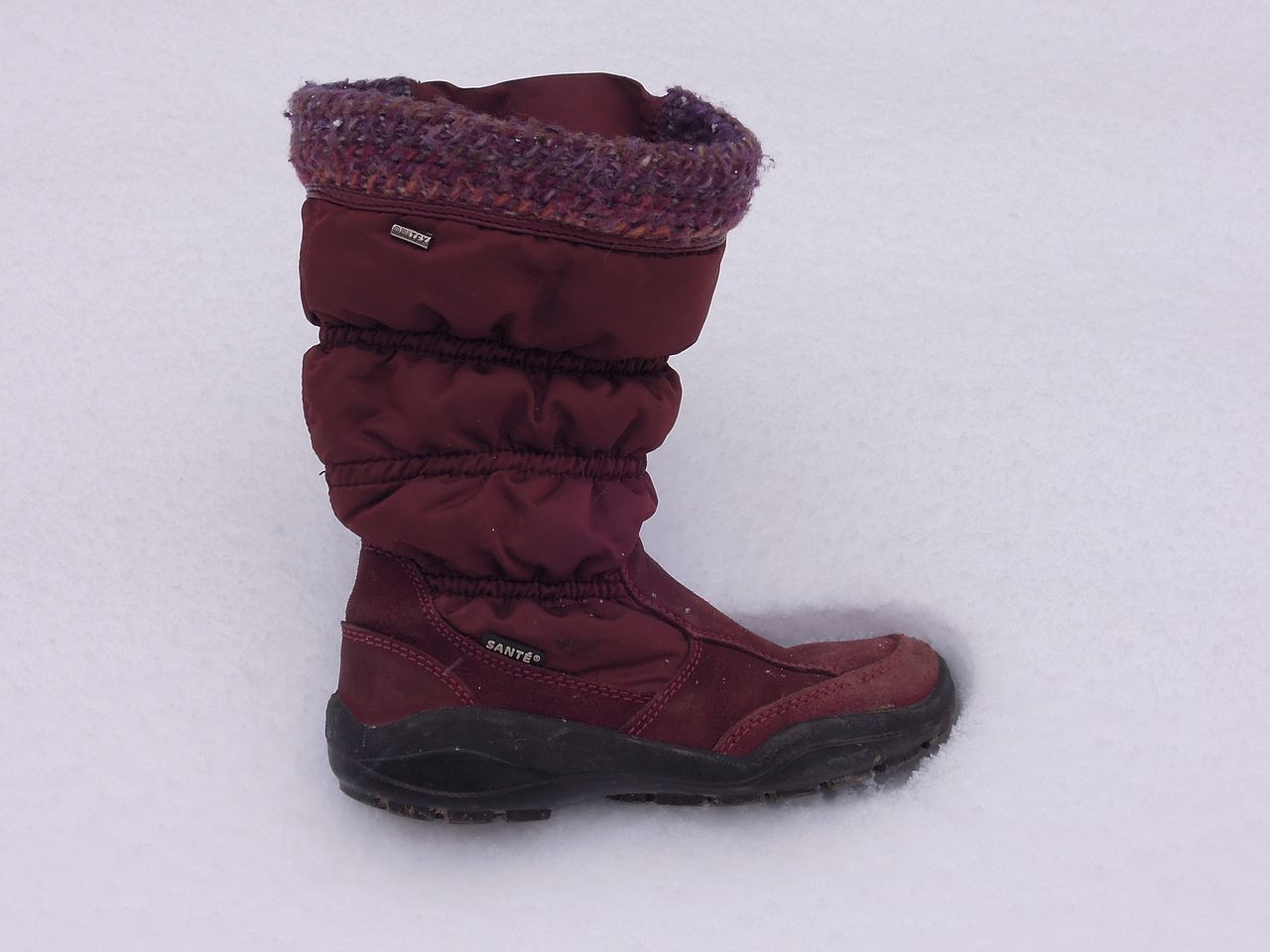
Photo: Oto Zapletal via Wikimedia Commons
7. Laces vs. Pull-On Styles
Lace-up boots let you fine-tune the fit around your ankle and calf, which helps with both support and keeping snow out. The downside is time: lacing up stiff boots with cold fingers is nobody's favourite morning ritual.
Pull-on pac boots are faster and often warmer, since they have fewer seams for cold to sneak through. Whichever you choose, tuck your snow pants into the boot or use the built-in gaiter so powder stays out. Loose laces near a track are a hazard, so tuck them away.

Photo: Oto Zapletal via Wikimedia Commons
8. Traction Matters Off the Sled
You spend more time off the sled than you think: fuelling up, walking icy parking lots, and standing on frozen lakes. Deep, widely spaced lugs shed snow instead of packing it in, and soft rubber compounds grip ice better than hard plastic.
For truly icy conditions, slip-on traction aids with steel coils fit over most boots and cost about $40 CAD. They are a cheap insurance policy against a fall that could end your riding season. Check that your chosen boot works with them before you buy.
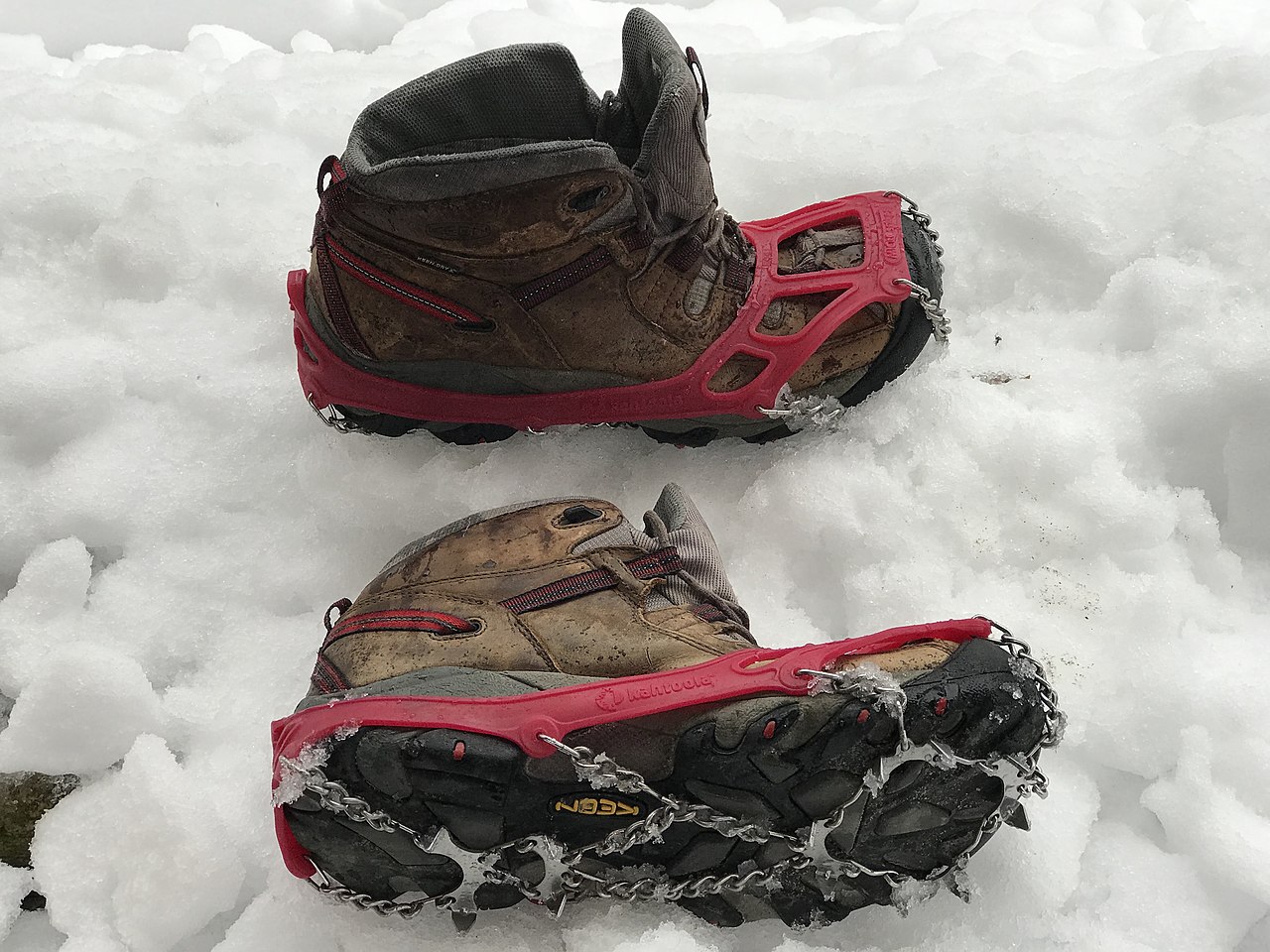
Photo: HopsonRoad via Wikimedia Commons
9. Break Them In Before the First Long Ride
New boots are stiff, and stiff boots cause hot spots on a 200 km day. Wear your new pair around the house and on short walks for a week before the first big ride. Flex the ankles, walk stairs, and squat in them to soften the materials.
Pay attention to any rubbing during break-in and address it with moleskin or a different sock before it becomes a blister. A boot that hurts on day three will still hurt on day thirty. For more cold-weather comfort tips, read how to keep feet warm in winter boots.

Photo: Ribbed tights via Wikimedia Commons
10. Layer Socks and Liners Smartly
The sock system matters as much as the boot. Start with a thin moisture-wicking liner sock, then add a medium-weight merino wool sock on top. This combo moves sweat away from your skin while trapping warm air.
Never wear cotton socks for riding; cotton holds moisture and turns icy against your skin. Carry a spare pair of socks on long rides, because changing into dry socks at lunch can save an afternoon. Some riders also add a thin insulated insole for extra warmth underfoot.
Photo: File Upload Bot (Magnus Manske) via Wikimedia Commons
Frequently Asked Questions
Can I wear regular winter boots for snowmobiling?
You can for a short, slow ride, but dedicated boots are warmer, more waterproof, and more supportive. For regular riding, proper boots are worth the investment.
How warm should snowmobile boots be?
Look for around 400 grams of insulation and a -40°C rating for trail riding. The wind chill at speed makes conditions feel much colder than the thermometer says.
Should my boots be waterproof or water-resistant?
Fully waterproof, with sealed seams and a waterproof membrane. Water-resistant boots will soak through in deep snow and track spray.
How should snowmobile boots fit?
Snug at the heel with room to wiggle your toes, tried on with riding socks. Tight boots restrict circulation and make feet colder.
Can I walk comfortably in snowmobile boots?
Trail-oriented models walk fine for short distances. Stiff race-style boots are less comfortable on foot, so match the boot to how you ride.
Final Thoughts
Picking good snowmobile boots comes down to insulation, waterproofing, fit, and traction, matched to the way you ride. Spend the money once on a quality pair, break them in properly, and dry them after every outing. Warm, dry feet turn a good day on the trails into a great one.
Sources
- Snowmobile Boots Buying Tips — Intrepid Snowmobiler
- Choosing the Best Winter Boots — Altitude Sports
- How to Choose Snow Boots — Scheels
Gallery

Photo: Andrei.computer via Wikimedia Commons
Photo: MKFI via Wikimedia Commons

Photo: Clemens Stockner via Wikimedia Commons

No comments:
Post a Comment