In a compact condo or a century home with narrow hallways, every square metre counts — and a swinging door wastes nearly a full one. Pocket doors solve this by sliding sideways into the wall cavity, disappearing completely when open and closing off a room in seconds when you need privacy.
Canadians use them in ensuites, home offices, laundry rooms, and anywhere a normal door would block furniture or foot traffic. These ten ideas show where they shine, how they compare with barn doors, and what to know about hardware, sound, and retrofits before you commit.
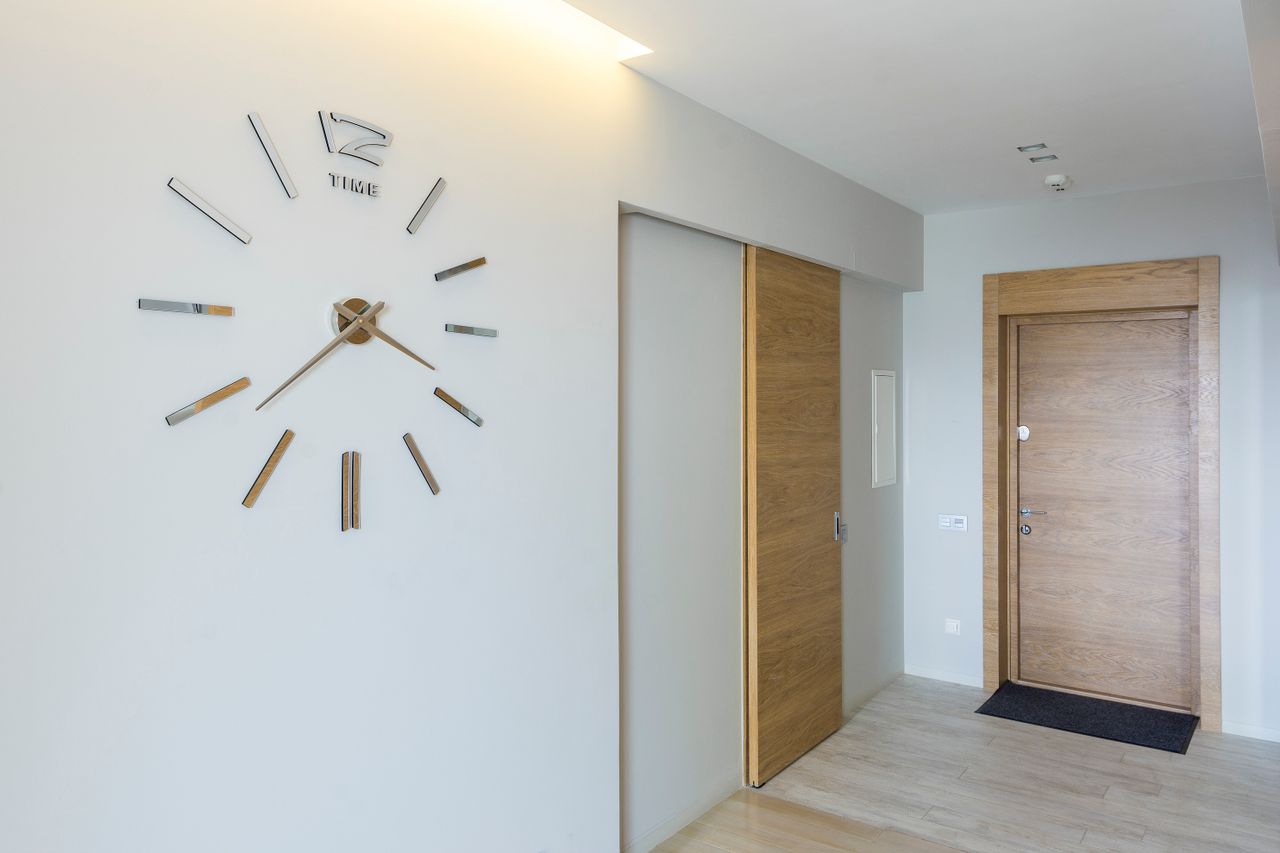
Photo: Pexels
Table of Contents
- 1. Pocket vs Barn Doors: Know the Difference
- 2. Bathrooms and Ensuites Love Them
- 3. Home Offices That Close Quietly
- 4. Laundry Rooms and Pantries
- 5. Shoji Screens for a Calm, Light Look
- 6. Paper Panels That Glow
- 7. Hardware Makes or Breaks the Door
- 8. Warm Light Through Paper Screens
- 9. Solid-Core Slabs Cut the Noise
- 10. Retrofitting Into an Existing Wall
1. Pocket vs Barn Doors: Know the Difference
Barn doors hang on a visible rail above the opening and slide across the wall — easy to install, but they always cover part of the wall and never seal the opening fully. Pocket doors slide inside the wall itself, so the wall stays usable for art or shelves and the closed door sits flush in the opening. If you want a true room divider, the pocket wins; if you want a quick weekend project, the barn door wins.
Sound and privacy follow the same split: a barn door leaves gaps at the top and sides, so conversations and cooking smells travel freely. A pocket door with a solid-core slab closes nearly as tightly as a hinged door. Choose the barn style for looks and easy DIY, and the pocket style wherever the door actually needs to do a door's job.
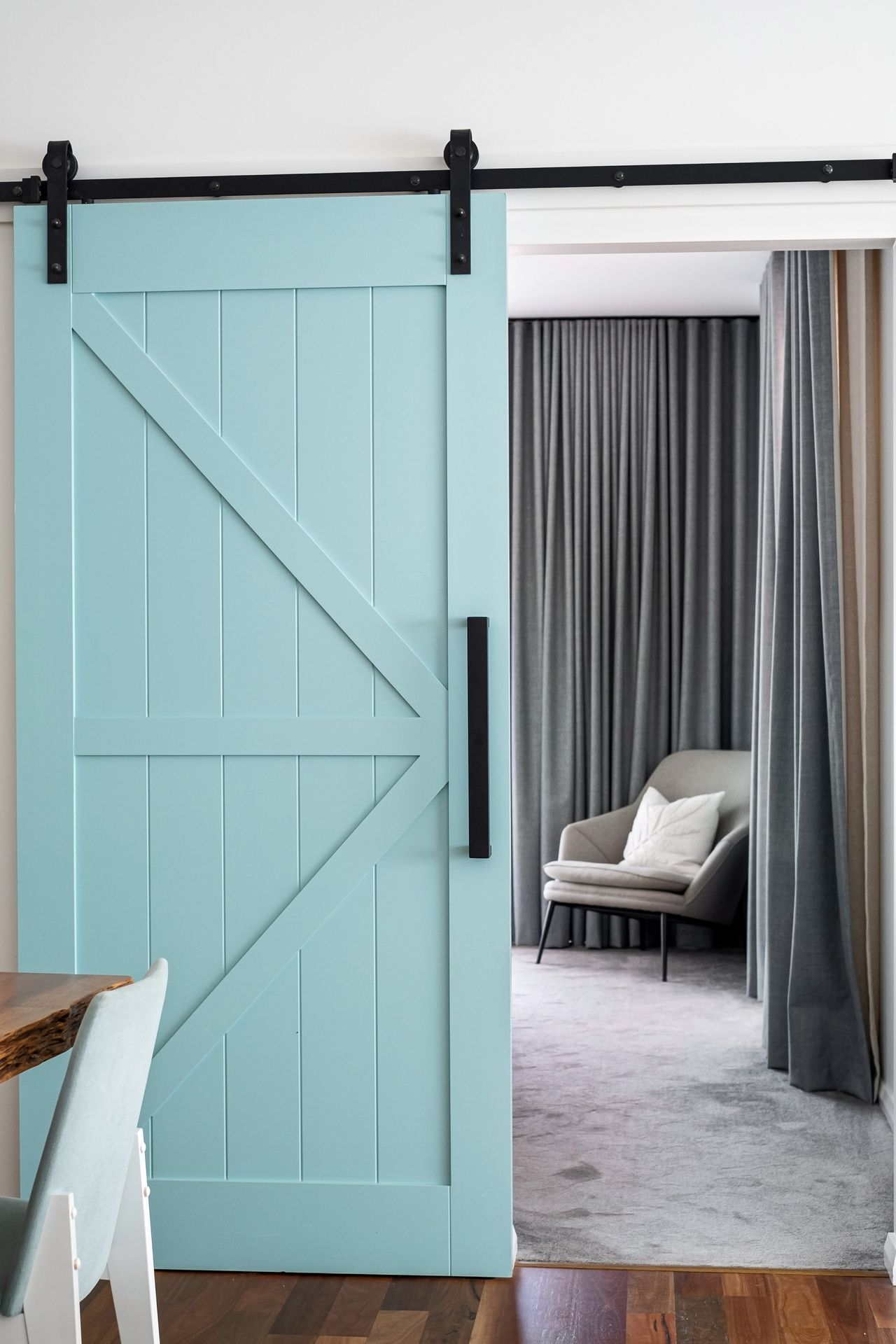
Photo: Pexels
2. Bathrooms and Ensuites Love Them
The ensuite is the classic pocket door location in Canadian homes: the door sits between a bedroom and a small bathroom where a swinging door would hit the vanity, the toilet, or the person walking in. A pocket door needs zero clearance on either side, so even a 1.5-metre-wide ensuite layout works. For more small bathroom layout ideas, plan the fixtures around the pocket zone first.
Fit a recessed pull with a privacy lock — a small turn-button that locks from inside with an emergency coin-release outside. Frosted glass is a popular slab choice here because it borrows daylight from the bedroom, though a solid-core slab blocks far more sound. In a steamy bathroom, choose hardware in stainless steel or solid brass so it does not corrode.

Photo: Cityside189 via Wikimedia Commons
3. Home Offices That Close Quietly
Working from home made the spare-room office permanent for many Canadians, and a pocket door is the tidiest way to separate it from the living space. Open, the doorway is a wide cased opening that keeps the home feeling connected; closed, video calls and focused work stay private. Double sliding doors are ideal here — they open to a grand 1.2-metre-plus entry and close to a proper office.
For a workspace, spend the upgrade money on a solid-core slab and a soft-close damper. The solid core muffles household noise far better than hollow-core, and the soft-close stops the door slamming during back-to-back calls. Keep the wall cavity on the pocket side free of bookshelves — the door needs that space forever.
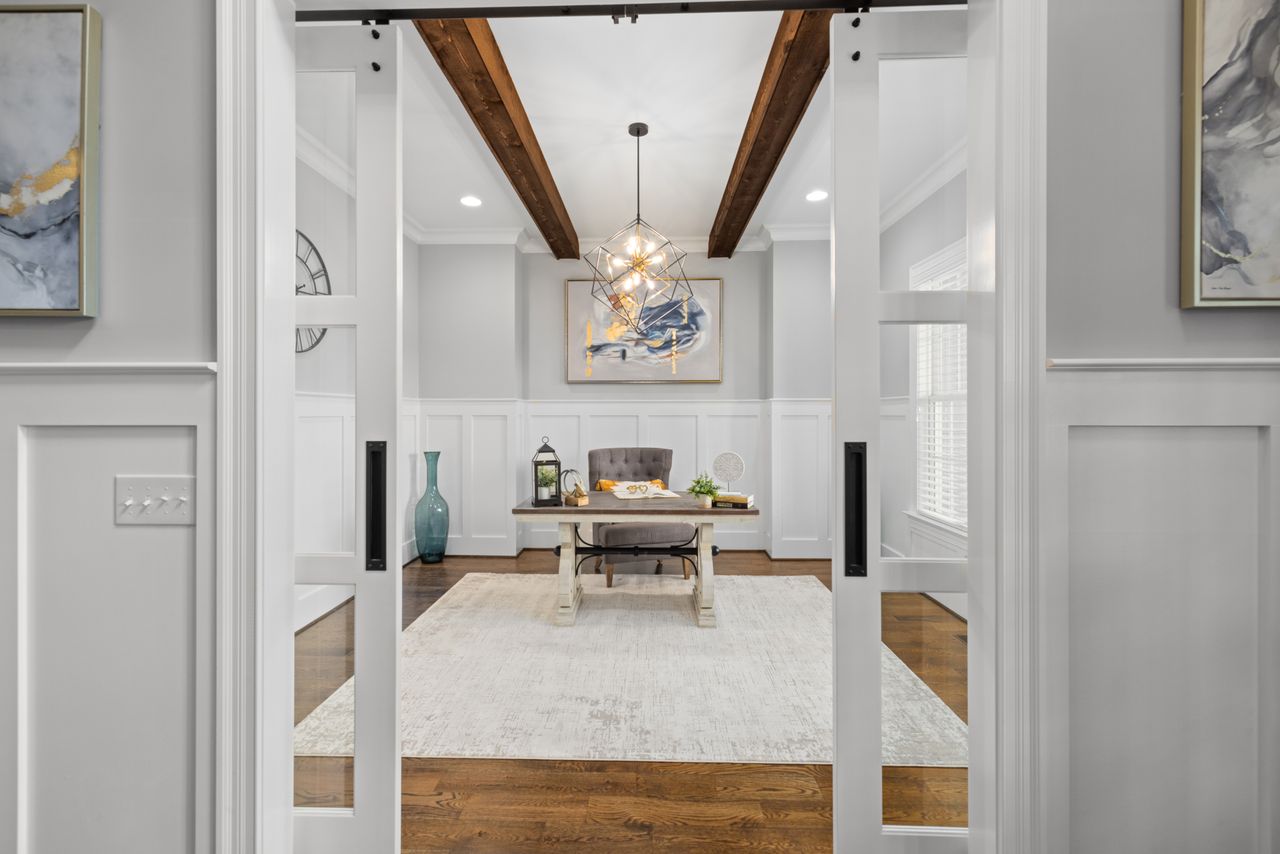
Photo: Pexels
4. Laundry Rooms and Pantries
Utility rooms are where sliding doors earn their keep daily. A laundry room door that swings into a hallway blocks the very path you carry baskets along; a pantry door that swings into the kitchen collides with an open fridge. Sliding the door into the wall removes the conflict entirely, and frosted or reeded glass lets you see whether the laundry room light was left on.
These are high-use doors — opened and closed several times a day — so buy a track rated for heavy residential use and ball-bearing rollers rather than the cheapest kit on the shelf. A full-height glass panel also helps in a windowless laundry room by borrowing hallway light. Wipe the floor guide monthly; lint is the enemy of smooth sliding here.
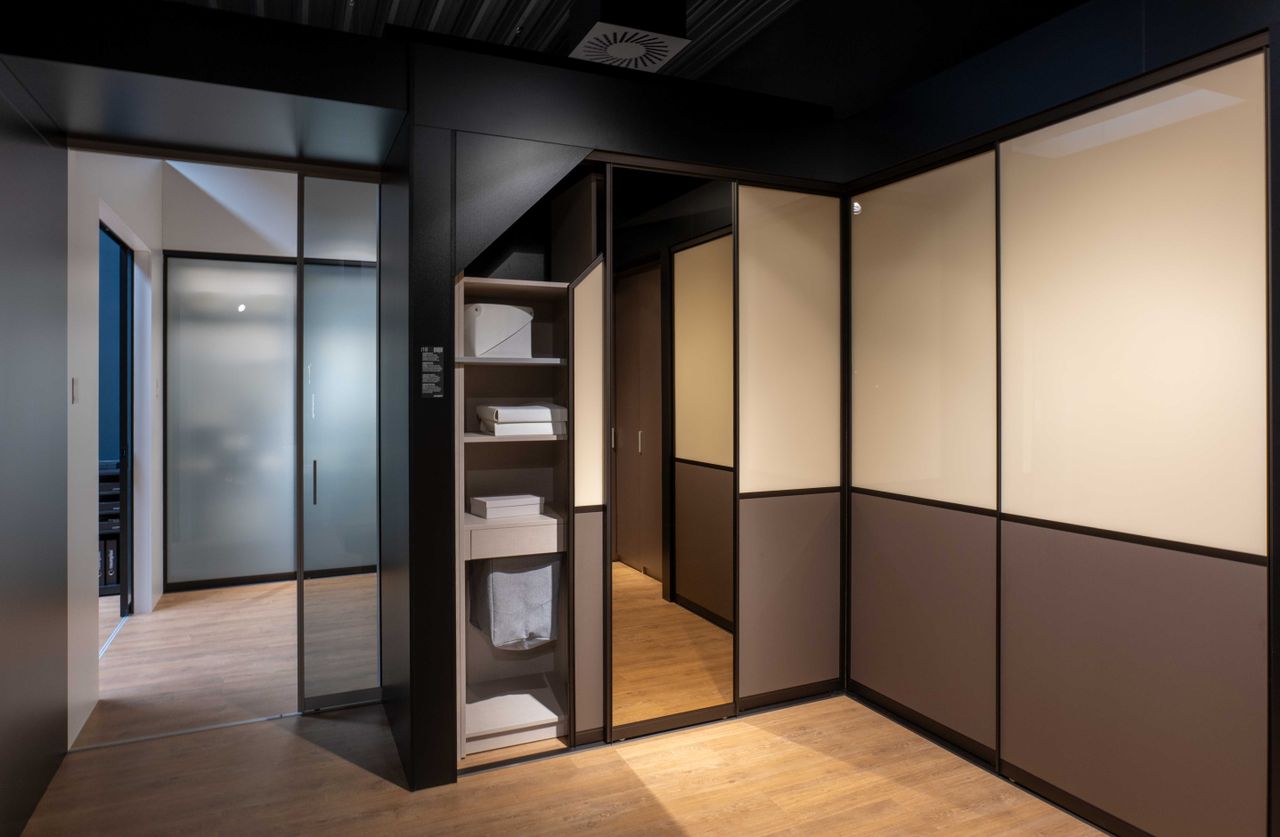
Photo: Pexels
5. Shoji Screens for a Calm, Light Look
Japanese shoji are the ancestors of the modern pocket door — lightweight wooden frames with translucent paper that slide in wall pockets, dividing rooms while sharing light. The look translates beautifully to Canadian homes: a shoji-style sliding panel between a bedroom and a sitting area, or closing off a meditation corner, brings a calm, uncluttered feeling that a solid door cannot match.
Real washi paper is delicate around kids and pets, so modern versions use acrylic or polycarbonate panels that look like paper but wipe clean and resist tears. You can buy shoji-style kits sized for standard North American openings, or have a carpenter build frames to fit. Keep them away from direct shower steam — the wood frames swell in constant humidity.

Photo: 663highland via Wikimedia Commons
6. Paper Panels That Glow
The magic of a shoji-style panel is what it does with light: daylight diffuses through the paper into a soft, even glow, and at night a lamp behind the panel turns the whole door into a lantern. In a dark Canadian hallway or a north-facing room, that borrowed light can change how the space feels without adding a single fixture.
If you want the look with more durability, choose panels with a paper-look polycarbonate core — they transmit light almost identically and survive bumps that would tear real paper. Some makers print subtle patterns, including calligraphy-style designs, right onto the panel. Pair them with simple square-profile trim for a modern take, or stained wood frames for a warmer, traditional feel.

Photo: Hideyuki KAMON via Wikimedia Commons
7. Hardware Makes or Breaks the Door
A pocket door is only as good as its track and rollers — the slab is just along for the ride. Look for a track with ball-bearing rollers rated for at least twice your door's weight, removable hangers (so the door can come off without opening the wall), and a sturdy floor guide. The difference between a CAD 120 kit and a CAD 250 kit is felt every single day for decades.
The visible hardware matters too: recessed edge pulls should feel solid, not like stamped tin, and the meeting edges of double doors need proper astragals or edge pulls so you can actually grab the doors to close them. Ornate brass reproductions suit heritage homes, while slim stainless pulls suit modern ones. Buy the hardware before the drywall goes up, not after.

Photo: Infrogmation via Wikimedia Commons
8. Warm Light Through Paper Screens
In a darkened room, backlit paper screens glow amber and turn a plain doorway into the prettiest feature in the house. This is why designers love shoji-style sliding panels for dining rooms and sitting rooms: by day they are subtle room dividers, and by evening they become light sources. The effect costs nothing extra — it is just the physics of translucent panels.
To get the glow, place a floor lamp or wall sconce 30 to 60 cm behind the panels rather than right against them; distance makes the light even. Warm-white bulbs (2700K) give the classic lantern tone, while daylight bulbs look clinical through paper. If the room beyond is a bedroom, remember the glow works both ways — light sleepers may want a solid door instead.

Photo: LLAAYY via Wikimedia Commons
9. Solid-Core Slabs Cut the Noise
The most common complaint about sliding doors — "I can hear everything" — is really a complaint about hollow-core slabs, not the pocket mechanism. A hollow door is mostly air and transmits sound freely; a solid-core slab of the same size can cut perceived noise dramatically. For bedrooms, offices, and ensuites, solid-core is the single best upgrade you can make.
Add perimeter seals and a drop-down door bottom for the full effect: most sound leaks through the gaps around the door, not through the slab. These seals are inexpensive and fit standard pocket frames. And set expectations honestly — even a well-sealed pocket door will not match a proper insulated wall, but it will beat a hollow hinged door easily. For styling around the new doors, browse our entryway decorating ideas.
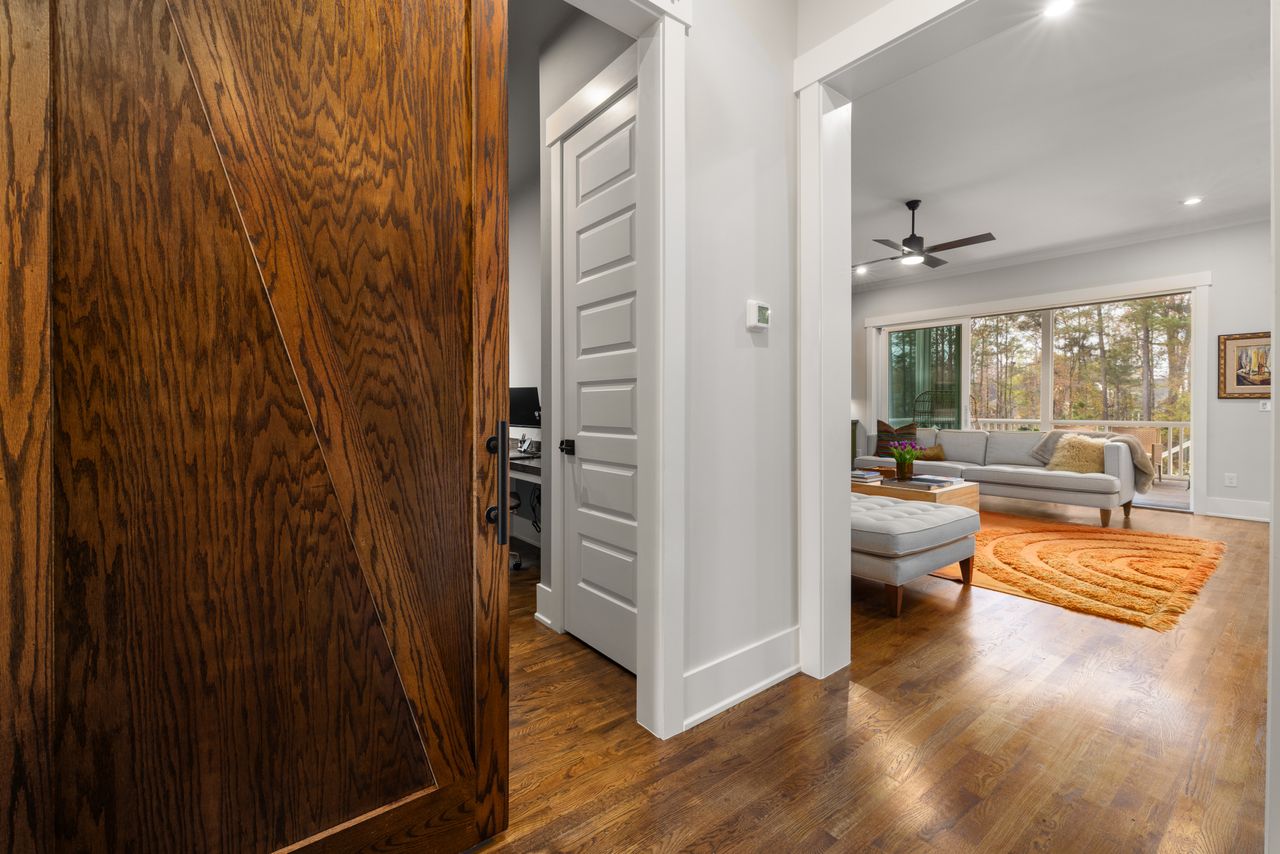
Photo: Pexels
10. Retrofitting Into an Existing Wall
Adding a pocket door to a finished wall is very doable, but it is a bigger job than a new build. One side of the wall comes off, the old studs in the pocket zone are removed, the kit frame goes in, and everything gets re-drywalled and trimmed. Budget a full weekend for a DIYer or CAD 1,000-plus for a carpenter, plus paint.
The deal-breakers are load-bearing walls (which need a proper header — get a professional), and pocket zones containing plumbing, ducts, or wiring. Check with an inspection hole before you commit. If the wall will not cooperate, a surface-mounted sliding door on an exposed rail gives you 80 per cent of the benefit with a quarter of the work.

Photo: Infrogmation via Wikimedia Commons
FAQs
Do pocket doors save space?
Yes — a swinging door needs roughly a square metre of clear floor on its swing side, while a pocket door needs none. That reclaimed space fits a dresser, a desk, or simply easier movement in tight Canadian condos and older homes.
Are they hard to repair?
Not usually. Most problems are dirty tracks or loose hanger bolts, fixed in minutes through the opening. Quality kits have removable hangers so the door — and even the rollers — can come out without opening the wall.
Pocket door or barn door — which is better?
The in-wall design seals better, saves wall space, and looks cleaner, but need the wall opened up. Barn doors install in an afternoon on the wall surface but leave gaps and always cover part of the wall. Choose based on whether you need real privacy or just the look.
Can they lock?
Yes. Recessed locksets with a privacy turn-button are standard for bathrooms and bedrooms, with an emergency release on the outside. They cost CAD 40 to CAD 90.
Do they block sound?
A hollow-core pocket door blocks very little, but a solid-core slab with perimeter seals performs close to a standard hinged door. For bedrooms and offices, always choose solid-core.
Final Thoughts
These doors are at their best in the rooms where a swinging door fights the floor plan — ensuites, laundry rooms, home offices, and narrow hallways. They cost more than a basic hinged door and demand a clear wall cavity, but the floor space they return is space you use every single day.
Invest in the track and rollers, choose solid-core slabs where quiet matters, and keep the pocket zone free of shelves and outlets forever. For finishing touches around your new doorways, see our entryway table decorating ideas.
Sources
- This Old House — How to Install an Antique Pocket Door for a Historic Touch
- Family Handyman — How to Repair a Pocket Door
- Johnson Hardware — Pocket Door Hardware Manufacturer
Gallery

Photo: Hirho via Wikimedia Commons
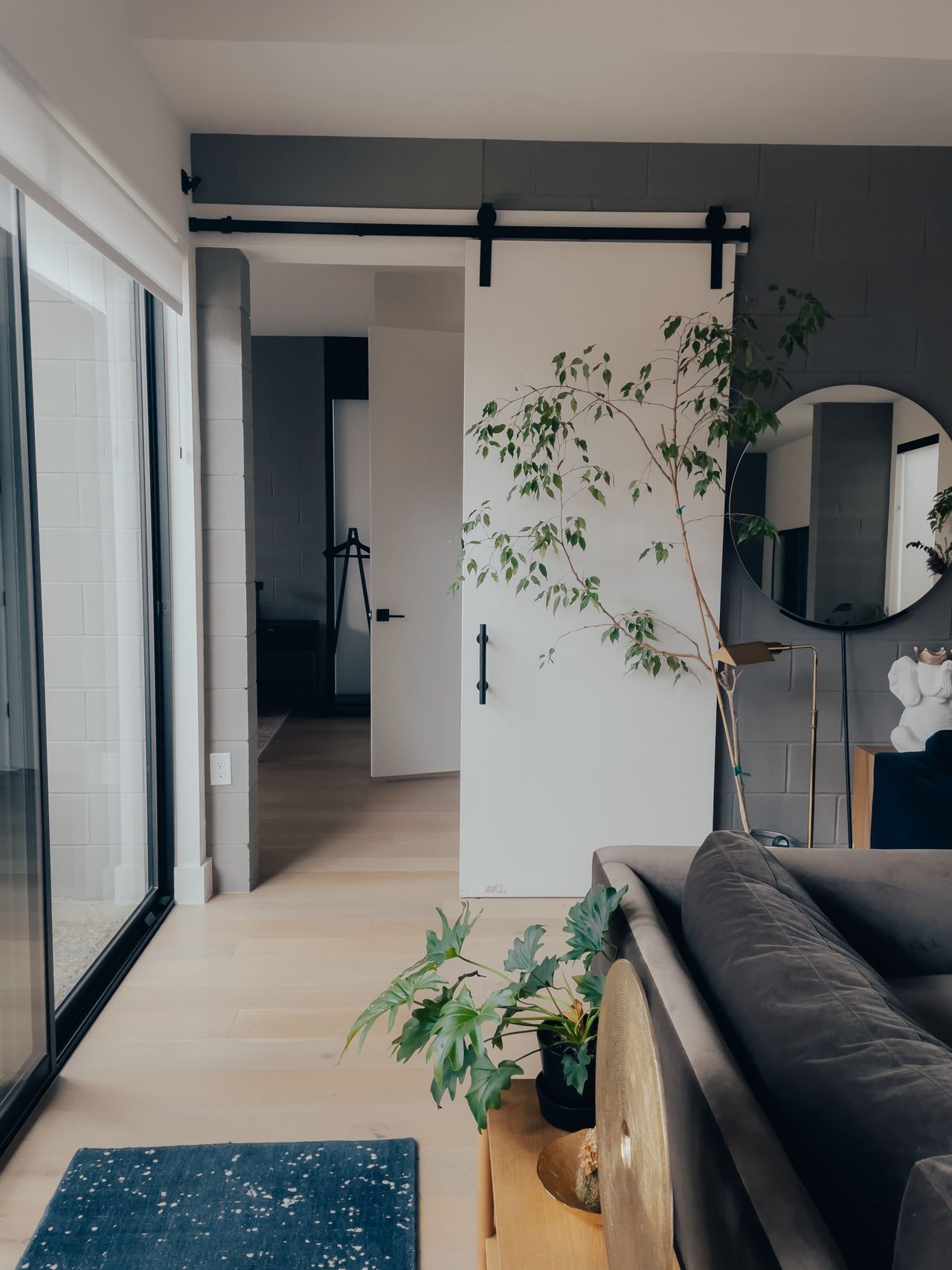
Photo: Pexels
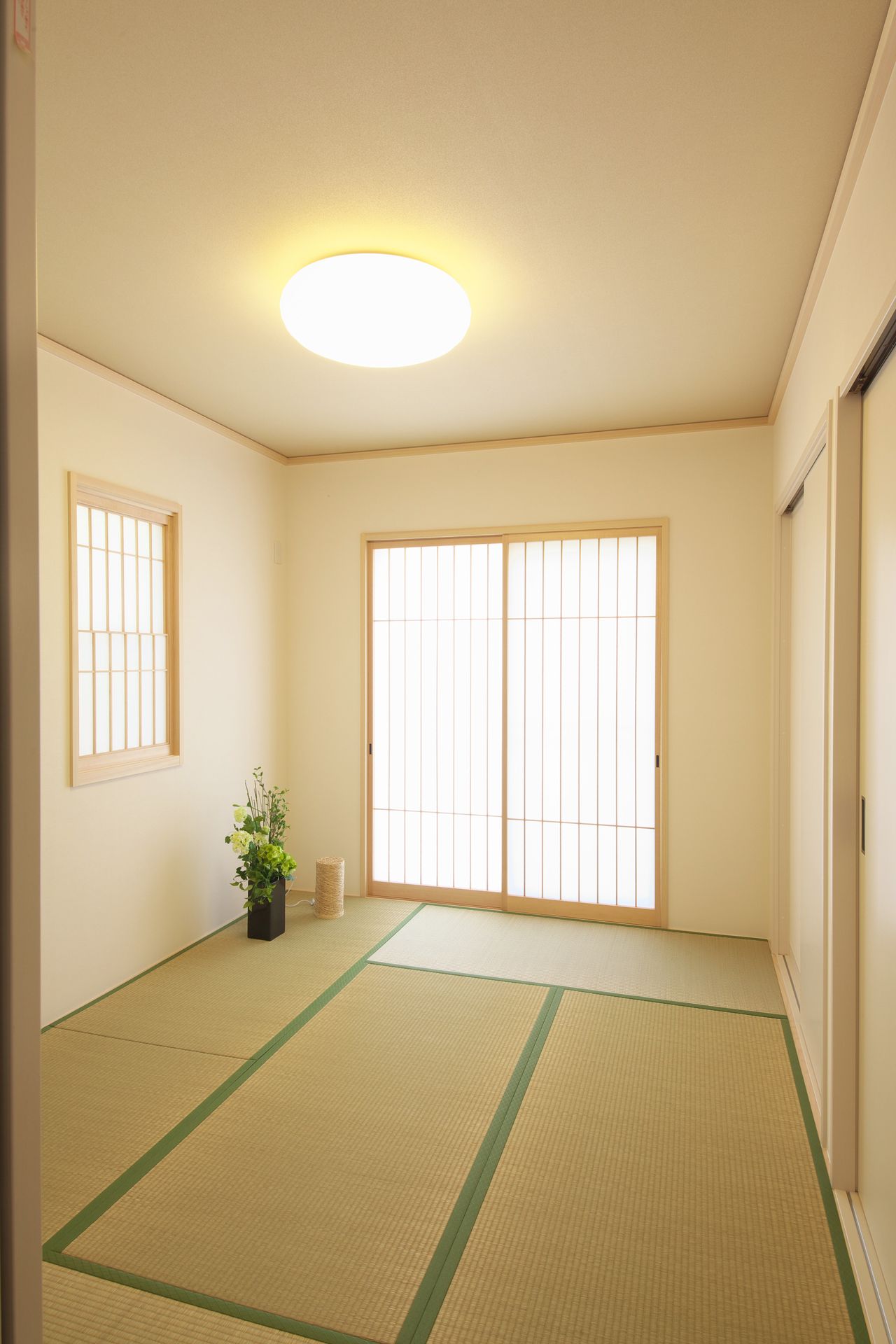
Photo: Pexels

No comments:
Post a Comment