
Entrance hall of the William H. Winslow House, Chicago — photo by Finavon, public domain, via Wikimedia Commons.
Your entryway is the handshake of your home — the first thing guests see and the last thing you touch every day. It doesn't need to be big or expensive. It needs to work: a place for keys, a spot for shoes, decent light, and one thing that makes you smile when you walk in.
These 18 ideas cover entryways of every size, including the "I barely have a wall" kind. Each one tells you exactly how to do it, not just what it looks like.
1. Anchor with a slim console table

Hall entry of Montpelier House, Queensland — State Library of Queensland, public domain, via Wikimedia Commons.
The classic entryway move for a reason. Choose a console no deeper than 10–12 inches so it never blocks the walkway. Style it in thirds: something tall (lamp or vase with branches), something flat (tray for keys), something living (small plant). Budget tip: a simple wooden console plus a thrifted tray looks designer for very little.
2. Hang one oversized round mirror
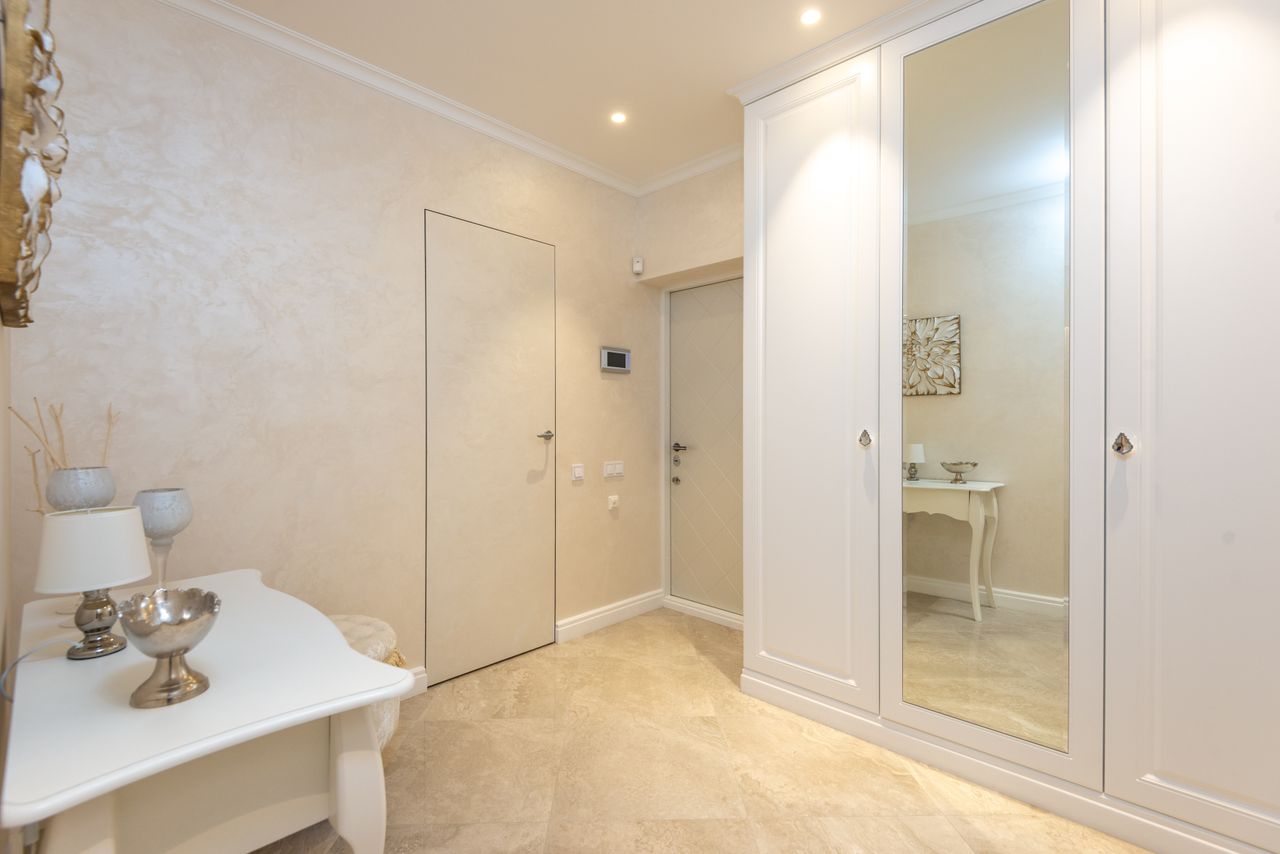
Entryway with round mirror — photo by Max Vakhtbovych via Pexels.
A large round mirror does three jobs: bounces light into dark entries, lets you check yourself on the way out, and its curves soften all the straight lines of doors and frames. Go as big as the wall allows — one large mirror beats a cluster of small ones. Renter tip: use heavy-duty adhesive hooks rated for the mirror's weight; no drilling needed.
3. Add a bench you can actually sit on
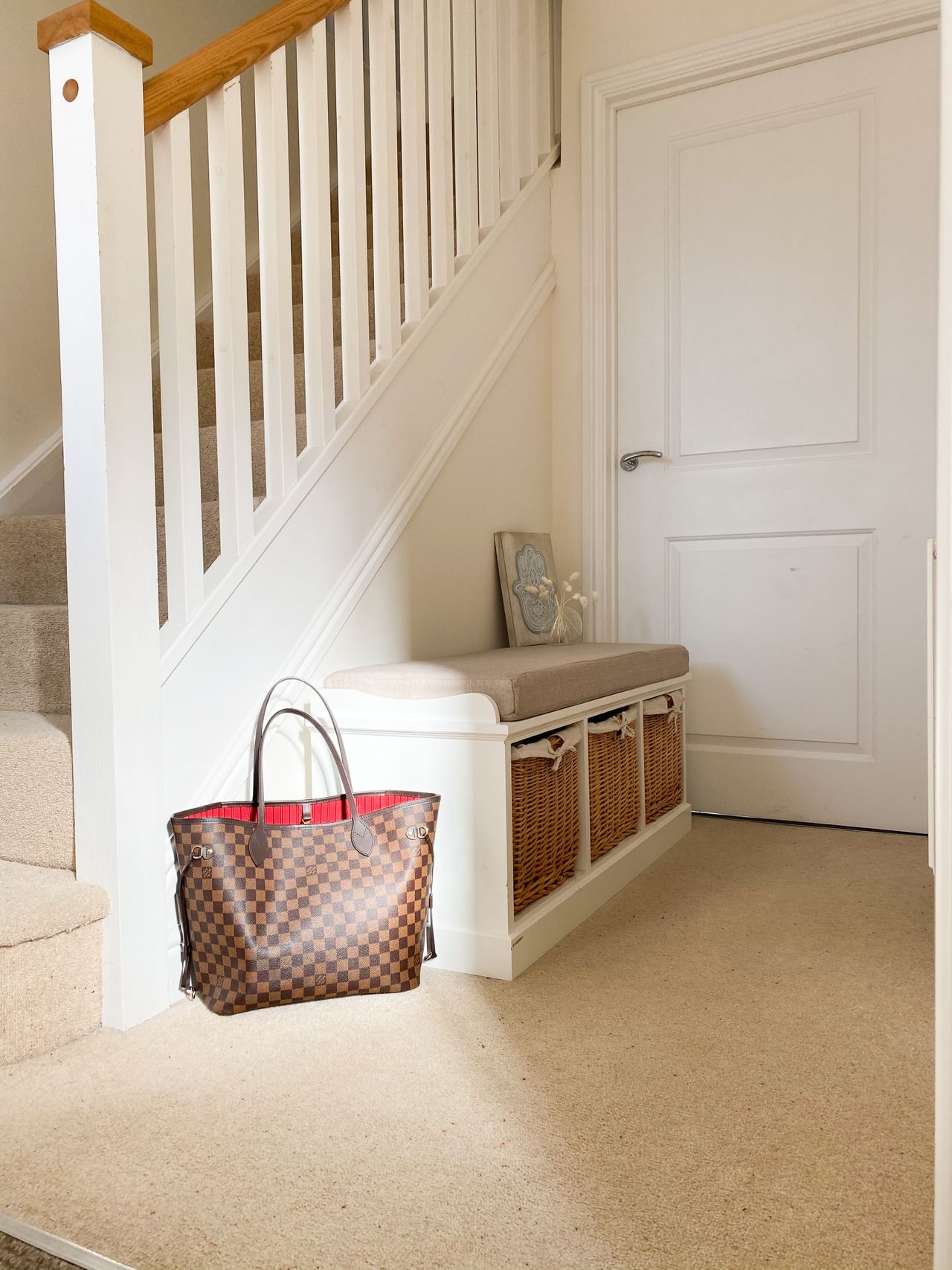
Bright entryway with storage bench — photo by The Social Smith via Pexels.
A bench turns "drop your bag and wrestle your shoes" into a civilized moment. For narrow entries, a 36-inch bench fits most walls. Look for one with storage inside or baskets underneath — seating plus shoe hiding in one footprint.
4. Mount hooks at two heights
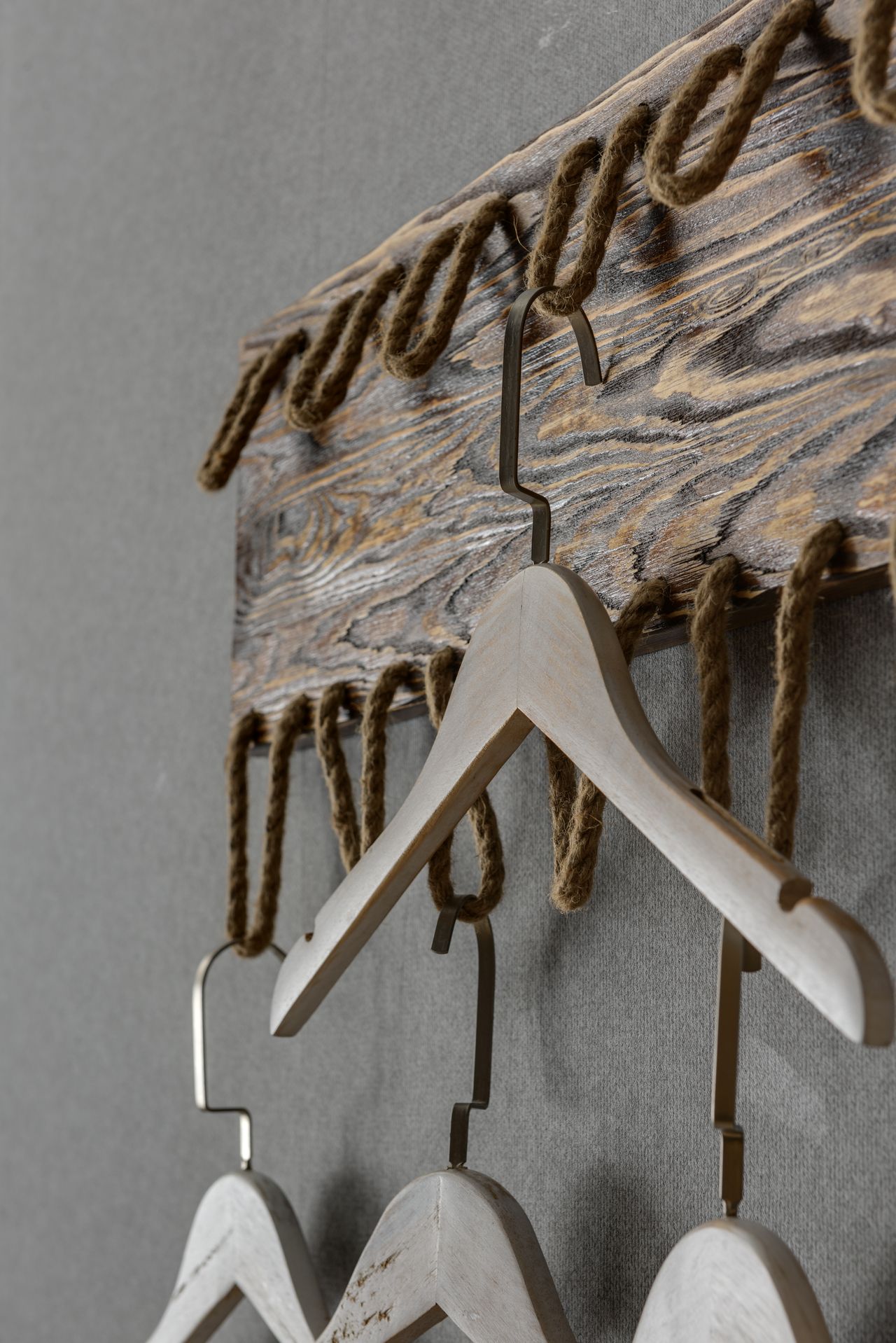
Rustic coat rack with wooden hangers — photo by Max Vakhtbovych via Pexels.
One row of hooks for coats, a lower row for kids' bags and dog leashes. A simple oak peg rail costs little and holds a surprising amount. Space hooks 6–8 inches apart so coats don't bunch up. This beats a coat stand that eats floor space and tips over.
5. Borrow symmetry from classic foyers

Foyer of a private home, circa 1900 — DPLA / Mark Stophlet Collection, public domain, via Wikimedia Commons.
The grand foyers of a century ago knew something we've forgotten: symmetry calms the eye. You don't need a mansion — just mirror your pieces. Two matching baskets under the console instead of one, a pair of identical frames flanking the mirror, a lamp on each end of a long console. Pairs look intentional; singles scattered around look accidental. This one trick makes even a tiny entry feel composed.
6. Create a drop zone with a tray
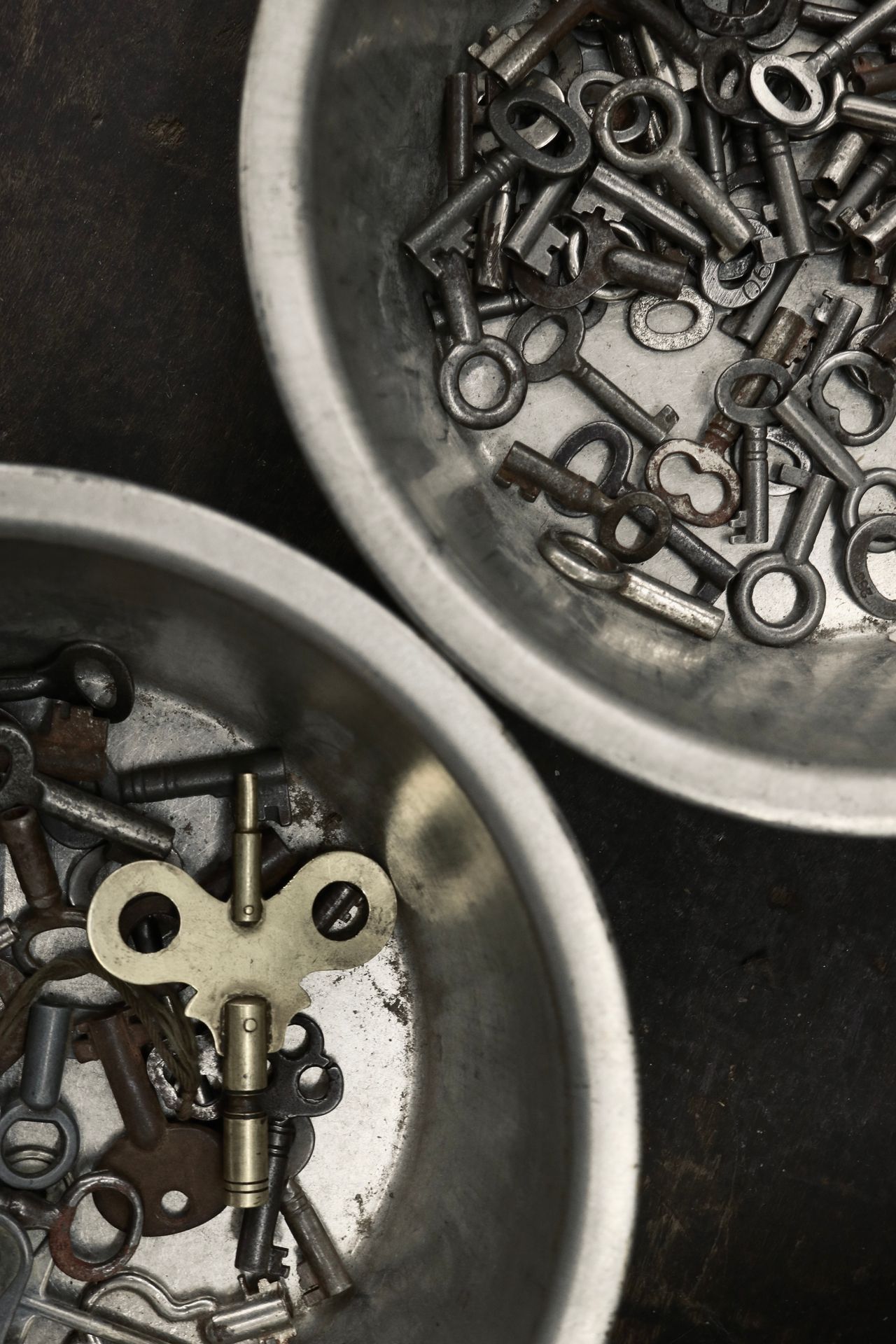
Keys in a drop-zone bowl — photo by Madison Inouye via Pexels.
Keys, sunglasses, mail — they need one home or they colonize every surface. A single tray or lidded box on the console corrals the daily chaos. Empty it weekly; a drop zone only works if it doesn't become a junk drawer without drawers.
7. Light it in layers
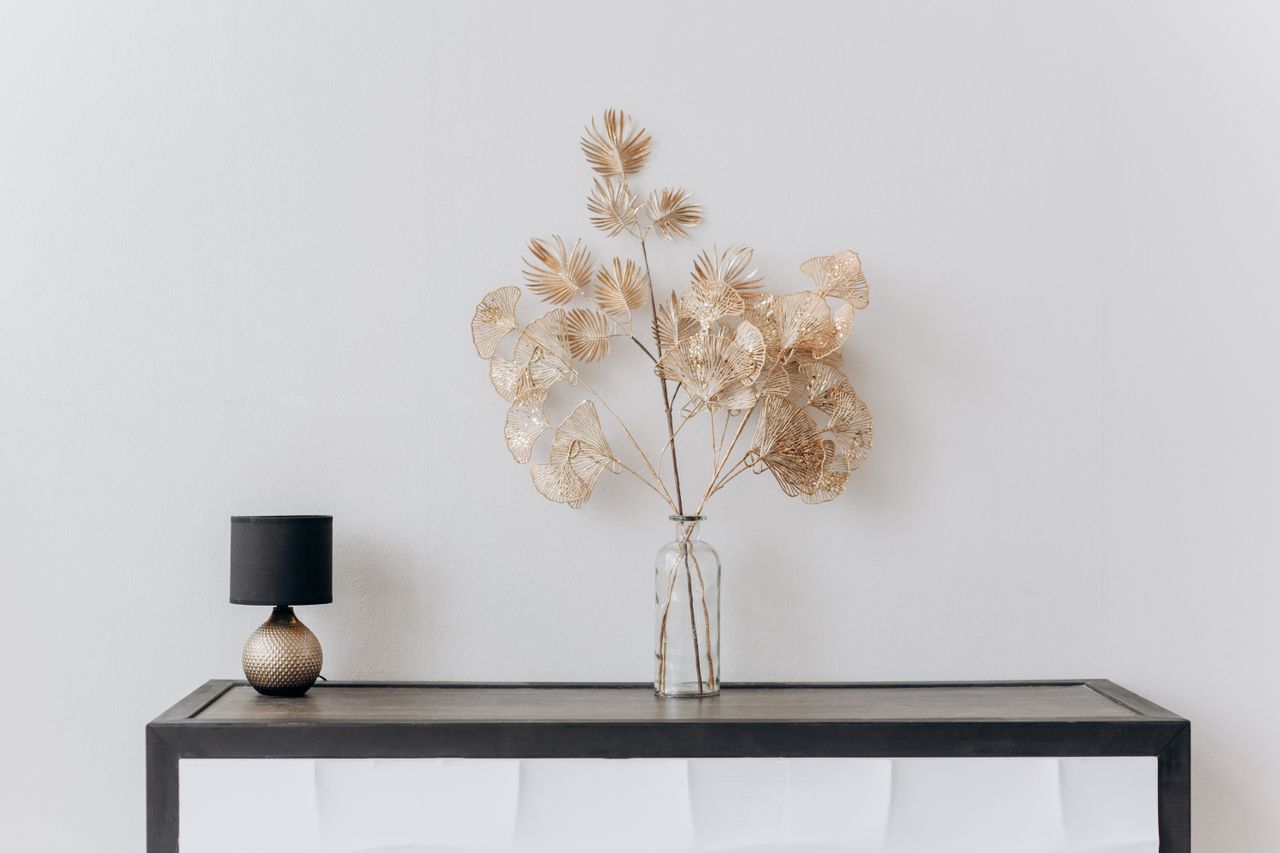
Console table with lamp and floral arrangement — photo by Mikhail Nilov via Pexels.
Most entries have one sad ceiling light. Add a table lamp on the console or a plug-in wall sconce — warm bulbs (2700K) make the space feel welcoming instead of interrogation-like. If there's no outlet nearby, battery LED sconces with timers solve it with zero wiring.
8. Use baskets as beautiful storage
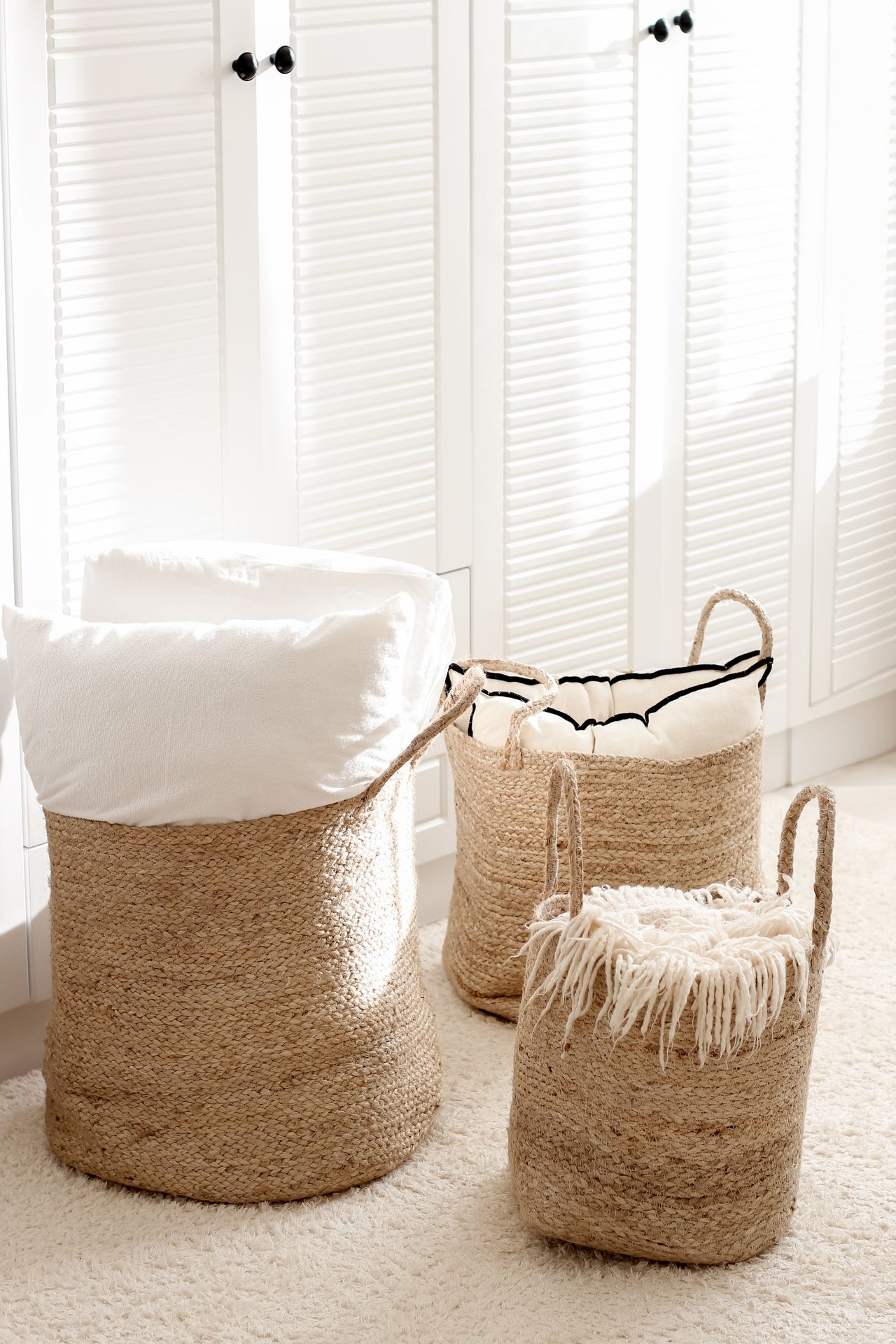
Wicker baskets in a bright modern interior — photo by Kader D. Kahraman via Pexels.
Woven baskets under the console or bench hide shoes, scarves, umbrellas, and the general mess of coming and going. Seagrass and wicker add natural texture that makes the entry feel warm. Assign each basket a job (shoes / out-the-door / returns) and the system runs itself.
9. Keep it sleek and modern

Apartment hallway interior, Saint Petersburg — photo by Andrey Kurochkin, CC0, via Wikimedia Commons.
Not every entryway needs decoration — some need editing. A modern entryway is about clean lines, a calm neutral palette, and storage you can't see. One beautiful light fixture, one mirror, one console with hidden drawers. Everything else lives behind closed doors. If your home is modern elsewhere, carrying that same restraint into the entry makes the whole house feel coherent.
10. Build a mini gallery wall
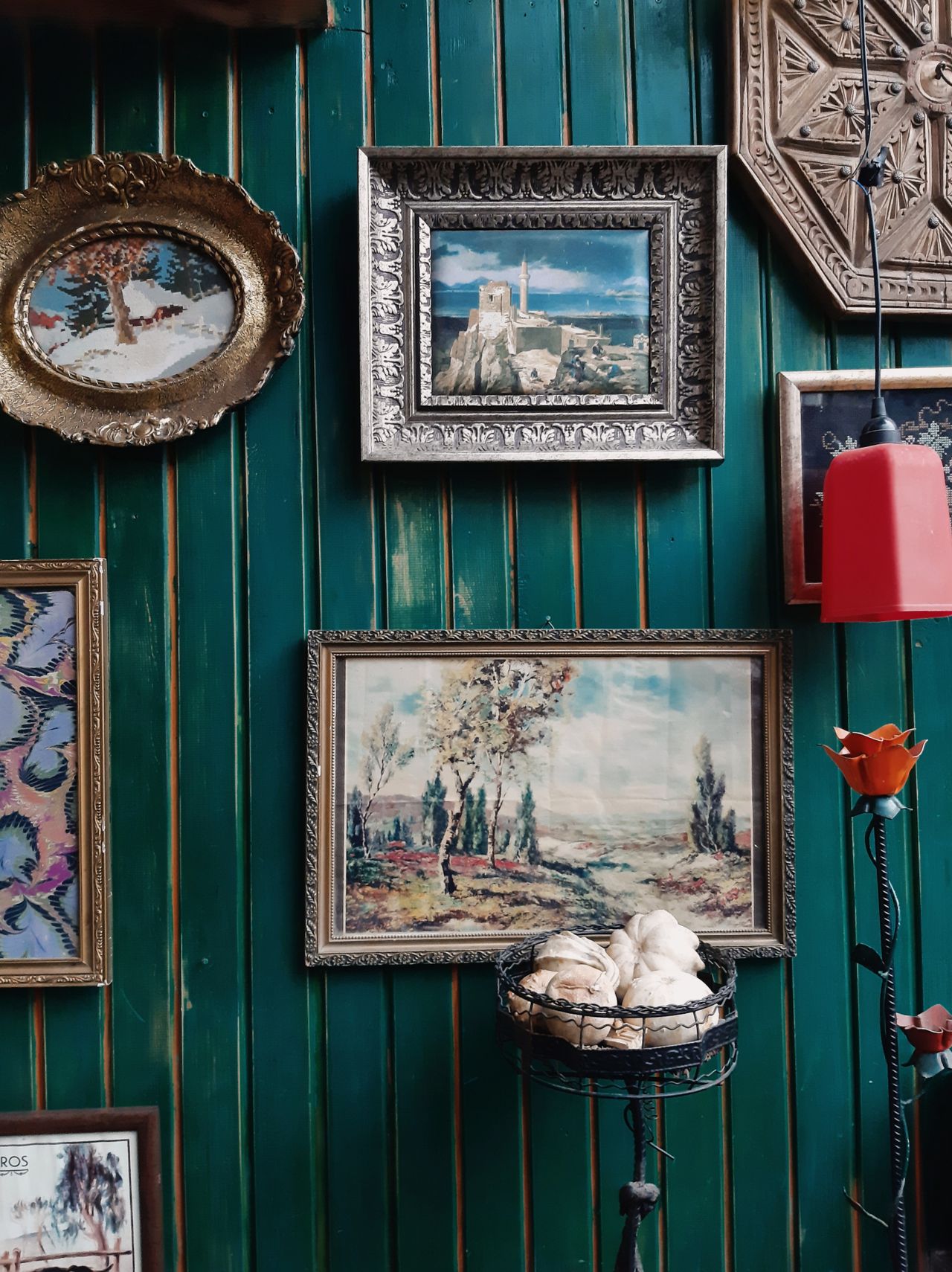
Gallery wall of framed pictures — photo by kübra zehra via Pexels.
Entryway walls are usually blank — free real estate. A tight grid of 6–9 frames in matching frames looks intentional and high-end; mix family photos with art prints. Keep the center of the arrangement at eye level (about 57 inches from the floor). Picture ledges work too and let you swap art without new holes.
11. Bring in one tall plant
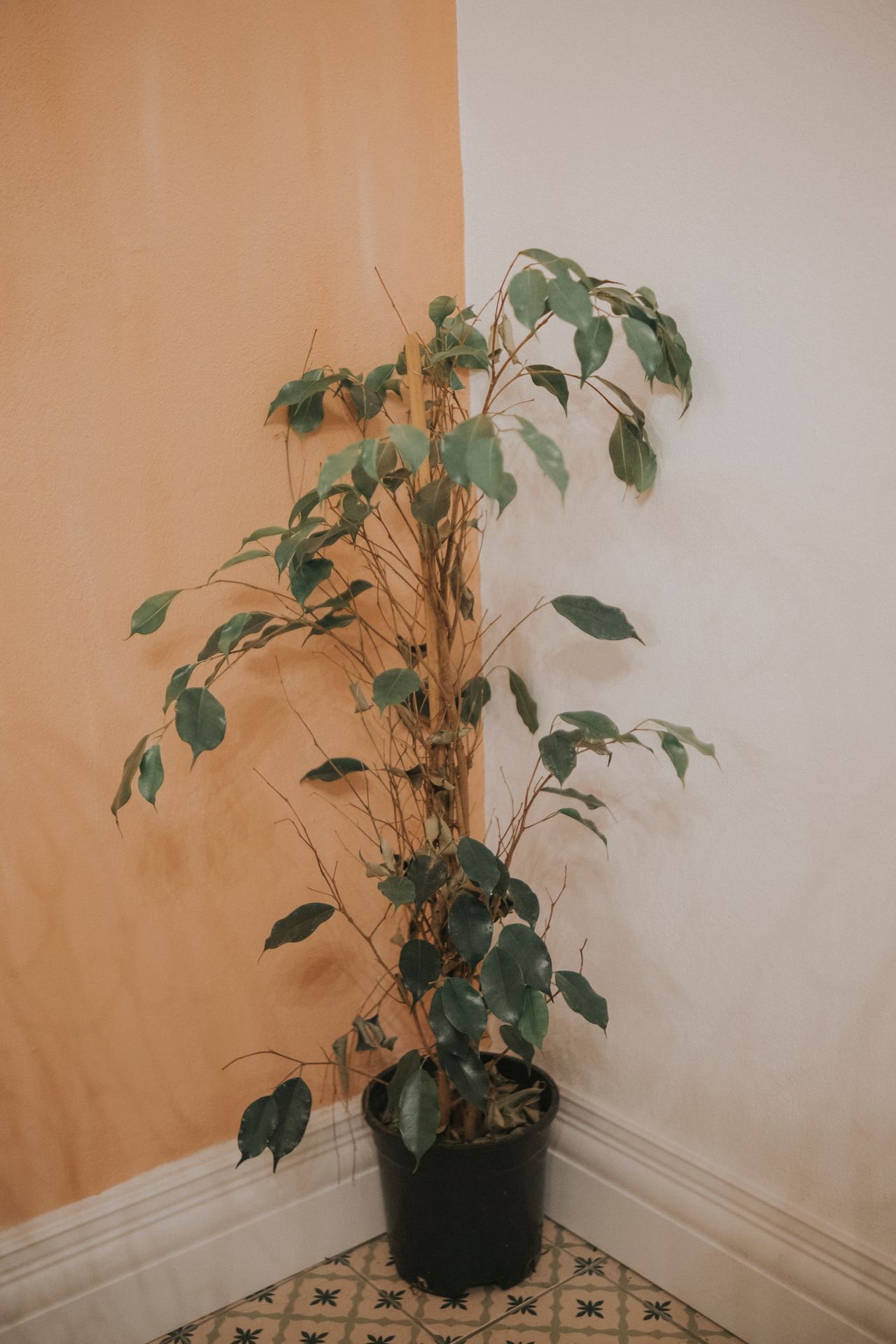
Lush houseplant in a corner — photo by Feyza Yıldırım via Pexels.
A snake plant or dracaena in the corner adds life and height, drawing the eye up and making the space feel larger. In dark entries, these two tolerate low light better than almost anything. One tall plant beats three small struggling ones.
12. Add a pendant light for drama

Hallway with a pull-down pendant light, Fyffe House, New Zealand — photo by Karora, public domain, via Wikimedia Commons.
If your entry has ceiling height, a pendant or small chandelier instantly elevates it from "passage" to "room." Hang it so the bottom sits 7 feet off the floor — high enough to walk under, low enough to feel intentional. Woven and rattan pendants add warmth; black metal ones add modern edge.
13. Style the console seasonally
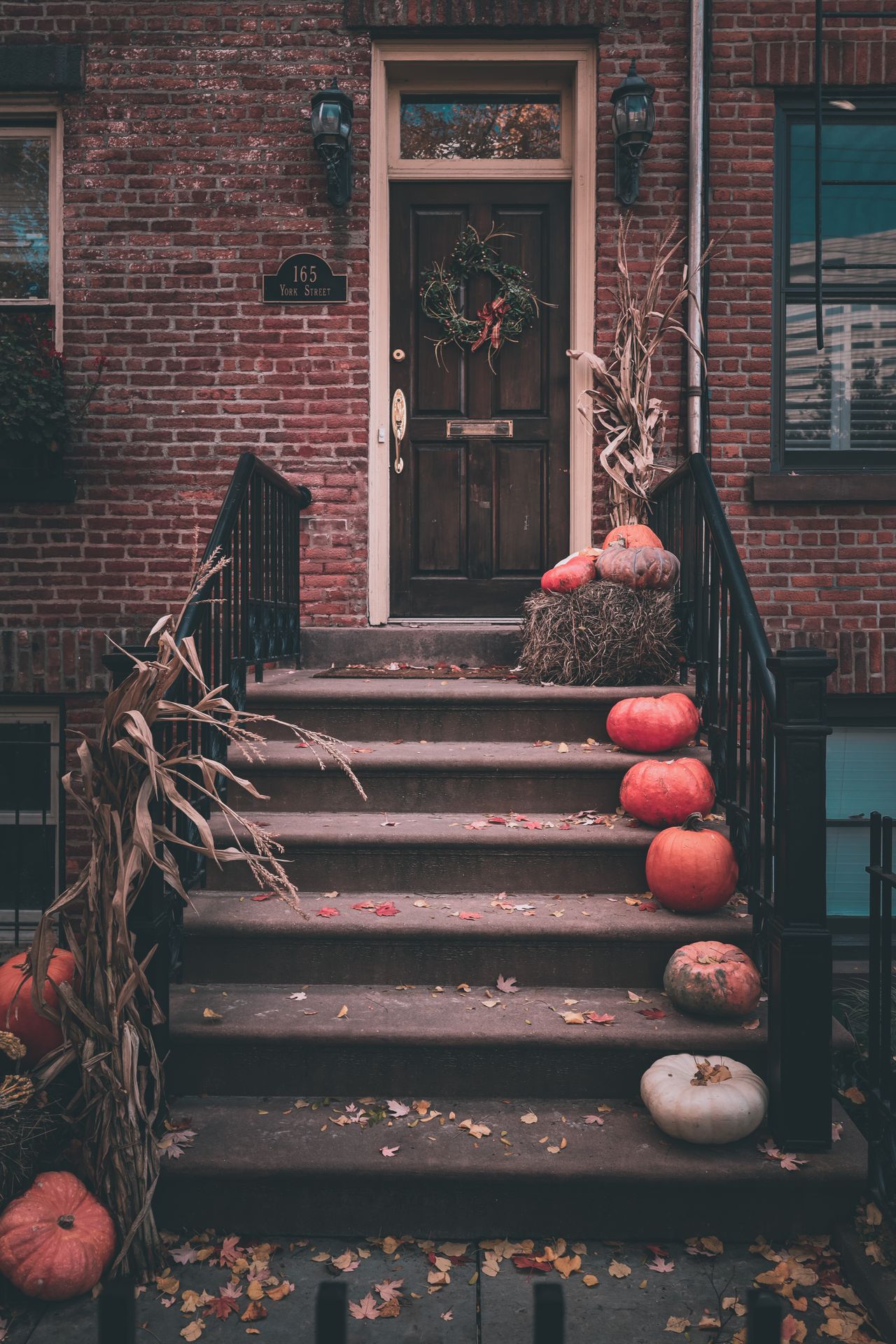
Pumpkins styled on a front staircase — photo by BOA.vision via Pexels.
The entryway is the easiest room to refresh for seasons: a small pumpkin in October, a wreath in December, fresh branches in spring. One seasonal swap on the console keeps the whole house feeling current without redecorating anything else.
14. Use a mirror gallery for dark entries
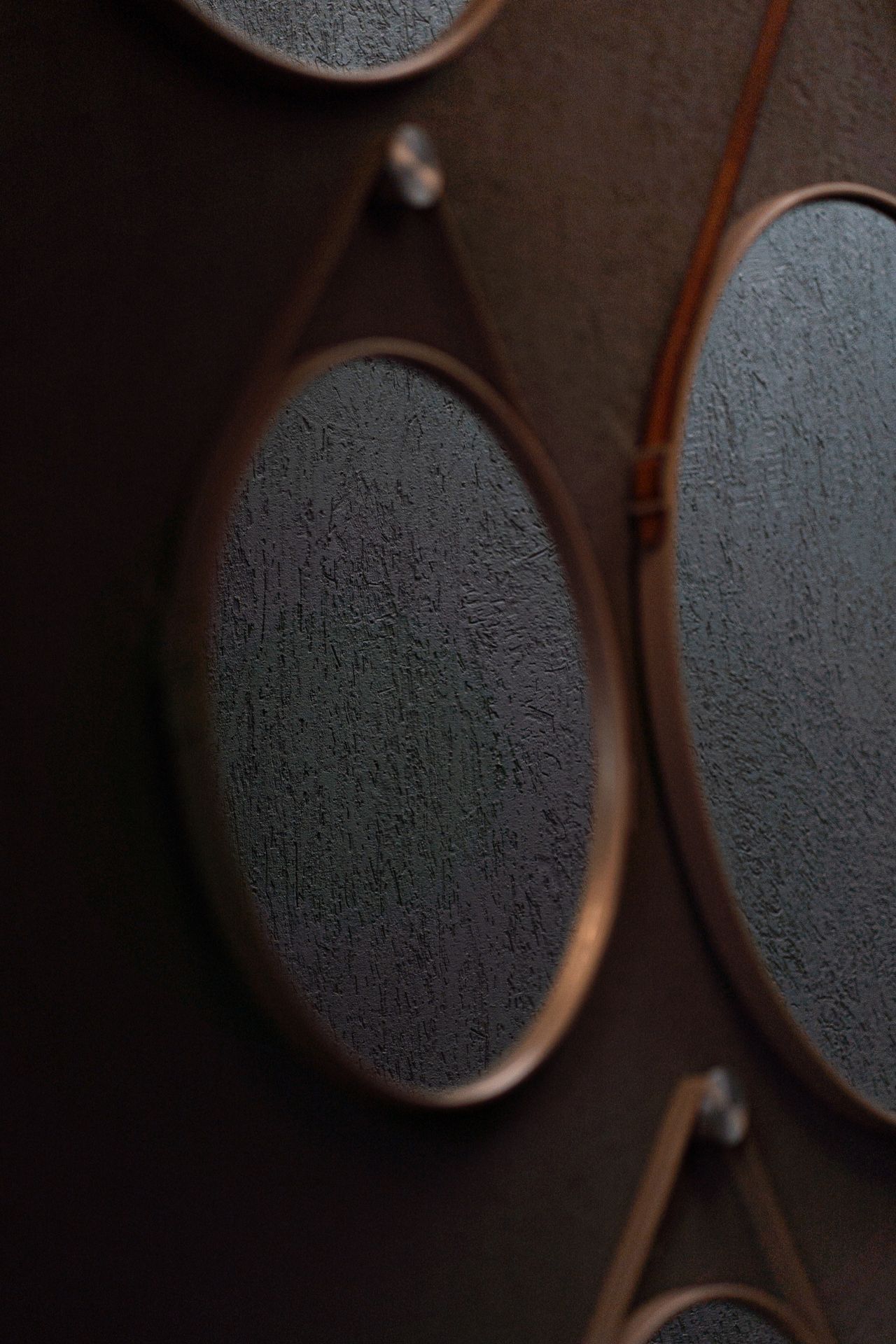
Group of mirrors on a wall — photo by Wolf Art via Pexels.
No window? Fake the light. A group of 3–5 mirrors in mixed shapes on one wall bounces your lamp light around and doubles the sense of space. Lean into it: brass frames warm up the reflection, black frames keep it modern.
15. Let a narrow hall breathe

Interior of the Boske family home hall, 1935–1940 — CC0, via Wikimedia Commons.
Long narrow halls feel cramped when both walls compete for attention. The fix: decorate only one side. Console, mirror, and art on one wall; leave the other nearly bare. Light colors throughout and a mirror at the far end pull the eye through. Restraint is what makes tight spaces feel generous. Narrow hallway? These hallway decor ideas use the same tricks at a longer scale.
16. Add texture with a throw and pillow
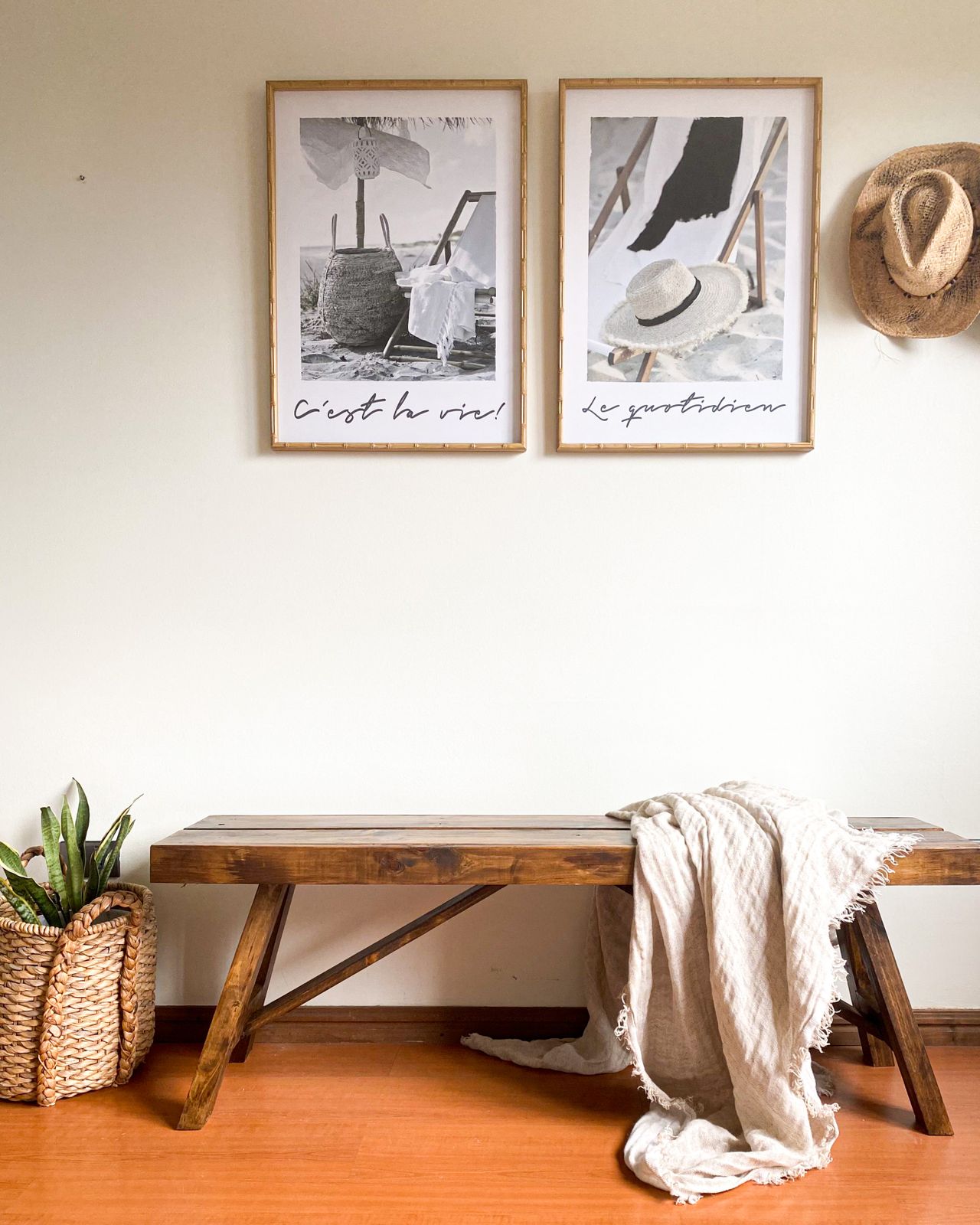
Wooden bench with cozy blanket and framed art — photo by Javi Osorio Flores via Pexels.
If you have a bench, dress it: one lumbar pillow, one folded throw. It takes ten seconds and makes the entry feel like a styled room instead of a corridor. Indoor-outdoor fabrics survive the wear; washable covers survive real life.
17. Define the space with a distinct zone

Entrance hall of Edgecliff House flats, Sydney — State Library of NSW, public domain, via Wikimedia Commons.
In open-plan homes the "entryway" is often just a zone, not a room. Define it: paint the entry wall a different color, lay a rug that marks the boundary, or hang a pendant that says "this spot is a place." Boundaries make small zones feel deliberate.
18. Keep one surface deliberately empty
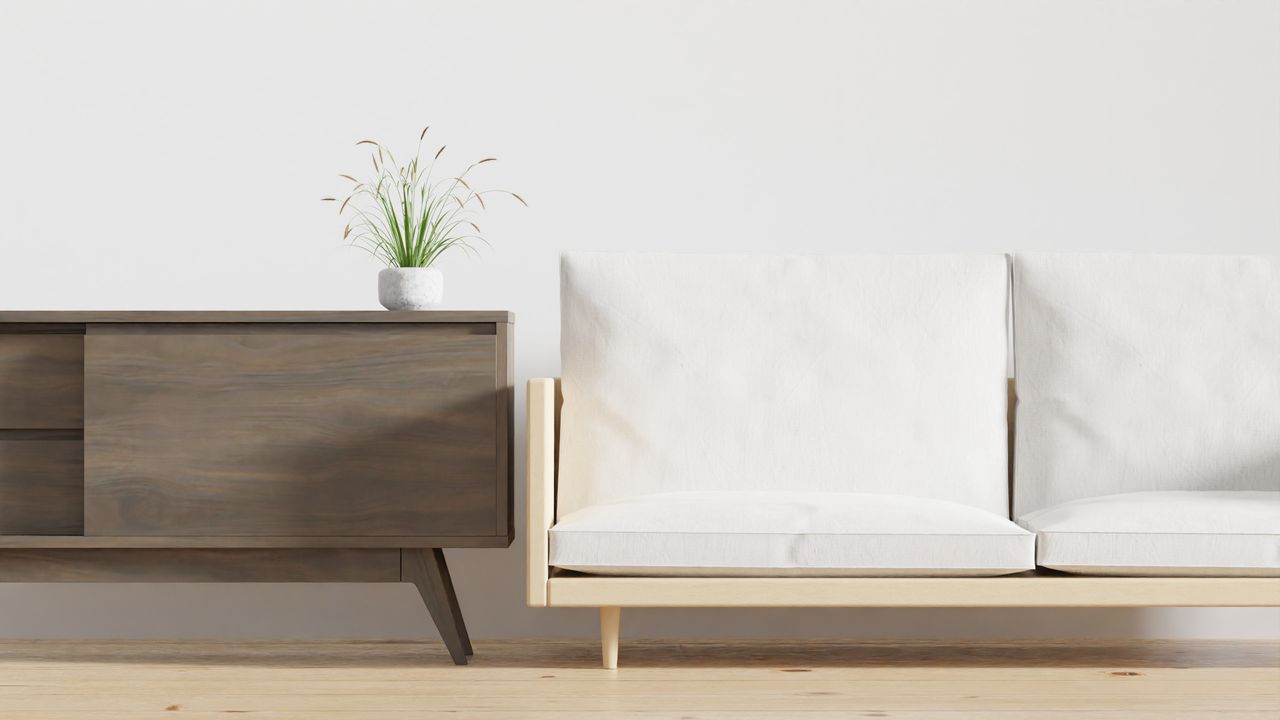
Minimalist wooden console with a potted plant — photo by dada _design via Pexels.
The pro secret. Leave one stretch of console or one shelf completely clear. It gives the eye rest, makes everything else look curated, and — practically — gives you somewhere to set down groceries, bags, and the mail without a balancing act.
Entryway Styling Formula (Save This)
Tall + flat + living + light. One tall thing (mirror, lamp, plant), one flat thing (tray, runner), one living thing (plant, fresh stems), one light source beyond the ceiling. Get those four and any entryway looks finished. And if you're still exploring your overall direction, our guide to 15 interior design styles will help you find the look that fits your home.
Final Thoughts
The best entryways aren't the biggest or most expensive — they're the ones where everything has a place. Pick three ideas from this list, implement them this weekend, and notice how different coming home feels on Monday.

No comments:
Post a Comment