My grandmother's kitchen in Iowa had a linoleum floor, a humming refrigerator, and a windowsill full of geraniums — and I would not trade a single memory of it for a showroom kitchen. Midwest farmhouse kitchen decor ideas come from that same honest place: rooms built for feeding people, where everything useful is also beautiful.
This is not the stark, all-white modern farmhouse you see on TV. The real Midwest version is warmer — butcher block counters, open shelves of everyday dishes, one good vintage find that does the talking. These 10 ideas bring that practical warmth home, whatever your zip code. For keeping counters working hard, see our countertop styling guide.
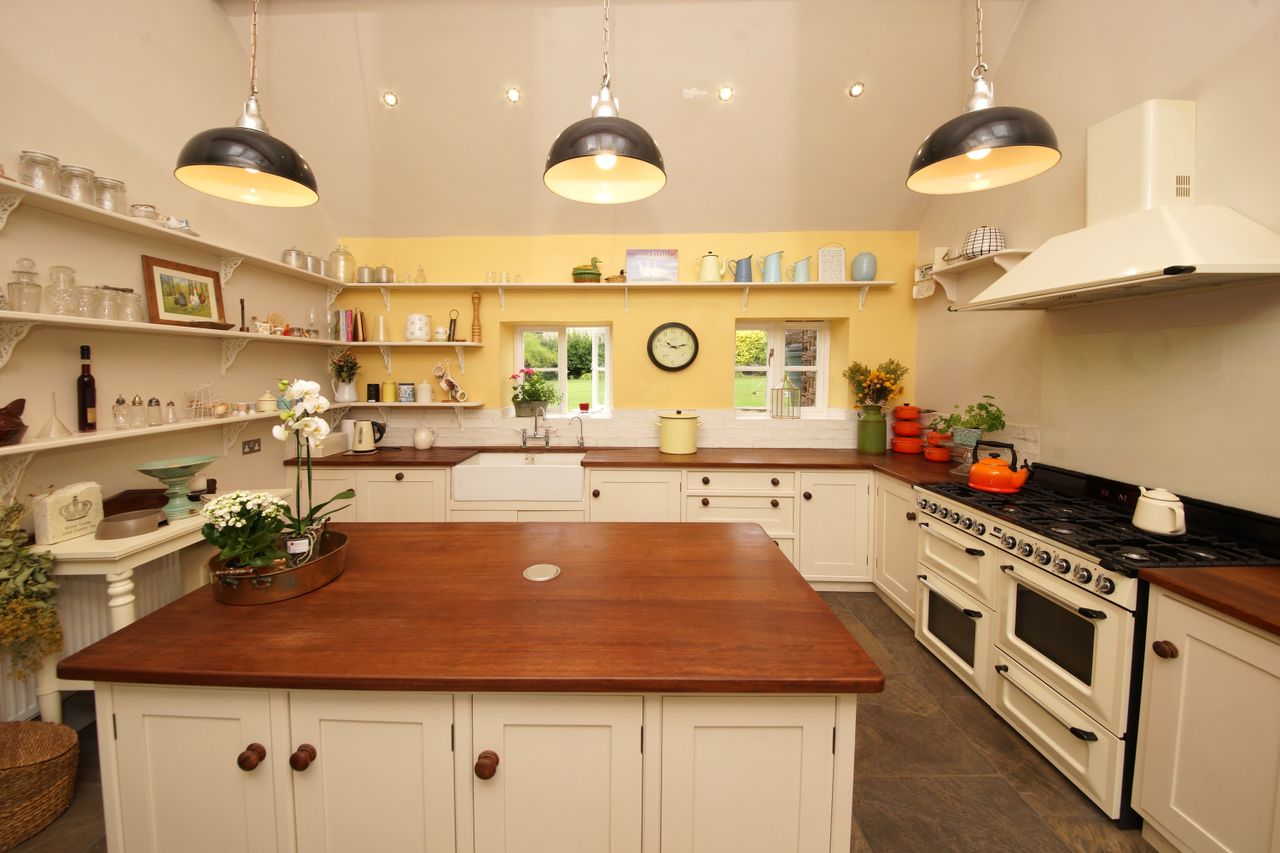
Photo via Pexels
Table of Contents
- 1. Make the Farmhouse Sink the Centerpiece
- 2. Swap Upper Cabinets for Open Shelves
- 3. Add a Butcher-Block Worktable
- 4. Let One Vintage Piece Tell the Story
- 5. Collect White Ironstone
- 6. Use Stoneware Crocks for Storage
- 7. Grow Herbs on the Counter
- 8. Hang Wooden Cutting Boards
- 9. Style the Window Over the Sink
- 10. Try Two-Tone Cabinets
1. Make the Farmhouse Sink the Centerpiece
The apron-front sink is the single most recognizable farmhouse element, and for good reason — the deep basin swallows stockpots and sheet pans, and the exposed front turns plumbing into furniture. A 33-inch fireclay farmhouse sink costs $300 to $600 at Home Depot or Lowe's, plus installation if your cabinet needs retrofitting.
Keep the styling around it simple: a folded striped dish towel over the edge, one soap dispenser, done. The sink is the star; it does not need backup singers. Pair it with a classic bridge faucet in brushed nickel for the full vintage-workhorse effect.
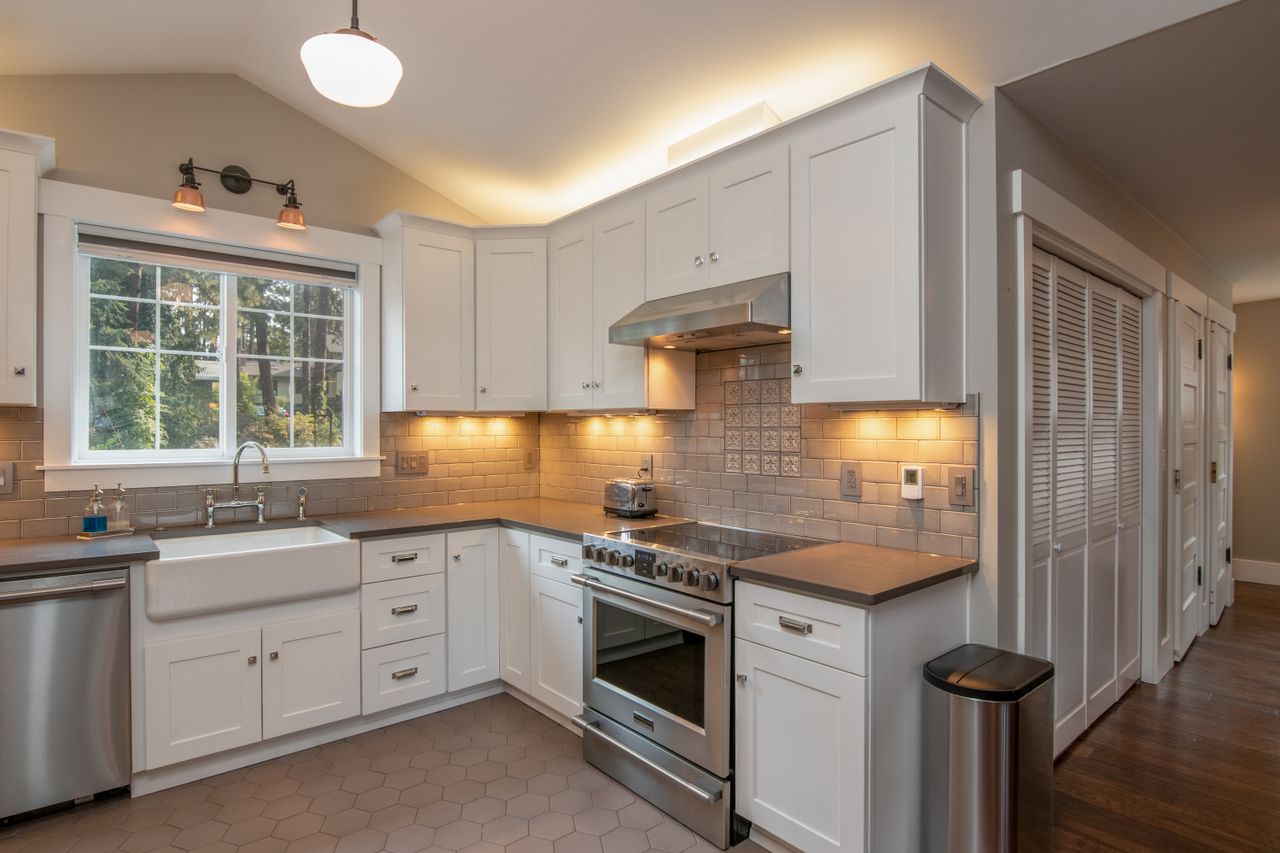
Photo via Pexels
2. Swap Upper Cabinets for Open Shelves
Taking down one run of upper cabinets and replacing it with two thick wood shelves is the fastest way to get the farmhouse feel. It forces you to curate — everyday white dishes, a few glass jars, a small plant — and the open display makes the kitchen feel twice as big.
Use 2-inch-thick stained pine or oak boards, 10 to 12 inches deep, on black iron brackets. Two 48-inch shelves cost about $80 to $150 in materials. Keep what you display to things you actually use; dusty decor plates defeat the purpose — for the why and how, our small kitchen organization ideas cover open storage that stays tidy.
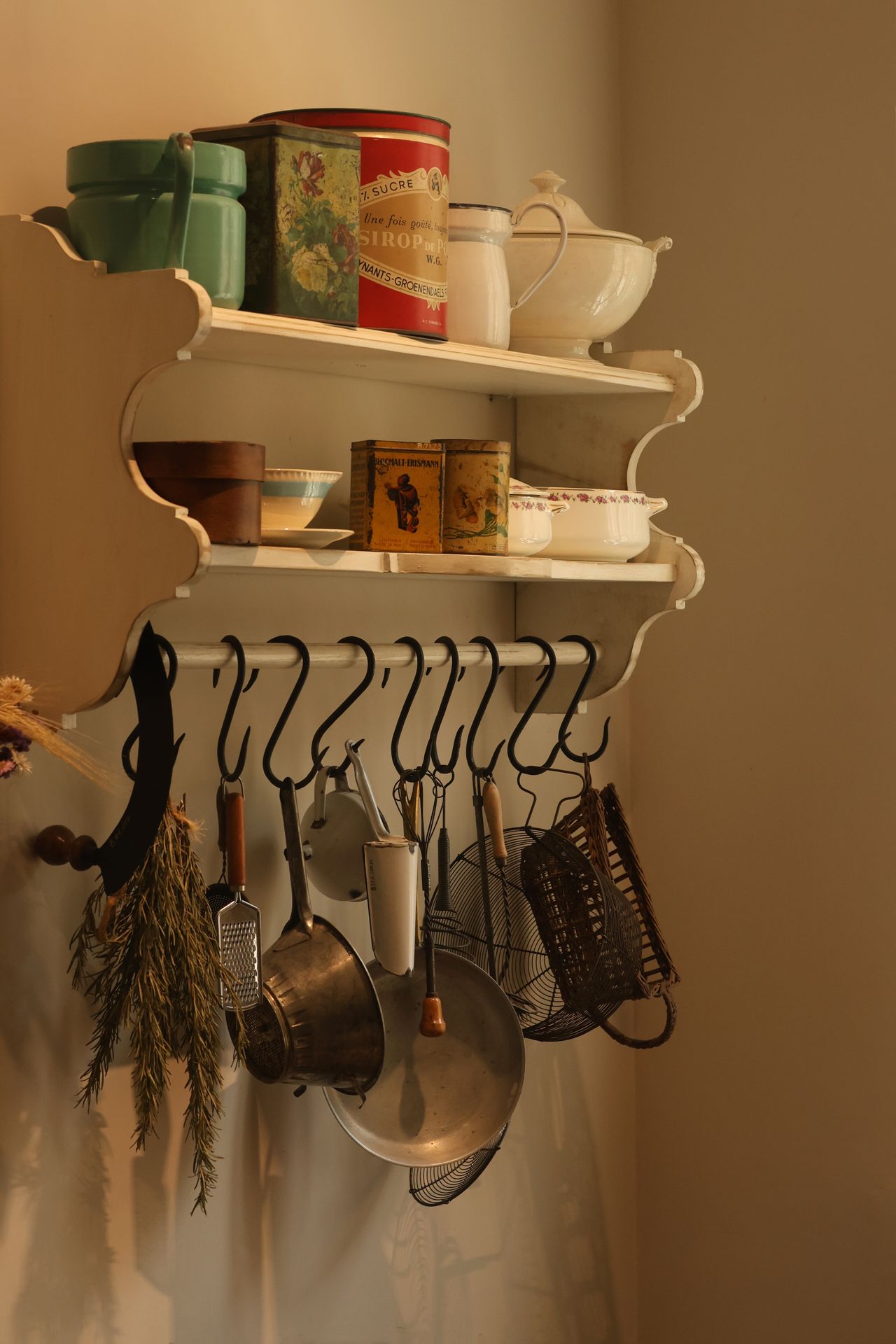
Photo via Pexels
3. Add a Butcher-Block Worktable
A freestanding butcher-block table is the Midwest farmhouse secret weapon. It adds prep space, seating for two, and a hunk of warm wood that softens all the white cabinetry — and you can take it with you when you move. Look for a 48-inch maple top on sturdy legs.
New ones run $250 to $500 at IKEA, Home Depot, or restaurant supply stores; vintage ones surface on Marketplace for under $150. Oil the top monthly with food-safe mineral oil and it will outlast your cabinets. The worn, knife-marked surface is the whole point — see our rustic kitchen ideas for more well-worn wood inspiration.
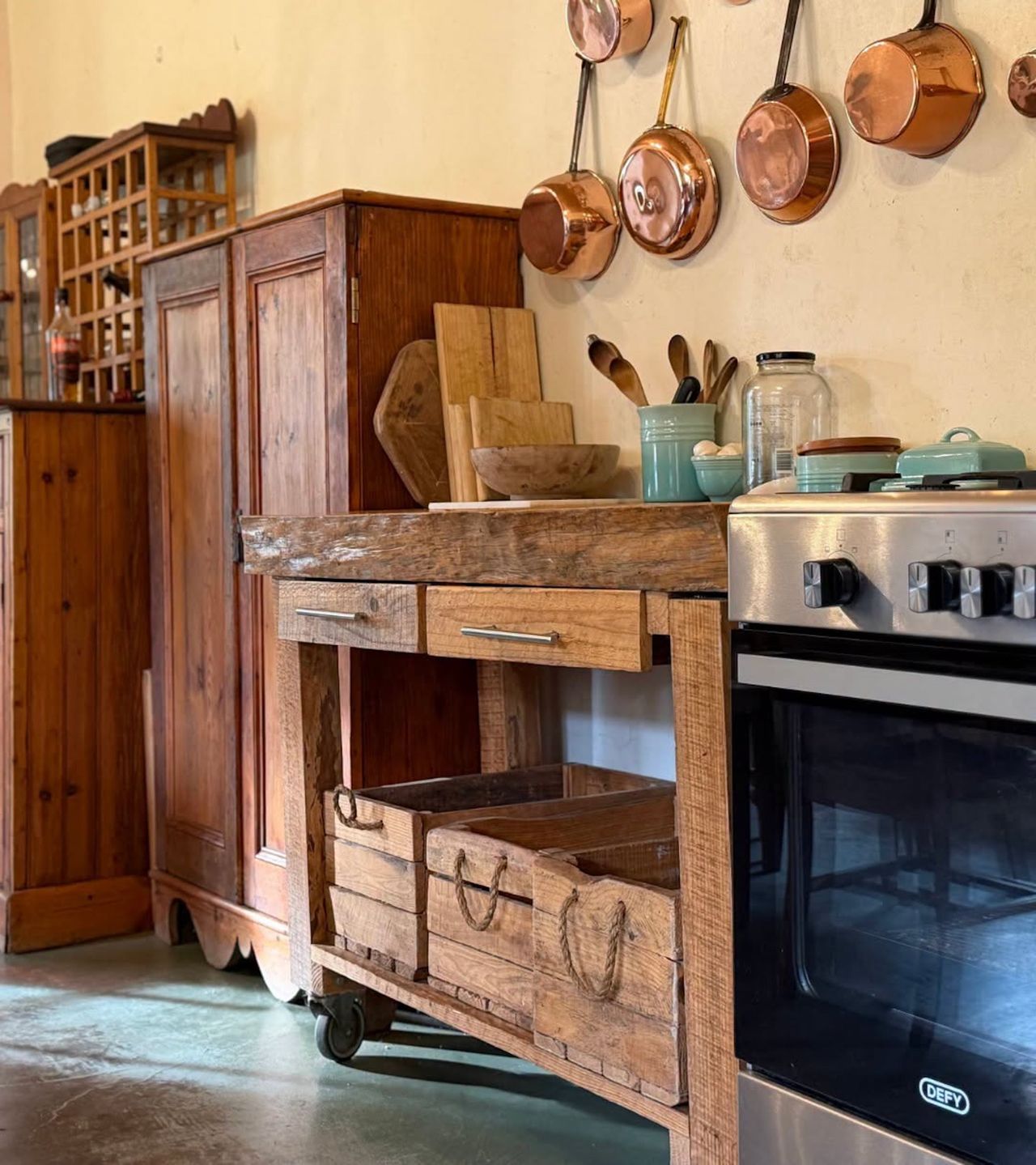
Photo via Pexels
4. Let One Vintage Piece Tell the Story
Every great farmhouse kitchen has one object with a past — an antique coffee grinder screwed to a cabinet, a grandmother's rolling pin, a tin bread box from the 1950s. One genuine vintage piece gives the whole room credibility that ten reproductions cannot.
Estate sales and antique malls in the Midwest are full of these for $10 to $40. Mount it where you will see it daily, not hidden on a high shelf. The wear, the patina, the slightly-off mechanism — that is the decor. New stuff can be pretty; old stuff has something to say.
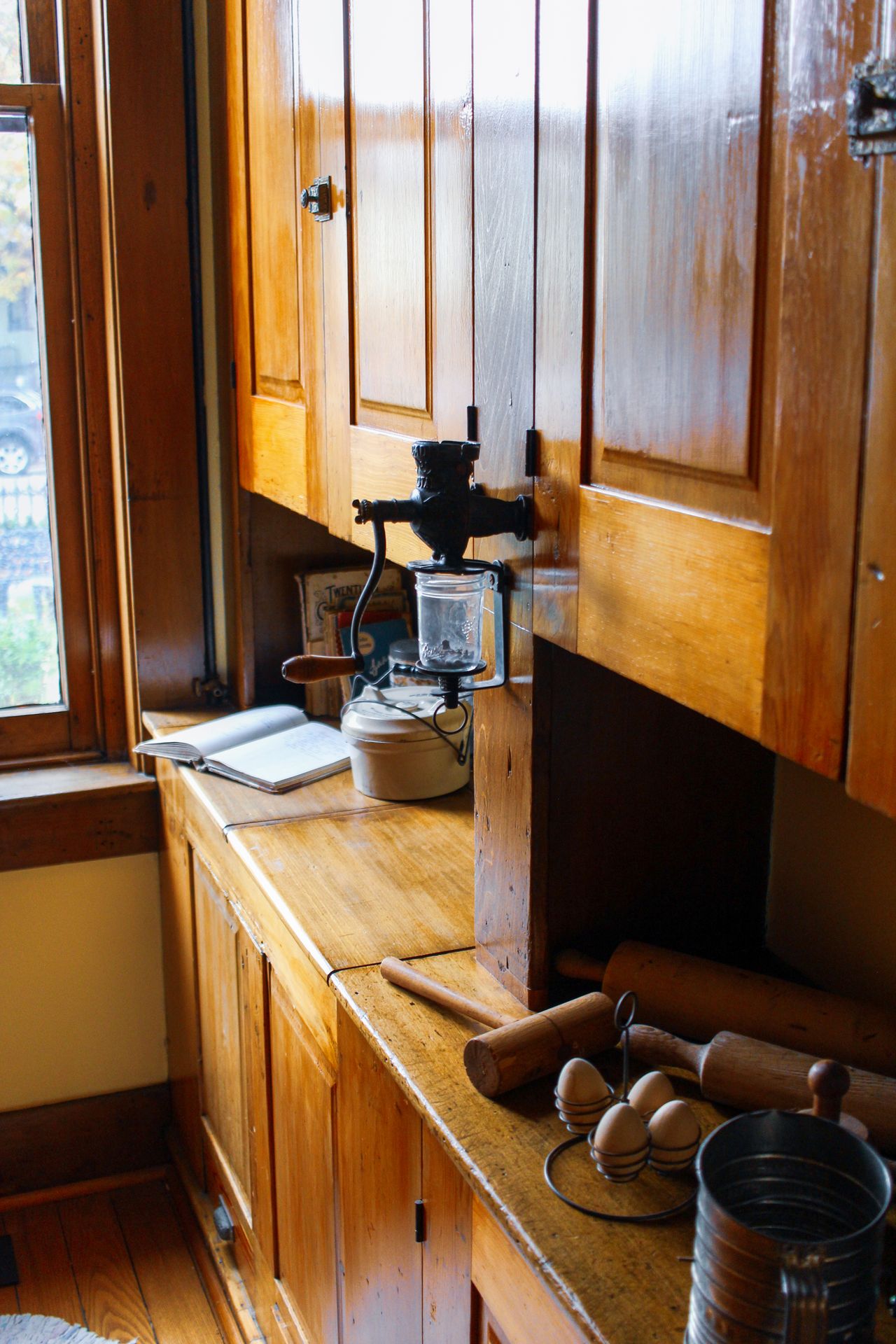
Photo via Pexels
5. Collect White Ironstone
White ironstone pitchers and platters are the quiet luxury of farmhouse kitchens. The plain white shapes — pitchers, wash basins, platters — stack beautifully on open shelves and never fight with anything. Start with one pitcher; collections grow naturally once you start looking.
Real antique ironstone runs $15 to $50 per piece at antique shops, and good reproductions are $12 to $25 at HomeGoods. Group three to five pieces of varying heights together and leave the rest of the shelf breathing. The slight crazing on old pieces is not damage — collectors pay extra for it.
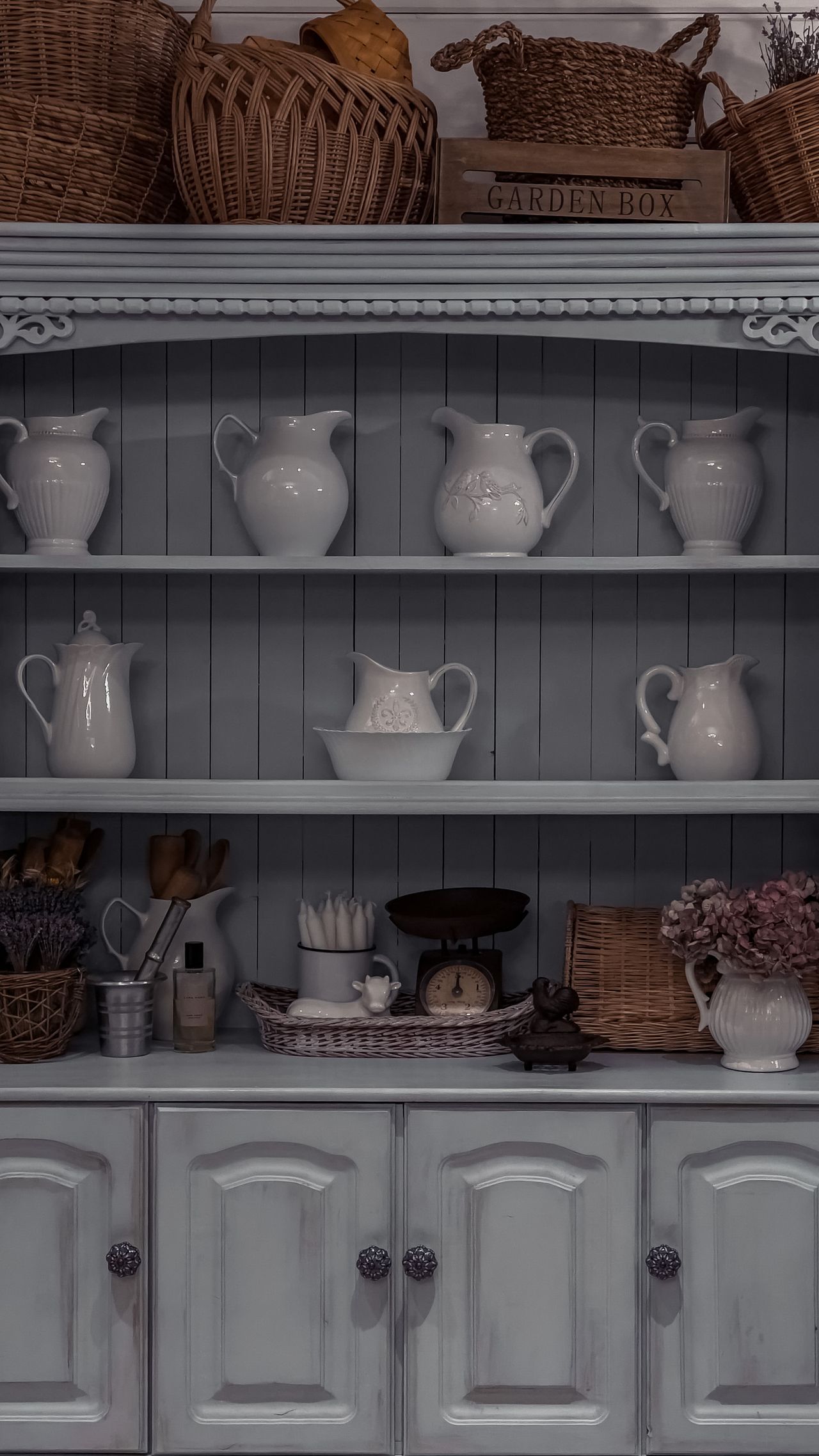
Photo via Pexels
6. Use Stoneware Crocks for Storage
Those heavy salt-glazed crocks were made to hold flour, potatoes, and utensils — so let them. A 1-gallon crock by the stove holds wooden spoons perfectly, and a row of small crocks on the counter beats a plastic organizer every time. They are nearly indestructible and only get better looking.
Vintage American stoneware crocks cost $20 to $60 depending on size and markings at flea markets; new ones from USA-made makers like Ohio Stoneware run $30 to $70. Avoid the ultra-shiny reproductions — real salt glaze has a slightly orange-peel texture you can feel.
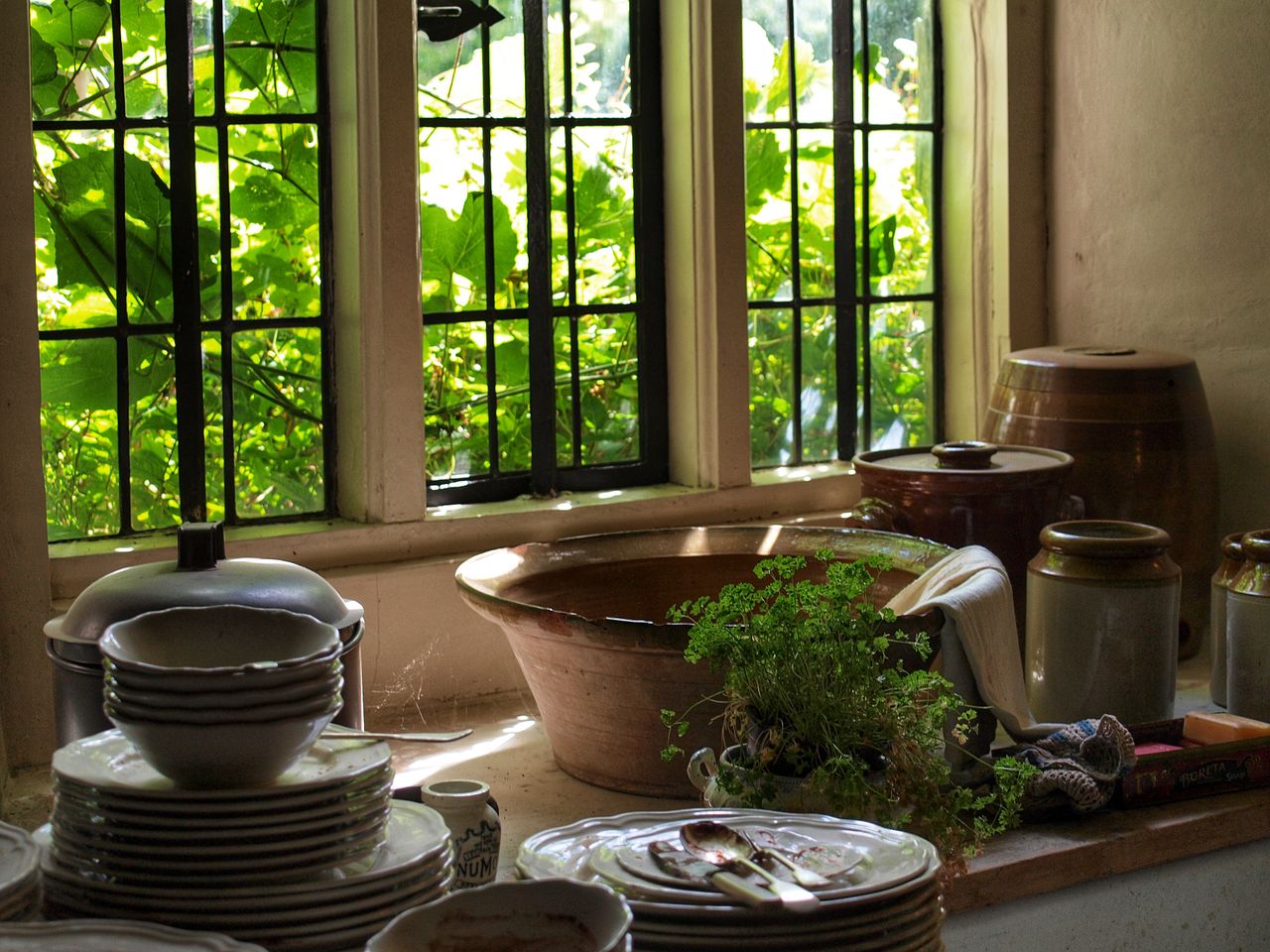
Photo via Pexels
7. Grow Herbs on the Counter
A pot of basil and a pot of rosemary by the stove is decoration you can eat. In Midwest farmhouse kitchens, the windowsill herb garden is practically a building code — it adds green life to all the wood and white, and snipping fresh herbs while you cook feels like the whole point of a kitchen.
Start with basil, chives, and thyme in 4-inch pots; a sunny windowsill is enough light for all three. A trio of potted herbs costs about $12 at any garden center. Water when the top inch of soil is dry, and pinch basil regularly so it grows bushy instead of leggy.
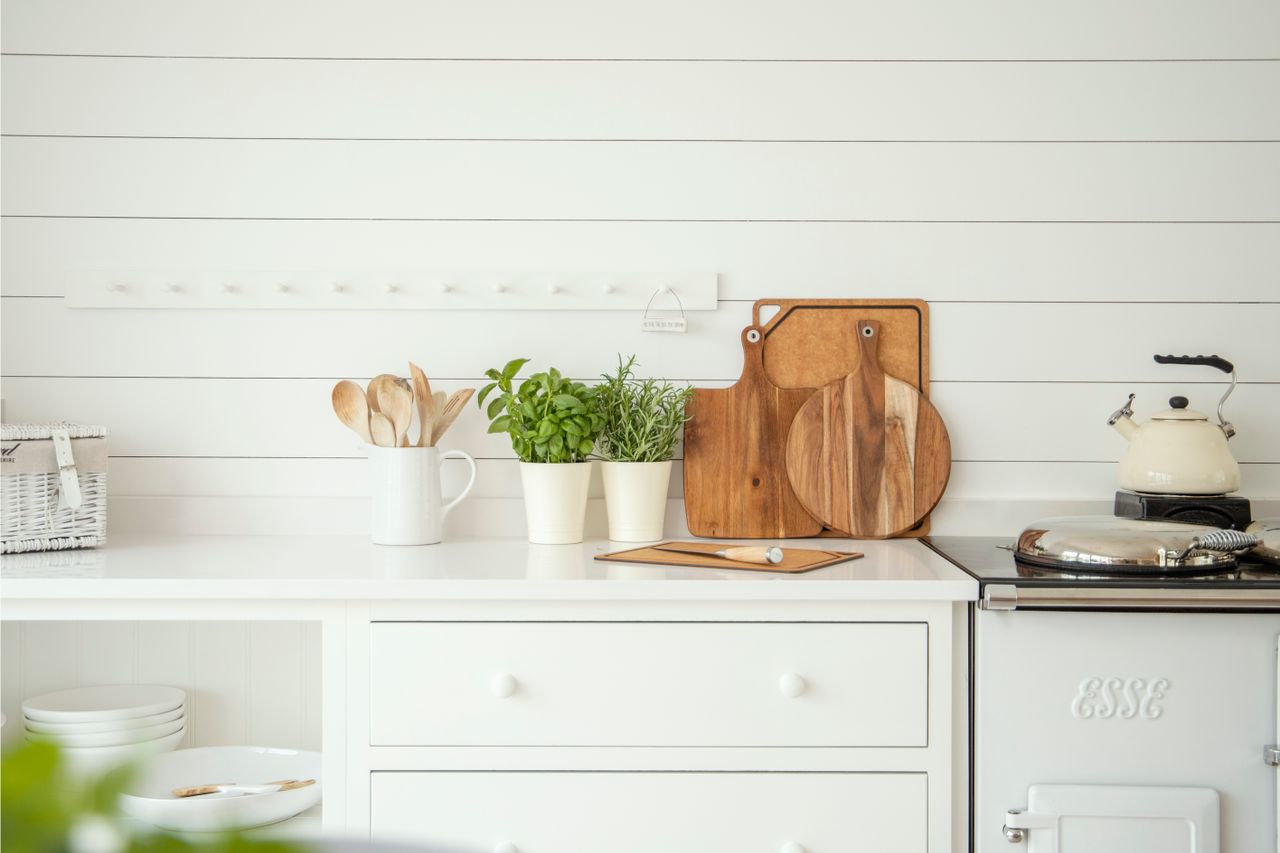
Photo via Pexels
8. Hang Wooden Cutting Boards
A cluster of wooden cutting boards hung on the wall is functional art. The different wood tones and shapes — round, paddle, rectangular — create a display that costs almost nothing and gets used daily. Hang them on simple hooks or a wall-mounted rail.
Three to five boards of varying sizes look best; any more starts to feel like a store display. Decent acacia boards run $15 to $30 each at Target or World Market. Oil them occasionally with mineral oil, and hang the prettiest one forward — the one with the best grain always earns the front hook.
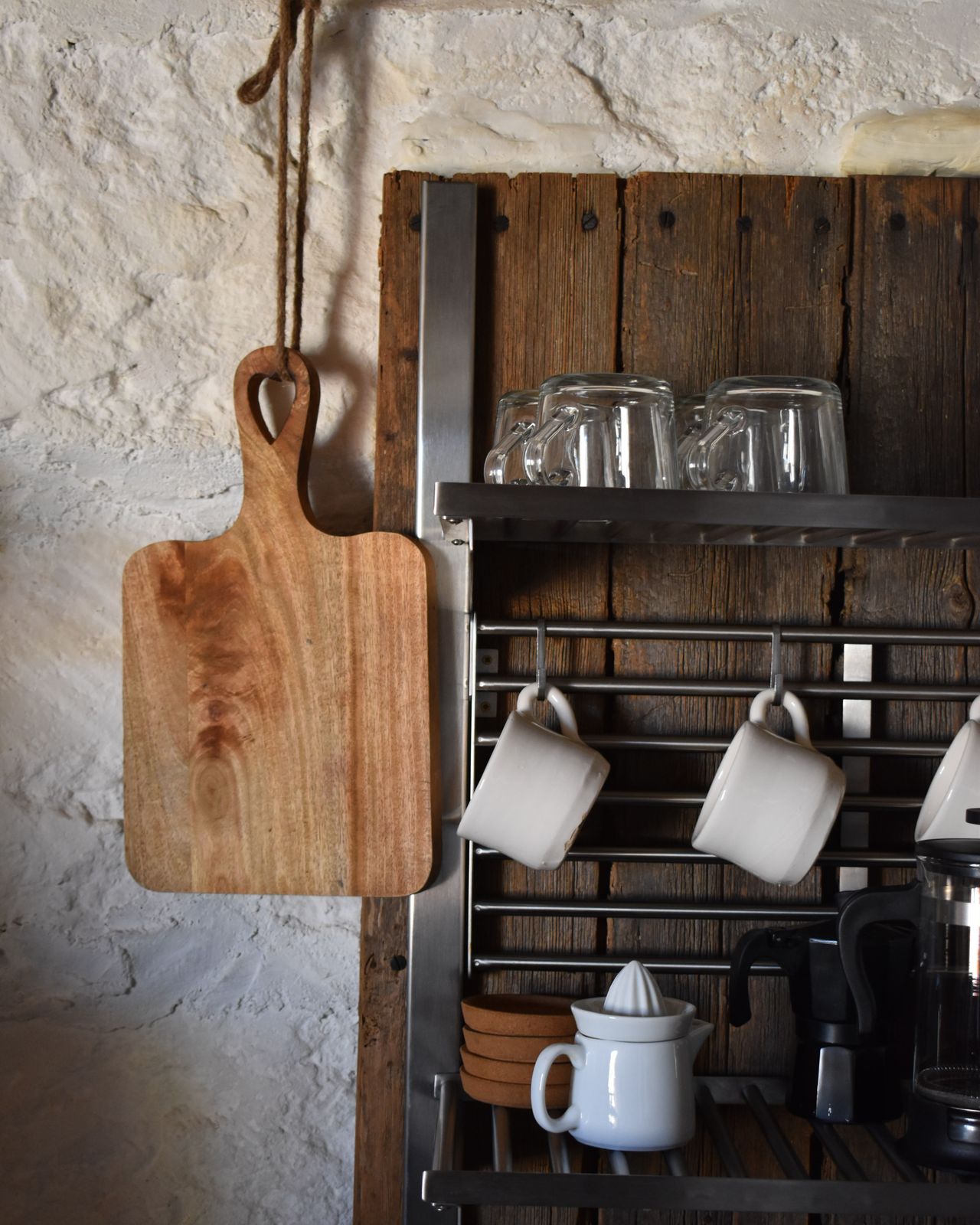
Photo via Pexels
9. Style the Window Over the Sink
The window above the sink is the most-viewed spot in any farmhouse kitchen — you stare at it while washing dishes, so make it worth looking at. A small potted plant, one pretty bottle, and a folded hand towel on the sill is plenty. Skip the curtains or use a simple café curtain that leaves the top half open.
If your window is deep, a garden window insert ($200 to $400) adds a shelf for plants without a remodel. Otherwise, a 6-inch potted pothos trailing down one side softens the whole wall. Keep the sill wipeable — this spot collects splashes, so nothing precious lives here.
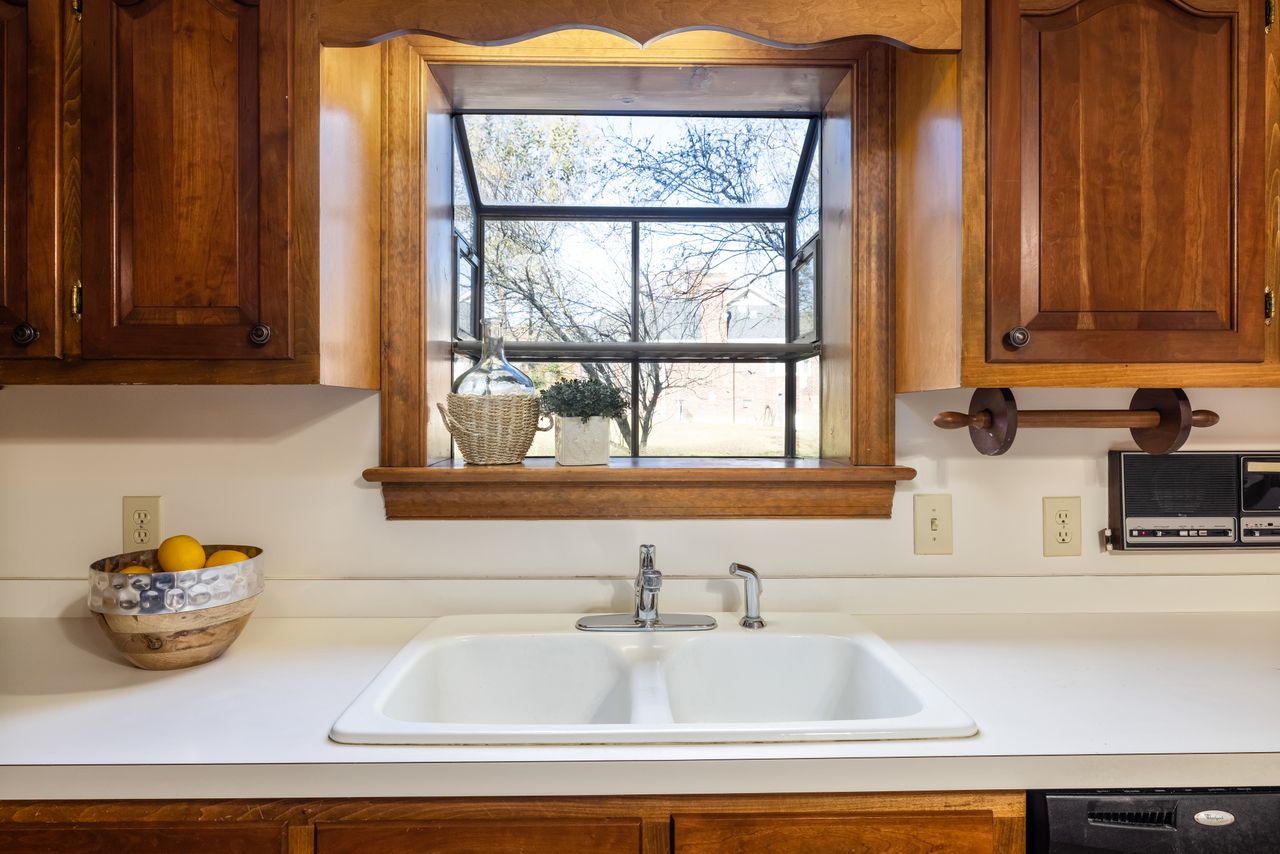
Photo via Pexels
10. Try Two-Tone Cabinets
White uppers with a dark island — or sage-green lowers with white uppers — give farmhouse kitchens a custom, collected feel without a full remodel. The island is the safest place to experiment: paint it a deep green, navy, or even black, and the room instantly looks designed rather than default.
A quart of cabinet paint ($25 to $35) plus a weekend covers most islands. Sand lightly, prime with a bonding primer, and use two coats of enamel made for cabinets. Our light wood cabinet ideas show the other direction if you prefer wood tones over paint.
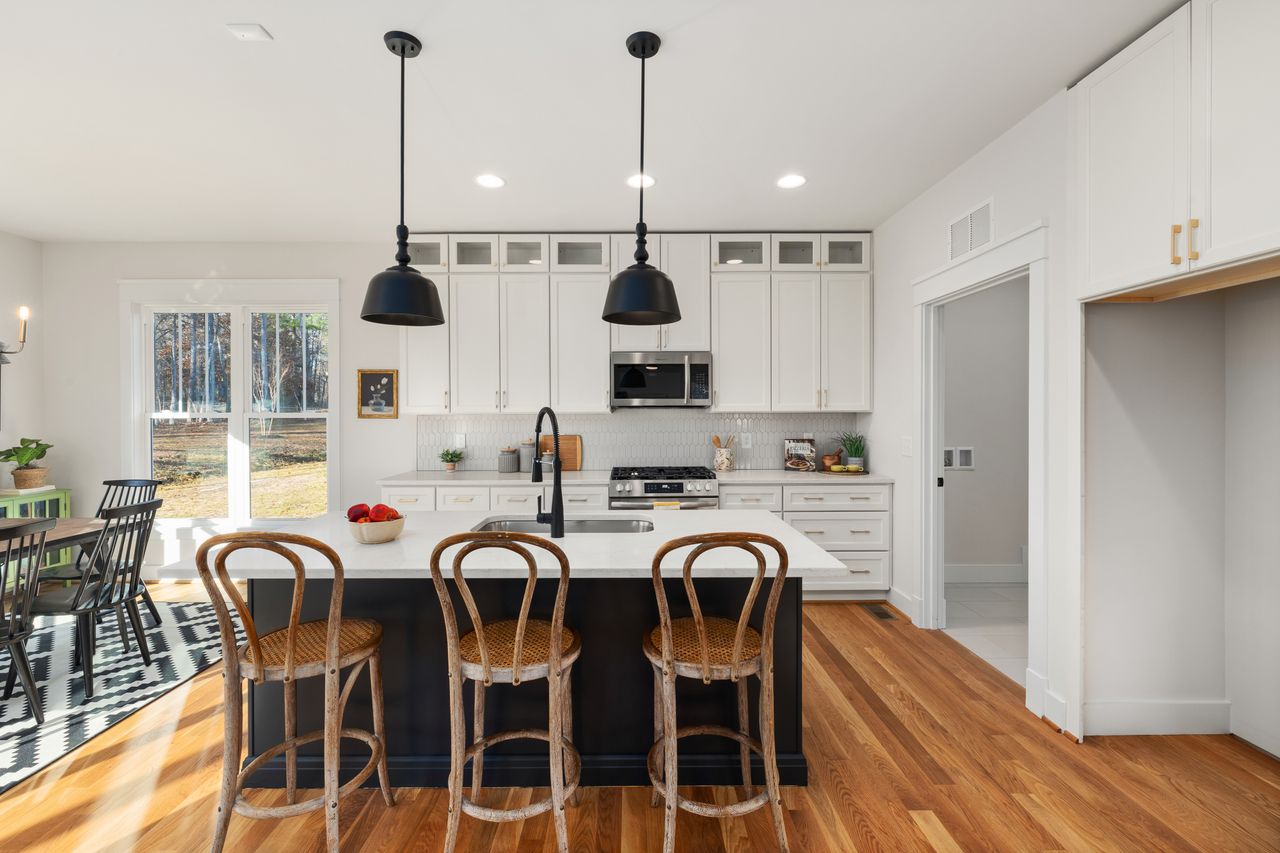
Photo via Pexels
Frequently Asked Questions
What makes a kitchen "Midwest farmhouse" instead of just farmhouse?
The Midwest version is warmer and more practical — more wood tones, more vintage pieces with real history, less of the stark all-white modern farmhouse look. It prioritizes function: everything decorative also works.
How can I get the farmhouse look on a budget?
Paint is cheapest: a two-tone island costs under $40. Then thrift vintage pieces, swap cabinet hardware to black iron ($2-3 per pull), and add open shelves instead of new uppers.
Are open shelves practical in a real kitchen?
Yes, if you display only everyday dishes that get used and washed constantly. They stay clean through use. Reserve closed cabinets for the rarely-used items that would collect dust.
What countertop works best in a farmhouse kitchen?
Butcher block is the classic — warm, affordable at $30-50 per square foot installed, and repairable with sandpaper and oil. Honed marble looks beautiful but stains; quartz gives the look with zero maintenance.
How do I keep a farmhouse kitchen from looking dated?
Mix eras deliberately: vintage finds alongside one or two modern pieces (a sleek faucet, simple pendants). Keep the palette tight — white, wood, black, one accent — and edit ruthlessly.
Final Thoughts
The best Midwest farmhouse kitchen decor ideas are not about buying a look — they are about choosing things that work hard and age well. A deep sink, honest wood, shelves of dishes you actually eat from: the style emerges from use, not from shopping.
Start with one change that improves your daily cooking — the sink, the shelves, the worktable — and let the room evolve. And when the holidays fill the kitchen, our kitchen organization guide keeps the workhorse running smoothly. A farmhouse kitchen should feel like it has fed a hundred good meals — because it has.
Sources
- https://www.countryliving.com/
- https://www.thespruce.com/
- https://www.bhg.com/
- https://www.hgtv.com/
- https://www.apartmenttherapy.com/
Gallery
Photo via Pexels
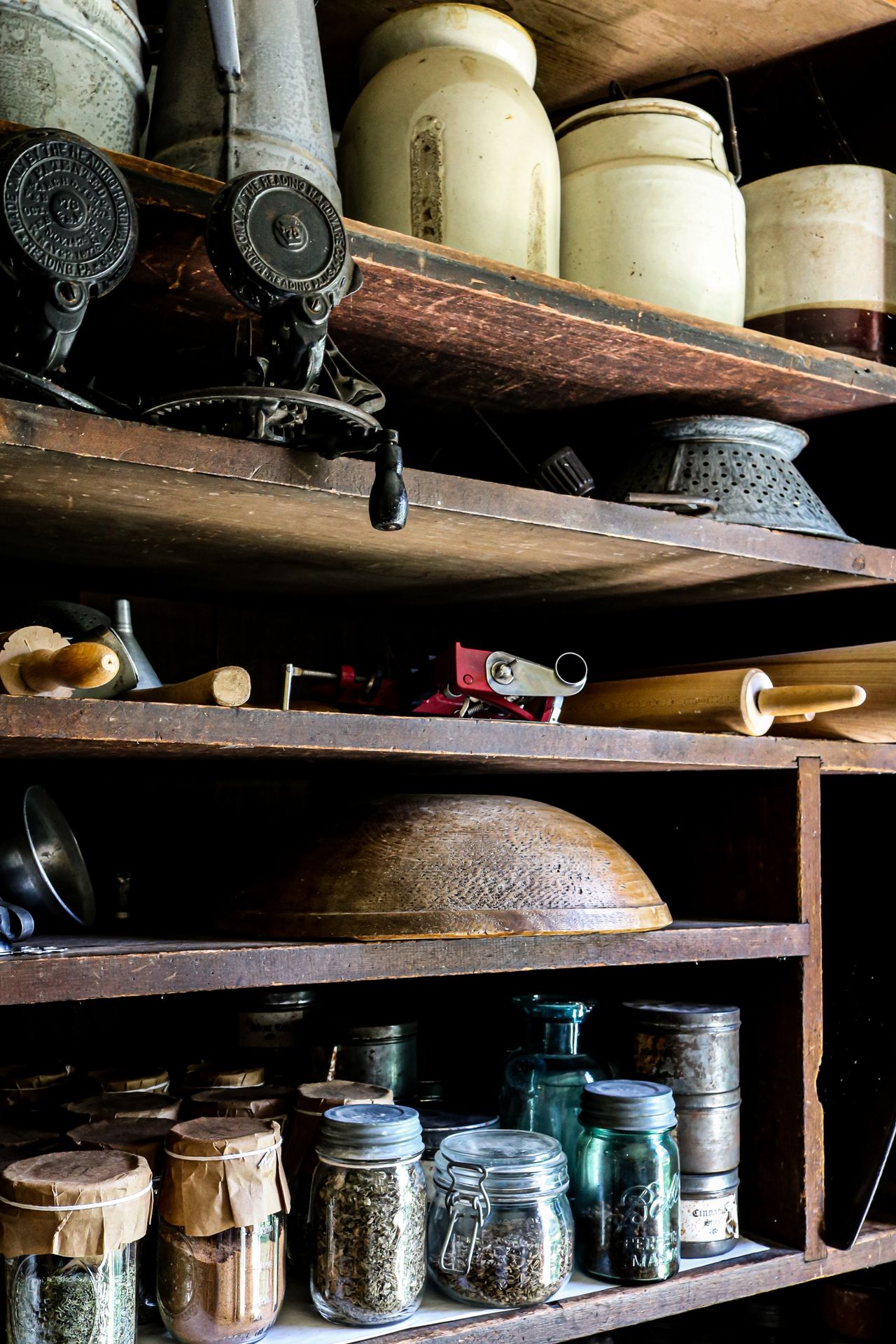
Photo via Pexels
Photo via Pexels

No comments:
Post a Comment