Nothing says farmhouse quite like real wood on the walls of your kitchen. Stained pine, rough-sawn oak, and weathered barn wood all bring a warmth that flat white boxes just cannot copy. The grain, the knots, and the little imperfections are the whole point.
Below are 10 ideas for bringing that cozy, lived-in feel to your cabinets, with real wood species, honest prices per linear foot, and the hardware and finish tips readers ask about most. Whether you are buying new, refinishing what you have, or just swapping hardware, there is a starting point here for every budget.
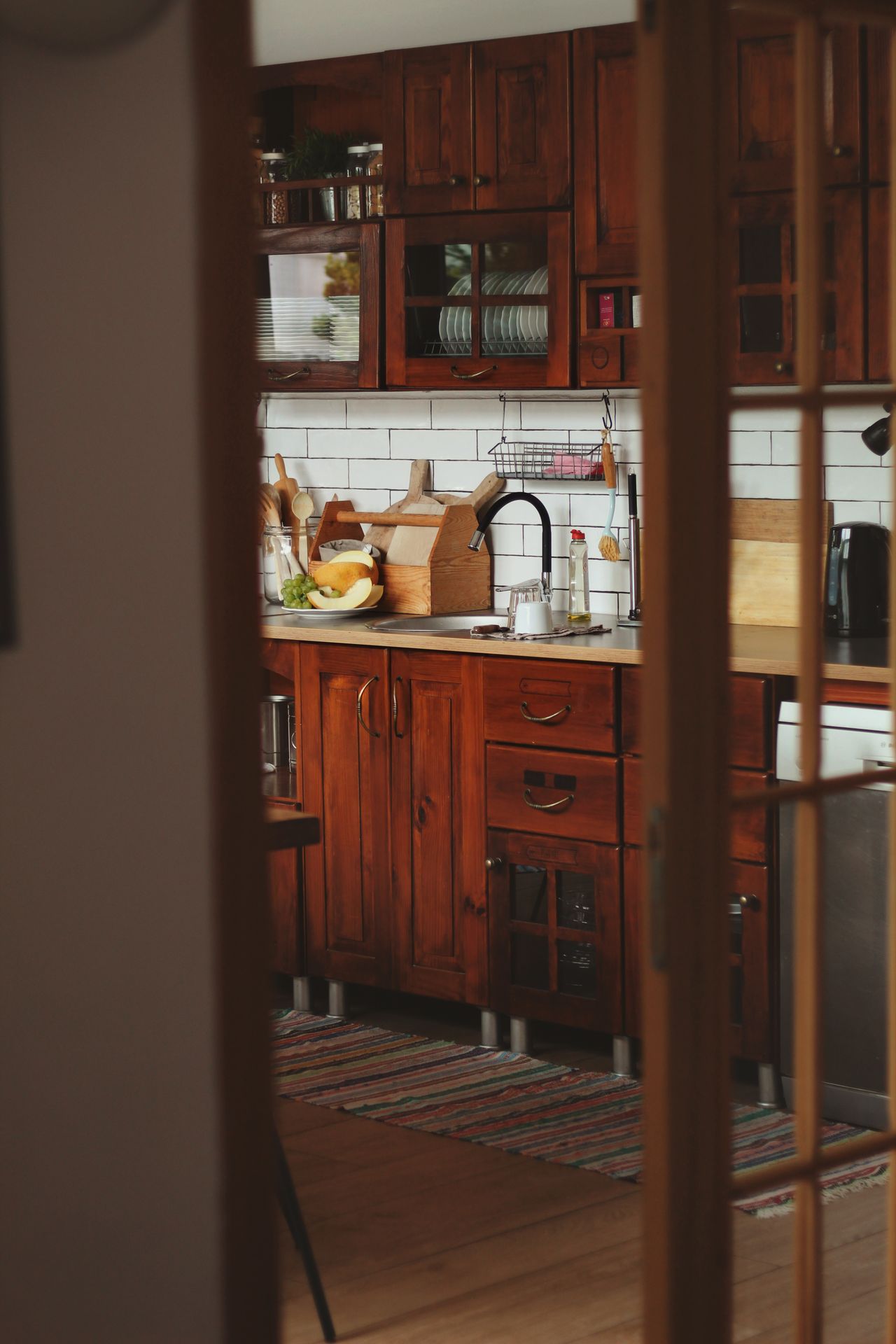
Photo via Pexels
Table of Contents
- 1. Knotty Pine Cabinets
- 2. Reclaimed Barn-Wood Cabinets
- 3. Distressed and Antiqued Finishes
- 4. Bold-Grain Hickory Cabinets
- 5. Open Shelving Mixed With Cabinets
- 6. Black Iron vs. Oil-Rubbed Bronze Hardware
- 7. Glass-Front Rustic Uppers
- 8. Butcher-Block Counters With Rustic Cabinets
- 9. Whitewashed Rustic Cabinets
- 10. The Budget Route: Gel Stain and Refacing
- Frequently Asked Questions
- Final Thoughts
- Sources
- Gallery
1. Knotty Pine Cabinets
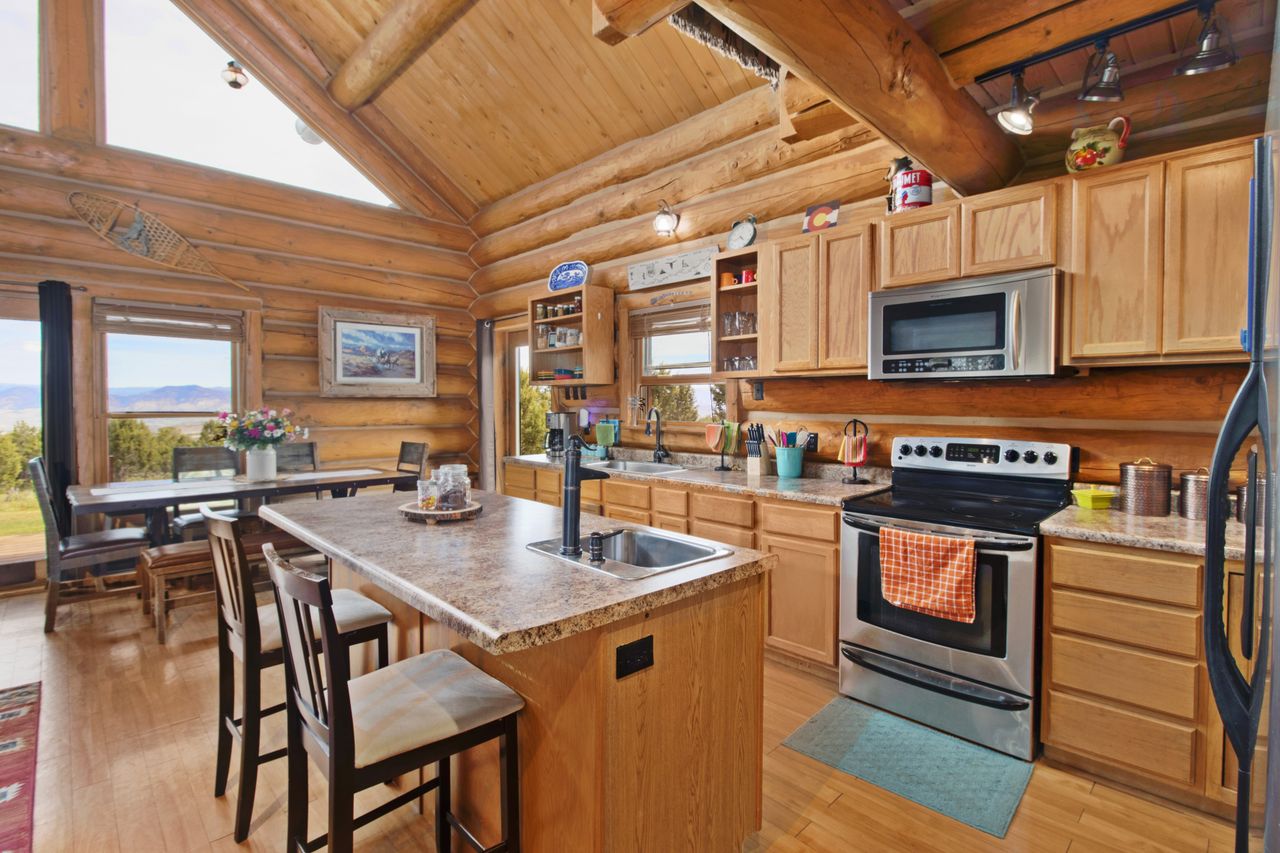
Photo via Pexels
Knotty pine is the classic farmhouse cabinet wood, and it is also one of the most affordable. Stock pine cabinets usually run $80 to $200 per linear foot, and the knots and grain do the decorating for you. A clear matte polyurethane keeps the honey color while protecting against cooking grease.
Two things to know before you buy. Pine is soft (about 380 on the Janka hardness scale), so it dents more easily than oak or hickory. And the knots can bleed resin through paint, so if you ever paint pine, seal the knots first with shellac-based primer. Pair pine cabinets with simple stone or butcher-block counters so the wood stays the star.
2. Reclaimed Barn-Wood Cabinets
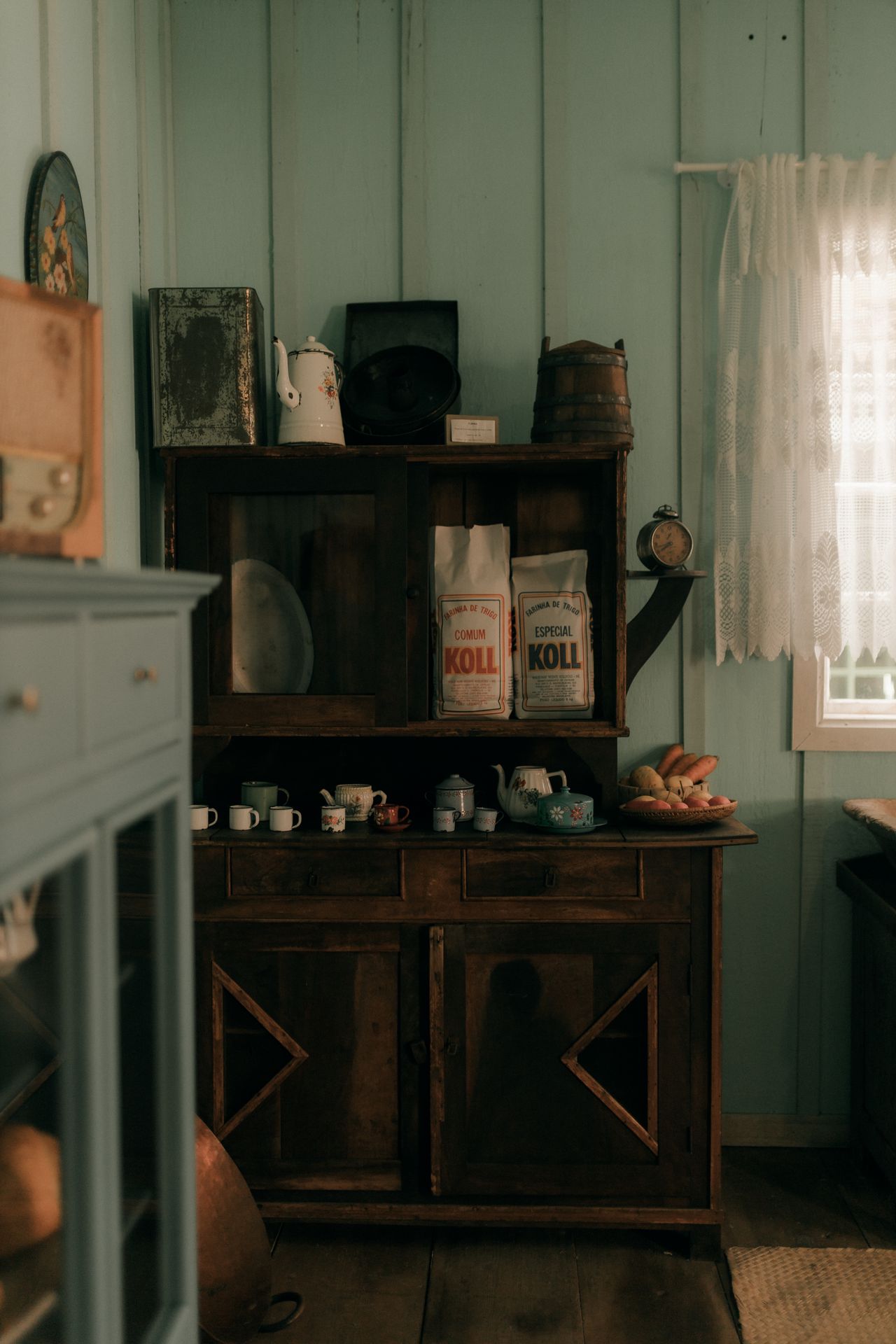
Photo via Pexels
Reclaimed barn wood gives you a look no new lumber can fake: nail holes, saw marks, and a century of weather in the grain. Full reclaimed rustic kitchen cabinets are usually custom work at $200 to $500 or more per linear foot. A cheaper way in is a single reclaimed piece, like the hutch in the photo, used as a pantry or coffee station.
Ask your supplier two questions: is the wood kiln-dried, and has it been tested for lead paint? Kiln-drying kills any insects hiding in old boards, and a $10 lead test kit protects your family if the boards came from a painted structure. Finish reclaimed wood with a matte water-based poly so the aged texture shows through.
3. Distressed and Antiqued Finishes
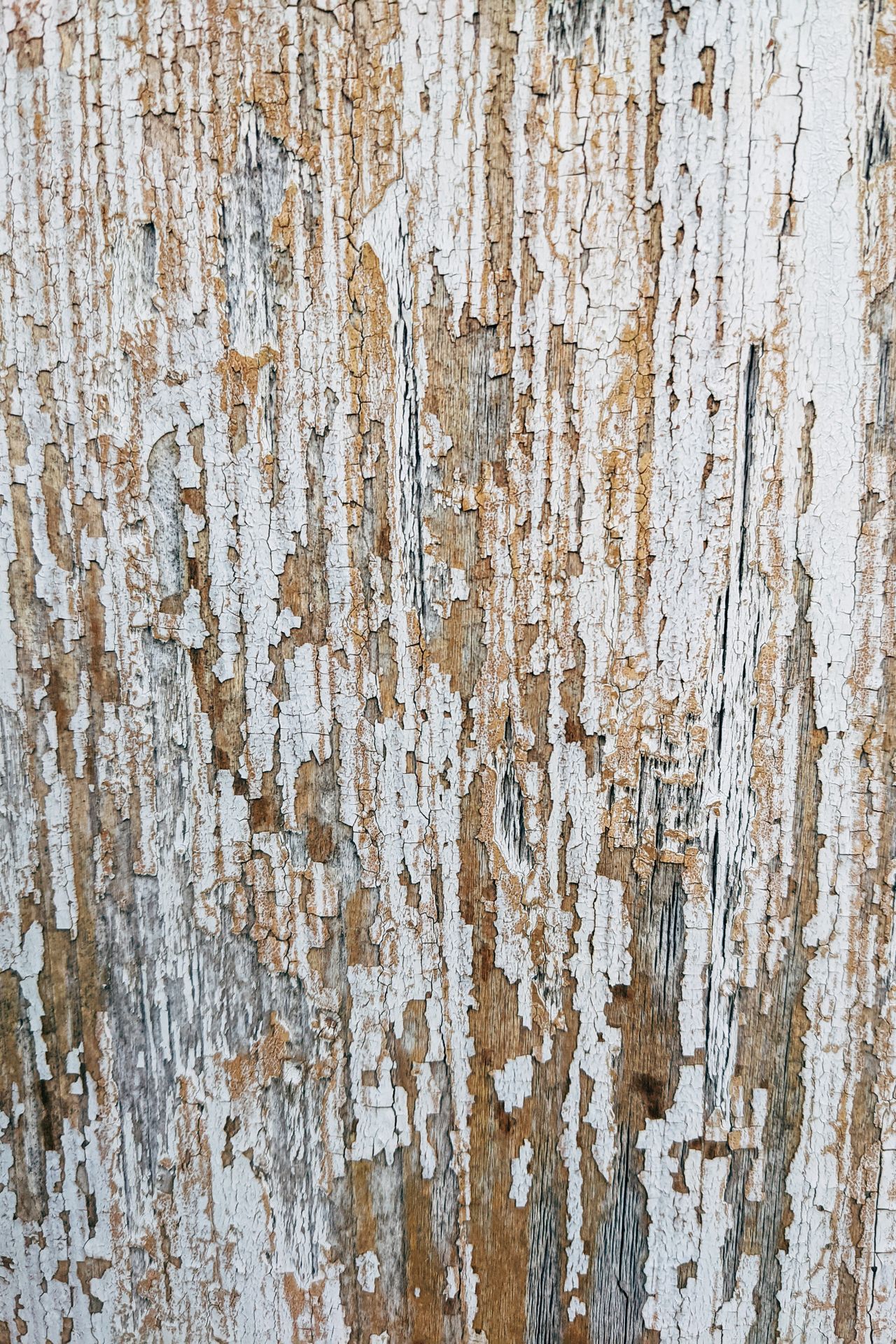
Photo via Wikimedia Commons
You do not need old wood to get an old-wood look. Distressing is a finish technique: paint the cabinets, then sand through the paint on edges and corners where natural wear would happen, and rub a dark glaze into the crevices. Milk paint and chalk paint are the favorite products for this because they chip and sand easily.
The trick is restraint. Distress the spots hands actually touch — door edges, drawer corners, around knobs — and leave flat panels mostly alone. A full DIY distress job costs about $30 to $60 in paint, sandpaper, and glaze. Seal with a matte topcoat, since heavy-wear areas will keep chipping if you leave them raw.
4. Bold-Grain Hickory Cabinets
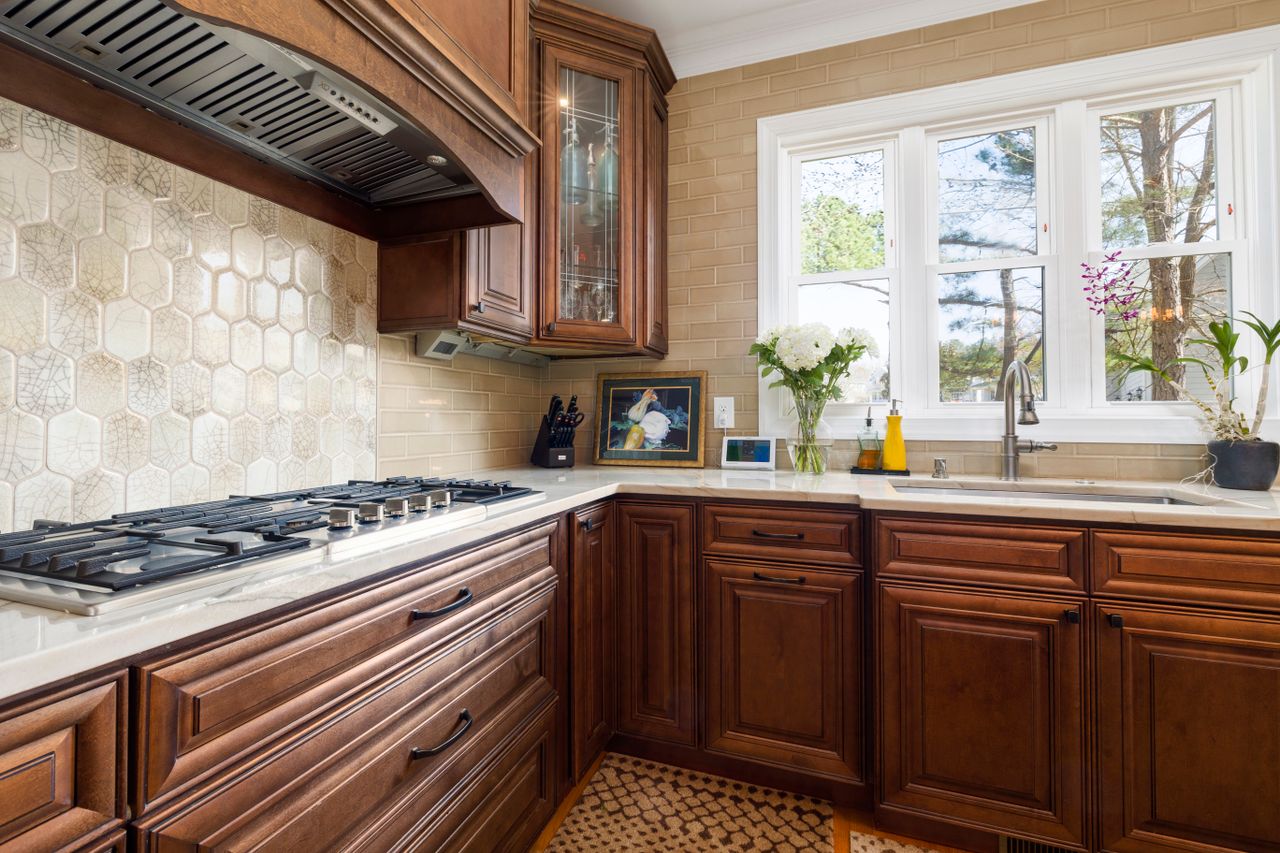
Photo via Pexels
Hickory is the show-off of cabinet woods. Its grain swings from creamy white to deep reddish brown, sometimes in the same door, which gives a kitchen instant character. It is also the hardest common US cabinet wood at 1,820 on the Janka scale, so it shrugs off dents that would scar pine.
The bold grain is also the catch: in a small or dark kitchen, wall-to-wall hickory can feel busy. Designers often run hickory on the lower cabinets only and pair it with quiet painted uppers in warm white or soft sage. Expect mid-range pricing — more than oak, less than cherry — and buy 10 percent extra for matching the wildest boards.
5. Open Shelving Mixed With Cabinets
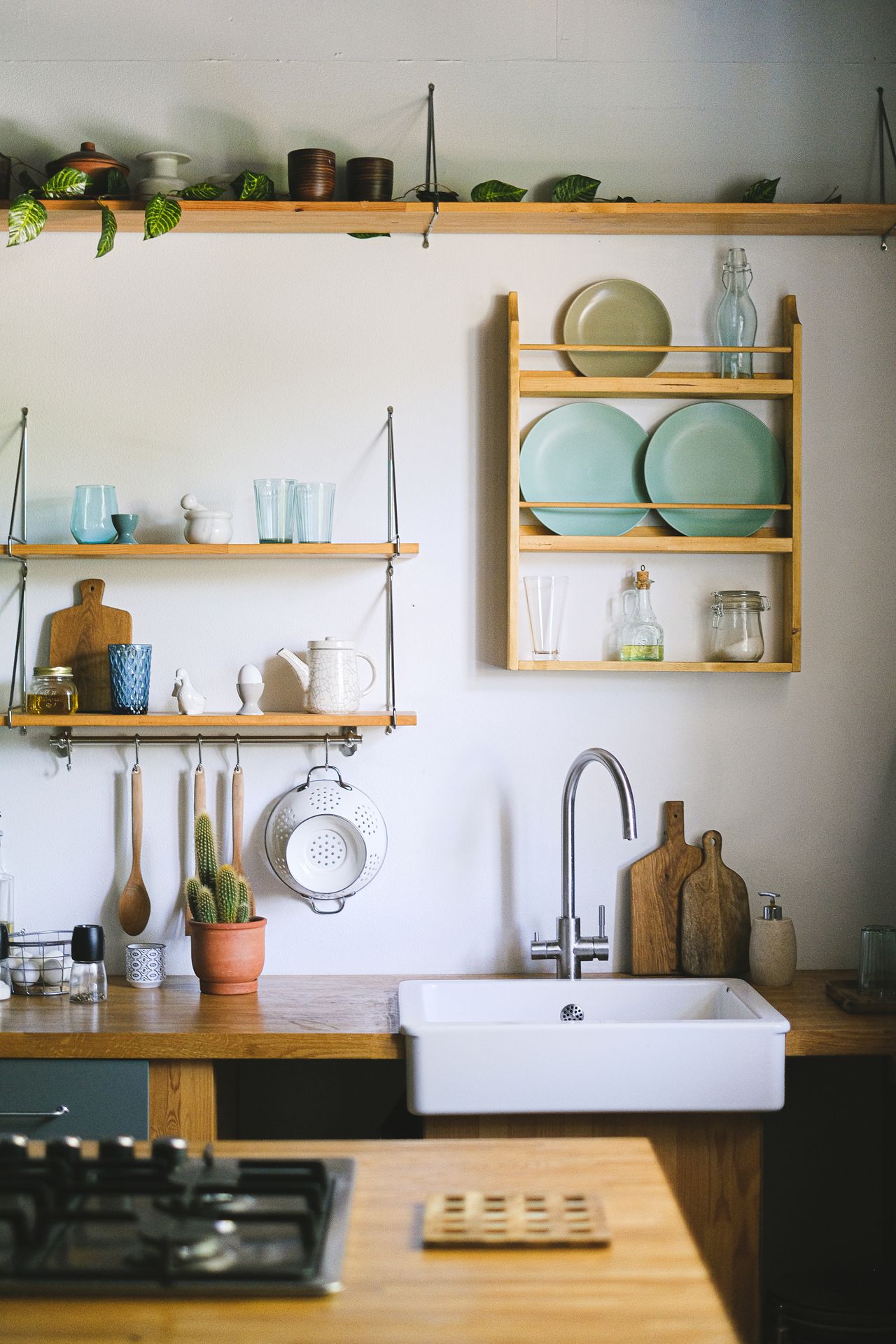
Photo via Pexels
Swapping a few upper cabinets for open wood shelves is the fastest way to make a kitchen feel like a farmhouse. Use 10-to-12-inch-deep solid wood shelves, hang them 15 to 18 inches above the counter, and anchor every bracket into a stud — a loaded shelf of dishes is heavy. For styling ideas, see our fall fruit guide for seasonal produce that looks beautiful on open shelves.
Be honest about the tradeoff: open shelves collect grease and dust, so plan a quick weekly wipe. Store everyday dishes here, not the once-a-year platters. Two or three shelves flanking a window or range, like in the photo, give you the look without giving up all your closed storage.
6. Black Iron vs. Oil-Rubbed Bronze Hardware
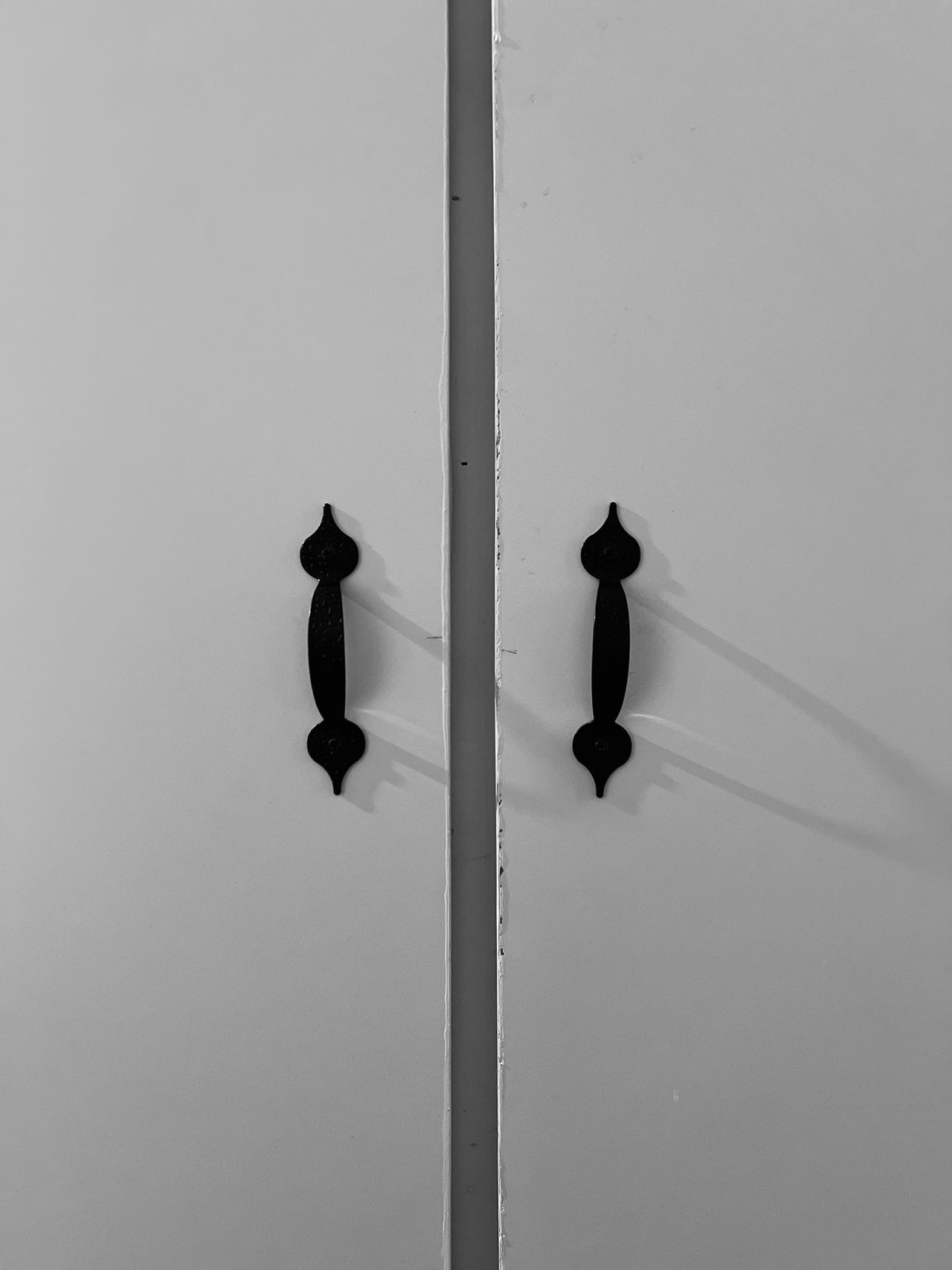
Photo via Pexels
Hardware is the jewelry of the kitchen, and on rustic wood the two classic finishes are matte black iron and oil-rubbed bronze. Black iron reads bolder and slightly industrial; oil-rubbed bronze is softer, with warm copper undertones that glow against honey-toned wood. Both hide fingerprints far better than polished nickel.
Measure before you shop: most pulls come in 3-inch or 3-3/4-inch center-to-center sizes, and matching your existing holes saves you from drilling. Budget $2 to $8 per knob or pull, and buy one sample first to check the color against your wood in daylight. Cup pulls on drawers plus knobs on doors is the classic farmhouse combo.
7. Glass-Front Rustic Uppers
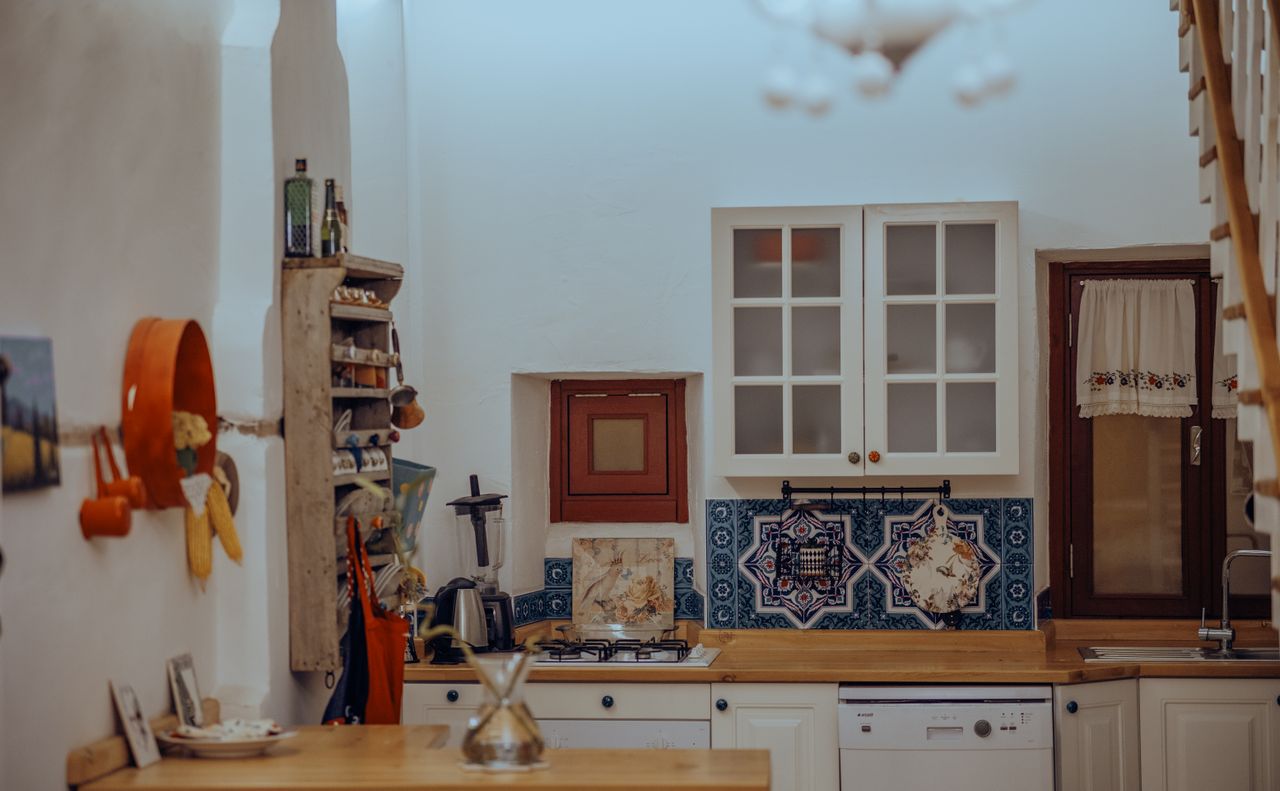
Photo via Pexels
Glass-front uppers break up long runs of wood and give a farmhouse kitchen an old general-store feel. You do not need them everywhere — one or two glass doors flanking the range or sink is enough. Seeded or reeded glass hides clutter better than clear glass while still letting light through.
Expect to pay $50 to $150 extra per door over a solid door, plus mullion grilles if you want the divided look in the photo. Keep what is behind the glass simple: matching white dishes or a row of mason jars. If your uppers are already built, a glass shop can cut panels to fit most standard door frames.
8. Butcher-Block Counters With Rustic Cabinets
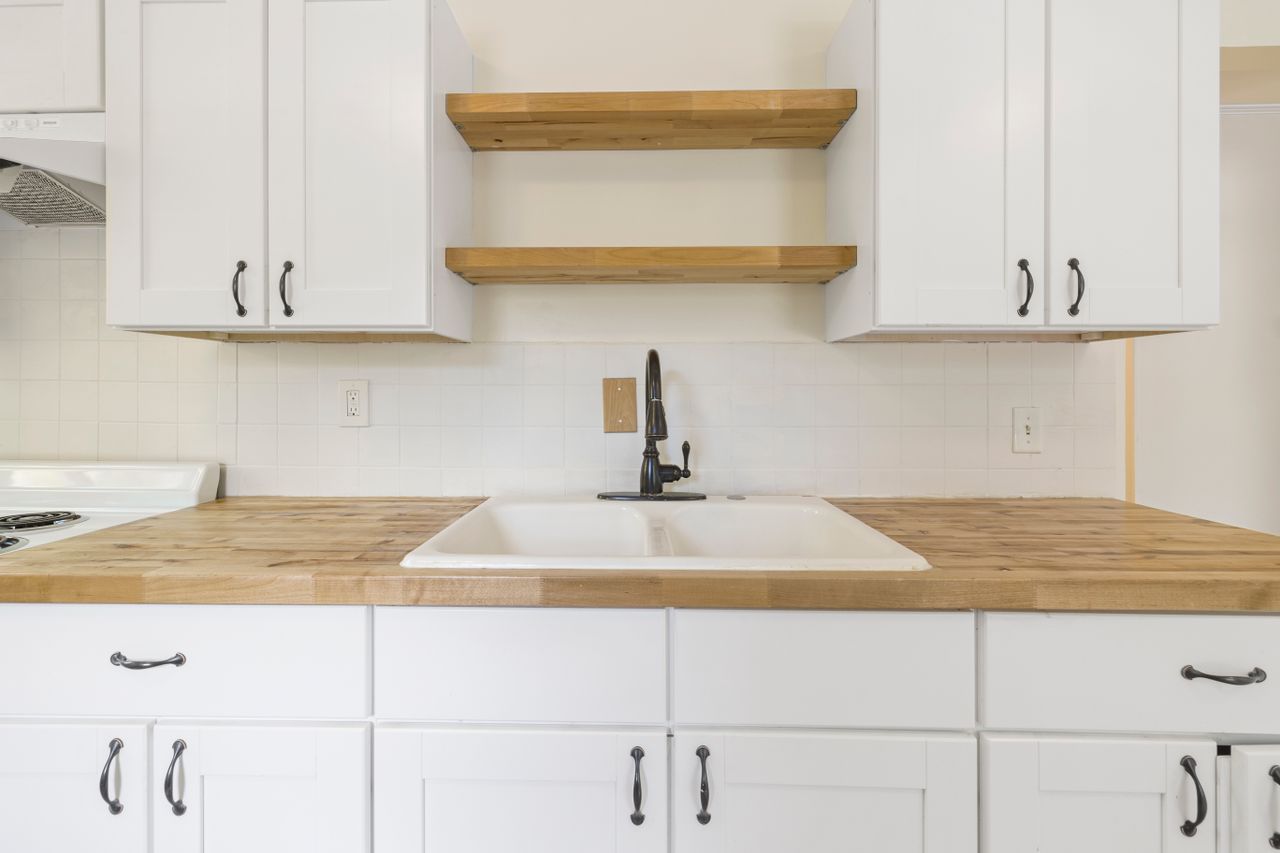
Photo via Pexels
Butcher block and rustic cabinets were made for each other. Wood counters cost roughly $30 to $80 per square foot installed — far less than stone — and an 8-foot stock slab can run as little as $150 to $300. The photo shows the classic pairing: light cabinets, warm wood counters, and black cup pulls.
The care routine is simple but non-negotiable. Oil the counters once a month with food-grade mineral oil, never olive or vegetable oil, which goes rancid. Wipe spills fast, use a cutting board for raw meat, and sand out knife marks with 220-grit sandpaper, then re-oil. For more kitchen planning ideas, browse our basement kitchen ideas.
9. Whitewashed Rustic Cabinets
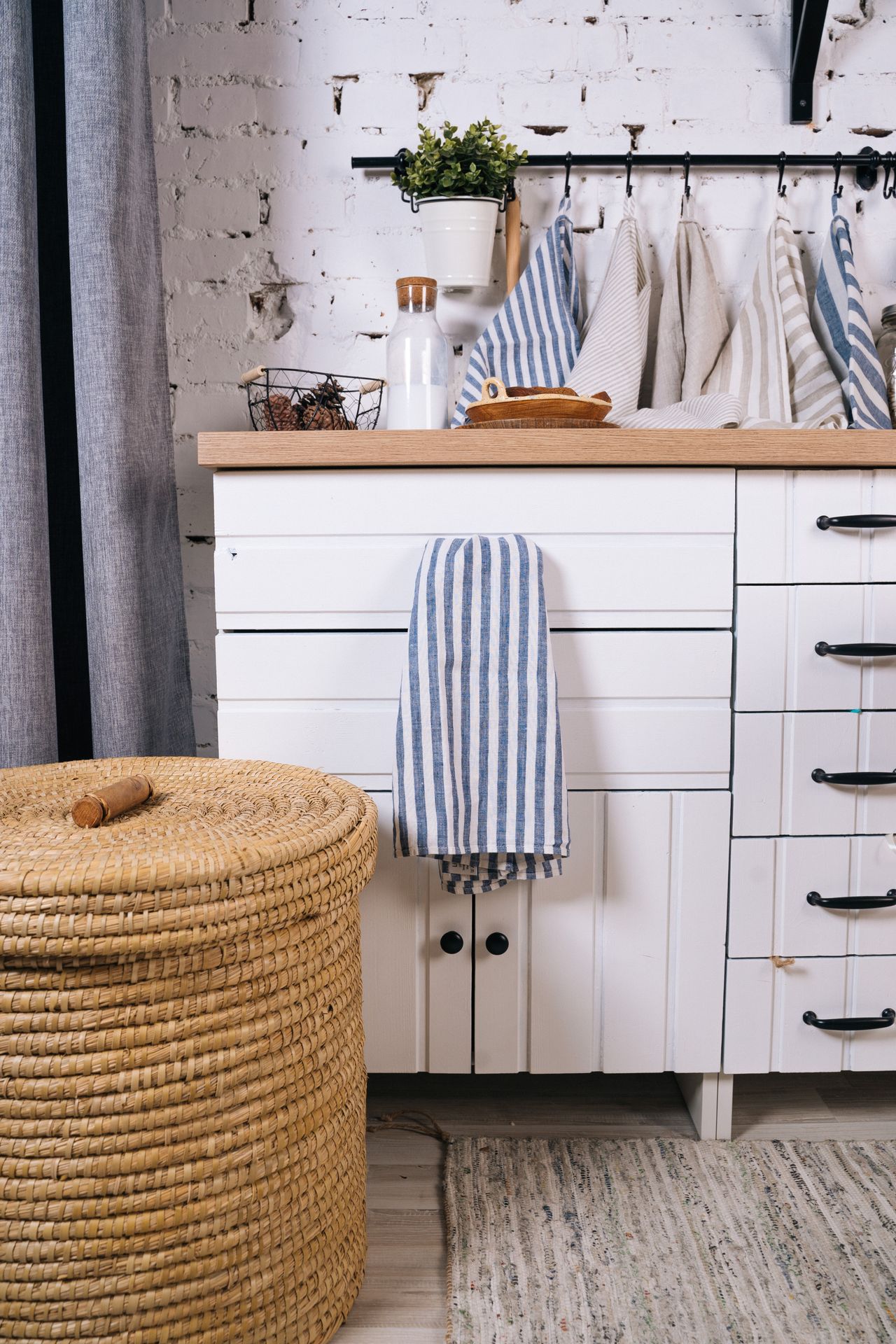
Photo via Pexels
Whitewash is the middle ground between stained wood and solid paint: a thinned white finish that lets the grain show through. It brightens a dark kitchen while keeping the rustic texture. It works best on open-grain woods like oak and pine, where the white settles into the grain lines.
DIY it with a 50/50 mix of white latex paint and water, brushed on and wiped back with a rag. Work one door at a time so the wash does not dry before you wipe it. Seal with a matte water-based poly so the finish stays soft-looking, not shiny. Beadboard door fronts, like in the photo, take whitewash especially well.
10. The Budget Route: Gel Stain and Refacing
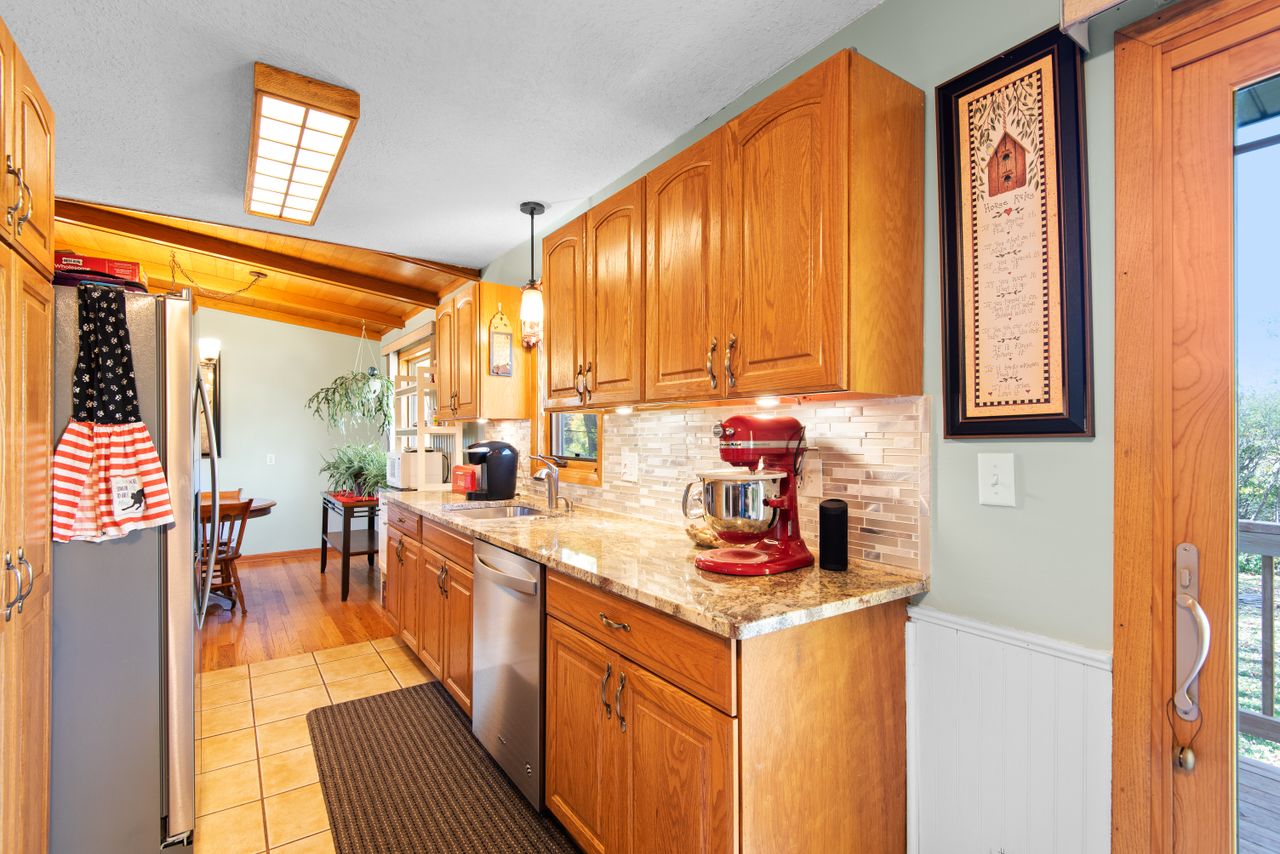
Photo via Pexels
If your cabinets are solid but stuck in the 1990s honey-oak era, like the ones in the photo, you do not need new boxes. Gel stain goes right over the existing finish with no sanding — just degrease well, brush on 2 to 3 thin coats, and wait 24 hours between coats. A quart costs $30 to $60 and covers about 100 square feet.
For a bigger change without full replacement, refacing (new doors and drawer fronts on your existing boxes) runs $4,000 to $9,000 versus $12,000 to $25,000 for new custom cabinets. Either route, swap the hardware at the same time — new black iron pulls on a fresh gel-stain finish look like a whole new kitchen. If you are also rethinking the eating area, read our guide on how to choose the right kitchen table.
Frequently Asked Questions
What is the best wood for rustic farmhouse cabinets?
Hickory and knotty pine are the two most popular picks. Hickory is extremely hard and has bold, varied grain; pine is softer and cheaper with charming knots. Oak sits in the middle on both price and hardness.
Are wood cabinets harder to keep clean than painted ones?
A little. Wood shows grease near the range, so wipe cabinet fronts weekly with a damp cloth and mild soap. A good polyurethane topcoat makes this easy — grease wipes off sealed wood, but soaks into raw wood.
Can I paint my stained cabinets white and distress them?
Yes. Clean and lightly scuff the old finish, apply chalk or milk paint, then sand the edges and corners to let wood peek through. Seal with matte topcoat. This is one of the cheapest ways to get the farmhouse look.
What hardware finish looks best with rustic wood cabinets?
Matte black iron and oil-rubbed bronze are the classics. Black is bolder and more modern-rustic; bronze is warmer and more traditional. Both hide fingerprints well on busy kitchen cabinets.
How much do rustic wood cabinets cost?
Stock pine or oak cabinets run $80 to $200 per linear foot. Semi-custom hickory or alder lands around $150 to $300. Full custom or reclaimed barn-wood cabinets start near $300 and can pass $500 per linear foot.
Final Thoughts
A farmhouse kitchen is really about honest materials, and wood cabinets are the heart of it. Start with the wood that fits your budget — pine for value, hickory for drama, reclaimed boards for character — then let the hardware and counters do the rest. If new rustic kitchen cabinets are not in the budget this year, a weekend gel-stain refresh and new black pulls will take you surprisingly far.
Sources
- How to Lighten Honey Oak Cabinets Without Sanding or Stripping — Hunker (gel stain and pickling over existing finishes, no sanding needed).
- Natural Wood Kitchen Cabinets (Design Pictures) — Designing Idea (hickory hardness, grain, and pros/cons for cabinetry).
- How to Stain Kitchen Cabinets Without Sanding — SawsHub (gel stain application steps, drying times, and topcoat tips).
- Everything You Need to Know to Install a Butcher Block Countertop — This Old House (installation plus food-safe mineral oil maintenance).
Gallery
Photo via Pexels
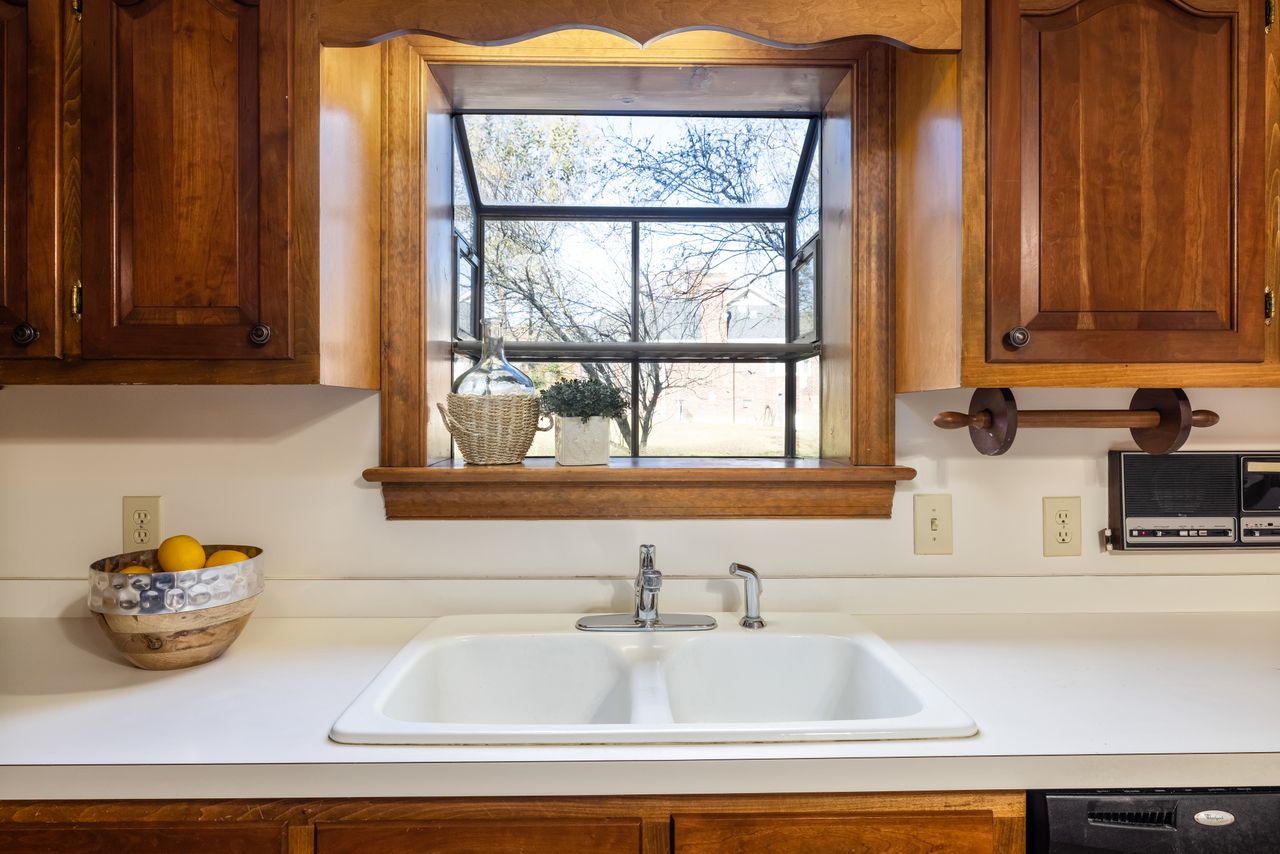
Photo via Pexels
Photo via Pexels

No comments:
Post a Comment