A sofa set is the biggest furniture decision in most homes. It seats your family every evening, hosts your guests on weekends, and sets the style of the whole room. But shopping for one is confusing. Stores sell 3-piece, 5-piece, and 7-piece sets. Some designers say matching sets look dated. Others say they look classic. This guide clears it all up in plain words. You will learn what a living room sofa set really includes, how to size one for your room, which fabrics survive real life, and when to buy matching versus mixing your pieces.
In this guide:
- What a Sofa Set Actually Includes
- The Classic 3-2-1 Combination
- Sectional Sets for Family Rooms
- Measure Before You Fall in Love
- The Fabric Map for Real Life
- Matching Sets vs Coordinated Pieces: An Honest Answer
- Sofa Sets for Small Rooms
- Pet- and Kid-Proof Choices
- Arrange the Pieces Like a Conversation
- Spend Where It Counts
- Check the Bones Before You Buy
- Leather Sets: Worth It or Not?
- Light Colors Without the Fear
- Functional Sets: Recliners, Sleepers and Storage
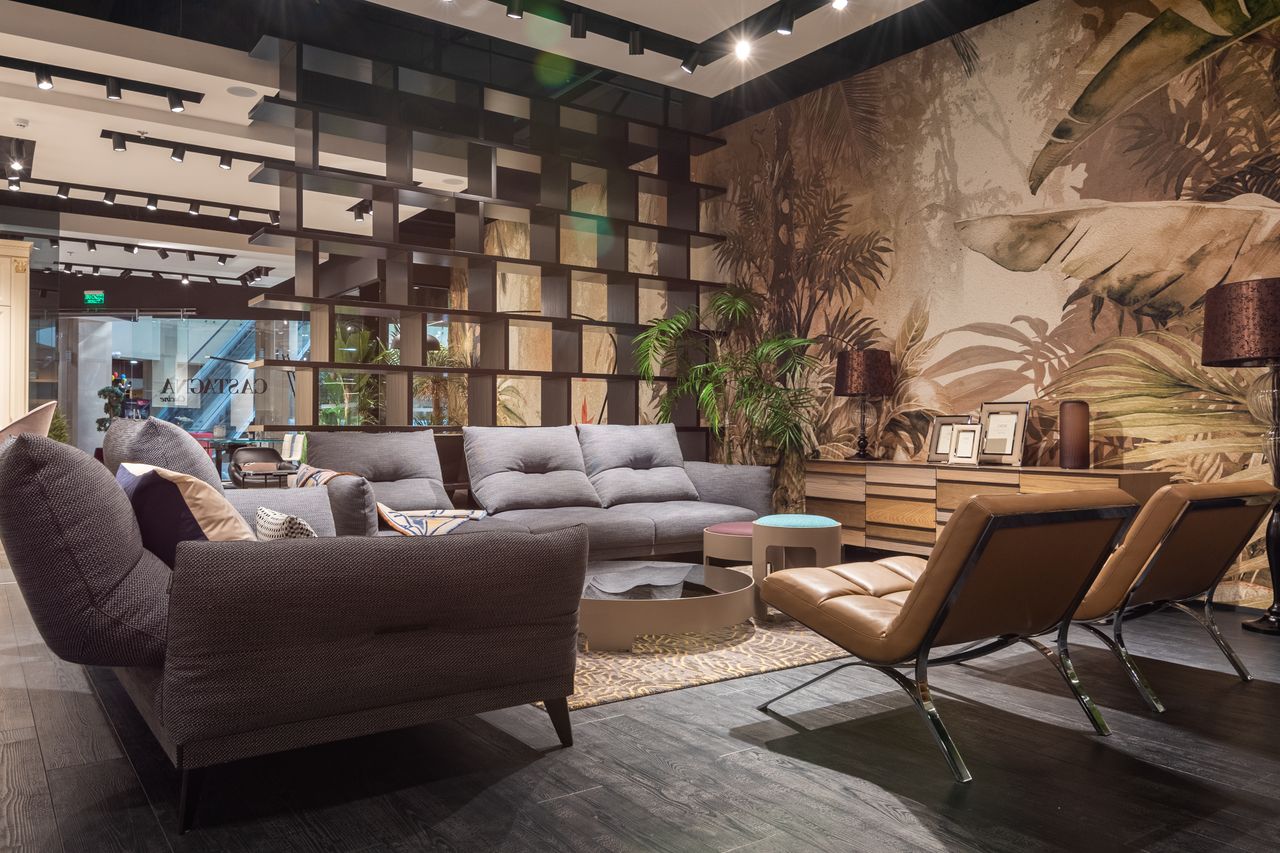
Cozy grey couches in a spacious living room — Photo via Pexels
1. What a Sofa Set Actually Includes
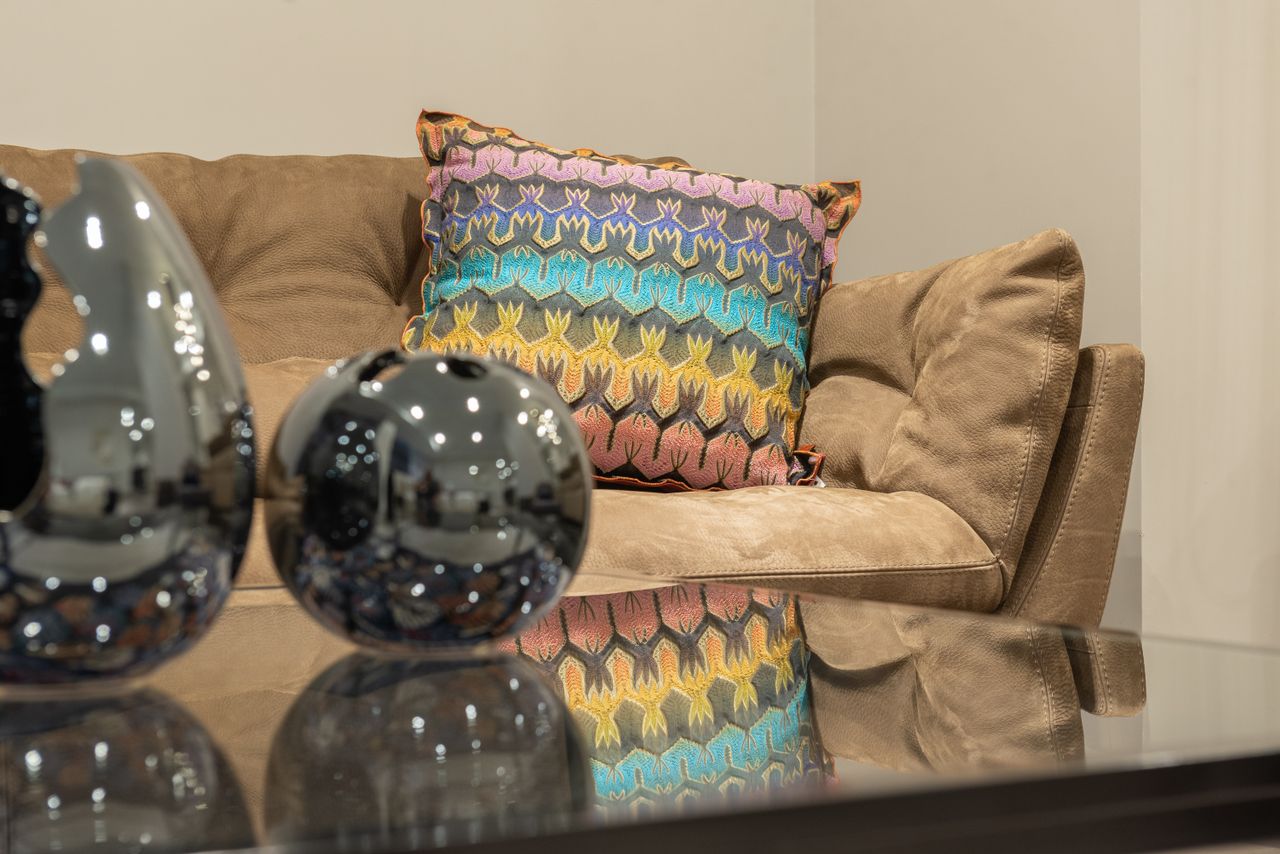
Beige sofa set in a bright living room — Photo via Pexels
The word "set" means different things in different stores. A 3-piece set usually means a 3-seater sofa, a 2-seater loveseat, and one armchair. In some regions it means a 3-seater plus two single chairs, called 3+1+1. Always ask the store exactly which pieces are in the box before you compare prices.
A 5-piece set adds two tables to the seating, usually a coffee table and one or two side tables. A 7-piece set adds more occasionals, like an extra chair or ottomans. Bigger numbers sound generous, but the tables in bundled sets are often the cheapest part of the deal. Compare the set price against buying the sofa and chairs alone.
The smartest question is not "how many pieces" but "how many seats." Count the real, comfortable seats. A 3-seater plus a loveseat plus one chair gives you six seats. Write that number down. Then ask yourself how many people sit in your living room on a normal week. Most families need five to six. Buy seats for your real life, not for a party that happens once a year.
2. The Classic 3-2-1 Combination
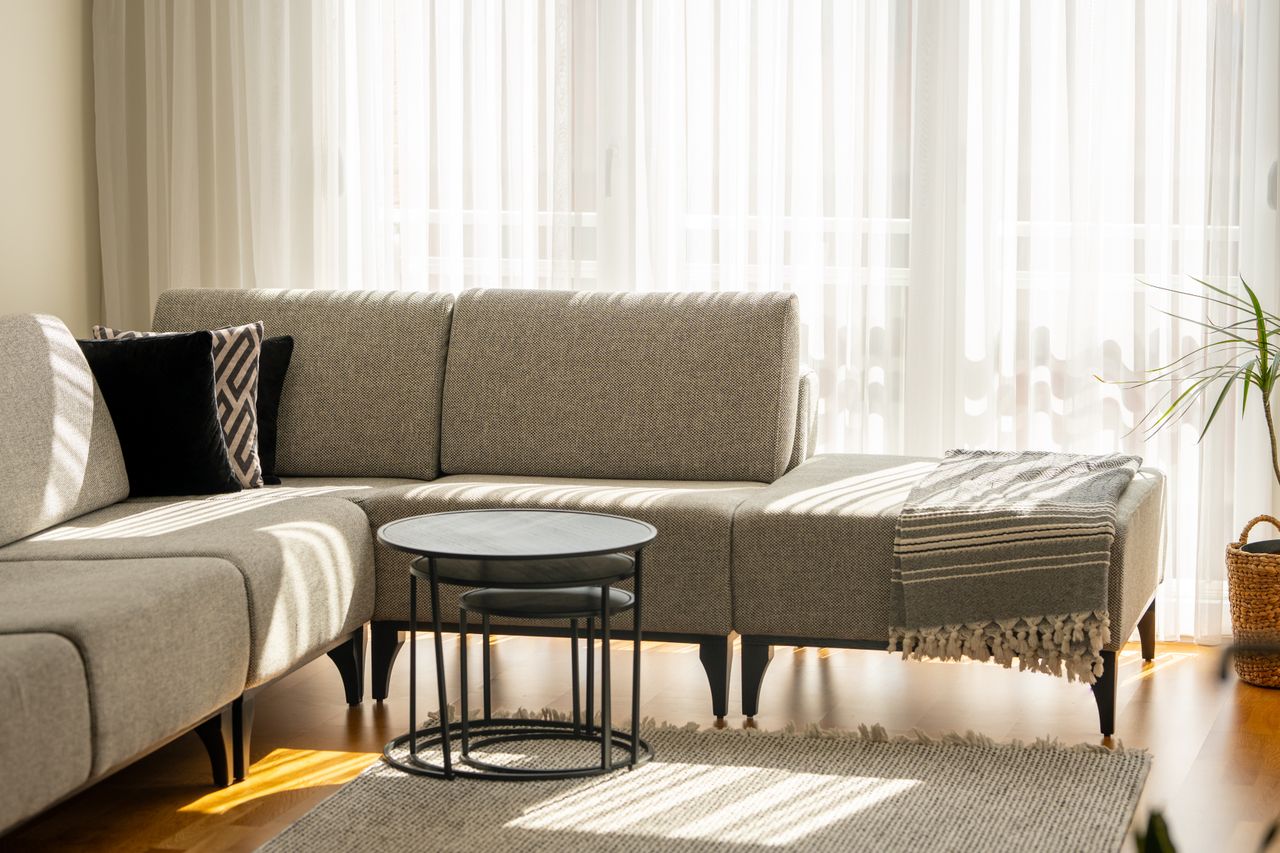
Corner sofa set in a modern living room — Photo via Pexels
The 3-2-1 combination is the most popular sofa set in the world for one reason: it fits almost every room shape. A 3-seater against the longest wall, a 2-seater at a right angle, and one chair opposite. This gives you six seats in a neat L or U shape that suits both square and rectangular rooms.
In inches, a typical 3-seater runs 78 to 96 inches (198 to 244 cm) wide. A 2-seater runs 58 to 72 inches (147 to 183 cm). A single chair runs 28 to 36 inches (71 to 91 cm) wide. Together, the 3-2-1 set needs a wall of at least 10 to 12 feet (3 to 3.6 m) and about 8 feet (2.4 m) of depth. If your room is smaller than that, the same combination comes in apartment sizes, about 15 percent smaller all round.
The hidden strength of 3-2-1 is flexibility. The pieces are separate, so you can split them. Move the chair to a bedroom corner. Angle the loveseat toward the window. When you move house, three separate pieces fit through doors far more easily than one giant sectional. That flexibility is worth more than most people realize at the shop.
3. Sectional Sets for Family Rooms
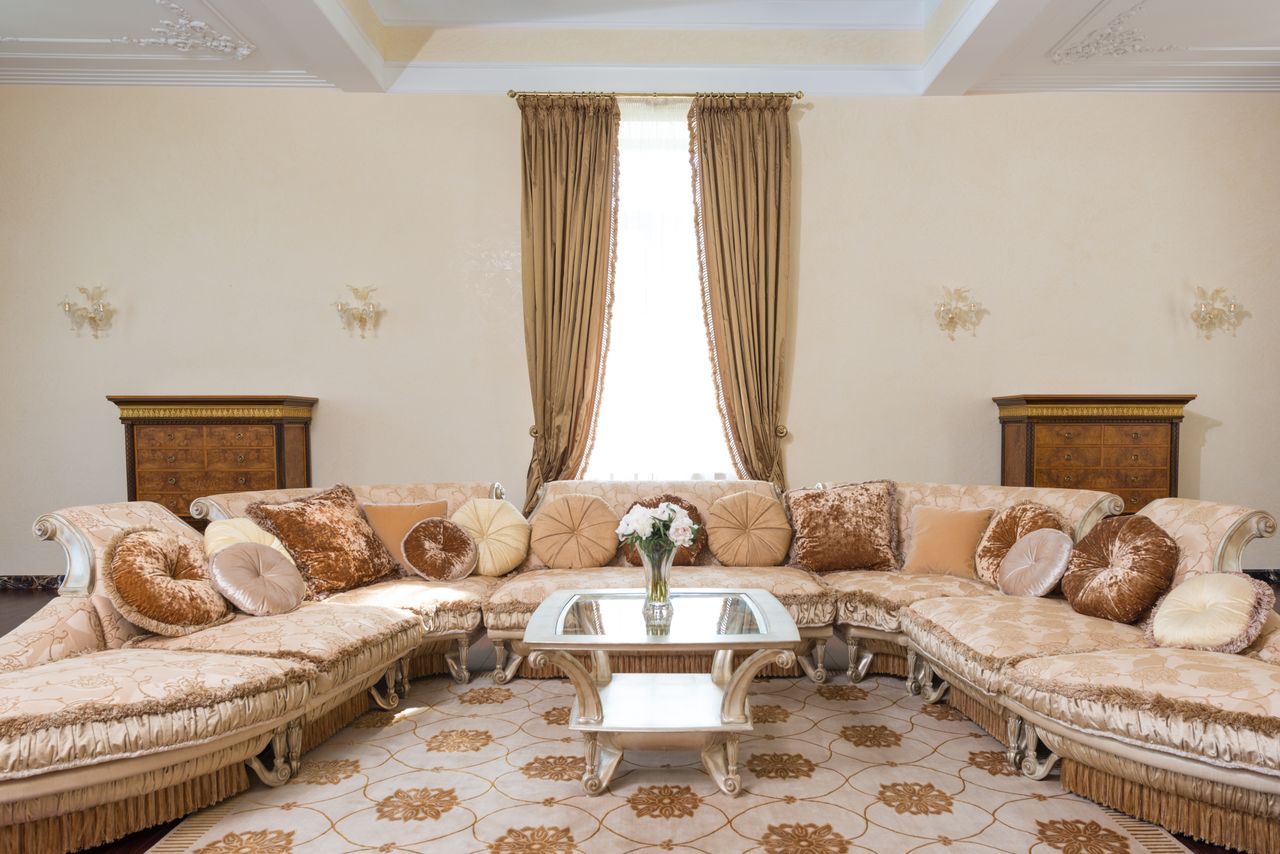
Large corner sectional sofa set — Photo via Pexels
A sectional set is one connected piece, usually L-shaped or U-shaped, sometimes sold with a matching ottoman or chair. Families love sectionals because everyone fits together. Movie nights, naps, and lounging are all better on a sectional than on separate chairs. For a household of five or more, a sectional often gives the most seats per square foot.
Size them carefully. A typical L-shaped sectional runs 95 to 120 inches (241 to 305 cm) on the long side, with the return side 60 to 80 inches (152 to 203 cm) deep. You need 30 to 36 inches (75 to 90 cm) of walking space around the open sides. In a narrow room, the return arm can block the walkway, so narrow rooms usually suit the 3-2-1 set better.
Ask one question before buying a sectional: can it come apart? Modular sectionals are made of separate pieces that lock together. You get the lounging comfort of a sectional with the flexibility of a set. When you move, the pieces travel like normal sofas. If the sectional is one fixed frame, measure your doors and hallways twice, because it may never leave the room.
4. Measure Before You Fall in Love

Measuring the room first — Photo via Pexels
Every sofa set mistake starts with skipping the tape measure. Before you browse, draw your room as a simple rectangle on paper. Mark the doors, windows, radiators, and the walkways people use every day. Write the length of each wall in inches or cm. This ten-minute job prevents the most expensive furniture mistake there is.
Use the two-thirds rule for the main sofa: it should be about two-thirds the length of the wall it sits against. On a 12-foot (3.6 m) wall, that means a sofa around 8 feet (2.4 m) wide. Then mark the full footprint of the set on your floor with painter's tape or newspaper. Live with the outline for a day. Walk around it. Open the doors. If the tape already feels tight, the real furniture will feel worse.
Finally, measure the delivery path. Not just the front door, but the narrowest point from the street to the room: hallways, stair turns, lift doors, and interior doors. Compare with the box dimensions, not the assembled size. If you rent and the room is small, these renter-friendly living room ideas show how to plan seating around tight spaces without drilling a hole.
5. The Fabric Map for Real Life

Sofa upholstery fabric texture close-up — Photo via Pexels
The fabric decides your daily experience with the set. Be honest about your life. Do you eat on the sofa? Do pets sleep on it? Do kids jump on it? A white linen set looks like a dream online and like a disaster after one month with a toddler and a cat. Choose for the life you live, not the one in the photos.
Here is the simple map. Performance polyester and olefin are the family champions. They resist stains, the color runs through the fiber so it does not fade, and spills sit on the surface. Microfiber is cheap, tough, and easy to wipe, which is why it is a pet-owner favorite. Cotton and linen blends breathe well and feel natural, but they absorb spills, so save them for calmer homes. Velvet looks rich and hides wear well in polyester versions. Real leather lasts decades and wipes clean, but costs much more and needs conditioning twice a year.
The number that matters is the rub count. Fabrics are tested for abrasion, and the result is called double rubs. For a normal family room, look for at least 15,000 double rubs. Busy homes with kids and pets should aim for 25,000 or more. If the seller cannot tell you the rub count, that silence is your answer about their quality.
6. Matching Sets vs Coordinated Pieces: An Honest Answer
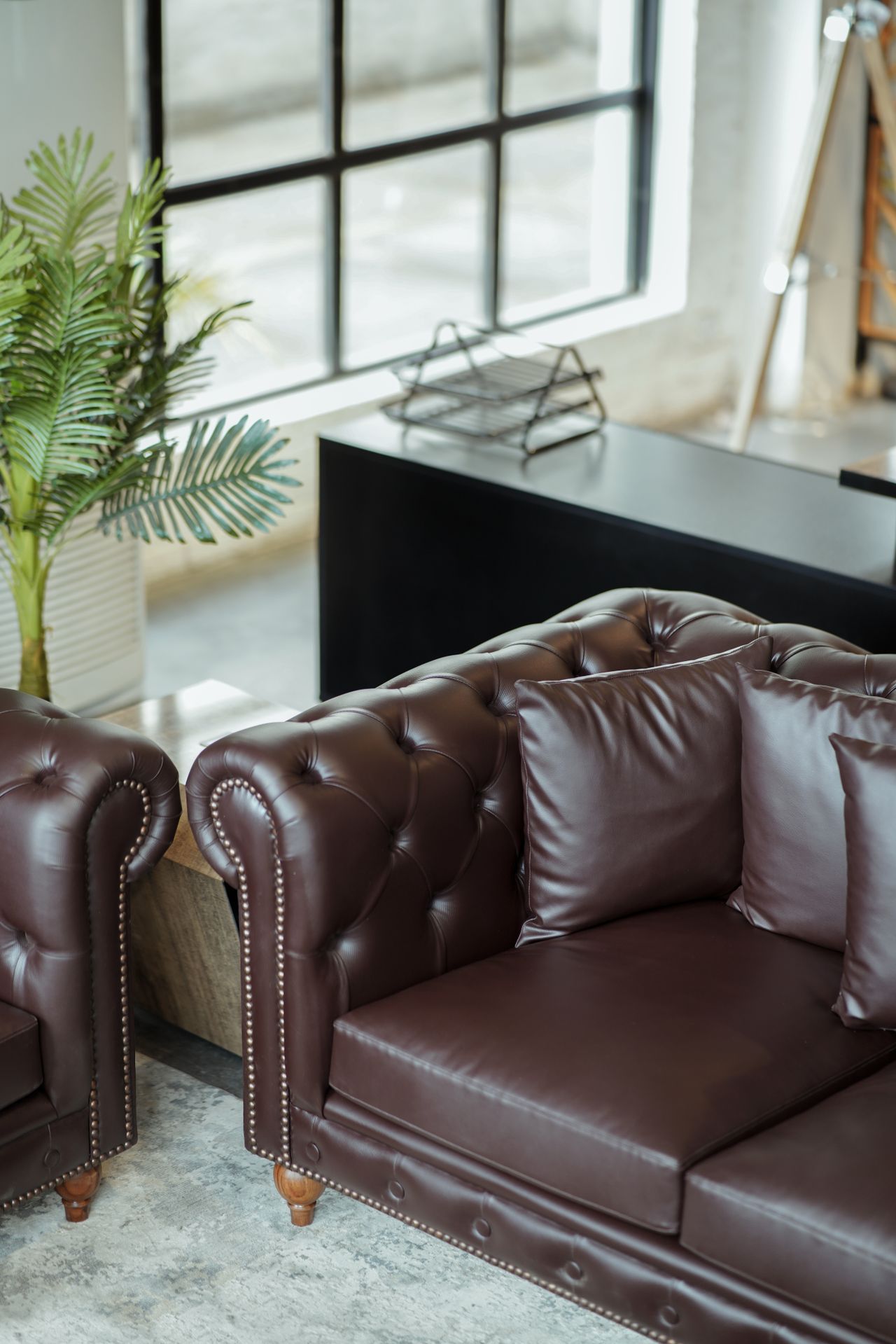
Classic Chesterfield sofa — Photo via Pexels
Here is the honest answer most stores will not give you. Many interior designers say a fully matching set, same fabric, same wood, same everything, can make a room look like a showroom floor instead of a home. One designer told The Spruce that the identical three-piece set instantly dates a room and takes away its depth. In a small room, a full match can also feel heavy, because the same upholstery repeats everywhere the eye lands.
But matching is not always wrong. It works beautifully in formal rooms where symmetry is the point, like two identical sofas facing each other across a coffee table. It is also the fastest, cheapest way to furnish a rental or a first home in one trip. And some classic styles, like a Chesterfield set, are designed to match. There is no shame in a matching set when you choose it on purpose.
The middle path most designers recommend is coordination. Pick one or two things to repeat: a wood tone, a metal finish, or a color family. Then let one piece add contrast, like a bold armchair or a patterned rug. Keep pieces in the same design family, modern with modern, traditional with traditional, so the room feels collected over time instead of bought in one afternoon. For the full method, this guide on how to choose living room furniture walks through coordinating pieces step by step.
7. Sofa Sets for Small Rooms
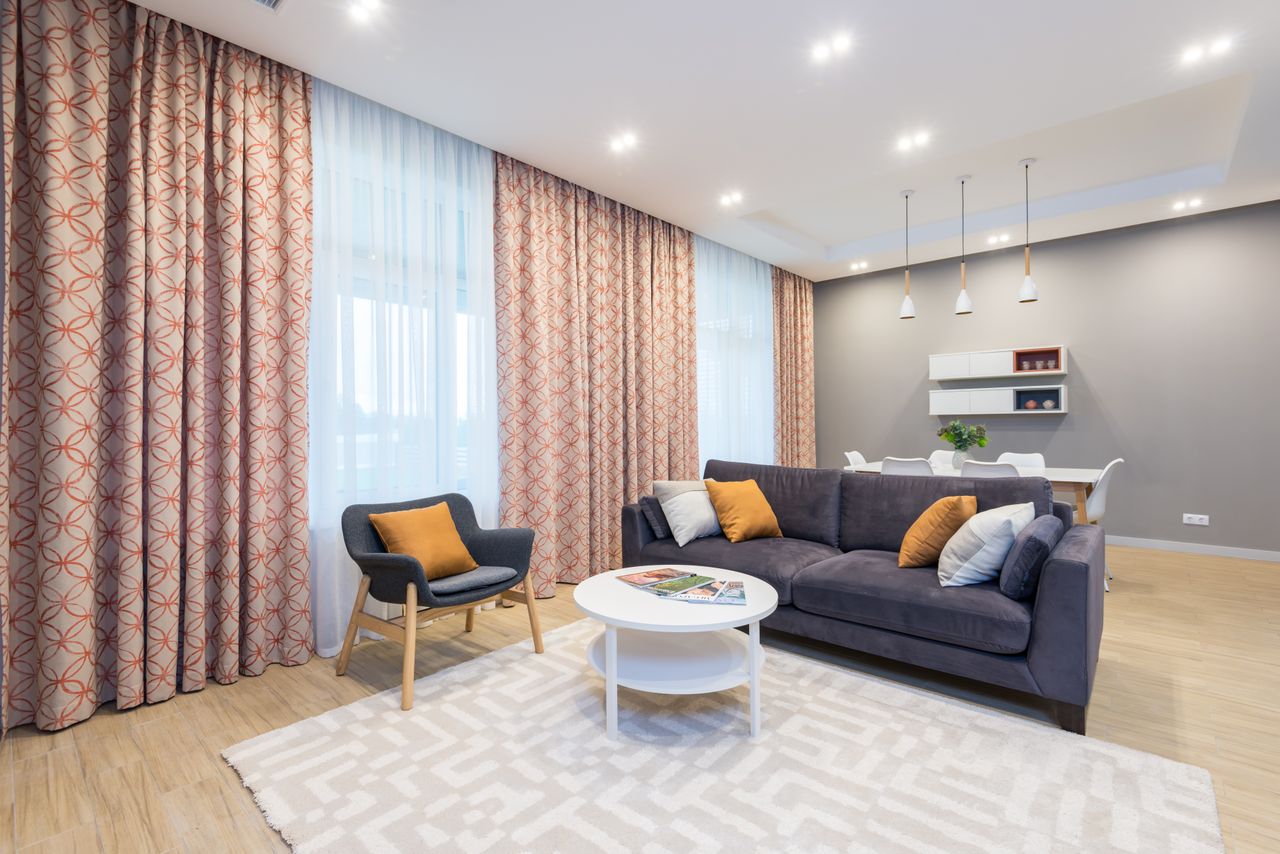
Compact sofa in a small apartment — Photo via Pexels
A small room does not mean no sofa set. It means a smarter one. For rooms under 200 square feet, skip the full 3-2-1 and choose a loveseat plus one chair, or a compact 3-seater plus one chair. Aim for a main sofa between 60 and 78 inches (152 to 198 cm) wide, with slim arms and visible legs, which let the floor show through and make the room feel bigger.
Depth matters as much as width. Standard sofas run 35 to 40 inches (89 to 102 cm) deep. In a small room, look for 32 to 35 inches (81 to 89 cm). Three inches of depth saved across a sofa and loveseat can free up a whole walkway. Keep 30 inches (75 cm) of walking space around the seating, and 14 to 18 inches (35 to 45 cm) between the sofa and the coffee table.
Choose pieces that do double duty. A loveseat with a pull-out bed hosts guests. An ottoman works as a footrest, an extra seat, and a toy chest. A set with one armless chair can tuck fully under a side table when you need floor space. Small rooms reward furniture that works twice as hard.
8. Pet- and Kid-Proof Choices

Family couch built for daily life — Photo via Pexels
Kids and pets do not ruin sofa sets. The wrong fabric does. If claws, juice, and muddy paws are part of your life, build the set around them from the start. Tight-weave performance fabrics resist snags from claws far better than loose weaves or linen. Leather and leatherette wipe clean in seconds, though claws can scratch real leather, so keep nails trimmed.
Color is your second shield. Medium tones and small patterns hide daily life far better than plain light or plain dark fabrics. A heathered grey, a warm taupe, or a subtle pattern will look clean on day 300 in a way that cream never will. Removable, washable cushion covers are worth paying extra for, because you can wash one cover instead of living with one stain.
Check the construction too. Kids jump, so the frame must be kiln-dried hardwood with corner blocks, not particleboard. Seat cushions should be high-density foam, 1.8 pounds per cubic foot or higher, so they spring back after being used as a trampoline. A set built for adults only will not survive a family, no matter how pretty it is.
9. Arrange the Pieces Like a Conversation
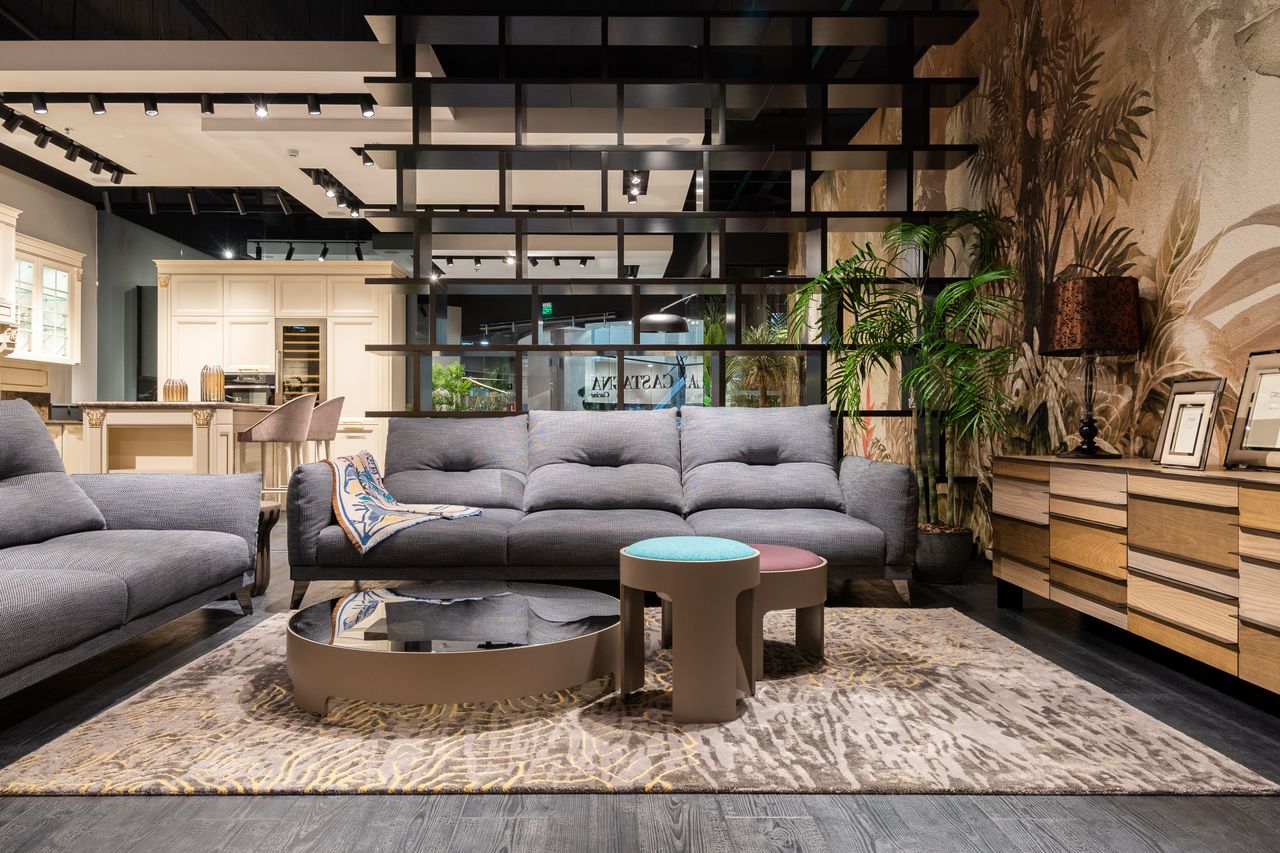
Sofas arranged for conversation — Photo via Pexels
A set of beautiful pieces can still feel wrong if they face the wrong way. The rule is simple: arrange seats so people face each other, not just the TV. Put the sofa and loveseat at right angles, or facing each other across the coffee table. Angle the armchair toward the group at about 90 degrees. Conversation happens face to face.
Give every seat a job and a surface. Each seat should be within arm's reach of a table for a cup. Keep 30 to 36 inches (75 to 90 cm) between facing pieces so knees do not touch but voices carry easily. Pull the seating away from the walls a few inches if the room allows. Furniture floating even slightly off the wall makes the arrangement feel intentional instead of pushed aside.
Anchor the group with a rug. The front legs of the sofa, loveseat, and chair should all rest on the rug. That one detail connects separate pieces into one zone. An 8 by 10 foot (2.4 by 3 m) rug fits most 3-2-1 sets. And once the seating is placed, the wall above the sofa is your next canvas. These above-couch wall decor ideas show how to finish the look.
10. Spend Where It Counts
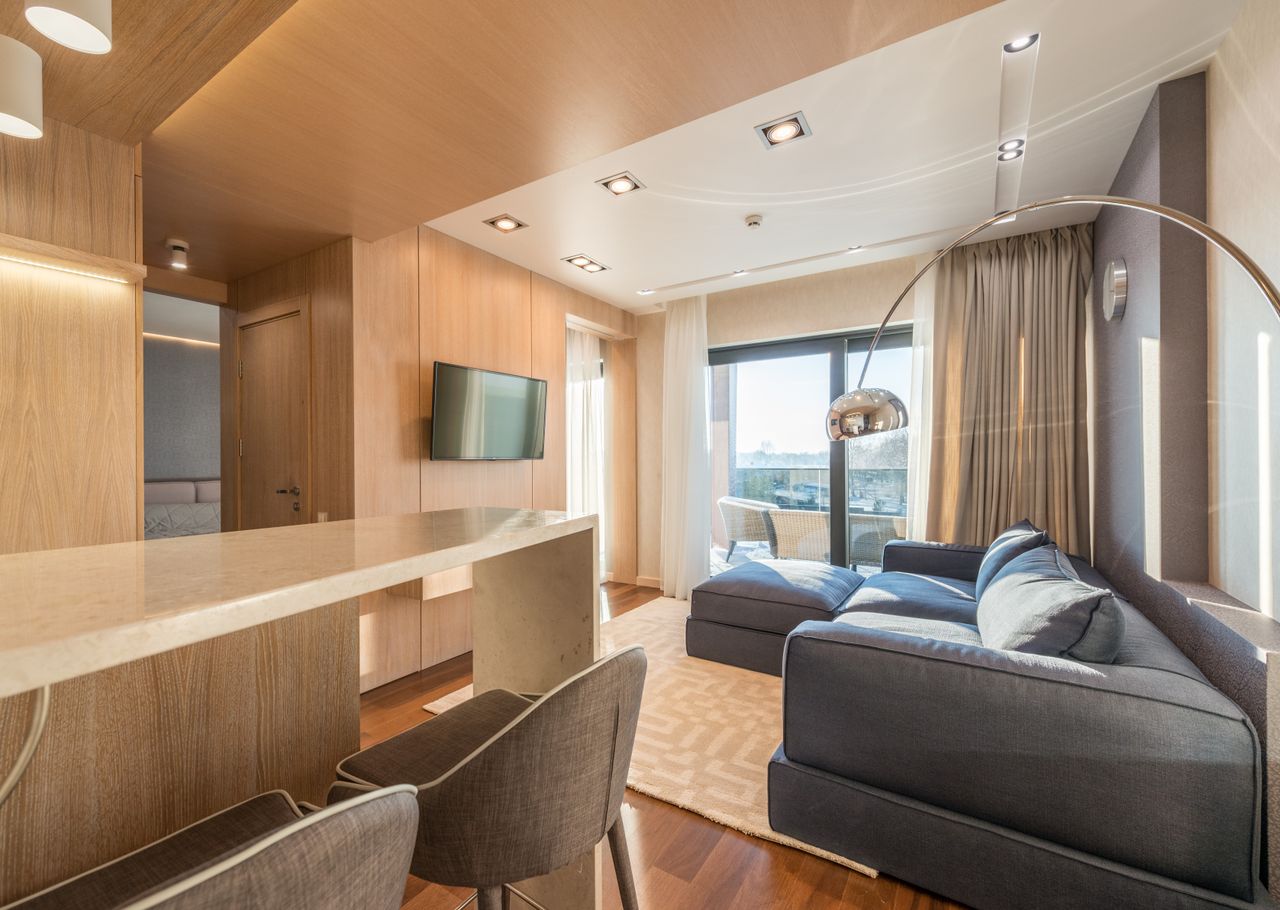
Compact apartment living room — Photo via Pexels
Sofa set prices are all over the map, and the sticker rarely tells the full story. A sensible way to think about it is cost per seat per year. Take the set price, divide by the number of real seats, then divide by the years it should last. A $2,400 six-seat set that lasts ten years costs $40 per seat per year. A $900 set that sags in two years costs $75 per seat per year. The expensive set was cheaper.
Put the money where your body goes. Spend the most on the main sofa, then the loveseat, then the chairs. Save on the bundled tables, because side tables and coffee tables are easy to upgrade later or buy secondhand. Never save on the frame or the foam. A pretty set with a weak frame is the most expensive kind, because you buy it twice.
Ask about the warranty before you pay. A good sign is a 3 to 5 year warranty on the frame. One year on everything is the industry minimum and tells you what the maker expects. Also ask what the warranty excludes. Fabric wear, pet damage, and "comfort preference" are almost never covered, so judge those with your own eyes and hands.
11. Check the Bones Before You Buy
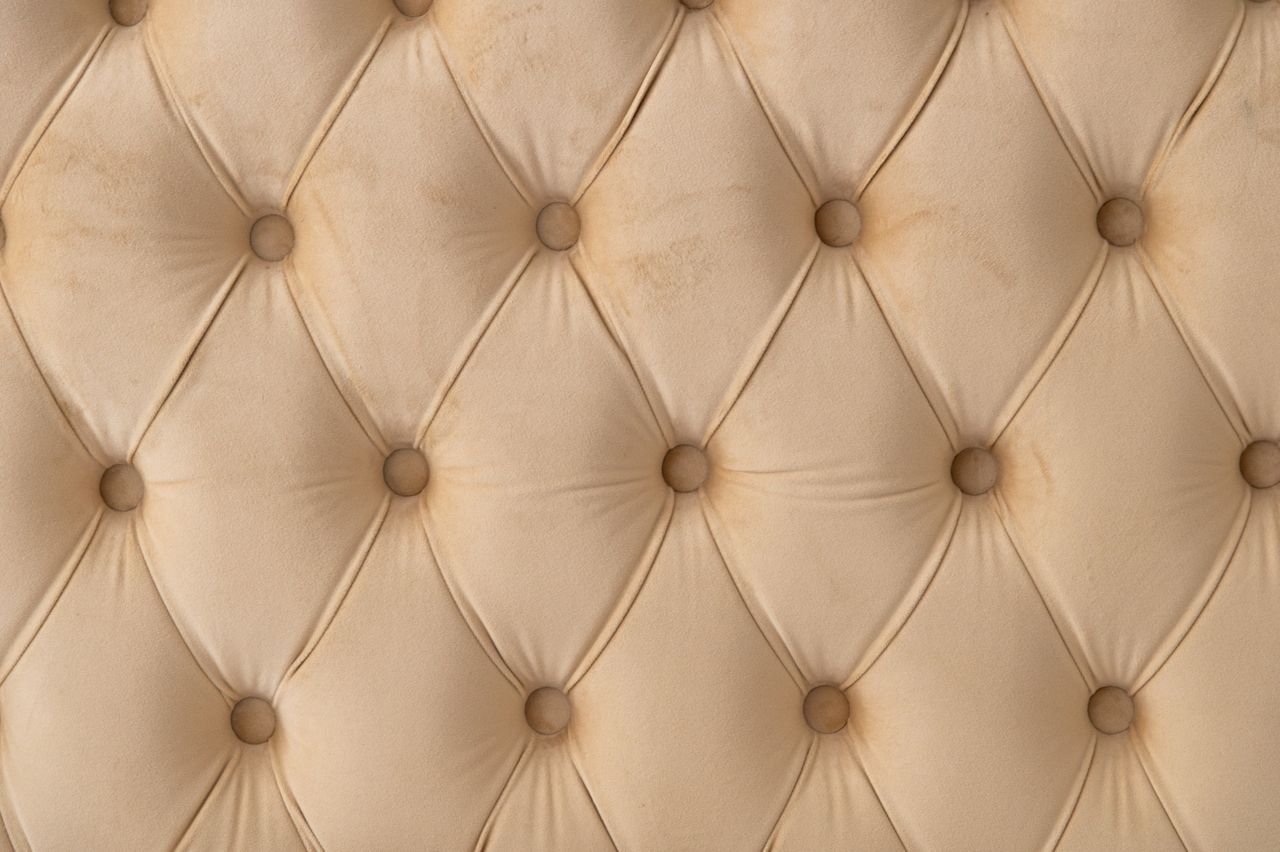
Tufted sofa upholstery close-up — Photo via Pexels
You cannot see a sofa's frame in the store, but the frame decides whether your set lasts two years or twenty. Think of it as the skeleton. A quality frame is kiln-dried hardwood, which means the wood was dried so it will not warp with humidity. The joints should be glued, screwed, and doweled, with corner blocks for strength. Avoid particleboard frames if the set will see daily family use.
Lift a seat cushion and look at the suspension. The two good systems are sinuous springs, which are S-shaped wires running front to back, and eight-way hand-tied springs, the old luxury method. Cheap webbing straps sag fastest. If the seller will not let you look under the cushions, that tells you plenty about what is hiding there.
Then test the cushions. Press one and let go. It should spring back in a few seconds, not keep your handprint. Ask for the foam density. For everyday seating, look for 1.8 pounds per cubic foot or higher. Foam below about 1.3 goes flat quickly. Sit on the corner seat and lean back. A good set feels solid and quiet. Creaks on day one become groans by year two.
12. Leather Sets: Worth It or Not?
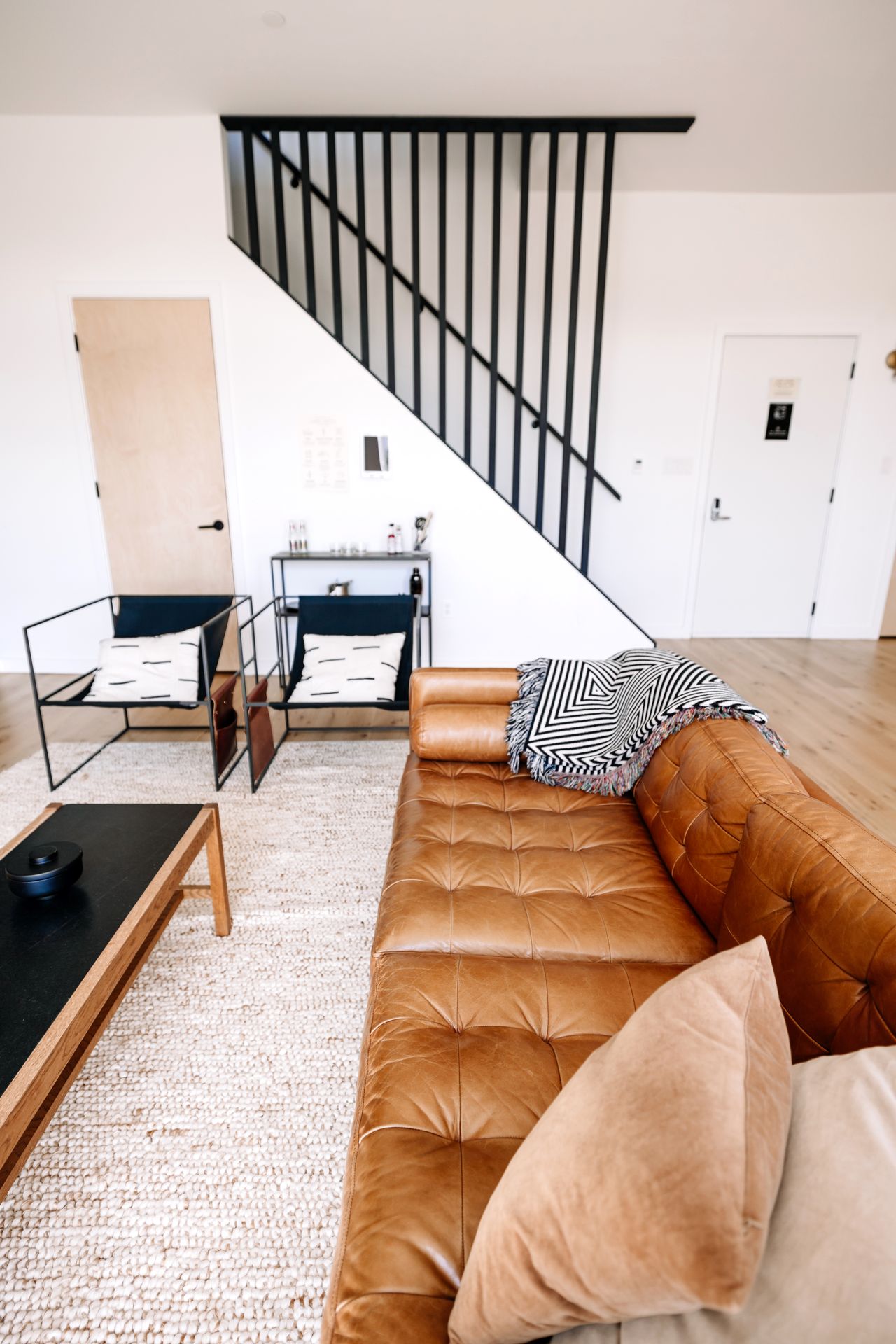
Brown leather couch — Photo via Pexels
Leather sofa sets split shoppers into two camps, and both have a point. Real leather lasts for decades, wipes clean with a damp cloth, and develops a rich patina that looks better with age. It does not hold dust or pet hair, which allergy sufferers love. A well-kept leather set can be the last one you ever buy.
The other camp points at the price and the care. Genuine top-grain leather sets cost two to three times their fabric twins. Leather feels cold in winter and sticky in summer unless the room is climate-controlled. It needs conditioning twice a year, and scratches from pet claws are permanent. Sunlight fades and dries it, so keep leather away from big sunny windows.
The middle option is leatherette, also called PU or faux leather. It wipes clean like real leather, costs far less, and suits families on a budget. But it does not age gracefully. After three to five years of daily use, cheap faux leather peels and cracks, while real leather is just getting comfortable. If you buy faux, buy it knowing it is a five-year set, not a twenty-year one.
13. Light Colors Without the Fear
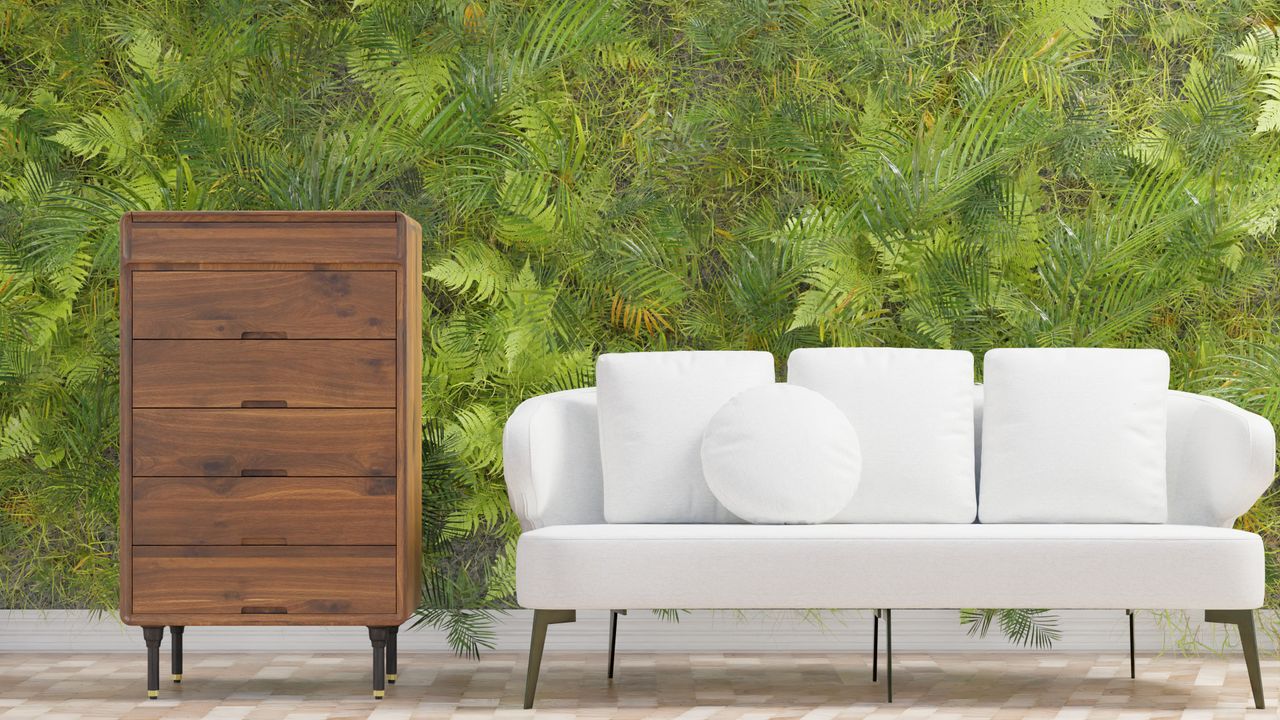
White couch in a minimalist room — Photo via Pexels
Cream, beige, and white sofa sets make rooms feel bigger, brighter, and calmer. They are also the number one regret purchase, because people buy the color for the photo and live with it through real life. The trick is not avoiding light colors. It is buying them in the right fabric.
Light colors work when the fabric fights back. Performance fabrics with stain resistance let most spills bead up instead of soaking in. Slipcovered sets in cotton or linen are the classic solution: when a cover gets dirty, you pull it off and wash it. A cream slipcovered set in a family home is far more practical than a cream velvet one.
Protect the investment with simple habits. Throw blankets on the most-used seats take the daily wear and wash easily. An ottoman tray keeps food and drinks off the upholstery. Keep the set out of direct sun, because light fabrics yellow and fade faster than dark ones. With the right fabric and two small habits, a light set stays beautiful for years. When autumn comes, these cozy fall living room ideas show how warm throws transform a light set for the season.
14. Functional Sets: Recliners, Sleepers and Storage

Comfortable family couch — Photo via Pexels
Some sofa sets do more than seat people. Reclining sets have built-in footrests that flip up with a lever or a button. They are wonderful for bad backs and movie nights. Test the mechanism in the store at least five times. Cheap recliners fail at the mechanism first, usually within two years, and a stuck recliner ruins the whole piece.
Sleeper sets hide a fold-out bed inside the sofa or loveseat. They are perfect for homes without a guest room. But test the mattress, not just the sofa. Open it fully in the store and lie on it. Thin bar-and-canvas mechanisms are miserable to sleep on. Look for at least a 4 to 5 inch (10 to 13 cm) mattress, and check that the open bed fits your room with walking space left over.
Storage sets hide compartments under the seats or inside ottomans and chaise sections. They swallow throws, board games, and kids' toys in seconds. Check that the storage lids have soft-close hinges, so little fingers stay safe, and that the compartments are actually deep enough for what you own. A functional set costs more up front, but it can replace two or three other pieces of furniture.
Final Thoughts
Picking the right sofa set is not about perfect taste. It is about honest answers to simple questions. How many people sit here every week? What is the room's real size? Do kids and pets share the seats? Choose the configuration that fits, the fabric that survives your life, and the frame that lasts a decade. Learning how to judge a living room sofa set is really learning how to buy for the way you live, and that skill pays you back every evening you sit down.
Start with the tape measure this weekend. Mark your walls, your walkways, and your delivery path from the street to the room. Once those numbers are on paper, every other choice gets easier, from the 3-2-1 split to the fabric to the final arrangement. And when the set is home, build the room around it. These sunken lounge ideas show how seating arrangement matters more than seating size.
Frequently Asked Questions
Should my sofa and chairs match, or should I mix them?
Either works, but designers lean toward coordination over exact matching. Repeat one or two elements like a wood tone or color family, and let one piece add contrast. Full matching suits formal, symmetrical rooms best.
What pieces come in a standard 3-piece sofa set?
Usually a 3-seater sofa, a 2-seater loveseat, and one armchair, though some stores sell 3+1+1 (a 3-seater plus two chairs). Always ask exactly which pieces are included before comparing prices.
What size sofa set fits a small living room?
Choose a loveseat plus one chair, or a compact 3-seater (60 to 78 inches / 152 to 198 cm) plus one chair. Pick slim arms, visible legs, and shallower 32 to 35 inch depth to save floor space.
How can I check sofa quality in the store?
Lift a cushion and look for a kiln-dried hardwood frame with corner blocks, sinuous or hand-tied springs, and foam density of 1.8 pcf or higher. Sit on the corners and listen for creaks.
What fabric is best for a sofa set with kids and pets?
Tight-weave performance polyester or olefin with a rub count of 25,000 double rubs or more. Microfiber is a budget-friendly alternative, and removable washable covers are worth paying extra for.
Is a sectional or a sofa set better for a family?
Sectionals seat more people together and suit square rooms and open plans. Separate-piece sets suit narrow rooms better and are easier to move, rearrange, and fit through doors.
How much should a good sofa set cost?
Use cost-per-seat-per-year math: divide the price by seats, then by expected years. A $2,400 six-seat set lasting ten years ($40/seat/year) beats a $900 set lasting two years ($75/seat/year).
How do I know the set will fit through my door?
Measure the narrowest point from the street to the room, including hallways, stair turns, and lift doors. Compare with the box dimensions, not just the assembled size, and check the diagonal depth of each piece.
Gallery
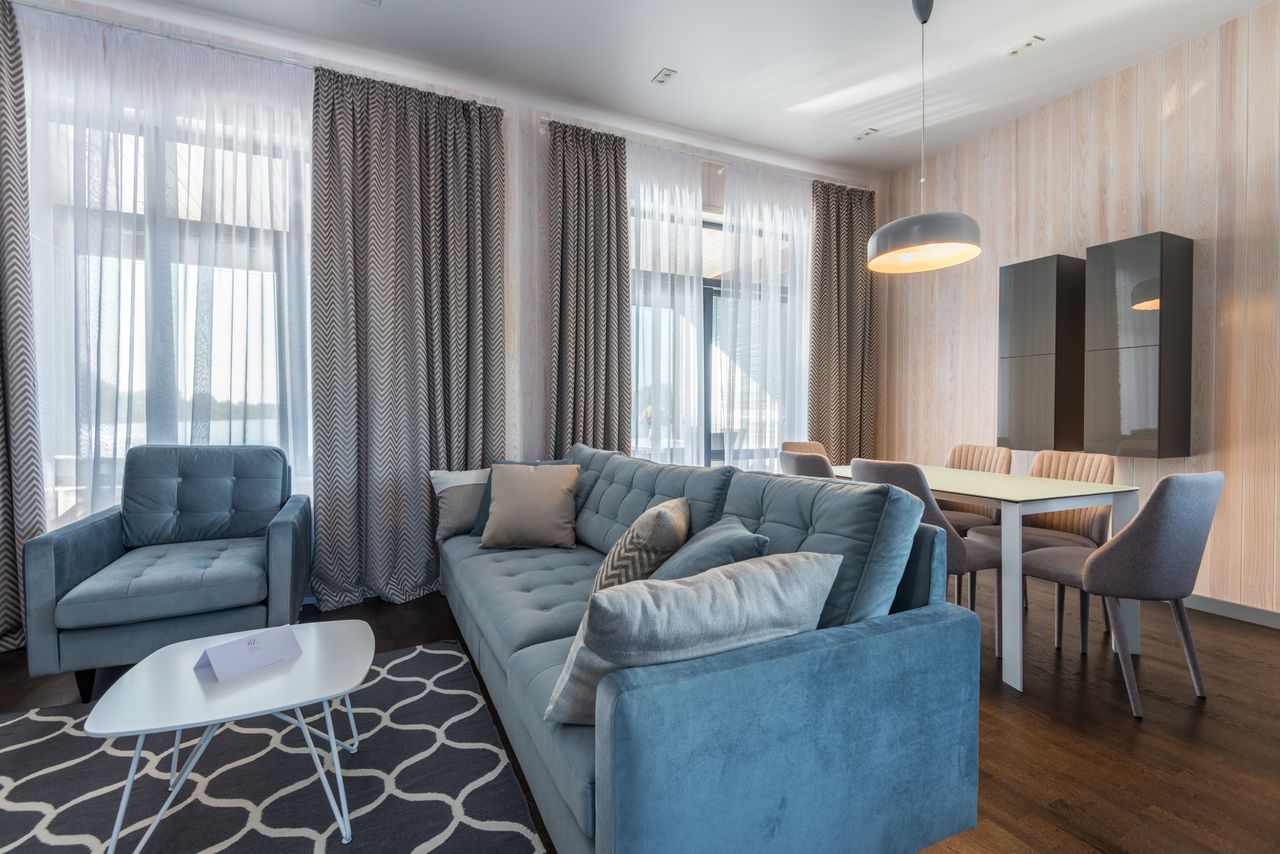
Modern blue sofa living room — Photo via Pexels
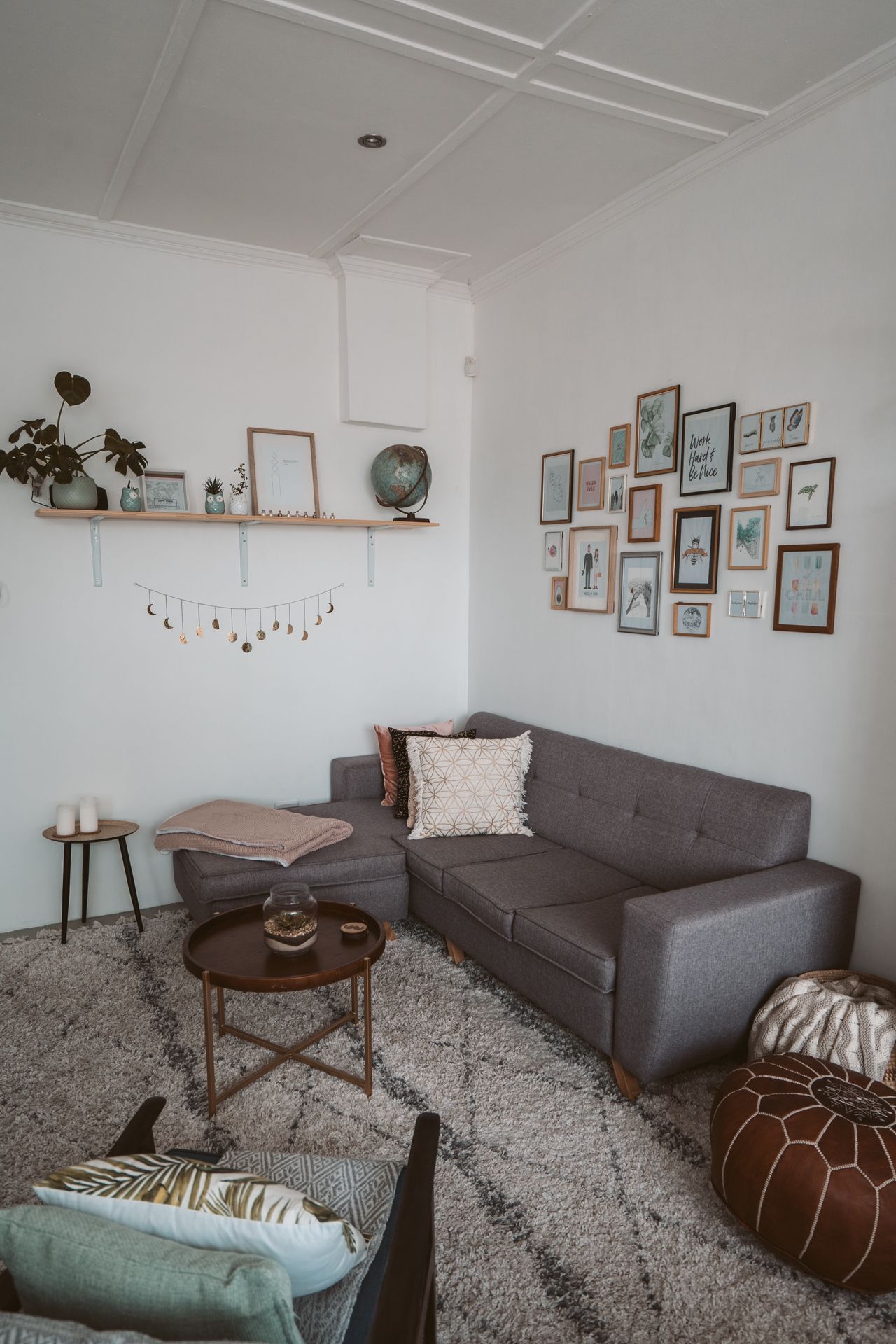
Cozy living room interior — Photo via Pexels
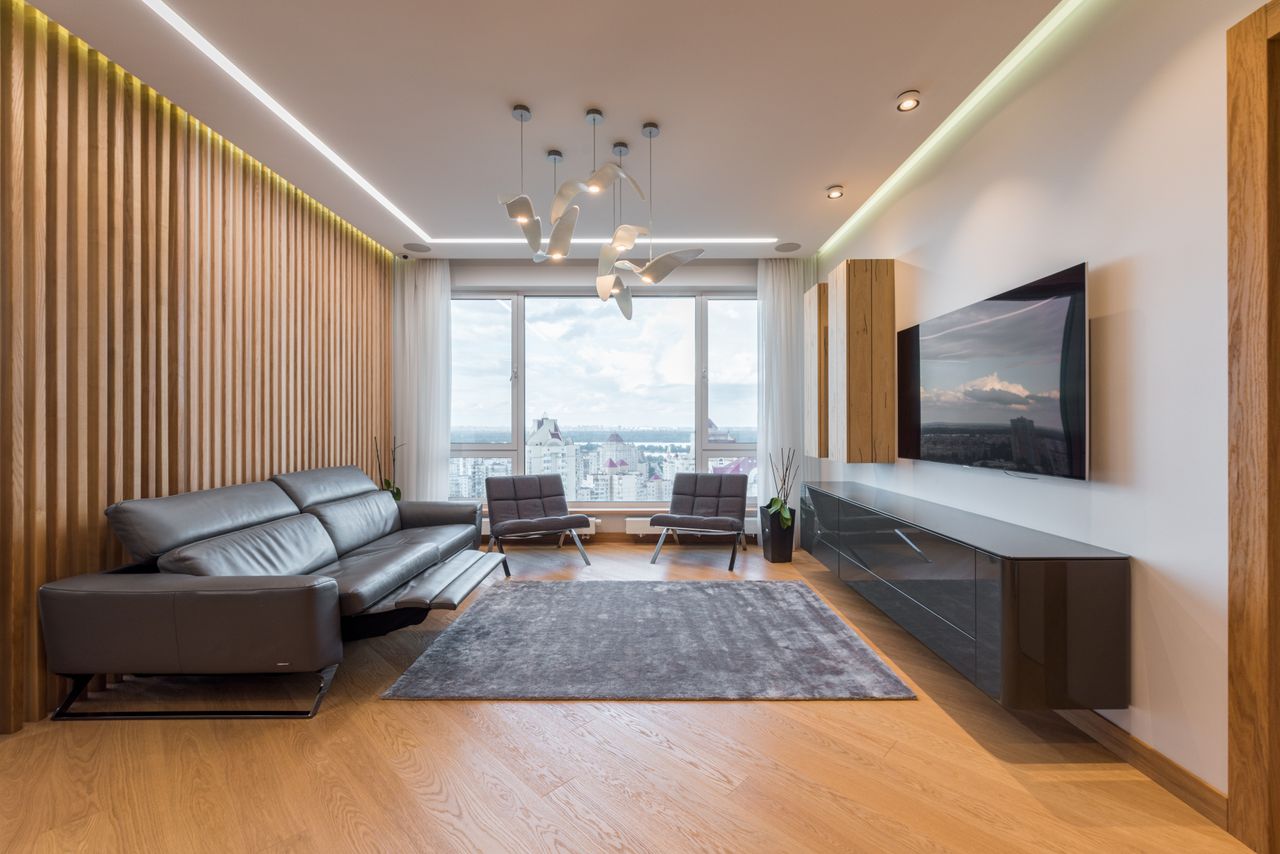
Modern living room interior — Photo via Pexels
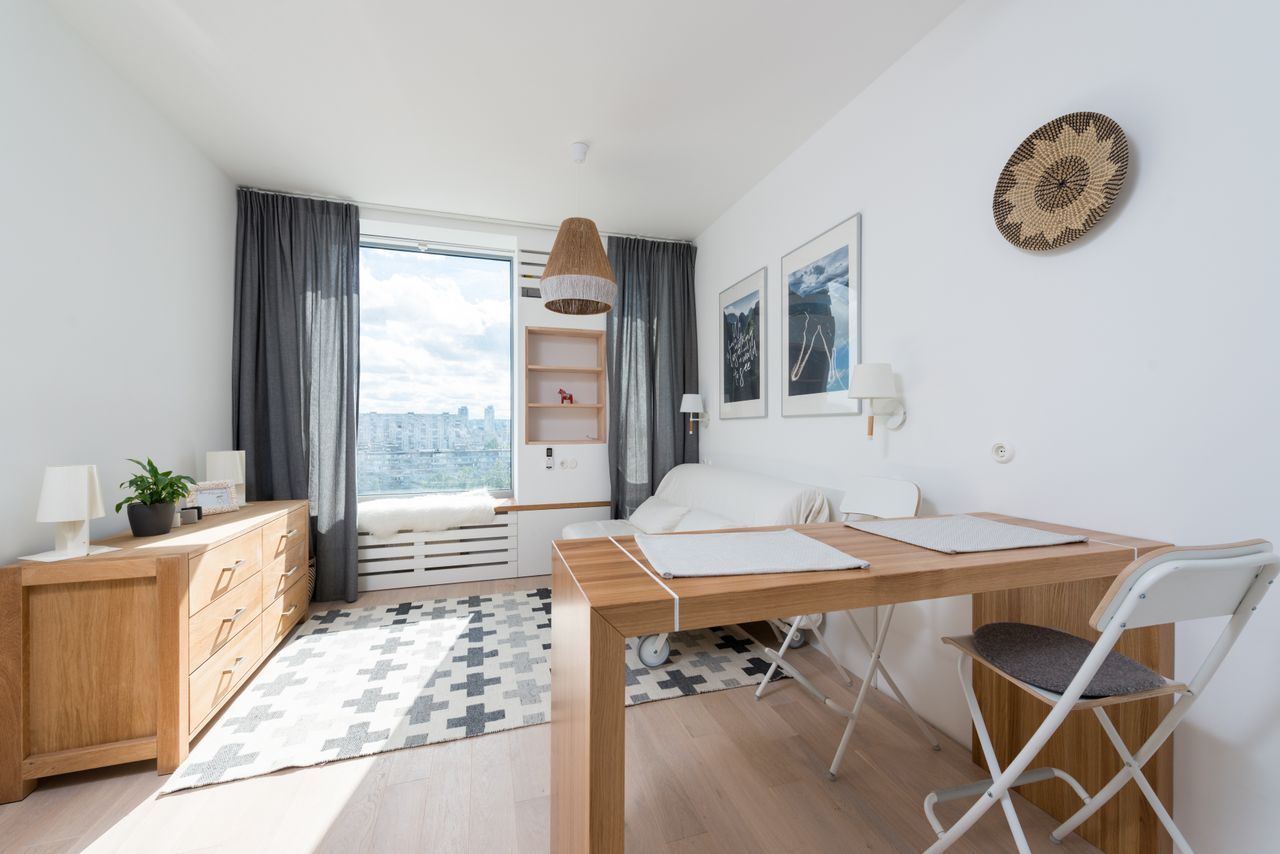
Small apartment living room — Photo via Pexels
Sources
The sizing rules, material standards, and design guidance in this article are drawn from these reputable sources: Malik Furniture's living room sofa set buying guide on configurations, room-size tables, and construction (malikfurniture.com); Ideal Home's designer verdict on mixing versus matching sofas, with guidance from Swyft's head of creative (idealhome.co.uk); The Spruce on why matching three-piece sets date a living room, with Dallas designer Lauren Saab (thespruce.com); Livingetc's designer rules for mixing couches (livingetc.com); Homes and Gardens on when matching works for symmetrical layouts (homesandgardens.com); and WriteUpCafe's Pakistan sofa pricing guide on budget tiers and pre-purchase checks (writeupcafe.com).

No comments:
Post a Comment