Buying furniture for your living room is one of the biggest decisions you will make for your home. The sofa alone can cost more than everything else in the room put together. Get it right and the room feels like a warm hug every evening. Get it wrong and you are stuck with a giant piece that blocks the door, swallows the light, and loses its comfort in two years. This guide walks you through picking living room furniture the way a professional would, step by step, in plain words. No confusing terms. Just the real measurements, fabric facts, and buying order that make a room work.
In this guide:
- Start With a Tape Measure, Not a Shopping Cart
- Pick a Sofa That Fits Your Room, Not the Showroom
- Sofa or Sectional? Let the Room Shape Decide
- Choose Fabric for Your Real Life, Not Your Dream Life
- Sit on It Before You Buy It
- Check the Bones: Frame, Springs and Cushions
- Size the Coffee Table to the Sofa
- Let the Rug Anchor the Whole Zone
- Light the Room in Three Layers
- Buy Storage That Hides Real-Life Mess
- Size the TV Console to the Screen and the Gear
- Add One Great Armchair Instead of Three Average Ones
- Coordinate, Do Not Match
- Buy in the Right Order When Money Is Tight
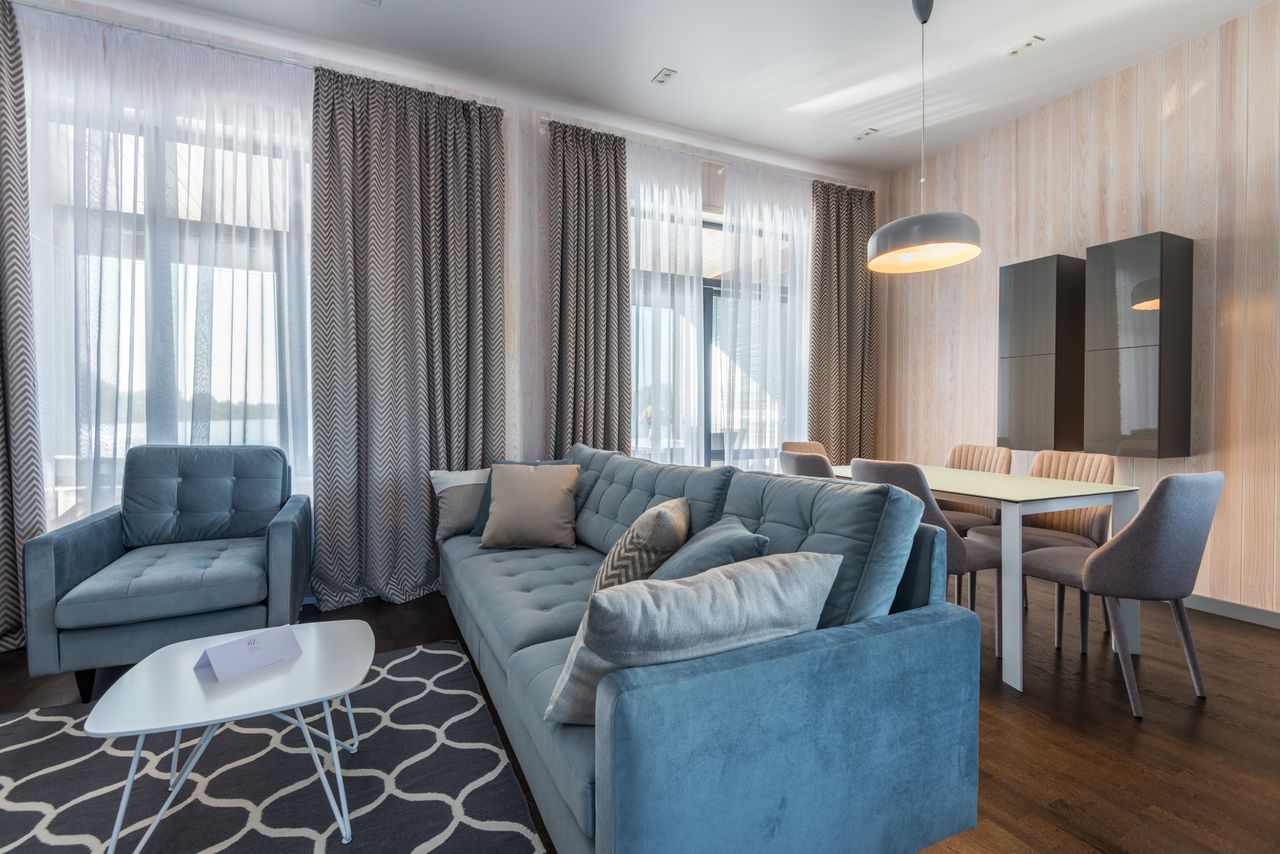
Modern blue sofa living room — Photo via Pexels
1. Start With a Tape Measure, Not a Shopping Cart
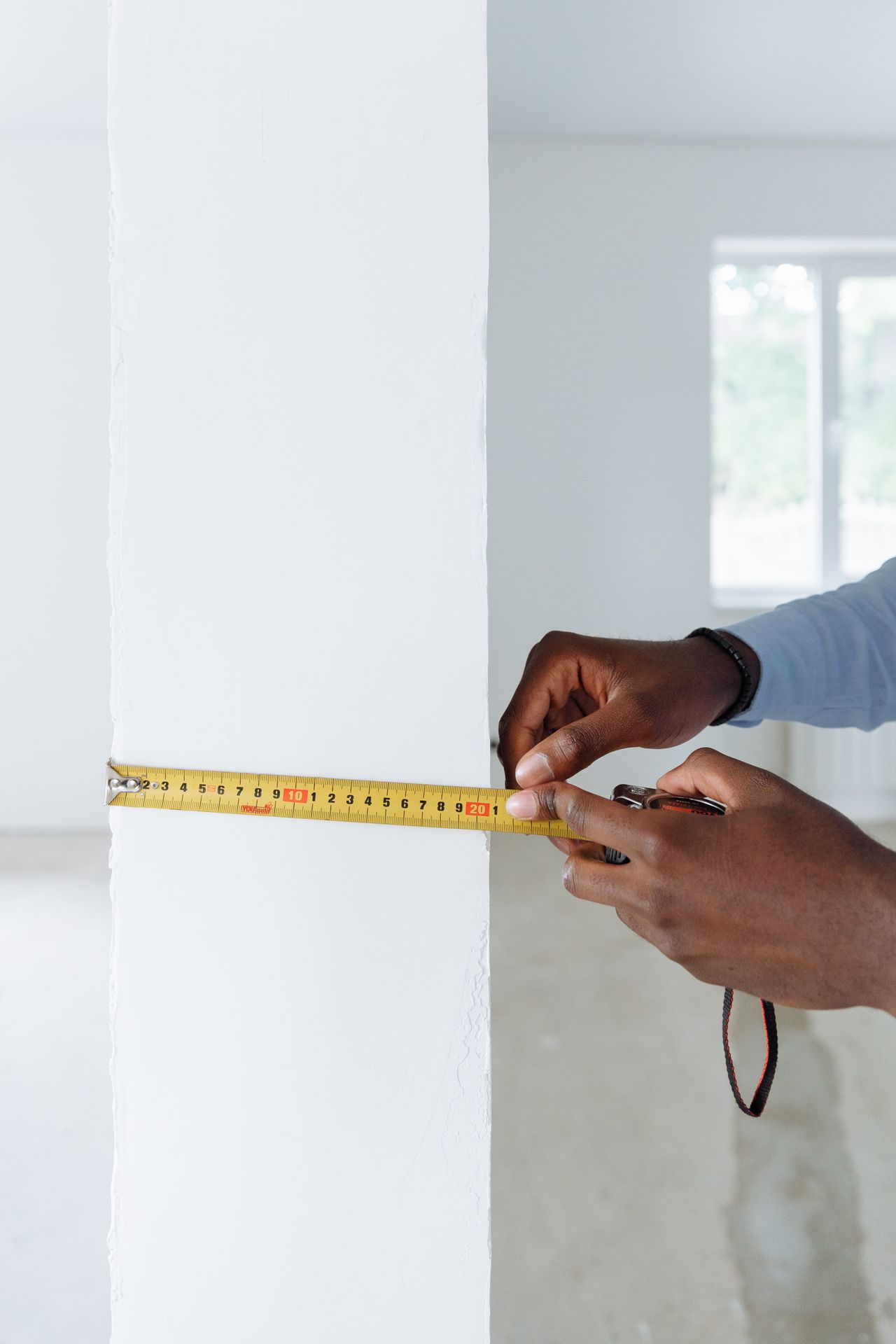
Measuring the room first — Photo via Pexels
Every furniture mistake starts with guessing. So before you open a single shopping app, grab a tape measure and a piece of paper. Draw your room as a simple rectangle. Mark the doors, windows, and radiators. Then measure the length of each wall and write the numbers down. This ten-minute job will save you from the most expensive mistake in furniture shopping: buying a piece that does not fit.
Now measure the paths people walk every day. The walkway from your front door to the kitchen, or from the sofa to the balcony, needs about 30 to 36 inches (75 to 90 cm) of clear space. This is the number designers use again and again, because anything narrower means people will be squeezing sideways past your coffee table forever. Mark these walking lanes on your sketch and keep them empty in every plan you make. A beautiful room you cannot walk through is not beautiful for long.
Finally, mark your door swings. A door that opens into the back of a sofa arm is one of the most common small-room failures, and no cushion can fix it. Swing every door in the room and mark the arc it covers. Whatever falls inside that arc is a no-furniture zone. If you rent, these renter-friendly living room ideas show how to plan around doors and small footprints without drilling a single hole.
2. Pick a Sofa That Fits Your Room, Not the Showroom
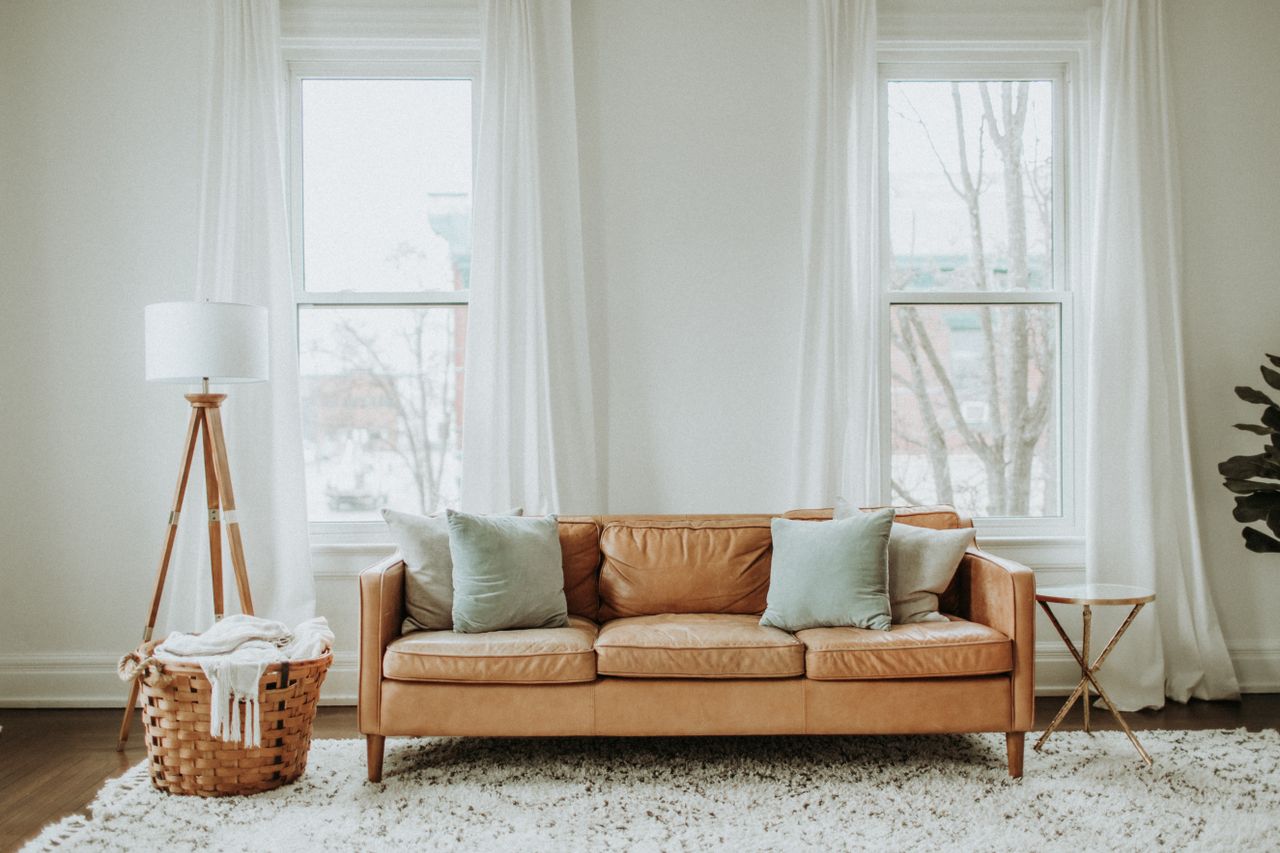
Three-seater sofa sized for the room — Photo via Pexels
Showrooms are huge, bright, and empty. Your living room is not. A sofa that looks perfectly normal in a showroom can look like a beached whale at home. So here is the professional rule: your sofa should be about two-thirds the length of the wall it sits against. This is called the two-thirds rule, and Apartment Therapy's designers swear by it. On a 12-foot (3.6 m) wall, aim for a sofa around 8 feet (2.4 m) wide, and the room will feel balanced instead of crowded.
Learn the standard sizes so you can shop with confidence. A loveseat runs about 58 to 64 inches (147 to 163 cm) wide. A two-seater is 66 to 72 inches (168 to 183 cm). A classic three-seater is 78 to 96 inches (198 to 244 cm). Most sofa depths are 35 to 40 inches (89 to 102 cm) from front to back, and the seat sits 17 to 19 inches (43 to 48 cm) off the floor, which is the height most adults find easiest for standing up.
Here is the trick most people miss: cut the sofa's footprint out of newspaper or mark it on the floor with painter's tape, then live with it for a day. Walk around it. Open the doors. Sit on the floor where the TV is. If the taped outline already feels tight, the real sofa will feel worse. A smaller sofa with slim arms and visible legs almost always looks better in a modest room than a big one with chunky rolled arms. For rooms built around long conversations, these sunken lounge ideas show how seating arrangement matters more than seating size.
3. Sofa or Sectional? Let the Room Shape Decide
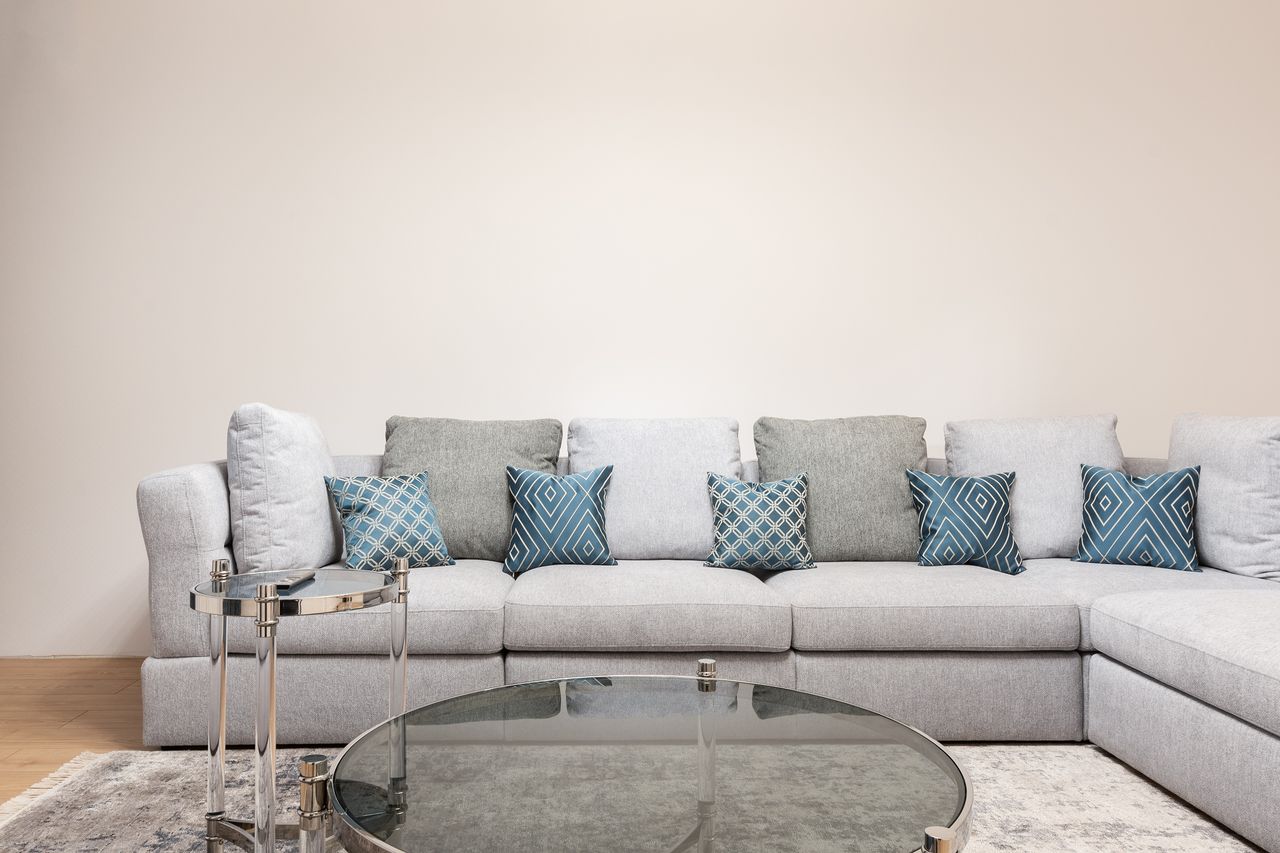
Grey L-shaped sectional sofa — Photo via Pexels
This is the question people ask most on Reddit's living room forums, and the answer is simpler than you think: it depends on your room's shape, not its size. A sectional is one connected piece, usually L-shaped or U-shaped. A sofa is a single straight piece you pair with separate chairs. In a square room or an open plan, an L-shaped sectional tucked into a corner can seat five or six people while using less floor space than a sofa plus two chairs.
But sectionals are not magic. A typical L-shaped sectional runs 95 to 120 inches (241 to 305 cm) on its long side, with the return side 60 to 80 inches (152 to 203 cm) deep. You need about 36 inches (90 cm) of walking space around its open sides, or the room turns into an obstacle course. In a narrow or long room, a sectional's return arm can cut the room in half and block the very walkway you need. A narrow room usually does better with a straight sofa and one chair.
Think about your future too. A straight sofa is easy to move, easy to rearrange, and fits through more doors. A sectional is a commitment to one layout. If you rent, or you know you will move in a few years, a modular sectional made of separate pieces gives you the best of both: corner seating today, flexible pieces tomorrow. Measure the chaise depth carefully, because a 60-inch (152 cm) chaise that looked fine online always feels longer against your actual wall.
4. Choose Fabric for Your Real Life, Not Your Dream Life
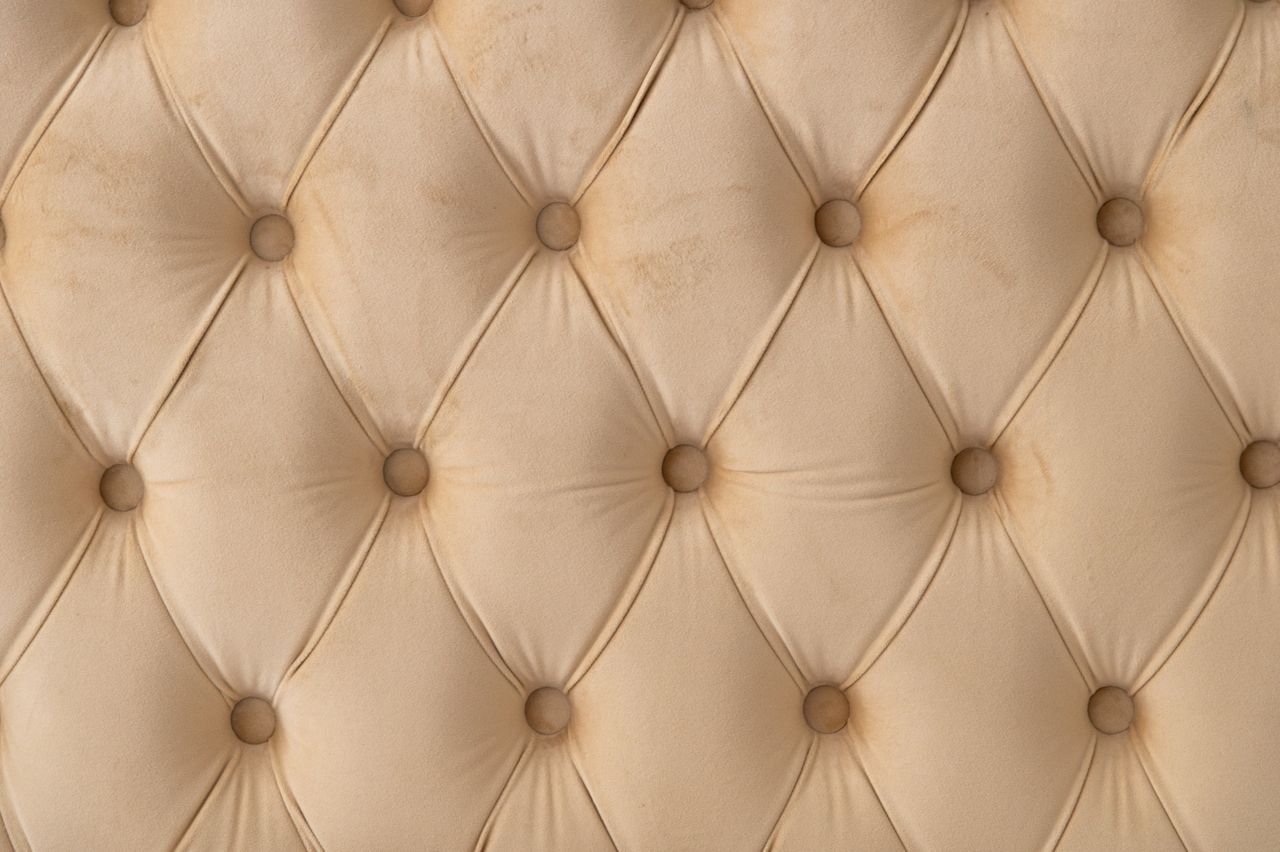
Tufted sofa upholstery close-up — Photo via Pexels
The fabric is the part of the sofa you will touch every single day, so choose it for the life you actually live. A white linen sofa looks like a dream on Instagram and like a disaster after one month with a toddler and a cat. Be honest with yourself: do you eat on the sofa? Do pets sleep on it? Do kids jump on it? Your answers decide the fabric.
Here is the simple fabric map. Performance polyester and olefin are the family champions: they resist stains, the color is dyed all the way through the fiber so it does not fade, and spills sit on the surface instead of soaking in. Microfiber is another pet-friendly hero because it is cheap, tough, and easy to wipe. Cotton and linen blends feel natural and breathe well in warm weather, but they absorb spills, so save them for calmer households. Velvet looks rich and hides wear surprisingly well in polyester versions, though it can show pressure marks. Real leather lasts for decades and wipes clean, but it costs much more and needs conditioning twice a year.
Now the number that matters: the rub count. Fabrics are tested for abrasion, and the result is called double rubs. For a normal family living room, look for at least 15,000 double rubs (Wyzenbeek test) or 20,000 cycles (Martindale test), the guideline published by the Association for Contract Textiles. Busy homes with kids and pets should aim for 25,000 or more. If a seller cannot tell you the rub count, treat that as your answer about their quality.
5. Sit on It Before You Buy It

Testing sofa comfort in person — Photo via Pexels
A sofa can have perfect measurements and still be wrong for your body. That is why every furniture expert says the same thing: never buy a sofa you have not sat on. If you are shopping online, order the exact model from a store with a fair return policy, and test it hard during the return window. If you are in a store, do not just perch on the edge like a polite guest. Sit the way you actually sit at home.
Do the full five-minute test. Sit upright the way you sit when guests visit. Curl up the way you sit for a movie. Stretch out the way you sit on a Sunday afternoon. Lie down if you nap on the sofa. Check that your feet touch the floor when you sit back, that the seat depth lets your back reach the backrest, and that you can stand up without pushing off the armrests. Seat heights of 17 to 19 inches (43 to 48 cm) suit most adults; shorter people often prefer the lower end.
Pay attention to the edges and corners. Sit on the corner seat and press down hard. A good sofa feels solid and quiet. A cheap one creaks, wobbles, or dips. Lean back and listen. Squeaks on day one become groans by year two. And test the sofa bed mechanism if there is one: pull it open and fold it back three times in the store. That is where the cheap ones fail, usually within the first year.
6. Check the Bones: Frame, Springs and Cushions
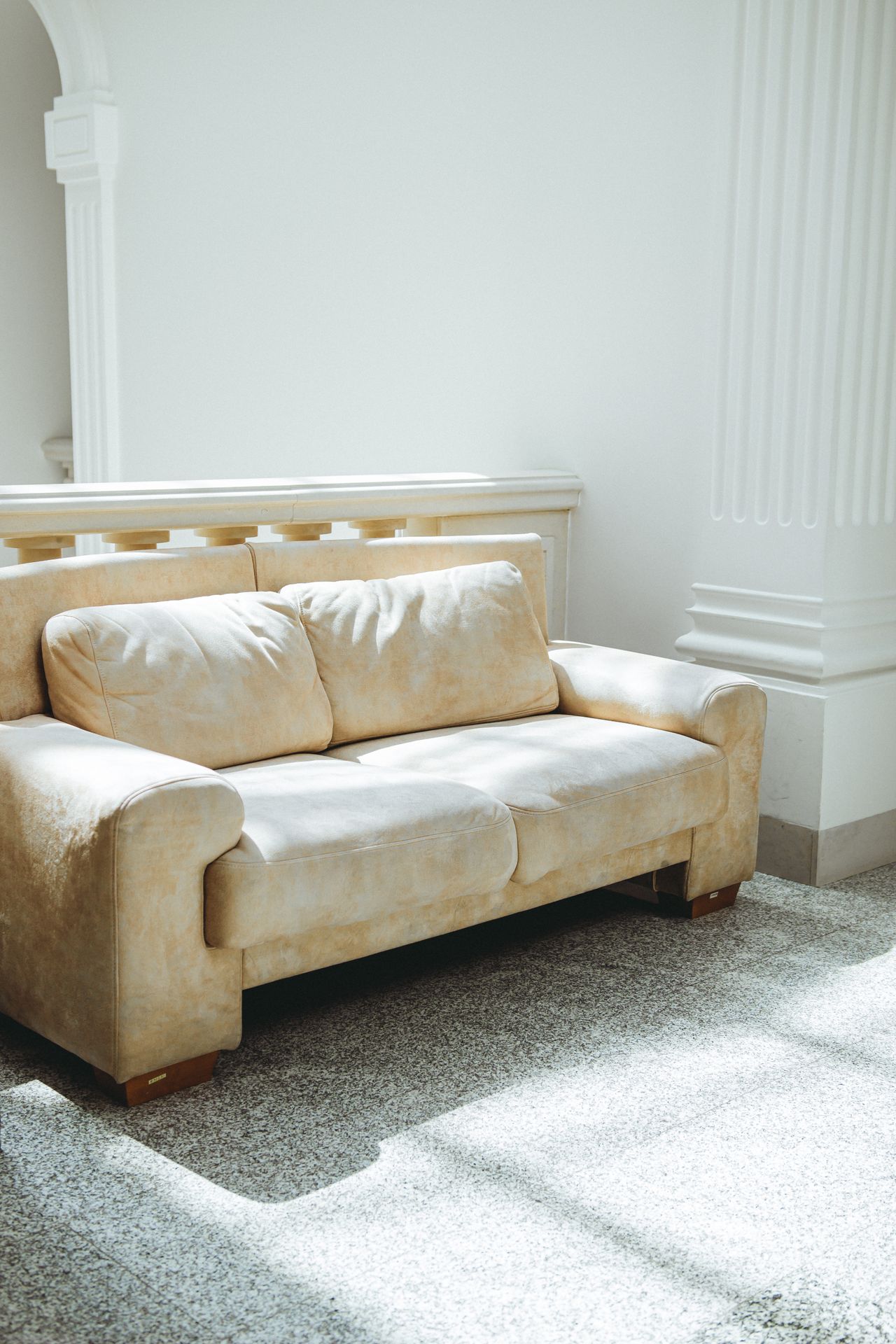
Sofa with solid wooden legs — Photo via Pexels
You cannot see a sofa's frame, but the frame decides whether your sofa lasts two years or twenty. Think of it like the skeleton of a house: invisible, but everything depends on it. A quality frame is made of kiln-dried hardwood, which means the wood was dried in a kiln so it will not warp or crack with humidity. The joints should be glued, screwed, and doweled, with corner blocks for strength. Avoid frames made of particleboard or plain softwood if you want the sofa to survive daily family use.
Under the cushions sits the suspension, which is what you actually feel when you sit. The two good systems are sinuous springs (S-shaped wires running front to back) and eight-way hand-tied springs (the old luxury method, still the best). Cheap webbing straps sag the fastest. Lift a seat cushion in the store and look. If the seller will not let you look underneath, that tells you plenty.
Then the cushions. Foam density is the number to ask for, measured in pounds per cubic foot. For everyday seating, look for 1.8 pcf or higher; foam below about 1.3 pcf goes soft and flat quickly. Many good cushions use a firm high-density core wrapped in softer fiber or feathers for comfort. Press a cushion and let go. It should spring back to shape in a few seconds, not keep your handprint.
7. Size the Coffee Table to the Sofa
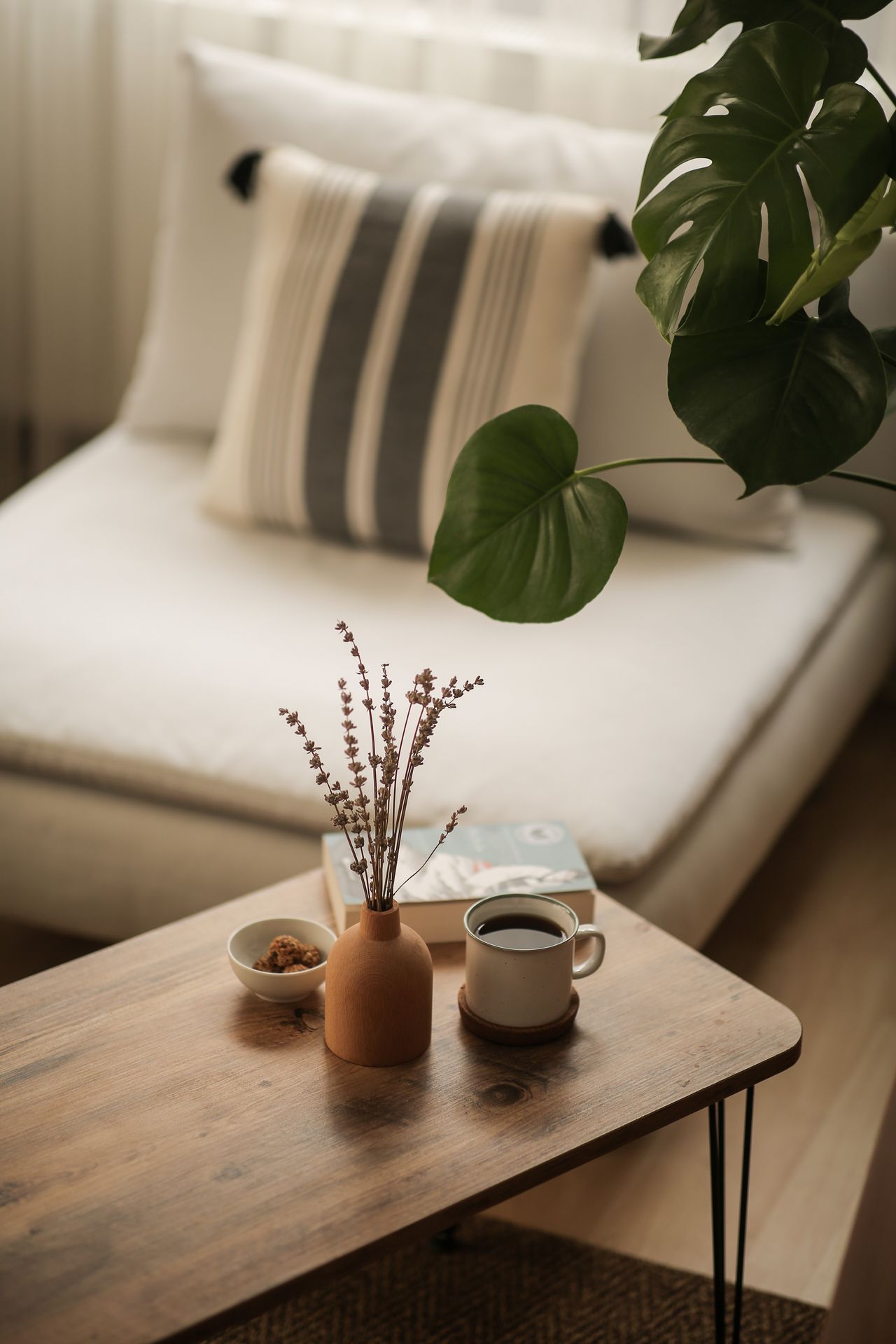
Wooden coffee table styled beside a sofa — Photo via Pexels
The coffee table is the hardest-working small piece in the room. It holds your tea, your feet, your laptop, the remote, and the puzzle you swear you will finish. But most people buy one that is the wrong size. Here are the three numbers that fix it. First, the length: your coffee table should be about one-half to two-thirds as long as your sofa. On an 84-inch (213 cm) sofa, that means a table 42 to 56 inches (107 to 142 cm) long.
Second, the distance: leave 14 to 18 inches (35 to 45 cm) between the front of the sofa and the edge of the table. Closer than 14 inches and your knees hit it every time you stand up. Farther than 18 inches and you will be leaning forward to reach your tea like you are doing exercise. Third, the height: the tabletop should sit at the same height as the sofa seat, or one to two inches lower. Taller tables look awkward and make every reach uncomfortable.
Choose the shape for your traffic. Round or oval tables are kinder in rooms where people walk between the sofa and the kitchen, because there are no sharp corners to bruise your shins. Rectangular tables suit big gatherings with shared snacks and board games. And if your living room doubles as a homework station or a casual dining spot, a lift-top coffee table that rises to eating height earns its floor space twice over.
8. Let the Rug Anchor the Whole Zone
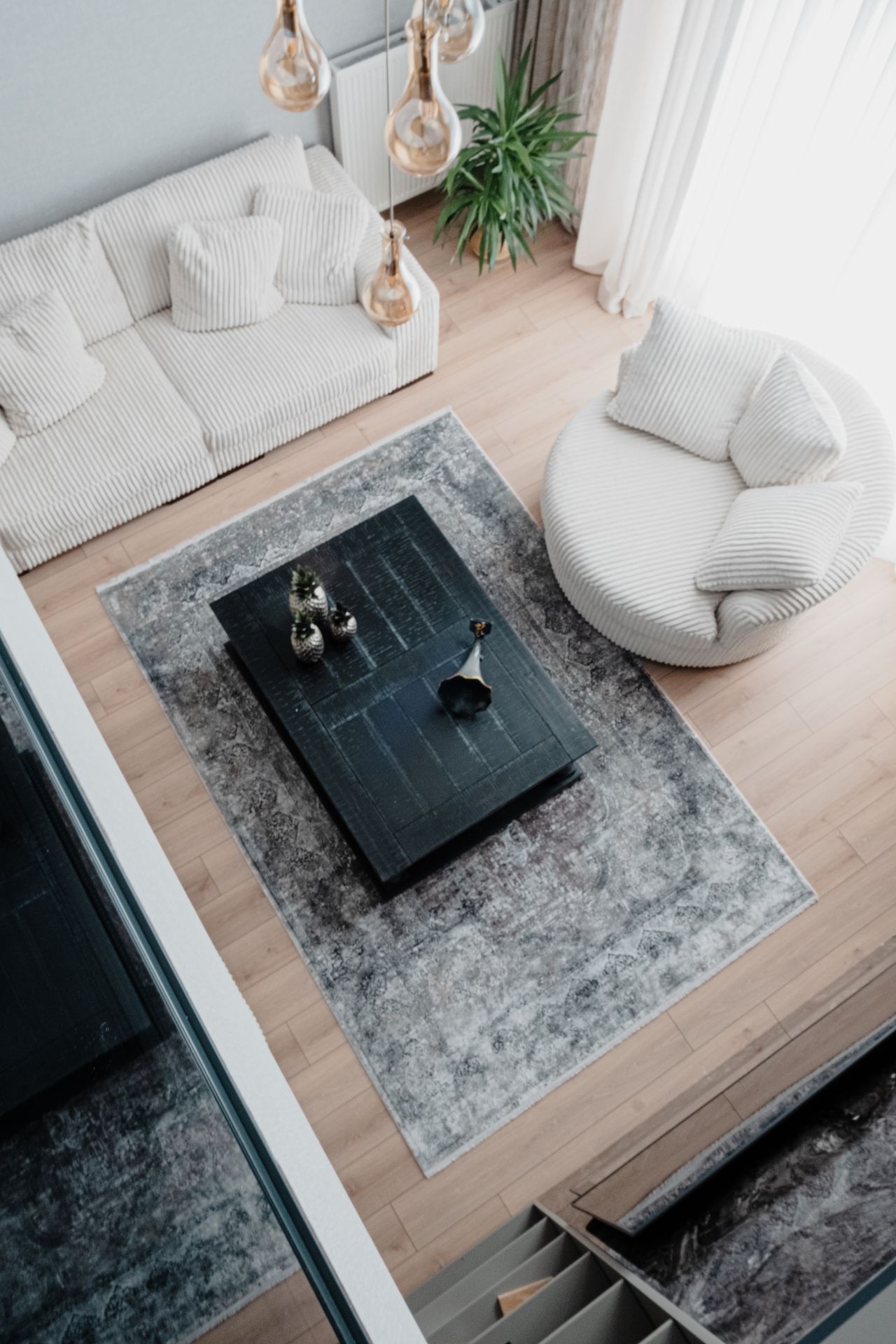
Area rug anchoring the seating zone — Photo via Pexels
The rug is the piece that makes all the furniture look like it belongs together. Buy it too small and the room looks like scattered islands. Buy it right and the whole seating area clicks into one cozy zone. The golden rule is simple: the front legs of your sofa and chairs should all rest on the rug. That one detail visually connects everything.
For sizing, here is what works. In a standard living room, an 8 by 10 foot (2.4 by 3 m) rug fits most three-seater sofas with room to spare. A 5 by 8 foot (1.5 by 2.4 m) rug suits a loveseat or a small apartment. In a large room with a sectional, go 9 by 12 feet (2.7 by 3.6 m). Your sofa should be roughly two-thirds the length of the rug it sits on. And leave 12 to 18 inches (30 to 45 cm) of bare floor between the rug edge and the walls so the room still breathes.
Think about cleaning before you fall in love with a color. A light cream rug is beautiful and shows every crumb. In a house with kids or pets, a medium-tone patterned rug hides daily life far better. Low-pile rugs are easier to vacuum and let doors swing over them; deep shag feels wonderful under bare feet but traps everything. When autumn comes and you want to warm the room up, these cozy fall living room ideas show how a rug swap changes the whole mood.
9. Light the Room in Three Layers
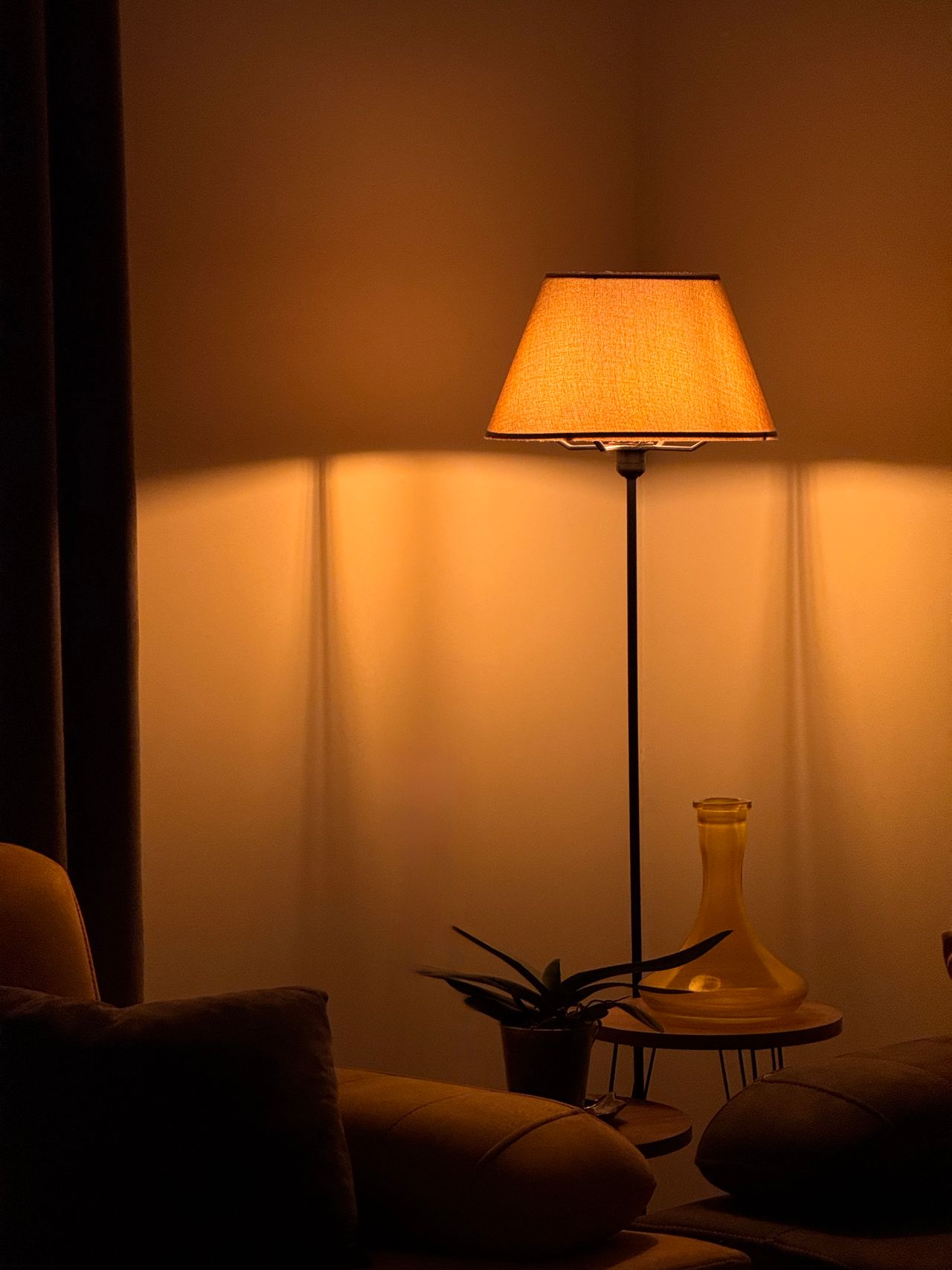
Warm floor lamp in a living room corner — Photo via Pexels
Furniture gets all the attention, but lighting decides whether your furniture looks good or gloomy. Most living rooms rely on one sad ceiling light, which flattens everything and makes even expensive sofas look cheap. Professionals light a room in three layers, and you can do the same with three affordable pieces.
Layer one is ambient light: the general glow that fills the room, usually from a ceiling fixture or a tall arc floor lamp. Layer two is task light: a reading lamp beside your favorite chair or a table lamp on the side table, aimed at the book or the knitting in your hands. Layer three is accent light: a small lamp on the bookshelf, LED strips behind the TV console, or a picture light that makes one corner feel special.
Choose warm white bulbs, around 2700 to 3000 Kelvin, for the evening hours. Cool white light makes a living room feel like an office. Put the main lamps on dimmers if you can; dimmed light in the evening is the cheapest luxury there is. And here is a furniture tip hidden inside a lighting tip: a dark corner makes a room feel smaller, so place a floor lamp in the darkest corner and watch the whole room grow. If you love dramatic evening moods, these moody lighting ideas show how warm layered light transforms any space.
10. Buy Storage That Hides Real-Life Mess
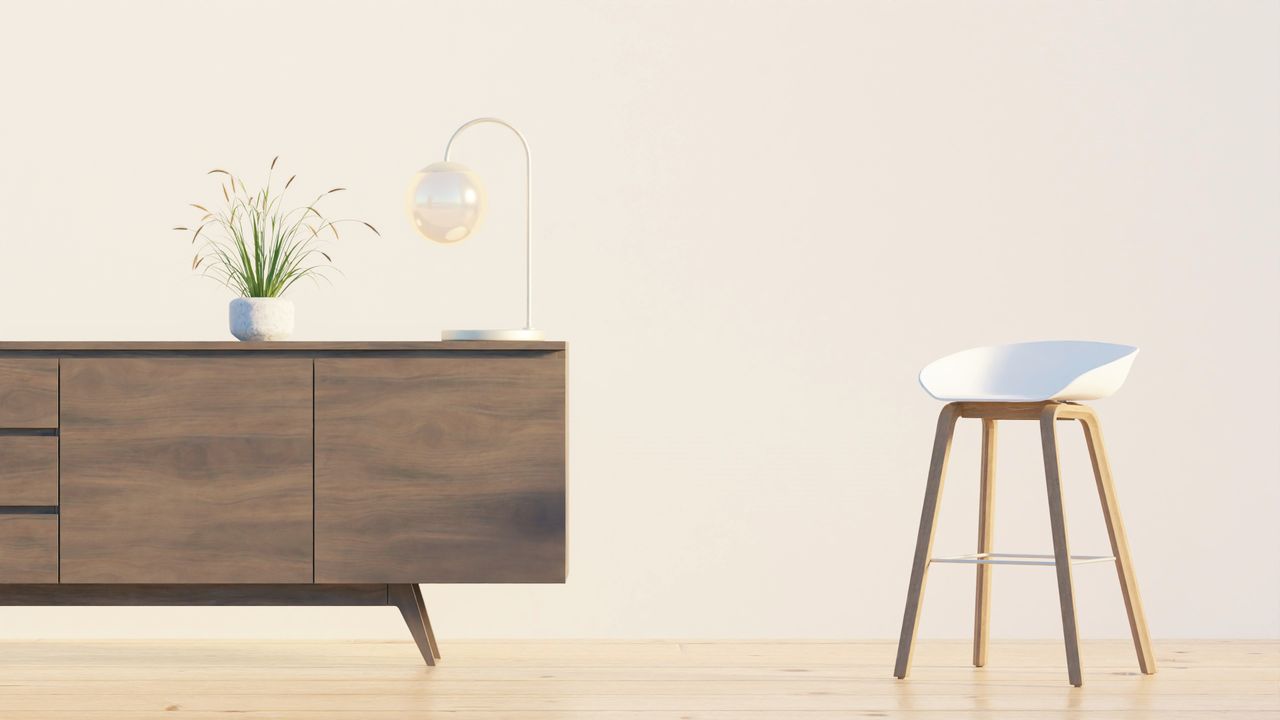
Wooden sideboard for hidden storage — Photo via Pexels
Every living room collects the same things: remote controls, chargers, board games, throws, kids' toys, and the candle collection you never light. If these have no home, they live on the sofa and the coffee table, and no amount of styling fixes that. So when you shop for storage, shop for your actual mess, not for decoration.
The best formula is a mix: closed storage for the ugly stuff, open storage for the pretty stuff. A sideboard or credenza with doors swallows the chargers, games, and spare throws in seconds. A bookshelf or a few floating shelves display the books, plants, and frames. Media consoles with cable holes keep the TV wall from turning into a spaghetti of wires. Measure what you own before you shop: the board game box, the throw blanket pile, the stack of magazines. Buy storage for those real dimensions.
Think vertically in small rooms. A tall narrow bookcase uses one square foot of floor and gives you five shelves. A storage ottoman is three pieces of furniture in one: a footrest, an extra seat for guests, and a toy chest. And choose washable, wipeable surfaces for anything within a toddler's reach. A room feels calm when the storage does the tidying before you even start.
11. Size the TV Console to the Screen and the Gear
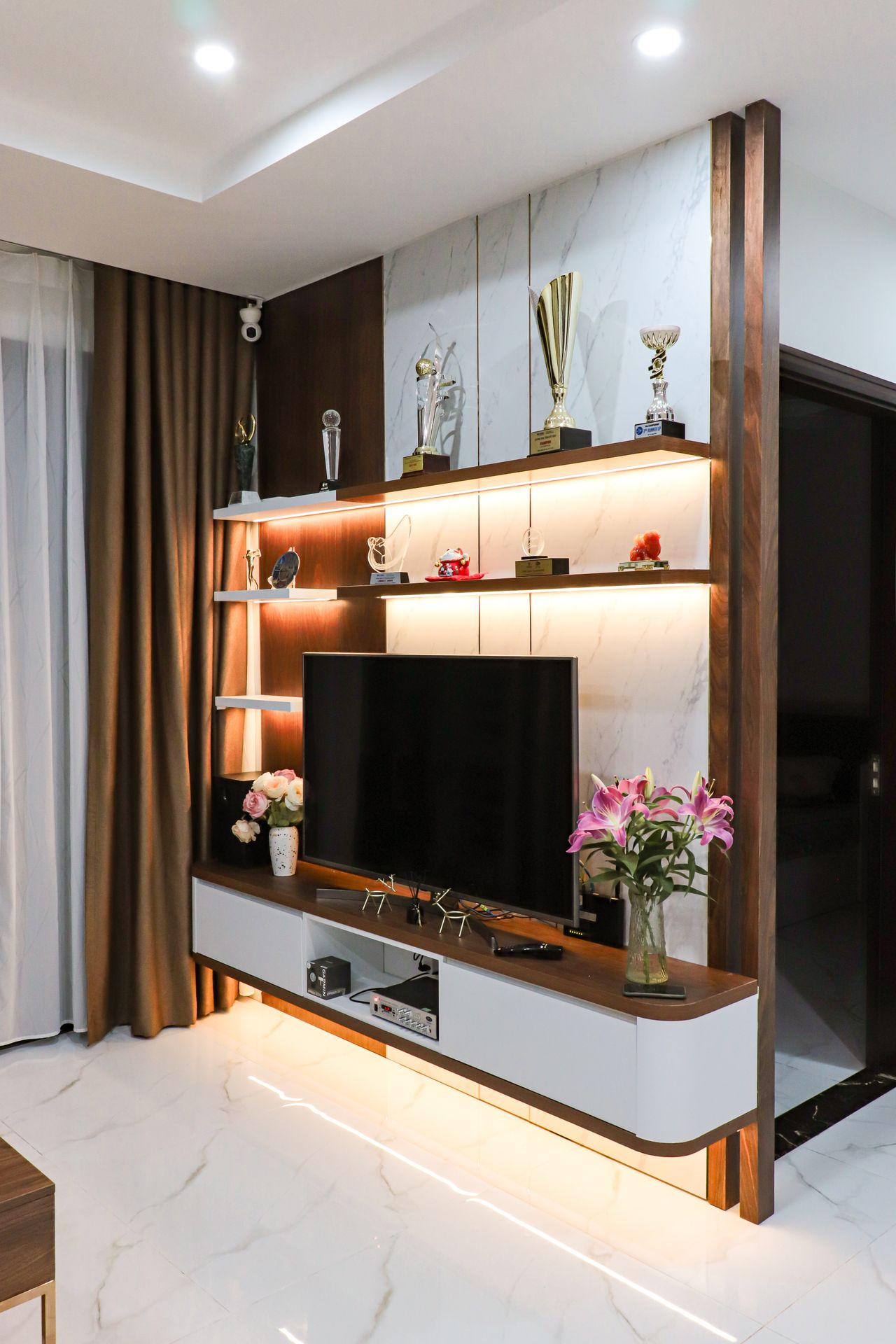
Modern TV console with shelving — Photo via Pexels
A TV console has two jobs: hold the television safely, and hide everything that plugs into it. Most people shop for the first job and forget the second, then spend years staring at a tangle of cables. Start with width: the console should be at least as wide as the TV, and ideally 6 to 12 inches (15 to 30 cm) wider on each side. A TV wider than its stand looks like it is about to dive off.
Now the part everyone forgets: the gear. Measure your soundbar, game console, streaming box, and router, including the plugs and cables sticking out the back. The console needs to be deep enough for all of it, usually 16 to 20 inches (40 to 50 cm), with holes in the back for cables and some airflow space. Game consoles and receivers get hot; a closed cabinet with no ventilation will cook them slowly.
Set your viewing distance while you are at it. Sit about 1.5 to 2.5 times the screen's diagonal size away from it. For a 55-inch TV, that is roughly 7 to 11 feet (2.1 to 3.4 m). And the center of the screen should sit at about your eye level when you are seated, usually 42 to 48 inches (107 to 122 cm) from the floor. A console that is too tall forces your neck up all evening.
12. Add One Great Armchair Instead of Three Average Ones
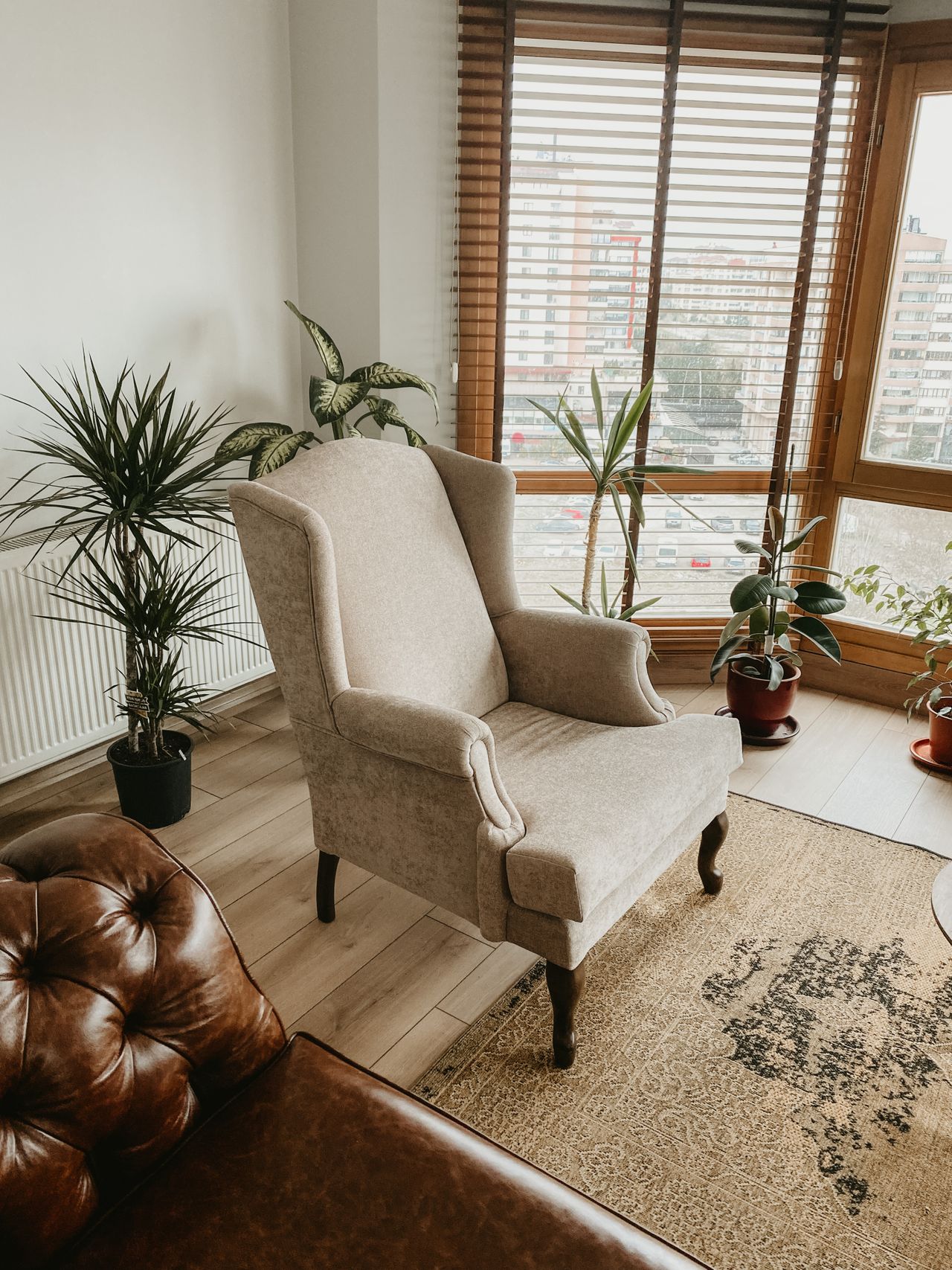
Wingback armchair by the window — Photo via Pexels
When the sofa is settled, the instinct is to fill every remaining corner with chairs. Resist it. One well-chosen armchair, angled toward the sofa, completes a conversation group better than three cramped chairs ever will. The eye counts outlines, not volume, so three separate pieces read as clutter while one reads as calm.
Place the chair where it earns its keep. Angled toward the sofa at about 90 degrees, it joins the conversation. Near a window with a small side table and a lamp, it becomes the reading corner everyone fights over. Keep 30 to 36 inches (75 to 90 cm) between the chair and the sofa so people can pass through without turning sideways, and make sure every seat can reach a surface for a cup.
Pick the chair for its job. A deep lounge chair with a soft back is for curling up with a book. An upright accent chair with a firmer seat is for guests and conversation. A swivel chair is a quiet hero: it turns toward the TV for movie night and toward the sofa for talk night. And check the doorway math again before delivery, because armchairs with wide backs are the pieces most likely to get stuck in a hallway.
13. Coordinate, Do Not Match
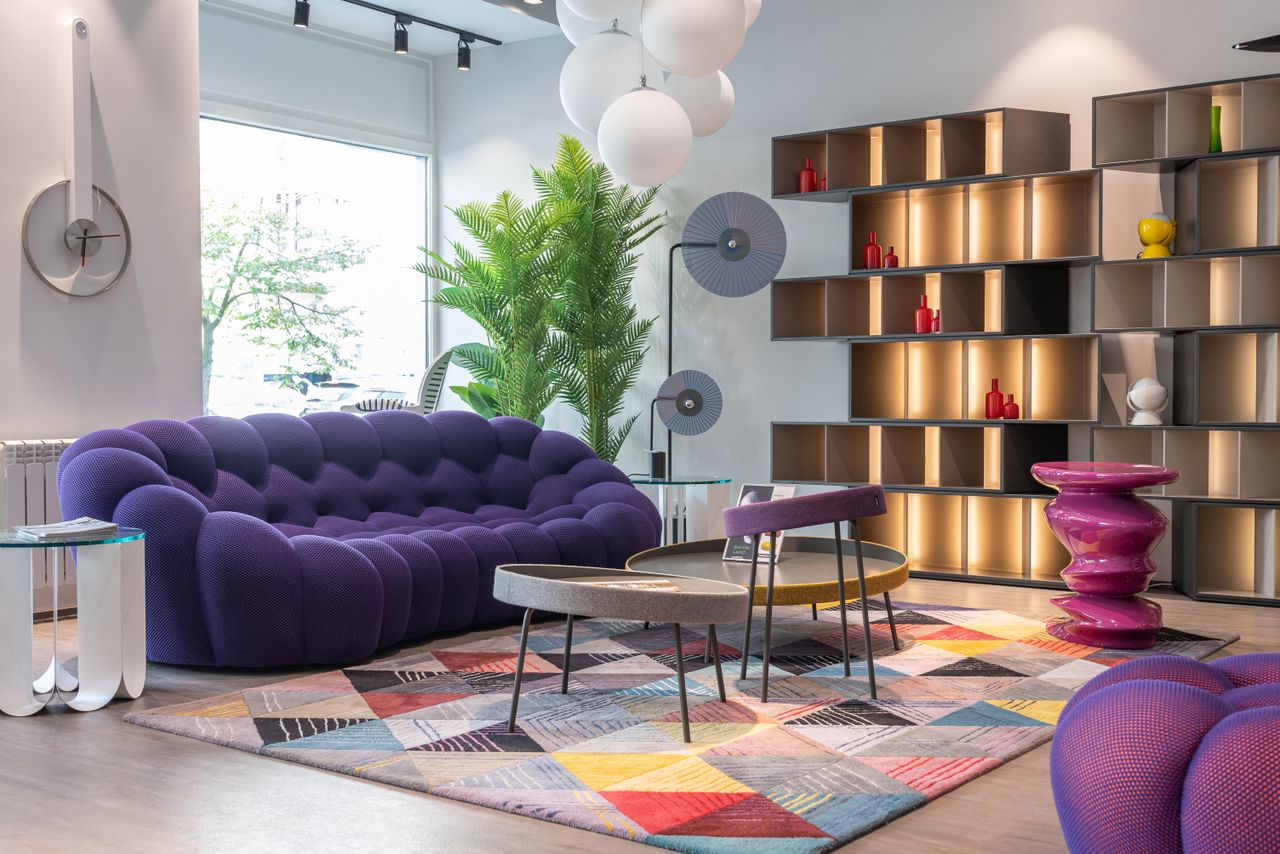
Eclectic living room with mixed styles — Photo via Pexels
Walk into any furniture store and you will see the matching set: same fabric, same wood, same everything, sold as one big box. It is the easiest way to buy, and the fastest way to a room that looks like a showroom floor instead of a home. The professional secret is the opposite: coordinate, do not match. Choose pieces that talk to each other without wearing the same uniform.
Here is how. Pick one or two things to repeat across the room. It could be a wood tone, like warm walnut on the coffee table and the bookshelf. It could be a metal finish, like black legs on the chairs and the floor lamp. It could be a color family, like creams and soft blues in the sofa, the rug, and the cushions. Once you have your two repeating notes, let one piece be the contrast: a bold armchair, a patterned rug, or a sculptural lamp that adds personality.
Repeat shapes too. If your sofa has curved arms, echo the curve in a round coffee table or an arched floor lamp. If your tables are all straight lines, a round mirror softens the room. One pattern rule keeps it safe: one pattern can be big and bold, the second should be smaller and quieter, and the third should be almost plain. That is the whole recipe for a room that looks collected over time, even if you bought it all this month.
14. Buy in the Right Order When Money Is Tight
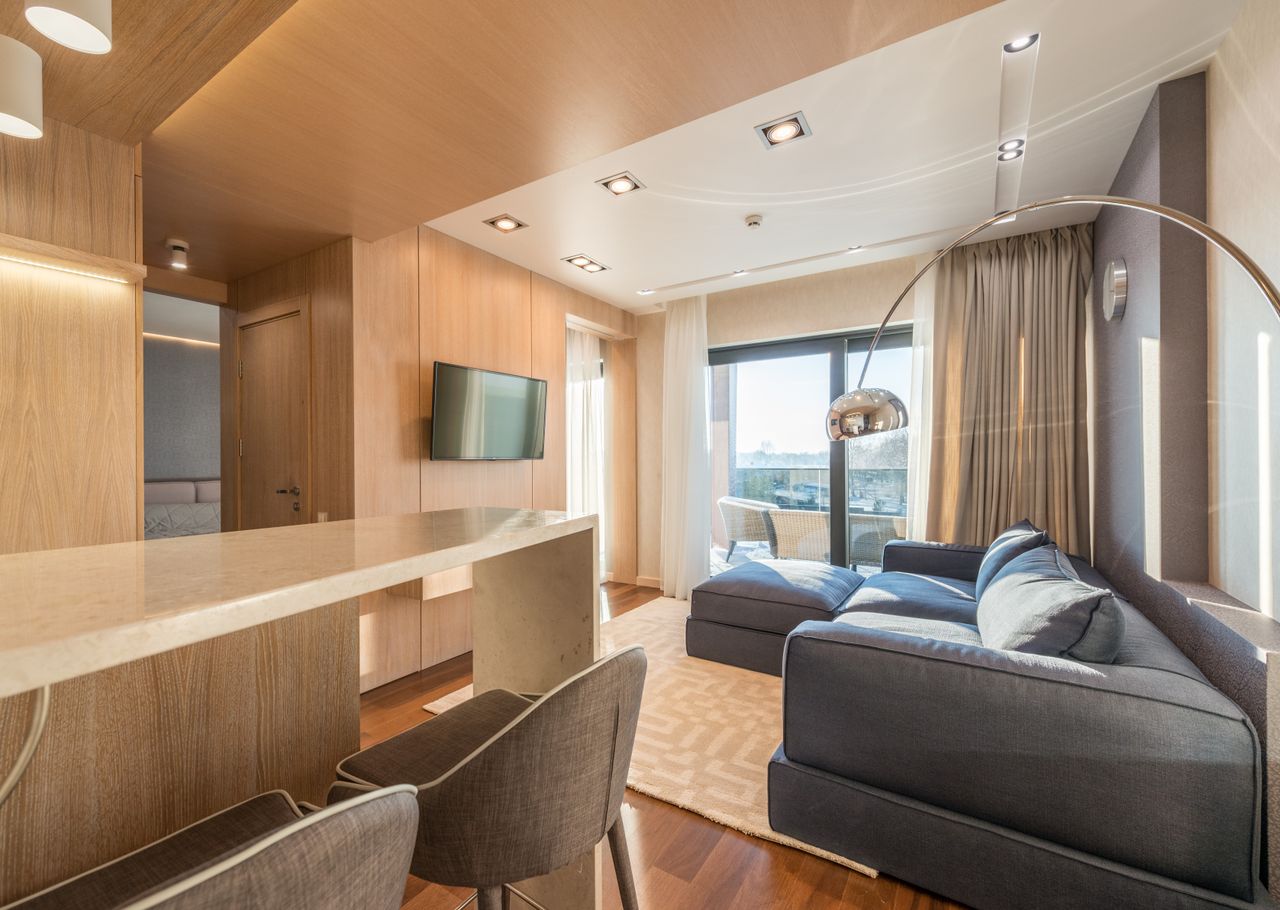
Compact apartment living room — Photo via Pexels
An empty room makes everything feel urgent, and that is how people overspend on the wrong things first. When the budget is tight, buy in this order and the room will work from day one. First, the sofa: it is the biggest piece, the most-used piece, and the hardest to get right, so it deserves the biggest share of your money. Second, the rug: it defines the seating zone and sets the color palette for everything after. Third, a surface: a coffee table or a pair of side tables, so every seat has somewhere for a cup.
Put about half of a modest budget into the sofa and the rug. A sensible split for a tight budget is 50 percent seating, 20 percent rug, 15 percent tables and storage, 15 percent lighting and accents. Save on the easy-swap pieces: side tables, lamps, and decor can be thrifted, upgraded later, or moved to another room. Never save on the thing your back touches every evening.
Do the cost-per-use math before you judge a price. A $1,000 sofa that sags in two years costs $500 per year of comfort. A $2,000 sofa that holds up for ten years costs $200 per year. The expensive one was cheaper. And wait two weeks between purchases: live with the sofa and rug, notice what is missing, then buy only that. For more ways to stretch every rupee and dollar, these small apartment budget ideas prove that a tight budget can still look intentional.
Final Thoughts
Choosing furniture well is not about having perfect taste. It is about following a simple order: measure the room, pick the right-sized sofa, choose fabric for your real life, check the build quality, size the tables and rug to the sofa, light it in layers, and buy in the right order. Nobody does all of this perfectly the first time, but every step you follow saves you money and regret later. Learning how to choose living room furniture is really learning how to choose for the way you live, and that is a skill that pays you back every single evening you sit down.
Start this weekend with just the tape measure. Mark your walls, your walkways, and your door swings. Once those numbers are on paper, every other decision gets easier, from the sofa width to the rug size to the coffee table height. And when the room is finally done, refresh it with the seasons: these cozy fall living room ideas show how small swaps keep good furniture feeling new.
Frequently Asked Questions
What sofa size is right for a small apartment living room?
Aim for 60 to 78 inches (152 to 198 cm) wide, roughly two-thirds of the wall it sits against. Choose slim arms and visible legs, and leave 30 inches (75 cm) of walking space around it.
What living room furniture should I buy first?
Buy in this order: sofa first, rug second, coffee table or side tables third. Live with those for two weeks, then add storage, chairs, and lighting only where you feel a real need.
Sofa or sectional: which is better for a small living room?
It depends on the room's shape, not just its size. A sectional fits square rooms and open plans well; narrow rooms usually work better with a straight sofa plus one chair.
How much should I spend on a sofa?
Use cost-per-use math: divide the price by the years it should last. A $2,000 sofa lasting ten years ($200/year) beats a $1,000 sofa lasting two years ($500/year).
How can I tell if a sofa is good quality in the store?
Lift a cushion and look for a kiln-dried hardwood frame with corner blocks, sinuous or hand-tied springs, and foam density of 1.8 pcf or higher. Sit on the corners and listen for creaks.
What fabric is best with kids and pets?
Performance polyester, olefin, and microfiber resist stains and wipe clean easily. Look for a rub count of 25,000 double rubs or more, and save linen and light cotton for calmer households.
Should I buy a matching living room set or mix individual pieces?
Mix. Repeat one or two elements (a wood tone, a metal finish, a color family) across pieces and let one item add contrast. Matching sets look like a showroom; coordinated rooms look like a home.
How do I make sure the furniture fits through my door?
Measure the narrowest point from the street to the room: front door, hallways, stair turns, and interior doors. Compare with the carton's dimensions, not just the assembled size, and check the diagonal depth of sofas.
Gallery
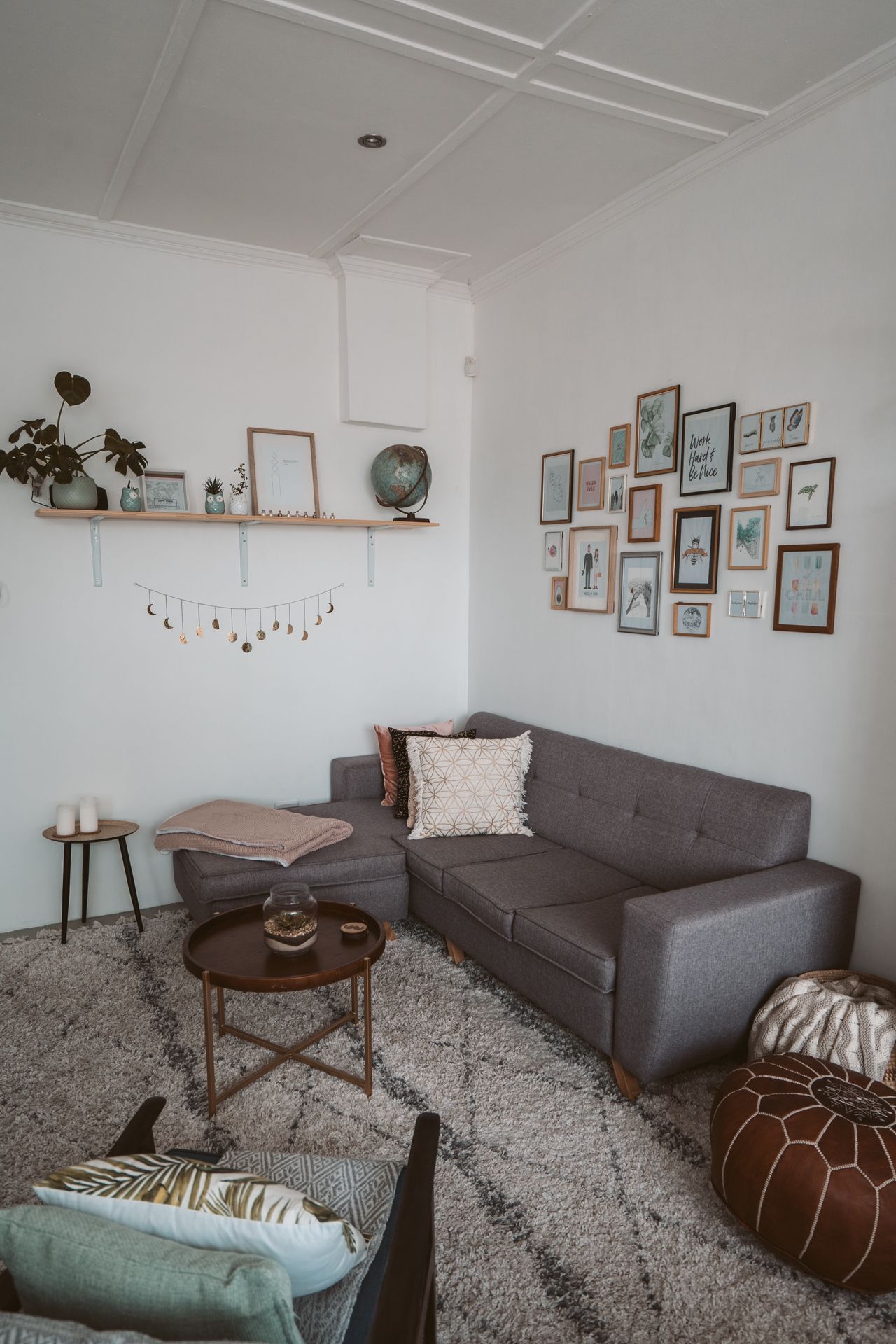
Cozy living room interior — Photo via Pexels
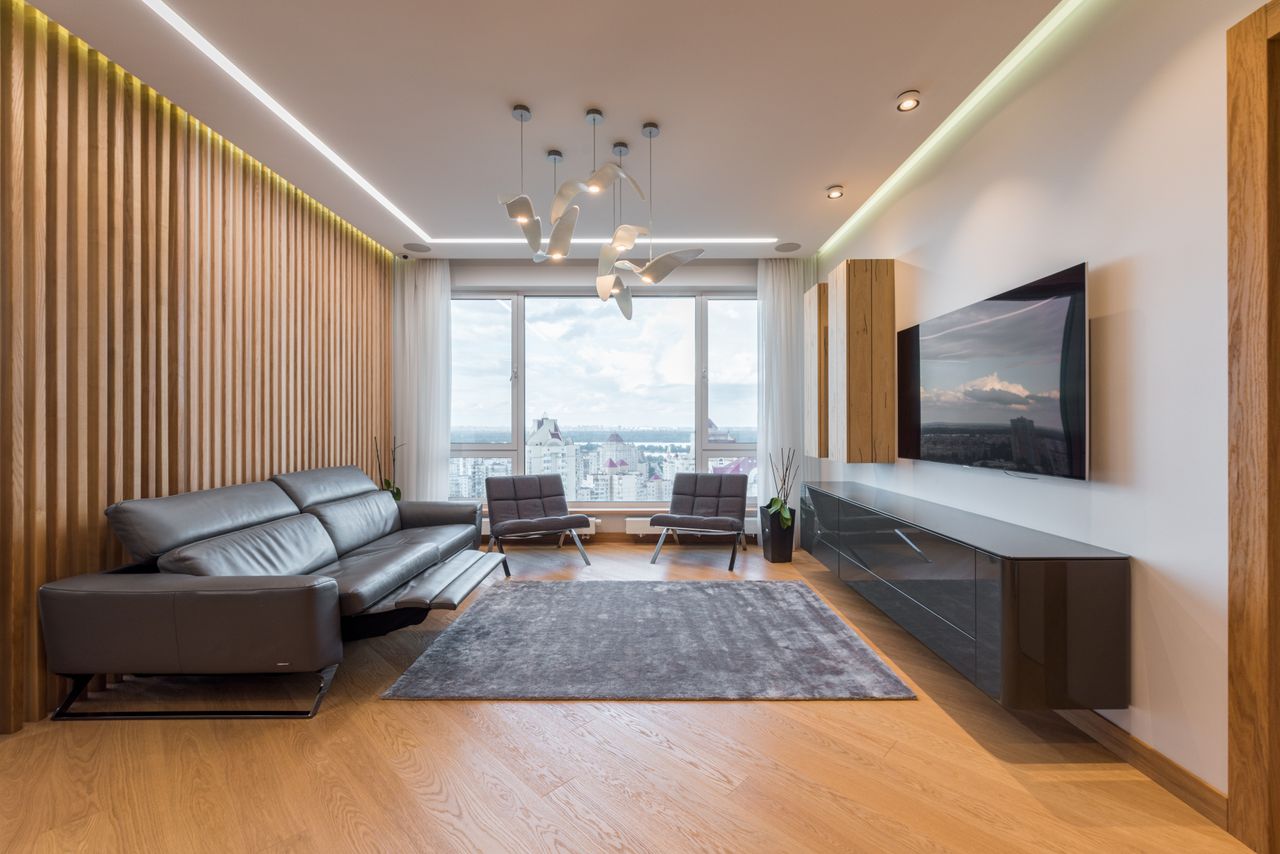
Modern living room interior — Photo via Pexels
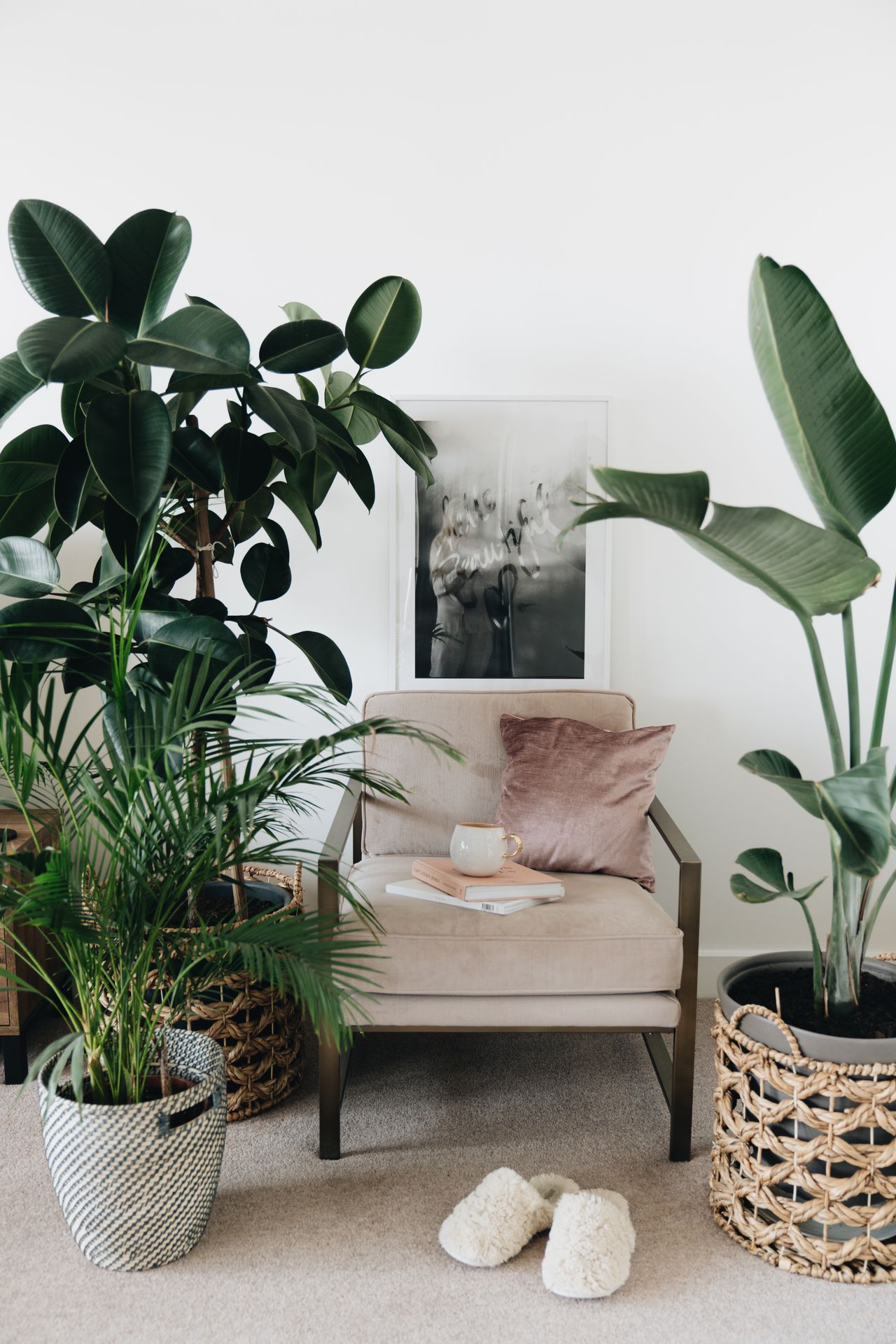
Living room with plants and armchair — Photo via Pexels
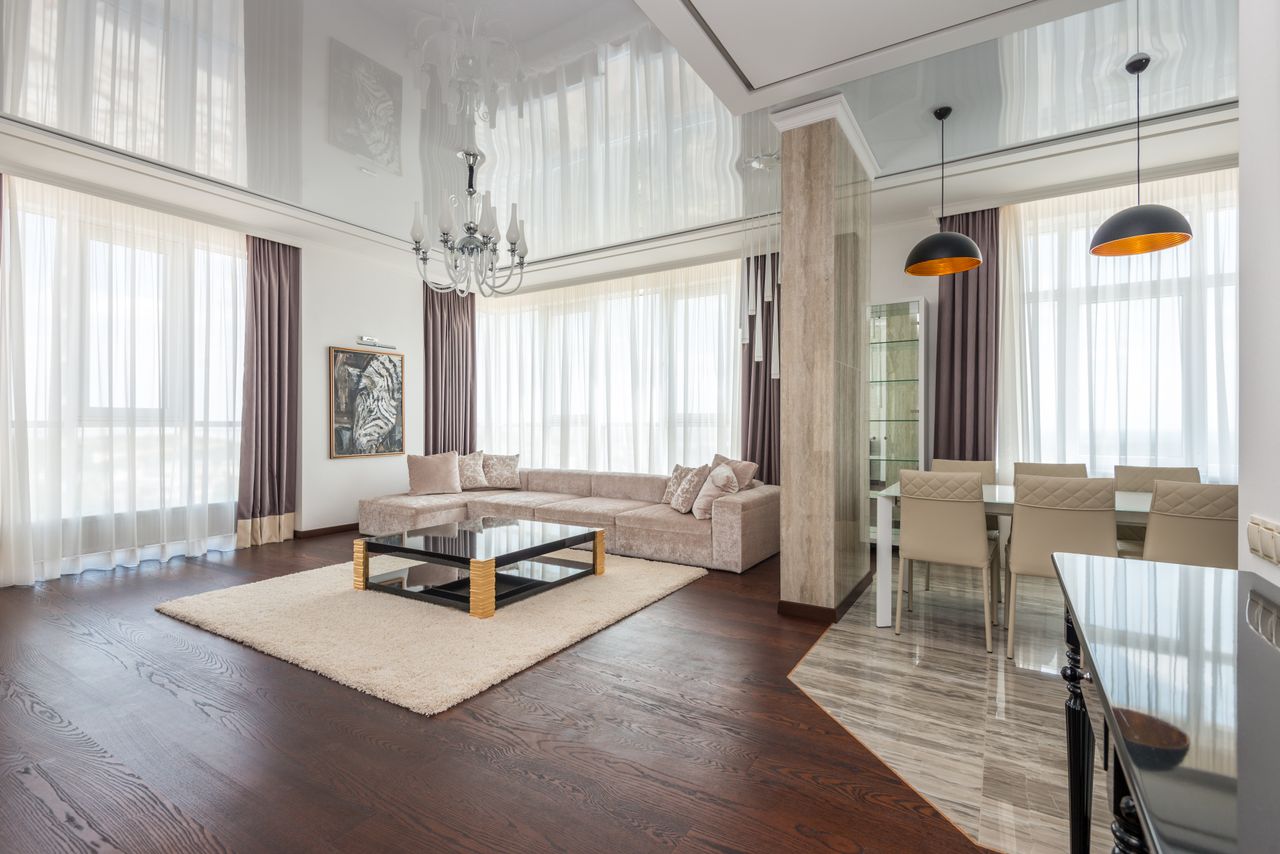
Modern living room design — Photo via Pexels
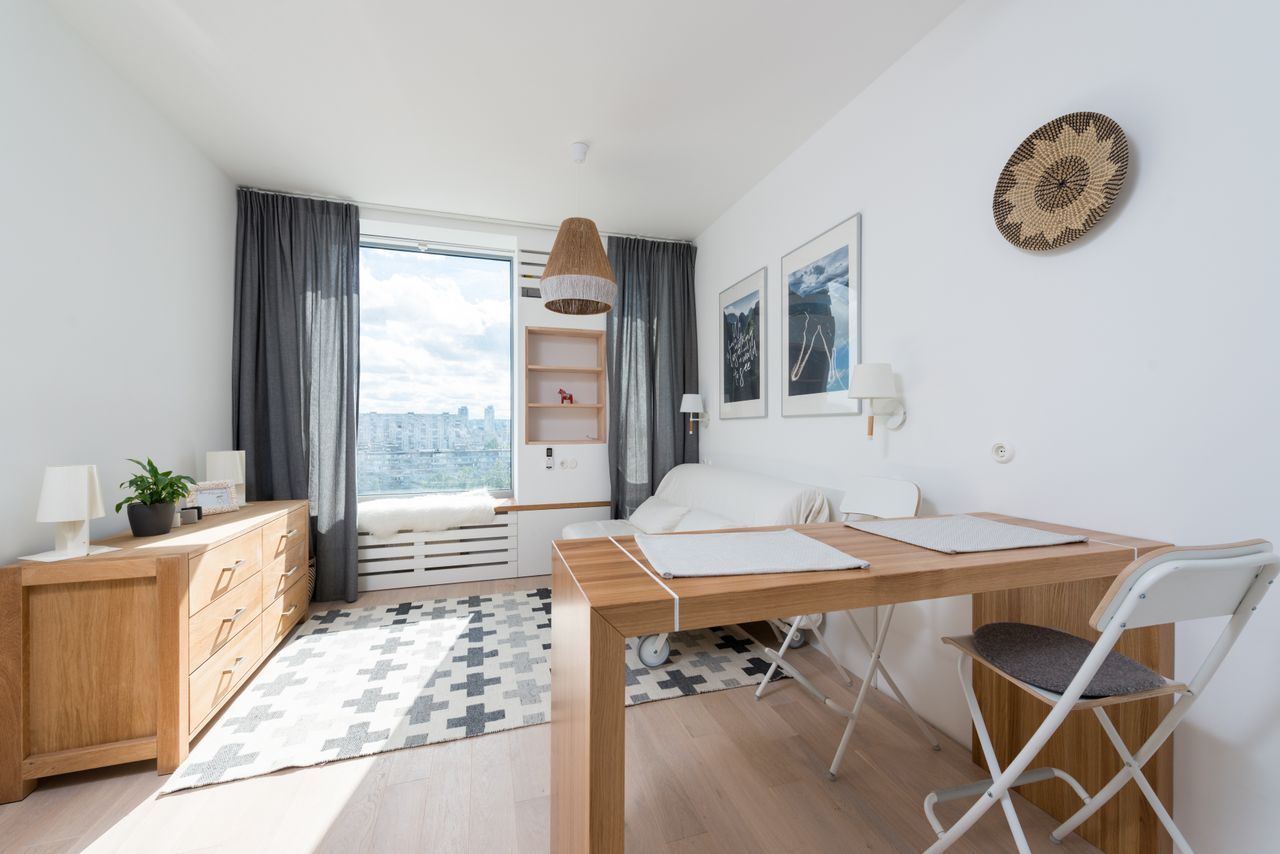
Small apartment living room — Photo via Pexels
Sources
The measurements, material standards, and buying methods in this guide are drawn from these reputable sources: WJS Home's furniture buying guide on spacing rules, price tiers, fabric abrasion ratings, and foam density (wjshomestore.com); Apartment Therapy's two-thirds rule and ideal living room measurements (apartmenttherapy.com); Povison's daily-life buying order and core-trio method (povison.com); the Association for Contract Textiles' 2025 woven indoor upholstery performance guidelines on Wyzenbeek and Martindale abrasion testing (contracttextiles.org); and Godrej Interio's sofa buying guide on frames, cushion fills, and rub-count benchmarks (interio.com).

No comments:
Post a Comment