Walk into any living room and you will notice the sofa first. Then you notice the cushions. Get the number wrong and the whole room feels off — too many looks messy and crowded, too few looks bare and unfinished. The good news is that there is a simple answer to how many cushions on a couch you really need, and it depends on three things: your sofa size, your style, and how you actually live. In this guide I share the exact counts I have used for 15 years, two easy formulas that always work, and the pattern-mixing trick that never fails. You do not need design training or a big budget. Most of what follows uses pillows you may already own — just counted, sized, and arranged with a plan.
In this guide:
- Count by Sofa Size: The Quick Guide
- How Many on a 3-Seater Sofa
- The 3-2-1 Formula Explained
- The 2-2-1 Formula for a Balanced Look
- Odd or Even: Which Number Looks Better
- How Many Are Too Many
- Mixing Patterns Without Clashing
- Pick the Right Pillow Sizes
- Layer Back to Front Like a Stylist
- Mix Textures for Instant Depth
- Lumbar and Shaped Pillows
- Add a Throw Without the Mess
- Pull Colors From the Room
- Care, Fluffing, and Seasonal Swaps
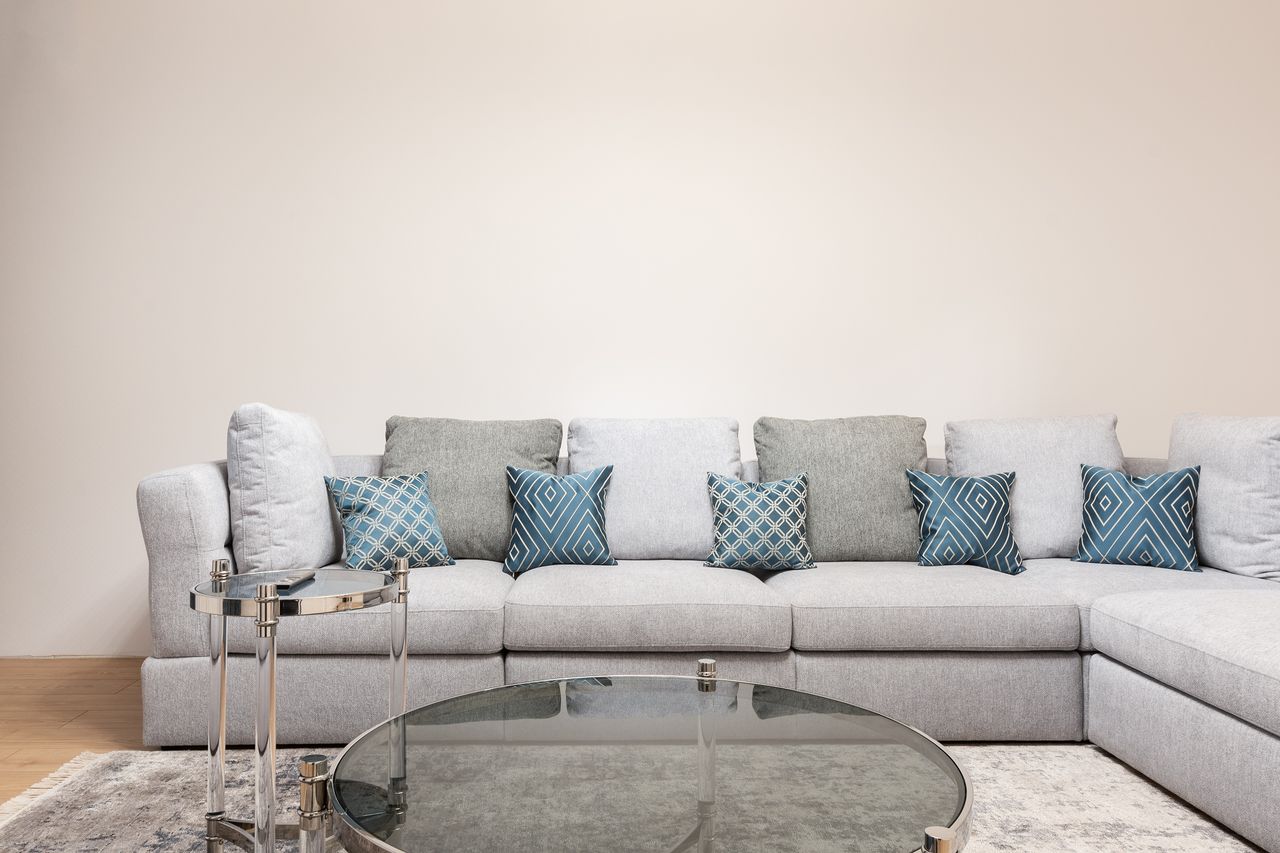
A light gray sectional styled with blue patterned pillows — Photo via Pexels
1. Count by Sofa Size: The Quick Guide
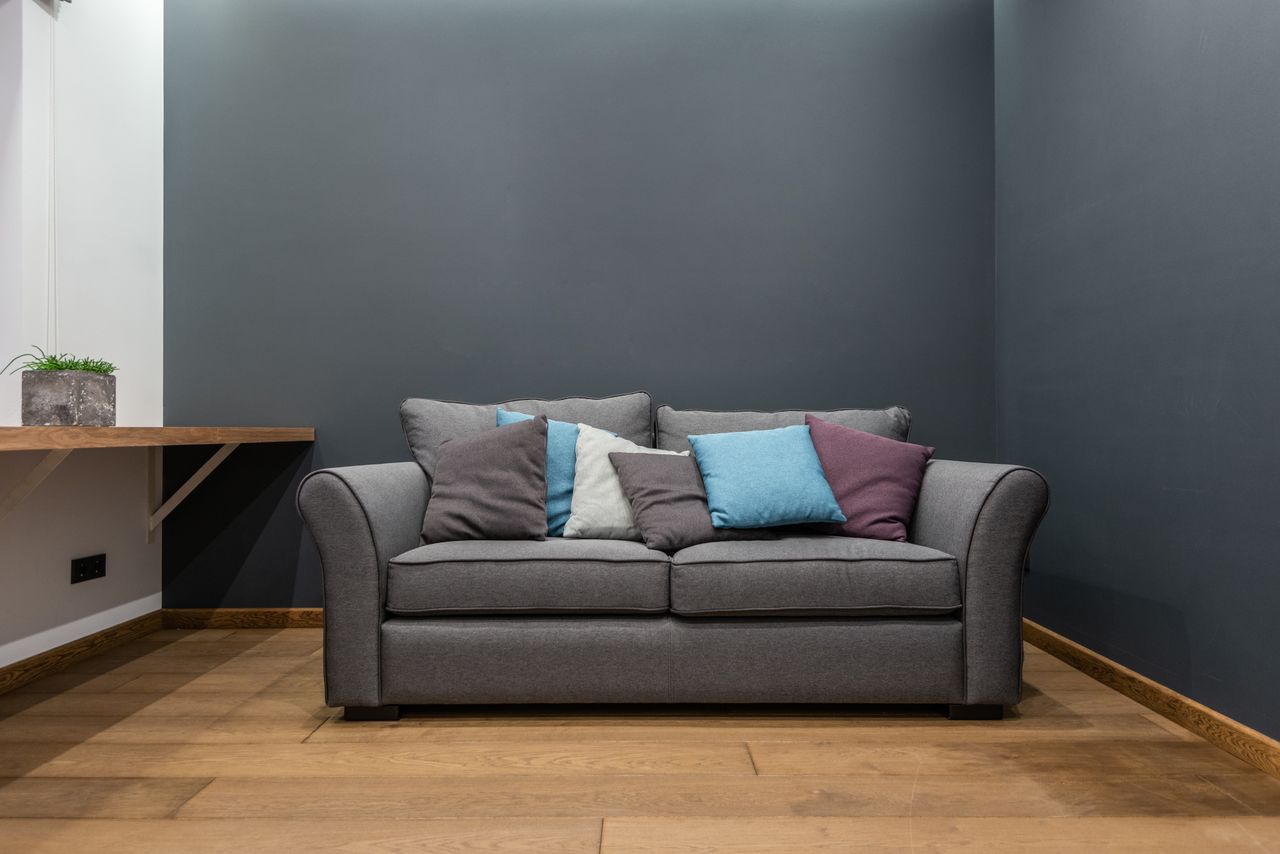
A small loveseat with three colorful pillows — Photo via Pexels
The fastest rule is also the simplest: match the count to the sofa. A loveseat or two-seater looks best with 2 to 3 pillows. A standard three-seater takes 3 to 5. A large sofa over 90 inches wide, or a sectional, takes 5 to 7. These numbers come from proportion. The wider the sofa, the more visual weight the pillows must carry, or the sofa starts to look empty and unfinished.
Measure your sofa before you shop. A standard three-seater is about 72 to 84 inches wide. If yours is under 70 inches, treat it like a loveseat and stop at three pillows. For sectionals, style each section like its own small sofa — two or three pillows per side — instead of counting the whole piece at once. If you are still choosing your sofa, read our guide to choosing living room furniture first, because size decides everything that follows.
2. How Many on a 3-Seater Sofa
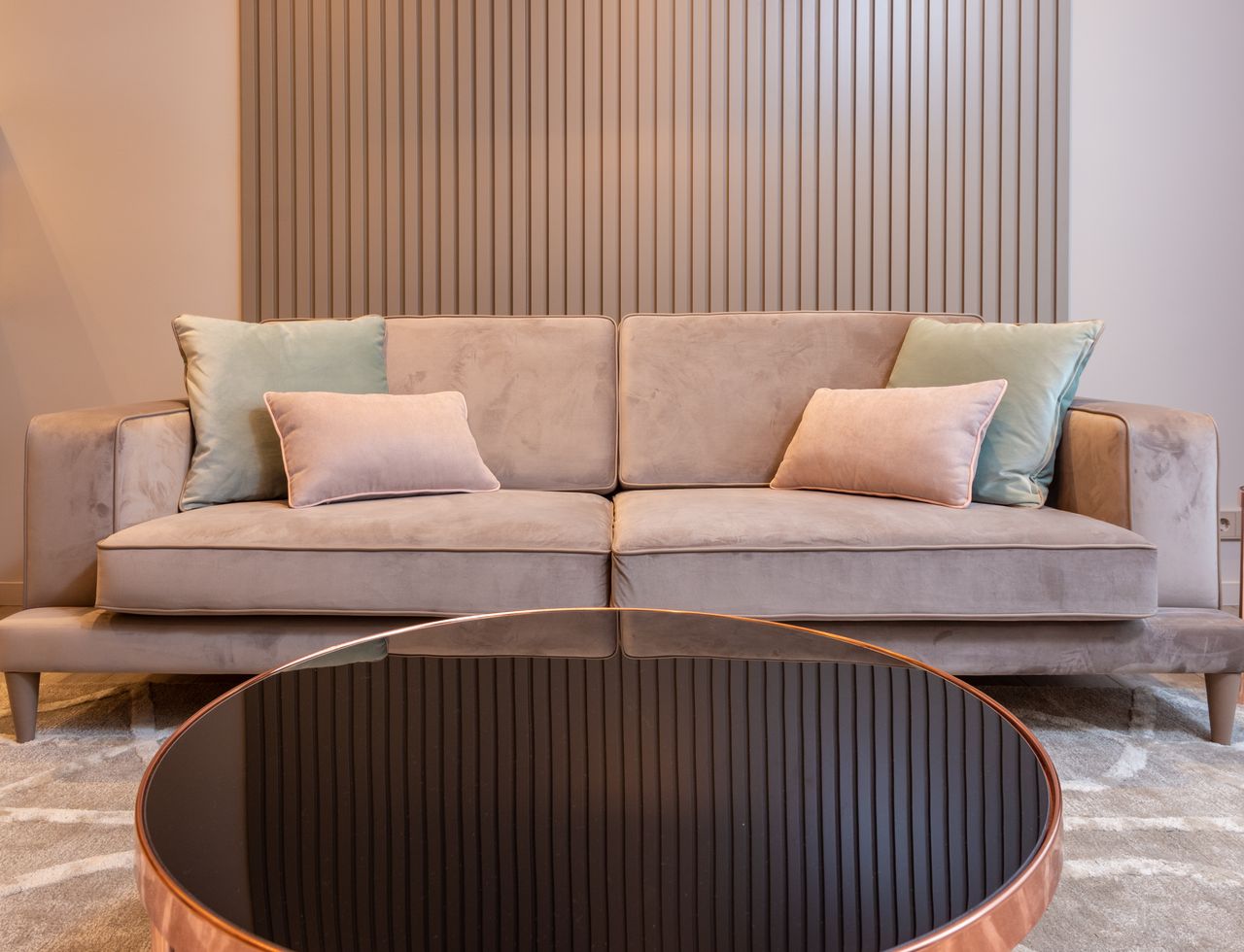
A three-seater sofa with four pastel pillows — Photo via Pexels
This is the question I hear most from readers, and the honest answer is three to five pillows, with four as the sweet spot for most homes. Three gives a clean, modern look — roughly one pillow per seat. Five gives a fuller, layered look. Four sits right in the middle and suits almost every style. This is also where the question of cushions on a couch causes the most trouble: people buy six or seven because the store display looked full, then the sofa feels crowded at home.
Start with four: two larger 20-inch squares at the corners and two 18-inch squares layered in front of them. Then sit down. If your back still reaches the sofa back easily and nothing falls on the floor, you have room for a fifth — a small lumbar pillow in the center. If you have to move pillows every single time you sit, take one away. Comfort is the real test, not the store photo.
3. The 3-2-1 Formula Explained
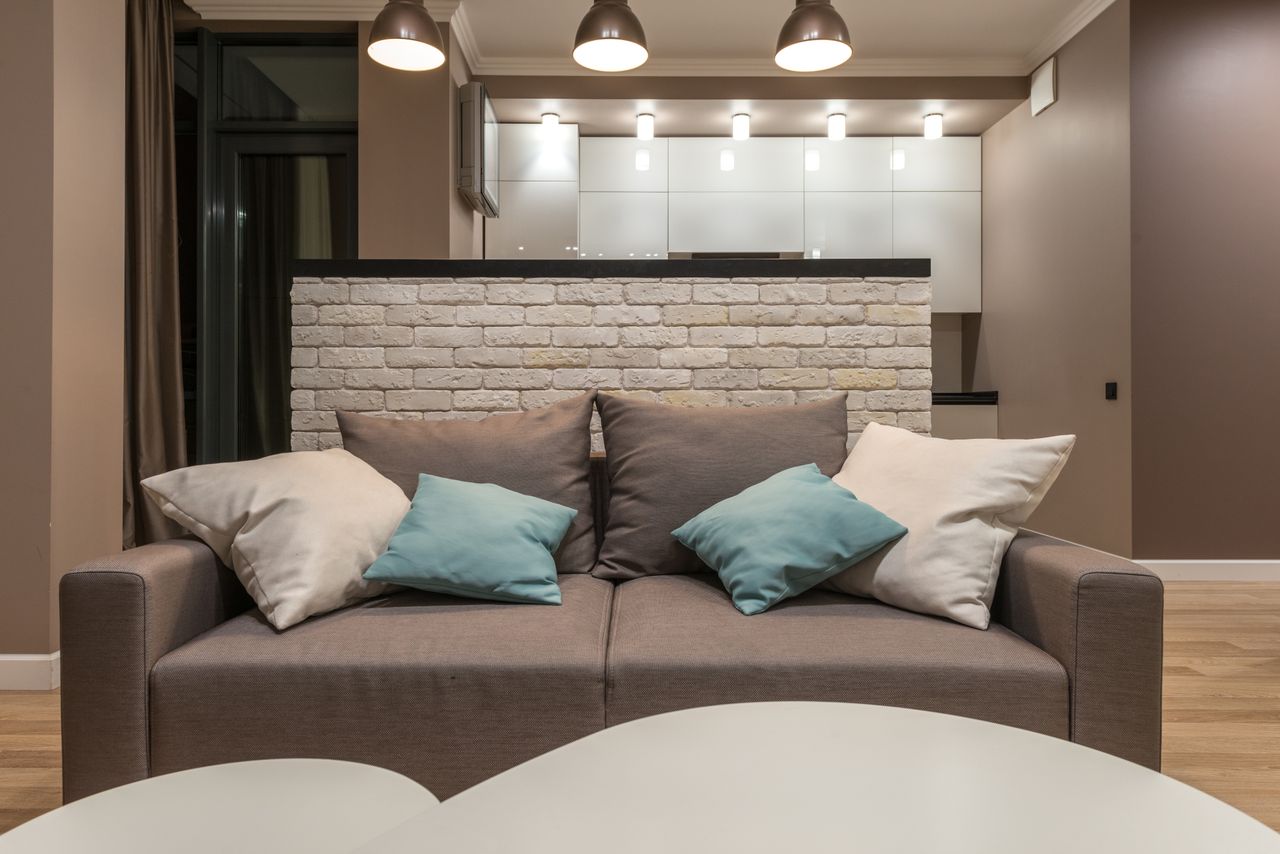
A relaxed asymmetric pillow arrangement — Photo: Max Vakhtbovych, via Pexels
The 3-2-1 formula is the easiest arrangement for a standard sofa: three pillows on one side, two on the other, and one in the middle. It sounds uneven, and that is exactly the point. The slight asymmetry looks relaxed and natural, like a stylist arranged it in seconds. Put the group of three on the side guests see first when they enter the room, the pair on the other side, and let the single pillow bridge the middle.
Keep the sizes stepping down toward the center: 22-inch squares in the back corners, 20-inch squares in front of them, and a 12-by-20-inch lumbar pillow in the middle. Use your boldest pattern on that single middle pillow — it becomes the focal point of the whole sofa. This formula works best on sofas between 72 and 90 inches wide, which covers most three-seaters sold today.
4. The 2-2-1 Formula for a Balanced Look
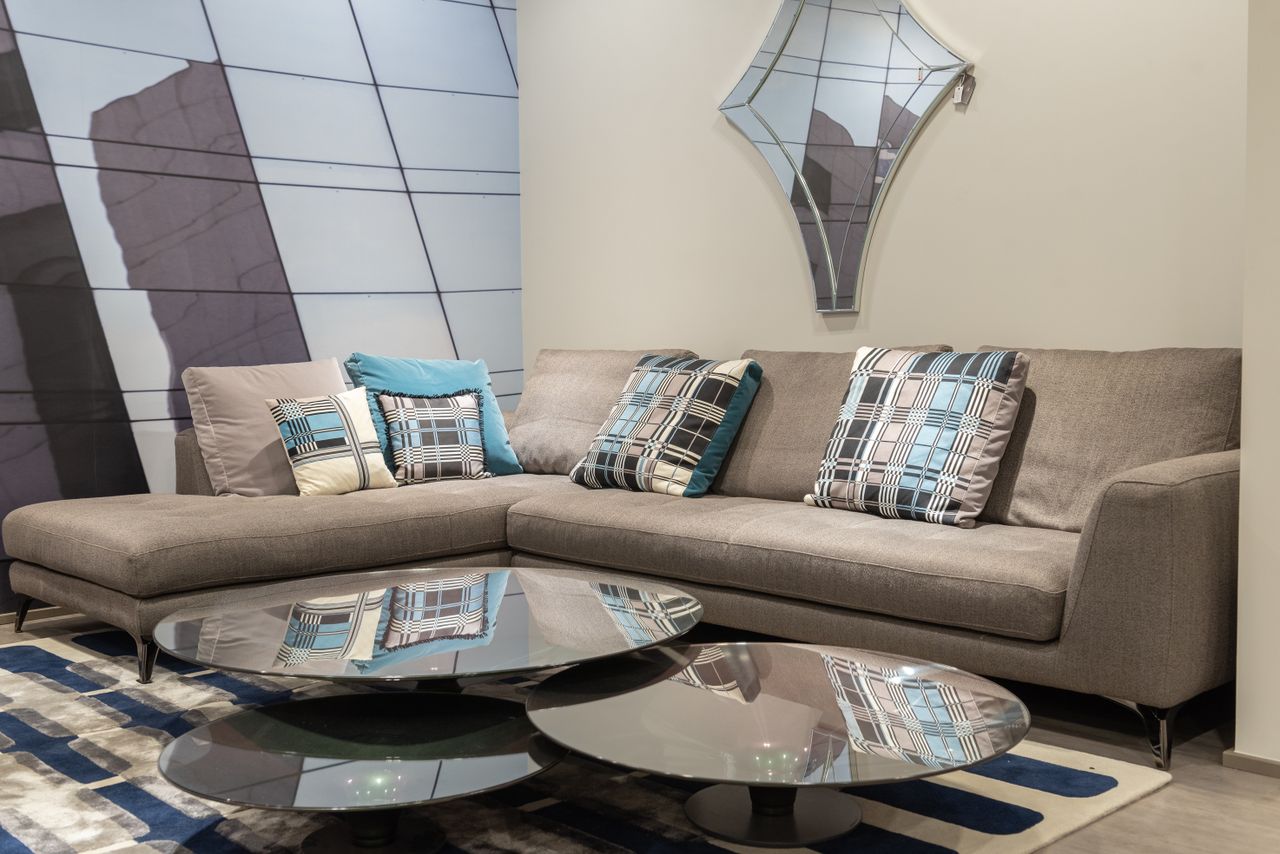
A symmetrical five-pillow arrangement on a corner sofa — Photo via Pexels
If you like things balanced, use the 2-2-1 formula: two large matching pillows angled against each armrest, two slightly smaller ones layered in front of them, and one standout pillow in the center. Five pillows total, perfectly mirrored. It is the most popular arrangement in styled homes because it always looks finished — even with simple solid colors and no bold prints at all.
The classic size ladder is 22-inch squares at the back, 20-inch squares in the middle, and one 18-inch square or lumbar pillow front and center. Mirror the two sides exactly — same colors, same sizes. Then make the center pillow the rebel: a different color, a bold print, or a rich texture like velvet. This balanced look pairs beautifully with a matching living room sofa set, where the same arrangement can repeat across the loveseat.
5. Odd or Even: Which Number Looks Better
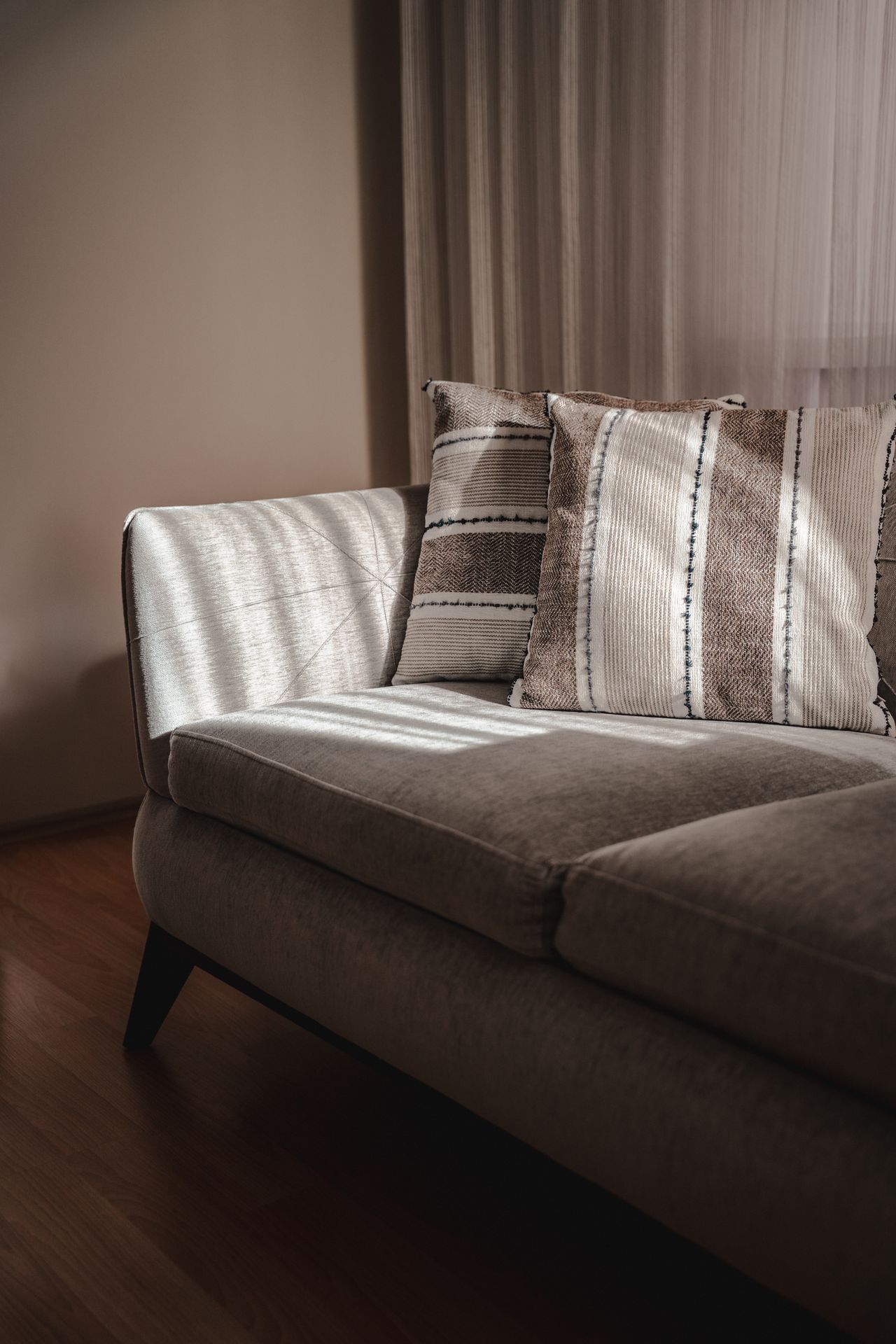
A matching pair of striped cushions — Photo via Pexels
Designers have argued about this for years, and both sides are right. Odd numbers — three, five, seven — look relaxed, modern, and styled. The eye moves across them instead of stopping, which feels casual and lived-in. Even numbers — two, four, six — look formal, calm, and traditional because of their natural symmetry. Neither choice is wrong; they simply send different signals to anyone who walks in.
Match the number to your room, not to a rule book. A clean modern living room with straight lines looks better with three or five pillows. A classic room with matching lamps and framed prints suits four or six. If you cannot decide, start odd — an odd count forgives small mistakes in color and pattern far better than an even one does.
6. How Many Are Too Many
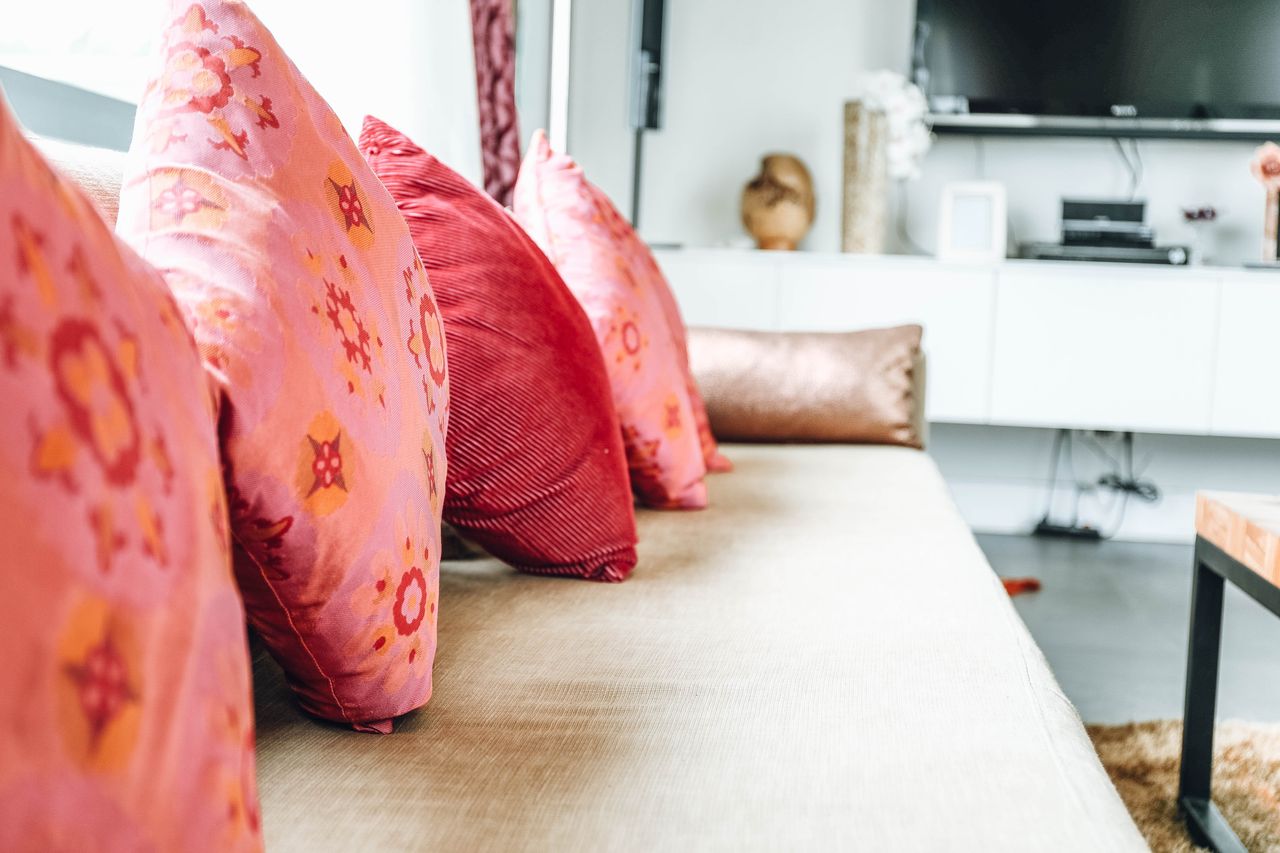
When pillows pile up, sitting gets hard — Photo via Pexels
Here is the test I give every client: sit down the way you normally would. If you have to move more than two pillows to sit comfortably, you have too many. A sofa is for sitting first and looking good second. When pillows pile so deep that no one can lean back, guests stop using the sofa — and a sofa no one sits on is just expensive decoration.
Watch for these warning signs: pillows falling on the floor every day, the sofa looking smaller than it really is, or a pillow mountain rising above the armrests. The fix is simple. Remove pillows one at a time until sitting feels natural again. Most over-styled sofas only need to lose two pillows. Keep the extras in a basket nearby and rotate them in with the seasons.
7. Mixing Patterns Without Clashing
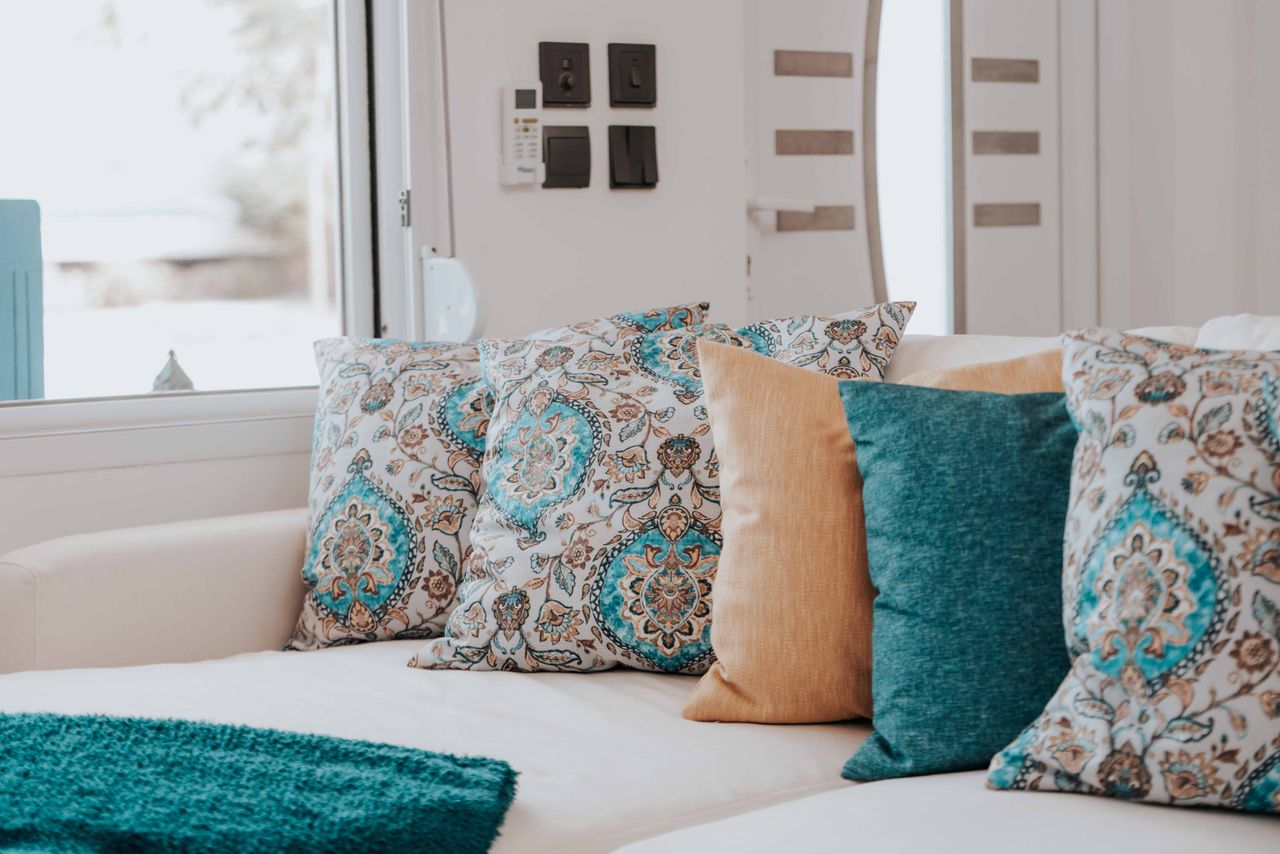
Different pattern scales mixed in shared colors — Photo via Pexels
The secret to mixing patterns is scale, not color. Pick three patterns in three different sizes: one large print (big florals or wide stripes), one medium print (small geometrics or checks), and one solid or lightly textured pillow. Different scales never fight, because the eye reads them as layers. Two large bold prints side by side will always clash, no matter how well their colors match.
Then tie everything together with color. Choose two or three colors already in your room — your rug is the best place to steal them from — and make sure every pillow shares at least one of those colors. A safe starter set: one striped pillow, one small geometric print, and one solid in a color pulled from the rug. If it still feels busy, swap one patterned pillow for a solid. Calm beats clever every time.
8. Pick the Right Pillow Sizes
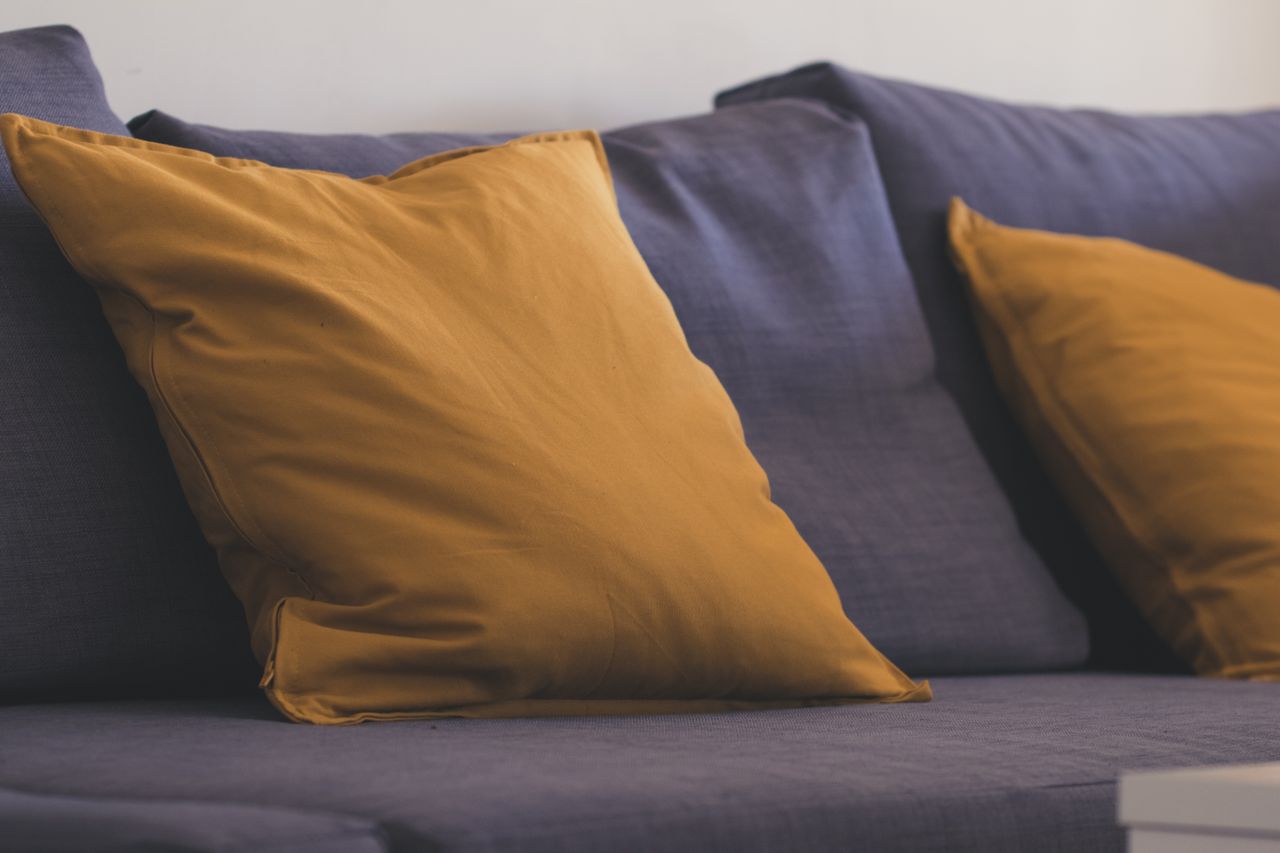
Large squares set the scale for the whole sofa — Photo via Pexels
Size matters more than most people think. On a standard sofa, use 20- to 22-inch squares as your back layer, 18-inch squares in the middle, and a 12-by-20-inch lumbar or 16-inch square in front. The golden rule: each front layer should be about 2 inches smaller than the one behind it. That stepped sizing is what creates the deep, layered look you see in magazine photos.
Here is one more pro trick: buy inserts 2 inches larger than your covers. A 22-inch insert inside a 20-inch cover gives you that plump, full look with zero effort — this is the famous stylist secret behind the "karate chop" dent, and it works with cheap inserts too. For small loveseats, drop everything down one size: 18-inch squares at the back, 16-inch in front. Oversized pillows on a small sofa swallow it whole.
9. Layer Back to Front Like a Stylist
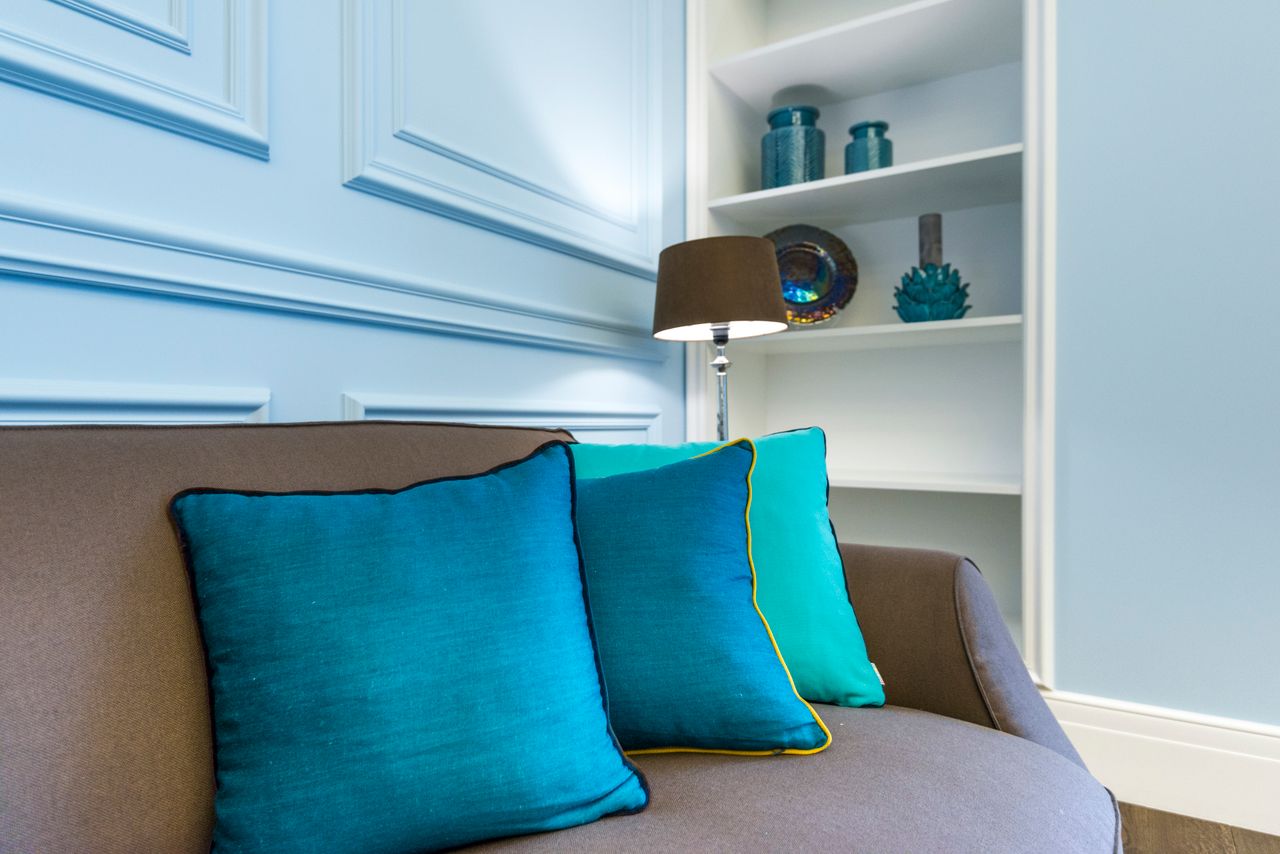
Pillows layered from large at the back to small in front — Photo via Pexels
Always build from back to front, biggest to smallest. Place the largest squares first, leaning against the armrests or the sofa back at a slight angle. Then layer the medium pillows in front of them, slightly off-center so they overlap. Finish with the smallest pillow — usually the lumbar — right in the middle and a touch forward. Every pillow should still show at least half its face; if one hides completely, it is too small or pushed too far back.
Angle matters more than people expect. Perfectly flat pillows look stiff, while a slight tilt of about 15 degrees looks relaxed and inviting. Fluff each pillow with a firm shake, then pinch the top corners lightly to shape them. Step back three paces and check that both sides sit at the same height. If one side slumps, its insert is too small for the cover.
10. Mix Textures for Instant Depth
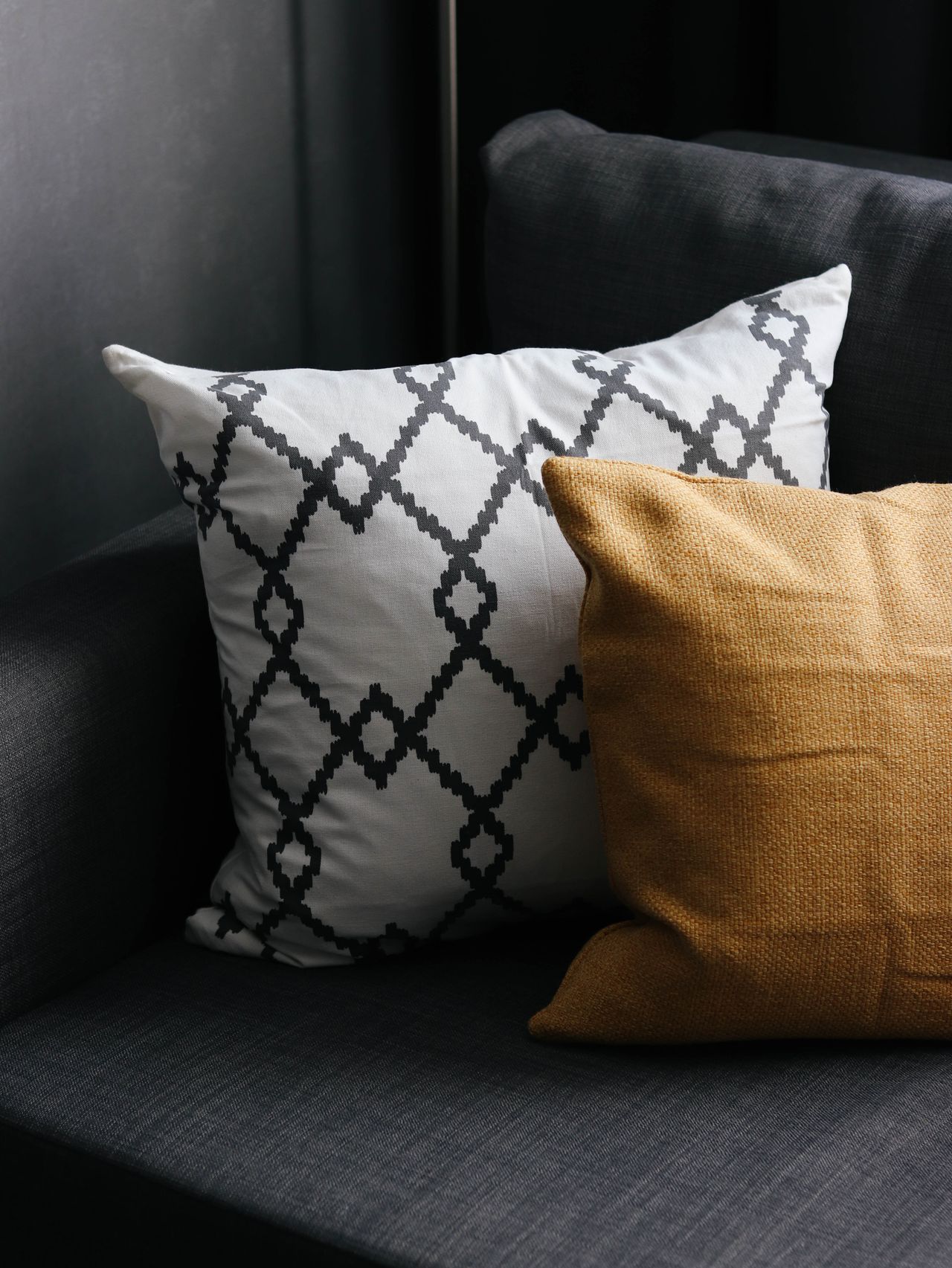
Contrasting textures add depth without new colors — Photo via Pexels
When a sofa looks flat, the problem is rarely color — it is texture. Mix at least three textures: something smooth (cotton or linen), something soft (velvet or chenille), and something nubby (knit, boucle, or woven). Each texture catches the light differently, which is why a mix of creams and grays can look richer than a rainbow of flat cotton pillows.
Pair textures against your sofa fabric for contrast. A smooth leather or faux-leather sofa begs for nubby knit and soft velvet. A linen sofa loves the sheen of velvet. Keep rough textures like jute or heavy weaves to a single pillow so the sofa stays comfortable to lean on. And remember: texture counts as a pattern — one heavily textured solid can replace a printed pillow in your mix.
11. Lumbar and Shaped Pillows
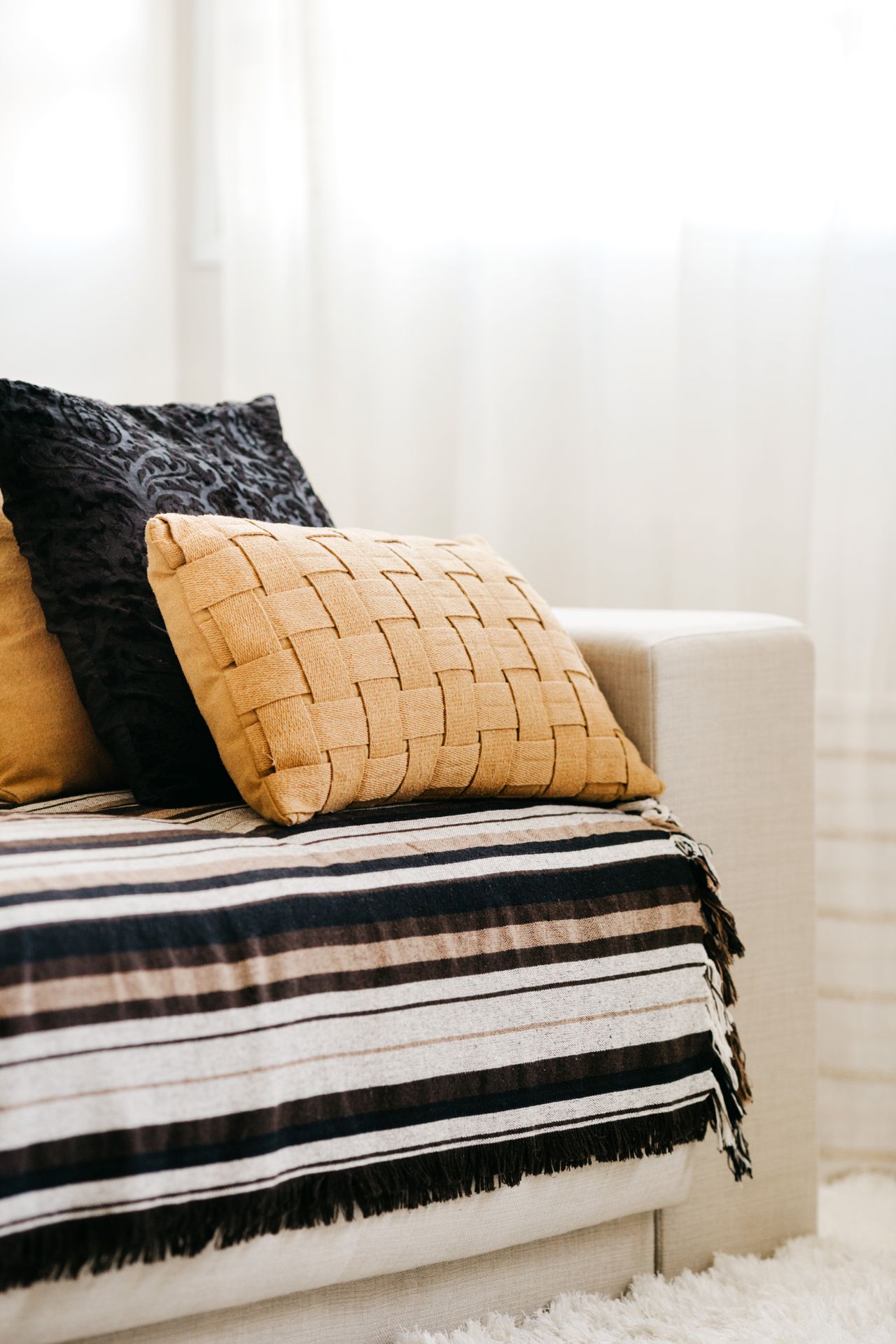
A woven lumbar pillow anchors the front layer — Photo via Pexels
Lumbar pillows — the long rectangles, usually 12 by 20 or 14 by 24 inches — are the hardest-working shape on a sofa. They fill the awkward gap in front of the larger squares, support your lower back when you read, and their horizontal line breaks up a wall of squares. One lumbar per sofa is usually enough; two is the maximum.
Round, bolster, and knot pillows are accents, not anchors. Use one shaped pillow per arrangement, placed in front like jewelry. More than one shaped pillow turns the sofa into a gift shop. Round pillows especially suit armchairs and loveseats, where their small scale matches the seat. If your sofa already holds five squares, a single round pillow in front is all the extra shape you need.
12. Add a Throw Without the Mess
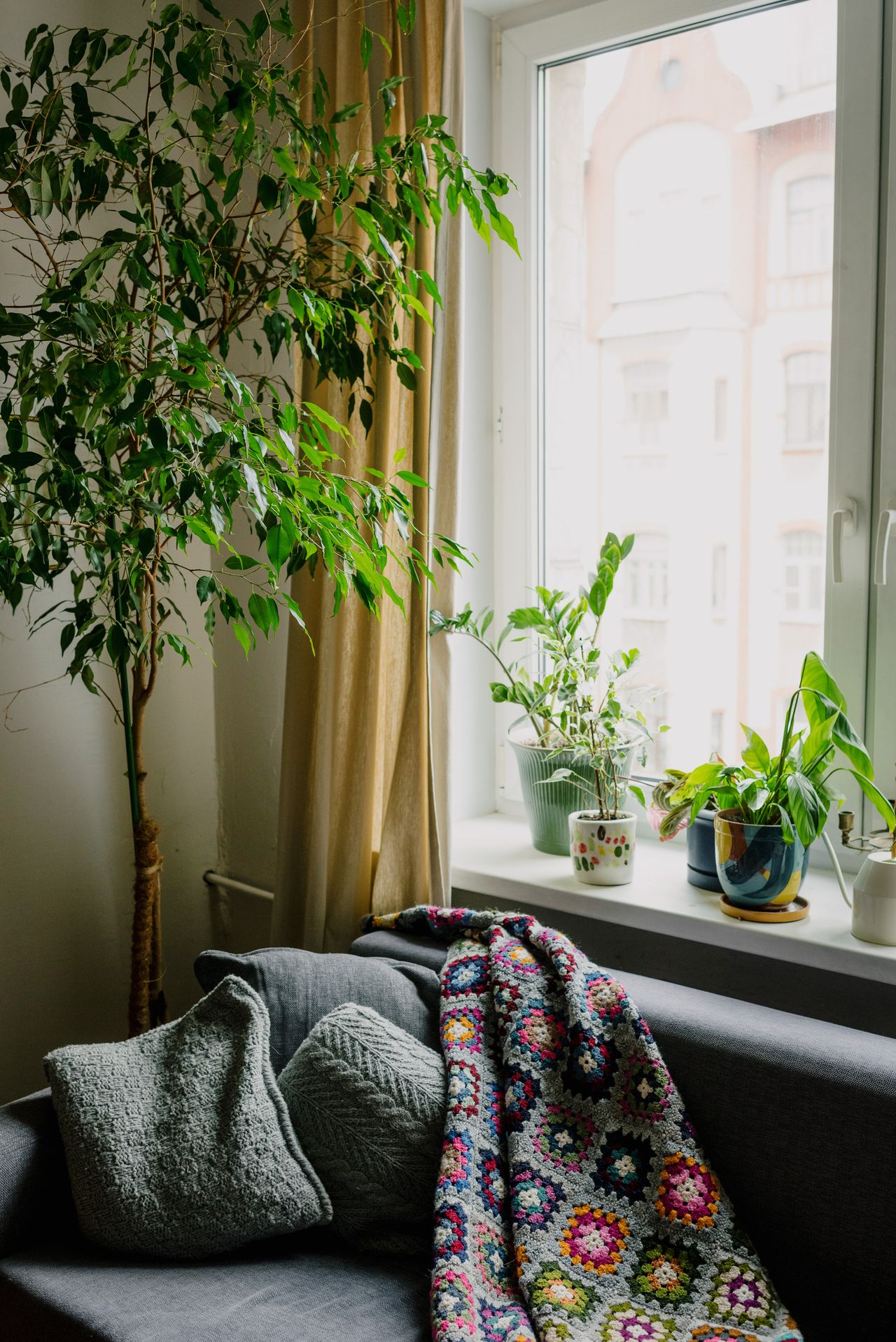
A throw draped over one corner frames the pillows — Photo via Pexels
A throw blanket makes pillows look intentional — it is the difference between "placed" and "styled." Drape it over one armrest or one corner, never across the whole sofa back; a full-width throw hides your pillow work and collects dust. The classic fold: fold the throw in thirds lengthwise, drape it over the arm, and let one end hang about 12 inches. It should look tossed, not ironed.
Match the throw's weight to the season and its color to one pillow, not to the sofa. A chunky knit for winter, a light cotton for summer. Keep the throw to one side so at least two seats stay clear for sitting. If you have pets, choose a washable throw in a mid-tone color — it protects the armrest and hides fur between washes. For seasonal throw ideas, see our cozy fall living room ideas.
13. Pull Colors From the Room
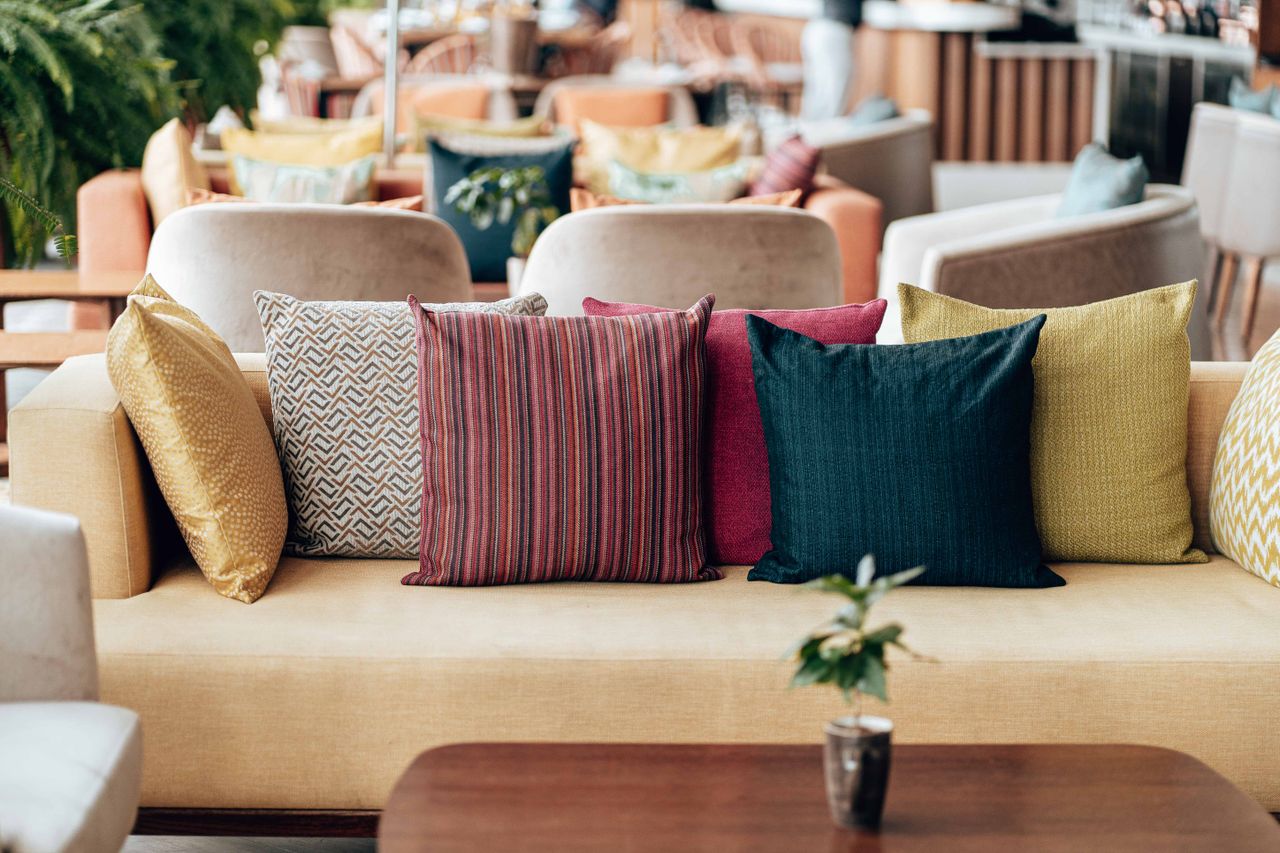
Bold colors pulled from around the room — Photo via Pexels
The easiest color scheme is one you steal from your rug. Rugs already hold 3 to 5 colors chosen to work together, so pulling two or three of them for your pillows guarantees harmony. No rug? Use your curtains or your largest art print instead. Aim for this ratio: about 60 percent of your pillows in neutrals or quiet tones, 30 percent in a mid-tone color, and 10 percent in one bold accent. That balance keeps things lively without turning chaotic.
On a neutral sofa — beige, gray, or cream — almost any palette works, which is why light sofas are a stylist's favorite; our cream couch ideas show how far neutrals can go. On a colored sofa, repeat the sofa's own color in one pillow and let the rest contrast. When in doubt, white or ivory pillows rescue any combination — they give the eye a resting place.
14. Care, Fluffing, and Seasonal Swaps
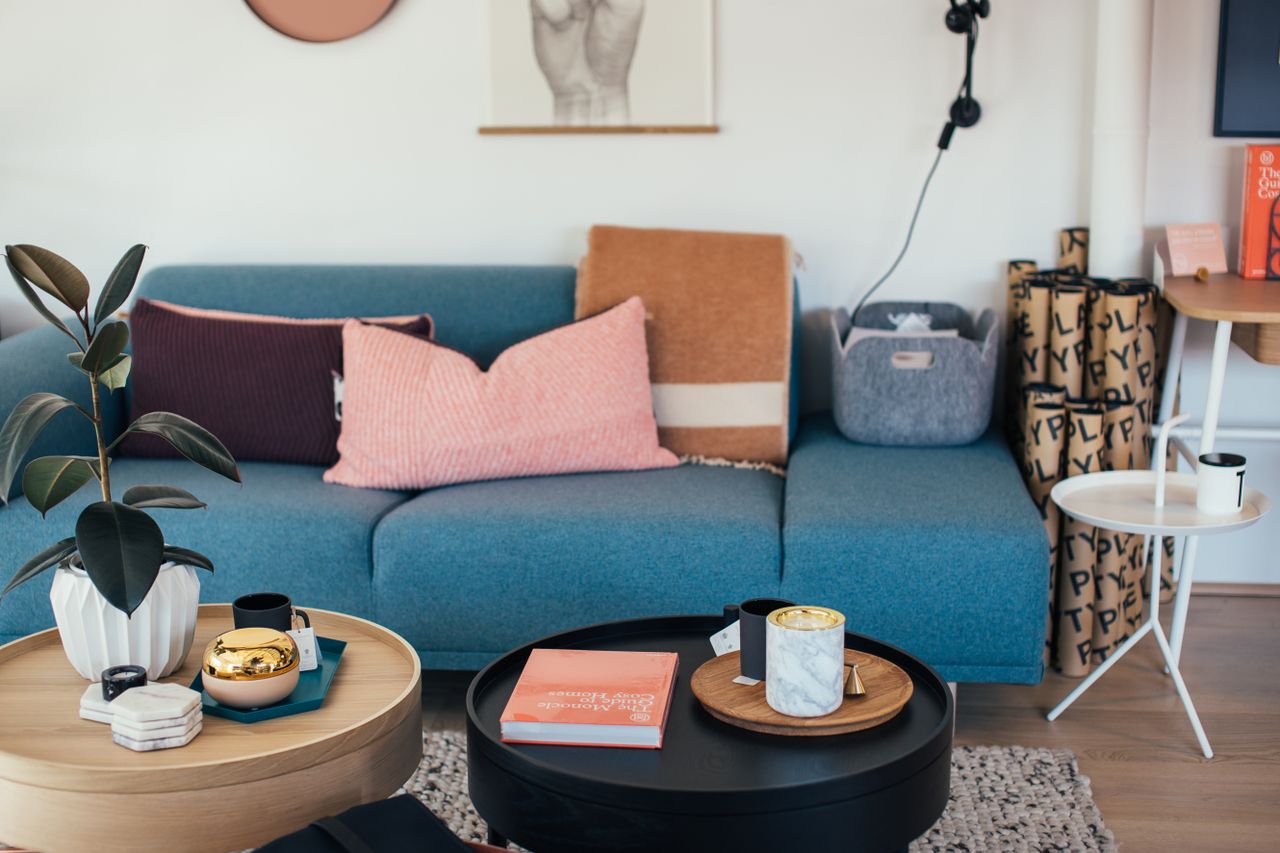
A well-kept sofa with fresh covers and a folded throw — Photo via Pexels
Good pillows last for years with simple care. Fluff the inserts daily with a firm shake — feather and down-alternative fills flatten fast. Wash removable covers every 2 to 3 months, or monthly if you have pets; always zip the covers closed and wash cold to protect the fabric. Vacuum the sofa base monthly so dust does not grind into the fabric under the pillows, and rotate which pillows sit in the sunny spot to prevent uneven fading.
The cheapest room refresh is a seasonal cover swap. Keep your inserts and buy new covers twice a year — warm rusts and chunky knits for fall and winter, light linen and botanical prints for spring and summer. Store off-season covers folded in a breathable cotton bag, never plastic, which traps moisture. Two sets of covers cost less than one brand-new pillow and make the whole living room feel new again.
Final Thoughts
So, how many cushions on a couch do you actually need? For most homes the answer is simple: two or three on a loveseat, four on a three-seater, and five to seven on a sectional. Start with the count that matches your sofa size, arrange them with the 2-2-1 or 3-2-1 formula, and let comfort have the final vote.
Remember the rules that matter most: odd numbers look relaxed, step your pattern scales from large to small, buy inserts two inches bigger than the covers, and never keep more pillows than you can sit past. Do that, and your sofa will look like a stylist arranged it — because now, you are the stylist.
One last tip from years of styling real homes: take a photo of your sofa after you arrange it. The camera shows imbalance your eyes miss — one side heavier than the other, a color that sticks out, a pillow hiding behind another. Fix what the photo shows, then live with it for a week. Styling is not a one-time task; it is a habit. Small tweaks over time beat one big overhaul, and your sofa will keep looking better the longer you practice.
FAQs
How many cushions on a couch should I buy for a 3-seater?
Four is the sweet spot for most three-seaters: two 20-inch squares at the corners and two 18-inch squares layered in front. Add a fifth lumbar pillow only if sitting still feels comfortable.
How do I mix patterns without clashing?
Use three different pattern scales — one large print, one small print, one solid — and make sure every pillow shares one or two colors pulled from your rug or curtains.
How many cushions are too many?
If you must move more than two pillows to sit down, or pillows land on the floor daily, you have too many. Remove them one at a time until sitting feels natural again.
Should I use an odd or even number of pillows?
Odd numbers (3, 5) look relaxed and modern; even numbers (2, 4, 6) look formal and traditional. Match the mood of your room — when in doubt, go odd, since it forgives small styling mistakes.
What size pillows look best on a standard sofa?
Use 20 to 22-inch squares at the back, 18-inch squares in the middle, and a 12-by-20-inch lumbar in front. Buy inserts 2 inches larger than the covers for a full, plump look.
Do my pillows have to match my sofa color?
No. On a neutral sofa almost any colors work. On a colored sofa, repeat the sofa's color in one pillow and contrast the rest. White or ivory pillows suit every sofa.
Can I style a throw blanket with my pillows?
Yes — drape a folded throw over one armrest or corner so it frames the pillows instead of hiding them. Match the throw's color to one pillow, and keep two seats clear for sitting.
How often should I wash pillow covers?
Wash removable covers every 2 to 3 months, monthly if you have pets. Zip them closed, wash cold, and rotate sun-exposed pillows to prevent uneven fading.
Gallery
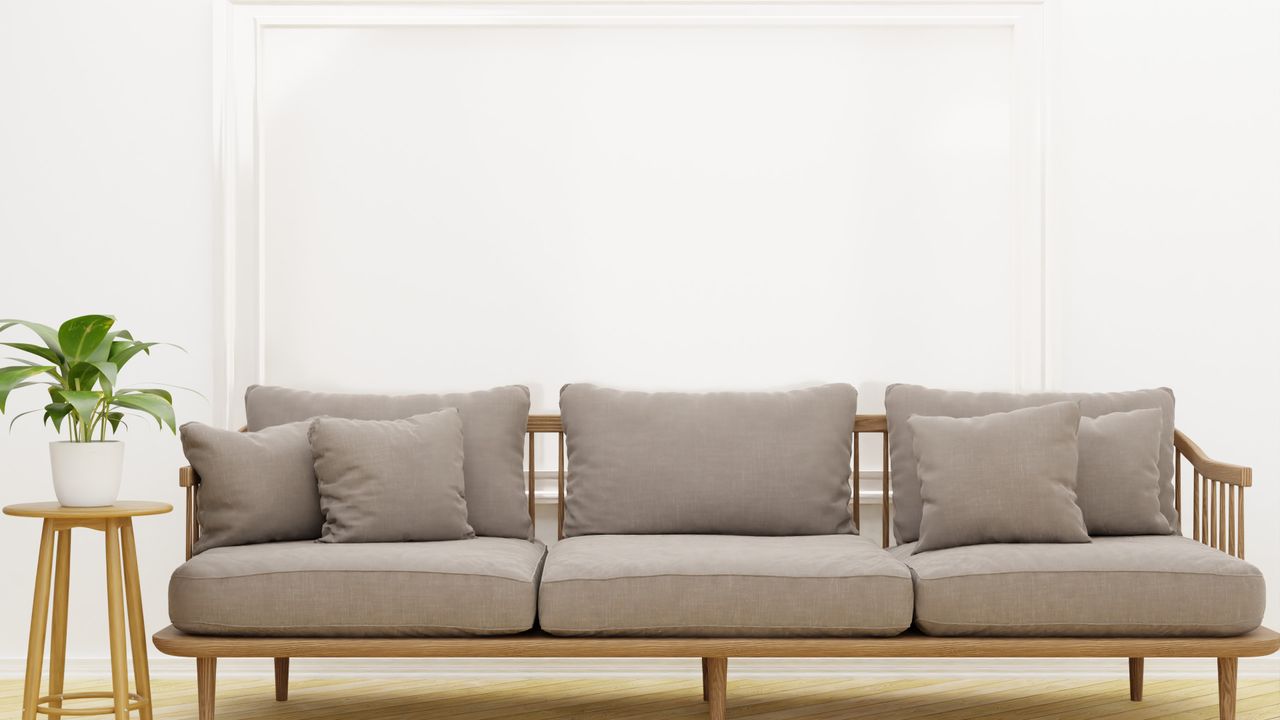
Neutral cushions matched to the sofa — Photo via Pexels
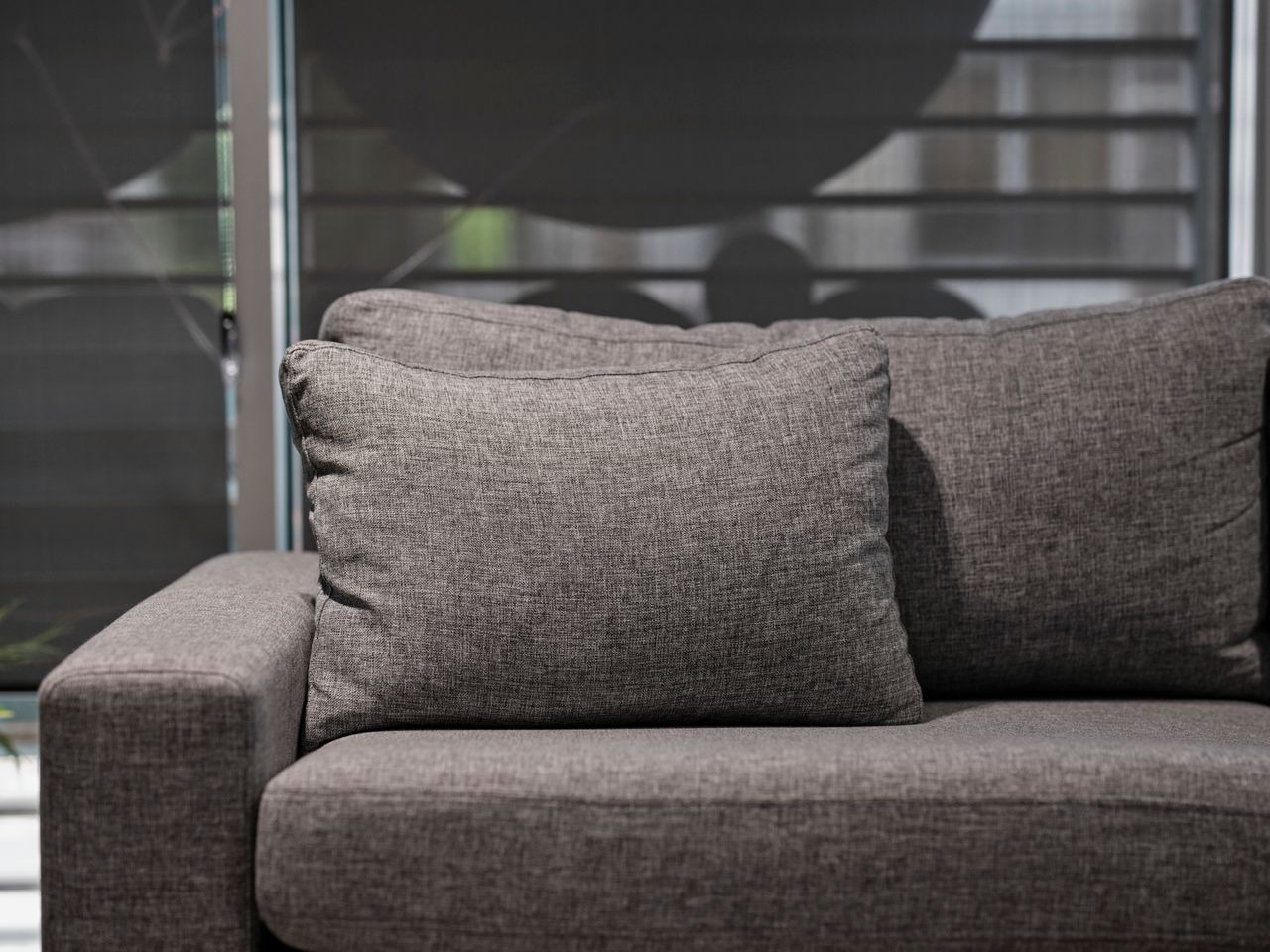
Texture does the talking in a quiet palette — Photo via Pexels
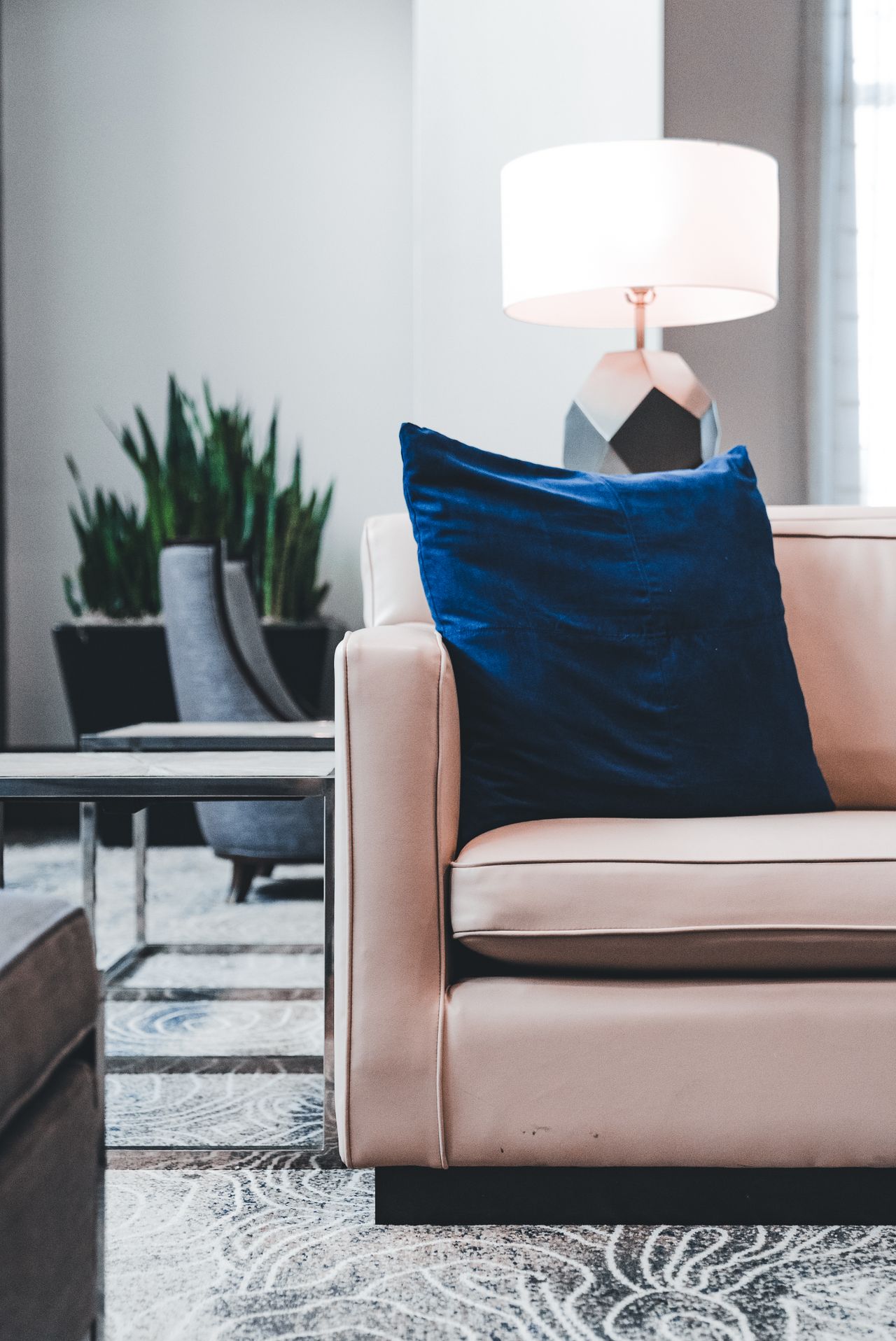
One bold velvet cushion as the accent — Photo via Pexels
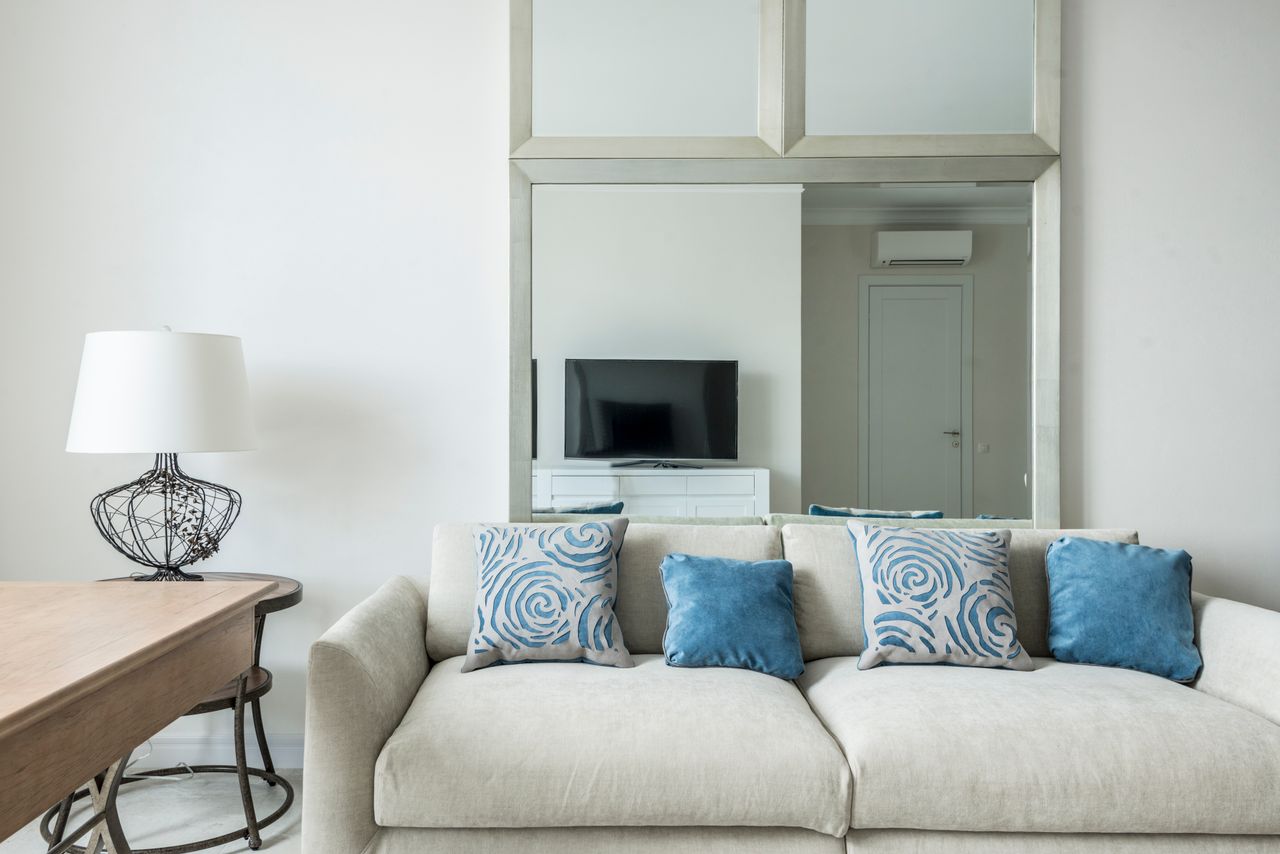
A beige sofa with blue cushions keeps the look calm and inviting. Photo: Max Vakhtbovych, via Pexels

No comments:
Post a Comment