Bifold closet doors get opened and closed thousands of times a year, and every one of those movements runs on a handful of small metal parts. When folding door hardware is good, the doors glide silently and meet in a perfect line; when it is cheap or worn, they jump the track, scrape the floor, and sag — usually at the worst moment.
The good news is that the hardware is inexpensive and every part is replaceable. These ten picks cover each component — track, pivots, rollers, hinges, aligners, and pulls — plus how to match the set to your doors and fix the three faults every homeowner eventually meets.
Photo: Pexels
Table of Contents
- 1. Start With the Top Track
- 2. Pivots: the Parts That Do the Turning
- 3. Rollers Decide How Smooth It Feels
- 4. Hinges Hold the Fold Together
- 5. Aligners Keep Pairs Meeting Evenly
- 6. Knobs and Pulls: Small Parts, Big Feel
- 7. Snuggers Hold the Doors Shut
- 8. Match the Hardware to the Door Weight
- 9. Fix the Three Common Problems
- 10. When to Replace the Whole Set
1. Start With the Top Track
The top track is the backbone of the whole system: it carries the pivots, guides the rollers, and sets the alignment for everything below. Most folding door hardware sets use a steel or aluminium channel about 2.5 cm wide that screws to the closet header — steel is stiffer and worth choosing for wide or heavy doors. The track must be dead level and centred in the opening, or every door hung from it will drift.
Buy the track to match your opening width, not your door width: a 1.2-metre closet needs a 1.2-metre track, cut to fit with about 3 mm clearance at each end. If you are replacing a track, measure the old channel's width and depth before shopping — pivot sockets and roller wheels are sized to the track, and a mismatched set will never run smoothly.
Photo: Pexels
2. Pivots: the Parts That Do the Turning
Each bifold pair hangs on two pivots: a fixed pivot at the top and bottom of the jamb-side panel that the door rotates around, and a guide on the leading panel. The bottom pivot sits in a floor or jamb bracket and carries much of the door's weight, while the top pivot is spring-loaded so the door can be lifted out for service. When a door sags or drags, the pivots are the first suspects.
Look for pivots with adjustable height — a threaded bottom pivot lets you raise or lower the door by several millimetres without removing anything. If the wood around an old pivot pin has cracked, a corner-mount repair bracket (about CAD 12) gives the pin fresh wood to bite into and saves the door. Keep a spare set of pivot pins in the junk drawer; they cost under CAD 10 and fail at the worst times.
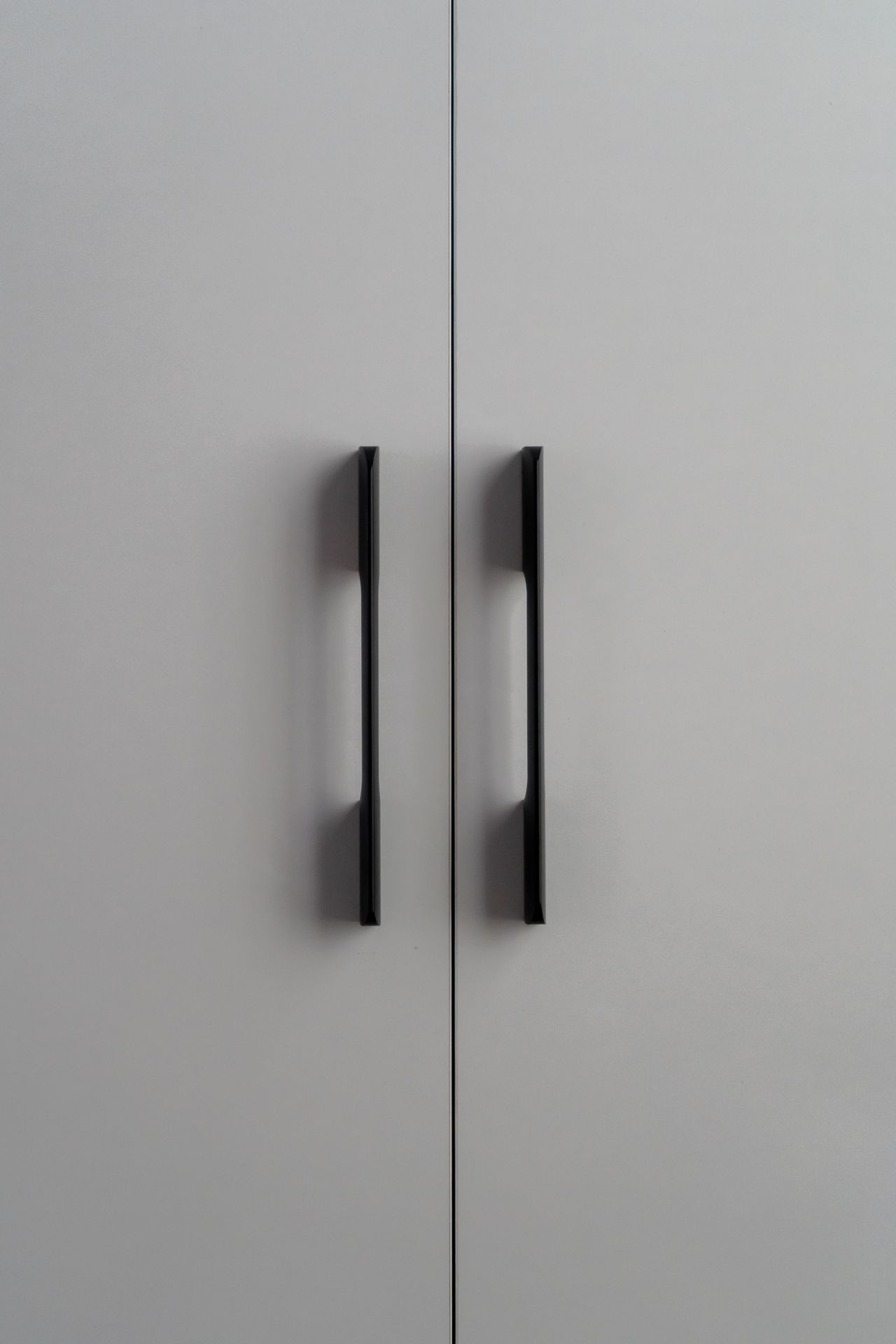
Photo: Pexels
3. Rollers Decide How Smooth It Feels
The guide roller on the leading panel's top corner is what makes a bifold feel expensive or cheap. Nylon wheels run quietly and never rust — ideal for bedrooms — while steel ball-bearing rollers carry heavier mirrored or solid doors with less effort. Avoid the hard plastic wheels in bargain sets; they flatten with age and start thumping along the track.
Rollers are a wear item: if a door that once glided now needs a shove, the roller is usually the culprit, not the track. Replacement rollers cost CAD 8 to CAD 15 per pair and swap in minutes once the door is lifted off its pivots. Spray silicone lubricant on the wheel axles yearly — never oil, which collects the dust and lint that clog closet tracks.
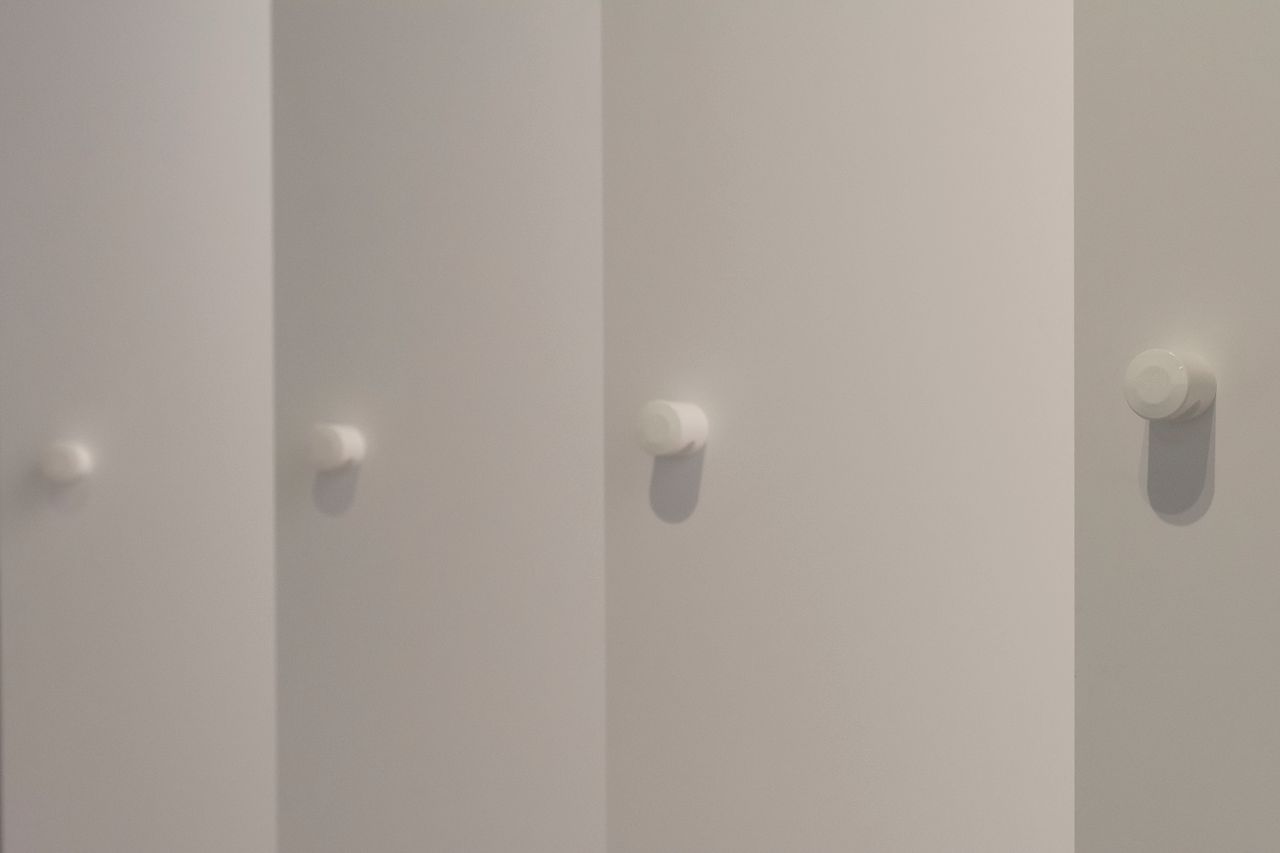
Photo: Pexels
4. Hinges Hold the Fold Together
Each pair of bifold panels is joined by two or three hinges that take a beating — they flex through thousands of fold cycles. Non-mortise hinges that surface-mount with screws are standard on most bifolds and are easy to replace; loose hinges are the number-one cause of panels that gap or bind in the middle. Check them yearly and tighten every screw.
If a hinge screw spins without gripping, the wood is stripped: fill the hole with a glued wooden matchstick or dowel, let it cure, and re-drive the screw. For heavy mirrored doors, upgrade to three hinges per pair instead of two — the extra hinge halves the load on each and stops the slow sag that makes mirrors scrape. Hinges cost CAD 3 to CAD 6 each; buy a few spares.
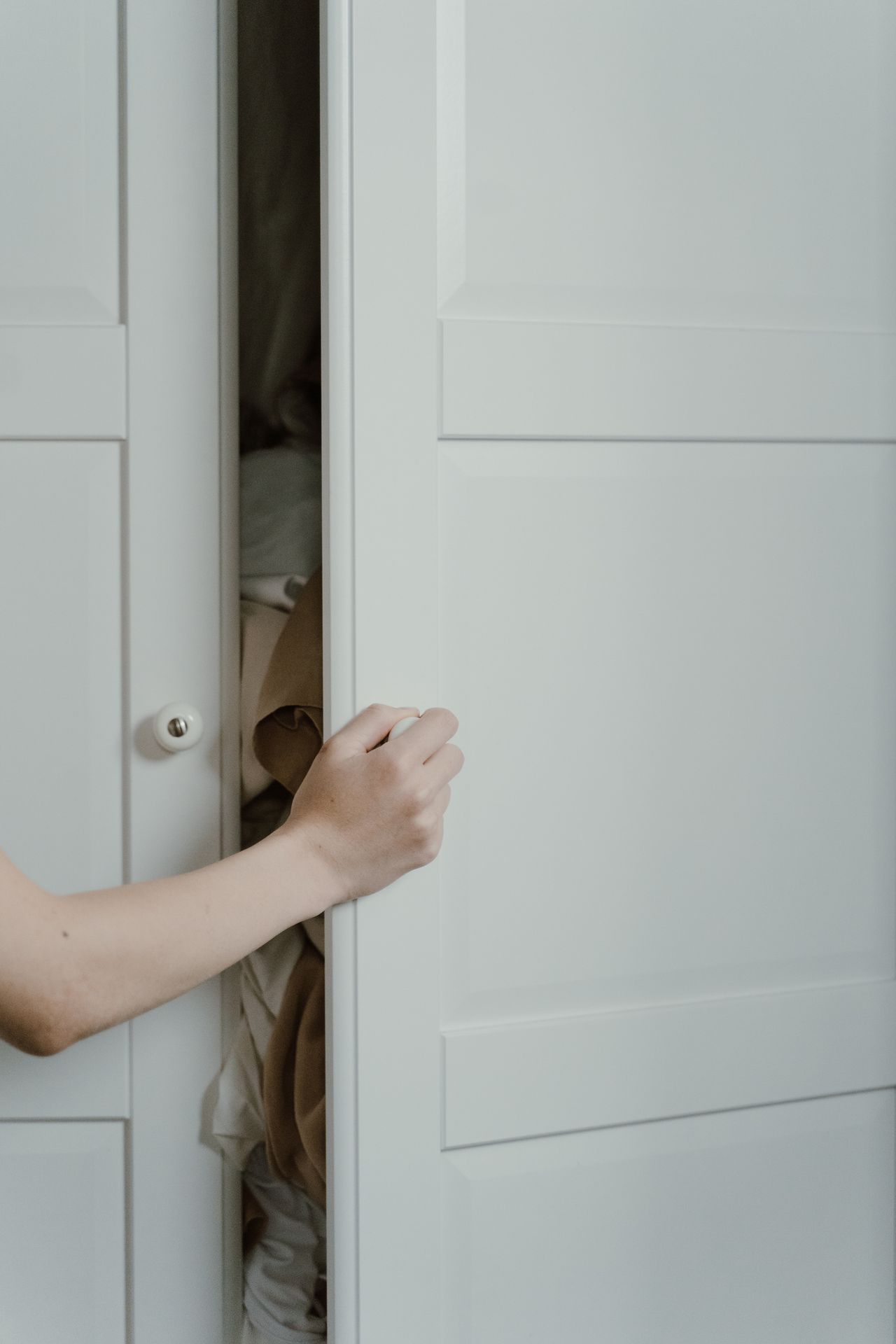
Photo: Pexels
5. Aligners Keep Pairs Meeting Evenly
Door aligners are the small brackets screwed to the inner faces where two bifold pairs meet — they catch each other as the doors close and pull both pairs into the same plane. Without them, double bifold sets close crooked, with one pair proud of the other and an uneven gap down the middle. If your closet has four panels, aligners are not optional.
Mount each aligner at least 15 cm up from the floor, on the inside faces of the meeting stiles, and test by closing the doors slowly — you should feel them engage and guide the panels flush. They cost about CAD 6 for a pair. If the doors meet evenly at the top but gap at the bottom, adjust the bottom pivots before blaming the aligners.
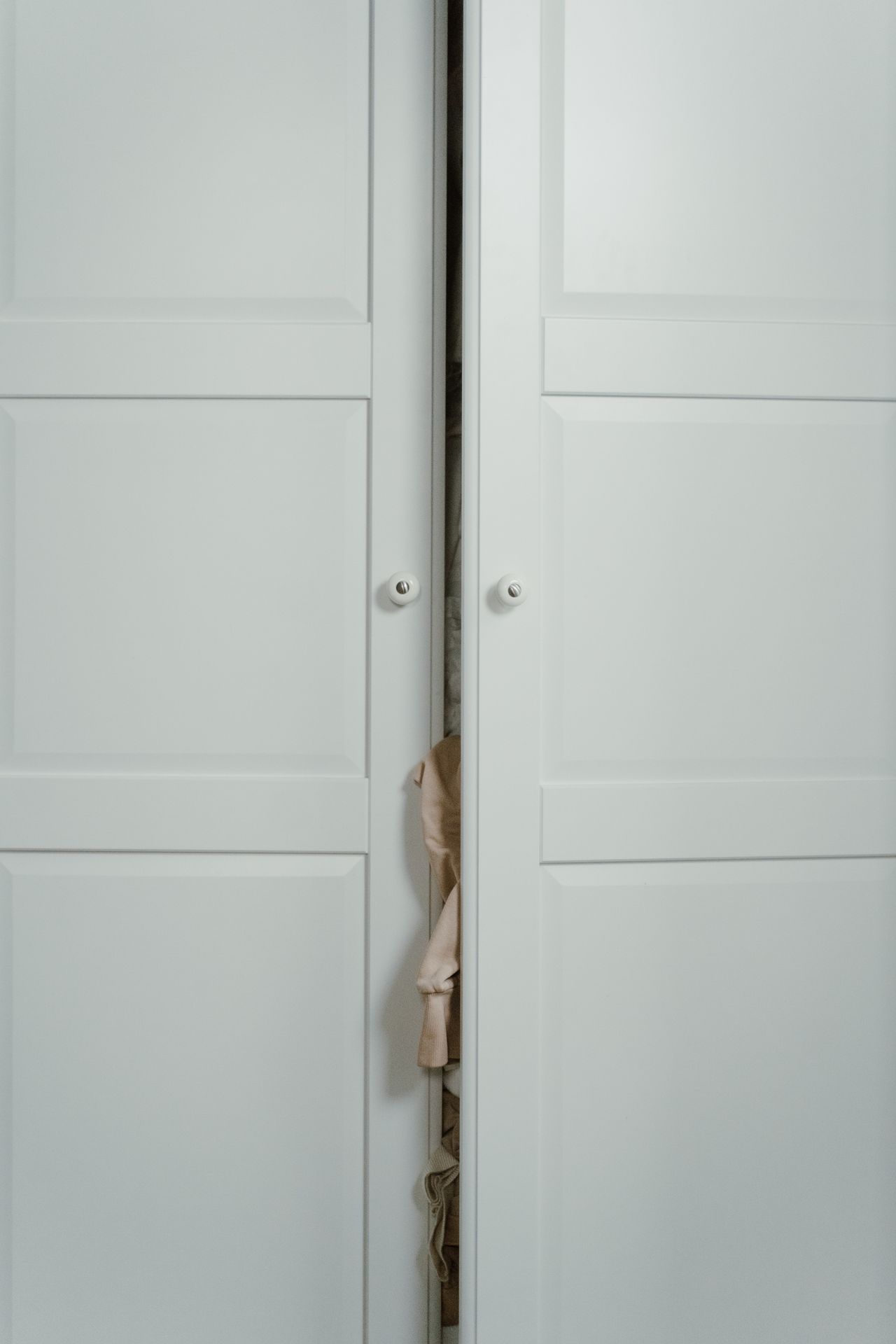
Photo: Pexels
6. Knobs and Pulls: Small Parts, Big Feel
Knobs and pulls are the only hardware you touch, so they set the whole impression. Round knobs suit traditional panelled bifolds; slim bar pulls suit flat modern ones. Position them on the leading panel of each pair, about 90 cm from the floor — roughly doorknob height — so the leverage feels natural. For a painted set of doors, our dark sage green paint ideas show a colour that flatters both brass and black hardware.
Match the finish to the room's other hardware — brushed nickel, matte black, and brass are the safe choices that still look current. Back-to-back knobs (one inside, one outside on the same bolt) stop the common problem of a knob working loose, and a drop of thread-lock on the screw keeps it tight for years. Budget CAD 4 to CAD 12 per knob.
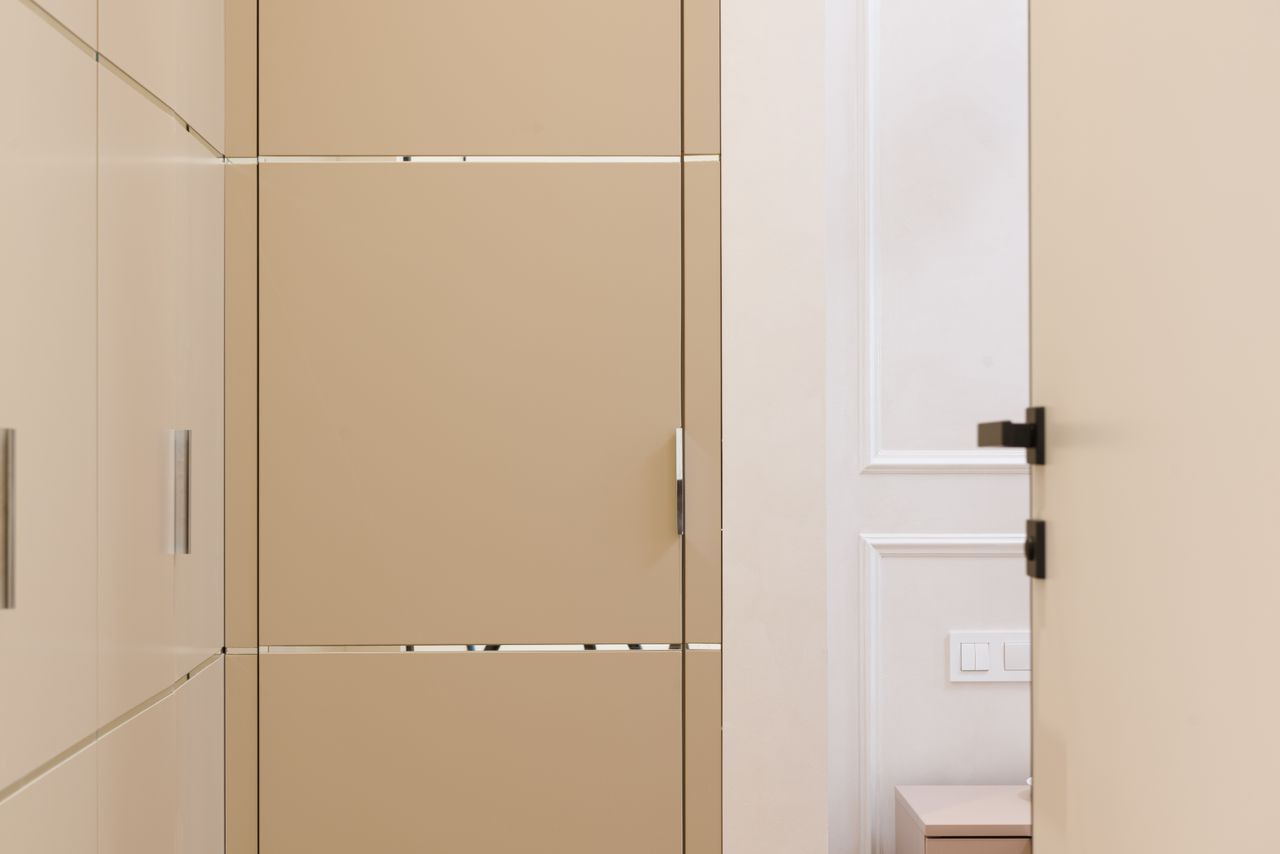
Photo: Pexels
7. Snuggers Hold the Doors Shut
A snugger is a small spring clip that fits inside the top track and grips the guide roller when the door closes — it is what stops bifolds drifting open on their own. If your closet doors creep open overnight, the snugger is missing, worn, or positioned wrong, not the doors themselves. They cost about CAD 5 and slide into the track in seconds.
Position the snugger so it engages the roller just as the door reaches fully closed — too early and the door fights you; too late and it never catches. On wide openings with two pairs, fit one snugger per pair. In homes with forced-air heating, a working snugger also stops doors rattling in the draught from a nearby vent.
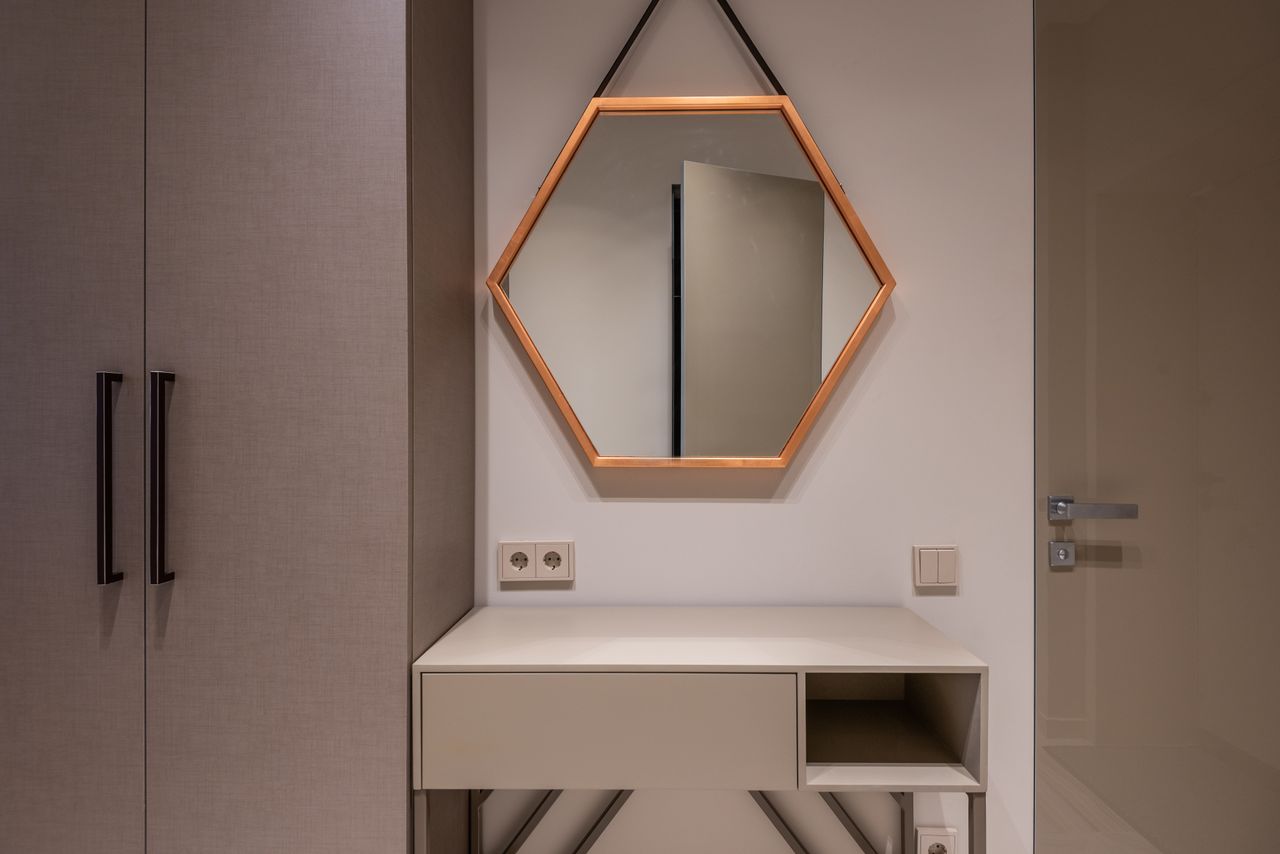
Photo: Pexels
8. Match the Hardware to the Door Weight
Every hardware set has a weight rating per pair — commonly 15 kg for basic sets, 25 to 35 kg for heavy-duty. A hollow-core bifold pair weighs about 10 to 14 kg; add mirrors and it can reach 20 kg or more. Weigh a panel on a bathroom scale if you are unsure, and buy the next rating up — running hardware at its limit is what causes premature wear.
Mirrored and solid-wood bifolds also need the heavy-duty track profile, not just stronger rollers, because the track itself flexes under load. When buying, check that the rating covers the pair, not a single panel — packaging sometimes quotes per-panel numbers that mislead. The heavy-duty set usually costs only CAD 15 to CAD 25 more than basic.
Photo: Pexels
9. Fix the Three Common Problems
Problem one: the door jumps the track. This is almost always a worn guide roller or a track clogged with lint — vacuum the track, replace the roller, and check the top pivot is fully seated in its socket. Problem two: the door scrapes the floor. Turn the adjustable bottom pivot to raise the door a few millimetres; if the pivot is maxed out, the door may need trimming.
Problem three: the pair sags in the middle and will not close flat. Tighten every hinge screw, replace any stripped ones with doweled repairs, and check the aligners are engaging. Nine times out of ten, these three fixes — roller, pivot height, hinge screws — solve every bifold complaint without buying a whole new set. For the closet's surroundings, our entryway decorating ideas cover hall closets too.
Photo: Pexels
10. When to Replace the Whole Set
Replace individual parts when one thing fails — a roller here, a pivot there. Replace the whole hardware set when the track itself is bent, the pivot sockets are wallowed out, or you have already replaced two parts and the door still misbehaves. A complete bifold hardware set costs CAD 25 to CAD 80 depending on the rating, which is less than a service call.
When you do replace, take the old track to the store or photograph its profile — tracks are not universal, and matching the profile saves a return trip. Install the new track level, transfer the pivot positions exactly, and hang the doors before the final tweak of snuggers and aligners. Done right, a fresh set makes twenty-year-old doors feel brand new.
Photo: Pexels
FAQs
What is folding door hardware?
It is the set of parts that lets bifold doors fold and slide: the top track, top and bottom pivots, guide rollers, panel hinges, aligners, snuggers, and knobs. The doors are just panels — the hardware does all the work.
How much does bifold door hardware cost in Canada?
A complete replacement set runs CAD 25 to CAD 80 depending on the weight rating. Individual parts are cheaper: rollers CAD 8 to CAD 15 a pair, pivots under CAD 10, aligners about CAD 6.
Why do my bifold doors keep falling off the track?
Usually a worn guide roller or a top pivot that has worked loose from its socket. Replace the roller, vacuum the track clean, and reseat the pivot — that fixes it in most cases.
Can I replace bifold hardware without removing the trim?
Yes. The doors lift off their spring-loaded top pivots once you press the pivot down, giving access to rollers, hinges, and pivots. Only the track itself needs the header exposed.
Are all bifold tracks the same size?
No — track profiles differ by brand, so pivots and rollers are not universally interchangeable. Match the replacement parts to your track's profile, or replace the track and hardware as a matched set.
Final Thoughts
Bifold doors get blamed for a lot of sins that belong to their hardware. A level steel track, the right weight rating, fresh rollers, and working snuggers turn the most annoying closet in the house into the smoothest — for less than the cost of a dinner out.
Keep a spare set of rollers and pivot pins on hand, vacuum the track when you notice lint, and tighten hinge screws once a year. Small parts, looked after, will outlast the doors they carry.
Sources
- Johnson Hardware — Bifold and Pocket Door Hardware Manufacturer
- Family Handyman — How to Fix a Bifold Closet Door
- Engineer Fix — How to Hang a Closet Door: Bifold and Sliding
Gallery
Photo: Pexels
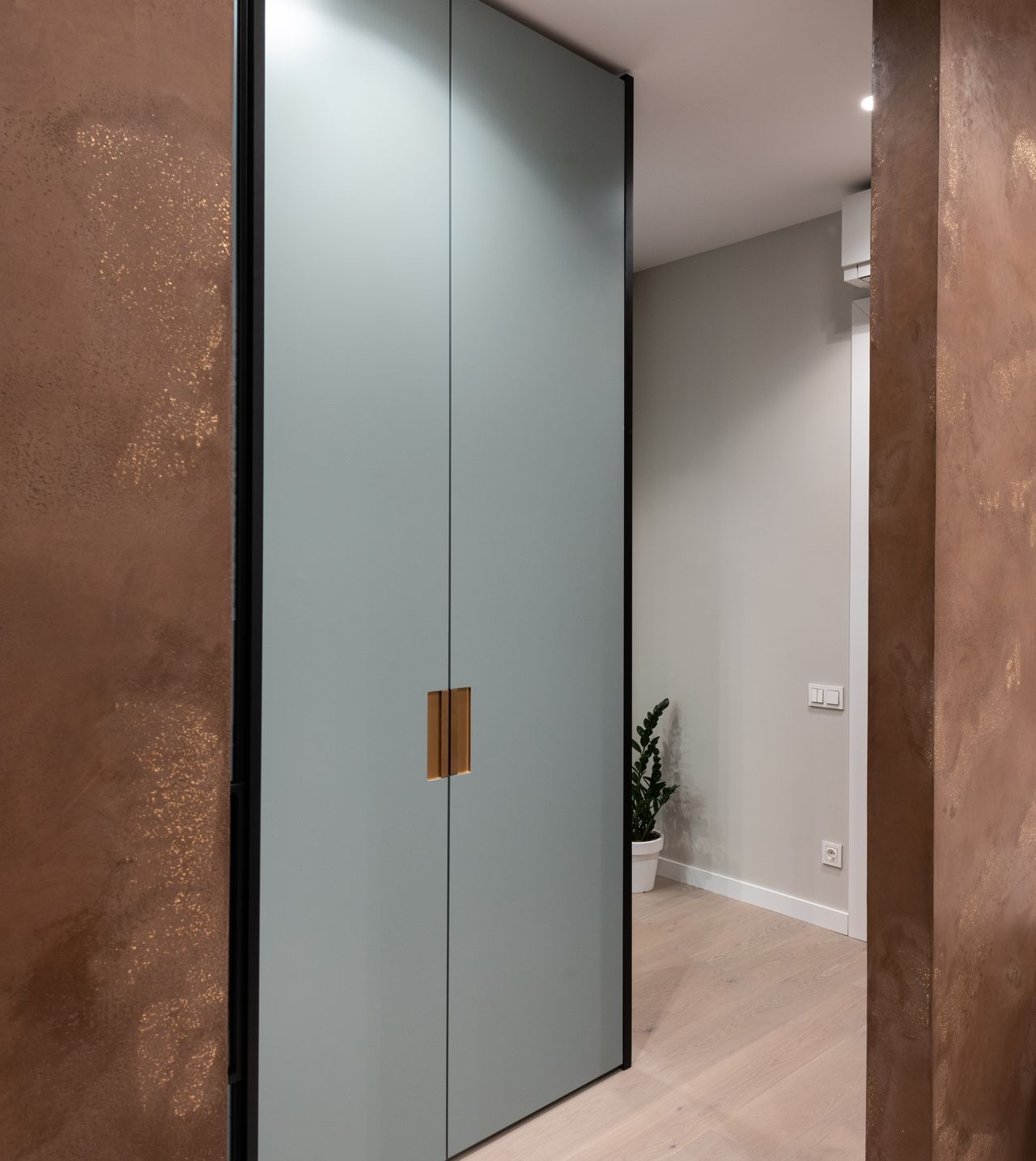
Photo: Pexels
Photo: Pexels

No comments:
Post a Comment