The first chilly evening of fall is usually the day the patio furniture gets forgotten until spring. That is a shame, because October and November nights are some of the best of the whole year — crisp air, early sunsets, and no mosquitoes. With a little heat, soft light, and a few warm layers, cozy outdoor spaces can stay in use long after summer ends, and most of the work takes a single weekend afternoon.
You do not need a big yard or a big budget. The 10 ideas below work on a wide backyard deck, a small concrete patio, or even a balcony, in the northern US and across Canada where fall cools down fast. Each one gives you real sizes, honest prices in US dollars, and the safety details that actually matter, so you can build a corner you will sit in every evening instead of just admiring from the kitchen window.

Photo: vcmxnajg1 / Wikimedia Commons (CC BY 2.0)
In This Guide
- 1. Build a Fire Pit Corner With a Seating Circle
- 2. Hang String Lights the Right Way
- 3. Start With an Outdoor Rug and Layer the Seating
- 4. Add a Patio Heater for Cold Nights
- 5. Keep a Blanket for Every Seat — and Store Them Smart
- 6. Make a Nook With a Pergola or Privacy Screen
- 7. Cluster Candles and Lanterns in Safe Spots
- 8. Set Up a Hot Drink Station Within Arm's Reach
- 9. Use Plants for Privacy and Softness
- 10. Turn the Covered Porch Into a Reading Corner
- Frequently Asked Questions
1. Build a Fire Pit Corner With a Seating Circle
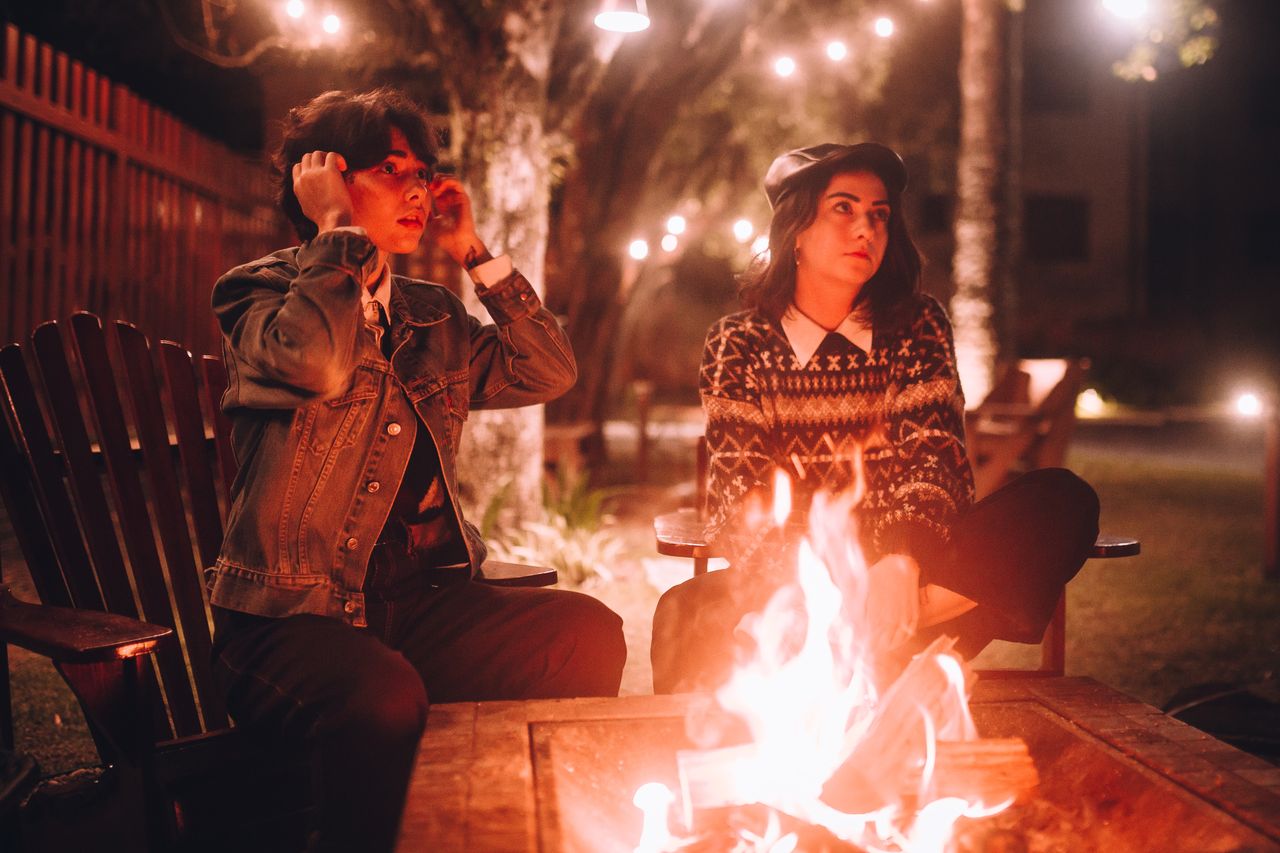
Photo: Jonathan Nenemann / Pexels
A fire pit is the heart of almost every fall patio, because it gives people a reason to gather and a natural circle to sit around. Plan a seating zone about 9 to 11 feet across, with the pit in the middle and chairs set 2 to 3 feet back from the edge of the bowl. That spacing keeps knees warm without roasting anyone's shins. Round steel or cast iron bowls from 22 to 30 inches wide cost $60 to $150 and suit most patios, while a fire pit table in the 30 to 44 inch range runs $250 to $600 and doubles as a coffee table with the lid on.
Safety comes before style here. Set any fire pit at least 10 feet from the house, fences, sheds, and low tree branches, and never use one under a porch roof, pergola, or umbrella. Many cities and HOAs ask for even more distance, so check your local rules before the first fire. Always sit the pit on stone, concrete, or gravel — or on a fireproof deck pad if it must go on wood — and keep a spark screen, a bucket of water or sand, and a clear 3-foot ring around it with no cushions, dry leaves, or decor inside that ring. If you are still shopping, our guide to picking a fire pit kit compares sizes, fuels, and prices in detail.
2. Hang String Lights the Right Way
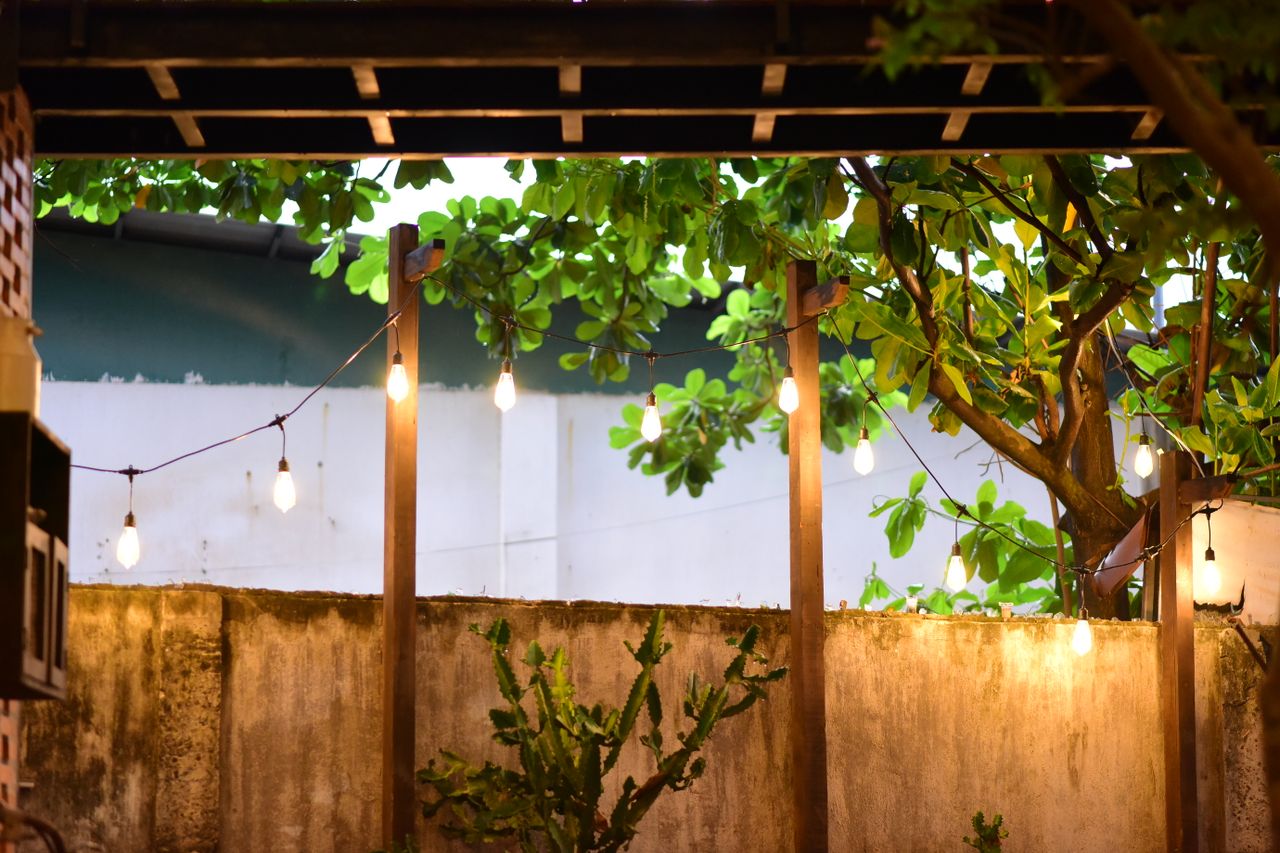
Photo: Pexels
String lights do more than look pretty. They mark out the "room" after dark and make a plain patio feel finished. Choose commercial-grade LED strands with bulbs spaced about 12 inches apart; a 48-foot strand costs $25 to $60 and covers most home patios. Warm white bulbs — around 2700K on the box — give the soft golden glow that suits fall evenings. Cool white and bright daylight bulbs look harsh outdoors, so skip those.
Hang each run with a gentle swag, letting the middle dip about 6 to 10 inches for every 10 feet of span, because a wire pulled drum-tight puts stress on the sockets and can snap in wind. For spans longer than 15 feet, run a thin steel guide wire ($10 to $20) first and clip the lights to it. No trees or posts to tie to? Set 9- or 10-foot poles in heavy planters filled with concrete, about one bag per planter. Plug everything into a GFCI outlet, keep the connections off the wet ground, and add a $10 timer so the lights switch on at dusk all by themselves.
3. Start With an Outdoor Rug and Layer the Seating
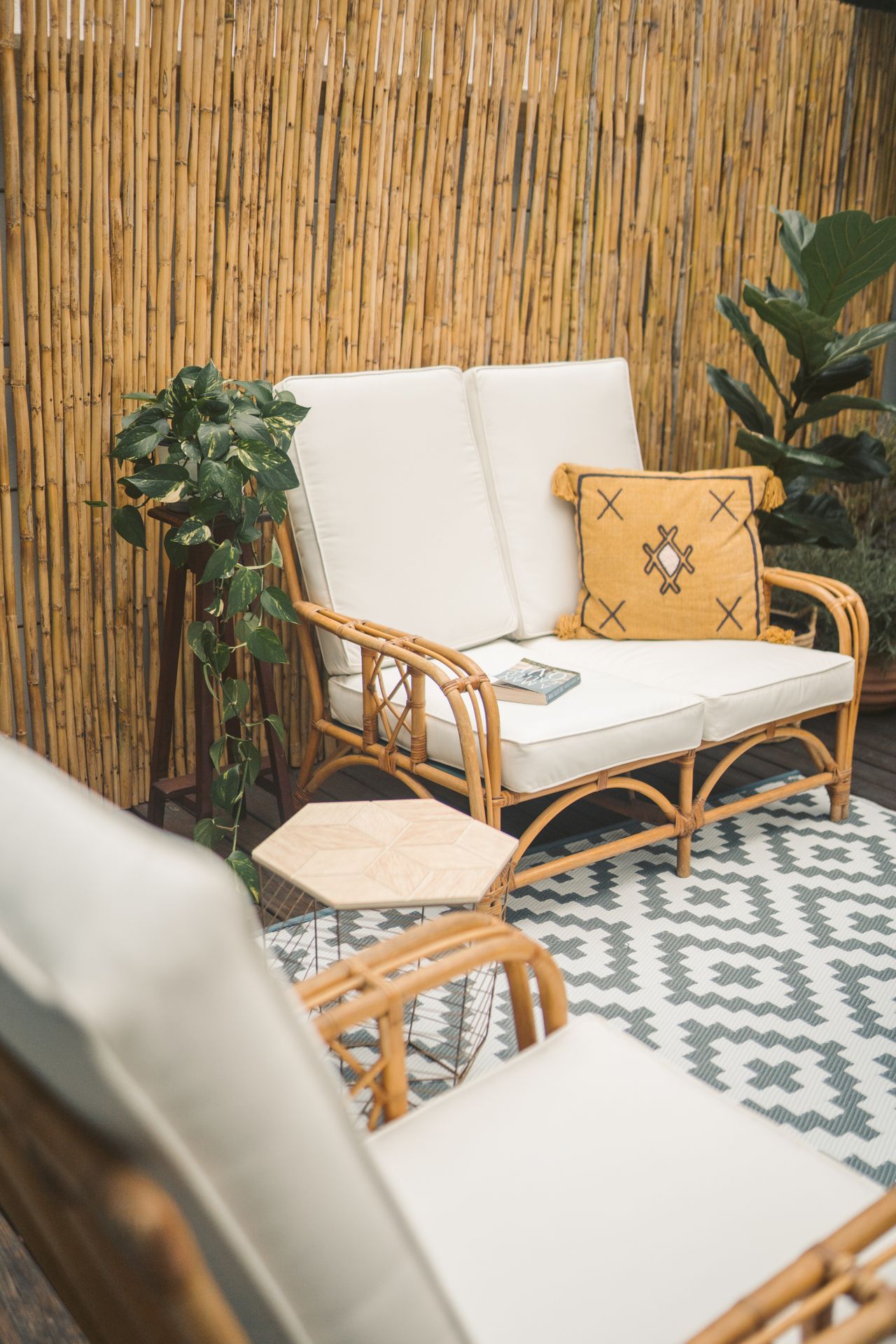
Photo: Taryn Elliott / Pexels
An outdoor rug is what turns a slab of concrete into a room. A 5 by 7 foot rug fits two chairs and a small table; an 8 by 10 foot rug holds a full sofa set with room to walk around it. Leave a few inches of floor showing at the edges so the space does not look stuffed. Pick polypropylene or recycled-plastic rugs ($50 to $200), because they shrug off rain, dry fast, and can be hosed clean — natural jute looks lovely in photos but rots outdoors.
Then build the seating in layers, the way you would a living room. A loveseat or two deep chairs — look for a seat depth of 24 inches or more — face each other or sit in an L, with a side table within arm's reach of every seat. Layer the softness in order: seat cushions first, a lumbar pillow or two second, and a throw over the arm of the sofa last. Keep walkways at least 24 to 30 inches wide, so nobody has to shuffle sideways past the fire pit with a full mug in hand.
4. Add a Patio Heater for Nights Below 50 Degrees
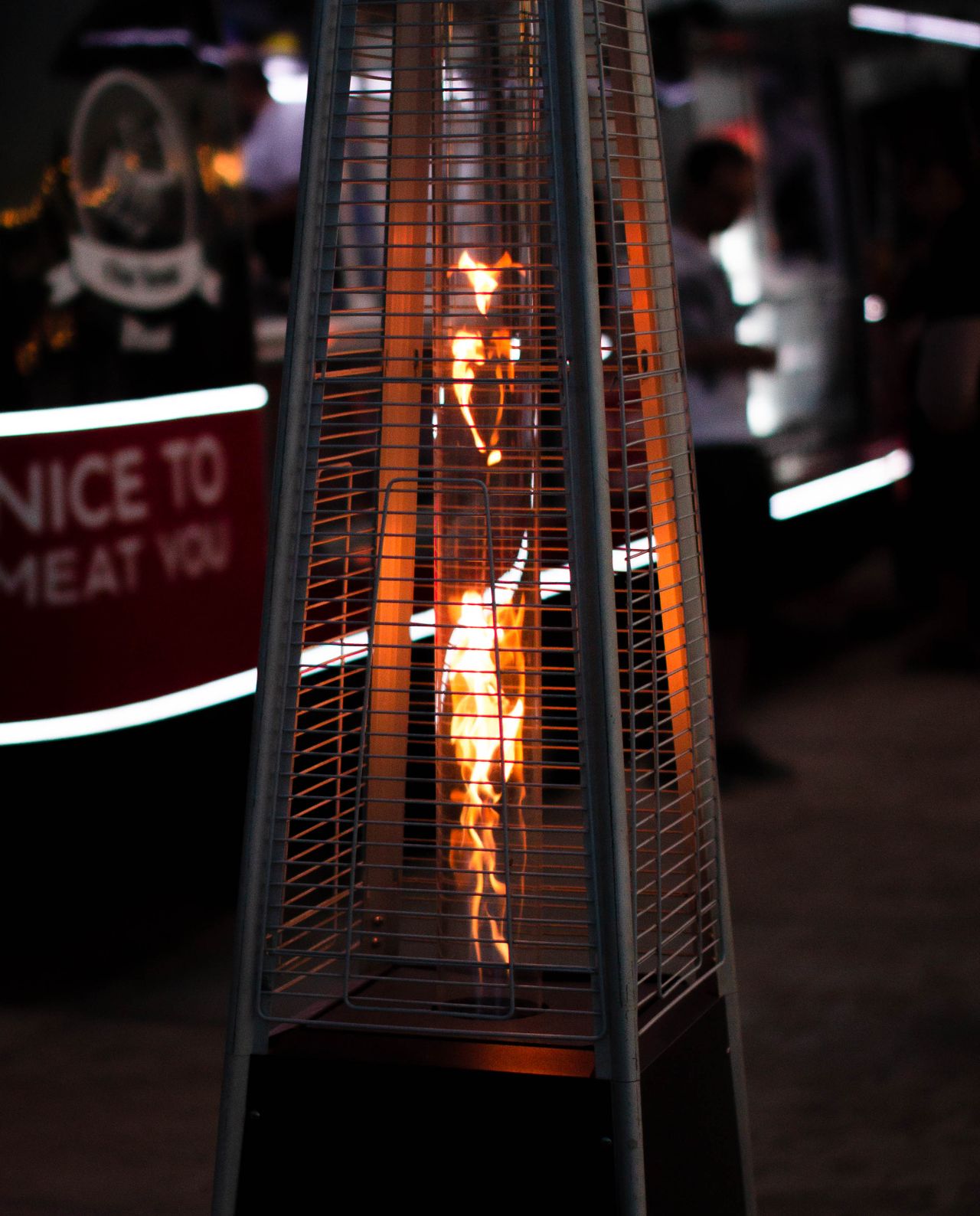
Photo: Pexels
A fire pit warms the people right beside it. A patio heater warms the whole seating circle. Classic mushroom-top propane heaters put out around 40,000 to 48,000 BTU and warm a circle roughly 10 to 15 feet wide in calm weather, and they cost $120 to $250. Pyramid flame heaters like the one in the photo are prettier but weaker — closer to 25,000 to 40,000 BTU — so treat them as part heat, part mood lighting. A standard 20-pound propane tank runs a big heater for about 8 to 10 hours on high, which works out to a few dollars an evening.
Place the heater at the edge of the seating on the side the wind usually comes from, so the warmth drifts across your guests instead of blowing away from them. Keep at least 3 feet of clearance — more if the maker says so — between the heater and walls, umbrellas, and low branches, and never run a propane heater under a low porch ceiling unless it is rated for that use. For covered porches, an electric infrared heater (about 1,500 watts, $80 to $180) is the safer pick, and a small tabletop heater of around 11,000 BTU is plenty for a bistro set for two.
5. Keep a Blanket for Every Seat — and Store Them Smart
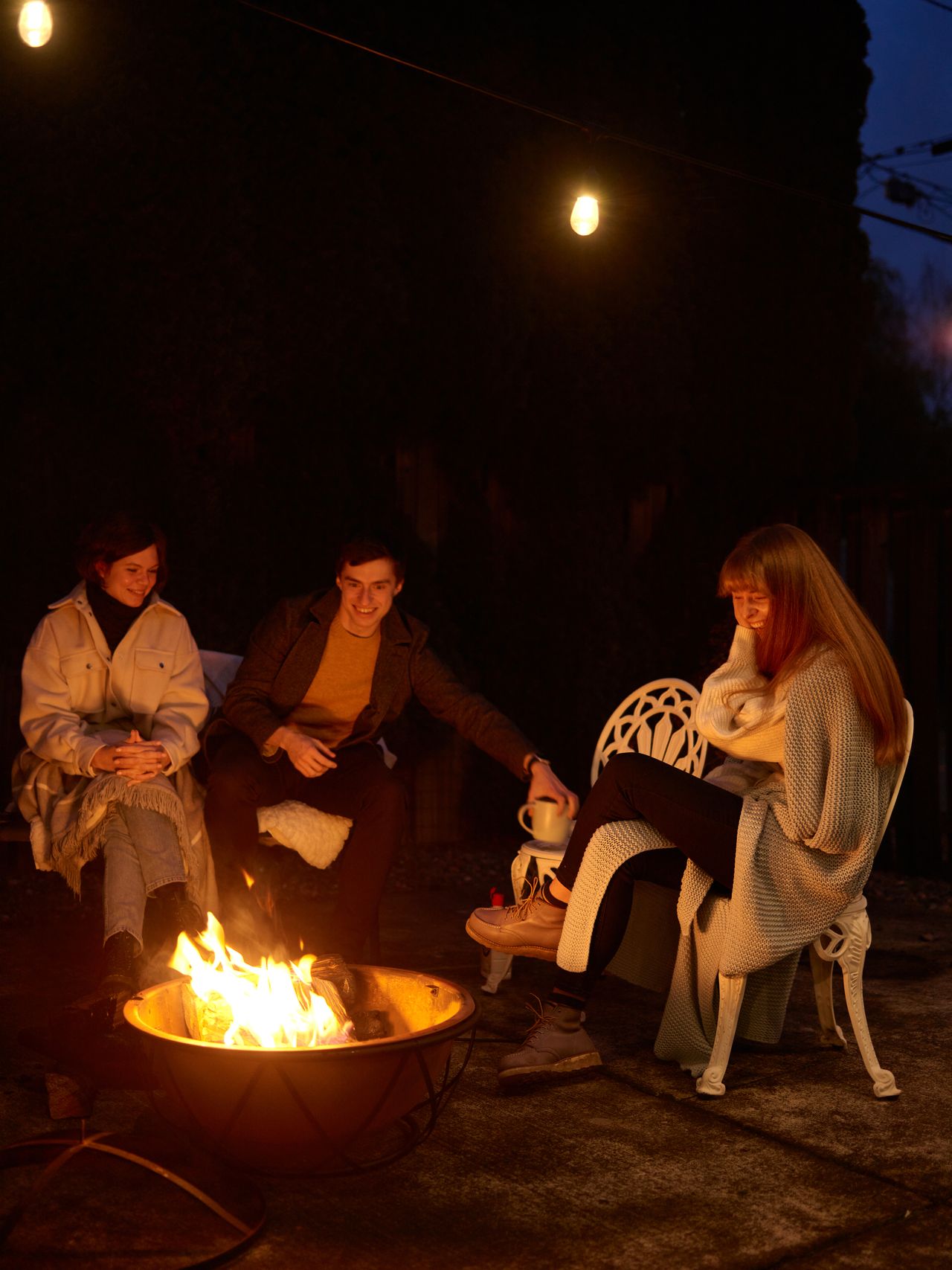
Photo: Pexels
Here is the honest secret behind every cozy fall photo: there is a blanket in it. Plan on one throw per seat, plus one spare. Outdoor-rated acrylic or polyester throws ($15 to $35 each) handle damp evening air and wash easily; wool throws are warmer but should come back inside after each use. Drape one over the back of each chair before guests arrive, so nobody has to ask — the quietest guest is always the coldest one.
Storage is what makes the habit stick. A deck box of 50 to 120 gallons ($80 to $250) parked beside the seating holds blankets, cushions, and the s'mores kit, and a storage bench or ottoman does the same job while doubling as an extra seat or a footrest. On dry stretches, cushions can stay outside under a $25 to $50 furniture cover; before a storm, everything soft goes into the box. Wash the throws every few weeks through fall, and drop a cedar block or a lavender sachet into the box to keep it smelling fresh.
6. Make a Nook With a Pergola or Privacy Screen
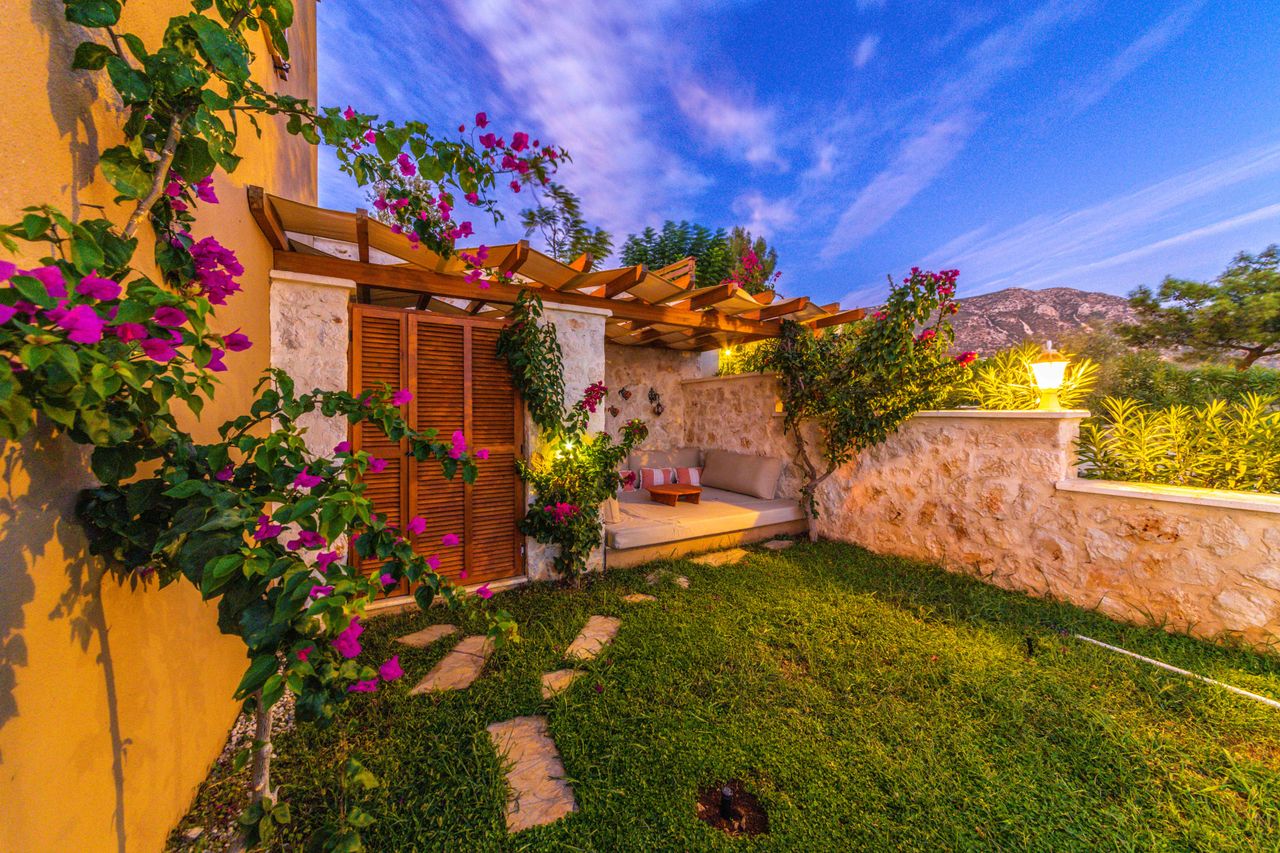
Photo: Pexels
Walls make a space feel cozy — even pretend ones. A pergola in the 8 by 8 to 12 by 12 foot range defines a clear "room" on an open deck, and kits run $400 to $1,500 depending on size and material. If a pergola is too big a project, fake the fourth wall instead: a bamboo or reed screen roll ($30 to $80) tied to the railing, two lattice panels, or a pair of outdoor curtains on a wire gives you instant enclosure for very little money.
Put the nook in a corner, where two sides are already sheltered by the house or the fence, and you only have to build the other two. Then dress it like the photo above: a bench or loveseat pushed against the wall, deep cushions, one small table, and a climbing plant at the post if you want softness by next summer. If you would rather have a stronger structure with a real roof, these small gazebo ideas show compact options that fit surprisingly small yards. The goal is simple — from your chair, you should see garden, not the neighbor's trash bins.
7. Cluster Candles and Lanterns in Safe Spots
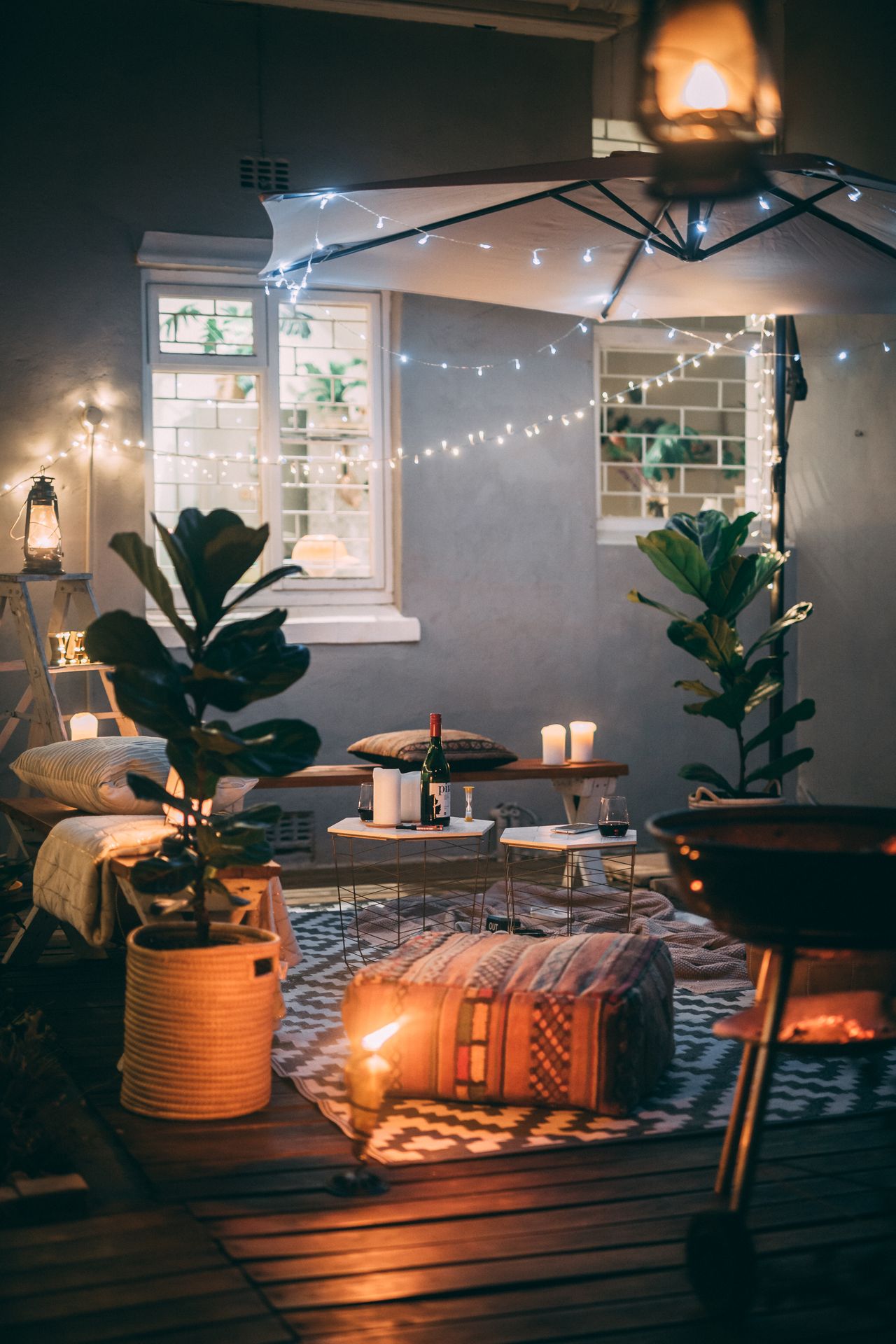
Photo: Taryn Elliott / Pexels
Candlelight is the cheapest cozy upgrade there is. Group lanterns and candles in odd numbers — threes and fives look best — and stagger the heights from about 6 to 18 inches, so the light feels layered instead of flat. A hurricane glass or a tall lantern shields the flame from fall breezes; a plain votive on an open table will blow out every two minutes. Lanterns cost $10 to $40 each, and a mixed cluster of three does more for a corner than one expensive statement piece.
Now the safety part, because fall yards are full of dry leaves. Set candles on stone, metal, or a steady tray — never straight on a wood railing or a cushion — and keep flames at least 12 inches away from pillows, throws, and plant pots. Keep clusters out of walkways, where a coat hem can brush past, and blow out every real flame before you go inside, every single time. On windy nights, or with kids and dogs underfoot, switch to flameless LED candles ($15 to $30 a set); the good ones flicker well enough that nobody can tell from three feet away.
8. Set Up a Hot Drink Station Within Arm's Reach

Photo: Olia Danilevich / Pexels
Nobody wants to trek back to the kitchen in the cold, so bring the drinks to the chairs. A side table 18 to 24 inches wide beside the main seats is enough: one tray to hold everything, a big insulated carafe or airpot (1.5 to 2 quarts) of coffee, cider, or cocoa, a few sturdy mugs, and a small tin for marshmallows, cinnamon sticks, and spoons. A good airpot keeps drinks properly hot for 4 to 6 hours, so you fill it once at sunset and you are done for the evening.
Add a lidded basket under the table for the s'mores kit — graham crackers, chocolate, marshmallows, and two roasting sticks — and the fire pit suddenly has a snack plan. Keep the station under the porch edge or the umbrella if you can, so a surprise drizzle does not soak the setup. The whole station costs $30 to $80, less if you shop your own kitchen first, which most of us can. And it is not just about comfort: warm hands around a hot mug genuinely make 45 degrees feel like 55.
9. Use Plants for Privacy and Softness
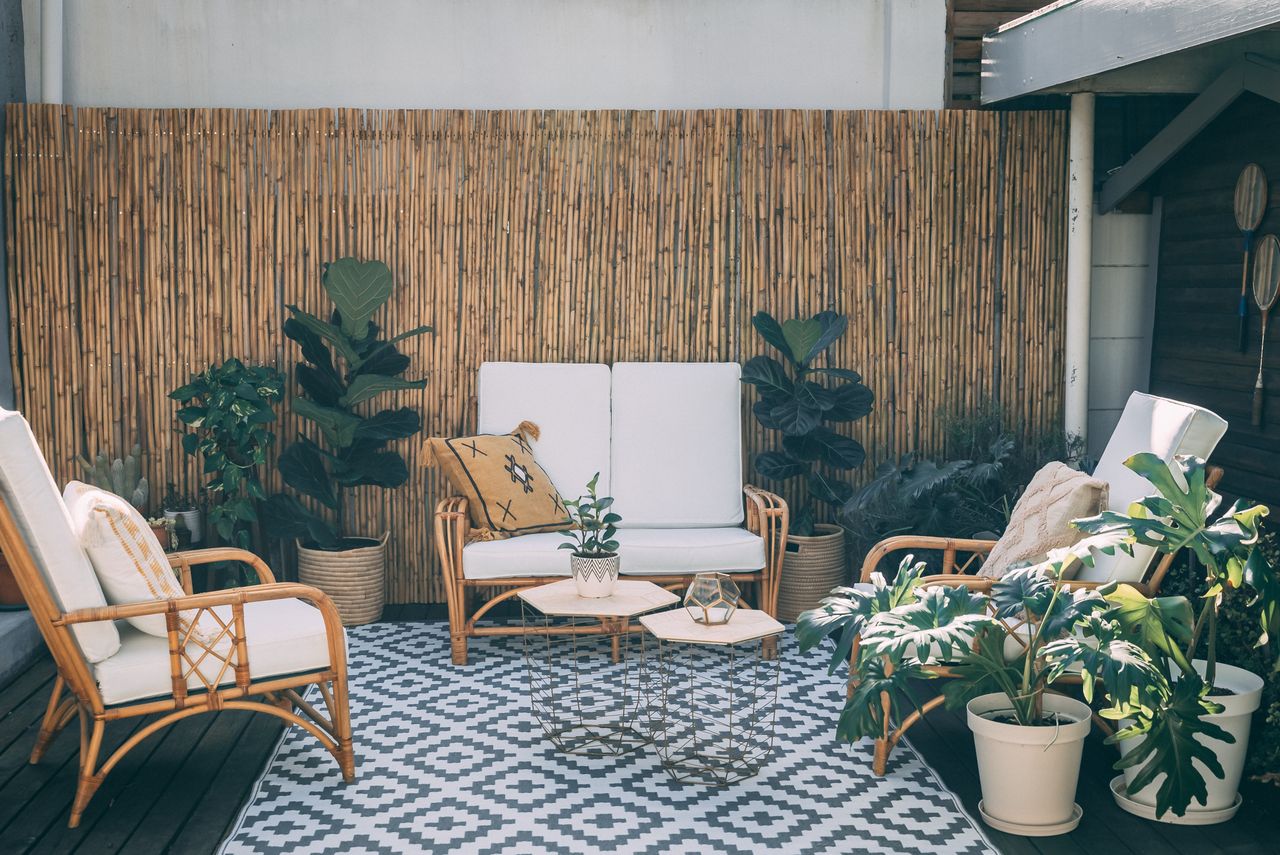
Photo: Taryn Elliott / Pexels
A bare fence makes a patio feel like a parking spot. Plants fix that, and they block the neighbors' view at the same time. For year-round privacy, set tall planters of arborvitae, sky pencil holly, or clumping bamboo along the open side of the seating; use pots at least 14 to 18 inches wide, so the roots have room and the pots do not tip over in wind. Ornamental grasses like Karl Foerster feather reed grass grow 4 to 5 feet tall in a single season and make a soft, moving screen for $15 to $30 a pot.
Layer the heights the way you would a garden bed: tall plants at the back, medium pots of mums, ornamental kale, or heuchera in the middle, and small herbs or trailing plants along the front edge. In fall, mums give you the strongest color for the money at $5 to $12 a pot. Renters and small-space readers can steal the same trick — a row of tall pots along a railing works on a balcony too, as this small balcony garden guide shows. Just remember that pots dry out fast in fall wind, so check the soil every few days.
10. Turn the Covered Porch Into a Reading Corner
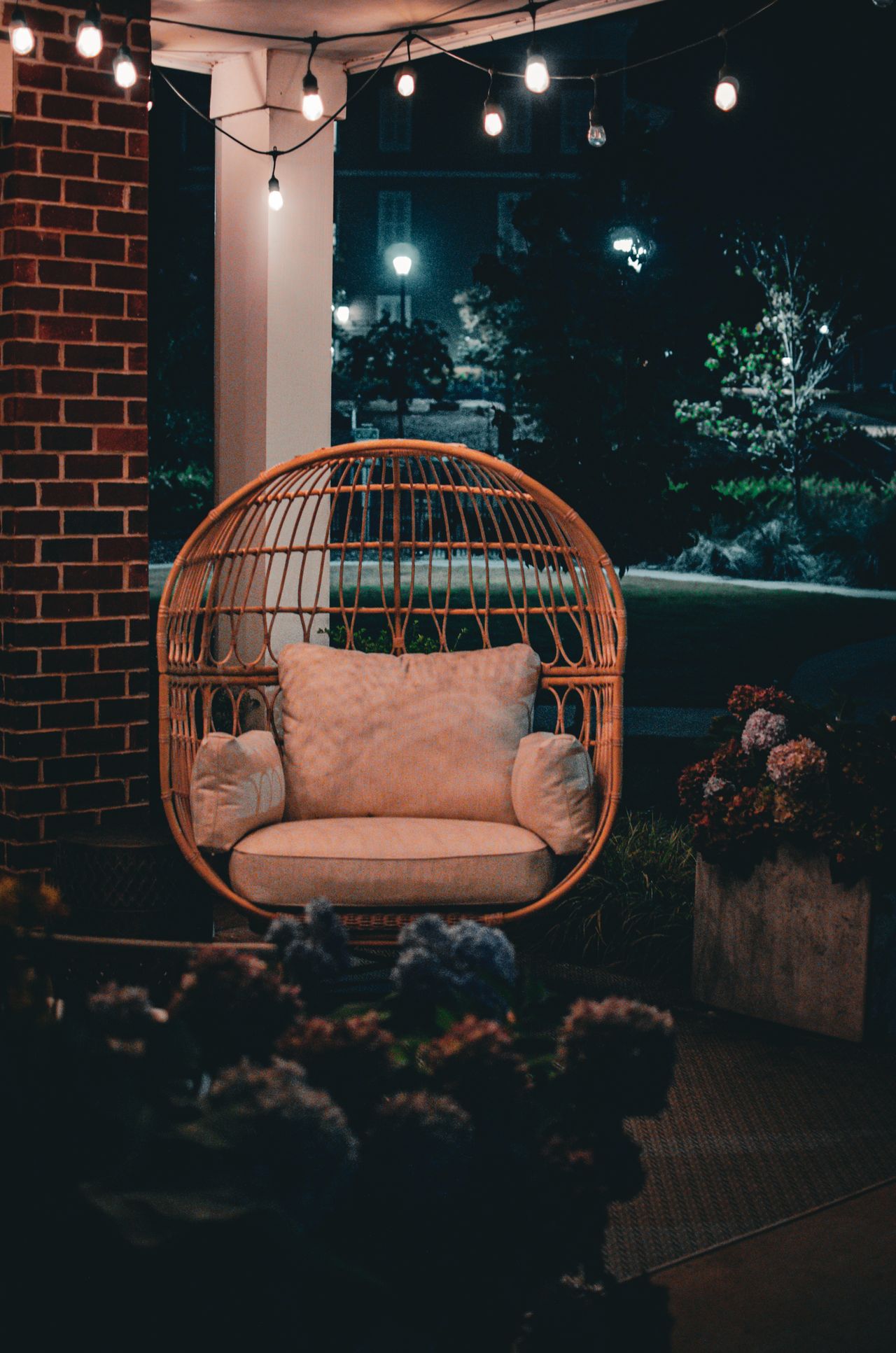
Photo: Pexels
A covered porch is the one outdoor spot that works in almost any fall weather, because the roof handles the rain and the house wall cuts the wind. Claim one end of it — you need a patch only about 5 by 6 feet — and furnish it for one person on purpose: a deep chair or egg chair with a thick cushion, a footrest or pouf, and a side table sized for a book and a mug. Point the chair toward the best view, not toward the front door, so it feels like a retreat instead of a waiting area.
Light matters most here. One warm lantern or a short run of string lights makes pages readable without killing the evening mood, and a throw should live in a basket beside the chair for good. If your porch holds a swing instead of a chair, leave about 4 feet of clear floor in front of and behind it for the swing's travel, and check that the porch is at least 6 feet deep before you hang one. For bigger covered spaces, these covered patio ideas have layouts worth copying. Ten quiet minutes out here with coffee at 7 a.m. might become your favorite part of fall.
Frequently Asked Questions
How can I keep an outdoor space warm in the fall?
Think in layers, the same way you dress. First, add one real heat source — a fire pit or a patio heater — close to the seating, not across the yard. Second, block the wind with a screen, curtains, or tall plants, because moving air steals more warmth than cold air does. Third, add the soft layers: a rug underfoot, cushions on the seats, and a blanket per person. Fourth, warm people from the inside with hot drinks. A corner set up this way stays comfortable into the low 40s for most people, especially on the south or west side of the house where the afternoon sun lingers longest.
How far should a fire pit be from the house?
At least 10 feet from the house, fences, sheds, and overhanging branches is the standard guidance, and many city codes and HOA rules ask for more — some up to 25 feet for wood-burning pits. Never place a fire pit under a roof, pergola, or umbrella, and keep the ground under and around it non-flammable: stone, concrete, gravel, or a fireproof pad on a deck. Rules change from town to town, so a two-minute check of your local fire code before the first fire of the season is always worth it.
How do I protect cushions and blankets from fall weather?
Start with the right fabrics: solution-dyed acrylic and polypropylene shrug off rain and resist fading and mildew far better than cotton canvas. Between uses, store soft items in a deck box or a sealed storage bag, and use furniture covers during dry-but-cold stretches. If cushions do get soaked, stand them on edge in the sun to drain and dry fully before storing — packing away damp cushions is exactly how mildew starts. Most outdoor throws can go in the washing machine on a gentle cycle, but check the tag first.
How can I light a patio if there is no outdoor outlet?
You have three good options. Solar string lights and lanterns charge all day and run 6 to 8 hours at night, as long as the little solar panel gets real sun — stick it on the fence, not under the pergola roof. Battery-powered LED string lights run 30 to 100 hours on one set of batteries and work anywhere, including apartment balconies. And flameless candles give you the flicker with zero wiring at all. If you must run a cord, use a single heavy-duty outdoor extension cord from a GFCI outlet, keep it flat along a wall, and never pinch it in a doorway.
How do I make a tiny patio or balcony feel cozy without crowding it?
Shrink every idea by one size. Use a 5 by 7 foot rug, two chairs instead of a sofa, and a tabletop fire bowl or a small heater instead of the full-size version. Go vertical: string lights overhead and a screen or a tall plant at the open side give you enclosure without eating any floor space. Keep a clear path of about 24 inches so the space still works, and pick one star piece — the chair, the lights, or the fire — and let everything else stay simple. Small spaces actually feel cozier than big ones once the light and the layers are right.
Final Thoughts
None of these ideas asks for a remodel, a contractor, or a second mortgage. Pick two or three — most people start with string lights, a rug, and a stack of blankets — and your patio stops being a summer-only space. The best cozy outdoor spaces are not the most expensive ones; they are the ones with a warm seat, a soft light, and a hot drink, ready at the end of an ordinary day.
So this weekend, hang the lights, roll out the rug, and light the first fire of the season. Fall is short. Sit outside for it.
Sources
- The Spruce — Backyard Patio Ideas
- The Home Depot — Backyard Patio Ideas
- Patio Productions — Fall Outdoor Decor: Cozy Fire Pit Ideas
- A Blissful Nest — Fall Patio Decorating Ideas
- Outdoor Makeover — How to Keep Your Outdoor Space Warm and Inviting in Fall
Gallery: More Cozy Corners to Copy
Photo: Taryn Elliott / Pexels
Photo: Chris F / Pexels
Photo: Pexels

No comments:
Post a Comment