A true country-style kitchen is not a theme you buy in a box. It is a feeling built over time: warm paint, honest wood, a sink deep enough for a stockpot, and shelves that hold the dishes you actually use. After fifteen years of designing kitchens, I can tell you this style forgives almost everything except coldness. Whether you are refreshing a rental or planning a full remodel, these 14 ideas will help you create a warm, honest country kitchen that feels like it has always been there.
In this guide:
- Paint It Warm: Colors That Carry the Style
- Choose Shaker Cabinetry, Painted or Natural
- Swap Uppers for Open Shelves
- Go for Butcher-Block and Wood Worktops
- Anchor the Room with an Apron-Front Sink
- Layer Warm, Low Lighting
- Thrift the Character: Vintage Finds
- Soften Everything with Honest Textiles
- Let Wood Do the Talking: Floors and Beams
- Add Stone, Brick, or Plaster Texture
- Keep Herbs and Greens Alive
- Hang Copper, Enamel, and Real Tools
- Country vs Modern Farmhouse: Know the Difference
- The Honest Budget Playbook
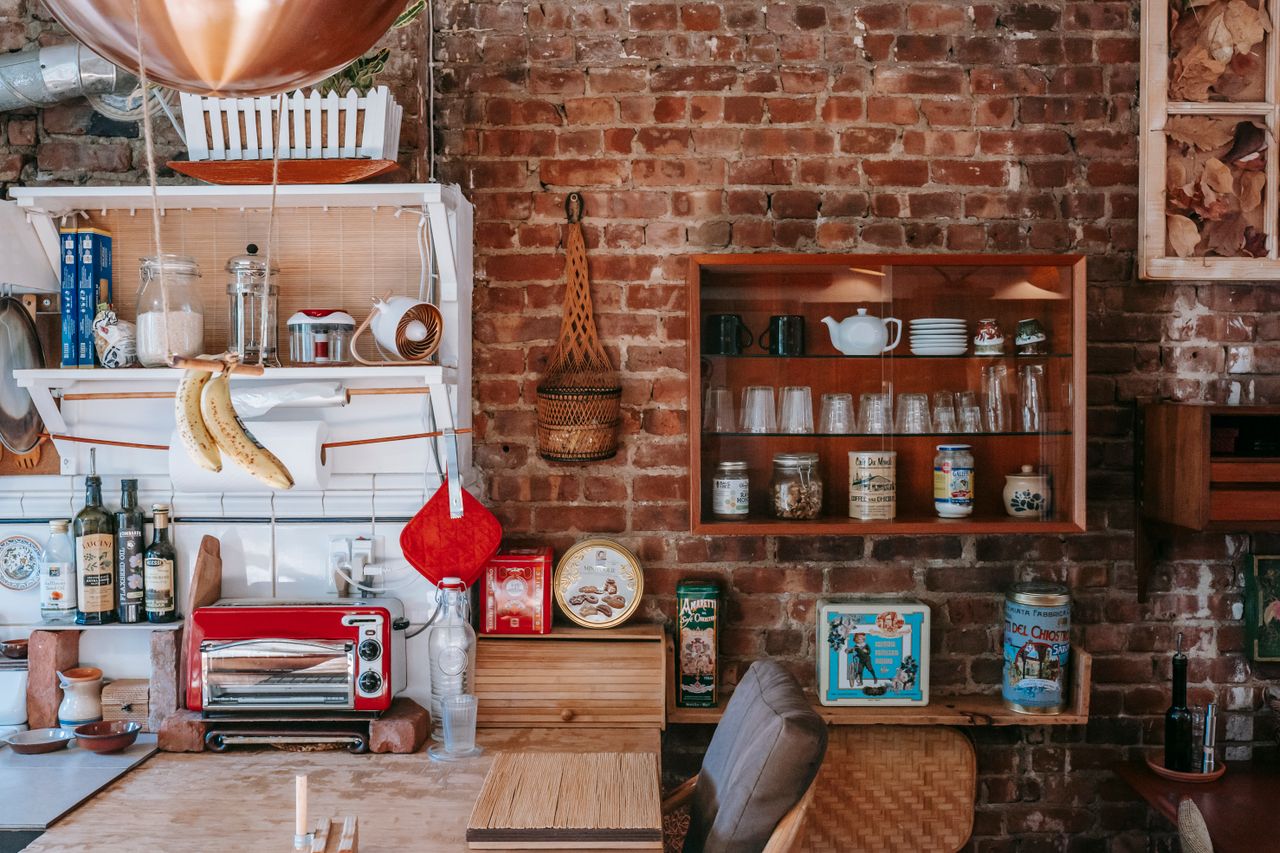
Exposed brick, worn wood, and everyday dishes doing the decorating — the country look in one frame. Photo: Charlotte May, via Pexels
1. Paint It Warm: Colors That Carry the Style
Color does more work here than in any other kitchen style. The best country palettes pull from nature: soft cream, warm white, sage green, muted blue-gray, and buttery yellow. These shades sit calmly next to wood and stone, and they make a room feel sunny even on a gray day. A good rule is 60-30-10: about 60 percent warm neutral on walls and big surfaces, 30 percent wood tones in floors and shelves, and 10 percent accent color in textiles and small items. Sage green is the star right now — it reads like a neutral but gives the room a pulse, and it pairs beautifully with aged brass hardware.
What should you avoid? Stark blue-white paint and all-gray schemes. They flatten the warmth this style needs. Before you commit, paint large swatches on poster board and tape them to the wall. Look at them in morning light, afternoon light, and under your evening bulbs. Paint changes a lot through the day, and this small test saves expensive mistakes. One gallon covers roughly 350 square feet, so most kitchens need just two gallons for the walls.
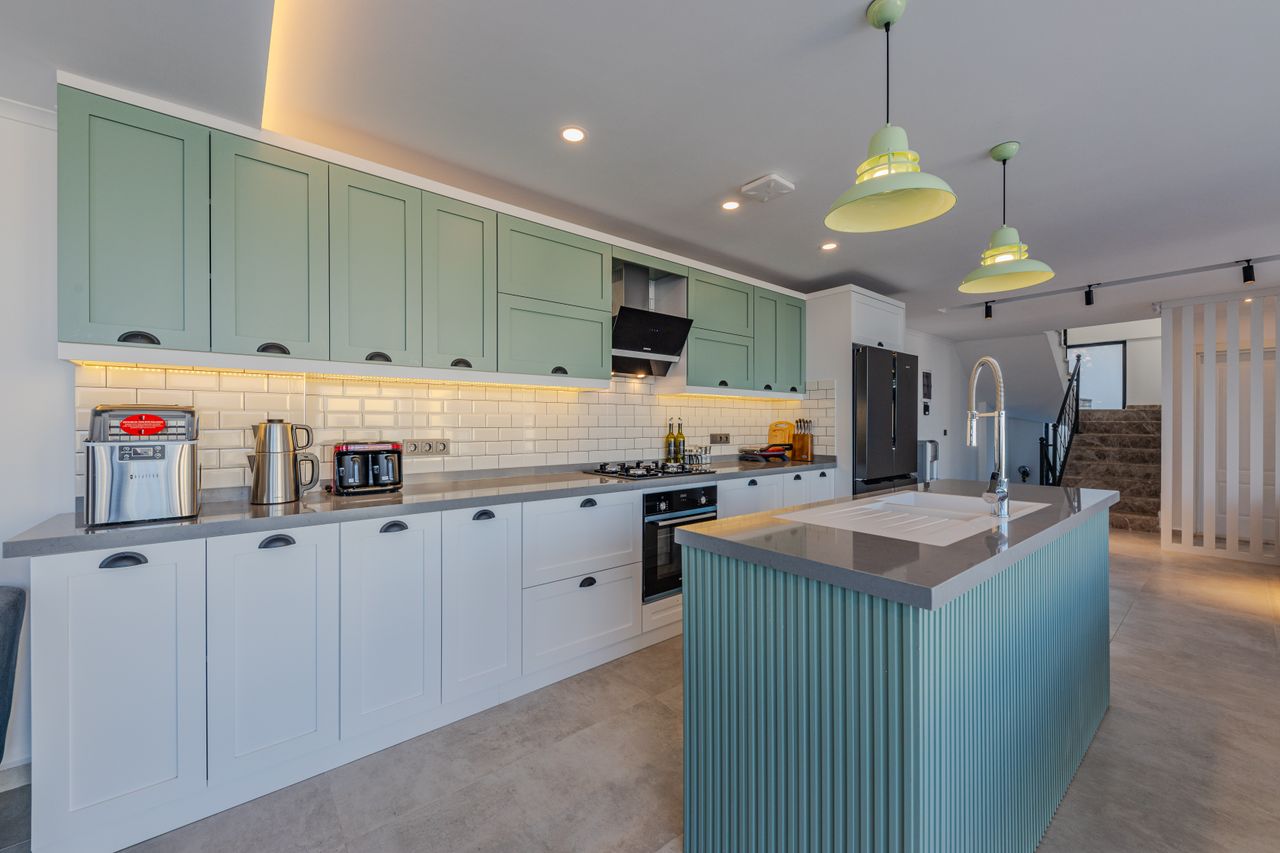
Sage green cabinetry with white counters: the color combination country lovers keep coming back to. Photo: Ahmet ÇÖTÜR, via Pexels
2. Choose Shaker Cabinetry, Painted or Natural
Shaker doors are the backbone of this style for one simple reason: their clean frame-and-panel shape suits both old cottages and new builds. They take paint well and they take stain well, so you can go cream, sage, soft black, or leave the wood natural. For hardware, choose cup pulls on drawers and round knobs on doors in aged brass, oil-rubbed bronze, or matte black. Cup pulls sit at the center top of each drawer front; knobs go on the door stile, about two to three inches from the corner. This small detail changes the whole feel of a kitchen.
You do not need new cabinets to get the look. Painting your existing boxes is the biggest bargain in kitchen design. Use a bonding primer, then two coats of cabinet-grade enamel, and let each coat cure fully. Want more character for less money? Replace a few upper doors with glass fronts. Glass uppers turn ordinary cabinets into a dresser look and let your everyday dishes become part of the decor. Keep what you display simple — white plates and clear glasses always work.
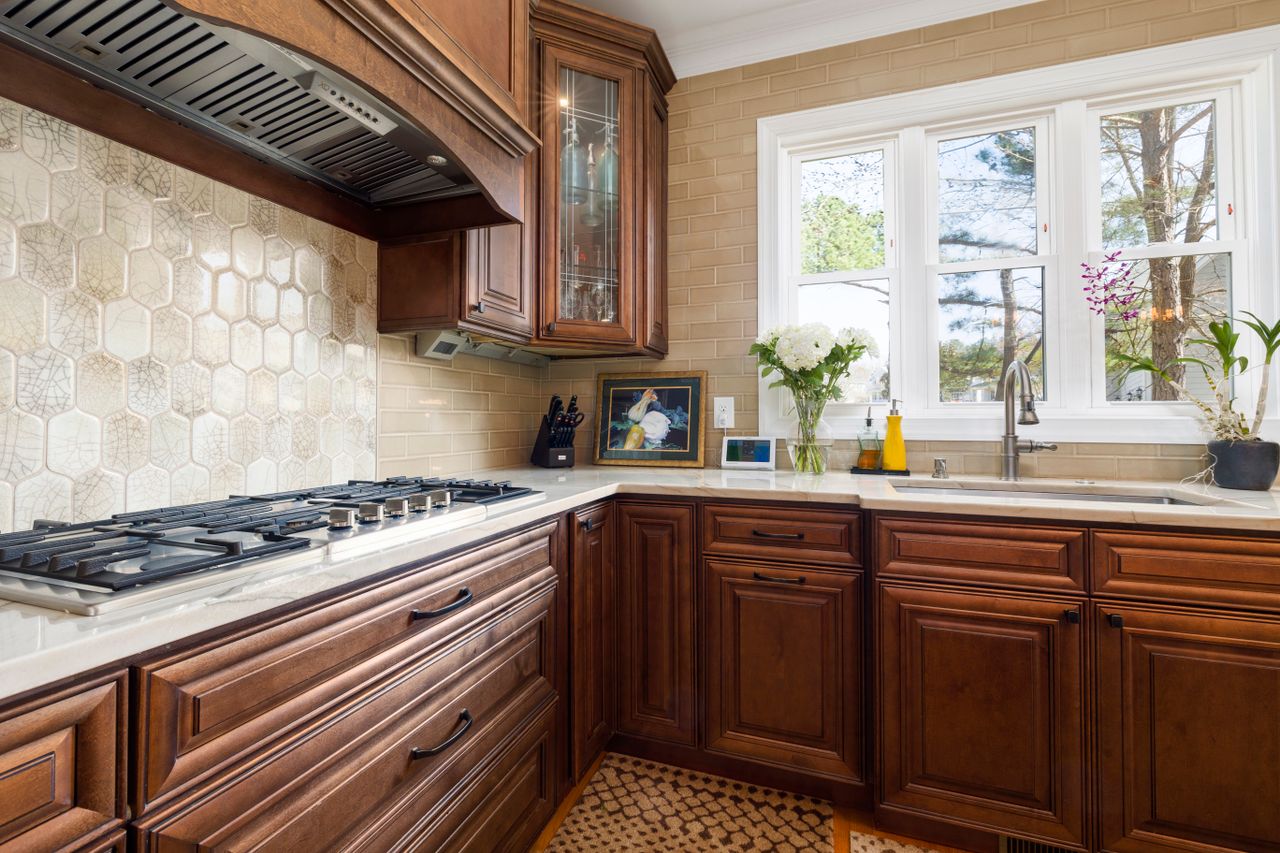
Simple framed cabinetry in natural wood — honest, sturdy, and easy to live with for decades. Photo: Curtis Adams, via Pexels
3. Swap Uppers for Open Shelves
Nothing says country faster than open shelves holding the dishes you use every day. Thick wood shelves — one and a half to two inches thick, ten to twelve inches deep — feel like they grew out of the wall. Mount them on solid brackets or iron corbels spaced every 24 to 30 inches, and always screw into studs. A shelf that sags is worse than no shelf. Display only what you reach for weekly: everyday plates, bowls, glasses, and a few cookbooks. If it collects dust, it does not belong on open shelves.
Style the shelves with a simple formula: group items in odd numbers, repeat two or three colors, and leave breathing room between groups. A stack of white bowls, a row of clear glasses, and one wooden board is a complete shelf. Keep shelves away from the range, where grease settles on everything. In a compact room, open shelves are a gift — they make walls feel taller and airier than closed cabinets do, a trick worth knowing if you are working with small-kitchen ideas that save space.
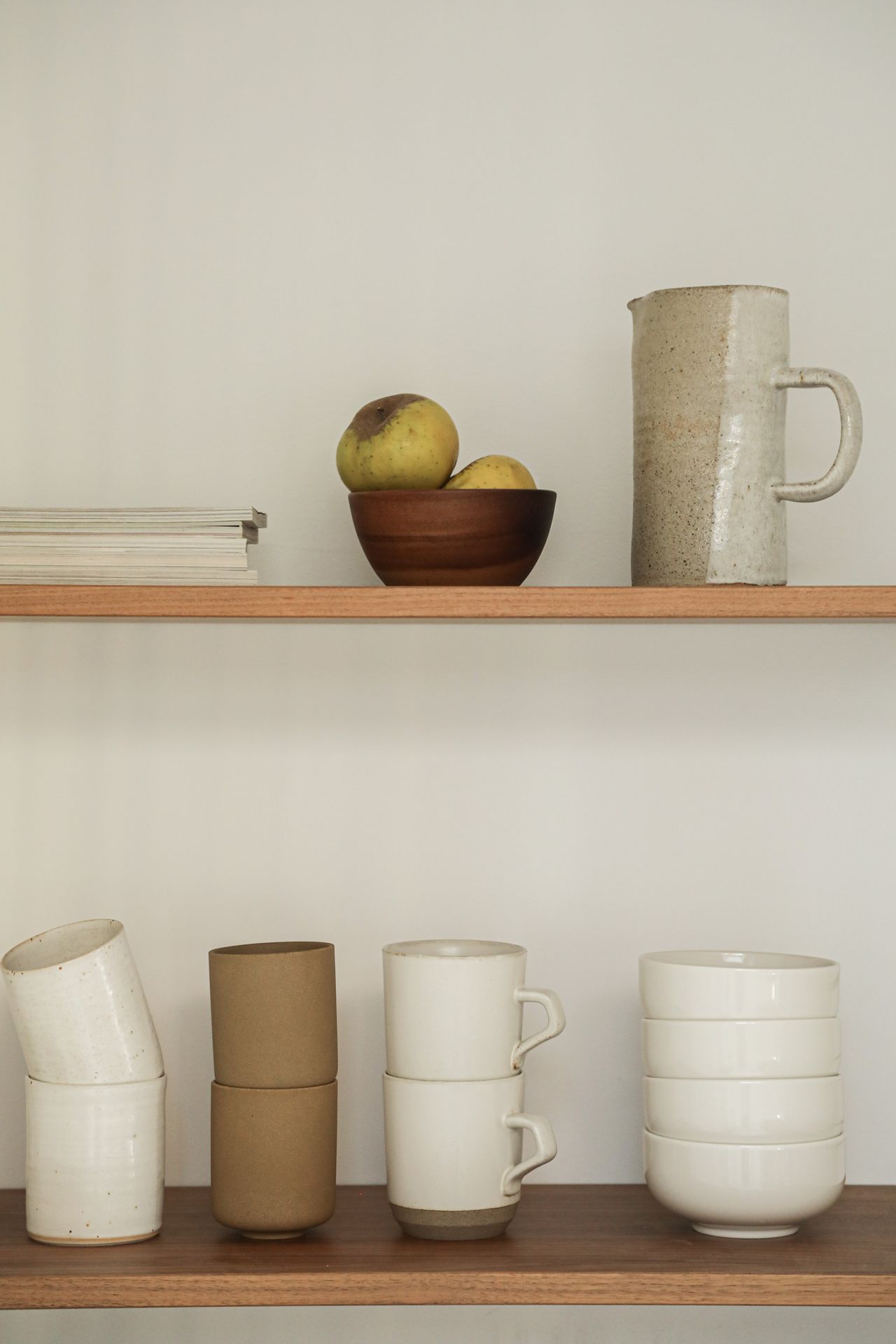
Open shelves work when they hold real daily dishes — a fruit bowl, stacked plates, and glasses within easy reach. Photo: Cup of Couple, via Pexels
4. Go for Butcher-Block and Wood Worktops
Wood counters are the warmest surface you can put in a kitchen, and they cost far less than stone. Maple and oak are the classic choices — hard enough for daily chopping, light enough to keep the room bright. Finish them with food-safe mineral oil, and re-oil once a month for the first year, then every few months after. Edge-grain boards show long stripes of wood and cost less; end-grain boards show the cut ends, hide knife marks better, and cost more. For a working counter, edge-grain is plenty.
Wood loves painted cabinets. A butcher-block top over sage or cream Shaker bases is one of the most-loved pairings in country design, and it is also one of the cheapest. Treat the wood like the living material it is: always use trivets under hot pans, wipe up standing water, and sand out stains with fine sandpaper, then re-oil the spot. Small marks tell the story of a kitchen that cooks. If a deep gouge bothers you, a cabinetmaker can sand the whole top back to new in an afternoon.
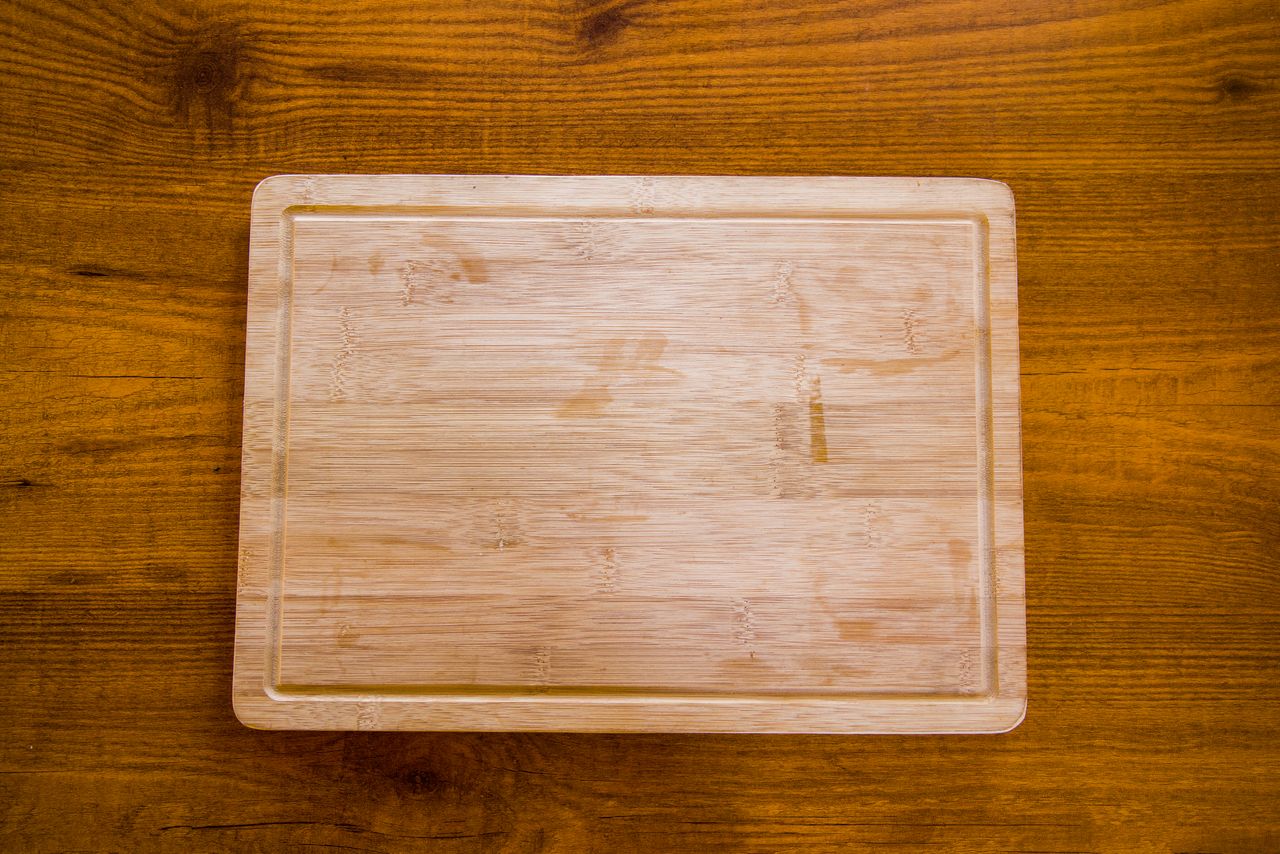
Wood with a past: boards and blocks like this bring instant warmth to any counter. Photo via Pexels
5. Anchor the Room with an Apron-Front Sink
The deep apron-front sink is the single most recognizable piece of country design, and it earns its fame. The front of the sink faces you, so you stand closer with less leaning — your back will thank you. A 30 to 33-inch single bowl in fireclay is the classic pick; it swallows stockpots and roasting pans whole. Fireclay is fired at very high heat, so it resists chips and stains far better than ordinary porcelain. Stainless steel apron sinks exist too and suit busier family kitchens.
Pair the sink with a faucet that has some presence: a bridge faucet in aged brass or a tall gooseneck in matte black both work. One practical note — an apron sink needs a special base cabinet with front support, so plan this before you order cabinets, not after. Clean fireclay with baking soda and a soft cloth; skip harsh bleach, which dulls the glaze over time. Get the sink right and the whole room suddenly makes sense around it.
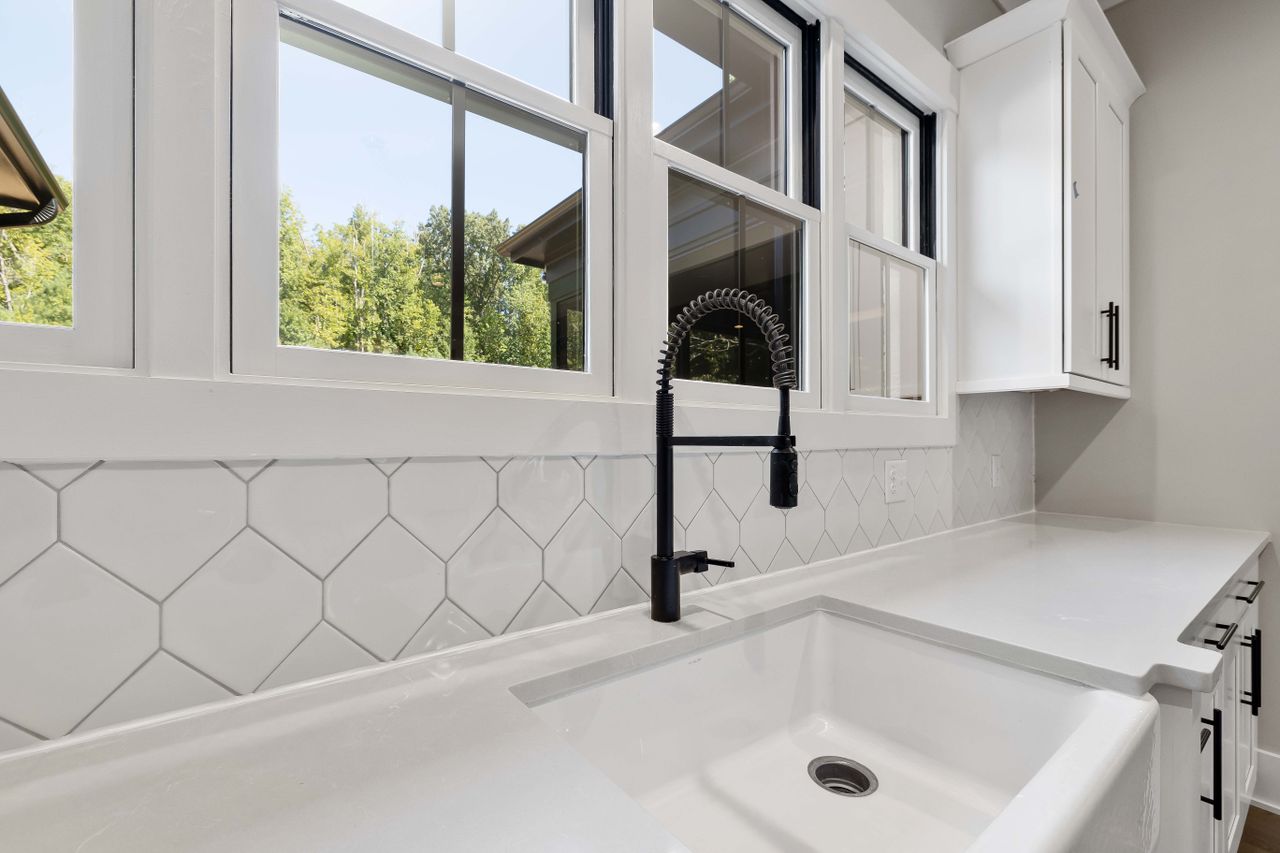
A deep ceramic sink with a bold faucet: the hardworking heart of the country look. Photo: Curtis Adams, via Pexels
6. Layer Warm, Low Lighting
Country-style kitchens glow; they never glare. Build three layers of light. First, pendants over the island or table — hang them 30 to 36 inches above the countertop, and space multiple pendants about 24 inches apart. Second, warm under-cabinet strips for task light on the counters. Third, a small lamp or candle-style sconce somewhere unexpected, like on a shelf. Use bulbs at 2700 to 3000 Kelvin — that warm, slightly golden white. Anything cooler, like 5000K daylight bulbs, will kill the mood in one flip of the switch.
Shade styles that suit the look: milk-glass schoolhouse globes, green enamel barn shades, seeded glass, or simple linen drums. Put the pendants and the under-cabinet lights on separate dimmers so you can drop the room to a soft evening glow. One more expert tip: light the inside of one glass-front cabinet. A tiny warm puck light behind your prettiest dishes costs almost nothing and makes the whole kitchen feel alive at night.
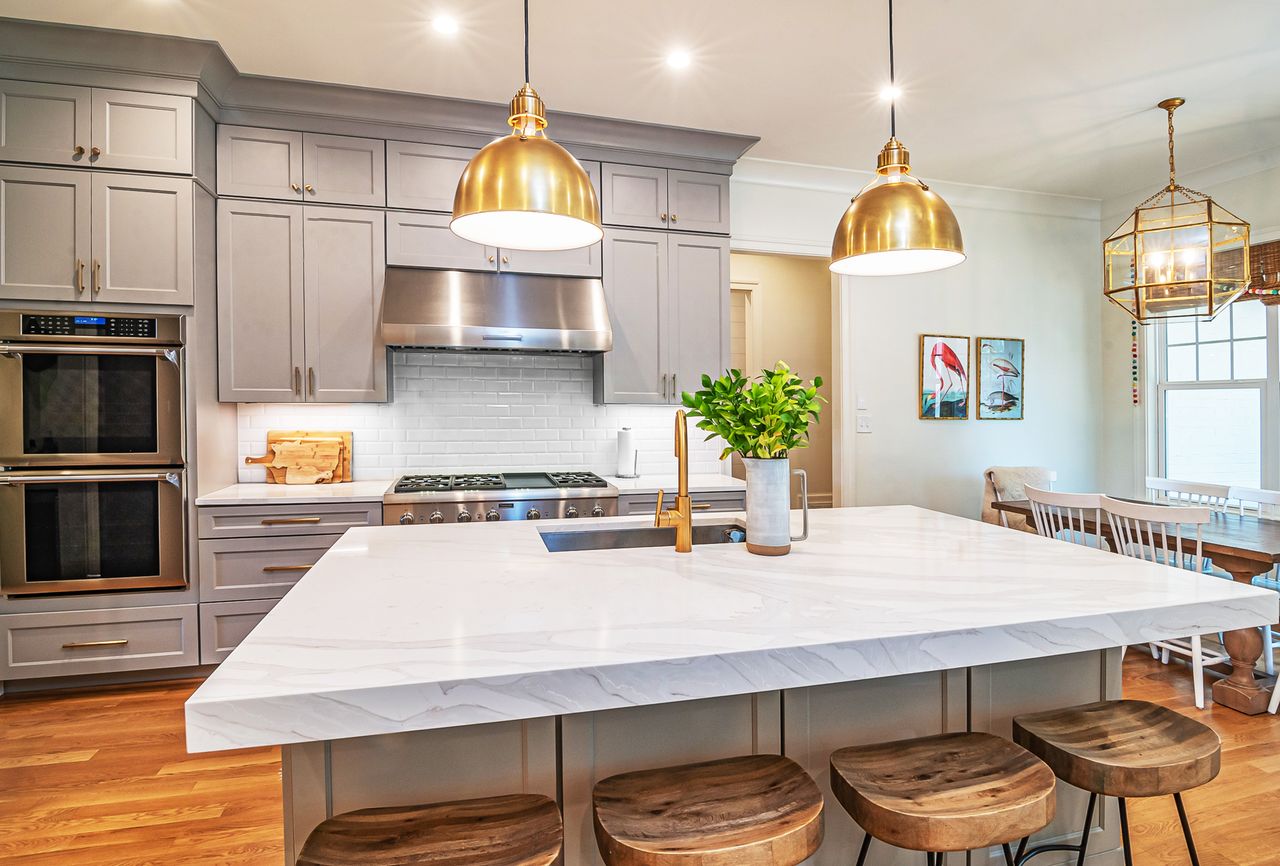
Golden pendant light over an island: warm bulbs at 2700–3000K make the difference between cozy and clinical. Photo: Curtis Adams, via Pexels
7. Thrift the Character: Vintage Finds
Here is a hard truth: true character cannot be bought new. The pieces that make a country-style kitchen believable are old ones — a pine dresser turned into a coffee station, enamelware pitchers, stoneware crocks for utensils, copper molds, ironstone platters. Hunt flea markets, estate sales, and architectural salvage yards. Go early, bring measurements of your spaces, and check every piece for wobble and cracks. The best finds are sturdy, simple, and a little worn — perfect is the enemy here.
Curate with one story in mind: English cottage, French farmhouse, or American farm — then let everything else go. Mixing three countries reads as clutter, not charm. Patina is good; damage is not. And one safety rule from experience: test any vintage painted furniture with a lead paint test kit before sanding it. Kits cost a few dollars at any hardware store. A dresser with original paint is beautiful; breathing its dust is not.
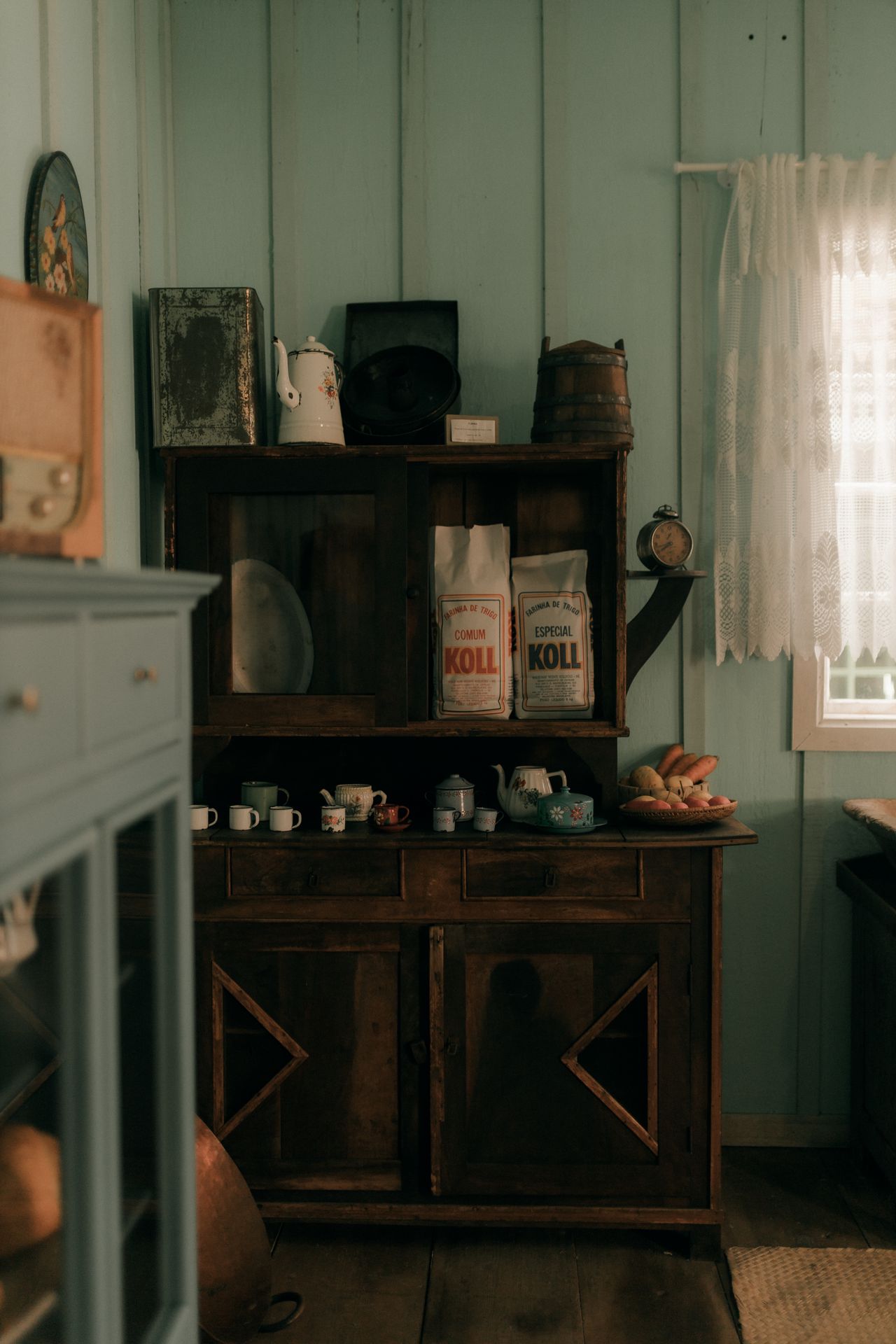
A weathered cabinet of old dishes and jars: thrifted pieces give a kitchen its soul for very little money. Photo: Alexander Mass, via Pexels
8. Soften Everything with Honest Textiles
Wood and stone need softness, and textiles deliver it cheapest. Café curtains — covering just the lower half of the window — are the country classic: they give privacy while letting daylight pour in above. Use natural linen or cotton on a simple rod set at the window's midpoint. On the floor, a washable runner, about two and a half feet wide and six to eight feet long, warms the path between counter and stove. Folded tea towels over the oven handle and a striped apron on a hook finish the job for almost nothing.
Keep patterns small and honest: gingham checks, ticking stripes, tiny florals, and plain linen. Limit yourself to two patterns plus one solid so the room stays calm. Choose cotton or linen you can throw in the washing machine — a kitchen textile that cannot be washed is decoration, not design. A runner under the table and a few seasonal swaps, like the ideas in our budget Thanksgiving table decor ideas, keep the room feeling fresh all year.
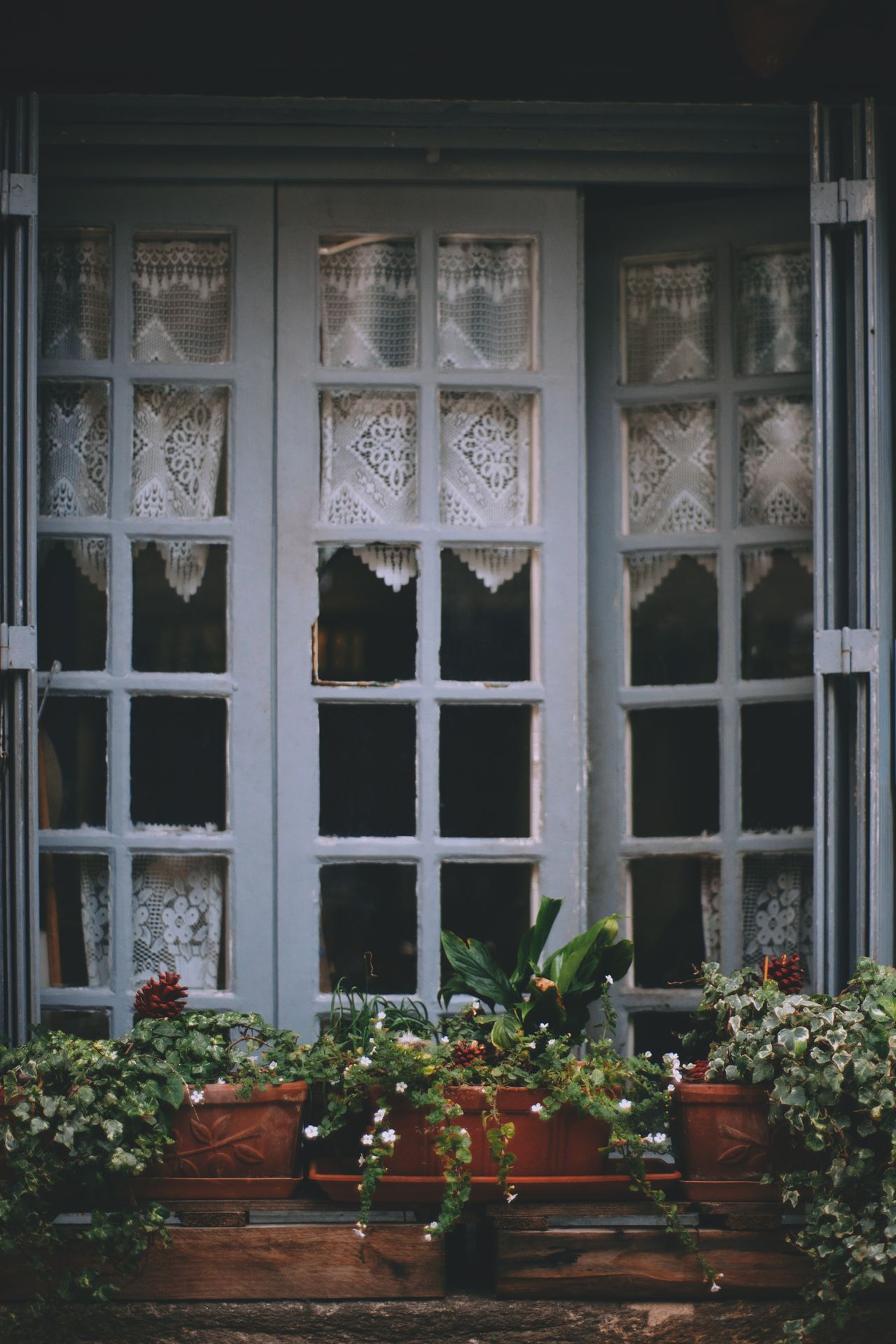
Lace café curtains and potted greens: soft fabric and daylight are the cheapest luxury in any kitchen. Photo: Maria Orlova, via Pexels
9. Let Wood Do the Talking: Floors and Beams
Wide-plank wood floors are the ground this style stands on. Medium, warm tones — honey, chestnut, weathered oak — hide daily wear far better than dark espresso or pale gray-washed floors. Planks five inches or wider read more rustic than narrow strips. If you rent or your budget is tight, a large flat-weave rug over your existing floor gives you 80 percent of the warmth for a fraction of the cost, and you can take it with you when you move.
Exposed beams take the look to the ceiling. Real structural beams are wonderful, but hollow box beams made from reclaimed-look boards give the same effect at a fraction of the weight and cost. They work best with ceilings eight feet or higher; in a low room they press down on you. Stain beams one or two shades darker than the floor for gentle contrast. A sturdy wood table on a wood floor, like the setups in our square kitchen table and chairs ideas, completes the picture — wood talking to wood is the whole point.
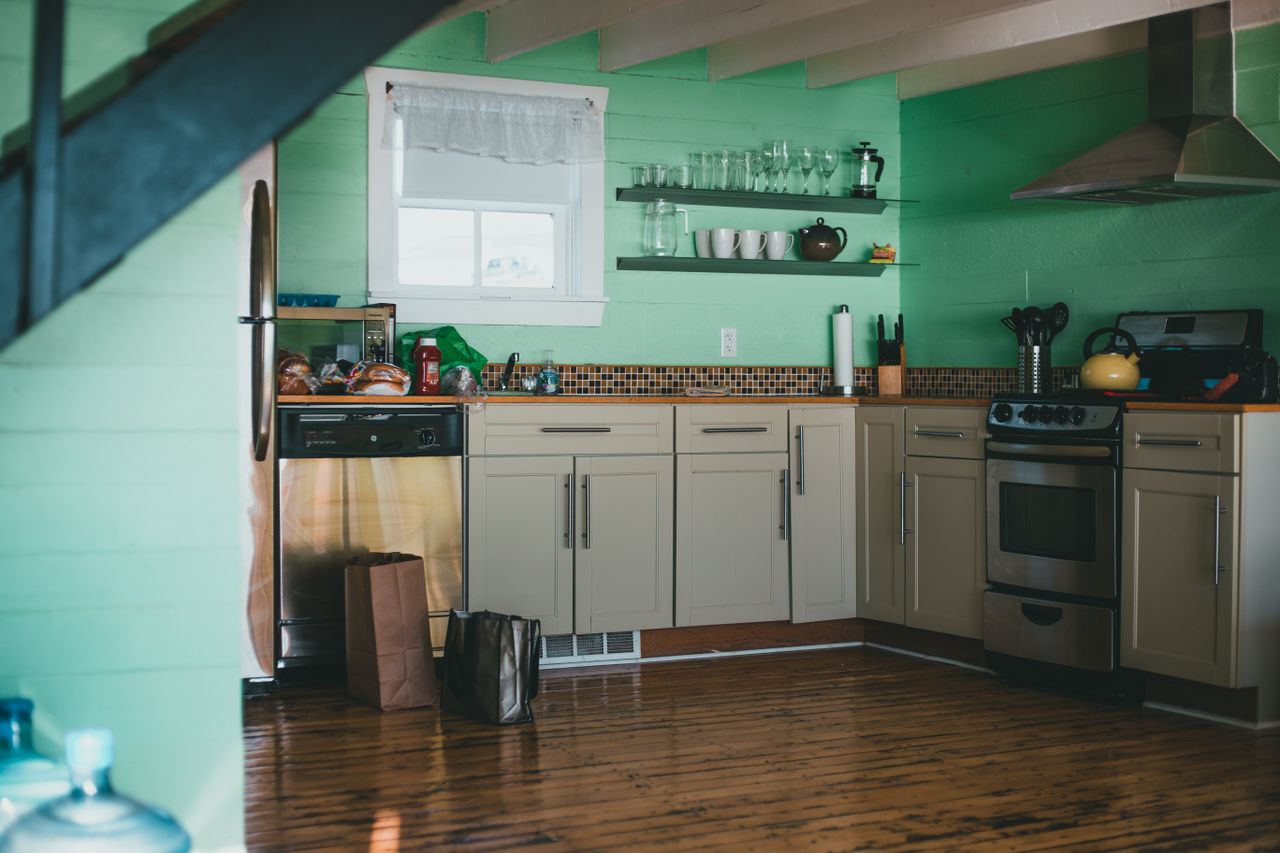
Wooden floors and timeworn pieces: when wood does the talking, the room needs little else. Photo: Erik Mclean, via Pexels
10. Add Stone, Brick, or Plaster Texture
One rough, natural wall changes everything. An exposed brick chimney breast, a stone backsplash behind the range, or a limewashed plaster wall gives the room the age and texture that paint alone cannot. Brick and stone also bounce light in a soft, uneven way that flat drywall never will. If your brick is too orange or harsh, a coat of limewash — thinned white paint wiped back — softens it while letting the texture show through.
No brick to expose? Brick veneer panels and thin stone tiles are made for exactly this, and a handy homeowner can install a backsplash-sized section in a weekend. Keep the feature to one wall or one zone; stone everywhere feels like a grotto. Seal any stone near the range with a food-safe stone sealer, and choose a grout color close to the stone so the wall reads as one surface, not a grid of lines.
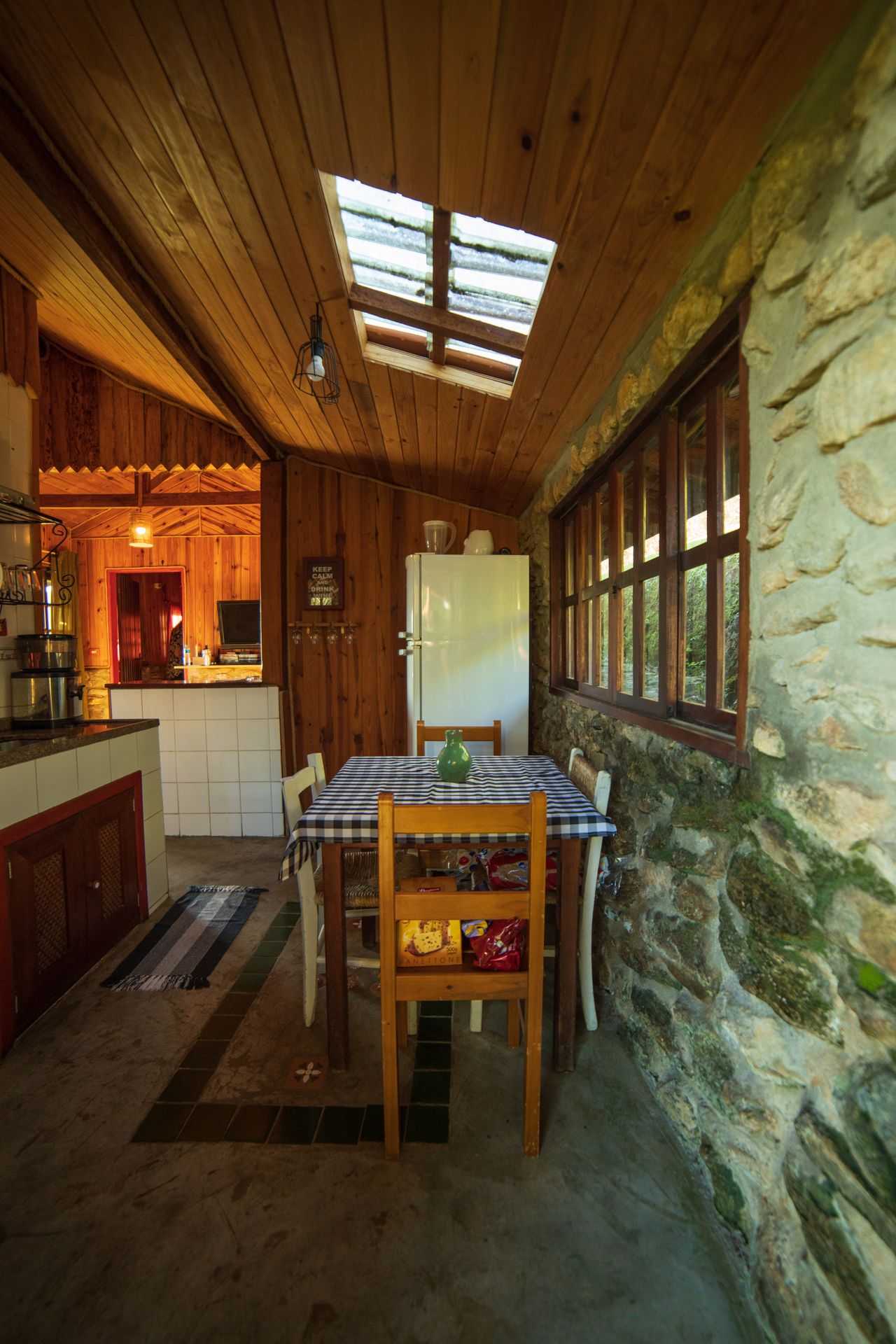
Stone walls and a wooden ceiling: one rough, natural surface gives the room its age. Photo: Matheus Bertelli, via Pexels
11. Keep Herbs and Greens Alive
A country-style kitchen should smell like something is growing. A row of potted herbs on the sunniest sill — rosemary, thyme, basil, mint — is decor you can cook with. Most herbs want six or more hours of direct sun, so give them your brightest window. Terracotta pots are the classic choice, but remember they wick water away fast: check the soil with your finger daily and water when the top inch is dry. Basil sulks in cold drafts, so keep it off the sill on frosty nights.
Beyond the sill, hang dried bundles — lavender, eucalyptus, or last summer's herbs — from a simple wall rail with twine. They scent the room and cost nothing if you grow them. One honest note: skip the plastic plants. In a style built on real materials, fake greenery reads wrong and just collects dust. If you truly cannot keep plants alive, one good-quality faux olive stem in a crock is the limit — and dust it monthly.
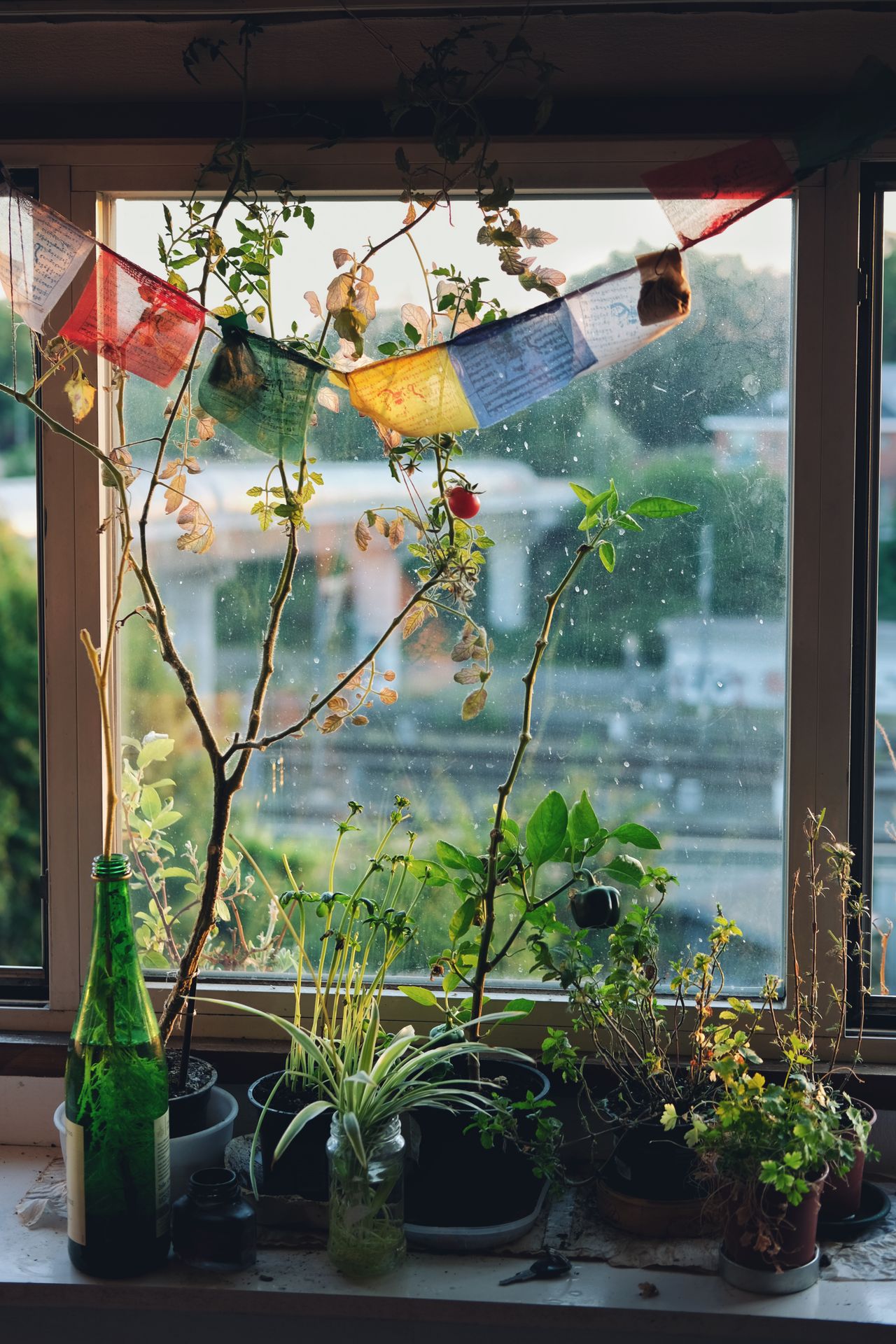
Living greens on the sill: herbs are decoration you can cook with. Photo: A., via Pexels
12. Hang Copper, Enamel, and Real Tools
Copper is the jewelry of a country-style kitchen. A few well-used copper pans hung on a wall rail with S-hooks catch the light and tell guests you actually cook. Buy solid copper with a stainless lining — it heats evenly and cleans easily — and decide your finish: polished copper gleams, while a natural patina looks wonderfully old. Either is fine; half-polished is the only look to avoid. Hang pans at arm's reach near the range, hooks about six inches apart so pieces do not clatter.
Build out the collection with enamelware — white with a blue or green rim — and a cast-iron skillet that lives on the stove. A stoneware crock holding wooden spoons and spatulas keeps tools handy and looks right at home. The rule that saves you from clutter: leave about a third of your rail and shelf space empty. Displayed tools should be the ones you grab weekly. Everything else belongs in a drawer.
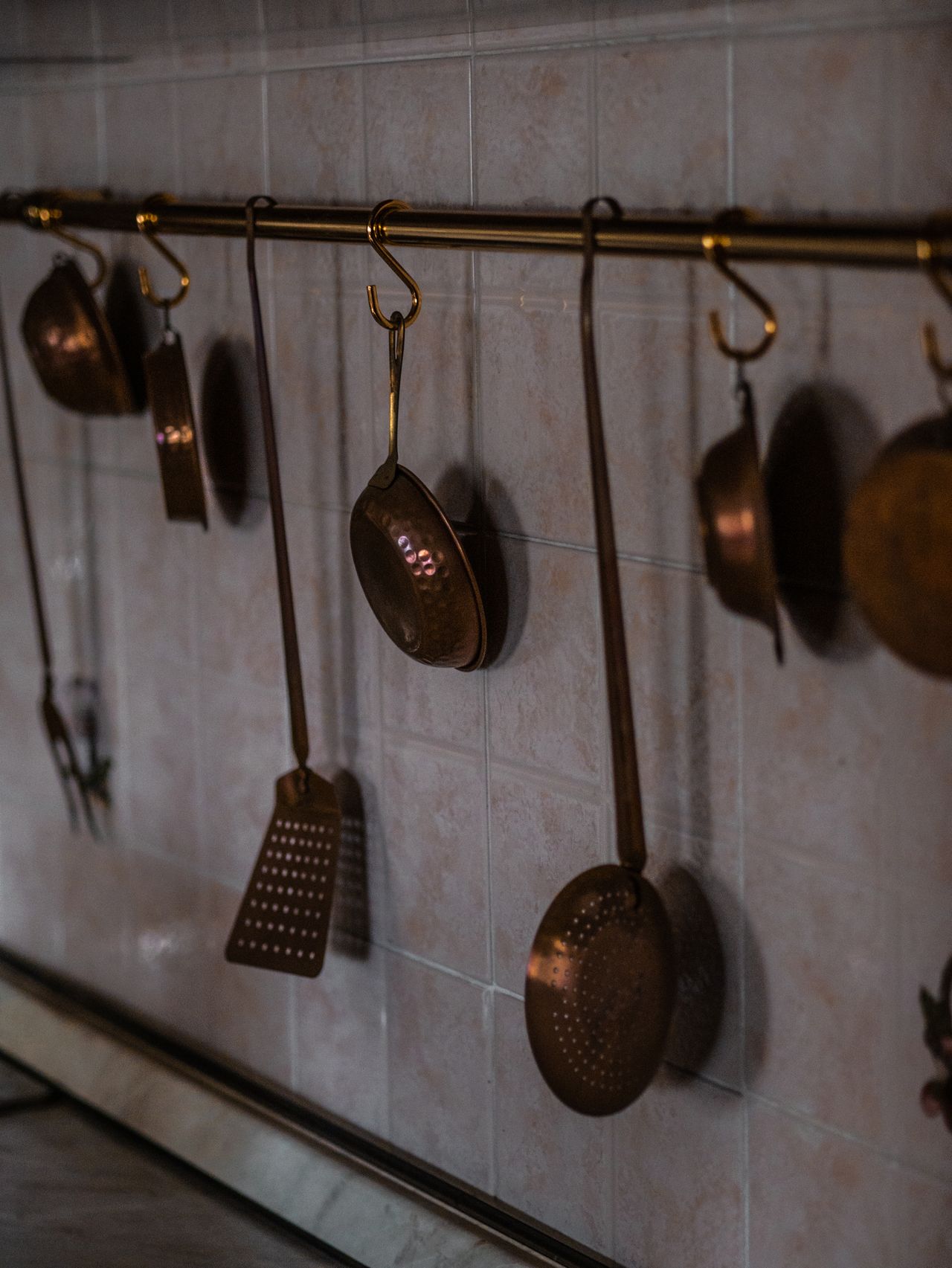
Vintage copper tools on the wall: functional art that only gets better with use. Photo: Studio Voyager, via Pexels
13. Country vs Modern Farmhouse: Know the Difference
Readers ask me this constantly, so let us settle it. Traditional country style is layered, collected, and a little imperfect: mixed wood tones, small patterns, timeworn finishes, and pieces that look gathered over decades. It has roots in real English cottages, French farmhouses, and American farm homes. Modern farmhouse, the newer trend, is edited and high-contrast: white shiplap, black window frames, barn doors, and matte black fixtures. One tells a story; the other makes a statement. Since our site already covers farmhouse looks in depth, think of this guide as the softer, older cousin.
Which should you choose? Look at your home's bones. A 1920s cottage with small rooms and old woodwork begs for true country; a new open-plan build often suits modern farmhouse better. You can borrow from both, but pick one as your leader — about 80 percent of the room should follow one story. The most common mistake I see is a modern farmhouse shell (white, black, shiplap) stuffed with country clutter. Choose your lane and the room will feel calm instead of confused.
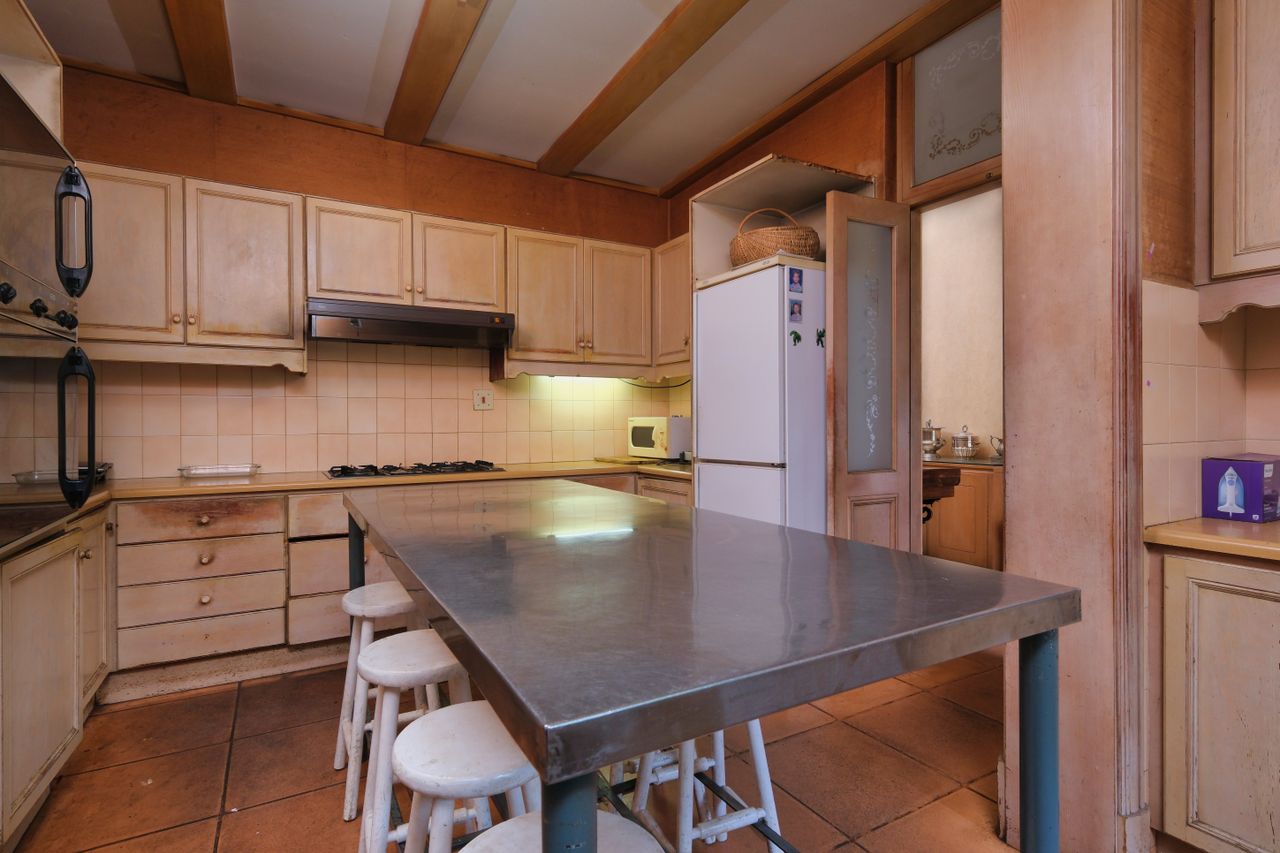
The traditional side: layered wood, worn finishes, and nothing too perfect. Photo: Alexander F Ungerer, via Pexels
14. The Honest Budget Playbook
Here is how to get the look when money is tight, ranked by impact per dollar. First, paint: two gallons of warm white or sage transform walls and even dated cabinets for the price of a dinner out. Second, swap the hardware — new cup pulls and knobs cost a few dollars each and make old doors feel custom. Third, thrift a solid wood table to use as an island or breakfast spot; sturdy beats pretty at the flea market. Fourth, build open shelves from lumber-yard boards and iron brackets. Fifth, change the textiles: café curtains, a runner, fresh tea towels.
Two things are worth spending on even on a tight budget: the faucet and the lighting. A cheap faucet drips and wobbles within a year; a mid-range one lasts decades. And warm, dimmable lighting makes inexpensive finishes look rich — it is the best money in the whole room. For small eating corners, a thrifted set like the ones in our 2-person dining table set ideas proves you do not need a big table to get the feeling. Decorate slowly, one honest piece at a time, and the room will never look cheap.
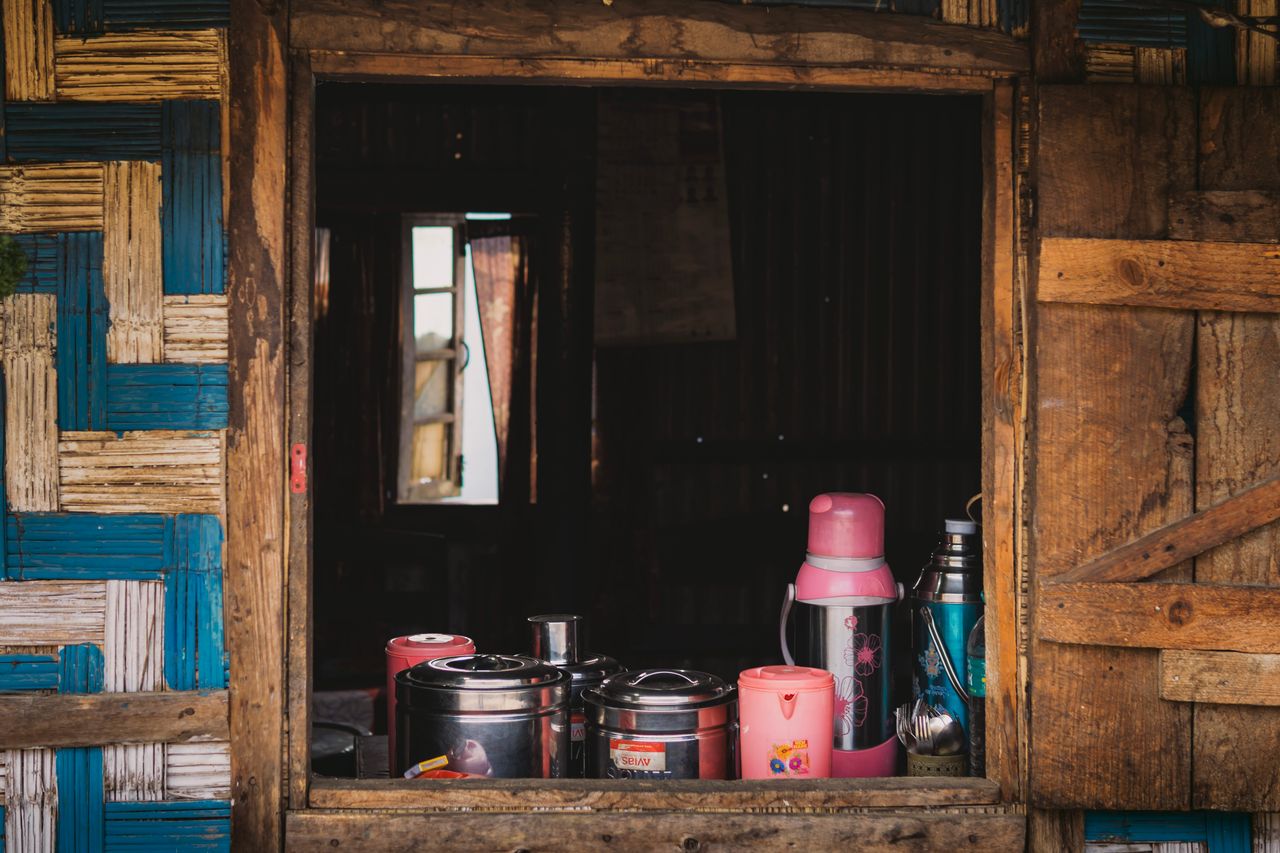
Proof that simple works: old pots, a sunny window, and wood are all the decor this corner needs. Photo: Soumyojit Sinha, via Pexels
Final Thoughts
A great country-style kitchen is never finished in a weekend — and that is its secret. Paint the walls, hang the shelves, thrift the table, and then let the room gather its story one piece at a time. The copper will darken, the wood will mark, and the shelves will fill with the dishes of a life being lived. That slow, honest layering is exactly what no catalog can sell you.
Start with the biggest lever — color and light — and let the details follow. And remember that the kitchen does not end at its doorway; carrying the same warm wood and simple textiles into the next room, with ideas like our living room table ideas, keeps the whole home feeling like one calm, connected place.
Frequently Asked Questions
What colors work best for a country kitchen?
Warm whites, soft cream, sage green, muted blue-gray, and buttery yellow. Keep about 60 percent warm neutral, 30 percent wood tone, and 10 percent accent color for a balanced room.
How do I get the country look in my kitchen on a budget?
Paint is your biggest lever, then new hardware, thrifted wood furniture, DIY open shelves, and fresh textiles. Spend real money only on the faucet and the lighting.
What is the difference between country and modern farmhouse style?
Country is layered, collected, and timeworn with mixed woods and small patterns. Modern farmhouse is edited and high-contrast — white shiplap, black accents, barn doors. Pick one as your leader.
Can this style work in a small apartment kitchen?
Yes. Paint the walls warm, add one open shelf, lay a washable runner, and put herbs on the sill. Four small moves change the whole feeling without touching the cabinets.
What backsplash suits a country-style kitchen?
Classic white subway tile, beadboard, handmade-look zellige, or a small section of stone. Keep grout close to the tile color so the wall reads as one calm surface.
Are open shelves practical or just pretty?
Both, if you display only dishes you use weekly. Corral small items on trays, dust the shelves when you wipe counters, and keep them away from the range where grease settles.
What flooring works best?
Wide-plank wood in a warm medium tone hides wear best. On a budget or in a rental, wood-look tile or a large flat-weave rug over your existing floor works well.
How do I keep the room from looking dated or cluttered?
Limit the palette to two or three colors, group decor in odd numbers, leave a third of every shelf empty, and display real tools instead of word signs.
Gallery
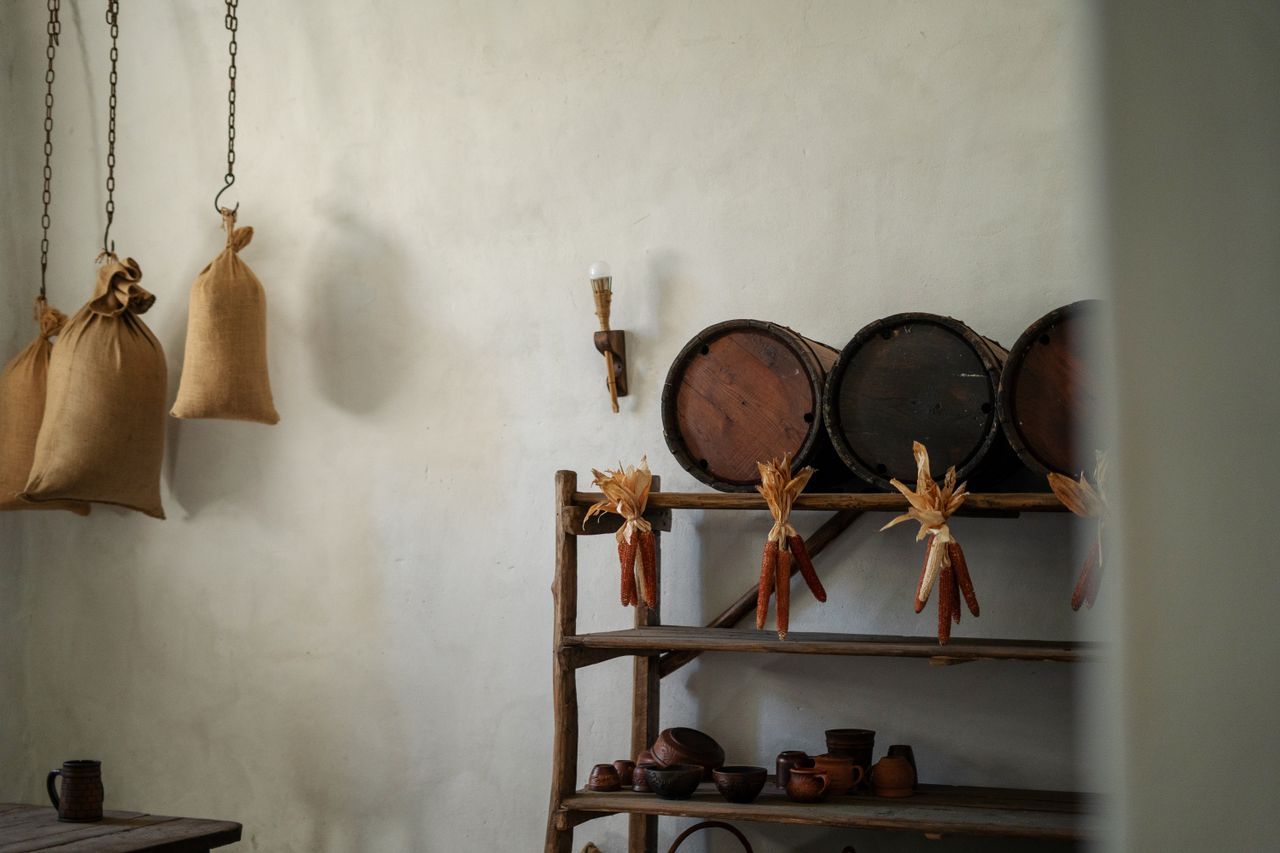
Wooden shelves, hanging sacks, and simple jars: storage that doubles as decoration. Photo: Olena Bohovyk, via Pexels
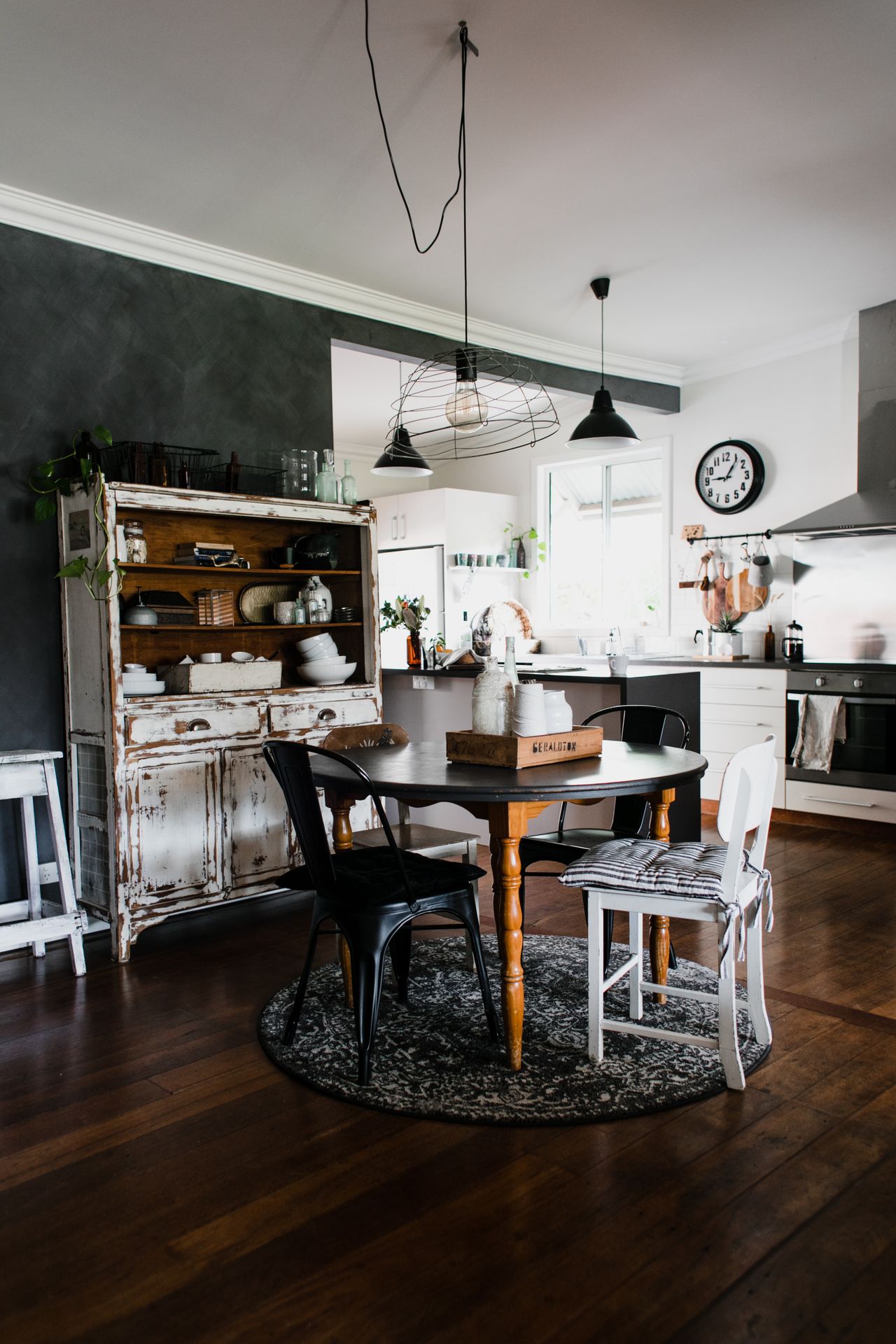
Vintage furniture, warm tones, and a soft rug underfoot. Photo: Rachel Claire, via Pexels
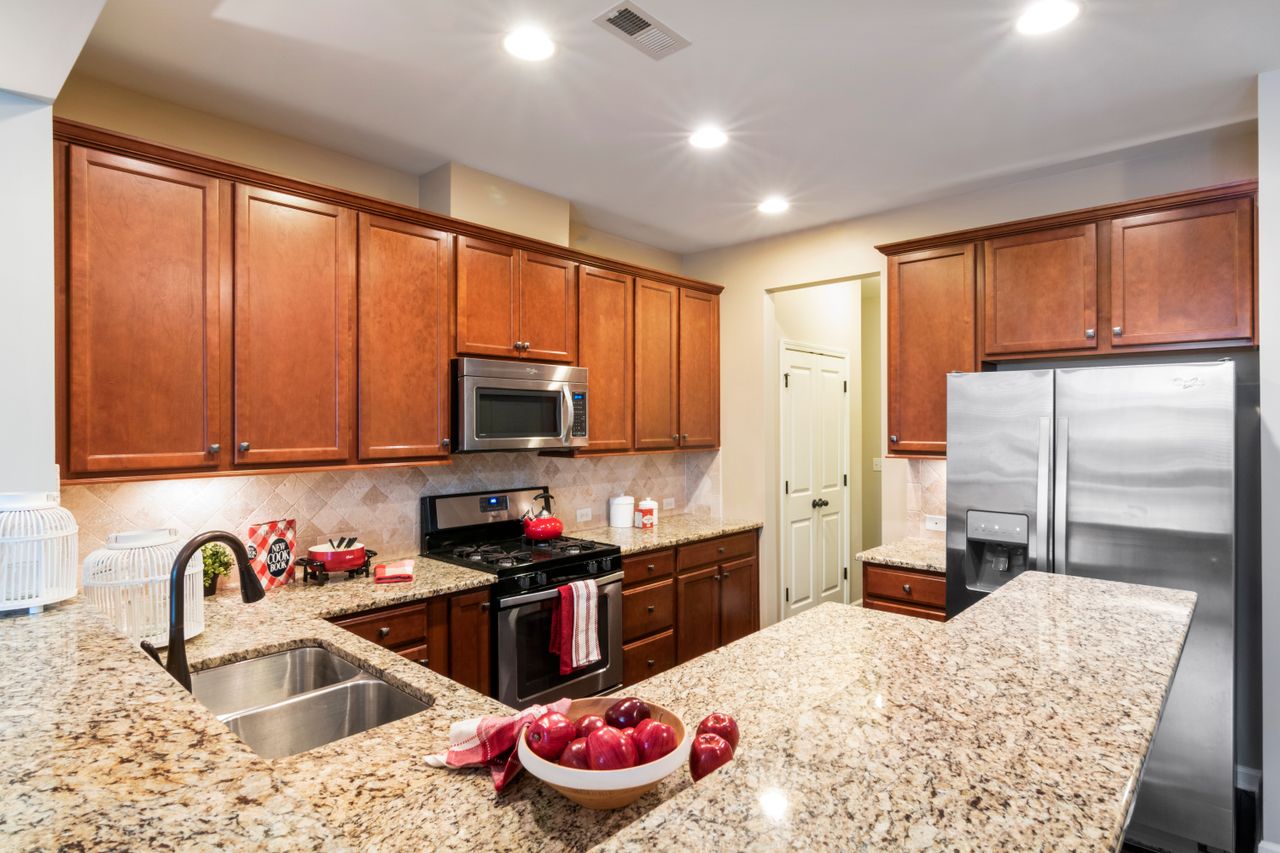
Natural wood cabinetry: sturdy, forgiving, and timeless. Photo: Curtis Adams, via Pexels
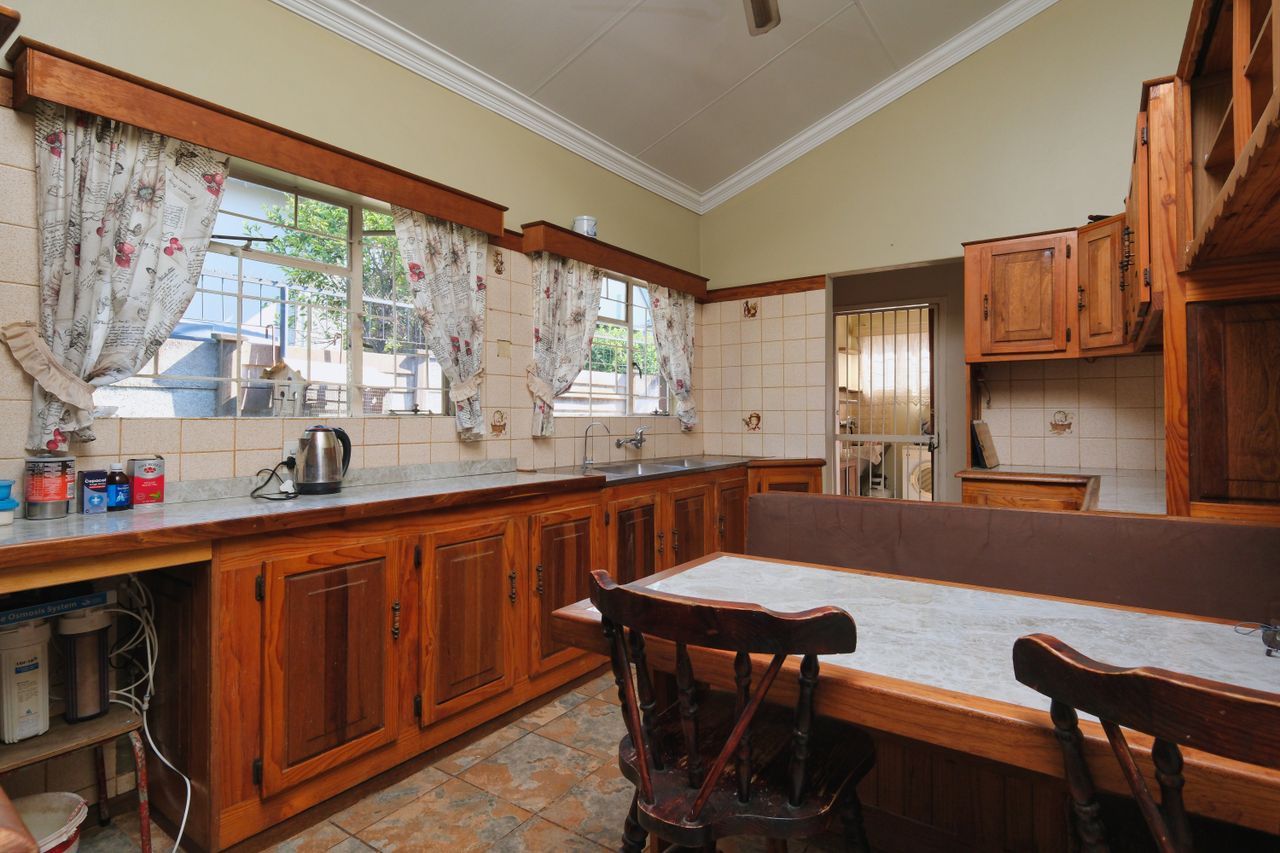
Warm wood and simple tile: the quiet version of the country look. Photo: Alexander F Ungerer, via Pexels
Sources
- MyStoneFloor — Country-Style Kitchen Ideas for 2026: paint colors, natural materials, and vintage styling guidance.
- Home Desing Ideas — 30 Rustic Kitchen Ideas 2026: rustic decor, open shelving, and curated styling approach.
- The Kitchn — Cottage-Style Sage Green Kitchen Redo: real sage-and-yellow cottage kitchen with Shaker cabinetry.
- News from Wales — Kitchen Makeover on a Budget: lighting, backsplash, and budget refresh tips.
- EA Home Design — Kitchen Cabinet Ideas for 2026: sage and olive greens, two-tone formulas, and color trends.

No comments:
Post a Comment