A square kitchen table and chairs is the hardest-working little set in many homes. It is where breakfast happens, homework gets done, and friends squeeze in for tea. Buy the wrong size and every day feels cramped. Buy the right one and a small kitchen suddenly feels easy. This guide explains, in plain words, how to pick the size, shape, base, material, and chairs that fit your real kitchen, with the exact numbers the pros use.
In this guide:
- Why a Square Table Loves a Small Kitchen
- The Right Size for Four Chairs
- Square vs Round: An Honest Comparison
- Extendable Square Tables: Worth It or Wobbly?
- Pedestal Base or Four Legs?
- Wood, Glass, Metal or Stone: Pick Your Material
- Glass Tops: The Space Illusion (and the Fingerprints)
- Chair Comfort: The Two-Minute Sit Test
- Build a Breakfast Nook by the Window
- Layout Tricks for Galley and Tiny Kitchens
- Table Height vs Counter Height: Get It Right
- Light It Like You Mean It
- The Rug Trick (and Quieter Mornings)
- Style It for Real Life, Not a Photo Shoot
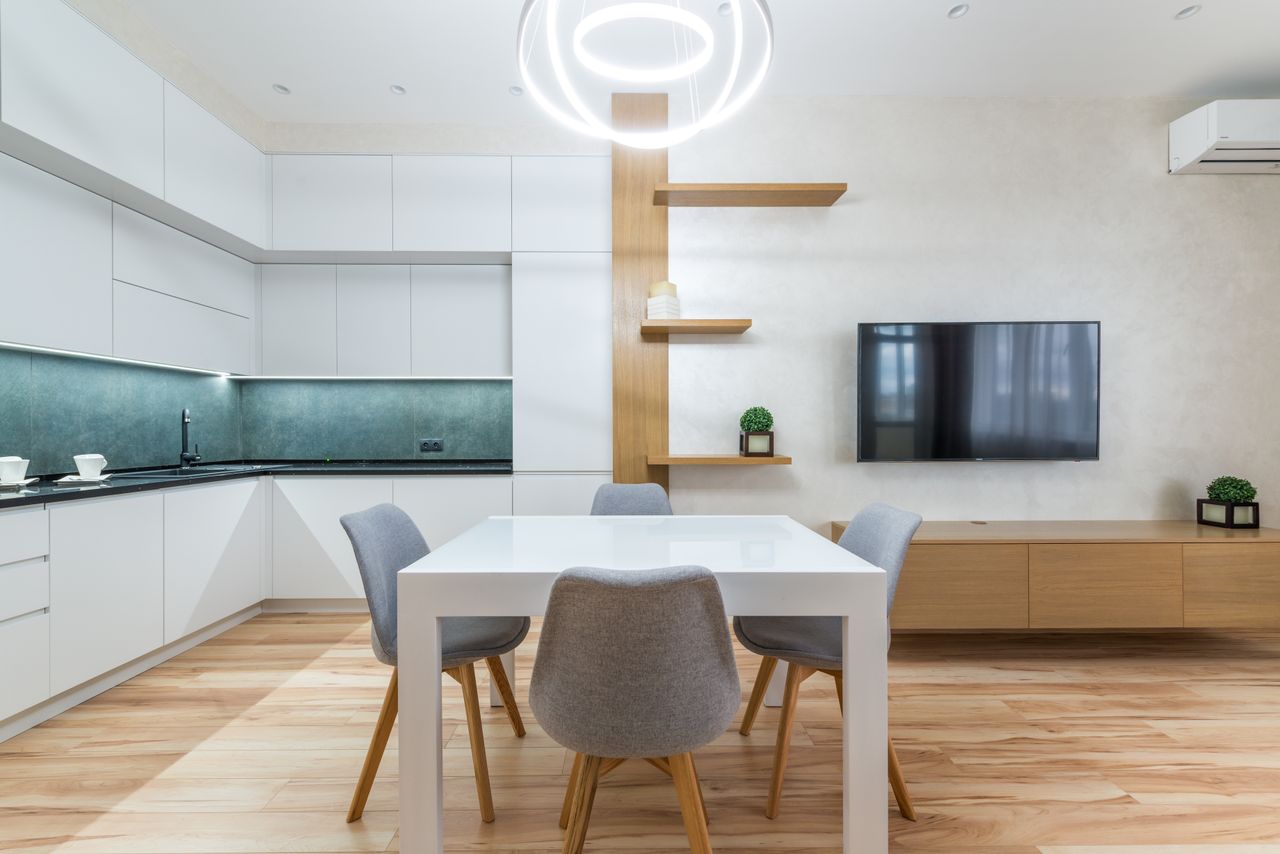
White square table with four chairs in a bright kitchen — Photo via Pexels
1. Why a Square Table Loves a Small Kitchen
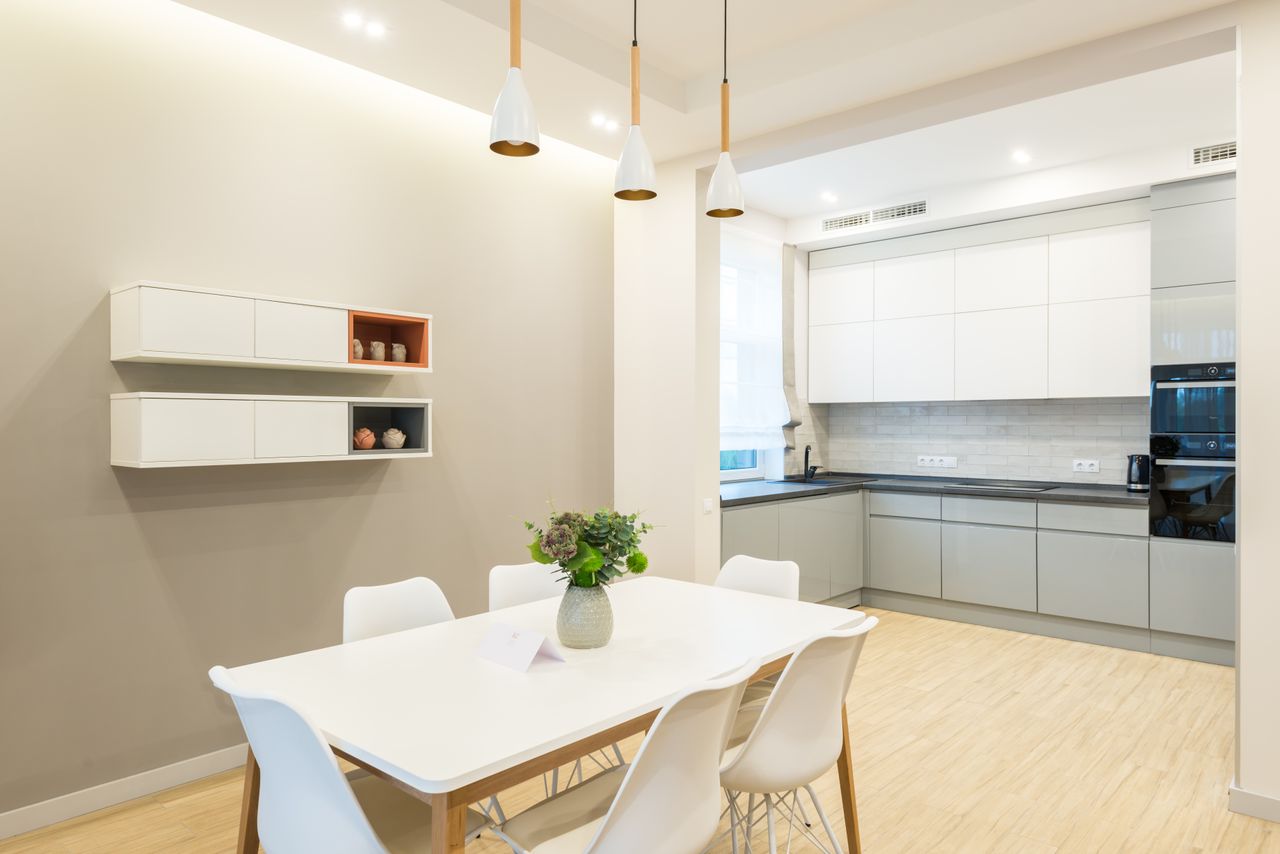
Square table with four chairs under pendant lights — Photo via Pexels
Square tables have one superpower: they tuck into corners. A square pushes neatly against two walls, which means a tiny kitchen corner becomes a full dining spot. Rectangular tables fight corners. Round tables waste the corner behind them. A square uses every inch, and in a small kitchen, every inch is gold.
There is a social reason too. At a square table, everyone sits close and faces each other. Nobody is stuck at the far end of a long table shouting across it. Family dinners, card games, and homework help all work better when the four of you are elbow to elbow. It feels like a team, not an audience.
The square is also the most flexible shape for daily life. Push it against the wall and two people eat comfortably. Pull it to the center and four fit. Add two extra chairs on the ends for guests. One simple shape handles breakfast for two and dinner for six, which is why so many small homes start here. For more ways to squeeze function from tight rooms, these small kitchen space-saving ideas pair perfectly with a square set.
2. The Right Size for Four Chairs
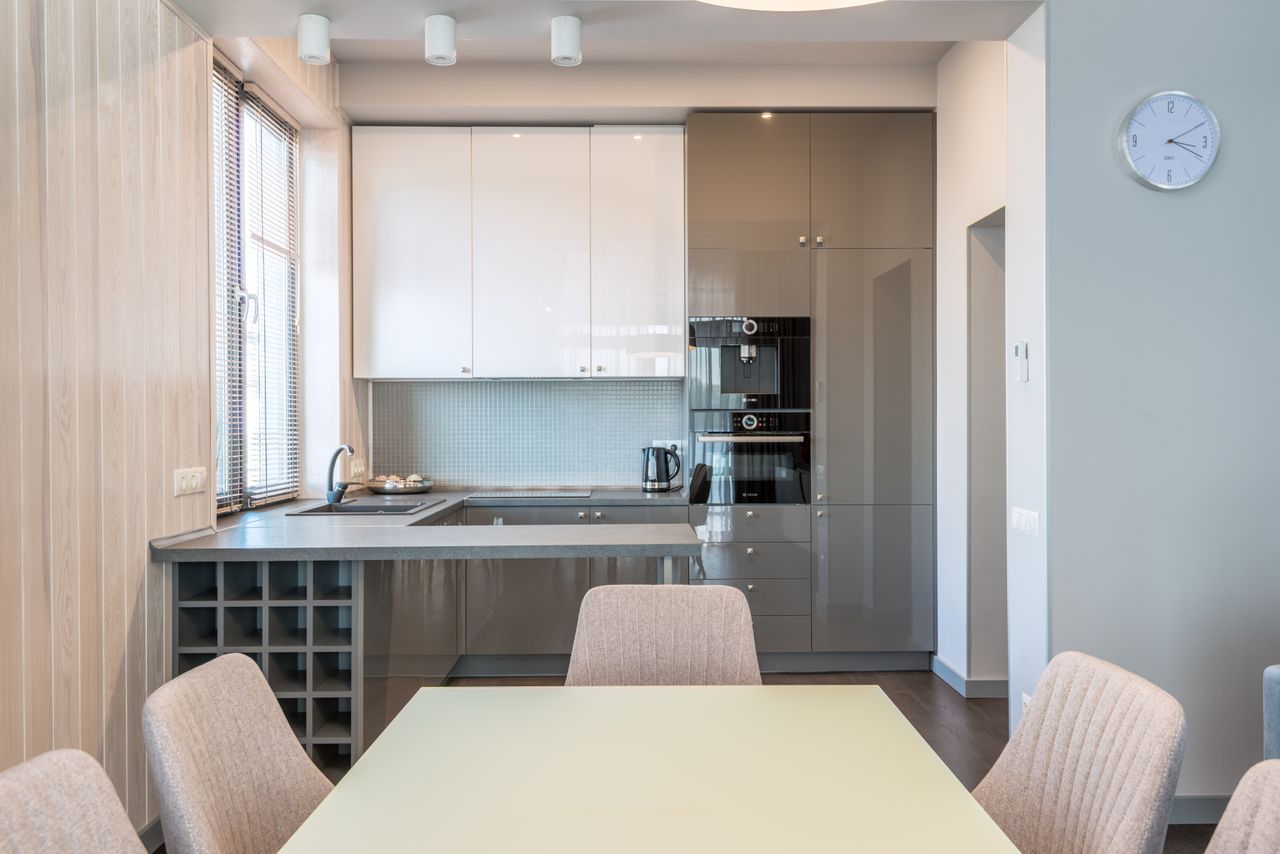
Cream square table with four upholstered chairs — Photo via Pexels
Size is the question everyone asks, so here are the real numbers. For four chairs, a square table should be 30 to 36 inches (76 to 91 cm) on each side. The sweet spot most designers recommend is 34 to 36 inches (86 to 91 cm). That gives each person about 24 inches (61 cm) of elbow room, enough for a dinner plate, a glass, and a serving bowl in the middle.
In a truly tiny kitchen, 30 inches (76 cm) square can work, but only with slim armless chairs and no big centerpiece. It will feel cozy, which is a kind word for tight. If you often serve family-style with big bowls, go bigger rather than smaller: 36 to 42 inches (91 to 107 cm) square still seats four, just with breathing room.
Before you buy, do the tape trick. Mark the table size on your kitchen floor with painter's tape, then place your chairs around it. Sit down. Can you pull your chair out and stand up without hitting the counter? If yes, the size works. If your elbows hit the wall, the size does not. Ten minutes with tape saves you from a table you will curse for years.
3. Square vs Round: An Honest Comparison
A round table for comparison: no corners, easier flow — Photo via Pexels
This is the great kitchen debate, so let us settle it honestly. Round tables win on flow. No corners means nobody bruises a hip walking past, and chairs slide in from any angle. In an awkward room with doors on three sides, a round table is usually the smarter buy.
Square tables win on corners and edges. A square pushes flat against a wall, which frees up the whole room when you are not eating. A square also gives each person a clear "their side" of the table, which matters for kids' homework and for adults working from home. And two square tables pushed together make a big rectangle for parties, a trick round tables cannot copy.
Here is the simple rule. If your kitchen corner is square and your main job is fitting four chairs in the smallest footprint, go square. If your room is oddly shaped, or people constantly walk around the table, go round. There is no wrong answer, only the wrong shape for your room's traffic. These dining nook ideas show both shapes working in real small spaces.
4. Extendable Square Tables: Worth It or Wobbly?
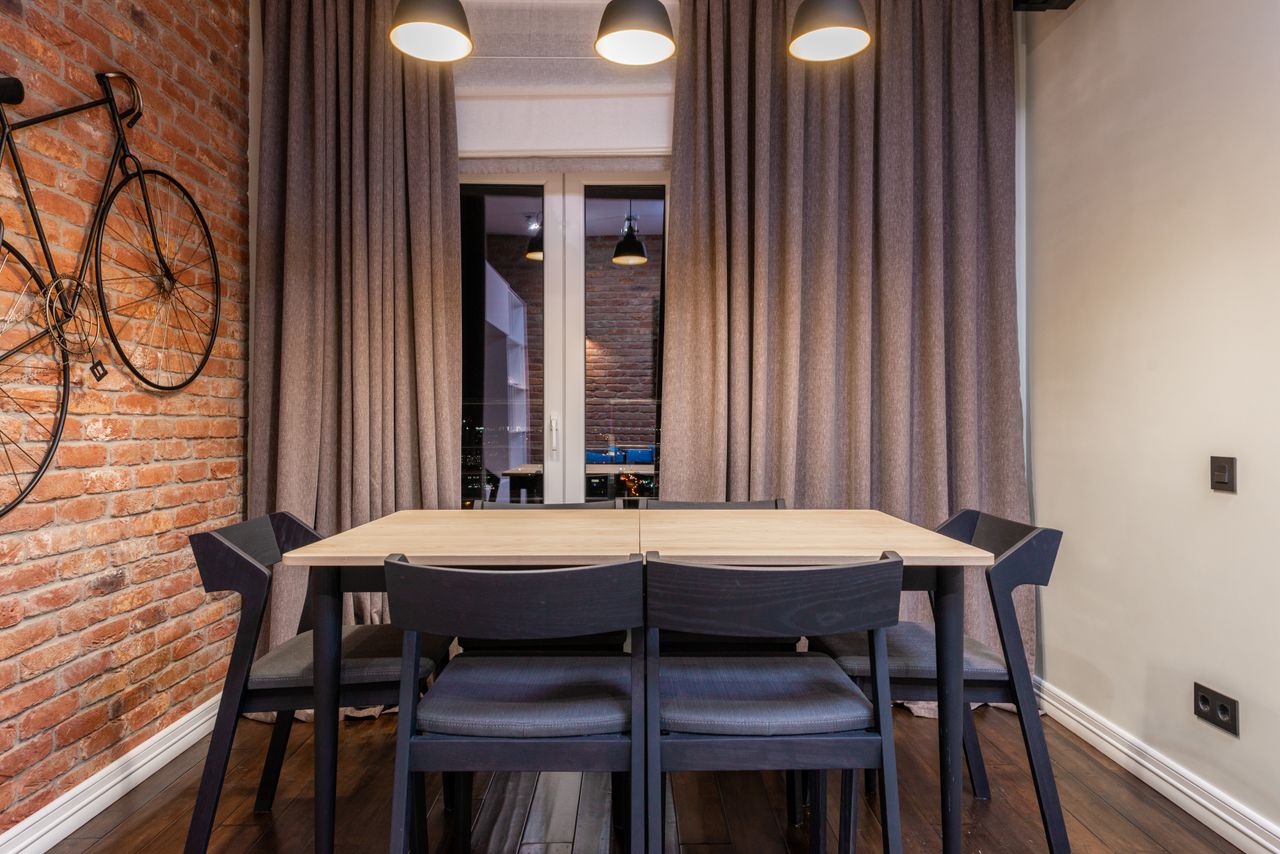
Light wood square table seating six with pendant lights — Photo via Pexels
An extendable square table is the dream for small kitchens: four chairs daily, six or eight when guests come. And yes, they are worth it, if you buy the right mechanism. The best ones use self-storing butterfly leaves, which fold out from inside the table. No loose leaves to store in a closet.
The fear is wobble, and it is real on cheap tables. When you test one in a store, extend it fully, then press down hard on the center and on a corner. A good table stays level and quiet. A bad one flexes and creaks. Look for center support rails, locking slides, and alignment pins that keep the leaves flush. Avoid thin particleboard leaves if the table will be used daily.
Know the extended math too. A 36-inch (91 cm) square table with one 12-inch (30 cm) leaf becomes 36 by 48 inches (91 by 122 cm), which seats six comfortably. Plan your floor space for the extended size, not just the daily size, or the table will only ever open when the chairs block the fridge. Measure both footprints with tape before you fall in love.
5. Pedestal Base or Four Legs?
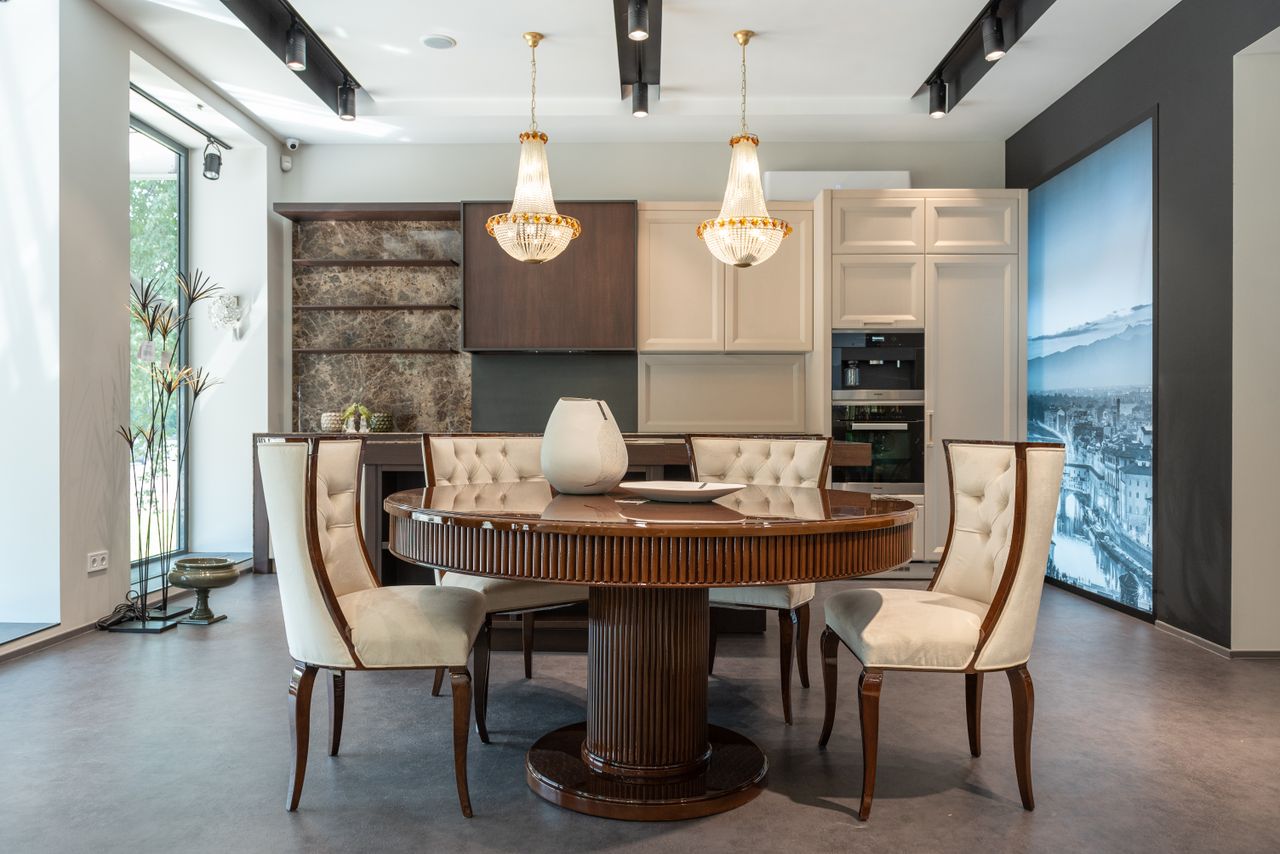
A pedestal base opens up knee room for all four chairs — Photo via Pexels
The base decides how comfortable four people feel at a small table. A pedestal base, one strong column in the center, wins on legroom. No corner posts means no knees bumping into table legs, and chairs can tuck in from any side. In a 34-inch (86 cm) square, a pedestal makes the table feel noticeably bigger than it is.
Four legs win on stability and style range. A well-built four-leg table is rock solid and comes in every style from farmhouse to modern. The catch is the corners: each leg eats into one person's knee space. If you choose four legs, check that the legs sit close to the corners, not halfway along the sides, so chairs slide in cleanly.
Whichever you choose, do the knee test. Sit in the chair, scoot fully under the table, and cross your legs. If your knees hit anything, walk away. Also check that the table does not rock on the showroom floor; a pedestal table that wobbles empty will wobble worse with a full dinner on it.
6. Wood, Glass, Metal or Stone: Pick Your Material
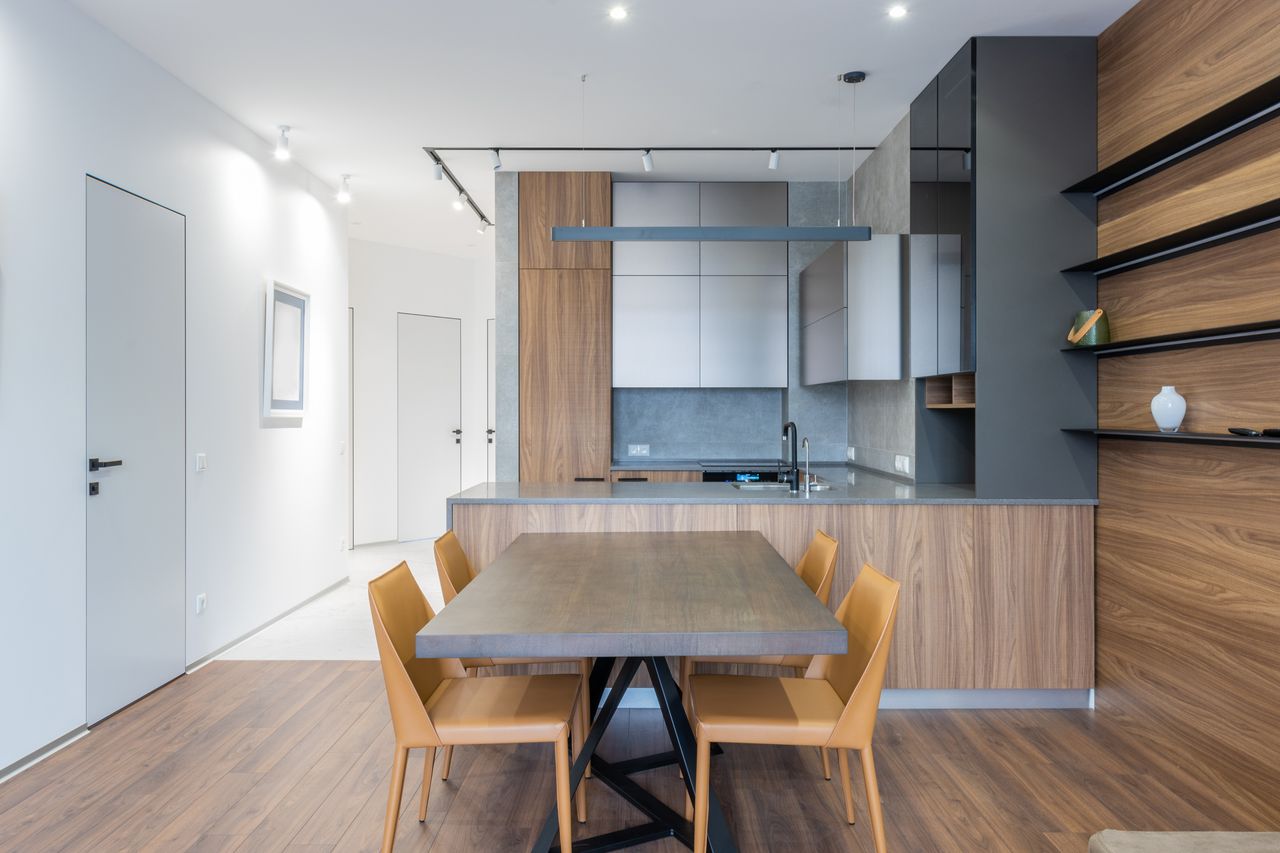
Dark wood square table with four tan chairs — Photo via Pexels
Solid wood is the family workhorse. Oak, ash, and maple take daily beatings, shrug off hot mugs, and can be sanded and refinished when the kids grow up. Wood feels warm and hides crumbs better than any other surface. Choose a matte or satin finish, which hides scratches and fingerprints far better than glossy varnish.
Metal frames with wood or laminate tops are the budget-friendly modern look. Powder-coated steel is light, strong, and wipes clean in seconds. The weak point is the welds: grab the table and shake it. If it rattles, the welds are thin and it will loosen within a year or two.
Stone tops, marble and sintered stone, look stunning and handle heat beautifully. But they are heavy, expensive, and cold to the touch on winter mornings. Honed (matte) stone hides etching and fingerprints better than polished. In a small kitchen where the table doubles as a prep surface, wood or high-pressure laminate is the practical champion.
7. Glass Tops: The Space Illusion (and the Fingerprints)
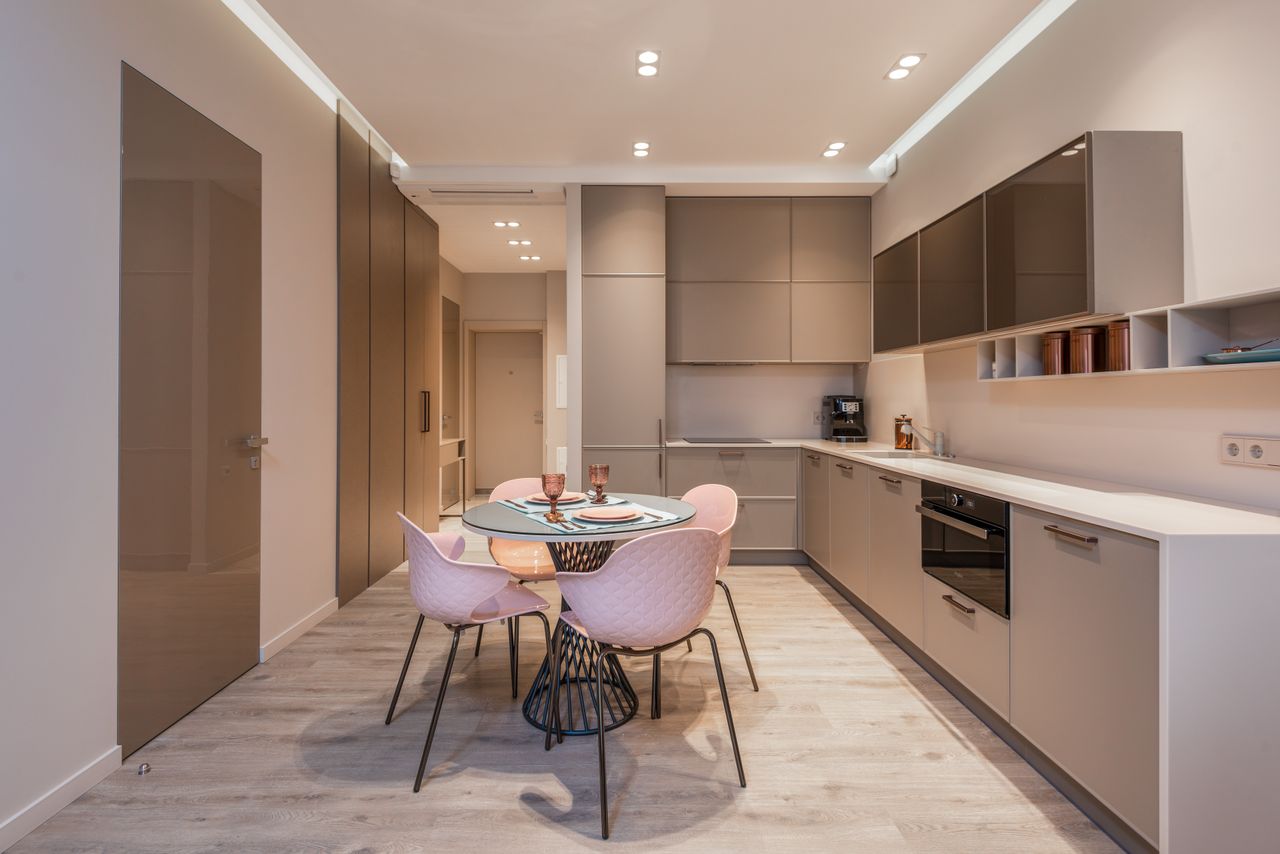
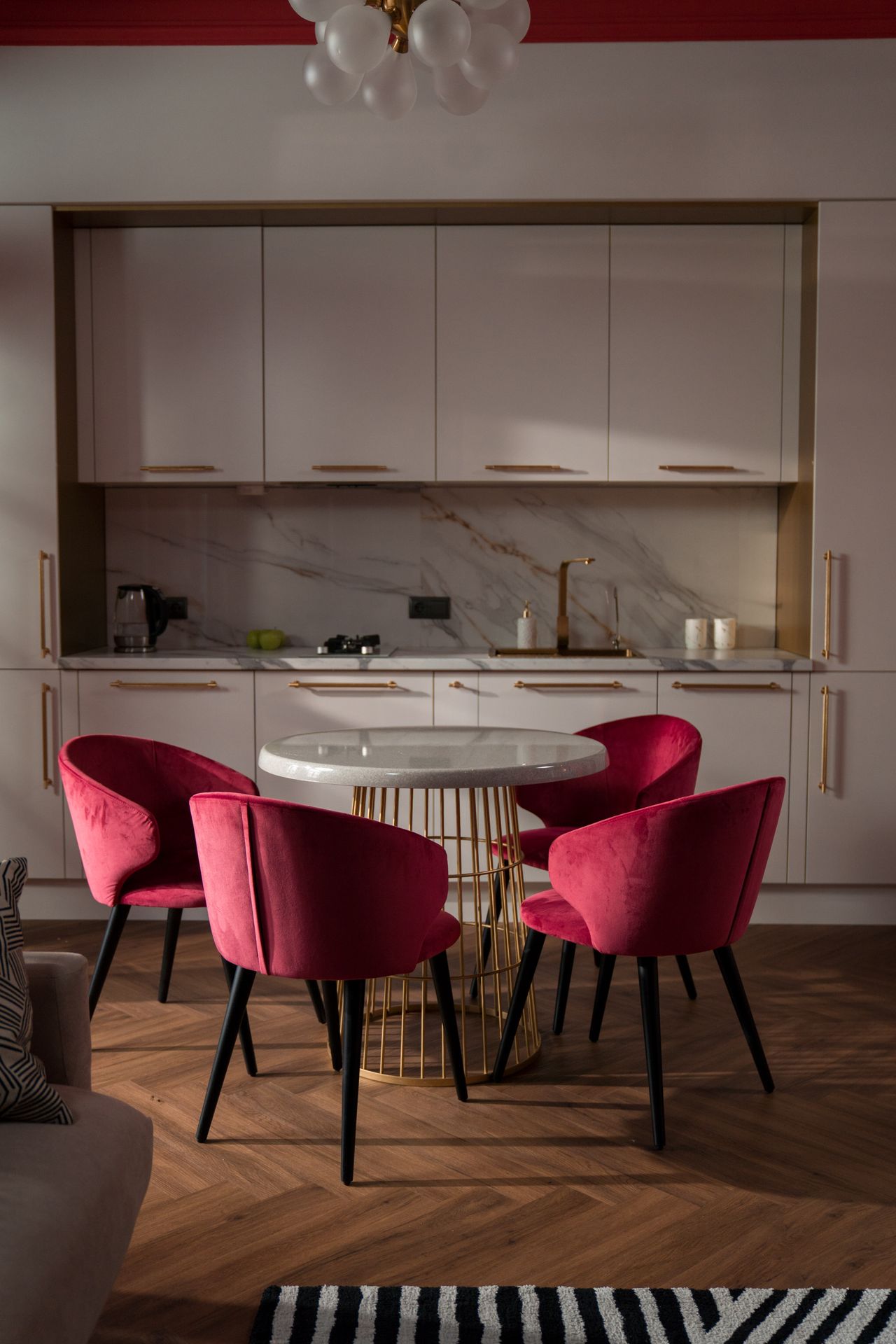
Glass table with four pink chairs in a modern kitchen — Photo via Pexels
A glass-top square table makes a small kitchen look bigger, and it is not a trick of the imagination. You see the floor through the top, so the table almost disappears. In a dark or windowless kitchen corner, glass is the single fastest way to make the space feel airy.
The price is maintenance. Every fingerprint, crumb, and water ring shows. If that bothers you, you will be wiping the table three times a day. Families with small kids often regret glass within a month. If you love the look but not the labor, frosted glass hides smudges far better than clear glass.
Safety matters too. Only buy tempered glass, which is heat-treated to break into small dull pieces instead of sharp shards. Check the thickness: 10 to 12 mm is right for a dining table. And keep glass away from the room's main walkway, because even tempered glass and swinging school bags are a bad combination.
8. Chair Comfort: The Two-Minute Sit Test
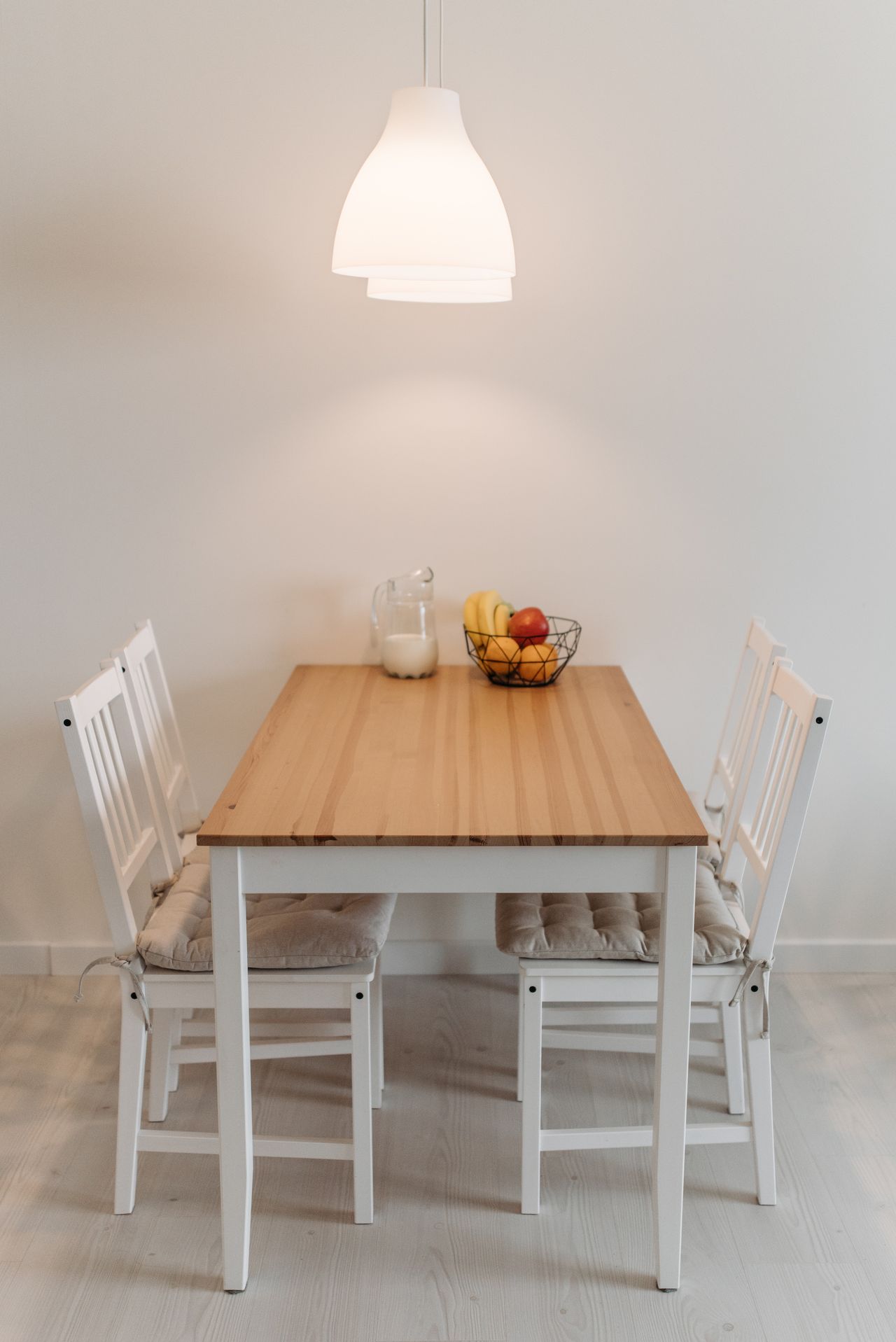
Wooden table with four cushioned white chairs — Photo via Pexels
The table gets all the attention, but you sit on the chairs. A beautiful set with bad chairs means dinner ends early. So test chairs like you mean it. Sit for two full minutes, not two seconds. Cross your legs. Lean back. Lean forward to eat. If anything digs in within two minutes, it will be torture by minute twenty.
Check the numbers. Chair seat height should be 17 to 19 inches (43 to 48 cm), and there should be 10 to 12 inches (25 to 30 cm) of space between the seat and the underside of the tabletop so your thighs fit. Keep chair footprints under 20 by 20 inches (51 by 51 cm) so four chairs fit around a 36-inch (91 cm) square without fighting.
Choose armless chairs for tight kitchens. Arms add 4 to 6 inches (10 to 15 cm) of width per chair and stop chairs from tucking under the table. Save the armchair for the head of the table if you have space, or skip it entirely. And pick wipeable seats: vinyl, leather, or performance fabric. Kitchen chairs meet more spaghetti than any other furniture in the house.
9. Build a Breakfast Nook by the Window
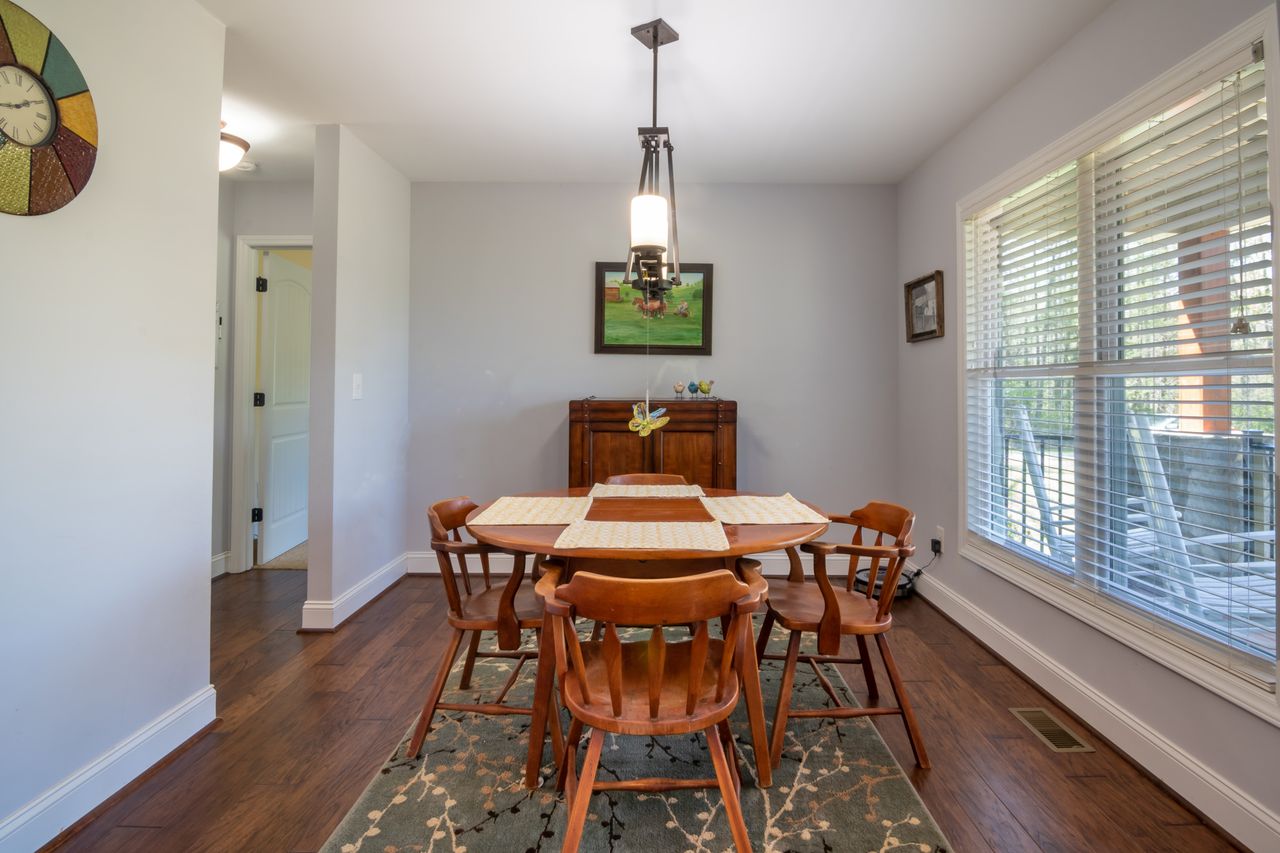
Wooden table with four chairs in a sunny window nook — Photo via Pexels
The happiest place for a square table is beside a window. Morning light makes even a budget set look expensive, and watching the world go by beats staring at a wall. If your kitchen has a window corner, that is where the table belongs.
For the ultimate space saver, put a bench or a banquette seat on the window side. A wall-side bench saves 6 to 8 inches (15 to 20 cm) compared with two loose chairs, because it hugs the wall and needs no pull-out space behind it. Two chairs on the opposite side plus the bench seats four in a footprint that feels like three.
Add a slim cushion on the bench for comfort and a washable one at that. Keep a small plant and a candle on the windowsill, not on the table, so the tabletop stays clear for real life: breakfast bowls, laptops, and school projects. A nook works hardest when the table is empty and ready, not styled and untouchable.
10. Layout Tricks for Galley and Tiny Kitchens
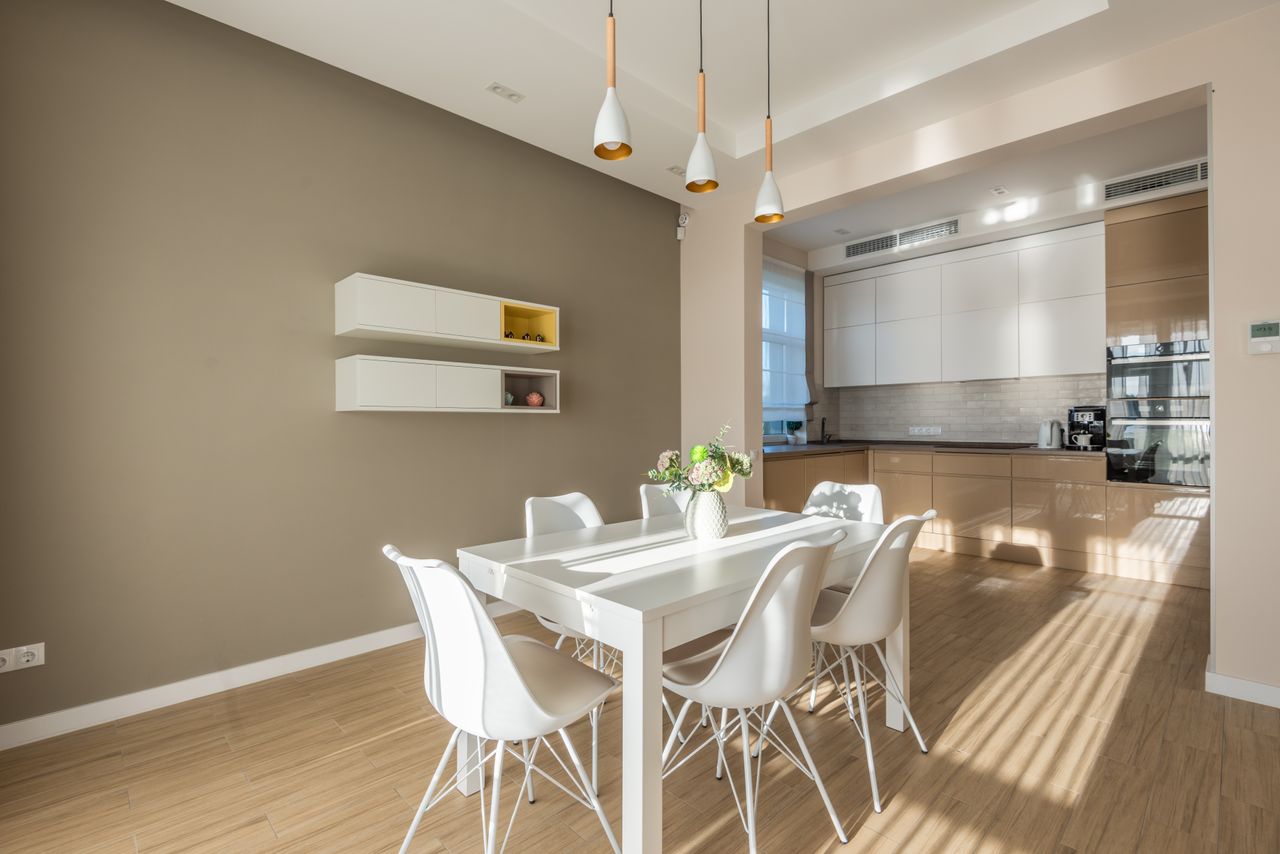
White square table with four chairs beside a modern kitchen — Photo via Pexels
In a galley kitchen, the table must respect the work triangle: the path between fridge, sink, and stove. Never let a chair back up into that path. Place the square table at the end of the galley or in an alcove off to the side, and keep 36 inches (91 cm) of clear walkway on the working side. Thirty inches (76 cm) is the absolute minimum where people can squeeze past a seated diner.
Push the table against the wall for daily use. Two chairs on the open side handle breakfast, and you pull the table out when four need to sit. This one move can free up a full 2 feet (61 cm) of floor in a narrow kitchen. Choose a table with a finished back edge if you do this, since that edge faces the room all day.
Watch the door swings and drawer pulls. Map every door, oven door, and dishwasher swing on your floor plan before buying. A table that blocks the dishwasher from opening is a table you will hate by week two. For more layout wisdom for the smallest kitchens, these tiny kitchen design tricks are worth a read.
11. Table Height vs Counter Height: Get It Right
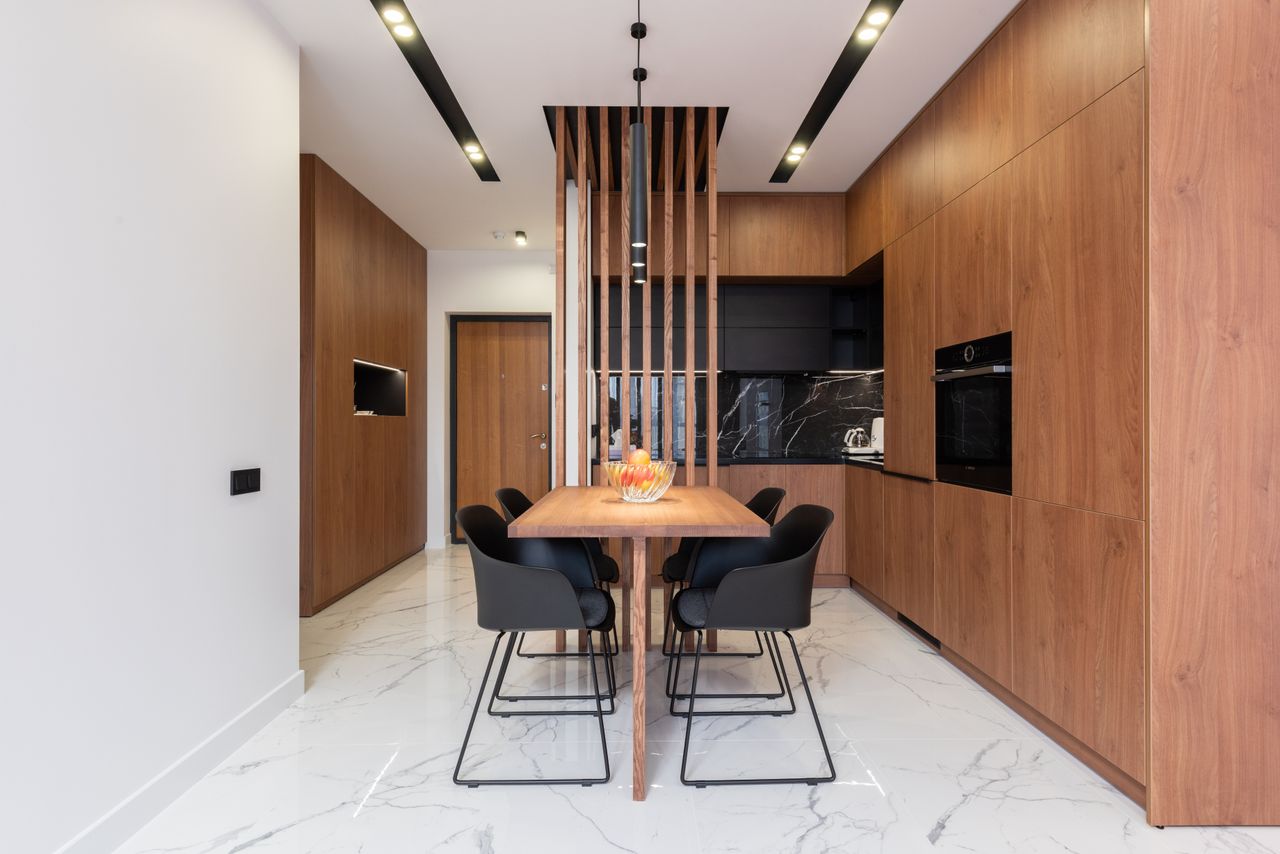
Wooden square table with four black chairs — Photo via Pexels
Standard dining height is 28 to 30 inches (71 to 76 cm) from floor to tabletop. Counter height is 34 to 36 inches (86 to 91 cm). They are not interchangeable, and mixing them up is one of the most common buying mistakes. Dining chairs do not fit counter-height tables, and bar stools do not fit dining tables.
For a kitchen eating set, standard dining height wins for most people. It is more comfortable for long meals, works with normal chairs, and feels like a proper table rather than a perch. Counter-height sets look modern and double nicely as prep space, but your feet dangle, kids struggle to climb up, and grandparents will complain.
If you already own chairs, measure them before shopping. The magic gap is 10 to 12 inches (25 to 30 cm) between the chair seat and the tabletop underside. Measure your chairs, add 11 inches (28 cm), and that is the table height you need. Never guess. A one-inch mistake here means knees under chins for the life of the set.
12. Light It Like You Mean It
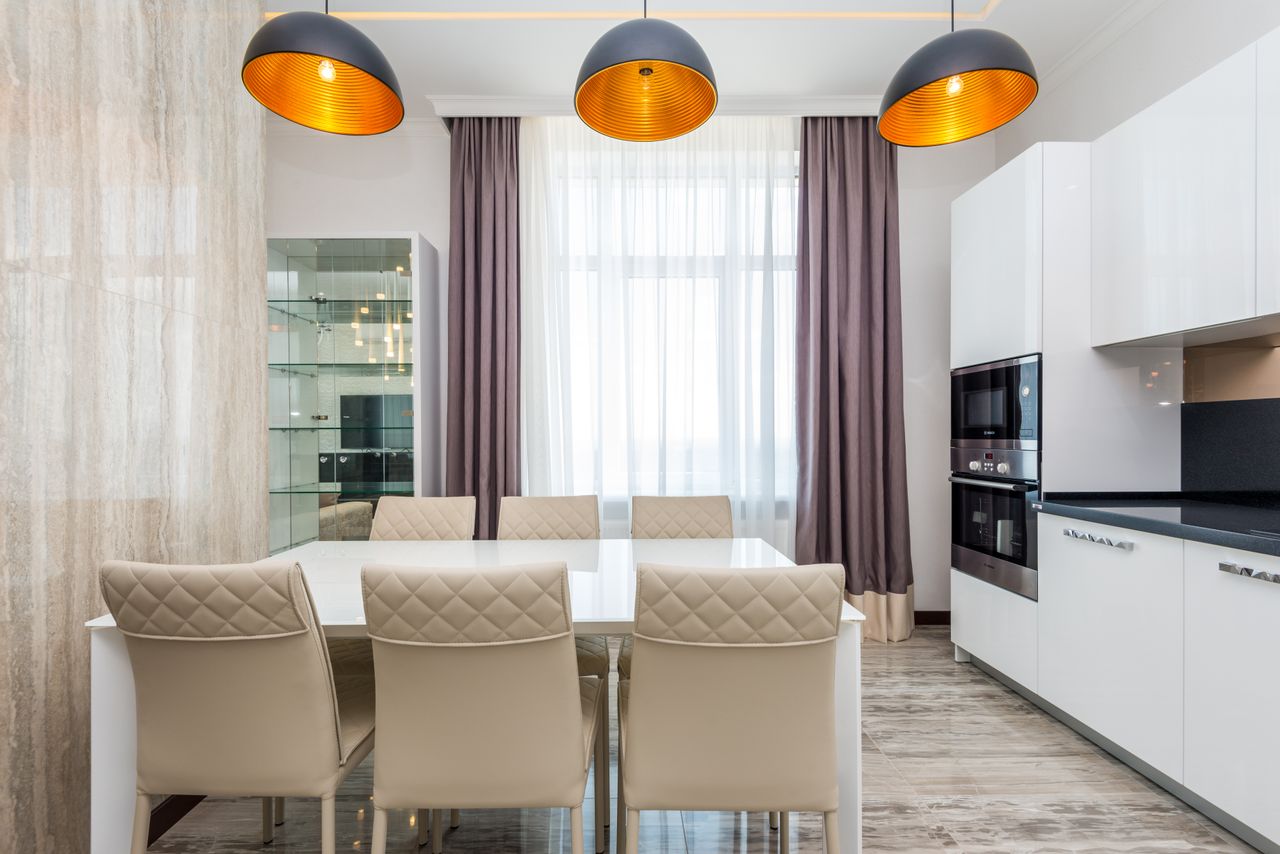
Pendant lights hung low over the table — Photo via Pexels
The right light turns a cheap table into a dinner party. Hang one pendant, or a row of small ones, centered over the table. The bottom of the shade should sit 28 to 34 inches (71 to 86 cm) above the tabletop. Lower feels intimate; higher keeps sightlines open. Never hang it so low that you stare into the bulb.
Choose warm light, 2700 to 3000 Kelvin. Warm light makes food look delicious and faces look kind. Cool white light makes a kitchen feel like a laboratory. Put the pendant on a dimmer if you can; bright for homework, dim for dinner, all from one switch.
If the table is glass or glossy white, pick a shade that diffuses the light instead of a bare bulb. Bare bulbs on glossy tops create hard glare spots that hurt your eyes. A simple fabric drum shade or frosted glass globe costs little and fixes everything. And center the light on the table, not on the room, so the glow pools where the food is.
13. The Rug Trick (and Quieter Mornings)
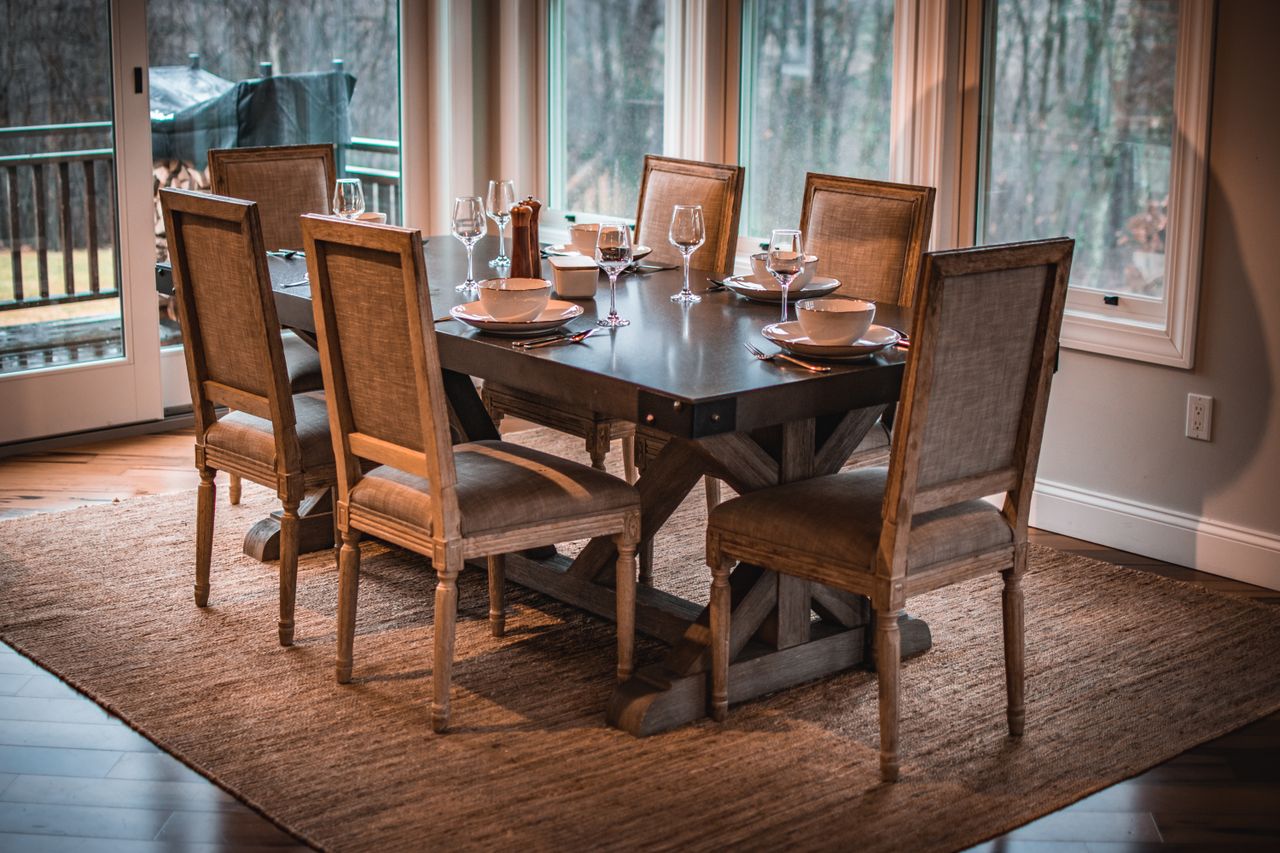
Dark wood table on a rug by large windows — Photo via Pexels
A rug under a kitchen table sounds crazy until you try it. Hard kitchens bounce sound: chairs scrape, plates clatter, and every word echoes. A low-pile rug soaks up the noise and makes breakfast calmer. It also anchors the table visually, turning a table in a corner into a proper dining zone.
Size it right. The rug should extend at least 24 inches (61 cm) beyond the table edge on all sides, so chair legs stay on the rug when you pull out. For a 36-inch (91 cm) square table, that means a rug about 7 by 7 feet (2.1 by 2.1 m). Too small is worse than none, because chairs will catch on the rug edge.
Pick a rug you can clean. Low-pile, flat-weave, or indoor-outdoor rugs survive kitchen life. Avoid deep shag, which traps crumbs forever, and avoid light solid colors, which show every spill. A medium-tone pattern is the sweet spot: it hides daily life and still looks intentional. And put felt pads on every chair foot to protect both the rug and the floor.
14. Style It for Real Life, Not a Photo Shoot
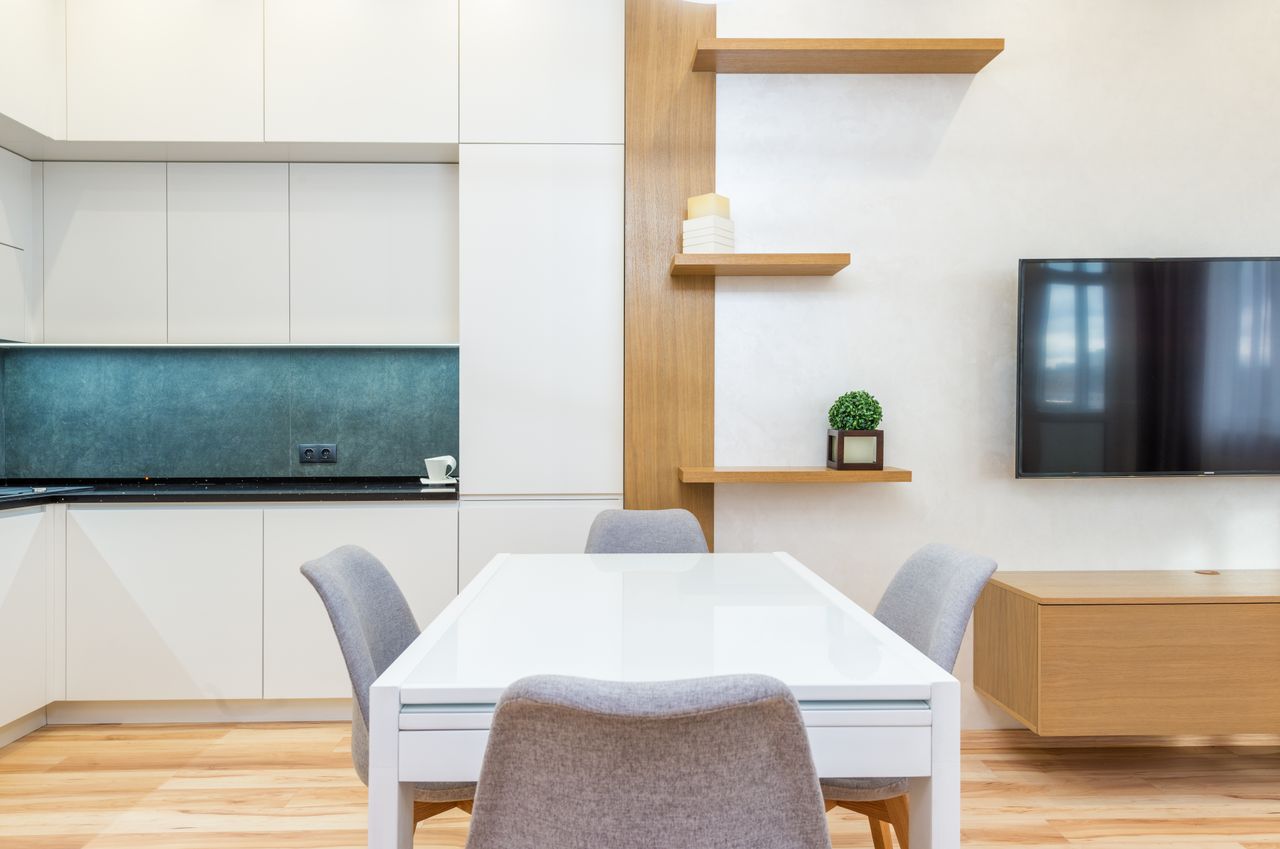
Close view of a white square table with grey chairs — Photo via Pexels
A kitchen table works hardest when it is mostly empty. Resist the urge to fill it with decor. One low centerpiece is the rule: a small plant, a bowl of fruit, or a candle. Anything taller blocks conversation across a small square. If you cannot see the person opposite you, the centerpiece is too big.
A table runner is the easiest style upgrade. It adds color and texture, protects the middle of the table from hot dishes, and costs almost nothing. Choose a washable runner in a pattern you love, and swap it with the seasons. Placemats do the same job per person and save the tabletop from daily wear.
Keep the styling honest. This table will hold breakfast bowls, laptops, and school projects. Choose decor that survives that life: a sturdy vase, not a delicate sculpture; a fruit bowl you actually eat from. A beautiful table that you are afraid to use is just an expensive shelf. For more everyday styling inspiration, these dining table styling ideas keep things practical and pretty.
Final Thoughts
Choosing a square kitchen table and chairs is really a measuring exercise with good taste on top. Get the size right for your four chairs, leave 36 inches of walking room, pick a base that frees your knees, choose chairs you have actually sat in, and light it warm. Do those five things and the table will serve your family for a decade or more.
Start with the tape measure this weekend. Mark the table footprint on your kitchen floor, walk around it, pull out an imaginary chair, and open the dishwasher. If the taped square survives real life, the real table will too. And when the table is in place and the kitchen feels new again, keep the momentum going with these small dining area ideas for compact homes.
Frequently Asked Questions
What size square table do I need for 4 chairs?
Aim for 34 to 36 inches (86 to 91 cm) square. In very tight kitchens, 30 inches (76 cm) works with slim armless chairs; 36 to 42 inches (91 to 107 cm) gives room for serving dishes.
Is a square or round table better for a small kitchen?
Square wins if you need to push the table against a wall or into a corner; round wins for flow in awkward rooms with lots of walkways. Match the shape to your room's traffic.
Are extendable square tables worth it?
Yes, if the mechanism is solid. Test it fully extended in the store: press the center and corners. Butterfly self-storing leaves are the most convenient for daily use.
Pedestal or four-leg base for a small square table?
Pedestal gives more knee room and lets chairs tuck in from any side. Four legs are more stable and come in more styles, but check the legs don't block chair knees.
How much space do I need around a kitchen table?
Leave 36 inches (91 cm) from the table edge to walls or counters for comfortable movement. Thirty inches (76 cm) is the bare minimum for squeezing past seated diners.
What chair size fits a 36-inch square table?
Keep chair footprints under 20 by 20 inches (51 by 51 cm), seat height 17 to 19 inches (43 to 48 cm), and allow 10 to 12 inches (25 to 30 cm) of thigh clearance under the table.
Should I choose a bench or four chairs?
A wall-side bench saves 6 to 8 inches (15 to 20 cm) and needs no pull-out space behind it. Chairs are more comfortable for long sits. A bench on one side plus two chairs is the best of both.
What is the best material for a kitchen table?
Solid wood is the toughest all-rounder and can be refinished. Glass makes small kitchens look bigger but shows every fingerprint. Matte finishes hide wear best on any material.
Gallery
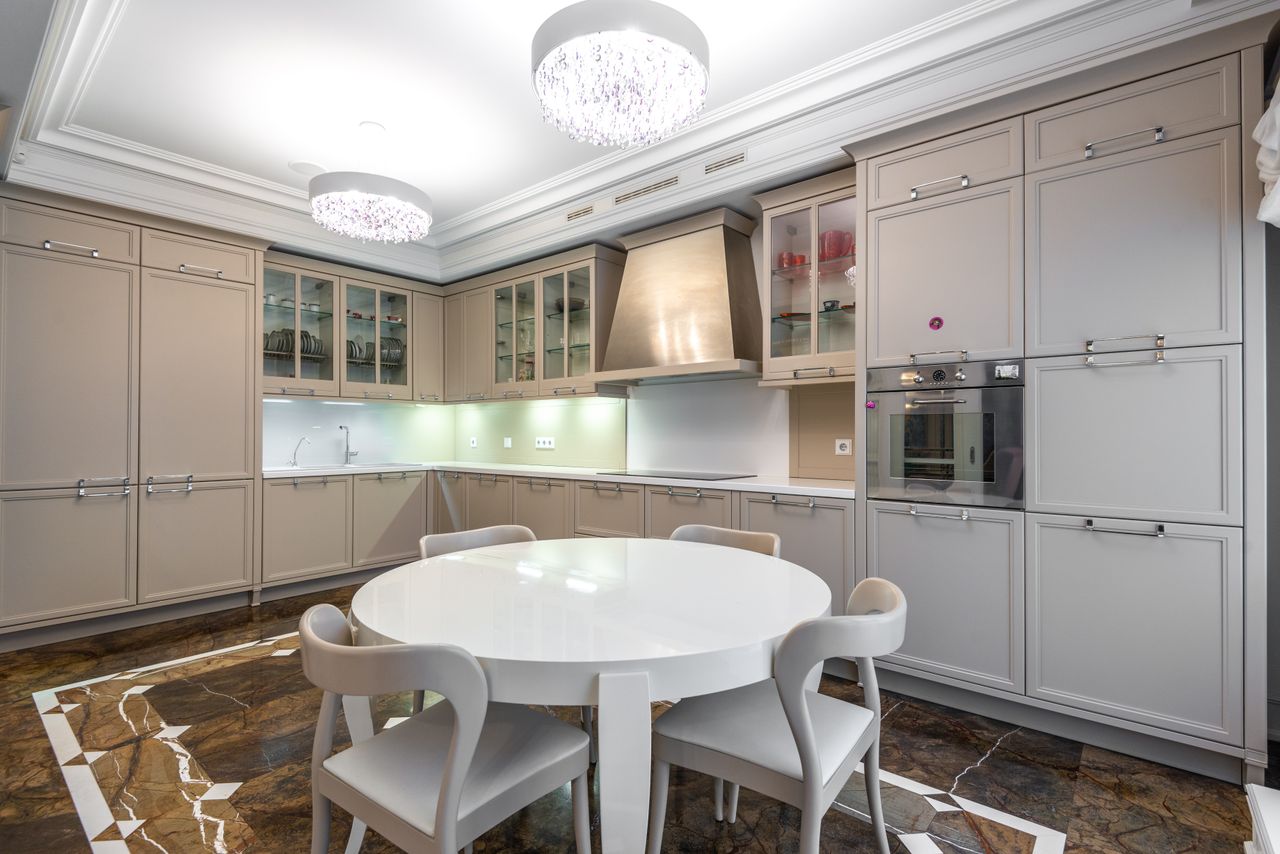
White round table with four grey chairs — Photo via Pexels
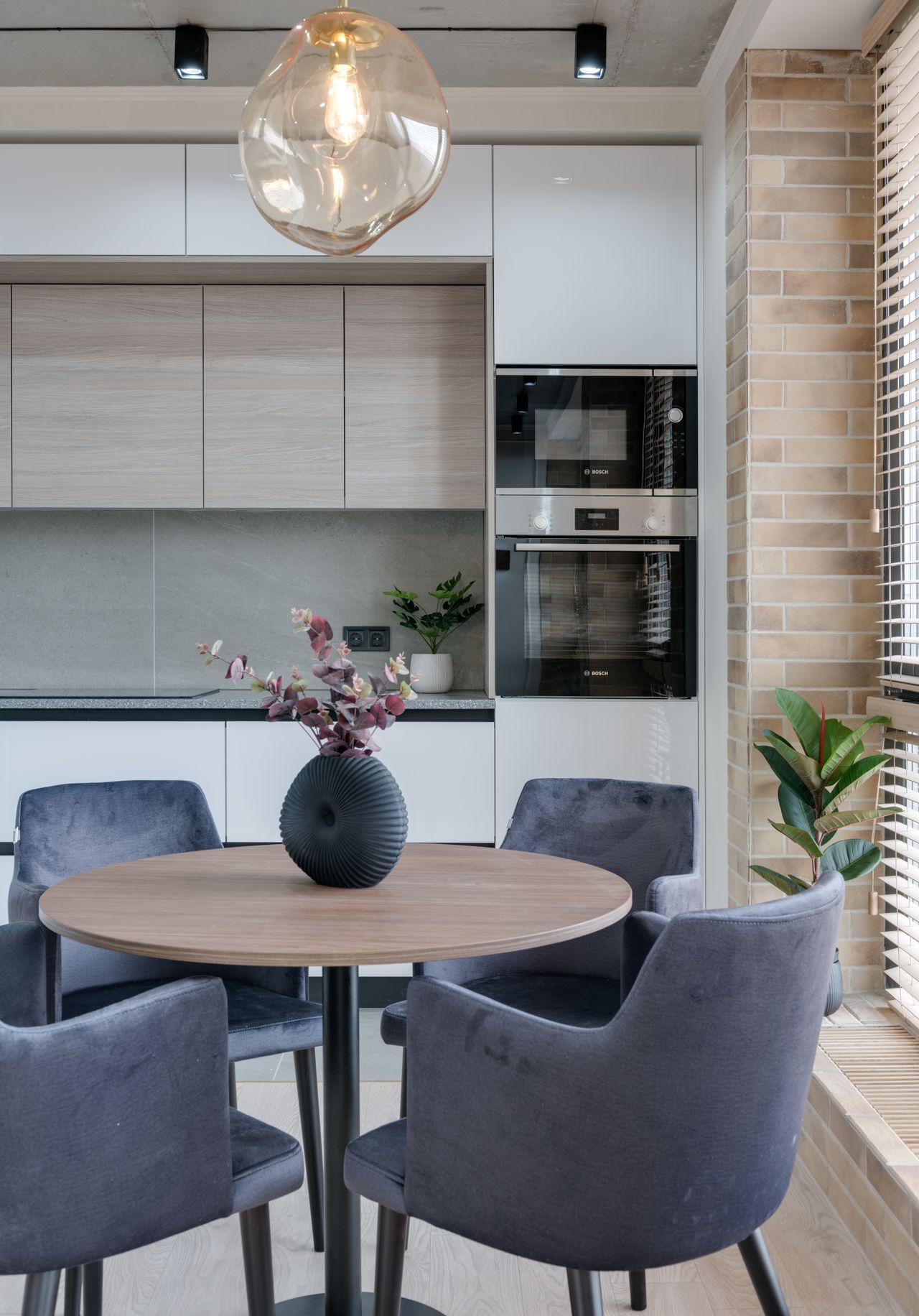
Round wooden table with grey velvet chairs — Photo via Pexels
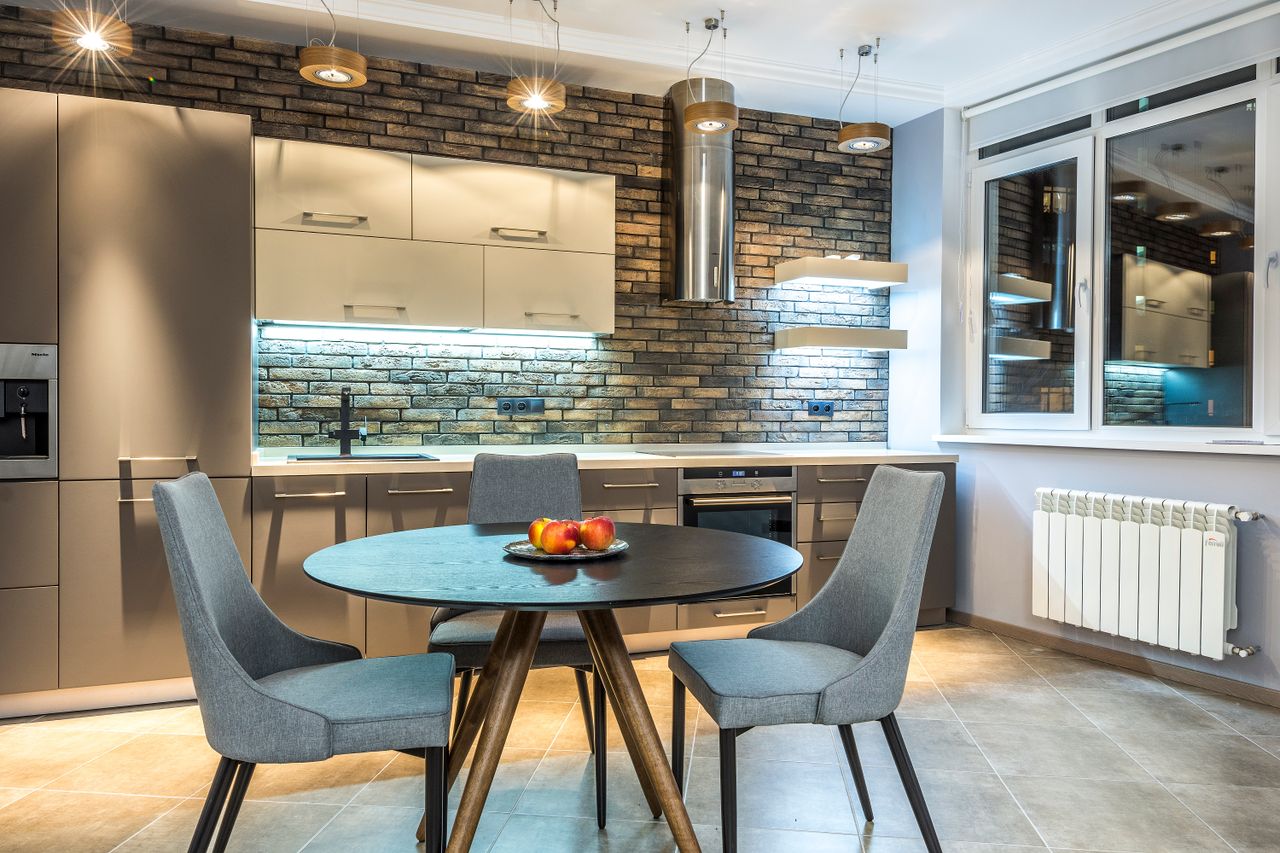
Round black table with grey chairs — Photo via Pexels
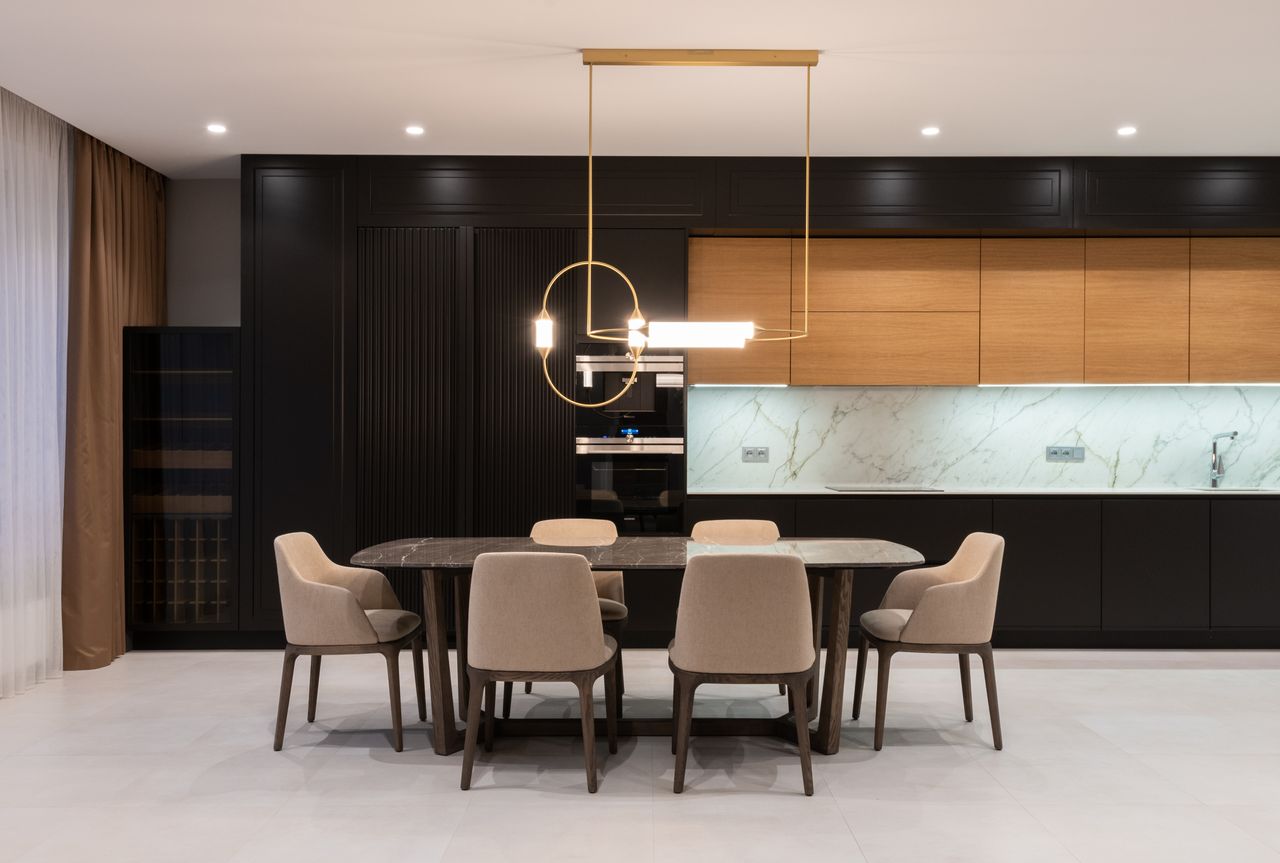
Round table with six beige chairs in a dark kitchen — Photo via Pexels
Sources
The measurements, sizing rules, and buying methods in this guide are drawn from these reputable sources: CooHom's small square table guide on sizing, chair ergonomics, lighting, and pedestal bases (coohom.com); Lee Longlands' dining tables buying guide on table sizes and chair spacing (leelonglands.co.uk); 2Modern's dining table sizing guide on clearances and seating capacity (2modern.com); and The Sweet and Simple Kitchen's small-table reviews on square versus round trade-offs (thesweetandsimplekitchen.com).

No comments:
Post a Comment