A farmhouse bathroom feels warm the moment you walk in, and the best farmhouse bathroom ideas for American homes are the simple ones: white wood walls, a solid wood vanity, black faucets, and soft towels that actually get used. This is modern farmhouse, not a museum of old things, so the look mixes clean lines with natural wood, matte black metal, and a little greenery, and it works in a big primary bathroom, a small hall bath, and even a tiny powder room. This guide gives you ten ideas that real American homeowners use, with real sizes in inches and feet, honest prices in dollars, and the practical details that keep a pretty bathroom working well, like what wood can handle steam, how much room a freestanding tub really needs, and which cheap swaps make the biggest difference first.
Before you buy anything, decide on your one main feature, because a farmhouse bathroom looks best when one thing leads and the rest stays quiet. Pick the shiplap wall, the wood vanity, or the freestanding tub, and let the other choices support it, since a room with shiplap and a barn door and a clawfoot tub and galvanized buckets and a word sign all at once feels like a theme store, not a bathroom. Start with warm white paint, one wood tone, and one metal finish, repeat those three through the room, and add textiles and plants last, because those soft layers are what turn a hard tile room into a place where you actually want to slow down in the morning.
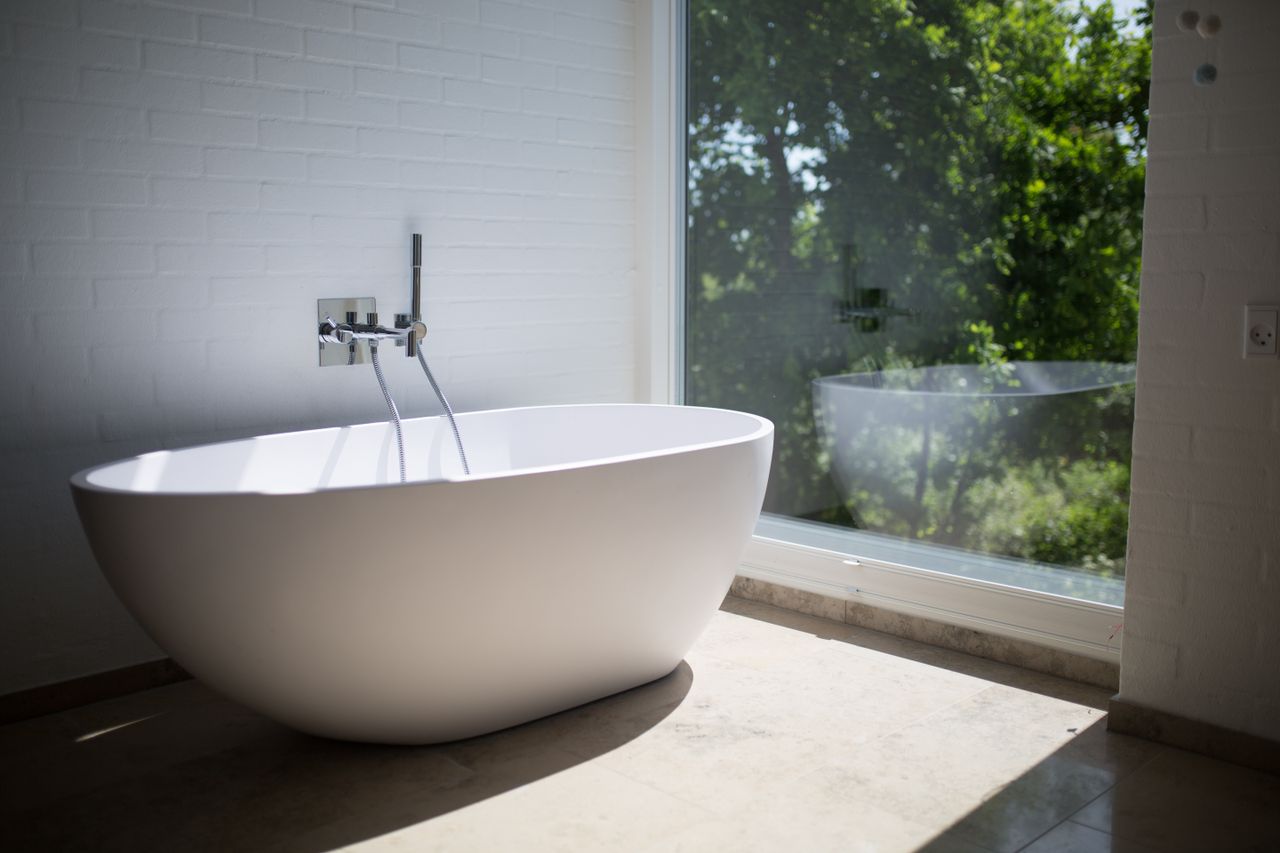
A white freestanding bathtub beside a large window, with a white painted brick wall and soft daylight.
Table of Contents
- 1. Wrap the Walls in Shiplap or Beadboard
- 2. Let a Freestanding Tub Be the Star
- 3. Choose a Rustic Wood Vanity
- 4. Go Matte Black on the Fixtures
- 5. Try an Apron-Front Sink Style Vanity
- 6. Add Open Shelving for Towels and Baskets
- 7. Bring In Galvanized Metal Accents
- 8. Hang a Big Wood-Framed Mirror
- 9. Lay White Subway Tile With Dark Grout
- 10. Finish With Cozy Textiles and Plants
1. Wrap the Walls in Shiplap or Beadboard

A small real bathroom with white beadboard on the lower walls, a gray vanity, and a black-framed window at the far end.
Shiplap is the fastest way to make a plain bathroom feel like a farmhouse, because those long horizontal boards add texture and shadow to flat drywall, and a single wall is often enough, so you do not need to cover every surface to get the effect. Run it behind the vanity or on the wall facing the door, where your eye lands first, and paint it warm white, since stark bright white can look cold against tile, while a warm white with a little cream in it keeps the room soft. In a wet room, use PVC or moisture-rated shiplap, or paint real wood boards with a bathroom-grade paint, because raw wood in a steamy shower will swell, gap, and grow mildew in the seams, and a tube of paintable caulk, about $8 to $12, seals the edges where the boards meet the tub and the floor. Beadboard, like the lower walls in this photo, is the cheaper cousin of shiplap, and it works the same way at chair-rail height with paint above, which also protects the lower wall from splashes and scuffs, so it is a smart pick for a family bathroom. Pre-primed MDF beadboard panels run about $30 to $60 per 4-by-8-foot sheet, a full shiplap accent wall usually costs $200 to $600 in materials for a do-it-yourself job, and a weekend is enough time to install it, so this is the best first project if your budget is small, and for more small-room tricks, half bathroom design ideas show how the same paneling works in the tiniest baths.
2. Let a Freestanding Tub Be the Star

A round stone soaking tub set on pebbles against a wood plank wall, with two vessel sinks on a wood vanity beside it.
A freestanding tub is the one fixture that can carry a whole farmhouse bathroom on its own, because its shape is the focal point the second you walk in, and it asks for very little else around it, just clear floor, a little light, and a place to put a towel. The classic farmhouse choice is a simple oval tub in white, about 60 to 67 inches long and 30 to 32 inches wide, and you need at least 6 inches of clear space on each side and about 12 inches at the foot end for cleaning, so measure before you fall in love with a 72-inch tub in a 60-inch room, since a tub that touches the wall on both sides is no longer freestanding, it is just a tight built-in. A new acrylic freestanding tub costs about $800 to $2,500, a cast iron one runs $2,000 to $5,000 and weighs 300 to 500 pounds, so check your floor joists before you order one, and a floor-mounted tub filler in matte black, about $300 to $700, finishes the look without a deck or a wall to mount it on. The photo shows a bolder version, a round stone tub on a bed of pebbles against a wood plank wall, which is a spa look rather than a classic farmhouse one, but it proves the same point: one strong tub, one warm wood wall, and nothing else competing for attention. Keep the tub area simple, add a small wood stool or a bath caddy for a book and a candle, and skip the shower curtain, since a freestanding tub with a curtain ring always looks crowded.
3. Choose a Rustic Wood Vanity

A large bathroom with warm wood vanities, teal painted walls, a soaking tub, and black faucets.
The vanity is where the farmhouse look lives or dies, because it is the biggest piece of furniture in the room, and a wood vanity with real grain does more for the style than any decoration you could hang on the wall. Look for a furniture-style cabinet with legs, a shaker door, or a reclaimed barn wood front, and let the wood be the warm note in the room, since white walls, white tile, and a white sink all need that one warm surface to keep the room from feeling like a hospital. A ready-made wood vanity in a 36-inch single or a 60-inch double runs about $600 to $2,000, a custom one built from reclaimed barn wood runs $1,500 to $4,000, and the cheapest honest route is a secondhand dresser, often $90 to $300 at a thrift store or on a local marketplace, cut for a sink and sealed with a waterproof top, though you must check the height, because a dresser at 30 inches is too low for a bathroom sink, and most adults are comfortable at 34 to 36 inches. Seal the top well, since water sits on a vanity every single day, and use a stone, quartz, or sealed butcher block top rather than raw wood, which stains and swells around the faucet within a year. The photo shows wood vanities in a bigger, more colorful room with teal walls, which is not the usual all-white farmhouse palette, but the wood still does the same job, warming up the tile and the tub, and that is the lesson: the wood tone matters more than the wall color, so pick your wood first and paint around it.
4. Go Matte Black on the Fixtures

A walk-in shower with white herringbone tile, a matte black rain showerhead and controls, a glass door, and a tiled bench.
Matte black fixtures are the modern half of modern farmhouse, because they give the soft wood and white walls a crisp edge, and one black faucet does more than a whole shelf of farmhouse decorations. Swap the faucet, the showerhead, the towel bars, and the cabinet pulls to the same matte black finish, and keep the finish consistent, since mixing black with chrome and brass in one small room looks accidental, while one metal repeated four or five times looks planned. A matte black bathroom faucet costs about $100 to $300, a matching rain showerhead and valve set runs $200 to $600, and towel bars and pulls are $15 to $40 each, so a full swap is often under $500, which makes it one of the cheapest ways to change the whole feel of a bathroom in a single afternoon. Black also hides water spots and fingerprints far better than polished chrome, which is a real help in a family bathroom, though hard water can leave white marks on a black finish, so wipe the faucet dry once a day or pick a model with a spot-resistant coating. The shower in this photo shows the idea at its best, with black hardware standing out against white tile, and the tile here is laid in a herringbone pattern rather than the usual straight subway rows, which is a nice reminder that the pattern can change while the black-and-white rule stays the same. If you want a darker wall to go with the black metal, moody paint colors can help you pick a deep green or charcoal that still feels warm, but keep the black to about 30 percent of the room, so the bathroom stays bright.
5. Try an Apron-Front Sink Style Vanity

A white vessel sink on a wood shelf with a matte black faucet, a tall black-framed mirror, and a black pendant light.
An apron-front sink, the deep basin with an exposed front that you usually see in a farmhouse kitchen, is the detail that makes people say farmhouse before they can explain why, and in a bathroom it works best as a smaller version of the same idea, so the proportions stay right for the room. A true apron-front bathroom sink is about 24 to 30 inches wide and 8 to 10 inches deep, which is deeper than a standard basin, so it holds more water, splashes less, and is easier on the back, since you stand a little closer to the bowl instead of leaning over a counter. A porcelain apron-front sink costs about $250 to $600, and a vanity built to hold one runs $700 to $2,000, though many homeowners get the same feeling for less with a vessel sink sitting on a wood shelf, like the one in this photo, where a white bowl, a wood counter, and a black faucet give you the farmhouse sink look without moving any plumbing. That is an honest trade to make, because moving a drain to fit a new apron-front sink can add $500 to $1,500 in plumbing work, while a vessel sink uses the drain you already have. Whichever route you take, keep the faucet simple, a single lever or a bridge style with two handles, in matte black or oil-rubbed bronze, and leave the counter clear, since an apron-front sink is meant to be seen, not buried under bottles, and a small tray for soap and a folded hand towel is all the styling it needs.
6. Add Open Shelving for Towels and Baskets

Open black metal shelves holding rolled gray towels, with woven baskets under the counter in a white tiled bathroom.
Open shelving is the farmhouse answer to a bathroom that never has enough storage, because a few wood shelves with black metal brackets hold towels, baskets, and a plant where a closed cabinet would hide them, and they make a small bathroom feel bigger instead of smaller. Put two shelves above the toilet or beside the vanity, about 12 to 15 inches apart, and keep the shelf depth to 10 to 12 inches, so towels fold neatly without sticking out into the room, and use thick wood, at least 1.5 inches, since a thin shelf sags under a stack of wet towels within a year. Two wood shelves with brackets cost about $60 to $150, a set of three woven baskets runs $30 to $80, and the whole project takes an hour with a drill and a level, though you must anchor into studs, because a shelf full of towels can weigh 20 to 30 pounds, and drywall anchors alone will pull out over time. The trick is to treat the shelves like a display, not a junk drawer, so roll the towels instead of folding them, keep one basket for spare toilet paper and one for cleaning supplies, and leave one shelf half empty, because a shelf packed edge to edge looks like a closet, while a shelf with breathing room looks like a styled room. In a humid bathroom, wood shelves need a waterproof seal, and anything you store on them should be used often, since towels that sit for months in steam will smell musty, so keep the everyday towels on the open shelves and the spares in a closed linen closet.
7. Bring In Galvanized Metal Accents

Lucky bamboo stems in galvanized metal buckets, a close-up of the metal finish rather than a bathroom scene.
Galvanized metal is the farmhouse material that most people forget, and it is the one that keeps a white-and-wood bathroom from looking too soft, because its dull gray shine and slightly rough surface add a working-farm note that polished chrome never will. Use it in small doses, one or two pieces per bathroom, like a galvanized bucket holding a plant, a metal tray for soap and lotion, a wall-mounted toothbrush holder, or a small pail for spare toilet paper rolls, since a whole room of metal looks like a barn, while one metal piece looks like a find. A galvanized bucket costs $10 to $25, a metal tray runs $15 to $40, and a set of metal canisters for cotton balls and swabs is about $20 to $50, so this is the cheapest idea on this list, and it is also the easiest to change, since you can swap a bucket for a basket in five minutes if you tire of it. The photo is a close-up of lucky bamboo in galvanized buckets, not a bathroom at all, but it shows the metal finish honestly, that soft gray with a faint spangled pattern, and it shows why the plant matters too, because green against gray metal is the whole farmhouse trick in one shot. Keep the metal away from constant standing water, since even galvanized steel will rust at a scratch if it sits wet, and dry the inside of a metal bucket after watering a plant, so the piece lasts for years instead of one damp season.
8. Hang a Big Wood-Framed Mirror

A white-framed mirror on a gray wood plank wall above a white sink, with a chrome faucet and gray tile below.
A mirror is the cheapest way to make a small farmhouse bathroom feel twice as big, and a wood-framed mirror does double work, because it bounces light around the room and adds the warm wood note that the vanity started. Hang a mirror that is about two-thirds as wide as your vanity, so a 36-inch vanity gets a 24-inch mirror, and a 60-inch double vanity gets either one wide mirror or two matching 24-inch mirrors, and hang it so the center sits about 60 inches from the floor, which is eye level for most adults. A wood-framed mirror costs $80 to $300 new, and a secondhand mirror with a good frame can be $20 to $60 at a thrift store, painted or stained to match the vanity, which is a better buy than a new mirror with a fake distressed finish, since real age shows in the frame in a way that factory distressing never quite copies. The photo shows a white painted frame on a gray plank wall, which is a softer version of the look, and it proves that the frame does not have to be dark barn wood to work, it just has to be real wood with a little texture. Add a sconce on each side of the mirror rather than one light above it, since side light flatters your face and throws fewer shadows, and use warm 2700K bulbs, about $10 to $20 for a pair, so the mirror reflects a warm room instead of a cold one. If you love the older, more worn side of bathroom style, retro bathroom styles show how vintage mirrors and aged finishes work, but keep this room firmly modern farmhouse, with clean lines and one old-feeling piece, not a whole room of antiques.
9. Lay White Subway Tile With Dark Grout

A white subway tile wall with a round magnifying mirror and hotel-style fittings, shown with light grout rather than dark.
White subway tile is the farmhouse tile, because the simple 3-by-6-inch brick shape has been in American bathrooms for more than a hundred years, it costs very little, and it looks right with wood, black metal, and white paint all at once. The farmhouse twist is the grout, since white grout disappears into the tile and looks plain, while dark gray or charcoal grout draws a crisp grid across the wall and gives the room the structure it needs, and the grout change costs nothing extra, because you pick the color when you buy the grout, not when you buy the tile. Subway tile costs about $3 to $5 per square foot for ceramic, a small shower wall of 40 square feet runs $120 to $200 in tile, and a full shower surround with labor usually lands between $1,000 and $2,500, though a handy homeowner can tile a backsplash behind the vanity in a weekend for under $150. Lay the tile in a running bond pattern, the classic brick offset, for the most farmhouse feel, or stack it vertically in a shower niche for a small modern jolt, and seal the grout once it cures, since dark grout fades to gray if it is never sealed, and a $15 bottle of grout sealer is the difference between a grid that stays crisp and one that looks dirty in a year. The photo shows white subway tile in a hotel-style bath with light grout, which is the softer version, so picture the same wall with charcoal grout, and you will see the farmhouse version at once, and if you want the tile to carry the whole room, run it all the way to the ceiling in the shower, but keep it to wainscot height behind the vanity, so the upper wall stays painted and the room does not feel like a tiled box.
10. Finish With Cozy Textiles and Plants

A rolled striped towel, a bath bomb, and a lit candle on the edge of a bath full of water.
Textiles and plants are the last layer, and they are the layer that makes a farmhouse bathroom feel lived in instead of staged, because tile and wood and metal are all hard surfaces, and a room of hard surfaces always feels cold, no matter how pretty it is. Start with the towels, since they are the textile you touch every day, and buy thick cotton towels in white or a soft stripe, about $10 to $25 each, roll them on the open shelves, hang one on a black hook by the sink, and drape a striped Turkish towel over the edge of the tub, like the one in this photo, because a towel with a little fringe and texture does more for the farmhouse feel than any sign on the wall. Add a woven bath mat, about $25 to $60, instead of a fluffy rug, since a flat woven mat dries faster and suits the farmhouse look better, and hang a simple shower curtain in white, natural linen, or a thin stripe, about $30 to $80, rather than a busy pattern, because the curtain is the biggest piece of fabric in the room and a loud one will fight with everything else. For plants, pick ones that love steam, like pothos, ferns, and lucky bamboo, in a galvanized bucket or a plain ceramic pot, about $10 to $30 per plant, and put one on the vanity and one on a shelf, since two plants are enough, and a bathroom full of plants turns into a greenhouse that is hard to clean. Keep the textiles washed and the plants trimmed, because a farmhouse bathroom is meant to look used and loved, not perfect, and that is the whole point of the style.
Frequently Asked Questions
What makes a bathroom look farmhouse?
Warm white walls, one wood tone, and one dark metal finish, repeated through the room. Shiplap or beadboard, a wood vanity, matte black fixtures, and simple white tile are the four pieces that do most of the work, and you only need two or three of them for the room to read as farmhouse.
How much does a farmhouse bathroom remodel cost?
A weekend refresh with paint, a black faucet, a new mirror, and open shelves runs about $300 to $800. A full remodel with a new vanity, tile, and tub usually runs $8,000 to $20,000, so start with the cheap swaps and save the big pieces for later.
Can I use real wood shiplap in a bathroom?
Yes, if you seal it well and keep it out of the shower itself. Use bathroom-grade paint, caulk the edges, and run a fan for 20 minutes after every shower. In the shower, use PVC shiplap or tile instead, since real wood will swell and grow mildew there.
What is the best color for a farmhouse bathroom?
Warm white on the walls, with soft sage, dusty blue, or light gray as an accent on the vanity or one wall. Keep the palette to three colors plus wood and one metal, so the room stays calm instead of busy.
Does a farmhouse bathroom work in a small space?
Yes, and it often works better, because the style is about simple materials, not big rooms. Use a slim wood vanity, white shiplap to widen the walls, one big mirror, and open shelves instead of a closed cabinet, and keep the decorations to a minimum.
Final Thoughts
A good farmhouse bathroom is not a collection of farmhouse things, it is a calm room made from honest materials, where the wood is real, the metal is simple, and the towels are soft enough to use every day. The ten ideas in this guide all work on their own, so you do not need to do them all at once, and the room will still feel like a farmhouse if you only do two or three of them well.
Pick the idea that fits your bathroom and your budget, start with the wall or the vanity, and let the small pieces follow, because a bathroom that grows one honest change at a time will always feel more personal than a room styled all at once. This weekend, paint one wall warm white, swap the faucet to matte black, and roll a striped towel onto an open shelf, and you will see the farmhouse feeling arrive before you spend another dollar.
Sources
- HGTV: 30 Cozy Farmhouse Bathrooms With Rustic-Chic Style
- Honey-Doers: 9 Farmhouse Bathrooms for a Modern Remodel
- Sophie House: Farmhouse Bathrooms
- HouseDreamy: 22 Modern Farmhouse Bathrooms
Gallery
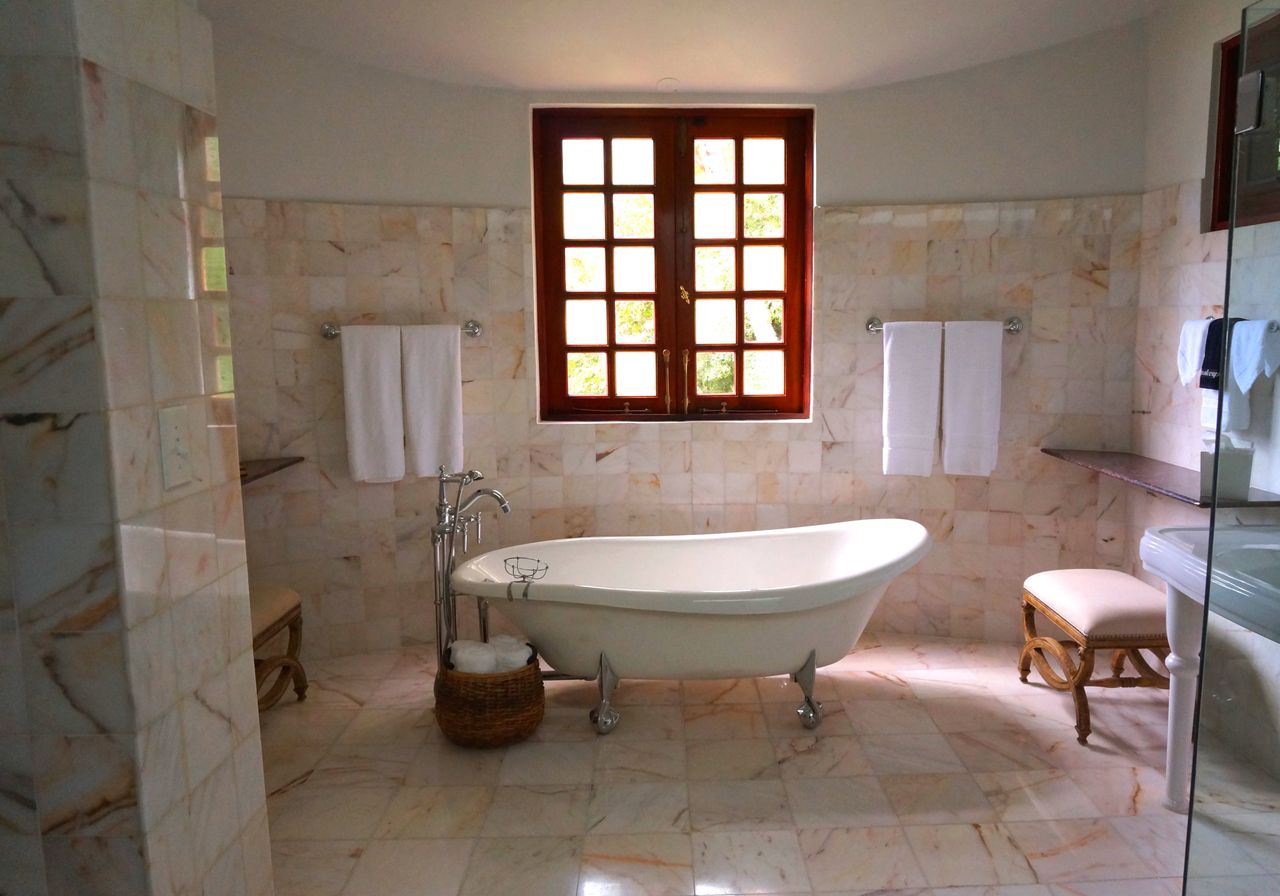
A freestanding tub with feet under a wood-framed window, with marble tile, white towels, and a woven basket beside it.

A modern gray bathroom with a white vanity, a large mirror, and green plants in blue pots softening the stone walls.

A white bathtub with a chrome faucet and a white towel draped over the edge, against a white paneled wall.

No comments:
Post a Comment