Walk into a room with a worn leather chair, a walnut sideboard, and a brass lamp that has glowed for fifty years, and you feel it right away: this room has a story. That feeling is exactly what people are chasing when they ask, what is vintage interior design? It is a way of decorating with real furniture and objects from past decades, mixed with the comfort of modern life, so a home feels collected and personal instead of bought in one afternoon.
In this guide you will learn what the word "vintage" really means, how it is different from antique and retro, and how each era from the 1920s to the 1970s looks. You will also get simple, room-by-room ideas you can copy on a normal budget, plus honest prices and the shopping tricks that help you find good pieces and skip the junk. You do not need a big house or a design degree. You only need one good old piece to start.

Photo: Wikimedia Commons
Table of Contents
- 1. What Vintage Decorating Really Means
- 2. The 1920s and 1930s: Art Deco Glamour
- 3. The 1940s and 1950s: Mid-Century Modern Comfort
- 4. The 1960s and 1970s: Bold Color and a Relaxed Mood
- 5. Key Features: Real Materials, Patina, and Craftsmanship
- 6. Vintage vs. Antique vs. Retro: The Simple Difference
- 7. Colors, Patterns, and Fabrics That Set the Mood
- 8. Vintage Style in the Living Room and Bedroom
- 9. Vintage Style in the Kitchen and Dining Room
- 10. Where to Shop for Vintage Pieces, and What to Pay
- Frequently Asked Questions
- Final Thoughts
- Sources
- Gallery
1. What Vintage Decorating Really Means

Photo: Wikimedia Commons
Vintage decorating means filling a room with genuine pieces from an earlier time, usually items that are about 20 to 99 years old. A 1960s teak dresser, a 1940s radio, a 1970s rattan chair: these are all vintage because they were really made in those years and carry the shapes, colors, and materials of their era. The point is not to copy one single year perfectly. The point is to build a room that feels layered and lived-in, the way a home grows over many years of birthdays, moves, and gifts.
The modern way to use vintage is to mix it with new things. Most designers follow a loose 80/20 rule: about 80 percent of the room is comfortable and up to date, and about 20 percent is vintage. So the sofa can be new and soft, while the coffee table is a scratched-up 1950s find and the lamp is older than your parents. This balance keeps the room practical for daily life — you still get good lighting, safe wiring, and a mattress that does not sag — while the old pieces bring the warmth and character that new furniture rarely has.
2. The 1920s and 1930s: Art Deco Glamour

Photo: Wikimedia Commons
The earliest vintage era most homes borrow from is Art Deco, the glamorous style of the 1920s and 1930s. Think of old movie hotels and ocean liners: strong geometric shapes, sunbursts and zigzags, shiny brass and chrome, black lacquer, mirrors everywhere, and rich woods like walnut polished to a deep shine. Furniture from this era often has curved fronts and smooth, rounded corners, like the famous entrance hall at Eltham Palace in London, built in the 1930s and still one of the best Deco rooms in the world.
You can borrow this look without redoing a whole room. Start with one sunburst or stepped-frame mirror, 24 to 36 inches wide, which sells for about $40 to $120 secondhand. Add a brass table lamp, a black-and-gold cushion or two, and maybe a small bar cart if you have the corner for it. Keep the rest of the room calm and simple, because Deco pieces are bold. One mirror and one lamp give you the glamour; ten shiny pieces at once just give you a headache.
3. The 1940s and 1950s: Mid-Century Modern Comfort

Photo: Wikimedia Commons
After the war, design changed completely. Mid-century modern furniture from the 1940s and 1950s is clean and low, with straight lines, slim tapered legs, and warm woods like walnut and teak. There is almost no carving or fuss. The most famous piece of the era is the Eames lounge chair from 1956, with its curved wooden shells and soft leather cushions, but the style also gave us long low sideboards, starburst clocks, kidney-shaped coffee tables, and sofas raised on thin wooden legs so rooms felt light and open.
This era is the easiest place for beginners to start, because mid-century shapes sit happily next to modern furniture. A single long credenza, usually 60 to 72 inches, works under almost any TV. A pair of tapered-leg side tables costs about $30 to $90 at estate sales. One warning that comes up again and again in Reddit and Quora threads: originals by famous designers can cost thousands of dollars, while good-quality vintage pieces by unknown makers give the same look for a tenth of the price. Buy the shape and the wood, not the famous name.
4. The 1960s and 1970s: Bold Color and a Relaxed Mood

Photo: Wikimedia Commons
The 1960s turned the volume up. Rooms filled with bold oranges, mustard yellows, avocado greens, and big graphic patterns, along with fun new shapes in plastic and fiberglass. By the 1970s the mood relaxed into an earthy, cozy style: brown and rust tones, shaggy rugs, rattan and wicker, macramé wall hangings, houseplants on every shelf, and low, deep seating you could sink into. This is the era of the conversation pit, the hanging egg chair, and the velvet armchair in a color that should not work but somehow does.
To use this era today, pick just two of its colors and repeat them calmly. For example, mustard cushions and one burnt-orange throw on a plain modern sofa give a clear 1970s wink without turning the room into a movie set. A rattan peacock chair or a woven wall hanging adds the handmade texture of the decade for $25 to $80 secondhand. Go slowly here: this is the era where one extra patterned piece tips a room from charming to chaotic, so add one thing, live with it a week, then decide.
5. Key Features: Real Materials, Patina, and Craftsmanship

Photo: Wikimedia Commons
Whatever the era, real vintage pieces share a few features. They are made of honest materials: solid wood instead of printed paper over particleboard, brass and steel instead of plastic painted gold, and natural fabrics like wool, linen, velvet, and leather. They were also built to last. Open the drawer of a 1950s dresser and you will often find dovetail joints — the two sides of the drawer locked together like puzzle pieces — instead of a few staples. This is why a seventy-year-old chair can still be sturdy while a cheap new one wobbles in two years.
The second feature is patina, the soft wear that time adds: leather that has darkened where hands rest, brass that has mellowed from bright yellow to honey, wood with small dings that prove a full life. Patina is not damage, and collectors pay extra for it. So never sand, paint, or "fix" an old piece before you check what it is; a light clean with a soft cloth and a little wood oil is usually all it needs. Keep pieces away from strong sun and heating vents, and that gentle glow will last for decades more.
6. Vintage vs. Antique vs. Retro: The Simple Difference

Photo: Wikimedia Commons
These three words get mixed up in almost every shop listing, so here is the simple version. An antique is at least 100 years old: a chair made in 1920 or earlier counts today. Vintage means roughly 20 to 99 years old and truly from its era: a real 1965 sideboard is vintage. Retro is different — it means a new item made to look old, like a brand-new radio built to resemble a 1950s one. Retro is about the look, not the age.
Why does this matter? Mostly for your wallet and your expectations. Antiques are often handmade, rarer, and priced like collectibles. Vintage pieces are easier to find and usually strong value for money, because you get solid old construction without the collector premium. Retro pieces cost the least and come with modern safety and warranties, but they will not gain value the way a real vintage piece can. There is no wrong choice — a room with one antique, a few vintage pieces, and a retro lamp or two can look wonderful — but now the words on the price tag will not fool you.
7. Colors, Patterns, and Fabrics That Set the Mood

Photo: Wikimedia Commons
Each era has its own palette, and borrowing the colors is the cheapest way to borrow the style. Art Deco loves black, cream, gold, and deep jewel greens. The 1950s mix warm wood browns with turquoise, coral, and soft yellow. The 1970s run on mustard, rust, olive, and chocolate. The safe method for any era is the same: keep walls and big furniture in a calm neutral — warm white, soft beige, or pale gray — and let the era colors live in cushions, curtains, rugs, and art, where they are easy to change.
Patterns do the same job. Floral prints feel like the 1940s and traditional rooms, big geometrics shout 1960s, and small checks and plaids suit country-style vintage. If pattern makes you nervous, start with one: a single floral curtain or a geometric rug, then keep every other fabric plain. Our guide to vintage floral wallpaper ideas shows how one patterned wall can carry a whole room while the furniture stays simple. For fabrics, lean on the natural ones the old pieces use — velvet for luxury, linen and cotton for softness, wool for rugs and throws — and the room will feel rich instead of busy.
8. Vintage Style in the Living Room and Bedroom
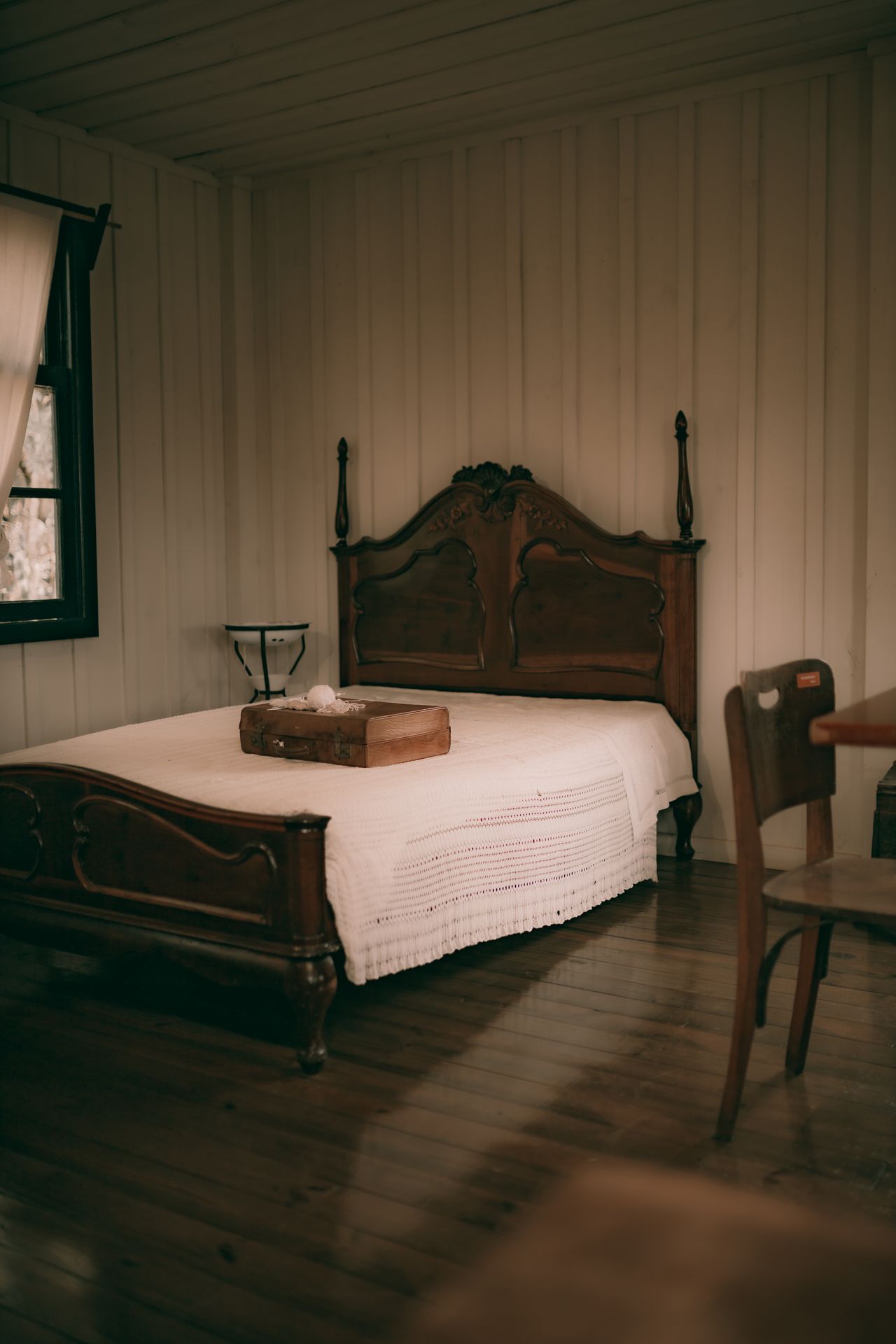
Photo: Pexels
In the living room, begin with one anchor piece and let it lead. A mid-century credenza under the TV, an old leather armchair in the reading corner, or a Persian-style rug in warm reds will set the tone for everything else. Size matters: a rug should be big enough for at least the front legs of the sofa and chairs to rest on it, which usually means 8 by 10 feet in an average room. On the walls, group two or three old pieces together — a gilded mirror, a framed poster, a small oil painting — rather than scattering single items. Our recent post on rustic wall art decor has more ideas for filling a big blank wall with pieces that have this same warm, collected feeling.
Bedrooms are where vintage shines quietly. A carved wooden bed or an iron bed frame becomes the whole room's personality, so keep bedding simple in white, cream, or one soft color, and let the bed be the star. Add a mismatched pair of old nightstands — matching is not required, and two different ones often look better — plus a small dresser with its original brass handles. If you love the clean 1950s look for sleeping spaces, our guide to the MCM bedroom walks through that style piece by piece. Finish with soft light: a milk-glass or fabric-shade lamp on each side, never one harsh ceiling light.
9. Vintage Style in the Kitchen and Dining Room

Photo: Wikimedia Commons
Kitchens cannot go fully vintage — you need a fridge and stove that work safely — but they take vintage touches beautifully. The classic 1950s kitchen look uses cheerful color: pastel or red appliances, open shelves showing stacked dishes, a checked curtain at the window, and enamel or chrome details. Today you can buy modern appliances in retro shapes and colors, then add real vintage on top: old canisters, a heavy cast-iron skillet, a wall clock, or a set of 1960s drinking glasses from a thrift store for a few dollars.
In the dining room, one strong piece does the heavy lifting. A long mid-century sideboard stores table linens, works as a serving station during dinners, and gives you a surface for a lamp and a plant. Secondhand dining sets in solid oak or walnut often sell for $150 to $400 — less than the flat-pack version — and the chairs can be re-covered in an afternoon with a staple gun and a yard of fabric. Hang one pendant light low over the table, about 30 to 34 inches above the surface, and even a plain room starts to feel like Sunday dinner at your grandmother's house, in the best way.
10. Where to Shop for Vintage Pieces, and What to Pay

Photo: Wikimedia Commons
The best hunting grounds are estate sales, thrift stores, flea markets, antique malls, and online marketplaces like Facebook Marketplace and eBay. Estate sales usually have the best furniture at the fairest prices, because whole households are being sold at once. As a rough guide in most US cities: side tables run $15 to $50, solid wood dressers $75 to $300, table lamps $10 to $40, and dining sets $150 to $400. Prices in big cities run higher, and Sunday afternoons — when sellers would rather deal than pack up — run lower.
Before you pay, run the quick checks experienced buyers swear by. Pull every drawer: it should slide smoothly and show real wood inside, not printed paper. Sit, lean, and wobble-test chairs and tables. Sniff upholstery; a strong musty smell rarely leaves. Check lamp cords, and budget about $25 to $50 for a lighting shop to rewire an old lamp so it is safe. One safety note: paint on furniture made before 1978 can contain lead, so do not sand old painted pieces indoors, and think twice about them for a baby's room. Buy slowly, measure your space and your doorway first, and remember the golden rule of vintage shopping: the right piece always comes around again.
Frequently Asked Questions
What is vintage interior design in simple words?
It is decorating a room with real furniture and objects from past decades — usually pieces between about 20 and 99 years old — and mixing them with modern comforts. Instead of a room that looks brand new and matched, you get a room that feels warm, personal, and collected over time.
How old does something need to be to count as vintage?
Most experts draw the line at about 20 years: anything genuinely made 20 to 99 years ago is vintage. At 100 years or older, a piece becomes an antique. A new item made to look old is neither — it is called retro, no matter how convincing the style is.
Can I mix vintage furniture with modern furniture?
Yes, and that mix is exactly what makes the style work in real homes. A common guide is 80 percent modern and 20 percent vintage: keep the big comfort items new, then add one or two old pieces with strong character, like a credenza, a leather chair, or an old rug. Let each vintage piece share a color or a wood tone with something else in the room, and the mix will look planned rather than random.
How do I stop my home from looking like a thrift store or a museum?
This is the most common worry in Reddit and Quora threads, and the fix is editing. Choose one era to lead, keep walls and large pieces calm, and give each vintage item breathing room instead of crowding shelves. A room looks like a thrift store when everything is old, small, and fighting for attention. It looks designed when a few good pieces stand out against a clean, comfortable background — and when everything in it is clean, working, and clearly loved.
Is vintage furniture cheaper than new furniture?
Often, yes — especially for solid wood pieces. A sturdy secondhand dresser commonly costs $75 to $300, while a new dresser of the same build quality can cost several times more. Small accessories like lamps, mirrors, and glasses are cheaper still. The exception is famous designer pieces, which carry collector prices. For everyday rooms, buying vintage usually gives you better materials for less money, and it keeps good furniture out of the landfill.
Final Thoughts
Vintage style is not about living in the past. It is about giving your home the depth that only time can create: real wood, honest wear, and pieces that were built to be kept. Start small — one chair, one lamp, one rug — and choose the era that makes you happiest, whether that is Deco glamour, mid-century calm, or 1970s warmth. Add slowly, buy the best quality you can find, and let your rooms grow the way real homes do, one good piece at a time.
Sources
- Nazmiyal Antique Rugs — Vintage Interior Design, Explained
- Life Science Art — Vintage vs. Antique vs. Retro: A Comprehensive Guide
- Simple Spaces — The Timeless Appeal of the Vintage Style
- Rocky Mountain College of Art + Design — The Influence of Vintage Styles on Contemporary Interiors
- Decor8 — Vintage Interior Design Style
Gallery

Photo: Wikimedia Commons

Photo: Wikimedia Commons

Photo: Wikimedia Commons

No comments:
Post a Comment