You have seen them on hotel beds and in furniture store displays: those neat, plump pillows standing in a row against the headboard, dressed in covers that match the comforter. So what is a pillow sham, and is it something your own bed needs? It is one of the most asked questions in bedding, and the short answer is simple. A sham is a decorative cover that slips over a regular bed pillow to make the bed look finished and styled.
The word "sham" means a false front, and that is exactly the job here. The pillow inside does the soft work, while the cover shows a clean, tailored face to the room. In this guide you will learn how a sham differs from a pillowcase, the four sizes you will meet in stores, the best fabrics, how to put one on in under a minute, and the styling tricks that give you that calm, hotel-style bed at home.

Photo: Wikimedia Commons
Table of Contents
- 1. What Exactly Is a Pillow Sham?
- 2. Sham vs. Pillowcase: The Real Difference
- 3. Pillow Sham Sizes: Standard, Queen, King and Euro
- 4. The Flange and Other Edge Finishes
- 5. Closures: Envelope, Zipper and Button Backs
- 6. Best Materials: Cotton, Linen, Velvet and More
- 7. How to Put a Sham on a Pillow, Step by Step
- 8. How to Style and Layer Shams on Your Bed
- 9. Color and Pattern Ideas That Always Work
- 10. Washing and Care: Keeping Shams Fresh
- Frequently Asked Questions
- Final Thoughts
- Sources
- Gallery
1. What Exactly Is a Pillow Sham?
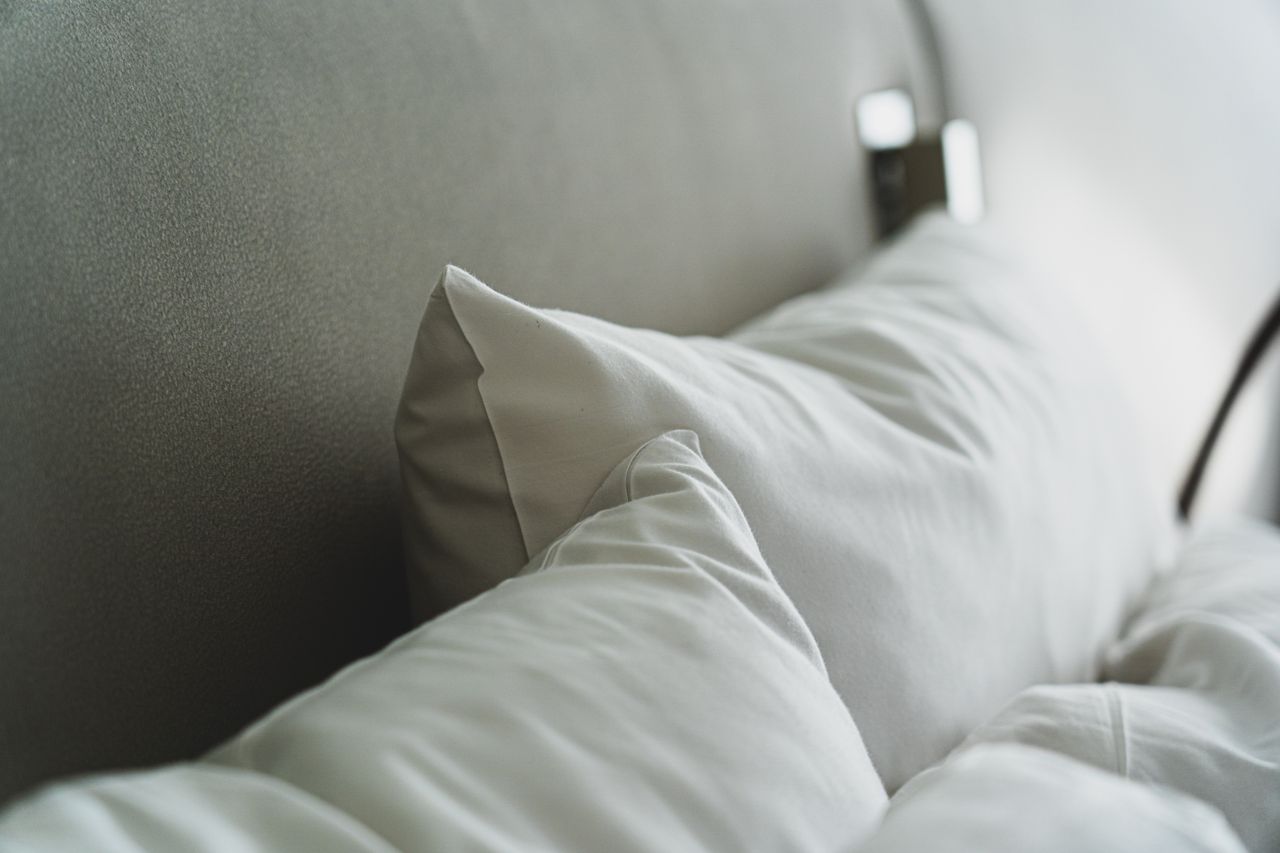
Photo: Pexels
A pillow sham is a decorative cover made to fit over a standard bed pillow. Think of it as part pillowcase and part throw pillow cover. It is finished on all four sides, it usually carries a border or some stitched detail, and it almost always matches or coordinates with the duvet cover, comforter or quilt on the bed. Most bedding sets sold in the US include two shams for exactly this reason: they are the piece that ties the whole bed together.
Unlike the case on the pillow you sleep on, a sham is made for daytime looks. It stands upright against the headboard, adds height and structure, and hides the soft, slightly wrinkled sleeping pillows behind a crisp front. Prices are friendly, too. A single standard sham usually costs between $15 and $40, and a matching pair in a bedding set often works out cheaper than buying the pieces one by one.
2. Sham vs. Pillowcase: The Real Difference

Photo: Wikimedia Commons
People on home forums ask this all the time: are the two just the same thing with different names? They are not. A pillowcase is a simple open-ended sleeve made for comfort and hygiene. You sleep on it every night, and it protects the pillow from skin oils and hair. It opens at one end, has no border, and is usually plain. A sham, by contrast, opens at the back, is finished on every side, and is built to be seen rather than slept on.
The quickest way to tell them apart in a store is to look at the edges and the opening. If the cover has a flat fabric border, quilting, embroidery or piping, and the opening hides at the back, it is a sham. If it is a plain sleeve with an open end or a simple hemmed cuff, it is a pillowcase. Both fit the same pillows, which is why the mix-up is so common, but each one has its own job on the bed.
3. Pillow Sham Sizes: Standard, Queen, King and Euro
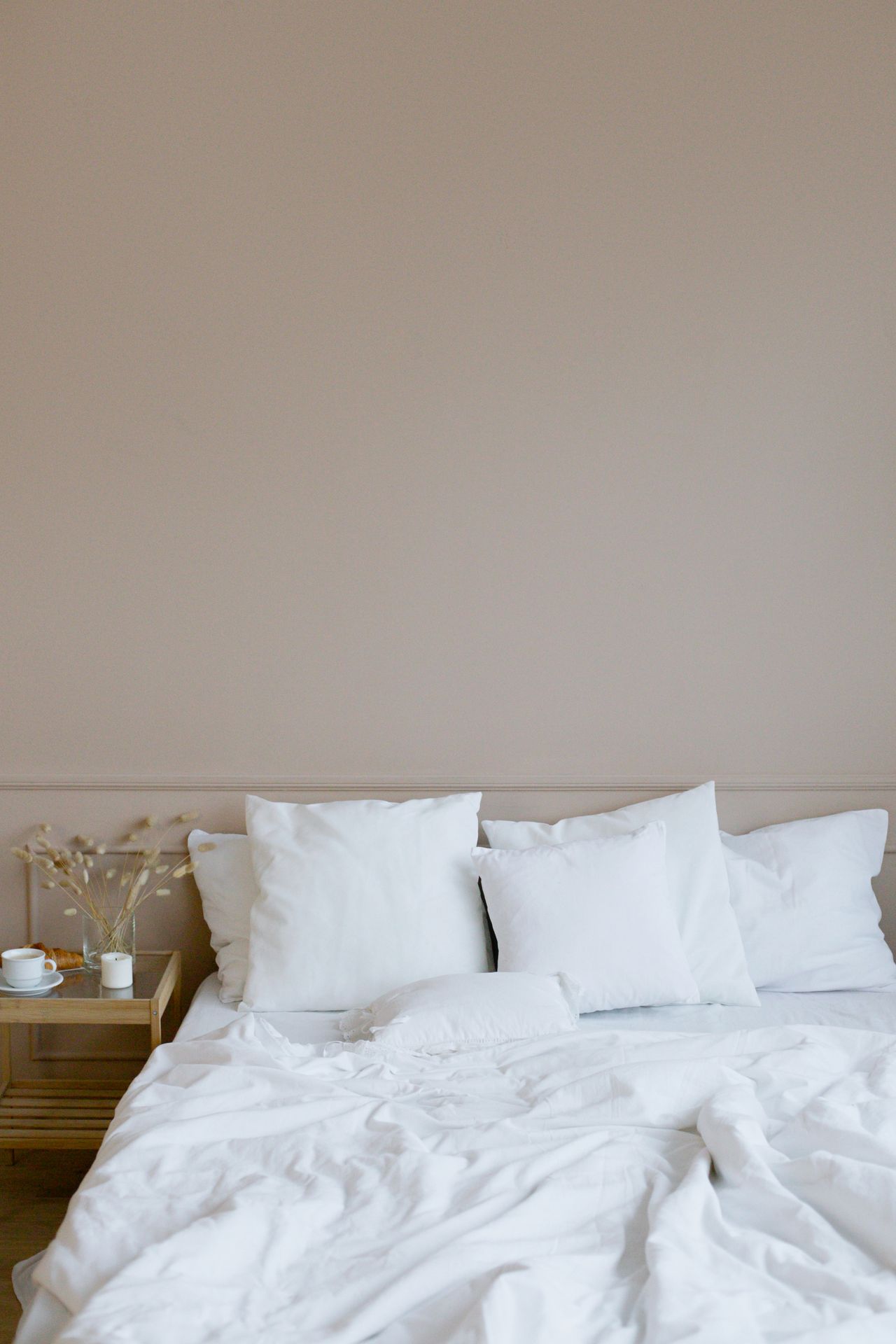
Photo: Pexels
Shams come in four main sizes, and each one matches a pillow size. A standard sham measures 20 x 26 inches and fits the most common bed pillow. A queen sham is 20 x 30 inches, and a king sham is 20 x 36 inches, made for the long pillows used on king beds. The fourth size is the Euro sham, a big square at 26 x 26 inches. Euro pillows are the tall backdrop layer you see standing against the headboard in styled photos.
Matching the size matters more than people expect. A standard pillow stuffed into a queen cover looks lost and floppy, and a king pillow will not squeeze into a standard sham at all. If you are not sure what size your bare pillows are, measure them first, or check our guide to standard pillow dimensions before you order. One more tip: the listed size is the pillow size, and the flange border adds extra inches around the outside, so a standard sham can look closer to 24 x 30 inches on the bed.
4. The Flange and Other Edge Finishes
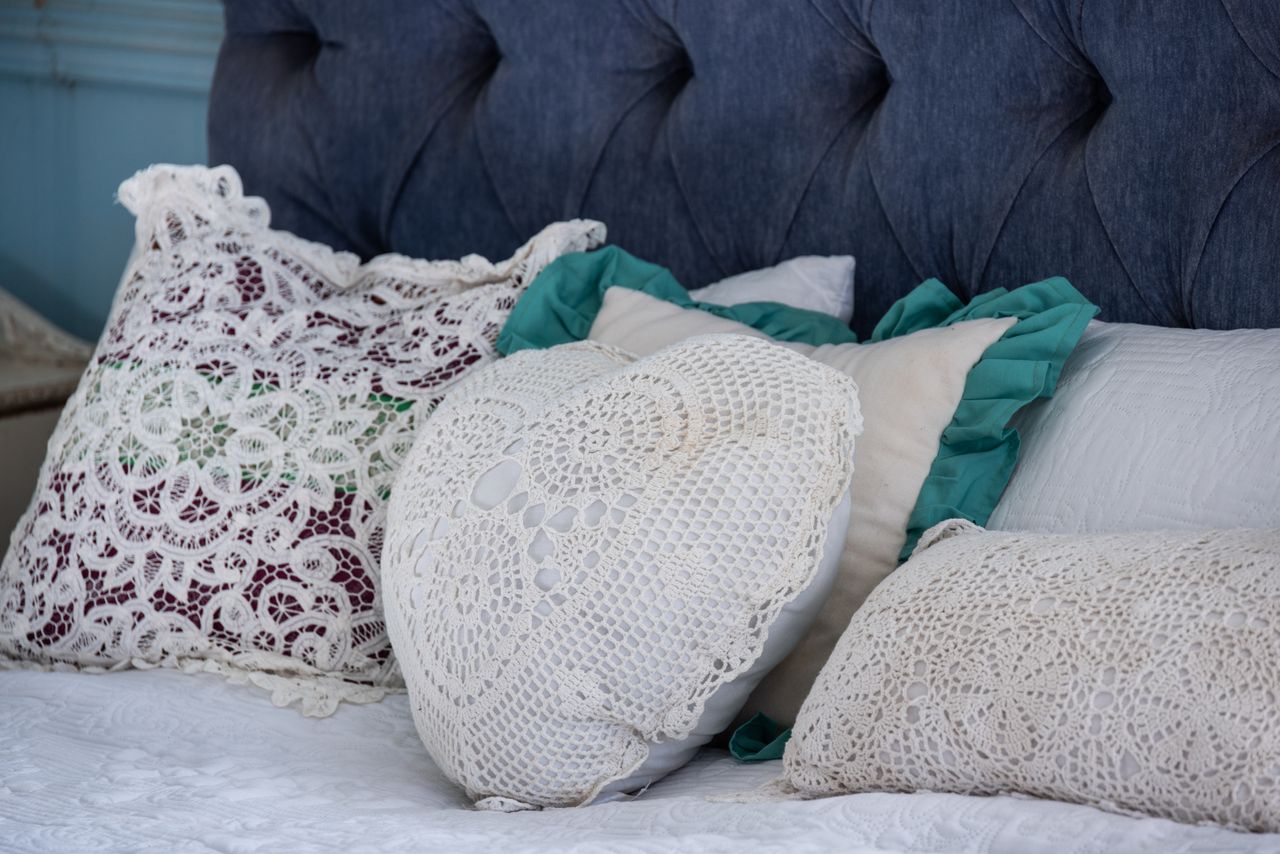
Photo: Pexels
The detail that makes a sham instantly recognizable is the flange: a flat border of fabric that runs around all four sides, like the mat around a framed picture. A typical flange is about 2 inches wide, though you will see them from a slim 1 inch up to a dramatic 4 inches. The flange is not just decoration. It gives the pillow a larger, more tailored outline and helps it stand up straight instead of slumping.
Flange is only one finish, though. Tailored or knife-edge shams skip the border for a clean, modern seam. Oxford-style shams pair the flange with a stitched cord edge. Ruffled edges give a soft, cottage feel, and lace or crochet trim leans vintage. When you shop, match the finish to your room: crisp flanges suit almost every style, while ruffles and lace are best kept to bedrooms that already have a romantic or farmhouse mood.
5. Closures: Envelope, Zipper and Button Backs

Photo: Wikimedia Commons
Every sham opens at the back so the front stays smooth and unbroken. The most common style is the envelope closure, where two panels of fabric overlap in the middle of the back. You slide the pillow in through the overlap, and the fabric holds it in place with no hardware at all. Envelope backs are the easiest to use and the easiest to wash, which is why most bedding sets use them.
The other two options are hidden zippers and buttons. A zipper gives the neatest, tightest fit and keeps an overstuffed pillow from escaping, but it costs a little more and the zipper can fail over time. Buttons and ties have a lovely handmade look, though they can gap if the pillow is very plump. Whichever you choose, the rule is the same: no closure should ever show from the front of the bed.
6. Best Materials: Cotton, Linen, Velvet and More
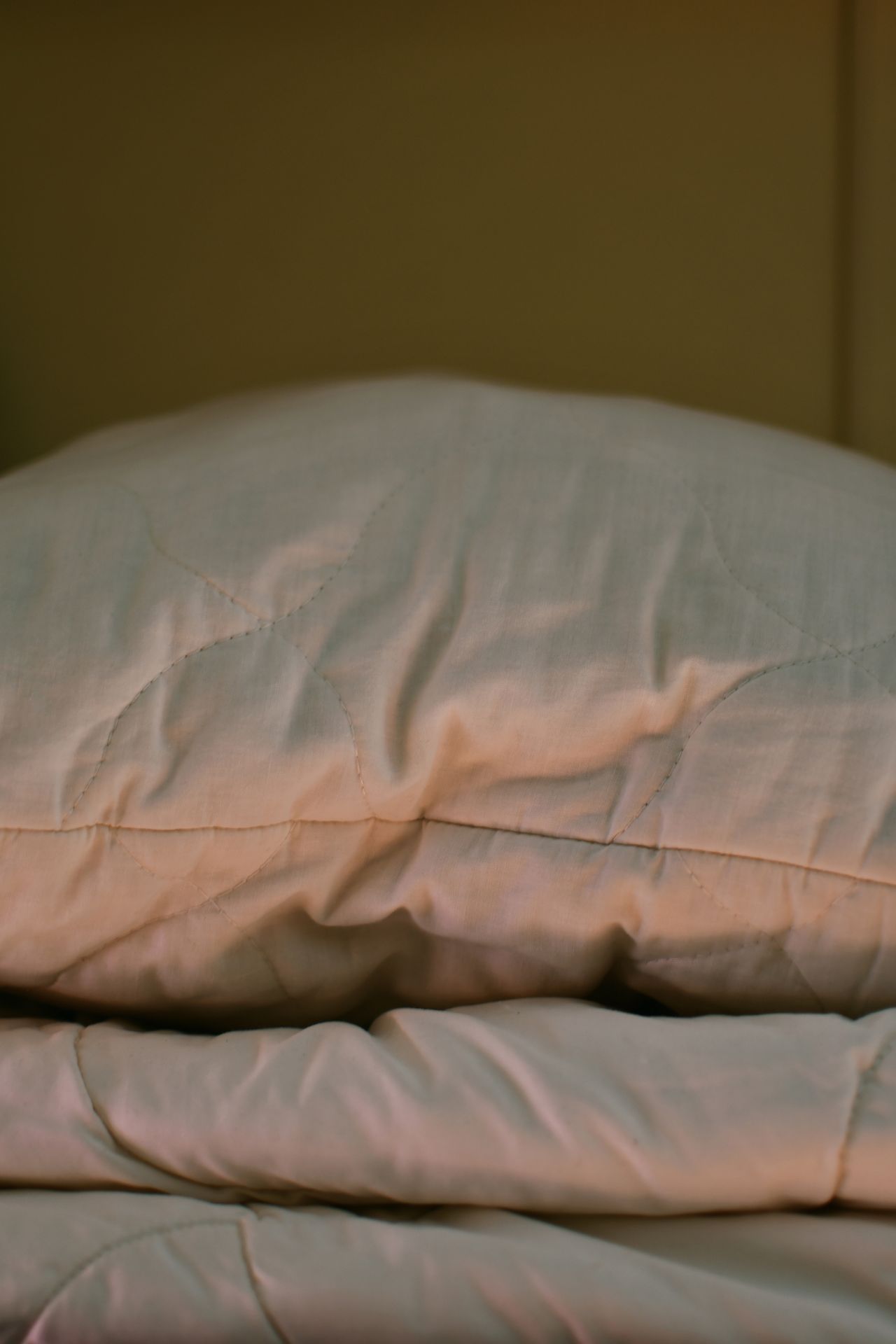
Photo: Pexels
Cotton is the safe, everyday choice. Percale feels crisp and cool, sateen has a slight sheen and a smoother face, and quilted cotton adds padded texture that shows off stitching patterns. Cotton shams are easy to wash, hold their shape well, and usually cost the least. If you only buy one set, buy cotton in a color that matches your bedding, and you will use it for years.
Linen gives a relaxed, slightly rumpled texture that suits casual and coastal rooms, and it gets softer with every wash. Velvet and velvet-look fabrics bring rich color and a formal feel, lovely for a main bedroom in fall and winter. Silk and satin look luxurious but need gentle care and are best saved for a guest room. Whatever the fabric, check that the cover is removable and washable, because a beautiful sham you are afraid to clean will not stay beautiful for long.
7. How to Put a Sham on a Pillow, Step by Step

Photo: Wikimedia Commons
Putting one on takes less than a minute once you know the trick. First, fluff the pillow well and fold it slightly in half lengthwise, like a taco. Slide it through the back opening of the cover, one corner at a time, and push each corner of the pillow right into the matching corner of the sham. Let the pillow open up inside, then smooth the front with your hands and shake the whole thing by the flange so the fill spreads evenly.
The insert matters as much as the technique. A flat, tired pillow will look sad in any cover, so use your plumper pillows for the sham layer and save the worn ones for sleeping. If your pillow is a little small, a pillow insert one size up gives that full, store-display look. Our bamboo pillow guide explains fill types if you are shopping for new inserts. Finish with the classic designer move: a quick karate chop in the top center to make a soft crease.
8. How to Style and Layer Shams on Your Bed
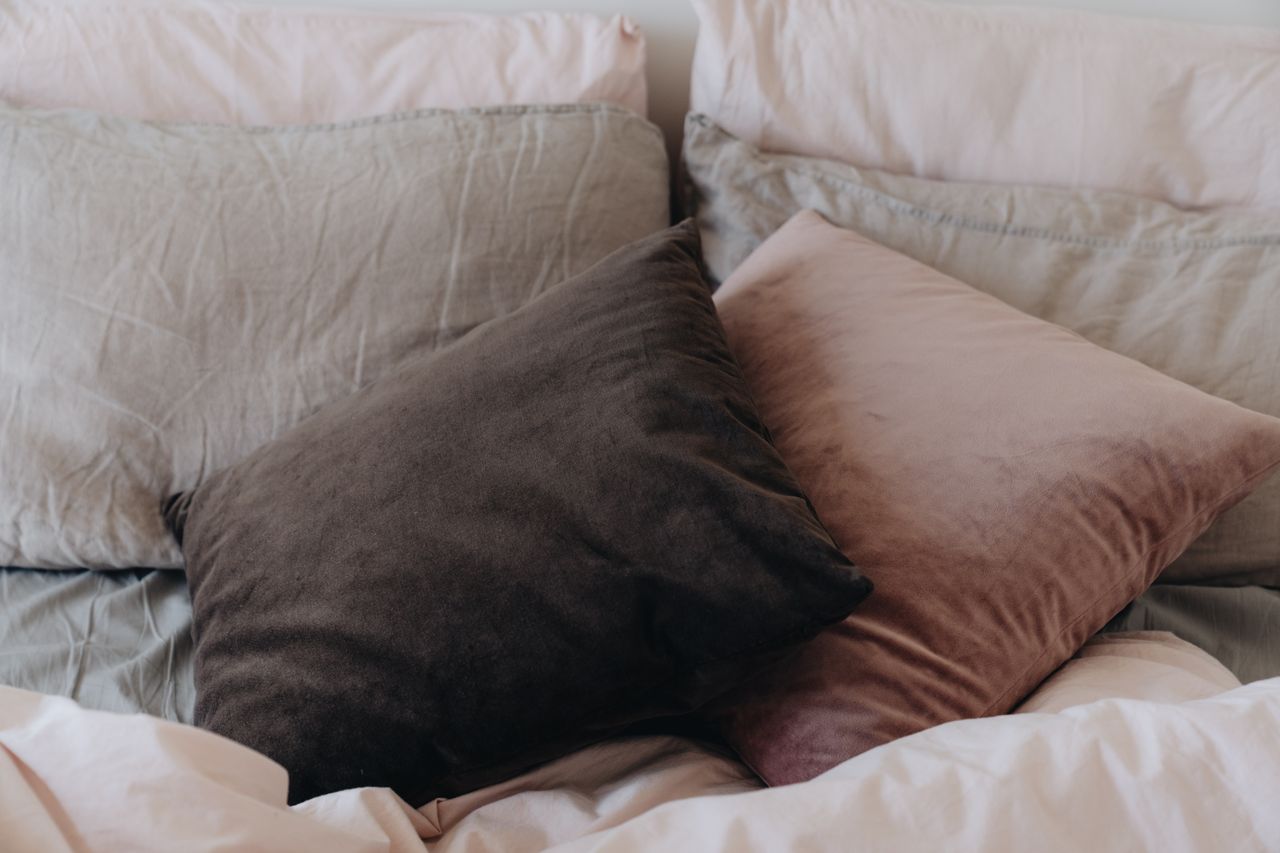
Photo: Pexels
The classic formula is simple: work from the headboard forward, biggest to smallest. Stand two or three Euro shams against the headboard first. In front of them, stand your standard, queen or king shams, the ones that match the bedding. Then place your sleeping pillows, and finish with one or two small accent cushions or a single long lumbar pillow at the very front. On a queen bed, two Euros, two matching shams and one lumbar is the combination designers reach for most.
One of the most common questions on bedding forums is where the sham layer actually goes, front or back. The answer is the back, standing upright. Shams are the backdrop, not the front row. At night, most people move the sham pillows to a bench, a chair or the floor and sleep on the plain cases behind them. It takes ten seconds, and it keeps the decorative covers clean and crisp for much longer.
9. Color and Pattern Ideas That Always Work
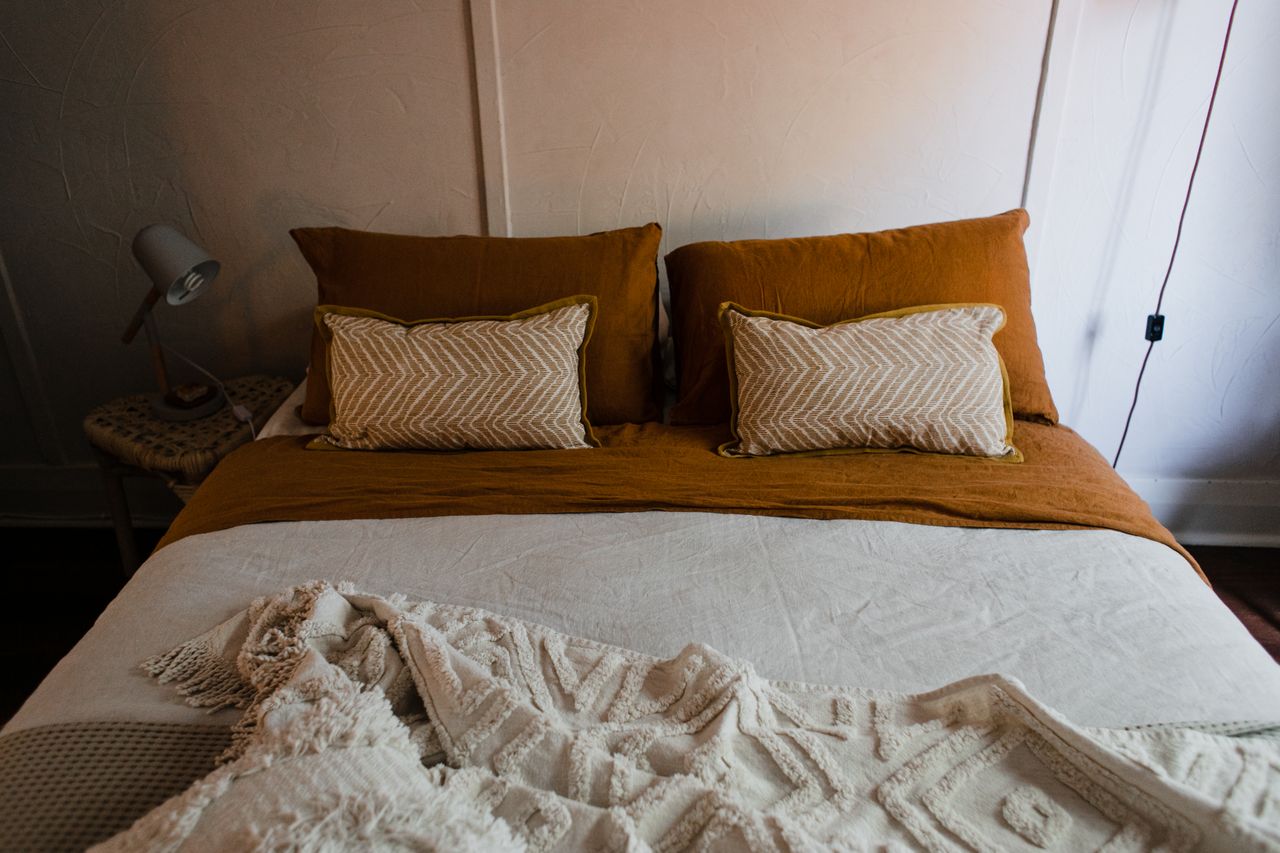
Photo: Pexels
The easiest path is the matched set: shams in the same fabric as your duvet cover or comforter. It always looks pulled together and it is how most bedding sets are sold. If you want more life, keep the sham layer solid and let pattern live in the accent cushions, or reverse it and put a patterned sham over plain white bedding. White and ivory shams are the hotel secret: they go with everything, brighten the bed, and can be bleached when they dull.
For color, pull one shade from art, a rug or curtains already in the room and repeat it on the bed. Warm rust, sage green, dusty blue and soft blush all sit happily with wood furniture and white linens. Floral patterns are a classic on shams because the flat front shows the print like a picture; our roundup of floral bedding ideas shows how to mix them without clashing. When in doubt, buy the sham in the bedding color and add color with one cushion you can swap by season.
10. Washing and Care: Keeping Shams Fresh

Photo: Wikimedia Commons
Because shams are for looks and not for sleeping, they stay clean far longer than pillowcases. Bedding experts suggest washing them about once a month if they are only on display. Always take the pillow out first, close any zipper or buttons so the fabric does not twist, and wash on a gentle cycle with cold or warm water and a mild detergent. Delicate lace, heavy embroidery and silk are happier in a mesh laundry bag or at the dry cleaner.
Dry on low heat or line dry, then smooth the flange flat with your hands while the fabric is still slightly damp. A quick pass with a warm iron makes the border crisp again. If you do sleep on a sham, treat it like a pillowcase and wash it every one to two weeks. Storing spares is easy too: fold them flat in a drawer or hang them over a closet rod so the borders do not crease.
Frequently Asked Questions
What is a pillow sham used for?
It is a decorative cover that dresses up a plain bed pillow so the made bed looks layered and finished. It also protects the pillow and its case underneath from dust and sunlight during the day.
Can you sleep on a pillow sham?
You can, and many people do now and then, but it is not what it is made for. Stitching, buttons and textured fabric can feel rough on your face, and nightly use wears the cover out faster. Most people take the sham pillows off the bed at night or push them behind the sleeping pillows.
What do you put inside a sham?
A regular bed pillow in the matching size: standard, queen, king or a square Euro insert. Use a plump pillow, because a flat one makes the cover sag. A slightly fuller insert gives the crisp, filled-out look you see in stores.
How many shams do I need for a queen bed?
Two matching standard or queen shams are the basic setup. For the full layered look, add two Euro shams behind them and one small accent cushion in front. A twin bed needs just one sham, and a king bed usually takes two king shams or three Euros across.
Do shams come with the pillow included?
Almost never. A sham is sold as a cover only, and you supply the pillow or buy an insert separately. Bedding sets that list "2 shams" mean two covers, so check the product details before you buy if you need inserts too.
Final Thoughts
A sham is a small purchase that does an outsized job. For the price of a takeout lunch, a pair of them turns a plain, slept-in bed into the calm, finished focal point of the room. Start with one matching pair in cotton, learn the layering order, and wash them monthly. Once you see the difference on your own bed, you will understand why hotels and designers never skip this layer.
Sources
- Real Simple — What Is a Pillow Sham? We Asked Bedding Experts: realsimple.com
- Mattress Nerd — What Is a Pillow Sham?: mattressnerd.com
- Mathis Home — What Are Shams? Sizes, Uses and Bedding Guide: mathishome.com
- Amerisleep — Pillow Cases vs. Pillow Shams: What's the Difference?: amerisleep.com
Gallery

Photo: Wikimedia Commons
Photo: Pexels

Photo: Wikimedia Commons

No comments:
Post a Comment