Blank walls are the reason so many living rooms feel unfinished, even when the furniture is right. The sofa is comfortable, the rug fits, the lamp works, yet the room still feels a little cold and temporary. Rustic wall pieces fix that faster than any other change, because they bring the three things flat paint cannot: texture, nature, and a sense that the room has a story.
The ten ideas below cover the whole range, from a single oversized barn canvas to baskets, plates, antlers, and free museum art you can print at home. Each one includes real sizes, hanging heights, and honest prices, plus the mistakes that make rustic walls look cluttered instead of collected. Start with one wall and one idea; the rest of the room will start asking for the same treatment.
Photo via Pexels
Table of Contents
- 1. Go Big with a Barn Landscape Canvas
- 2. Build a Gallery Wall with Vintage-Look Frames
- 3. Hang One Wooden Word Sign, and Stop There
- 4. Use Woven Baskets for Soft, Round Texture
- 5. Soften Hard Walls with Macramé and Weaving
- 6. Display Decorative Plates Like Grandma Did
- 7. Mount Antlers and Other Honest Natural Finds
- 8. Let a Big Wall Clock Earn Its Wall
- 9. Print Classic Landscape Paintings for Almost Nothing
- 10. Hang a Greenery Wreath All Year, Not Just in December
- Frequently Asked Questions
- Final Thoughts
- Sources
- Gallery
1. Go Big with a Barn Landscape Canvas

Photo: Charles Knowles, CC BY 2.0, via Wikimedia Commons
One large piece beats six small ones. A barn landscape printed on canvas, at least 36 by 24 inches and up to 60 by 40 inches over a long sofa, gives a living room an instant focal point and that open-country feeling rustic style is built on. Follow the two-thirds rule: the art should span about two-thirds the width of the furniture under it. An 84-inch sofa wants a piece roughly 48 to 56 inches wide, hung with its bottom edge 6 to 10 inches above the sofa back.
Red barns are the classic American subject for a reason; the color warms up gray and white rooms instantly. Wheat fields, tree-lined lanes, and misty pastures work the same way if red is too bold for you. Canvas prints with a matte finish look more like real paintings than glossy ones, and a simple wood float frame (often $30 to $60 extra) makes an inexpensive print, usually $50 to $120 at this size, look like a gallery piece.
2. Build a Gallery Wall with Vintage-Look Frames
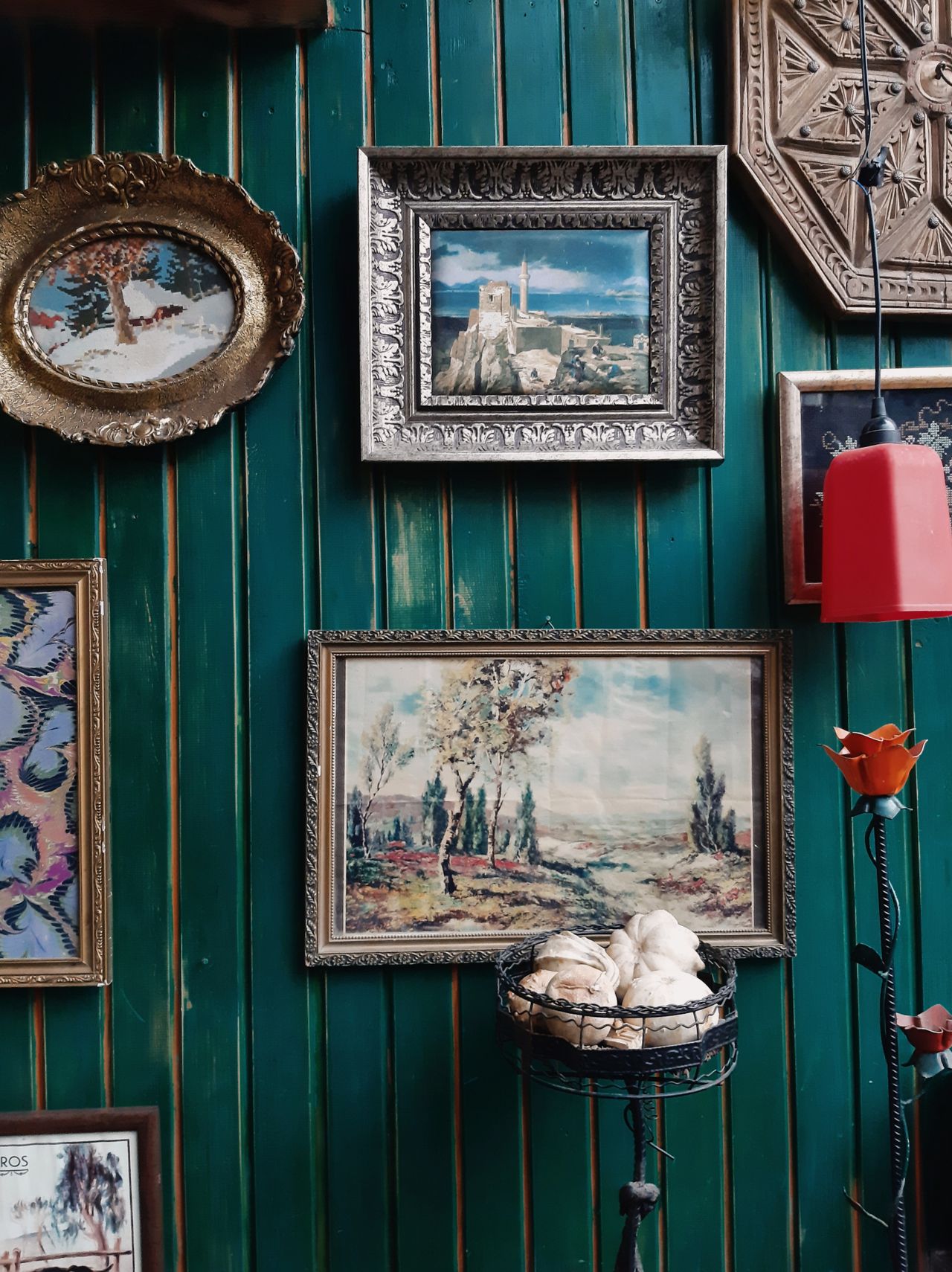
Photo via Pexels
A gallery wall is where rustic rooms show their personality. Gather 5 to 9 pieces: small landscapes, botanical prints, animal sketches, an old map, maybe one black-and-white family photo. Frames do not need to match, but keep them in one family (weathered wood, antique gold, or black) so the wall reads as one collection instead of a yard sale. Thrift stores and estate sales sell sturdy old frames for $2 to $10, often less than the cost of the print you will put inside.
Plan on paper before you touch a nail. Trace each frame on kraft paper, tape the templates to the wall, and live with them a day. Keep gaps even at 2 to 3 inches, and hang the center of the whole grouping at about 57 to 60 inches from the floor, standard eye level. Start with the largest piece slightly off-center and build outward. Our step-by-step living room wall decorating guide covers layouts for tricky walls too.
3. Hang One Wooden Word Sign, and Stop There
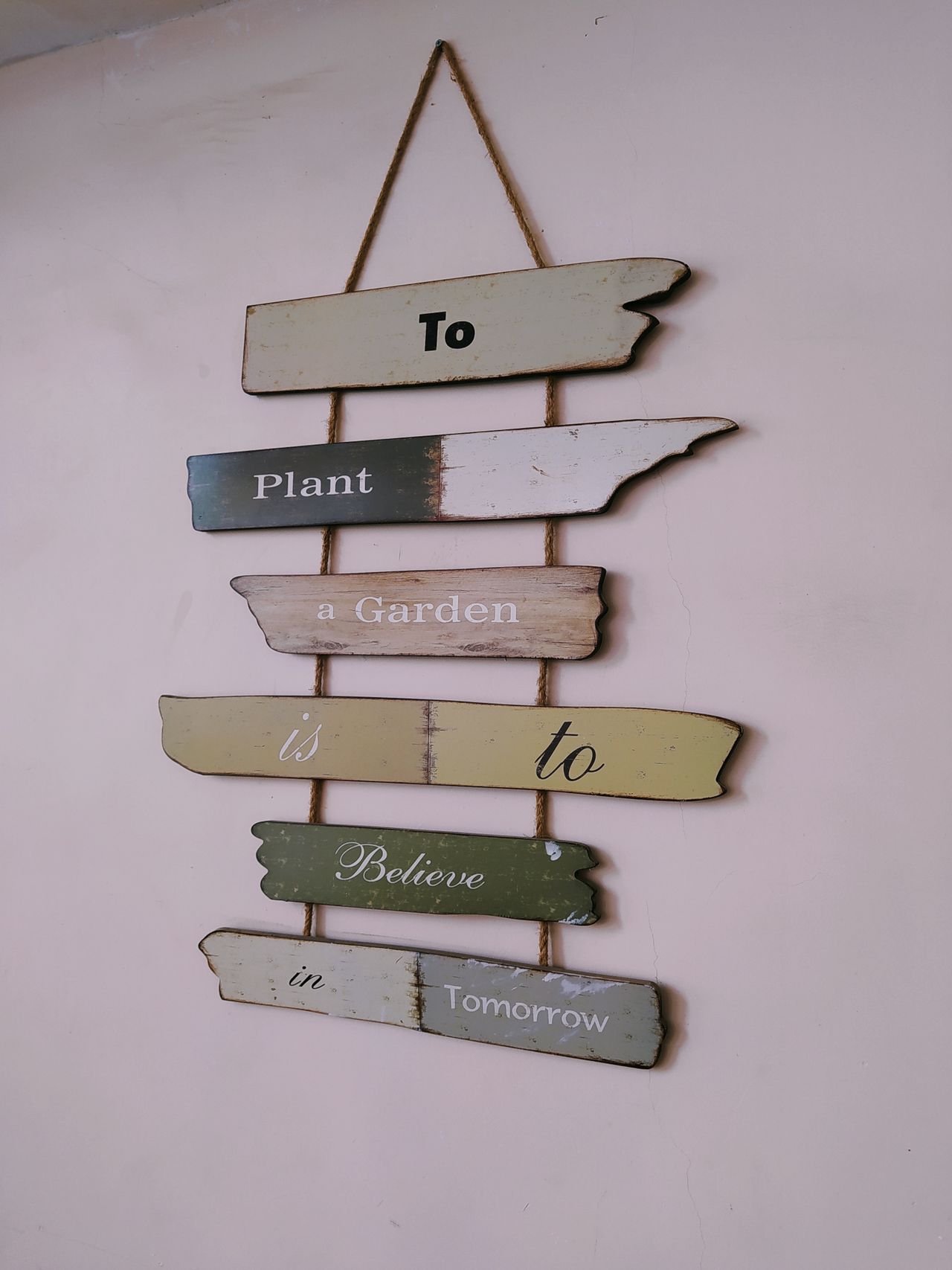
Photo via Pexels
A weathered wood sign with a short line ("gather," "home sweet home," your family name and the year the house became yours) is farmhouse shorthand for welcome. Solid pine or reclaimed barn wood signs cost $25 to $80 depending on size, and a 36 to 48-inch sign centered over a sofa or entryway console makes the message land. Hand-painted or routed letters age better than flat printed ones; run your fingers over the surface before you buy.
The hard part is stopping at one. A room with five word signs stops feeling rustic and starts feeling like a gift shop. Choose the single line that means something to your family and let the rest of your walls carry pictures and texture instead. If you are handy, a DIY version is a weekend project: one pine board, sandpaper to soften the edges, white or charcoal paint, and a stencil. Distress the letters lightly with fine sandpaper so the wood peeks through.
4. Use Woven Baskets for Soft, Round Texture

Photo via Pexels
Flat woven baskets are the easiest rustic texture you can hang. Group 3 or 5 in odd numbers, mixing sizes from about 10 to 16 inches across, and overlap one or two slightly so the arrangement feels collected rather than lined up. Seagrass, rattan, and sisal baskets run $8 to $25 each at craft stores and import shops, and shallow ones hang on a single small nail or removable hook, which makes them renter-friendly and feather-light.
Baskets earn their place because living rooms are full of hard rectangles: sofa, TV, coffee table, frames. Round, handmade shapes break that grid and soften the whole wall. They look best against a plain painted wall where the weave can show. Dust them with a soft brush or the vacuum's upholstery tool every few weeks; beyond that they ask for nothing, and they will never need batteries, bulbs, or Wi-Fi passwords.
5. Soften Hard Walls with Macramé and Weaving

Photo: Geneva Vanderzeil, CC BY 2.0, via Wikimedia Commons
Knotted cotton cord brings a handmade softness that printed art cannot copy. A macramé hanging 24 to 36 inches wide works beautifully over a console table, a reading chair, or a bed used as a daybed in a small living room. Natural ivory cord suits most rooms; look for a sturdy dowel or a real branch as the hanger, since the branch version adds the rustic note all by itself. Handmade pieces sell for about $25 to $80 on craft marketplaces.
Fiber art also solves two practical problems. It weighs almost nothing, so it is safe over a sofa where a heavy frame would worry you, and it gently absorbs sound in rooms with wood floors and leather furniture that echo. Keep it out of direct harsh sun, which fades cotton over the years, and give it a shake outdoors now and then. A woven wall hanging with a little fringe movement makes a still room feel alive.
6. Display Decorative Plates Like Grandma Did

Photo via Pexels
Ironstone, enamelware, and transferware plates were made to be seen, and a wall of them is pure farmhouse. Use 5 to 9 plates between 8 and 10 inches across, in one color story (cream and white is the classic; blue transferware is the collector's favorite). Invisible disc hangers cost $3 to $6 each and stick or clip to the back, so plates look like they float. Flea-market plates are often $1 to $5 apiece, which makes this one of the cheapest ideas in this guide.
Arrange the plates on the floor or a table first, photograph the layout with your phone, and only then start hanging, working from the center outward. A loose, slightly irregular cluster feels more authentic than a perfect grid; these were working dishes once, not soldiers. Plates also fill awkward spots (above doorways, beside a hutch, up a staircase wall) where a rectangular frame never quite fits.
7. Mount Antlers and Other Honest Natural Finds

Photo: Jules Verne Times Two, CC BY-SA 4.0, via Wikimedia Commons
A pair of antlers is rustic sculpture that nature made for free. Sheds (antlers deer drop naturally every year) are sold at flea markets, antique malls, and online for $15 to $40 a pair, and no animal needs to be harmed for your wall. Mount them on a simple wood plaque or directly with a hidden bracket, and let the warm bone color work against a darker wall or a stack of framed prints.
Antlers are the headline act of a bigger idea: decorate with honest found objects. A length of driftwood, a vintage hay hook, an old horseshoe over a doorway, a section of weathered ladder used as a blanket rack under framed art. Each piece carries a story a store-bought sign cannot fake. Keep the group small and give every object breathing room; a wall of curiosities is charming, a wall of clutter is just clutter.
8. Let a Big Wall Clock Earn Its Wall
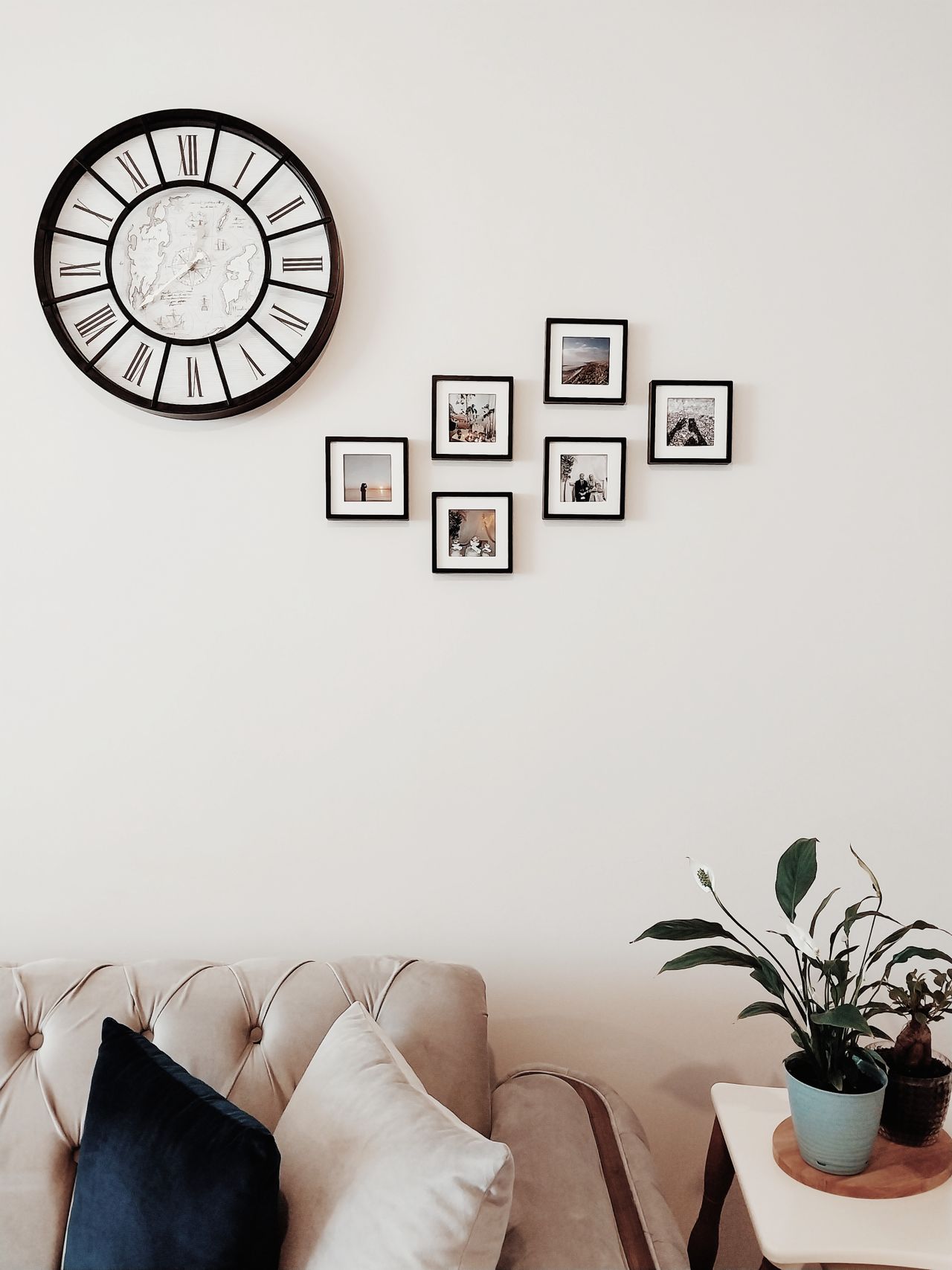
Photo via Pexels
An oversized clock does double duty: it tells the time and fills a wall the way a painting would. For a living room, go 24 to 36 inches in diameter, with a wood or aged-metal rim and simple numerals you can read from the couch. Hang it with its center near 57 to 60 inches from the floor, the same eye-level rule as art. Battery movements mean no cords, and a 30-inch clock typically costs $40 to $110.
Treat the clock as the anchor of a small composition. Two or three tiny framed photos or prints stepping down one side, as in the photo above, turn a utility object into a styled moment. Avoid placing a big clock where a real window view competes, and skip the fake-distressed versions with peeling printed numerals; honest wood and iron finishes age gracefully, while printed rust just looks tired within a year.
9. Print Classic Landscape Paintings for Almost Nothing

Photo: Vincent van Gogh, CC0, via Wikimedia Commons
Here is the decorator's best-kept secret: the world's great landscape paintings are free. Museums like the Metropolitan Museum of Art release public-domain artworks through open-access programs, so you can download a high-resolution file of a van Gogh wheat field or a Hudson River School valley at no cost, then print it locally. A 24 by 18-inch print runs about $15 to $30 at a print shop, and a thrifted gold or wood frame completes the gallery look for a few dollars more.
Country subjects suit rustic rooms best: wheat fields, cypress trees, river bends, farm lanes, and stormy skies. Choose one large horizontal piece over the sofa rather than several small ones, and let the frame be slightly grand; old paintings in good frames look inherited, and inherited is exactly the feeling rustic style is chasing. It pairs naturally with the wood tones in our craftsman living room ideas as well.
10. Hang a Greenery Wreath All Year, Not Just in December
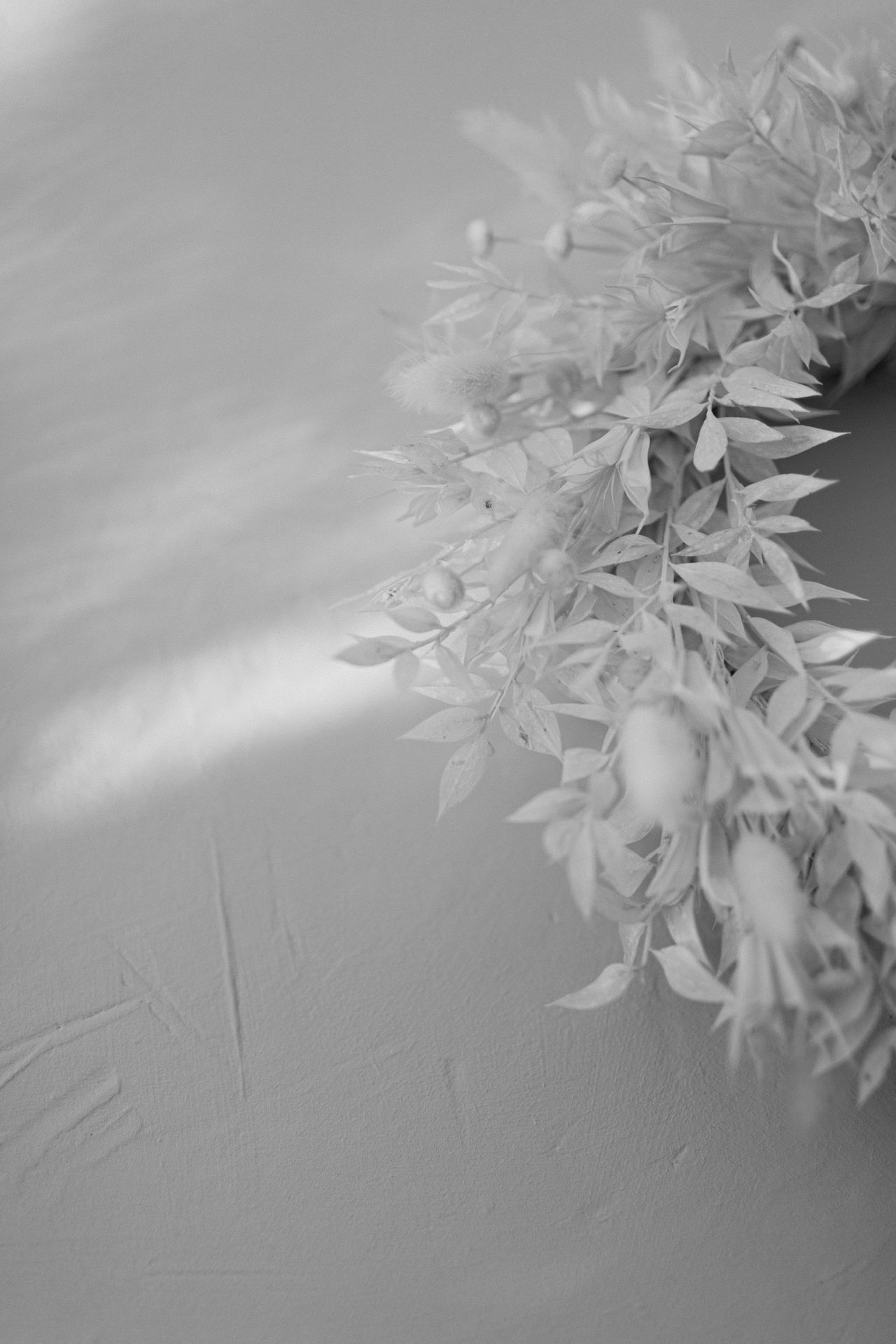
Photo via Pexels
A wreath is not a holiday decoration; it is a year-round circle of green that softens any wall it touches. Choose eucalyptus, olive branches, dried grasses, or cotton stems in a 20 to 24-inch diameter for over a mantel, a hutch, or an interior door. Real preserved eucalyptus wreaths cost $35 to $70 and last for years indoors; good faux versions start around $25 and need no care at all.
Hang it from a wide ribbon looped over a small hook or the top of a mirror or window frame, which lets you swap the ribbon with the seasons: burlap for fall, a plain linen strip for spring, nothing at all in summer. Keep real greenery out of strong direct sun so it does not fade to gray. One wreath, moved around the house, can refresh four different rooms across the year for the price of a single pizza night.
Frequently Asked Questions
How high should I hang wall art in a living room?
The museum rule works in homes too: hang art so its center sits 57 to 60 inches from the floor, roughly average eye level. Over a sofa, ignore that rule slightly and place the bottom edge of the art 6 to 10 inches above the sofa back, so the art and furniture read as one group. For a gallery wall, treat the whole cluster as one piece and put its center at the same 57 to 60 inches. When two people disagree, err on the side of lower; art hung too high is the most common decorating mistake there is.
How big should the art over my sofa be?
Aim for a width about two-thirds the width of the sofa. A standard 84-inch sofa pairs with art (or a grouping) about 48 to 56 inches wide. A single piece should fill that span on its own; a gallery grouping should reach the same total width. If your only piece is smaller, do not center it alone and hope: build it into a grouping with smaller companions, or move it to a narrower wall where its scale works. Art that is too small looks lost no matter how pretty it is.
Where can I find rustic wall pieces on a budget?
Thrift stores, estate sales, flea markets, and church rummage sales are the best hunting grounds: frames for a few dollars, plates for a dollar, antlers and old tools for the price of lunch. Craft stores run rotating 40 to 50 percent coupons that make baskets and signs affordable, and public-domain museum downloads make classic paintings nearly free beyond printing. Set a per-wall budget, take your time, and buy the frame first when you find a good one; art to fit it always turns up. Our fall farmhouse decor ideas collect more budget-friendly sources.
Can rustic wall art work with modern furniture?
Yes, and the mix is often better than a full theme room. A clean-lined modern sofa under a weathered barn canvas gets warmth without turning the room into a stage set. Keep the rustic pieces to the walls and one or two textiles, and let the furniture stay simple. The shared thread should be color: pull one tone from the art (barn red, wheat gold, sage green) into a pillow or throw, and the two styles will look intentional rather than accidental.
How do I hang heavy pieces safely?
Respect the weight. Pieces under 10 pounds are fine on a picture hook rated for the load. Heavier frames, clocks, and mirrors should go into a wall stud or use proper drywall anchors rated well above the piece's weight; toggle bolts are the strongest common option. Use two hooks spaced apart for wide pieces so they stay level, and add small rubber bumpers behind the bottom corners to protect the paint. When in doubt, weigh the piece on a bathroom scale and buy hardware rated for double that number.
Final Thoughts
Rustic walls are not bought in a day; they are collected. One honest piece (a real barn canvas, a thrifted frame, a pair of shed antlers) does more for a room than a cart full of matching accessories. Follow the size and height rules, keep your materials real (wood, cotton, iron, clay), and let every piece earn its place.
Begin with the wall you see most, probably the one behind the sofa. Hang the first piece at eye level, live with it for a week, and notice how the room settles. That small pause between additions is the whole secret: it is what makes the difference between a wall that looks decorated and a wall that looks like home.
Sources
- HomeTriks – Modern Farmhouse Living Room Decor Ideas
- The Home Guide Pro – 30 Farmhouse Wall Decor Ideas
- My Great Canvas – Farmhouse Living Room Wall Art
Gallery

Photo: inkknife_2000, CC BY-SA 2.0, via Wikimedia Commons
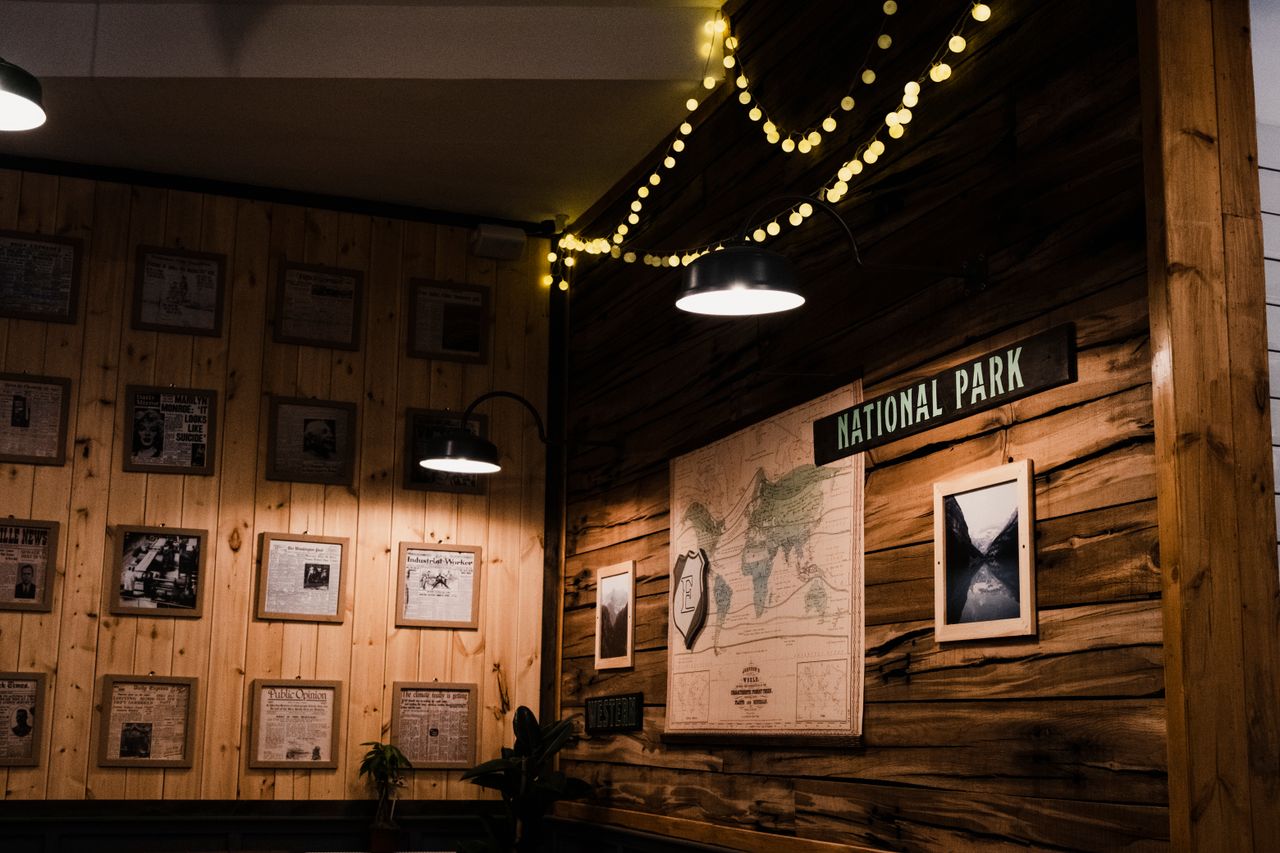
Photo via Pexels
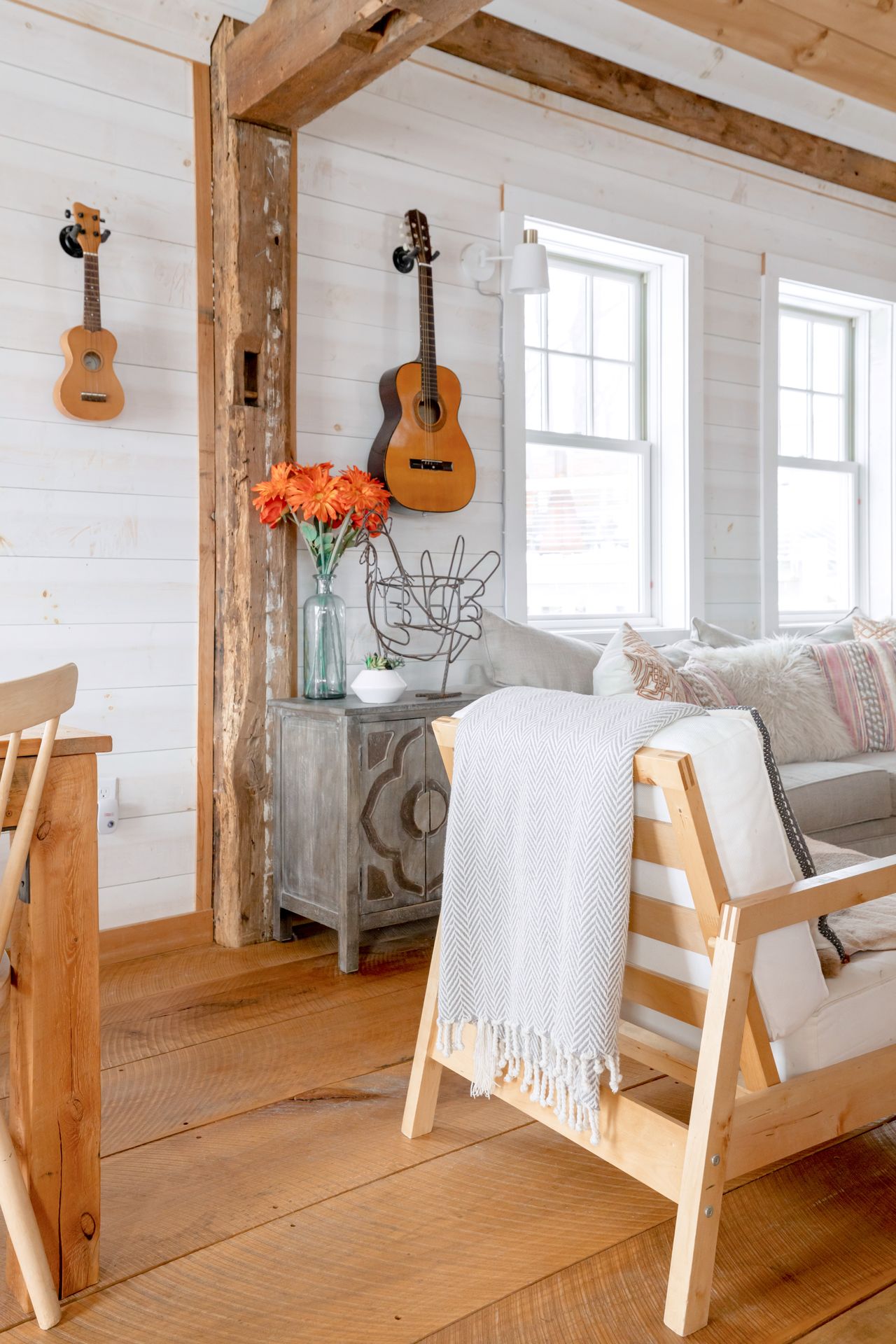
Photo via Pexels

No comments:
Post a Comment