Few pieces of furniture change a room like a walnut dining room table. Its deep chocolate-brown color and flowing grain make even a simple weeknight dinner feel a little special — and unlike trendy pieces, this is one buy that still looks right ten years from now.
Walnut sits in a sweet spot: it is a medium-density hardwood that stands up to daily use, takes stain beautifully, and pairs with almost any chair style. Below are 10 ideas to help you pick the right style, size, and finish — plus real-world care and buying tips.
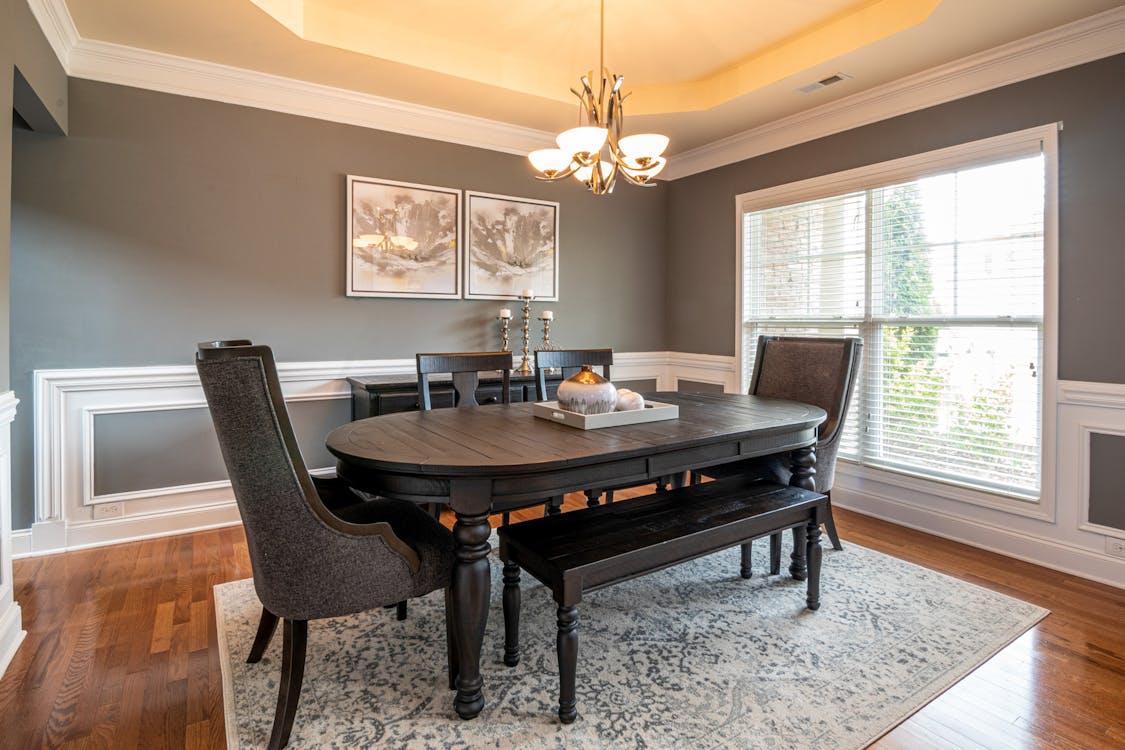
Photo by Curtis Adams via Pexels
Table of Contents
- 1. The rich color and grain that set walnut apart
- 2. Mid-century modern: walnut's most famous look
- 3. Sleek and modern: dark walnut in open kitchens
- 4. Farmhouse warmth with a walnut twist
- 5. Round walnut tables for small dining rooms
- 6. Get the size right: seating by the inch
- 7. Chairs that love a walnut table
- 8. Finishes: matte, oiled, or lacquered?
- 9. Everyday care in five minutes
- 10. Buying smart: solid walnut vs. veneer
1. The rich color and grain that set walnut apart
Walnut's claim to fame is its color: a natural chocolate-to-coffee brown with a smooth, flowing grain that looks expensive without trying. It is a medium-density hardwood, so it resists everyday dents and scratches better than pine, yet it is easier to shape into graceful designs than ultra-hard maple.
Expect to pay more than you would for oak or maple — a solid walnut table often runs $1,200 to $3,000 depending on size, while good veneer versions start around $400. If you are still deciding on shape, our dining room table guide walks through the options.

Photo by Rachel Claire via Pexels
2. Mid-century modern: walnut's most famous look
If you picture tapered legs and clean lines, you are thinking of mid-century modern — and walnut is the wood that defined it. A 60-inch rectangular top with angled legs seats six and fits rooms around 11 by 13 feet.
Pair it with wishbone or molded chairs in muted tones; darker legs ground the look. Keep the tabletop mostly clear — the grain itself is the decoration, and less clutter shows it off.

Photo by Curtis Adams via Pexels
3. Sleek and modern: dark walnut in open kitchens
In an open-plan kitchen, a dark walnut table with a slim profile anchors the space without a bulky base. Look for tops around 36 inches wide — narrow enough to keep walkways clear, deep enough for serving dishes.
Black or charcoal chairs echo the table's depth, while a single pendant hung 28 to 34 inches above the top keeps light where you eat. Matte finishes hide fingerprints best in bright kitchens.

Photo by Curtis Adams via Pexels
4. Farmhouse warmth with a walnut twist
Farmhouse style usually means light pine, but walnut gives the look a grown-up edge. X-back or ladder-back chairs in dark wood keep the mood rustic, and a 72-inch table comfortably seats six for Sunday dinners.
A washable runner down the center protects the finish during messy meals and adds pattern. Live-edge tops — with the wood's natural wavy edge — make every table one of a kind.

Photo by Get Lost Mike via Pexels
5. Round walnut tables for small dining rooms
Tight on space? A 48-inch round walnut table seats four and needs only about a 10 by 10 foot corner, since there are no corners to bump into. Pedestal bases are the trick here — one center support means no legs fighting your knees.
Leave 36 inches of clearance around the table so chairs slide out easily, and set an 8-foot round rug under it to tie the zone together. See our round table sizes guide and small pedestal dining table ideas for exact numbers.

Photo by Curtis Adams via Pexels
6. Get the size right: seating by the inch
The math is simple: allow 24 inches of table edge per person, or 30 inches if you use wide armchairs. A 72-inch table seats six, 96 inches seats eight, and 120 inches handles ten — assuming a standard 30-inch height and 18-inch chair seats.
Measure your room first and subtract 72 inches for walkways on both sides; whatever is left is your maximum table length. Extendable tables with self-storing leaves are worth the extra $200 to $400 if you host holidays.
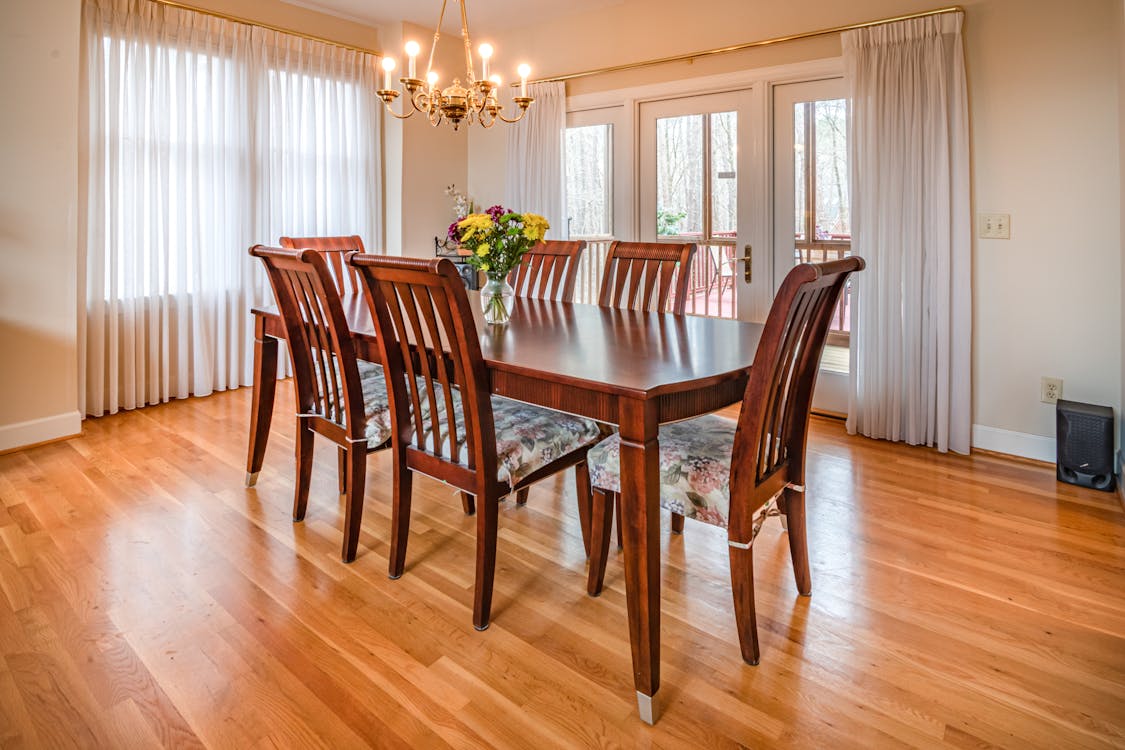
Photo by Curtis Adams via Pexels
7. Chairs that love a walnut table
Walnut's dark tone is a team player: white or cream chairs brighten it, black chairs make it moody, and cognac leather warms it up. Upholstered seats also soften the clatter in rooms with hard floors.
Match the chair seat height (17 to 19 inches) to your 30-inch table so knees clear the apron by 10 to 12 inches. Our captain dining chairs post shows how armchairs work at the table ends.

Photo by Curtis Adams via Pexels
8. Finishes: matte, oiled, or lacquered?
The finish decides how your table lives. Hardwax oil looks natural and lets you spot-repair scratches with a dab of fresh oil about once a year; lacquer gives more sheen and better stain protection for busy families.
Skip silicone-based polishes, which build up and cloud the finish. And give walnut a break from harsh sun — UV light shifts its color over time, so rotate centerpieces every few months for even aging.

Photo by Alexkrugla via Pexels
9. Everyday care in five minutes
Daily care is boring on purpose: dust with a soft dry cloth, wipe spills right away with a slightly damp cloth, then dry the spot. For a deeper clean, a drop of mild dish soap in warm water and a microfiber towel is all you need — never bleach, ammonia, or abrasive scrubbers.
Use coasters under drinks, trivets under hot dishes, and felt pads under heavy centerpieces. Keep indoor humidity between 35 and 55 percent so the wood does not shrink and crack in dry winters.

Photo via Wikimedia Commons
10. Buying smart: solid walnut vs. veneer
Solid walnut costs more — often $1,500 and up — but it can be sanded and refinished for decades, making it a genuine heirloom. High-quality walnut veneer over a stable core is a smart budget pick: it stays flat, looks nearly identical, and suits large tables.
Check the details before you buy: sturdy joinery, a finish sample you can see in daylight, and a return policy that lets you inspect the real grain. If you need extra seats for guests, our dining table with leaf guide covers extension styles.

Photo via Wikimedia Commons
FAQs
Is walnut a good wood for a dining table?
Yes. It is a medium-density hardwood that resists dents and scratches well, and its rich dark color suits modern and traditional rooms alike.
How do I clean a walnut dining table?
Wipe spills quickly with a soft, slightly damp cloth, then dry. Use mild soap and warm water for deeper cleaning, and skip harsh chemicals and abrasives.
Does walnut change color over time?
Yes — sunlight and air slowly shift its tone. A UV-inhibiting finish and rotating your centerpieces keep the aging even.
What size table seats six people?
A 72-inch-long rectangular table seats six comfortably at 24 inches per person. Leave at least 36 inches of clearance around it.
Should I buy solid walnut or walnut veneer?
Solid walnut lasts for generations and can be refinished; quality veneer over a stable core costs less and stays perfectly flat.
Final Thoughts
A walnut dining room table is one of the safest big buys in home decor: the color works with nearly every style, the wood stands up to real life, and it only gets better-looking as it settles into your home. Pick your size, choose a finish that matches your routine, and enjoy it daily.
Sources
- Wayfair's guide to the best dining table wood options
- Coohom's walnut table size and layout guide
- Tomruque's solid walnut dining table details
Gallery

Photo by Brett Sayles via Pexels

Photo by Talha Dursun Marko via Pexels

Photo via Wikimedia Commons

No comments:
Post a Comment