A good toilet roll dispenser is one of the smallest details in a bathroom, yet it is the one you reach for every single day, so it is worth choosing well. In Australian homes, where bathrooms range from tiny Sydney apartments to generous Queensland ensuites, the right holder keeps paper clean, dry and exactly where your hand expects it, instead of balanced on top of the cistern or rolling across the floor. This guide looks at ten practical styles, the heights that work best, and the finishes that suit humid bathrooms, so you can pick a design that looks intentional rather than an afterthought.
Before you buy, think about who uses the bathroom most, whether you rent or own, and how much wall and floor space you really have. A wall-mounted arm suits a compact powder room, a freestanding stand suits a renter who cannot drill into tiles, and a covered unit suits a busy family bathroom where spare rolls always seem to vanish. Prices in Australia typically run from about AUD 15 for a simple arm to AUD 120 or more for a solid brass or designer stand, and most styles are easy to find at hardware stores, bathroom retailers and online. Work through the ideas below, measure your space first, and choose the option that fits your routine, not just the prettiest photo.

Photo via Wikimedia Commons
Table of Contents
- 1. The Classic Chrome Wall Arm
- 2. The Freestanding Stand for Renters
- 3. The Covered Twin-Roll Unit for Busy Homes
- 4. The Centre-Feed Unit for Rentals and Guest Bathrooms
- 5. The Round Jumbo Unit for High-Traffic Bathrooms
- 6. The Warm Timber Wall Holder
- 7. The Bold Gold Statement Holder
- 8. The Clever Door-Mounted Holder for Tiny Rooms
- 9. The Wall-Peg Spare Roll Display
- 10. The Simple White Minimalist Holder
- Frequently Asked Questions
- Final Thoughts
- Sources
- Gallery
1. The Classic Chrome Wall Arm

Photo via Wikimedia Commons
The classic chrome wall arm is popular for a very good reason: it is simple, strong, easy to clean and it suits almost every bathroom style, from a 1970s brick home in Adelaide to a brand-new apartment in Melbourne. A single curved arm holds one roll, the paper tears cleanly with one hand, and the open design means you can see at a glance when the roll is running low. Chrome also matches most tapware, so you do not need to hunt for a matching finish, and a good stainless steel or solid brass arm will resist rust far better than a cheap coated version in a steamy bathroom. Look for a model with a solid wall plate and proper wall plugs, because a wobbly arm is annoying every day and will eventually damage the tile or plaster.
Placement matters just as much as the arm itself. The widely recommended starting point is about 66 cm from the floor to the centre of the holder, and roughly 20 to 30 cm forward from the front edge of the toilet seat, on the wall beside you rather than directly behind you. Sit on the toilet and mime the reach before you drill, and adjust for the people who use the room most: a little higher suits taller adults, while a slightly lower and closer position helps children and older family members. Hang the paper over the top rather than underneath, because it tears more easily and is simpler for guests to use. If you are planning a wider refresh, our half-bathroom design ideas show how one well-chosen fixture can lift a small room without a full renovation.
2. The Freestanding Stand for Renters

Photo via Wikimedia Commons
A freestanding stand is the best friend of renters, and it is also a smart choice for anyone who does not want to drill into expensive tiles. The stand simply sits on the floor beside the toilet, usually with a weighted base so it does not topple when you pull the paper, and many designs also hold two or three spare rolls underneath or include a small brush holder. That makes it a complete little station in one footprint, which is ideal for a guest bathroom or a secondary toilet where you do not want a tradesperson involved. Prices are usually modest, often between AUD 25 and AUD 80, and assembly is normally a matter of minutes with no tools beyond what comes in the box.
The trick with a stand is choosing a base that is heavy enough and a height that feels natural when you are seated. A stand that is too light will slide across smooth tiles, so look for rubber feet or a weighted disc base, and place it on the side you naturally reach with, close enough that you do not have to twist. Keep the top of the in-use roll at roughly seated hand height, and avoid tall, top-heavy designs in homes with toddlers or large dogs, who can knock them over in a moment. If floor space is very tight, a slim vertical stand beats a wide basket style, and a darker finish will hide scuffs far better than shiny chrome in a high-traffic family bathroom.
3. The Covered Twin-Roll Unit for Busy Homes

Photo via Wikimedia Commons
In a busy family home, the most common bathroom complaint is not style at all: it is the empty cardboard tube left behind when the last sheet runs out. A covered twin-roll unit solves that problem neatly by holding a second roll in reserve, so the next person is never caught out. The front panel also keeps the paper clean and dry, which matters in a bathroom where the shower sends steam and splashes across the room, and it gives the wall a tidy, hotel-like look instead of a bare roll on show. Many covered units are lockable or have a simple latch, which stops curious toddlers from unrolling the whole thing for fun.
Before you choose this style, check the size of the rolls you buy in Australia, because some covered units are made for standard rolls and will jam with extra-long or jumbo supermarket rolls. Measure the width of your usual roll, usually around 10 to 11 cm, and compare it with the unit's internal width before ordering. Also think about refilling: a unit that needs a key or a fiddly catch will annoy you every week, so pick one with a simple hinge or slide mechanism if the bathroom is only used by family. A covered unit works best on a flat stretch of wall beside the toilet, at the same comfortable height as a normal arm, and it is one of the most practical upgrades you can make for under AUD 60.
4. The Centre-Feed Unit for Rentals and Guest Bathrooms

Photo via Wikimedia Commons
A centre-feed unit pulls paper from the middle of the roll rather than unrolling it from the outside, which means one sheet at a time, less waste and no roll spinning wildly off the holder. You will see this style in offices, cafes and airports, but it also makes sense in a holiday rental, an Airbnb or a guest bathroom, where you want the paper to last longer between refills and you do not want guests wrestling with a half-empty roll. The enclosed case keeps the roll hygienic and protected from splashes, and a single large roll can last far longer than several standard rolls, which is a real advantage when the property is not checked every day.
The trade-off is feel: centre-feed paper is usually thinner, single-ply style paper, and the tear-off experience is not as soft or generous as a plush home roll. That makes it a practical rather than luxurious choice, best suited to a second bathroom, a studio apartment or a rental where durability and low maintenance matter more than comfort. When you install one, mount it at a height where the sheet hangs freely without touching the floor, and check that the case suits the roll size you can actually buy locally, because commercial centre-feed rolls are not the same as supermarket rolls. If your guest bathroom also needs a style lift, keep the case in white or brushed steel so it blends in rather than looking like a public washroom.
5. The Round Jumbo Unit for High-Traffic Bathrooms

Photo via Wikimedia Commons
A round jumbo unit is the heavy-duty cousin of the normal holder, built around one very large roll that can hold the equivalent of many standard rolls. It is the style you will find in shopping centres, schools and busy workplaces, and it earns its place in a large household, a shared house or a home with a steady stream of visitors, because refills become a weekly job instead of a daily one. The smooth, rounded case is easy to wipe clean, there are no arms or springs to bend, and the paper is protected from dust and moisture. For a family of five or six, that reliability is worth more than a decorative finish.
Size is the main thing to get right with a jumbo unit, because the case is roughly 27 to 28 cm across, which is much larger than a normal holder and can dominate a small wall. Give it a clear stretch of wall with room to open the case for refills, and do not squeeze it into a corner where the lid cannot swing or lift properly. Also confirm your paper supply before you commit: jumbo rolls are sold by commercial suppliers and some office suppliers in Australia, not always at the local supermarket, so factor in delivery or a bulk order. Used in the right room, though, a jumbo unit is wonderfully low fuss, and it frees you from the nightly check of whether anyone remembered to replace the roll.
6. The Warm Timber Wall Holder

Photo via Wikimedia Commons
Timber brings instant warmth to a bathroom that might otherwise feel cold and clinical, and a timber wall holder is a lovely match for coastal, farmhouse and Hamptons-style homes across Australia. A simple back plate in oak, walnut or bamboo, paired with a wooden dowel or a brushed metal arm, softens white tiles and chrome tapware, and it looks right at home beside timber vanities, woven baskets and linen towels. Timber also suits older character homes where a shiny modern holder would look out of place, and a handmade or vintage-style piece can become a small talking point in a guest powder room.
The practical point is moisture: a bathroom is humid, so raw timber will swell, stain or grow mould if it is left unsealed. Choose a holder that is sealed with a waterproof finish, or seal it yourself with a clear bathroom-grade varnish, and keep it away from direct shower spray. Bamboo is a good option because it handles humidity well and is light, while a darker stained timber hides water marks better than pale pine. Wipe it dry after steamy showers, check the finish once a year, and you will get a holder that looks softer and more inviting than metal, without the maintenance headache that unsealed wood can bring.
7. The Bold Gold Statement Holder

Photo via Wikimedia Commons
Not every holder has to blend in, and a bold gold or brass design can turn a plain powder room into a room guests actually remember. A decorative holder, whether it is an ornate lion head, a sculptural arm or simply a brushed gold finish, works best when the rest of the room is kept calm: white walls, a simple mirror and one or two matching gold touches, such as a towel ring or tapware, so the holder reads as deliberate rather than random. In a small powder room, one strong piece is often all the decoration the room needs, and it costs far less than retiling or replacing a vanity.
The key is balance and quality. A thin, gold-painted plastic holder will chip and look cheap within months, especially in a humid room, so spend a little more on solid brass or a well-finished metal in brushed gold, which is more forgiving of water spots than shiny polished gold. Keep the design comfortable to use, too: an ornate arm should still let you change the roll easily and tear the paper with one hand, otherwise the novelty wears off fast. If gold feels too bold for your main bathroom, try it in the guest toilet first, where a little drama is welcome and the room is used less often, so the finish stays looking new for longer.
8. The Clever Door-Mounted Holder for Tiny Rooms

Photo via Wikimedia Commons
Some bathrooms simply have no good side wall: the toilet sits in a narrow nook, the vanity takes one side and the shower screen takes the other, and the only flat surface left is the back of the door. A door-mounted holder is a clever answer to that puzzle, and it works surprisingly well as long as the door does not swing into the toilet or block the reach. Mounted at the usual height of about 66 cm, it puts the paper right beside you when the door is closed, and it keeps the walls free for a towel rail or a small shelf. It is also a handy fix in older homes where the walls are fragile, tiled in a heritage pattern, or made of a material you would rather not drill.
There are two things to watch with this idea. First, the holder must be fixed firmly, because a door gets opened and closed many times a day, and a loose screw will soon wobble or pull out, so use proper screws into solid timber rather than short screws into a hollow door skin. Second, check the swing: if the door opens inward, make sure the roll does not hit the toilet or the vanity, and that you can still reach it comfortably while seated. An adhesive or over-door hook version can work for renters, but a screwed mount is far more reliable for daily use. In a truly tiny room, this small rethink can be the difference between a bathroom that works and one that frustrates you every day.
9. The Wall-Peg Spare Roll Display

Photo via Wikimedia Commons
Spare rolls are the part of bathroom storage most people forget until the moment they need one, and wall pegs turn that problem into a feature. Instead of hiding spares in a cupboard down the hall, short pegs or dowels on the wall above or beside the toilet hold three or four rolls where they are visible, easy to grab and oddly decorative, like a simple piece of wall art made from everyday objects. This idea suits a modern or playful bathroom, it costs very little to make with timber dowels and wall plugs, and it is a great weekend project if you enjoy simple DIY. Keep the pegs out of the splash zone and above seated head height if they sit over the cistern, so no one bumps into them.
There is a practical side to this display, too: because the spares are in plain sight, you will notice when you are down to the last roll and can add them to the shopping list before you run out completely. That alone makes it worth doing in a household where the shopping is done by different people each week. For a neater look, keep all the rolls the same brand and colour, and space the pegs evenly, about 15 to 20 cm apart, so each roll can be lifted off without disturbing the others. If open pegs feel too exposed for your taste, the same idea works inside a shallow wall cabinet or on the inside of a tall cupboard door, where the rolls stay clean but still within arm's reach. For more storage inspiration, our guide to bathroom drawer organization has simple ways to keep small bathroom items tidy.
10. The Simple White Minimalist Holder
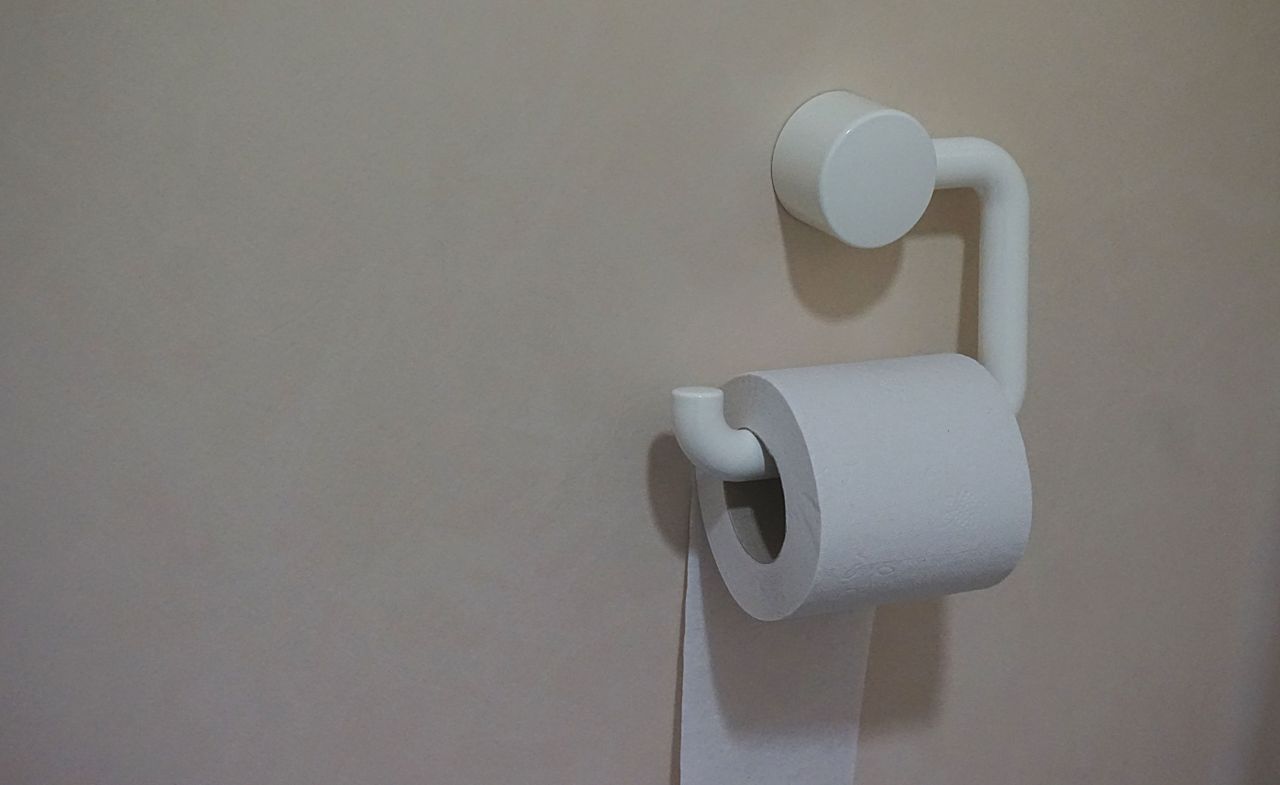
Photo via Pexels
A simple white holder is the quiet achiever of bathroom design: it disappears against white or pale tiles, it does not fight with coloured towels or patterned floors, and it lets the rest of the room do the talking. This style suits minimalist, Scandinavian and all-white Australian bathrooms, where the goal is a calm, uncluttered feeling rather than a feature piece. White coated metal or white ceramic holders are widely available and usually inexpensive, often between AUD 15 and AUD 40, and they are easy to replace if your style changes in a few years. Because the design is so plain, the quality of the finish matters: a smooth, even coating will stay looking fresh, while a rough coating will show marks quickly.
White does need a little more cleaning than chrome or black, because dust, water spots and makeup marks show up more easily on a pale surface, so a quick wipe once a week keeps it looking new. Pair a white holder with white tapware or a white towel rail for a seamless look, or use it as a neutral anchor in a colourful bathroom where everything else is already busy. It is also a safe choice for a rental property or a home you plan to sell, because it offends no one and suits every buyer's taste. Sometimes the best design decision is the one you barely notice, and a simple white holder is exactly that: reliable, affordable and always in style.
Frequently Asked Questions
How high should a wall holder be mounted?
A good starting point is about 66 cm from the floor to the centre of the holder, and roughly 20 to 30 cm forward from the front edge of the toilet seat. Always sit on your own toilet and test the reach before drilling, and adjust a little higher for tall adults or a little lower and closer for children, older family members or anyone with limited mobility.
Should the paper hang over or under the roll?
Over is the easier choice for most people: the sheet hangs down the front, it is simple to grab with one hand, and it tears cleanly along the perforation. Under can help in homes with pets or small children who love unrolling paper, but it is slightly harder to tear, so over is the better default for a guest bathroom.
What finish lasts best in a humid bathroom?
Stainless steel and solid brass last longest in steam, followed by good-quality chrome, while cheap coated metals and unsealed timber are the first to rust, chip or stain. Whatever finish you choose, wipe it dry after very steamy showers and run the exhaust fan, because constant moisture is harder on fixtures than the occasional splash.
Can renters install a holder without drilling?
Yes. A freestanding stand needs no drilling at all, and strong adhesive holders can work on smooth, clean tiles, although they may fail on textured tiles or in very steamy rooms. A freestanding stand is the safest renter option, because it can move with you and leaves no holes to repair at the end of the lease.
How do I stop the roll running out at the worst moment?
Keep at least two spare rolls visible near the toilet, whether on a twin-roll unit, wall pegs or a small basket, so the shortage is obvious before it becomes urgent. A covered twin-roll unit is the most reliable fix, because the reserve roll is already in place, and a simple habit of replacing the roll when you finish one keeps the system working.
Final Thoughts
Choosing a holder is a small decision, but it is one you live with every day, so it deserves the same care as choosing a mirror or a towel rail. Start with your room: measure the wall space, test the reach while seated, and be honest about whether you rent, share the bathroom with children, or host guests often. Then pick the style that answers those facts, whether that is a classic chrome arm, a no-drill stand, a covered twin unit or a warm timber design. Match the finish to your tapware, keep spare rolls where you can see them, and hang the paper over the top for the easiest tear.
If you are giving the whole room a refresh, finish the job properly: a fresh coat of moisture-resistant paint and tidy storage will make even a simple holder look considered, and our tips for painting a bathroom cover the paints and preparation that hold up in humid rooms. With the right holder in the right spot, your bathroom will feel calmer, tidier and easier to use, and that is a small upgrade with a daily payoff for everyone in the house.
Sources
- House of Isabella: Toilet Paper Holder (Australia)
- Australian Linen Supply: Choosing the Right Commercial Toilet Paper
- The Cleaning Station: Toilet Paper Holder Guide, Height and Placement
- Dengarden: How to Install a Toilet Paper Holder in a Bathroom
- Smart Fix Hardware: What Height Should a Toilet Roll Holder Be
Gallery
Photo via Pexels
Photo via Pexels

Photo via Wikimedia Commons

No comments:
Post a Comment