If your dining corner is barely bigger than a rug, a regular four-leg table can make it feel even tighter. Chairs bump into corner legs, knees run out of room, and one extra guest turns dinner into a puzzle. That is why so many people in apartments, studios, and small houses look for a different kind of base. A small pedestal dining table stands on one strong center column instead of four legs at the corners, so the floor under the table stays open and chairs can slide in from any side.
This guide keeps things simple. You will learn what this style is, why it works so well in a tight room, how round and square tops compare, what size fits two, three, or four people, which base styles hold up best, and which chairs pair well without crowding the room. You will also get honest answers about wobble, weight, and buying mistakes, plus ten practical ideas you can use in a real home, not just in a showroom photo.
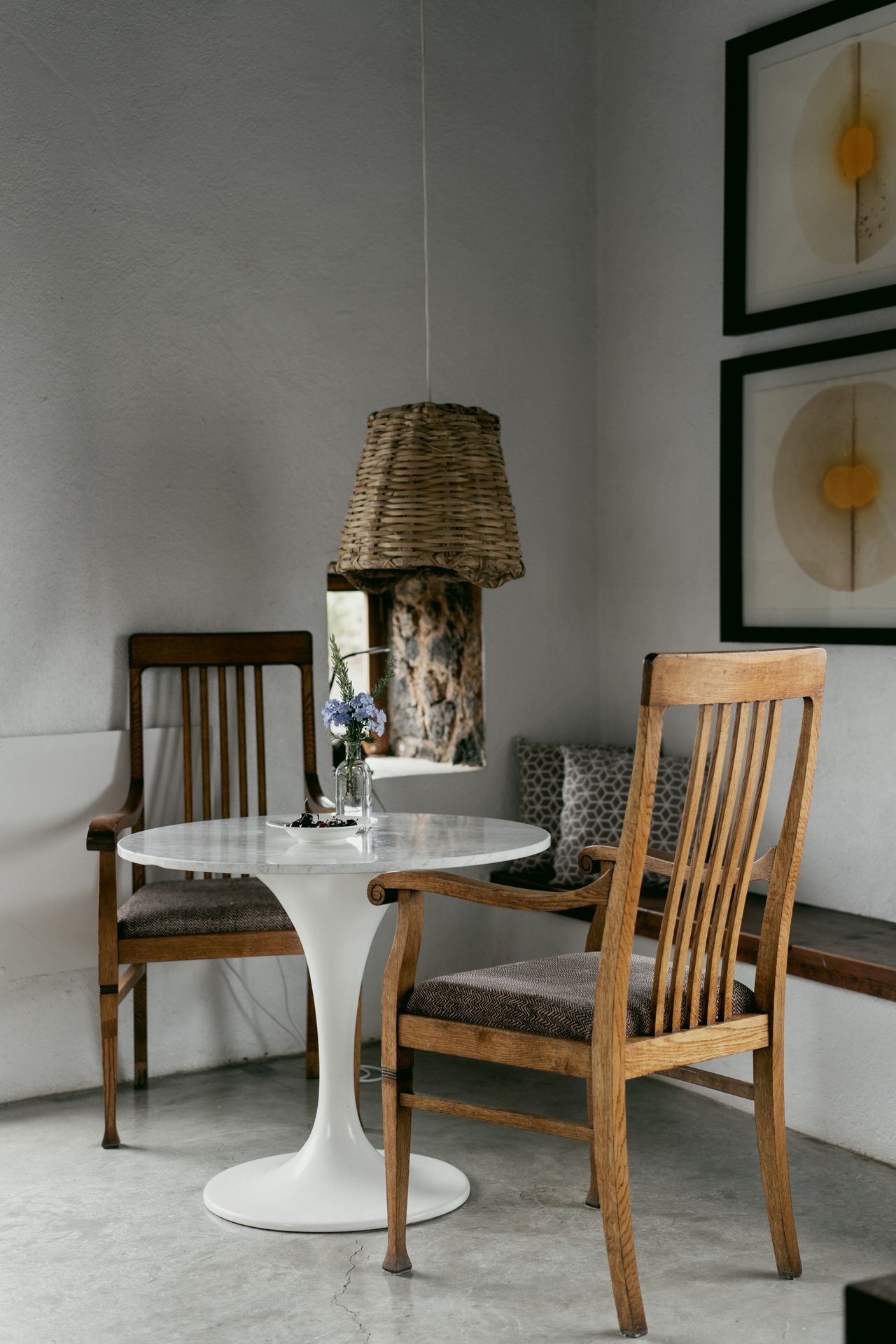
Photo via Pexels: a round white tulip-style center-column table with two wooden chairs in a bright corner nook.
Table of Contents
- 1. Start With the Classic Round Top for Two to Four
- 2. Put the Round Table in the Kitchen, Not Just the Dining Room
- 3. Build a Breakfast Nook Around a Compact Round Top
- 4. Dress Up a Wood Round Top With Patterned Chairs
- 5. Try a Square Top When Your Room Is a True Square
- 6. Use a Square Top Outdoors for a Small Patio
- 7. Choose Glass When the Room Needs to Feel Lighter
- 8. Pick a White Rectangular Top for a Narrow Wall
- 9. Let Warm Wood Do the Work in a Rustic Room
- 10. Pair a Dark Round Top With Soft Upholstered Chairs
- Frequently Asked Questions
- Final Thoughts
- Sources
- Gallery
Before you shop, it helps to know what you are really buying. A pedestal base is one center column with a foot at the bottom. That foot may be a round disc, a flat square plate, or four short feet that spread out from the column. Good designs keep the weight low and the foot wide enough for the top. As a rough rule, look for a base that is about one-third as wide as the top. A 36-inch top, for example, feels much steadier on a base around 12 inches wide than on a narrow 8-inch foot. Cast iron, heavy steel, and solid wood bases usually feel more stable than a light hollow column.
Height matters just as much as width. Most dining tables are 28 to 30 inches tall, and most dining chairs have seats 17 to 19 inches high. That leaves about 10 to 12 inches of knee room, which is comfortable for most adults. If you already own chairs, measure them before you order a table. A beautiful top at the wrong height will annoy you every single day, while a plain top at the right height will feel perfect. Also leave walking room. Aim for about 36 inches from the table edge to the wall or to other furniture when you can. In a very tight room, 30 inches can work, but less than that makes pulling out a chair a daily struggle.
1. Start With the Classic Round Top for Two to Four
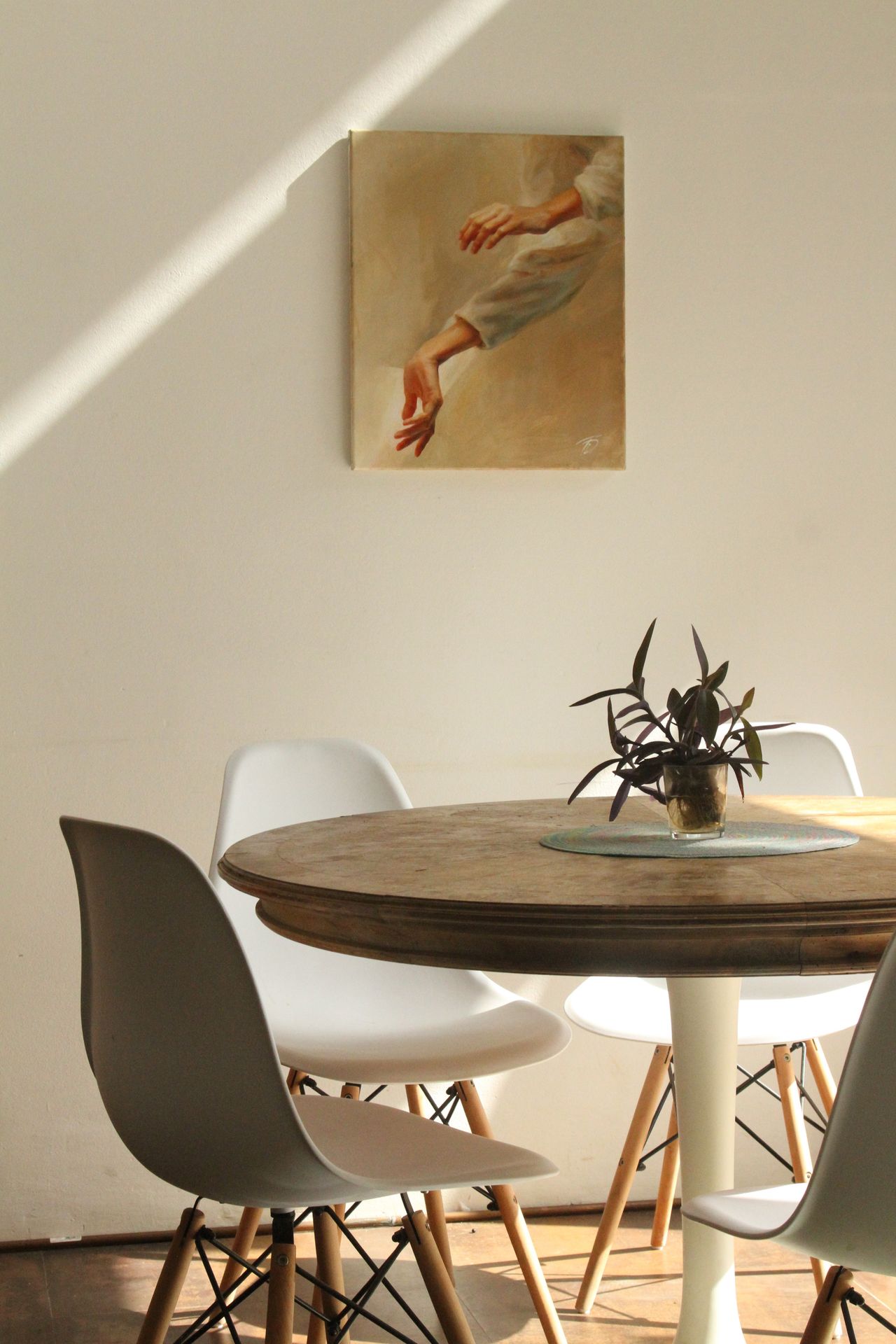
Photo via Pexels: a round wooden top on a white center pedestal with four molded chairs.
A round top is the safest first choice for a small room, and this photo shows why. There are no corners to bump into, everyone can see each other, and the white center column leaves the floor open so chairs slide in close. A top around 30 to 32 inches across seats two people with real elbow room and can squeeze in a third for a casual meal. A top around 36 to 40 inches across is the sweet spot for most couples and small families, because it seats four without taking over the room.
When you measure, think in terms of elbow room, not just diameter. Plan about 24 inches of table edge per person. That is why a 36-inch round top feels fine for four people eating simple meals, but tight for four people with big serving dishes, laptops, and homework spread out. If your family eats with lots of bowls in the middle, go up one size if your room allows it, or keep the centerpiece small. One low plant or a single candle leaves room for food, while a tall flower arrangement blocks faces and steals space.
2. Put the Round Table in the Kitchen, Not Just the Dining Room
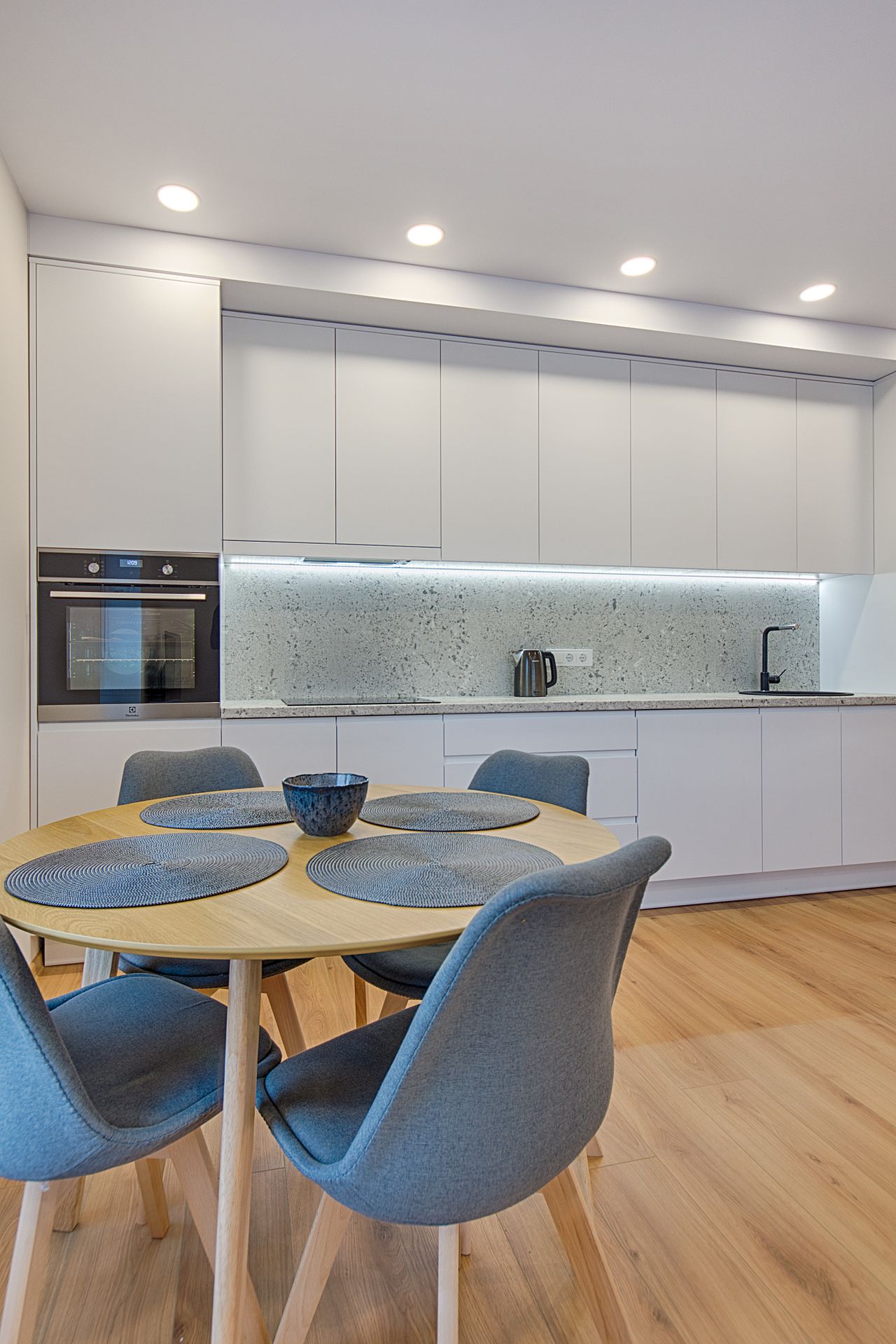
Photo via Pexels: a round wooden table with four gray chairs in a kitchen; the center support is partly hidden by the chairs.
Many small homes do not have a separate dining room at all, and that is fine. A compact round table in a kitchen corner can be the main eating spot, the homework spot, and the coffee spot all in one day. The key is to keep the path to the stove and sink clear. Place the table so at least one side faces open floor, not a wall, so the person on that side can stand up without asking everyone else to move. Light colors help here too. A pale wood top and gray or white chairs keep a small kitchen from feeling heavy.
Think about daily life, not just dinner parties. If you eat breakfast there every morning, choose a top that wipes clean in seconds. Sealed wood, laminate, and stone-look tops handle coffee rings and toast crumbs better than raw, unfinished wood. If the table also serves as a work spot, a round top has one drawback: there is no straight edge to line a laptop up against. That is a small trade-off for most people, but if you work at the table for hours, a square or rectangular top may suit you better. For more ideas on making a tight eating space work, see these tiny dining room ideas that maximize space.
3. Build a Breakfast Nook Around a Compact Round Top
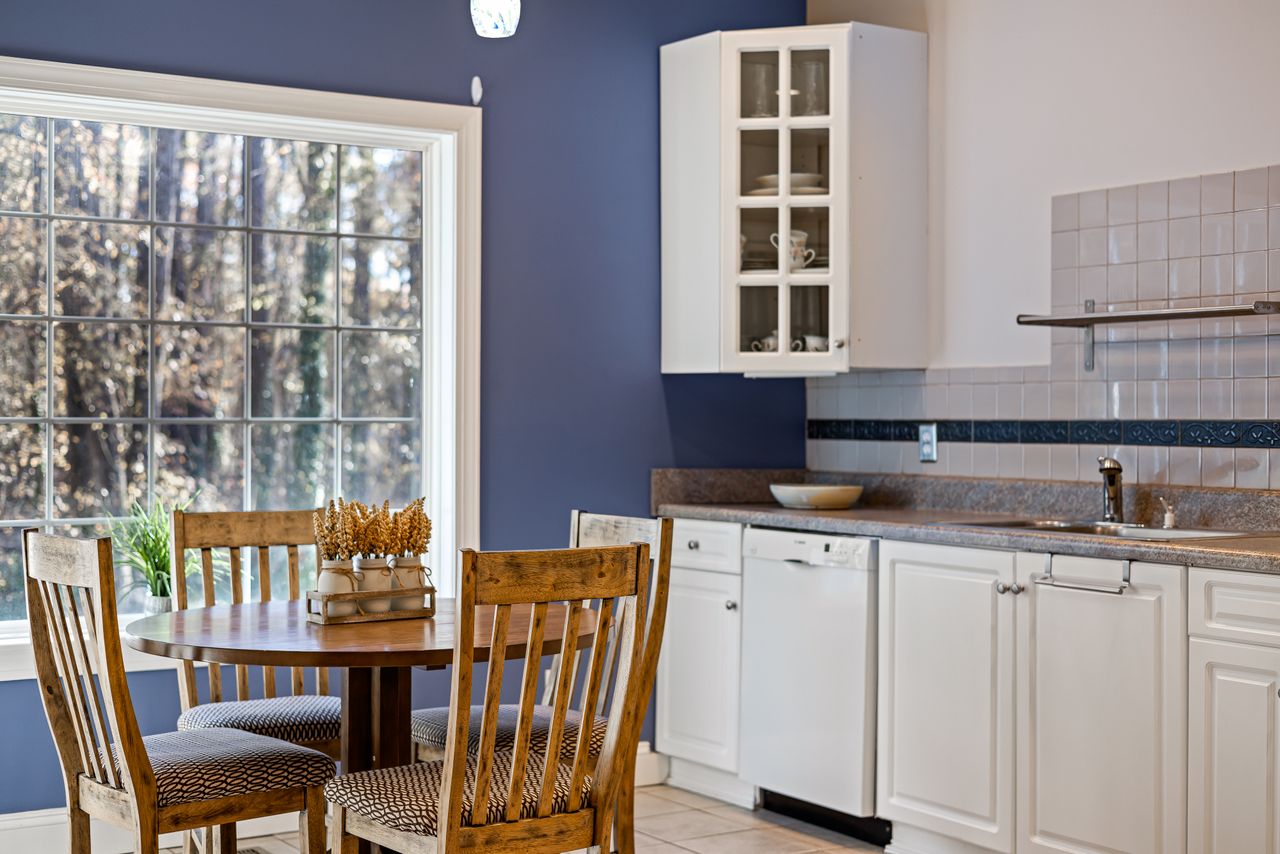
Photo via Pexels: a compact round wooden table with wooden chairs tucked into a kitchen nook by a large window.
A breakfast nook is simply a small, defined eating corner, and a round center-column table fits it almost perfectly. The round shape softens a square corner, and the single base means you can push the table a little closer to the window without a leg hitting the wall trim. Add a pendant light or a small lamp above the table, and the corner instantly reads as a dining spot instead of leftover space. Keep the chairs slim and armless so they tuck in fully when the table is not in use.
If one side of your nook is against a wall, consider a bench on that side. A bench needs no pull-out room, so it saves about 18 to 24 inches of floor space compared with chairs. It also seats kids closer together without a fuss. Just measure carefully: leave about 12 inches between the table edge and the bench edge so people can slide in without climbing over the bench. A cushion on the bench makes it far more inviting, and a bench with storage inside can hold placemats, napkins, and board games.
4. Dress Up a Wood Round Top With Patterned Chairs
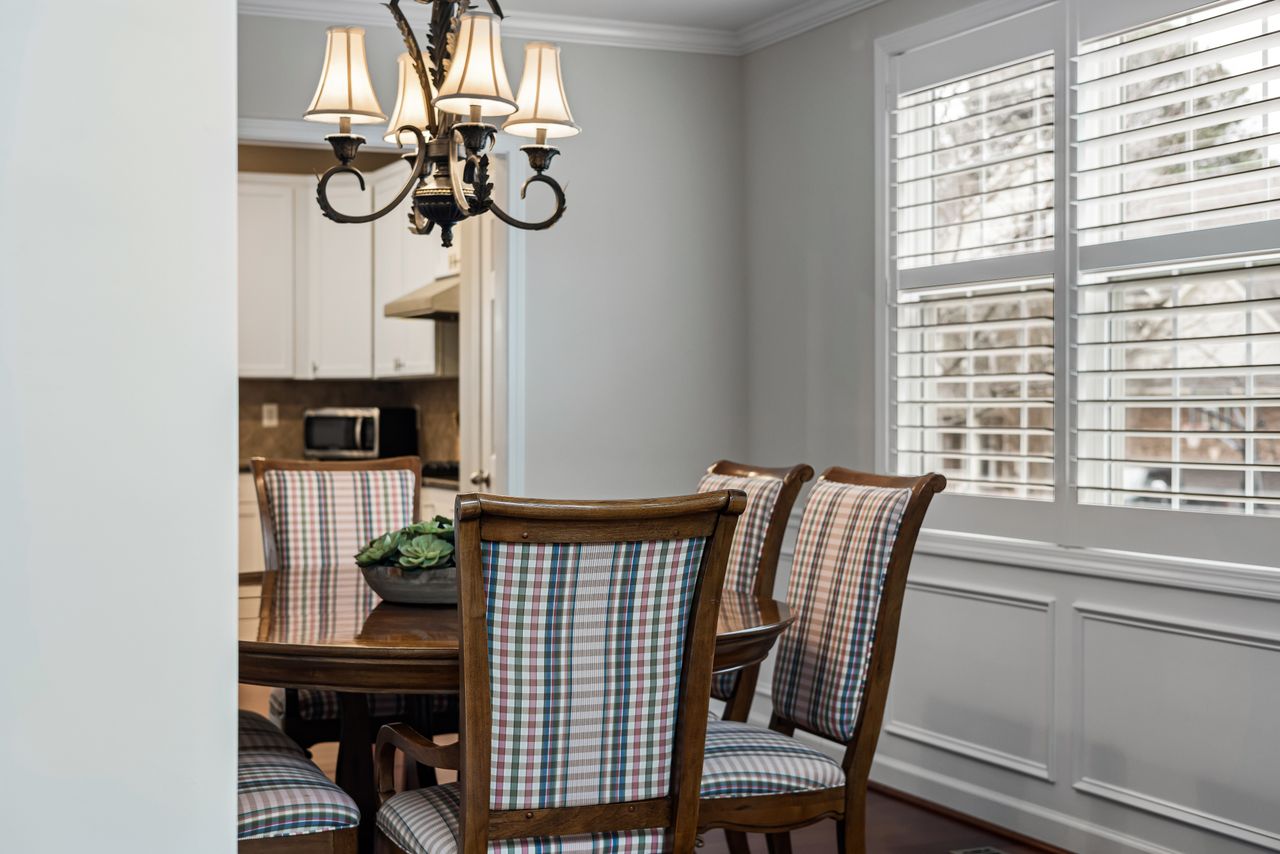
Photo via Pexels: a round wooden table with plaid chairs under a chandelier; the table base is partly hidden by the chairs.
A plain wood top does not have to mean a plain room. Patterned chairs, like the plaid ones in this photo, add color and personality without taking any extra floor space. This is a smart trick for renters, because chairs are easy to change later while the table stays the same. Pick one strong pattern and keep everything else calm: plain walls, a simple centerpiece, and a rug in one quiet color. Too many patterns at once will make a small room feel busy instead of charming.
Upholstered chairs also change how long people want to stay at the table. A padded seat invites a longer dinner and a second cup of coffee, while a hard wood chair encourages shorter meals. That sounds like a small detail, but it shapes how your home feels. If your table is mainly for quick weekday breakfasts, slim hard chairs are practical and easy to clean. If it is where your family gathers on weekends, a little padding is worth the extra care. Just check the chair width: slim chairs around 17 to 19 inches wide fit a small round top far better than wide 22-inch armchairs.
5. Try a Square Top When Your Room Is a True Square

Photo via Pexels: square tables on center pedestal bases in a restaurant setting, shown as a shape example rather than a home dining room.
Round is not always the answer. If your dining spot is a neat square, a square top can use the space more neatly, because its straight edges line up with the walls. A square top around 30 to 32 inches across seats two people well, and a 36-inch square seats four, one on each side. The straight edges also make it easier to place the table against a wall for daily use and pull it out when guests arrive. That flexibility is gold in a studio or a small apartment.
Watch the corners, though. Square corners are the part most likely to catch a hip in a narrow walkway. If the table sits in a path people walk through every day, a round top is kinder. If the table sits in its own corner and the walkway goes around only one side, a square top works beautifully. A center base helps either way, because no one has to straddle a corner leg. Look for a square base plate that matches the top shape, since a round disc under a square top can look a little off-balance even when it is perfectly stable.
6. Use a Square Top Outdoors for a Small Patio
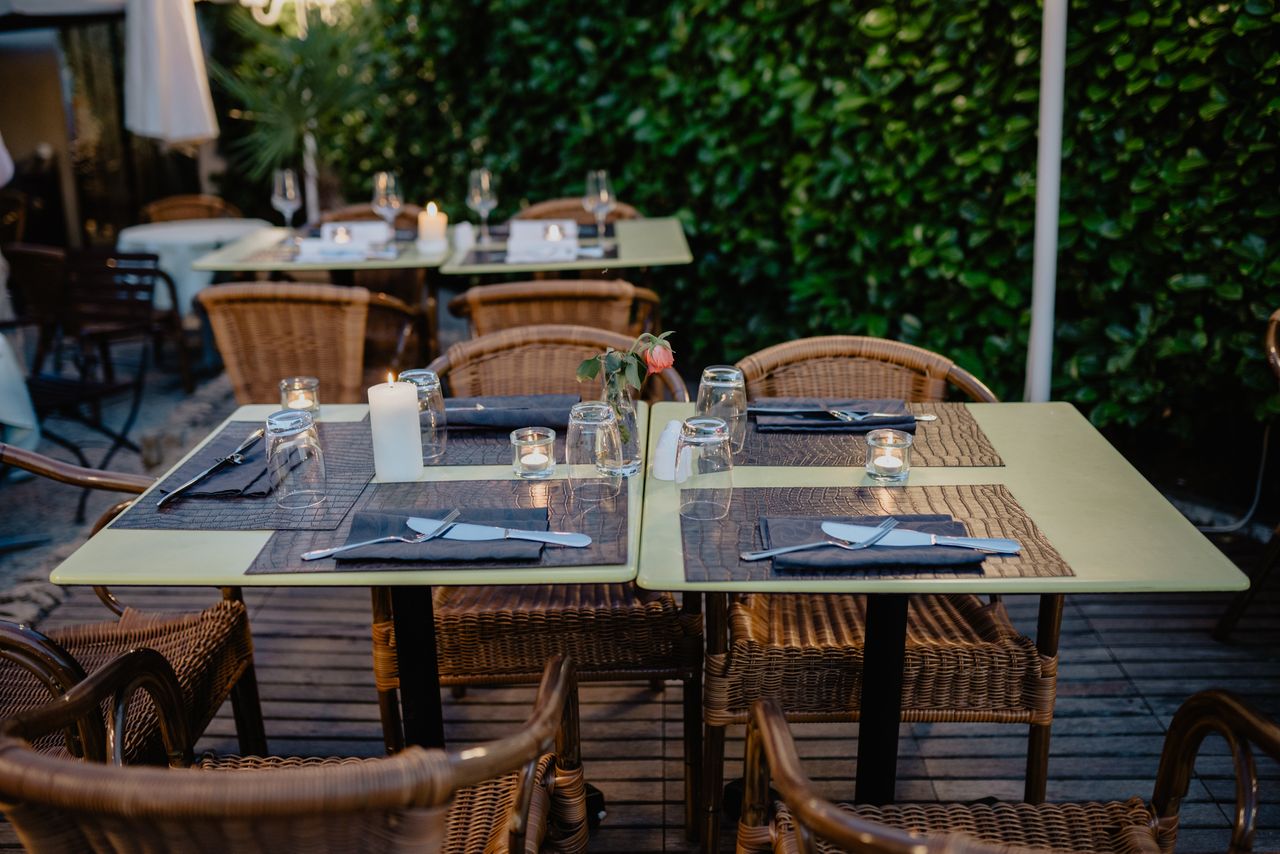
Photo via Pexels: square tables on center supports with wicker chairs on an outdoor patio, shown as a small-space shape example.
The same shape logic works outside. On a small patio or balcony, a square center-column table lets you push chairs in tight on all four sides without legs getting in the way. It also pairs neatly with a bench or a wall, which matters when outdoor space is narrow. Choose materials made for weather: powder-coated metal, sealed teak, or a stone-look top that will not swell in rain. Indoor wood tops, no matter how pretty, will not last long outside.
Weight matters even more outdoors, because wind can tip a light table. A heavier base, a lower center of gravity, and adjustable leveling feet all help on uneven patio stones. If your patio is very small, think about how the table will live when it is not in use. A folding or stackable chair set means you can clear the whole patio in a minute, while heavy chairs tend to stay out all season and slowly take over the space. Measure your balcony door too, so the table you order can actually get outside.
7. Choose Glass When the Room Needs to Feel Lighter
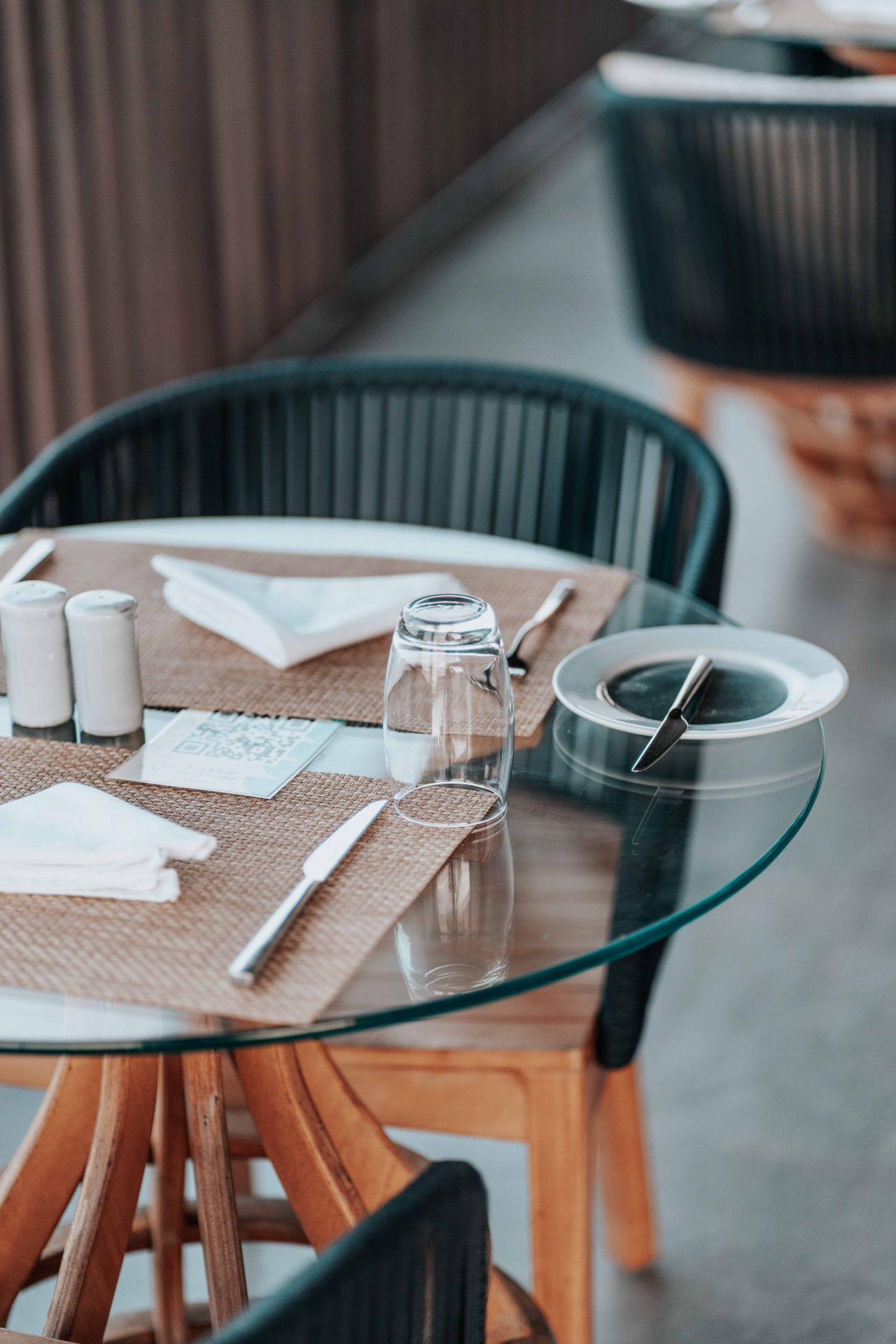
Photo via Pexels: a round glass-top table set for two in a restaurant setting; the glass top keeps the look light.
Glass tops are a classic small-room trick because you can see straight through them to the floor. That makes the table almost disappear, which helps a dark or crowded room feel open. A glass round top with a wood or metal center column suits modern, coastal, and simple traditional rooms alike. It also shows off a pretty rug underneath, which is a nice bonus when you have invested in one. Tempered glass is the only safe choice for a dining top, so check the listing for that word before you buy.
Glass is not for everyone, and it is better to know that now. It shows every fingerprint, water ring, and crumb, so it needs wiping far more often than wood. It can also feel cold to the touch in winter and noisy when plates and glasses are set down hard. Placemats solve most of both problems, and they protect the glass from scratches. If you have small kids who love to bang cups, a wood or stone-look top may be calmer for daily life, with glass saved for a quieter adult household or a second seating spot.
8. Pick a White Rectangular Top for a Narrow Wall
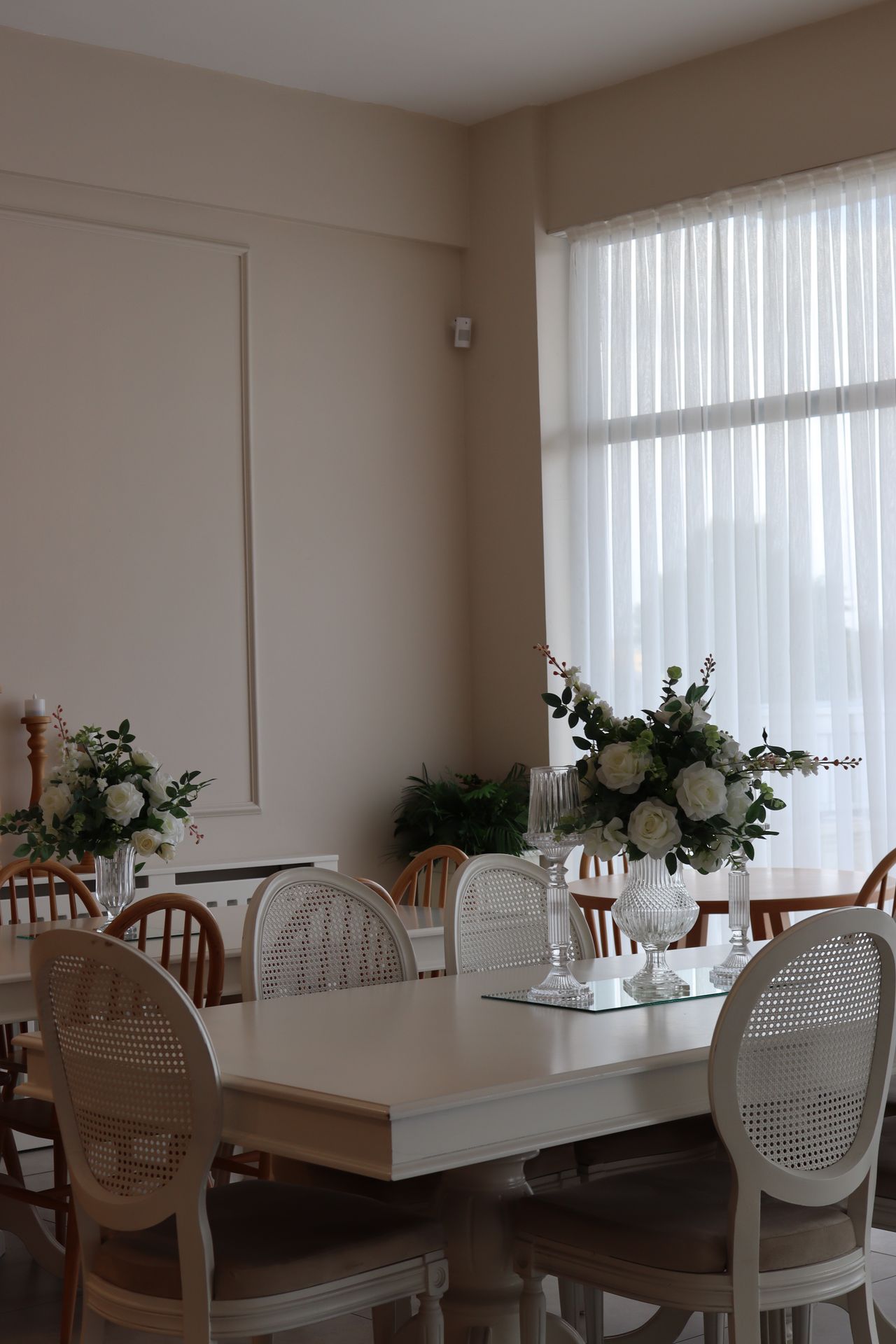
Photo via Pexels: a white rectangular table on a center pedestal with cane-back chairs; a larger table shown as a shape and finish example.
Not every small room is square. Long, narrow rooms often suit a rectangular top better, because it follows the shape of the room instead of fighting it. A compact rectangular top around 48 inches long and 30 inches wide seats four people, two on each long side, and leaves the ends free for serving dishes. A center pedestal, or a double pedestal on a longer top, keeps legroom open along the sides. This is the layout to choose when your dining spot is really a slice of a living room or a hallway-like nook.
White and other light finishes are worth considering here, because a long table in a narrow room can feel like a barrier. A white top reflects light and reads as lighter than the same table in dark walnut. Pair it with cane, rattan, or light wood chairs to keep the whole arrangement airy. For the rest of the room, light wall colors and one clear focal point, like a mirror or a single piece of art, help a narrow space feel designed rather than squeezed. These small dining room design ideas show how color and lighting can open up a tight room around a table like this.
9. Let Warm Wood Do the Work in a Rustic Room
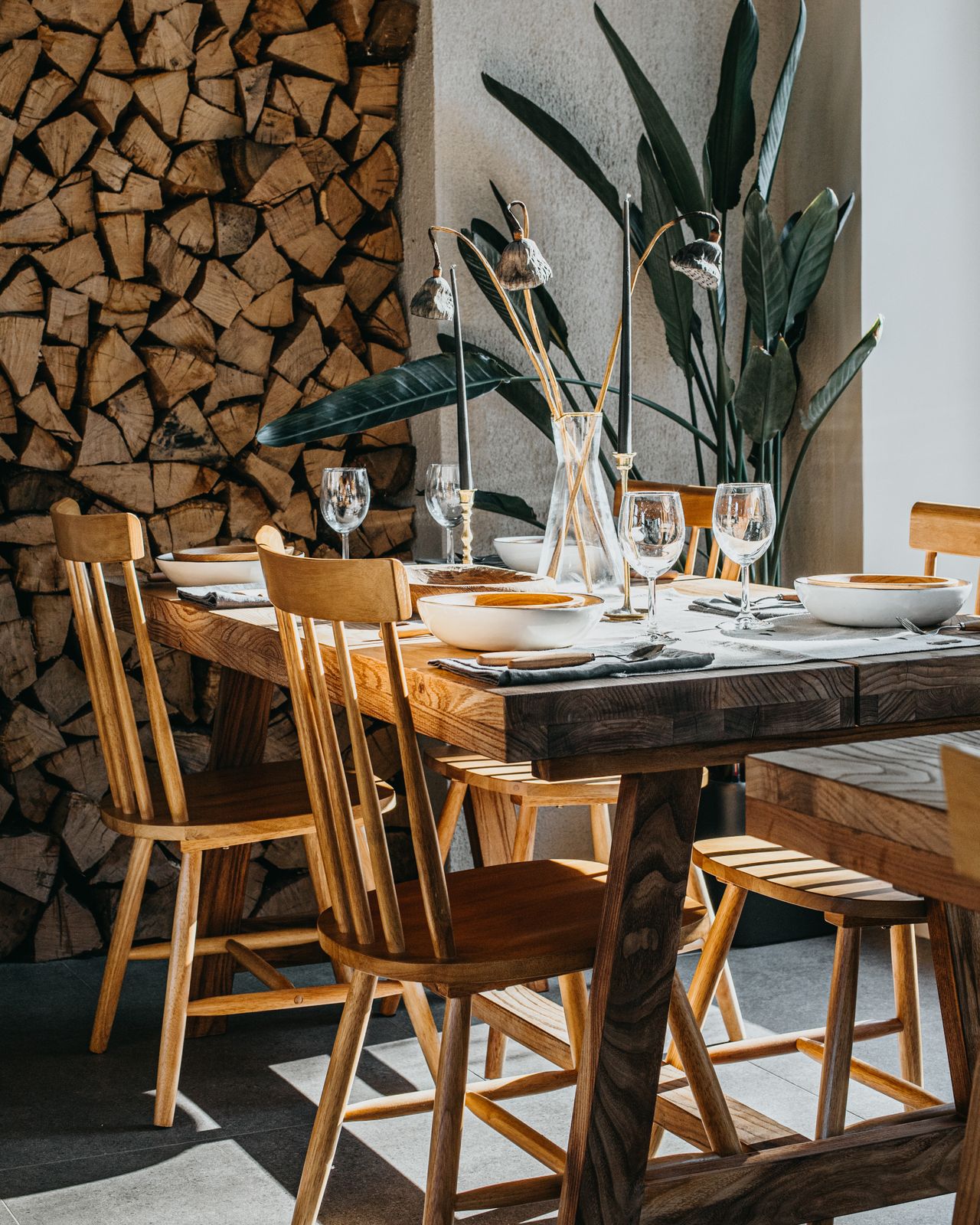
Photo via Pexels: a thick wooden table with wooden chairs; this table uses thick panel-style supports, not a single center pedestal, shown for its wood finish.
Solid wood brings warmth that no other material quite matches. Oak, walnut, and ash all age gracefully, and small scratches can often be sanded or oiled away instead of becoming permanent damage. That makes wood a forgiving choice for a table that gets used three times a day. A medium wood tone suits most American homes, because it pairs with both warm white walls and cooler gray ones. Very dark wood can look rich, but it also shows dust and makes a small room feel smaller, so save the darkest finishes for rooms with plenty of daylight.
When you shop for wood, ask whether the top is solid wood, veneer over a stable core, or a wood-look laminate. Solid wood is the most repairable and the heaviest, which actually helps stability on a center base. Good veneer over plywood or MDF is lighter and often more affordable, and it resists warping better in homes with big humidity swings. Thin laminate over particleboard is the cheapest option, but it chips more easily and cannot be refinished. For a table you plan to keep for years, solid wood or quality veneer is usually the better value, even if it costs $100 to $300 more up front.
10. Pair a Dark Round Top With Soft Upholstered Chairs
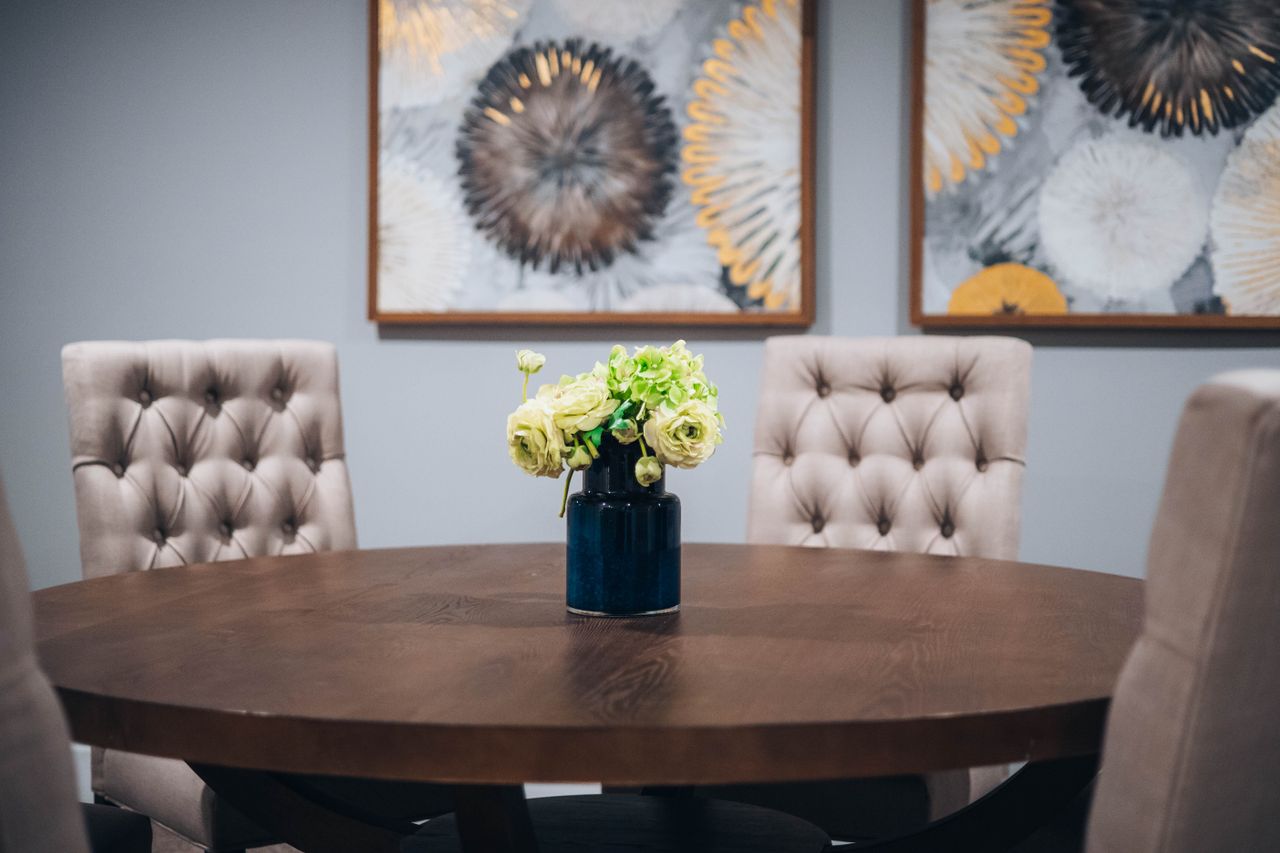
Photo via Pexels: a round dark wooden table with beige tufted chairs; the table base is mostly hidden below the top.
If your room already has dark floors or dark cabinets, a dark round top can tie the room together instead of fighting it. The trick is to balance it with light, soft chairs, like the beige tufted chairs in this photo. Light chairs stop the table from becoming a dark hole in the middle of the room, and padding makes long meals comfortable. This pairing works especially well in rooms with warm lighting, because the dark wood glows instead of looking flat.
Before you commit to upholstered chairs, be honest about cleaning. Light fabric shows spills, so look for performance fabric, removable covers, or a stain-resistant finish if kids or pets eat at the table. Faux leather wipes clean in seconds and suits a dark wood top well, though it can feel sticky in a hot room. Whatever you choose, buy one chair first if you can, and test it at your table height for a full meal. A chair that looks perfect in a store can feel too low, too deep, or too wide once it is home, and that is much easier to learn with one chair than with four.
Frequently Asked Questions
Is a pedestal table stable, or will it wobble?
A well-made one is stable. Look for a wide, heavy base, about one-third the width of the top, with adjustable leveling feet and tight mounting bolts. Cheap, narrow bases wobble more, especially on uneven floors. Always test a new table by pressing down on opposite edges before the return window closes.
How many people can sit at a 36-inch round table?
A 36-inch round top seats four people for everyday meals, and a 40-inch top seats four more comfortably with serving dishes in the middle. A 30-inch top is best for two people, with a third guest possible for a casual meal. Allow about 24 inches of table edge per person for real comfort.
Is this style good for a small apartment?
Yes, it is one of the best choices for a small apartment, because there are no corner legs to bump into and chairs can slide in from any side. A round top around 36 inches across, slim armless chairs, and about 30 to 36 inches of walking room around the table make a tiny corner feel usable instead of cramped.
What chairs work best with a center-column table?
Slim, armless chairs work best, because they slide fully under the top and do not fight the base. Look for seats 17 to 19 inches high, chairs 17 to 19 inches wide, and a seat depth that leaves your knees clear of the column. Upholstered chairs add comfort for long meals, while wood or molded chairs are easier to clean.
What should I check before buying one online?
Check the top size, the table height, the base width and weight, and whether the top is tempered glass, solid wood, veneer, or laminate. Measure your chairs, tape the footprint on your floor, and confirm the return policy. If the listing hides the base measurements, ask the seller before you order.
Final Thoughts
The right table for a small room is not the smallest table you can find. It is the one that fits your room, your chairs, and your daily life without a daily struggle. A round top around 36 inches across suits most small homes, a square top suits a neat square room, and a compact rectangular top suits a long, narrow space. In every case, a wide, heavy center base, the right height, and slim chairs matter more than a fancy finish. Measure first, tape the footprint on your floor, and choose a top you can clean without a second thought. Do that, and a small dining corner can become the warmest, most-used spot in your home.
Buying tips can save you from the most common regrets. First, tape the footprint on your floor before you order. Use painter's tape to mark the table size, then place your chairs around it and walk the room as you normally would. This five-minute test catches problems no photo can show. Second, check the base weight and the return policy together. A table that feels tippy in your home should be returnable without a huge restocking fee. Third, think about leaves and extensions only if you truly host often. An extension leaf adds cost, weight, and a seam in the middle, and many owners use it twice a year. A separate folding table for big gatherings is often cheaper and simpler.
Stability worries are the number one question people ask about this style, and the honest answer is that quality matters more than shape. A well-made center base with a wide, heavy foot, tight bolts, and adjustable leveling feet will feel rock solid for daily meals. A cheap, narrow base will wobble, especially if you lean hard on one edge or load one side with a heavy serving dish. Test a table by pressing down firmly on opposite edges before you keep it. If it rocks, check the floor first, then the leveling feet, then the bolts where the top meets the column. Most wobbles come from an uneven floor or a loose bolt, not from the idea of a center base itself. If you plan a built-in bench or storage wall beside the table, these dining room built-in ideas for storage and seating can help you plan the wall around the table instead of squeezing the table in afterward.
Sources
- Povison: Small Dining Table Ideas for Tight Rooms
- Homestyler: Essential Guide to Choosing a Small White Pedestal Table
- Cabinfield: Pedestal Tables, a Space-Saving Game-Changer
- Fellowship Furniture: Table Sizing Guide
Gallery
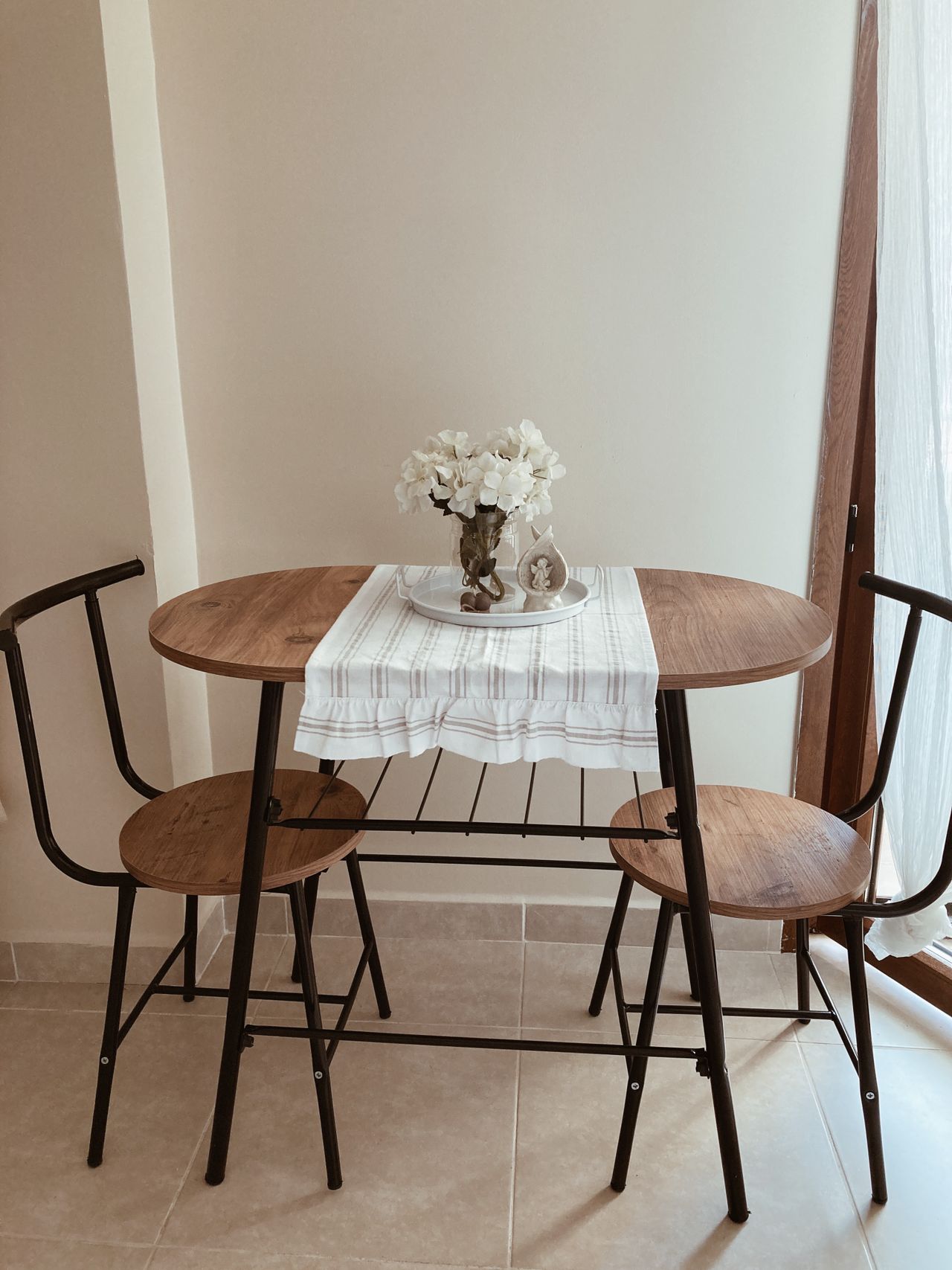
Photo via Pexels: a small table for two with black metal legs, not a center pedestal, shown as a compact two-person idea.
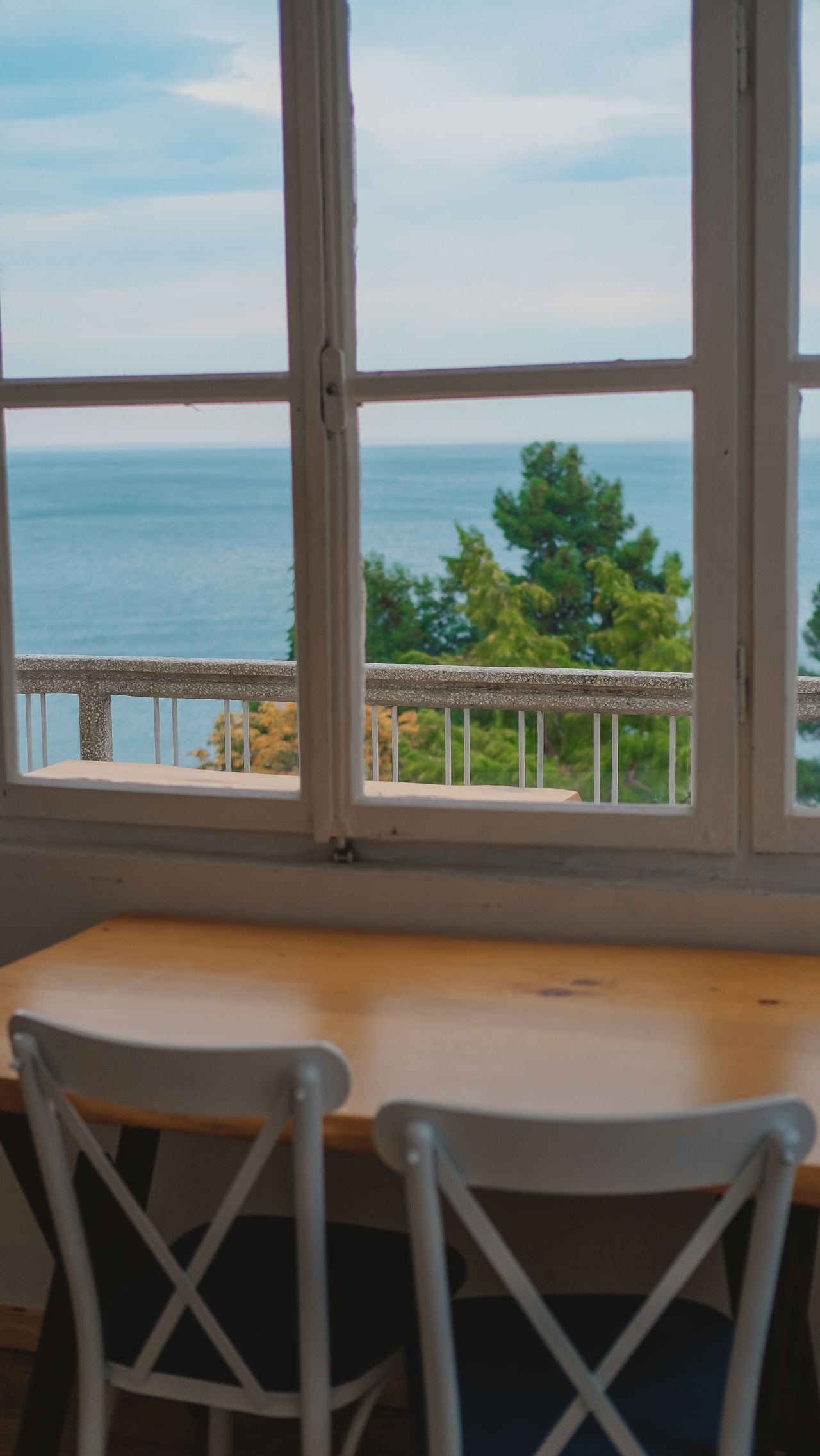
Photo via Pexels: a wooden table with white cross-back chairs by a bright window; the table base is not visible in this shot.
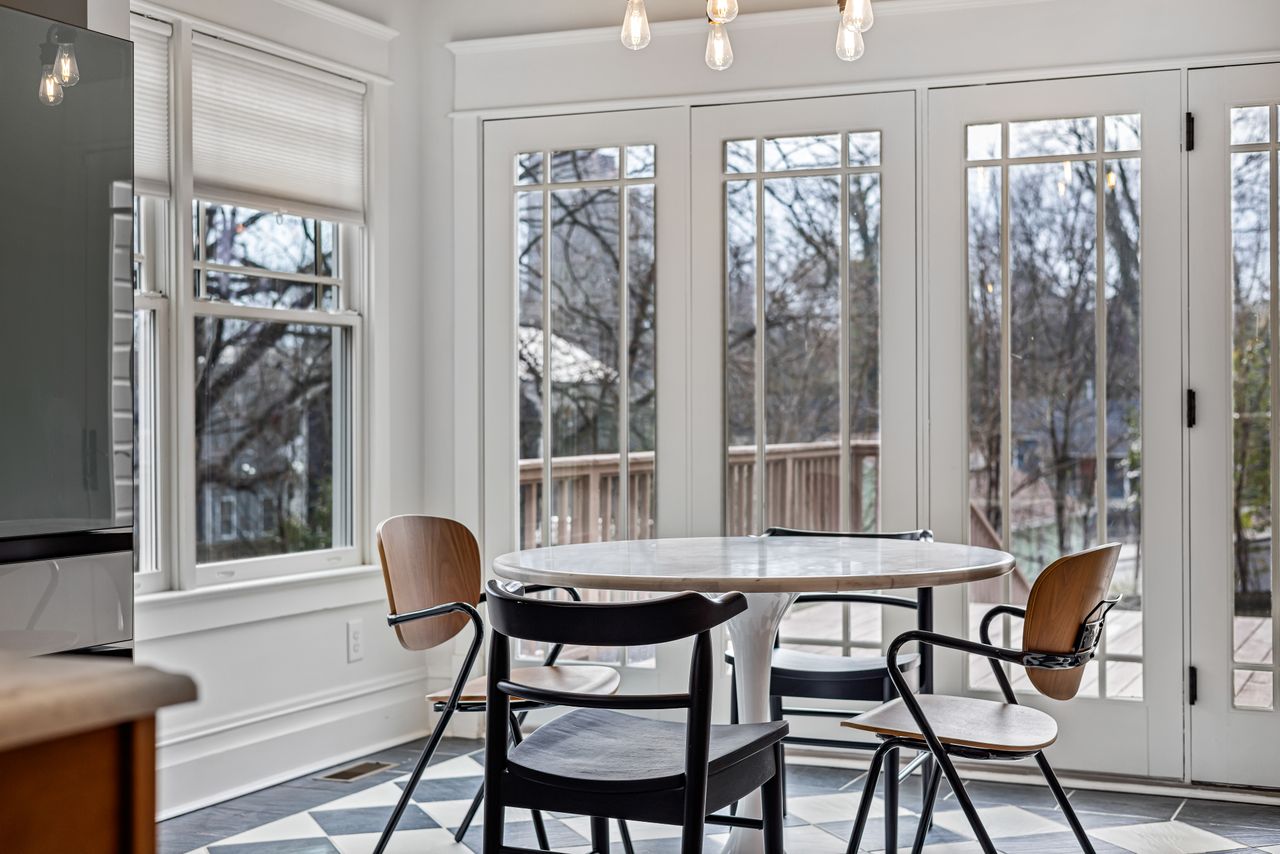
Photo via Pexels: a round white pedestal table with four chairs in a bright sunroom with glass doors.

No comments:
Post a Comment