There is a reason so many American dining rooms feel warmer the moment a worn wood table moves in. The soft edges, the faded paint on a corner, the grain showing through a thin wash of color — all of it makes a room feel lived in from day one, instead of stiff and showroom perfect. If you have been shopping for a distressed dining table, you are really shopping for that feeling: a table that welcomes spaghetti night, homework, board games, and holiday dinners without making you nervous about every scratch.
But not every worn finish is the same, and not every one suits every home. Some look like an old farmhouse find, some look like a beach cottage piece, and some pair rough wood with black metal for a tougher, city-loft feel. This guide walks through 10 warm ideas, the woods that hold up best, how to tell a well-made piece from a cheap fake, and how to clean and protect the finish so it stays beautiful for years. Prices here are typical US retail ranges, and sizes are in inches and feet, so you can measure your room before you buy.
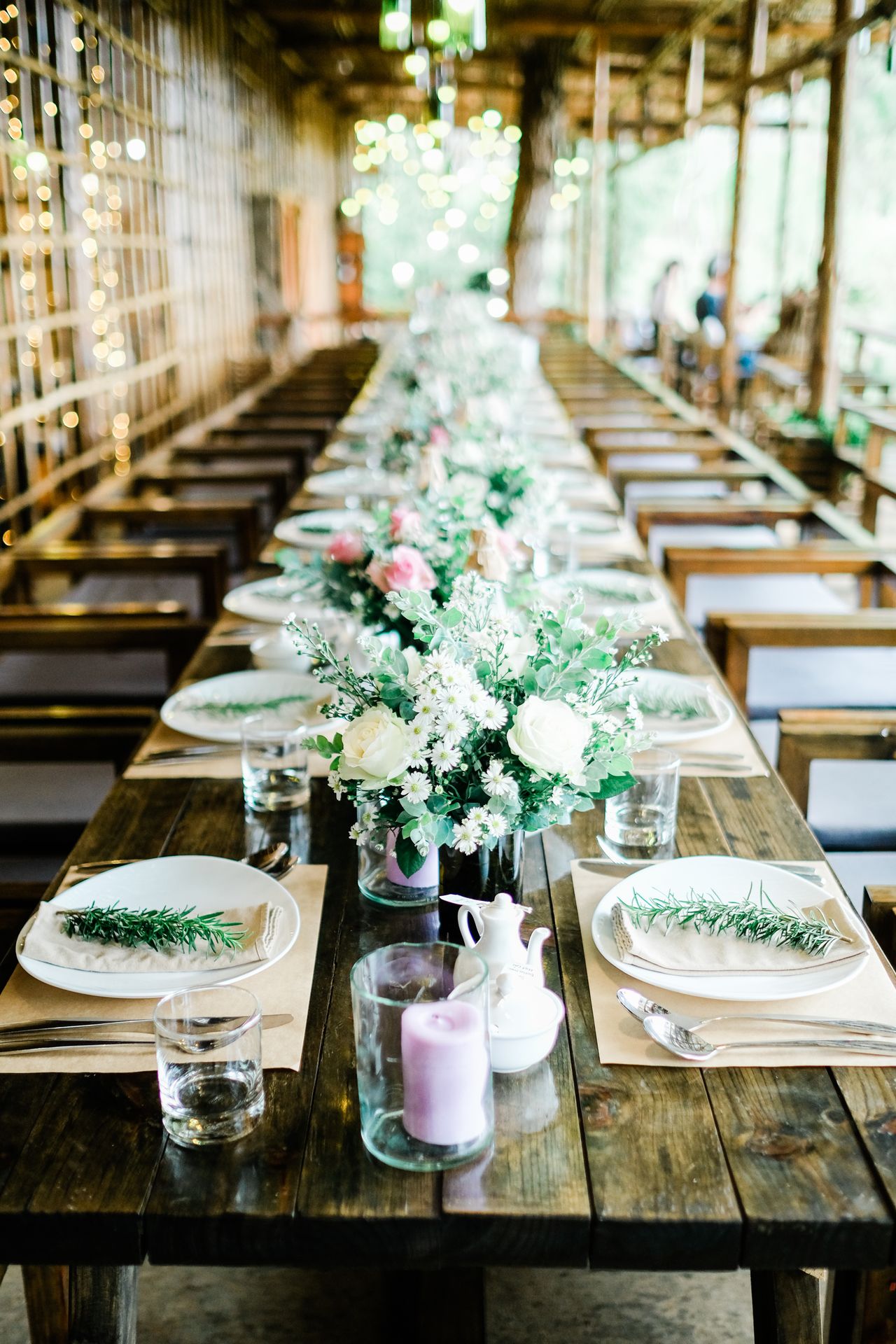
A long dark plank wood table set for a large gathering. Photo via Pexels.
Table of Contents
- 1. The Classic Farmhouse Plank Table
- 2. The Soft Whitewashed Look
- 3. The Industrial Wood-and-Metal Mix
- 4. The Light Coastal Finish
- 5. The Small Round Table for Tight Rooms
- 6. Picking the Right Wood
- 7. Buying New vs. Aging a Table Yourself
- 8. Chairs That Pair Well
- 9. Mixing Chairs and a Bench
- 10. Styling and Protecting the Finish
- Frequently Asked Questions
- Final Thoughts
- Sources
- Gallery
Before we get to the ideas, it helps to know what "worn" really means in furniture. A worn finish is made on purpose: paint or stain is rubbed back on edges, corners, and raised spots, the places a real table would naturally lose color over decades of use. Good work looks random and soft, like years of hands, plates, and chair bumps did it slowly. Cheap work looks stamped on, with the same scrape repeated in a neat row or wear in spots no hand would ever touch, like the dead center of a tabletop. When you shop, run your hand over the edges. A good piece feels smooth, not rough or splintery, and the color underneath shows in thin, uneven layers rather than one harsh patch.
Size matters just as much as style. A rectangular table for six is usually 72 inches long and 36 to 42 inches wide, and each person needs about 24 inches of elbow room along the edge. Leave 36 inches between the table edge and the wall so chairs can pull out with ease, or 42 inches if people need to walk behind a seated guest. For a round table, 48 inches across seats four with comfort, and 60 inches across seats six. Measure your rug too: it should stretch at least 24 inches past the table on every side, so chair legs stay on the rug when you pull them out.
1. The Classic Farmhouse Plank Table
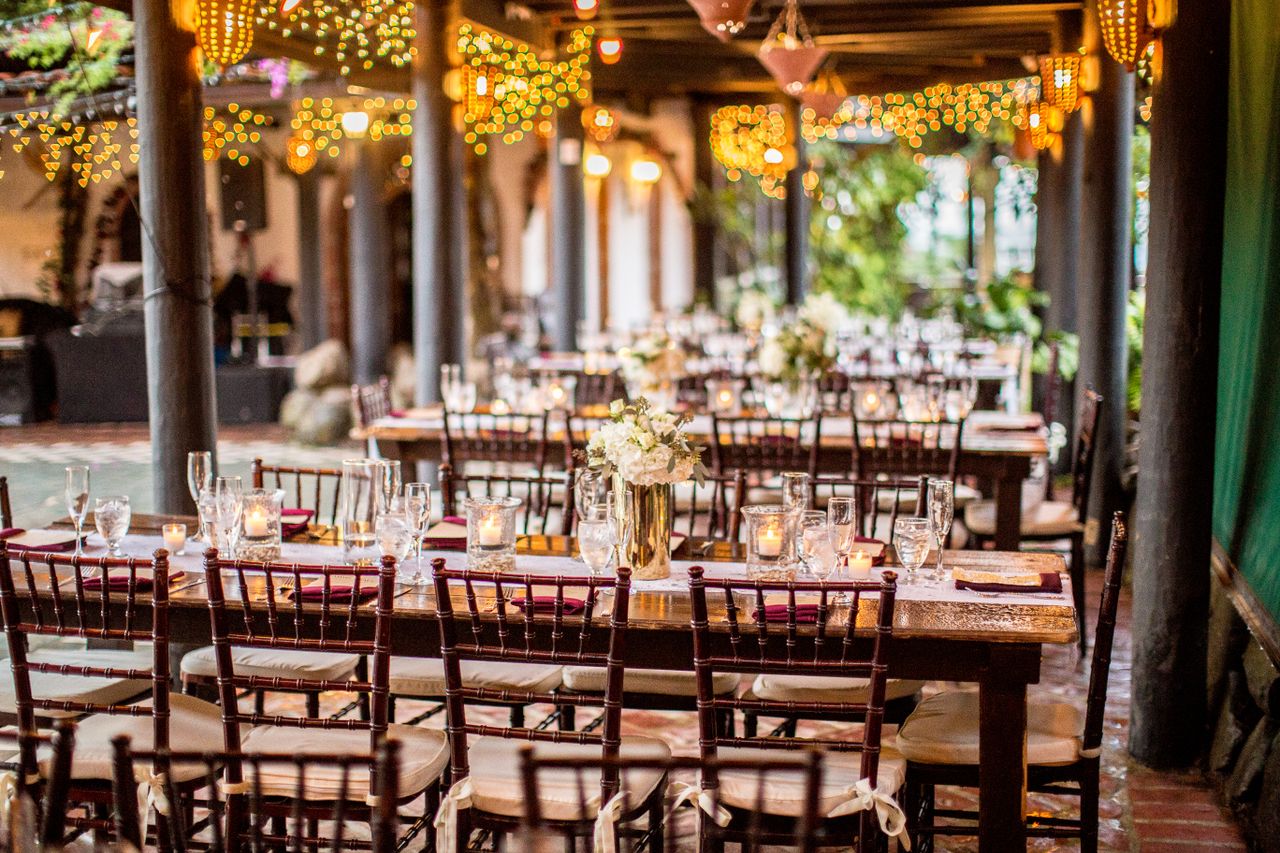
Long dark wood tables with Chiavari chairs, shown set for an evening gathering. Photo via Pexels.
The farmhouse plank table is the look most people picture first: a thick, rectangular top made of wide boards, sturdy legs or a trestle base, and a warm brown finish that shows knots and grain. It suits a dining room with wood floors, a simple pendant light, and linen or cotton in natural colors. In a big room, a table 84 to 96 inches long can seat eight, and it becomes the natural spot for family dinners and long weekend breakfasts. Keep the rest of the room calm so the wood can be the star: cream walls, one large centerpiece, and chairs that do not fight the table for attention.
This style is also one of the most forgiving for real life. A small nick or a water ring blends into a plank top far more easily than it would on a glossy, dark, perfect finish, which is a big reason parents love it. Look for a top at least 1.5 inches thick, with solid wood or a thick wood veneer over a stable core, and check that the legs do not wobble when you press a corner. Expect to pay about $800 to $2,500 for a solid wood farmhouse table, depending on size and wood type, and more for a handmade or reclaimed-wood piece. If the price looks too low for solid wood, ask what the top is really made of before you buy.
2. The Soft Whitewashed Look
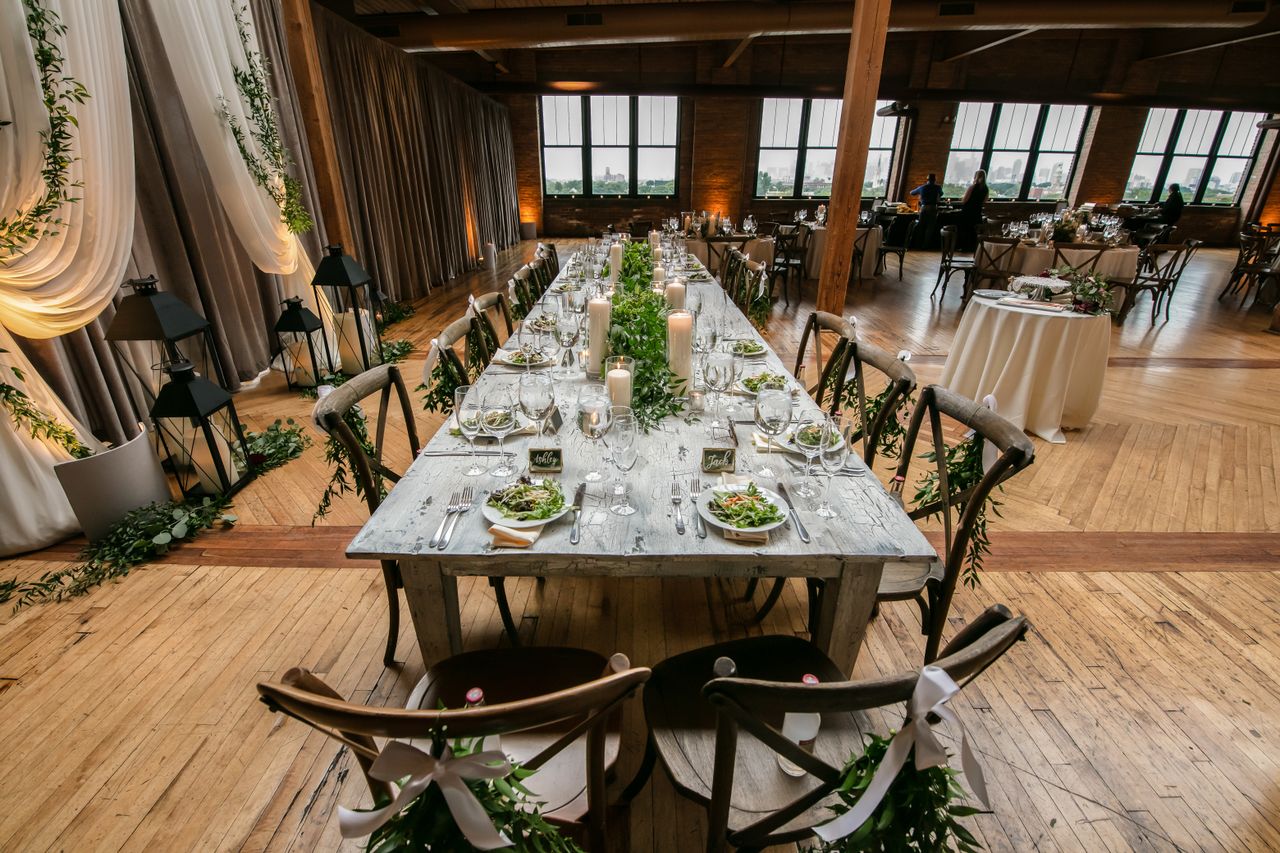
A whitewashed wood table with cross-back chairs, shown in an event loft setting. Photo via Pexels.
A whitewashed finish is paint thinned down so the wood grain still shows through, then rubbed back on the edges so hints of bare wood peek out. It brightens a dark dining room in a way a heavy brown table never will, and it works beautifully with white walls, light floors, and soft blue, sage, or warm gray chairs. This is a good pick if your dining room gets little daylight, or if your home leans cottage, coastal, or French country rather than dark and rustic. Pair it with a linen runner in a natural tone and simple white dishes, and the whole room will feel fresh without feeling cold.
White finishes do show tomato sauce and coffee faster than brown ones, so plan for that from the start. A clear matte topcoat, a washable runner down the center, and placemats for daily meals will save you a lot of scrubbing. When you shop, ask whether the topcoat is water-based polyurethane, which stays clear and does not yellow as much over time, or wax, which feels lovely but needs reapplying every year or so. If you have small kids, a sealed whitewashed top with a runner is a much better bet than an unsealed chalk-painted top, which stains the first time a juice cup tips over.
3. The Industrial Wood-and-Metal Mix
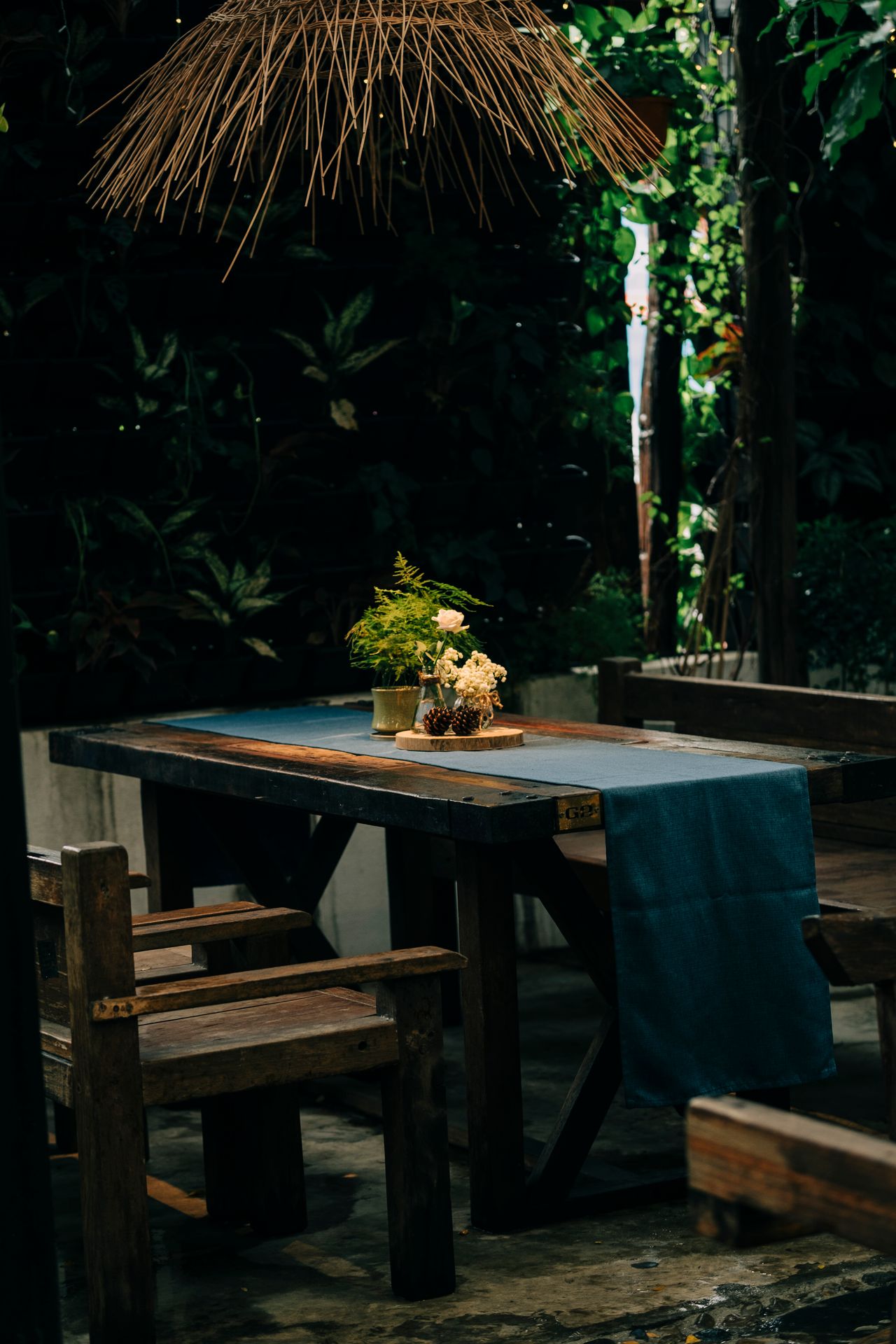
A chunky dark wood table with simple wooden benches, shown in an outdoor restaurant setting. Photo via Pexels.
If farmhouse feels too soft for you, the industrial version keeps the rough wood but adds black metal: a metal X base, steel legs, or iron brackets and bolts left visible on purpose. The contrast is the whole point, and it fits lofts, brick walls, concrete floors, and modern kitchens with dark cabinets. The same idea works in a softer home too, as long as you repeat the black metal somewhere else in the room, like a pendant light, a mirror frame, or chair legs, so the base does not look like a lone stranger. Modern dining room ideas often use this trick, pairing one rough, warm piece with clean, simple lines around it.
Metal bases are heavy and steady, which is great for a big top, but check two things before you buy. First, make sure the metal feet have pads or glides, or they will scratch wood floors and screech every time the table moves. Second, sit at the table and check your knees: some X bases and trestle bars sit exactly where your legs want to go, especially at the ends of the table. A good design leaves clear knee room on the long sides. Budget about $900 to $2,800 for this style, and remember that a very heavy top plus a metal base can be hard to move, so measure your doorways and plan the delivery path first.
4. The Light Coastal Finish
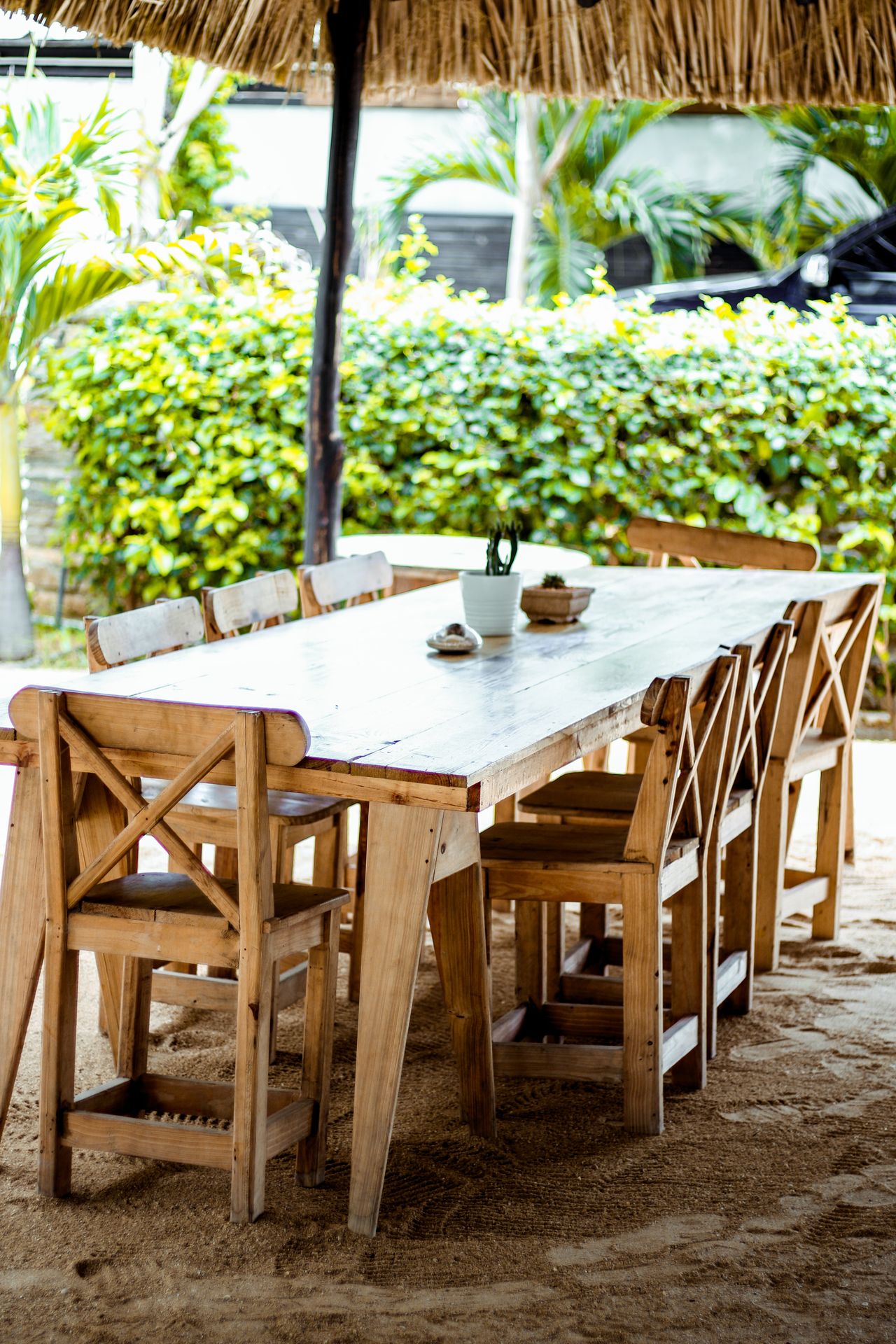
A light wood table with cross-back chairs, shown outdoors under a thatched roof. Photo via Pexels.
A coastal worn finish looks sun-bleached: pale gray, driftwood, or sandy tones, with the grain open and visible and almost no shine. It suits white walls, woven textures, rattan or rope details, and soft blues and greens. In a dining room, it keeps the mood calm and breezy, and it pairs well with slipcovered chairs, which you can wash after a messy dinner. The trick to keeping this look from feeling washed out is contrast: a darker rug, wood floors with some warmth, or deep green plants will ground the pale table so the room does not float away.
Coastal finishes are often lighter in color, which means they show dents less but stains more, so a sealed top matters here too. Ask for a matte or satin sealer, and keep a soft cloth handy for wiping up spills right away, since pale wood can take on color from red wine, berries, and tomato sauce if a spill sits overnight. If your table will sit near a sunny window, know that sunlight will keep lightening the finish over time, which most coastal fans actually like, but it can make one end of the table paler than the other. Rotating a centerpiece now and then, or using a runner, keeps the change even.
5. The Small Round Table for Tight Rooms
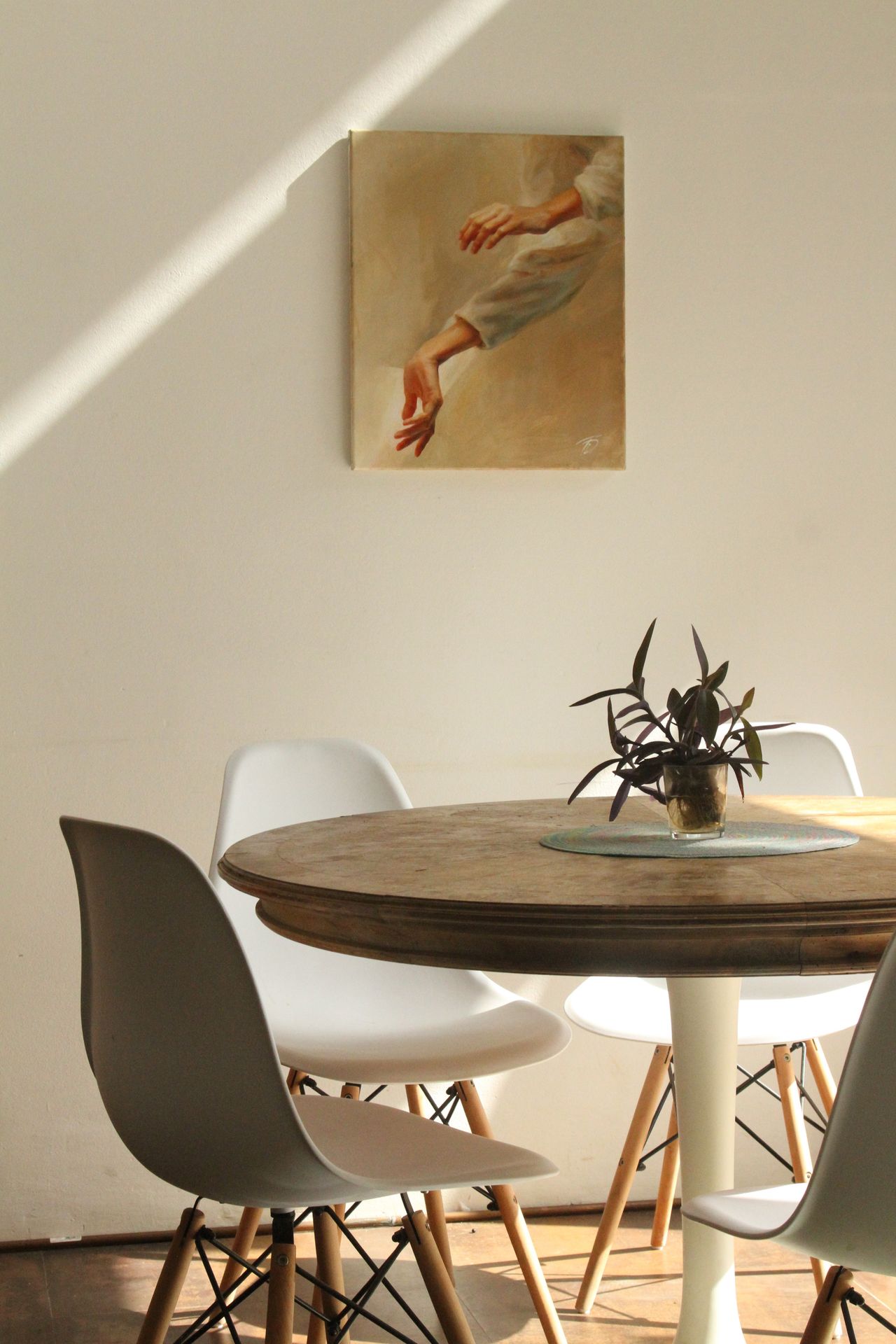
A round worn wood pedestal table paired with white molded chairs. Photo via Pexels.
A worn finish is not only for big farmhouse rooms. A round pedestal table, about 42 to 48 inches across, fits a small dining corner, a breakfast nook, or an apartment eating area, and it has no sharp corners to bump into. The pedestal base is a real advantage in a tight room, because there are no legs at the corners to fight with chair legs. Four chairs fit with ease, and you can squeeze in a fifth for a casual meal. Small dining room design ideas lean on this shape again and again, because a round table makes a small room feel less boxed in than a rectangle of the same size.
When you buy round, check the base for wobble and weight. A heavy wood top on a light, narrow pedestal will tip when someone leans on the edge, which is a real risk with kids climbing up. A wide, heavy base, or a four-foot pedestal, holds steady. Also check the apron height: you want about 29 to 30 inches of table height and at least 25 inches of clear space under the apron for your thighs. If you need more seats sometimes, look for a round table with a leaf that opens to an oval, which gives you daily small size and party size in one piece, usually for $500 to $1,500.
6. Picking the Right Wood
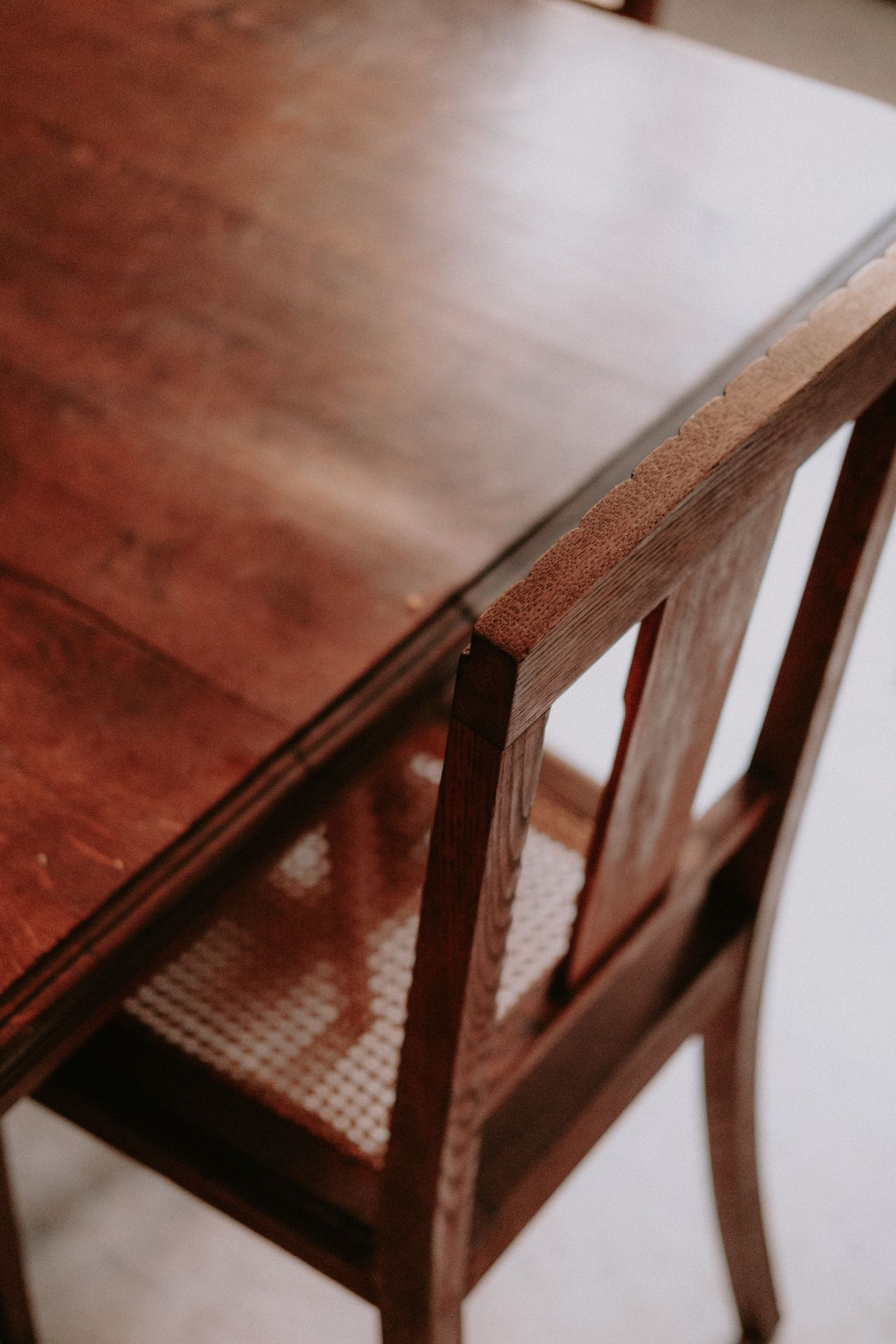
A close detail shot of a dark wood table edge beside a cane-seat chair. Photo via Pexels.
The wood underneath the finish decides how the table ages. Pine is soft, light, and affordable, and it dents easily, which actually suits a worn look, since new dents just join the old ones. Oak is harder, heavier, and shows a strong, open grain that takes a wash or stain beautifully. Walnut is rich and dark, costs more, and looks best with a light touch of wear rather than heavy scraping. Reclaimed barn wood has the most character, with nail holes and saw marks built in, but it can be uneven, so run your hand over the top and make sure plates will sit flat and glasses will not rock.
For a busy family, oak and maple are the safest bets: hard enough to resist daily dents, but still warm and natural looking. Pine works if you love the look and accept that it will pick up marks fast, which is fine when the finish is meant to look aged anyway. Whatever wood you pick, ask whether the top is solid wood, which can be sanded and refinished years later, or a veneer over engineered wood, which cannot be sanded deeply. Solid wood costs more up front, but it can last for decades and be brought back to life, while a thin veneer piece is much harder to repair once it chips.
7. Buying New vs. Aging a Table Yourself
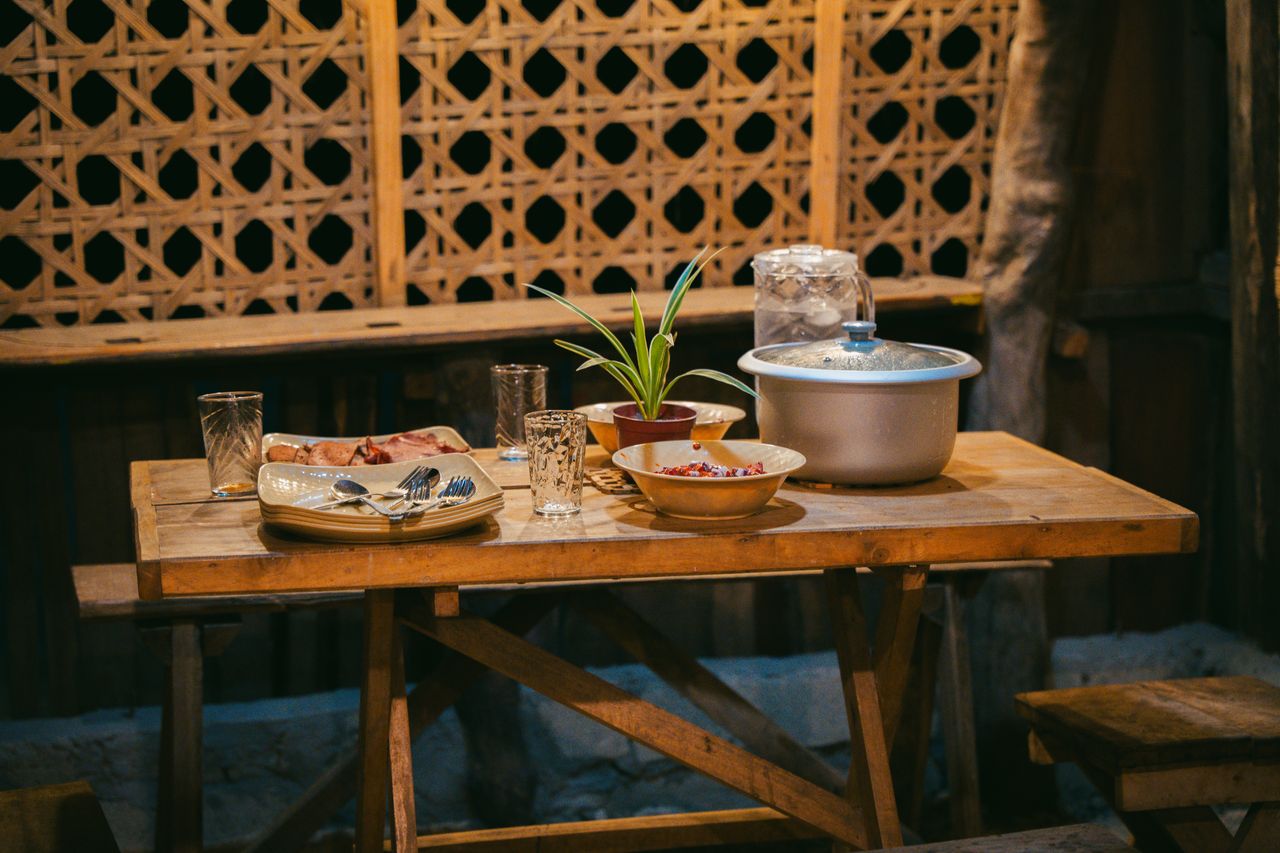
A simple rustic trestle table set for a casual meal. Photo via Pexels.
Buying a finished piece is the easy path: you pick the color, the store delivers it, and you are done. It costs more, but the finish is even, sealed, and backed by a warranty. Aging a table yourself, often called a DIY project, costs far less in money and much more in time, and it gives you full control over the color and the amount of wear. The classic method is simple to describe: clean the piece, paint it, rub candle wax on the edges and corners where wear would naturally happen, paint a second coat over the wax, then sand the waxed spots lightly so the color or wood beneath shows through, and seal it with a clear topcoat.
Before you start, be honest about the table you already own. Solid wood takes this treatment well, but laminate, plastic, or thin veneer will peel and chip, and no amount of sanding will fix that. Work outside or in a garage, wear a dust mask, and test your paint and sealer on the underside first. The most common beginner mistake is sanding everywhere, which looks fake; real wear gathers on edges, corners, and the spots hands grab, not in the middle of a flat top. If the table is a family antique or worth real money, do not distress it at all — a worn look you add yourself will lower its value, and a pro restorer is a better call.
8. Chairs That Pair Well
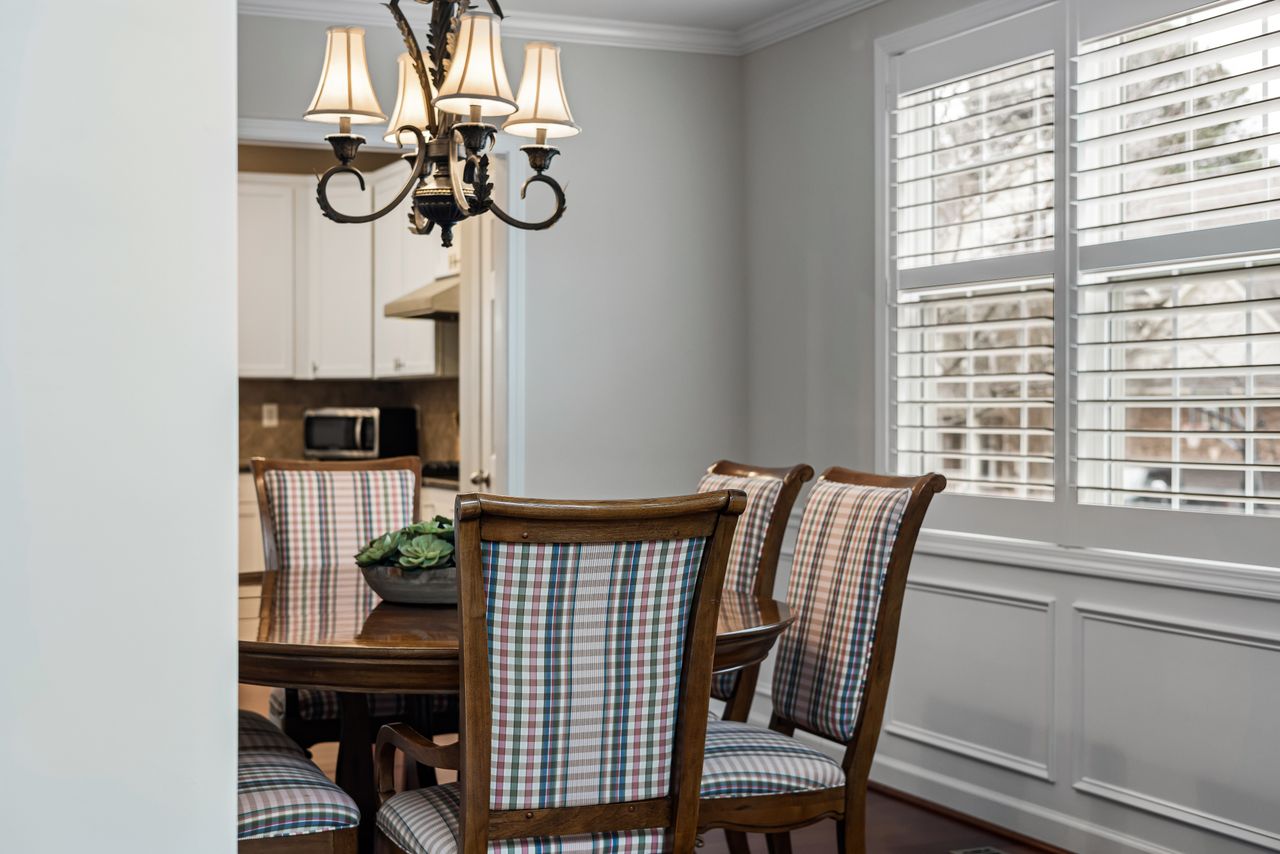
A round dark wood table with plaid upholstered dining chairs. Photo via Pexels.
Upholstered chairs are the comfort pick for a worn wood table: they soften the rough wood, add color or pattern, and make long dinners much easier on your back. A plain linen or cotton seat in cream, gray, or sage is the safest choice, while a small plaid or stripe adds charm in a farmhouse or cottage room. If you pick a light fabric, choose one you can remove and wash, or treat it with a fabric protector before the first dinner. Dining chairs usually run 18 to 20 inches wide, so measure your table length and divide by 24 inches per person to see how many will truly fit without elbows bumping.
Wood chairs are the classic match, and cross-back, ladder-back, and Windsor styles all sit well with a worn top. The rule that keeps the room from looking like a matched set from a warehouse is to vary one thing: if the table is dark wood, try lighter wood chairs, or paint the chairs cream and leave the table natural. Metal chairs, in black or aged bronze, push the room toward industrial, and they are easy to wipe clean, which parents appreciate. Whatever you pick, sit in the chair at the table before you buy a full set, and check that the seat height, usually 18 inches, leaves about 12 inches between the seat and the underside of the table.
9. Mixing Chairs and a Bench

A long wood table with mismatched colorful chairs in a cabin dining space. Photo via Wikimedia Commons.
A bench on one side of the table is the farmhouse move that families love most. Kids can slide in together, extra guests squeeze in without finding another chair, and the bench slides under the table when you need floor space. A bench should be about 16 to 18 inches high, a little lower than a chair seat, and it needs about 24 inches of length per person, just like chairs do. If your table has a trestle base, check that the bench legs do not hit the trestle feet when you push it in. A backless bench keeps the room open, but if your family sits for long meals, a bench with a low back, or chairs on the other side, is kinder to backs.
Mismatched chairs, one or two different styles mixed with the bench, are what keep a worn wood room from looking stiff. The trick is to keep one thing the same across all the seats: the same wood tone, the same paint color, or the same seat height. Then you can vary the chair backs freely, and the room will look collected over time rather than messy. Tiny dining room ideas use the same bench trick in small rooms, because a bench that tucks away frees up walk space in a way six separate chairs never will. Just be sure every seat is steady on your floor, since a wobbly chair next to a heavy table is an accident waiting to happen.
10. Styling and Protecting the Finish
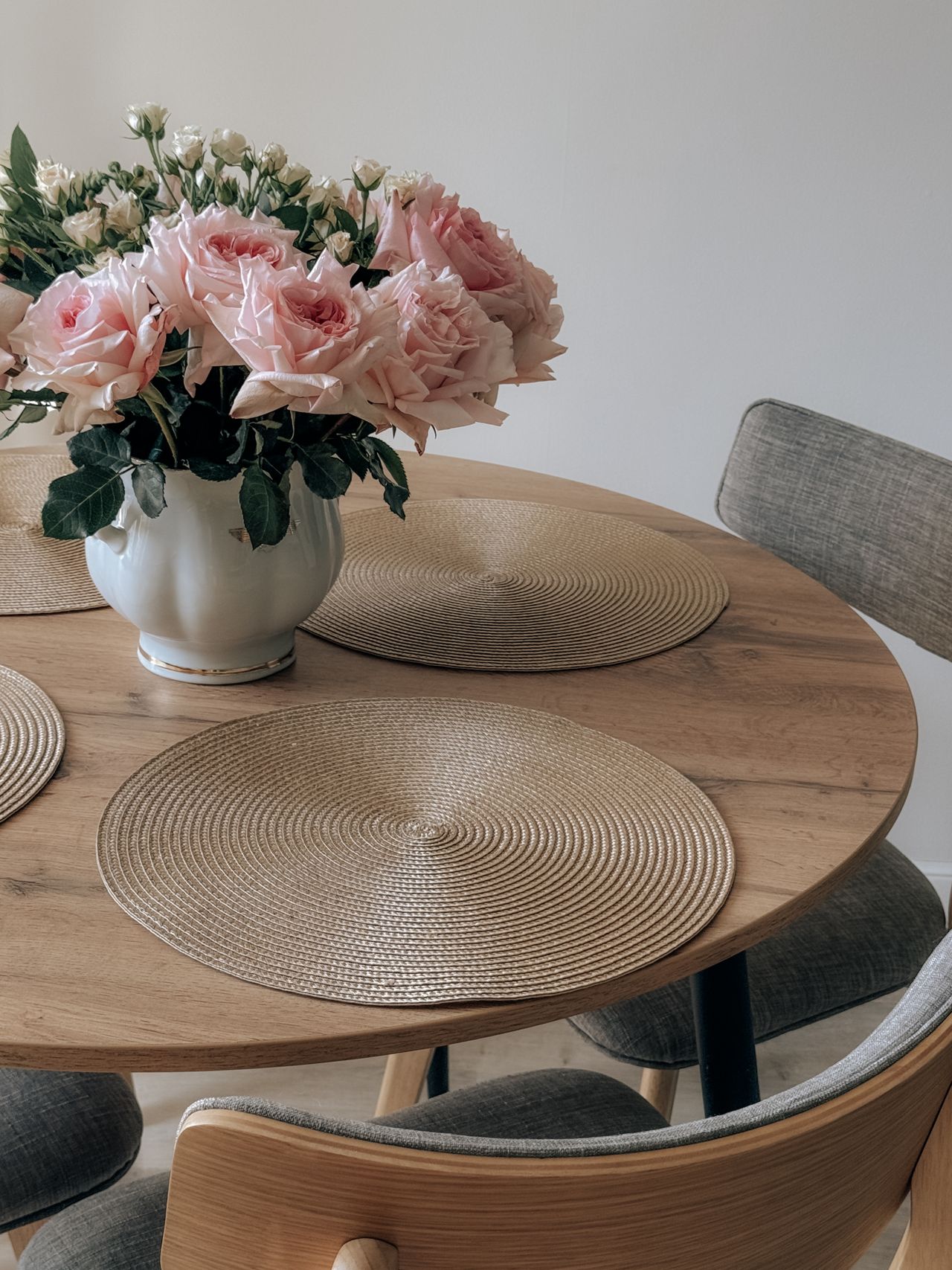
A round light wood table styled with woven placemats and a vase of pink roses. Photo via Pexels.
Styling a worn table is about restraint. One low centerpiece, like a wood bowl, a vase of fresh stems, or a row of candles in glass holders, is enough, because the wood itself is already the decoration. A linen or cotton runner down the center protects the middle of the top and adds softness, and woven placemats protect the spots where plates sit every day. Keep tall items low enough that people can see each other across the table, about 12 inches high or less, and leave the ends of the table clear so serving dishes have a place to land. In a small room, a mirror on the wall or a light pendant above the table will do more for the mood than a pile of extra decor.
For daily care, wipe the top with a soft, damp cloth and a drop of mild dish soap, then dry it right away, and never use harsh sprays or rough scrub pads on a painted or washed finish. Use coasters for hot drinks and trivets for hot dishes, since heat marks are the hardest damage to fix on a sealed top. Once a year, check the topcoat: if water stops beading and starts soaking in, it is time for a fresh coat of clear sealer, or a fresh coat of furniture wax if your table was wax-finished. With that simple routine, a worn wood table does not just survive family life, it gets better at hiding it, which is exactly why people buy this look in the first place.
Frequently Asked Questions
Does a worn finish look dirty?
No, not when it is done well. A good worn finish looks like soft, even aging on the edges and corners, with clean wood or paint showing through in thin layers. It looks dirty only when the wear is heavy, blotchy, or paired with a dusty, unsealed surface, so pick a sealed finish and wipe it down weekly to keep it fresh.
Is a distressed dining table durable enough for kids?
Yes, and that is one of its biggest strengths. Kids will dent, scratch, and spill on any table, but on a worn wood top those marks blend into the finish instead of standing out. Choose a hard wood like oak, a sealed topcoat, and a runner or placemats for daily meals, and the table will handle family life far better than a glossy, perfect finish.
How do I clean a worn wood table?
Wipe it with a soft, damp cloth and a little mild dish soap, then dry it right away. Wipe spills up fast, especially red wine, tomato sauce, and coffee on light finishes. Skip abrasive cleaners, steam mops, and furniture polish with silicone, which can build up on a painted finish and make future touch-ups hard.
Can I distress a table I already own?
Yes, if it is solid wood. Clean it, paint it, rub wax on the edges where natural wear would happen, add a top coat, then sand the waxed spots lightly and seal it. Do not try this on laminate or thin veneer, which will peel, and do not distress a valuable antique, since you will lower what it is worth.
What size worn table should I buy?
Allow 24 inches of table edge per person and 36 inches of walk space around the table. A 72-inch rectangle seats six, a 48-inch round seats four, and a 60-inch round seats six. Measure your room, your rug, and your doorways before you order, and sit in the chairs at the table height if you can.
Final Thoughts
A worn wood table is not about pretending your furniture is old. It is about choosing a finish that forgives real life: the homework, the spills, the extra guests, and the years of daily use that would ruin a perfect surface. Pick the version that fits your room, farmhouse, whitewashed, industrial, or coastal, choose a hard wood and a sealed top, and pair it with chairs you actually like sitting in. Do that, and the table will not just look warm on the day it arrives. It will still look warm ten years later, with a few more honest marks that tell your family's story.
If you are still deciding, start with size and wood, not color. A well-sized oak table in a finish you like a little less will serve you far better than a perfect color in the wrong size or a soft wood that dents in a month. Measure twice, check the base for wobble, ask about the topcoat, and then enjoy the one piece of furniture in your home that is meant to look better the more you use it.
Sources
- Family Handyman: How to Distress Furniture
- HGTV: How to Distress Furniture
- Traditional Painter: Distressed Finishes
Gallery
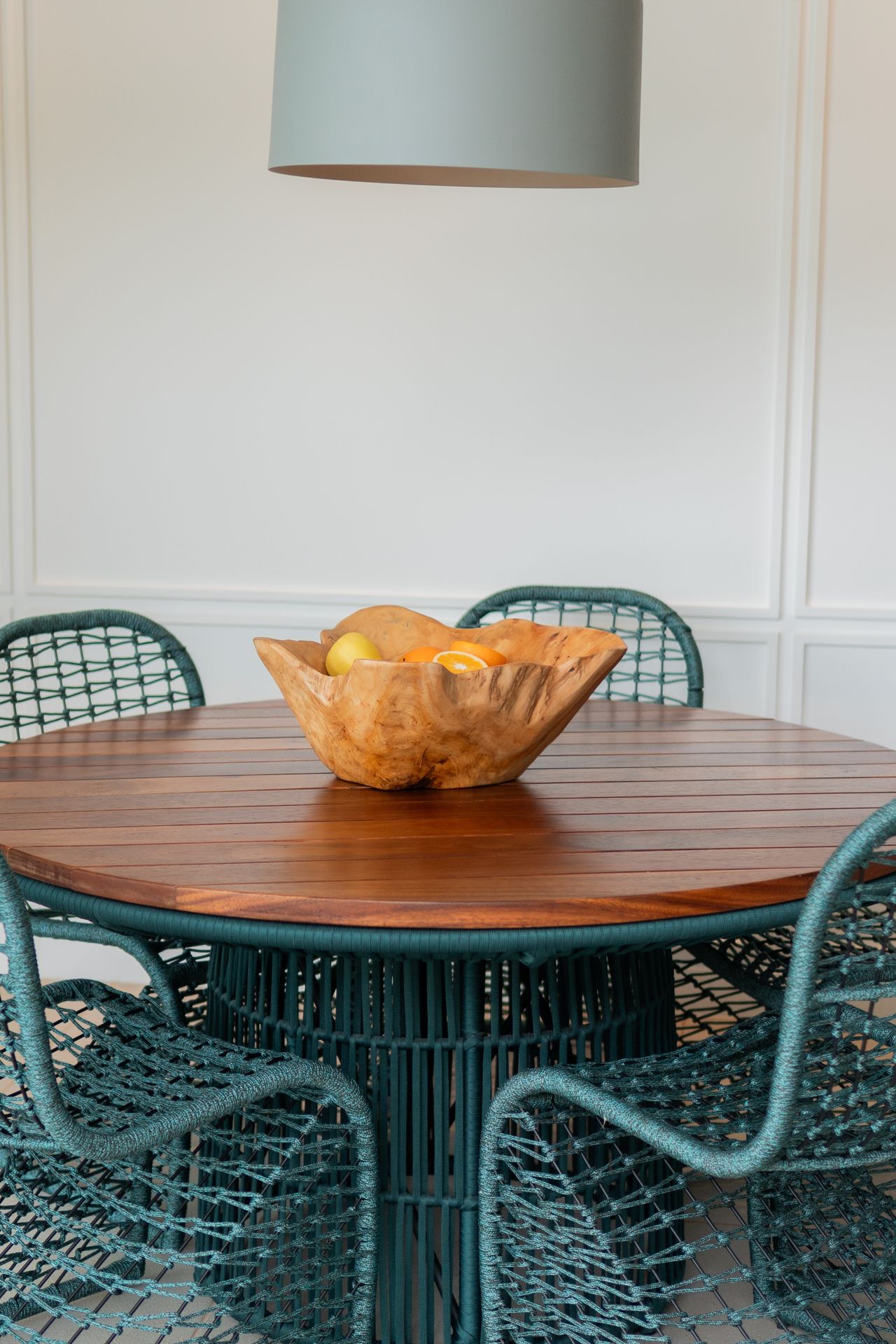
A round slatted wood table with teal woven chairs, a coastal-style pairing. Photo via Pexels.
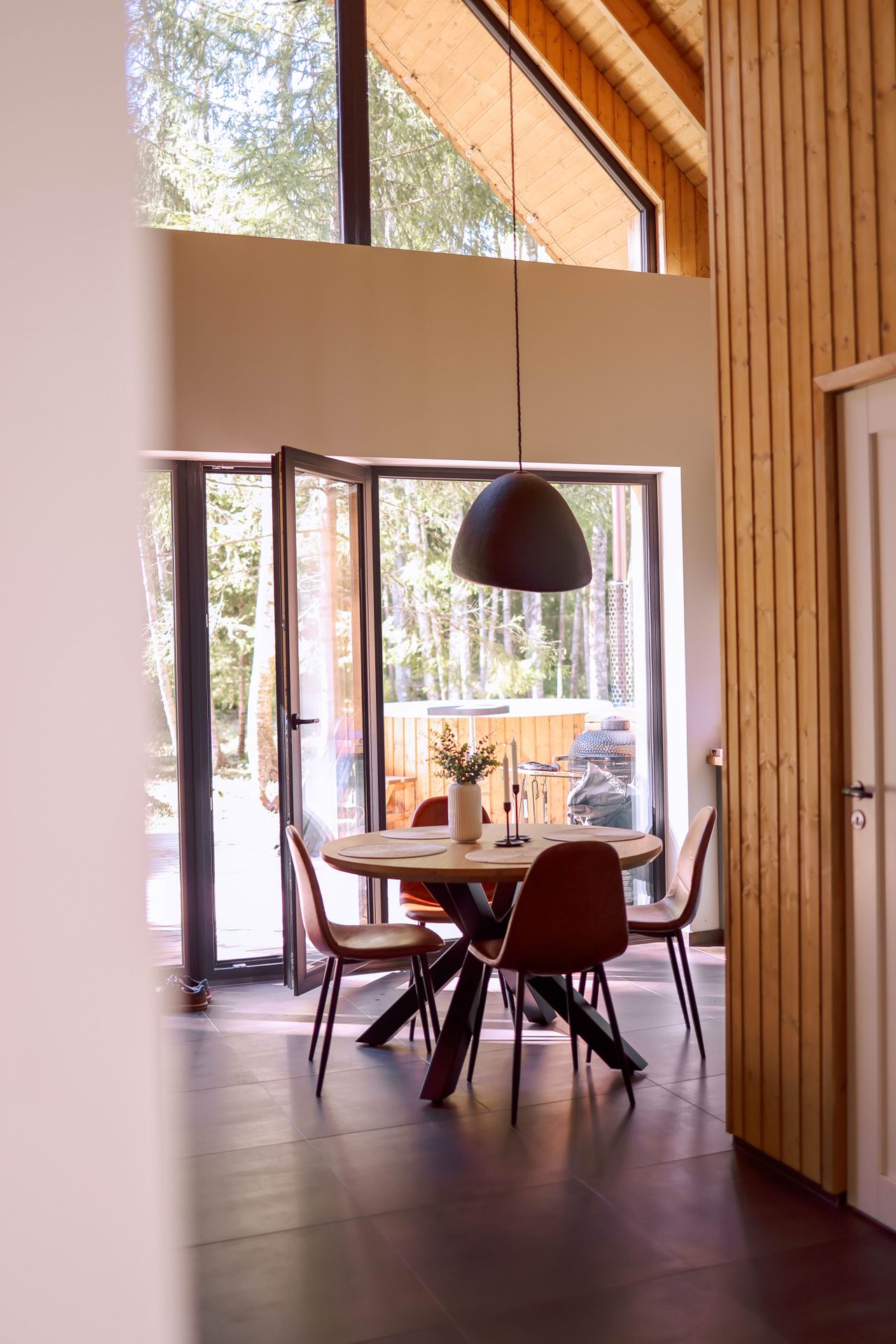
A round wood table with brown leather chairs in a cabin room. Photo via Pexels.
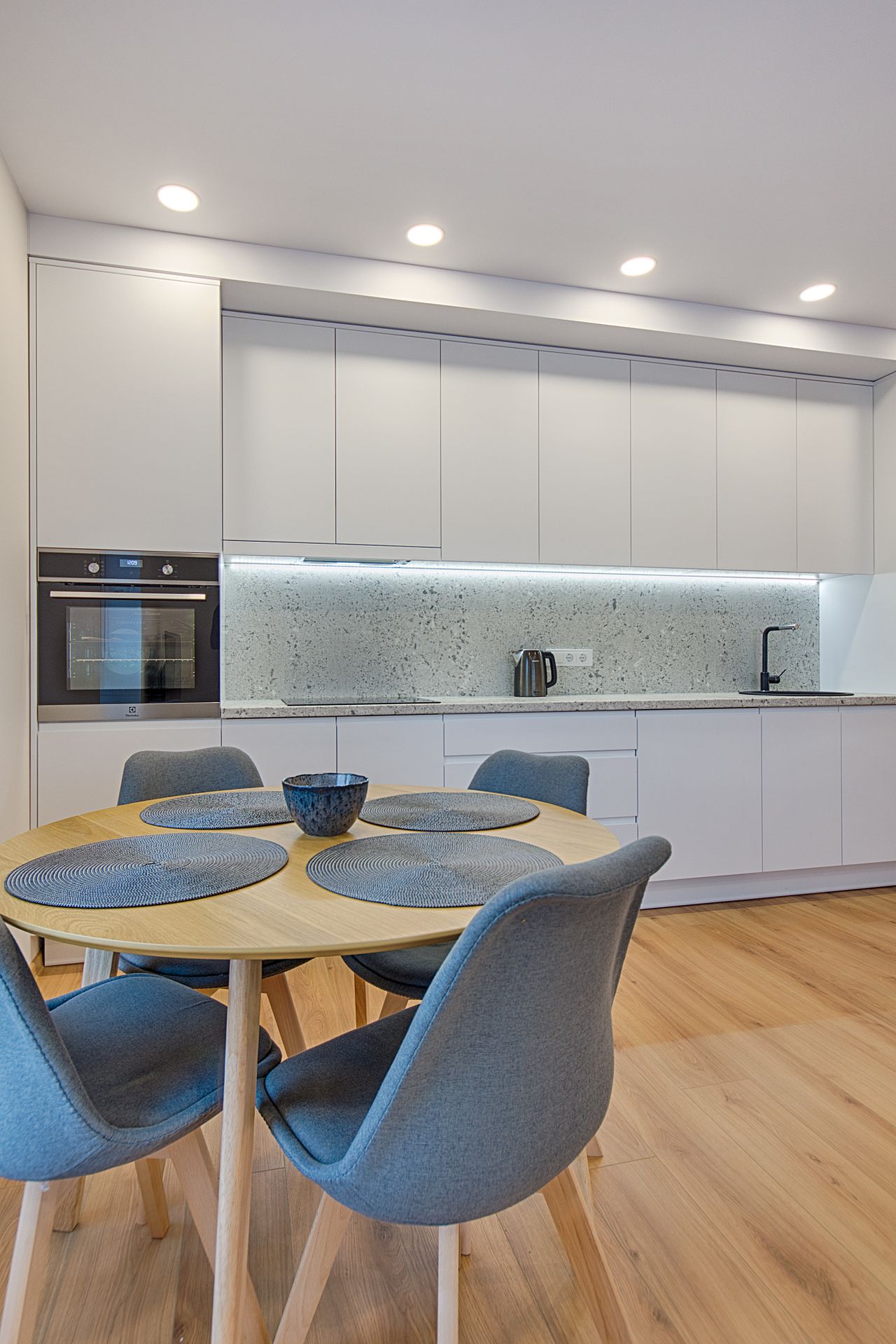
A round light wood table with gray upholstered chairs in a modern kitchen. Photo via Pexels.

No comments:
Post a Comment