A warm, wood-filled kitchen never really goes out of style. The good news is that you do not need a full remodel to get the look. Most rustic kitchen decor is about layers: natural wood, honest materials, and pieces that look like they have been used and loved for years. A few shelves, a rail for your pots, and the right lighting can change the whole feel of the room in a single weekend.
In this guide, we walk through 10 ideas that cover the whole room, not just one wall or one corner. Each idea includes the sizes that work best, what things cost, and simple tips to keep the style warm instead of cluttered. Whether your kitchen is a big country space or a small apartment corner, at least a few of these ideas will fit your home and your budget.
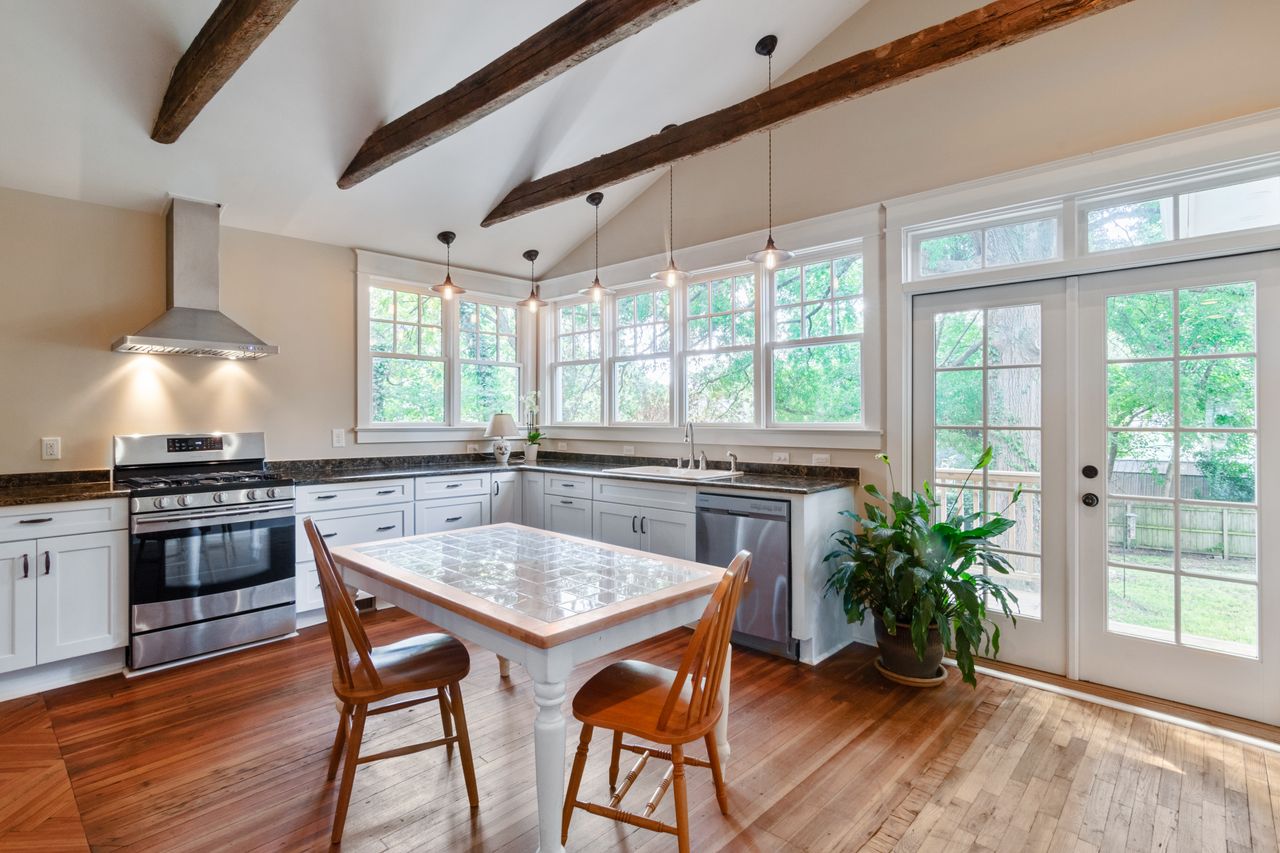
Photo: Pexels
Table of Contents
- 1. Open Wood Shelving That Shows Off Your Dishes
- 2. Exposed Beams or Faux Beams Overhead
- 3. A Farmhouse Sink as the Hardworking Centerpiece
- 4. Vintage Signs and Enamelware with Real Patina
- 5. Woven Baskets and Stoneware Crocks for Storage
- 6. Butcher Block Counters That Warm Up the Room
- 7. A Hanging Pot Rail over the Stove or Island
- 8. Rustic Lighting with a Warm, Soft Glow
- 9. A Distressed Wood Island or Work Table
- 10. Open Plate Racks for Everyday Dishes
- Frequently Asked Questions
1. Open Wood Shelving That Shows Off Your Dishes
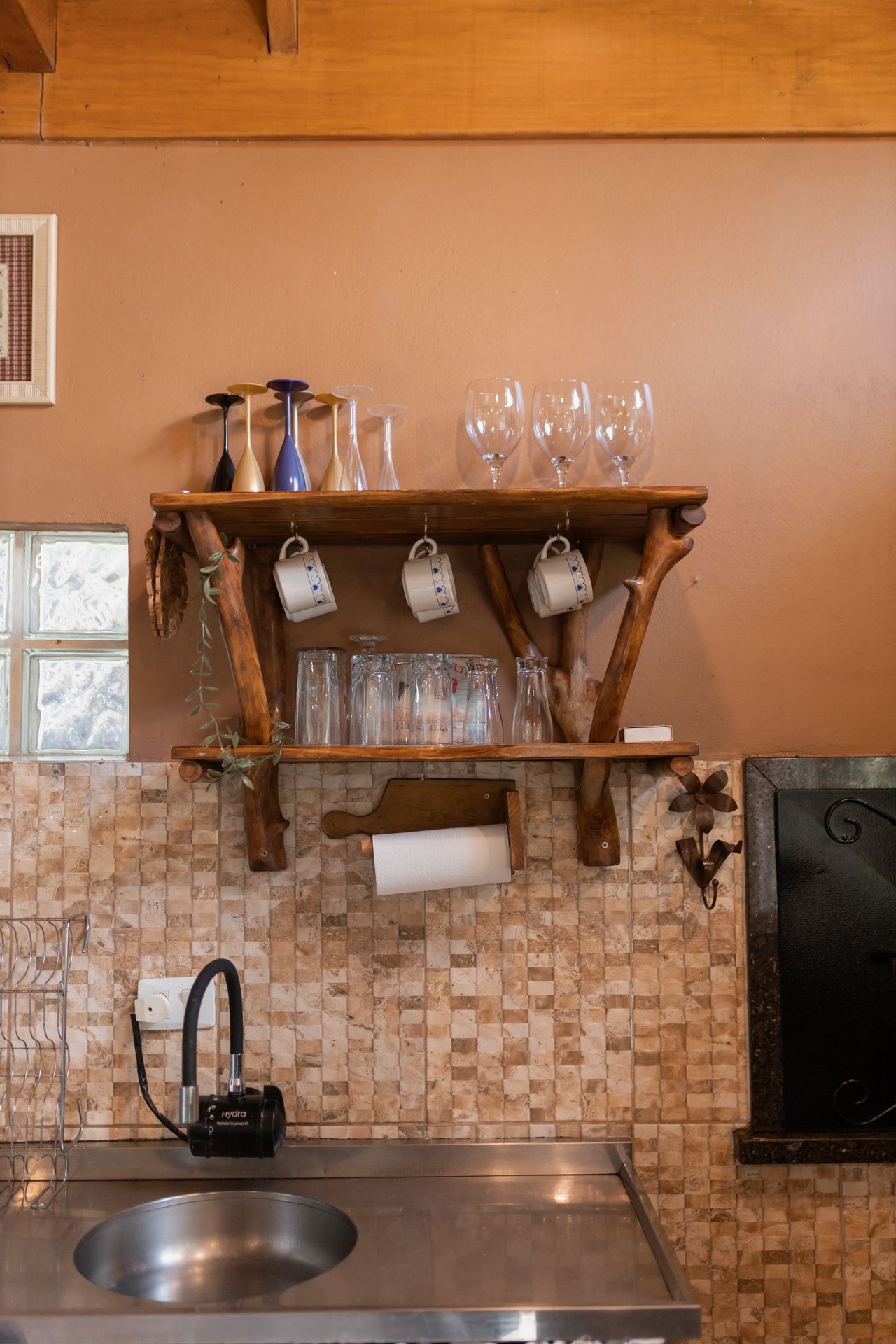
Photo: Pexels
Open shelves are the fastest way to give a plain kitchen a country feel. Thick wood boards show off your everyday dishes, glasses, and jars, and they cost far less than wall cabinets. For a strong, chunky look, choose boards that are 1.5 to 2 inches thick and 10 to 12 inches deep, which is deep enough for dinner plates. Pine and reclaimed barn wood are the classic choices. A pair of 4-foot pine shelves with black iron brackets usually costs between $60 and $150 if you cut and stain the wood yourself.
Hang the first shelf about 18 inches above the counter, and leave 12 to 15 inches between shelves so tall items fit. Style them with a simple rule: group things in odd numbers, mix in one plant or a small stack of cookbooks, and keep the items you use daily on the lowest shelf. Open shelves pair best with simple cabinets below them, and if you are choosing cabinets as part of the project, our guide to rustic kitchen cabinets covers the wood finishes that match this look. Dust is the one real downside, so keep only items you use often on display; they get washed regularly anyway.
2. Exposed Beams or Faux Beams Overhead
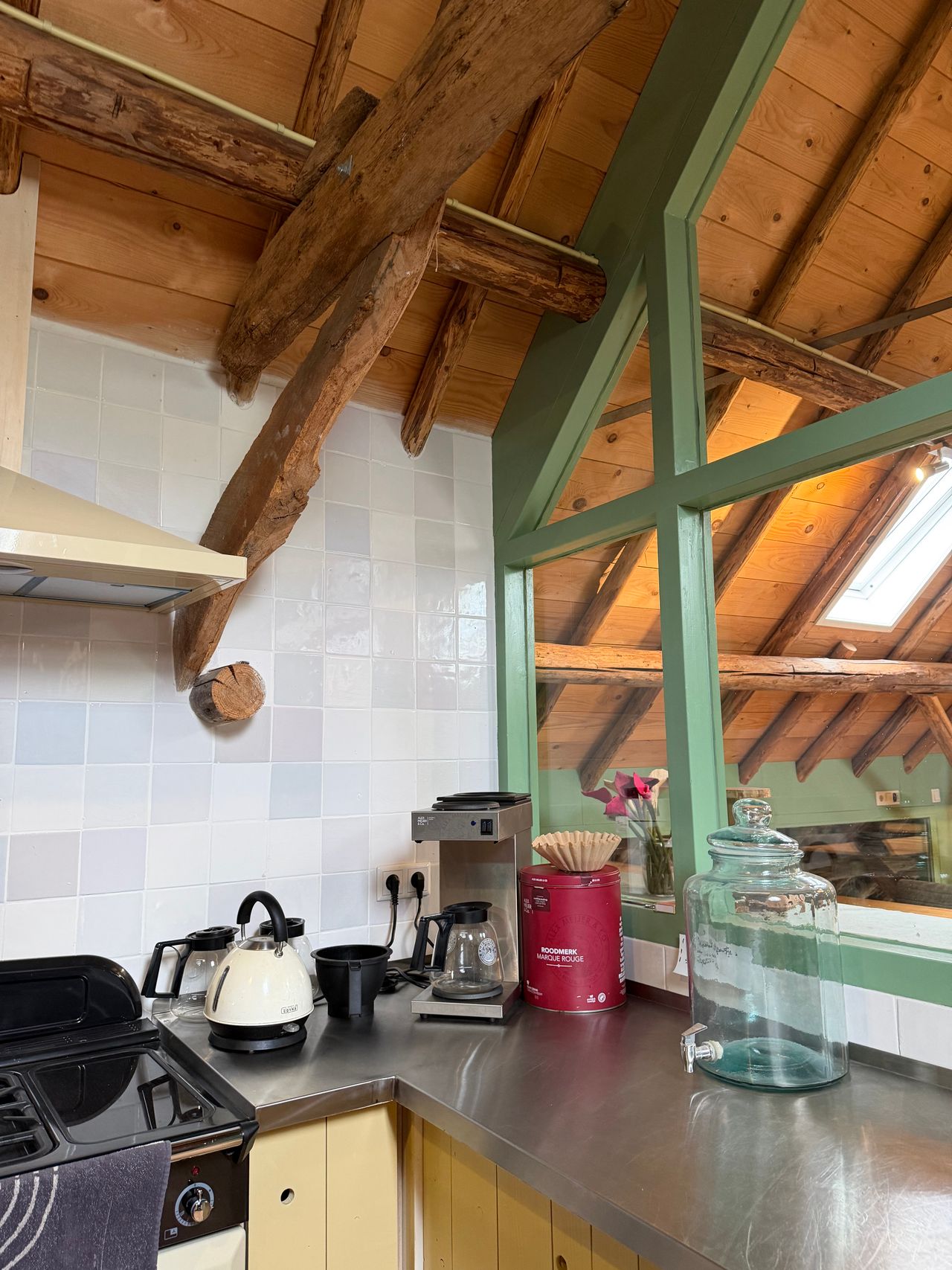
Photo: Pexels
Nothing changes a kitchen ceiling like wood beams. They add height, history, and a strong focal point above everything else. If your home already has real beams hidden under plaster, exposing them is dusty work but very rewarding. Most modern homes, though, use faux beams: hollow boxes made from real wood or lightweight foam that look like solid timber. A typical faux beam is 4 to 6 inches wide and 4 to 8 inches tall, and it weighs so little that two people can lift it into place with basic tools.
Space beams about 4 to 6 feet apart for a balanced look, and run them across the shorter side of the room to make the space feel wider. Real wood faux beams cost roughly $25 to $60 per linear foot, while foam versions start near $10 per foot and can be painted or stained. Match the beam color to your shelves or floor so the room feels connected. One warning: in a kitchen with a low ceiling under 8 feet, choose slimmer beams so the room does not feel heavy.
3. A Farmhouse Sink as the Hardworking Centerpiece

Photo: Wikimedia Commons
The apron-front sink is the hardest-working piece in a country kitchen. Its deep basin, usually 9 to 10 inches, hides big pots, sheet pans, and a full day of dishes with ease. The front panel sits proud of the cabinets, which gives the sink area a furniture feel that a plain drop-in sink cannot match. Standard widths are 30, 33, and 36 inches, so measure your sink cabinet before you order; most apron sinks need a special base cabinet or small changes to a standard one.
Fireclay is the classic material, with a glossy white finish that resists stains and chips, and prices usually start around $400. Stainless steel apron sinks cost a bit less, feel slightly more modern, and forgive dropped cast iron better than fireclay does. Copper sinks look stunning but need more care and cost the most. Whichever material you pick, add a bottom grid to protect the surface, and style the area with a wooden dish brush, a small potted herb, and a linen towel over the front for that soft, lived-in finish.
4. Vintage Signs and Enamelware with Real Patina
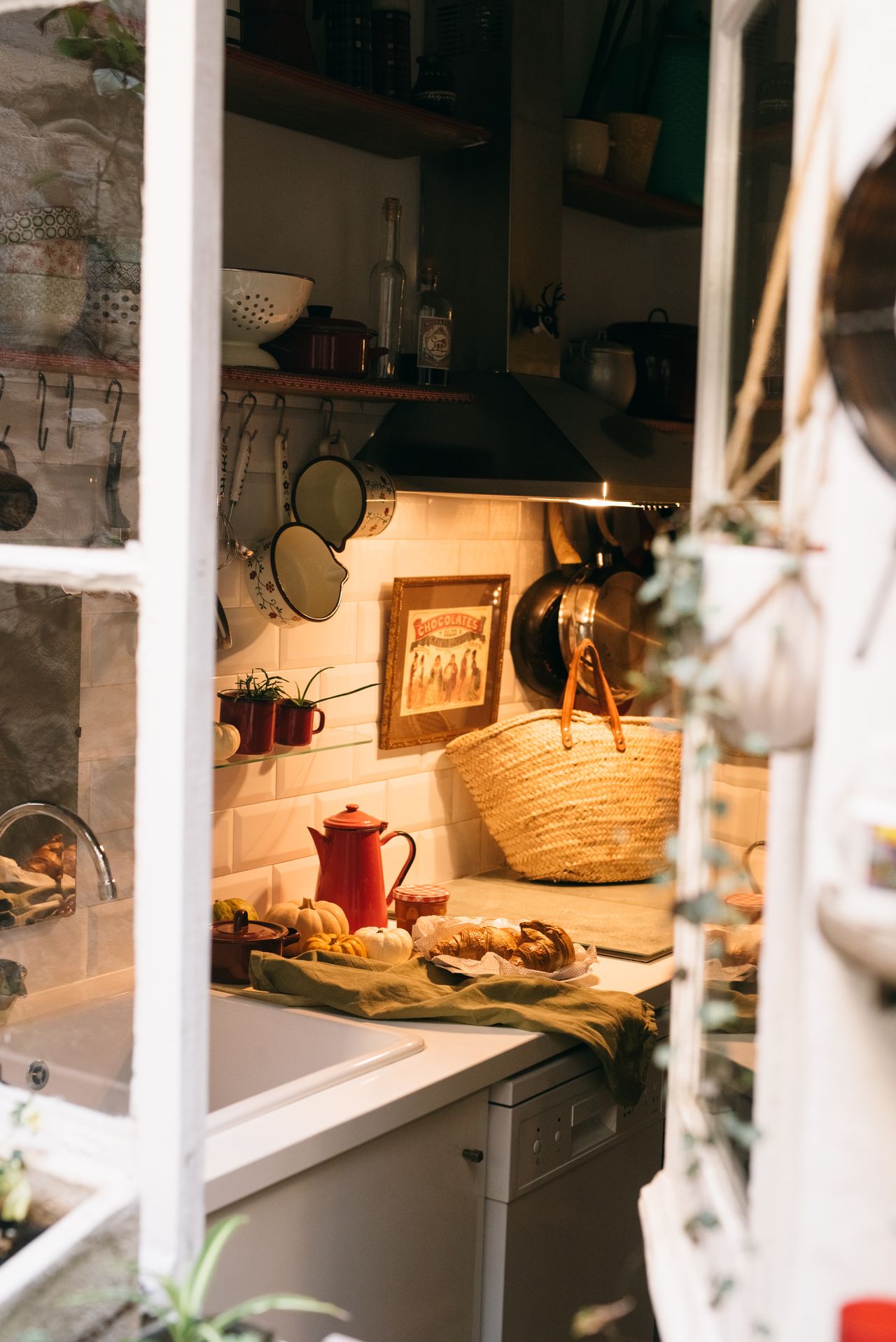
Photo: Pexels
Old signs and enamelware bring the stories into the room. A weathered wooden sign above the doorway, a framed vintage-style print near the stove, or an old metal advertising sign adds color and character that new decor rarely has. Enamelware, the white or colored enamel-coated steel pieces like coffee pots, pitchers, basins, and mugs, is light, tough, and easy to find at flea markets and thrift stores for $5 to $25 a piece. A few chips in the enamel are not flaws here; they are exactly the patina you want.
The secret is to use these pieces with a light hand. One sign per wall is plenty, and two or three pieces of word art in the whole kitchen is a safe limit. Group enamelware in one color family, such as all white with black rims or soft blues, so it reads as a collection instead of clutter. Hang a row of enamel mugs on hooks under a shelf, set a pitcher of wooden spoons by the stove, and let one good sign be the star. Pieces that you actually use every day always look better than decor bought just to fill space.
5. Woven Baskets and Stoneware Crocks for Storage
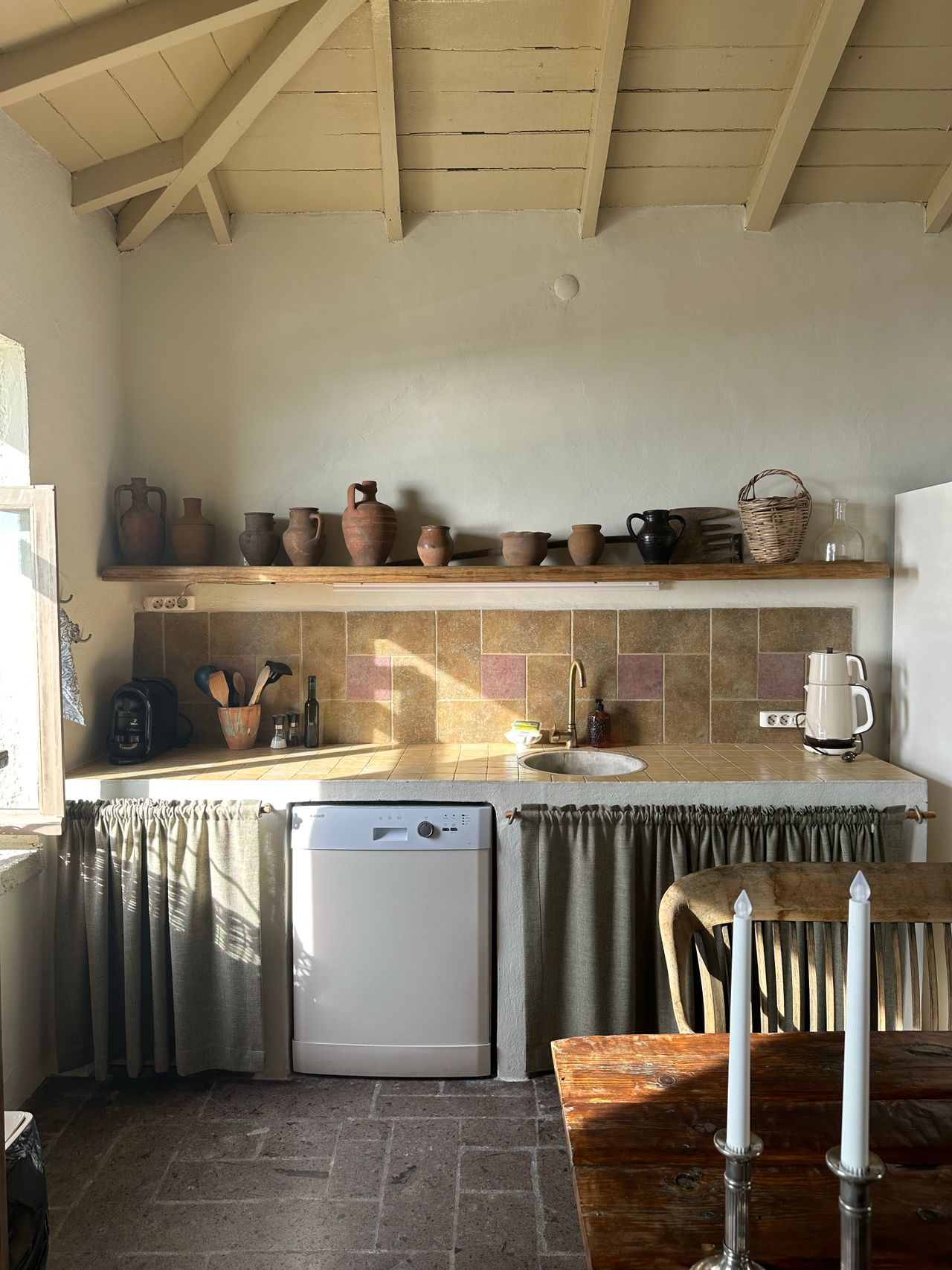
Photo: Pexels
Baskets and crocks solve two problems at once: they hide the clutter and they add warm texture. Woven baskets made from seagrass, water hyacinth, or willow hold potatoes, onions, fruit, bread, and the random items that always land on the counter. Stoneware crocks are perfect for wooden spoons and spatulas next to the stove, and bigger crocks can hold rolling pins or even serve as a home for a trailing plant. Vintage crocks with blue stripes or maker marks often sell for $15 to $50 at antique shops, and new ones cost even less.
Use baskets in a few set sizes so they stack and line up neatly: small ones, about 8 inches wide, for garlic and onions; medium ones for fruit; and one large basket, 16 inches or more, for bread or linens. Place a crock of utensils within arm's reach of the stove, a basket of fruit where guests can help themselves, and a tall basket in a corner for cutting boards. Natural fibers look best when the tones are close but not identical, so mix light and medium browns freely and skip anything dyed in bright colors.
6. Butcher Block Counters That Warm Up the Room

Photo: Wikimedia Commons
Wood counters soften a kitchen like nothing else. Butcher block, made from strips of maple, oak, walnut, or acacia joined together, brings instant warmth next to white or painted cabinets, and it is one of the most affordable counter materials you can buy. Ready-made slabs from home stores cost about $150 to $400 for an 8-foot length, far less than stone. The standard thickness is 1.5 inches, and a 25-inch depth fits normal base cabinets with a small overhang.
Butcher block does ask for a little care. Seal it with mineral oil or a food-safe hardwax oil every few months, wipe spills quickly, and always use trivets under hot pans. Small scratches and knife marks can be sanded out, which is something stone can never offer. If a full counter feels like too much upkeep, use wood on the island only and keep stone or quartz by the sink. Once your counters are in, our tips on how to decorate a kitchen countertop will help you style them without crowding your work space.
7. A Hanging Pot Rail over the Stove or Island
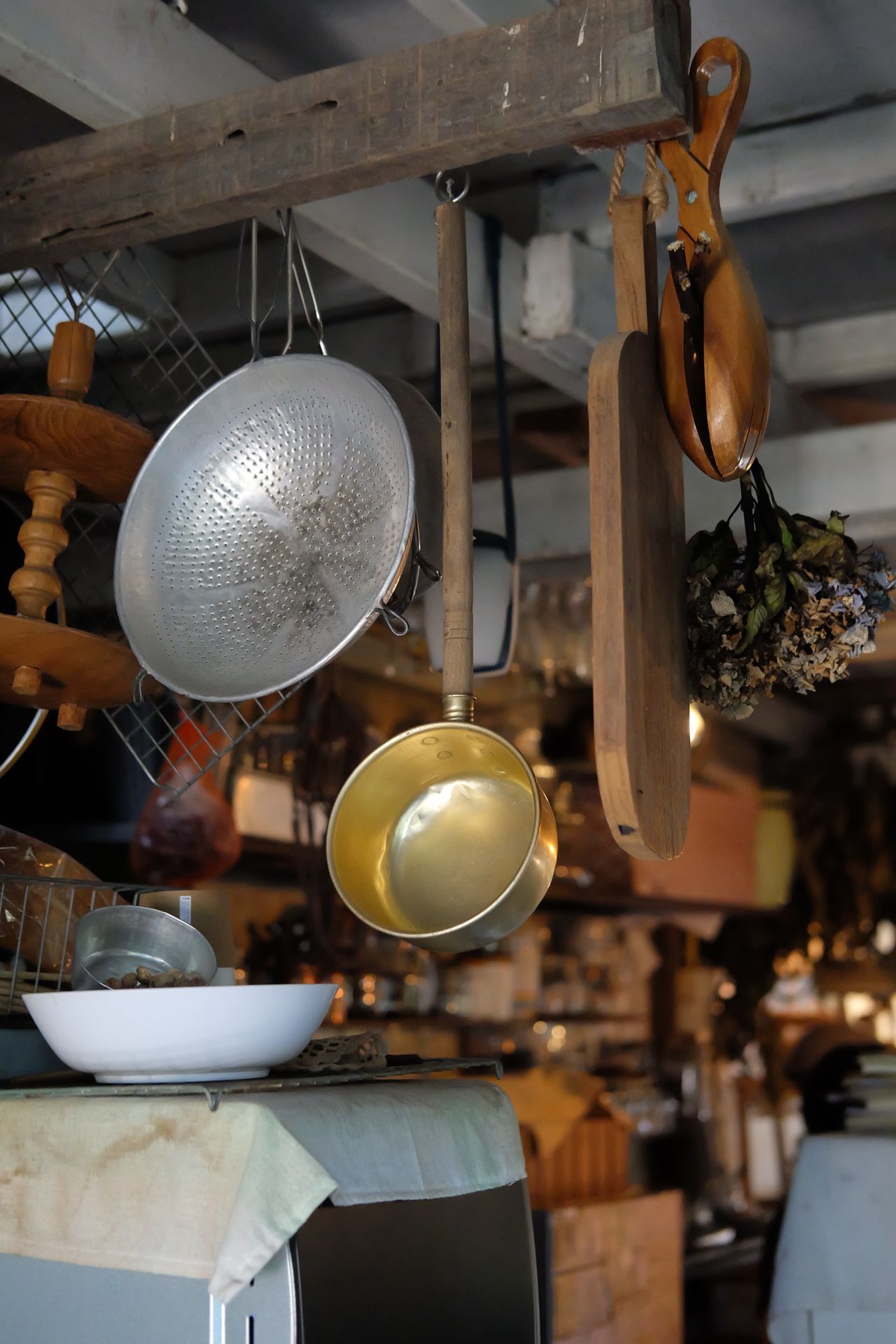
Photo: Pexels
A pot rail turns your cookware into the decoration. In old farmhouses, pots hung from a bar or beam because cupboard space was precious, and the look still works beautifully today. A wall-mounted rail beside the stove keeps pans within reach, while a ceiling-mounted rack over the island frees up a whole cabinet. Rails come in iron, brushed steel, copper, and wood. A simple 30-inch wall rail with S-hooks costs $30 to $80 and holds far more than most people expect.
Always fix wall rails into studs, and use proper ceiling joists for hanging racks, because a full set of cast iron and copper can weigh 40 pounds or more. Hang the bottom of the pots about 30 to 36 inches above the counter so they do not block your view or your head. Mix metals freely, since copper, black iron, and steel look great together in a country kitchen. If your collection is small, add wooden cutting boards, a bundle of dried herbs, or a string of garlic to fill the gaps.
8. Rustic Lighting with a Warm, Soft Glow
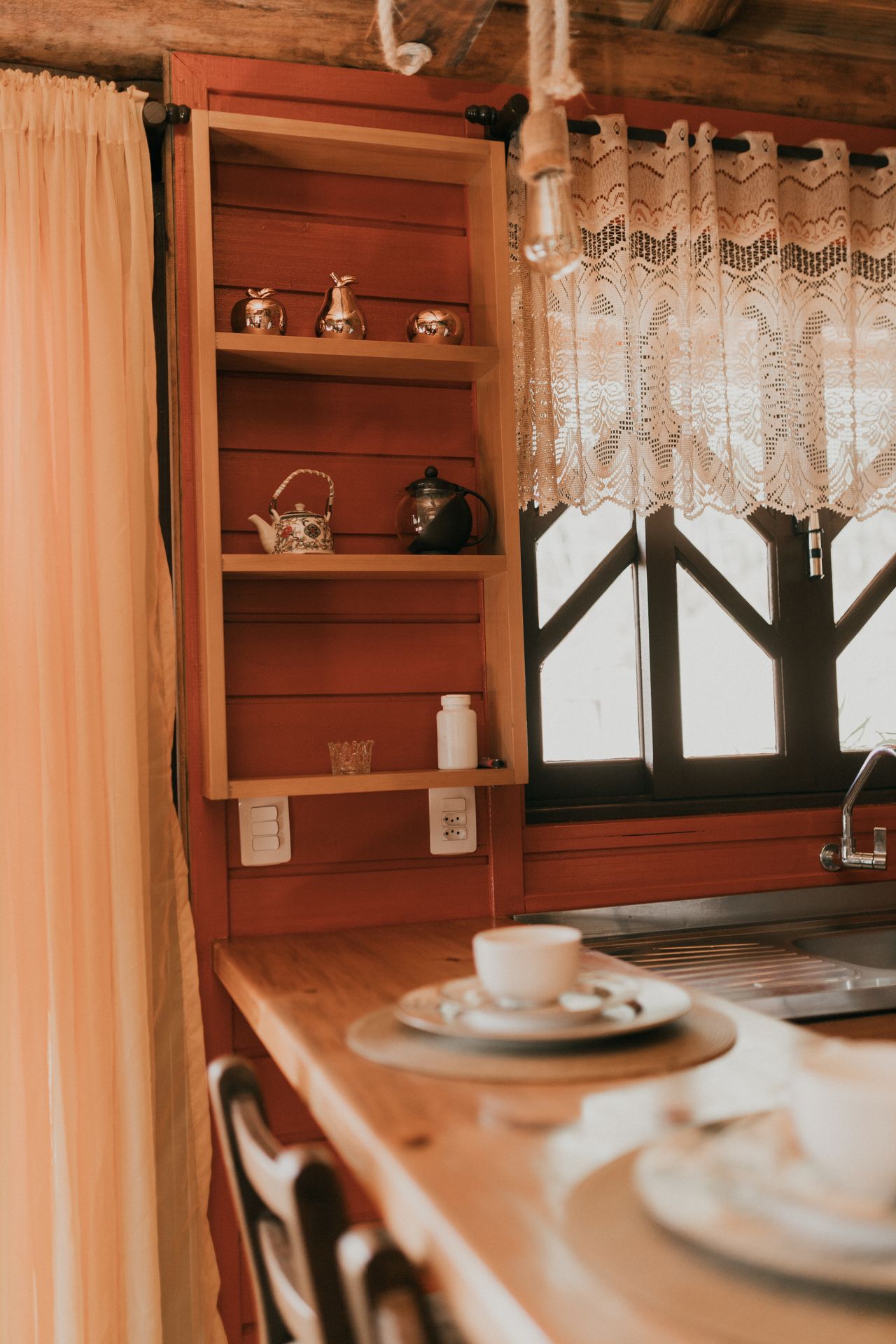
Photo: Pexels
Lighting decides whether a kitchen feels cozy or cold. For this style, look for fixtures with honest materials: black or oil-rubbed bronze metal, clear or seeded glass, wood accents, and visible Edison-style bulbs. Mason jar pendants, lantern lights, and simple metal barn shades all fit the look, and most cost $40 to $150 each. Hang pendants in a row of two or three over an island or sink, and choose warm bulbs in the 2700K range so the light feels like late-afternoon sun instead of office white.
Getting the height right matters as much as the fixture itself. The bottom of a pendant should sit about 30 to 36 inches above a counter or island, high enough to see across the room and low enough to feel intimate. Our detailed guide to pendant lighting height for a kitchen island walks through the exact measurements for different ceiling heights. Add a dimmer switch if you can; it costs under $25 and lets you drop the lights low for slow dinners, which is where this style truly shines.
9. A Distressed Wood Island or Work Table
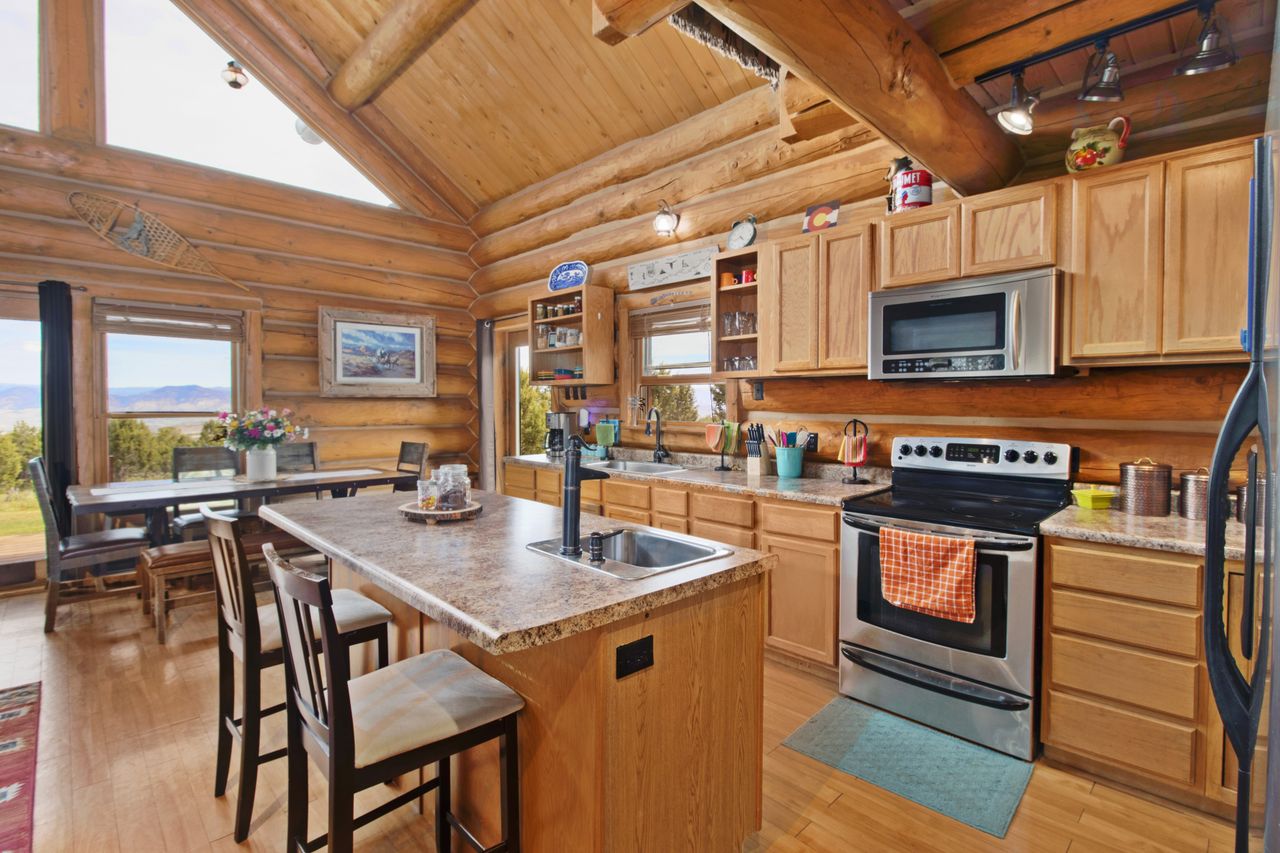
Photo: Pexels
A worn wood island gives the kitchen a center that feels gathered over time, not bought in one day. True distressed pieces show soft dents, faded paint, and edges rounded by years of use. You can find them as old farm tables, butcher blocks on legs, or vintage workbenches, and a good secondhand piece often costs $200 to $600, much less than a built-in island. If you are buying new, look for solid wood with a hand-scraped or wire-brushed finish rather than a printed wood look.
A comfortable island or work table stands 36 inches high, the same as a counter, and a size around 4 to 5 feet long suits most kitchens while leaving at least 36 inches of walking space on every side. You can also distress a plain piece yourself: sand the edges, add a few gentle dents with a chain or hammer, then finish with a matte wax instead of shiny varnish. Add two or three simple stools with wood or woven rush seats, keep the top mostly clear, and let one beautiful bowl or bread board do the decorating.
10. Open Plate Racks for Everyday Dishes

Photo: Wikimedia Commons
Plate racks are an old farmhouse idea that deserves a comeback. A wooden rack with vertical slots holds dinner plates upright where you can see them and grab them fast, and it turns plain white dishes into a quiet display. Racks can be built into a cabinet, mounted on the wall, or set into an open hutch. A wall-mounted rack about 30 to 36 inches wide usually holds 10 to 14 plates, and simple wooden versions sell for $80 to $200, or far less if you build one from pine boards.
Mount the rack near the dishwasher or sink so putting dishes away takes seconds. Check that the slots are at least 1.5 inches wide for thick stoneware, and add a shallow shelf above or below for bowls and mugs. Everyday white or cream plates look classic in a rack, while mixed vintage patterns give a collected, cottage feel. Keep the rack for dishes you use daily; like open shelves, regular use is what keeps everything clean and dust-free.
Frequently Asked Questions
How can I make my kitchen look rustic without a full remodel?
Start with the layers you can change in a weekend. Swap cabinet hardware for black iron or oil-rubbed bronze pulls, add one or two open wood shelves, hang a pot rail, and bring in baskets, crocks, and linen towels. A warm bulb swap and a wooden cutting board display cost very little. Most kitchens look fully transformed after four or five of these small changes, and none of them require a contractor.
How do I keep rustic kitchen decor from looking dated?
Mix old and new on purpose. Pair your wood shelves and beams with clean, modern basics like a simple faucet, plain white dishes, and uncluttered counters. Limit word signs to one or two favorites, choose real materials over fake distressed finishes, and skip matching sets of themed decor. The rooms that age best use rustic pieces as the warm background, not as a costume.
Are open shelves and plate racks actually practical?
Yes, if you stock them with things you use every day. Daily-use dishes and glasses get washed so often that dust never builds up. The problems start when shelves hold rarely used decor that sits for months. Keep special-occasion items in a closed cabinet, wipe shelves during your normal weekly clean, and the open look stays easy to live with.
How much does this style cost on a small budget?
A convincing start costs $150 to $300: one shelf with brackets, a pot rail, a few thrifted enamelware pieces, two baskets, and warm bulbs. Thrift stores, flea markets, and online marketplaces are full of real wood furniture and vintage kitchenware for very little money. Add the bigger pieces, like a sink or beams, one at a time as your budget allows.
Can a small kitchen pull off this look?
Absolutely, and small kitchens often wear it best because the style grew out of small farm cottages. Choose slimmer beams or skip them, use one short run of open shelves instead of two, and pick a single-bowl farmhouse sink in the 30-inch size. Light wood tones, good natural light, and a strict no-clutter rule keep a small space feeling cozy instead of cramped.
Final Thoughts
The heart of rustic kitchen decor is simple: real materials, useful things, and a room that feels gathered slowly over the years. You do not need all 10 ideas. Pick the two or three that solve real problems in your kitchen, like a pot rail for crowded cabinets or shelves for a blank wall, and build from there. Wood, iron, enamel, and woven fibers all get better with use, so buy the best quality you can and let daily life add the patina. A kitchen built this way welcomes people in, and that is the whole point.
Sources
- Bob Vila – Rustic Kitchen Ideas That Bring Your Space Back to Basics
- Better Homes & Gardens – Rustic Kitchen Ideas for a Cozy, Warm Space
- Home Decor Hero – Genius Hacks to Add Rustic Charm to Your Kitchen on a Budget
- Annie & Oak – How to Create a Farmhouse Kitchen: Tips from Interior Designers
Gallery
Photo: Pexels
Photo: Pexels
Photo: Pexels

No comments:
Post a Comment