Merino wool is the fibre behind the warmest winter wardrobes in Canada. It comes from merino sheep, whose ultra-fine fleece traps heat without bulk, wicks sweat away from the skin and resists odour for days — which is why everyone from backcountry skiers to downtown commuters swears by it.
This guide explains what makes it different from ordinary wool, how to read micron counts, which pieces are worth buying first and how to wash them without shrinking. If you are building a cold-weather wardrobe from scratch, pair this with our picks for the warmest fabrics for winter.

Table of Contents
- 1. Why it is not ordinary wool
- 2. Microns: the softness number
- 3. Warmth without the bulk
- 4. The odour trick travellers love
- 5. Base layers: your first buy
- 6. Sweaters worth the money
- 7. Socks that save winter feet
- 8. Washing it without fear
- 9. How to spot the real thing
- 10. What it costs in Canada
- Frequently Asked Questions
1. Why it is not ordinary wool
Ordinary wool fibres are thick and wiry, which is why a cheap wool sweater itches. Merino fibres are dramatically finer — often under 20 microns — so they bend softly against the skin instead of prickling it. The crimped structure of each fibre, visible in this CSIRO diagram, traps still air for insulation while letting moisture vapour escape.
That combination is rare in nature: warm when it is cold, breathable when you heat up. It is the reason merino works as a next-to-skin layer in minus 30 and as a light sweater indoors, while coarse wool is stuck being an outer layer.

2. Microns: the softness number
Merino wool fibres are measured in microns, and the number tells you how soft the garment will feel. Under 17.5 microns is ultrafine — luxury next-to-skin softness. The 18.5 to 19.5 range is the sweet spot for base layers and sweaters: soft, durable and reasonably priced. Anything over 21 microns starts to feel like regular wool.
Reputable brands print the micron count on the label, so check before you buy. A $90 base layer at 18.5 microns will feel noticeably softer than a $60 one at 21 — and you will actually wear the softer one, which makes it the better value.

3. Warmth without the bulk
A 200-gram merino mid-layer insulates like a much thicker synthetic fleece, because the crimped fibres hold a deep layer of still air. That means you can wear a slim base layer and a merino sweater under your parka instead of a bulky fleece — you stay just as warm and you can actually move your arms.
For Canadian winters this matters most in the city: a trim merino sweater under a wool coat looks sharp at the office and still handles a minus 20 walk to the streetcar. Bulk is the enemy of real-life winter dressing, and this fibre beats it.

4. The odour trick travellers love
Wool is naturally antimicrobial: the lanolin coating and the fibre structure slow the bacteria that cause body odour. In practice, a merino base layer can be worn three or four days of skiing or travel before it needs washing, while a synthetic top smells after a single day.
That is why frequent flyers and backcountry skiers pack merino almost exclusively. Fewer garments in the bag, less laundry on the road, and you never become the person everyone avoids on the chairlift. Air the garment out overnight and it is genuinely fresh by morning.
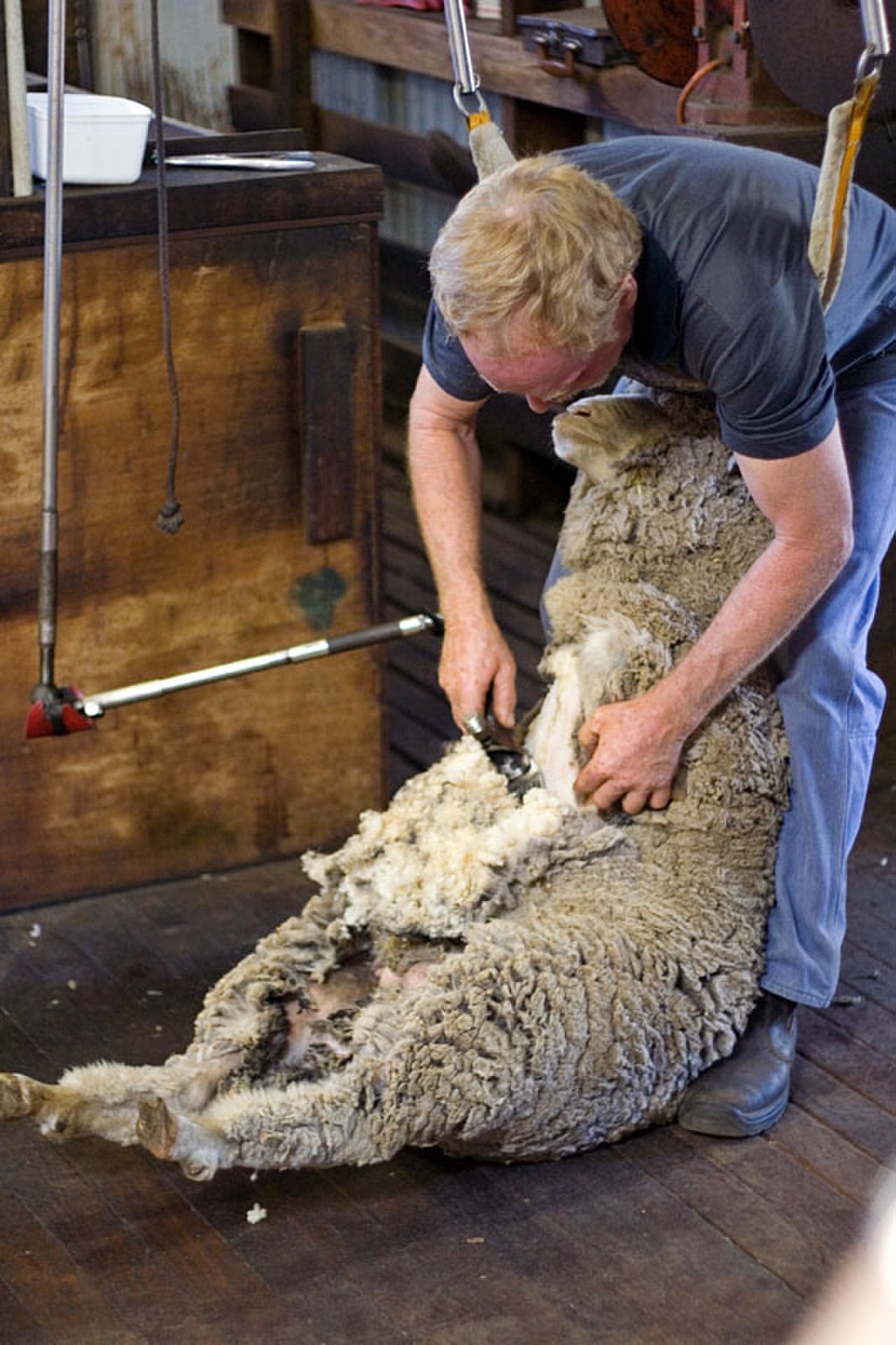
5. Base layers: your first buy
If you buy one merino piece, make it a long-sleeve base layer top in the 180 to 200 gsm range. Worn under everything, it regulates temperature all day: warm on the morning commute, breathable in an overheated office. Most Canadians reach for it from November to April.
Fit should be close but not compression-tight, with flatlock seams to avoid chafing. Expect to pay $80 to $130 CAD for a good one; it will outlast three cheap synthetic tops. See our guide to the best socks to wear with winter boots for the matching foundation layer.

6. Sweaters worth the money
A merino crewneck or quarter-zip in the 250 to 300 gsm range is the hardest-working sweater you can own. It layers under a coat without bunching, looks polished enough for the office, and handles everything from a hockey arena to a dinner out. The Nordic-style knit shown here is the classic cold-climate look.
Buy your true size — merino relaxes slightly with wear — and choose dark colours for longevity, since light shades show pilling sooner. A $120 to $180 sweater worn twice a week for five winters costs pennies per wear.

7. Socks that save winter feet
Cold feet ruin winter days, and merino hiking socks are the single best upgrade. The fibre wicks sweat away from the skin — damp feet are cold feet — while cushioning blisters on long walks. A midweight merino sock keeps feet comfortable from minus 5 to minus 25 in proper boots.
Buy socks with reinforced heels and toes; the 50 to 70 percent merino blends actually outlast pure merino because the nylon adds abrasion resistance. At $20 to $30 a pair, three pairs rotate through a whole winter.

8. Washing it without fear
The shrinking horror stories come from hot water and agitation, not from the fibre itself. Wash merino in cold water on a gentle or wool cycle with a wool-safe detergent, then lay flat to dry as shown here — never tumble dry. Treated this way, it holds its size for years.
Because it resists odour, wash base layers every three to four wears rather than every wear; overwashing wears any garment out faster. A mesh laundry bag adds cheap insurance against snags from zippers and velcro in a mixed load.

9. How to spot the real thing
Check the label: it should say 100% merino or list a high merino percentage with nylon or elastane — not "wool blend" with 10 percent wool and 90 percent acrylic. Look for certifications like ZQ or Woolmark, which trace the fibre to audited farms with animal-welfare standards.
Price is a tell: a genuine merino base layer cannot be made and sold for $25. If the deal looks impossible, it is probably regular wool or mostly synthetic. Buy from established outdoor and heritage brands rather than mystery marketplace sellers.

10. What it costs in Canada
Budget around $80 to $130 CAD for a merino wool base layer top, $120 to $200 for a quality sweater, and $20 to $30 per pair of socks. A starter kit of two tops, one sweater and three pairs of socks lands near $400 — less than a single good parka, and it transforms how every coat you own performs.
Buy in the autumn sales when outdoor retailers clear last season's colours at 25 to 40 percent off. Like the decades-old hand-knit in this photo, well-kept merino lasts: cost per wear over five winters beats fast fashion by a mile.

Frequently Asked Questions
Is merino itchy like regular wool?
Not at 19.5 microns or finer — the fibres bend instead of prickling the skin. If you are sensitive, choose 18.5 microns or under and you will feel the difference immediately.
How often do I need to wash it?
Base layers every three to four wears, sweaters far less often. The fibre resists odour naturally; airing overnight usually refreshes a garment completely.
Can I put it in the dryer?
No — tumble drying is the fastest way to shrink it. Wash cold on gentle, then lay flat or hang to dry. It dries reasonably fast thanks to the fibre's moisture management.
Is it worth the price over synthetics?
For odour resistance, temperature regulation and longevity, yes. A $100 base layer worn 100 times costs $1 per wear and outlasts several $40 synthetics that smell after one use.
What should I buy first?
A long-sleeve base layer top, then socks, then a sweater — in that order. Each piece multiplies the value of the last, and the base layer transforms every winter outfit you already own. For building the full cold-weather wardrobe, see our winter capsule wardrobe and warm winter work outfits.
Final Thoughts
Merino earns its reputation one cold morning at a time: warm without bulk, fresh after days of wear, and soft enough to live in. Start with a base layer, learn your micron numbers, wash it cold and dry it flat. Five winters from now you will wonder how you ever dressed for January without it.
Sources
Gallery



No comments:
Post a Comment