A plain rectangle of grass is fine, but it never looks finished. The yards that stop people on the sidewalk are not always bigger or costlier. They just have shape, clean lines, and a few smart features. The good news is that most lawn landscaping ideas are simple weekend projects. You do not need a full redesign or a big budget. You need a plan, a shovel, and one free Saturday to get started.
This guide shares 10 proven ways to turn a flat, boring lawn into a yard that looks cared for and expensive. Each idea includes real sizes, honest costs in US dollars, and the upkeep it needs, so you can pick what fits your time and wallet. Most ideas suit USDA zones 3 to 9, and Canadian readers can use them too, since Canadian hardiness zones run close to the USDA number for most southern cities. If you are starting from a bare lot, read our step-by-step guide to designing the landscape first, then come back here for the lawn itself.
Photo: Pexels
Table of Contents
- 1. Curved Island Beds in the Middle of the Lawn
- 2. Crisp Lawn Edging in Steel, Brick or Stone
- 3. A Lawn-Free Front Area with Ground Covers
- 4. Shade-Tolerant Grass Under Trees
- 5. Striped Mowing Patterns, Done Right
- 6. Stepping Stone Paths Across the Grass
- 7. A Clover or Micro-Clover Lawn
- 8. Ornamental Grass Borders
- 9. Tree Rings and Mulch Circles Done Properly
- 10. Terracing a Sloped Lawn
- FAQs
- Final Thoughts
- Sources
- Gallery
1. Curved Island Beds in the Middle of the Lawn

Photo: Wikimedia Commons
An island bed is a planting bed that sits out in the open grass, away from the house and fences. It breaks up a big empty lawn and gives the eye something to enjoy. Curves work better than straight lines here. A gentle kidney or oval shape, about 8 to 12 feet long and 5 to 7 feet wide, looks natural and is easy to mow around. Sharp corners and narrow points are hard to mow and always look messy, so keep every curve wide and smooth. Mark the shape first with a garden hose, live with it for a day, and adjust it before you dig.
Plant the bed in layers. Put one small feature tree or large shrub in the center, such as a serviceberry, a dwarf Japanese maple for zones 5 to 8, or a panicle hydrangea. Fill around it with clumps of daylilies, hostas, black-eyed Susans, and one ornamental grass for height. Cut a clean trench edge 4 inches deep, then spread 3 inches of shredded bark mulch. A bed this size costs about $150 to $400 to plant yourself, depending on the tree. Upkeep is low to medium: mulch once a year, divide perennials every few years, and re-cut the edge each spring.
2. Crisp Lawn Edging in Steel, Brick or Stone
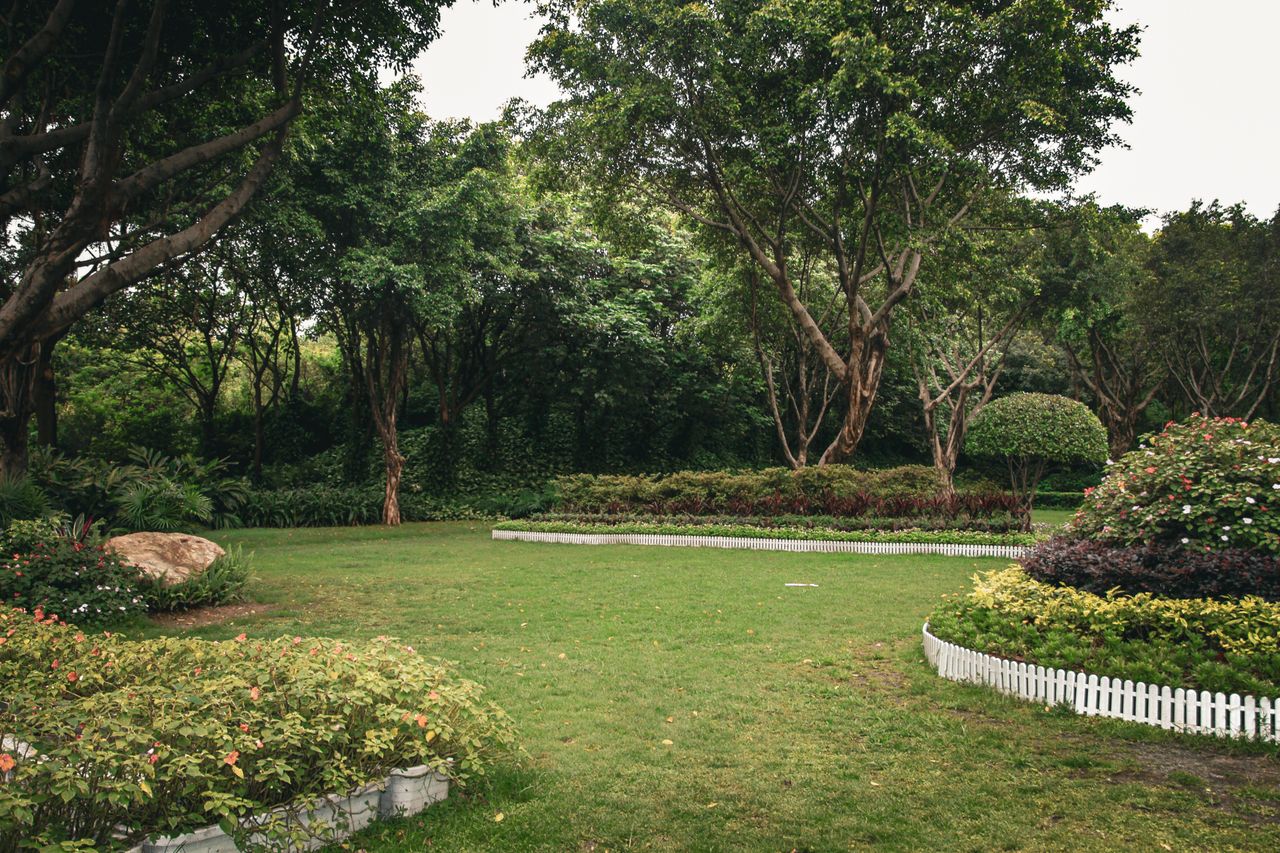
Photo: Pexels
Nothing makes a yard look tidy faster than a sharp edge between grass and bed. Grass creeps into mulch, mulch washes onto grass, and the whole yard looks tired within one season. A firm edge stops that. Steel edging is the cleanest choice for most homes. It comes in strips 4 to 5 inches tall, bends around curves, and nearly disappears once set. It costs roughly $1.50 to $3 per linear foot to install yourself. Brick pavers laid on edge cost about $2 to $5 per foot and suit traditional homes. Natural stone costs $5 to $10 per foot but lasts the longest.
Set the top of the edging about half an inch above the soil, level with the height of the cut grass, so a mower wheel can ride along it without scalping. Dig a narrow trench, set the edging, backfill, and tamp it firm. A simple cut trench edge costs nothing but your time, yet it must be re-cut twice a year to stay sharp. For shape ideas and more materials compared side by side, see our full list of flower bed edging ideas. Whatever you choose, edging is low maintenance once in: a quick pass with a string trimmer keeps the line clean.
3. A Lawn-Free Front Area with Ground Covers
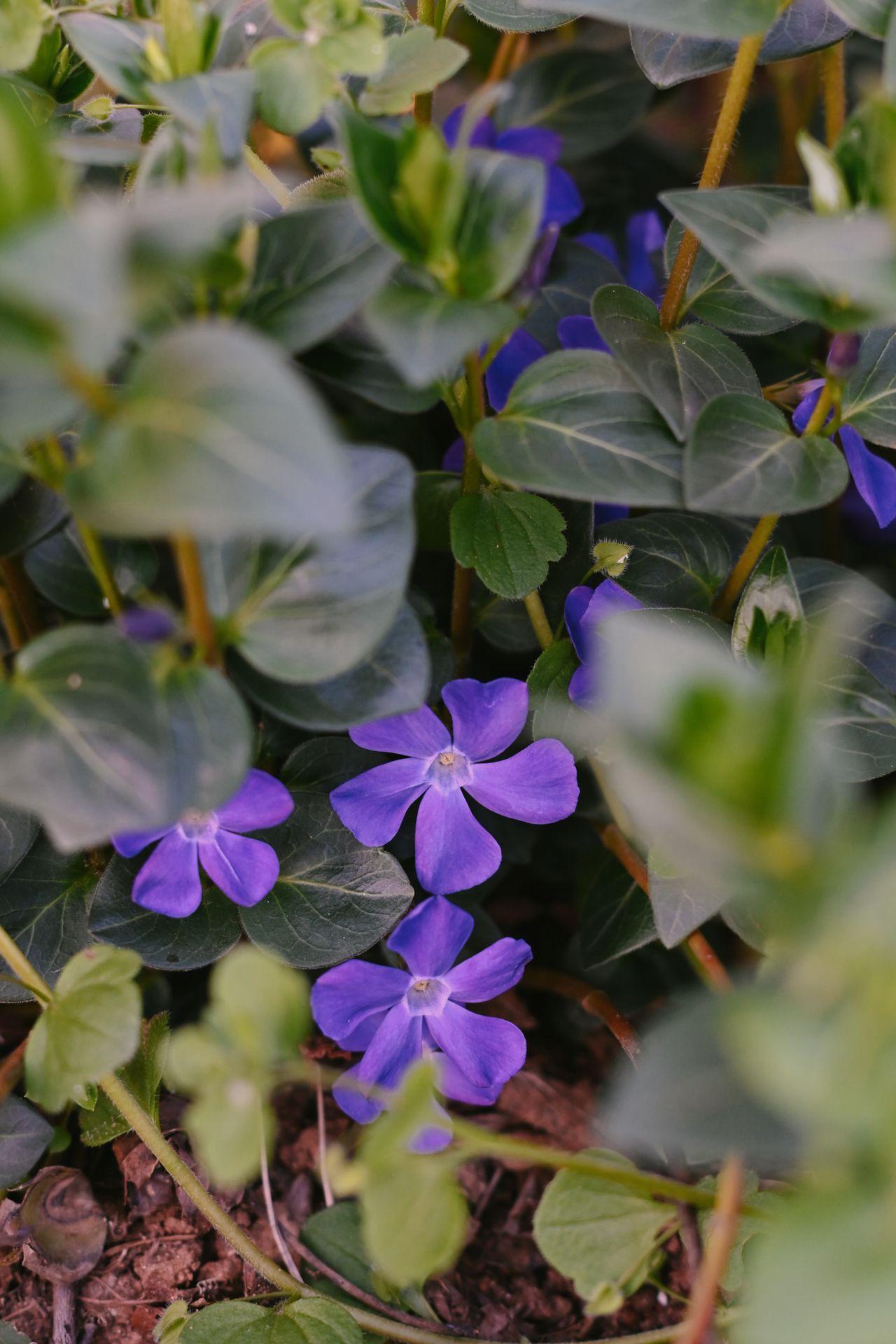
Photo: Pexels
If your front lawn is small, steep, or always thin and patchy, you can remove the grass completely and plant a living carpet instead. Ground covers give you a green, finished look with no mowing at all. Creeping thyme handles hot, dry spots in zones 4 to 9 and smells great when stepped on. Periwinkle (vinca minor) covers shade in zones 4 to 8 and flowers purple in spring. Pachysandra suits cool shade, and low sedums bake happily in full sun where grass burns. A mix of two or three covers with a few boulders or a small tree looks designed, not empty.
Plant plugs or small pots about 12 inches apart in a staggered grid. At that spacing, most covers close up in one to two growing seasons. Plugs cost about $2 to $4 each, so a 200-square-foot front area runs roughly $350 to $700 in plants. Water weekly the first season, weed by hand until the plants knit together, then care drops to almost nothing. Add flat stepping stones through the planting so you can reach the door and the mailbox. Skip ground covers where kids or dogs play hard every day, since they do not take foot traffic like turf does.
4. Shade-Tolerant Grass Under Trees

Photo: Wikimedia Commons
Thin grass under a big tree is the most common lawn problem in North America, and r/lawncare is full of people asking why their seed never takes there. The fix starts with the right seed. Fine fescues, especially creeping red fescue and chewings fescue, are the best grasses for shade in zones 3 to 7, which covers most of Canada and the northern US. Tall fescue handles light shade and heat further south. No grass grows in deep, dark shade, so be honest about your light: most shade blends need at least 3 to 4 hours of sun or bright dappled light all day.
Help the grass as much as you can. Have low branches pruned up to open the canopy, and mow shaded grass taller, at 3.5 to 4 inches, so each blade catches more light. Overseed in early fall at about 4 to 5 pounds per 1,000 square feet, and keep the seed moist for two weeks. Where grass still fails, stop fighting it. Turn that spot into a mulched shade bed with hostas, ferns, and a bench. It will look intentional, and it ends the yearly cycle of seed, hope, and mud.
5. Striped Mowing Patterns, Done Right

Photo: Wikimedia Commons
Stripes cost nothing but care, and they make any lawn look like a ballpark. Stripes are not two colors of grass. They are light bouncing off blades bent in opposite directions. Grass bent away from you looks pale, and grass bent toward you looks dark. To get them, mow one straight pass, turn, and mow the next pass back the other way with a slight overlap. Your first pass sets the line, so mow it parallel to a driveway or sidewalk, and look at least 10 feet ahead instead of down at the mower to keep it straight.
A roller makes stripes much bolder. A striping kit or weighted roller that bolts behind the mower costs about $30 to $100 and flattens each pass as you go. Cool-season grasses like Kentucky bluegrass, perennial ryegrass, and tall fescue stripe best, since their blades are soft and bendy. Bermuda and zoysia stripe weakly, so southern readers should not judge themselves by northern photos. Mow tall, at 3 to 3.5 inches, use a sharp blade, and finish with one pass around the border to hide your turn marks. Change the pattern direction every few weeks so the grass does not learn to lean one way. For a checkerboard, mow the whole lawn a second time at a right angle to the first.
6. Stepping Stone Paths Across the Grass
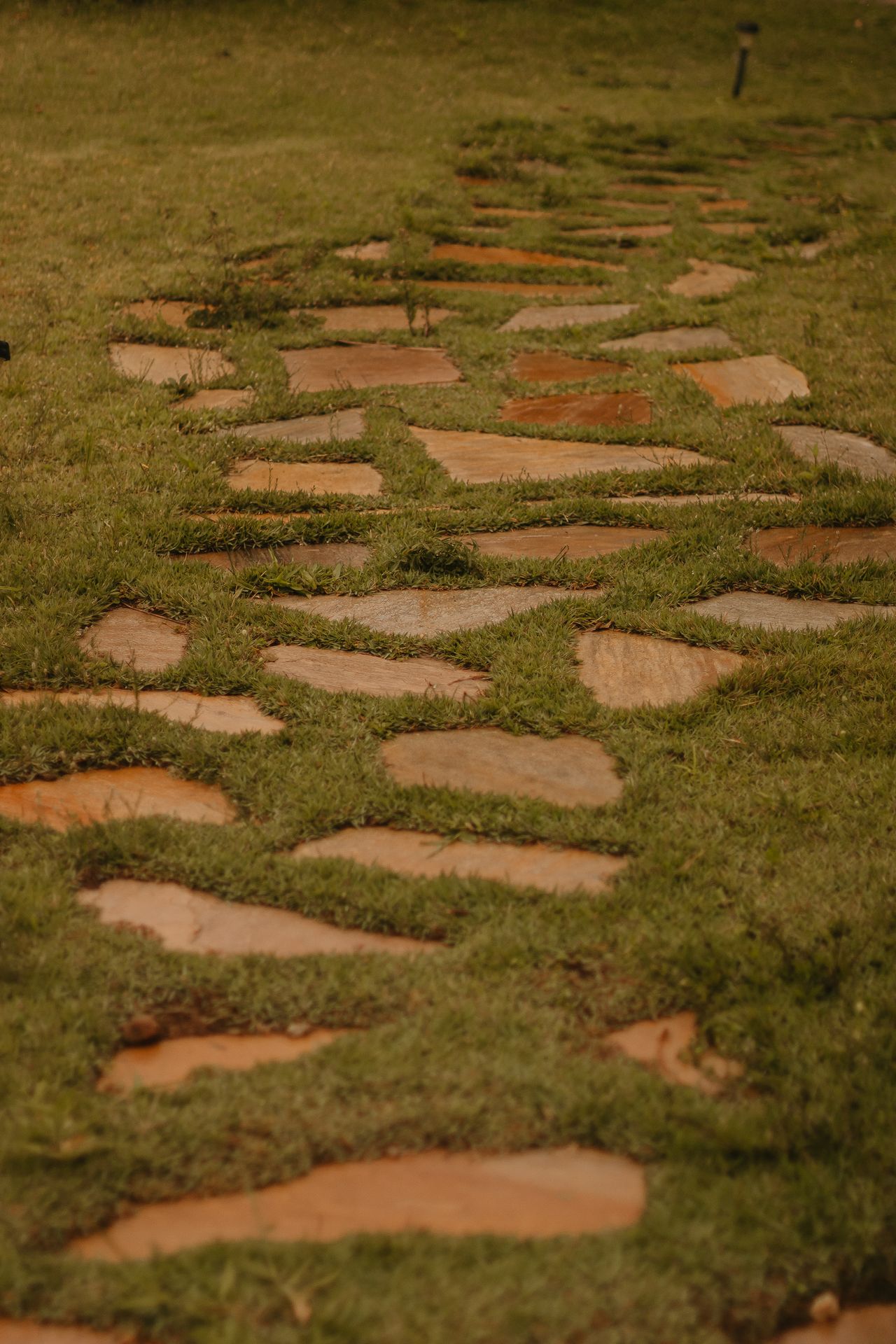
Photo: Pexels
Every lawn has a worn dirt line where feet actually travel: from the gate to the back door, or from the patio to the shed. A stepping stone path turns that worn line into a feature and saves the grass around it. Choose stones at least 18 to 24 inches wide so a whole foot lands safely. Natural flagstone costs about $8 to $25 per stone, while plain concrete pavers run $3 to $6 each and suit a tight budget. Space the stones 24 to 26 inches apart, center to center, which matches a natural walking stride for most adults.
Setting them well takes an afternoon. Lay the stones out first and walk the path to test the spacing. Then cut the turf around each stone, dig out about 2 inches of soil, add a 1-inch bed of coarse sand, and set the stone so its top sits level with or a half inch above the soil. That height matters: stones set too low collect mud, and stones set too high catch mower blades and trip guests. Pack soil tightly around each edge. Once a year, lift any stone that wobbles, add sand, and reset it. Maintenance after that is near zero.
7. A Clover or Micro-Clover Lawn

Photo: Wikimedia Commons
Clover was a normal part of lawns until the 1950s, when broadleaf weed killers that also killed clover pushed it out. Now it is back, and for good reasons. White Dutch clover and the smaller micro-clover pull nitrogen from the air and feed the soil, so the lawn needs little or no fertilizer. Clover stays green in dry summers when grass turns brown, its roots run deep, and it grows in zones 3 to 10, coast to coast. Micro-clover blends best with turf because its leaves are small and it flowers less. Expect to pay about $25 to $45 for a 5-pound bag of micro-clover seed, much more than plain clover, which is cheap.
You do not have to rip out your lawn to start. Overseed clover into thin grass in spring or early fall at roughly a quarter pound per 1,000 square feet, rake it in lightly, and keep it damp for two weeks. Mow at 3 inches and the mix looks like a normal green lawn from the street. Be honest about the trade-offs. Clover flowers feed bees, which is lovely, but mow before a barefoot party if anyone has a bee sting allergy. It also wears out faster than grass under heavy sports play, and once you choose clover, you cannot spray broadleaf weed killer without killing it too. University extension experts suggest a grass-and-clover blend for most homes: you get the toughness of turf with the low feeding and drought color of clover.
8. Ornamental Grass Borders

Photo: Wikimedia Commons
A row of ornamental grasses along a fence, driveway, or bed edge adds height, movement, and sound that flat grass cannot give. The lawn stays the calm green floor, and the grasses become the soft wall around it. Choose by height. Blue fescue makes a neat 1-foot front edge in zones 4 to 8. Fountain grass (Pennisetum) mounds 2 to 3 feet tall in zones 5 to 9. Miscanthus and native switchgrass reach 4 to 6 feet and can screen a fence or an air conditioner. Plant most grasses 3 to 4 feet apart; they fill fast and crowd out weeds by their second year.
Grasses in one-gallon pots cost about $10 to $25 each, so a 30-foot border runs $100 to $250. They ask for almost nothing: full sun, decent drainage, and one cut back to about 6 inches in late winter before new growth starts. Leave the dry plumes standing all winter for structure and for the birds. If you want variety ideas and care details for the most popular type, read our guide to ornamental grass (Pennisetum), which Canadian readers in milder zones will also find useful. One caution: check that the variety you buy is a clumping type, not a spreading one, so the border stays where you planted it.
9. Tree Rings and Mulch Circles Done Properly
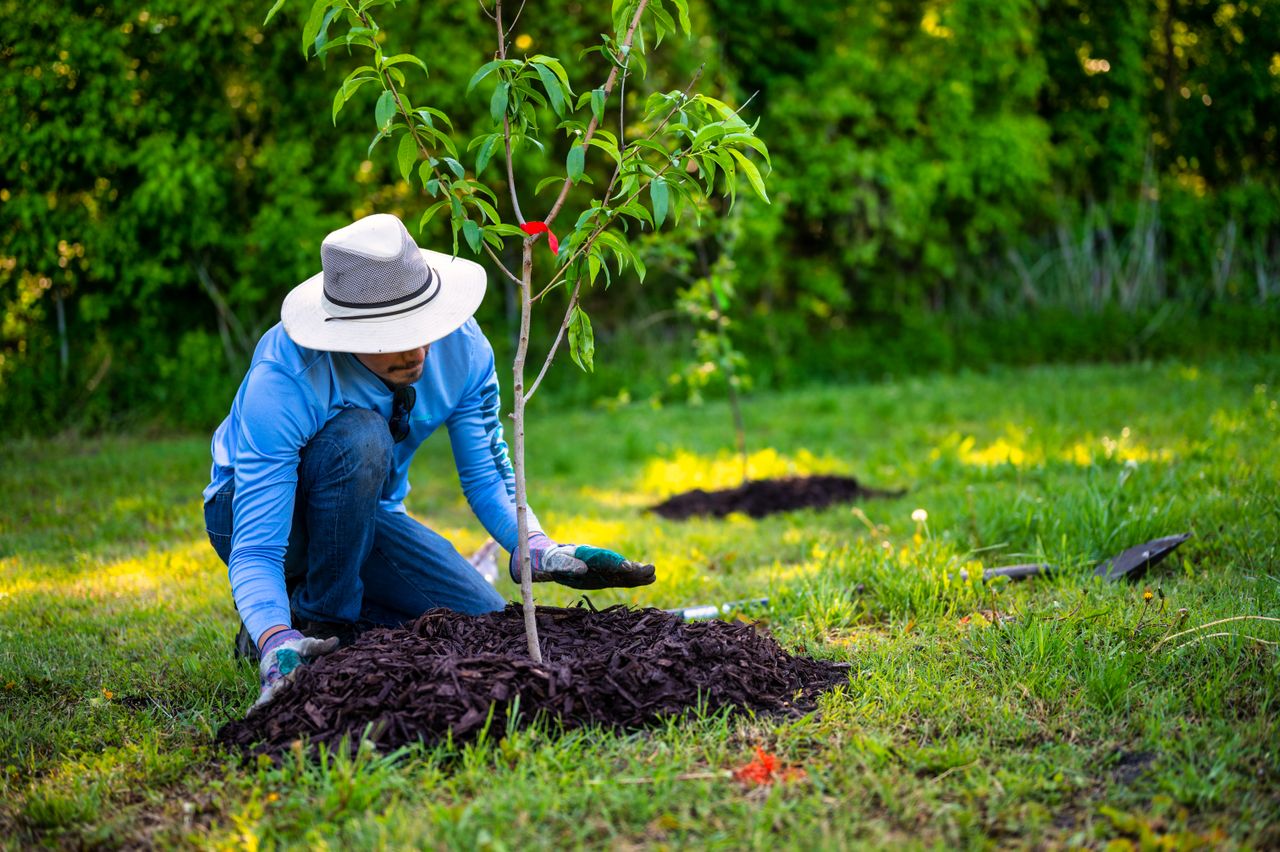
Photo: Pexels
Grass should never grow right up to a tree trunk. Mowers bump the bark, string trimmers cut it, and those wounds slowly kill young trees. A mulch ring fixes all three problems at once and looks neat doing it. Make the ring at least 3 feet across for a young tree, and wider as the tree grows, heading toward the drip line over the years. Spread mulch 2 to 4 inches deep. A 6-foot ring at 3 inches deep takes about 7 cubic feet of mulch, which is three to four standard 2-cubic-foot bags at $4 to $6 each.
The shape matters more than the material. Build a flat donut, not a volcano. Keep mulch 3 to 6 inches away from the trunk itself, since mulch piled against bark holds moisture, rots the bark, and invites pests. This one mistake, nicknamed mulch volcano, is the most common tree care error in suburbs. Shredded hardwood and pine bark both work well, and color is your choice; our black mulch guide explains how long dyed mulches keep their color. A steel or stone edge around the ring keeps the circle sharp. Top up the mulch once a year, and never let grass creep back inside the line.
10. Terracing a Sloped Lawn
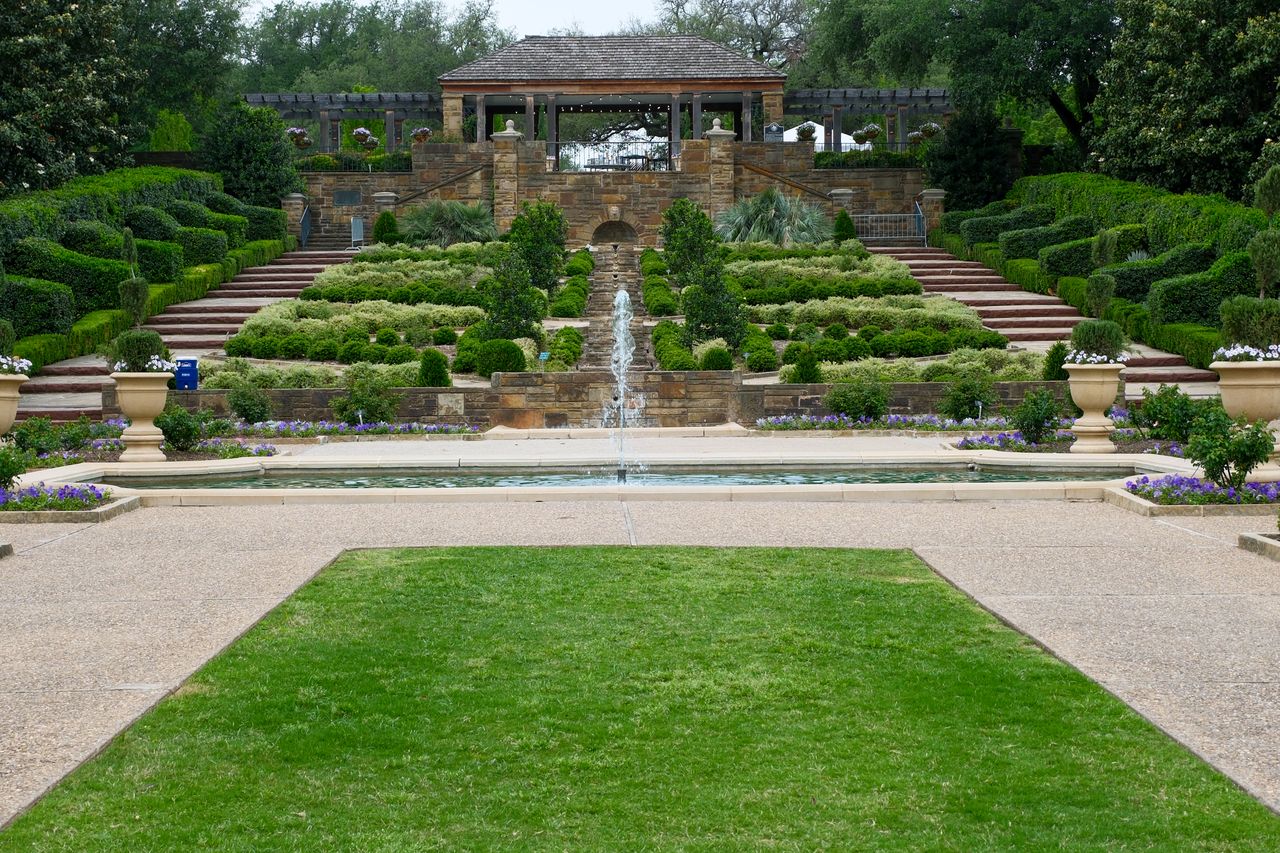
Photo: Pexels
A sloped lawn is hard to use and harder to mow. Past about a 10 to 15 percent grade, mowing across the hill is tiring and mowing up and down gets unsafe, especially on wet grass. Terracing cuts the slope into flat steps, each held by a low retaining wall. Keep each wall between 12 and 24 inches tall. Two or three low walls look better and are far easier to build than one tall wall, and walls under 4 feet rarely need a permit, though you should always check your local code first. Make every flat lawn strip at least 6 to 8 feet deep so you can mow it comfortably and set a chair on it.
Segmental concrete wall blocks are the friendliest DIY choice at about $5 to $9 per block. Finished cost runs roughly $15 to $25 per square foot of wall face if you build it yourself, and $30 to $60 per square foot hired out. The part people skip is drainage, and it decides whether the wall lasts 3 years or 30. Set the first course half-buried on a compacted gravel base, backfill behind the wall with clean drainage gravel, and add a perforated drain pipe on long walls. In Canada and the northern US, frost pushes on walls all winter, so that gravel base and drainage matter even more. Finish with steps at one end, and your useless hill becomes two or three flat, mowable garden rooms.
FAQs
What is the cheapest way to landscape a lawn?
Start with edges and seed, not plants. A hand-cut trench edge is free, a bag of good grass seed costs $20 to $50, and a few bags of mulch run under $30. For most yards, a crisp edge, fresh mulch in the beds and rings, and overseeding thin spots gives a tidy, cared-for look for under $100 to $200 total. Add one feature, like an island bed or a stone path, later when the budget allows.
What grass grows best in shade?
Fine fescue blends are the top choice for shade in northern US and Canada, especially creeping red fescue mixed with chewings and hard fescue. Tall fescue is the better pick for light shade in hotter regions. All shade grass still needs some light, around 3 to 4 hours of sun or all-day dappled light. In deep shade under dense trees, honest gardeners switch to mulch, ground cover, or a shade bed instead of reseeding every year.
How do I edge a lawn neatly?
For a one-time fix, use a half-moon edger to cut a clean trench 3 to 4 inches deep along the bed line, then remove the strip of turf. For a lasting line, install steel edging with its top about half an inch above the soil. After mowing, run a string trimmer held vertically along the edge to slice strays. Re-cut trench edges in spring and fall, since soil and grass slowly fill them in.
What lawn alternatives stay green?
Clover and micro-clover stay green through dry spells that brown out grass, and they need almost no fertilizer. Fine fescue left a little longer also holds color well in cool regions. In the south, zoysia stays green all summer but goes straw-brown in winter, which is normal dormancy, not death. True year-round green in cold climates is not realistic for any grass; clover comes closest because it keeps its color late into fall.
When is the best time to reseed a lawn?
Early fall is best for most of the US and Canada: mid-August to mid-September in Canada and the northern states, and September to early October further south. The soil is warm, weeds are slowing down, and young grass gets two cool months to root before winter. Spring seeding is the second choice. It works, but the new grass then faces summer heat and crabgrass pressure before it is strong, so expect to water more and accept thinner results.
Final Thoughts
You do not need all ten ideas. Most great yards use two or three, done well. If your lawn looks messy, start with edging and tree rings this weekend; clean lines change the whole picture for very little money. If your lawn looks plain, add one curved island bed or a stone path. And if your lawn fights you every year with shade, drought, or a steep slope, stop forcing grass to do a job it hates and switch that area to fescue, clover, or ground cover. Good lawn landscaping ideas are really about matching the right surface to each part of your yard, then keeping the edges sharp. Pick one project, finish it fully, and enjoy how much bigger the win feels than the work it took.
Sources
- Lawn Love - Small Front Yard Landscaping Ideas and Costs
- The Home Depot - Front Yard Landscaping Ideas
- Scotts - How to Stripe Your Lawn for a Big League Look
- Ask Extension - Clover and Microclover Lawns
- Men's Journal - How to Plant a Clover Lawn
Gallery
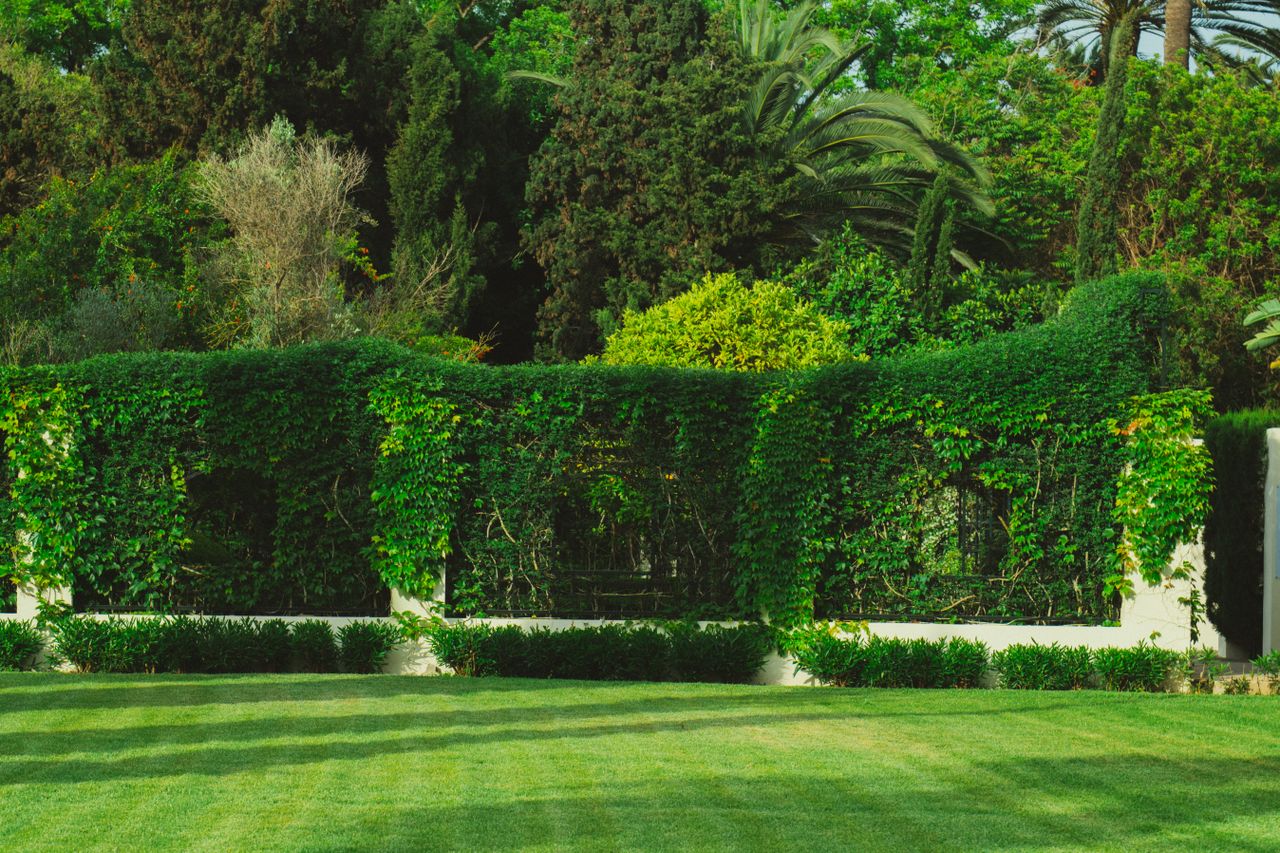
A smooth, even lawn framed by hedges and an ivy fence. Photo: Pexels
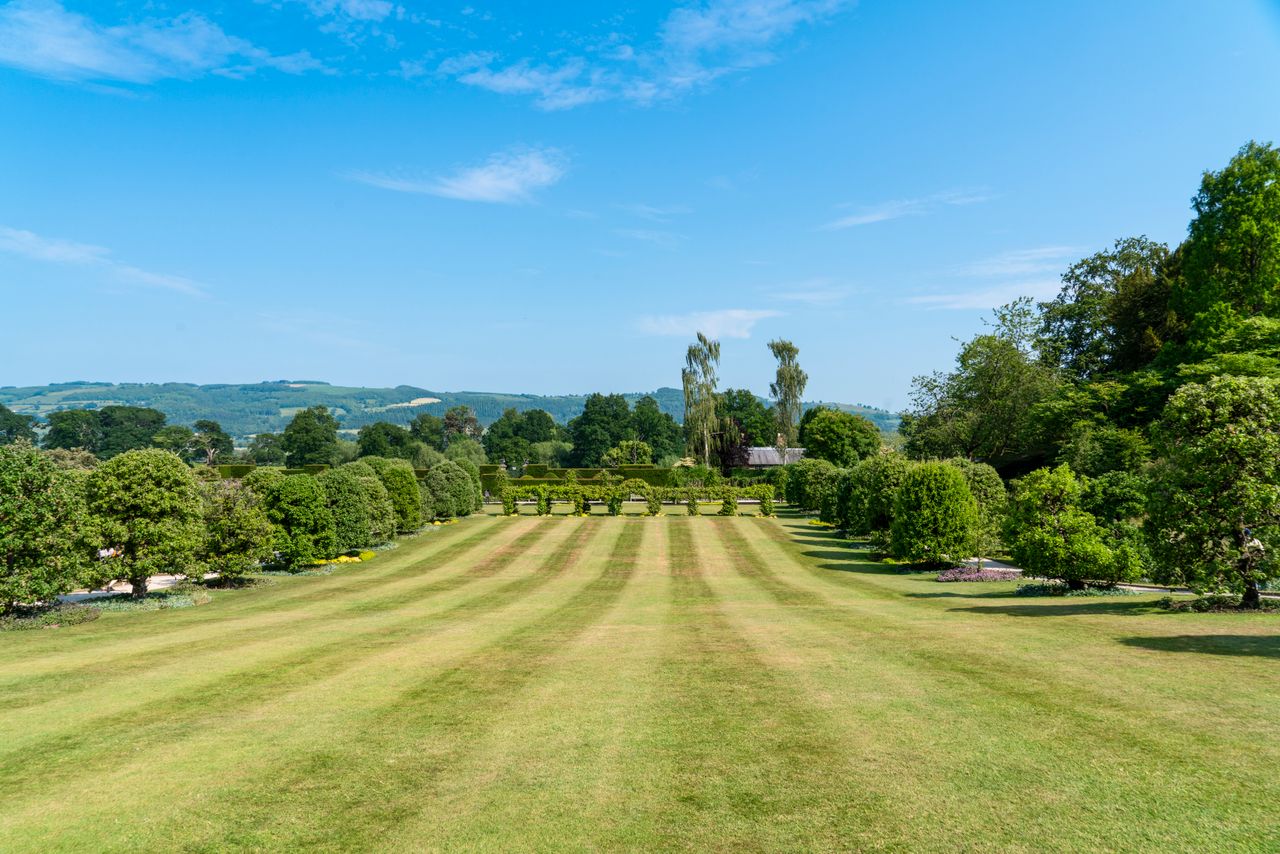
Wide mowing stripes across a grand garden lawn at Powis Castle. Photo: Pexels
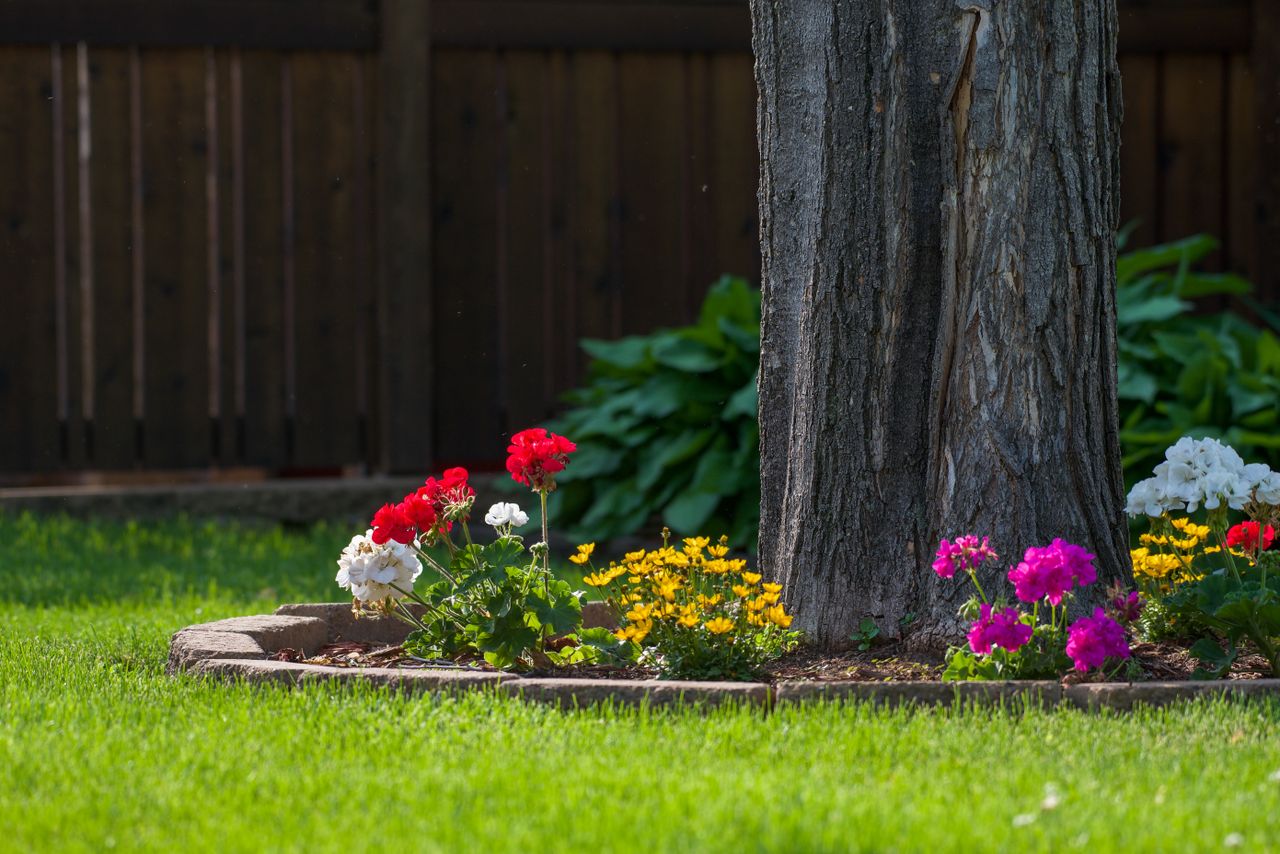
A tree ring finished with stone edging and flowers in a home lawn. Photo: Pexels
<
No comments:
Post a Comment