A European kitchen is loved for one simple reason: it looks calm and works hard. Clean cabinet fronts, clever storage, and honest materials come together in a space that feels both elegant and easy to live with. You do not need a villa in Tuscany or a loft in Copenhagen to get the look. Most of these ideas work in ordinary American homes, even in small apartments.
Below you will find ten European-style design ideas, from ultra-modern to warmly rustic. Each one comes with practical tips on sizes, materials, and costs, so you can borrow the parts you love. Whether you are planning a full remodel or a weekend refresh, there is something here for every budget.

Photo via Pexels
Table of Contents
- 1. Sleek Frameless Cabinets
- 2. Scandinavian Light-Wood Calm
- 3. Italian High-Gloss Glamour
- 4. French Country Warmth
- 5. Small-Space Smarts (the Frankfurt Lesson)
- 6. The Open-Plan Living Kitchen
- 7. Appliances That Disappear
- 8. A Deep Farmhouse Sink
- 9. An Island Made for Gathering
- 10. Mixed Materials, One Calm Look
1. Sleek Frameless Cabinets
The signature move of European-style kitchens is the frameless cabinet. Instead of the face frame found on most American cabinets, the box itself carries the door, so you get full access to every inch inside and a perfectly flat front. Doors and drawers sit nearly flush, with hidden soft-close hinges and either no handles at all or slim channel pulls. The result is a calm wall of cabinetry with almost no visual noise.
Standard base cabinets run 24 inches deep and wall cabinets 12 to 15 inches deep, and many European-style designs take the uppers all the way to the ceiling for maximum storage. Push-to-open latches work well if you truly want zero hardware. Stock flat-panel cabinets start around $100 to $200 per linear foot installed, so a basic 10-by-10-foot kitchen can land between $3,000 and $8,000 before countertops.
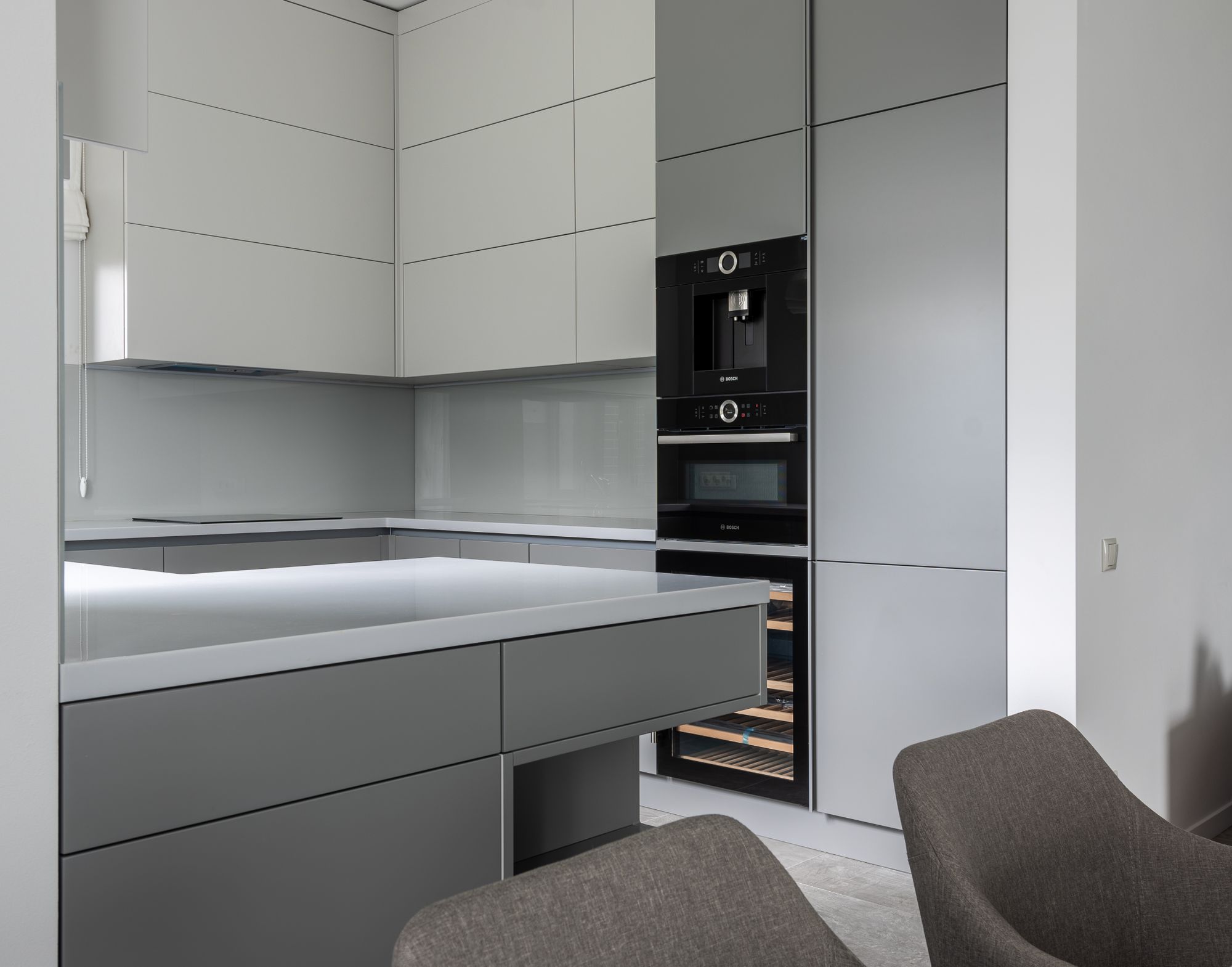
Photo via Pexels
2. Scandinavian Light-Wood Calm
Nordic kitchens are the softer side of the European look: white slab cabinets warmed up with pale oak or birch. The palette stays light so small rooms feel bigger, and the wood keeps the space from feeling cold or sterile. A butcher-block countertop or a light wood backsplash shelf is often all it takes to add that warmth.
Keep the wood honest and simple. A 1.5-inch-thick oak island top, oiled once a month, ages beautifully and costs far less than stone. Pair white uppers with open wood shelving for everyday dishes, and add one green plant for life. If your kitchen is dark, this is the most forgiving European-inspired style to copy, because light surfaces bounce whatever daylight you have.

Photo via Pexels
3. Italian High-Gloss Glamour
Italian-inspired kitchens go bold: lacquered cabinets in deep charcoal, navy, or black, veined marble, and brass or gold accents. High-gloss fronts reflect light like a mirror, which makes even a dark kitchen feel alive after sunset. This is the evening-dress version of the European look, made for people who entertain.
Gloss shows fingerprints, so keep a microfiber cloth in a nearby drawer and choose matte finishes for the busiest touch zones if that bothers you. Balance dark cabinets with a light floor and hang pendants 30 to 36 inches above the island so the light pools on the stone. One statement material is enough; let the marble or the lacquer be the star and keep everything else quiet.

Photo via Pexels
4. French Country Warmth
Not every European-style kitchen is minimalist. French country kitchens are warm and collected: exposed wooden beams, terracotta tile, creamy cabinets, and copper pots hanging where you can grab them. The photo below shows a real country kitchen in Corsica, France, with rustic beams and earthy tile that instantly make the room feel welcoming.
You can fake the bones of this look without rebuilding your house. Faux wood beams cost a fraction of real timber and install in a weekend. Hang a simple rail with S-hooks for copper or cast-iron pans, and swap a few upper cabinets for open shelves of everyday dishes. For more inspiration on warm wood cabinetry, see our rustic kitchen cabinet ideas.

Photo via Wikimedia Commons
5. Small-Space Smarts (the Frankfurt Lesson)
In 1926, architect Margarete Schütte-Lihotzky designed the Frankfurt kitchen: a tiny galley of about 70 square feet where every step was planned. It had built-in storage bins, a sliding-door pantry, and a layout based on the work triangle between sink, stove, and icebox. Nearly a century later, it is still the blueprint for making small kitchens work hard.
Borrow its tricks in any galley or basement kitchen: an 18-inch dishwasher instead of the standard 24, a 24-inch apartment-size refrigerator, pull-out pantry towers, and deep drawers instead of lower cabinets so nothing hides in the back. Mid-century homes embraced this efficient spirit too, as our 1950s kitchen decor guide shows. Small does not have to mean cramped; it just has to be planned.

Photo via Wikimedia Commons
6. The Open-Plan Living Kitchen
Across Europe, the kitchen has moved out of its separate room and into the living space. Walls come down, and the kitchen becomes a social hub where the cook is part of the conversation. The island usually marks the boundary: cooking on one side, living on the other, with no door between.
To make open plan work, run one flooring material through both zones so the space reads as a single room. Leave 42 to 48 inches of clearance around the island for comfortable traffic, and mount the range hood 30 to 36 inches above the cooktop. Use pendant lights over the island and a different fixture over the dining spot to quietly define each zone without walls.
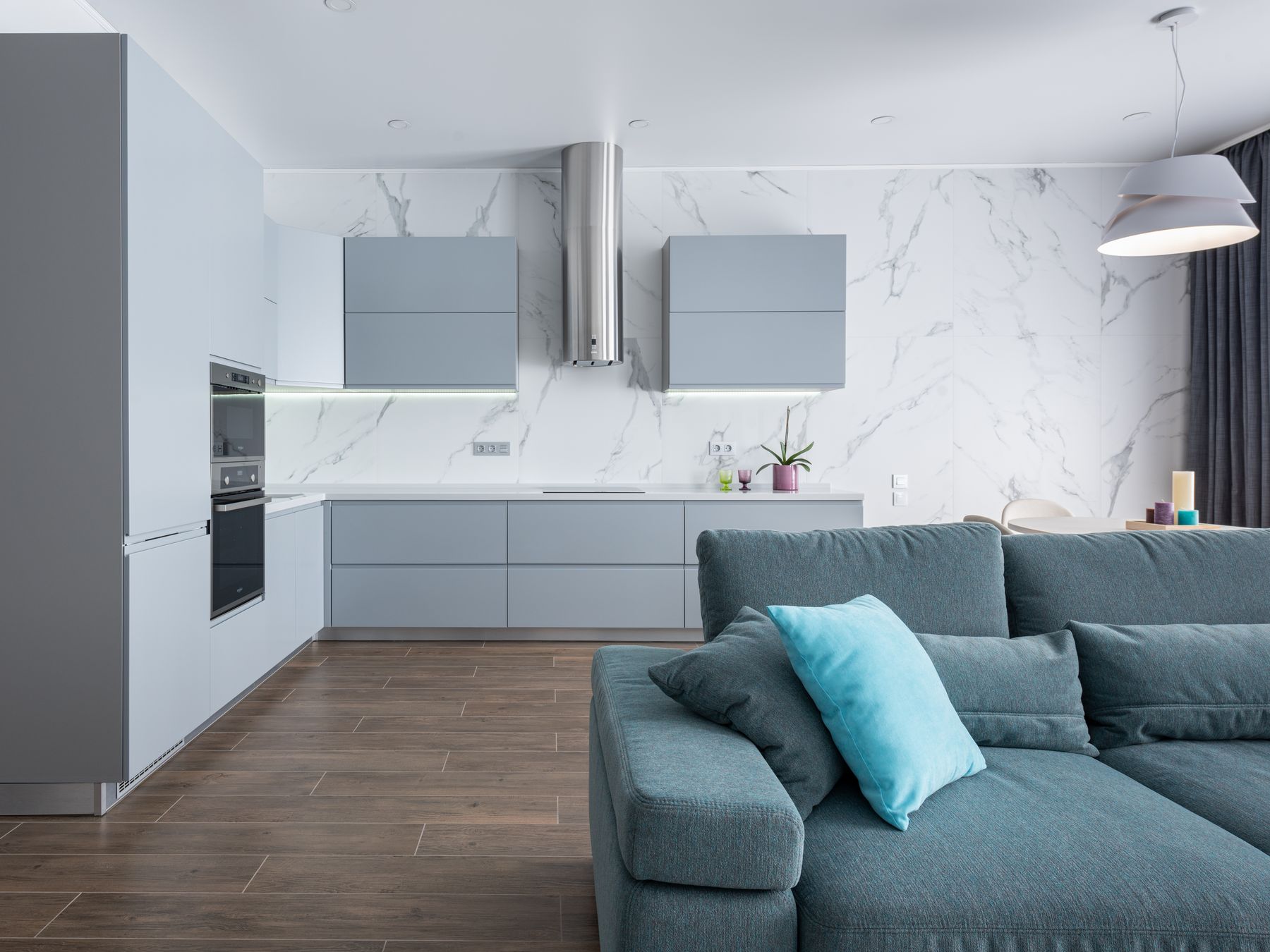
Photo via Pexels
7. Appliances That Disappear
Nothing breaks the calm of a European-style kitchen faster than a wall of clashing appliances. The fix is integration: panel-ready dishwashers and refrigerators that wear cabinet fronts, wall ovens stacked at eye level, and slim induction cooktops that sit nearly flush with the counter. From across the room, the kitchen reads as furniture, not machinery.
Plan the heights before you buy. A comfortable wall-oven center is about 48 inches off the floor, so you are not bending or reaching. Induction cooktops heat fast and stay cool to the touch, but they need magnetic cookware, so test a fridge magnet on your pots first. A 24-inch European-size dishwasher cleans just as well as a full-size one and is a gift in smaller kitchens.
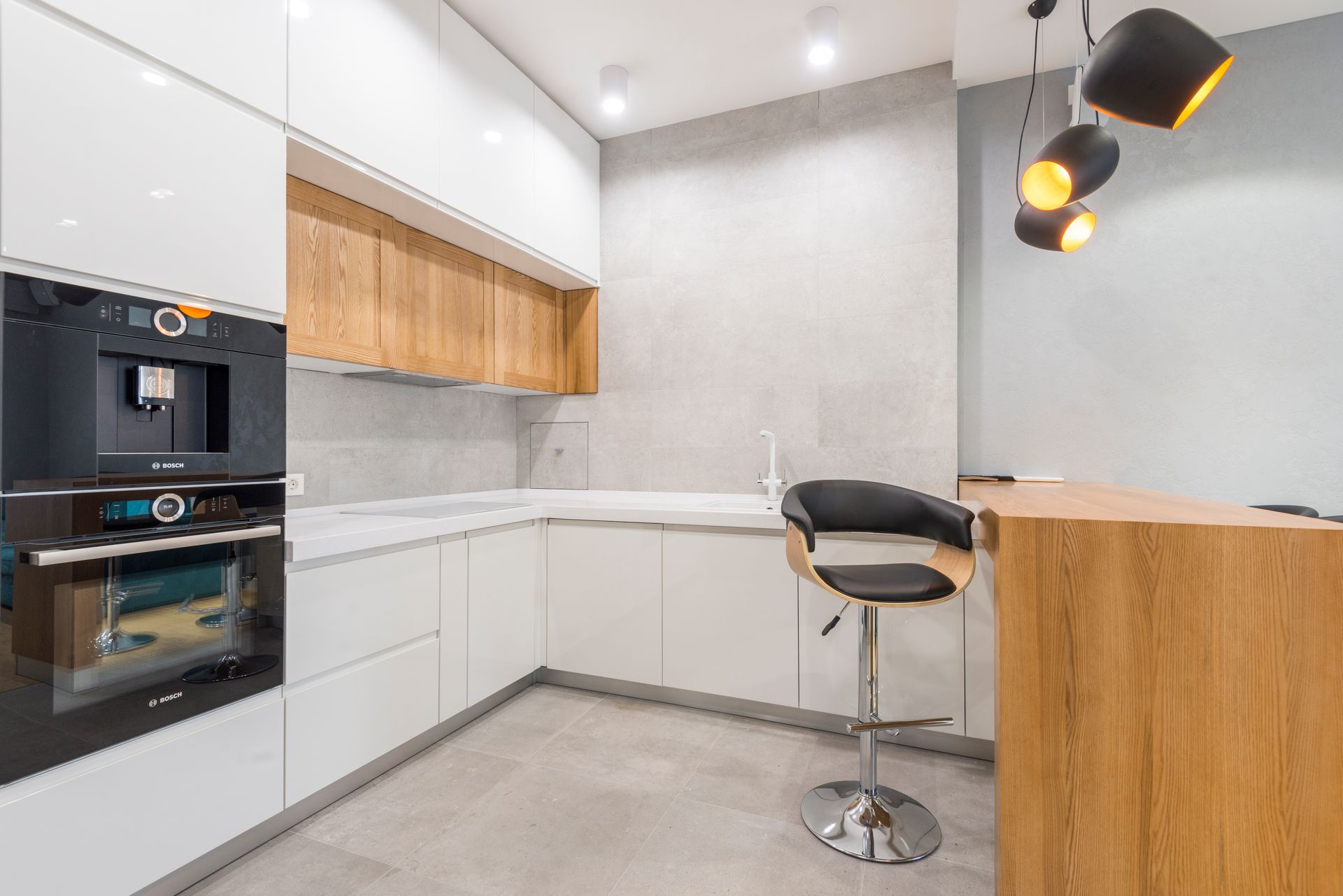
Photo via Pexels
8. A Deep Farmhouse Sink
The deep apron-front sink is a country-kitchen classic that Europeans never gave up. One big basin, usually fireclay or enameled cast iron, swallows stockpots and sheet pans that would never fit a divided sink. Mounted under a window, it turns dishwashing from a chore into a small pleasure.
An apron sink needs a dedicated sink-base cabinet, typically 36 inches wide, because the front of the sink replaces the cabinet doors. Fireclay resists stains and chips better than most materials and wipes clean with baking soda. Pair it with a high-arc pull-down faucet, and you will wonder how you cooked without it, especially when fall cooking starts and big harvest pots need rinsing before recipes like our pumpkin puree ideas.

Photo via Pexels
9. An Island Made for Gathering
In European homes the island is rarely just a prep counter; it is the breakfast table, the homework desk, and the party station. Extending the countertop past the base cabinets creates a natural perch for stools, and suddenly the kitchen has the best seats in the house.
Size it for comfort: allow about 24 inches of width per stool and keep stools 10 to 12 inches apart so elbows do not collide. Standard counter height is 36 inches, which suits most counter stools, while a raised 42-inch bar section needs taller bar stools. If you are torn between an island and a table, our guide on how to choose the right kitchen table walks through the trade-offs.
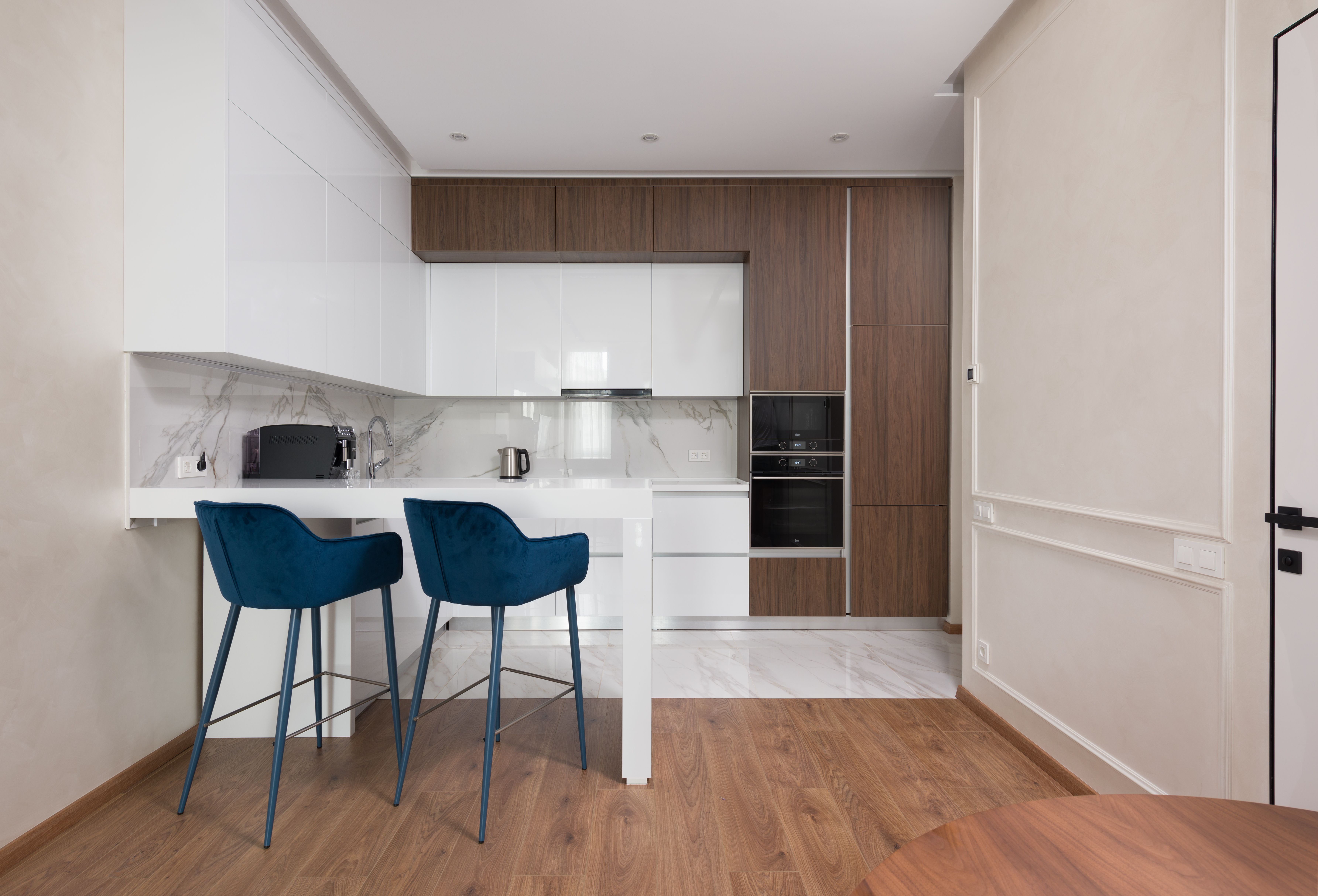
Photo via Pexels
10. Mixed Materials, One Calm Look
The most interesting European-style kitchens mix honest materials instead of matching everything. Warm walnut next to cool stone, matte lacquer beside brushed steel, a glass-front cabinet to lighten a heavy run of wood. Each material does what it does best, and the contrast is what makes the room feel designed rather than decorated.
Limit yourself to two or three materials with one clear leader. Try walnut lower cabinets, a honed quartz or stone island, and matte black fixtures, then stop. Keep the mix in the same temperature family, all warm or all cool, so it feels intentional. Glass upper cabinets are an easy way to join the trend without committing to a full remodel.

Photo via Pexels
Frequently Asked Questions
What is the main difference between American and European-style kitchens?
European-style cabinets are usually frameless with flat slab doors and hidden hardware, while traditional American cabinets have a face frame and raised-panel doors. European appliances also run smaller, with 24-inch ranges and 18-inch dishwashers being common.
Are European-style kitchens really smaller?
Often, yes. A typical apartment kitchen in Europe is 70 to 100 square feet, which is why the designs focus on smart storage and compact appliances. Open-plan layouts and light colors keep these smaller rooms feeling generous.
What was the Frankfurt kitchen?
Designed in 1926 by architect Margarete Schütte-Lihotzky, the Frankfurt kitchen was the first truly fitted European kitchen: a compact galley built around the work triangle with specialized storage for everything. Its ideas, like pull-out pantries and built-in bins, are still standard today.
How can I get the European look on a budget?
Paint existing cabinets white or soft gray, swap knobs for slim bar pulls, and add one floating wood shelf for everyday dishes. Stick-on LED strips under the wall cabinets cost $20 to $50 and instantly give that clean European glow.
Which colors work best in a European-style kitchen?
Whites, warm grays, greige, and soft black are the safe base, with natural wood tones for warmth. Add one accent, like deep green or navy on an island, and keep the rest quiet for that calm, collected feel.
Final Thoughts
European-style design is less about a single look and more about a way of thinking: fewer visual distractions, smarter storage, and materials you actually enjoy touching. Start with the idea that fits your home, whether that is handleless cabinets, a deep farmhouse sink, or simply opening the kitchen to the living room.
Pick one or two ideas from this list and live with them for a while before committing to more. Good design reveals itself slowly, and the calmest kitchens are the ones where every choice earned its place.
Sources
- European-style kitchen design ideas and tips from HGTV
- 12 European-style kitchen design ideas (OrganizerCo)
- Guide to European-style kitchen cabinets (Kitchen-Design-Ideas.org)
Gallery

Photo via Wikimedia Commons
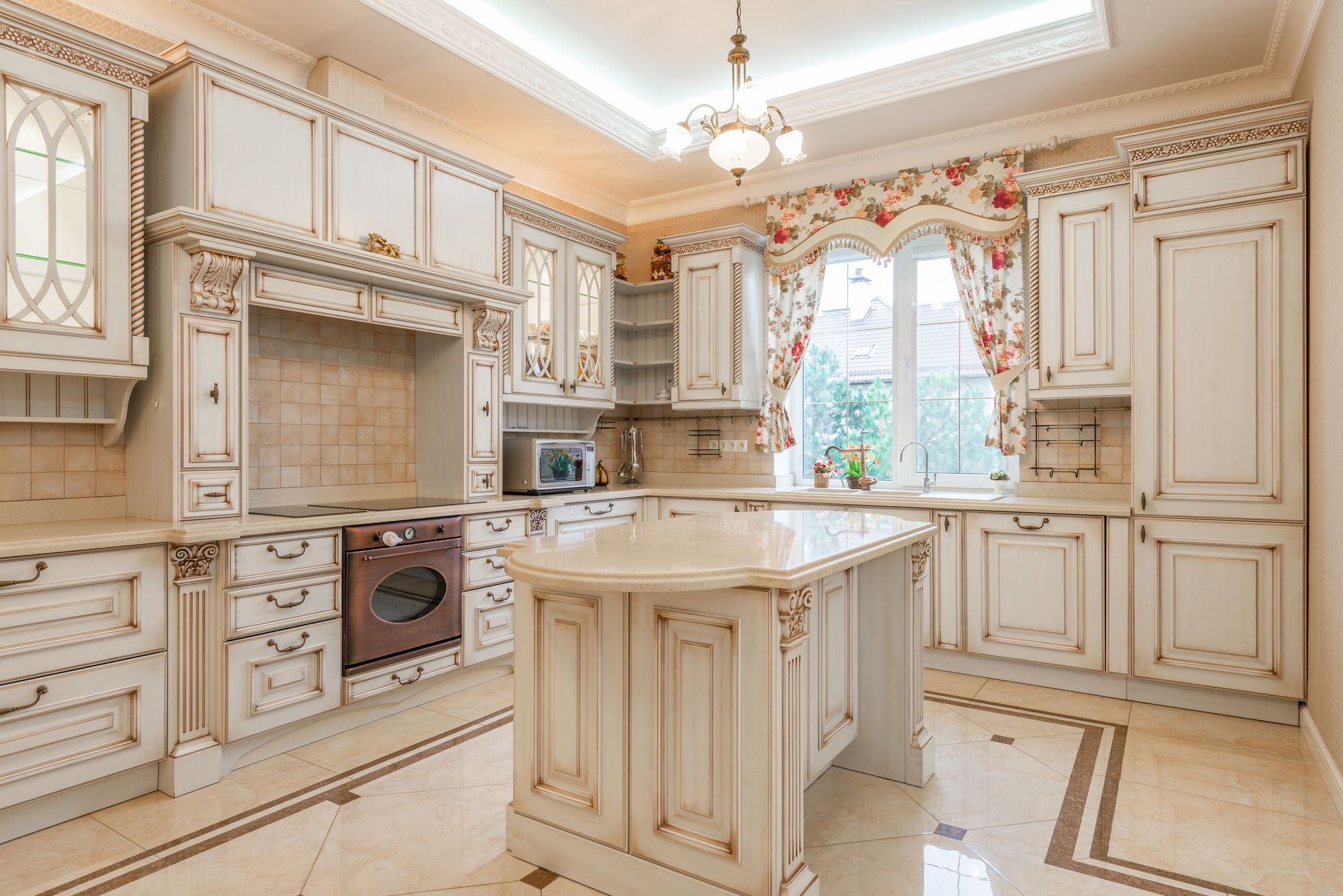
Photo via Pexels

Photo via Pexels

No comments:
Post a Comment