Heavy floor-length drapes can make a living room feel grand, but they can also make it feel dark, dusty, and a little stuck in the past. If you love a clean, calm room and you are tired of wrestling with long panels every time you open a window, good curtain alternatives exist for nearly every window, budget, and rental rule. The trick is not to pick the prettiest photo online. It is to match the covering to your real life: how much sun hits the glass, how close your neighbors are, and whether you can drill holes at all.
In this guide, we walk through ten options one by one, from soft Roman shades to crisp plantation shutters, and we are honest about what each one costs, how it handles privacy and light, and whether a renter can take it down without losing a deposit. You do not need to replace every window at once. Start with the window that bothers you most, live with the new look for a few weeks, and then decide whether the rest of the room should follow.

Photo: A brick living room with a sofa beside a large window fitted with a shade. Source: Pexels.
Table of Contents
- 1. Roman Shades
- 2. Plantation Shutters
- 3. Roller Shades
- 4. Linen Panels
- 5. Cafe Curtains
- 6. Woven Wood Shades
- 7. Sheer Layers
- 8. Cellular Shades
- 9. Venetian Blinds
- 10. Vertical Blinds
- FAQs
- Final Thoughts
1. Roman Shades
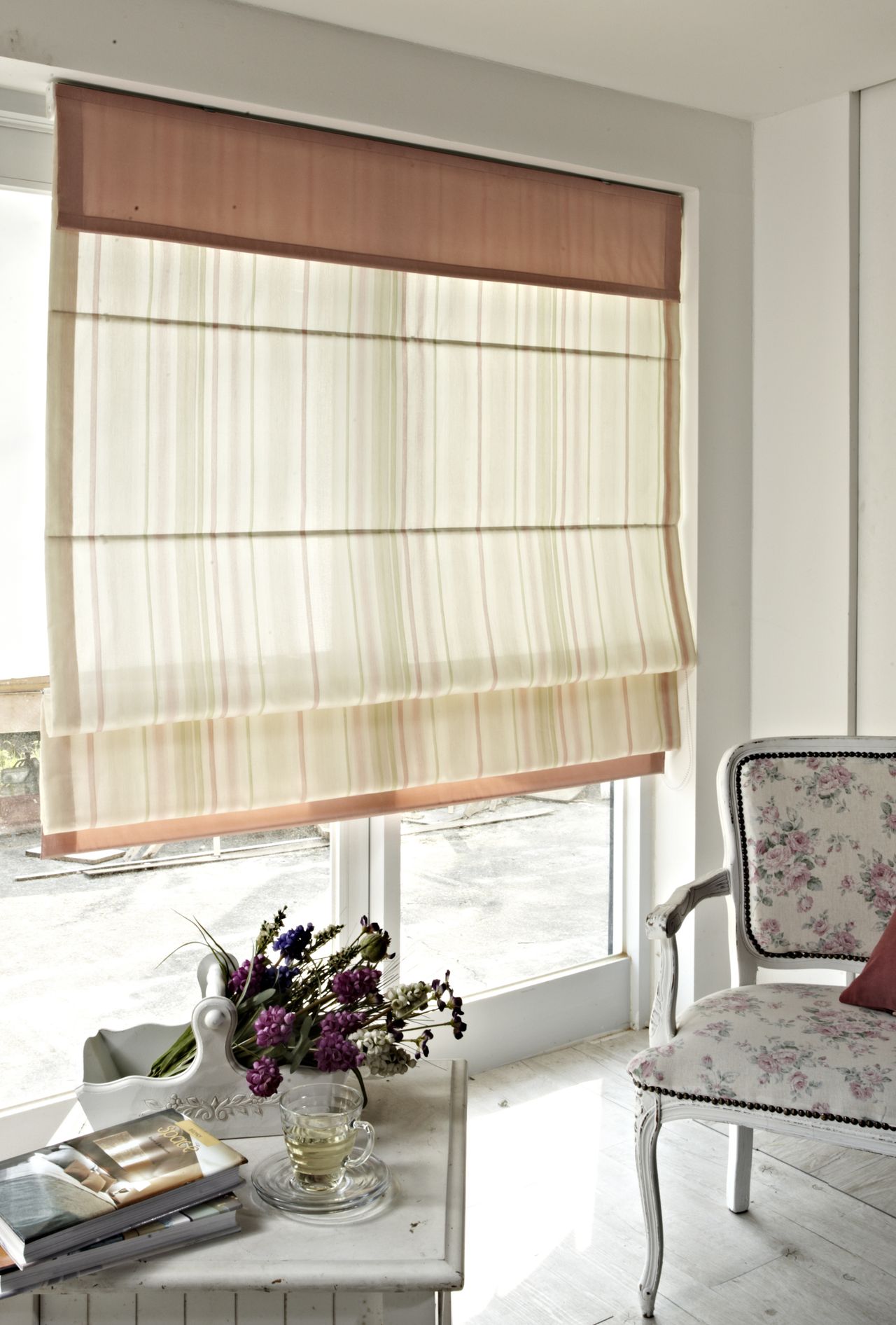
Photo: A striped fabric Roman shade lowered over a window, with a chair beside it. Source: Pexels.
Roman shades are fabric panels that fold into soft, even pleats as you raise them, so they give you the warmth of cloth without yards of fabric pooling on the floor. They look tailored and calm, which is why they suit living rooms that lean traditional, transitional, or quietly modern. Ready-made sizes often run from about $40 to $150 per window, while custom shades in a nicer linen or cotton blend can climb to $300 or more, and adding a blackout lining pushes the price higher still. For privacy, an unlined shade is only a daytime answer, because at night with the lights on, shapes can show through; a lined or blackout version, on the other hand, closes the room down fully when it is lowered.
For renters, Roman shades are a middle-of-the-road choice. Most mount inside the window frame with a few small screws, which many landlords allow, and they come down cleanly if you keep the original hardware and fill tiny holes before moving out. If drilling is banned in your lease, look for tension-mounted or adhesive-bracket versions, and always order free fabric samples first, because a color that looks soft online can turn cold or yellow in your own afternoon light. If you want more ideas that will not risk your deposit, our guide to renter-friendly living room decor ideas covers no-damage swaps that pair well with shades like these.
2. Plantation Shutters

Photo: A bright sunroom with white plantation shutters on the windows and two chairs. Source: Pexels.
Plantation shutters are solid frames with wide louvers that tilt open and closed, and they read as part of the house itself rather than as a decoration added later. That built-in look is why buyers and appraisers tend to like them, and why they suit rooms where you want a neat, architectural finish that never needs ironing. They are the priciest option on this list, often $250 to $700 per window installed, with real wood at the top end and composite or vinyl lower down and better suited to damp or sun-beaten windows. Light control is excellent because you can tilt the louvers for a glow without a full view in, and privacy is strong once the louvers are shut, though thin gaps can leak a little light at night.
Renters should think twice before ordering shutters, because they are usually screwed into the frame and custom-sized to one window, so they cannot move with you to the next apartment. If you own the home, or your landlord agrees in writing to leave them behind, they are a long-term win that is easy to dust and hard to date. Measure the frame in three places, top, middle, and bottom, before you order, because older windows are rarely square, and a shutter that binds on one side will annoy you every single day.
3. Roller Shades

Photo: Potted plants on a windowsill beneath lowered roller blinds. Source: Pexels.
Roller shades are a single sheet of fabric that rolls up onto a tube, and their whole appeal is simplicity: no folds, no slats, no puddles of cloth, just a clean rectangle that disappears when you want the view. Basic light-filtering rollers start around $25 to $50 per window, solar-screen versions that cut glare while keeping the view run a bit more, and blackout or motorized versions can reach $200 to $350. Privacy depends entirely on the fabric you pick, since a sheer solar screen keeps the daytime view but turns see-through at night, while a blackout roller gives full privacy and darkness at the cost of any view at all until you raise it.
This is one of the friendliest choices for renters. Many rollers fit inside the frame with small brackets, and tension or no-drill brackets exist for strict leases, so you can take the whole shade with you when you move. They are also easy to wipe clean, which matters if your living room window faces a busy street. The main weakness is looks: a plain roller can feel flat on its own, so pair it with a slim valance, a wood trim, or a sheer side panel if the window needs a little softness.
4. Linen Panels

Photo: A close-up of a beige linen panel showing its woven texture. Source: Pexels.
Linen panels are the gentlest break from heavy drapes: same hanging idea, but lighter cloth, a looser weave, and a relaxed wrinkle that looks intentional rather than messy. A pair of ready-made linen-look panels often costs $30 to $120, while real washed linen runs higher and wrinkles more, which is part of its charm if you like a lived-in room. Light filters through beautifully during the day, giving the room a soft glow, but privacy is limited, because unlined linen shows silhouettes at night, so most people pair it with a shade or a lining if the window faces a sidewalk or a neighbor's porch.
For renters, linen panels are an easy win, since they hang on a tension rod or a command-hook rod in many setups and come down in minutes with no trace. Hang the rod high and wide, about 4 to 6 inches above the frame and 6 to 10 inches past each side, and the window will look taller and the panels will stack clear of the glass when open. When you are balancing a sofa, a rug, and window cloth in one room, our guide on how to choose living room furniture can help you keep the scale of each piece in proportion.
5. Cafe Curtains

Photo: A kitchen window with a checkered cafe curtain covering its lower half at sunset. Source: Pexels.
Cafe curtains cover only the lower half or lower two-thirds of a window, leaving the top open to the sky, and they bring a friendly, old-cafe charm that heavy drapes never manage. They are also cheap: a rod plus a ready-made panel often totals $20 to $60 per window, and because they use little fabric, even a nice cotton or linen version stays affordable. The light trade-off is the point, since daylight pours in over the top while the lower panel blocks the direct view of people walking past, which works beautifully on street-level windows and in breakfast nooks. At night, though, the open top means anyone outside can see the upper room and the ceiling lights, so cafe curtains suit rooms where evening privacy is not critical, or they pair with a roller shade that drops after dark.
Renters love cafe curtains because the rod is small, the screws are few, and a tension rod inside the frame often works with no holes at all. They also solve a common small-window problem, since a full-length panel would swamp a short kitchen or den window. Keep the hem at or just below the sill, not flapping halfway down the wall, and choose a fabric you can machine-wash, because kitchen windows collect cooking film faster than any other window in the house.
6. Woven Wood Shades
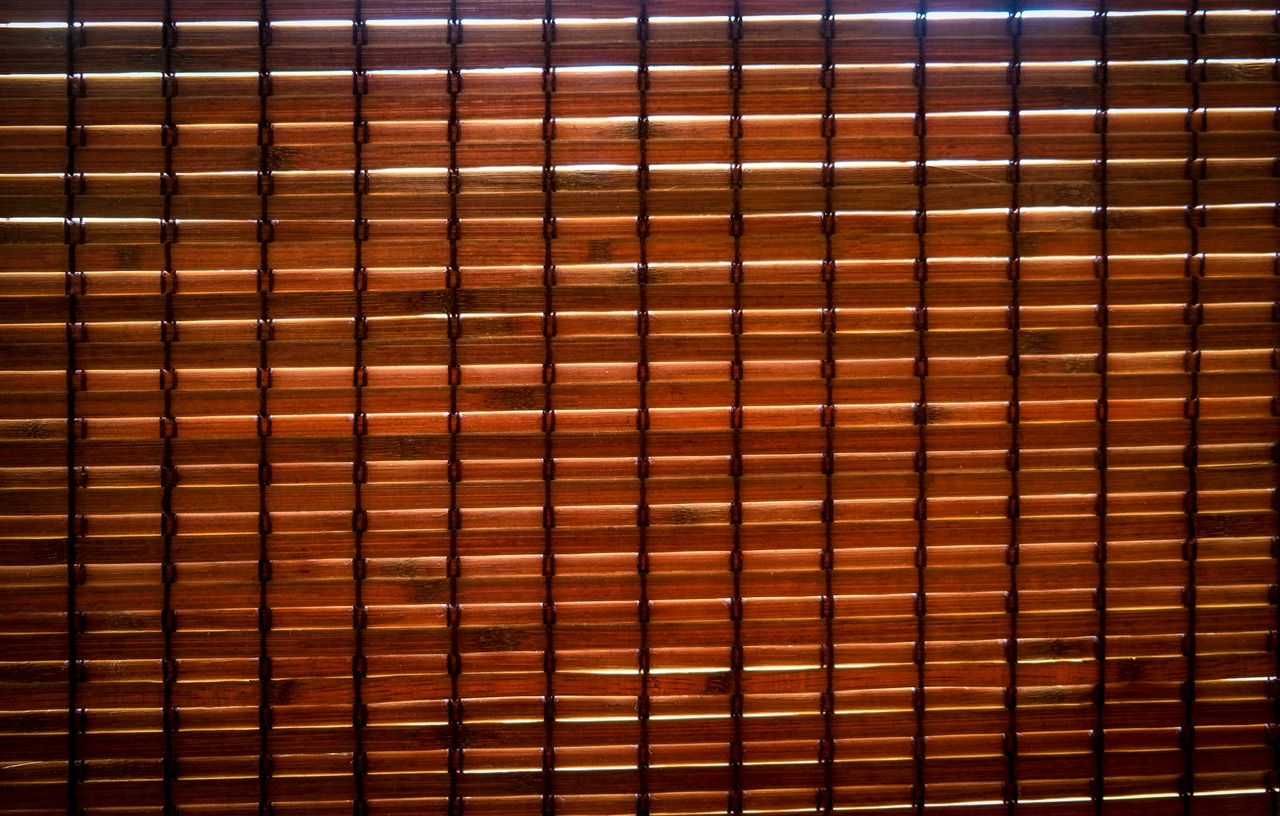
Photo: A close-up of a woven bamboo shade with thin lines of light between its slats. Source: Pexels.
Woven wood shades are made from bamboo, reeds, grasses, or matchstick wood woven together, and they add instant warmth and texture to rooms that feel too white or too flat. They usually cost $50 to $300 per window, depending on size and whether you add a privacy or blackout liner, which most people should, because the natural weave has small gaps by design. In daylight, those gaps create a lovely dappled glow and keep the room from feeling shut in, but at night the same gaps leak light and silhouettes, so an unlined woven shade alone is a poor choice for a street-facing living room after dark. With a liner, you get the texture by day and real privacy at night, at the cost of a heavier shade that needs a sturdier mount.
For renters, woven shades are a good middle option: they mount like a roller shade with small brackets, and they travel well to a new home if the windows are a similar size. They do collect dust in the weave, so plan on a quick vacuum with a brush attachment every few weeks, and keep them out of steamy rooms, where natural fibers can warp or spot. If your style leans warm and natural, with wood floors and plants, this is often the shade that finally makes the room feel finished.
7. Sheer Layers

Photo: Sheer white and tan curtains with warm sunlight streaming through the fabric. Source: Pexels.
Sheer layers are the softest way to dress a window: a thin, see-through panel that glows in daylight, blurs the view from outside, and keeps the room feeling open. A ready-made sheer panel costs as little as $15 to $50, and layering two sheers, or a sheer over a roller shade, gives you a day mode and a night mode without changing hardware. The trade-off is blunt and worth knowing before you buy: sheers give daytime privacy only. Once the room lights go on at night, anyone outside can see in almost as clearly as if the window were bare, so sheers must be paired with a blind, a shade, or a lined panel if the window faces a neighbor, a sidewalk, or a parking area.
Renters adore sheers because they are light, cheap, washable, and easy to hang on a tension rod with no damage at all. They are also the most forgiving layer if your measurements are slightly off, since a little extra fullness just looks softer. Wash them on a gentle cycle and hang them damp to dry, and they will fall back into shape without ironing. If your room gets harsh afternoon sun, sheers also protect your sofa fabric and rug from fading while still letting you enjoy the daylight.
8. Cellular Shades
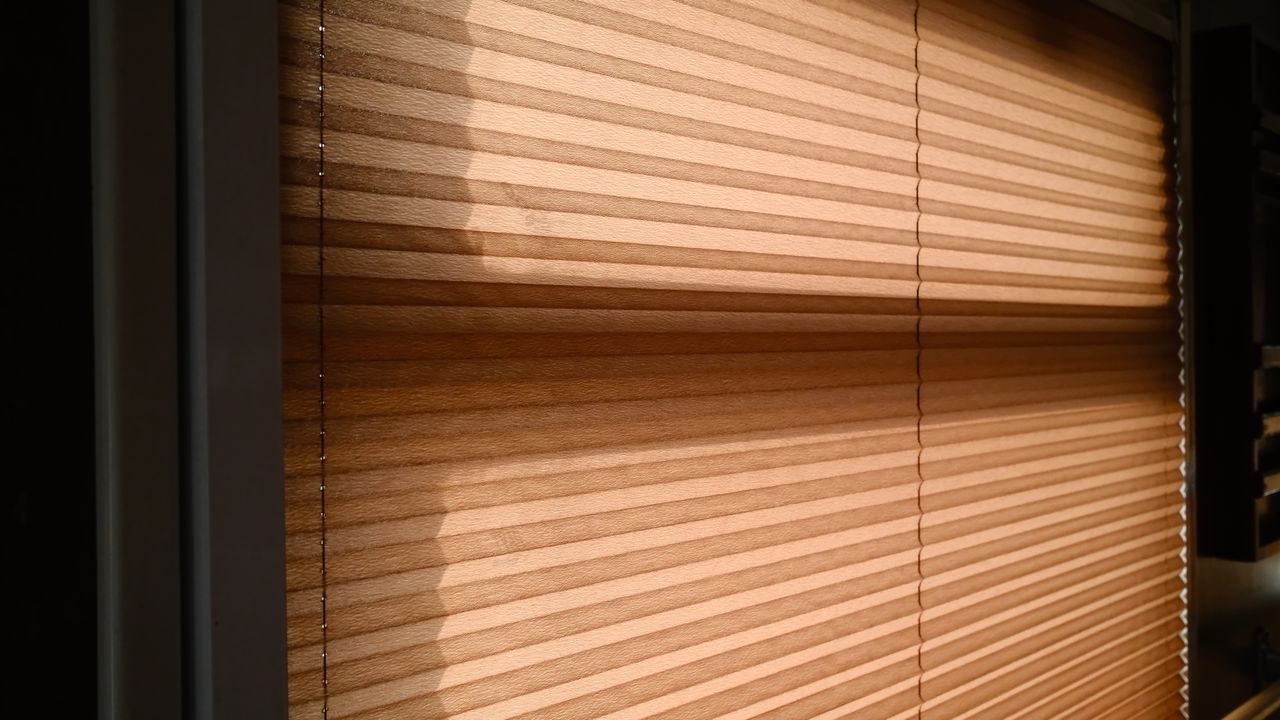
Photo: A pleated shade in warm sunlight covering a window. Source: Pexels.
Cellular shades, also called honeycomb shades, are made of pleated fabric cells that trap air, and that trapped air is what makes them the best insulating window covering on this list. A standard single-cell shade often costs $60 to $300 per window, with double-cell and blackout versions higher, but the energy payoff is real: they cut heat loss on cold nights and heat gain on hot afternoons, which matters most on large or drafty windows. Light control is flexible, since light-filtering versions glow softly, blackout versions darken a room fully, and top-down bottom-up models let you lower the top for sky and daylight while keeping the bottom closed for privacy.
For renters, cellular shades are a solid pick because they are light, mount with small brackets, and stack into a slim profile at the top of the window when raised. The one honest drawback is cleaning, since dust settles inside the cells and a deep clean is awkward, so a gentle vacuum and a damp cloth for spots is the realistic routine. If your living room has one big, cold window that you avoid sitting near in winter, a cellular shade is often the single upgrade that makes the whole room comfortable again.
9. Venetian Blinds

Photo: White Venetian blinds on a window beside a plain white wall. Source: Pexels.
Venetian blinds are horizontal slats, in wood, faux wood, or aluminum, that tilt to control light with unusual precision, and they remain popular because they simply work. Faux-wood versions run about $45 to $135 per window, real wood costs more and looks richer, and slim aluminum minis are the cheapest of all. Tilt the slats up and you bounce daylight toward the ceiling while blocking the direct view in; tilt them down and the room darkens, though small gaps and the cord holes mean true blackout is out of reach without an added liner. They also handle wide windows well, since slats span the glass without sagging the way a single fabric panel can.
Renters will find Venetian blinds practical and portable, as they mount with two small brackets and lift out in minutes on moving day. The real cost is time, not money: slats collect dust and need a wipe or a blind-cleaning tool every week or two in a dusty home, and cords must be kept safe around small children and pets, so choose cordless versions when you can. If you want crisp light control on a budget and you do not mind the upkeep, this is the workhorse of the list.
10. Vertical Blinds

Photo: A close-up of patterned vertical blinds hanging in folds. Source: Pexels.
Vertical blinds are long fabric or vinyl vanes that hang from a top track and slide sideways, and they are the natural answer for sliding glass doors and very wide windows where every other option struggles. A standard set costs about $50 to $200 per opening, with fabric vanes looking softer and vinyl vanes wiping clean more easily. Light control comes from rotating the vanes, which lets you angle daylight in while keeping the room screened, and privacy is good when the vanes are closed, though light can slip between vanes if they are bent or out of alignment. Stacked to one side, they leave most of the glass clear, which is exactly what you want on a door you walk through every day.
For renters, vertical blinds are often already in the apartment, and if they are not, they mount to the top of the door frame with a track that leaves only small screw holes. They are not the most refined look on this list, so choose plain fabric vanes in a color close to your wall, keep the valance off if it looks dated, and replace any single damaged vane rather than the whole set. On a patio door, nothing else in this price range works as smoothly day after day.
FAQs
What is the cheapest refined option for a living room window?
Roller shades and sheer layers are usually the cheapest refined choices, with basic rollers starting near $25 and sheers near $15 per window. Spend the savings on good measurements and a clean mount, because a cheap shade hung straight and level looks far better than an expensive one hung crooked.
Can I get privacy at night without heavy drapes?
Yes, if you pick the right fabric or add a liner. Blackout rollers, lined Roman shades, lined woven shades, and closed shutters all give real night privacy. Unlined sheers, unlined woven shades, and solar screens do not, so pair them with a second layer if your window faces people at night.
Which option is best for a rental with a no-drilling rule?
Tension-rod sheers and linen panels, no-drill roller brackets, and adhesive-bracket shades are the safest bets. Always check your lease first, keep the original coverings to reinstall later, and photograph the windows on move-in day so there is no argument about holes you did not make.
Do shutters really add value to a home?
Well-fitted plantation shutters are often seen as a permanent upgrade by buyers, because they are custom, durable, and easy to live with. They rarely pay for themselves dollar for dollar, so buy them because you love living with them, not as a quick flip investment.
How do I keep light without losing the view?
Top-down bottom-up shades, tilted Venetian slats, and solar-screen rollers all keep daylight and some view while screening the room. Lower the top of a top-down shade for sky light, tilt slats upward to bounce light to the ceiling, and test any solar fabric in your own afternoon sun before committing.
Final Thoughts
The most refined window is rarely the most expensive one. It is the one that fits your light, your privacy needs, and your lease, and that you can live with without fussing over it every day. If you are unsure, start small: try a lined roller shade or a Roman shade on one window, see how the room feels at noon and at night, and let that answer guide the rest of the house. Good light, honest privacy, and a calm room are worth more than any single trend, and the right covering will quietly give you all three.
Sources
- Hunker: Reddit users on refined replacements for curtains
- Remy Home: Curtains vs blinds vs shades vs shutters compared
- Affordable Blinds: Renter-friendly window treatments
Gallery
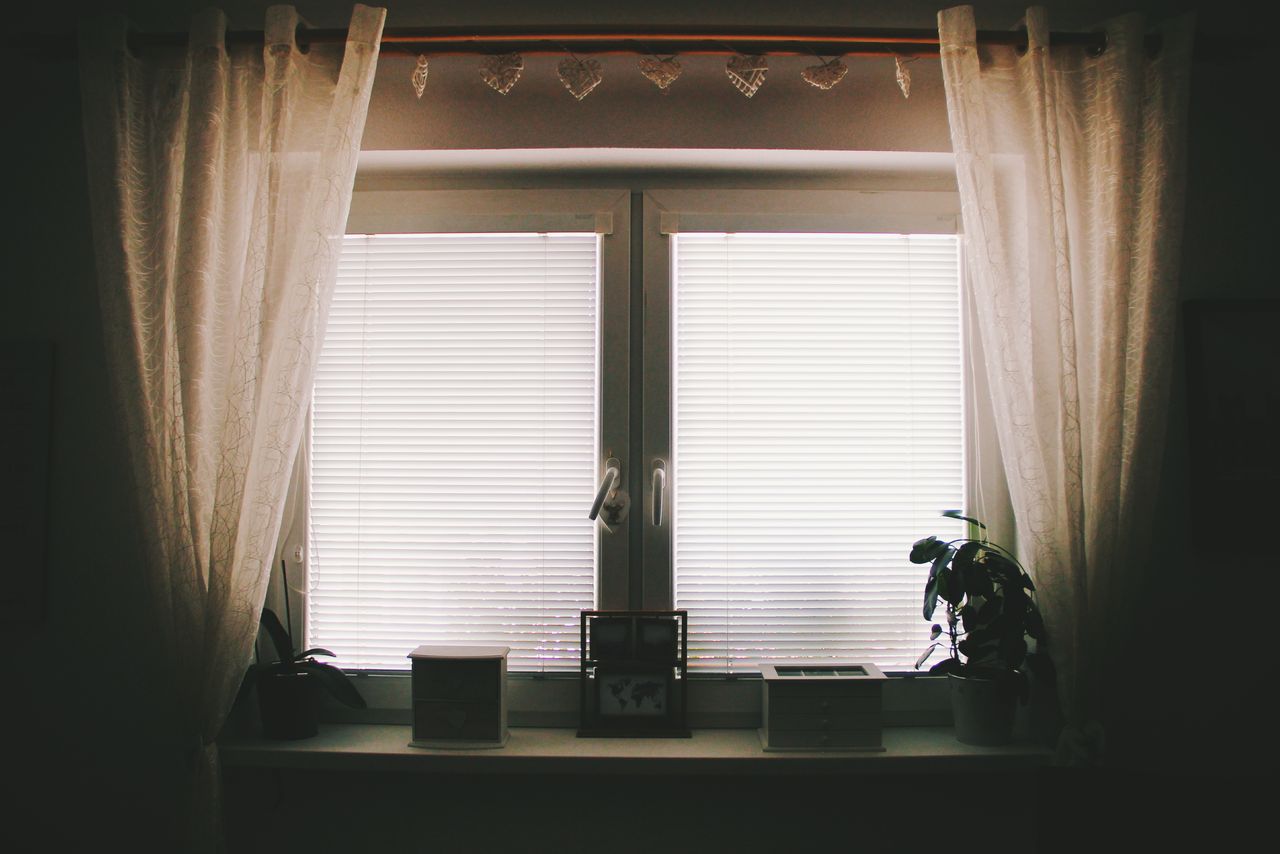
Photo: A window with blinds and sheer side curtains, with plants on the sill. Source: Pexels.
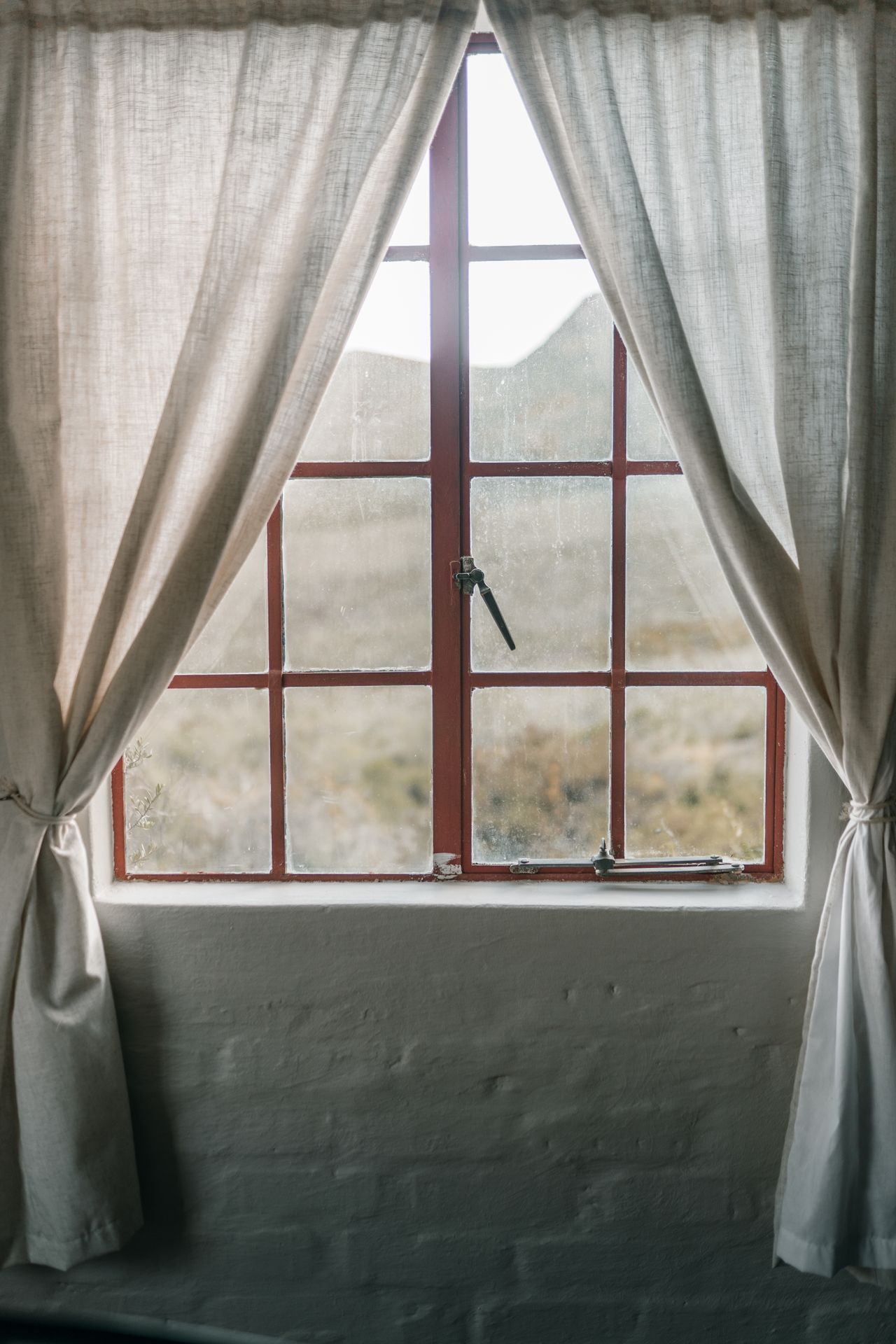
Photo: Light linen panels tied back beside a red-framed window. Source: Pexels.

Photo: A hand parting horizontal blinds to let sunlight stream in. Source: Pexels.

No comments:
Post a Comment