A blue shower tile wall can change a plain bathroom into a calm, coastal-feeling room without a full remodel. Blue is one of the easiest strong colors to live with because it reminds most people of water, sky, and a clean hotel bathroom, and it pairs well with white fixtures, wood, chrome, and brass. The trick is choosing the right shade and the right amount: a deep navy on every wall feels very different from a soft sky blue on one wall, and both can work in the right room.
In this guide you will find ten practical looks for American homes, from a bold navy surround to a single stripe of dark tiles in a white tub shower. You will also get honest advice on sizes, costs, grout, lighting, and cleaning, including what hard water does to dark finishes. Prices below are typical US retail ranges in dollars, and sizes are in inches and feet, so you can compare them easily with what you see at a big-box store or a local tile shop.
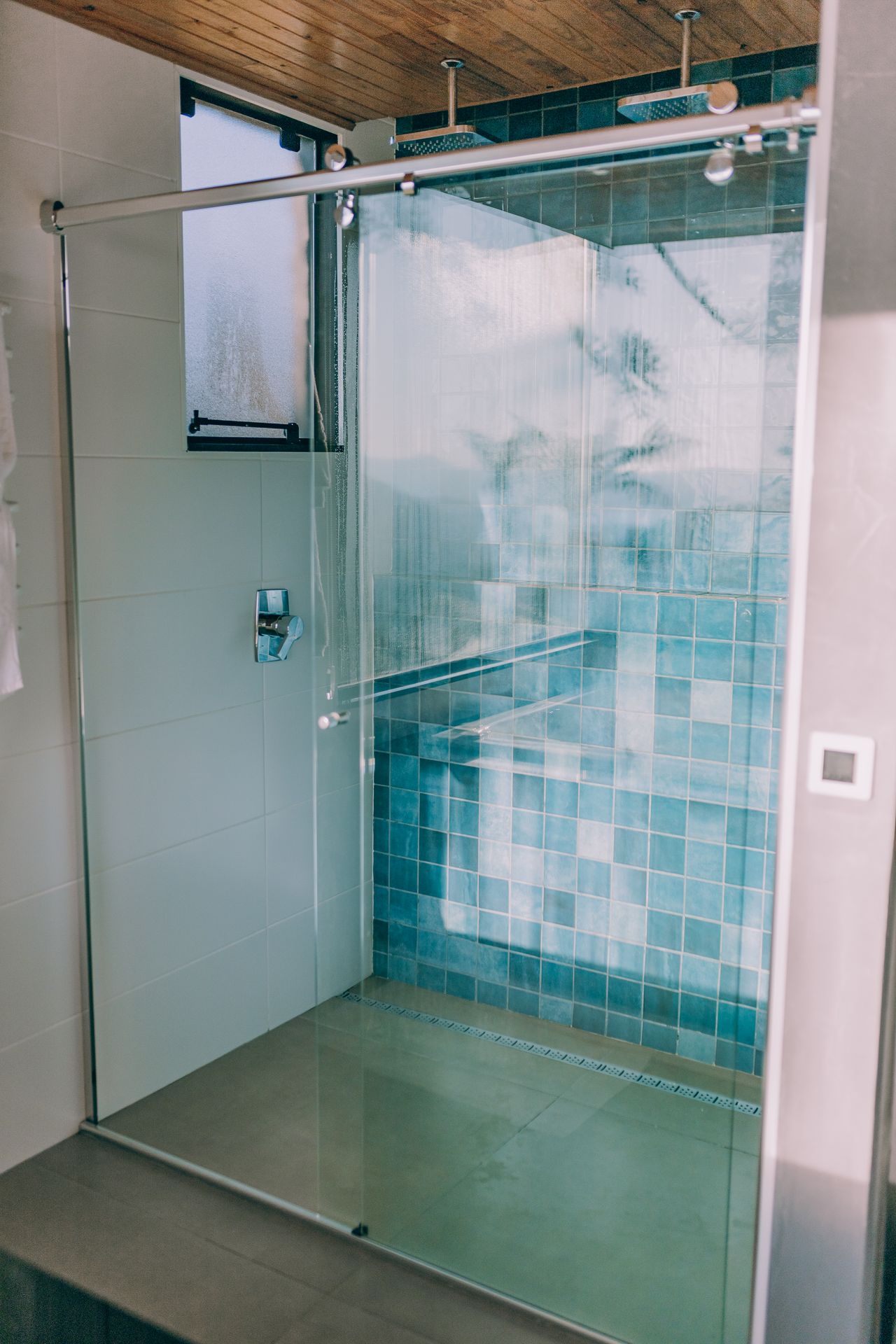
A glass walk-in shower with square tiles in mixed blue shades. Photo via Pexels.
Table of Contents
- 1. Go Deep With Navy Walls
- 2. Try a Patchwork Blue-and-White Wall
- 3. Add One Bold Navy Stripe
- 4. Mix Pattern With Plain White
- 5. Use Small Blue Accents Only
- 6. Let a Blue Vanity Carry the Color
- 7. Keep the Shower Open With Glass
- 8. Take the Look Outside
- 9. Tile the Tub Surround Too
- 10. Balance Navy With White Subway Tiles
- FAQs
- Final Thoughts
1. Go Deep With Navy Walls
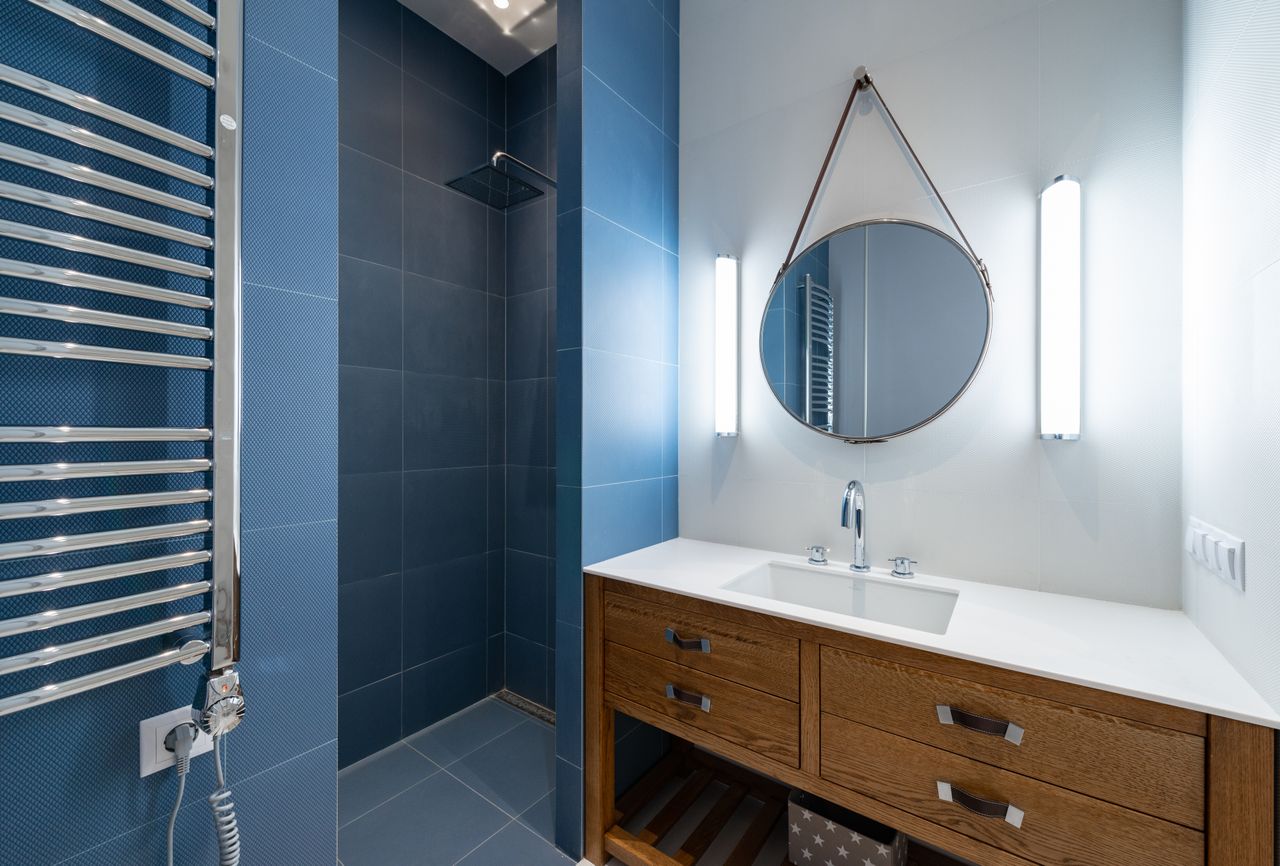
A dark blue shower with large tiles, a heated towel rail, and a warm wood vanity. Photo via Pexels.
A deep navy surround is the most dramatic choice on this list, and it works best when the rest of the room stays light. In the photo above, the dark walls are balanced by a white sink, a pale wall, and a warm wood vanity, so the room feels rich rather than dark. If your bathroom has a window or strong ceiling lights, navy can feel like a boutique hotel. If it has no window, add bright, warm-white lights and a large mirror before you commit, because dark finishes absorb light fast. Large tiles, about 12 by 24 inches, keep grout lines to a minimum and make a small shower feel calmer.
Budget about $8 to $18 per square foot for good porcelain in this color, plus $10 to $20 per square foot for labor in most US cities. That range covers many standard navy porcelains; handmade or glass versions can cost more. Seal the grout, and plan to squeegee the walls after showers if you have hard water, because white mineral marks show up much more on dark finishes than on pale ones. A simple daily wipe takes less than a minute and saves a long scrub later.
2. Try a Patchwork Blue-and-White Wall
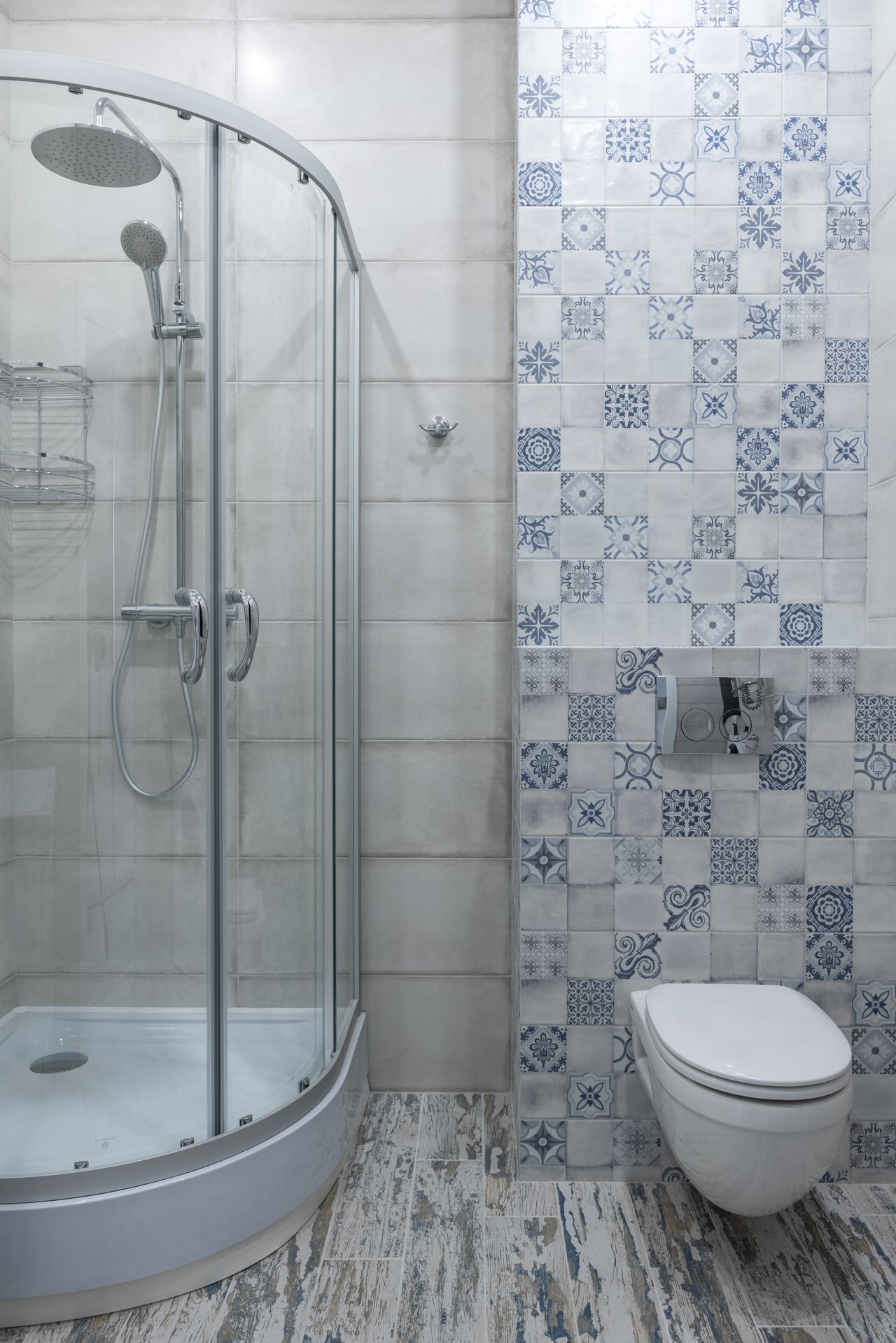
A corner shower next to a patchwork wall of blue and white patterned tiles. Photo via Pexels.
Patchwork tiles are a friendly way to bring blue into a bathroom without painting the whole room one flat color. Each square has a different small pattern, but because they share the same blue and white palette, the wall reads as one calm design instead of a jumble. This look suits a guest bathroom or a rental refresh, and it works well on a single wall while the shower itself stays plain and easy to clean. Keep the floor simple, as in the photo, so the patterned wall can be the star.
Patchwork-look porcelain usually costs $7 to $15 per square foot. Real cement tiles look beautiful but need sealing and more care, so most homeowners are better off with porcelain that only looks like cement. Buy one extra box, about 10 percent more than your measured area, because patterned layouts need cuts around pipes, corners, and niches. Lay the tiles out dry on the floor first, and mix squares from several boxes so no one pattern repeats in a clump.
3. Add One Bold Navy Stripe
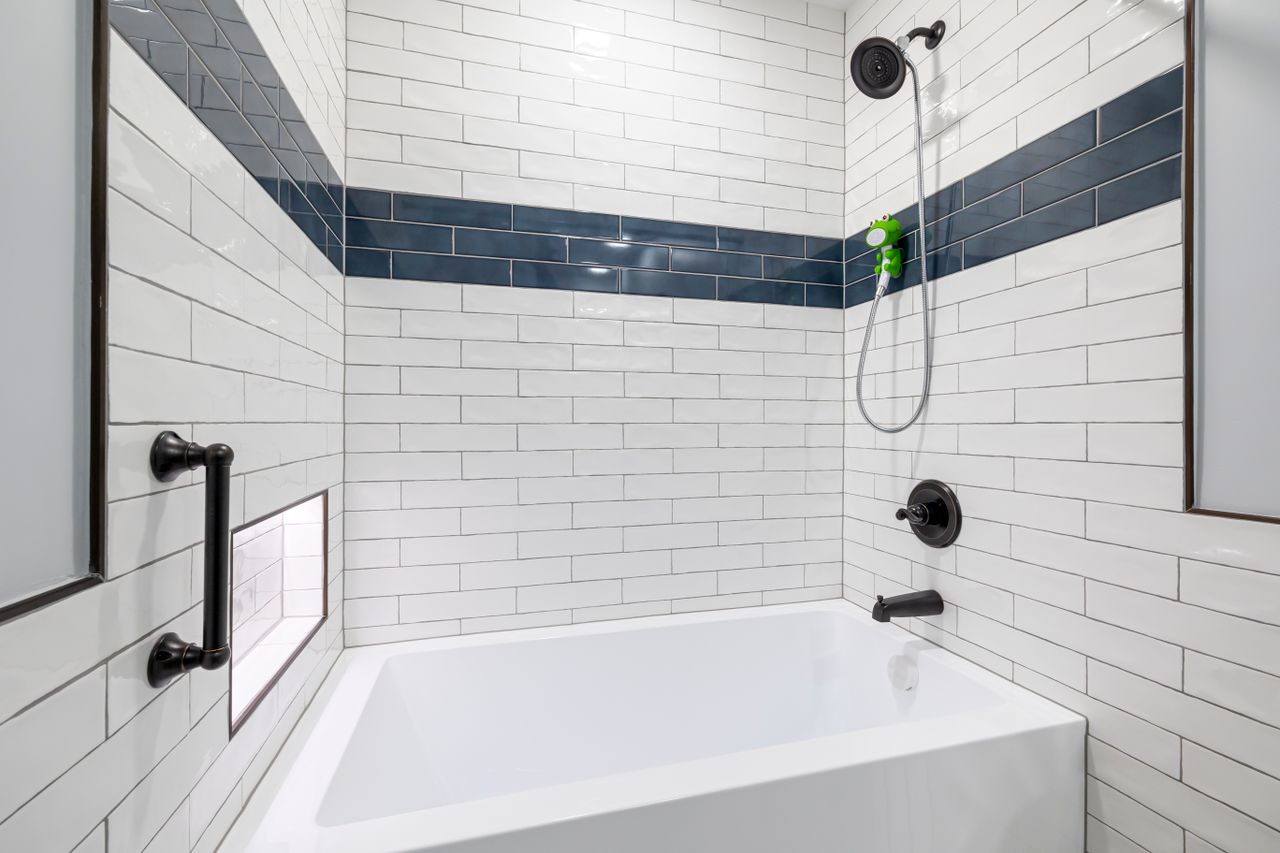
A white subway-tile tub shower with a single horizontal navy stripe. Photo via Pexels.
If a full blue wall feels like too much, one horizontal stripe gives you the color with almost no risk. White subway tiles, usually 3 by 6 inches or 4 by 12 inches, are cheap, classic, and easy to find in any US tile aisle. A two-row band of navy at eye level, or just above the tub line, draws the eye around the room and ties in navy towels, a navy bath mat, or dark fixtures. Black faucets, as shown here, sharpen the look, but chrome works just as well and is easier to match later.
This is also one of the cheapest ideas in the guide. White subway porcelain often costs $3 to $8 per square foot, and the navy band uses only a few square feet, so the color upgrade may add less than $100 in materials. The stripe must be level, so ask your installer to snap a chalk line and check it with a long level before the thinset sets. A wavy stripe is the one mistake the eye catches at once, even in an otherwise perfect shower.
4. Mix Pattern With Plain White
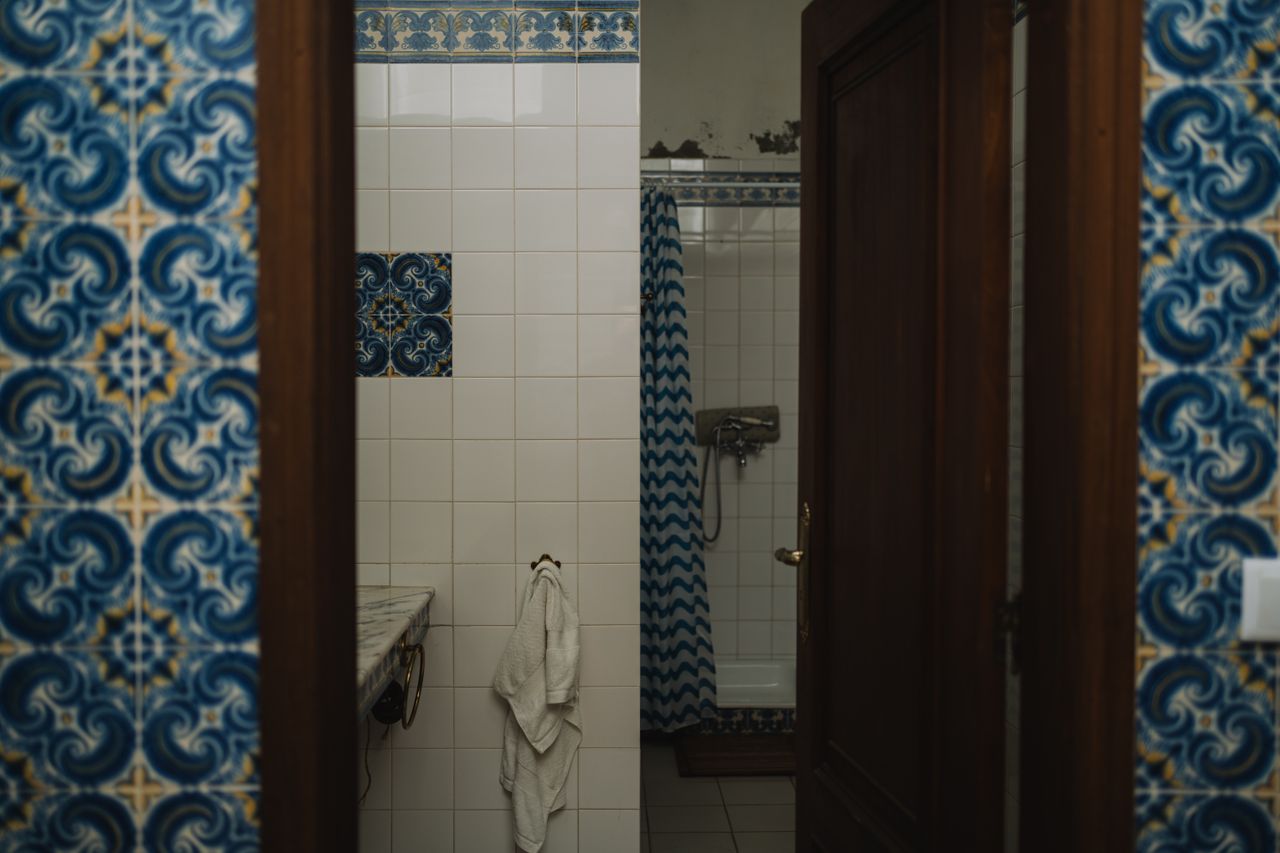
White wall tiles with a small panel of blue patterned tiles and a striped shower curtain. Photo via Pexels.
A small panel of patterned blue tiles inside a mostly white room is a smart middle ground between plain white and full pattern. You get the charm of a Mediterranean or coastal look, but you keep most of the walls bright, wipeable, and timeless. This approach also suits older homes, where a full patterned wall can fight with existing trim, doors, and floors. Put the patterned panel where you see it first when you walk in, and keep the shower curtain or glass simple so the two patterns do not compete.
Because the patterned area is small, you can spend a little more per square foot here without blowing the budget. A decorative border strip or a 12 by 12 inch feature panel in the $12 to $25 per square foot range is easy to afford when it covers only a few square feet. Use white grout on the white field tiles for a crisp look, but choose a mid-gray grout on the patterned panel if you want to hide dirt. Always seal grout in a shower, and re-seal it once a year in a busy family bathroom.
5. Use Small Blue Accents Only
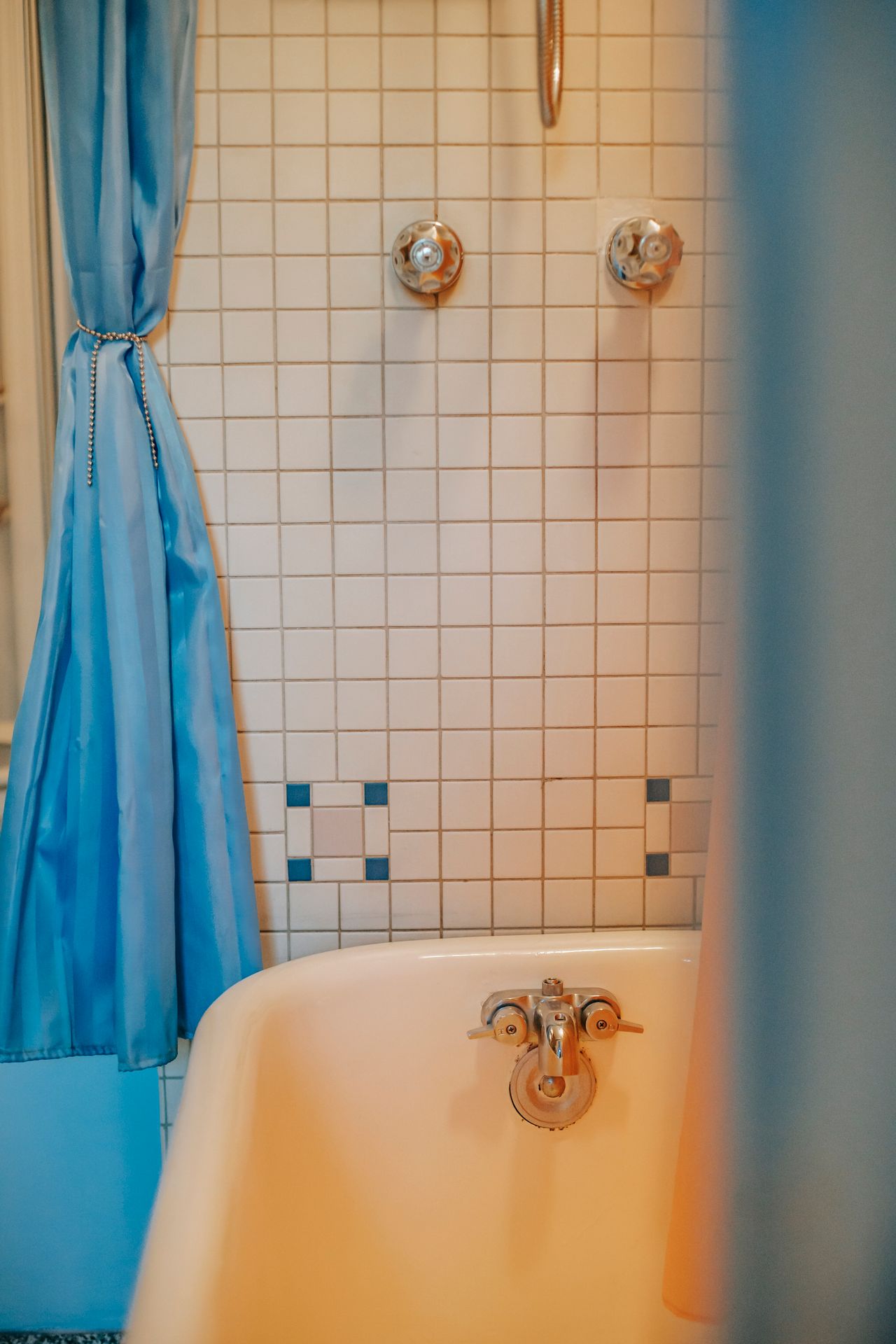
A white tiled tub shower with a few small blue accent tiles and a blue curtain. Photo via Pexels.
Sometimes the best blue bathroom is mostly white with just a few blue notes. In this photo, small blue squares are set into a white grid, and a bright blue curtain repeats the color at almost no cost. This is the safest choice if you plan to sell your home soon, because a buyer can change a curtain in five minutes, while a full navy wall is a bigger commitment. It is also a good fix for a dated white tub shower: a few accent tiles and new towels can make the whole room feel planned.
Accent tiles are often sold as single pieces or on small mosaic sheets, so ask the store to confirm the exact shade before you buy. Blues shift a lot under bathroom lighting, and a tile that looks sky blue in the store can look gray at home. Take one tile home, hold it against your wall under your own lights, and check it in daylight and at night. If the shade feels wrong, swap it before installation, because even a small accent is hard to change once it is set in thinset.
6. Let a Blue Vanity Carry the Color
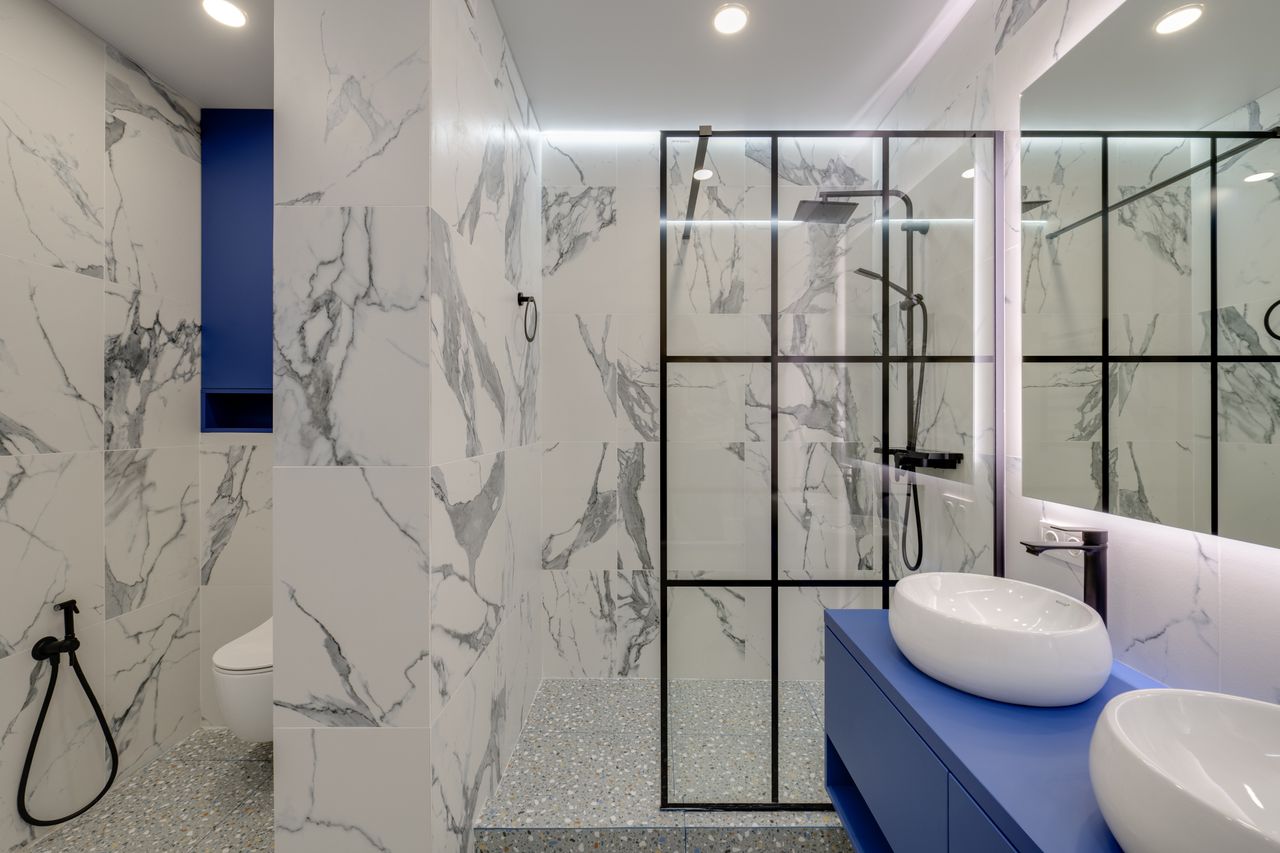
A bright blue vanity and matching cabinet in a marble-look bathroom with a glass shower. Photo via Pexels.
If you love blue but worry about a dark shower, let the vanity do the work. A painted or lacquered blue vanity gives you a strong pop of color that is easy to repaint later, while the shower walls stay pale and bright. In this room, the blue cabinet and the blue wall unit repeat the same shade, which makes the color feel deliberate rather than random. White vessel sinks, black faucets, and a speckled floor keep the look modern without adding another competing color.
A stock blue vanity in a standard 48 or 60 inch width often costs $600 to $1,500, while a custom painted vanity costs more. Check that the paint or finish is rated for bathroom humidity, and wipe up splashes promptly, because standing water can lift paint at the edges over time. If you are keeping your old vanity, a coat of cabinet paint made for kitchens and baths, plus new knobs, can give you most of this look for under $150 in materials.
7. Keep the Shower Open With Glass
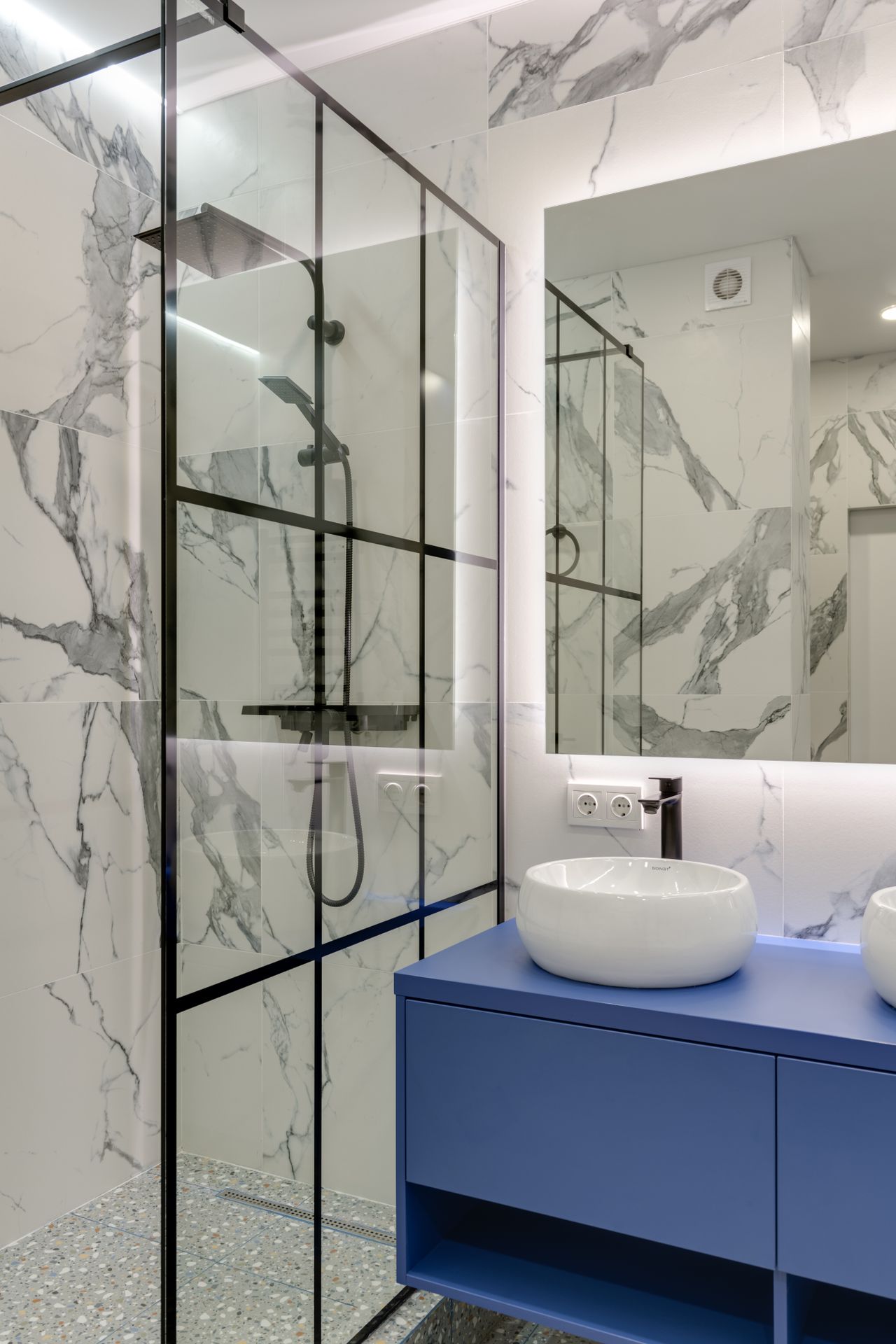
A frameless-style glass shower with marble-look tiles and a blue vanity. Photo via Pexels.
Glass is the best friend of any strong shower color. A clear panel or a frameless-style door lets you see the tile from the rest of the room, so the color becomes part of the whole bathroom instead of hiding behind a curtain. It also keeps a small room from feeling boxed in. In the photo, black-framed glass adds structure, and the blue vanity beside it picks up the same bold note, so the room feels connected. For a cleaner look, choose clear glass with minimal hardware; for privacy, frosted glass still lets light through while hiding the shower.
A glass panel for a standard 60 inch opening often costs $800 to $2,000 installed, depending on thickness and hardware. Keep the glass clean with a squeegee after showers, especially if you have hard water, and use a daily shower spray to slow mineral buildup. For the floor, a strip drain works well in a curbless or low-threshold glass shower, because one long drain can handle a wide shower floor and keeps the tile layout simple. Confirm the slope with your installer: the floor must fall gently toward the drain, about 1/4 inch per foot, or water will pool.
8. Take the Look Outside
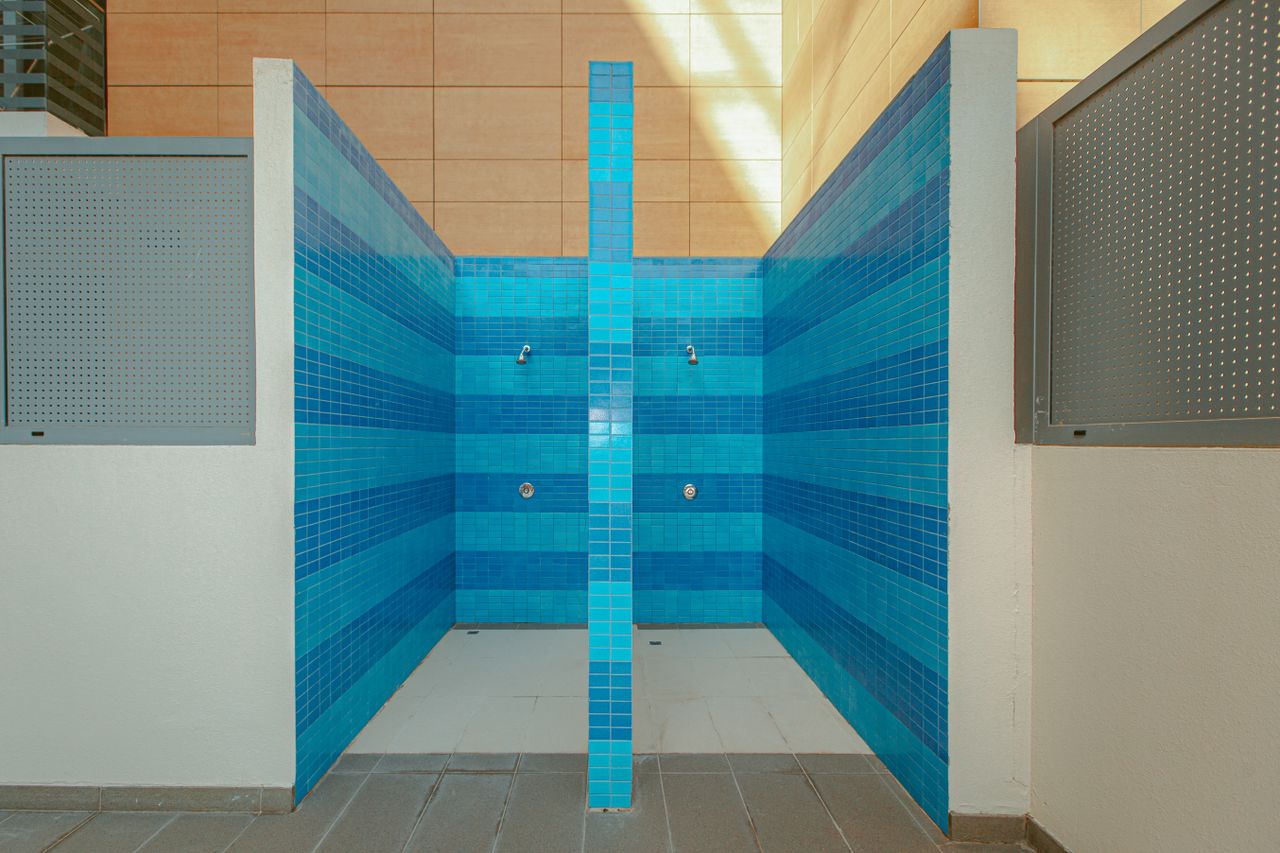
Outdoor shower stalls lined with striped blue mosaic tiles. Photo via Pexels.
Blue mosaic tiles feel right at home outdoors, next to a pool, on a patio, or at a beach house. Small mosaic sheets, often 12 by 12 inches with 1 by 1 inch or 2 by 2 inch pieces, bend around curves and small walls better than large slabs, and their many grout lines give bare feet extra grip. The striped mix of light and dark blue in this photo looks like water even when the shower is dry, which is exactly the mood most people want in an outdoor wash area. Choose porcelain or glass mosaic rated for outdoor and freeze-thaw use if your winters drop below freezing.
Outdoor showers need a few practical checks that indoor showers do not. The drain must handle leaves and sand, the water lines must be protected from freezing in cold states, and the wall behind the tile must be a proper outdoor-rated backer, not plain drywall. In warm states like Florida, Texas, and Arizona, a simple cold-water outdoor shower can cost $1,500 to $4,000, while a hot-and-cold version with a tiled enclosure costs more. Rinse the tiles after beach days, because salt and sand wear down grout faster than plain shower water.
9. Tile the Tub Surround Too
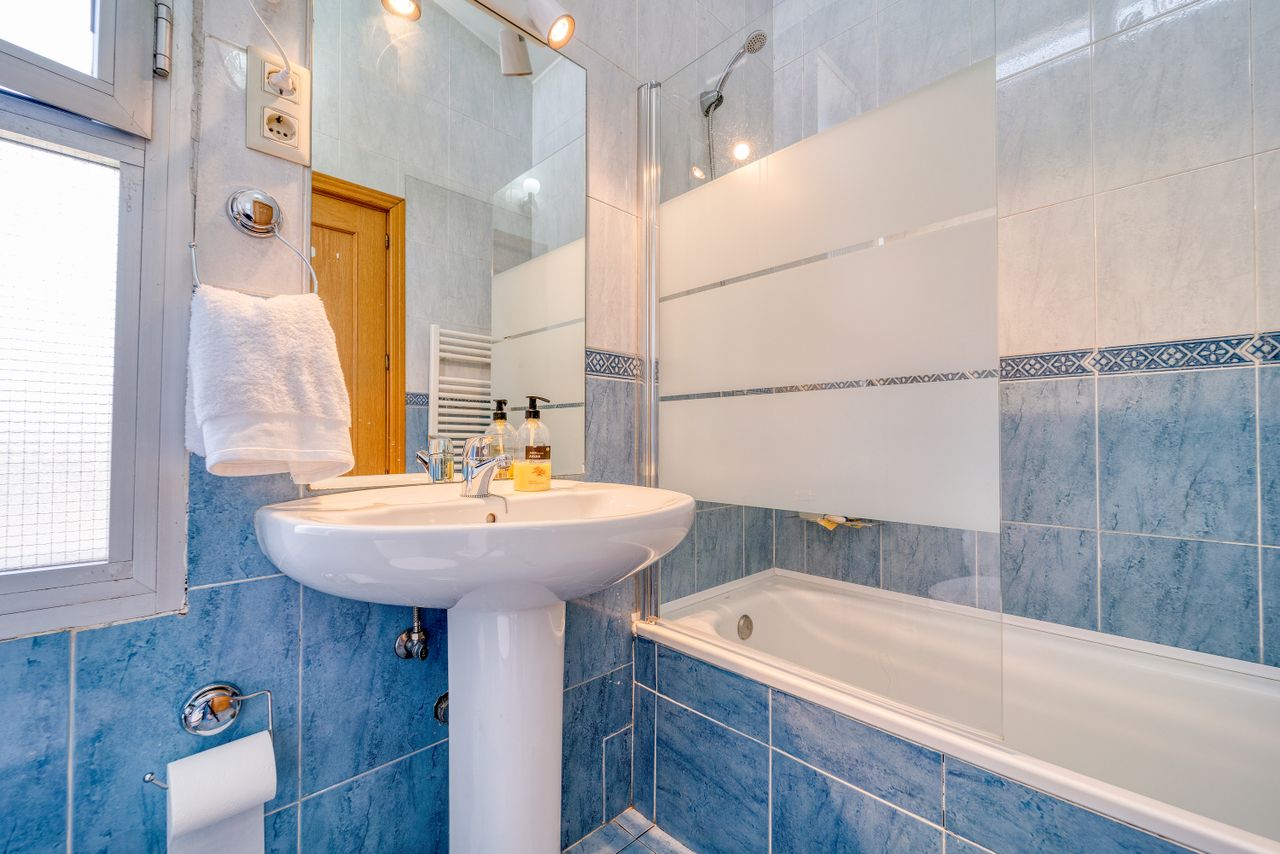
Blue tiles around a bathtub with a glass bath screen and a white pedestal sink. Photo via Pexels.
Many US bathrooms have a tub and a shower in one space, and tiling the whole tub surround in blue is an easy way to make that combo look intentional. Here, the same blue tiles run up the walls and around the tub, with a thin patterned border near the top for a finished edge. A glass bath screen keeps splashes in while letting the color show, which is a big improvement over a closed curtain in a small room. White fixtures and a white sink keep the blue from feeling heavy.
Before you tile a tub surround, check what is behind the old wall. You need a cement backer board and a waterproof membrane, not green board or plain drywall, because steam and splashes will find every weak spot. Tile up to the ceiling if you can: it looks better, protects the wall above the shower head, and costs only a little more in materials. Leave a small gap where the tile meets the tub, and fill it with a flexible, mold-resistant caulk, not grout, because the tub moves slightly when it fills with water.
10. Balance Navy With White Subway Tiles
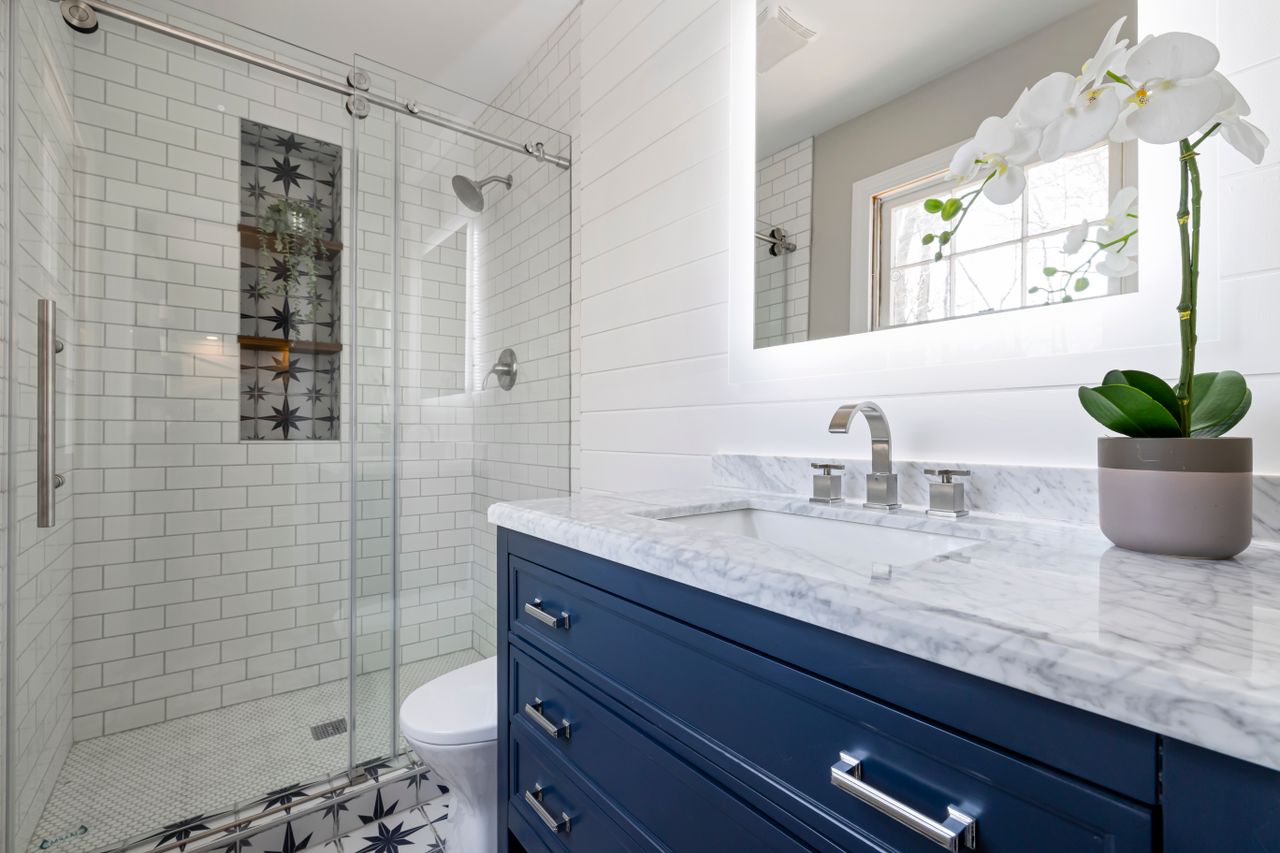
A navy vanity beside a white subway-tile shower with a patterned tile niche. Photo via Pexels.
This last look pulls several ideas together, and it is a good model if you want navy without a dark shower. The shower itself is white subway tile, which is bright and easy to clean, while the navy vanity and the small patterned niche give the room its blue character. A niche, that recessed shelf in the shower wall, is worth planning from the start: it holds shampoo bottles off the floor, it looks built-in, and a few patterned tiles inside it add a surprise detail. Keep the niche about 12 inches wide and 24 inches tall, and slope its bottom shelf slightly so water drains out.
For a calm, high-end feel, match the navy across the room in just two or three places, such as the vanity, the towels, and the niche tile, and leave everything else white or wood. Our modern luxury bathroom ideas show the same rule at work: one strong color, repeated sparingly, reads as luxury, while five competing colors read as clutter. If you have a family bathroom, a soft pale blue on the walls can work the same way for a younger household; our girls bathroom ideas include pastel tile looks that pair well with white fixtures and wood.
FAQs
Will dark blue make a small bathroom look smaller?
It can, but glass, mirrors, and good lighting fix most of the problem. Keep the ceiling white, use a clear glass shower door, and add bright lights so the dark walls read as a feature, not a cave. In a very small room with no window, use dark blue on one wall only and keep the other walls white or pale blue.
Does hard water show up on dark tiles?
Yes, and this is the most common complaint about dark showers. Hard water leaves white limescale and soap spots that stand out on navy and black finishes. Squeegee the walls after showers, wipe fixtures dry once a week, and clean buildup with a mix of equal parts white vinegar and water. Avoid harsh abrasive pads on glossy tiles, because scratches show up on dark surfaces too.
What grout color should I choose?
For pale blue tiles, white or light gray grout looks clean and fresh. For navy tiles, a dark gray grout hides stains and makes the wall look like one solid surface, while white grout makes each tile stand out and needs more cleaning. Whichever you pick, seal the grout after it cures and re-seal it each year in a shower that gets daily use.
Can I tile above an old tub or shower unit?
Yes, if the wall behind it is sound and properly waterproofed. Remove loose or damaged material, install cement backer board, add a waterproof membrane, and then set the new tiles. Do not tile over a soft, swollen, or moldy wall, because the new tile will only hide the damage for a short time. If you see mold or rot, fix the leak and the wall first.
Will a strong blue look garish in a few years?
It is less likely if you pick a muted, slightly gray-blue rather than a bright, electric blue, and if you repeat the color in small ways around the room. A navy wall with white towels, a wood vanity, and one blue soap bottle or vase feels planned. A single loud wall with no other blue in the room can feel like an accident, so carry the color into at least one accessory.
Final Thoughts
Blue is a forgiving color for a shower because it suits almost every style, from a coastal cottage to a modern city apartment. Start with the shade you love in daylight, test it under your own bathroom lights, and then decide how much of it you want: a full navy surround for drama, a patchwork wall for charm, or a single stripe for a safe, cheap update. Measure twice, buy 10 percent extra tile, and do not skip the waterproofing behind the walls, because that hidden work is what makes a pretty shower last.
If you are still unsure, start small. Paint or replace the vanity, add blue towels and a blue curtain, and live with the color for a month. If you still love it, commit to tile with confidence. If you do not, you have spent very little and learned something useful about your taste. Either way, you will end up with a bathroom that feels calmer, cleaner, and more like yours.
Sources
- Houzz: Contemporary blue tile bathrooms
- Houzz: Blue tile bath ideas
- YouTube: Bathroom remodel with blue chevron tile accents
- Homedit: Removing dark blue tile transforms a bathroom
Gallery
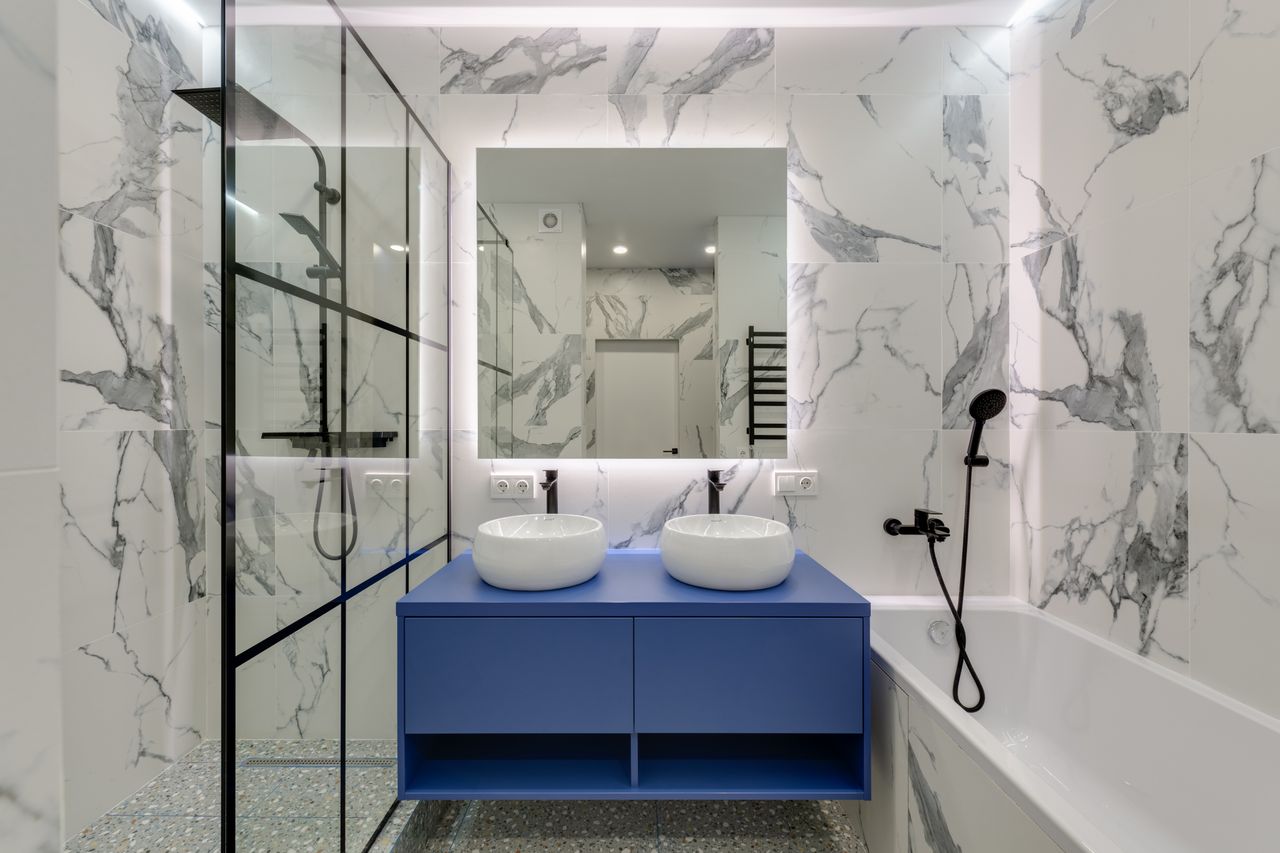
A marble-look bathroom with a blue vanity, a glass shower, and a bathtub. Photo via Pexels.
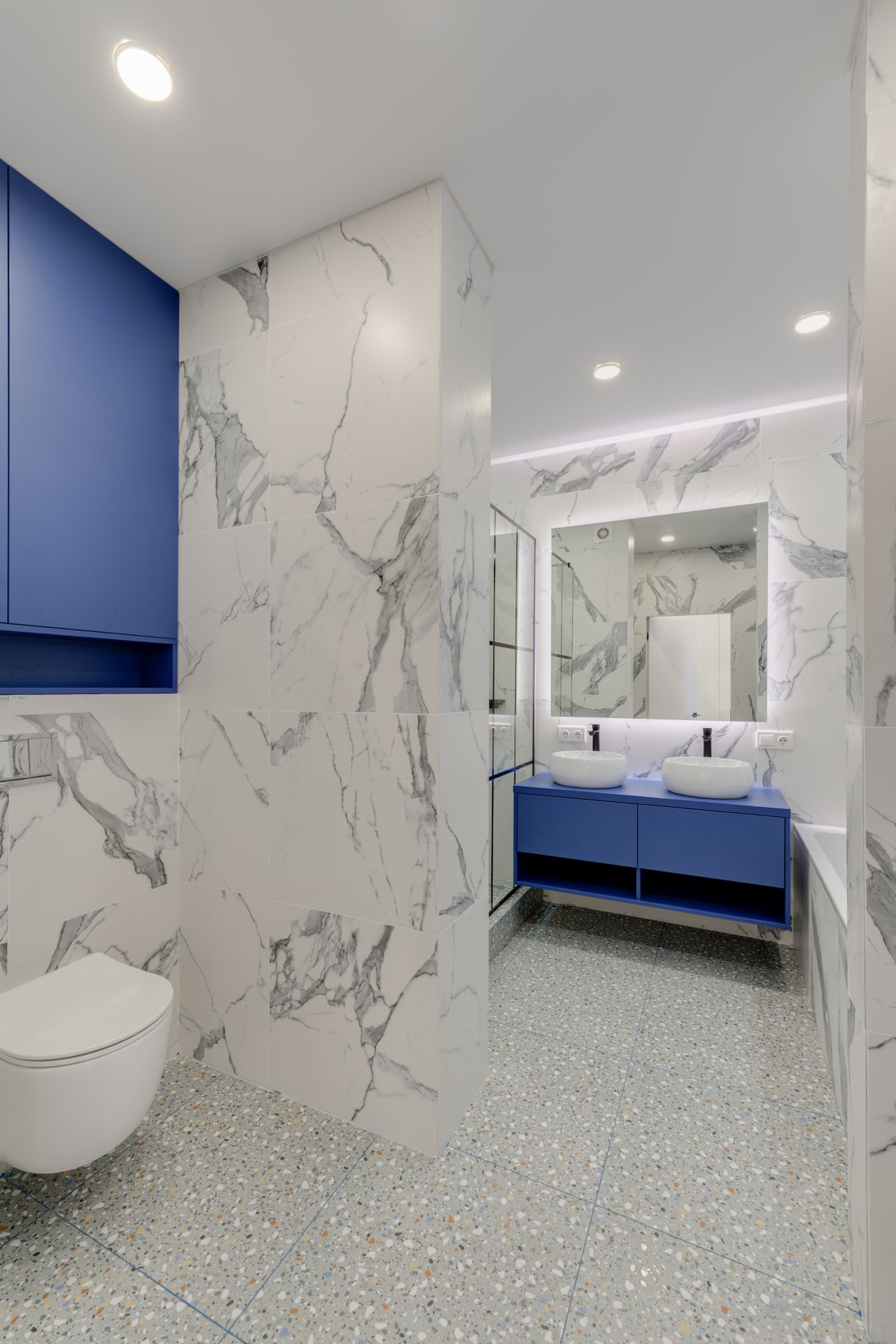
A wide view of a blue vanity with twin sinks and a terrazzo-style floor. Photo via Pexels.
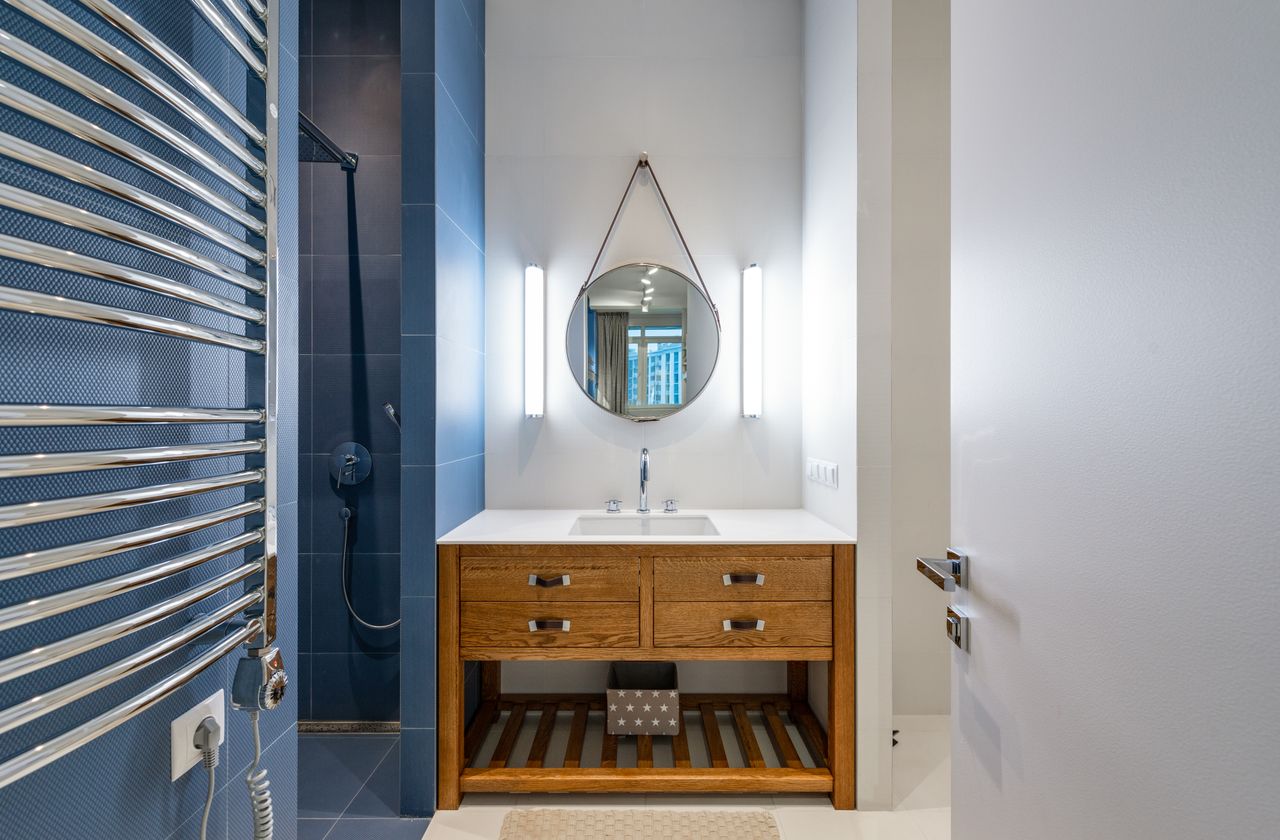
Another view of a blue shower with a wooden vanity and a round mirror. Photo via Pexels.

No comments:
Post a Comment