When the temperature drops and your bedroom stays cold long after sunset, the fix is rarely one thick blanket. This guide to winter bedding ideas shows you how to build warmth in layers, so you can add or remove one layer on a mild night without remaking the whole bed. Every idea below works in a real American home, from a drafty apartment to a cold farmhouse bedroom, and most of them cost less than turning up the heat all night.
The best cold-weather bed follows a simple order: warm sheets against your skin, a real insulating layer in the middle, and a soft throw on top for extra heat and looks. Sleep experts generally point to a bedroom temperature of about 60 to 67 degrees Fahrenheit for good sleep, so your bedding should do its work inside that range, not fight a room kept at 75 degrees. Start with the layer that bothers you most, usually the sheets or the comforter, and build from there.
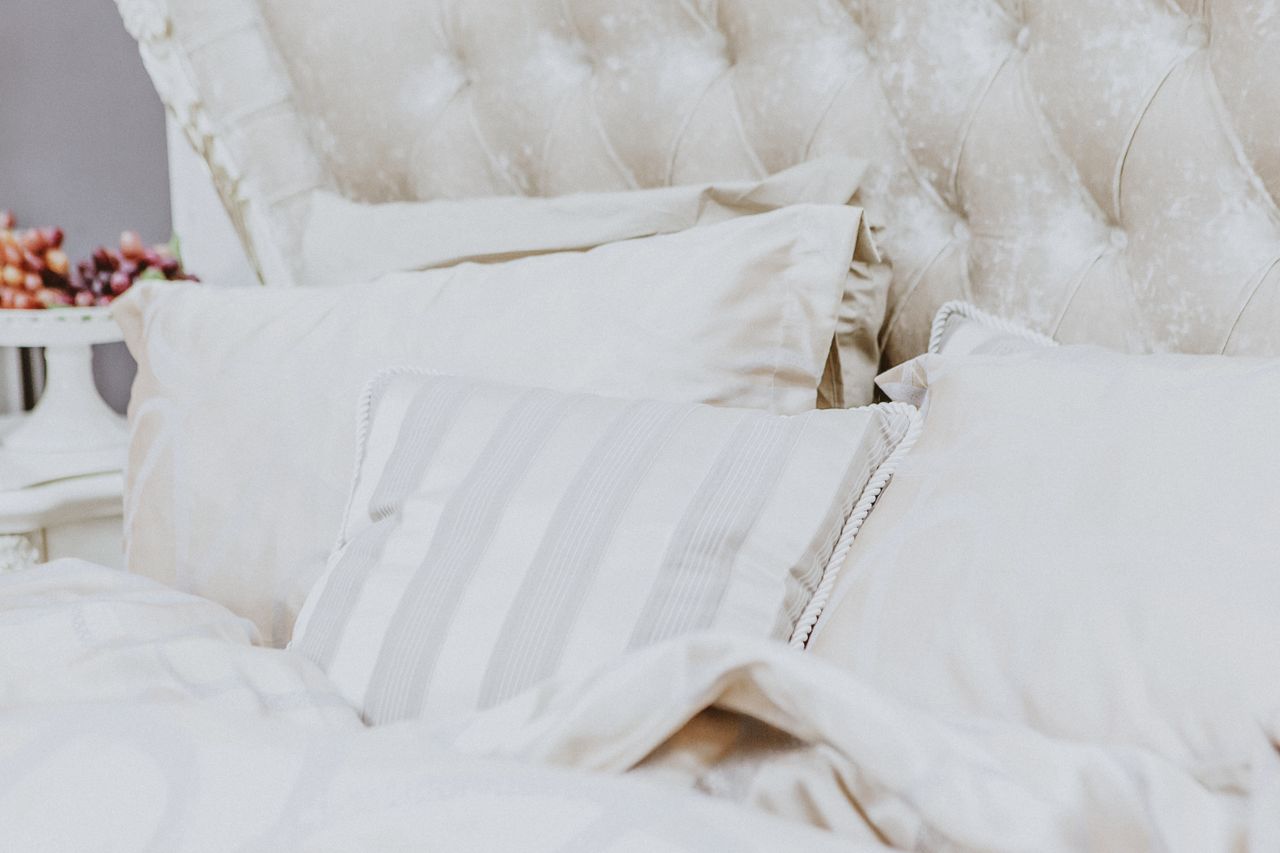
A close-up of a bed with a tufted cream headboard, many soft white and cream pillows, and rumpled white bedding, with a small dish of fruit on a nightstand at the left edge.
Contents
- 1. Swap to Flannel Sheets
- 2. Choose a Warmer Down Comforter
- 3. Add a Wool Blanket Layer
- 4. Fold On a Chunky Knit Throw
- 5. Stack Pillows That Hold Warmth
- 6. Pre-Warm the Bed Before You Climb In
- 7. Block Drafts at the Window
- 8. Go Deep With Winter Colors
- 9. Set the Bed for How You Sleep
- 10. Build a Wind-Down Bedtime Ritual
1. Swap to Flannel Sheets
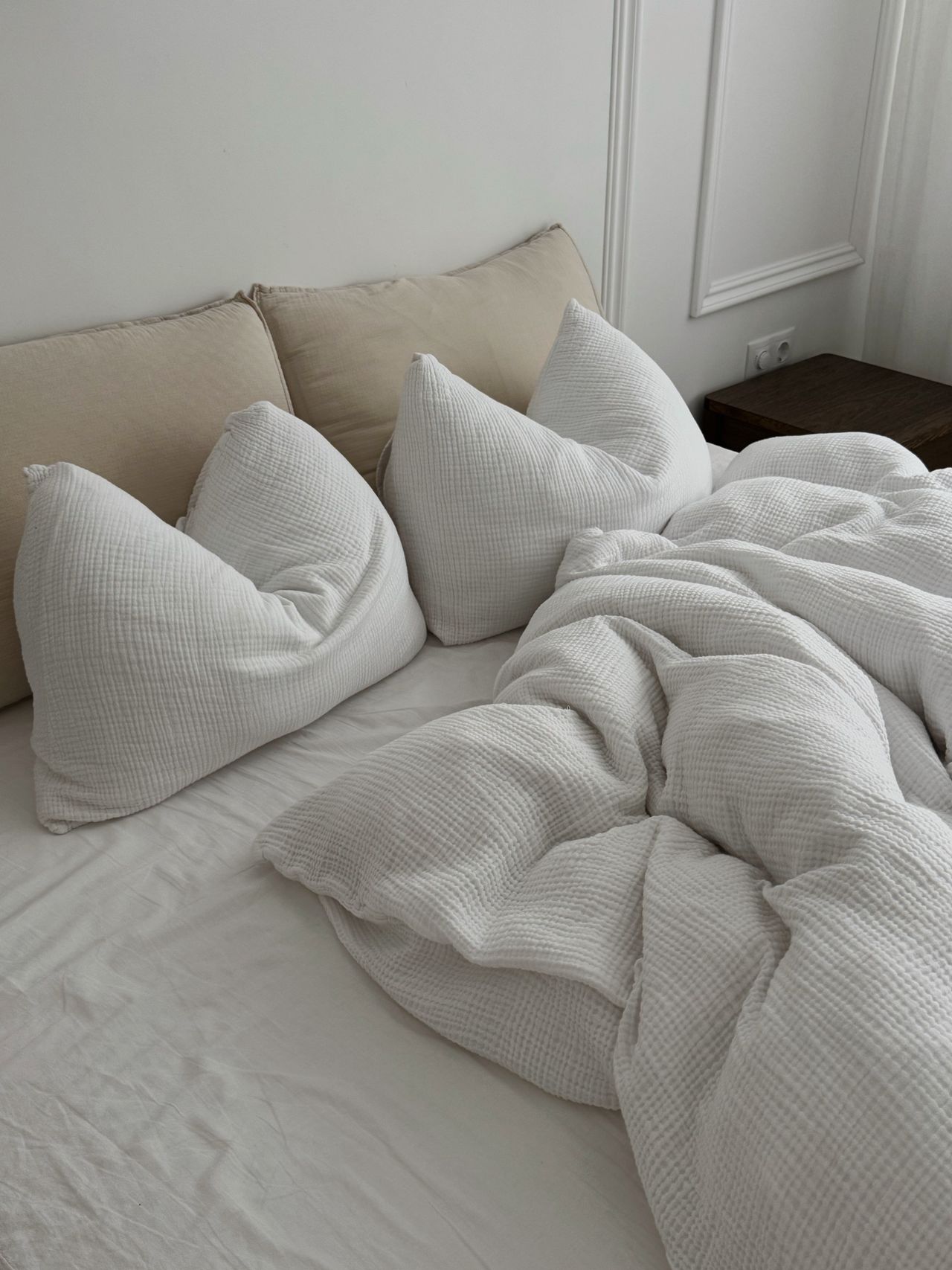
A bed with rumpled white textured bedding, white textured pillows in front and beige pillows behind, beside a dark wood nightstand.
Sheets are the layer your skin actually touches, so they matter more than any throw on top. Crisp percale cotton feels cool and fresh in summer, but on a cold night it can feel like climbing into a cold shirt. Flannel sheets, brushed cotton, or jersey knit trap a thin layer of warm air next to your skin, and they feel soft from the first minute instead of needing your body heat to warm them up. A queen flannel sheet set costs about $40 to $90, and brushed cotton runs about $35 to $80, so this is one of the cheapest real upgrades in the whole guide. Wash flannel on a gentle cycle in cold water and skip the fabric softener, which coats the fibers and makes them less breathable over time. If you share the bed with someone who sleeps hot, try flannel on your side and jersey on theirs, or use a flat flannel sheet as a middle layer you can kick off. The goal is sheets that feel warm at 10 p.m., not sheets that make you sweat at 2 a.m.
2. Choose a Warmer Down Comforter
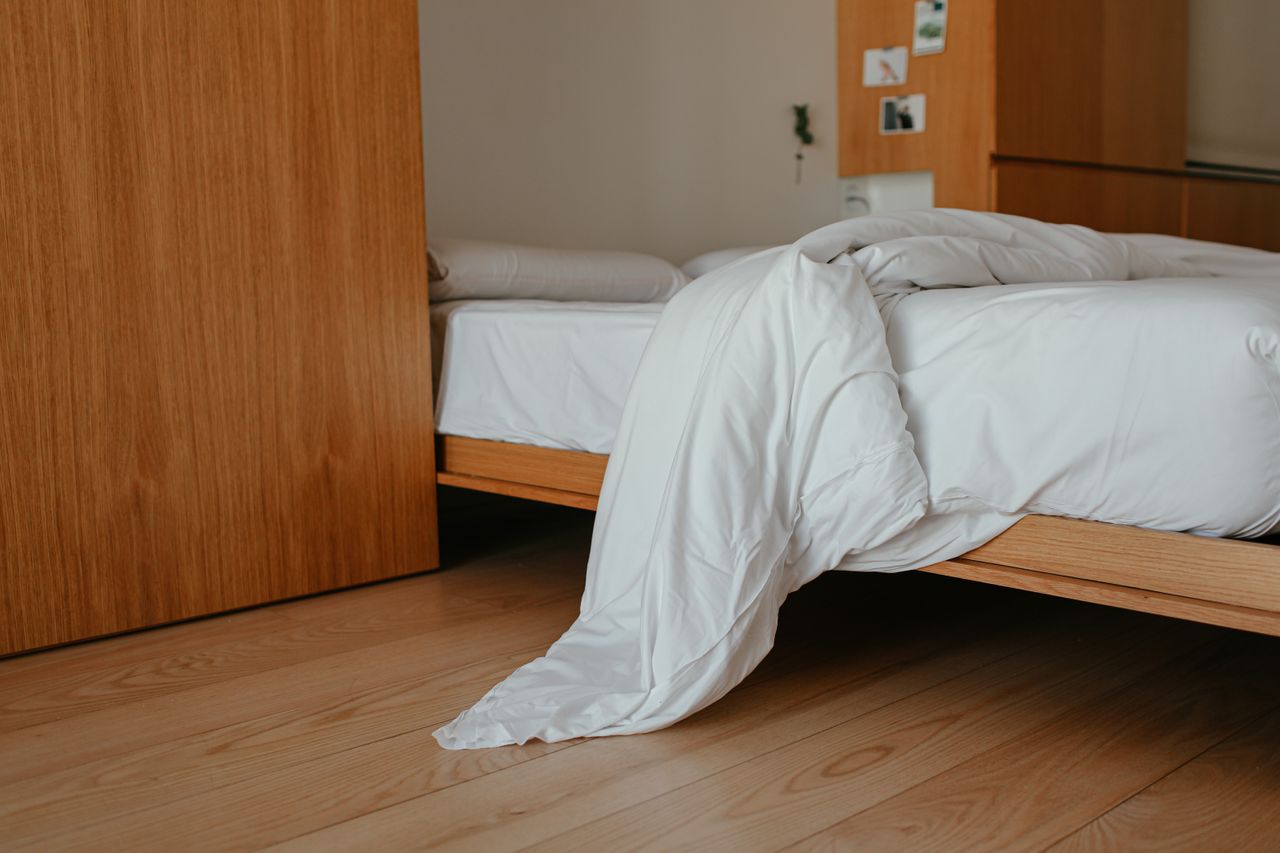
A bed with a white duvet draping down to a wood floor, beside a wooden wardrobe, with small photos pinned to a cabinet in the background.
The comforter is the main insulation layer, and winter is the time to check whether yours is really up to the job. A lightweight summer comforter will not cut it once bedroom temperatures drop toward 60 degrees Fahrenheit, no matter how many throws you pile on top. Down and down-alternative comforters trap heat while still feeling light, because their fill holds air in small pockets, and baffle-box stitching keeps that fill spread evenly so you do not get cold spots at the edges. For a queen bed, buy the king-size comforter if your budget allows: the extra 10 to 14 inches of drape on each side seals out drafts at the edges and looks far more generous on the bed. A good down-alternative comforter costs about $60 to $150, while real down runs about $150 to $400, and both should be shaken out and aired for an hour before the first cold night. If allergies are a concern, down-alternative fill gives similar warmth without triggering sensitivities, and it washes at home, which down often does not.
3. Add a Wool Blanket Layer
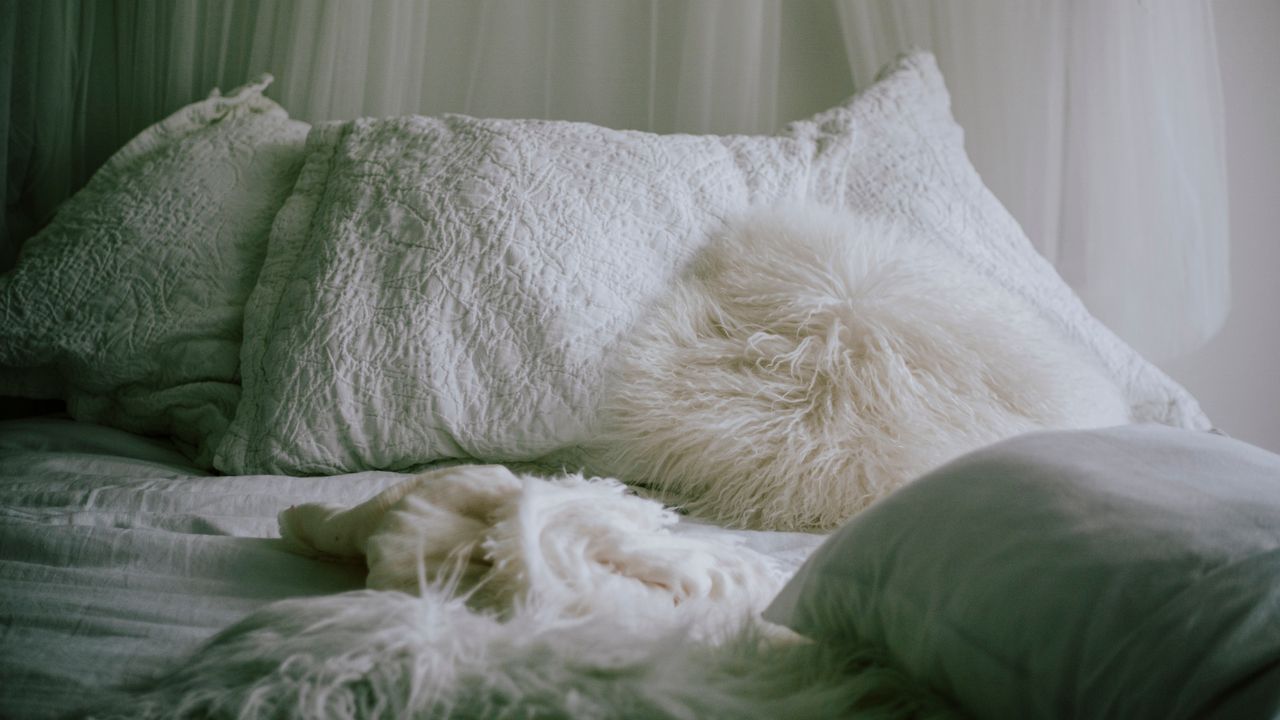
A bed piled with fluffy white textured pillows and a fuzzy white throw, with sheer curtains behind the bed.
One wool blanket between your sheets and your comforter adds more warmth than a second comforter, because wool insulates even when it picks up a little moisture from the night air. Lay it flat over the top sheet, tuck it in at the foot of the bed, and let the comforter go over it, so the wool sits close to your body where it does the most good. A queen wool blanket costs about $60 to $180, and a lighter wool-blend throw costs about $40 to $100, so this layer is easy to add without replacing anything you already own. Wool also regulates temperature better than most synthetics, which means fewer 3 a.m. wake-ups feeling too hot. If wool itches your skin, put it between the flat sheet and the comforter rather than against your skin, or choose a cotton-covered wool blanket. These layered bedroom looks show the same middle-layer trick with linen and cotton, and the order is the same whatever fabric you pick: sheets, blanket, comforter, throw. Wash wool on a cold gentle cycle and dry it flat, or it will shrink into a very expensive lap blanket.
4. Fold On a Chunky Knit Throw

A woman in a white cable-knit sweater sitting on a bed with a mug of cocoa, an open book, and a striped knit throw, with soft string lights along the bed and a basket of folded knits behind her.
A chunky knit throw folded across the foot of the bed is the layer you reach for without thinking, and that is exactly why it works. It adds warmth right where your feet get cold first, it looks inviting folded in thirds across the lower third of the bed, and you can pull it up over the comforter on a cold night without disturbing the rest of the bed. A 50 by 60 inch chunky knit or chenille throw costs about $30 to $80, and a hand-knit wool throw runs about $80 to $200, so this is a good place to spend a little more, since you will touch it every night. Fold it lengthwise and lay it across the foot, or drape it diagonally from one corner for a softer look, and keep it off the pillows, where it just gets in the way. Wash it on a gentle cycle in a mesh bag, because chunky knits snag easily on zippers and hooks, and dry it flat so it keeps its shape. One good throw beats three thin ones, and it doubles as a couch blanket for cold evenings in the living room.
5. Stack Pillows That Hold Warmth
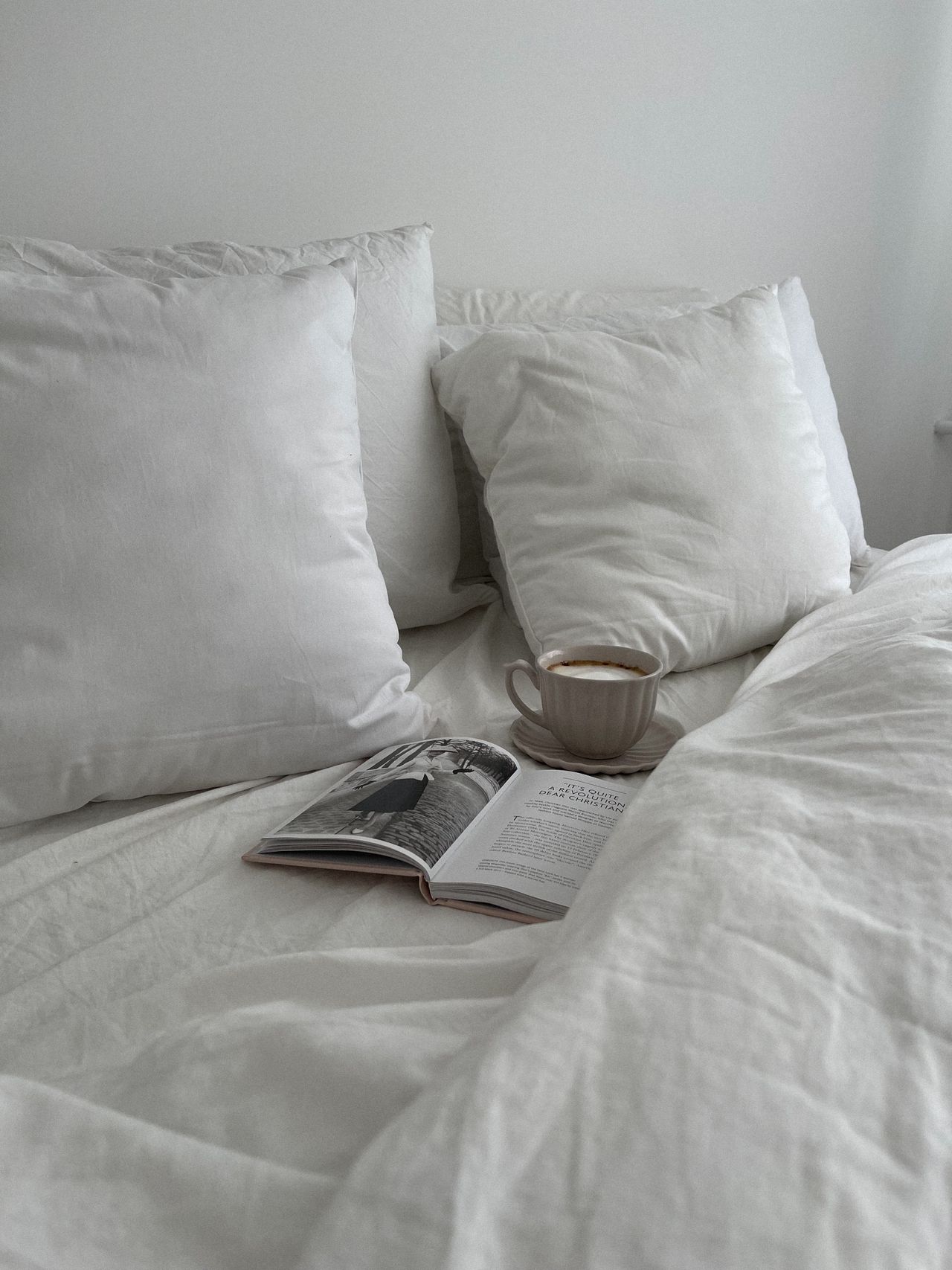
White pillows piled on a bed with an open book and a cup of coffee resting on white sheets.
Pillows are not just for looks in winter: the right stack keeps your head and shoulders warm and gives you a comfortable reading position before sleep. Sleep on two standard pillows, one firm and one soft, and add two Euro squares, about 26 inches each, behind them for sitting up with a book. A flannel or brushed-cotton pillowcase on the sleeping pillow keeps your face warm in a way that cool cotton cannot, and a set of two flannel cases costs about $15 to $30. Keep the reading pillows in a different fabric, like velvet or knit, so you can tell them apart in the dark, and store the reading pillows in a basket or on a chair at night instead of piling them on the floor. Replace a pillow when it folds in half and stays folded, which usually happens after one to two years of nightly use, because a flat pillow lets cold air creep around your neck and shoulders. A good sleeping pillow costs about $30 to $80, and it is worth replacing before you buy anything else, since you spend a third of your life on it.
6. Pre-Warm the Bed Before You Climb In

A person wrapped in a white duvet in a warmly lit bedroom, with a glowing wall lamp behind the bed.
The coldest moment of the night is the first minute under the covers, and pre-warming the bed removes it completely. An electric blanket or heated mattress pad, usually $40 to $120, warms the bed in 10 to 15 minutes on a low or medium setting, and most models switch themselves off after a set time, which is safer than leaving one on all night. If you prefer not to use electric bedding, a hot water bottle tucked near your feet for 10 to 15 minutes before bed does the same job for about $10 to $20, and it stays warm for an hour or more under the covers. Never use a hot water bottle with boiling water, and never sleep with an electric blanket folded or bunched up, since both can overheat in one spot. Turn the heat off once you are in bed and let your layers hold the warmth, because a bed that stays heated all night often leads to sweating and waking up at 2 a.m. Pre-warming also helps cold sleepers most, since cold feet are usually what keeps them awake in the first place.
7. Block Drafts at the Window
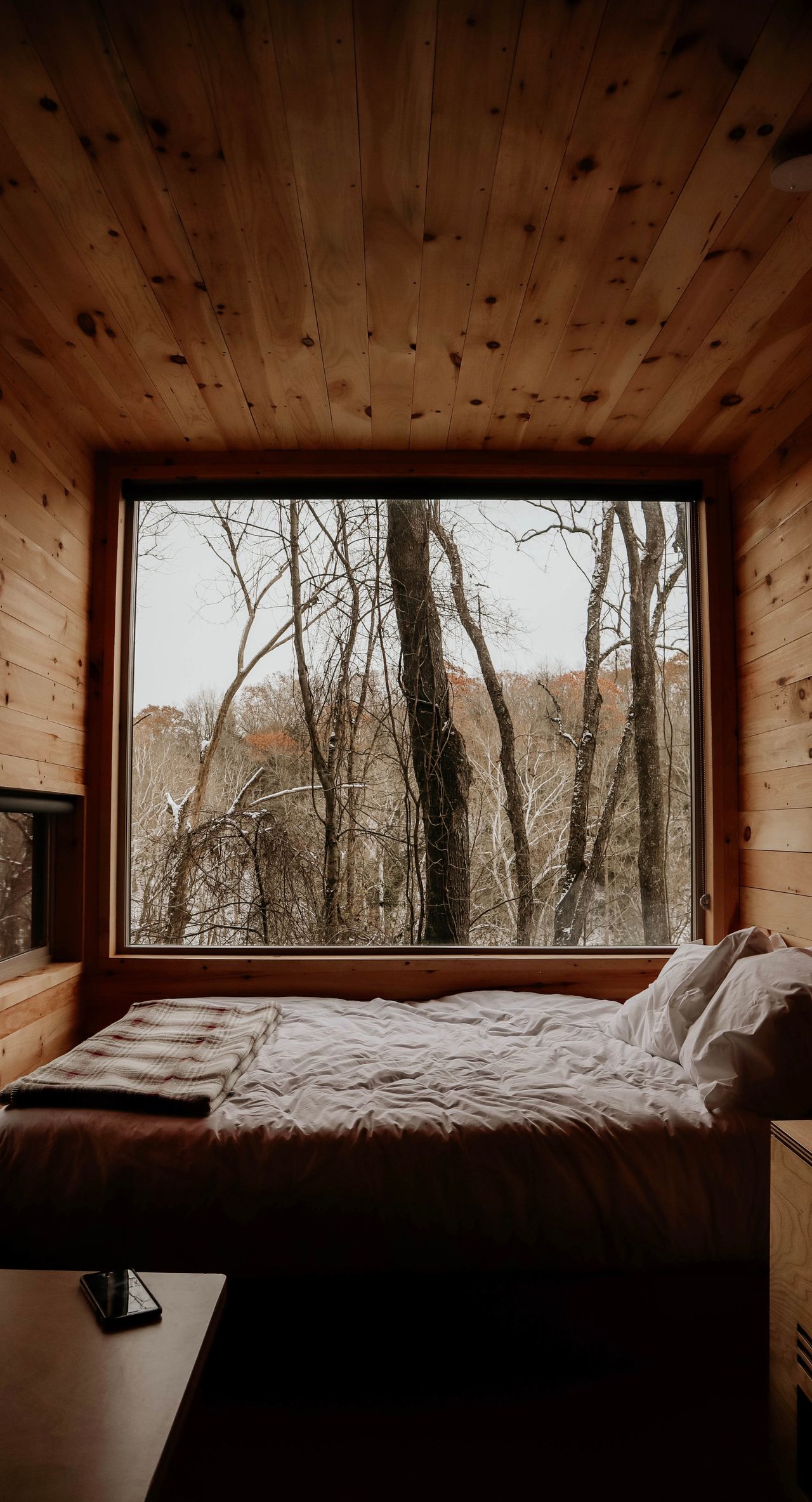
A wood-paneled cabin bedroom with a bed dressed in white bedding and a folded plaid throw, beside a big window looking onto bare winter trees.
Even the best bedding cannot keep you warm if cold air pours in around the window all night, so fix the room before you blame the blankets. Hold a lit candle or a thin strip of tissue near the window frame on a windy night, and watch where it flickers: those are your leaks. Weatherstripping tape costs about $5 to $15 per window and takes ten minutes to press into place, and a draft stopper at the base of the bedroom door costs about $10 to $25. Hang lined or thermal curtains that reach the floor, close them at dusk, and open them again in the morning so sunlight can warm the room for free, because south-facing windows get the most winter sun. A pair of thermal curtain panels costs about $30 to $80, far less than a new comforter, and they also darken the room for better sleep. Check that the bed is not pushed hard against an outside wall or a cold window, since that wall can pull heat from your body all night: leave 2 to 3 inches of air between the bed and the wall, and put a rug on a cold floor so your feet land on something warm in the morning.
8. Go Deep With Winter Colors

An overhead close-up of rumpled dark charcoal bedding with gray pillows.
Color does not change the temperature of a room, but it changes how warm the room feels, and that matters when you are trying to relax at night. Deep tones like burgundy, forest green, navy, and charcoal make a bedroom feel enclosed and cozy, while bright white bedding can feel cold and stark in January light. You do not need to replace everything: swap the duvet cover for a deep color, about $40 to $100 for a queen, and add two accent pillows in a matching tone, about $20 to $50 each, against a neutral base. Keep one light element, like cream sheets or a pale throw, so the bed does not turn into a dark cave, and repeat the deep color in just one more place, such as a curtain panel or a rug, so the room feels planned. Textured fabrics help even more: velvet, sherpa, and chunky knits catch lamplight and look warm in a way that smooth cotton cannot. If you rent and cannot paint, deep bedding plus one dark throw gives you most of the effect with nothing nailed to a wall.
9. Set the Bed for How You Sleep

A woman sleeping under a white duvet on a beige pillow, with a woven basket and plants in the background.
Cold sleepers and hot sleepers need different beds, even in the same room, so stop buying one setup for both sides. If you are a cold sleeper, add a mattress topper: a 2-inch memory foam topper holds warmth and costs about $50 to $150 for a queen, while a wool topper adds insulation and breathes better, at about $100 to $250. If you are a hot sleeper, skip the topper and use breathable layers you can push aside, like a light cotton blanket under the comforter, so you can cool down without waking your partner. Couples with very different needs can use two twin-size comforters on one king bed, a trick common in colder countries, which ends the nightly tug-of-war and lets each person layer up or down alone. Two twin comforters cost about the same as one king, and they wash more easily in a home machine. Whatever you choose, keep the bedroom itself between 60 and 67 degrees Fahrenheit, because a room kept too warm makes even the best bedding feel clammy by morning.
10. Build a Wind-Down Bedtime Ritual
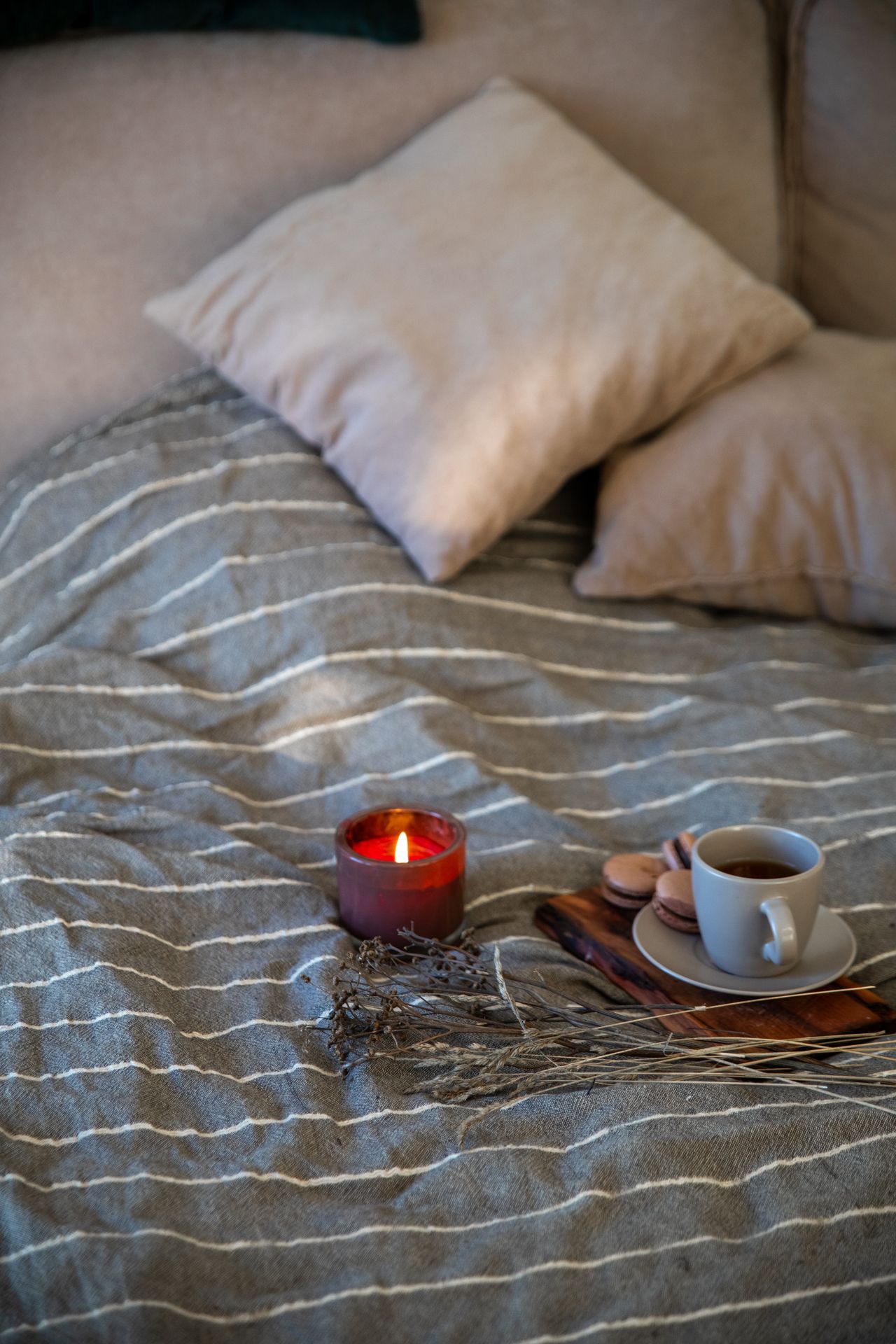
A bed with gray striped bedding and beige pillows, holding a lit candle, a cup of tea, and macarons on a small wooden board, with dried stems beside them.
The warmest bed in the world will not help if you climb into it wired from screens and bright light, so build a short wind-down ritual around the bed itself. Turn the ceiling light off an hour before bed and use two warm lamps at about 2700K instead, which cost about $8 to $15 for a pack of LED bulbs, and keep the room dim while you change into warm, breathable sleep clothes. A cup of tea, a chapter of a book, and a few minutes of stretching in bed tell your body the day is over, and the ritual works better when the bed is already made inviting: pillows stacked for reading, the throw folded at the foot, and the top layer turned down. If you like candlelight, use a battery candle with a flicker setting, about $12 to $25 for a set, instead of a real flame near bedding, and never leave a real candle burning when you fall asleep. These bedroom sitting corner ideas show how one good chair and a small lamp beside the bed give the ritual a place to happen, so the bed itself stays for sleeping, not for working or scrolling.
Frequently Asked Questions
What bedroom temperature is best for sleep in winter?
Most sleep guidance points to about 60 to 67 degrees Fahrenheit. If your room runs colder than 60 degrees, add a layer or fix drafts first. If it runs warmer than 67 degrees, drop a layer before you buy anything new.
How many layers should a winter bed have?
Three is the sweet spot for most people: warm sheets, one insulating layer like a wool blanket or a heavier comforter, and one throw on top. Add a fourth layer only on the coldest nights, and remove it when the night turns mild.
Can I wash a down comforter at home?
Down-alternative comforters usually wash at home on a gentle cycle and dry on low with dryer balls. Real down often needs a large-capacity machine or a laundromat, and it must dry fully, or it clumps and loses warmth.
What if I overheat under winter bedding?
Use layers you can push aside one at a time instead of one very heavy comforter. A light blanket under the comforter, a throw at the foot, and breathable cotton or wool fibers all help you cool down without waking up fully.
Do I need a mattress topper for winter?
Not always, but it helps cold sleepers a lot, since heat escapes downward into a cold mattress too. A 2-inch foam or wool topper is the cheapest way to warm the bed from below, and it also extends the life of an older mattress.
Final Thoughts
A warm winter bed is not one big purchase. It is a stack of small, sensible choices: sheets that feel warm at once, a comforter with real loft, one wool layer in the middle, and a throw you actually reach for. Fix the drafts, keep the room near 60 to 67 degrees Fahrenheit, and let each layer earn its place. When the bed works, cold nights stop feeling like something to endure and start feeling like the best part of the day.
Start with the layer that bothers you most this week, whether that is cold sheets, a flat comforter, or a drafty window, and change just that one thing. Live with it for a few nights before you buy the next layer, because the bed that suits you is the one you sleep well in, not the one with the most blankets on it. Warm feet, a warm head, and a room that stays dim and quiet after dark will do more for your sleep than any single product on this list.
Sources
- Linens and Hutch: Winter Bedding Guide
- Pottery Barn: Cozy Up Bedding for Fall and Winter
- Christy: How to Make a Bedroom Warmer This Winter
Gallery
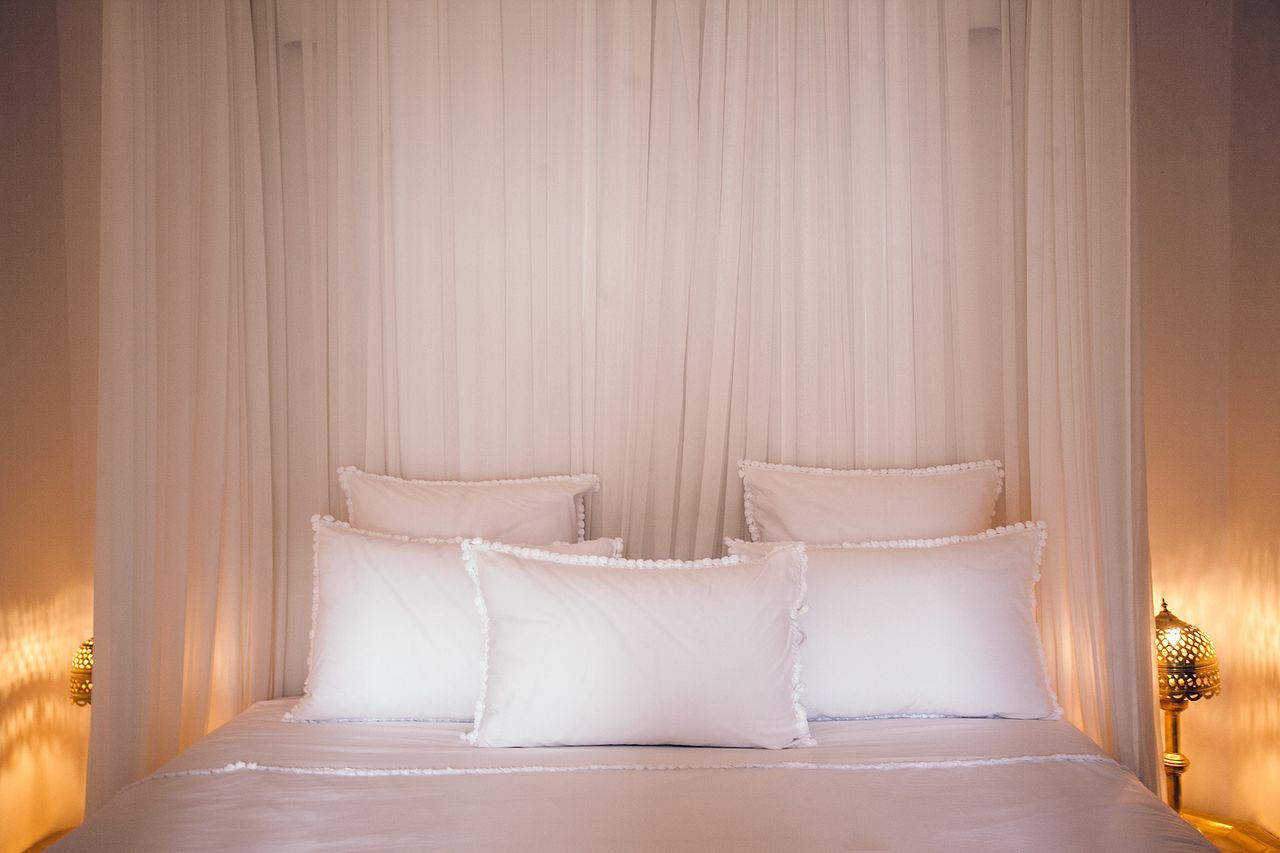
A white canopy bed with sheer curtains, white pillows with pom-pom trim, and warm glowing bedside lamps.
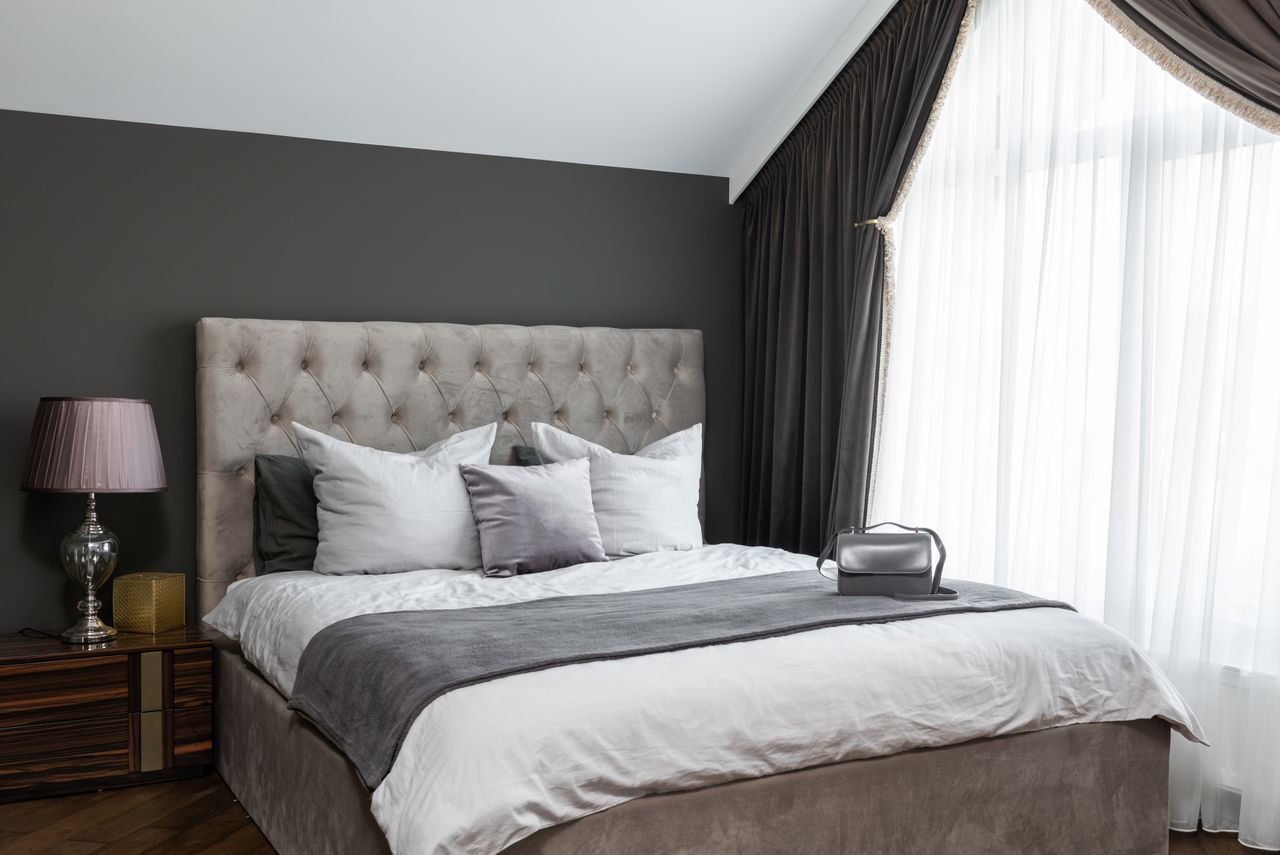
A bedroom with a tufted headboard, white bedding, a gray throw folded across the foot, and heavy dark curtains over sheer panels at a large window.
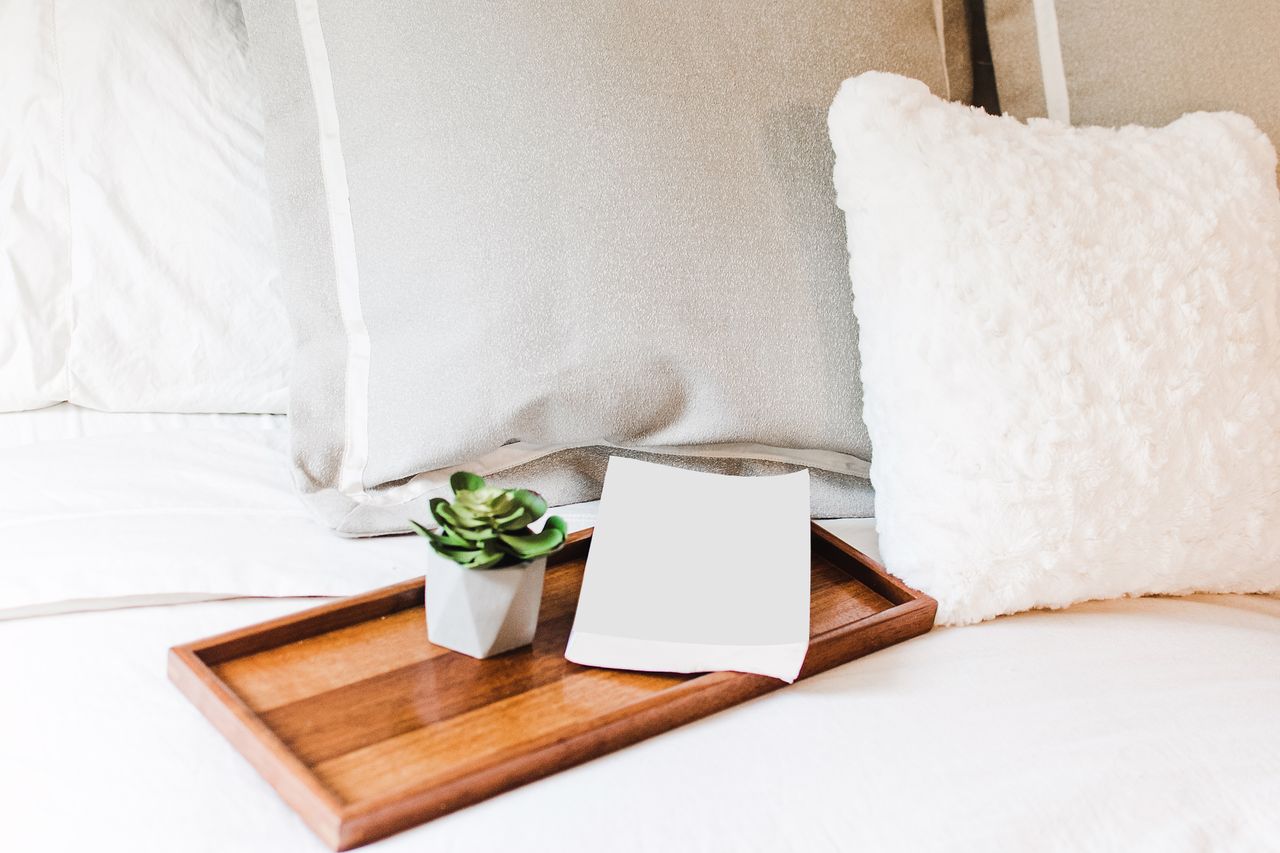
A white bed with a fluffy white pillow and a gray pillow, holding a wooden tray with a small potted succulent and a blank card.

No comments:
Post a Comment