These carhartt jacket outfits are built on one honest note: the photos in this guide show workwear-style jackets in canvas, denim, suede, leather, and corduroy, and they are not verified as genuine Carhartt brand products. The styling, fit, and layering advice still applies directly to a real Detroit-style jacket, but if you want the genuine item, check the label, the blanket lining, and the hardware before you buy. A true Detroit jacket, first sold in 1954 as the Zipper Jacket and given the Detroit name in 1998, is a waist-length jacket in 12-ounce cotton duck canvas, with a zip front, a pointed collar, two hand pockets, and waist adjusters, made to sit just above a tool belt.
Fit is where most people go wrong. A Detroit-style jacket is cut relaxed, so it should feel roomy over a tee and still close over a hoodie without pulling at the zip. If you plan to layer only a tee, your usual size is right; if you plan to layer a thick hoodie all winter, stay in your usual size rather than sizing up, because the relaxed cut already gives you that room. The canvas feels stiff at first and softens with wear, so do not judge it in the store alone. Expect about $100 to $180 for a basic canvas work jacket, $180 to $250 for a blanket-lined version, and $60 to $120 for good leather work boots, and wash canvas in cold water and hang it to dry so it keeps its shape.
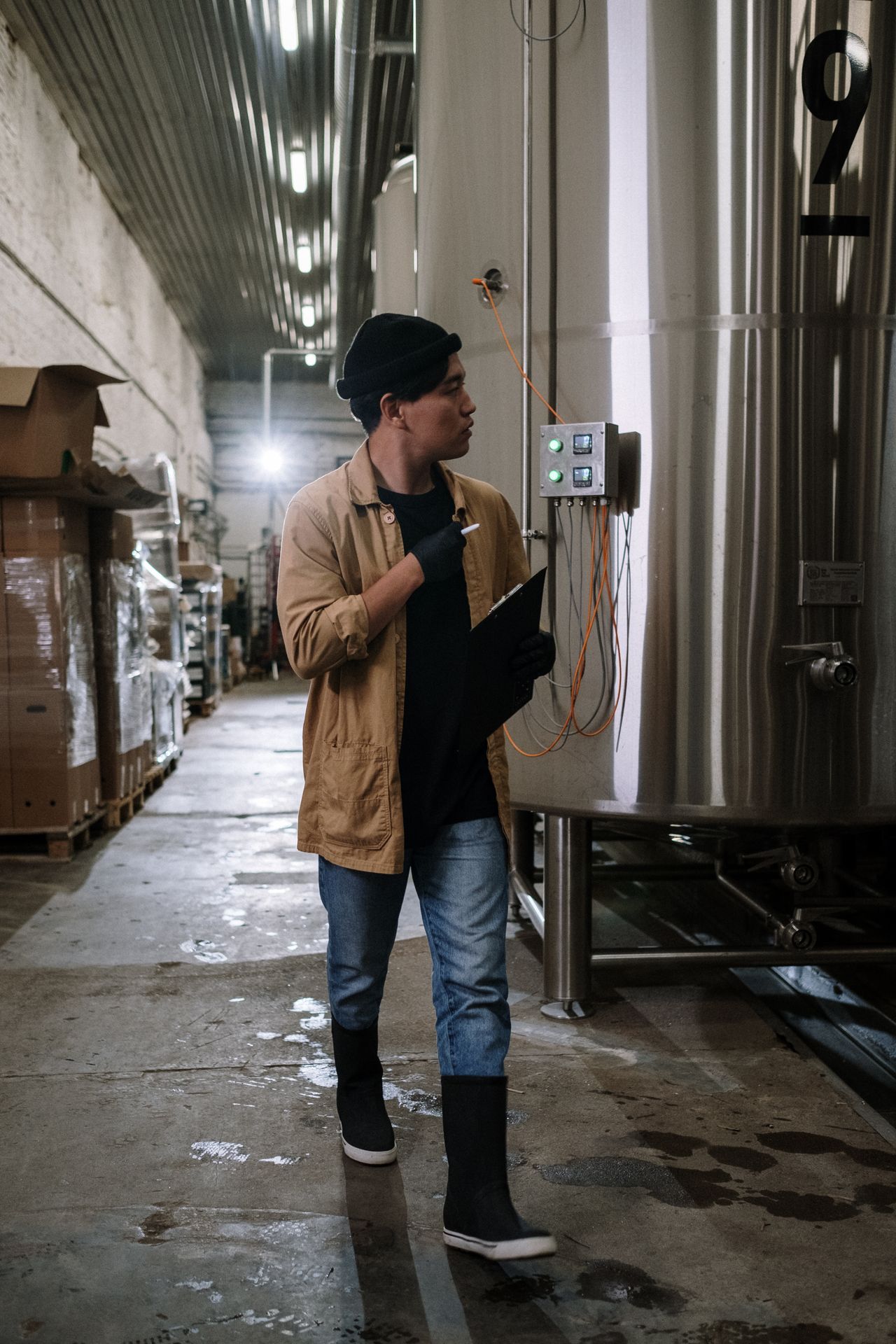
A man in an industrial plant in a tan work jacket, a black tee, blue jeans, black boots, and a black beanie, holding a clipboard by steel tanks. A workwear-style jacket, not verified as a genuine Carhartt product.
In This Article
- 1. Brown Suede Bomber With White Tee and Light Jeans
- 2. Light Denim Jacket With a White Top and Black Jeans
- 3. Denim Jacket With Rust Pants and Rubber Boots
- 4. Denim Jacket With Sweatshirt Sleeves and Brown Pants
- 5. Long Brown Studded Jacket With Sweatpants
- 6. Brown Corduroy Oversized Zip Jacket
- 7. Dark Denim Jacket With Jeans and Brown Boots
- 8. Denim Vest Layer Over a Light Shirt and Jeans
- 9. Light Denim Jacket Worn Off One Shoulder
- 10. Brown Work Boots With Cuffed Black Jeans
1. Brown Suede Bomber With White Tee and Light Jeans
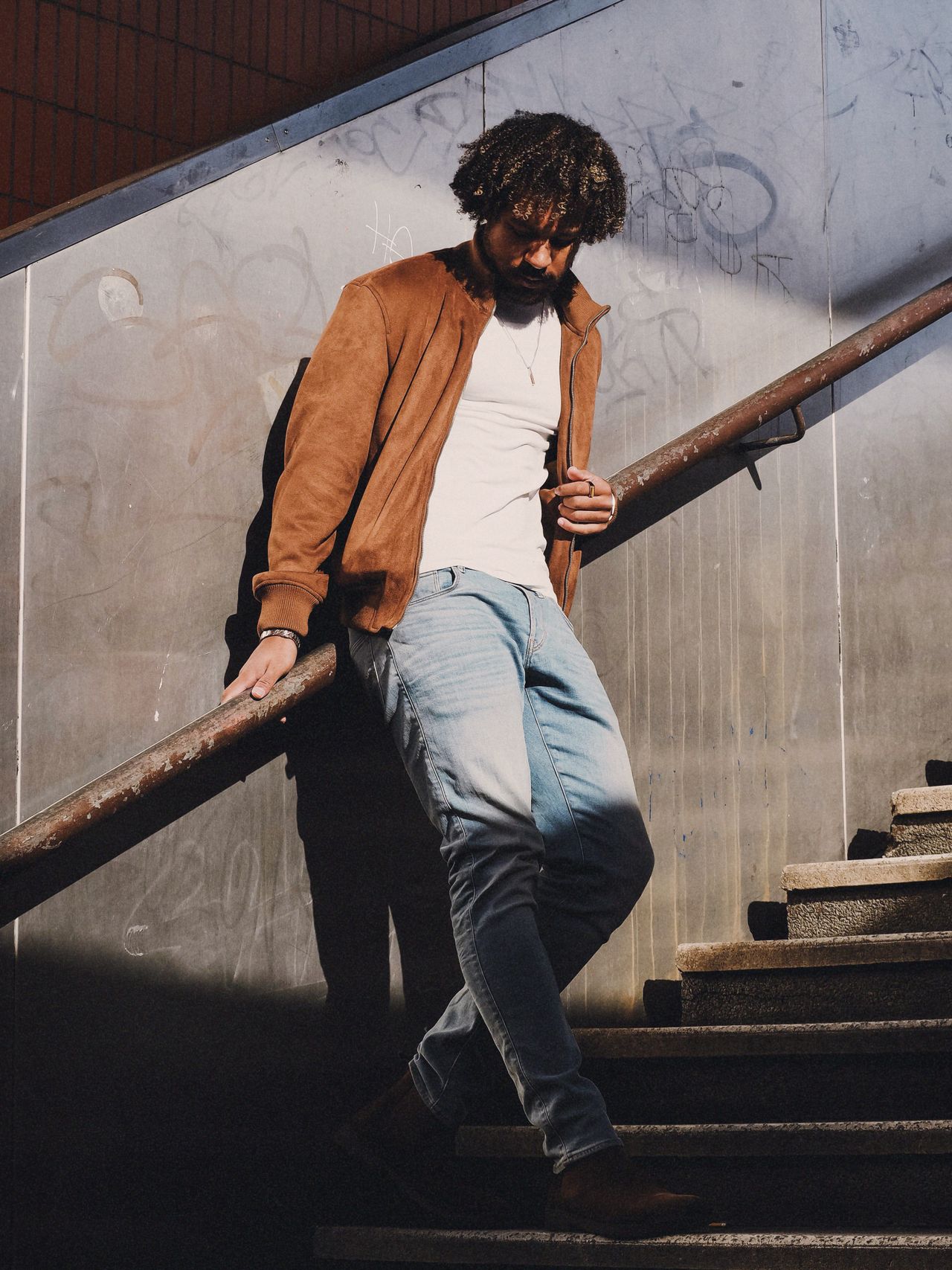
A man on stairs in a brown suede bomber-style jacket, a white tee, and light-wash jeans. The jacket is suede and bomber-shaped, not a canvas Detroit jacket.
Start with the simplest workwear formula: a brown jacket, a plain white tee, and light-wash straight jeans. The white tee is important because it breaks up the brown and keeps the outfit from looking like one solid block, and light jeans look more casual than dark jeans for weekends. A bomber shape ends at the waist, like a Detroit jacket, so it works with a tucked or untucked tee, but keep the tee plain, with no big logo, so the jacket stays the focus. Suede needs more care than canvas: brush it after wear, keep it out of heavy rain, and use a suede protector spray before the first wear, because water spots show on suede in a way they do not on waxed canvas. For a genuine canvas version of this look, choose the classic brown duck canvas, wear the same white tee and jeans, and add brown leather boots; the color story is identical, only the fabric changes. Budget about $120 to $200 for a good suede-style jacket and $40 to $70 for straight jeans.
2. Light Denim Jacket With a White Top and Black Jeans

A woman by a railing in a light-wash denim jacket, a white top, and black jeans. The jacket is denim, not canvas, shown here as a lighter workwear variant.
A light denim jacket is the warm-weather cousin of a canvas work jacket, and it works best for women when the fit is close at the shoulders and open at the waist, so it does not hide your shape. Pair it with a white top and black jeans for a clean contrast: light on top, dark on the bottom, with the white top acting as the bridge between them. Black jeans keep the look tidy for a casual office, a lunch, or a day of errands, and white sneakers or ankle boots both work, depending on how dressy you want to feel. If you are buying a genuine canvas jacket instead, the same formula holds, but choose a smaller, slimmer canvas cut for women, or size down one size from the men's cut, and check that the shoulder seam sits on your shoulder bone, not halfway down your arm. A denim jacket softens with every wash, while canvas softens with wear, so expect the denim version to feel broken-in after three or four washes and the canvas version to take a few weeks of regular wear.
3. Denim Jacket With Rust Pants and Rubber Boots
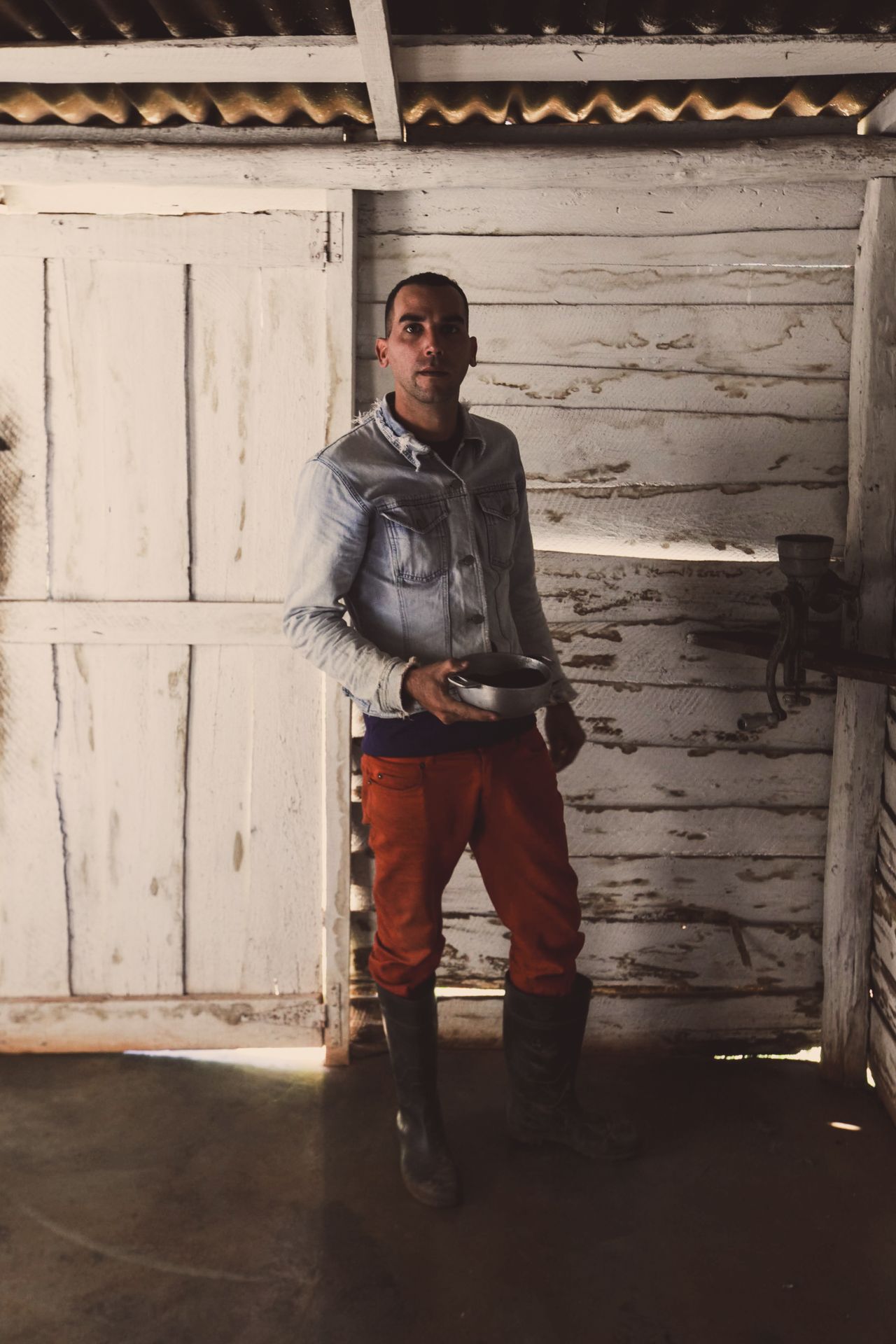
A man in a barn in a light denim jacket, rust-colored pants, and tall black rubber boots, holding a bowl. The jacket is denim, and the pants are rust, not a standard workwear brown.
This is real workwear, not a fashion pose: a jacket you can move in, pants in a color that hides dirt, and boots that handle mud. Rust pants work with a light denim jacket because both colors are warm and earthy, and the tall black rubber boots give you full coverage for yard work, farm chores, or a muddy job site. For a genuine Detroit-style jacket in this setting, the blanket lining matters: it adds warmth without bulk, so you can work in temperatures near 40 degrees Fahrenheit with just a tee underneath, and add a flannel shirt when it drops toward freezing. Check the cuffs and hem before you buy, because a work jacket should close snugly at the wrist so sleeves do not ride up, and the waist adjusters should let you tighten the hem over a tucked shirt. Keep a second pair of socks in your truck or bag, because rubber boots trap sweat, and wash the jacket separately in cold water so denim dye and canvas dust do not stain lighter clothes.
4. Denim Jacket With Sweatshirt Sleeves and Brown Pants
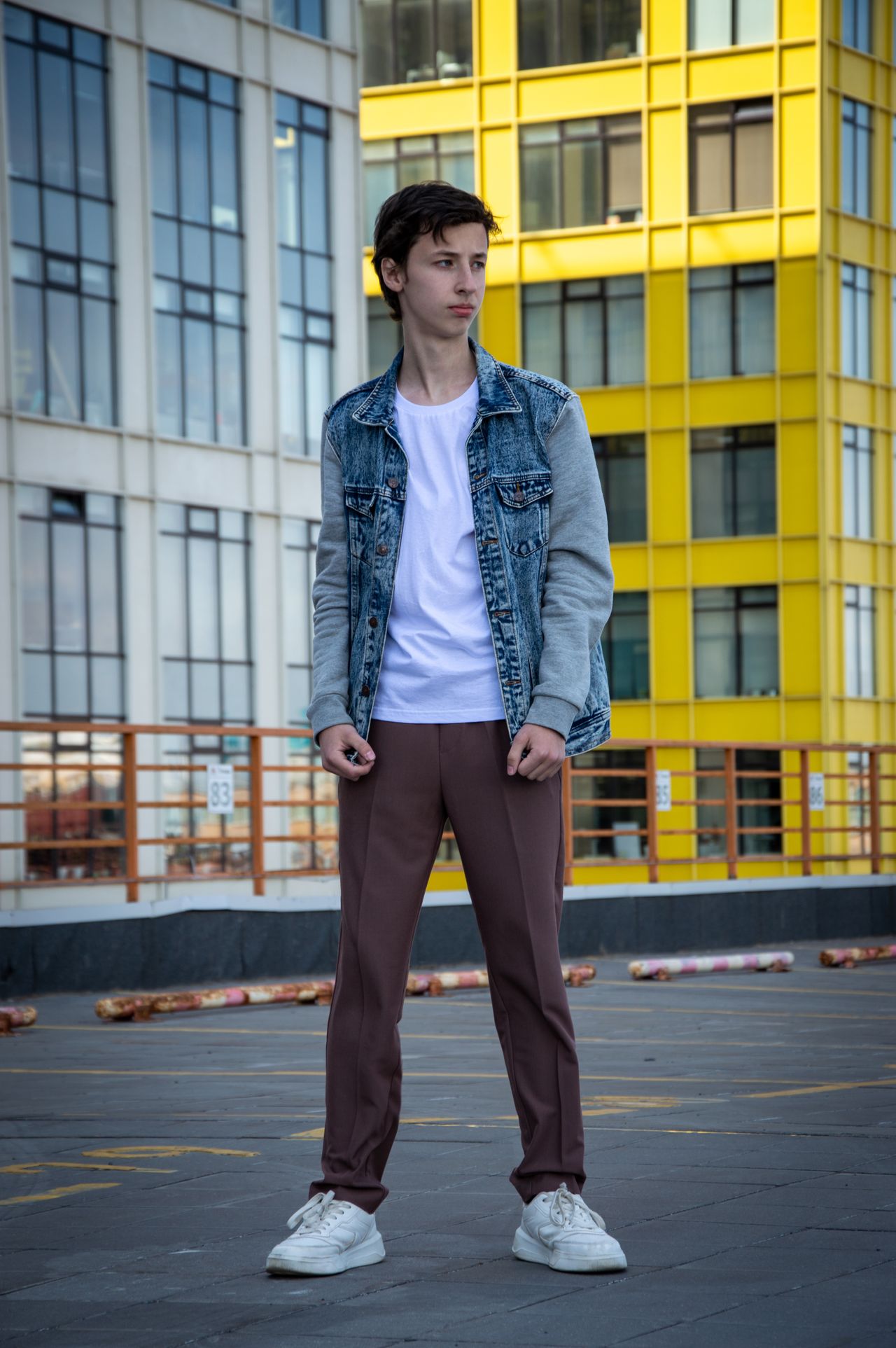
A young man in a parking lot in a denim jacket with gray sweatshirt sleeves, a white tee, brown pants, and white sneakers. The jacket mixes denim with sweatshirt sleeves, not a plain canvas body.
Layering a hoodie or sweatshirt under a work jacket is the classic cold-weather move, and this jacket builds that layer into the sleeves. For a real Detroit jacket, do it yourself: wear a thin gray or cream hoodie under the canvas jacket, let the hood sit outside the collar at the back, and keep the hoodie sleeves just past the jacket cuffs by about half an inch so the layers look planned. Brown pants and white sneakers keep the outfit casual and grounded, and a white tee under the hoodie gives you a clean neckline if you unzip. Our guide to black hoodie outfits covers hoodie fits that layer well under jackets, including the slim hoodie that avoids bulk at the waist. Avoid a thick, oversized hoodie under a fitted jacket, because the zip will pull and the shoulders will bunch; choose a midweight hoodie, about 8 to 10 ounces, and test the zip closed before you leave the house. This look suits school runs, weekend errands, and outdoor work in weather from 45 to 60 degrees Fahrenheit.
5. Long Brown Studded Jacket With Sweatpants
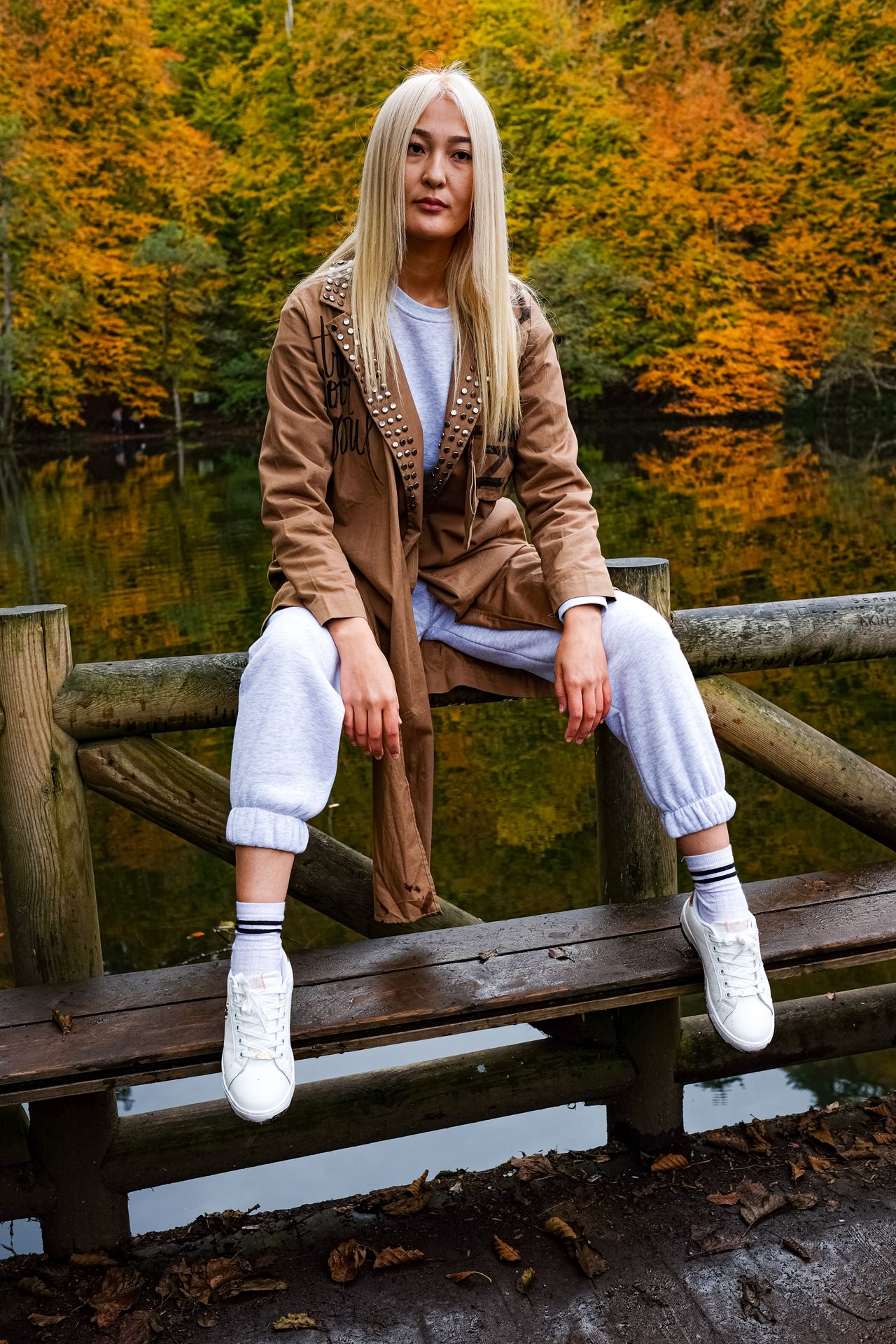
A woman seated on a lakeside fence in a long brown studded jacket with text on it, gray sweatpants, striped socks, and white sneakers. The jacket is longer than a waist-length work jacket and has studs and printed text.
A longer jacket changes the whole balance, so the rule here is to keep the bottom simple. Gray sweatpants, striped socks, and white sneakers let the brown jacket be the only statement, and the longer length, falling to mid-thigh or below, gives more coverage on a cool lakeside day than a waist-length Detroit jacket would. A true Detroit jacket ends at the waist on purpose, so it clears a tool belt and lets you move, which means a long jacket is a fashion choice, not a job-site choice. If you want the same relaxed weekend feeling with a genuine work jacket, wear the waist-length canvas jacket with the same gray sweatpants and sneakers, and add a longer tee underneath so no skin shows when you sit or bend. Studs and printed text also change the feel: they make a jacket look decorative, while a plain canvas jacket looks tougher and lasts longer in style terms, because it does not date with a trend. Choose the long studded version for a casual day out, and the plain canvas version when you want a jacket you will still wear in five years.
6. Brown Corduroy Oversized Zip Jacket
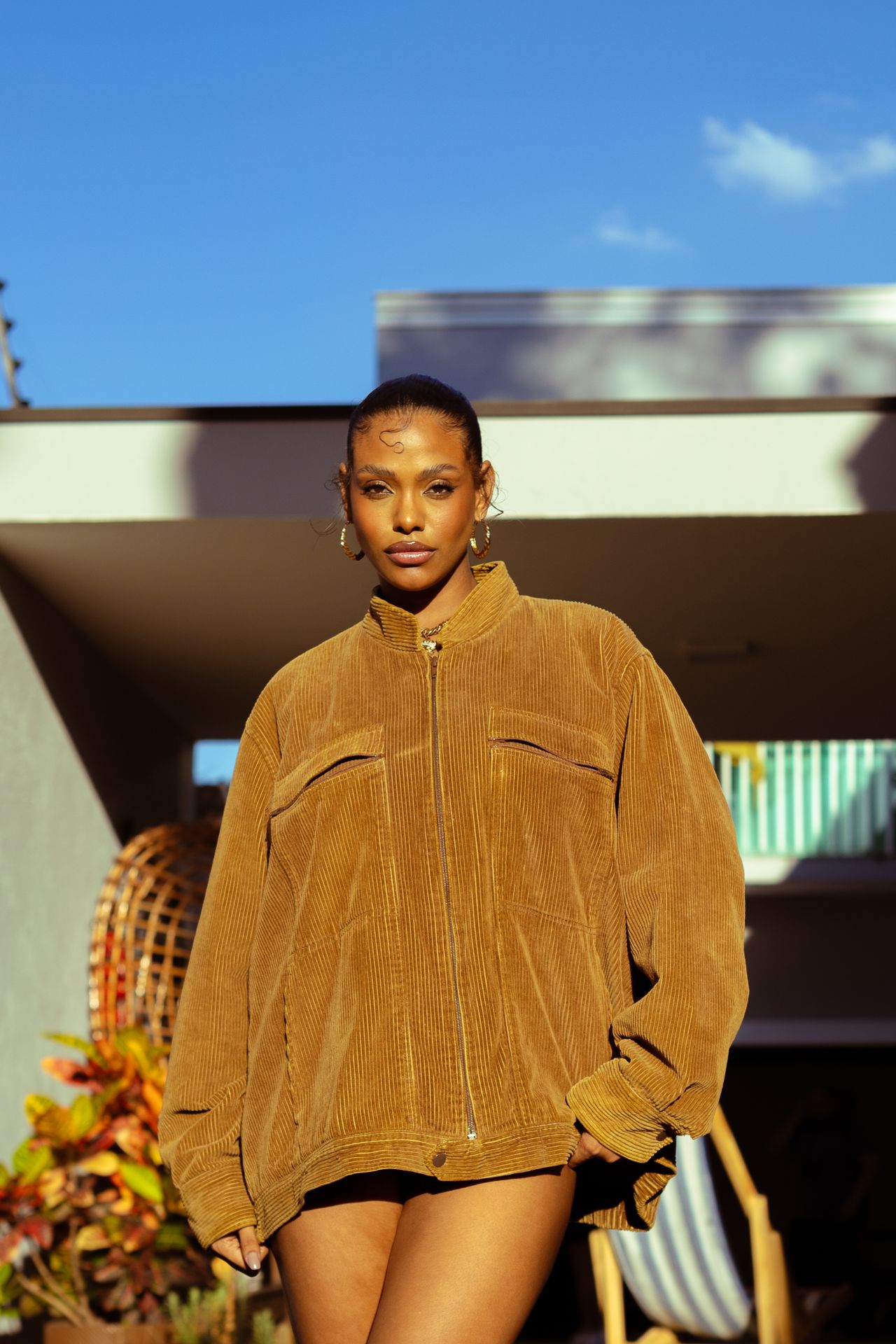
A woman outdoors in a brown corduroy oversized zip jacket. The frame is cropped at the waist, so the lower outfit is not shown, and the jacket is corduroy, not canvas.
An oversized jacket only works when the rest of the outfit stays slim. Corduroy adds texture that canvas does not have, with soft ridges that catch light, and brown corduroy pairs well with black jeans, a black top, and ankle boots for a simple, warm look. Because this photo is cropped at the waist, use your judgment for the bottom half: choose straight or slim pants, not wide pants, so the oversized top does not make you look swamped, and tuck the top in or wear a cropped top so the waistline is still visible. For a genuine canvas jacket, oversized means one size up from your usual fit, not two or three, and the shoulder seam should still sit within an inch of your shoulder bone; if it drops to your upper arm, the jacket will look borrowed. Our guide to oversized leather jacket outfits explains the same balance rule for heavy jackets: slim bottom, simple top, one statement layer. Corduroy also pills at the cuffs with heavy wear, so check the cuffs and pockets after a season and trim pills with a fabric shaver rather than pulling them.
7. Dark Denim Jacket With Jeans and Brown Boots

A woman seated on a bench by a brick wall in a dark denim jacket, jeans, and brown boots, seen in a distant full-outfit shot.
Denim on denim works when the two denims are different shades. Here the dark jacket and the mid-blue jeans are far enough apart that they do not blend into one suit, and brown boots break up the blue with a warm third color. This is a reliable evening formula for a casual dinner, a walk, or an outdoor gathering: dark jacket, jeans that are not the same wash, a plain top underneath, and boots with a low heel you can stand in. For a canvas version, swap the dark denim jacket for a brown canvas jacket and keep the same jeans and boots, and you get the classic rugged look that has sold work jackets for decades: brown jacket, blue jeans, neutral tee, leather boots. For cold evenings outdoors, add a flannel shirt under the jacket and a beanie, and carry a longer coat in the car if the temperature will drop below 45 degrees Fahrenheit after dark. Our bonfire outfit ideas cover the same outdoor-evening layering, including why boots beat sneakers on uneven ground. Expect a good pair of brown leather boots to cost $80 to $150 and to last years if you condition the leather twice a year.
8. Denim Vest Layer Over a Light Shirt and Jeans
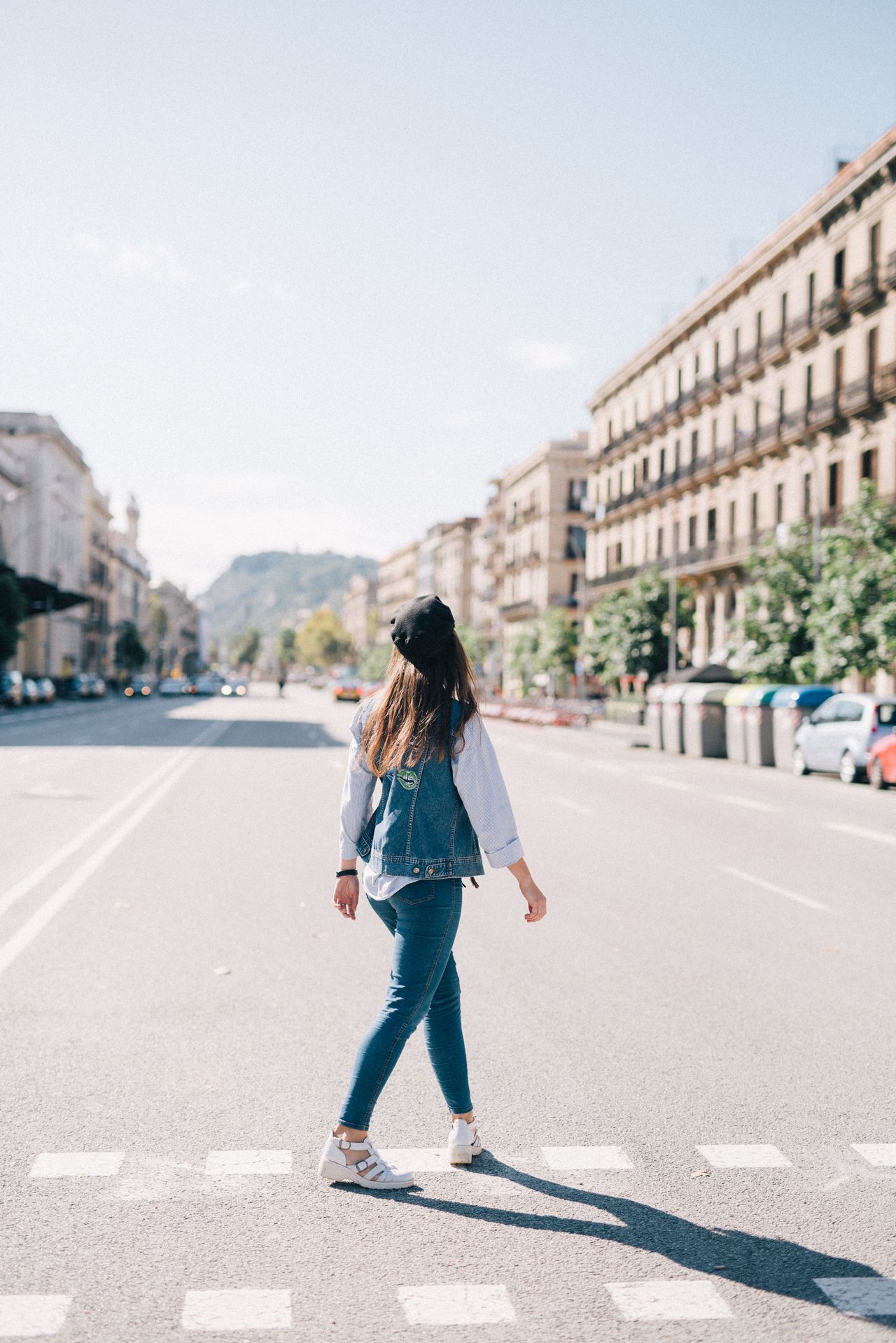
A back view, not a front view, of a woman crossing a street in a sleeveless denim vest layer, a light shirt, blue jeans, white sandals, and a black beanie.
A sleeveless vest is the summer answer to a work jacket: it gives you the same tough fabric and pocket detail without the heat of full sleeves. Wear it open over a light shirt, with blue jeans and sandals or sneakers, and add a beanie only if the evening is cool, because a beanie with sandals can look mismatched in hot weather. The vest should end at the waist, like a Detroit jacket, and the armholes should sit close to the body without cutting in when you reach forward. For a genuine canvas jacket in summer, the closest equivalent is to wear the jacket open over a tank top in the morning and evening, and carry it when the day warms up, because 12-ounce canvas is too heavy for midday heat above about 80 degrees Fahrenheit. A vest also layers well in spring: wear it over a long-sleeve tee, add a light jacket on top if rain threatens, and keep the colors to two denim shades plus one neutral so the outfit stays calm. This is a street, market, or travel-day look, not a job-site look, because a vest offers no arm protection.
9. Light Denim Jacket Worn Off One Shoulder

A woman on a New York street in a light denim jacket worn open and off one shoulder over a black tank. The lower outfit is not shown in this shot.
Wearing a jacket off one shoulder turns a workwear piece into a fashion piece, and it works best with a light jacket that is soft enough to drape. A light denim jacket over a black tank gives you a strong contrast, and because the lower half is not shown here, pair it in real life with black jeans or a black skirt so the black tank does not look isolated. This is a city-day look for shopping or a casual lunch, not a work look, because a slipping shoulder is impractical on a job site and unsafe near machinery. For a genuine canvas jacket, do not force the off-shoulder drape, because stiff canvas will not sit that way and will keep sliding; instead, wear the canvas jacket open over a black top with the collar popped slightly, which gives a similar relaxed feeling without fighting the fabric. If you love the off-shoulder idea, buy it in denim or a soft washed canvas, check that the shoulder seam is narrow enough to stay put, and keep the rest of the outfit simple so the drape is the only trick in the outfit.
10. Brown Work Boots With Cuffed Black Jeans
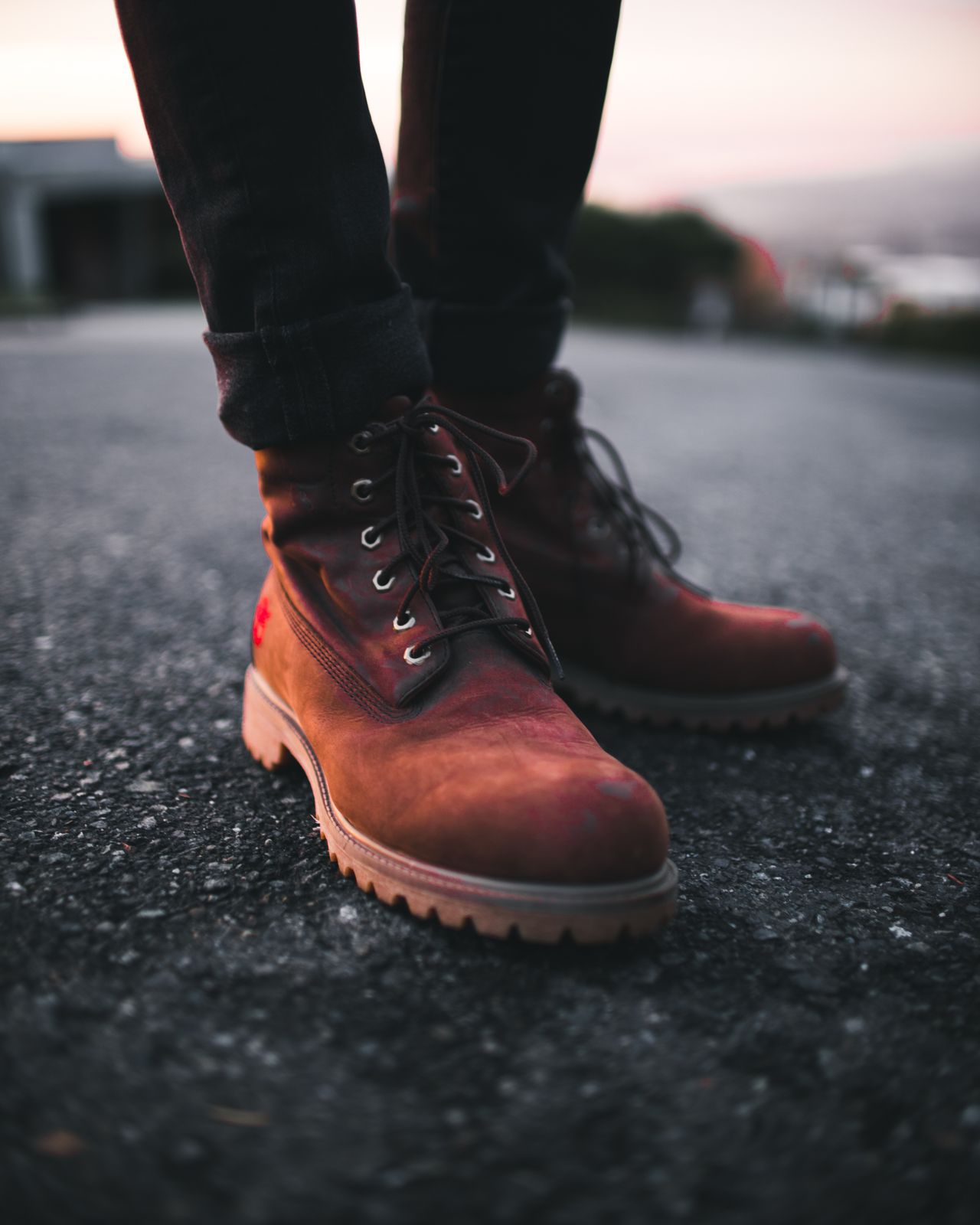
A footwear detail shot, not a full jacket outfit: brown lace-up work boots and cuffed black jeans on asphalt at dusk. No jacket is visible in this photo.
Boots are half the workwear look, and this detail shot shows why: brown lace-up boots with a sturdy sole, worn with black jeans cuffed once to show the boot top. Cuff the jeans by about 1.5 inches, no more, so the cuff sits just above the boot and does not bunch, and lace the boots snugly at the ankle but looser at the top so you can walk without pinching. For a full outfit, add a brown canvas jacket, a black or white tee, and the same black jeans, and you have the classic brown-and-black combination that works for men and women. Break boots in slowly: wear them for two to three hours at home for the first week, with thick socks, before a full day out, because new leather boots blister fast on a long walk. Clean them after muddy wear, let them dry away from direct heat, and condition the leather every few months; a $90 pair cared for this way will outlast a $50 pair that is never conditioned. When you shop, check the sole: a lug sole grips mud and gravel, while a flat sole is better for city pavements.
How should a Detroit-style jacket fit?
Roomy at the chest, with the shoulder seam on your shoulder bone, the hem at the waist, and enough room to close over a hoodie. If the zip pulls when closed over a hoodie, the jacket is too small, not just snug.
What do you wear under a canvas work jacket?
A plain tee in warm weather, a flannel shirt in cool weather, and a midweight hoodie in cold weather. Keep the layers thin enough that the jacket still zips without strain.
Are canvas work jackets warm enough for winter?
A blanket-lined canvas jacket handles temperatures down to about 30 degrees Fahrenheit with a hoodie underneath, but below that you need a heavier coat or a thermal base layer, because canvas blocks wind better than it insulates.
How do you break in a stiff canvas jacket?
Wear it often, move in it, and wash it once in cold water after a few weeks of wear. Do not use fabric softener, which coats the fibers, and hang it to dry rather than using high heat.
How can you tell a genuine work jacket from a lookalike?
Check the label, the blanket lining, the metal hardware, and the stitching at the pockets and cuffs. A genuine jacket will have consistent stitching, a sturdy zip, and a label that names the maker, while lookalikes often cut corners on lining and hardware.
Final Thoughts
A work jacket earns its place by being worn hard, not by sitting in a closet. Choose a waist-length canvas jacket in brown or black, in your usual size for tee layering, and wear it with straight jeans, a plain tee, and leather boots for the first month so you learn how it moves and softens. After that, try the hoodie layer, the denim variant, and the vest version for summer, but keep coming back to the simple formula, because that is the one that never looks dated. The Detroit jacket has lasted since 1954 for a reason: it is simple, it is tough, and it does not try to be anything else.
When you buy, be honest about the job the jacket must do. For real outdoor work, pick blanket-lined canvas, check the cuffs and waist adjusters, and skip decorative studs and prints. For city wear, a softer washed canvas or a denim variant will feel better from day one. Either way, check the label if you want the genuine brand, care for the fabric with cold washes and hung drying, and let the jacket age; the fading and softening that comes with wear is part of the look, not a flaw to fix.
Sources
Gear Patrol: Why the Carhartt Detroit Jacket Is a Classic
Stridewise: The Evolution of Carhartt's Detroit Jacket
Carhartt Official Site
Gallery
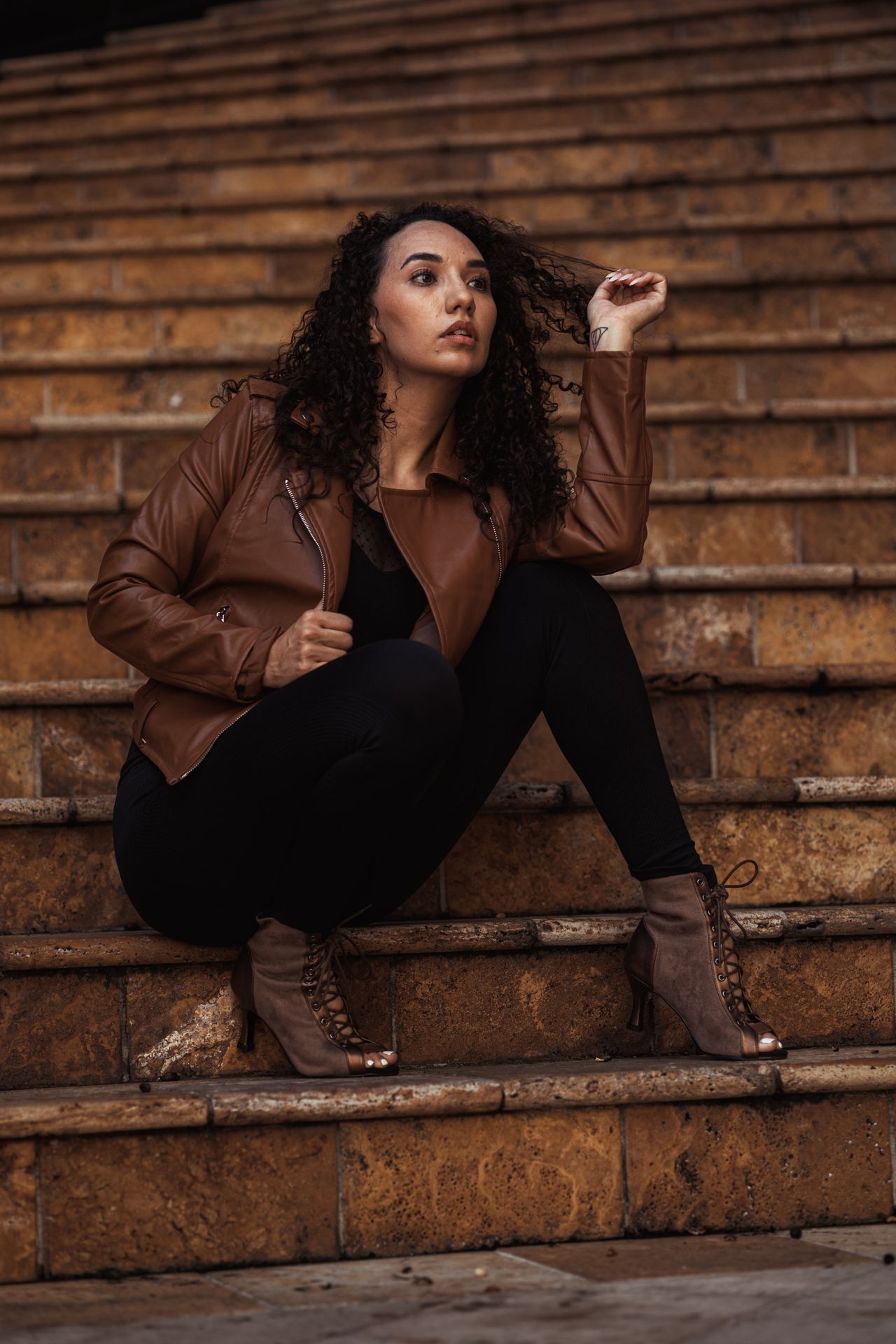
A woman seated on stone steps in a brown leather jacket, black pants, and brown lace-up heeled boots. The jacket is leather, not canvas.

A jacket-only shot, no model: an olive chore jacket alone on a hanger against a white wall, in olive, not tan.

A torso close-up, face not shown, of a light denim jacket and jeans, with the person holding a vintage film camera. The jacket is denim, not canvas.

No comments:
Post a Comment