If you love vintage jewelry, these brooch outfit ideas will help you wear one pin ten different ways without ever looking old-fashioned. A brooch is the cheapest statement piece you can own: thrift shops and estate sales across the USA sell pretty costume pins for $5 to $25, while a good vintage rhinestone or gold-tone piece usually runs $25 to $80. The trick is placement. Put the pin high, near your face, on a simple outfit, and let it be the one interesting detail.
Before you pin anything, match the pin to the fabric. A heavy crystal pin, anything over about 2 ounces, will drag on silk, fine knits and thin cotton, so save big pins for wool, tweed, denim and coats. For delicate fabrics, use a light enamel pin under 1 inch wide, or a magnetic pin back, which holds through fabric without a hole. Check the clasp before you leave the house: a loose C-clasp is the most common reason pins get lost, and a tiny rubber pin keeper, about $3 for a pack, fixes it.

A large clear rhinestone brooch with dangling drops, photographed as a close-up detail shot on a dark background, not worn on an outfit.
Contents
- 1. The Classic Blazer Lapel
- 2. The Denim Jacket Sparkle
- 3. The Plain Sweater Lift
- 4. The Scarf Knot Pin
- 5. The Straw Hat Detail
- 6. The Cameo on Dark Colors
- 7. The Pearl Set for Work
- 8. The Art Nouveau Statement
- 9. The Wrap Skirt Waist
- 10. The Simple Evening Dress
1. The Classic Blazer Lapel

A woman in a black blazer over a white shirt and jeans against a stone wall; no pin is visible in this photo, and the pin would sit on the lapel.
Start with the placement every stylist agrees on: the left lapel, about 2 to 3 inches below the collarbone, just under the lapel notch. On a black blazer like this one, a silver or crystal pin between 1.5 and 2.5 inches wide reads clearly without shouting, and it draws the eye up toward your face. Keep the rest of the outfit plain, a white shirt, straight jeans and simple shoes, so the pin is the only jewelry story. If your blazer is wool or tweed, it will hold a heavier pin with no sagging, but on a soft, unlined blazer, stick to a lighter pin and add a small felt backing disc behind the lapel to spread the weight. One pin is enough here; a second pin on the same lapel usually looks cluttered unless the two pins are tiny and clearly matched.
2. The Denim Jacket Sparkle

A woman in a light-wash denim jacket and jeans holding a vintage camera; no pin is visible, and the pin would sit on the jacket lapel or above the chest pocket.
Denim is the best fabric for a bold pin because it is sturdy, casual and already a little rough around the edges, so a fancy pin looks intentional instead of precious. Pin a large rhinestone, enamel flower or novelty pin on the lapel or about 1 inch above the chest pocket, and let the contrast do the work: sparkle against faded blue denim is one of the easiest high-low combinations there is. A pin 2 to 3 inches wide suits a standard denim jacket, while a tiny pin under 1 inch will disappear against all that texture. If you want more jacket-layering inspiration, our guide to oversized leather jacket outfits shows how one strong outer layer can carry a whole outfit. Wear the jacket open over a plain tee, skip the necklace, and keep earrings small so the pin stays the star.
3. The Plain Sweater Lift

A back view of a woman in a gray knit sweater outdoors; the pin in this look would sit on the front chest, which is not visible in this photo.
A plain crewneck sweater in gray, navy, cream or black is a blank wall, and one pin turns it into an outfit. Place the pin slightly off-center on the chest, about 3 inches below the collarbone and 2 inches to one side of center, which looks relaxed and modern rather than pinned-up and formal. Choose a pin that is light for knitwear: a flat enamel or thin metal pin under 1.5 inches wide will sit flat, while a heavy dangling pin will pull the knit down and leave a stretched spot by the end of the day. If your sweater has a loose or chunky weave, use a pin with a locking back or a small piece of felt behind the knit to stop it slipping through the loops. This is also the easiest way to rescue a sweater you are bored with: one $10 thrift-shop pin, worn three ways across a week, makes the same sweater look like three different outfits.
4. The Scarf Knot Pin

A light blue patterned scarf laid flat as a museum-style photo, wrinkled from storage, with no pin attached; the pin would fasten the scarf at one shoulder.
A pin can do a real job on a scarf: it holds the drape in place and adds shine at the same time. Loop a silk or light wool scarf once around your neck, bring the two ends together near one shoulder, and pin through both layers about 1 inch from the knot so the scarf cannot slide open during the day. This works best on scarves that are at least 60 inches long, because a short scarf will not have enough fabric to gather without pulling tight around your neck. Never push a heavy pin through delicate vintage silk, which tears easily and shows every hole; on fragile scarves, use a scarf ring or a magnetic pin back instead. A gold-tone or pearl pin looks best against a patterned scarf, since it picks up one color from the print without competing with the whole pattern.
5. The Straw Hat Detail

A woman seen from behind in a wide straw hat with a black band, standing by the sea; no pin is visible, and the pin would sit on the hat band at the side.
A hat pin is the lowest-commitment way to try this trend, because the pin never touches your clothes. On a straw hat, pin a small enamel, floral or shell pin through the hat band at the side, just above your ear, where it catches the light when you turn your head. Keep the pin under 1.5 inches wide and light, since a heavy pin will pull a straw hat crooked in a breeze, and always pin through the band rather than the straw itself, which cracks and frays. On a felt hat in fall, a slightly larger pin works, up to 2 inches, and a leaf, feather or gold-tone design suits the texture. The honest rule: if the hat already has a big bow, feather or patterned band, skip the pin, because two decorations in the same spot fight each other and neither one wins.
6. The Cameo on Dark Colors

A museum photo of a round gold disk brooch with a carved cameo center and colored stones; a ruler scale is visible at the bottom of the photo, and this is an antique piece, not a modern reproduction.
Cameos look best against dark, plain colors, where the pale carved face can actually be seen. Wear a cameo pin, usually 1.5 to 2 inches across, on a black, navy or charcoal dress, coat or high-neck blouse, placed at the center of the chest or just below the collarbone, and keep every other piece of jewelry quiet: small studs, no necklace, no competing bracelet. A real carved shell or stone cameo in a gold-tone frame runs $40 to $150 at antique shops, while a good resin reproduction costs $12 to $30 and looks nearly identical from a normal distance, so do not overspend on your first one. Cameos are also the most forgiving vintage pin for beginners, because their oval or round shape suits almost any neckline and they never look trendy or dated. If the cameo is set in a heavy frame, treat it like any heavy pin and save it for coats and wool, not silk blouses.
7. The Pearl Set for Work

A gold leaf brooch with pearls and matching earrings in a lined presentation case, photographed in a museum display; this is a matched set, not a single pin.
For the office, a pearl pin is the safest vintage choice because it reads polished without reading flashy. Wear a pearl or pearl-and-gold pin about 1 to 1.5 inches wide on the lapel of a dark suit or on the shoulder of a plain sheath dress, and match it with small pearl studs rather than a pearl necklace, which can tip the whole outfit into costume. The one-shine rule matters here: if the pin is the shine, the rest of the outfit should stay matte, and our guide to metallic silver outfits explains the same balance rule for bright finishes. Faux pearls are a smart buy for daily work wear, since real pearls scratch and dull with perfume and hairspray, while a $15 to $30 faux set looks the same at desk distance and survives a bag. Before a meeting, check the pin in a mirror from the side: a pin that sticks out at an angle looks careless, so bend the pin stem slightly until the pin lies flat against the fabric.
8. The Art Nouveau Statement

A museum photo of a gold Art Nouveau pendant brooch from about 1902, with a carved profile, a pearl drop and red stones; this is a historic piece shown as a detail shot, not worn.
One big, sculptural pin can replace a necklace entirely, and Art Nouveau pieces, with their flowing lines and floral shapes, are made for this job. Wear a statement pin 2.5 to 3.5 inches wide at the center of a plain high neckline, where a necklace would normally sit, over a black turtleneck, a simple boat-neck top or a plain evening dress. Because the pin is doing so much work, everything else must be quiet: no necklace, no large earrings, no patterned fabric within a few inches of the pin. These pins are usually the most expensive vintage find in this guide, with good reproductions at $30 to $60 and genuine early-1900s pieces at $150 and up, so try the look first with a reproduction before you invest. Hang the pin on a velvet pad or in a lined box between wears, since the curved metalwork and dangling drops catch on other jewelry and bend easily in a crowded drawer.
9. The Wrap Skirt Waist

A woman in a striped top, denim jacket and long gray wrap skirt with a slit, carrying a black studded bag; no pin is visible, and the pin would sit at the waist knot of the wrap.
A wrap skirt or wrap dress gives a pin a second job: it holds the wrap closed and marks your waist at the same time. Gather the wrap fabric at the knot, fold a small pleat so the pin has two layers to grip, and pin through both layers just to one side of center, which looks deliberate and keeps the pin from sitting dead-center like a belt buckle. This trick only works if the pin is sturdy and the fabric is not slippery; on silk or rayon wraps, the pin will slide, so use a flat pin with a strong clasp and test it by walking around the house for ten minutes before you wear it out. A medium pin, about 1.5 to 2 inches, suits this spot, and a gold-tone or colored enamel pin picks up the outfit better than clear crystal, which can disappear against a busy print. Never rely on a fragile vintage pin as the only thing holding a wrap closed; wear a safety pin on the inside as backup and let the decorative pin do the looking, not the holding.
10. The Simple Evening Dress

A woman in a dark sleeveless dress standing on rocks by the sea at dusk; no pin is visible, and the pin would sit on one shoulder strap or at the waist.
Evening is where a vintage pin earns its price, because one pin can make a simple dress look like a planned outfit. On a plain dark dress, pin a crystal or pearl pin on one shoulder strap, about 1 inch from the shoulder seam, or at the waist if the dress has a defined waistline, and then stop: no necklace, no big earrings, just the pin and a small clutch. A pin 2 to 3 inches wide suits an evening dress, and crystal pins catch restaurant light beautifully, which is why rhinestone pins from the 1950s remain the most popular thrift find. If your dress is strapless or has thin straps, pin to the dress fabric near the side seam rather than the strap itself, which is too narrow to hold a pin safely. For more dress shapes to pair with a pin, see our guide to autumn dress styles, which covers slip dresses, velvet and knits that all take a pin well.
Frequently Asked Questions
Which side should I wear a pin on?
Tradition says the left side, over your heart, but modern styling cares more about balance. Choose the side that is less busy: if your jacket has a pocket on the left, pin on the right, and if your hair falls over one shoulder, pin on the other side so the pin stays visible.
Can I wear more than one pin at a time?
Yes, if they share one thing in common, such as gold tone, pearls or crystals, and if the outfit underneath is plain. Start with one large pin and add two or three tiny pins around it, leaving at least half an inch of space between each one so every design stays readable.
How do I stop a heavy pin from sagging?
Use a felt backing disc behind the fabric, choose a pin with a locking clasp, and save heavy pins for wool, tweed, denim and coats. On knits and silk, switch to a lighter pin or a magnetic back, which spreads the weight without a hole.
Are vintage pins worth buying, or should I buy new?
Vintage costume pins are excellent value: most sell for $5 to $80, they were often made better than cheap new pins, and small flaws like a missing stone are easy to fix. Check the clasp, the pin stem and the back before you buy, since a broken clasp is the one flaw that matters.
Can I wear a pin on a bag instead of clothes?
Yes, and it is the best option if you do not want holes in your clothes. Pin to a canvas tote, a fabric strap or a bag charm, but do not pierce good leather, which shows every hole permanently. On leather bags, hang the pin from a strap ring or a scarf tied to the handle instead.
Final Thoughts
A vintage pin is the rare accessory that costs almost nothing, works on clothes you already own, and makes an outfit look considered in under ten seconds. Start with one pin you genuinely like, in a size that suits your frame, and wear it on a blazer first, since that placement is the most forgiving. Once that feels natural, try the scarf knot, the sweater chest and the hat band, and you will quickly learn which spots suit your style and which ones you never reach for.
The only real mistakes are easy to avoid: a pin that is too heavy for its fabric, a pin fighting a necklace for attention, and a pin hidden under hair or a collar where nobody can see it. Fix those three things and the pin does the rest. Check thrift shops, estate sales and antique malls first, keep a few pin keepers in your jewelry box, and let one small piece of history do the talking for the whole outfit.
Sources
- TheIndustry.fashion: Pinterest reveals the fashion trends set to define 2026
- The Metropolitan Museum of Art: Cameo Brooch, ca. 1860-70
- Oh So Delightful: How to Wear a Vintage Brooch
Gallery
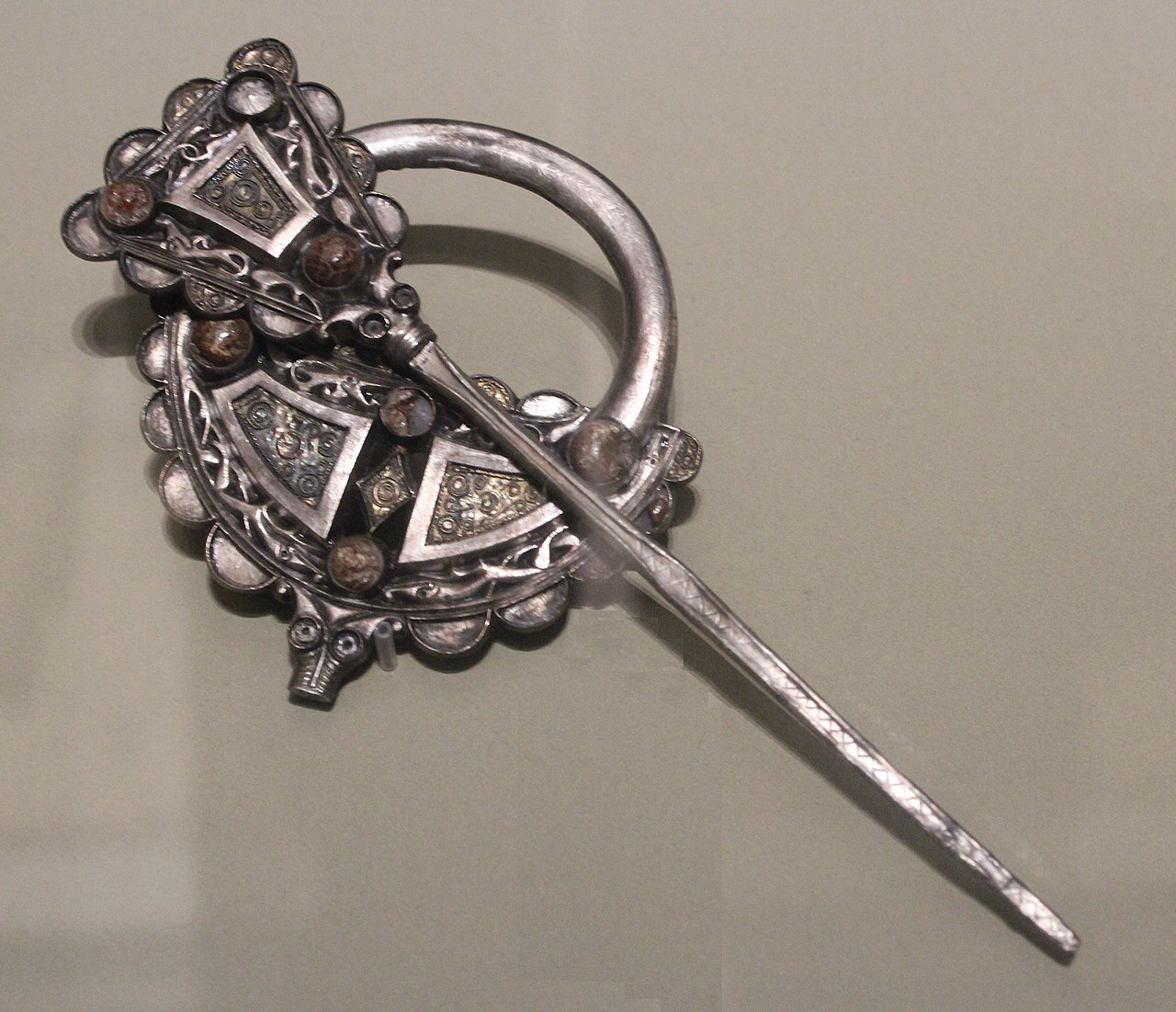
An ornate silver historic brooch with a long pin, photographed as a museum detail shot; this is an antique piece, far larger and heavier than a modern wearable pin.

A museum photo of a gold brooch with a large green stone, small diamonds and pearl drops, shown as a detail shot against a plain background.

A black felt fedora with a net bow and a feather, displayed on a stand; no pin is attached, and a pin would sit on the hat band.

No comments:
Post a Comment