This guide to baked mac and cheese starts with the sauce, not the topping, because a smooth roux, freshly grated cheese, and pasta cooked 1 minute short are what separate a creamy pan from a dry or grainy one. You will learn the classic three-cheese bake first, then Southern layering, roux science, cheese blends, toppings, bacon and lobster upgrades, a Philly-style pan, a white cheddar version, and a make-ahead method, with real amounts for a 9 by 13 inch dish that serves 6 to 8 people. Most pans here cost $12 to $18, lobster aside, and none of them need special equipment beyond a large pot, a whisk, and a baking dish.
Read the roux and cheese sections before you start cooking, even if you skip straight to a favorite variation, because those two habits fix the two most common failures: lumpy sauce and grainy cheese. Grate cheese from blocks, add it off the heat in small handfuls, and make your sauce a little looser than you think it should be, since pasta absorbs sauce in the oven and a sauce that looks perfect in the pot will turn dry in the pan. Keep a splash of milk nearby when you reheat leftovers, and you will have creamy macaroni and cheese on day 2 as well as day 1.

Photo: Wikimedia Commons. A thick slice of baked macaroni and cheese with a golden crumb topping on a white plate, with a fork and knife.
Contents
- 1. Classic Three-Cheese Bake
- 2. Southern Creamy Spoonful
- 3. Pasta Choice and Roux Science
- 4. Cheese Blends From the Block
- 5. Crunchy Crumb Topping
- 6. Bacon Bowl
- 7. Lobster Upgrade
- 8. Philly Cheesesteak Style
- 9. White Cheddar Tube-Pasta Bake
- 10. Make-Ahead Shell Bowl
1. Classic Three-Cheese Bake

Photo: Wikimedia Commons. A whole golden baked dish with a deeply browned, bubbling top in a dark pan.
This is the bake to learn first, because every other idea here changes one part of it, so boil 1 pound of elbow macaroni in well-salted water for 1 minute less than the package time, drain it, and melt 4 tablespoons of butter in a large pot, whisk in 1/4 cup of flour, and cook the mix for 2 minutes until it smells nutty and looks like wet sand. Pour in 3 cups of cold whole milk and 1 cup of heavy cream a little at a time, whisking constantly, simmer gently for 4 to 5 minutes until the sauce coats the back of a spoon, then take the pot off the heat and stir in 12 ounces of grated extra-sharp cheddar, 4 ounces of grated Gruyere, and 2 ounces of grated Parmesan in small handfuls, with 1 teaspoon of Dijon mustard, 1 teaspoon of salt, and 1/2 teaspoon of black pepper. Fold in the pasta, pour it into a buttered 9 by 13 inch dish, top it with 1 cup of panko tossed with 3 tablespoons of melted butter, and bake at 375 degrees Fahrenheit for 25 to 30 minutes until golden and bubbling at the edges, then rest it for 5 minutes before scooping, since the sauce thickens as it cools. The whole dish serves 8 for about $12 to $15, and it pairs well with a sharp green salad, which cuts the richness better than another heavy side.
2. Southern Creamy Spoonful

Photo: Wikimedia Commons. A creamy spoonful of macaroni and cheese lifted over a white bowl, with melted cheese stretching.
The Southern style leans creamier and softer than the crunchy-topped bake, so use the same roux base but stir in 1/2 cup of sour cream with the cheese, use 2 cups of sharp cheddar and 2 cups of Monterey Jack instead of Gruyere, and layer the dish rather than mixing it all at once: spread half the sauced pasta in the dish, scatter 1 cup of reserved shredded cheese over it, add the rest of the pasta, and finish with another cup of cheese on top. Cover the dish with foil and bake at 350 degrees Fahrenheit for 25 minutes, then uncover it and bake 10 more minutes until the top bubbles, which warms the pan all the way through without drying the edges, and let it rest for 10 minutes so the layers set enough to scoop cleanly. The sour cream is doing real work here, since its tang keeps a very rich cheese sauce from tasting flat, and its extra moisture helps the dish stay creamy the next day, which is why this version reheats better than most. If you love baked pasta dinners in this spirit, our lasagna soup recipe uses the same layering idea in a brothy pot, and for this bake, serve it with collard greens or green beans, since a bitter green is the classic balance to a soft, cheesy pan.
3. Pasta Choice and Roux Science
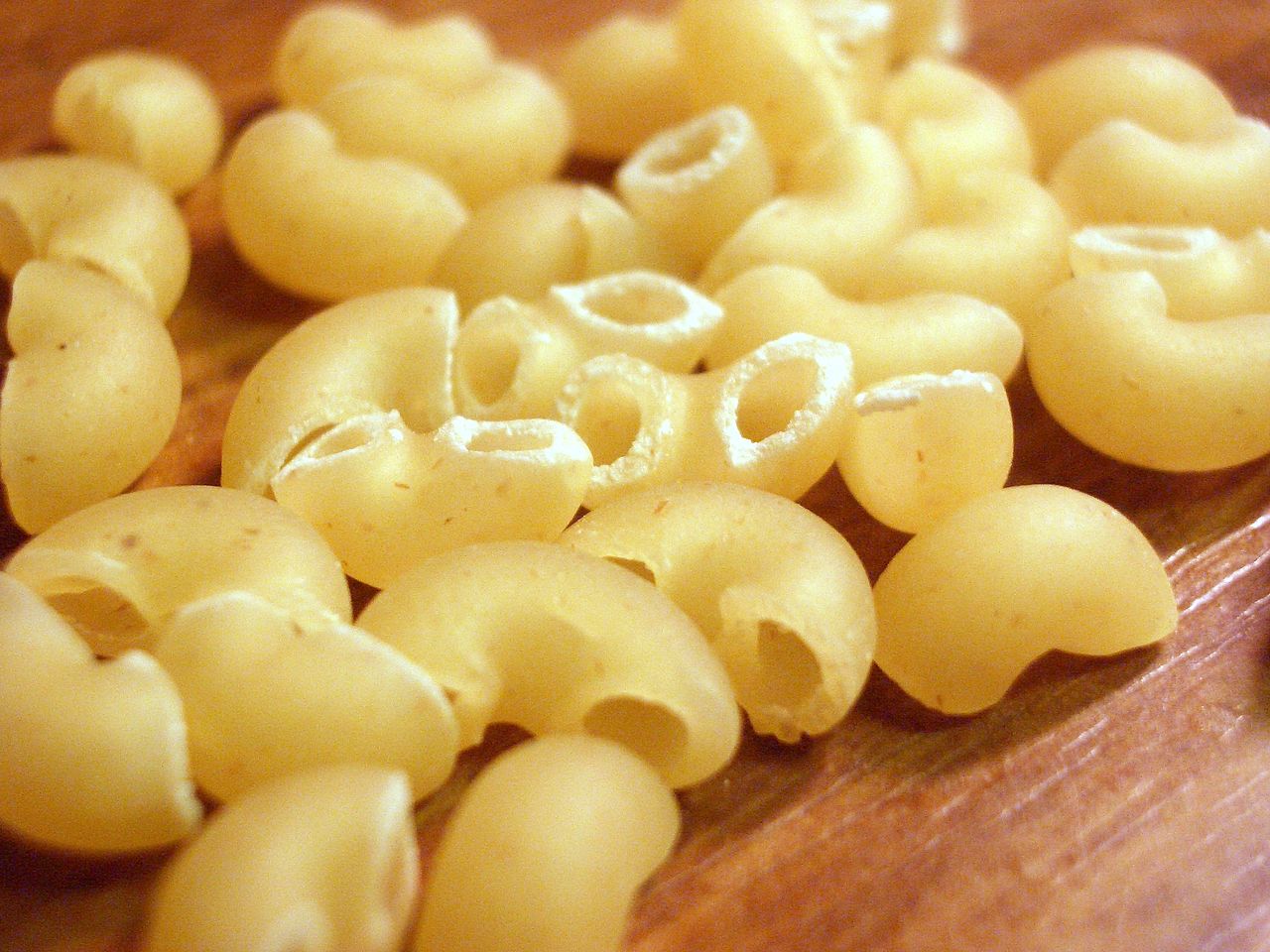
Photo: Wikimedia Commons. Dry elbow macaroni close up on a wooden surface, shown before cooking, not a finished dish.
Pasta choice and roux skill decide this dish more than any fancy cheese, so pick elbow macaroni for the classic bite, cavatappi when you want every curl to catch sauce, or shells when you want little cups of cheese, and cook any of them 1 minute short of al dente, because the pasta finishes cooking in the oven and fully cooked pasta turns to mush in the bake. For the roux, melt the butter over medium heat, whisk in an equal amount of flour by volume, and cook it for a full 2 minutes to lose the raw flour taste, then add cold milk in slow splashes while whisking without stopping, since dumping all the liquid at once is the fastest way to get lumps, and cold dairy into a warm roux actually blends smoother than hot milk poured into a hot pan. Let the sauce simmer until it coats a spoon, then pull it off the heat before the cheese goes in, because cheese proteins seize and turn grainy when they boil, and stir the cheese in a handful at a time, waiting until each handful melts before adding the next. If the sauce still looks lumpy, a whisk and 2 minutes of patient stirring will fix most cases, but if it has already broken into greasy pools, starting the sauce again is faster than trying to rescue it, and that honest reset is cheaper than serving a grainy pan.
4. Cheese Blends From the Block

Photo: Wikimedia Commons. A packaged block of aged Canadian cheddar in plastic wrap, shown as a block-cheese example.
Cheese is where most home cooks can make the biggest upgrade for the least money, so buy blocks and grate them yourself, because pre-shredded cheese is coated with anti-caking agents that stop it from melting smoothly and leave a slightly powdery, grainy sauce. Build your blend around flavor, melt, and depth: 12 ounces of extra-sharp cheddar for the backbone, 4 ounces of Gruyere or fontina for smooth melting and a nutty note, and 2 ounces of Parmesan for salty depth, and keep the total near 18 ounces, about 4 and 1/2 cups, for 1 pound of pasta, since less cheese makes a thin sauce and much more makes a greasy one. Other blends that work are cheddar with Gouda and Parmesan for a smokier pan, or cheddar with pepper Jack for gentle heat, but avoid mozzarella as the main cheese, since it turns stringy and mild in the bake, and avoid very aged, crumbly cheeses on their own, since they can turn gritty. Grating a block takes about 2 minutes and costs about the same as a bag of shreds, and you can taste the difference in the first spoonful, so treat block cheese as a rule for this dish, not a nice extra. For a side that uses the same cheddar logic, our ranch potato recipes show how sharp cheddar and a creamy base carry a whole pan of potatoes.
5. Crunchy Crumb Topping

Photo: Wikimedia Commons. Fine breadcrumbs in a white bowl beside a breadcrumb box on a checked tablecloth.
A topping is not decoration, it is the contrast that keeps a rich dish interesting, so toss 1 cup of panko with 3 tablespoons of melted butter and 1/4 cup of grated Parmesan until every crumb is coated, and sprinkle it evenly over the pan just before baking, since topping added too early can sink into the sauce. Panko stays lighter and crunchier than fine breadcrumbs, which can turn pasty, but if you only have fine crumbs, use 3/4 cup instead of a full cup and add 1 tablespoon of olive oil to help them crisp, and for a cracker topping, crush 1 sleeve of buttery crackers, about 1 cup, and toss them with 2 tablespoons of melted butter for a richer, saltier crust. Bake the pan in the middle of the oven at 375 degrees Fahrenheit, and if the top browns before the center bubbles, cover it loosely with foil for the last 10 minutes, then uncover it for 5 minutes at the end to re-crisp. For extra crunch without burning, toast the panko in a dry skillet for 3 minutes before it goes on the pan, but watch it constantly, since crumbs go from golden to burnt in under a minute, and never broil a topped pan unattended, since the butter in the topping browns fast under direct heat.
6. Bacon Bowl

Photo: Wikimedia Commons. A small black bowl of creamy macaroni with bacon, sauce, and a bacon-wrapped item on a skewer.
Bacon turns this side dish into a main course, but only if the bacon stays crisp, so cook 8 slices of bacon in a skillet over medium heat until fully crisp, about 8 to 10 minutes, drain them on paper towels, and crumble them only after they cool, since warm bacon crumbled early turns soft and chewy on hot cheese. Stir half the bacon into the sauced pasta just before it goes into the dish, and save the other half for the top, scattering it over the cheese in the last 10 minutes of baking so it warms through without steaming, and if you want a smoky note without extra fat, cook the roux in 2 tablespoons of the reserved bacon drippings instead of all butter, keeping the other 2 tablespoons as butter for balance. A bacon pan serves 6 to 8 as a main dish for about $15 to $18, and it pairs well with a simple tomato salad or pickles, since acid cuts through bacon fat better than another creamy side. Do not use soft, undercooked bacon here, and do not stir all the bacon in at the start, since it will lose its crunch during the full bake, and if you are cooking for a crowd, bake two smaller pans instead of one deep one, so the bacon on top stays crisp and the center heats evenly.
7. Lobster Upgrade

Photo: Wikimedia Commons. A baked macaroni dish topped with herbs and grated cheese in a small black dish; lobster pieces are not clearly visible.
Lobster is the dinner-party upgrade, and it works only if you treat the seafood gently, so buy 8 ounces of cooked lobster meat, cut it into bite-size chunks, and stir it into the finished cheese sauce at the very end, off the heat, with 1 tablespoon of chopped tarragon or chives, then pour the mix into a buttered dish and bake at 375 degrees Fahrenheit for only 20 to 25 minutes, just until bubbling, since longer baking makes lobster tough and rubbery. Use the classic three-cheese base rather than a spicy or smoky blend, because strong flavors hide delicate lobster, and add a pinch of cayenne, no more than 1/8 teaspoon, plus 1 teaspoon of lemon zest stirred in after baking, to lift the richness without turning the dish sour. This version costs about $25 to $35 depending on lobster prices, so it is a special-occasion pan, and it serves 6 as a main course with a green salad and crusty bread, which is all the support it needs. If lobster is out of budget, cooked shrimp, added the same way in the last minutes, gives a similar luxury for about half the price, and the same gentle-heat rule applies, since overcooked shellfish is the fastest way to waste good seafood.
8. Philly Cheesesteak Style

Photo: Wikimedia Commons. Tube pasta with sliced beef and melted white cheese sauce, with a fork lifting a bite.
Philly cheesesteak flavors translate well to pasta if you keep the meat tender and the cheese white, so sear 1 pound of thinly sliced ribeye or sirloin in 1 tablespoon of oil over high heat for 2 to 3 minutes, just until browned, remove it, then soften 1 sliced onion and 1 sliced bell pepper in the same pan for 6 minutes, and set the vegetables aside with the meat and its juices. Make a white sauce with 4 tablespoons of butter, 1/4 cup of flour, 3 cups of whole milk, and 1 cup of cream, then stir in 8 ounces of provolone and 8 ounces of white cheddar off the heat, fold in 1 pound of cooked tube pasta, the meat, and the vegetables, and bake in a buttered 9 by 13 inch dish at 375 degrees Fahrenheit for 20 minutes until bubbling, finishing with extra provolone on top for a melty finish. The photo shows tube pasta rather than elbow, which is a good reminder that shape matters less than sauce coverage here, and a short tube or rigatoni holds the beef and peppers better than a small elbow. Serve it with a pickle on the side for crunch and acid, keep portions modest since this is a very rich pan, and do not overcook the beef at the start, since it cooks again in the oven and tough beef ruins the whole idea.
9. White Cheddar Tube-Pasta Bake

Photo: Wikimedia Commons. A plate of baked tube pasta in a creamy cheese sauce with browned bits, not elbow macaroni.
A white cheddar bake is the quieter, creamier cousin of the classic orange pan, so use 12 ounces of white sharp cheddar and 4 ounces of Monterey Jack, keep the mustard at 1 teaspoon and skip paprika, which would color the sauce, and use 3 cups of whole milk with 1 cup of cream for a pale, silky base that lets the cheese flavor speak. Cook 1 pound of tube pasta, such as ziti or rigatoni, 1 minute short of al dente, fold it into the sauce with 1/2 teaspoon of garlic powder and 1/4 teaspoon of white pepper, and bake it covered at 350 degrees Fahrenheit for 20 minutes, then uncovered for 10 minutes until the top turns lightly golden, since a covered start keeps the sauce from drying out before the center heats through. This version is a good choice for guests who find orange cheddar too sharp, and it pairs well with roasted mushrooms or steamed broccoli on the side, which add texture without competing flavors. If the sauce looks too thick before baking, stir in milk 2 tablespoons at a time until it flows slowly off a spoon, because a sauce that looks perfect in the pot will always thicken in the oven as the pasta absorbs it, and a slightly loose sauce is the secret to a creamy pan.
10. Make-Ahead Shell Bowl

Photo: Wikimedia Commons. A white bowl of shell pasta in cheese sauce sprinkled with herbs, with a spoon resting in the bowl.
Make-ahead is where this dish earns its place in a busy week, so assemble the full pan without the topping, cool it for 30 minutes, cover it tightly, and refrigerate it for up to 24 hours, then let it sit at room temperature for 20 to 30 minutes, sprinkle on the fresh panko topping, and bake at 350 degrees Fahrenheit for 35 to 40 minutes, adding about 10 minutes to the usual time since the pan starts cold. For leftovers, store them in an airtight container for up to 4 days, and reheat a single portion in the oven at 325 degrees Fahrenheit for 15 minutes, covered, with 2 tablespoons of milk stirred in to loosen the sauce, then uncover it for 3 minutes to re-crisp the top, since the microwave alone dries the edges and leaves the center cold. Do not freeze a finished cream-based pan if you can avoid it, because the sauce can separate on thawing, but you can freeze the unbaked pan, without topping, for up to 1 month, thaw it overnight in the fridge, and bake it as above. If you are serving this at a potluck, our tater tot appetizers make a good hot, crunchy partner on the same table, and a second pan of this bake, kept warm in a 200 degree oven, will hold for about 30 minutes without drying out if it stays covered.
FAQs
Why is my sauce grainy?
The two usual causes are pre-shredded cheese, whose anti-caking coating stops smooth melting, and cheese added over high heat, which makes the proteins seize. Grate cheese from a block, take the pot off the heat, and stir the cheese in a handful at a time.
Why is my pan dry after baking?
The sauce was too thick before baking, the pasta was fully cooked, or the pan baked too long. Make the sauce a little loose, cook pasta 1 minute short, bake only until bubbling, and rest the pan for 5 to 10 minutes so the sauce settles.
Can I assemble this dish a day ahead?
Yes. Assemble it without the topping, cover it tightly, and refrigerate it for up to 24 hours. Let it sit out for 20 to 30 minutes, add the fresh topping, and bake at 350 degrees Fahrenheit for 35 to 40 minutes.
What pasta shape works best?
Elbow macaroni is the classic, cavatappi catches the most sauce, and shells hold little pools of cheese. Avoid long shapes like spaghetti, which do not hold sauce well in a baked pan, and cook any shape 1 minute short of al dente.
How do I reheat leftovers without drying them out?
Reheat covered in a 325 degree oven for about 15 minutes with 2 tablespoons of milk stirred in, then uncover for 3 minutes to re-crisp the top. Store leftovers for up to 4 days in an airtight container in the fridge.
Final Thoughts
The difference between good and great here is not a secret ingredient, it is patience with the roux, block cheese grated by hand, and cheese added off the heat. Learn those three habits on the classic pan, and every variation, from bacon to lobster, will turn out creamy instead of lucky.
Make the classic once, write down which cheese blend your family liked best, and keep a bag of panko and a block of sharp cheddar in the kitchen, because this is the dish you will reach for on cold nights, potlucks, and busy Sundays. A creamy, golden pan, served with something green and sharp, is comfort food at its most useful.
Sources
- The Kitchen Abroad: Creamy Baked Macaroni and Cheese
- The Cooking Duo: Homestyle Macaroni and Cheese Guide
- eTasty Recipes: Three-Cheese Pasta Bake
Gallery

Photo: Wikimedia Commons. A close-up of a golden, bubbling baked macaroni and cheese top.

Photo: Wikimedia Commons. A restaurant tray with shell pasta in cheese sauce, baked beans, and pulled pork with sauce.

Photo: Wikimedia Commons. A restaurant bowl of macaroni and cheese with bacon and a crumb topping on a white plate.

No comments:
Post a Comment