There is no bad weather for running in Canada, only bad clothing choices. If you have ever cut a January run short because your fingers went numb at kilometre two or your cotton hoodie turned into a cold, wet rag, you already know the problem. Figuring out what to wear running in winter in Canada is mostly about layers, fabrics, and protecting the bits the wind finds first.
These ten tips cover the full system — from the merino base layer against your skin to the traction on your shoes — so you can keep logging kilometres through the coldest months. You do not need a whole new wardrobe, just the right pieces worn in the right order.

Photo via Pexels
Table of Contents
- 1. Dress for 10 Degrees Warmer
- 2. The Merino Base Layer
- 3. Fleece-Lined Tights
- 4. A Windproof Shell
- 5. Wool Socks, Never Cotton
- 6. Traction for Ice
- 7. Mittens Below −18°C
- 8. Cover Your Face
- 9. A Toque That Covers Your Ears
- 10. Stay Visible
1. Dress for 10 Degrees Warmer

Photo via Pexels
The golden rule of cold-weather running is to dress as if it were 5–10°C warmer than the thermometer says. Your body generates enormous heat once you are moving, and the runner who feels perfectly warm at the front door will be soaked in sweat within fifteen minutes. You should feel slightly chilly for the first kilometre — that is the sign you dressed right.
This takes practice, because the instinct is always to add one more layer. Start with your normal cool-weather kit and add pieces only as the temperature drops below −5°C. Keep a training log of what you wore at which temperature for the first few weeks; within a month you will know your formula by heart and stop second-guessing at the door.
2. The Merino Base Layer

Photo via Wikimedia Commons
Everything starts with what touches your skin. A merino wool or synthetic long-sleeve base layer wicks sweat away from your body, which is what keeps you warm — moisture sitting on your skin is what makes you cold. Cotton is the one fabric to avoid entirely: it absorbs sweat, stays wet, and turns freezing the moment you slow down.
Merino is the favourite of most winter runners because it regulates temperature, resists odour over multiple wears, and stays warm even when damp. A 150–200 gsm merino top from Sport Chek or Mark's runs about $70–$110 and will last several seasons. Fit should be snug but not compressive, with no bunching under the arms.
3. Fleece-Lined Tights

Photo via Pexels
Your legs do most of the work and get the least protection, so thermal running tights are worth every dollar. Fleece-lined or brushed-interior tights trap warm air against your skin while the smooth outer face sheds wind and light snow. Below about −10°C, add a thin windproof pant over the tights — your quadriceps will thank you at kilometre eight.
Look for tights with a drawstring waist (they stay put when the fabric gets heavy with snow), ankle zips for easy on-off over shoes, and at least one pocket for a key or gel. Women-specific and men-specific cuts genuinely fit differently through the hip, so buy the cut designed for your body. Expect $60–$100 for a quality pair.
4. A Windproof Shell

Photo via Pexels
In Canadian winter, wind steals more heat than still cold air ever will. A lightweight windproof jacket as your outer layer blocks that convective heat loss while letting sweat vapour escape — look for the word “windproof” rather than “waterproof,” since fully waterproof shells trap too much moisture for hard running. Pit zips or a front vent you can open mid-run are genuinely useful, not gimmicks.
Below −15°C, add a thin fleece or merino mid-layer between your base and shell; that sandwich of trapped air is what insulation actually is. The shell should be roomy enough to accommodate the mid-layer without compressing it. A good windproof running jacket costs $120–$200 and doubles as a spring cycling layer, so the cost per wear is low.
5. Wool Socks, Never Cotton

Photo via Wikimedia Commons
Feet sweat more than you think on a winter run, and wet feet in freezing shoes are miserable. Merino wool or wool-blend running socks wick moisture, cushion your stride, and — crucially — keep insulating even when damp. Cotton socks are the fastest route to numb toes and blisters, so retire them from run duty entirely.
Choose a crew or quarter height that covers your ankle bone with no gap between sock and tight. Some runners swear by a thin liner sock under a wool outer sock below −20°C. Whatever you choose, change into dry socks immediately after your run — your feet will rewarm twice as fast. Three good pairs in rotation cost about $45–$60 total.
6. Traction for Ice

Photo via Wikimedia Commons
Black ice is the real hazard of winter running, and no regular running shoe grips it. Slip-on microspikes — the stretchy rubber kind with small steel spikes, like the pair shown here — fit over your normal trainers in seconds and transform glare ice into grippy trail. They cost $40–$70 at MEC or Sport Chek and last for years.
For packed snow rather than ice, trail running shoes with aggressive lugs do the job without add-ons. Either way, shorten your stride and keep your feet under your hips on slippery sections; most winter falls happen when runners overstride. For more on choosing winter footwear, see our Canadian winter boot guide — the traction principles are the same.
7. Mittens Below −18°C

Photo via Pexels
Fingers are the first thing to go numb because your body prioritises warm blood for your core. Gloves work down to about −10°C, but below −18°C switch to mittens — fingers sharing one warm air pocket stay dramatically warmer than fingers isolated in glove slots. Windproof mittens with a fleecy lining are the gold standard.
The convertible “lobster” mitt, with a mitten shell that folds back to expose glove fingers, is a clever compromise for runners who need to work a phone or gel wrapper. Tuck a chemical hand warmer into each mitt on the bitterest days; they weigh nothing and buy you an extra half hour of comfort. Always warm up your hands before heading out — starting cold means staying cold.
8. Cover Your Face

Photo via Wikimedia Commons
Exposed skin is vulnerable to frostbite when the wind chill drops below −25°C, and your face takes the full force of it at running speed. A balaclava or a neck gaiter pulled up over your nose and cheeks solves the problem completely. Merino or synthetic gaiters are better than cotton scarves, which freeze stiff with your breath.
A neat trick: smear a thin layer of petroleum jelly on exposed cheeks before a frigid run — it adds a wind barrier that genuinely helps. Ski goggles or wraparound sunglasses protect your eyes from wind-driven snow and the surprisingly strong glare off fresh snow. If your eyelashes are freezing together, that is your cue to cover up more, not to tough it out.
9. A Toque That Covers Your Ears

Photo: Evan Kirby via Wikimedia Commons
You lose a lot of heat through an uncovered head, and ears are particularly prone to painful aching in cold wind. A proper toque that fully covers your ears is essential kit — a thin synthetic or merino beanie for milder days, a thicker knit or windproof version for deep cold. Make sure it fits under your jacket hood for the worst days.
Many runners overheat in a heavy hat once warmed up; a thinner headband that covers just the ears is a good alternative between −5°C and −12°C. Whatever you choose, it should stay put when you are moving — constantly pushing a slipping toque back into place is maddening at kilometre twelve. For truly brutal conditions, our extreme cold weather guide covers full head-and-face systems.
10. Stay Visible
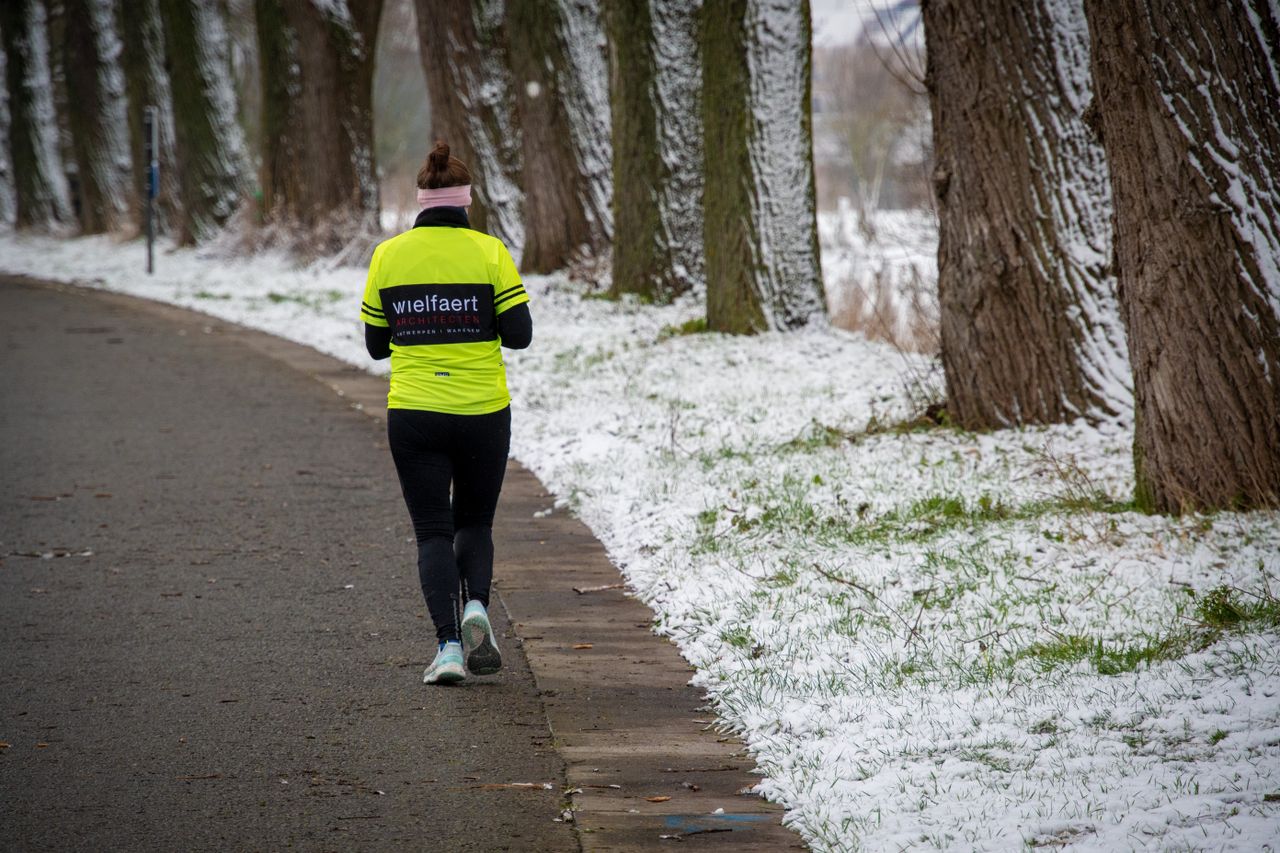
Photo via Pexels
Canadian winter means running in the dark — the sun sets before 5 p.m. for months. Bright colours like the neon top shown here make you visible to drivers at dusk, and reflective details or a clip-on LED light handle full darkness. A headlamp is worth its weight on unlit paths; it also lets you spot ice before your foot finds it.
Plan your route for winter specifically: choose well-lit streets and paths you know are cleared of snow (see our Toronto winter outfits guide for city tips), and run facing traffic so you can see what is coming. Tell someone your route on very cold days, carry your phone in an inside pocket where body heat keeps the battery alive, and consider running into the wind on the way out so you have a tailwind — and warmer air — for the tired trip home.
Frequently Asked Questions
How cold is too cold to run outside?
Most runners draw the line around −20°C to −25°C before wind chill, when frostbite becomes a real risk for exposed skin. Below that, move your run indoors. Between −10°C and −20°C, full coverage — balaclava, mittens, toque — keeps most runners comfortable, as our Montreal winter outfits guide explains for deep-cold cities.
Should I wear a face mask for winter running?
A neck gaiter pulled over your nose works better than a mask: it warms the air you breathe without restricting it. Below −20°C, breathing through a gaiter noticeably reduces the burning-lungs feeling. Wash it regularly — breath moisture builds up fast.
Do I need special shoes for running on snow?
Not necessarily. Your regular trainers plus slip-on microspikes handle ice brilliantly, and many runners get through winter this way. If you run mostly on unplowed paths, trail shoes with deep lugs are worth the investment. Replace winter shoes sooner than summer ones — salt and cold harden the rubber.
How do I warm up before a winter run?
Do five to ten minutes of dynamic movement indoors — leg swings, walking lunges, gentle jogging on the spot — so your muscles are warm before the cold air hits them. Never stretch cold muscles outdoors. Start your run at an easy jog for the first kilometre while your body catches up.
Can I run in winter with asthma?
Many runners with asthma run all winter by breathing through a gaiter or scarf, which warms and humidifies the air. Keep your reliever inhaler in an inside pocket so it stays warm enough to work. Talk to your doctor first, and skip outdoor runs on the coldest, driest days if cold air is a known trigger.
Final Thoughts
Once you nail what to wear running in winter in Canada, the cold season stops being an obstacle and starts being a favourite. There is nothing quite like a crisp −10°C morning run on fresh snow — quiet streets, bright air, and the particular satisfaction of being out when everyone else stayed in.
Build your kit piece by piece, log what works at each temperature, and respect the wind chill. Do that, and you will run straight through to spring without missing a week — and you will be fitter than everyone who waited for April.
Sources
- https://www.heatjac.com/knowledge/winter-running-walking-layers
- https://whitelionstrong.com/how-to-run-in-winter-essential-gear-clothing-to-stay-safe-warm-strong/
- https://www.trailheads.com/blog/cold-weather-running-tips/
- https://currex.com/blogs/news/a-complete-guide-to-cold-weather-running
- https://www.trailrunnermag.com/training/winter-running-tips-from-some-of-the-coldest-places-on-earth/?scope=anon
Gallery

Photo via Pexels

Photo via Pexels

Photo: Ross Kohl via Wikimedia Commons

No comments:
Post a Comment