A Southwestern bathroom feels like a deep breath at golden hour. Think warm clay walls, worn wood, handmade tile, and one bright flash of turquoise. The good news is that you do not need an adobe house in Santa Fe, or a full remodel, to get this feeling at home. These southwestern bathroom ideas work in a plain suburban bathroom, a tiny apartment bath, and even a rental, because the style is built from color, texture, and a few honest materials rather than expensive construction.
Below you will find ten ideas you can mix and match, from a terracotta tile floor to a $40 sunburst mirror. Each one gives you the sizes to buy, what it roughly costs in the US, and the small care notes that keep natural materials happy in a steamy room. One honest tip before you shop: many patterns in this style come from Native American and Mexican craft traditions. When you can, buy woven pieces, pottery, and tile from Native or Mexican makers and co-ops. It costs a little more, and the quality and the story are worth it.
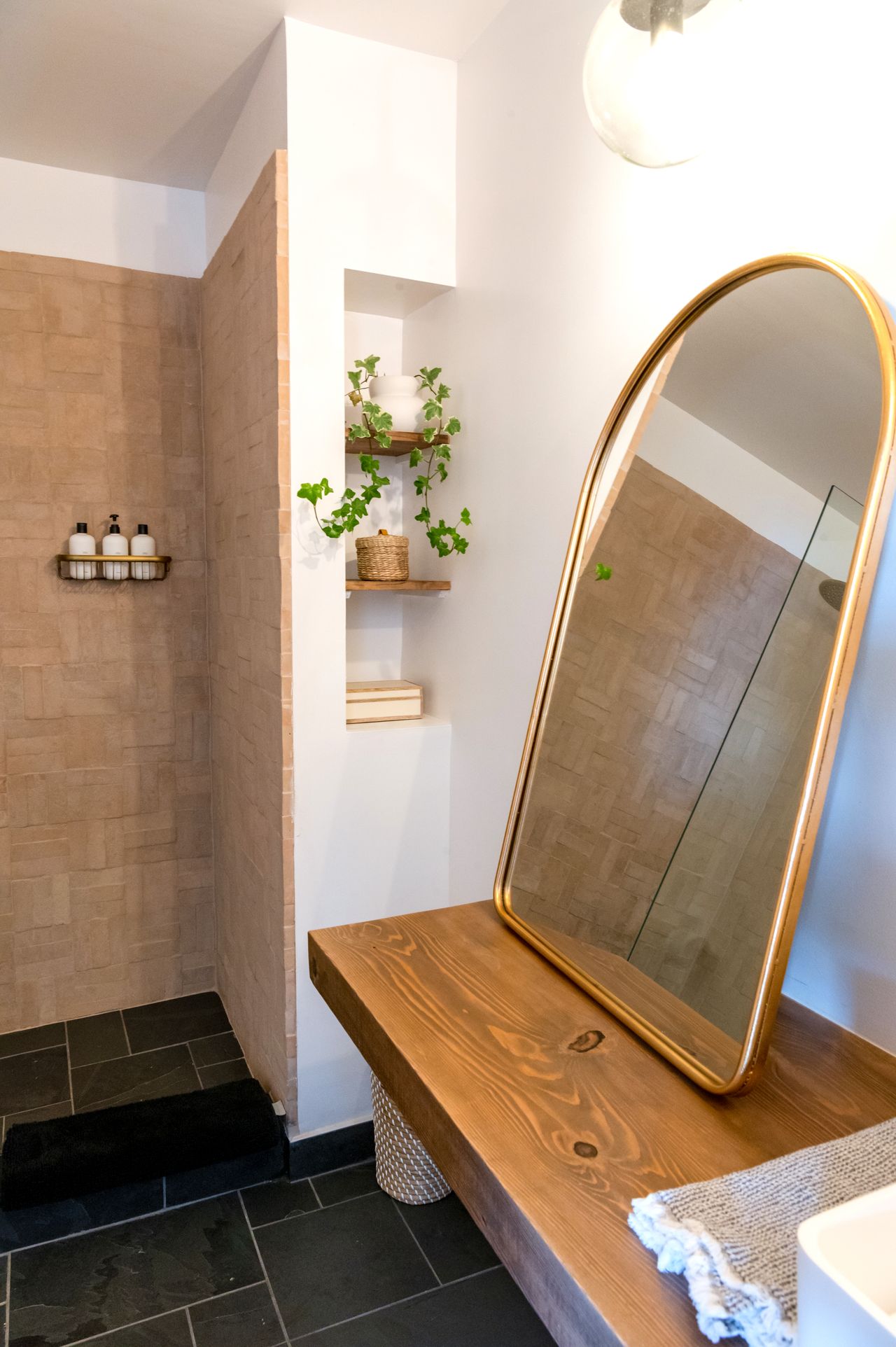
Photo via Pexels
Table of Contents
- 1. Start With a Warm Desert Color Palette
- 2. Lay Terracotta or Saltillo-Style Tile
- 3. Add One Bold Talavera Tile Moment
- 4. Choose a Hammered Copper Vessel Sink
- 5. Bring In a Rustic Wood Vanity
- 6. Anchor the Room With a Freestanding Tub
- 7. Use Turquoise Once, as the Bold Accent
- 8. Pot Desert Plants in Clay and Baskets
- 9. Hang a Statement Mirror With Warm Light
- 10. Finish With Woven Baskets and Textiles
- Frequently Asked Questions
- Final Thoughts
- Sources
- Gallery
1. Start With a Warm Desert Color Palette
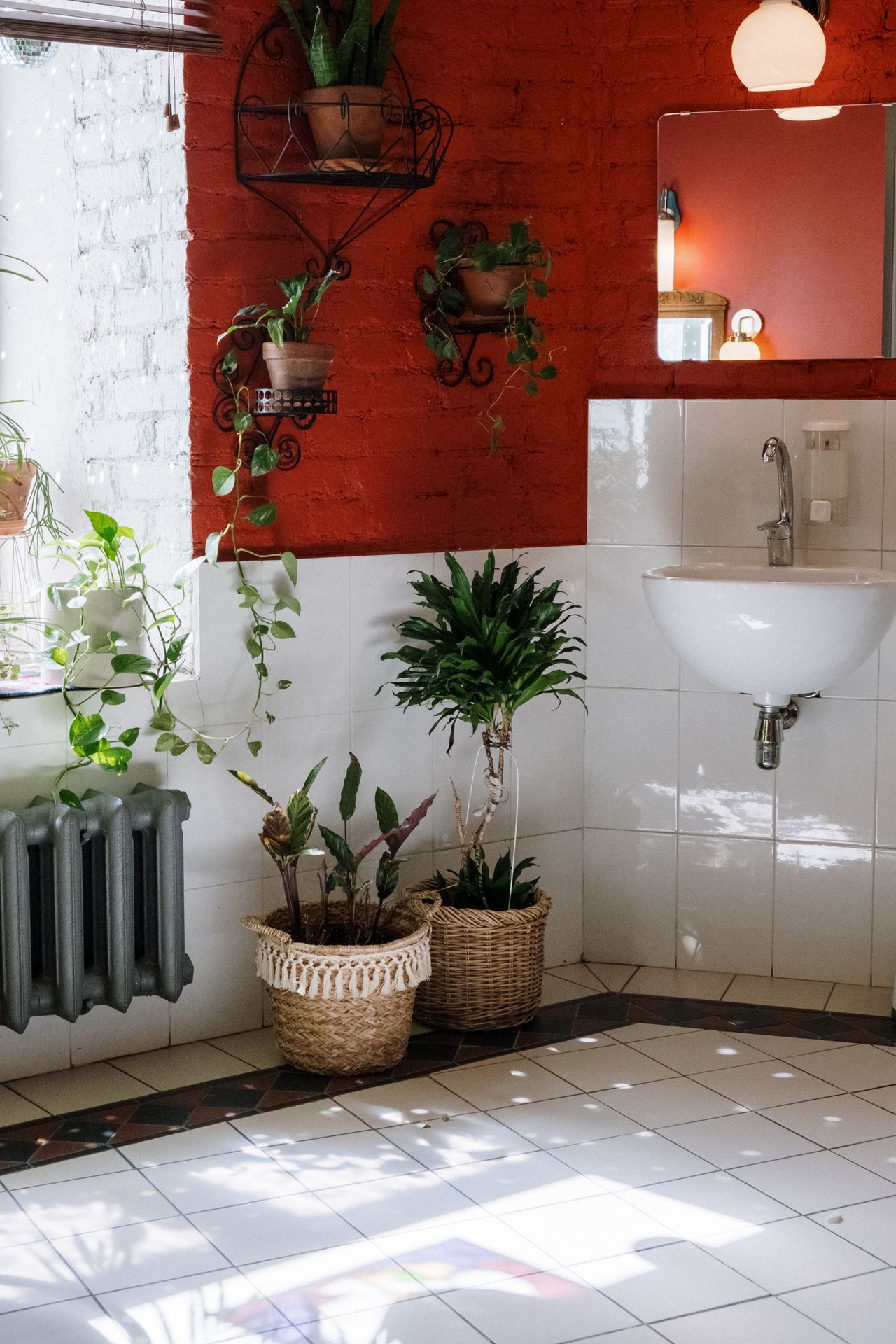
Photo via Pexels
Every Southwestern room starts with the colors of the desert itself: sand, clay, terracotta, adobe pink, and warm white, with sage green and turquoise as the cool notes. A mix that almost never fails is about 65 percent warm neutral on the walls and big surfaces, 25 percent earthy mid-tones like clay, rust, and wood, and just 10 percent of one bright accent. The rust-red wall in the photo above is the bold end of the scale. If that feels like too much, keep the walls a creamy sand color and let towels, pots, and a rug carry the rust instead.
Paint is the cheapest way in. A gallon of good bathroom paint runs about $40 to $70 and covers roughly 350 square feet, so most bathrooms need just one gallon and a weekend. Choose a matte or eggshell finish, since shiny walls fight the soft, dusty feel of this style. Test two or three sample pots first, because clay colors shift a lot between morning and evening light. Warm light bulbs matter too: pick 2700K bulbs so your terracotta reads rich and warm instead of muddy brown under cold white light.
2. Lay Terracotta or Saltillo-Style Tile
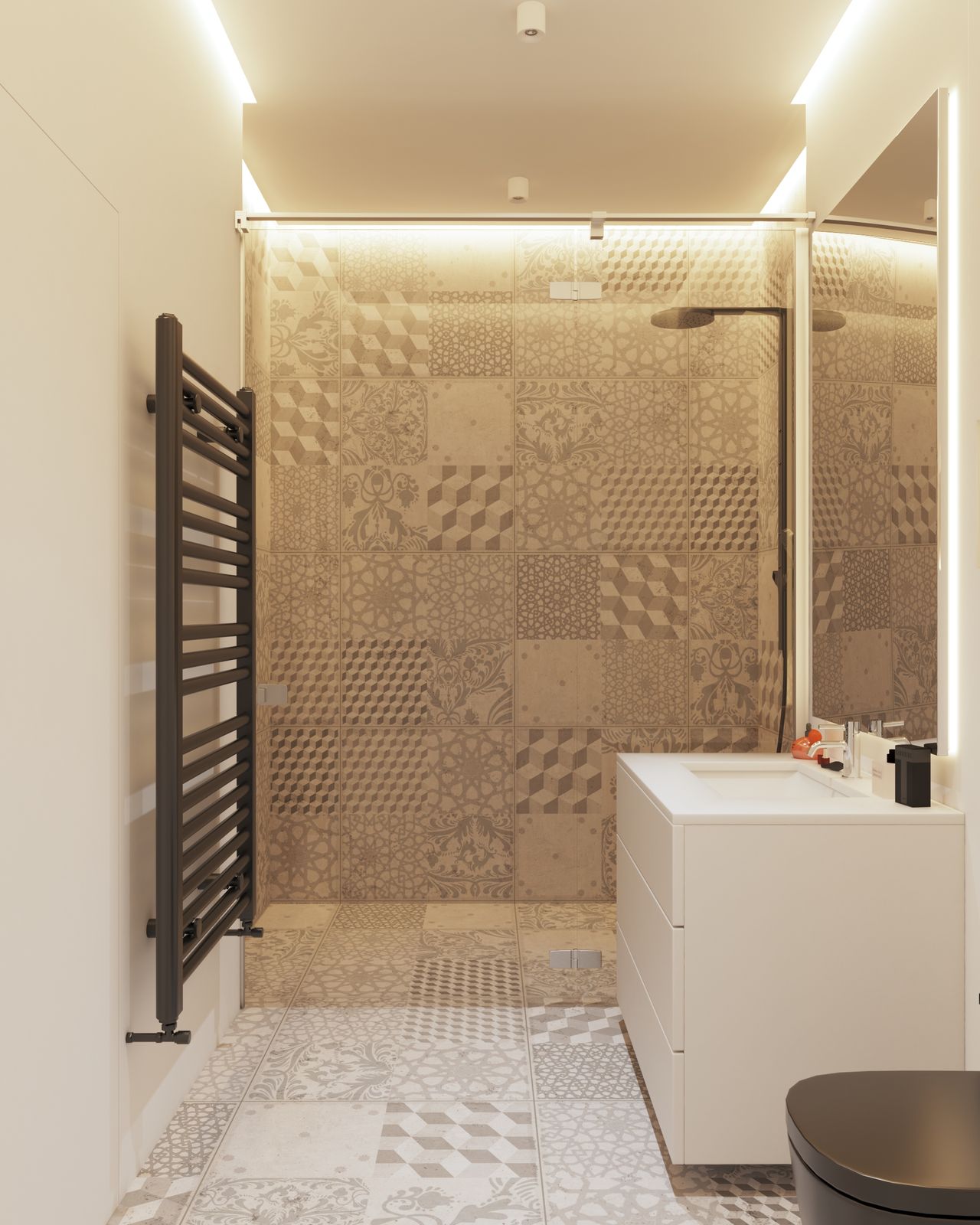
Photo via Pexels
Saltillo tile is the classic floor of the Southwest: handmade terracotta squares from Mexico, usually 12 by 12 inches, with soft uneven edges and natural color swings from peach to deep rust. Material costs about $2 to $6 per square foot, and no two tiles match exactly, which is exactly the charm. If real Saltillo feels like too much upkeep, terracotta-look porcelain gives the same warm color for about $3 to $8 per square foot and needs almost no care. The patterned tiles in the photo show a third route: warm patterned tile that runs from the floor straight up the shower wall for one unbroken desert surface.
Two practical notes before you order. Real Saltillo is porous, so it must be sealed before grouting and resealed every 1 to 2 years, or it will drink up water and stains. It is also thick, around 3/4 inch, which can leave a small step up at the bathroom door. Porcelain copies are thinner and much easier to live with. For a shower floor, skip smooth glazed terracotta, which gets slippery when wet, and choose a matte finish or small tiles with lots of grout lines for grip. A warm sand-colored grout hides dust and blends with every tile tone in this palette.
3. Add One Bold Talavera Tile Moment
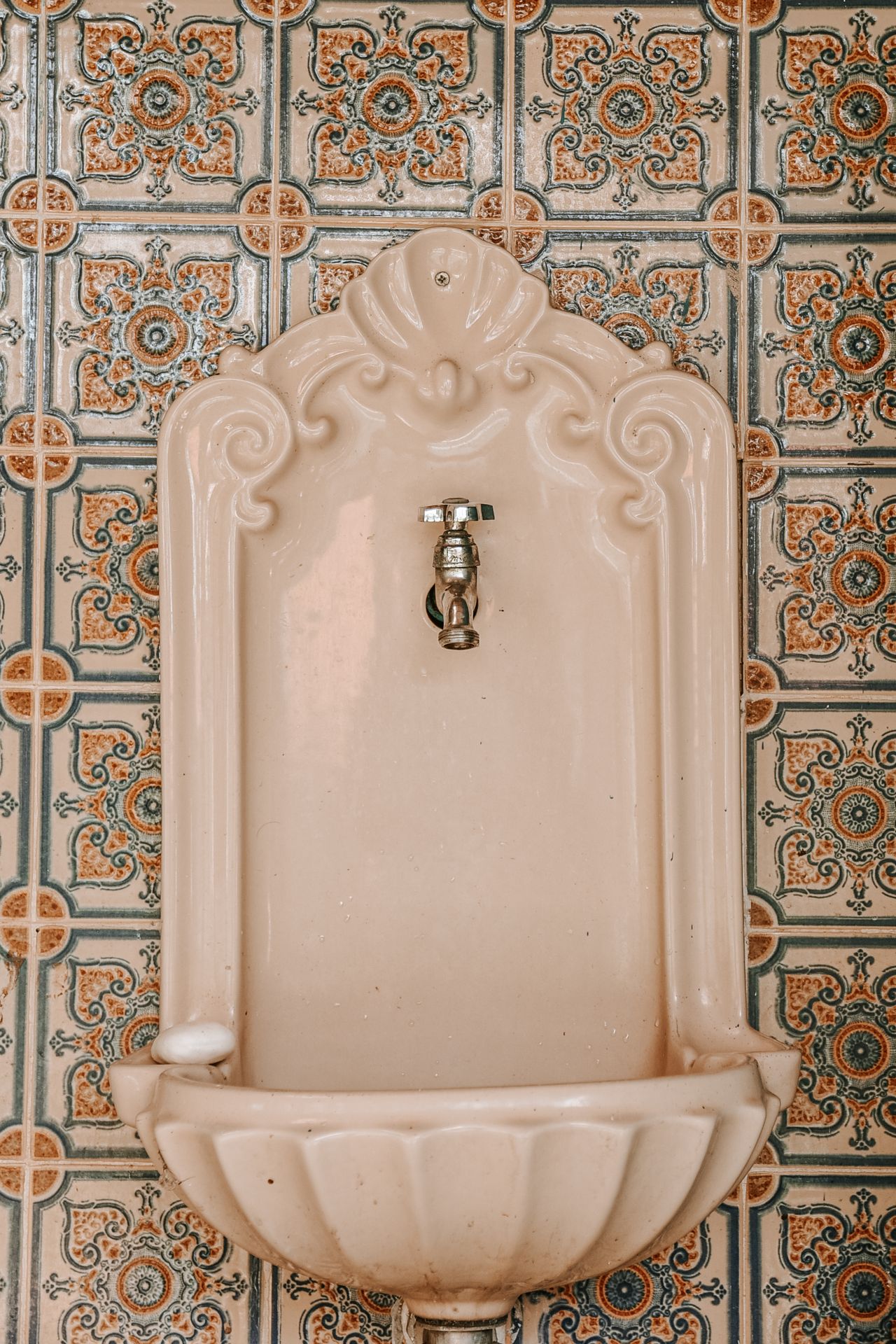
Photo via Pexels
Talavera tile is the joyful pattern of this style: hand-painted Mexican tiles in cobalt blue, turquoise, rust, and sunflower yellow on a creamy white base. The rule that keeps it elegant is to use it in exactly one place. A 4 to 6 inch backsplash strip behind the vanity, the back wall of a shower niche, a mirror frame, or one small accent section like the tiled wall behind the vintage sink in the photo. Everywhere else stays calm and plain, so the pattern feels like art instead of noise.
Standard sizes are 4 by 4 and 6 by 6 inches, and prices run about $1 to $4 per tile, or roughly $12 to $30 per square foot. Because each tile is handmade, thickness varies a little, so use a wider grout joint of 1/8 to 3/16 inch and a sanded grout in warm white or sand. Order about 15 percent extra: colors vary from batch to batch, and you want spares from the same firing. If bold color in tile form is new for you, our guide to pink tile bathroom ideas shows the same one-strong-color approach in a softer palette.
4. Choose a Hammered Copper Vessel Sink
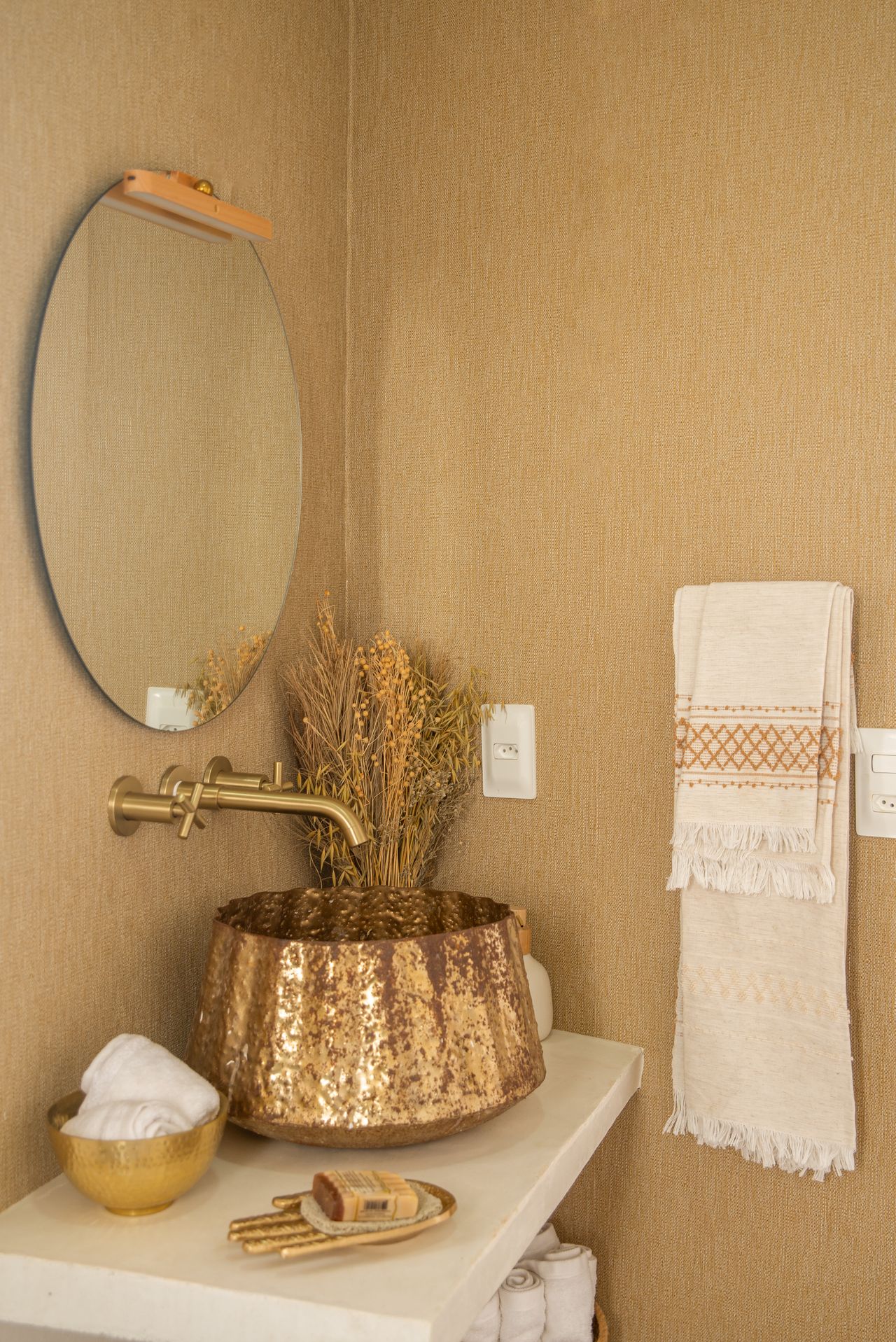
Photo via Pexels
If you buy only one statement piece, make it the sink. A hammered copper vessel sink, like the glowing bowl in the photo, brings instant warmth and craft to the plainest vanity. The most useful size for a bathroom is 14 to 16 inches across and about 5 to 6 inches deep, which gives comfortable hand and face washing without splashing. Prices for a solid hammered copper sink run about $120 to $350. The standard drain opening is 1 3/4 inches, so check that your pop-up drain matches before ordering.
Plan the faucet with the sink, not after it. A vessel bowl sits on top of the counter, so you need a tall vessel faucet with a spout height of about 10 to 12 inches, or a wall-mounted faucet like the brass one shown here. Copper is a living finish: it slowly deepens into a rich brown patina, and many people love that changing look. To slow it down, rub on a thin coat of carnauba or beeswax every few months. Clean with mild soap and water only. Vinegar, lemon, and gritty scrubs will strip the finish in bright patches.
5. Bring In a Rustic Wood Vanity
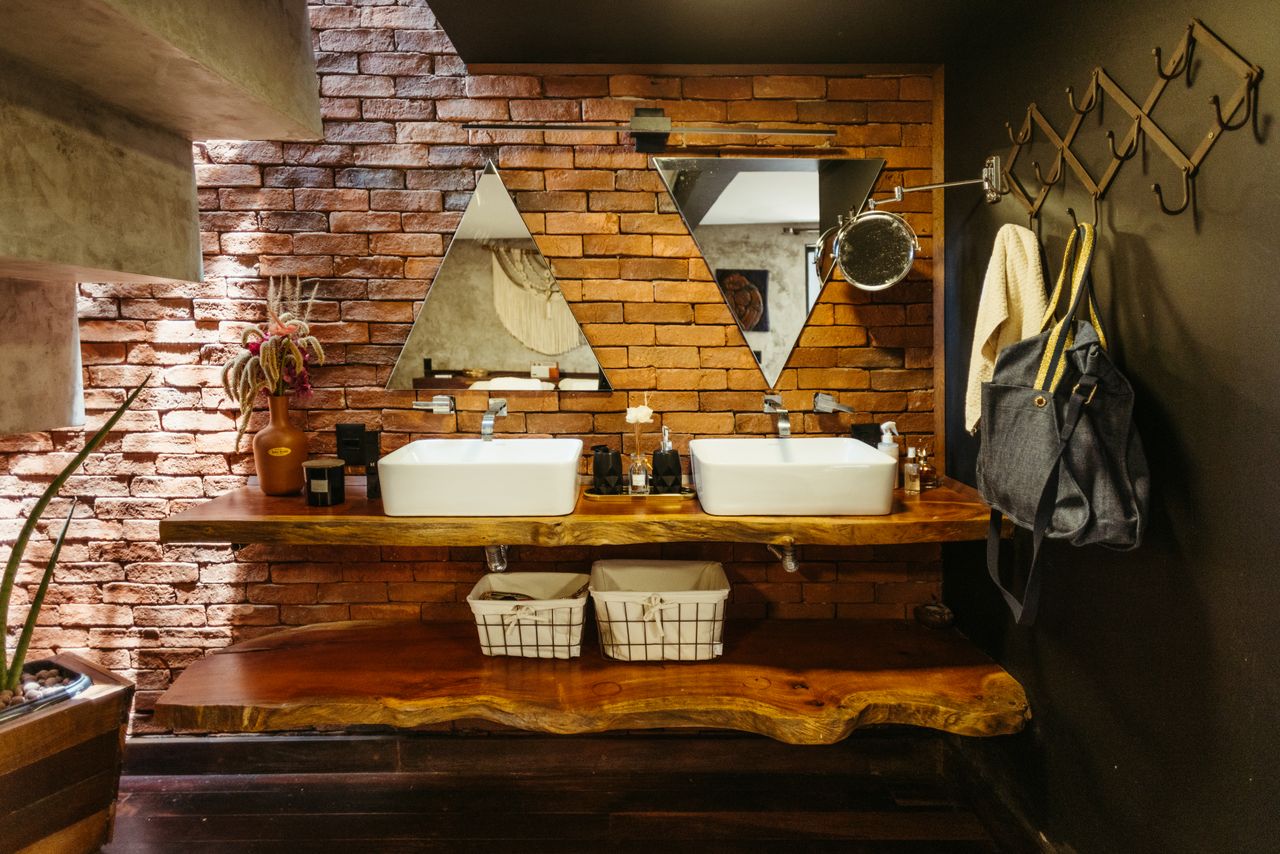
Photo via Pexels
Wood is the texture that keeps all this clay and tile from feeling cold. A rustic vanity in pine, acacia, or reclaimed barn wood adds grain, knots, and warmth that no painted cabinet can copy. The live-edge wood shelves in the photo, set against a brick wall, show the relaxed end of the look. Standard vanity widths run 24, 30, 36, 48, 60, and 72 inches, and a comfort height of 32 to 36 inches suits most adults. A solid wood vanity costs about $400 to $1,500, while a thrifted dresser converted into a vanity can come in under $300 including plumbing cuts.
Bathrooms are wet rooms, so wood needs one layer of common sense. Seal every surface, including the underside and the edges around the sink cutout, with 2 to 3 coats of water-based polyurethane or a hardwax oil, and wipe standing water instead of letting it pool. Keep the vanity a few inches out of the direct shower spray zone, and run the exhaust fan for 20 minutes after showers. Do that, and pine or acacia will handle bathroom humidity for years. Check the seal once a year and refresh any spot that has gone dull or rough.
6. Anchor the Room With a Freestanding Tub
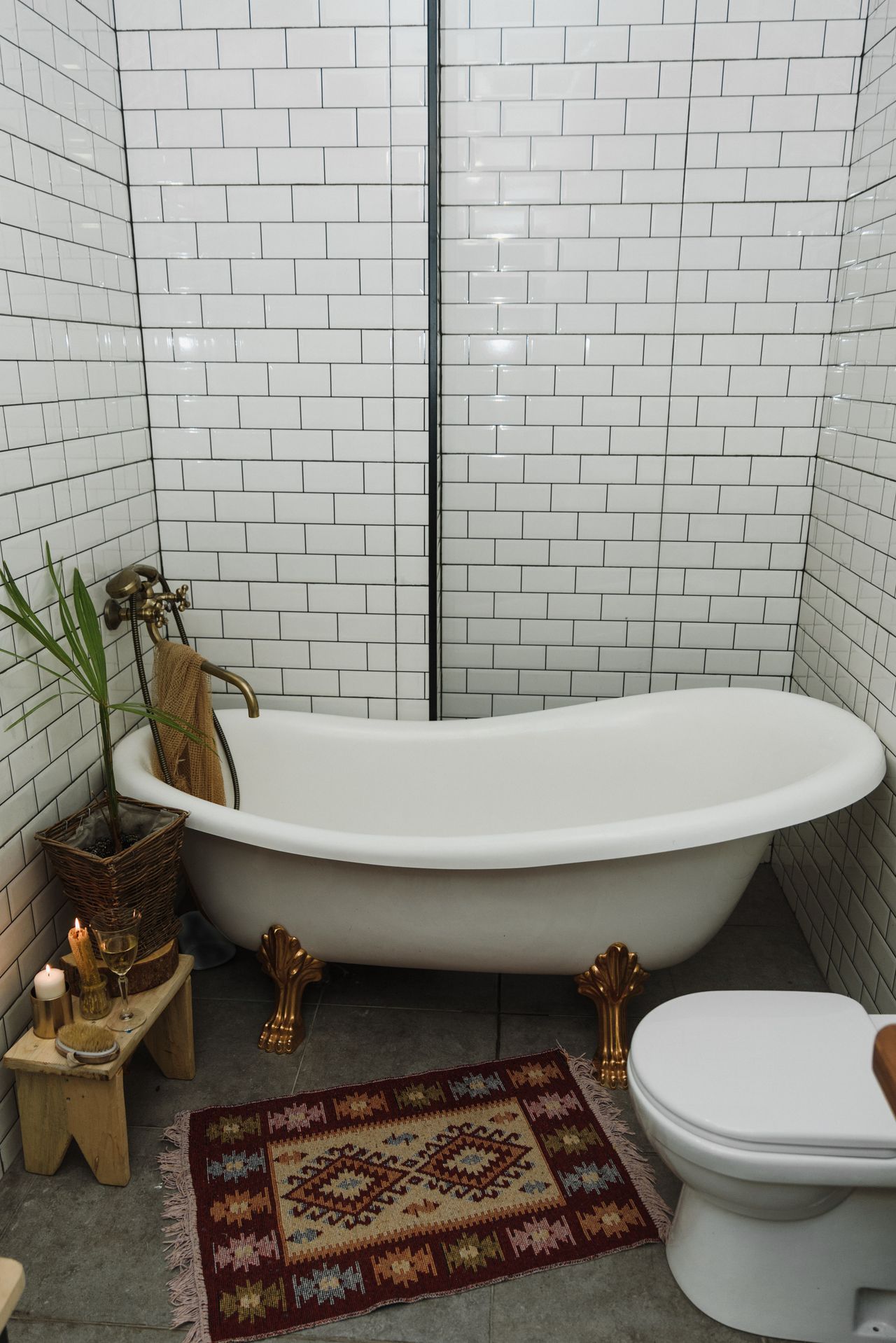
Photo via Pexels
A freestanding tub is the piece that turns this style into a small desert spa. A classic clawfoot shape, like the white tub with brass feet in the photo, suits the old-soul side of the look, while a simple oval soaking tub suits the modern side. Common lengths are 55, 60, and 67 inches. Leave at least 2 to 3 inches of clear space on every side so you can clean behind it, and a little more at the faucet end. A flat-weave patterned rug beside the tub, a wooden stool for a candle and a book, and you have the whole scene.
Weight is the one real decision here. A cast iron clawfoot tub can weigh 300 pounds or more before water and a person go in, so older floors may need a joist check. An acrylic freestanding tub weighs only about 70 to 110 pounds, costs roughly $600 to $1,500, and is far kinder to both the floor and the delivery crew. Pair it with a floor-mounted or wall-mounted tub filler in brushed brass or oil-rubbed bronze, about $150 to $400. Warm metal matters: chrome can look cold against all this clay and wood.
7. Use Turquoise Once, as the Bold Accent
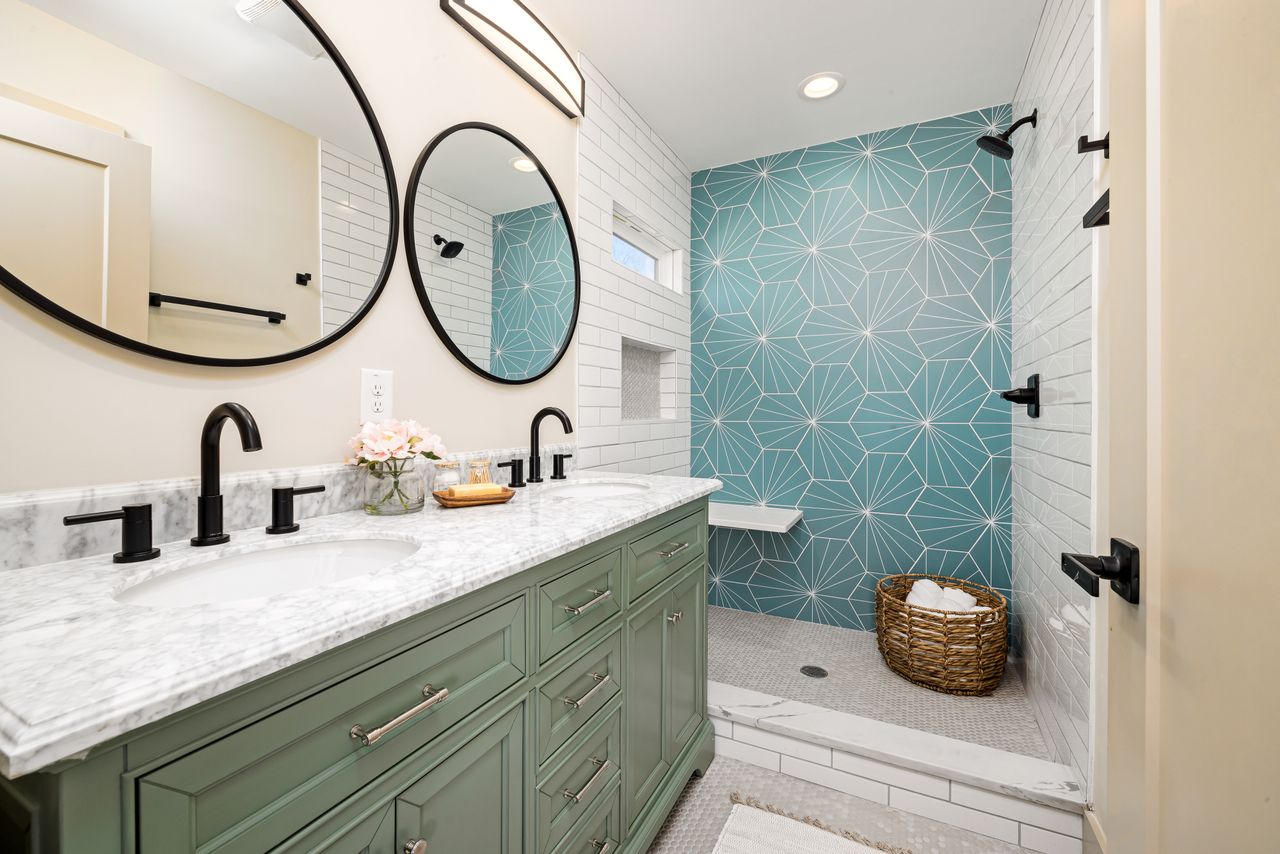
Photo via Pexels
Turquoise is the signature accent of the desert Southwest, the color of the sky after rain and of the stone in old jewelry. It is also strong medicine: a little wakes the room up, a lot turns a calm bathroom into a theme park. Give it one clear job. A geometric turquoise tile wall inside the shower, like the star pattern in the photo, is the boldest version. A painted vanity, a shower curtain, or a set of towels and a bath mat in turquoise is the gentle version, and the one to choose if you rent.
Patterned turquoise tile like this runs about $6 to $14 per square foot, and one shower wall of 30 to 40 square feet keeps the budget sane while still making the whole room. Keep the tiles around it warm white or sand so the blue-green stays the star, and repeat the color in just one tiny echo, such as a soap dish or a small pot, to make it feel planned. If you are mapping out a tiled shower wall, our gray tiled shower ideas cover grout colors and layouts that also work with turquoise. Sage green is the softer cousin if turquoise feels too loud.
8. Pot Desert Plants in Clay and Baskets
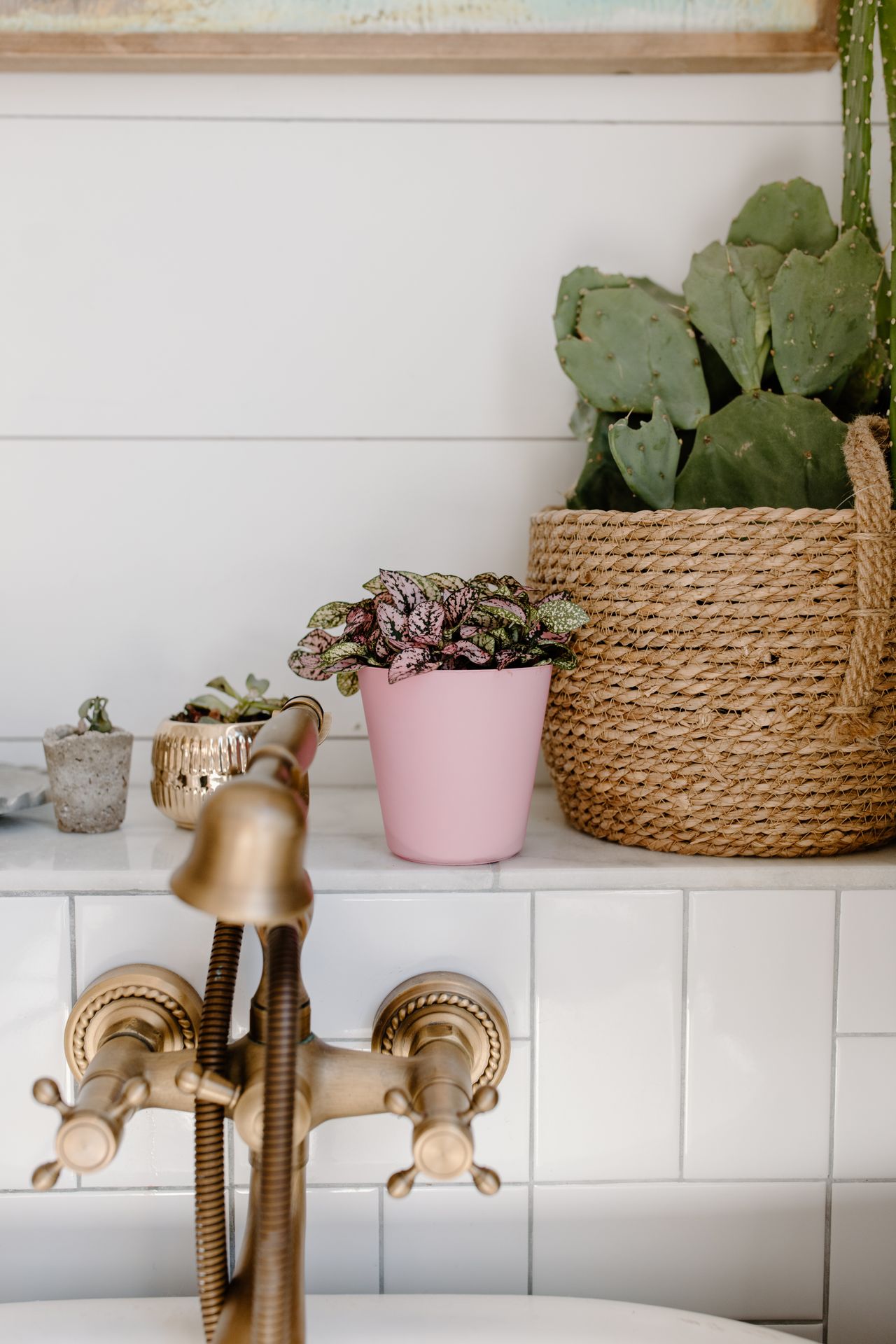
Photo via Pexels
A cactus on the counter does more for this style than a shelf of themed knickknacks. The prickly pear in a woven basket in the photo is the perfect example: sculptural, green, and happy in bright light. Good bathroom choices are a small prickly pear or bunny ear cactus, aloe vera, a snake plant, or a little agave, all in simple terracotta pots that cost $2 to $8 each. Group three pots in different heights on the counter, a windowsill, or a stool. Clay pots are porous, so set each one on a cork mat or a small glazed saucer to protect wood and stone counters.
Be honest about light and steam. True cacti want 4 to 6 hours of bright light, so they belong within 2 to 3 feet of a sunny window, not in a dark shower corner. For low-light or very steamy spots, a snake plant copes far better and still gives you the upright desert shape. Most desert plants need water only every 2 to 3 weeks in a bathroom, since the air is already humid. For more humidity-loving options that thrive on shower steam, see our guide to bathroom plants that absorb moisture.
9. Hang a Statement Mirror With Warm Light
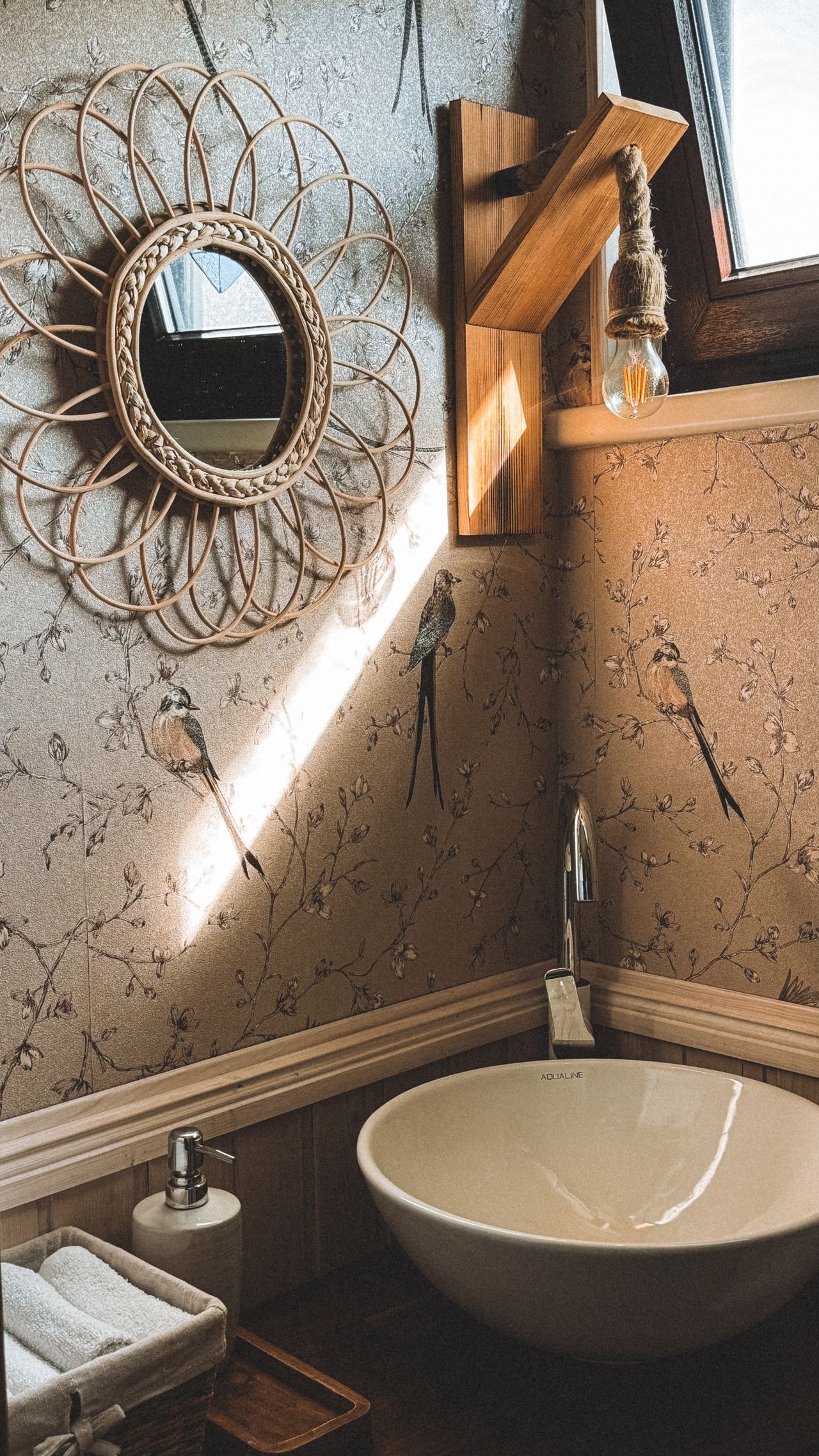
Photo via Pexels
The mirror is where this style gets to have fun. Instead of a plain frameless rectangle, choose a sunburst mirror like the woven one in the photo, an arch shape that echoes old mission doorways, or a frame in carved wood, hammered tin, or aged copper. A mirror 24 to 36 inches wide suits most single vanities. Hang it so the center sits about 60 inches from the floor, roughly eye level, and keep the frame a few inches narrower than the vanity so the pair looks balanced. Sunburst and rattan mirrors cost about $40 to $150, which makes this one of the cheapest big-impact changes on this list.
Light makes or breaks the warm mood. Desert light is golden, so choose bulbs at 2700K and avoid cool white tubes that turn clay walls gray. Sconces on both sides of the mirror, mounted about 60 to 66 inches from the floor, light your face evenly without shadows, and a wood or iron lantern-style fixture adds the rustic note. The Edison bulb sconce beside the mirror in the photo is exactly the idea. If you enjoy the hunt for a mirror with real character, our rustic mirror guide shows what to look for in frames and finishes.
10. Finish With Woven Baskets and Textiles
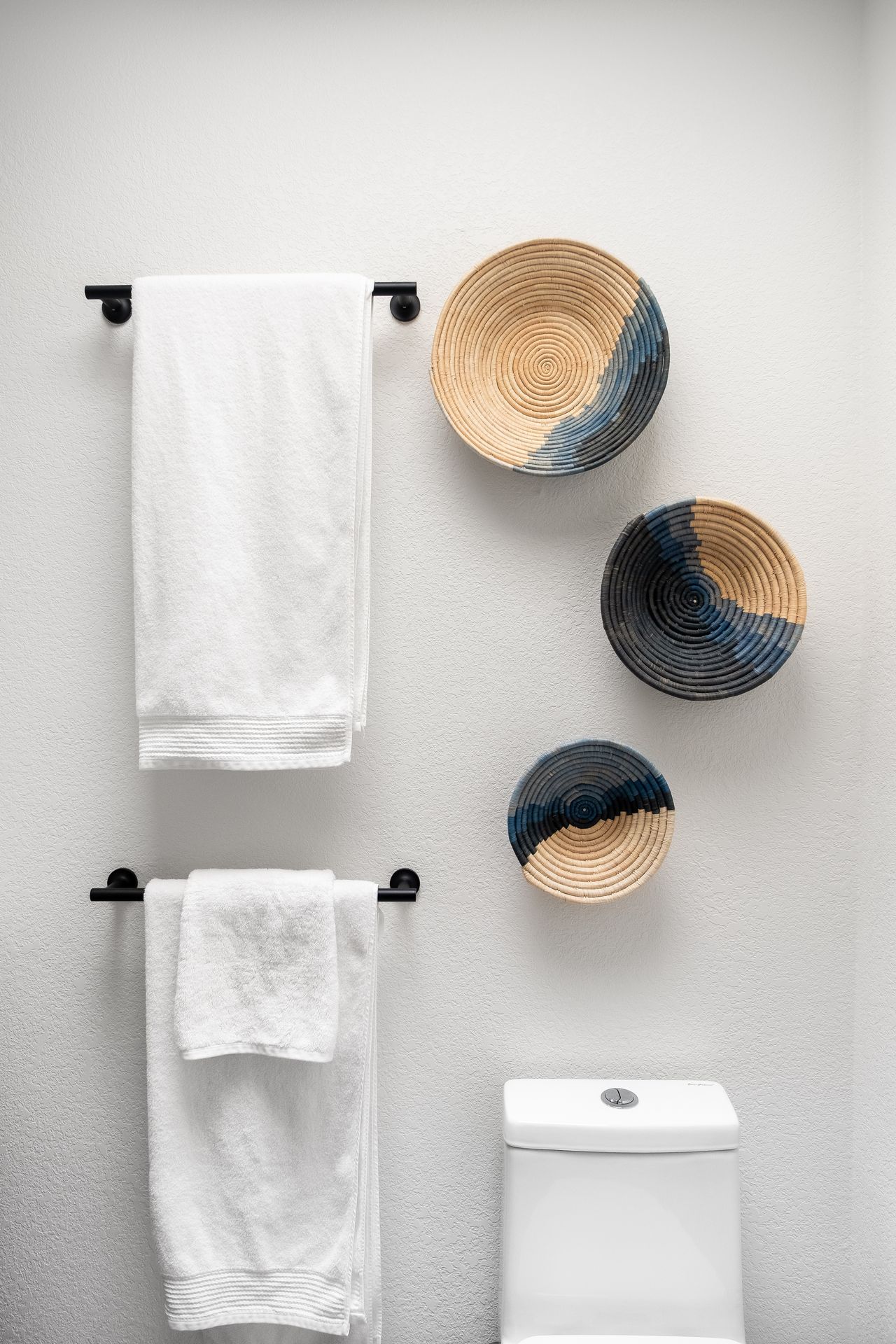
Photo via Pexels
The last layer is woven texture, and it is the layer that makes the room feel handmade instead of decorated. Hang a group of flat woven baskets on the wall, like the natural and indigo set in the photo, in sizes from about 8 to 16 inches across. Odd numbers group best, so start with three. Then use deeper baskets where the work is: one under the vanity for spare towels, one on a shelf for rolled washcloths, one beside the tub for bath things. Woven sets run about $25 to $60, and thrift stores are full of them.
Add textiles with the same one-pattern rule you used for tile. Pick either a patterned flat-weave rug (a washable cotton runner, about 2 by 6 feet, is the practical bathroom size) or a patterned shower curtain, not both, and keep towels in cream, sand, or one accent color. Natural fibers do not love constant damp, so keep baskets off wet floors, hang them or set them on shelves, and run the fan after showers. Shake rugs out weekly and wash them on a gentle cold cycle. Small habits like these keep the soft layer fresh for years.
Frequently Asked Questions
What colors are used in a Southwestern bathroom?
The base colors come straight from the desert: terracotta, clay, sand, adobe pink, and warm white. Sage green is the soft supporting color, and turquoise or deep blue is used as one small, bright accent. A simple way to get it right is to pick two earth tones for the walls, floor, and big pieces, then add the bright accent in just one or two small places, such as towels or a single tiled wall. Too many bright colors at once is the main reason this style goes wrong.
What tile works best in a Southwestern bathroom?
Saltillo tile is the classic floor choice, with Talavera tile as the classic accent. Real Saltillo is handmade terracotta, so it needs sealing before grouting and resealing every 1 to 2 years. If you want the look with less work, terracotta-look porcelain gives the same warm color, never needs sealing, and handles shower water without worry. Use Talavera in one focal spot only, such as a backsplash or a shower niche, and let plain tile or plaster do the rest.
How can I make a small bathroom look Southwestern without remodeling?
Work in layers and stop at two or three. Sand or warm white paint, a woven or carved mirror, and one patterned textile, such as a flat-weave runner or a bold shower curtain, will change the whole feel of a small room for about $100 to $400 in a single weekend. Add a small cactus in a clay pot and a woven basket for towels, and keep every surface you are not changing plain and uncluttered. Small rooms look best when the few pieces in them are strong.
Is a copper sink hard to take care of?
No, but it does ask for gentle habits. Copper slowly darkens into a warm patina, which most owners enjoy, and a thin coat of wax every few months slows that change down. Wash it with mild soap, water, and a soft cloth. Keep vinegar, lemon juice, bleach, and scrubbing powders away from it, since they strip the surface in pale patches. If bright spots appear, they blend back in on their own within a few weeks as the patina evens out.
What is the difference between Southwestern and Spanish colonial style?
Spanish colonial is one of the roots of Southwestern design. It brings the wrought iron, carved dark wood, arches, and hand-painted tile from old Spanish missions and Mexican haciendas. Southwestern style takes those pieces and blends them with desert colors and patterns inspired by Native American textiles and pottery, plus a more relaxed, sun-baked feel. In practice, most bathrooms mix the two freely. If your room leans on iron, arches, and tile, it reads colonial; add woven geometrics and cactus green, and it reads Southwestern.
Final Thoughts
You do not need all ten changes to succeed with this style. Two or three of these southwestern bathroom ideas, done well, will carry the whole room: a warm color on the walls, one handmade or hand-painted touch, and one piece with real texture, like wood, copper, or a woven basket. Start with the layer that bothers you most when you walk in, enjoy it for a while, and add the next layer when you are ready. That slow, collected pace is not a compromise. It is exactly how real desert homes come together.
Sources
- Southwestern Style Bathrooms: 9 Easy Ideas That Work — Organizables
- 25+ Stunning Southwestern Bathroom Designs — E-A-A
- How to Create a Spa-Like Southwestern Bathroom on a Budget — Roohome
- How to Style Southwestern Style Bathrooms — Home Vibe Decors
- Southwestern Bathroom Decor — 98905
Gallery
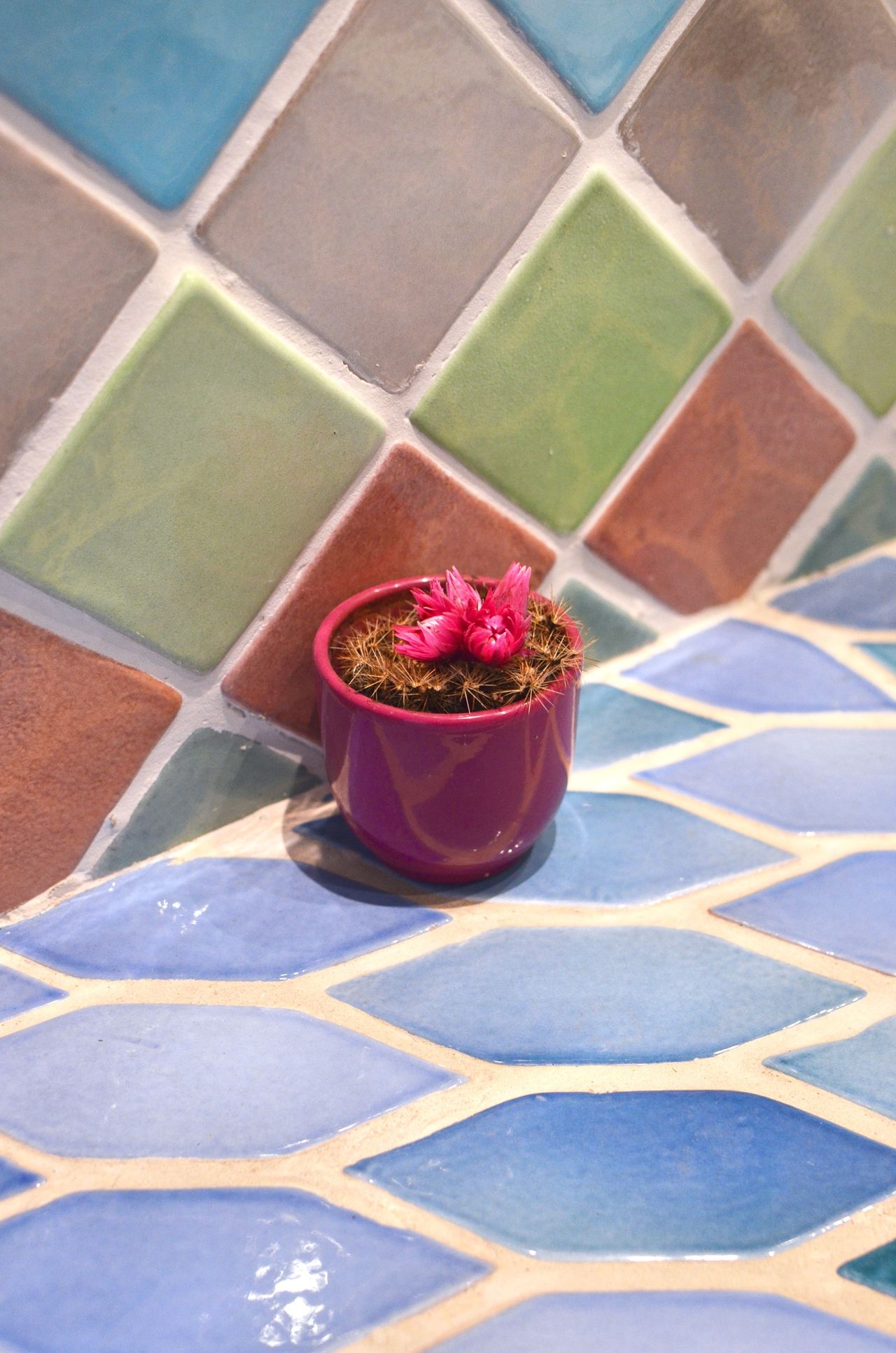
A tiny flowering cactus on handmade-look tiles in the full desert palette. Photo via Pexels
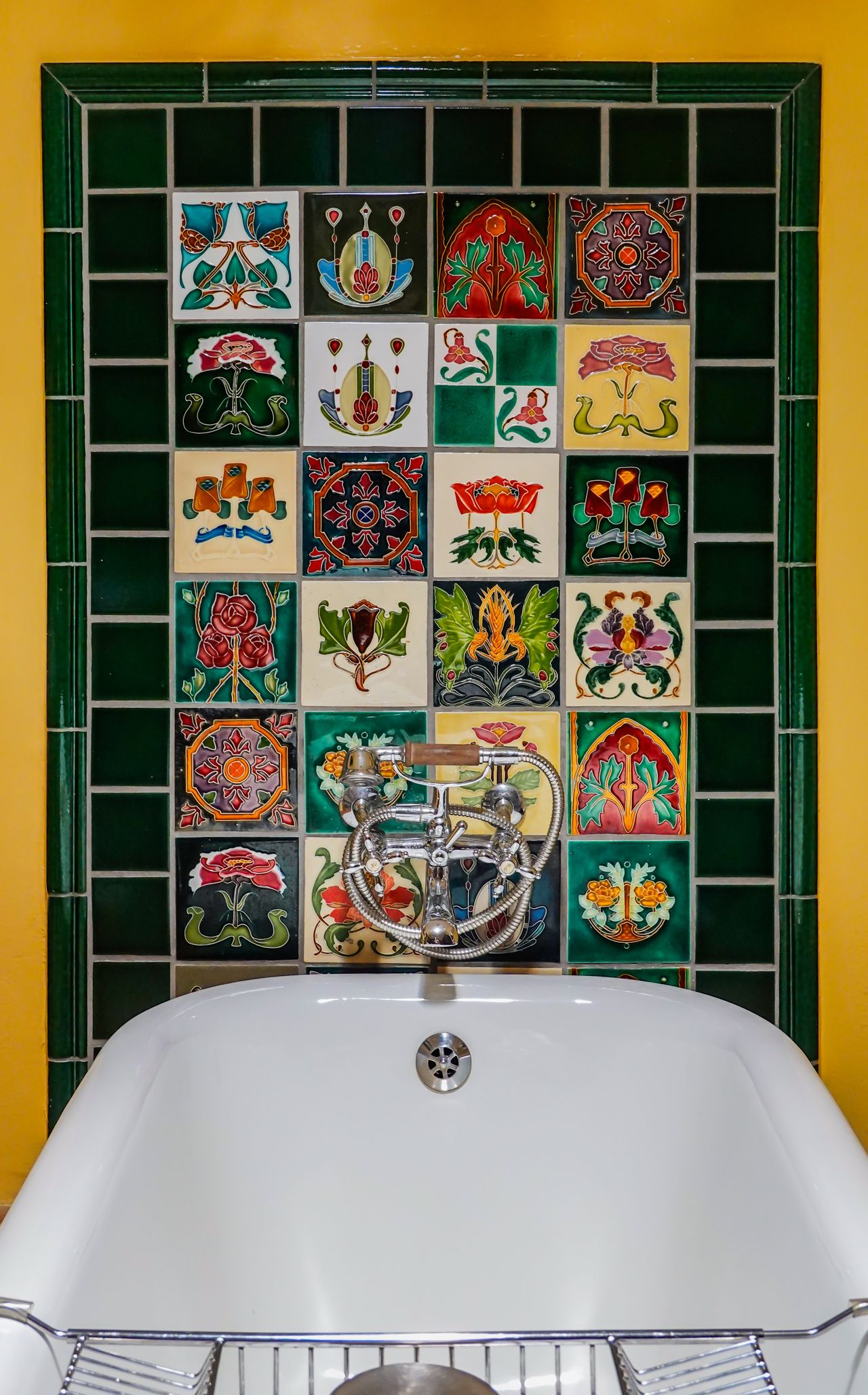
Hand-painted tiles used as one bold panel above the tub. Photo via Pexels
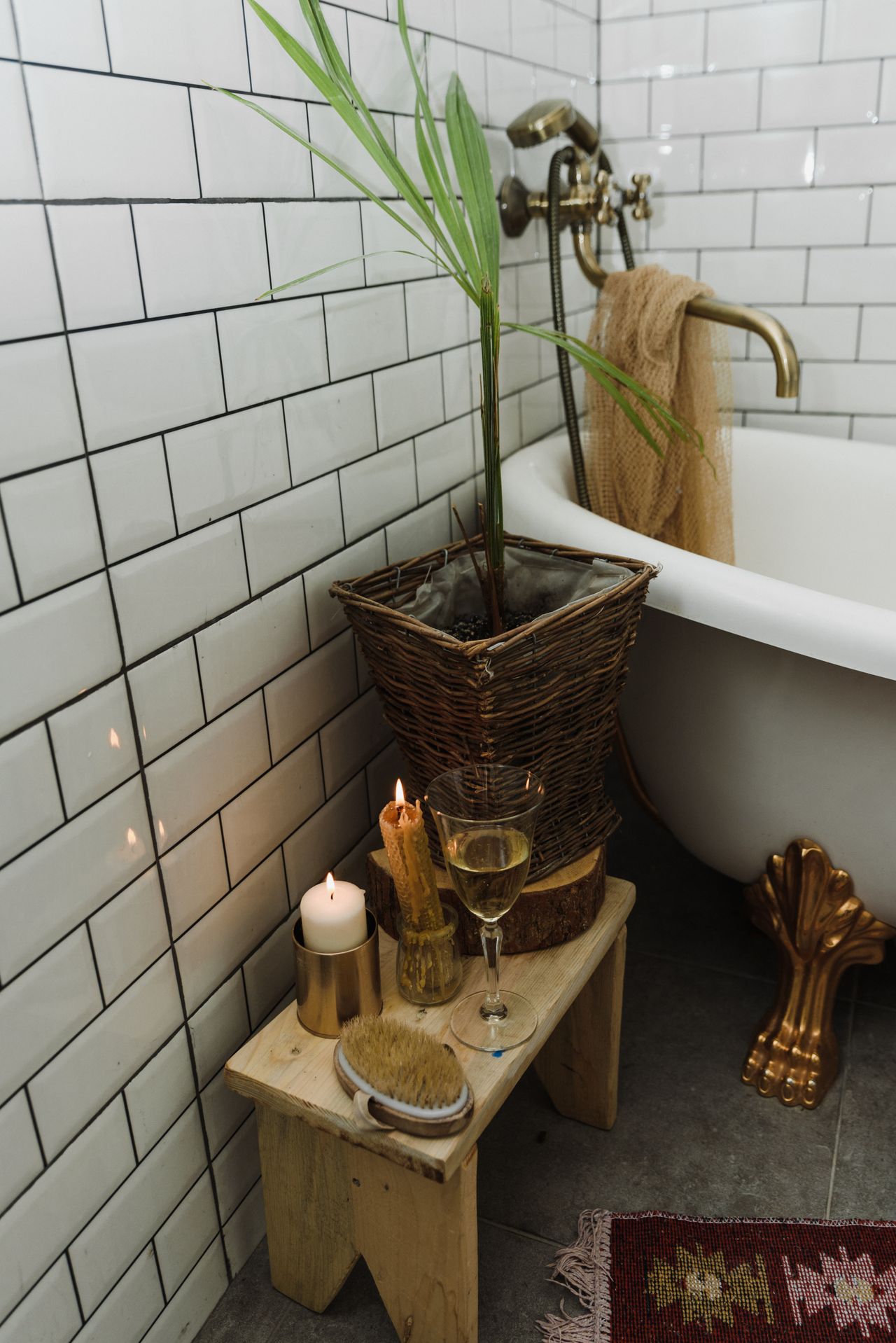
Candlelight, raw wood and woven texture beside the tub. Photo via Pexels

No comments:
Post a Comment