A tiny yard can feel like a problem when you stand in it and see only a fence, a patch of grass, and nowhere to sit. The good news is that you do not need more land to fix it. These small garden landscaping ideas work because they change how the space feels, not how big it is, and most of them can be started in one weekend with simple tools.
Start by watching your yard for one full day before you buy anything. Note where the sun falls in the morning and the afternoon, where water sits after rain, and where you naturally walk. Most flowers and vegetables need at least 6 hours of direct sun, so that one day of watching will save you from planting the wrong thing in the wrong spot. Then pick just one idea below, build it well, and add the next one later.

Photo: Wikimedia Commons. A curved path and layered shrubs make even a modest yard feel like a real garden.
Contents:
- 1. Grow Up, Not Out, With a Trellis
- 2. Build One or Two Raised Beds
- 3. Plant in Three Simple Layers
- 4. Lay One Clear Path
- 5. Group Pots in Threes
- 6. Swap Thirsty Lawn for Gravel and Tough Plants
- 7. Make One Small Seating Nook
- 8. Pick One Focal Point
- 9. Shape a Neat Corner With Boxwood and Stone
- 10. Light One Tree and the Path
- Frequently Asked Questions
- Final Thoughts
1. Grow Up, Not Out, With a Trellis

Photo: Wikimedia Commons. A climbing vine on a wooden trellis adds green height without using floor space.
When the ground is small, the fence and the wall are your extra garden. A simple wooden trellis panel, about $30 to $60 at a garden center, can hold cucumbers, pole beans, clematis, or jasmine, and it turns a plain fence into a living wall. Put the trellis on the north side of a bed when you grow food, so tall vines do not shade shorter plants, and leave 2 to 3 inches of space between the trellis and the wall so air can move behind the leaves.
Choose one or two climbers and repeat them, rather than planting five different vines at once. In most US zones, clematis suits zones 4 to 9, jasmine does best in zones 7 to 10, and pole beans grow almost anywhere in summer. Tie new stems loosely with soft twine every few weeks, water at the base, and prune dead stems in late winter. One healthy vine can cover 6 to 8 feet of fence in a single season, which is free privacy and color from ground you were not using at all.
2. Build One or Two Raised Beds

Photo: Wikimedia Commons. Wooden raised beds with bamboo supports keep a compact growing area tidy and easy to reach.
Raised beds are one of the kindest changes you can make in a compact yard because they give you deep, loose soil exactly where you want it. Keep each bed no wider than 4 feet so you can reach the middle from either side without stepping on the soil, and make it 10 to 12 inches deep for most vegetables and flowers. Leave at least 2 feet between beds so a wheelbarrow fits, and fill the bed with about 60 percent topsoil and 40 percent compost. For the full build steps, see our guide on how to construct a raised garden, which covers boards, soil, and setup in plain steps.
A cedar bed kit costs about $150 to $300, while a do-it-yourself bed from lumber runs about $80 to $120 plus $60 to $100 of soil mix. That sounds like a lot, but the bed warms up faster in spring, drains well after heavy rain, and is far easier to weed than open ground. Plant tall crops like beans at the back, medium plants like peppers in the middle, and low herbs at the front edge, and the same small bed will look full and give you food all summer.
3. Plant in Three Simple Layers

Photo: Wikimedia Commons. A layered bed by a rustic fence mixes tall shrubs, leafy greens, and low flowers in a small space.
A flat row of same-height plants always looks thin, while three layers look rich even in a bed only 3 to 4 feet deep. Put the tallest plants at the back, against the fence: a small tree like serviceberry, which reaches 15 to 20 feet at maturity, or tall shrubs at 3 to 4 feet. Fill the middle with shrubs and tall perennials, then keep the front under 18 inches with herbs, marigolds, and low geraniums. Our guide to backyard garden design ideas shows this same layered pattern in several yard sizes, so you can see how it works before you dig.
Keep the plant list short. Five or six kinds repeated around the space look calm, while twenty different plants look busy and crowded. Good, easy layers for most US yards are hydrangea or spirea in the middle, daylilies or salvia behind the front edge, and catmint or creeping thyme spilling over the front. Plant in groups of three or five, space each plant by the mature width on its tag, and fill first-year gaps with $4 annuals instead of crowding the shrubs you will be pruning for years.
4. Lay One Clear Path

Photo: Wikimedia Commons. A wide, straight path with flower borders on both sides gives a garden a clear route and structure.
One clear path does more for a tiny yard than three half-finished ones. Make the main path 3 to 4 feet wide so two people can walk side by side and a wheelbarrow rolls without crushing plants, and keep secondary paths at least 2 feet wide. Gravel is the cheapest good surface, about $3 to $6 per linear foot for a do-it-yourself path, while pavers cost about $10 to $20 per linear foot laid by hand but stay cleaner in muddy seasons. A gentle curve slows the eye down and makes the yard feel longer, but keep the curve honest: a path that swoops far out of the way will simply be ignored.
Plant the borders so the walk feels enclosed but not crowded. Low boxwood or lavender holds a neat line, while loose catmint softens a formal path. Repeat one plant every few feet along both sides so the walk feels connected from end to end, and put a small surprise at the end, such as a bench, a birdbath, or one large pot, so the walk has a reason. Solar stake lights, about $3 to $8 each and spaced every 6 to 8 feet, make the path safe and pretty after dark.
5. Group Pots in Threes

Photo: Wikimedia Commons. Grouped pots of hydrangeas, fuchsia, and petunias turn a bare patio corner into a flower display.
Pots are the fastest fix for a yard with little soil, a shady corner, or a rental home where you cannot dig. Group them in threes, with one tall plant, one full middle plant, and one trailing plant spilling over the edge, and the group will look like a designed display instead of scattered leftovers. Use pots at least 16 to 18 inches wide for shrubs, because small pots dry out twice a day in July, and always check for drainage holes before you buy. If you love big blooms in a pot, our guide on how to care for hydrangeas in a pot explains pot size, soil, and watering season by season.
Cluster pots near the door, the seating area, or the end of a path, where you will actually see them every day. A group of three 16-inch pots costs roughly $60 to $120 for the pots plus $30 to $50 of potting mix, and you can move the whole display to chase the sun or make room for guests. Water deeply until it runs from the drainage holes, empty the saucer after watering so roots do not rot, and feed lightly with a balanced slow-release fertilizer in spring and again six weeks later.
6. Swap Thirsty Lawn for Gravel and Tough Plants

Photo: Wikimedia Commons. A gravel garden with blanket flowers and tough perennials stays colorful with far less water than lawn.
A small lawn in shade, on a slope, or under a big tree often looks thin no matter how much you water it. Replacing part of it with gravel and tough plants can look better and need far less work. Remove the sod, level the soil, plant your perennials, then spread gravel about 3 inches deep around them. One ton of pea gravel or crushed stone costs about $40 to $70 and covers roughly 80 to 100 square feet at that depth, and the gravel keeps roots cool, holds moisture in the soil, and stops most weeds from sprouting.
Choose plants that like sharp drainage and full sun: lavender, sedum, Russian sage, gaura, echinacea, and blanket flower, most of which are hardy in zones 5 to 9. In colder zones 3 and 4, swap lavender for hardy sedum, yarrow, and prairie grasses. Water new plants well for the first season while roots settle, then most gravel gardens need water only in long dry spells. Skip the landscape fabric under the gravel if you can, because roots grow better without it and a thick gravel layer does the weed-blocking job on its own.
7. Make One Small Seating Nook

Photo: Wikimedia Commons. A small paved seating area with benches and a table gives a compact yard a place to sit and enjoy it.
A yard without a place to sit rarely gets used, no matter how pretty the plants are. You do not need a big patio: a simple sitting nook of 8 by 10 feet holds two chairs and a small table with room to walk around them, while a dining patio for six needs at least 12 by 12 feet. Put the main seating close to the kitchen door so carrying food and drinks stays easy, and leave 8 to 10 feet between the house wall and the first planting so you can walk behind everything for care and pruning.
Keep the furniture simple and able to do two jobs. A storage bench holds cushions and tools, a foldable bistro set tucks away when guests leave, and a built-in bench along a raised bed saves floor space and never needs to be dragged around. A basic bistro set costs about $80 to $200, while a simple paver nook laid by hand runs about $4 to $8 per square foot. Add one pot of scented plants by the chair, such as lavender or rosemary in zones 7 to 9, and the nook becomes the spot you head for every evening.
8. Pick One Focal Point

Photo: Wikimedia Commons. A single stone urn on a lawn gives the eye a clear place to land among trees and borders.
Every good compact yard has at least one destination that pulls you forward: a stone urn, a small tree, a birdbath, or a bench tucked under a tree. Without one, the eye jumps around and the space feels restless. Place your focal point about two-thirds of the way down the main view from the house or patio, not dead center, and keep it connected to the rest of the yard by repeating its shape or color somewhere nearby, such as the same stone in a path edge or the same flower color in a pot.
Match the scale to your lot. A 4- to 6-foot arbor suits a compact yard, while a large property can carry a 10-foot pergola or a multi-stem tree. A single specimen tree, a bubbling rock in a 2-foot basin for $150 to $400, or one large glazed pot can all do the job, and one strong feature beats five small ornaments competing for attention. If you can see the focal point from the kitchen window, you will enjoy it all year, even in winter when the beds are asleep.
9. Shape a Neat Corner With Boxwood and Stone

Photo: Wikimedia Commons. Round boxwood shrubs, gravel, and a stone-filled gabion wall make a tidy, low-care garden corner.
Awkward corners are where tiny yards often fall apart, because they collect clutter and weeds. Give one corner a simple, repeatable shape instead: round boxwood balls, pale gravel, and one stone feature, such as a low gabion wall filled with fieldstone. Boxwood plants cost about $15 to $40 each depending on size, and a small corner might need only three to five of them. In zones 5 and colder, choose hardy boxwood types like Green Velvet, or swap in inkberry holly, which keeps the same neat shape.
Keep the rest of the corner just as simple. One gravel color, one stone color, and one evergreen shape repeated a few times will look calm and finished, while mixed colors and mixed shapes will look busy. Rake the gravel smooth once a month, clip the boxwood twice a year, and pull the few weeds that appear while they are small. A tidy corner like this also makes the rest of the yard look better, because the eye reads the whole space as cared for rather than patched together.
10. Light One Tree and the Path

Photo: Wikimedia Commons. Warm string lights on a tree turn a small garden into an evening room after dark.
Lighting is the cheapest way to double the hours you enjoy a small yard. A dozen well-placed lights turn a daytime space into an evening room, and a low-voltage LED kit starts around $80 to $200 and plugs into an outdoor outlet with a transformer, with no electrician needed. Space path lights 6 to 8 feet apart, uplight one good tree or shapely shrub, and keep the bulbs warm, at 2700 to 3000 Kelvin, so the garden glows instead of glaring.
Put everything on a timer so lights run from dusk to about 11 pm instead of all night. Aim fixtures at plants and paths, never at the neighbors windows, and skip color-changing party modes for everyday use. Three quiet pools of light, one on the path, one on a tree, and one near the seating nook, will make the yard feel twice as deep after dark and will make the seating area feel safe and inviting on warm evenings.
Frequently Asked Questions
How can I make a tiny yard look bigger?
Use fewer but larger features: one wide path instead of several narrow ones, one focal point instead of five ornaments, and three or four plants repeated around the space. Light paving, a curved path, and plants grown upward on a trellis all draw the eye forward and upward, which makes the space feel larger than the tape measure says it is.
What plants work best in a compact yard?
Pick compact and dwarf types that stay near their tag size: dwarf shrubs, compact perennials, climbing plants, and herbs. Lavender, boxwood, clematis, daylilies, salvia, and sedum are reliable picks across many US zones, and they give structure without taking over. Always check the mature width on the tag, not the size in the nursery pot, before you plant.
How do I add privacy without making the yard feel closed in?
Use tall, narrow plants or a trellis with climbers instead of a solid tall fence, because leaves and gaps let light and air through. Bamboo in a contained pot, ornamental grasses, or a slim row of columnar shrubs adds height without bulk. Keep the screen to one or two sides, and leave at least one open view across the yard so the space still breathes.
What is the lowest-care plan for a small yard?
Choose drought-tolerant and native plants for your zone, cover bare soil with 2 to 3 inches of mulch or gravel, and add a simple drip line or soaker hose, about $25 to $40 per bed. Gravel paths, evergreen shrubs, and groundcovers like creeping thyme or sedum cut mowing and weeding to minutes a week once the plants are settled.
How much should I budget to start?
You can start well for $200 to $500 with one raised bed or a group of pots, a trellis, and a few plants. A fuller refresh with a gravel path, a seating nook, and lighting usually runs $1,000 to $3,000 done by hand. Start with the change you will use daily, such as seating or a path, and add the next idea in a later season.
Final Thoughts
A small yard does not need every idea on this list. It needs one clear path, one place to sit, one focal point, and plants that fit the space they are given. Measure first, watch the sun for a day, and build the hard surfaces before you plant, because moving a path later costs far more than moving a line on paper.
Take it one idea at a time across two or three seasons, and every round will look better than the last. Start this weekend with the simplest change, a trellis, a group of pots, or a tidy corner, and you will be surprised how quickly a yard that once felt cramped starts to feel like a favorite room outdoors.
Sources
- ECOgardener — Ideas to Maximize Space in a Small Garden
- Spruce Brothers — 12 Ideas for Small Gardens
- DIY Garden — 27 Tiny Backyard Landscaping Ideas
Gallery
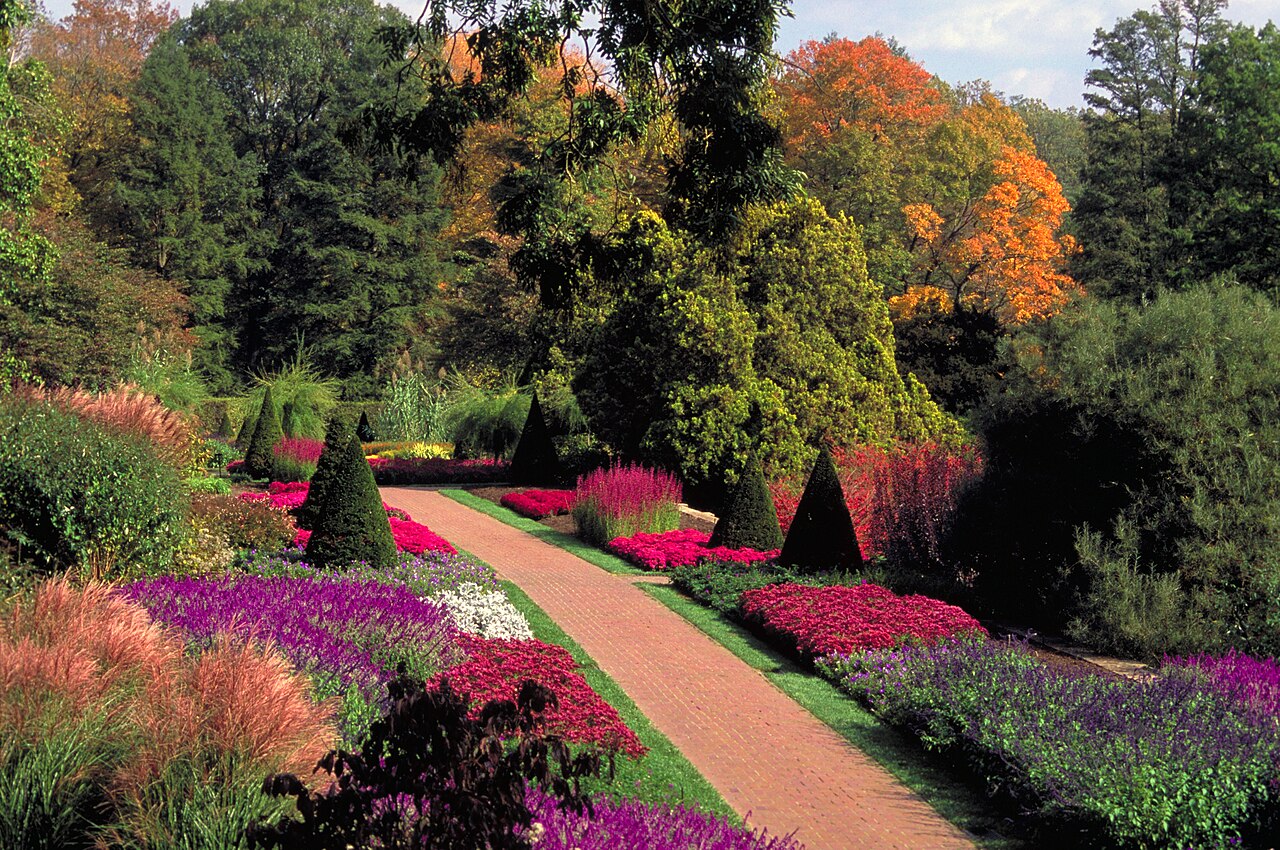
Photo: Wikimedia Commons. Layered color and a brick path show how repetition makes a garden feel designed.

Photo: Wikimedia Commons. A pergola walkway with flower borders on both sides makes a simple path feel special.

Photo: Wikimedia Commons. A rose-covered arbor at the end of a path gives the walk a clear destination.

No comments:
Post a Comment