If you are shopping for wall insulation in Canada, you will see the term R12 insulation on bundle after bundle. It is one of the most common ratings on store shelves, and it shows up in forum threads from Vancouver to Halifax whenever someone asks what to put in their walls. But the number alone does not tell you whether it is right for your house.
This guide explains what the R12 rating actually measures, how thick the batts are, where they work well, and where they fall short. You will get real measurements, typical Canadian prices, and the mistakes to avoid, all in plain language.

Photo: Wikimedia Commons
Table of Contents
- 1. What the R12 Rating Actually Means
- 2. R12 in Metric: RSI-2.1
- 3. How Thick R12 Batts Are
- 4. Where R12 Is Typically Used
- 5. Fibreglass vs Mineral Wool at R12
- 6. What R12 Batts Cost in Canada
- 7. How to Read the Label Before You Buy
- 8. Storing Batts Before Installation
- 9. Using R12 in a Wall Retrofit
- 10. Common Installation Mistakes to Avoid
- FAQs
1. What the R12 Rating Actually Means
The R-value measures how well a material resists the flow of heat. A higher number means better insulation. R12 is a modest rating: it slows heat loss through a wall, but it is far from the highest rating you can buy. Think of it as the standard choice for a basic 2x4 framed wall, not a premium upgrade.
What matters most is that the rating only counts when the batt is installed properly. A batt with gaps around it, or one squashed into a smaller cavity, will not perform at R12. The number on the package assumes full, even coverage with no compression, which is why careful fitting matters as much as the rating itself.

Photo: Wikimedia Commons
2. R12 in Metric: RSI-2.1
Canada officially uses the metric RSI system, though stores still print R-values because shoppers know them. R12 converts to RSI-2.1. You get that by dividing the R-value by 5.678. Most Canadian packaging shows both numbers, so you can shop in whichever system you prefer.
Knowing the conversion helps when you read Natural Resources Canada guides or provincial building codes, which usually speak in RSI. If a code calls for RSI-3.5 in walls, you now know R12 at RSI-2.1 will not meet it on its own. Keep the number 5.678 in your phone and you will never be confused at the store again.

Photo: Wikimedia Commons
3. How Thick R12 Batts Are
A standard R12 batt is about 89 mm thick, which is 3.5 inches. That thickness is made to fit snugly into a 2x4 wall cavity, the most common framing in older Canadian homes. If your walls are framed with 2x6 studs, the cavity is deeper and you would normally choose a thicker batt with a higher rating instead.
Always measure your actual cavity depth before buying. Older homes can have odd framing, and a batt that is too thick will bunch up while one that is too thin leaves air gaps. Both problems cut performance. A quick check with a tape measure takes a minute and saves a frustrating return trip to the store.
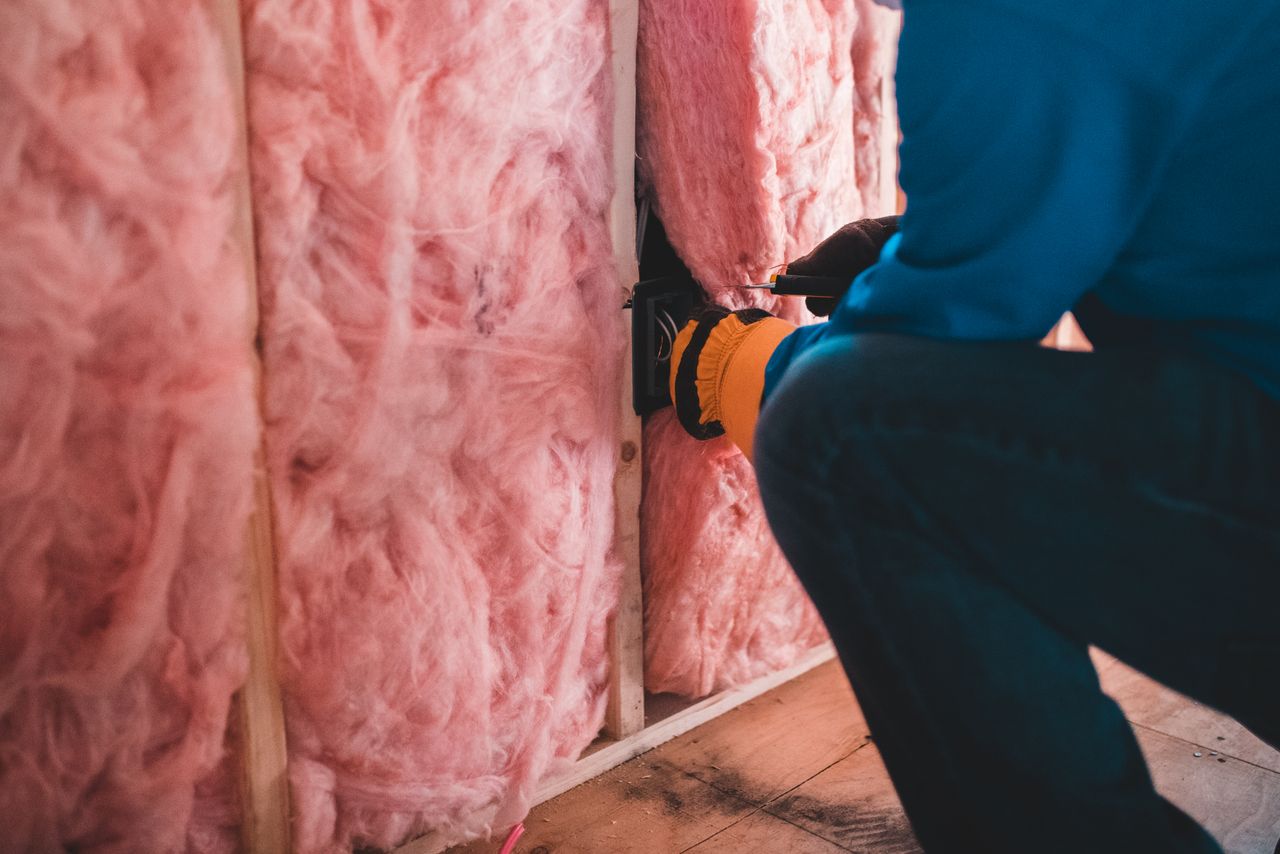
Photo: Pexels
4. Where R12 Is Typically Used
R12 batts are most at home in 2x4 exterior walls, which matches millions of Canadian houses built before 2x6 framing became standard. They are also a sensible pick for interior walls where you want sound dampening between rooms, and for basement walls framed inside the foundation.
Where R12 does not belong is the attic. Attics in Canada generally need R40 to R60, so putting R12 overhead would leave you far short. It is also a poor choice for cathedral ceilings with limited depth. Match the rating to the job: R12 for standard walls, much higher ratings for roofs and attics.

Photo: Wikimedia Commons
5. Fibreglass vs Mineral Wool at R12
Both fibreglass and mineral wool come in R12 batts, and both do the basic job. Fibreglass is usually cheaper and lighter, which makes it popular for DIY jobs. Mineral wool, sold in Canada under brands like ROXUL and Rockwool, is denser, handles moisture better, and offers better fire resistance and sound control.
For a basement or bathroom wall where dampness is a worry, mineral wool is worth the extra cost. For a dry interior partition, fibreglass does fine and saves money. Either way, the R12 rating means the same thing: the thermal performance is equal, and the difference is in the secondary qualities like moisture tolerance and rigidity.

Photo: Wikimedia Commons
6. What R12 Batts Cost in Canada
Expect to pay roughly $0.60 to $1.20 CAD per square foot for R12 batts, with fibreglass at the low end and mineral wool at the high end. A typical bundle covering about 100 square feet therefore runs $60 to $120 CAD before tax. Prices move with the season, so late summer often brings the best deals as stores clear stock.
For a single bedroom with four 2x4 walls, the material cost is usually a few hundred dollars, which is why insulating walls is one of the cheaper energy upgrades you can do. Labour doubles the cost if you hire out, so DIYers save real money here. Just budget for a vapour barrier, tuck tape, and protective gear on top of the batts.

Photo: Wikimedia Commons
7. How to Read the Label Before You Buy
The package should state the R-value, the RSI value, the batt thickness in millimetres, and the total coverage in square metres or square feet. Check all four before you pay. A bundle labelled for 2x4 walls that is only 64 mm thick is not R12, no matter what the shelf tag says.
Look for Canadian certification marks and, if you like supporting domestic makers, the Made in Canada note that mineral wool brands carry. Also note whether the batts are faced or unfaced: kraft facing acts as a vapour retarder, which matters for exterior walls in cold climates. Buy faced batts for exterior walls and unfaced for interior partitions.

Photo: Wikimedia Commons
8. Storing Batts Before Installation
Keep batts dry and do not stack heavy items on them. Fibreglass and mineral wool both lose R-value when compressed, and a bundle that has been squashed flat under a pile of lumber may never fully spring back. Store them indoors or under a solid tarp, off the ground on pallets.
If batts arrive damp, let them dry completely before installing. Wet insulation in a closed wall grows mould, and no energy saving is worth that. A dry garage or basement corner works well for a week or two of storage. Plan your purchase so batts sit around for days, not months.

Photo: Wikimedia Commons
9. Using R12 in a Wall Retrofit
Adding R12 batts to existing 2x4 walls during a renovation is one of the best upgrades for an older home. With the drywall off, you can fill every cavity, seal the air leaks you find, and add a proper vapour barrier. Homeowners often notice warmer rooms and lower heating bills in the first winter.
Pair the batts with air sealing for the full benefit. Insulation slows heat flow, but it does not stop drafts, so caulk the gaps around windows, sill plates, and electrical boxes while the walls are open. This is also the perfect time for draft-proofing your windows for winter, since the two jobs together cut heat loss far more than either one alone.

Photo: Wikimedia Commons
10. Common Installation Mistakes to Avoid
The classic mistake is stuffing batts around wires and pipes instead of splitting the batt to fit neatly around them. Bunched insulation leaves voids where heat escapes. Cut the batt, fit one half behind the obstruction and one half in front, and you keep the full R-value across the whole cavity.
Other common errors include leaving gaps at the top and bottom of studs, compressing batts into shallow boxes, and skipping the vapour barrier on exterior walls. Take your time with the fiddly bits around outlets and corners. If you are insulating a seasonal property too, read up on winterizing your cottage the right way so the whole building envelope works together.

Photo: Wikimedia Commons
FAQs
Is R12 enough for exterior walls in Canada?
It depends on your framing and climate. R12 suits 2x4 walls and meets older code minimums, but most provinces now want R20 or more in 2x6 walls for new builds. In milder coastal areas it performs fine; on the Prairies, go thicker.
Can I double up two R12 layers to get R24?
Yes, R-values add up when layers are installed without compression. Two R12 batts give roughly R24. Just make sure the vapour barrier goes on the warm side only, and do not squash the batts into a cavity that is too shallow.
What is the RSI value of R12?
R12 equals RSI-2.1. Divide any R-value by 5.678 to get its RSI. Canadian building codes and Natural Resources Canada guides use RSI, so this conversion comes in handy.
Is R12 good for attics?
No. Attics in Canada typically need R40 to R60, which means far deeper insulation than an R12 batt. Save R12 for walls and choose blown-in or deep batts for the attic.
How long does R12 insulation last?
Decades, as long as it stays dry. Fibreglass and mineral wool do not rot or settle much. Replace any batts that are damp, mouldy, or have been soaked, since wet insulation loses most of its R-value.
Final Thoughts
R12 is the workhorse of Canadian wall insulation: affordable, easy to find, and perfectly fine for 2x4 walls when installed with care. Just remember its limits. It is not an attic product, it needs a dry cavity and a good fit to hit its rated value, and pairing it with air sealing will do more for your comfort than the number on the bag alone.
Sources
Gallery

Photo: Wikimedia Commons
Photo: Pexels

Photo: Wikimedia Commons

No comments:
Post a Comment