Tall windows are a gift, but dressing them can feel tricky. Hang the rod too low and the room looks squat. Buy standard panels and they dangle like high-water pants. This guide to high ceiling curtains walks through ten hanging ideas that actually work in rooms with 10 to 12 foot ceilings, so your windows look grand instead of awkward.
Below you will find real measurements for rod height and panel length, fabric picks that behave on long drops, and answers to the questions people ask most on forums: how high to mount the rod, what length to buy, and how to open curtains you can barely reach. Every idea comes with a photo so you can see the look before you commit.
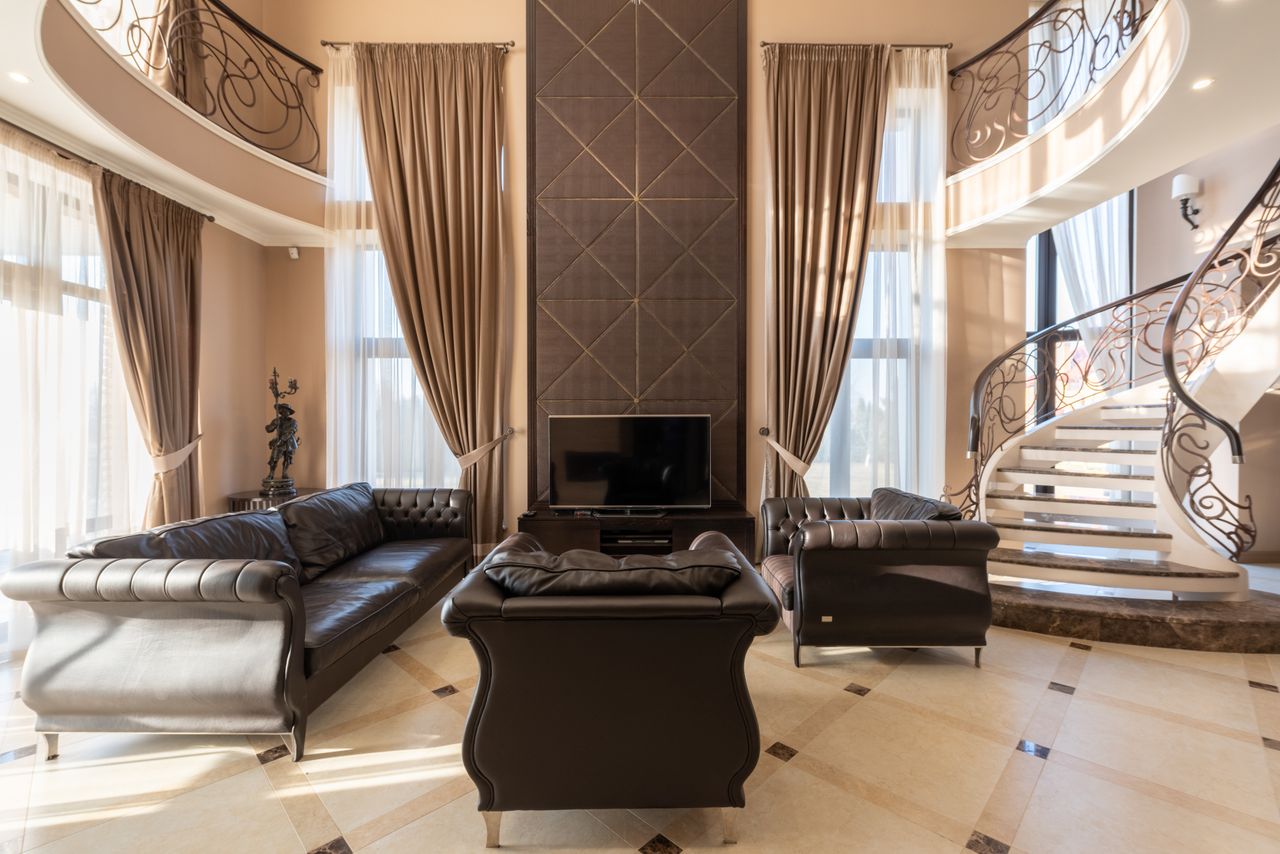
Photo via Pexels
Table of Contents
- 1. Mount the Rod High and Wide
- 2. Measure the Drop for 10, 11, and 12 Ft Ceilings
- 3. Layer Sheers Behind Heavier Drapes
- 4. Run the Treatment Wall to Wall
- 5. Tie Back Extra-Long Panels
- 6. Go Bold With Color and Weight
- 7. Keep It Airy With Sheers
- 8. Finish the Top With a Valance
- 9. Choose Hardware That Holds the Weight
- 10. Plan for Daily Use and Cleaning
1. Mount the Rod High and Wide
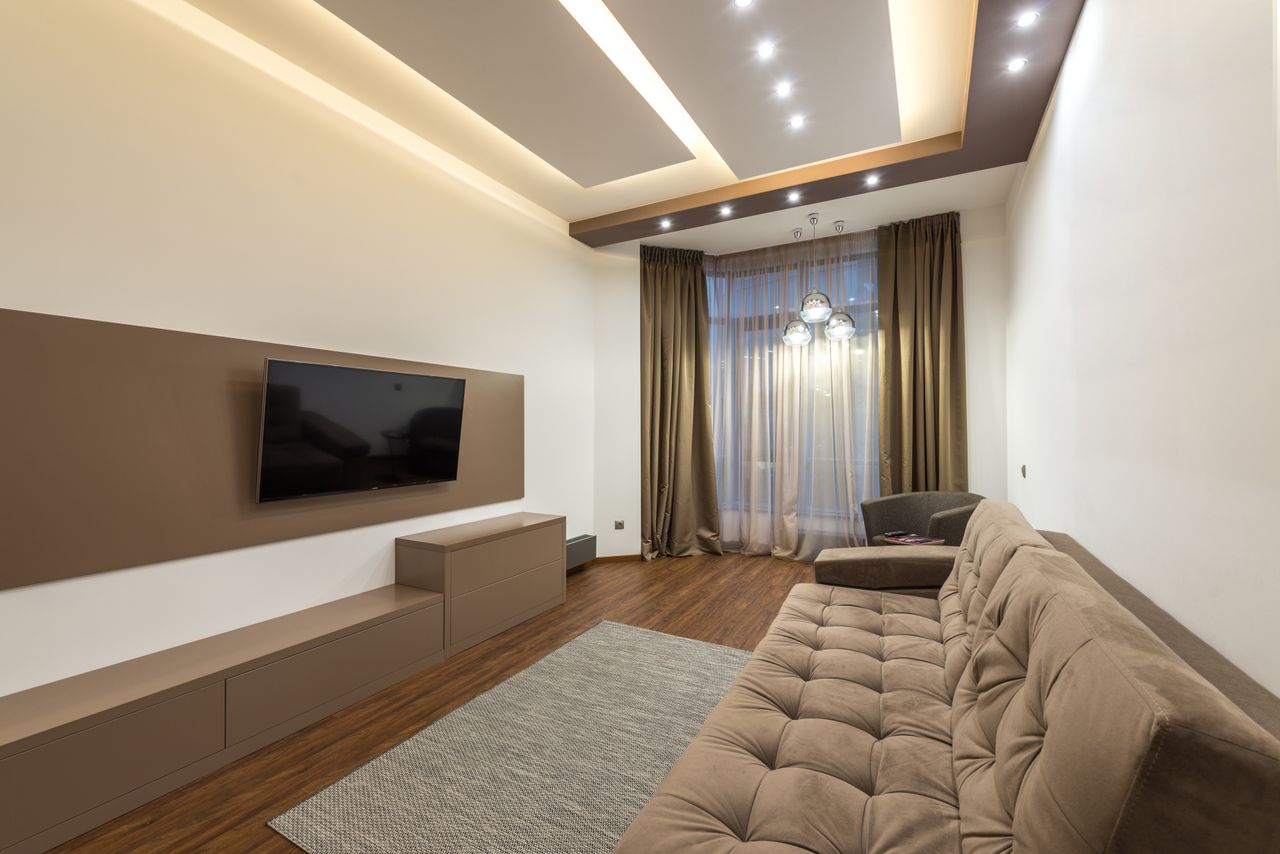
Photo via Pexels
The single biggest mistake is hanging the rod right above the window frame. On a tall wall that placement chops the room in half and makes the ceiling feel lower. Instead, mount the rod 8 to 10 inches above the trim, or 2 to 4 inches below the ceiling or crown molding, and extend it 8 to 12 inches past the frame on each side so open panels never cover the glass.
One caution from designers: if the window is small compared to a very tall wall, do not push the rod all the way to the ceiling. A huge blank gap between the window top and the rod looks stranger than a modest one, so split the difference and keep the rod within about 10 inches of the trim.
2. Measure the Drop for 10, 11, and 12 Ft Ceilings
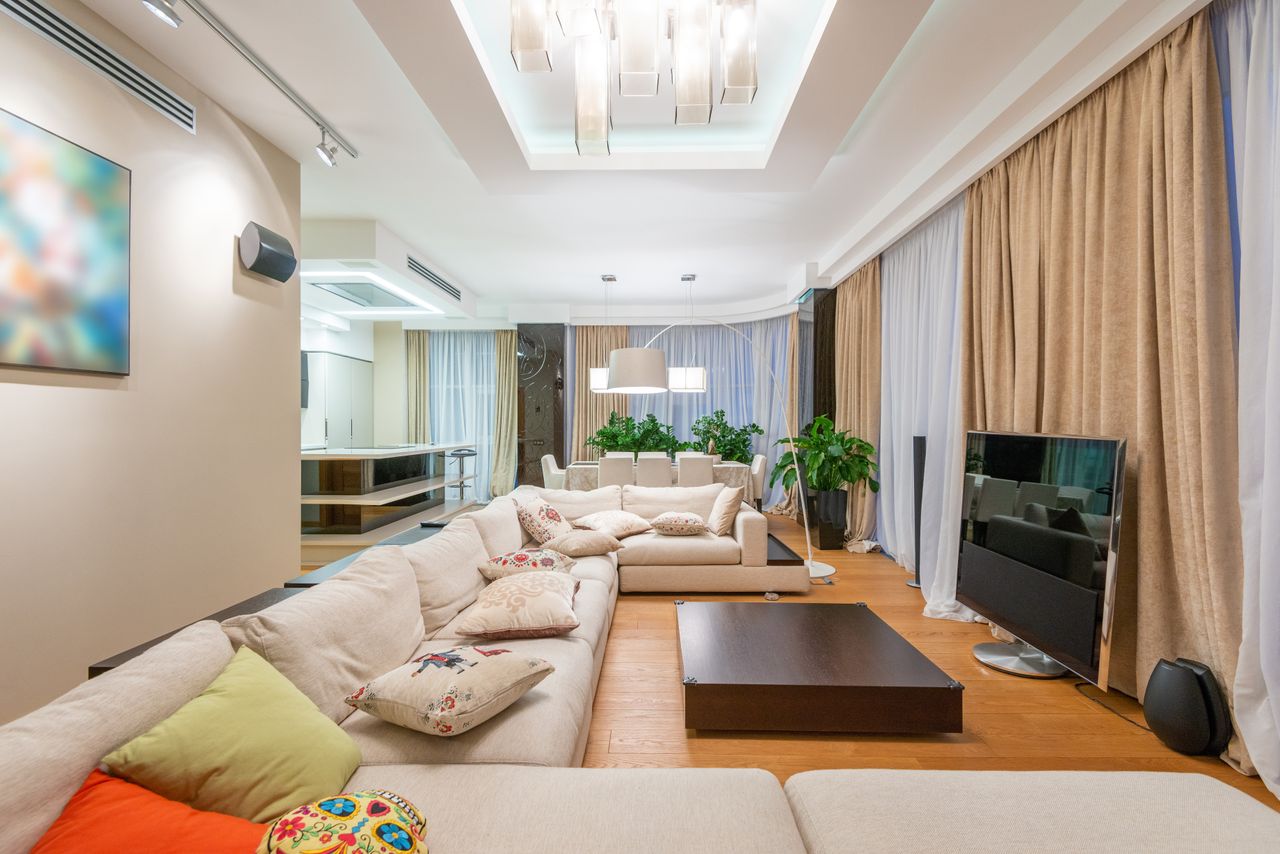
Photo via Pexels
Measure from the bottom of the rod straight down to the floor, then buy that length. As a rough guide: a 10 ft ceiling with a high-mounted rod needs about 108 to 120 inch panels, an 11 ft ceiling needs around 120 to 132 inches, and a 12 ft ceiling usually lands between 132 and 144 inches. Standard 84 inch panels will look silly up there, so skip them entirely.
Then decide how the hem meets the floor. A tailored look just kisses the floor, a 1 inch break reads classic, and a 2 to 4 inch puddle feels formal and lush. Ready-made panels come in 96, 108, and 120 inch lengths, so when in doubt buy long and have them hemmed. If the window wall also holds your main seating, a compact 2-seat sofa keeps the walkway clear in front of all that fabric.
3. Layer Sheers Behind Heavier Drapes
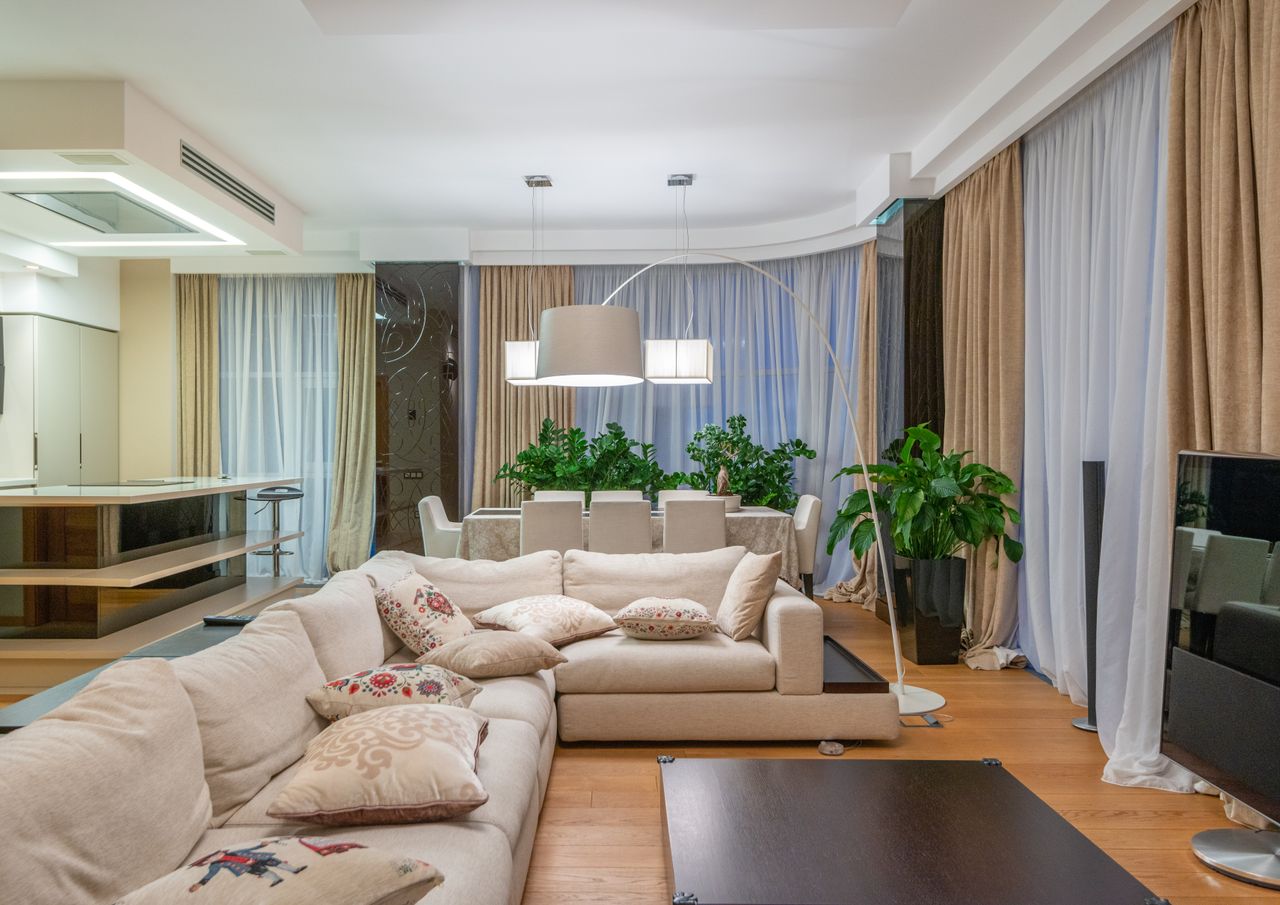
Photo via Pexels
One layer rarely does every job on a tall window. Hang sheer panels closest to the glass for daytime privacy and soft light, then add heavier drapes on a second rod or a double track for evenings. You get a bright room by day and a cozy, insulated one by night without swapping anything.
For very long drops, S-fold or ripplefold sheers are the smart pick because they stack back into a slim bundle instead of a bulky heap. The same layering trick also warms up tall bedrooms, as we show in our warm aesthetic cozy bedroom ideas.
4. Run the Treatment Wall to Wall
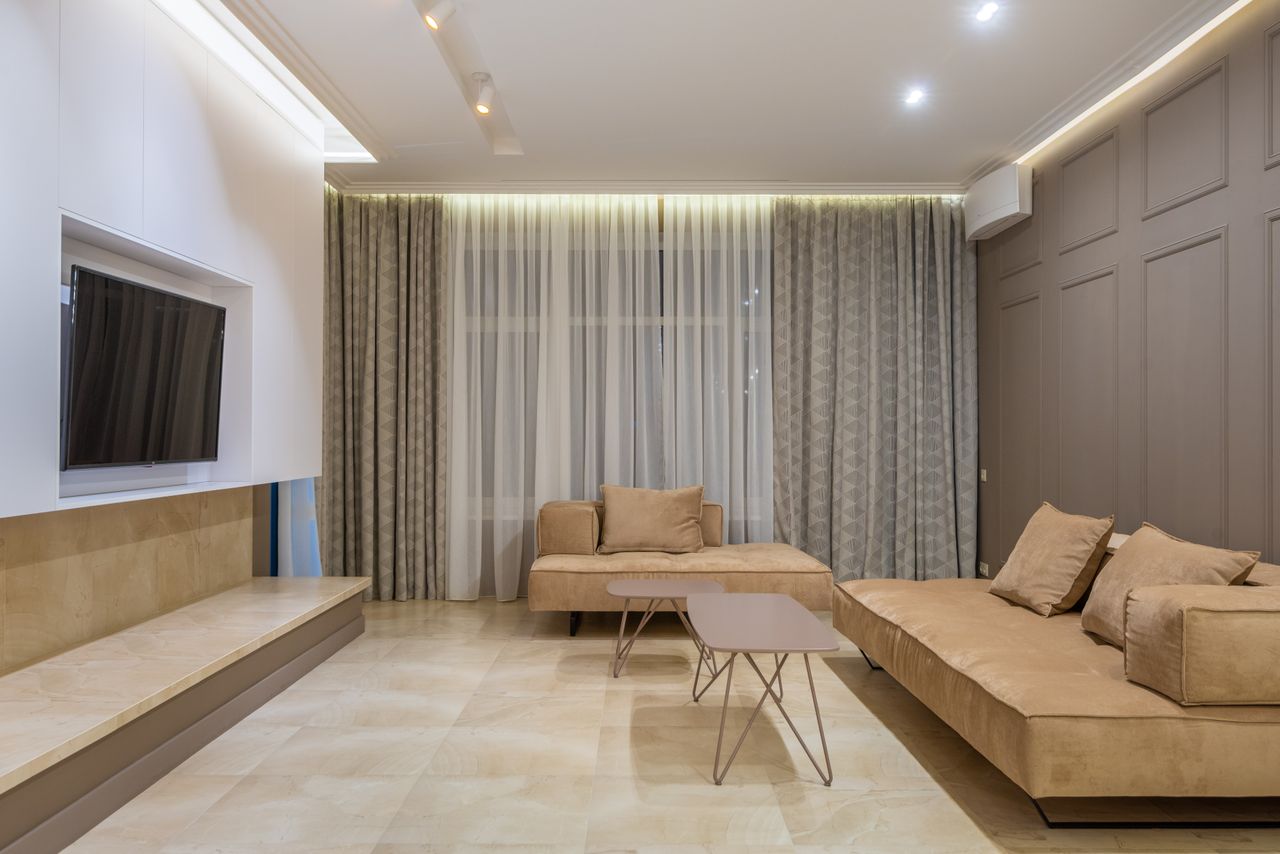
Photo via Pexels
When a wall holds two or three windows, stop treating each one separately. One continuous rod or track spanning the whole wall turns scattered windows into a single sweeping feature, and it makes a narrow room feel wider too. The eye reads one long horizontal line instead of fussy little segments.
A span that long needs real support: plan a bracket every 4 to 5 feet, screwed into studs, and use a rod that joins in the middle so you can cut it to the exact width. Panels can stay parked over the wall sections between windows, which also hides any uneven spacing.
5. Tie Back Extra-Long Panels

Photo via Wikimedia Commons
Panels that are 10 or 12 feet long carry a lot of fabric, and left loose they can swallow the window and the light with it. Tiebacks solve this neatly: fasten them about one-third of the way up from the floor, pull the panels to the sides, and the window stays bright while the fabric still shows off the height.
Scale matters here. A dainty hook looks lost on a 12 foot panel, so choose chunky rope, leather, or wide fabric tiebacks that match the room. This is also the classic fix when tall curtains feel like too much fabric for the space.
6. Go Bold With Color and Weight

Photo via Wikimedia Commons
A tall, pale room can feel empty no matter how nice the furniture is. Deep-colored drapes, like rust, emerald, or navy, give the eye something to land on and anchor all that vertical space. Heavy fabrics such as velvet double the effect and even cut drafts around big panes in winter.
Balance is the trick: if the drapes are dark and weighty, keep walls and the ceiling light so the room does not close in. For more ways to use strong color with confidence, browse our artistic dining room ideas.
7. Keep It Airy With Sheers

Photo via Wikimedia Commons
Sometimes the window itself is the decoration, especially with a great view or beautiful trim. Floor-length sheers soften the glass, blur harsh sun, and keep the room feeling open instead of boxed in. White and ivory sheers also bounce daylight deep into the room, which tall spaces often need.
Sheers are the easiest long panels to live with: most are machine washable, they dry fast on the rod, and a wrinkled sheer still looks fine while a wrinkled drape does not. Just make sure the panels are wide enough, about twice the window width, or they will look skimpy when drawn.
8. Finish the Top With a Valance

Photo via Wikimedia Commons
On a very tall wall there is often an awkward stretch between the rod and the ceiling that draws the eye for the wrong reasons. A valance or a fabric-covered cornice covers that gap, hides the hardware, and gives the whole treatment a finished, custom look.
Match the valance style to the room: a flat or box-pleat valance reads clean and modern, while a gathered swag suits a traditional space. Under a tall window, a styled dresser or console gives the lower half of the wall something to do so the valance does not float alone.
9. Choose Hardware That Holds the Weight

Photo via Wikimedia Commons
A full wall of floor-to-ceiling panels can weigh as much as a grown adult, and a flimsy tension rod will bow or crash within weeks. Use a metal rod at least an inch and a half thick, add a center support bracket on any span over 6 feet, and drive every bracket into a stud or a heavy-duty wall anchor.
Ceiling-mounted tracks are even better for heavy treatments: they spread the load, glide smoothly, and disappear against a white ceiling for a clean modern line. Finish with clip rings or a draw baton so hands never have to grab the fabric itself.
10. Plan for Daily Use and Cleaning

Photo via Pexels
Before you fall in love with a look, ask how you will open it every day. Reaching a 12 foot rod is nobody's idea of fun, so add a draw baton, choose a smooth track, or go motorized with a remote. For patio doors you use constantly, many people keep the tall panels stationary and put the daily work on a separate blind or shade, an approach that pairs well with our covered patio ideas.
Dust settles high, so vacuum long panels monthly with a soft brush attachment, working top to bottom. If you hate fussy upkeep, pick washable linen or cotton over dry-clean-only velvet; your future self will thank you.
Frequently Asked Questions
How high should I hang the curtain rod with 10-foot ceilings?
Mount the rod 8 to 10 inches above the window trim, or 2 to 4 inches below the ceiling or crown molding. Then measure from the rod to the floor: with 10 ft ceilings that usually means 108 to 120 inch panels, the most useful rule for high ceiling curtains.
What curtain length works for 12-foot ceilings?
Most 12 ft ceilings need panels between 120 and 144 inches long once the rod is mounted high. Ready-made 120 inch panels plus a small hem cover many rooms; anything taller usually means custom or extra-long specialty panels.
Should tall curtains touch the floor?
Yes, they should at least kiss the floor. Curtains that hover a few inches above it break the vertical line and make the wall look shorter. Choose a clean kiss, a 1 inch break, or a 2 to 4 inch puddle for a formal feel.
How do you open and close curtains on a very tall window?
Use a draw baton or wand so you can pull them from a normal height, install a smooth ceiling track, or go motorized with a remote. Another popular fix is leaving the tall panels stationary as decoration and handling light and privacy with blinds or shades.
Can I use ready-made curtains, or do they have to be custom?
Ready-made works in many cases. Panels come in 96, 108, and 120 inch lengths, so buy the longest size that fits and hem the rest; a wide hem even makes them look custom. Just remember width too: total panel width should be about 2 to 2.5 times the window width for proper fullness.
Final Thoughts
Tall windows reward a little extra planning, and the payoff is huge: a room that feels grand, calm, and finished instead of drafty and bare. Start with the rod position, get the length right with a tape measure rather than a guess, and choose hardware strong enough for the job. Those three decisions do most of the work in any high ceiling curtains project.
Then make it yours. Layer sheers for soft light, go bold with color if the room feels empty, or keep everything pale and airy if the view deserves the spotlight. Whichever route you take, long panels that truly reach the floor will always look more expensive than short ones that stop halfway, at any budget.
Sources
- Homes & Gardens: How high should I hang my curtains? The rules designers follow
- Russells Curtains: Choosing Curtains for High Ceilings
- Freshine: Extra Long Curtains, the Complete Guide for High Ceilings
Gallery

Photo via Wikimedia Commons

Photo via Wikimedia Commons

Photo via Wikimedia Commons

No comments:
Post a Comment