Mashed potatoes look simple, but a few small mistakes can turn them gluey, lumpy, or bland. The good news is that the fix is never complicated. With the right potatoes, hot butter and milk, and one gentle hand, you can make a bowl of mash that is fluffy and rich every single time, even on a busy weeknight.
This guide walks you through the whole process, step by step. You will learn which potatoes to buy, how salty the water should be, why a ricer beats a blender, and how to keep the mash warm for hours without drying it out. These easy mashed potatoes need just a handful of everyday ingredients, and the same method works for a Tuesday meatloaf dinner or the busiest Thanksgiving table.

Photo: Renee Comet, Public domain, via Wikimedia Commons
Table of Contents
- 1. Pick the Right Potatoes: Russets vs Yukon Golds
- 2. Peel and Cut Them Evenly
- 3. Boil Gently in Well-Salted Water
- 4. Drain, Dry, and Rice Them While Hot
- 5. Warm the Butter and Milk First
- 6. Season in Layers and Taste as You Go
- 7. Roasted Garlic and Herb Variations
- 8. Loaded, Cheesy, and Green Onion Versions
- 9. Make Them Ahead and Keep Them Warm
- 10. Turn Leftovers Into New Meals
- Frequently Asked Questions
- Final Thoughts
- Sources
- Gallery
1. Pick the Right Potatoes: Russets vs Yukon Golds

Photo: ZooFari, Public domain, via Wikimedia Commons
Great mash starts at the store. Russet potatoes are the classic choice because they are high in starch and low in moisture, so they break down into a light, fluffy texture that drinks up butter and milk. Yukon Golds are the other favorite. They have a medium starch level, thin golden skin, and a natural buttery taste, and they give you a denser, creamier mash. Many cooks use half of each and get the best of both worlds: fluffy body with rich flavor.
Whichever type you choose, buy firm potatoes with no green patches, soft spots, or long sprouts. Plan on about 2 pounds of potatoes for 4 to 6 people, which makes roughly 4 cups of mash. Waxy red potatoes hold their shape and can turn gummy when overworked, so save them for potato salad. If you love potatoes in every form, you might also enjoy our guide on how to bake a potato in the oven for another easy side.
2. Peel and Cut Them Evenly

Photo: Aw58, CC BY-SA 4.0, via Wikimedia Commons
Peel the potatoes with a swivel peeler, dig out any eyes with the tip of the peeler, and cut the flesh into even 1-inch chunks. Even size is the real secret here. If some pieces are big and others are small, the small ones turn to mush while the big ones stay hard in the middle, and no amount of mashing fixes that. A quick rinse under cold water washes off surface starch and helps the pieces cook cleanly.
If you are prepping ahead, cover the cut potatoes with cold water and leave the pot on the counter for up to 2 hours, or in the fridge overnight. This stops them from turning gray. For a rustic, steakhouse-style mash, you can leave the skins on Yukon Golds. Just scrub them very well, cut them the same way, and accept a little more texture in the finished bowl. Skin-on mash also keeps a bit more fiber and nutrients.
3. Boil Gently in Well-Salted Water

Photo: Igor Ulitin, CC BY-SA 4.0, via Wikimedia Commons
Always start the potatoes in cold water, never hot. Cold water lets the chunks heat up gradually and cook evenly from edge to center. Add about 1 tablespoon of kosher salt for every 4 quarts of water. The potatoes absorb seasoning as they cook, and this early salt does more for the final flavor than any amount of salt sprinkled on at the table.
Bring the pot to a boil over high heat, then drop it to a gentle simmer. A hard, rolling boil bangs the pieces around and can make the outsides waterlogged. Simmer for 15 to 20 minutes, until a fork slides in with no resistance and a chunk almost falls apart when you lift it. Tender is the goal, but stop before the pieces start crumbling into the water, because waterlogged potatoes make loose, soupy mash.
4. Drain, Dry, and Rice Them While Hot

Photo: Leslie Seaton, CC BY 2.0, via Wikimedia Commons
Drain the potatoes in a colander, then return them to the hot, empty pot over the turned-off burner for 2 to 3 minutes. Shake the pot once or twice. This short rest steams off the surface water, and dry potatoes absorb butter and milk far better than wet ones. Skipping this step is one of the most common reasons homemade mash tastes watery.
While the potatoes are still hot, press them through a potato ricer or a food mill for the smoothest, fluffiest result. A hand masher works too and leaves a little pleasant texture. What you should never use is a blender, food processor, or stand mixer on high speed. Those machines tear the starch cells apart and turn the potatoes into an elastic glue. Work gently, work quickly, and always mash while the potatoes are steaming hot.
5. Warm the Butter and Milk First

Photo: Meanos, Public domain, via Wikimedia Commons
Cold milk is a quiet mash killer. Pour cold liquid onto hot potatoes and the temperature crashes, the butter seizes into little grains, and you end up overworking the potatoes to smooth things out. Instead, warm 1/2 to 3/4 cup of milk or half-and-half in a small saucepan until it steams, and melt 4 to 6 tablespoons of butter right into it. The whole mixture should be hot when it meets the potatoes.
Add the butter first if you are adding them separately, because fat coats the starch and keeps the texture silky. Then pour in the warm milk a little at a time, folding gently with a spatula or wooden spoon until the mash is soft and spoonable. It should fall off the spoon in slow ribbons, not pour like soup. For an extra-rich holiday version, swap the milk for warm heavy cream and add 2 ounces of cream cheese or a spoonful of sour cream.
6. Season in Layers and Taste as You Go

Photo: Sarah Stierch, CC BY 4.0, via Wikimedia Commons
Potatoes need more salt than most people expect. Start with 1 teaspoon of kosher salt for every 2 pounds of potatoes, add a few grinds of black pepper, then taste and adjust. Seasoning in layers matters: salt in the cooking water, salt again after mashing, and a final pinch at the end. Each layer builds a rounder flavor than one big salty hit at the finish.
A tiny pinch of nutmeg is a classic European trick that makes the potatoes taste more like themselves, and a teaspoon of chicken bouillon paste adds a deep savory note that guests notice but cannot name. White pepper is a good swap for black pepper if you want a clean white look with a little more warmth. Always taste the mash warm, at serving temperature, because cold food tastes less salty than it really is.
7. Roasted Garlic and Herb Variations

Photo: Thriving Vegetarian, CC BY 2.0, via Wikimedia Commons
Once the basic method is yours, small changes make a whole new side dish. For garlic mashed potatoes, simmer 4 to 6 peeled garlic cloves right in the pot with the potatoes, then mash everything together. The cloves turn soft and sweet, never sharp. For roasted garlic, squeeze a whole roasted head of garlic into the hot mash. It gives a deep, mellow flavor that tastes like a steakhouse side.
Fresh herbs should go in at the very end so they stay bright. Try 2 tablespoons of snipped chives, a tablespoon of chopped parsley, or a teaspoon of fresh thyme leaves. A spoonful of prepared horseradish makes a wonderful match for roast beef, and a pinch of smoked paprika on top adds color and a gentle warmth. Keep a short list of these variations in your head and you can match the mash to almost any main dish.
8. Loaded, Cheesy, and Green Onion Versions
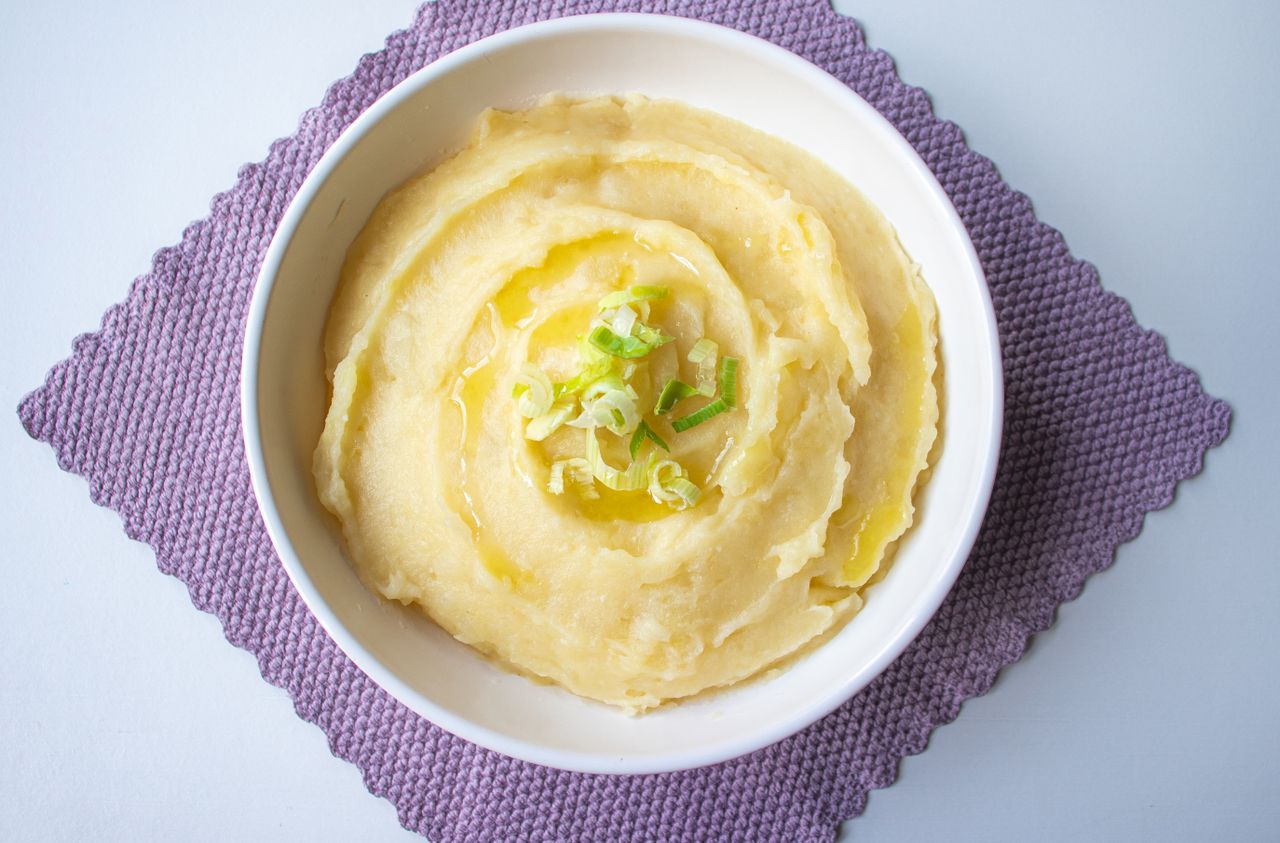
Photo via Pexels
For a loaded version, fold in 1/2 cup of sour cream, 1 cup of shredded sharp cheddar, 4 slices of crumbled cooked bacon, and a handful of sliced green onions. Serve it in a warm bowl with a little extra cheese and bacon on top. It eats like the inside of a baked potato and disappears fast at potlucks. Keep the potatoes a touch thicker than usual so the cheese does not make them soupy.
For something lighter, try the Irish style called champ: warm the milk with a bunch of sliced green onions for 5 minutes, then beat it into the potatoes so they turn pale green and sweetly oniony. Or swirl in a few tablespoons of pesto for an Italian twist that pairs beautifully with grilled chicken. Each of these starts from the same basic pot, so if you can make the classic version, you can make them all.
9. Make Them Ahead and Keep Them Warm

Photo: Your Best Digs, CC BY 2.0, via Wikimedia Commons
On a big cooking day, mash is best made early. The simplest method is the slow cooker: make the potatoes up to 3 hours ahead, add a splash of extra milk, and hold them on the warm setting with the lid on. Stir once or twice and add a small knob of butter on top, which melts into a golden layer that keeps the surface from drying out. This trick frees up your stovetop for gravy and greens.
To make them a full day ahead, cool the finished mash, cover, and refrigerate. Reheat, covered, in a 350°F oven for 25 to 30 minutes, then stir in a little warm milk and butter to bring back the silky texture. Planning sides in advance makes holidays far calmer, and our collection of make-ahead Thanksgiving sides has more dishes that work the same way.
10. Turn Leftovers Into New Meals

Photo: Grendelkhan, CC BY-SA 4.0, via Wikimedia Commons
Leftover mash keeps in the fridge for 3 to 4 days, and it might be the most useful leftover in the house. Spread it over a skillet of seasoned ground beef and vegetables and you have shepherd's pie. Stir in an egg and a little flour, form patties, and pan-fry them in butter until crisp on both sides for old-fashioned potato cakes. A scoop also thickens soups and chowders beautifully.
For a fun change, pipe or spoon the cold mash into rosettes on a baking sheet, brush with melted butter, and bake at 425°F for about 20 minutes for duchess potatoes with crisp golden edges. If your family likes crunchy potatoes too, try our smashed crispy potatoes next. Freeze leftover mash in portions for up to 1 month; thaw in the fridge and reheat gently with a splash of milk.
Frequently Asked Questions
Why did my mashed potatoes turn out gluey?
Glue comes from overworked starch. It usually happens when potatoes are blended or processed, when waxy potatoes are used, or when the mash is stirred hard for too long. Rice or hand-mash hot, drained potatoes and fold in warm liquid gently. Gluey mash cannot fully be fixed, but folding in a little extra warm cream and butter improves it, and it still works well in potato cakes or as a soup thickener.
Can I make smooth mashed potatoes without a ricer?
Yes. A sturdy hand masher gives a slightly rustic texture, and pushing the hot potatoes through a coarse sieve or colander with the back of a spoon gives a surprisingly smooth result. A food mill is another good option if you make large batches. The tool matters less than the method: potatoes must be hot, dry, and handled gently.
Should I peel potatoes before or after boiling?
Both work. Peeling before boiling is faster for a weeknight pot and lets you salt the water well. Boiling whole unpeeled potatoes and rubbing the skins off while they are hot keeps the flesh drier and is a favorite trick for extra-fluffy results. If you boil them whole, add about 10 extra minutes of cooking time.
How do I fix lumpy or bland mash?
Lumps mean some pieces were undercooked. Return the pot to very low heat, add a splash of hot milk, and mash again slowly; a ricer pass fixes stubborn lumps. Bland mash almost always needs salt, added a little at a time, plus acid or fat for balance. A knob of butter, a spoonful of sour cream, or a tiny squeeze of lemon wakes up the flavor.
Can you freeze mashed potatoes?
Yes, as long as they were made with plenty of butter or cream, because fat protects the texture. Freeze in flat zip-top bags or small containers for up to 1 month for best quality. Thaw overnight in the fridge, then reheat slowly on the stove or in a 350°F oven, stirring in warm milk until they look freshly made again.
Final Thoughts
Good mashed potatoes are not about a secret ingredient. They come from five small habits: starchy potatoes, even chunks, well-salted cold water, a gentle hand with the ricer, and butter and milk that go in warm. Learn those habits once and the recipe lives in your head forever, ready for any dinner.
Start with the classic version, then make it your own with garlic, herbs, cheese, or green onions. Whether the bowl sits next to a weeknight chicken or a holiday turkey, these easy mashed potatoes are the side everyone reaches for first, and the one they ask you to make again.
Sources
- The Salty Cooker, Best Creamy Mashed Potatoes Recipe: thesaltycooker.com/mashed-potatoes
- Today's Delight, Easy Mashed Potatoes Recipe: todaysdelight.com/easy-mashed-potatoes-recipe
- Hopewell Heights, Old Fashioned Mashed Potatoes Recipe: hopewellheightsblog.com
Gallery

Photo: Horacio Cambeiro, CC BY-SA 3.0, via Wikimedia Commons

Photo: J Doll, CC BY 3.0, via Wikimedia Commons

Photo: Horacio Cambeiro, CC BY-SA 3.0, via Wikimedia Commons

No comments:
Post a Comment