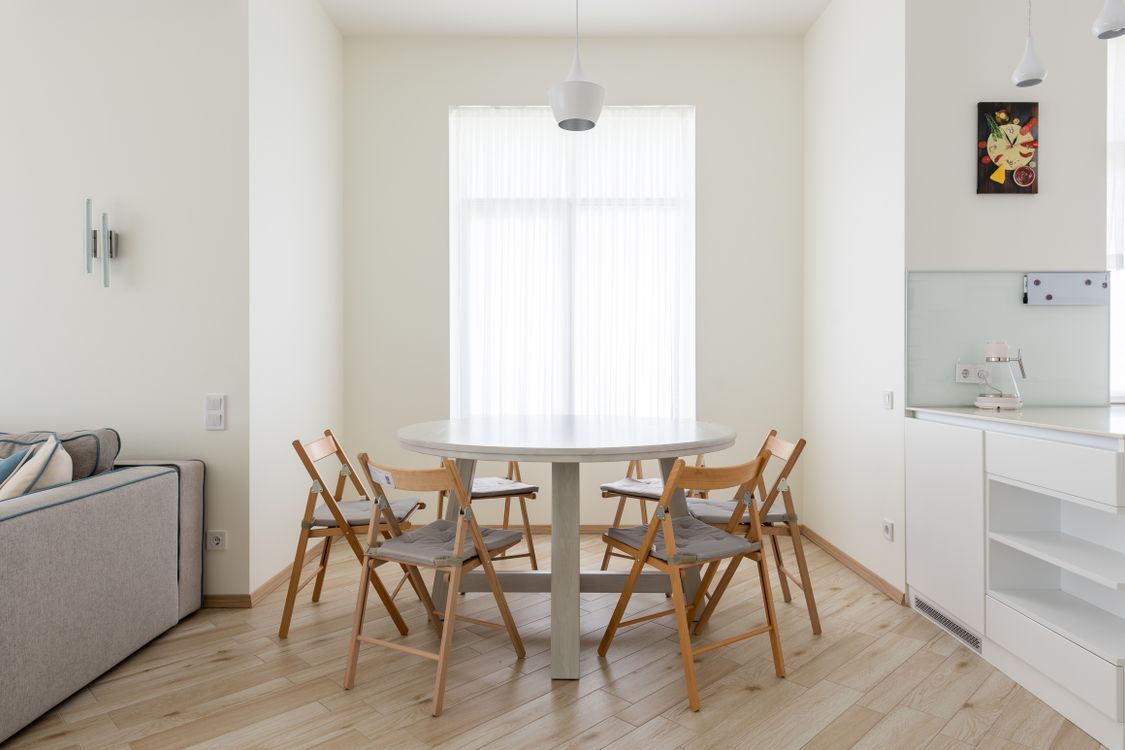
A real open-plan combo: dining table sitting naturally between the sofa and the kitchen counter. Photo via Pexels.
Living in a small home does not mean you have to give up a cozy living room or a proper dining spot. One of the smartest moves for a small home is the living dining combo: a single open room where you relax on the sofa and gather around the table, without a wall splitting the two. Done well, this kind of room does not feel like a compromise at all. It feels generous, bright, and genuinely beautiful — often more so than two tiny separate rooms would. In this guide you will find 20 small living dining room combo ideas that save space and look amazing. Whether you rent a city apartment or own a compact family home, these ideas will help you get the most out of every square foot you have.
What Is a Living Dining Combo and Why Is It Perfect for Small Spaces?
A living dining combo is simply one room that works as both a living area and a dining area. Instead of a wall between the sofa and the table, you have a single open space that handles both jobs. For small homes this is a gift: removing the wall frees up floor space and lets light travel through the whole room, which makes everything feel bigger. The trick is giving each zone its own identity. When the dining corner and the living corner each feel intentional and complete, the room reads as a thoughtful home rather than one cramped space trying to do everything at once.
Idea 1: Use a Rug to Define Each Zone
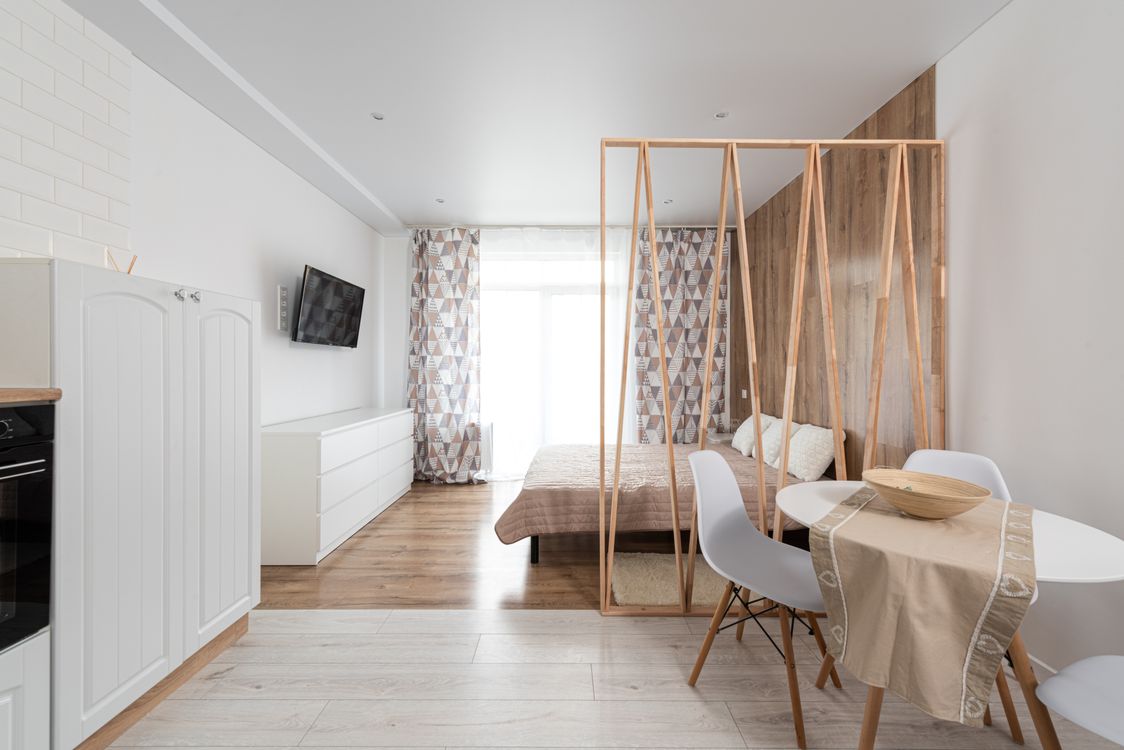
A rug draws a soft, clear boundary around the dining zone. Photo via Pexels.
If there is one trick every designer reaches for in a living dining combo, it is rugs. Lay one rug under the dining table and chairs, and a different rug under the sofa and coffee table. In an instant your eye reads two rooms instead of one — no walls needed. Pick two rugs that look different but share a color family, so the room still feels like one home rather than two strangers sharing an address. It is one of the cheapest changes you can make, and it completely changes how an open room behaves.
Pro Designer Tip: Size the dining rug generously. All four legs of every chair should stay on the rug even when the chairs are pulled out — a rug that is too small makes the dining corner look awkward and tight.
Idea 2: Choose a Round Dining Table
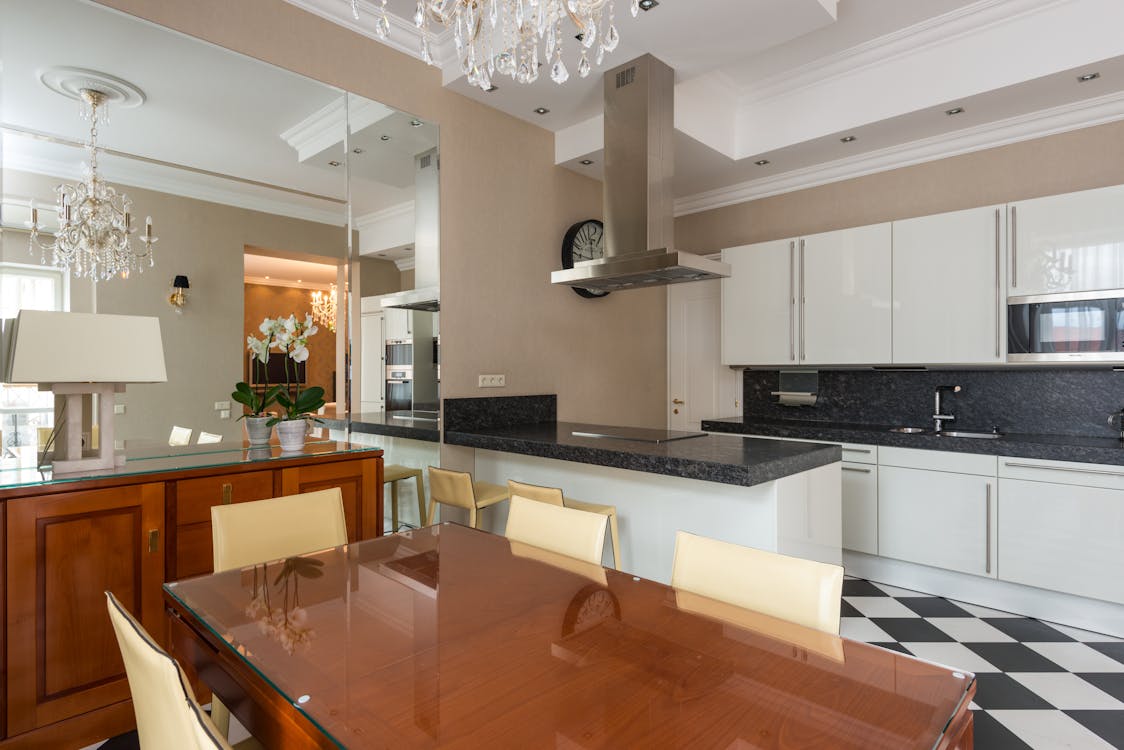
Round tables seat four without sharp corners eating up space. Photo via Pexels.
In a small combo room, the shape of your dining table matters more than its size. A round table is the clear winner here. It takes up less visual space than a rectangular table, it seats four comfortably in a tighter footprint, and there are no sharp corners to bump into as you move around the room. Pair it with chairs that slide fully underneath when not in use, and the walking path around the table stays clear and easy.
What is the best dining table shape for a small living dining combo?
A round table is the best choice for small combined living and dining spaces. It takes up less floor space, has no sharp corners, and seats the same number of people as a rectangular table in a smaller footprint. Choose one with a pedestal base for maximum legroom.
Idea 3: Use a Kitchen Island or Bar Cart as a Natural Divider
When the combo room flows into an open kitchen, let the kitchen furniture do the dividing for you. A kitchen island with stools on one side becomes your casual dining spot, which frees the main room for a relaxed sofa arrangement. Or roll a bar cart between the sofa and the dining table — it reads as a boundary while giving you storage and a serving surface at the same time. This is a favorite move in studio apartments, where every single piece has to earn its keep in at least two ways.
Idea 4: Opt for Foldable or Extendable Dining Tables
Here is one of the biggest space-saving secrets for combo rooms: a table that changes size. On ordinary days, when it is just you or one other person, keep it folded down or at its smallest. When guests come over, extend it to full size. A fold-flat table against the wall practically disappears on quiet days, which means your dining corner only borrows floor space when you actually need it. Look for designs that look good folded too — the best ones double as slim console tables against the wall.
Idea 5: Place the Sofa Back-to-Back with the Dining Area
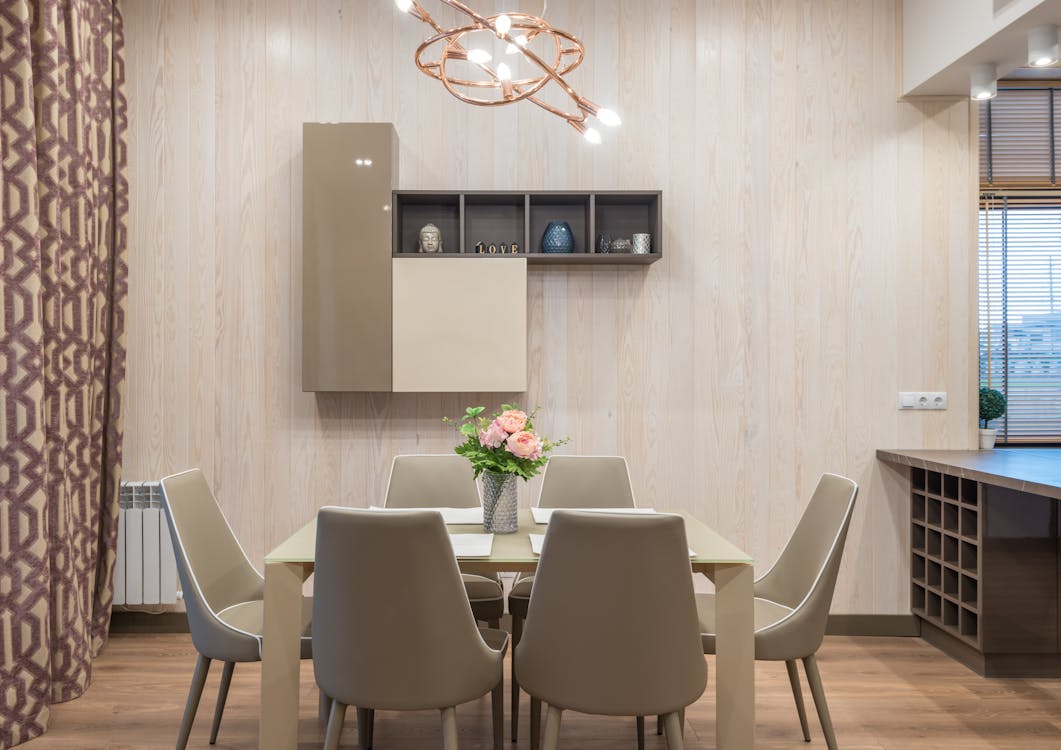
The sofa's back is a natural soft divider between the two zones. Photo via Pexels.
Try facing your sofa away from the dining table and let the back of the sofa act as a soft divider between the zones. The sofa back is usually a clean, flat surface, and sitting it mid-room draws a clear line between "living" and "dining" without any walls, screens, or lost floor space. Sofas with a low, neat back work best for this. Slide a slim console table behind it and you gain a little extra storage plus a sharper sense of transition between the two areas.
Idea 6: Go Monochromatic for a Bigger Feeling
Color can stretch a small room or shrink it, and one of the simplest ways to stretch is a monochromatic palette. Take one base color — warm white, soft gray, sandy beige, or pale sage green — and carry it through walls, furniture, and accessories in both zones. Without strong color contrast between the living and dining areas, your eye sees no boundary, and the whole room reads as one large flowing space. Add interest through texture — linen, wood grain, wool — rather than through new colors.
Designer Expert Insight: Going tonal is one of the most reliable color strategies for small open-plan rooms. When the eye glides across a room without stopping at color breaks, the space feels continuous and generous.
Idea 7: Use Pendant Lights to Define the Dining Zone
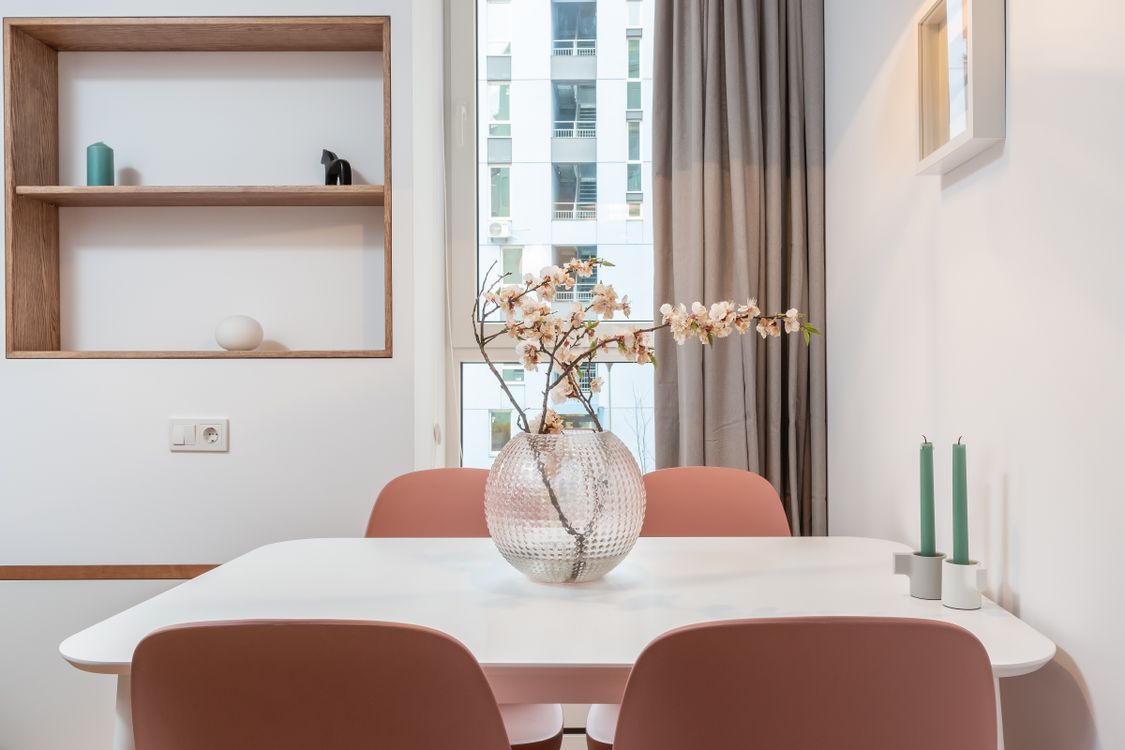
A pendant light marks the dining zone without taking up an inch of floor space. Photo via Pexels.
When you cannot use walls or bulky furniture to split the room, let light do it. A pendant hung directly over the dining table is a powerful zone marker: it says "this is where we eat" without building anything. In the living corner, define the space with a floor lamp or wall sconces instead. The contrast between the two lighting styles makes each zone feel organized and intentional, and pendants add zero footprint to the floor plan.
Idea 8: Consider a Built-In Dining Banquette
A banquette — a built-in bench along one wall — is one of the most floor-friendly dining solutions there is. Because the bench sits flush against the wall, it uses no extra floor space and seats more people than chairs would in the same spot. Many banquettes hide storage under the seat, giving you a home for linens, board games, or things you only reach for occasionally. And you only need chairs on one side of the table, so the table itself can be slim and narrow.
Idea 9: Use Transparent or Ghost Chairs for the Dining Area
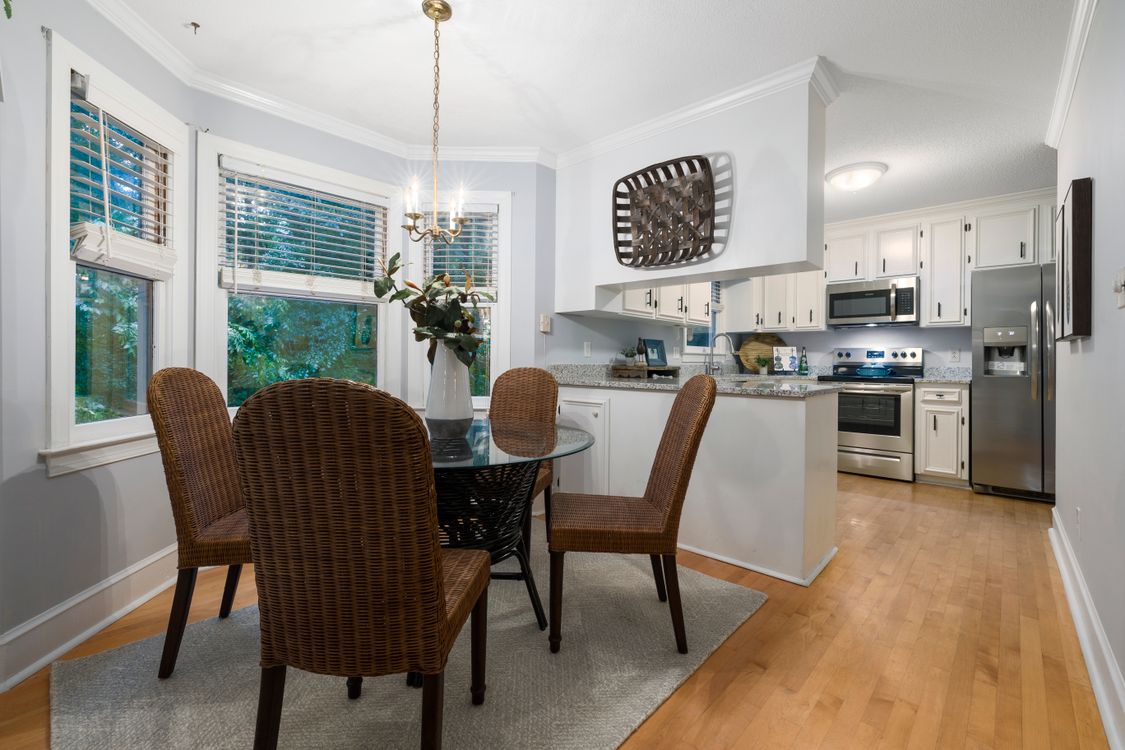
Light, airy chairs keep the dining zone feeling open. Photo via Pexels.
Ghost chairs — clear acrylic or polycarbonate chairs — are a brilliant trick for small combos. Because they are see-through, they add no visual weight and never block your line of sight across the room. The dining area looks lighter and calmer even with all the chairs pulled out. Transparent chairs blend with almost any table style, and they shine in spaces where you want everything to feel as open and airy as possible.
What chairs are best for a small living dining combo?
Transparent acrylic ghost chairs are ideal for small combined spaces because they add no visual weight and do not block sightlines. Chairs that tuck fully under the table when not in use are also an excellent choice for maximizing walkable floor space.
Idea 10: Create a Half Wall or Open Shelving Divider
If you want a little more separation than rugs and light can give, a half wall or an open shelving unit hits the sweet spot. Open shelves between the zones create a visual boundary while still letting light and sightlines pass through, so the room never feels chopped up. Dress the shelves with books, plants, and a few meaningful objects, and they add personality to both sides at once. A half wall in a slightly different paint color can look wonderfully custom and professionally finished.
Idea 11: Use the Same Flooring Throughout Both Zones
One of the most common mistakes in open-plan combos is changing the flooring between zones. That line on the floor chops the room visually and makes everything feel smaller. Run one continuous flooring — light wood, pale gray tile, or white polished concrete — from the living corner to the dining corner. Your eye travels across it without stopping, and that unbroken surface makes the whole room feel larger and more cohesive. It is a single decision with a dramatic payoff.
2026 Flooring Trend: Wide-plank light oak engineered wood is the most popular flooring for small open-plan living and dining spaces in 2026. It is warm, hard-wearing, easy to clean, and the long horizontal lines of the wide planks stretch the room visually.
Idea 12: Pick Multi-Functional Furniture
In a small combo, every piece should ideally do two jobs. A dining bench with storage inside. An ottoman that serves as a coffee table by day and extra dinner seating by night. A dining table that moonlights as a desk. A sideboard that holds the TV and the serving dishes at the same time. Each double-duty piece removes the need for another item entirely, which means more open floor and less visual clutter. Before buying anything, ask what else it can do.
Small Space Wisdom: The most-loved trick among small-space decorators is swapping the coffee table for a large storage ottoman. It seats extra dinner guests, swallows blankets and board games, and leaves the room breathing easier — all without changing the floor plan.
Idea 13: Hang a Large Mirror to Open Up the Space
A large mirror is a classic small-space move for a reason. Hung on a main wall, it reflects both zones and visually doubles the room. It also catches natural light and bounces it deeper into the space, so everything feels brighter and airier. Place it where it reflects the best view you have — the dining table dressed for dinner, or a window with greenery outside — and it works as decor and expansion trick at the same time.
Idea 14: Embrace Vertical Space with Wall Storage
When the floor is full, go up. Floating shelves that run high along the wall hold books, plants, and display pieces without touching the floor plan. A tall, narrow cabinet in the dining zone keeps tableware and linens close at hand. A slim bookshelf tucked into the living corner stores an astonishing amount while barely touching the floor. Wall space is essentially free storage — use the height of your room before you buy one more piece that sits on the ground.
Idea 15: Use Light Paint Colors to Maximize Space
Wall color changes how big a room feels, and light colors are the surest way to make a small combo feel spacious. Soft white, warm cream, pale sage, or light dusty blue reflect natural light and let the walls visually recede. Save bold or dark colors for accents — cushions, art, a vase — rather than full walls. If you are craving a moody note, paint one single accent wall and leave the rest light, so the room keeps its open feeling with a dramatic focal point to anchor it.
Design Wisdom: Light, warm walls are a time-tested way to make small rooms feel larger. Because they reflect more light, they soften shadows and blur where the walls actually end — which is exactly what a small combo room needs.
Idea 16: Add a Breakfast Bar for Extra Dining Seating
If you already have a dining table but often need one or two more seats, a slim breakfast bar against the wall is the answer. A narrow wooden ledge at bar height, with two stools tucked underneath, gives you extra dining seats in almost no floor space. Between meals it can be a laptop desk, a serving station at parties, or simply a pretty spot for plants and decor. It is one of the hardest-working additions you can make to a small combo.
Idea 17: Style Them Together with Matching Decor
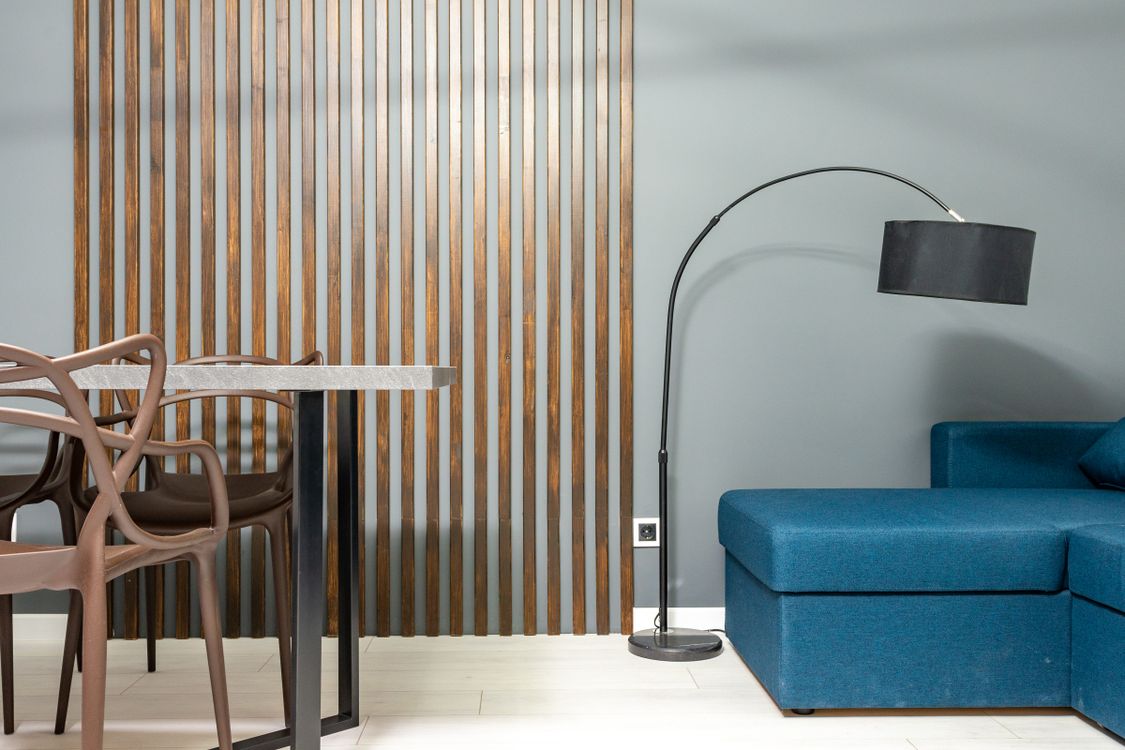
One design theme ties both zones into a single, intentional room. Photo via Pexels.
One of the biggest mistakes in a combo room is decorating the two zones like two separate homes. Clashing styles make the room feel chaotic — and chaos makes small rooms feel smaller. Instead, commit to one design theme and carry it across both areas. Match the wood tone of the dining table to the coffee table. Repeat one accent color in the cushions, the plants, and the tableware. That visual consistency creates flow and harmony, and the whole space reads as one intentional, well-planned home.
Idea 18: Use a Long Narrow Console Table as a Divider
A slim console table between the zones is a quiet overachiever. It draws a gentle line between living and dining, it gives you a surface for a lamp, plants, or art, and at only 10 to 12 inches deep it steals almost no floor space. Choose one that matches the dining table in wood tone or finish, and the divider looks like it was always part of the plan. It is structure and storage in a footprint you will barely notice.
Idea 19: Go Scandinavian for the Ultimate Small Space Style
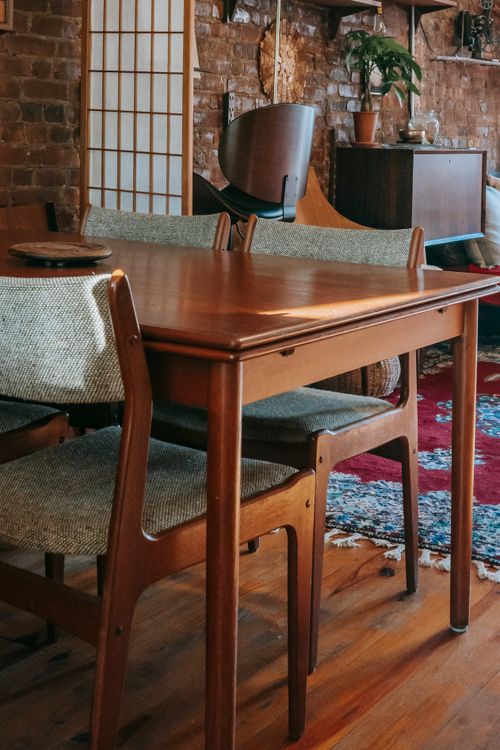
Scandinavian style: light wood, clean lines, and nothing extra. Photo via Pexels.
Scandinavian design was practically made for small spaces. It prizes simplicity, function, natural materials, and a calm, neutral color palette that keeps every room feeling open and clean. For a living dining combo, the formula is almost perfect: light wood furniture, white walls, clean-lined sofas, a round dining table, pendant lights in natural materials, and minimal but meaningful objects. No clutter, no excess, no visual noise. Everything has a purpose and a place — and the small space ends up feeling spacious and deeply comfortable.
Idea 20: Create a Boho Living Dining Combo
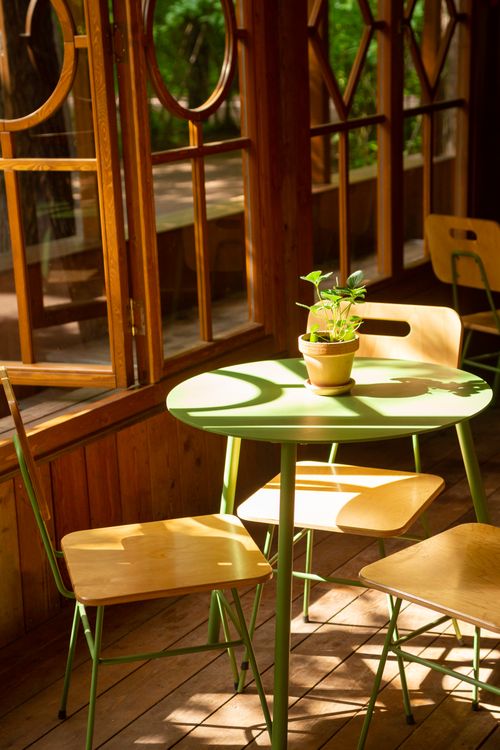
A boho corner: warm wood, layered texture, and easy, welcoming charm. Photo via Pexels.
If minimalism is not your style, a bohemian living dining combo gives you all the warmth, color, and personality you want in a small footprint. Layer rugs in warm earthy tones to define both zones. Weave rattan, macrame, and textured textiles through the room. Lean into terracotta, rust, mustard yellow, and deep green. Hang plants from the ceiling, stack books on the floor, and fill the walls with art and tapestries. The key to boho in a small space: keep the furniture itself small and low-profile, so all those decorative layers have room to breathe.
Conclusion
Living in a small space does not mean making sacrifices. It means making smart choices. Every idea in this list is designed to help you get the most from a combined living and dining space — through clever furniture choices, smart layout strategies, or thoughtful decorating techniques. The most important thing to remember is that a small living dining combo works best when both zones feel intentional and complete. Use rugs, lighting, furniture arrangement, and a consistent color palette to give each zone its own identity while keeping the overall space feeling open, bright, and cohesive. Your small space has more potential than you know. Start with one idea and watch the transformation begin.
FAQs
Q: What is the best layout for a small living and dining combo room?
The best layout places the dining area near the kitchen or entrance and the sofa area deeper in the room near the windows or focal wall. Use the sofa's back to create a soft boundary between the two zones.
Q: Can a small open-plan space have both a dining table and a sofa without feeling cramped?
Yes. Choose furniture that is appropriately scaled to the room, use a round dining table, and opt for chairs that tuck fully under the table when not in use. A compact two or three-seater sofa rather than a large sectional will also help tremendously.
Q: What colors make a small living dining combo look bigger?
Soft whites, warm creams, pale sage greens, and light grays all make small open-plan spaces feel larger. Using the same light color throughout both zones creates a continuous, expansive feeling.
Q: Is a breakfast bar a good idea in a small living dining combo?
Absolutely. A slim wall-mounted bar with two stools takes up minimal floor space while adding extra dining capacity and functioning as a workspace during non-meal times.
Q: What furniture should I avoid in a small living dining combo?
Avoid large sectional sofas, oversized rectangular dining tables, bulky entertainment units, and any furniture with heavy visual weight. In small spaces, everything should be as slim, light, and minimal as possible.

No comments:
Post a Comment