Learning how to choose furniture for a guest room is mostly about getting the order right. The bed comes first, then the small pieces that make a stay easy, and only then the pretty touches. When you shop in that order, you spend money where guests actually feel it, and you avoid the classic mistake of a room that looks finished in photos but is awkward to sleep in. A spare room does not need to be big or expensive to feel welcoming. It needs a comfortable bed, a clear place to walk, somewhere to put a phone and a glass of water, and a little storage for clothes.
Most guest rooms in American homes are small, often 10 by 10 or 10 by 12 feet, and many of them do double duty as a home office, a reading corner, or a craft room. That is normal, and it changes what you should buy. A giant dresser or a king bed might fit on paper and still ruin the room in real life, because guests need space to open a suitcase, walk around the bed, and get dressed without bumping into furniture. This guide walks through ten simple decisions, one at a time, with real sizes, real prices, and honest advice from designers and frequent hosts.

Table of Contents
- 1. Measure the Room Before You Buy Anything
- 2. Start With the Bed, Not the Decor
- 3. Pick a Nightstand That Fits the Bed
- 4. Give Guests Real Storage, Not Just a Closet Rod
- 5. Choose Flexible Pieces for a Room That Does Double Duty
- 6. Add One Comfortable Chair
- 7. Layer the Lighting
- 8. Ground the Room With a Rug
- 9. Hang a Mirror and Add Hooks
- 10. Finish With Bedding Guests Will Notice
- Frequently Asked Questions
- Final Thoughts
1. Measure the Room Before You Buy Anything

Before you buy or move a single piece, measure the room the way a guest will use it, not the way it looks empty. Write down the length, width, and ceiling height, plus every door swing, window, and closet opening, because a bed that blocks a closet door will annoy your guests every day of their stay. Designers use a few simple clearance numbers: at least 30 inches for the main walkway, about 24 inches on one side of the bed for getting in and out, and 30 to 36 inches between the foot of the bed and the wall or dresser. Sketch the room on paper or in a free room planner app, and tape the outline of the bed on the floor with painter's tape so you can walk around it before you spend a dollar. In a 10 by 10 foot room, a queen bed at 60 by 80 inches leaves only about 30 inches on each side, with no comfortable space left for a dresser, while a full bed at 54 by 75 inches frees up room for a nightstand and a clear path. Measuring first takes twenty minutes and saves you from the most common guest room regret, which is furniture that technically fits but leaves no room to live in.
2. Start With the Bed, Not the Decor

Guests forgive a small room and plain walls, but they do not forgive a bad bed, so this is where most of your budget and attention should go. A supportive mattress on a quiet frame beats every other upgrade combined, and it is the one thing guests will talk about after they leave. For most American guest rooms, a full-size bed is the sweet spot: at 54 by 75 inches it sleeps two adults comfortably and still leaves real walkway space in a 10 by 10 room. Move up to a queen at 60 by 80 inches only if the room is 10 by 12 feet or larger and you can still keep 30-inch walkways, and choose a twin at 38 by 75 inches, or a twin XL at 38 by 80 inches for taller guests, when you host single visitors. Pick a medium-firm mattress, since it suits the widest range of sleepers, and add a 2-inch topper for about $50 to $100 if you want it softer without buying a new mattress. Choose a frame with visible legs and space underneath for storage bins, since seeing floor beneath the bed makes a small room feel bigger, and skip tall headboards in rooms under 10 by 12 feet. If you want help comparing frame styles, our guide to the types of bed frames walks through platform, storage, and upholstered options. Expect $300 to $800 for a decent full or queen mattress and $150 to $400 for a simple sturdy frame, and sleep in the bed yourself for one night before your first guest arrives.
3. Pick a Nightstand That Fits the Bed

Every guest needs three things within arm's reach of the bed: a light, a spot for their phone and glasses, and a glass of water, and that is the entire job of a nightstand, which means in a small room you do not need two of them and you do not need big ones. One good nightstand on the side guests will actually use is enough for most guest rooms, and if both sides have space, two small matching tables look more finished, but never squeeze in a second table that leaves less than 24 inches beside the bed. The sizing rule is simple: the top of the nightstand should land within about 2 inches of the top of your mattress, above or below, so a guest can reach a glass of water without sitting up. Most nightstands are 24 to 28 inches tall, 18 to 24 inches wide for a queen bed, and 14 to 18 inches deep, and a depth under 18 inches helps a lot in a narrow room. Look for one drawer and one open shelf if you can find it, because the drawer hides a phone charger and spare toiletries while the shelf holds a book and a water glass without crowding the top. A wall-mounted shelf at nightstand height frees every inch of floor beneath it and works beautifully beside a daybed or in rooms under 10 by 10 feet. Budget about $60 to $200 for a solid small nightstand, and skip the tall, deep models sold as bedroom sets, because they are sized for a master bedroom and will eat the walkway in a guest room.
4. Give Guests Real Storage, Not Just a Closet Rod

Nothing makes a guest feel like an afterthought faster than living out of a suitcase on the floor, so give them a real place to unpack, even if it is small. A dresser with three to six drawers is the most useful storage piece for a guest room, because guests can put folded clothes in two or three drawers and leave the rest empty, and the top gives you a surface for a lamp or a welcome basket. If the room has no dresser space, a wardrobe with a hanging rod and a few shelves does the same job, and a slim open clothing rack works in the tightest rooms, though it looks tidier with matching hangers. Leave at least six empty hangers in the closet or on the rack, plus one clear drawer, and put a luggage rack or a bench at the foot of the bed so the suitcase has a home off the floor; a folding luggage rack costs about $30 to $60 and folds flat against the wall between visits. Check the closet before guests arrive and clear out anything that is not theirs, because a closet full of your off-season coats sends the message that the room is not really theirs. For ideas on pairing storage with a mirror, see our dresser and bedroom mirror guide. A good used dresser often costs $50 to $150 and works just as well as a new one, as long as the drawers slide smoothly and the depth, which should be 16 to 20 inches, does not block the walkway.
5. Choose Flexible Pieces for a Room That Does Double Duty

If your guest room is also your home office, craft room, or reading nook, the smartest money goes to furniture that works twice, because a regular bed takes up the floor all year while guests only use it a few weekends. A daybed is the easiest flexible choice: by day it reads as a sofa against the wall, and at night it sleeps one adult comfortably, while a trundle underneath pulls out to sleep a second person, which makes it ideal for kids or friends traveling together. A good sleeper sofa is the next best option, and it is the only flexible bed that is also real seating, so it suits a room where the television or the desk lives, but try the mattress in person before you buy, because many sleeper sofa mattresses are thin, and a 5-inch mattress is the minimum for an adult to sleep well. A Murphy bed or cabinet bed hides a full queen bed inside a cabinet about 2 feet deep and is the best choice when the room is a full-time office, though it costs $1,500 to $3,000 and needs a solid wall and a careful installation. Whatever flexible bed you choose, keep the bedding nearby in the room, not in a hall closet, so making the bed takes five minutes instead of twenty. Ask yourself honestly how many nights a year guests actually stay: if it is under twenty nights, a flexible bed is the right call, and if it is over fifty, a regular bed with a good mattress will make everyone happier.
6. Add One Comfortable Chair

Guests need somewhere to sit that is not the bed, and a single comfortable chair changes how a room feels more than almost any decoration you could buy. A chair gives your visitor a place to read in the morning, put on shoes, or take a phone call in private, and it also becomes the spot where they drape tomorrow's clothes instead of piling them on the bed. Pick an armchair with a seat height of about 17 to 19 inches and a seat depth of about 20 to 22 inches, and test it yourself by sitting for ten minutes with a book, because a chair that looks good but hurts your back after five minutes is worse than no chair at all. In a small room, a slipper chair or a compact accent chair without big arms saves 6 to 8 inches of floor compared with a full club chair, and a chair with slim wooden legs looks lighter in the room than one with a solid base to the floor. Place the chair near the window if you can, with a small side table beside it, and add a throw blanket over one arm so the corner reads as a deliberate reading nook instead of a leftover piece of furniture. A good accent chair costs $150 to $400 new, or far less secondhand, and if the room truly has no floor space for a chair, a sturdy bench at the foot of the bed does double duty as seating and as a luggage stand.
7. Layer the Lighting

A single ceiling light makes a guest room feel like a hotel hallway, so layer the lighting the way designers do: one overhead light for the whole room, one bedside light for reading, and one small glow for the middle of the night. Start with the ceiling fixture on a dimmer switch if you can, because a dimmer costs about $15 to $25 and lets guests choose bright light for unpacking and soft light for winding down. Then add a bedside lamp on or above the nightstand with a warm bulb around 2700K, which is the soft warm white most people picture in a cozy bedroom, and keep the brightness near 400 to 500 lumens so it is strong enough to read by without glaring. The lamp should stand about 24 to 27 inches tall in total, with the bottom of the shade roughly at eye level when a guest is sitting up in bed, and a shade 10 to 12 inches across throws a generous circle of light without overwhelming a small nightstand. If the nightstand is narrow, a wall-mounted sconce or a hanging pendant frees the whole surface, and a lamp with a built-in USB port lets guests charge a phone without hunting for an outlet behind the bed. Finish with a tiny night-light in the hallway or bathroom so nobody has to cross a dark room at 2 a.m., and check that the bedside switch is easy to find in the dark, because fumbling for a light is the small frustration guests remember most.
8. Ground the Room With a Rug

A rug is the fastest way to make a bare guest room feel finished, and it does real work too, because the first thing a guest feels in the morning is the floor under their bare feet. Choose a rug that extends 18 to 24 inches beyond each side of the bed, which usually means a 5 by 8 foot rug for a full bed and an 8 by 10 foot rug for a queen, and place it so the front two-thirds of the bed sits on it while the back stays under the frame. A low-pile rug or a flat-weave rug is the practical pick for a guest room, because it is easy to vacuum, it does not trap dust the way a thick shag rug does, and chair legs and suitcase wheels roll over it without catching. Stick to a simple pattern or a solid color in a warm neutral, since a busy pattern fights with the bedding and makes a small room look crowded, and a rug with a little texture, like a woven cotton or a wool blend, adds warmth without shouting for attention. If the room has hardwood floors, add a thin rug pad underneath for about $20 to $40, which stops the rug from sliding when a guest steps on it and adds a little cushion underfoot. Budget $100 to $300 for a good-quality rug in these sizes, and if money is tight, two small runners on either side of the bed cost less than one big rug and still give guests a soft landing in the morning.
9. Hang a Mirror and Add Hooks

A mirror is one of the cheapest pieces in a guest room and one of the most used, because every guest checks their hair and outfit before they walk out the door, and a room without a mirror sends them to your bathroom to do it. Hang a full-length mirror on the wall or the back of the door, with the center at about 60 inches from the floor so most adults see themselves head to toe, and if you have the wall space, a wide mirror across from the window bounces daylight around the room and makes a small space feel larger. Keep the mirror away from the direct line of sight of the bed if your guests are light sleepers, since some people dislike seeing their own reflection when they wake up at night, and choose a simple wood or black metal frame that matches the bed frame so the room looks pulled together. Then add the small things that cost almost nothing and get noticed every day: two or three sturdy hooks on the wall or the back of the door for a coat, a robe, and a bag, a small tray on the dresser for keys and jewelry, and a wastebasket with a liner, which guests always need and hosts almost always forget. A full-length mirror costs $40 to $120, hooks cost a few dollars each, and together they solve the getting-ready problem that no amount of pretty bedding can fix.
10. Finish With Bedding Guests Will Notice
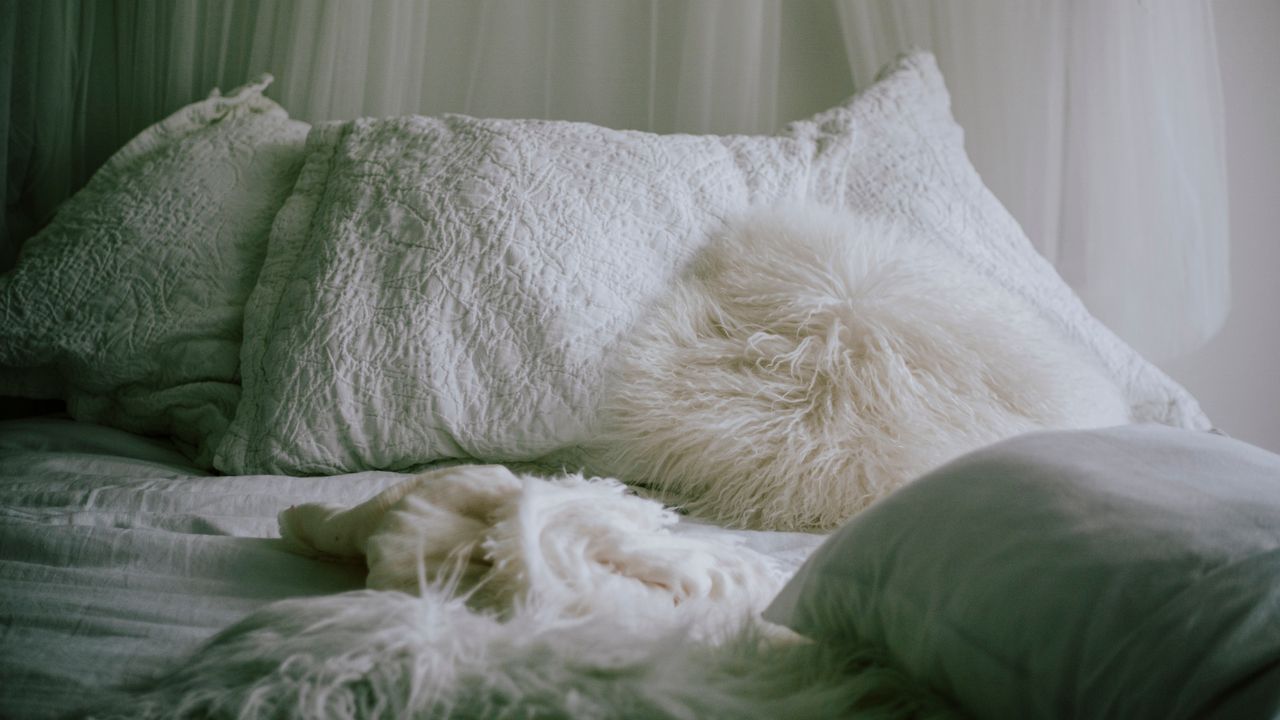
The bedding is what your guests touch, sleep under, and photograph, so finish the room here and keep it simple enough to wash between every visit. Start with smooth cotton sheets in white or a pale neutral, because white looks clean, it can be bleached when it stains, and it matches any room, and add a light duvet or comforter with a folded throw across the foot of the bed so guests can adjust their warmth without hunting for extra blankets. Give each guest two sleeping pillows, one medium-firm and one soft if you can, plus one or two smaller cushions in front for looks, and keep a spare blanket and one extra pillow in the closet or under the bed so nobody has to ask for them at midnight. Wash everything before each visit and make the bed with a visible turn-down at the top, where the flat sheet folds over the duvet, because that one detail is what makes a bed look like a hotel bed instead of a spare bed. Leave a small welcome touch on the bed or the nightstand, like a folded towel, a bottle of water, and a handwritten note with the Wi-Fi password, and your guests will feel cared for before they even unpack. Budget about $80 to $200 for a full set of cotton sheets, a duvet cover, and pillow covers, and replace pillows every one to two years, because a flat pillow is the one bedding problem guests notice on the first night and remember for years.
Frequently Asked Questions
What size bed is best for a guest room?
A full bed at 54 by 75 inches is the best all-rounder for most guest rooms, because it sleeps two adults and still leaves real walkway space in a 10 by 10 foot room. Move up to a queen at 60 by 80 inches only if the room is 10 by 12 feet or larger and you can keep 30-inch walkways on both sides. For single guests or two people who want separate beds, twin beds at 38 by 75 inches each are a smart and flexible choice.
Do I need two nightstands in a guest room?
No, one good nightstand is enough for most guest rooms, especially small ones. The nightstand only needs to hold a lamp, a phone, a glass of water, and a book, and one table on the side guests actually use covers all of that. Add a second matching nightstand only if the room has at least 24 inches of clear space on both sides of the bed.
What furniture does a guest room really need?
A guest room really needs only five pieces: a comfortable bed with good bedding, one nightstand with a lamp, some storage like a dresser or a few hangers and a clear drawer, a chair or a bench to sit on, and a mirror. Everything else, like a rug, a desk, or a reading lamp, is a welcome extra, but those five pieces cover sleeping, dressing, and relaxing.
How much should I spend furnishing a guest room?
A comfortable guest room can be furnished for about $800 to $1,500 if you shop carefully, with the mattress taking the biggest share at $300 to $800, the bed frame at $150 to $400, and the nightstand, dresser, rug, and lighting sharing the rest. Buying a good used dresser or chair can cut that number by a third, but do not save money on the mattress or the pillows, because those are the pieces guests feel all night.
What if my guest room is also my home office?
Pick furniture that works twice, like a daybed that reads as a sofa by day, a sleeper sofa, or a Murphy bed that folds into a cabinet. Keep the desk small and place it where it does not block the bed, store the bedding in the room so making the bed takes five minutes, and choose a chair that works for both desk work and reading. If guests stay more than fifty nights a year, a regular bed is worth the floor space.
Final Thoughts
A welcoming guest room is not about buying everything at once or copying a showroom. It is about a comfortable bed, clear walkways, a nightstand that fits, a little storage, and light that works after dark, all chosen in that order and sized for the room you actually have. Measure first, spend the most on the mattress, and let the smaller pieces earn their place one at a time. Your guests will not remember the brand of your dresser or the pattern on your rug, but they will remember sleeping well, finding a glass of water in the dark, and feeling like the room was truly ready for them. If you want more ideas for styling the room once the furniture is in place, read our guide on how to decorate a guest room for simple finishing touches that work with the pieces you just chose.
Sources
- NestSorted: Guest Room Furniture Guide
- Coleman Furniture: Guest Room Furniture Design Ideas
- Home by Alley: Ultimate Guide to Choosing the Right Size of Nightstand
- Blank and Space: How Tall Should a Nightstand Be?
Gallery



No comments:
Post a Comment