Bathroom lighting can make or break your morning routine. A fixture hung too high casts shadows under your eyes; too low and it glares straight at you. Nailing the vanity light height is the difference between a bathroom that flatters and one that fights you.
The ten rules below cover side sconces, above-mirror bars, double vanities, bulb color, and the electrical details that keep everything safe. Measure twice, mount once.
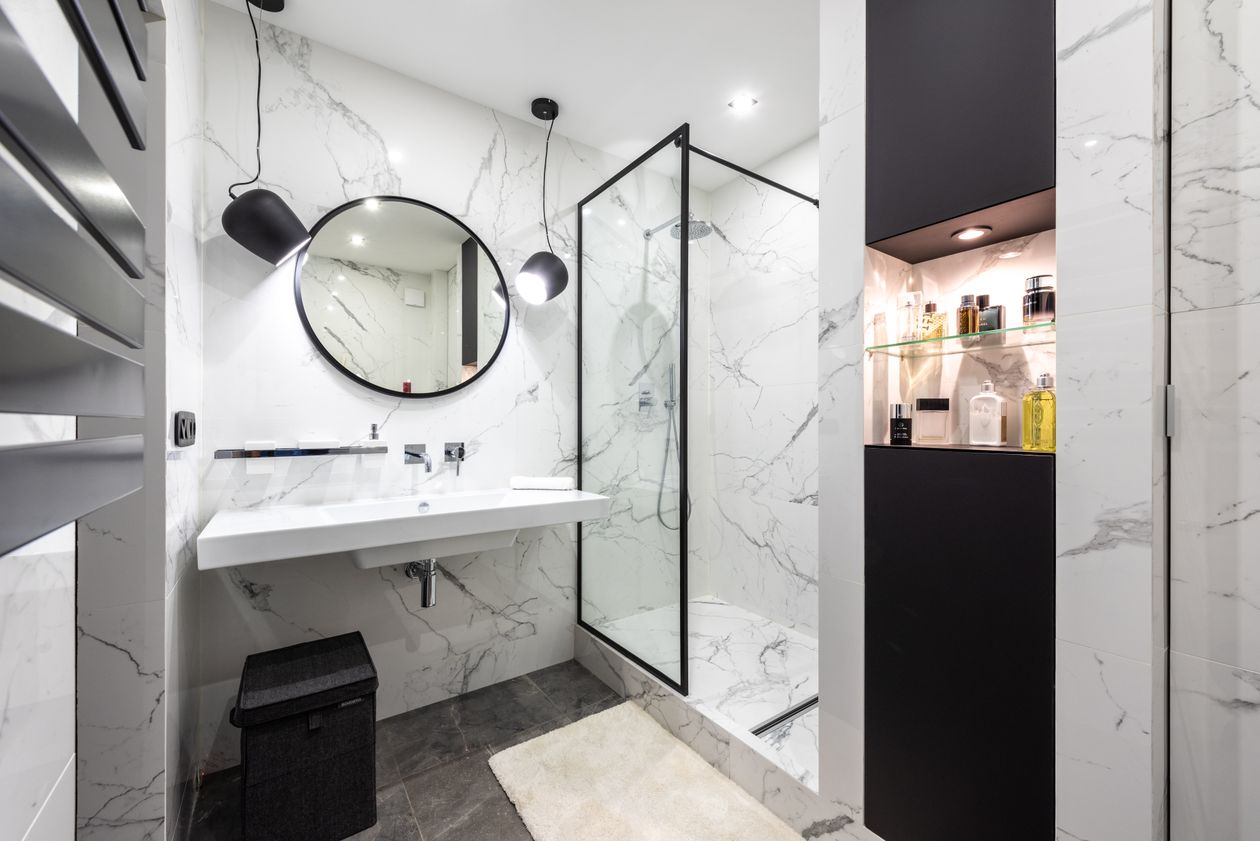
Photo via Pexels
Table of Contents
- 1. Mount Side Sconces 60 to 65 Inches to Center
- 2. Hang Above-Mirror Bars at Eye Level
- 3. Raise Fixtures for High Ceilings
- 4. Choose Cross-Lighting Over Top-Down
- 5. Give Each Sink Its Own Fixture
- 6. Keep the Mirror Narrower Than the Vanity
- 7. Use Damp-Rated Fixtures Near Water
- 8. Pick 2700 to 3000K Bulbs With 90+ CRI
- 9. Put the Vanity Lights on a Dimmer
- 10. Scale the Fixture to the Mirror
1. Mount Side Sconces 60 to 65 Inches to Center
The most flattering setup is a sconce on each side of the mirror, with the center of each fixture 60 to 65 inches off the finished floor. That lands the light at about eye level for most adults, washing the face evenly from both sides.
Space the pair 36 to 40 inches apart, and keep them 3 to 6 inches from the mirror's edge. This cross-lighting erases the harsh under-eye shadows that a single overhead light creates.
Photo via Pexels
2. Hang Above-Mirror Bars at Eye Level
If you prefer one fixture above the mirror, center it over the mirror with the bottom of the fixture roughly at eye level, typically 65 to 70 inches off the floor. For standard 8-foot ceilings, that usually means the fixture center sits 75 to 80 inches high.
Size the bar to about one-third to one-half the mirror's width. A bar that spans the whole mirror throws light past your face and onto the walls, wasting the effect.

Photo via Wikimedia Commons
3. Raise Fixtures for High Ceilings
Tall ceilings tempt people to hang the vanity light higher, but faces do not move up with the ceiling. Keep the light at face level regardless of ceiling height, and fill the empty wall above with art or leave it clean.
In rooms with 9 or 10-foot ceilings, a pendant dropped to the right height can look intentional and stylish. Just make sure the bottom of the shade stays at or slightly above eye level.
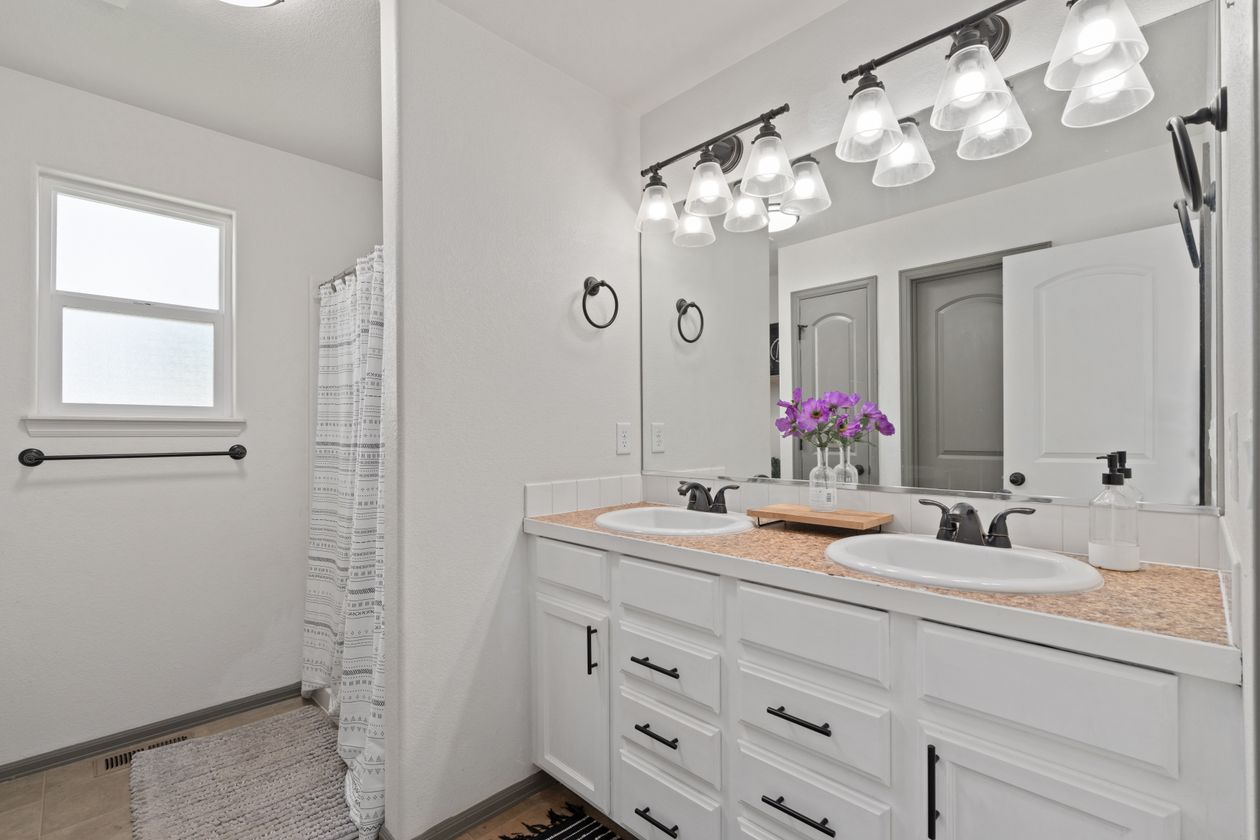
Photo via Pexels
4. Choose Cross-Lighting Over Top-Down
Light falling straight down from above carves shadows under your brows, nose, and chin, which is exactly what you do not want while shaving or applying makeup. Light coming from both sides at face level fills those shadows in.
Backlit mirrors achieve a similar effect by glowing from behind the glass. If a full sconce pair will not fit, a backlit mirror is the next best thing.

Photo via Pexels
5. Give Each Sink Its Own Fixture
On a double vanity, one long bar across both mirrors leaves the outer edges dim. Better: center a fixture over each mirror, or flank each mirror with its own sconce pair. Every user gets full, even light.
This also lets two people control their own side independently. When only one sink is in use, you light half the vanity instead of the whole wall.

Photo via Wikimedia Commons
6. Keep the Mirror Narrower Than the Vanity
Sconces need wall space, so size the mirror to leave room. A good rule: the mirror should be a few inches narrower than the vanity on each side, leaving a clear landing zone for the fixtures.
A round mirror, like the one in this scalloped mirror style bathroom, naturally leaves wall space at the corners. It is an easy way to fit sconces in a tight layout.

Photo via Wikimedia Commons
7. Use Damp-Rated Fixtures Near Water
Bathrooms are damp locations by electrical code, so vanity fixtures must be rated for damp use at minimum. Within a few feet of the shower or tub, step up to wet-rated fixtures for extra safety.
Put bathroom receptacles and lighting on GFCI-protected circuits, and never install an open-bulb fixture where a splash can reach it. A rustic mirror looks great, but the fixture beside it still needs the right rating.

Photo via Wikimedia Commons
8. Pick 2700 to 3000K Bulbs With 90+ CRI
For the most flattering and accurate light, choose bulbs at 2700 to 3000 Kelvin, which reads as warm white, with a color rendering index (CRI) of 90 or higher. High CRI means your makeup colors look the same as they will in daylight.
Avoid cool daylight bulbs above 4000K in the bathroom: they are harsh on skin tones and make the room feel clinical. Warm light is kinder to faces and to the room.

Photo via Wikimedia Commons
9. Put the Vanity Lights on a Dimmer
Full brightness for makeup, low glow for a midnight bathroom trip: a dimmer gives you both. It is a small upgrade that changes how the bathroom feels at different times of day.
Confirm your bulbs and dimmer switch are compatible, since not all LEDs dim cleanly. A flickering vanity light is worse than no dimmer at all.
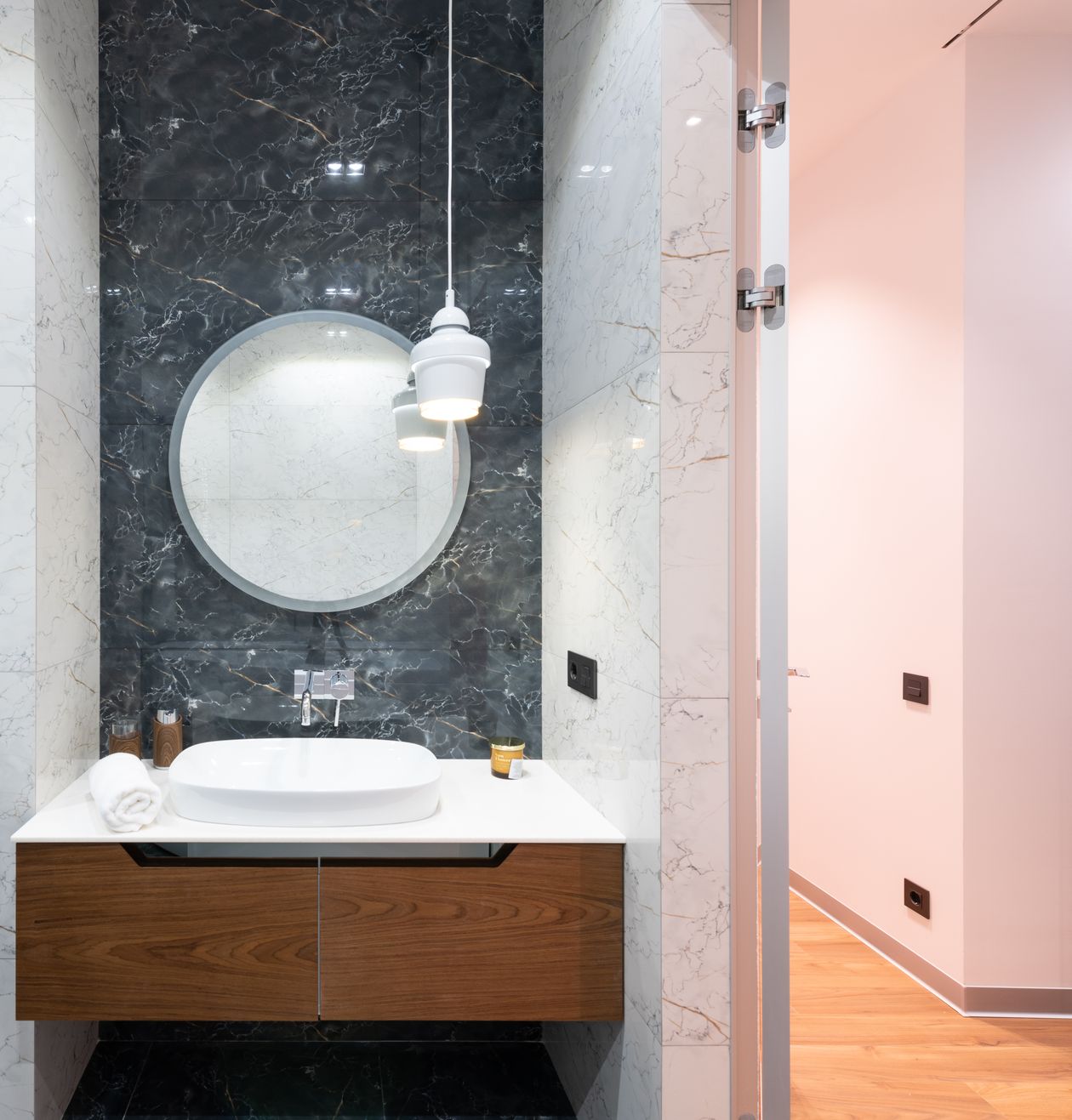
Photo via Wikimedia Commons
10. Scale the Fixture to the Mirror
A tiny two-inch fixture lost above a 48-inch mirror looks like an afterthought, while an oversized bar crowds a small powder-room mirror. Match the fixture's visual weight to the mirror: roughly one-third to one-half the mirror width for bars.
When planning the whole room, our guide to master bathroom size helps you keep fixtures, mirrors, and clearances in proportion from the start.

Photo via Wikimedia Commons
Frequently Asked Questions
How high should a vanity light go above the mirror?
Center an above-mirror fixture 75 to 80 inches off the floor, or about 3 inches above the mirror's top edge, whichever lands closer to eye level.
Sconces or a light bar: which is better?
Sconces on both sides give the most flattering, shadow-free light. A bar above the mirror is simpler to install and works well in tight spaces.
How far apart should double-vanity sconces be?
Space each pair 36 to 40 inches apart, centered on its own mirror, with the fixture centers 60 to 65 inches off the floor.
What is the best bulb color for a bathroom vanity?
Warm white at 2700 to 3000K with a CRI of 90 or higher. It flatters skin and renders makeup colors accurately.
Can a vanity light be too close to the shower?
Yes. Keep fixtures outside the direct splash zone, use damp or wet-rated fixtures as required, and protect circuits with GFCI.
Final Thoughts
Good vanity lighting is not about expensive fixtures; it is about placement. Sconces at eye level, 36 to 40 inches apart, with warm high-CRI bulbs on a dimmer, will beat a pricey chandelier hung in the wrong spot every time. For the rest of the room, see our walk-in shower ideas and vanity organization tips.
Sources
- Custom Home Group: How to Light a Bathroom Vanity
- Making Manzanita: Guide for Bathroom Lights, Vanity and Wall Sconce Ideas
Gallery

Photo via Wikimedia Commons

Photo via Wikimedia Commons

Photo via Wikimedia Commons

No comments:
Post a Comment