A kitchen remodel is one of the biggest checks most homeowners ever write, so it makes sense to want a room that still looks right in fifteen or twenty years. A timeless kitchen design is not about playing it safe or making a room that looks like everyone else's. It is about putting your money into the parts that are hard and costly to change, and letting the easy parts carry the personality. When the cabinets, counters, layout, and floors are calm and well made, you can change paint, stools, art, and light fixtures later without tearing the room apart.
Readers on Reddit and Quora ask the same worried questions again and again: what dates a kitchen fastest, which cabinets and counters age well, and where should a limited budget go first? The honest answer is that most kitchens do not date because of one bad choice. They date because several trendy choices were locked in at once: a bold countertop pattern, an unusual cabinet color, a fussy backsplash, and hardware from one very specific year. This guide walks through ten classic choices that avoid that trap, with real prices, real measurements, and plain advice about what to skip.

Table of Contents
- 1. Start With Shaker-Style Cabinets
- 2. Keep the Color Palette Calm and Warm
- 3. Choose Stone You Can Live With
- 4. Keep the Backsplash Simple
- 5. Get the Layout and Island Size Right First
- 6. Let Warm Wood Do the Work
- 7. Pick Hardware You Can Change Later
- 8. Build Storage That Hides the Clutter
- 9. Layer Simple, Warm Lighting
- 10. Add Strong Color in One Place Only
- Frequently Asked Questions
- Final Thoughts
- Sources
- Gallery
1. Start With Shaker-Style Cabinets
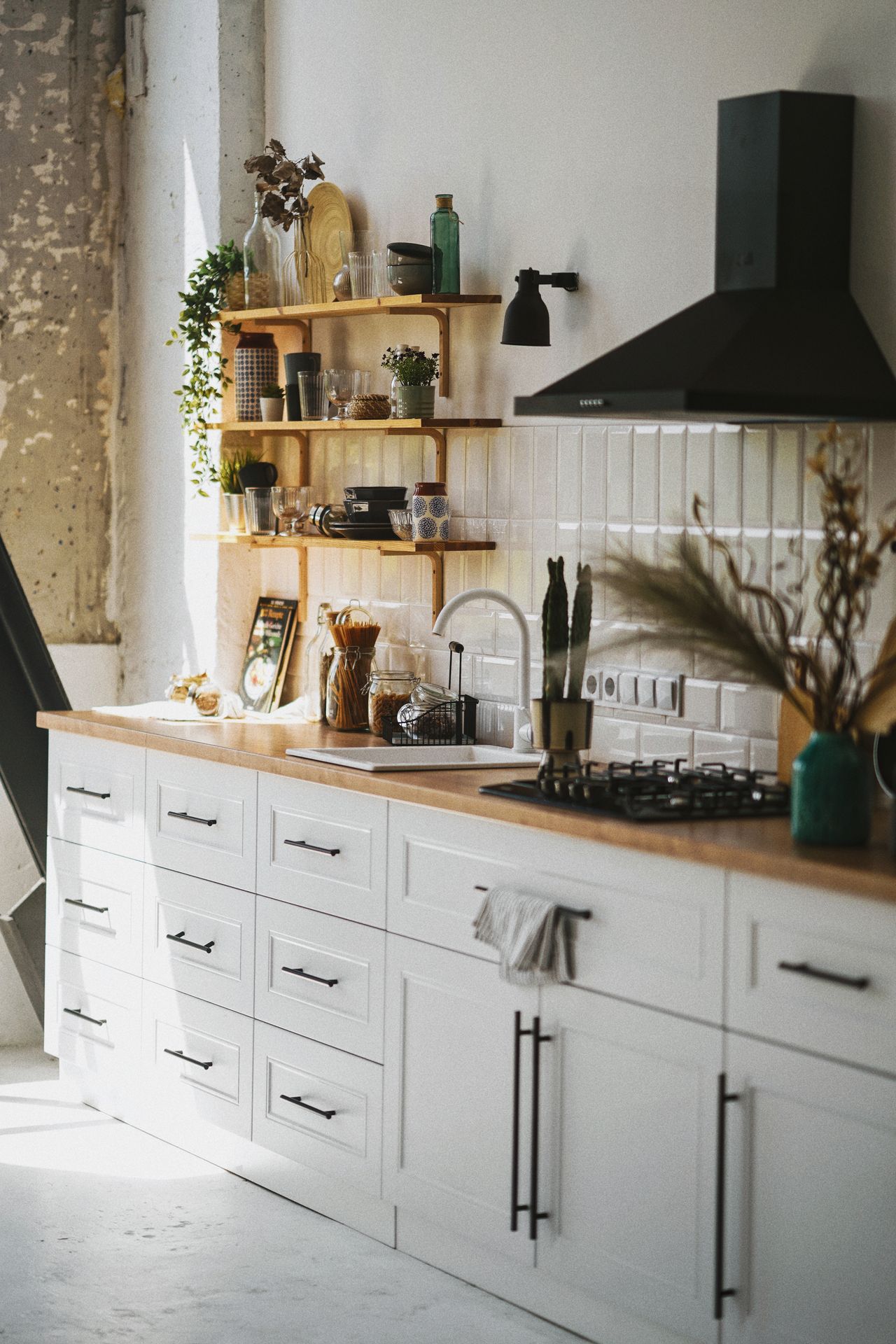
Shaker-style doors have a simple recessed center panel inside a clean frame, with no carving, no rope trim, and no glazing to catch dust. That plainness is exactly why they last. They work painted white, cream, sage green, navy, or left in natural wood, and they look at home in a 1920s bungalow, a 1990s subdivision house, and a new build. Very ornate raised-panel doors with corbels and heavy crown molding can look grand in a large traditional house, but in an average American kitchen they often feel fussy and dated within a few years. At the other extreme, completely flat slab doors can look sleek today, yet they also stamp a kitchen with one very specific modern moment.
Choose solid, well-built boxes first and worry about the door style second. Soft-close hinges, full-extension drawer slides, and plywood boxes cost more than particleboard boxes with basic hardware, but they are the difference between doors that still close quietly in year twelve and doors that sag and stick. If your budget is tight, keep the door style simple and spend on the hinges, slides, and a durable painted finish. A repainted shaker kitchen can cost $3,000 to $7,000, while a full cabinet replacement often runs $10,000 to $25,000 or more, so a door you can repaint is a real long-term saving, not just a style choice.
2. Keep the Color Palette Calm and Warm
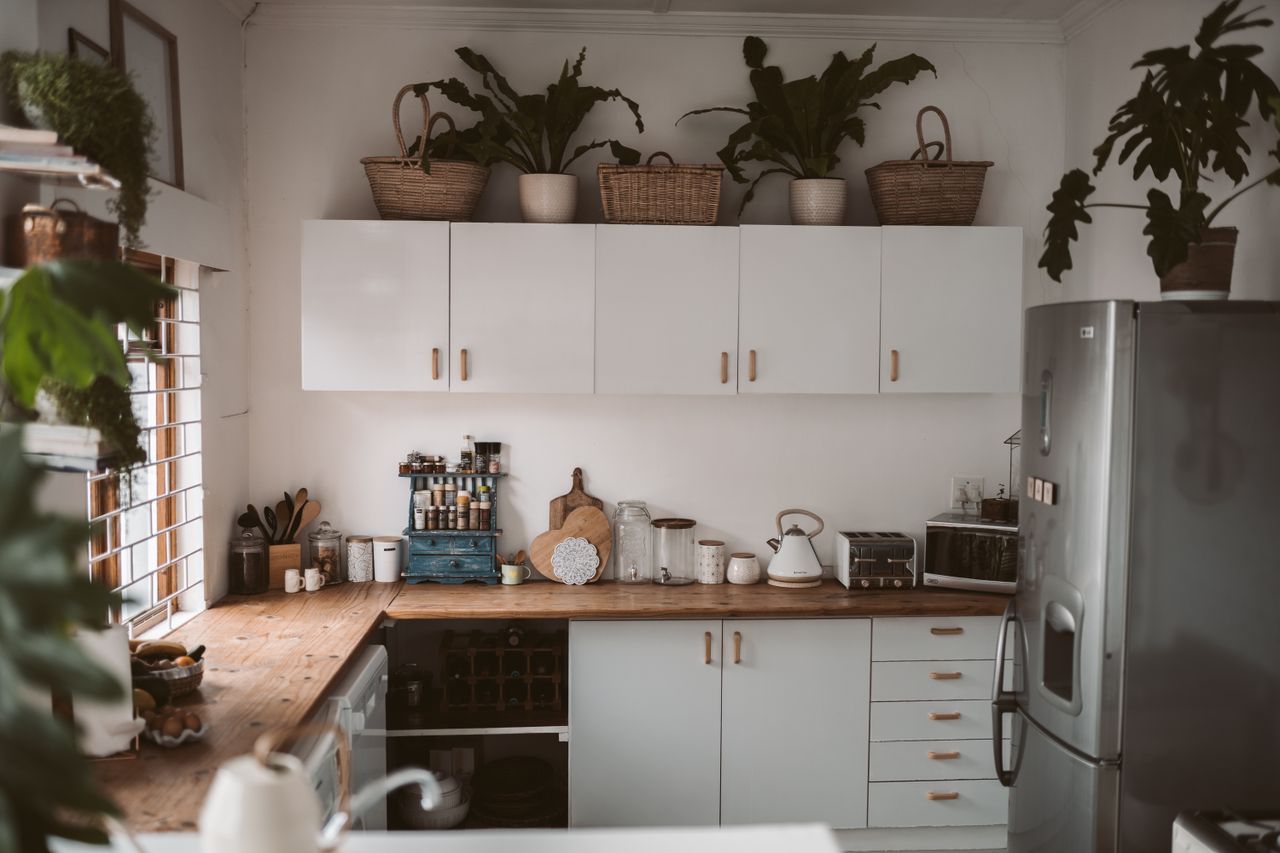
White, warm cream, soft gray-green, sage, navy, and natural wood are the colors that keep showing up in kitchens that still look good decades later. They are not exciting on a paint chip, but they are forgiving in real life. They hide small scuffs better than a stark, cold white, they work with stainless steel and with wood, and they let you change the room with a rug, curtains, or a new set of dishes. An all-gray kitchen was sold as the safe choice through the 2010s, yet many homeowners now say it feels flat and cold, which is a useful warning: a color can be popular and still age badly if it has no warmth in it.
Test paint in your own light before you commit. Paint a large board, lean it against the cabinets, and look at it in morning light, evening light, and with the lights on at night. Warm whites with a touch of yellow or beige usually feel better in a north-facing kitchen than a blue-white that can turn icy. If you love a bold color, use it where it is cheap to change: bar stools, a rug, a painted pantry door, or a small accent wall. Keep the big, expensive surfaces calm, and the room will still feel like yours without betting the whole remodel on one color trend.
3. Choose Stone You Can Live With
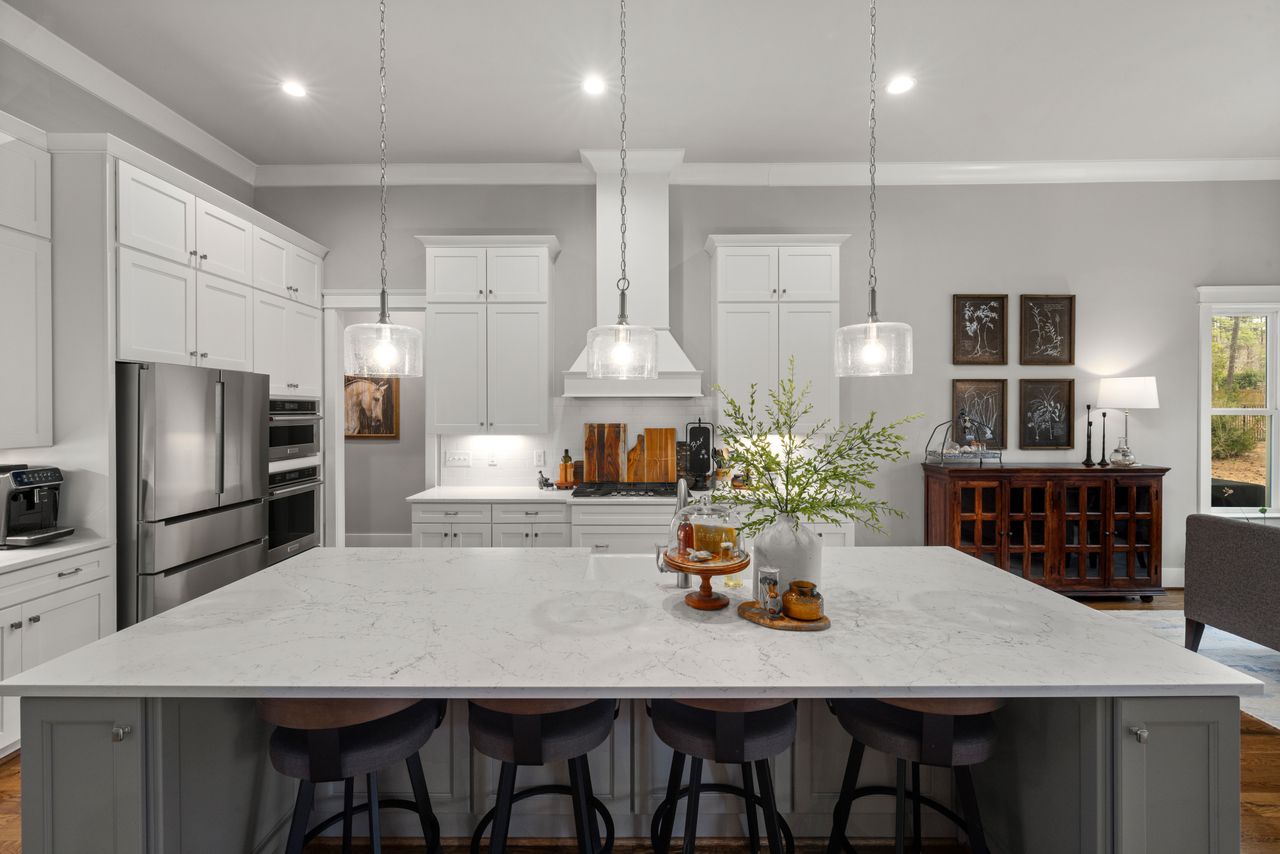
Natural stone has a depth that printed patterns struggle to copy. Marble is beautiful and classic, but it is soft, it stains, and it etches when lemon juice or vinegar sits on it, so it suits a careful cook who loves patina and does not mind sealing it once or twice a year. Granite is harder and more forgiving, and a quiet white, cream, or soft gray granite with small movement ages far better than a loud, high-contrast slab that dominates the whole room. Butcher block is warm and can be sanded and refinished, though it needs oiling and it will show knife marks and water rings if it is not cared for.
Quartz is the practical middle ground for many families. It is non-porous, it resists stains, and a simple white or lightly veined quartz counter looks clean for years with almost no care. Expect to pay roughly $60 to $120 per square foot installed for many quartz and granite options, and more for marble, depending on your area and the slab. Whatever you pick, follow one rule: one pattern per room. If the counter has strong veining, keep the backsplash plain. If the backsplash is busy, keep the counter quiet. Two competing patterns are one of the fastest ways to make a new kitchen feel noisy and dated.
4. Keep the Backsplash Simple
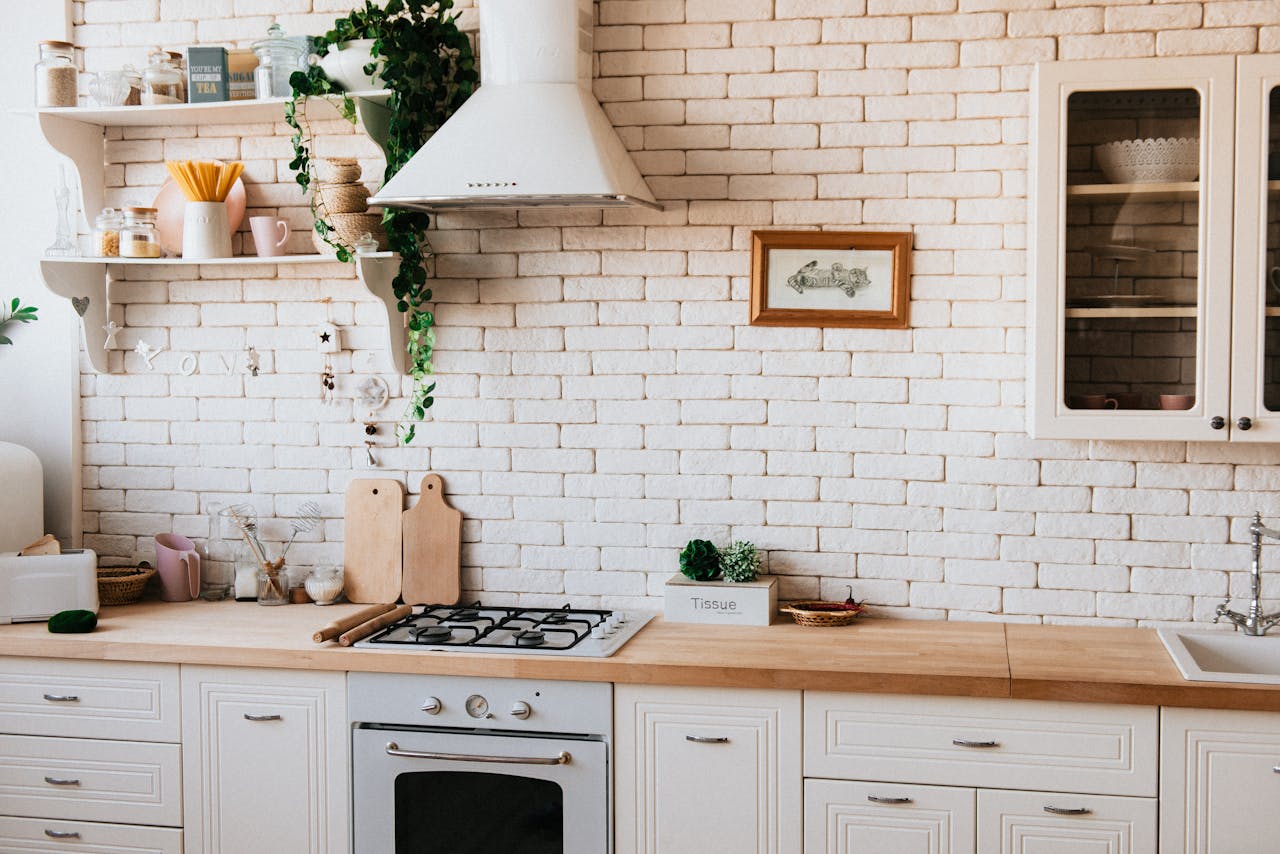
White subway tile is popular for a reason: it is inexpensive, easy to clean, and it recedes instead of shouting. Laid in a straight stack or a simple running bond, with grout close to the tile color, it works with almost any cabinet and counter. Handmade-look tiles in a soft white or cream add gentle texture without a loud pattern, and they are a good choice if plain subway tile feels too flat for you. Running the tile all the way to the ceiling behind the range, or to the bottom of the upper cabinets, looks more finished than a short 4-inch splash that was common in older kitchens.
Be careful with geometric patterns, picture-frame layouts, and bold mosaic borders. They photograph well, but they lock the kitchen to a trend, and they are costly to remove because tile work means dust, demo, and a new backsplash. The same warning applies to a backsplash in a strong color that matches nothing else in the room. If you want pattern, put it on a rug or a tea towel. A simple backsplash also makes future changes easy: repaint the cabinets or swap the hardware, and the tile still works, which is exactly what a long-lasting kitchen should do.
5. Get the Layout and Island Size Right First
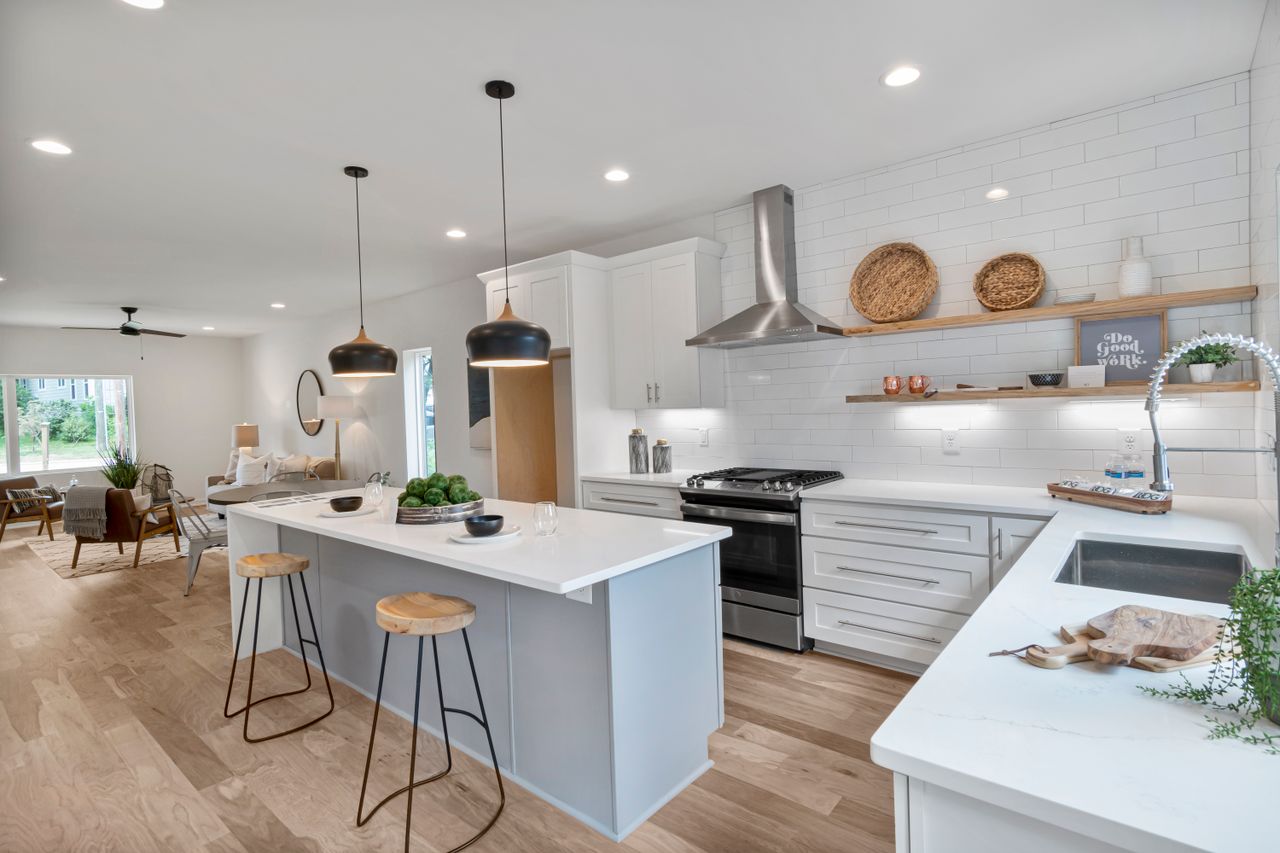
No countertop can fix a bad layout. Before you pick finishes, check the path between the sink, the stove, and the refrigerator. You should be able to move between those three spots in a few easy steps, without walking around an island or a table. Leave 36 to 42 inches of clear walkway around an island so two people can pass, and more if the dishwasher or oven door opens into that path. An island that is too big turns the kitchen into an obstacle course, while an island that is too small looks lost in a large room. Measure the room, tape the island outline on the floor, and live with that outline for a few days before you order it. For more help comparing the classic shapes, see our guide to modern farmhouse kitchen layouts, which walks through island, galley, L-shaped, U-shaped, and one-wall plans.
Think about how you actually cook, not how a showroom cooks. If you bake, you need a long, clear stretch of counter near the oven. If two people cook together, you need two work spots, not one crowded island. A sink under a window is a small daily pleasure, and a range hood that vents outside beats a recirculating microwave over the range, which many designers now call one of the most dated features in a kitchen. Moving plumbing and gas lines is expensive, so keep the sink and stove close to where they already are when you can. Spend the layout money once, and spend it well, because everything else in the room can be updated around a layout that works.
6. Let Warm Wood Do the Work
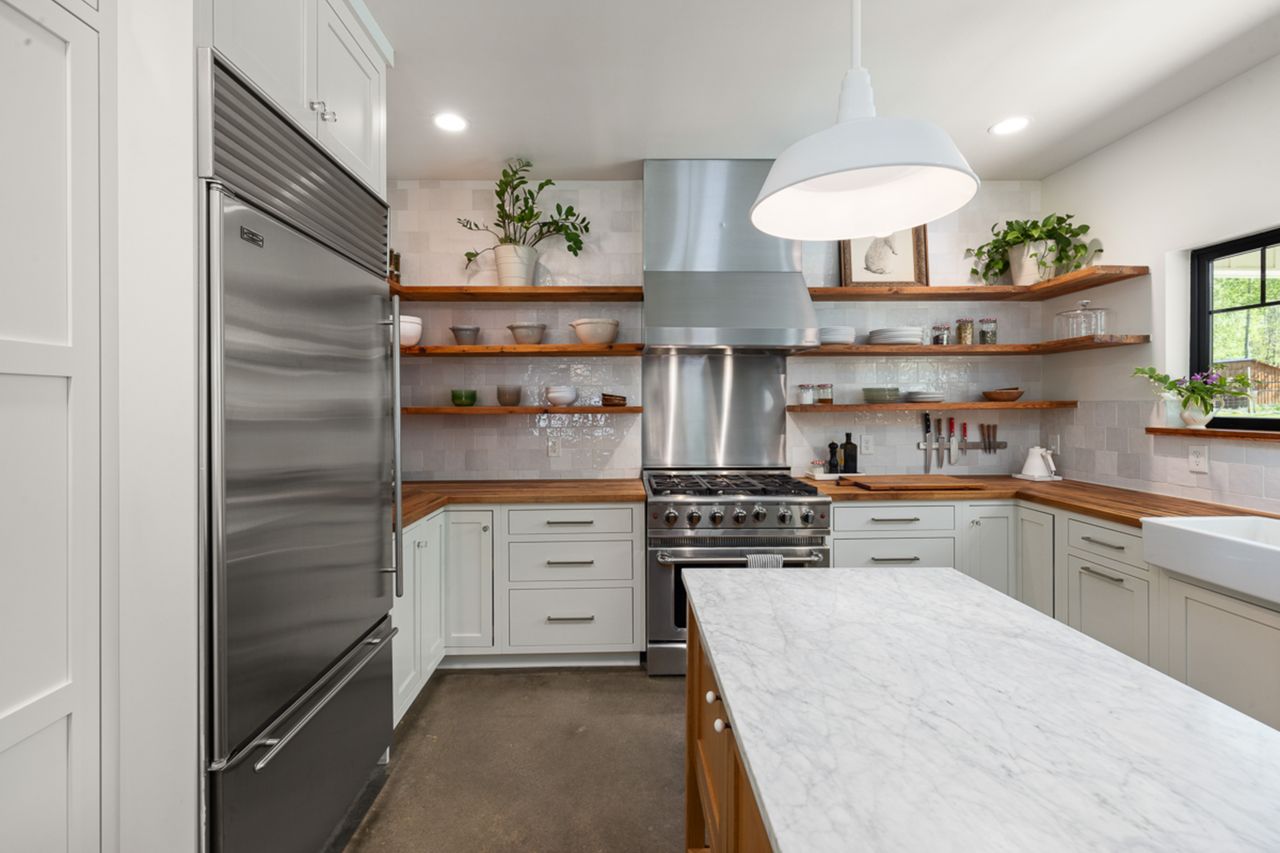
Wood is the easiest way to keep a white kitchen from feeling cold or clinical. It can be a butcher-block counter on the island, open wood shelves, a wood range hood cover, wood floors, or just a wood cutting board left out on the counter. Warm oak, maple, and walnut have been used in kitchens for generations, and they do not depend on a trend cycle. A single wood tone, repeated in two or three places, ties the room together. Three or four competing wood tones, on the other hand, make the room feel patched together.
Wood also ages with grace in a way that glossy, perfect surfaces do not. A few marks on a wood counter or a wood table tell the story of meals cooked there, and most marks can be sanded out. If a full wood counter feels like too much care, use wood where it is easy to maintain: shelves, a hood cover, stools, or the island base, with stone on the main work counters. Keep wood away from constant standing water around the sink, and wipe spills promptly. Used this way, wood adds warmth for decades without asking for constant attention.
7. Pick Hardware You Can Change Later
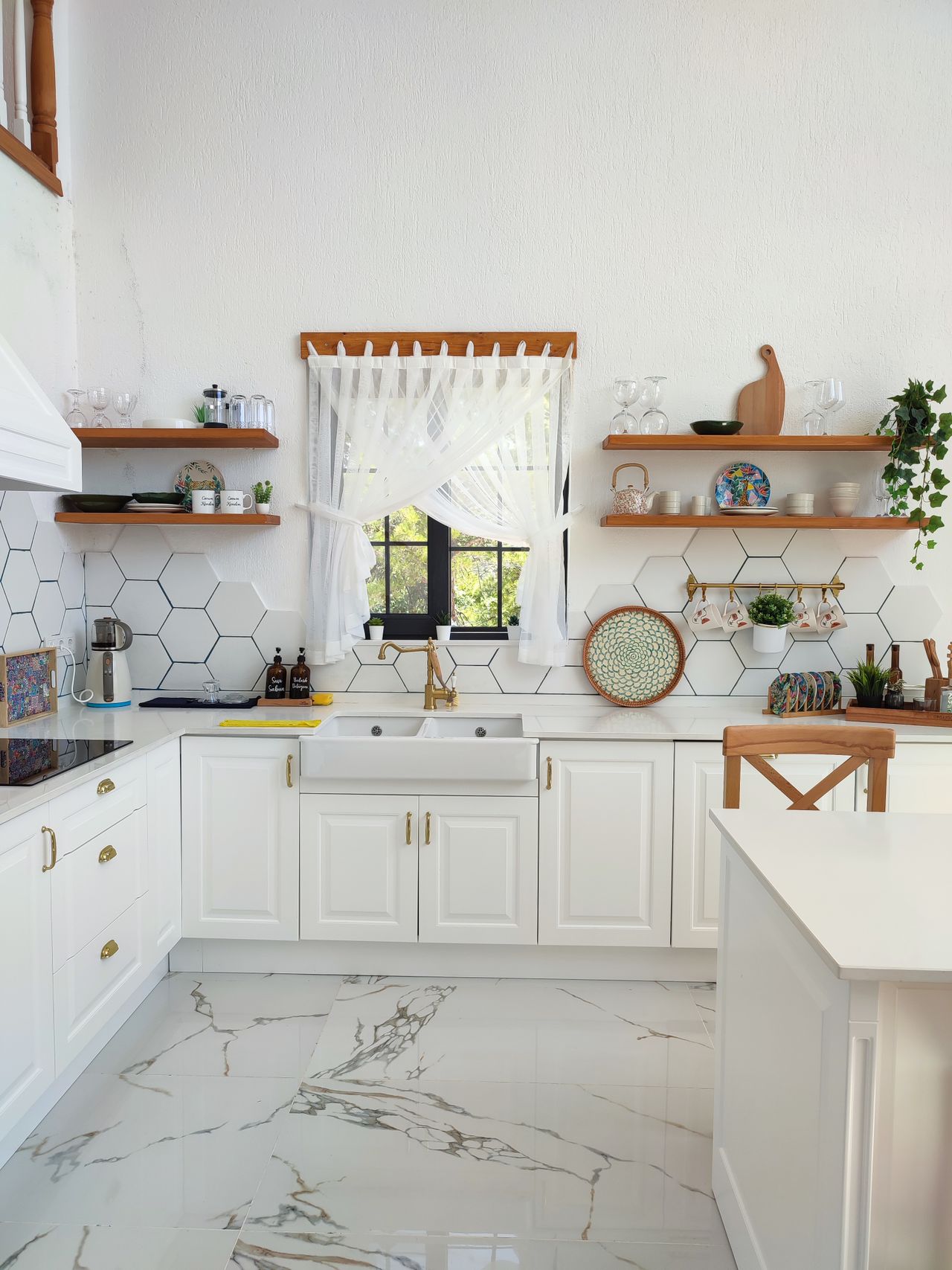
Hardware is small, but it is repeated on every door and drawer, so it dates a kitchen faster than almost anything else. Oil-rubbed bronze marked the 2000s, stainless steel marked the 2010s, and matte black marked the early 2020s. Brushed brass is popular right now, and it can look lovely, but if you put it everywhere, the kitchen may one day read as a product of this moment. Brushed nickel has stayed neutral for a long time, and a mix of nickel and warm brass often feels more layered and less tied to one year than a single finish used on every surface.
The good news is that hardware is one of the cheapest things to change. A full set of knobs and pulls for an average kitchen often costs $200 to $800, and swapping them takes an afternoon with a screwdriver and a template. So enjoy a finish you love, but keep the holes standard and avoid unusual sizes that are hard to replace. Choose simple cup pulls, bar pulls, or round knobs with clean lines, skip novelty shapes, and remember that you can refresh the whole room later for a few hundred dollars. That is the right place in the budget for a trend: small, cheap, and easy to undo.
8. Build Storage That Hides the Clutter
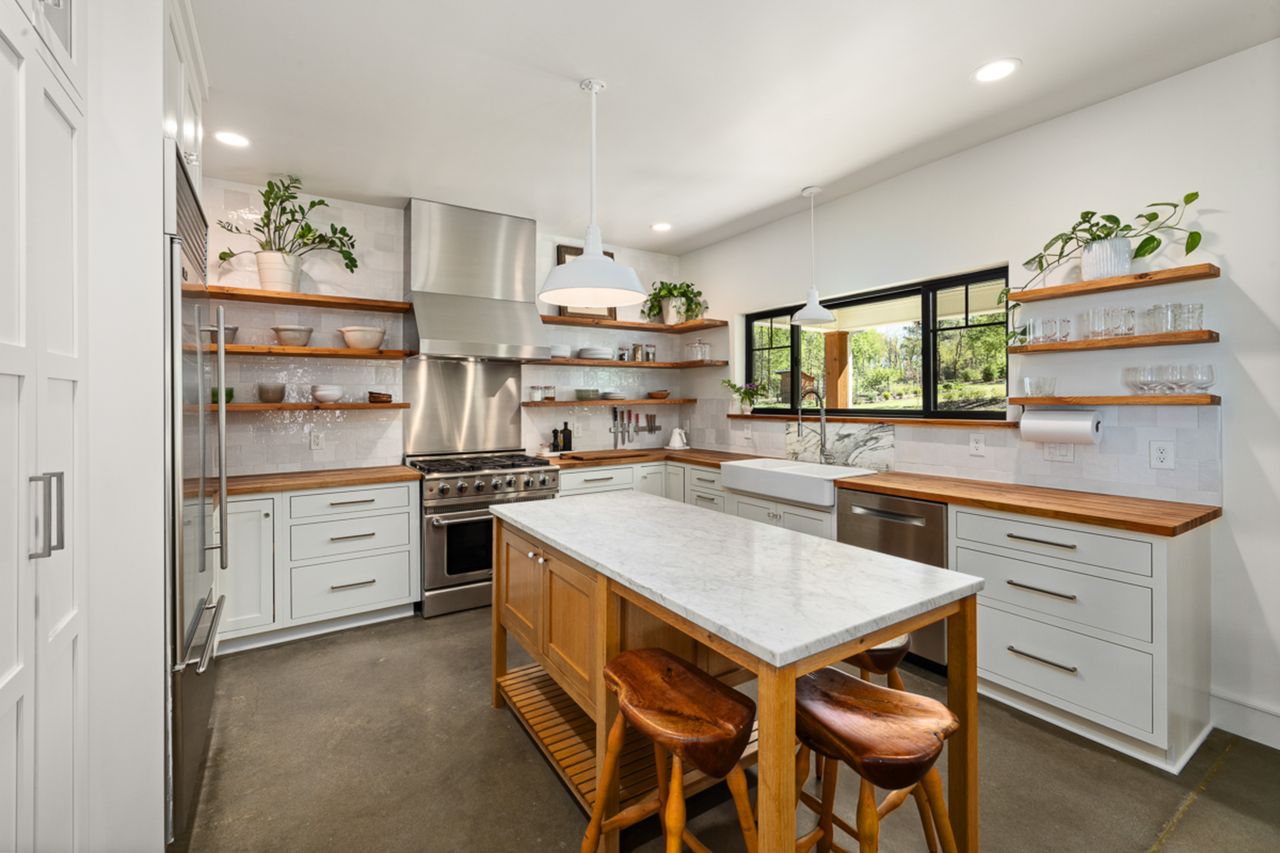
A calm kitchen is mostly a kitchen where things have a home. Deep drawers beat deep shelves for pots, pans, and dishes, because a drawer pulls all the way out and the back is as easy to reach as the front. A pull-out trash and recycling bin, a tray divider near the oven, and a spice pull-out near the stove save hundreds of small steps every week. Corner cabinets need a real plan too, not just an empty dark box: a lazy Susan, a pull-out corner unit, or drawers can rescue space that otherwise becomes a graveyard for appliances. Our guide to the kitchen corner cabinet covers those options with real measurements, and it is worth reading before you sign off on a cabinet order.
Be honest about open shelving. It looks beautiful in photos, but it collects dust and grease, and it only stays beautiful if you own a small set of matching dishes and use them often. A good compromise is mostly closed cabinets, with one or two open shelves for everyday dishes or a few favorite pieces. Keep countertop appliances to the ones you use every day, and store the rest. A clear counter makes even a modest kitchen feel larger and more expensive, and it costs nothing. Storage is not glamorous, but it is what keeps a classic kitchen looking calm ten years later, when a trendy kitchen has already filled up with clutter.
9. Layer Simple, Warm Lighting
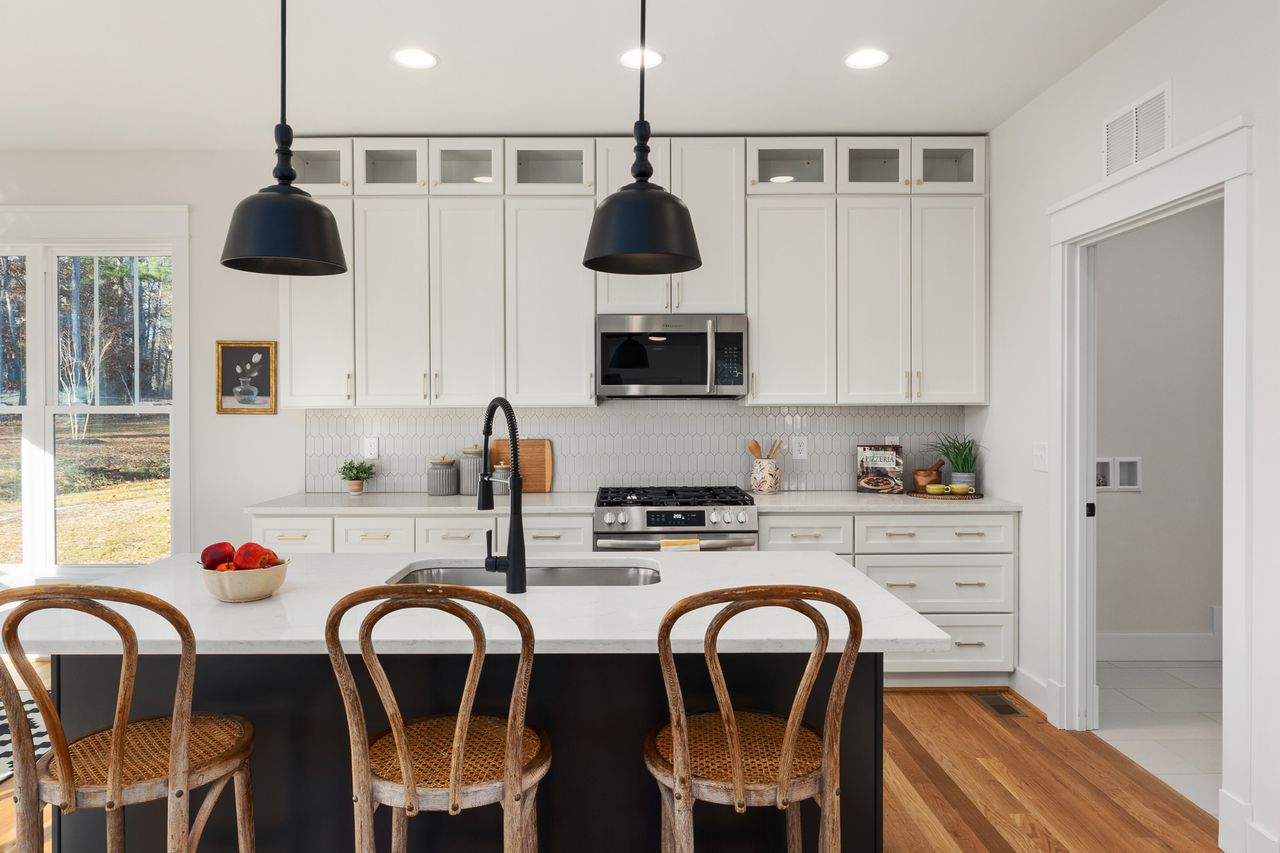
One harsh ceiling light makes any kitchen feel dated and tiring. A lasting lighting plan has three layers: recessed or ceiling lights for general light, under-cabinet lights for the work counters, and pendants or sconces for warmth and focus. Warm white bulbs, around 2700K to 3000K, flatter food, wood, and skin far better than cold daylight bulbs. Put the layers on separate dimmers if you can, so the kitchen can be bright for prep and soft for dinner. Under-cabinet lighting alone can transform an older kitchen for a few hundred dollars, which makes it one of the best value upgrades in this whole guide.
Keep the fixtures themselves simple. A classic dome, a schoolhouse shade, a plain glass pendant, or a simple metal shade will outlast a sculptural fixture that tries to be the star of the room. Hang pendants 30 to 36 inches above the island counter, and keep them in proportion to the island: two small pendants over a short island, three over a long one. Avoid plastic diffuser covers that yellow with age, and avoid a single trendy fixture style repeated everywhere. When the light is warm, layered, and easy to dim, the whole kitchen feels welcoming, and changing a pendant later is a simple job, not a remodel.
10. Add Strong Color in One Place Only

You do not have to live in an all-white room to have a kitchen that lasts. The trick is to put your strong color in exactly one place and keep everything else calm. A deep navy island with white perimeter cabinets, a dark blue tile backsplash in an otherwise white kitchen, or sage green lower cabinets with white uppers all work because the eye has one clear focal point. The rest of the room stays quiet, so the color feels chosen, not accidental. That single accent can be repainted or retiled later for a fraction of a full remodel, which is why it is a safe way to show personality.
What fails is strong color everywhere at once: colored cabinets, a colored counter, a patterned backsplash, and colored appliances, all competing. That combination is hard to live with and hard to sell, and it is the first thing a future buyer or a future you will want to rip out. So pick your one bold move, commit to it, and let the rest of the room support it. A navy island, a green pantry wall, or a single wall of beautiful tile gives you a kitchen with character today and a kitchen you can update tomorrow without starting over.
Frequently Asked Questions
What dates a kitchen the fastest?
Hard-to-change trendy choices date a kitchen fastest: a loud countertop pattern, a bold cabinet color used everywhere, a geometric or picture-frame backsplash, and an oversized island that crowds the room. Hardware and light fixtures also date quickly, but they are cheap to swap, so they matter less than cabinets, counters, and layout.
Which cabinets age best?
Shaker-style doors in white, cream, sage, navy, or natural wood age best for most American homes, because the shape is simple and the color can be repainted. Look for plywood boxes, soft-close hinges, and full-extension drawers. A simple door with strong construction will outlast a fancy door with weak hardware.
Are white kitchens still a good choice?
Yes, if the white is warm rather than icy, and if wood, stone, or another warm material keeps the room from feeling clinical. All-white kitchens with no warmth can feel cold, so add a wood counter, wood shelves, warm hardware, or a warm floor to balance the white.
Should I choose marble, granite, or quartz?
Marble is the most classic looking but needs sealing and accepts stains and etching. Granite is harder and more forgiving, especially in a quiet pattern. Quartz is the easiest to care for and a good choice for busy families. Pick a quiet pattern in any of the three, and keep the backsplash plain if the counter has strong veining.
Where should I spend first on a limited budget?
Spend first on layout, cabinet construction, and counters, in that order, because those are the hardest to change later. Save money with a simple backsplash, standard-size hardware, and paint instead of a full cabinet replacement when the boxes are still sound. Add under-cabinet lighting and new hardware for a big visual change at a small cost.
Final Thoughts
A kitchen that lasts is not a kitchen without personality. It is a kitchen where the expensive decisions are calm, the layout works for real cooking, and the personality lives in places you can change. Start with simple cabinets, a quiet counter, a plain backsplash, and a layout with room to move. Add warmth with wood, light with layered fixtures, and color in one confident place. Skip the all-gray room, the themed decor, the microwave over the range, and the competing patterns, and you will have a room that still feels right when trends have moved on twice over. That is the real payoff: a kitchen you enjoy every day, without paying for it twice.
Sources
- Classic Kitchen Ideas for a Timeless Home
- Classic Kitchen Design Ideas for New Build Kitchens
- Things to Get Rid of for a More Timeless Kitchen
- Kitchen Design Choices That Instantly Age Your Home
Gallery

No comments:
Post a Comment