Winter air in Canada gets painfully dry. When the furnace runs for months, indoor humidity can drop below 20 per cent, and you feel it: cracked lips, dry skin, static shocks, and a scratchy throat every morning. A steam humidifier boils water to release pure water vapour, pushing the moisture level back into the comfortable 30 to 50 per cent range.
This guide walks you through the main types of warm-mist and steam units, how to pick the right size, where to place the unit, and how to keep it clean and safe. Everything is written for Canadian homes, with prices in Canadian dollars and tips for our long heating season.

Photo: Wikimedia Commons
Table of Contents
- 1. How a Steam Unit Actually Works
- 2. Steam Versus Cool Mist
- 3. Evaporative Console Models
- 4. Radiator-Mounted Ceramic Pots
- 5. Matching the Unit to Your Room Size
- 6. Decorative and Traditional Designs
- 7. From Industrial Air Washers to the Bedroom
- 8. Hot Steam and Household Safety
- 9. Where to Place It for Best Results
- 10. Cleaning and Maintenance Routine
- FAQs
1. How a Steam Unit Actually Works
A steam humidifier is the simplest type to understand. An electric heating element boils the water in its tank, and the resulting steam flows out into the room. Because the water is boiled, the vapour it releases is nearly free of minerals and germs, which is a real plus in areas with hard water.
Most models hold between 3 and 5 litres and run 12 to 24 hours per fill on a medium setting. A built-in humidistat shuts the heater off once your target humidity is reached. Expect to pay $60 to $180 CAD for a good portable unit, with larger console models reaching $250 CAD.

Photo: Wikimedia Commons
2. Steam Versus Cool Mist
The other common choice is a cool-mist unit, usually ultrasonic or evaporative. These do not heat the water at all: ultrasonic models vibrate it into a fine mist, while evaporative models blow air through a wet wick. They use far less electricity and the mist feels cool, which many people prefer in a bedroom.
The trade-off is maintenance and water quality. Cool-mist units can spread mineral dust from hard water as a fine white powder, and a dirty tank can mist bacteria into the air. Steam models avoid both problems because boiling kills germs and leaves minerals behind in the tank. If anyone in the home has allergies, the steam route is usually the safer pick.

Photo: Wikimedia Commons
3. Evaporative Console Models
Evaporative consoles are the workhorses for large rooms. A fan pulls dry room air through a soaked wick or filter, and the air leaves carrying moisture. They cannot over-humidify a room the way steam or ultrasonic units can, because evaporation slows as the air gets damper. That self-regulating trait makes them forgiving.
The wick needs replacing every one to three months, at about $15 to $30 CAD each, so factor that into the running cost. They are also a little noisier because of the fan. For an open-concept living room of 40 to 60 square metres, a console is often the most practical choice.

Photo: Wikimedia Commons
4. Radiator-Mounted Ceramic Pots
The cheapest option of all hangs right on your radiator. These ceramic or stainless vessels hold about half a litre of water, and the radiator's heat slowly evaporates it. No electricity, no noise, no filters: just refill the pot every day or two during heating season.
They suit one small room, not a whole house. Output is modest, roughly enough to take the edge off dryness near the radiator. They also double as simple decor, and handmade ceramic ones cost $15 to $40 CAD each. Just keep them out of reach of small children, since the water gets hot.

Photo: Wikimedia Commons
5. Matching the Unit to Your Room Size
Manufacturers rate output in litres per day or square metres covered. As a rough rule, a tabletop unit suits a bedroom up to 25 square metres, while a console handles 40 to 70 square metres. An undersized unit running flat out will never reach 40 per cent humidity in a big open space.
Measure your room before you shop: length times width gives square metres. High ceilings, draughty windows, and open doorways all raise the load, so size up if your living room connects to a hallway or kitchen. It is better to run a larger unit on low than a small one on maximum day and night. A Montreal winter condo with an open layout is a classic case for sizing up.

Photo: Wikimedia Commons
6. Decorative and Traditional Designs
Humidifiers do not have to look like appliances. Porcelain radiator vessels with hand-painted designs have been used in European homes for decades, and they still work fine today. They evaporate water the same quiet way as plain ceramic pots, but they look like part of your decor.
You can find vintage and new decorative models at antique shops and European home stores for $20 to $60 CAD. Check that the glaze is intact and food-safe, since the vessel holds heated water for months. Avoid cracked pieces: they can leak onto floors and radiators.

Photo: Wikimedia Commons
7. From Industrial Air Washers to the Bedroom
The technology is older than you might think. A century ago, factories used large air washers that sprayed water into the air stream to control humidity for printing presses and textile mills. Those industrial machines were the ancestors of today's whole-house and portable units.
The home version shrank the idea to a box on the floor. Knowing the history helps when you shop: the same principles still apply, which is why winterizing your home properly matters as much as the machine you buy. A draughty house will defeat even the best humidifier.

Photo: Wikimedia Commons
8. Hot Steam and Household Safety
Steam means boiling water, so treat the unit with the same respect as a kettle. Place it on a flat, waterproof surface at least 60 cm from walls and curtains, and never where a toddler or pet can tip it. The steam outlet itself can scald, so keep little hands away.
Let the unit cool for at least 30 minutes before refilling or cleaning. Unplug it first, then empty the tank. Most burns happen during refills, not during normal use. A model with an automatic shut-off when the tank runs dry is worth the small extra cost.

Photo: Wikimedia Commons
9. Where to Place It for Best Results
Put the unit in the room where you spend the most time, often the bedroom or living room. Keep it at least a metre from the bed and off the floor if possible: a sturdy table or dresser works well. Good air circulation around the unit spreads the vapour evenly.
Avoid corners, closets, and spots right under a smoke detector, since concentrated vapour can trigger false alarms. If windows start fogging heavily, the setting is too high or the unit is too close to the glass. For a cosy bedroom that stays comfortable all winter, steady placement matters more than maximum output.

Photo: Wikimedia Commons
10. Cleaning and Maintenance Routine
Empty and rinse the tank every day, and give it a deeper clean once a week. Fill it with a mix of one part white vinegar to three parts water, let it soak for 30 minutes, then scrub gently and rinse well. This stops the chalky mineral scale that hard Canadian water leaves behind.
Replace filters or wicks on the schedule in the manual, and never let water sit in the tank for days. A neglected humidifier can grow mould and bacteria, which defeats the whole purpose. Ten minutes of weekly care keeps the vapour clean and the unit running for years.
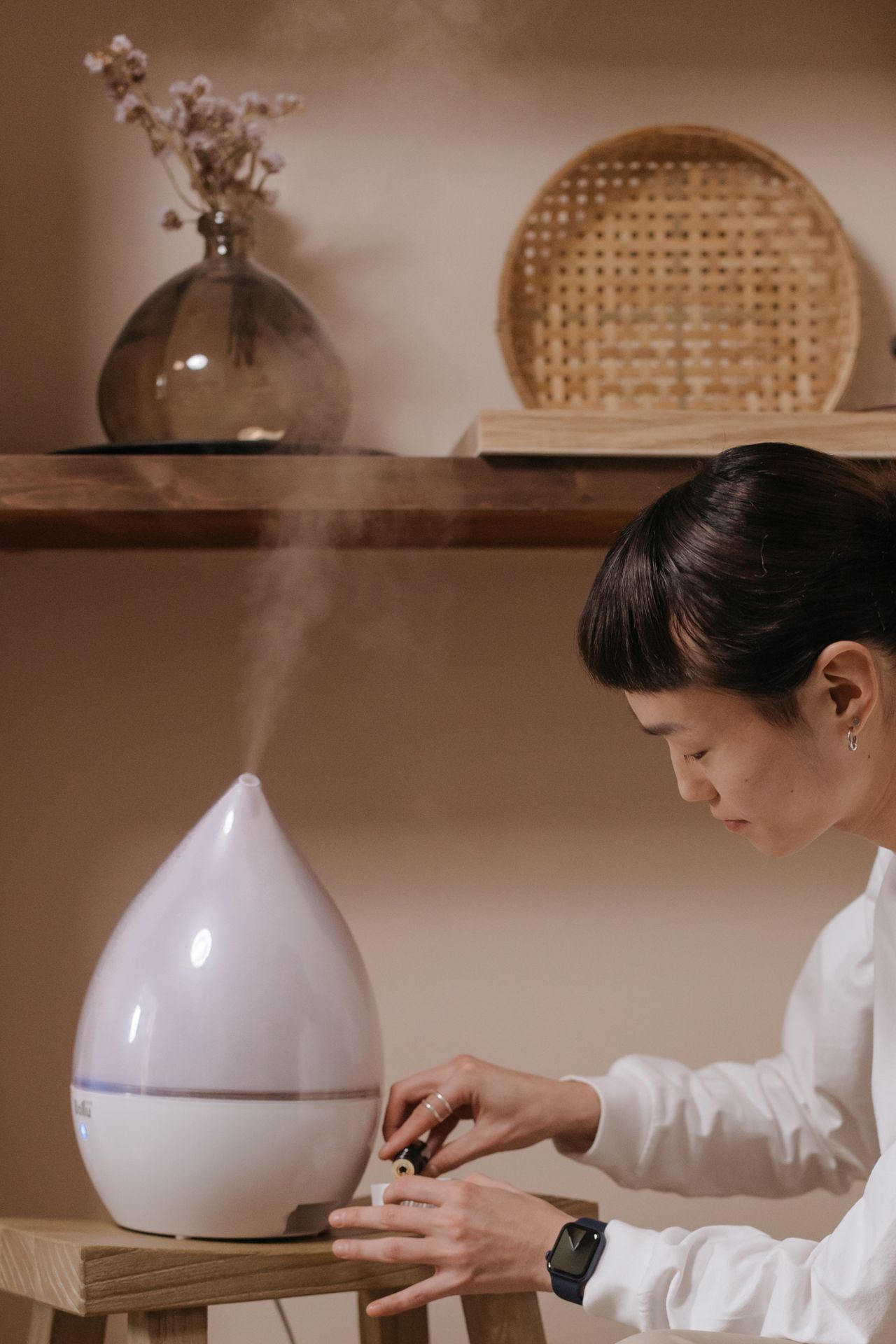
Photo: Pexels
FAQs
Can I leave my steam humidifier on all night?
Yes, if it has a humidistat and an automatic shut-off for low water. Set the target to 40 per cent, keep the unit away from the bed, and make sure the tank was filled with fresh water that day.
Do steam models use a lot of electricity?
More than cool-mist types, roughly like a small kettle running in short bursts. Expect about 300 to 400 watts while heating, though the humidistat cycles it on and off. For most homes the comfort is worth a few dollars a month.
Can I use tap water?
Yes, but hard tap water leaves mineral scale that needs weekly vinegar cleaning. Distilled or demineralised water cuts scale dramatically and is worth it if your water is very hard. Never use softened water with high sodium in a steam unit without checking the manual.
Why is there white dust on my furniture?
That usually comes from cool-mist ultrasonic units, not steam ones. Boiling leaves minerals in the tank instead of misting them out. If you see dust with a steam model, check that you are not overfilling past the maximum line.
What humidity level should I aim for in winter?
Most experts suggest 30 to 50 per cent indoors. In deep cold, stay near 30 to 35 per cent to avoid condensation on windows. A $15 hygrometer tells you exactly where you stand.
Final Thoughts
Winter dryness is one of those problems you feel every day until you fix it. Pick the right size, place it sensibly, and keep up the weekly clean, and a steam unit will carry your home comfortably through the coldest months. Your skin, your wood furniture, and your morning throat will all notice the difference.
Sources
Gallery

Photo: Wikimedia Commons

Photo: Wikimedia Commons

Photo: Wikimedia Commons

No comments:
Post a Comment