Searching for plants for HDB corridor gardening? The narrow strip outside your flat can be so much more than a walkway — with the right picks, it becomes a green welcome that cools the air, lifts your mood and gives the whole floor something lovely to walk past. The trick is matching each plant to how much sun your corridor actually gets, because a sun-lover sulks in shade and a shade-lover scorches in the afternoon blast.
Below you will find 12 hardy choices organised by sunlight level: four for sun-baked corridors, four for partial shade, and four for the deep shade of corridors facing another block. Every pick thrives in Singapore's hot, humid climate, and each one comes with the practical rules that keep corridor gardening legal and neighbour-friendly — the 1.2 metre fire-safety clearance, Town Council clutter guidelines, NEA dengue prevention, and the small courtesies that stop watering day from becoming a dispute.

Photo: PattayaPatrol, via Wikimedia Commons (CC BY-SA 4.0)
Contents
- 1. Bougainvillea
- 2. Moss Rose
- 3. Blue Porterweed
- 4. Lemongrass
- 5. Money Plant
- 6. Spider Plant
- 7. ZZ Plant
- 8. Bromeliad
- 9. Peace Lily
- 10. Snake Plant
- 11. Aglaonema
- 12. Boston Fern
- FAQs
- Final Thoughts
- Sources
- Gallery
For Sunny Corridors (Full Sun)
Corridors that face east or west can catch several hours of direct tropical sun. These four picks flower or grow best with that heat, and they reward the brightness with colour.
1. Bougainvillea

Photo: Forest and Kim Starr, via Wikimedia Commons (CC BY 3.0)
Nothing says tropical colour like bougainvillea. Given four to six hours of direct sun, it covers itself in papery bracts of pink, magenta, orange or white, and it genuinely prefers our heat to a pampered life. Choose a dwarf variety so the plant stays compact in a pot, and feed it with a balanced fertiliser every two weeks during the growing season to keep the colour coming.
The one corridor rule here is pruning. Bougainvillea stems carry thorns, so trim regularly and never let branches creep into the 1.2 metre clearance path that SCDF requires for evacuation. Keep the pot hard against your wall, and a tidy, well-shaped plant will earn compliments instead of complaints. Potted plants typically cost S$8–15 at local nurseries.
2. Moss Rose

Photo: Joydeep, via Wikimedia Commons (CC BY-SA 3.0)
Moss rose (Portulaca grandiflora) is the plant for gardeners who forget to water. Its succulent leaves store moisture, its rose-like blooms open in the morning sun and close by evening, and it asks for almost nothing beyond a bright spot. It trails gently over the pot edge, so even a small 15 cm pot makes a cheerful display.
Because it sits low, moss rose never threatens the walkway clearance — but do not let the saucer become a mosquito nursery. Tip out any water sitting in saucers after watering or rain, in line with NEA's dengue prevention guidance. One or two pots along the parapet wall give colour without clutter.
3. Blue Porterweed

Photo: Krzysztof Ziarnek, Kenraiz, via Wikimedia Commons (CC BY-SA 4.0)
Blue porterweed (Stachytarpheta jamaicensis) is a Singapore native that feels right at home in our climate. Its slender spikes carry small violet-blue flowers almost year-round in full sun, and butterflies visit them constantly — a lovely bit of wildlife for an urban corridor. It is tough, fast-growing and unfussy about soil.
Fast-growing means you must stay ahead of it. Prune the stems back to 30–40 cm whenever they get leggy, and keep the pot in a corner of your frontage so the airy spikes do not brush passers-by. Town Councils act on complaints about overgrown, untidy displays, so a quick trim every fortnight keeps everyone happy.
4. Lemongrass

Photo: Undeka 11, via Wikimedia Commons (CC BY-SA 4.0)
Lemongrass earns its corridor spot twice: it is a genuinely useful cooking herb for tom yum and teas, and its lemony scent is pleasant around the doorway. It loves full sun and plenty of water, shooting up quickly in our climate. You can even start a clump from stalks bought for about S$2 at the wet market — just stand them in water until roots appear, then pot them up.
Water in the morning rather than at night, so excess water drains before it can drip onto the corridor floor or the flat below — a little consideration that prevents most watering disputes with neighbours. Divide the clump once a year to stop it bursting its pot, and trim the outer leaves for the kitchen regularly.
For Partial Shade
Most HDB corridors fall into this middle band — bright but without harsh direct sun for most of the day. These four are the workhorses of corridor gardening: forgiving, attractive and easy to find.
5. Money Plant

Photo: Mokkie, via Wikimedia Commons (CC BY-SA 3.0)
The money plant (Epipremnum aureum, also called golden pothos) is Singapore's most familiar corridor plant, and for good reason: it tolerates partial shade, irregular watering and general neglect while looking lush. Let it trail from a pot on a shelf, or train it up a small trellis against your wall for a living green panel. Cuttings root so easily that neighbours often give them away free.
One important caution: many people root cuttings in jars of water, but stagnant water is exactly what NEA officers look for during dengue checks — change the water daily, or root cuttings in soil instead. Also pin trailing vines to the wall so they do not creep across the walkway and snag ankles or brooms.
6. Spider Plant

Photo: Umasoyee, via Wikimedia Commons (CC BY-SA 4.0)
With its arching green-and-white striped leaves and dangling baby plantlets, the spider plant brings movement and texture to a corridor. It thrives in bright indirect light, needs only moderate watering, and its light pots are easy to lift and rearrange. Each plantlet can be potted up, so one plant soon becomes gifts for the whole floor.
Spider plants shine when hung from a hook or set on a small wall shelf — that keeps the floor completely clear for the 1.2 metre passage. Hanging displays still count under Town Council clutter guidelines, so keep them within your own unit's frontage and out of the shared walkway.
7. ZZ Plant

Photo: John Braggins, via Wikimedia Commons (CC BY 4.0)
The ZZ plant is famously near-indestructible. Its glossy leaflets and water-storing rhizomes let it survive weeks of neglect, dim light and the dry air of a sheltered corridor. Water only when the top few centimetres of soil are dry — overwatering is the one thing that kills it, causing the stems to go soft and yellow.
Its compact, upright shape stays within a 30 cm footprint, making it one of the most corridor-friendly plants you can own. The main habit to build is saucer discipline: always empty the saucer a few minutes after watering, because even a shallow pool of water can breed mosquitoes in our climate.
8. Bromeliad

Photo: pinay06, via Wikimedia Commons (CC BY 2.5)
Bromeliads deliver tropical colour through their foliage rather than flowers — striped, spotted or blushing red centres that glow in bright indirect light. They are slow-growing, stay compact, and need little more than a bright spot and occasional watering. A single striking pot often looks better than a crowd of them.
Here is the catch every bromeliad owner must know: the central cup naturally collects water, which makes it a classic mosquito-breeding site. Flush the cup with fresh water at least once a week — that single habit keeps the plant beautiful and keeps you on the right side of NEA inspections. Plants usually cost S$5–12.
For Shaded Corridors
Corridors facing another block or tucked under a deep overhang can be dim for most of the day. These four are genuine shade specialists that stay handsome with very little direct light.
9. Peace Lily

Photo: W.carter, via Wikimedia Commons (CC BY-SA 4.0)
The peace lily is the classic answer to a dark corridor. Its deep-green leaves tolerate low light, and it still produces elegant white blooms in shade. Best of all, it tells you exactly when it is thirsty by drooping dramatically — water it, and it perks up within hours. That makes it nearly impossible to kill through neglect or overwatering.
Keep it in a modest pot under 25 cm wide so the spreading leaves never intrude into the 1.2 metre walkway. In still corridor air, dust settles on the broad leaves, so wipe them with a damp cloth monthly — clean leaves photosynthesise better in dim light.
10. Snake Plant

Photo: W.carter, via Wikimedia Commons (CC BY-SA 4.0)
Also known as mother-in-law's tongue, the snake plant is the toughest shade plant on this list. Its stiff, upright leaves shrug off dark corners, missed waterings and hot spells alike — watering once a fortnight is plenty. The variegated forms with yellow edges add a sculptural accent that looks smart against a plain wall.
Its slim vertical profile hugs the wall, so it barely eats into the walkway at all — the most corridor-friendly shape of any plant here. Because it needs so little water, there is almost no runoff to bother neighbours below. Expect to pay S$7–12 for a good-sized pot.
11. Aglaonema

Photo: Sigit Jati, via Wikimedia Commons (CC BY-SA 4.0)
Aglaonema, or Chinese evergreen, is a local favourite for dim spots, and modern varieties come in pink, red and silver patterns that brighten the gloomiest corridor. It grows slowly, asks for little, and handles our humidity without complaint. Water when the topsoil feels dry and it will reward you with steady, colourful foliage.
Even slow growers need the corridor basics: keep pots within your own unit's frontage rather than drifting toward a neighbour's door, and keep saucers dry between waterings. A row of three small aglaonemas in matching pots looks far tidier — and draws fewer Town Council eyes — than a random crowd of containers.
12. Boston Fern
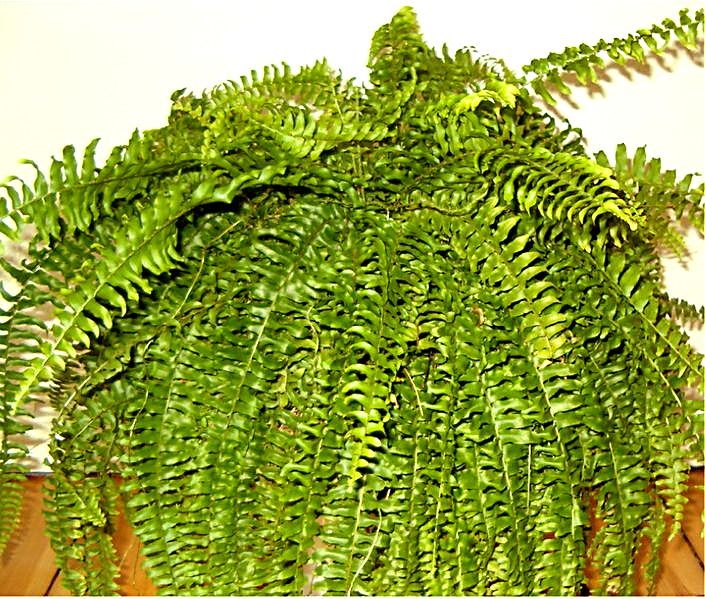
Photo via Wikimedia Commons (CC BY-SA 3.0)
The Boston fern loves exactly what a shaded Singapore corridor offers: low light, high humidity and shelter from harsh sun. Its feathery fronds cascade beautifully from a hanging basket, softening hard concrete edges. Mist the fronds on hot afternoons and keep the soil lightly moist, and it stays lush year-round.
Hang the basket high — fronds should clear head height at around 2 metres — so they never brush the faces of passers-by. Snip off brown fronds weekly, because an untidy, overgrown display is the fastest way to attract a neighbour's complaint and a Town Council notice.
FAQs
Can I put plants for HDB corridor gardening outside my flat?
Yes. Corridor gardening is allowed as long as you keep a clear 1.2 metre passage for fire evacuation, avoid fire hazards, and keep your pots within your own unit's frontage. Your Town Council can order the removal of anything it considers clutter or obstruction.
How do I stop mosquitoes breeding in my corridor pots?
Empty saucers after watering and after rain, flush bromeliad cups weekly with fresh water, and change water in rooting jars daily. NEA officers do inspect common corridors, and breeding carries fines.
Which plants survive a corridor with almost no direct sun?
Snake plant, ZZ plant, aglaonema, peace lily and Boston fern all cope with deep shade — see ideas 9 to 12 above. They will grow more slowly in dim light, so go easy on water and fertiliser.
What should I do if my neighbour complains about my plants?
Talk to them first: trim any overgrowth, shift pots back to your frontage and make sure the walkway is fully clear. If it escalates, the Town Council will mediate and can require removal — blocked 1.2 metre clearance is the most common trigger.
How much does it cost to start a corridor garden?
Most picks here cost S$3–15 at nurseries or wet-market plant stalls, and money plant or spider plant cuttings are often free from neighbours. Budget S$30–60 for a tidy starter row of five or six pots.
Final Thoughts
A lovely corridor garden is really two decisions: match the plant to your sunlight, and garden like a good neighbour. The twelve picks above cover every light level a Singapore corridor can throw at you, and none of them demands expert skills — just consistent watering, an empty saucer, and a pair of secateurs used regularly.
Start small with three or four pots, watch how they respond for a month, and expand from there. The corridors that stay green for years are not the biggest ones — they are the tidy, well-kept ones that neighbours enjoy walking past every day.
Sources
- NParks Flora & Fauna Web — plant identification and care information
- National Environment Agency — dengue and Zika prevention guidance
- Mothership — Sengkang resident's corridor garden and the 1.2 metre rule
- The Straits Times — plants removed from Pasir Ris corridor after complaints
- Her World — best indoor plants for the Singapore home
Gallery

Photo: PattayaPatrol, via Wikimedia Commons (CC BY-SA 4.0)

Photo: marsares, via Wikimedia Commons (CC BY 3.0)

Photo: Miguerum, via Wikimedia Commons (CC BY-SA 4.0)

No comments:
Post a Comment