An oversized leather coat can feel heavy before you even leave the house. The shoulders are wide, the body is long, and if you pair it with wide trousers and a chunky sweater, the whole outfit can look like one big block. The fix is not to buy a smaller coat. It is to change what goes underneath it, how you wear it open or closed, and which textures you let show. When the coat is the only big piece, and everything else is slim and simple, the coat looks intentional, modern, and surprisingly light.
This guide is built around three rules. First, wear the coat open whenever you can, so the layers underneath break up the volume. Second, keep the pieces underneath slim: fitted tops, straight or skinny trousers, slim skirts, and boots that do not add bulk. Third, let texture do the work instead of size: a soft knit, a smooth leather, a denim leg, or a satin skirt will give the outfit interest without adding weight. Follow those three rules, and a big coat becomes an asset instead of a burden.
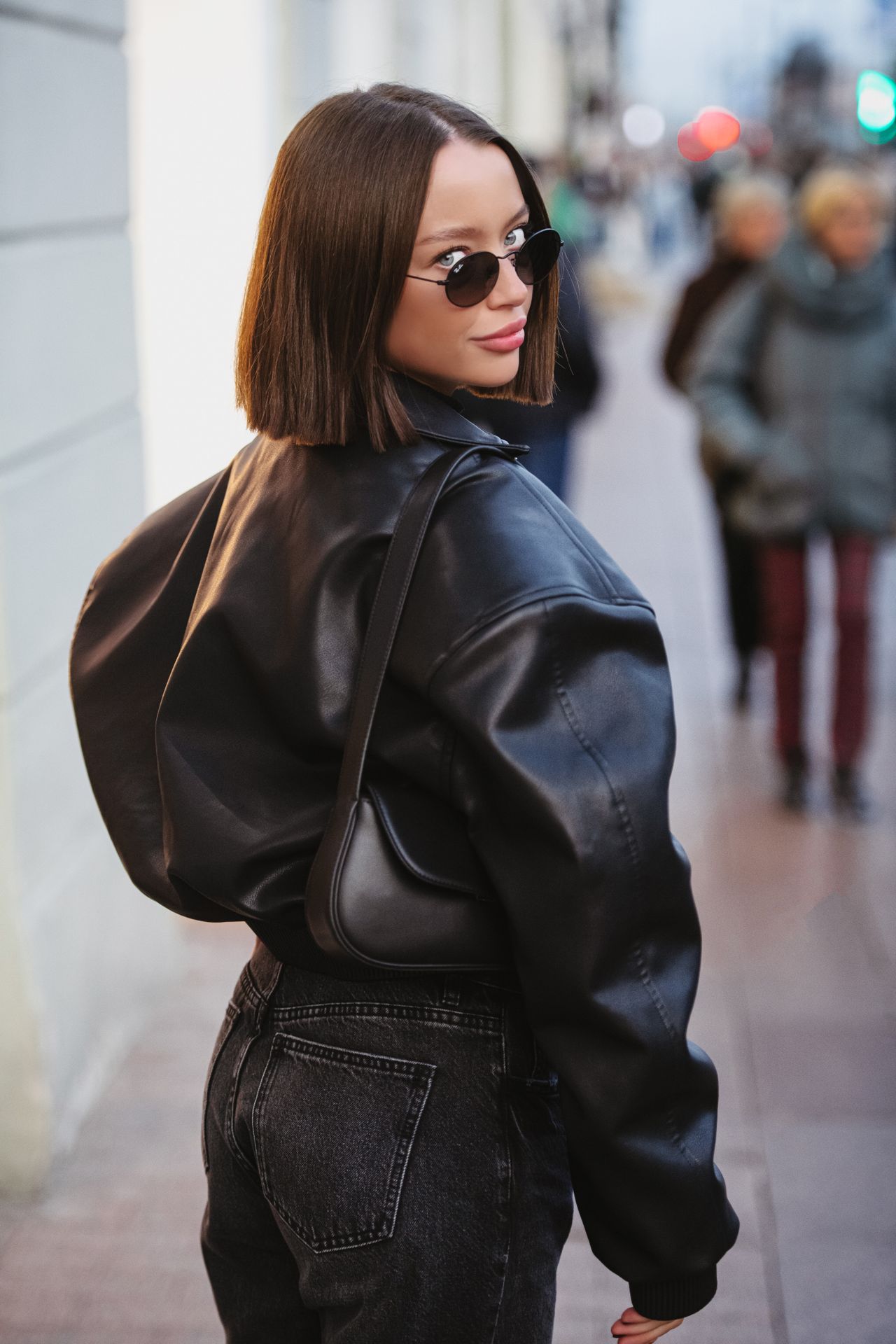
A woman seen from behind on a city street in an oversized black leather jacket, dark jeans, and a black shoulder bag. Photo: Pexels.
Table of Contents
- 1. Wear It Open First
- 2. Show the Layers Underneath
- 3. A Belt Gives a Big Coat a Waist
- 4. A Big Jacket Over a Short Skirt
- 5. Let Texture Do the Talking
- 6. Tonal Leather, Slim Below
- 7. A Long Coat Needs Slim Legs
- 8. One Thin Knit, Not Three Bulky Layers
- 9. Warmth Without Bulk: The Shell Does the Work
- 10. Check the Length Before You Buy
- Frequently Asked Questions
- Final Thoughts
- Sources
- Gallery
1. Wear It Open First
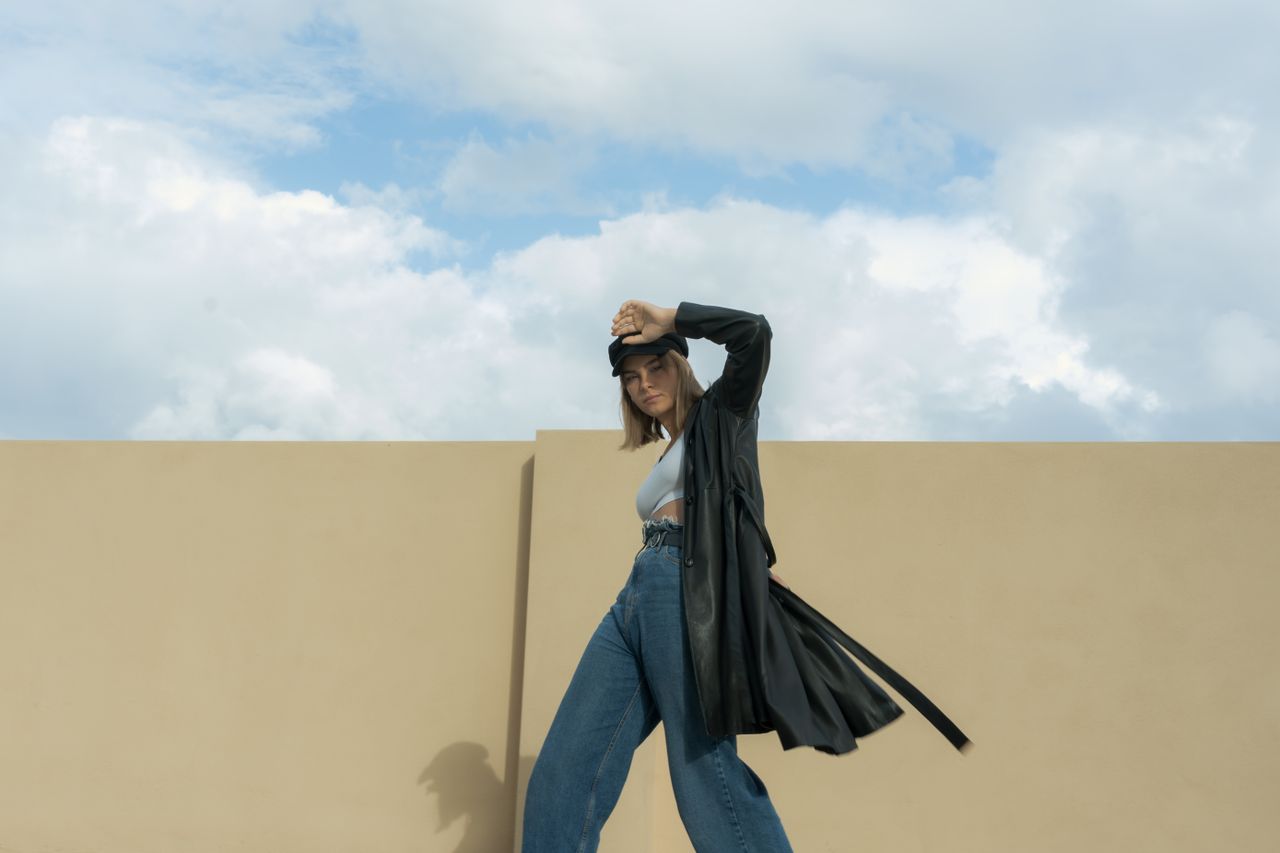
A woman outdoors in a long black leather coat worn open over a white top and blue jeans, against a beige wall and sky. Photo: Pexels.
Wearing a big coat open is the single fastest way to make it look lighter. When the coat is open, your torso shows in the middle, and the coat becomes a frame instead of a wall. The white top and blue jeans in the photo do exactly that: they create a vertical line down the center, so the eye reads the outfit as tall and narrow, even though the coat itself is long and wide. If the same coat were zipped shut, that center line would disappear, and the coat would look like one large dark shape.
Open also helps with movement. A coat that is open swings a little when you walk, which shows that the fabric is flexible rather than stiff, and it lets you show a belt, a tucked top, or a simple necklace that would otherwise be hidden. For cold days, you do not have to stay open all day: wear the coat open indoors and for photos, and close it only for the walk between places. A coat that can do both, open for style and closed for warmth, is worth more than a coat that only looks good one way.
2. Show the Layers Underneath
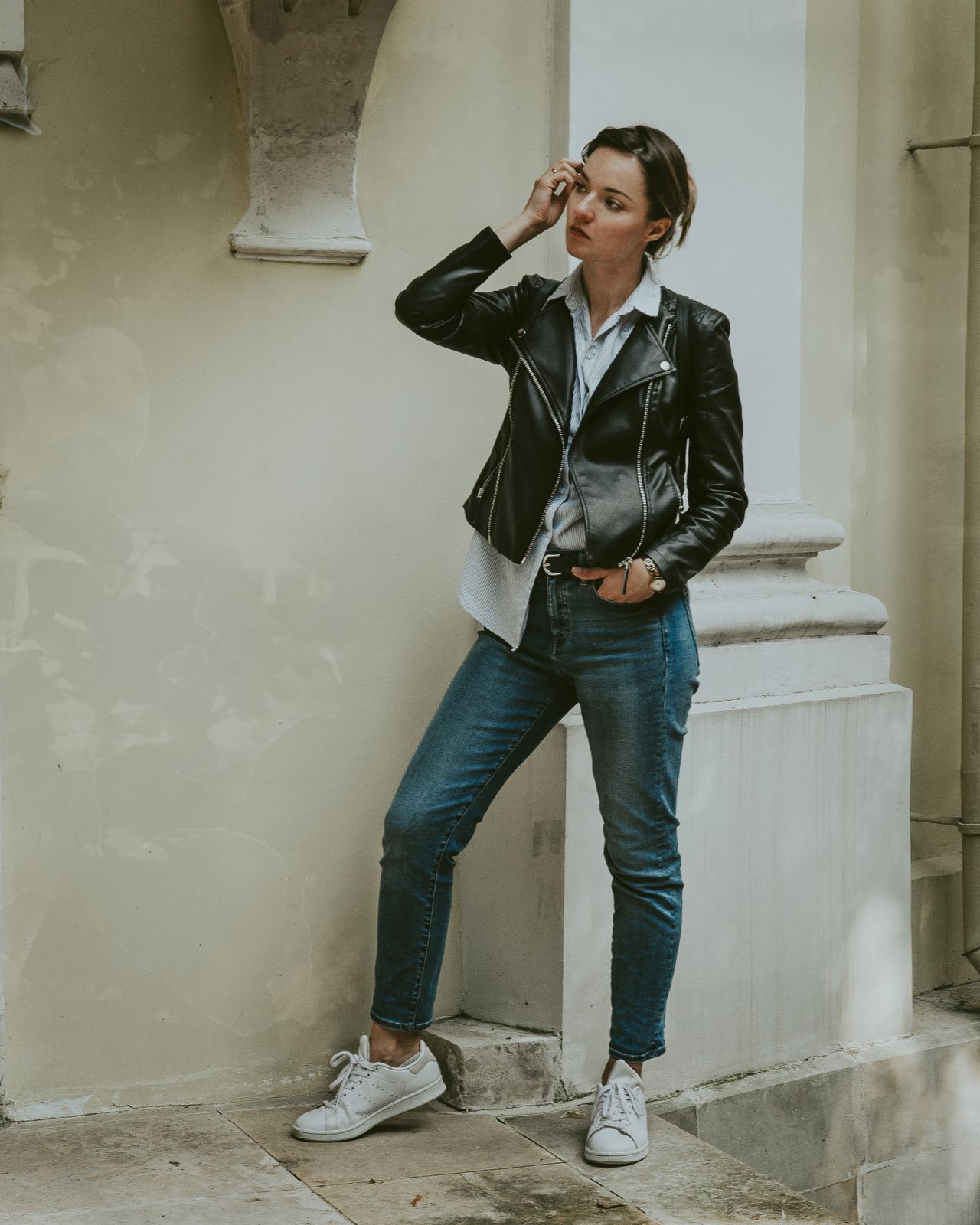
A woman standing by a stone pillar in a black leather jacket worn open over a striped shirt, blue jeans, and white sneakers. Photo: Pexels.
The layers underneath a big coat should be visible, not hidden. A striped shirt peeking out from under an open jacket, like the one in the photo, gives the outfit a second texture and a lighter color, which stops the black leather from feeling too heavy. The jeans are straight and slim, and the white sneakers are light, so the bottom half of the outfit stays narrow and bright, balancing the dark jacket on top. If the shirt were also black and the jeans were also wide, the whole outfit would sink into one dark mass.
Keep the underlayers thin. A fitted shirt, a thin knit, or a simple top will layer cleanly under leather, while a chunky sweater will bunch at the shoulders and the waist and make the coat look even bigger. Roll or push the sleeves once, if the coat allows it, so a little wrist and cuff show; that small detail tells the eye where your body ends and the coat begins. For shoes, white sneakers, slim ankle boots, or simple loafers all work, because they keep the leg line clean and do not add another bulky shape at the bottom.
3. A Belt Gives a Big Coat a Waist
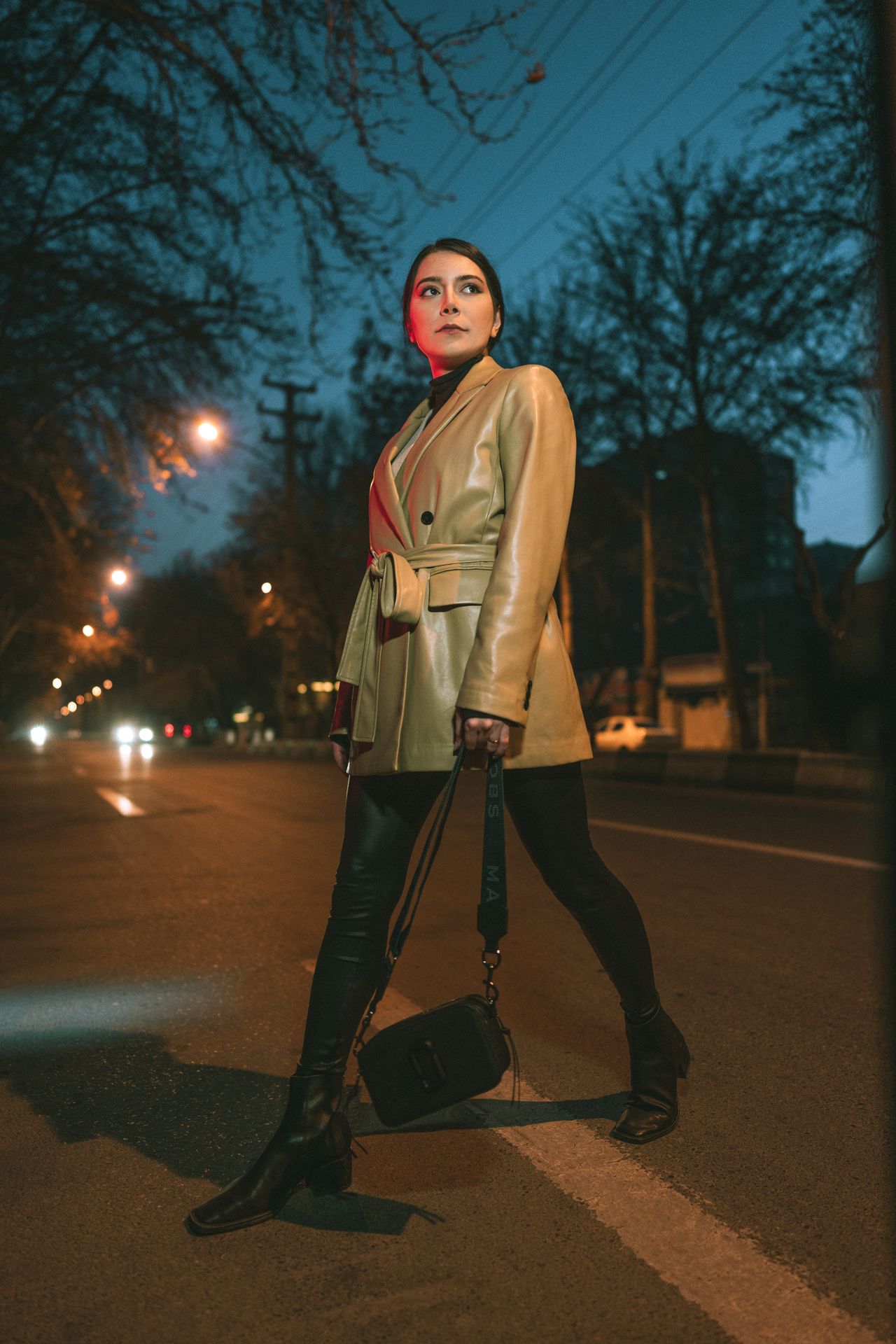
A woman at night on a street in a beige belted leather jacket, black leather pants, and black boots, carrying a black crossbody bag. Photo: Pexels.
A belt is the quickest way to give a roomy coat a shape, but it works best when the coat already has a belt or belt loops. The beige jacket in the photo is not as roomy as a true oversized coat, but it shows the belt lesson clearly: the tied waist pulls the jacket in at the natural waist, so the shoulders and the hips do not blend into one straight line. The slim black pants below keep the balance, because a belted top with wide bottoms would still look heavy. If your coat has no belt, you can still get a similar effect by wearing a fitted top underneath and leaving the coat open, so the waist shows in the middle.
Do not belt a coat that is already very stiff or very thick at the waist, because the belt will create bulk and gaps at the sides. A softer leather, or a coat with a fabric belt made for it, will cinch more cleanly. Also check the belt from the side: a belt that looks neat from the front but bulges at the back will show up in photos and when you sit down. If the belt does not sit flat, loosen it by one notch or wear the coat open instead, and let the underlayers define the waist for you.
4. A Big Jacket Over a Short Skirt
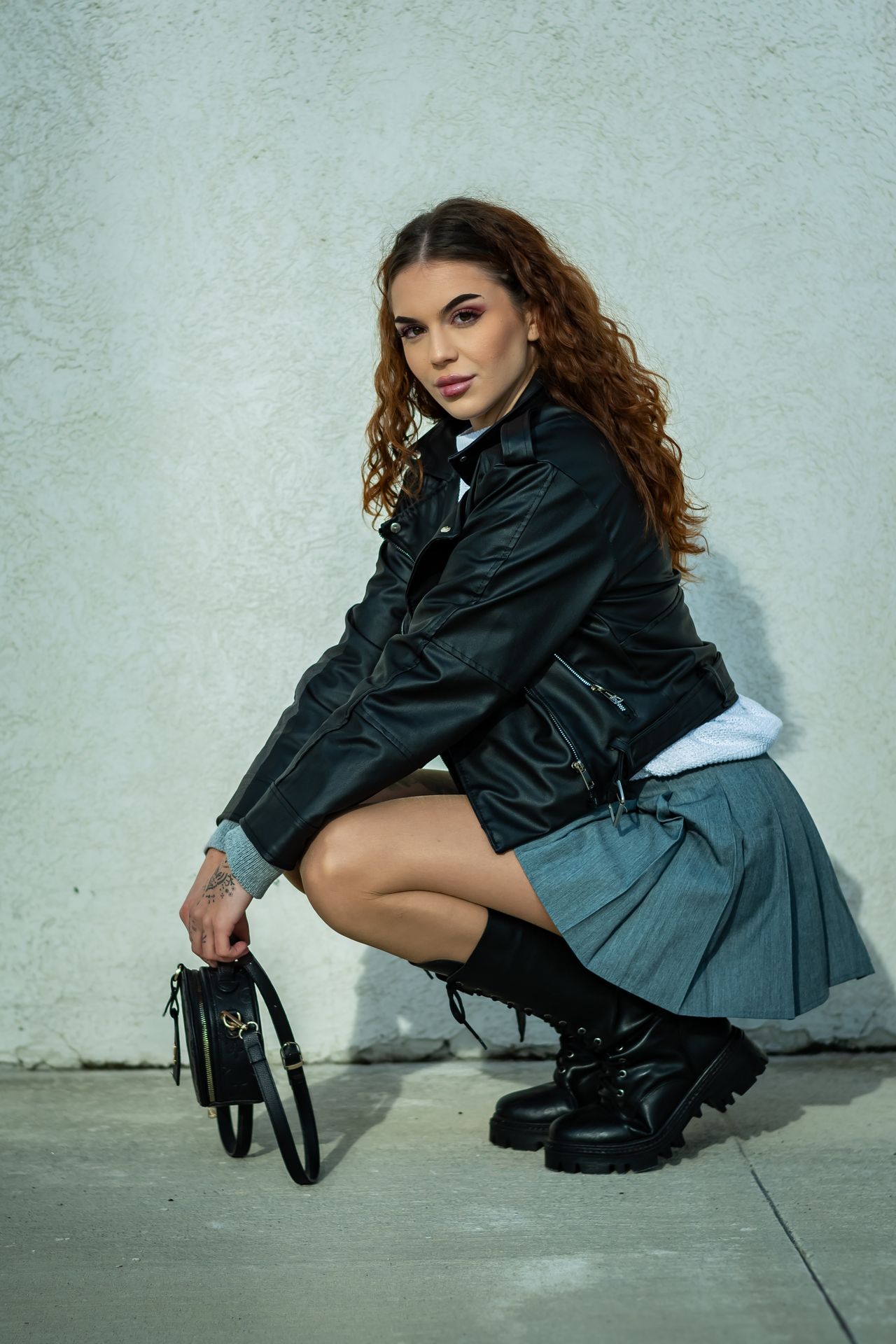
A woman crouching by a light wall in a black leather jacket, a gray pleated skirt, and black lace-up boots, holding a small black bag. Photo: Pexels.
A big jacket over a short skirt works because the proportions oppose each other: volume on top, slim and short below, with boots grounding the leg. The pleated skirt in the photo is short, but the black boots cover the leg and the jacket covers the torso, so the outfit feels balanced rather than bare. The gray skirt also lightens the black jacket, which helps on a bright day when an all-black outfit can look too heavy. For a similar look, choose a skirt in a matte fabric, such as wool, denim, or pleated polyester, rather than a shiny fabric that would compete with the leather.
For warmth, wear opaque tights under the skirt and boots, and choose a jacket length that ends at or above the hip, so the skirt still shows below it. A jacket that ends mid-thigh over a mini skirt will hide the skirt almost completely, and the outfit will read as just a jacket and boots. The same balance rule that works for a sweater and skirt helps here, too: if the top is big, the bottom should be simple and defined, and these skirt sweater outfit ideas show how a plain skirt and a sturdy boot can ground a strong top without adding bulk.
5. Let Texture Do the Talking
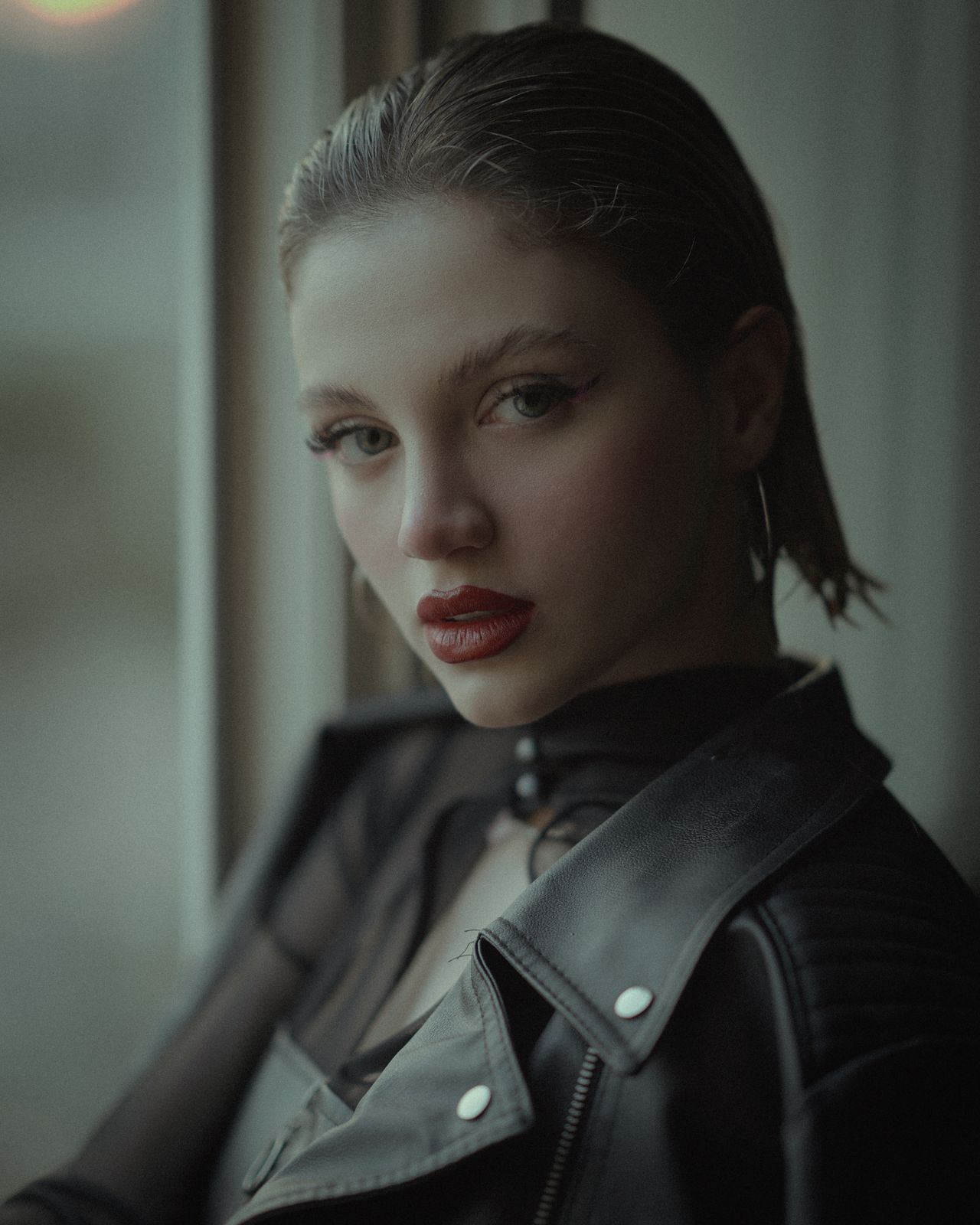
A close-up of a black leather jacket collar and shoulder, worn by a woman standing by a window. Photo: Pexels.
When a coat is big, texture is more useful than size. The close-up in the photo shows why: the leather has a smooth, slightly matte surface, with clean stitching and simple metal snaps, and that surface alone gives the jacket character. You do not need studs, fringe, or a loud print on top of a big shape, because the leather already provides the interest. A matte leather, a pebbled leather, or a suede panel will all read as expensive, while a very shiny, plastic-looking leather can make a big coat look cheap and heavy.
Pair leather with a contrasting texture underneath, rather than more leather. A soft knit, a cotton shirt, a denim leg, or a satin skirt will each make the leather stand out, because the eye can tell the materials apart. Leather on leather can work, as the next section shows, but it needs to be tonal and slim, not two different leathers in different finishes fighting each other. If you are unsure, hold the outfit up in daylight and look for contrast: if you can clearly see where the leather ends and the next fabric begins, the texture is doing its job.
6. Tonal Leather, Slim Below
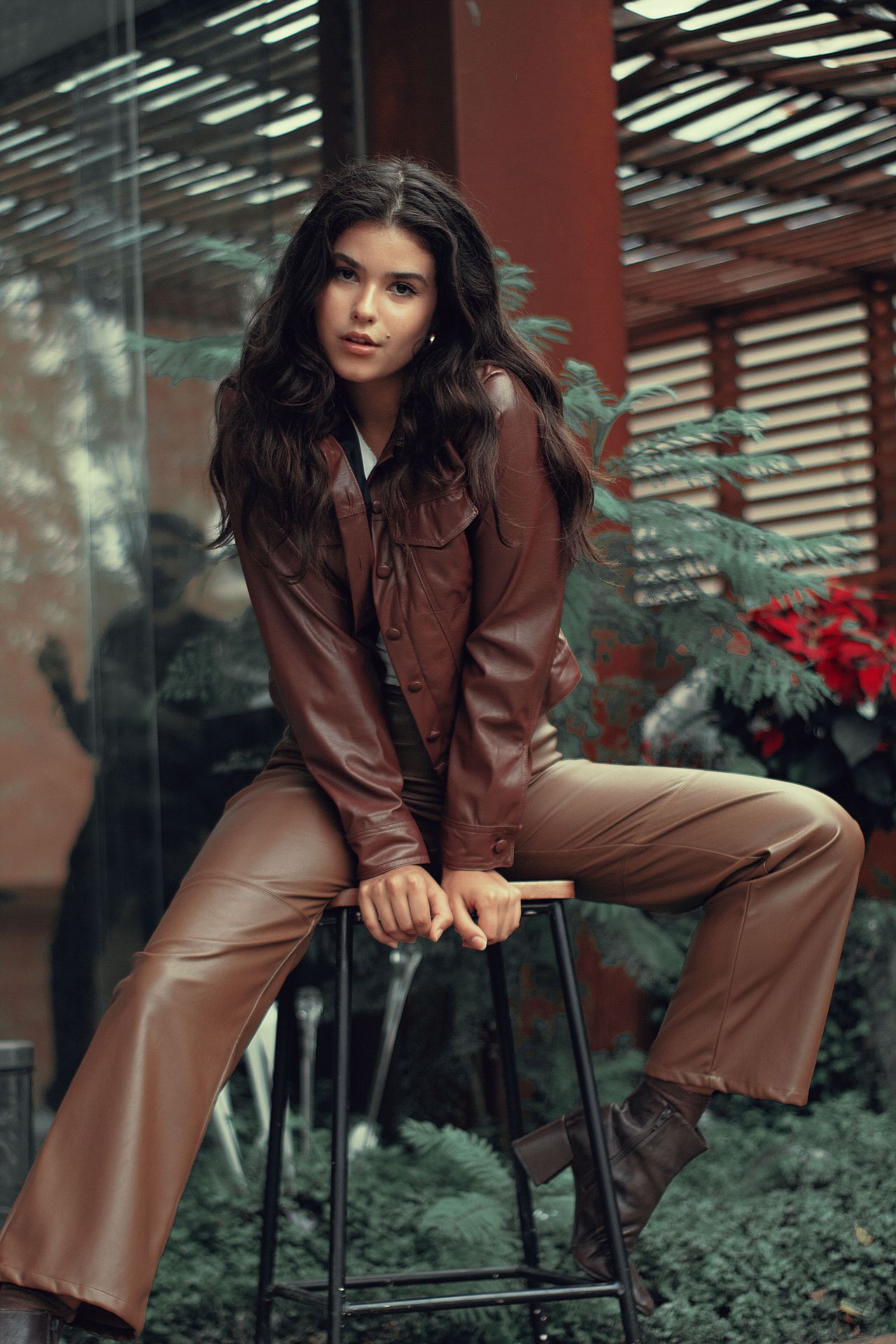
A woman seated on a tall stool in a brown leather jacket and matching brown leather pants, with dark boots, against plants and a wooden screen. Photo: Pexels.
Leather on leather is risky, but tonal leather, where the jacket and the pants are the same brown, can work if the pants are slim. The outfit in the photo is a single brown column, with no competing color, so the eye reads it as one long line rather than two separate leather pieces. The jacket is fitted, not oversized, which is an important detail: a fitted leather jacket with slim leather pants is a column, while an oversized leather jacket with wide leather pants would be a block. If you want to try leather on leather with a big coat, keep the pants slim and the coat open, so the column still shows in the middle.
Keep the shoes and bag in the same brown family, or in black, and skip a second strong texture, such as a fur scarf or a patterned bag, which would break the column. Brown leather also warms up well with cream, tan, or olive underneath, if you want to break the column a little without losing the tonal effect. A cream top under an open brown jacket, for example, will lighten the outfit and show the waist, while still keeping the overall palette calm and autumnal.
7. A Long Coat Needs Slim Legs
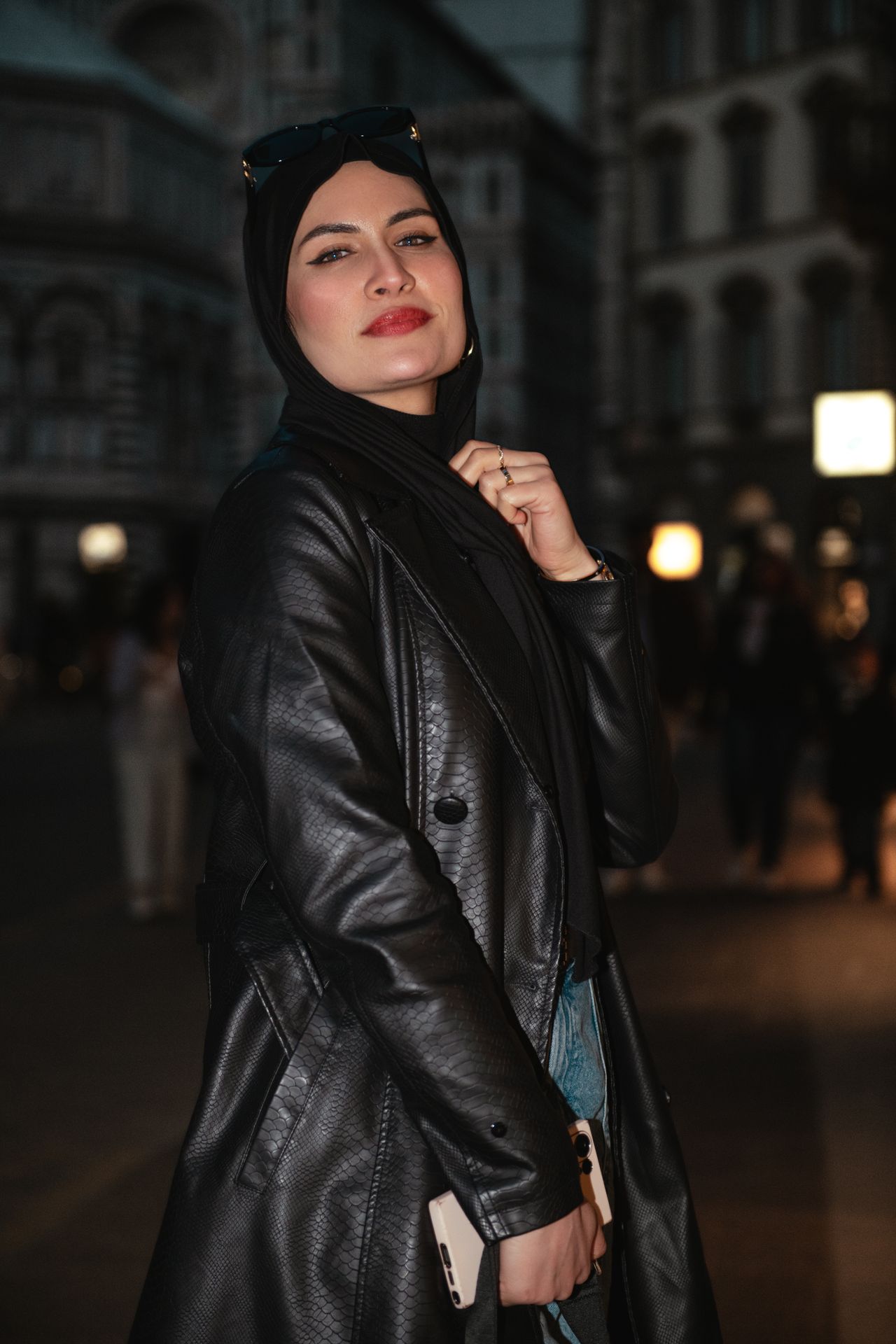
A woman at night on a city street in a long black textured leather coat, with a dark headscarf and sunglasses on her head. Photo: Pexels.
A long leather coat, like the textured black coat in the photo, covers most of the torso and the hips, so the legs are the only place where slimness can show. That is why slim trousers, leggings, tights, or straight jeans work best under a long coat, while wide trousers or a full skirt under a long coat will add volume at exactly the place where the coat already adds volume. The coat in the photo is worn over dark layers, with only a hint of blue denim showing, and that dark, slim base keeps the long coat from looking like a tent.
For a dressier version, a long coat over a slim dress or a pencil skirt, with opaque tights and heeled boots, gives the same slim-leg effect, and the coat becomes outerwear rather than the whole outfit. For coats over formal outfits, including how to keep the hem and the coat length working together, these winter wedding guest outfit ideas include a section on coats that work over formal wear, which applies just as well to a long leather coat over a dress. Avoid a long coat with very chunky boots and wide trousers together, because the bottom half will then be as heavy as the top half, and the outfit will lose its shape.
8. One Thin Knit, Not Three Bulky Layers
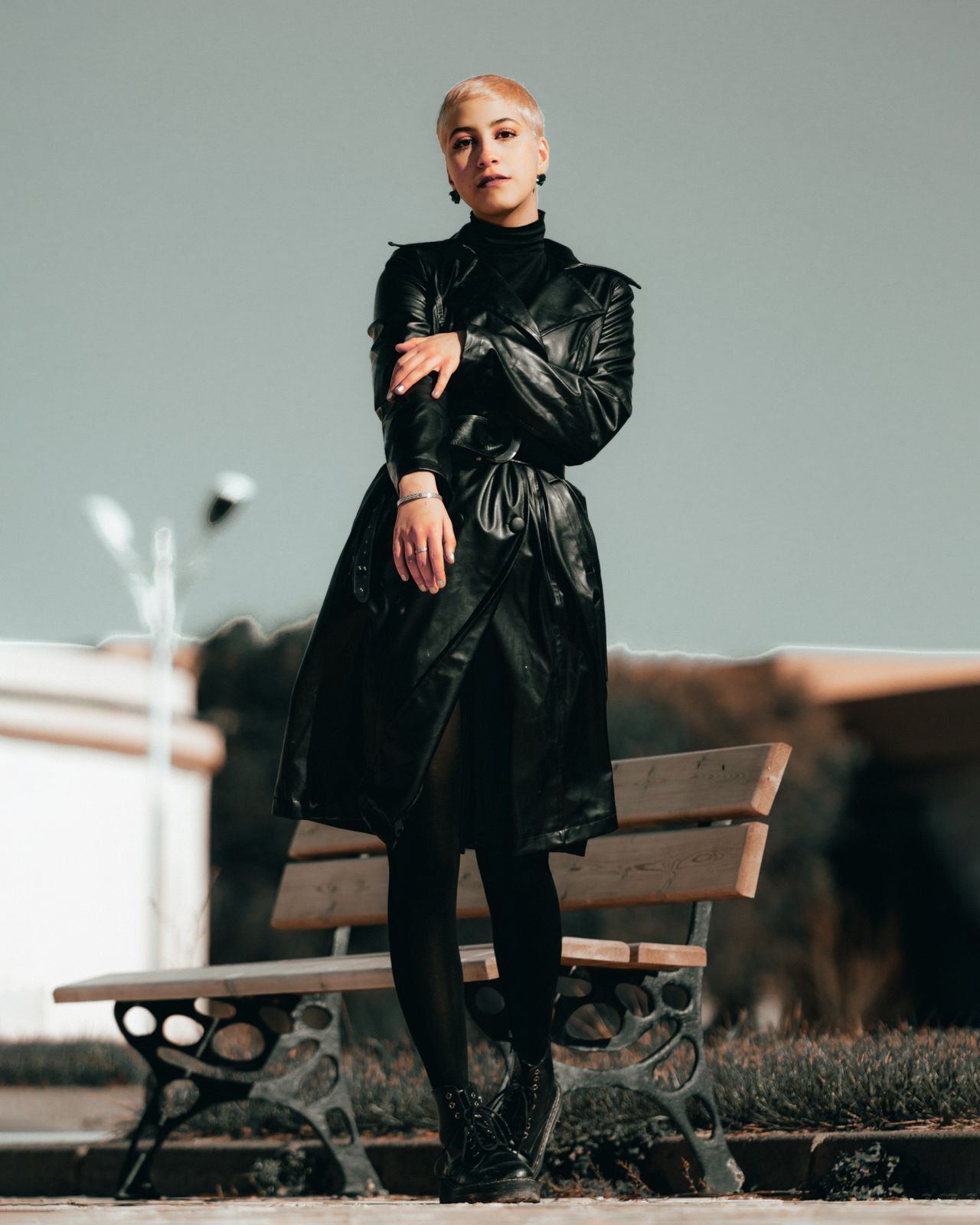
A woman standing by a wooden bench in a black leather trench coat over a black turtleneck, with black tights and black boots. Photo: Pexels.
Layering under a big coat is about thin layers, not many layers. One fine-gauge knit, such as the black turtleneck in the photo, plus a smooth base layer, will keep you warmer than three chunky sweaters stacked together, because chunky layers trap air unevenly and bunch at the shoulders, the waist, and the elbows. Leather is also windproof, so it works as a shell: the coat blocks the wind, and the thin knit underneath provides the insulation, without either piece having to be thick on its own.
Test your layers by putting the coat on and moving: reach overhead, sit down, and walk up stairs. If the sleeves bunch at the elbows or the waist pulls, one layer is too thick. Swap a chunky knit for a fine-gauge knit, a thermal top, or a fitted long-sleeve shirt, and the coat will hang cleanly again. For very cold days, below about 35°F, add a thin thermal layer under the knit rather than a second knit on top, and wear fleece-lined tights or slim thermal leggings under trousers, so the warmth stays close to the body and the coat still looks slim from the outside.
9. Warmth Without Bulk: The Shell Does the Work
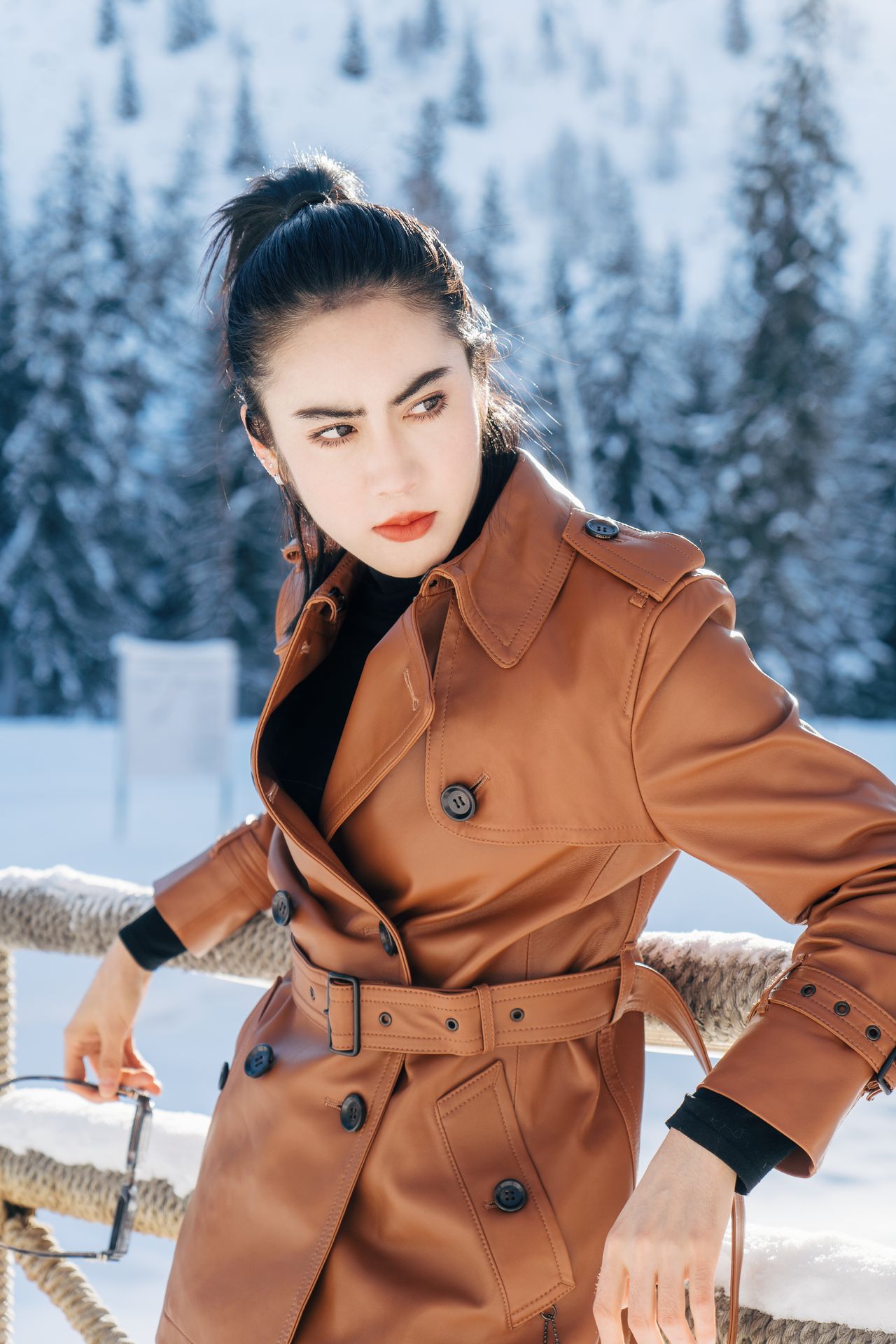
A woman in a brown belted leather coat over a black top, standing by a snowy railing with snowy trees behind her. Photo: Pexels.
Leather is a good cold-weather shell, because it blocks wind and light rain, but it is not insulation on its own. The brown belted coat in the snow in the photo works because the coat is the shell and the black top underneath is the warm layer, with the belt giving the coat a waist so it does not hang like a blanket. For snow or rain, a leather coat with a water-resistant finish will serve you better than an untreated leather coat, which can spot and stiffen when wet. Dry the coat at room temperature, never with direct heat, if it does get wet.
Choose the coat length for the weather you actually face. A hip-length coat is easier to move in and less likely to get wet at the hem, while a long coat covers more of the legs and keeps a dress warm, but it can drag in slush and needs more care. For most fall days, a coat that ends at the hip or just below it, worn over slim trousers and boots, is the most practical balance of warmth and lightness. Add gloves, a scarf, and a hat in a matte fabric, rather than another bulky layer under the coat, and the whole outfit will stay warm without looking padded.
10. Check the Length Before You Buy
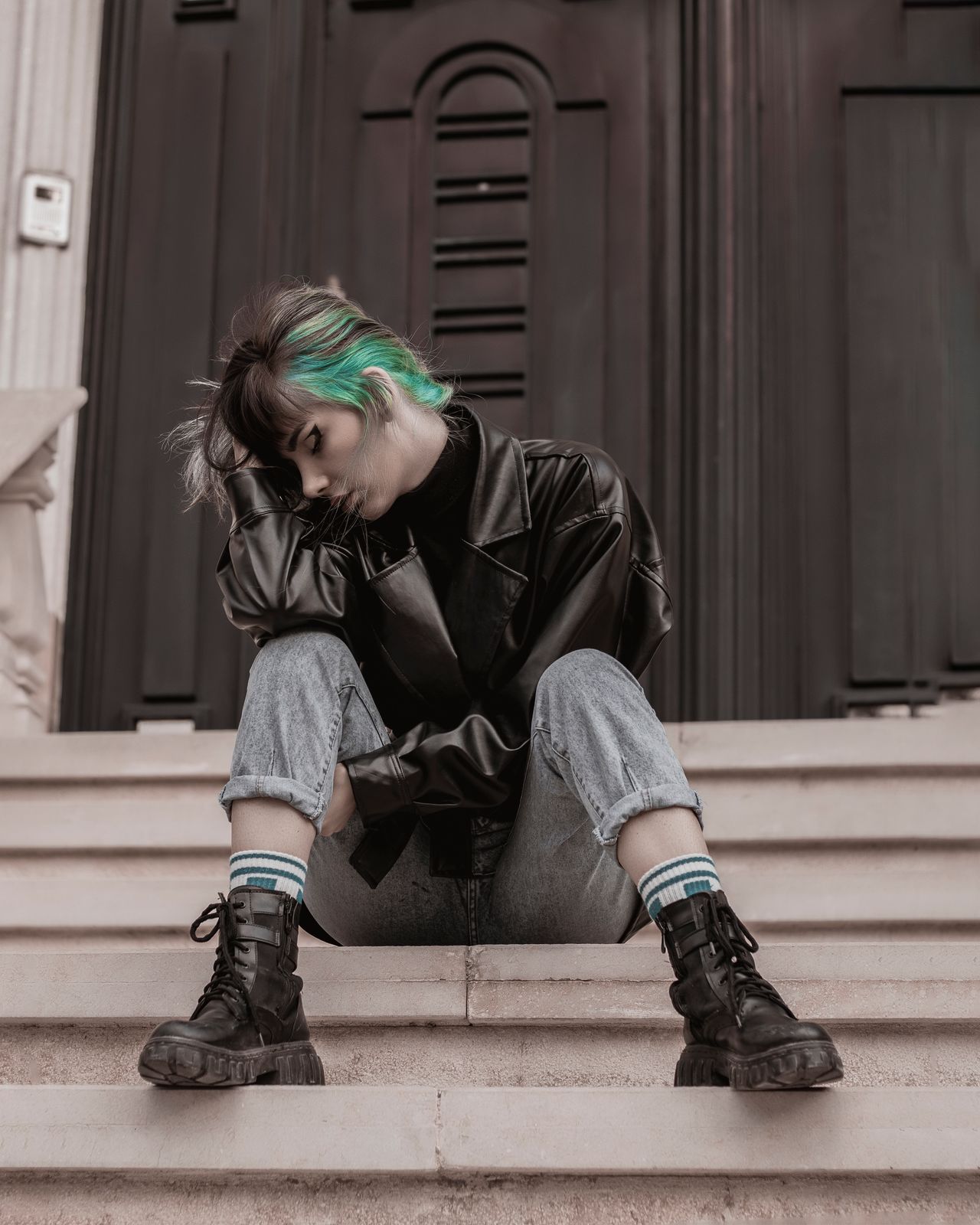
A woman sitting on steps in an oversized black leather jacket, cuffed gray jeans, striped socks, and black boots. Photo: Pexels.
Length is the detail that decides whether a big coat flatters you or overwhelms you. A hip-length or just-below-hip coat is the most forgiving for most heights, because it shows the legs and keeps the proportions clear. A mid-thigh coat can work if the legs below are slim and the boots are simple, while a knee-length or longer coat needs a slim base and a confident stride, or it can swallow a shorter frame. The photo shows a good test: the jacket is oversized, but the cuffed jeans and boots below it are slim and clear, so the jacket reads as a choice, not as a coat that is too big.
If you are petite, under about 5 feet 4 inches, prefer a cropped or hip-length version of a big coat, and avoid a coat that ends at the widest part of your hips or thighs, because that is where it will cut your height in half visually. If you are tall, you can wear longer coats more easily, but still keep the underlayers slim, so the coat does not add width as well as length. Try the coat with the shoes you will actually wear, not just with heels in the shop, because a coat that looks balanced with heeled boots can look very different with flat sneakers, and the shoe choice changes where the hem falls relative to your legs.
Frequently Asked Questions
Can a short person wear a big leather coat?
Yes, if you choose a hip-length or cropped version, keep the underlayers slim, and wear shoes that show the ankle or a clean boot line. A very long, very wide coat can overwhelm a shorter frame, so length matters more than width.
What should I wear under a big leather coat?
A thin, fitted top or fine-gauge knit, slim trousers or a slim skirt, and simple boots. Avoid chunky sweaters and wide trousers at the same time, because both add volume on top of the coat's volume.
Should I belt a big leather coat?
Only if the coat has a belt made for it, or if the leather is soft enough to cinch flat. A belt over a stiff, thick coat can bunch and gap. If belting does not sit flat, wear the coat open instead and let the underlayers show the waist.
Is leather warm enough for winter?
Leather blocks wind well, but it needs warm layers underneath for real cold. A thermal base, a fine-gauge knit, and fleece-lined tights or leggings will keep you warm without adding bulk under the coat.
Can I wear a big leather coat to work?
Yes, if the rest of the outfit is polished: a fitted top, straight trousers or a slim skirt, and clean boots or loafers. Keep the coat open indoors when you can, so the work outfit underneath shows clearly.
Final Thoughts
A big leather coat does not have to feel heavy. Wear it open, keep the layers underneath thin and slim, let texture carry the interest, and check the length against your height and your shoes. Those four choices will make the same coat look light on one day and heavy on another, depending only on what you pair it with, and that is good news, because it means you do not need a new coat to fix a heavy-looking outfit.
Start with the combination you already own: a fitted top, slim jeans or trousers, simple boots, and the coat worn open. Walk, sit, and check the outfit from the side as well as the front, and adjust one thing at a time, such as the layer thickness or the shoe, until the coat looks like a frame rather than a blanket. When the coat frames you instead of hiding you, you have found the version that works, and you can wear it all fall without feeling weighed down.
Sources
- How to style an oversized jacket
- How to style oversized leather jacket outfits
- How women can look great in oversized leather jackets
- How to style an oversized leather jacket
Gallery
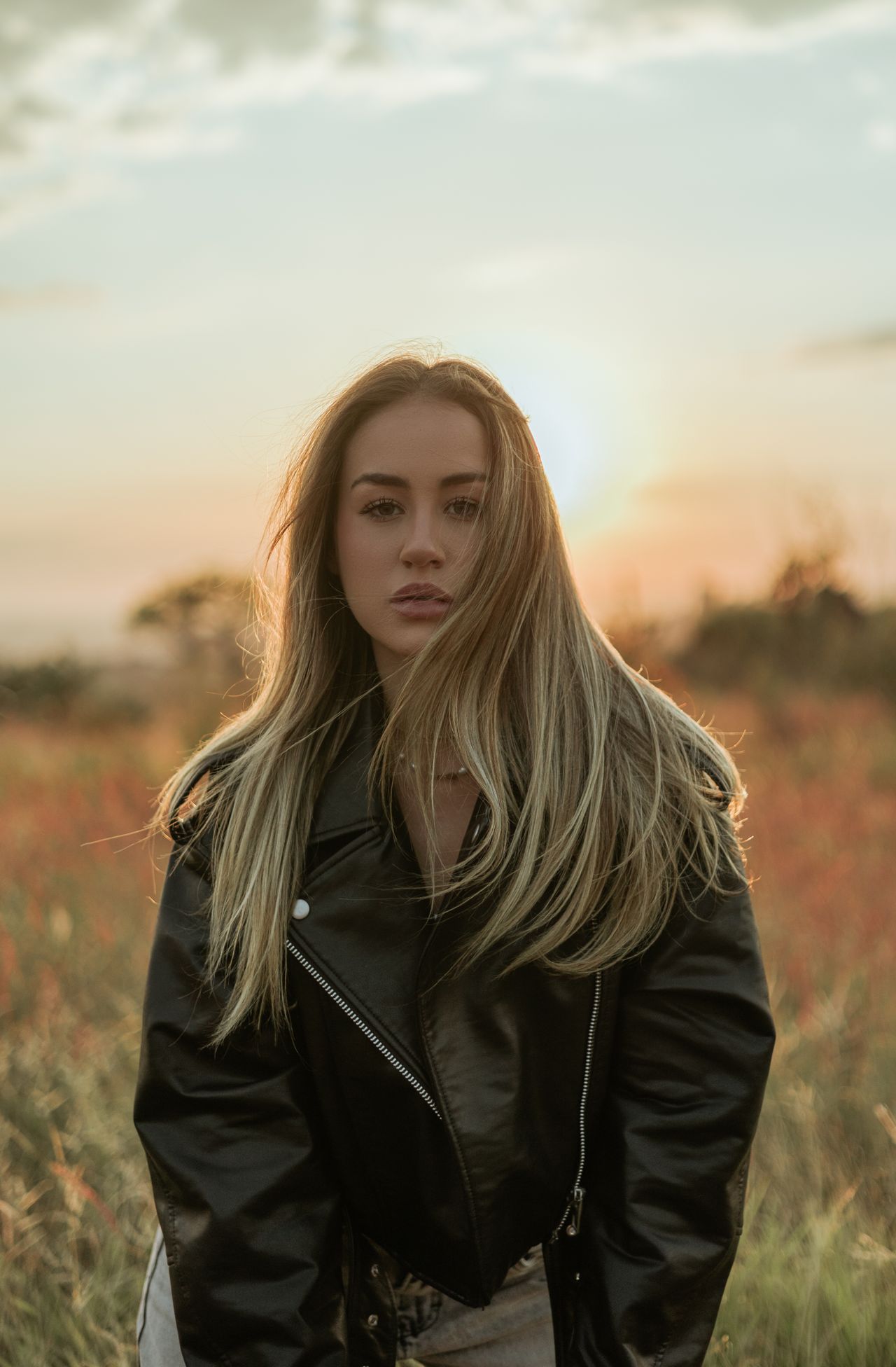
A woman in a black leather jacket standing in a field at sunset, with long blonde hair. Photo: Pexels.
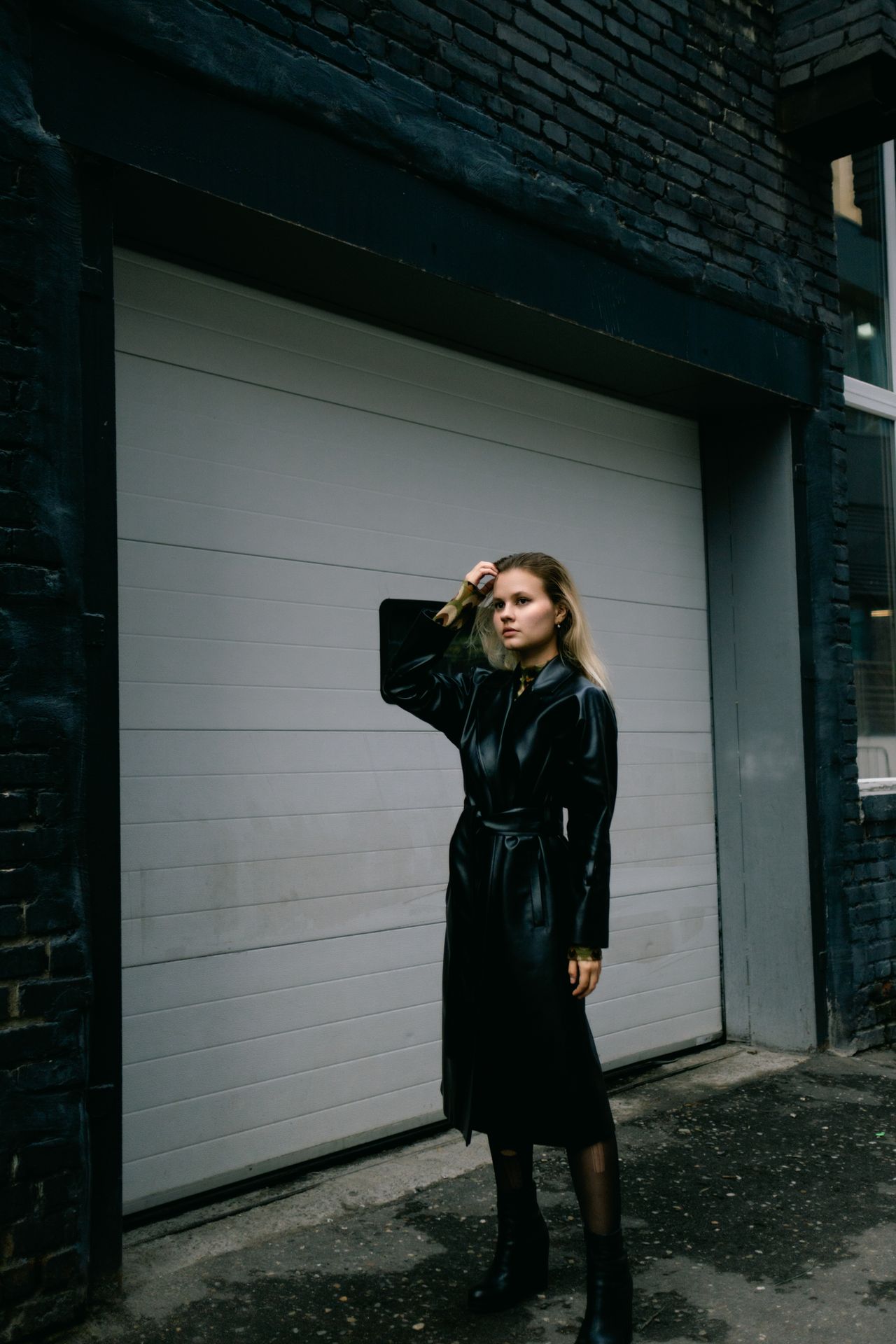
A woman in a long black belted leather coat, tights, and black boots, standing by a garage door. Photo: Pexels.
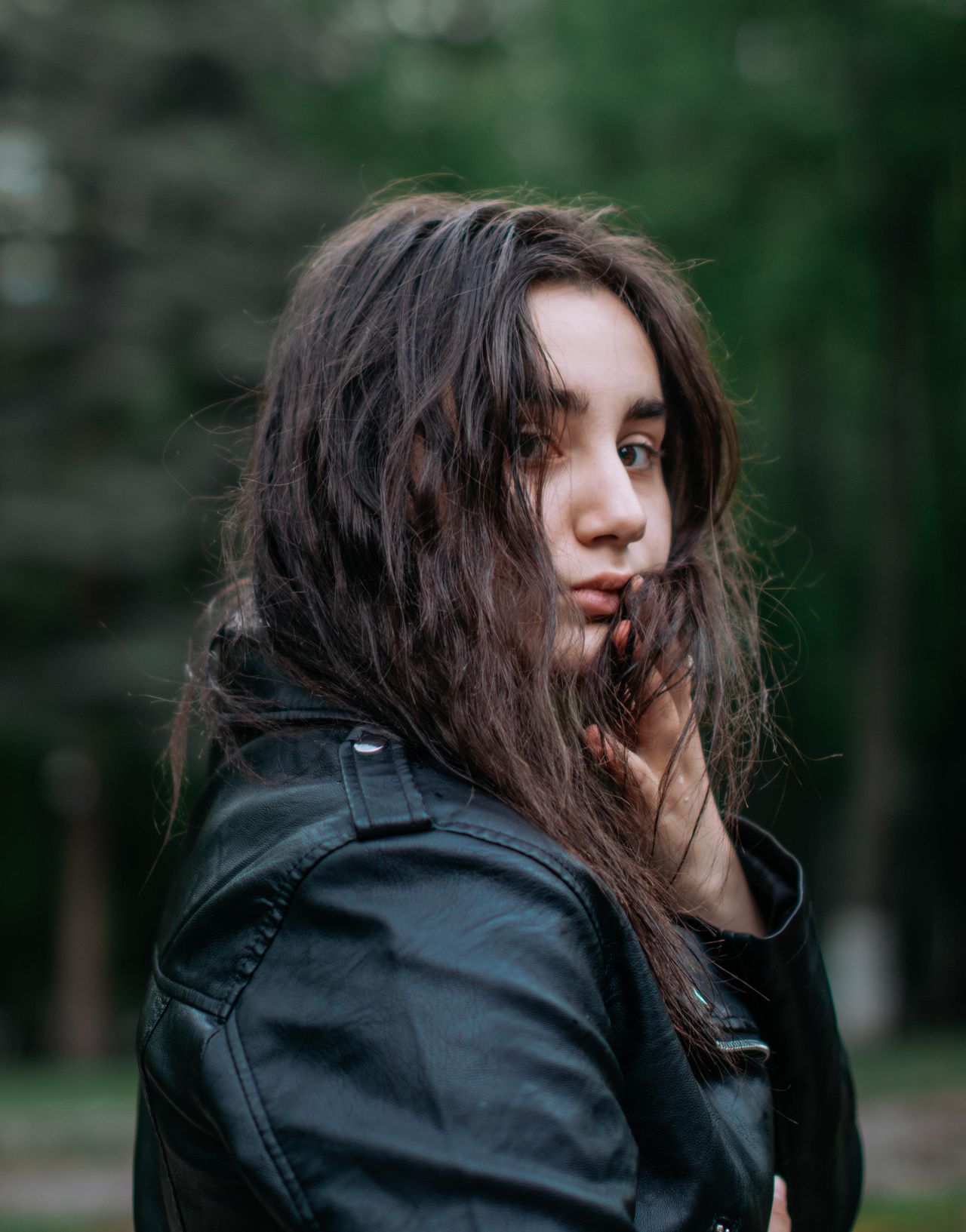
A side view of a woman in a black leather jacket, with long dark hair, outdoors against green trees. Photo: Pexels.

No comments:
Post a Comment